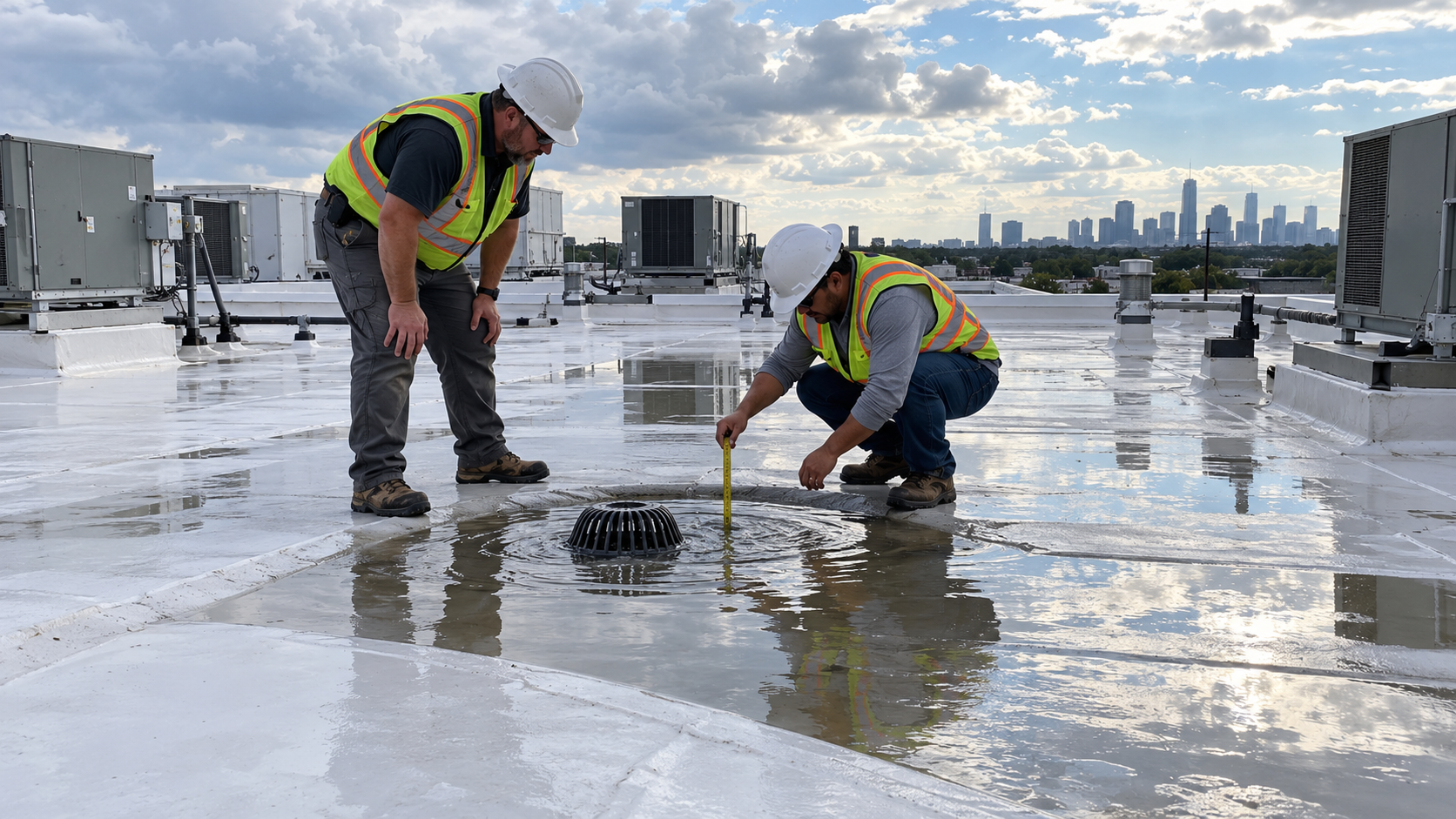




What Evidence Do You Need for a Commercial Roof Claim
A property owner guide from Showtime Exteriors
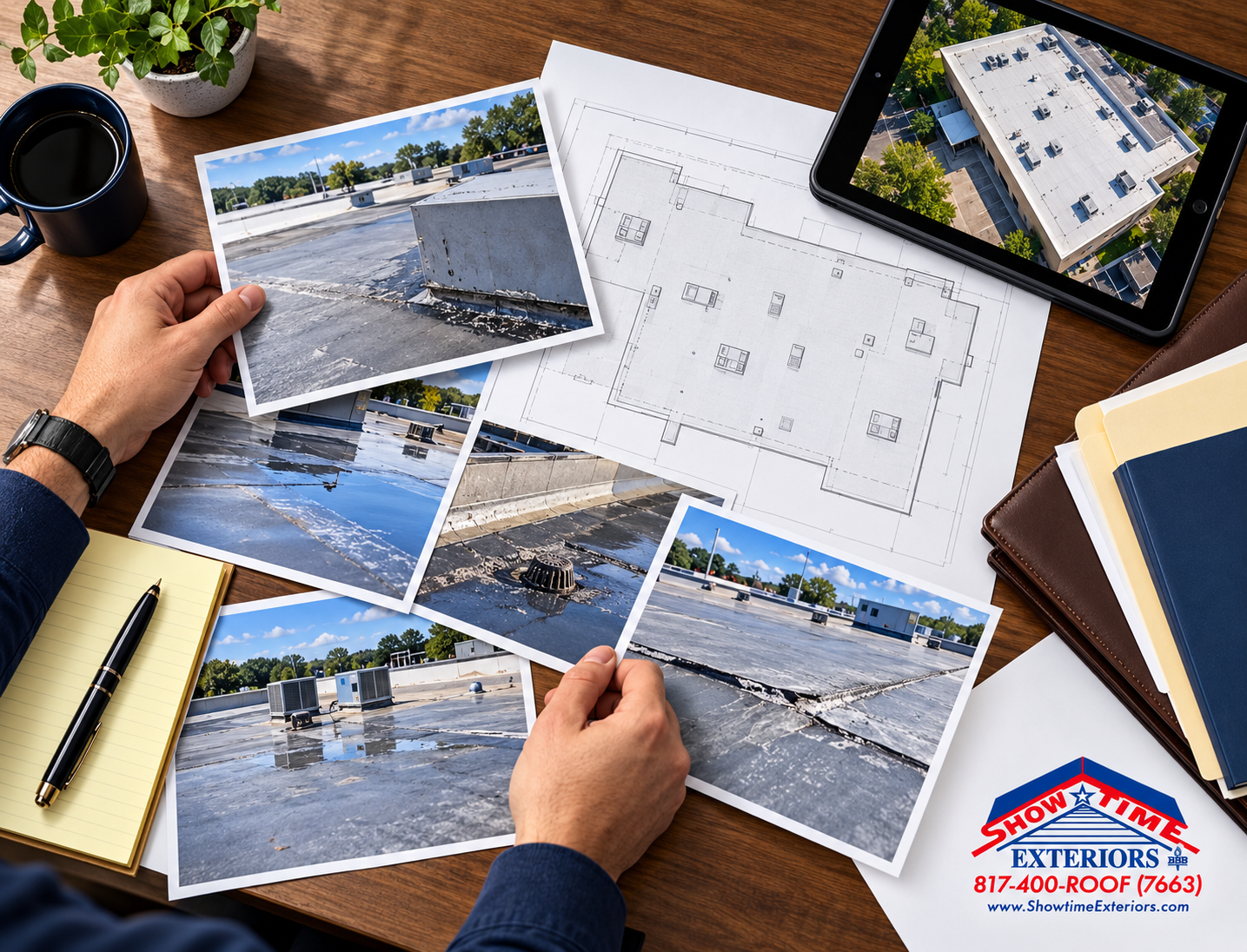
For a commercial roof claim, you need evidence that explains what happened, where damage was observed, what the roof was like beforehand, and what work is needed now. Photographs are important, but they are only one part of the file. Inspection findings, maintenance records, measurements, temporary repair invoices, and an itemized construction estimate help connect the visible conditions to a proposed repair.
The strongest documentation is accurate, organized, and specific. It identifies the property, dates, roof sections, and limitations of the inspection. It also distinguishes observations from conclusions. A picture of a damaged seam can document its condition; by itself, it may not establish when the seam opened, what caused the opening, or whether insurance covers the loss.
For Texas warehouses, retail centers, offices, apartment buildings, and other commercial properties, a clear evidence file can make the review easier to follow. It cannot guarantee coverage or payment. Commercial insurance depends on the actual policy, including covered causes of loss, exclusions, limits, and settlement provisions. [1]
This guide explains how to collect and organize commercial roof claim evidence without confusing construction documentation with insurance representation. Showtime Exteriors can inspect roof conditions and provide roofing scope information. Coverage interpretation and claim representation belong with the appropriate insurance professional or attorney.
Start with the questions your evidence must answer
Think of the claim file as a record that another person should be able to understand without having been on the roof. The reviewer needs to identify the building, locate the reported conditions, understand the timeline, compare current findings with prior records, and evaluate the requested work.
Separate the physical condition from its possible cause. For example, a report might document a puncture near a rooftop unit. The report should explain what was observed and whether the available evidence supports a cause. A statement that the puncture appeared after a storm is relevant history, but it does not rule out every other explanation.
Separate cause from coverage as well. Even when an event is established, the policy still controls how the loss is treated. Similarly, an insurance payment does not determine whether a proposed roof assembly is technically suitable. Clear evidence helps each professional answer the question within their role.
There is no single universal list of documents that guarantees a commercial claim will be accepted. Ask the carrier what it requires for your specific claim. Use the categories below as a practical organizing framework, then add any policy forms, testing, or supporting records requested during the review.
Evidence 1 The policy and correct property identification
Collect the full policy in effect on the reported date of loss, including declarations, coverage forms, endorsements, and deductible schedules. A current renewal packet may differ from the contract that applied when the damage occurred. Keep the correct version clearly labeled.
Identify the insured building by address, building number, and location within the complex. For a property with several structures, include a site map or labeled overview. A warehouse roof and an attached office roof may differ in age, assembly, and condition. Those differences should not disappear under a single general property description.
Record the claim number and contact information for the person coordinating the file. Confirm who can authorize inspections, testing, and construction. If an owner, property manager, tenant, and lender are involved, unclear responsibility can delay access and create conflicting instructions.
Ask the carrier to explain any roof endorsement that affects the claim. Roof valuation, cosmetic damage provisions, or other terms can matter even when the building has broader coverage. The contractor should receive enough factual project information to evaluate the roof, while qualified insurance professionals address the meaning of the policy.
Evidence 2 A factual timeline of events
Prepare a dated timeline beginning with the last known roof inspection or repair before the reported event. Add the reported storm date, first observed leak, tenant complaints, emergency work, claim notification, and later inspections. Use actual records where available rather than reconstructing every detail from memory.
Distinguish the date of a weather event from the date someone discovered a problem. A leak first noticed on Monday may relate to rainfall on Sunday, an earlier condition, or another cause. Describe that sequence honestly. If the precise onset is unknown, say so rather than selecting the date that seems most convenient.
Keep relevant emails, service tickets, work orders, and text messages. A tenant's report that water appeared in a specific office after a particular rainfall can support the history. It should retain the original wording and date, with any later explanation recorded separately.
A useful timeline is concise enough to review and detailed enough to verify. Include references to the supporting file for each important event. This allows a reviewer to move from the summary to an original photograph, invoice, or inspection without searching an unrelated collection of documents.
Evidence 3 Photographs that show location and detail
Photograph the building and roof from broad views before moving into close detail. The purpose is to show where a condition sits within the roof, not merely what it looks like at the closest possible distance. A close-up without context can be difficult to connect to a specific repair area.
For each notable condition, collect an overview, a medium view, and a detail where practical. Label the location using a consistent roof plan or section designation. A filename such as Building A north section flashing photo 03 is easier to follow than a folder filled with automatically generated camera names.
Record who took the photographs and when. Preserve the original files and metadata where available. If you create annotated copies with arrows or labels, retain the originals separately. The annotation should explain the image rather than conceal, replace, or exaggerate what it shows.
Good lighting and focus matter more than dramatic presentation. Include a measurement reference where appropriate, and explain what is being measured. Avoid shadows that hide edges or views that make a small surface mark look like a structural failure. Your objective is a clear record of the actual condition.
What commercial roof photographs should include
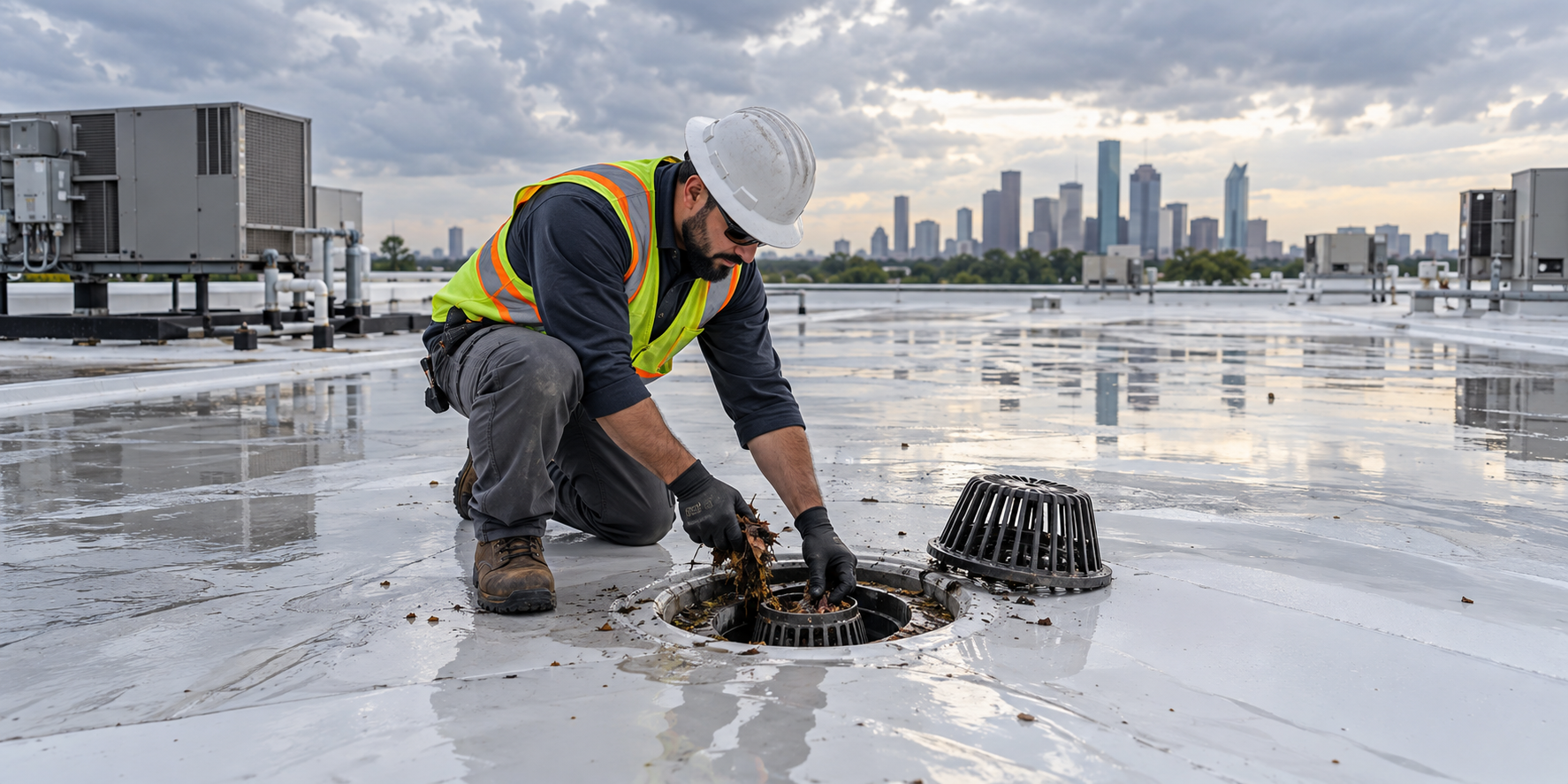
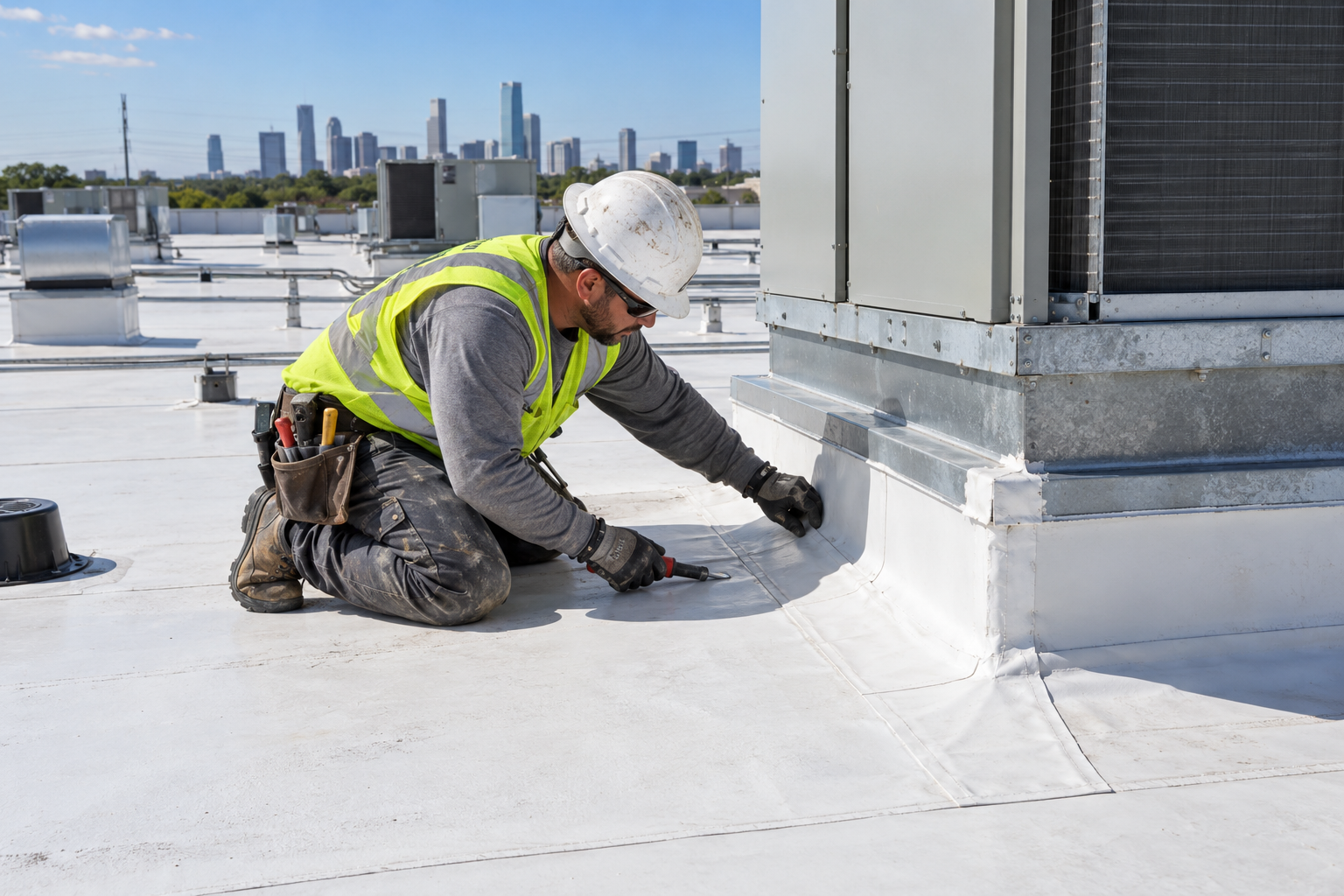
Depending on the roof and reported damage, useful subjects may include membrane seams, penetrations, curb flashing, roof edges, drains, metal panels, fasteners, and damaged accessories. Photograph apparently unaffected areas too when they help show the extent or pattern of the observations.
Do not create damage, disturb components unnecessarily, or stage a photograph to suggest a cause. Inspection work should be performed safely by qualified personnel. Property owners and staff should not climb a roof solely to produce a more convincing claim image.
Evidence 4 A roof plan connecting the findings
Create a simple roof plan that identifies sections, major rooftop equipment, drains, access points, and observed conditions. The plan does not need decorative graphics. It needs a clear orientation and labels that match the photographs and report.
Assign identifiers to important observations and repeat those identifiers in the supporting documents. For example, location N3 on the plan can refer to a flashing condition shown in photographs N3a and N3b. This avoids repeatedly describing the same area in different ways.
If measurements are approximate, label them accordingly. Distinguish measured dimensions from aerial estimates or assumptions. Roof surface area, perimeter lengths, and penetrations can affect construction quantities, so the source of those numbers should be visible.
For larger properties, use a site overview and separate roof section plans. Trying to fit every detail onto one crowded image may make the file harder to understand. The useful result is a reviewer who can locate each claimed condition and understand which areas the proposed work includes.
Evidence 5 A written professional inspection report
Request a report that identifies the inspector, inspection date, roof type, inspected areas, observed conditions, and access limitations. It should explain the inspection method and distinguish direct observations from information supplied by the owner or another person.
The report should discuss the reported damage in relation to the roof assembly. A commercial membrane roof, metal roof, and modified bitumen roof can have different failure mechanisms and repair needs. A generic checklist that never identifies the assembly may leave key questions unanswered.
Ask the inspector to explain uncertainty. An inaccessible area, an obscured seam, or a concealed substrate may require further investigation before a conclusion is possible. A report that states those limits can support an appropriate next step rather than forcing an unsupported opinion.
Keep the report consistent with the photographs and measurements. If the report says an entire section is affected, the documentation should explain how that conclusion was reached. A strong report connects evidence to its conclusions and avoids treating every maintenance concern as damage from the reported event.
Evidence 6 Records showing the roof before the loss
Gather prior inspection reports, installation invoices, maintenance records, warranty documents, and earlier photographs. These can help establish roof age, previous conditions, and work performed before the reported event. They are especially useful when the current inspection finds both older deterioration and newly reported damage.
For a property purchased recently, ask the seller or previous manager for roof records that belong with the building. A due diligence report may contain photographs or repair recommendations. Preserve the entire relevant record rather than selecting only pages that appear favorable.
If a leak was previously reported in the same area, include the earlier service history and describe what was done. Hiding a prior condition can make the current file less reliable. The issue is whether the evidence supports a change or additional damage, which requires understanding the earlier condition.
An absence of records does not prove the roof was free of problems. State what is available and what could not be located. A contractor may still document current conditions, but the lack of prior evidence should remain a limitation rather than becoming a claim of perfect pre-loss condition.
Evidence 7 Weather information and firsthand observations
Weather information may help establish the timing and local context of a reported storm. Keep the source, date, location, and any limitations of the information. A broad regional report should not be described as a measurement taken at your particular building.
Property-specific observations can also be useful. These may include time-stamped security footage, photographs taken during or immediately after an event, and factual statements from staff. Preserve the original recording where available, along with the relevant extract and an explanation of the camera location.
A weather report alone does not establish that hail damaged a membrane or wind caused a particular separation. Physical findings and other records must still be evaluated. Similarly, a reported storm does not mean every roof defect observed afterward belongs to that event.
Avoid assigning precise hail size or wind speed based on an unverified memory. Record what the observer actually saw or heard, including whether they were indoors and whether visibility was limited. An accurate modest statement is more useful than an exaggerated account that cannot be supported.
Evidence 8 Interior damage and leak records
Document affected rooms, ceiling areas, walls, equipment, and inventory. Include wide views that identify the space and details that show the condition. Record when the damage was noticed and whether there had been earlier staining or repairs.
Connect interior locations to the roof plan where practical, while recognizing that water can travel within an assembly. A stain directly below a rooftop component does not conclusively establish the entry point. The inspection should investigate the pathway rather than relying only on vertical alignment.
Keep tenant and maintenance reports separate from technical conclusions. A staff member can report that water dripped during rainfall; a qualified inspection may be needed to identify the source. Describe both accurately so the claim file does not confuse an observation with a diagnosis.
For damaged business property, preserve inventory records, purchase documents, and repair estimates where relevant. Ask the carrier what records it requires for those items. Building damage and tenant contents may involve different policies, parties, and valuation terms, so organize them as distinct categories.
Evidence 9 Moisture investigation and controlled testing
Some roof conditions cannot be evaluated fully from surface photographs. If moisture investigation, controlled openings, or other testing is proposed, ask what question the test is intended to answer, who will perform it, and how the results will be documented.
Obtain necessary permission before destructive work and clarify how openings will be repaired. Discuss insurer inspection needs before material is removed when practical. Temporary protection and safety should still be addressed promptly rather than allowing an unresolved paperwork question to worsen an active leak.
A testing report should identify locations, methods, dates, and limitations. If samples are taken, record how they are labeled and retained. A finding in one location should not automatically be presented as proof of conditions across an entire large roof without an explanation supporting that conclusion.
Interpretation belongs with qualified personnel. An infrared image or moisture reading is a tool, not an automatic statement of cause or coverage. Request a report that explains what the findings support, whether further confirmation is needed, and how they affect the proposed construction scope.
Evidence 10 Emergency repair and mitigation expenses
Keep the scope, dates, photographs, invoices, and payment records for temporary work. Describe why the work was needed and what it accomplished. A temporary patch, interior protection measure, or drying service should be documented as the service actually performed.
Photograph conditions before work where safe and practical, and document the completed temporary measure. If urgent action prevents extensive pre-repair photography, record the circumstances and preserve the other available evidence. Do not delay reasonable protective work just to obtain a perfect collection of images.
Separate emergency costs from permanent construction costs so the same expense is not counted twice. If a temporary repair will be removed during replacement, explain that relationship in the final scope. Clear invoicing makes it easier to follow what was spent at each stage.
Notify the insurer and ask how to provide the records. Reimbursement depends on the policy and claim circumstances; an emergency invoice is not a guarantee of payment. The practical value of the documentation is that it shows the necessity, timing, and actual cost of the work for review.
Evidence 11 An itemized roofing estimate
A useful construction estimate explains the proposed assembly, quantities, materials, removal work, substrate preparation, flashing, and relevant access requirements. A total price without supporting scope is difficult to compare with the insurer's estimate or another contractor's proposal.
Identify which items address the documented conditions and which are optional improvements. An upgraded membrane, enhanced warranty, or added insulation may be a sensible investment, but its purpose and cost should be clear. Installing an item during a claim project does not automatically make it covered damage.
Explain quantity differences with measurements or plans. Explain method differences with construction details. If a proposal requires removing wet insulation or replacing damaged deck, describe the evidence supporting that work and the process for confirming additional concealed conditions.
For occupied commercial properties, document special access or scheduling needs that affect the work. Retail entrances, loading docks, restricted work hours, and equipment coordination can influence the proposal. Tie those costs to actual project requirements rather than adding a general unexplained allowance.
Evidence 12 Specific support for additional scope
A roof claim supplement should identify a particular difference in the existing estimate. Organize each requested change around the item, the reason, the supporting evidence, and the proposed quantity or cost. A general statement that the settlement is insufficient leaves too much for the reviewer to infer.
For example, if a measurement omitted a roof section, show the section on the plan and explain the revised quantity. If a flashing detail was overlooked, include contextual photographs and the proposed construction detail. The goal is a reviewable question rather than a larger unsupported total.
Where additional work is discovered during removal, document it before covering the area when practical. Record the location, condition, measurement, photographs, and change authorization. Communicate promptly through the appropriate claim contact and follow the agreed construction change process.
A supplement can be accepted, partially accepted, or declined. Any revised payment remains subject to applicable policy terms. In particular, additional replacement cost in an estimate is not necessarily the same as additional cash available to the owner after depreciation and other adjustments.
Evidence 13 Code requirements and project approvals
If the estimate includes work required by applicable building rules, identify the specific requirement and how it changes the scope. A generic note that everything is a code upgrade does not explain which item is required, why it applies, or how the proposed work addresses it.
Retain relevant permit documents, written determinations, and project approvals. If the requirement is uncertain, clarify it with the appropriate authority or qualified professional rather than presenting an assumption as a settled fact. Construction planning benefits from resolving that issue before finalizing the contract.
Insurance treatment is a separate question. Ordinance or law coverage may address some additional construction costs, subject to the contract's terms and limits. The existence of a required construction item alone does not establish that your policy pays for it. [1]
Keep required work and elective improvements distinct in the estimate. This helps the owner understand the full project price even if coverage review remains unresolved. Accurate classification also makes later invoices easier to reconcile with the approved construction scope.
Evidence 14 Business disruption and extra costs
If you are seeking payment for interruption or additional operating expenses, collect records that explain what activities changed and why. Depending on the claim, relevant documents may include closure dates, relocation costs, canceled orders, sales records, payroll information, and expenses incurred to maintain operations.
Keep the financial records connected to a factual timeline. Distinguish losses associated with the reported building damage from unrelated changes in demand, staffing, or other business conditions. A complete explanation is more useful than a single estimate of lost revenue.
Ask the insurer or qualified claim advisor which calculations and documents the policy requires. Business interruption and extra expense coverage have their own terms; a roof claim does not automatically establish payment for every operational consequence. [1]
Coordinate with the business's accountant where appropriate and protect sensitive records during sharing. Construction personnel may need information about operating restrictions without needing the company's full financial history. Provide the right supporting documents to the people reviewing that portion of the claim.
Evidence 15 A written record of the claim review
Save the insurer's estimate, inspection requests, payment explanations, and written decisions. After an important phone conversation, make a factual note of the date, participants, and questions discussed. Ask for written confirmation when a decision affects your budget or next step.
Retain each estimate version. A revised document may change quantities, depreciation, or payment conditions. Compare the versions so you know which issues were resolved and which remain open. Avoid overwriting earlier files merely because the new estimate has the same name.
When submitting documents, use a short index and explain what you are requesting. Ask the recipient to confirm receipt and identify anything still needed. This helps you distinguish a review delay from a missing attachment or an unclear submission.
Track the actual applicable deadlines with the appropriate advisor. Do not assume that ongoing correspondence extends a policy or legal deadline. If disagreement continues, seek timely guidance about the available review or dispute options based on the policy and issue. [3]
Use one master folder with separate sections for policy documents, timeline, roof photographs, inspection findings, prior records, testing, estimates, expenses, and correspondence. Name files consistently and keep dates visible. Preserve originals and use copies for annotations or summaries.
Prepare a short cover summary identifying the property, claim number, reported event, documents included, and questions needing a response. Avoid filling it with persuasive slogans. Its purpose is to help the reviewer navigate the evidence and understand the requested action.
A manageable photo selection can accompany the summary while the full collection remains available. Do not bury a critical photograph among hundreds of repetitive images. Select the most informative views, keep their original identifiers, and provide context for each condition.
Update the index as new information arrives. If an earlier assumption changes, record the correction rather than allowing inconsistent versions to circulate. The file should become clearer during the review, with a visible record of how the evidence developed.
A practical checklist for property owners
Full policy and endorsements for the reported date of loss
Correct building identification and claim contact information
Factual event and leak timeline with original supporting records
Contextual roof photographs matched to a labeled plan
Inspection report with methods and stated limitations
Roof age maintenance and pre-loss condition records
Relevant weather information and firsthand observations
Interior damage records and documented testing where needed
Temporary repair invoices and payment documentation
Itemized permanent scope and evidence for requested changes
Applicable project approvals and completion records
Insurer correspondence estimate versions and deadline notes
Example A warehouse roof claim file
Consider a hypothetical warehouse where staff discover water near a loading area after a reported storm. The manager records when the leak was noticed, protects affected inventory, and arranges a professional roof inspection. The inspection identifies a flashing concern and a separate older repair nearby.
The photographs show both areas with clear labels on a roof plan. Earlier service records describe the older repair, while the new report explains what was observed and what remains uncertain about the flashing condition. A temporary repair invoice records the protective work performed that day.
The contractor's estimate identifies the proposed flashing work and explains whether further investigation is needed before deciding on broader repairs. The owner submits the evidence with a specific request for review. No one treats the storm report alone as proof that the entire roof must be replaced.
This example illustrates documentation practices, not a claim result. The insurer may request more evidence, and the policy may affect coverage or valuation. The benefit is a file that lets everyone examine the same locations, records, and questions rather than working from disconnected assumptions.
Common evidence mistakes to avoid
The first mistake is submitting close-ups without location information. The second is relying on a weather report as the only support for roof damage. Both leave a gap between an event and the condition being claimed. Add contextual observations and explain the limits of the evidence.
Another mistake is discarding prior records because they mention leaks or maintenance problems. Those records help distinguish conditions and support an accurate chronology. Omitting them can create contradictions when another inspection or invoice identifies the same earlier issue.
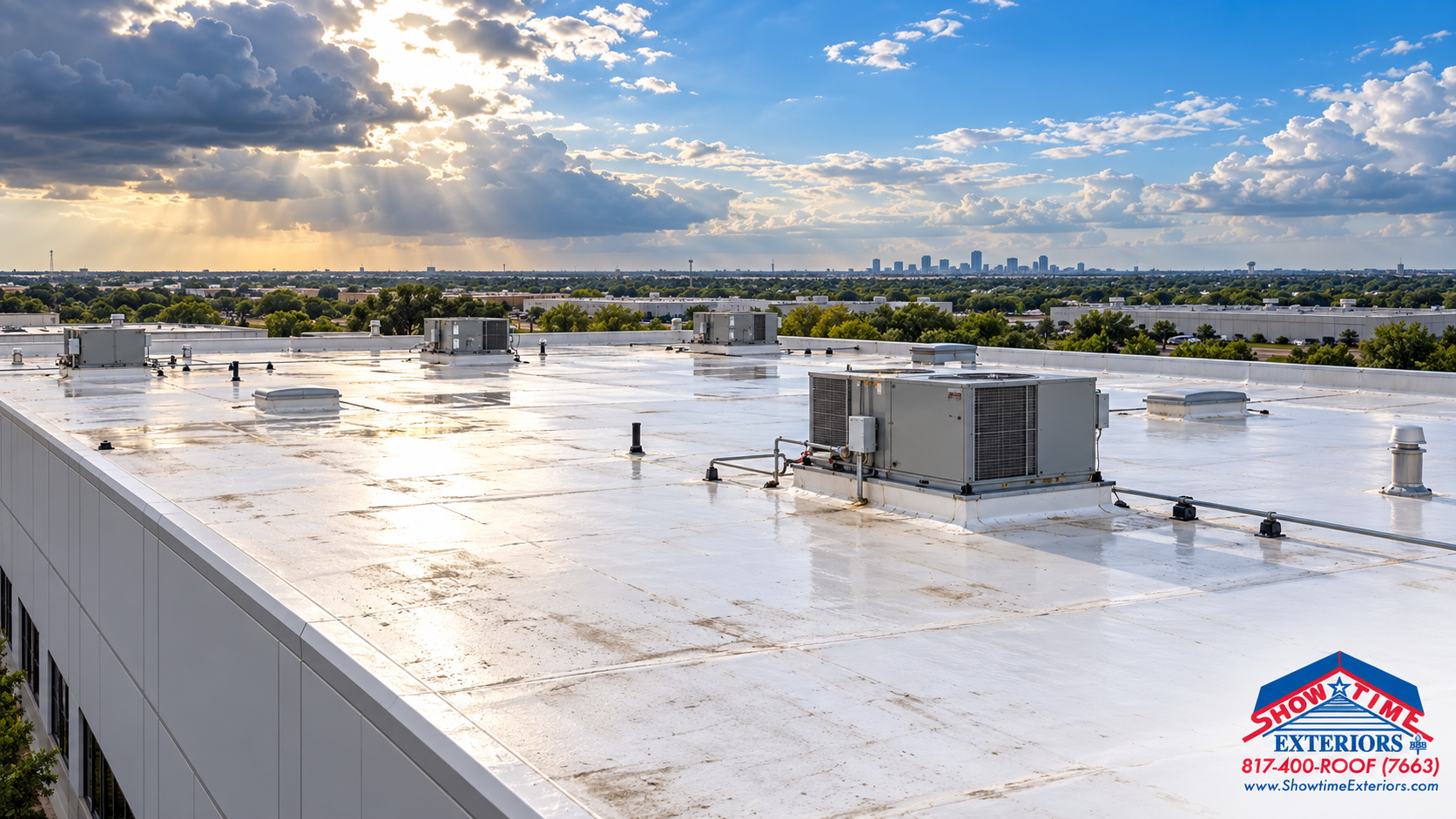
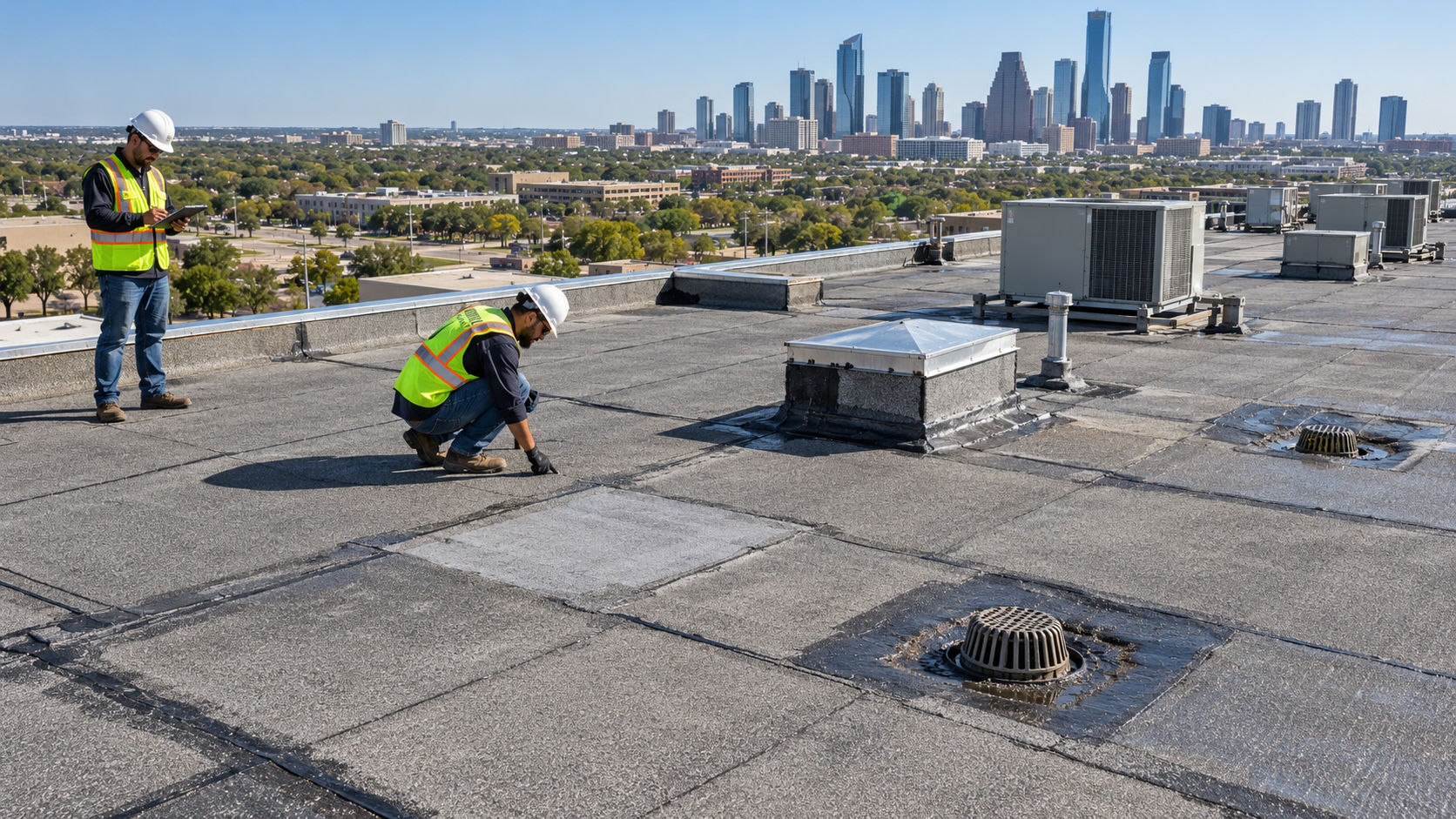
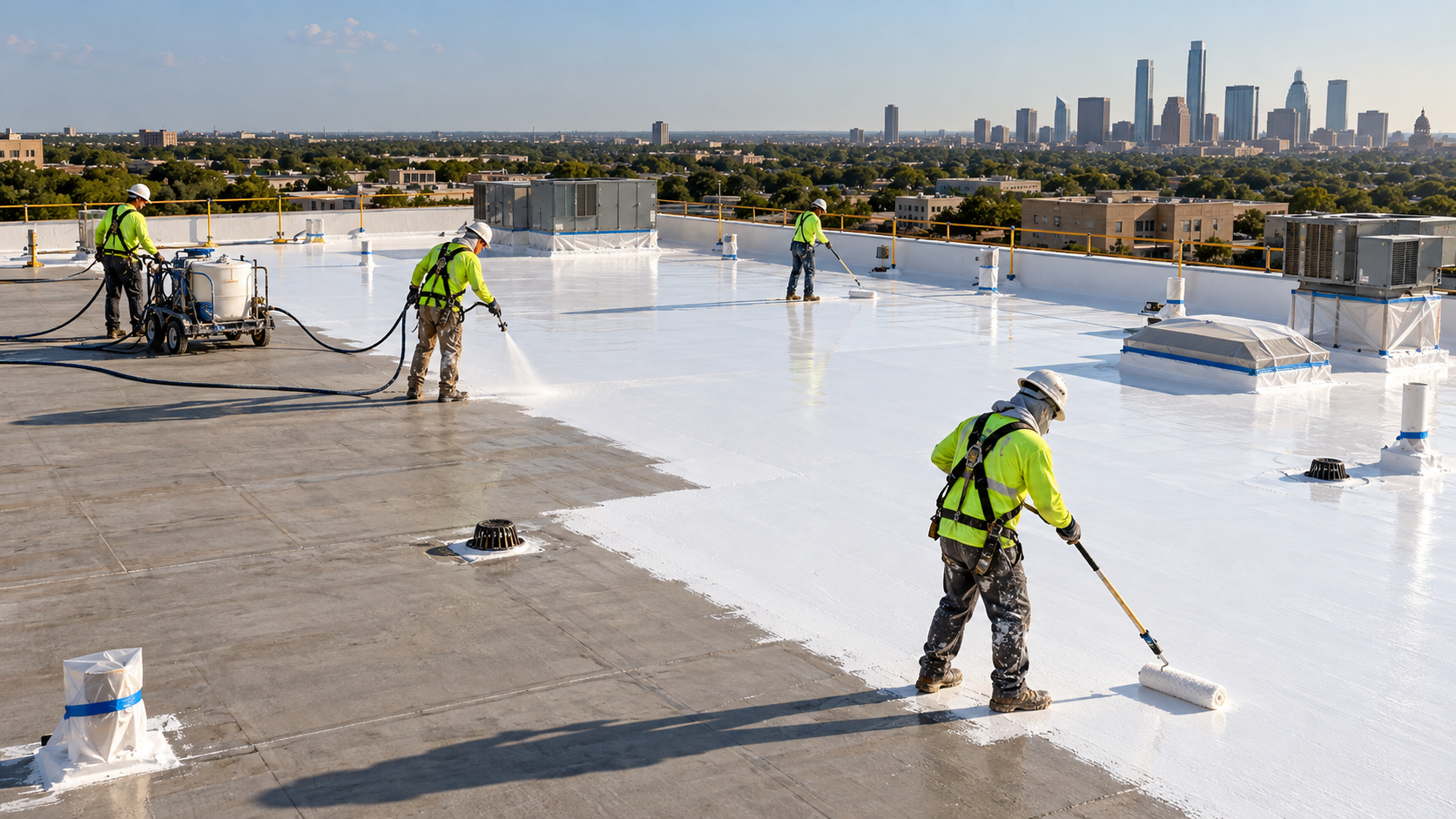
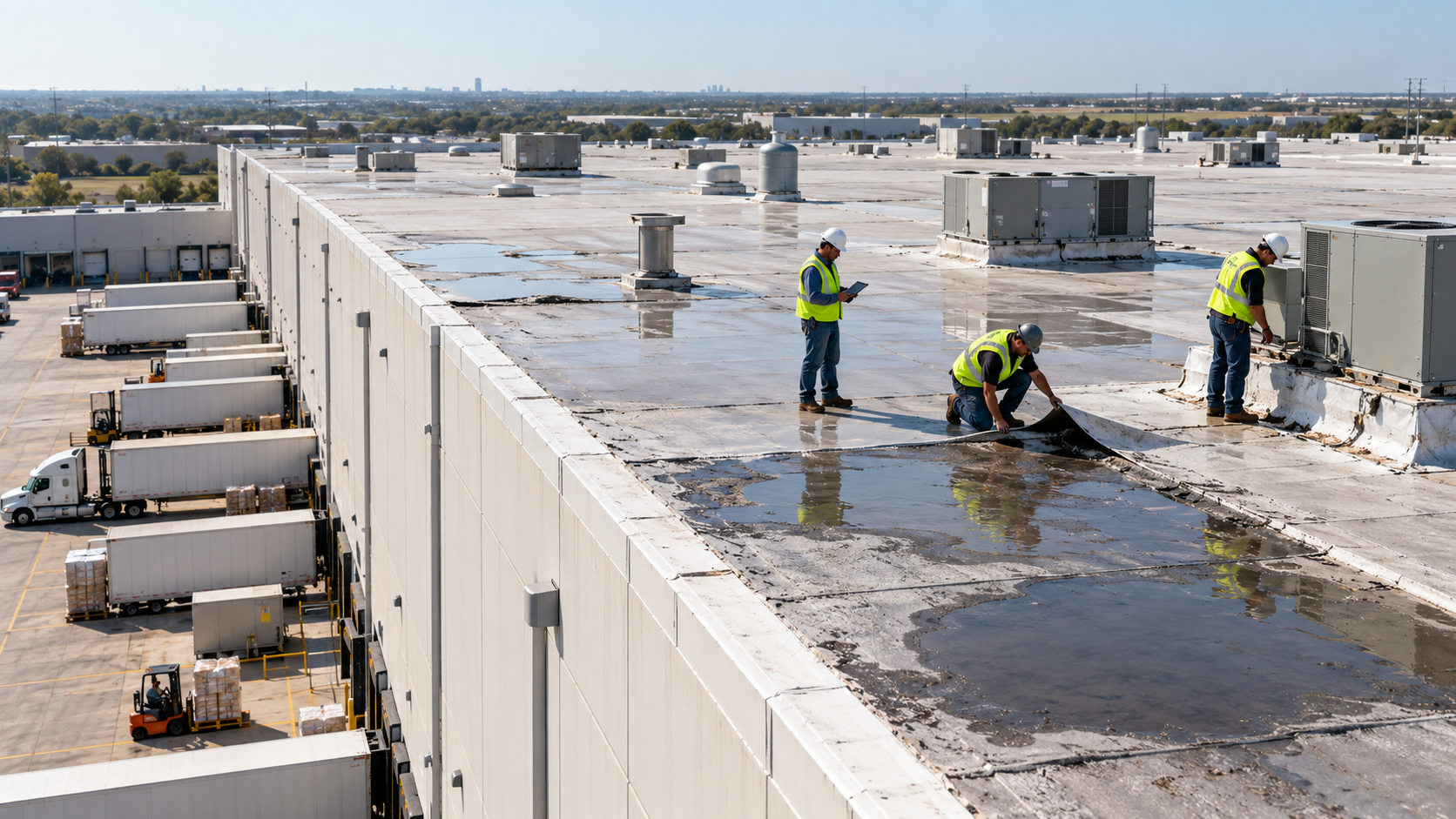
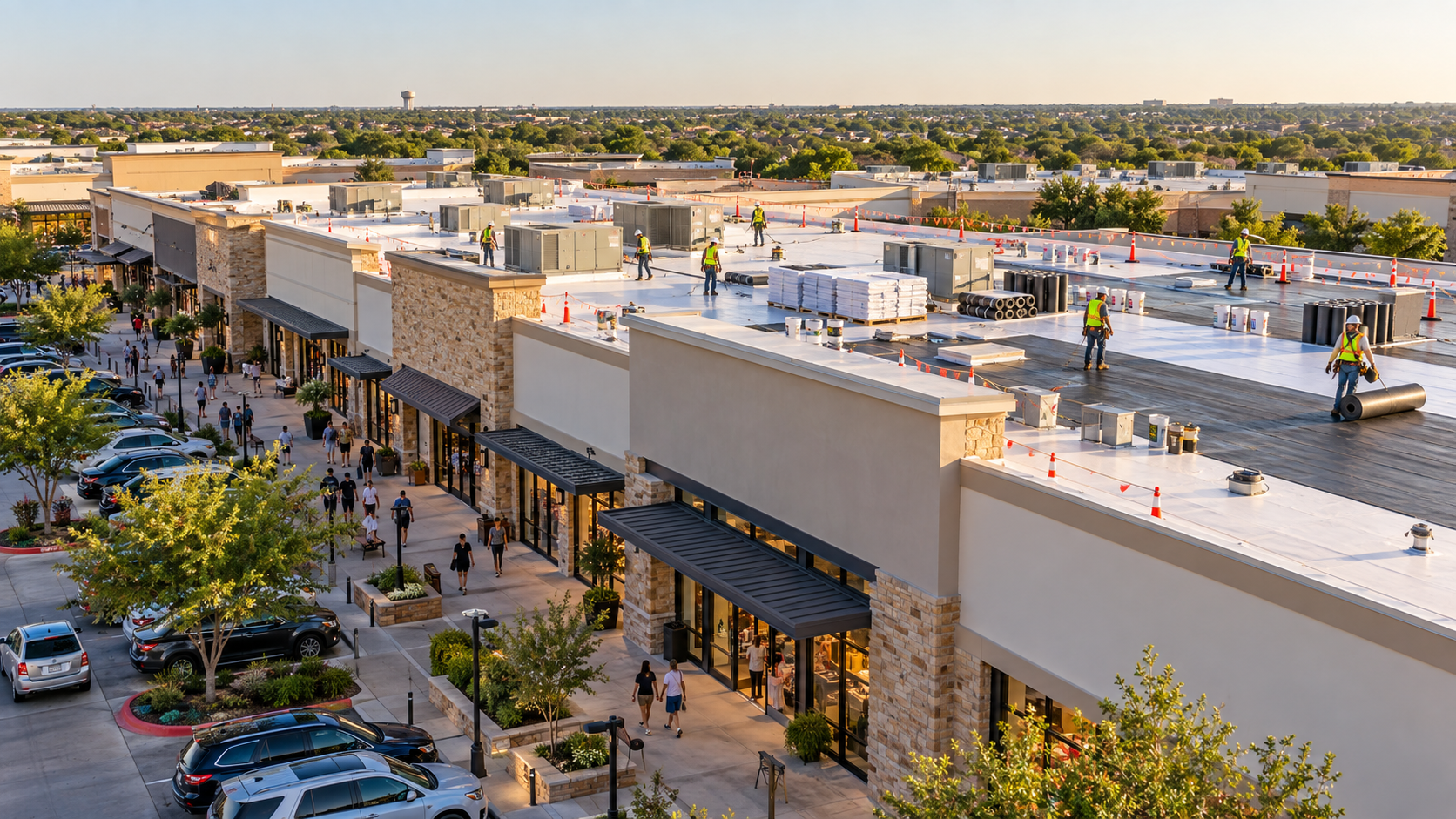
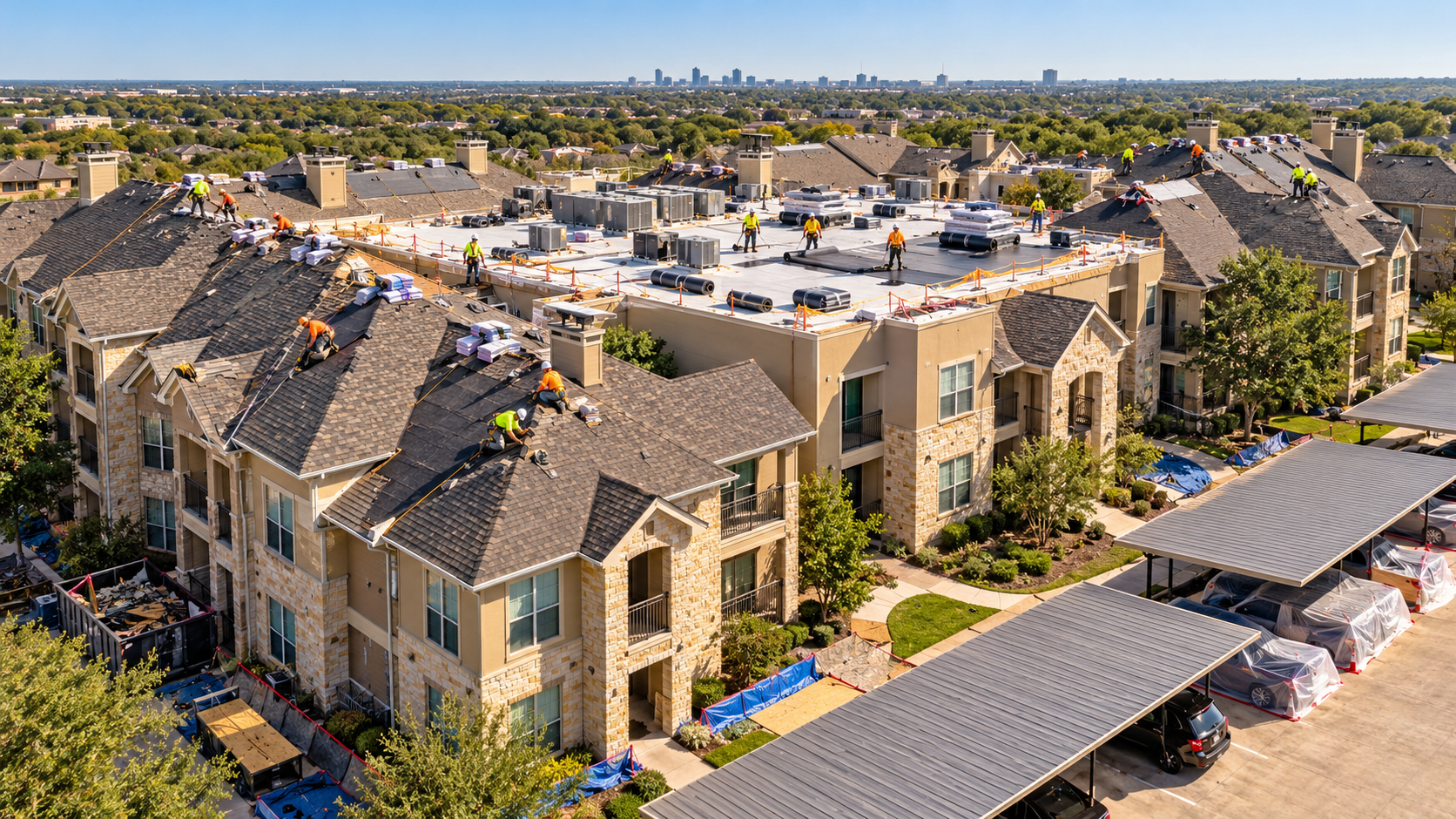
Do not inflate costs, fabricate receipts, alter original photographs, or present generated images as inspection evidence. The images in this article are editorial illustrations. Actual claim documentation must come from the property, records, and work being described.
Finally, avoid assuming a contractor can handle every insurance question. Texas restricts contractors from acting as public adjusters on properties where they provide or may provide contracting services. Keep technical roof documentation separate from claim representation and coverage negotiation. [4]
Frequently asked questions
Are photographs enough for a commercial roof claim
They may document visible conditions, but additional records are often needed to explain location, timing, prior condition, construction scope, and cost. Ask the carrier what it requires for the particular claim. More photographs do not automatically resolve a missing factual connection.
Do I need a moisture survey for every claim
No universal testing requirement applies to every roof condition. Ask the inspector what question testing would answer and whether it is appropriate for the assembly. Any report should explain the method, locations, limitations, and relationship to the proposed work.
Can maintenance records help if the roof is older
They can clarify installation history, repairs, and documented changes in condition. They do not guarantee coverage or eliminate depreciation. Include them accurately, together with current findings, so the reviewer can understand the roof's history.
What if the insurer says the damage is wear and tear
Request the written explanation and review the relevant findings with appropriate professionals. Provide specific evidence that addresses the disputed condition. If coverage interpretation or a dispute remains, seek qualified claim or legal advice rather than relying on a contractor's promise of payment.
Can my roofer negotiate the claim for me
Texas limits that role when the contractor provides or may provide work on the property. A roofing contractor can supply construction findings and estimates. Use an appropriately authorized professional for claim representation or legal issues. [4]
Get a commercial roof evaluation from Showtime Exteriors
A useful claim file begins with a clear understanding of the roof. Showtime Exteriors can evaluate observed commercial roof conditions, explain practical repair or replacement options, and provide construction scope information for your project planning.
Call 817-400-ROOF 7663 or visit https://www.showtimeexteriors.com/ to discuss your property. Bring the existing inspection records and estimate so the conversation can focus on the actual roof, available evidence, and proposed work.
This article provides general documentation guidance rather than a coverage determination or legal advice. Policy requirements vary. Generated photographs illustrate the subject and are not records of actual damage, inspections, or customer claims.
Sources and further reading
[1] Texas Department of Insurance Commercial property insurance guide https://www.tdi.texas.gov/pubs/consumer/cb021.html
[2] Texas Department of Insurance Hail damage What to do next https://www.tdi.texas.gov/tips/after-hail-or-windstorms.html
[3] Texas Department of Insurance What if my insurance is not paying enough https://www.tdi.texas.gov/tips/disagree.html
[4] Texas Department of Insurance Roofing and insurance Know the law https://www.tdi.texas.gov/consumer/storms/roofing-and-insurance-know-the-law.html