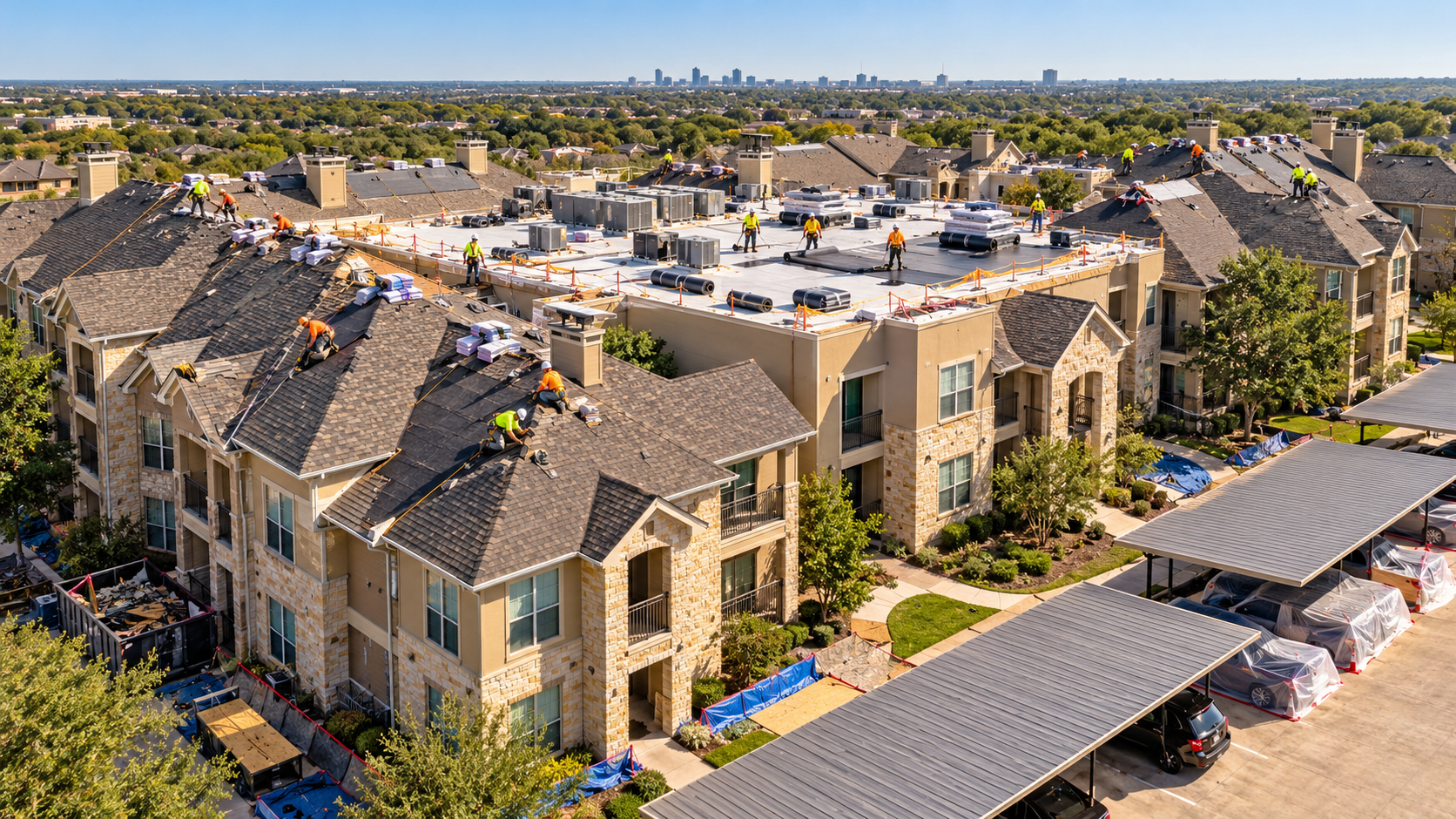




Questions to Ask Before Challenging a Hail Claim Denial
A Guide for Texas Commercial Property Owners

A hail claim denial can leave a commercial property owner facing two problems at once: a roof that may need attention and uncertainty about who will pay for the work. Before requesting another inspection, hiring a claim representative, or approving a replacement, you need to understand what the insurer decided and why.
The first question is whether the claim was actually denied. An insurer might reject coverage, conclude that hail did not cause the reported damage, accept only part of the loss, or determine that covered repairs fall below the deductible. These situations can produce little or no payment, but they require different responses.
This guide explains the questions to ask before challenging a hail claim denial for a warehouse, retail center, office building, apartment complex, or other commercial property in Texas. The goal is to organize the facts, identify missing information, protect the building, and choose an appropriate next step.
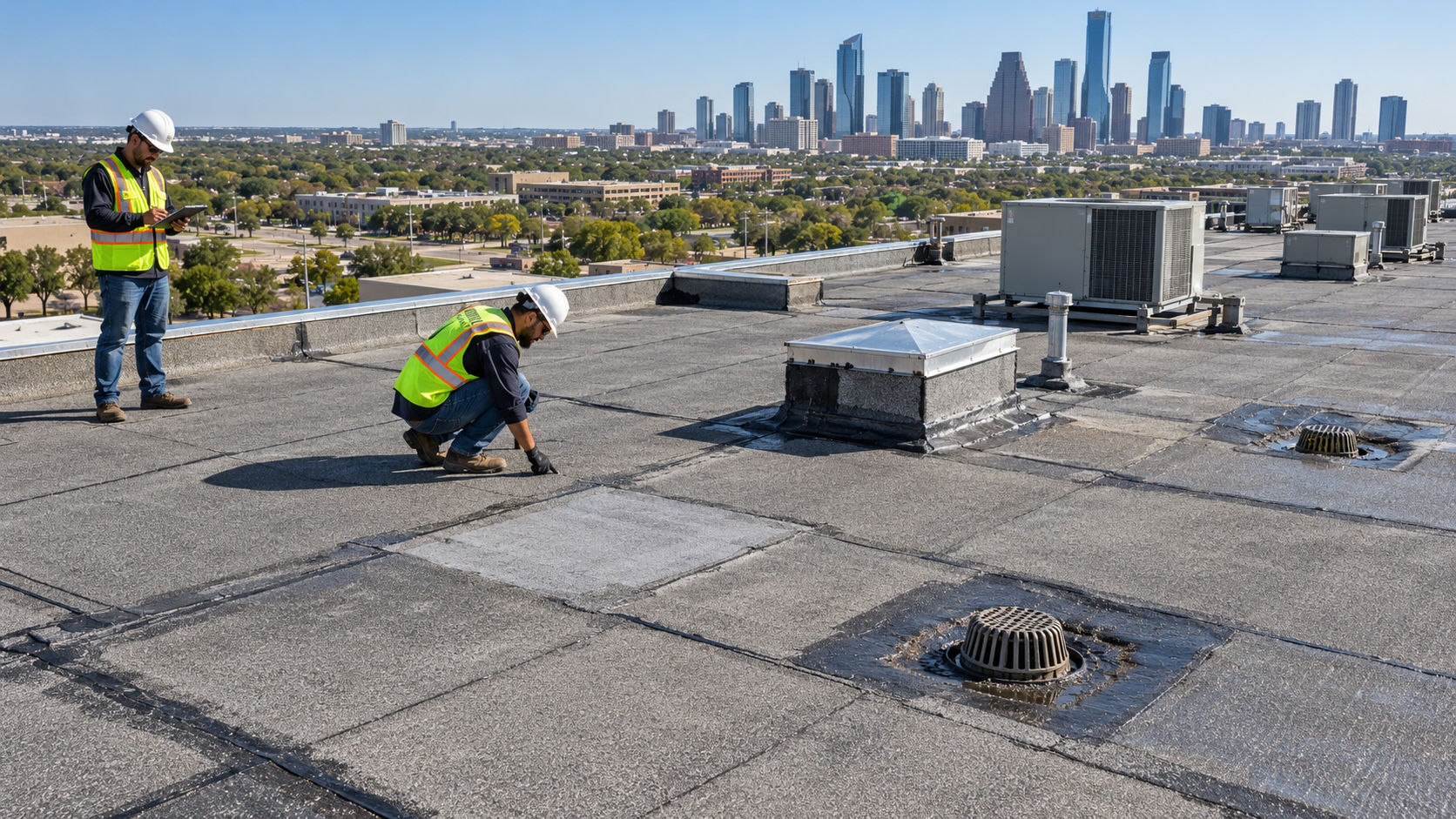
A roofing contractor can document roof conditions and explain construction requirements. Your insurer determines coverage, while an appropriately authorized insurance professional or attorney can advise on representation and legal issues. A thorough inspection can improve your understanding of the roof without guaranteeing that a denial will be reversed.
1. Was My Hail Claim Denied or Closed Without Payment?
Start by asking the insurer to explain the claim’s status in writing.
A claim closed without payment is not always a finding that the loss is excluded. The insurer may have accepted covered damage but calculated repair costs below your deductible. TDI identifies below-deductible damage as one reason a claim may close without payment. tdi.texas.gov
Ask whether the decision involves:
- A complete coverage denial.
- A partial denial affecting certain roof areas or components.
- An accepted loss with no payment because of the deductible.
- A disagreement about repair quantities or pricing.
- Missing information that prevents further evaluation.
For example, an insurer might accept damage to metal coping but reject replacement of the roof membrane. That is different from concluding that the reported storm caused no covered damage anywhere on the building.
Request the insurer’s estimate and compare it with the decision letter. Identify what was accepted, what was rejected, and what remains unresolved. This distinction should guide every document you gather and every professional you consider hiring.
2. What Exact Reason Did the Insurer Give?
Read the denial letter carefully and identify each stated reason.
Common disputed issues include the cause of damage, whether damage occurred during the policy period, the applicability of an exclusion, and compliance with claim requirements. Avoid responding to a broad phrase such as “wear and tear” without understanding the specific conditions the insurer assigned to that category.
Ask the insurer which roof areas the decision addresses and which observations support its conclusion. If several reasons appear in the letter, list them separately.
For instance, a letter might attribute membrane deterioration to age while also stating that dents in metal components are cosmetic. Those are two different issues. Evidence addressing membrane condition may not answer the metal-damage question.
Build a simple response worksheet: the insurer’s finding, the supporting document it cited, the information you already have, and the unanswered question. This keeps your review focused. Repeatedly sending the same photographs will accomplish little if they do not address the actual basis for the decision.
3. Do I Have the Complete Policy for the Date of Loss?
A declarations page provides useful information, but it does not contain the complete insurance contract.
Request the policy forms and endorsements that applied on the reported date of loss. Keep them together with the declarations page, property schedule, renewal documents, and any separate wind or hail policy.
Ask your agent to help identify the insured building, applicable coverage forms, deductible provisions, and roof-related endorsements. Confirm that you are reviewing the correct policy period, especially if the property changed insurers or ownership near the storm date.
Commercial property coverage varies by form and endorsement. TDI’s commercial property guide explains that different policy forms protect against different causes of loss and may contain exclusions. tdi.texas.gov
Do not rely on a general statement that your property has “full coverage.” That phrase does not answer a specific roof question. The relevant issue is how the actual contract applies to the reported loss.
If policy wording remains disputed, obtain advice from a professional qualified to interpret it.
4. Was Wind and Hail Coverage in Place?
Ask whether hail coverage applied to this building on the reported storm date.
A commercial property policy, a separate windstorm policy, and a lender’s insurance requirements may involve different documents. Confirm which insurer received the claim and whether another policy may be relevant.
This deserves particular attention for coastal properties. TDI explains that commercial properties in certain Texas coastal locations may need separate windstorm and hail coverage, including coverage available through TWIA. tdi.texas.gov
Also verify the scheduled property address and building identification. A multi-building business park may have several structures with different values, roof ages, or coverage details. An administrative mismatch should be clarified promptly.
The existence of a storm does not establish that every loss is insured. Conversely, uncertainty about the policy should not be resolved through assumptions.
Ask your agent or insurer to identify the applicable coverage documents. If the denial references an exclusion, request the exact endorsement and an explanation of how it applies to the claimed damage.
5. Is the Reported Date of Loss Supported?
The claim file should explain why a particular storm date was selected.
Collect the dates when hail was observed, roof concerns were reported, leaks appeared, temporary work occurred, and inspections took place. Keep the date of the weather event separate from the date damage was discovered.
A building manager might first notice a ceiling stain weeks after a storm. That discovery date is useful information, but it does not automatically establish when the roof condition developed.
Review tenant messages, security footage, maintenance tickets, dated photographs, and service invoices. Ask anyone providing an account to describe what they personally observed rather than adopting someone else’s conclusion.
If several storms occurred between inspections, record that uncertainty. Do not choose a date simply because it falls within a preferred policy period.
An accurate chronology helps an inspector understand the available evidence and its limits. It also helps your insurer or advisor identify whether the dispute concerns timing, causation, or both.
6. What Can Weather Records Actually Establish?
Weather records can provide context for a reported hail event. They should be considered alongside evidence from the property.
When reviewing a report or weather map, ask who produced it, what the underlying information represents, and how closely it relates to the building’s location. Distinguish a direct observation from an estimated storm footprint.
The National Weather Service collects reports that include hail size, location, timing, and observed structural damage. Those reports describe particular observations; they should not be treated as a roof inspection. preview.weather.gov
For practical purposes, ask your inspector to explain how any weather information relates to the conditions documented on your roof. A regional hail report alone does not identify which roof components require repair.
Likewise, avoid overstating what an absence of nearby reports means. The useful question is whether the combined record supports the claimed event and damage.
Save the source and date of every weather document. Screenshots without context can be difficult to evaluate later.
7. Was the Correct Roof Assembly Identified?
Before debating damage, confirm what was inspected.
A commercial roof may contain a membrane, insulation, cover board, attachment system, metal deck, and several flashing details. Different buildings—or separate areas of the same building—may have different assemblies.
Ask the inspector to identify the roof covering and explain how that identification was established. Was it based on installation records, visible conditions, product markings, or authorized investigation?
A report should distinguish observed information from assumptions. If the assembly beneath the surface is unknown, that limitation matters when evaluating repair methods and replacement quantities.
Collect installation documents, warranty records, prior proposals, and any roof plans you have. These can help clarify the existing system without immediately opening the roof.
Also identify previous repairs or coatings. A photograph of a patched area may require a different explanation from a photograph of the original membrane.
Clear assembly information makes the later construction discussion more specific and reduces confusion between roof condition, damage, and proposed work.
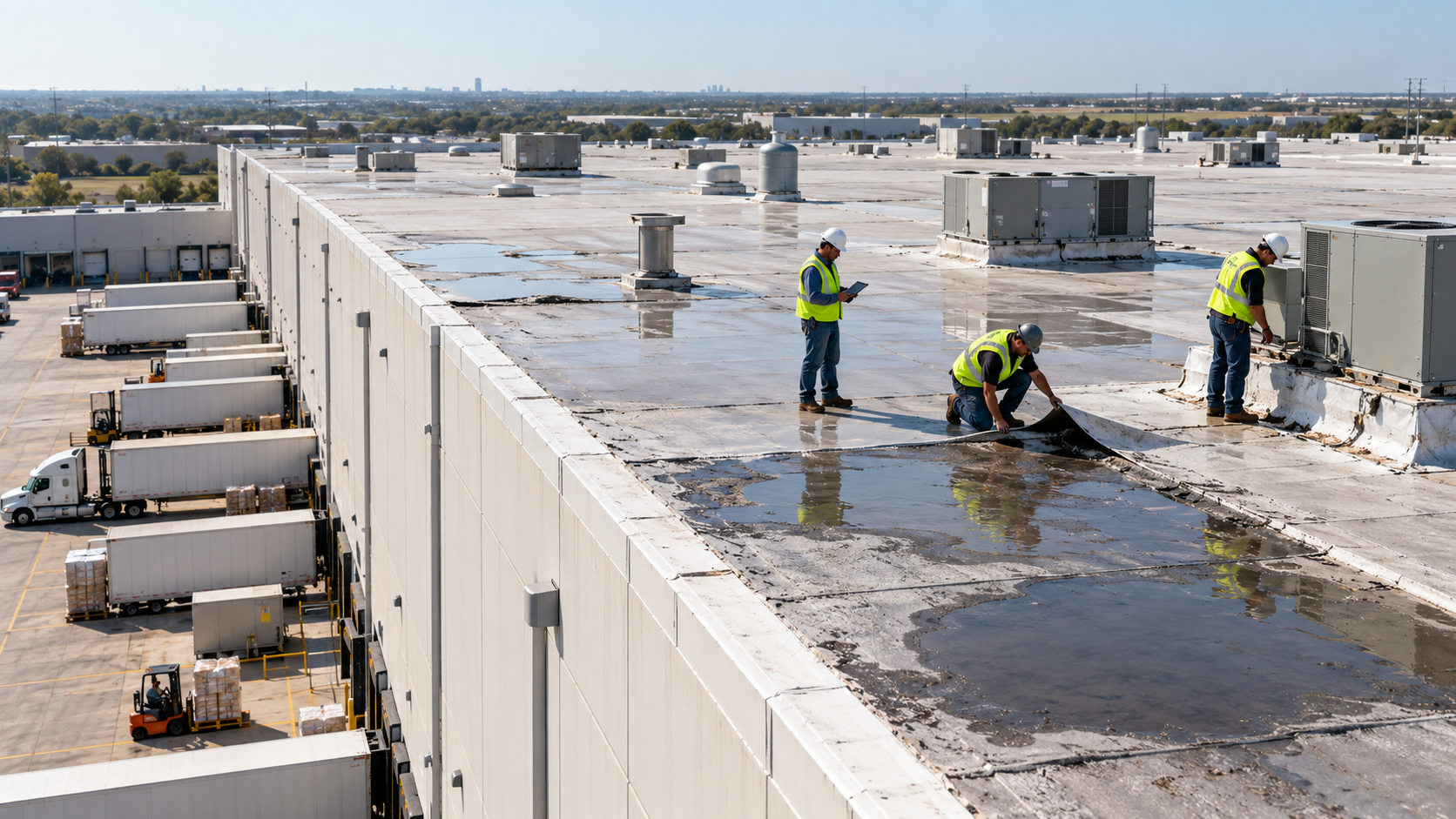
8. Did the Inspection Cover Every Relevant Area?
Ask which areas were inspected and which were inaccessible.
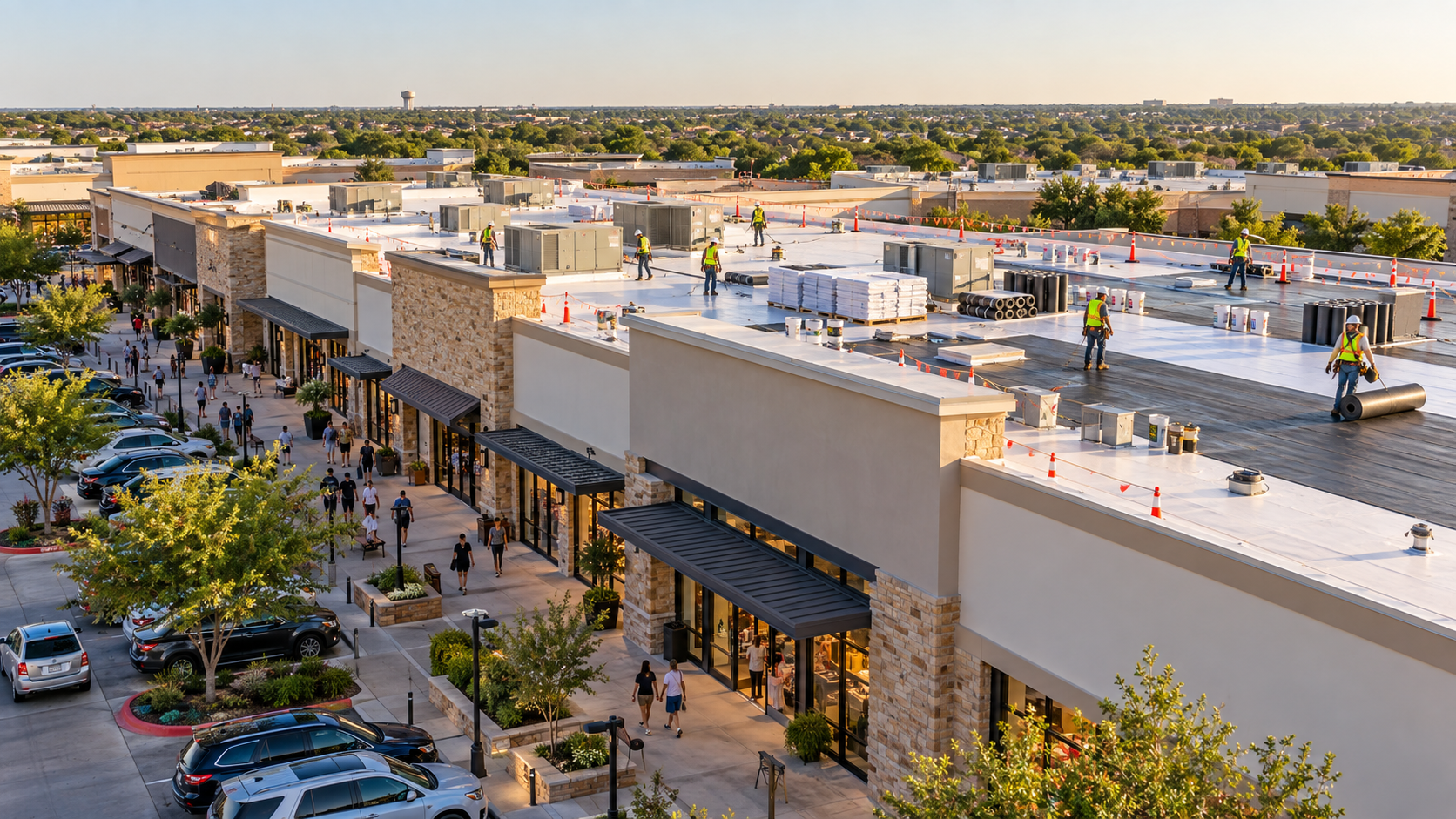
Commercial properties often have multiple roof levels, additions, equipment screens, canopies, loading areas, and tenant spaces. An inspection of one accessible section may not answer questions about the entire property.
Review the inspection notes for access limitations. Were locked roof hatches, unsafe conditions, weather, or equipment obstructions recorded? Was a second visit recommended?
Prepare a building plan showing reported concerns. Mark roof sections, interior leak locations, and areas where temporary work occurred. This helps an inspector understand what needs evaluation.
However, more inspection area does not automatically mean more storm damage. The purpose is to establish a reliable record of the areas relevant to the claim.
If you request reinspection, identify the specific location and unanswered question. “Please inspect the west addition where the reported opening was photographed” gives the reviewer a clearer task than a general demand to inspect everything again.
9. Are the Photographs Clear and Traceable?
A useful photo set connects each detail to a location.
Organize wide views, intermediate views, and close-ups. Include dates, roof-section references, and a short description of what the image shows. Where appropriate, a scale can help explain dimensions without replacing an inspector’s assessment.
Keep the original image files. Create labeled copies for presentation, while preserving the originals and available metadata.
Avoid captions that make stronger claims than the evidence supports. “Observed opening near penetration” is more useful than labeling every irregularity “hail damage” before the cause has been evaluated.
Ask whether the photo set documents both the conditions supporting the claim and relevant surrounding conditions. Selective close-ups can leave a reviewer unable to understand the overall roof.
Photographs should also distinguish conditions before and after temporary repairs. If the area changed, explain when and why.
The goal is a record someone unfamiliar with the building can follow without guessing where each image was taken.
10. What Evidence Separates Hail Damage From Other Conditions?
A denial based on deterioration calls for a specific technical response.
Ask your inspector to explain the observed conditions and the reasoning behind any opinion about cause. What supports the conclusion? What alternative explanations were considered? What remains uncertain?
A roof may contain aging materials, previous repairs, installation issues, mechanical damage, and possible storm-related damage. These conditions should be described separately where the evidence allows.
An older roof is not proof that every condition resulted from age. A recent storm is not proof that every condition resulted from hail. The inspection should address the particular findings at issue.
Consider requesting a written explanation linked to photographs and locations. A statement that the roof is “damaged everywhere” is difficult to evaluate without supporting detail.
If the cause remains uncertain or the dispute involves complex technical questions, ask whether an appropriately qualified independent specialist is needed. Define the assignment before paying for additional investigation so the report addresses the unresolved issue.
11. Does “Cosmetic Damage” Mean the Same Thing in My Policy?
If the denial uses the term “cosmetic,” request the exact policy language.
Some policies contain cosmetic-damage exclusions. TDI discusses these exclusions in its roof guidance, particularly for metal roofs, while emphasizing the need to review the policy. agate.tdi.texas.gov
Ask what component the insurer considers cosmetically affected and what inspection findings support that classification. Then ask your roofing professional to document any observed performance concerns separately.
Appearance and function should be evaluated carefully. A visible dent does not automatically establish a loss of roof function. The absence of an active leak also does not answer every question about a particular damaged detail.
Avoid universal statements about all dents or all metal roofs. The relevant evaluation concerns this component, this condition, and this policy.
If the disagreement turns on the meaning or application of an endorsement, obtain insurance or legal advice. A contractor’s construction opinion can provide factual support, but it does not determine the policy’s legal effect.
12. What Does the Leak History Show?
Create a separate chronology for interior water intrusion.
Record when leaks first appeared, where they occurred, whether they recurred, and what repairs were made. Include tenant reports, ceiling photographs, maintenance requests, and drying or cleanup invoices.
Ask the inspector whether the roof and interior observations can be connected. If that connection has not been established, the report should say so.
A leak that appeared after a storm is important to investigate. Timing alone, however, does not establish the entry point or cause. Water can appear away from the exterior location that needs attention.
Previous leak records also matter. If an area leaked before the claimed event, document that history accurately rather than omitting it.
Keep business impacts separate from the technical roof findings. Damaged inventory and interrupted operations may require their own evidence and coverage review.
A complete leak history helps everyone understand what changed, what remained ongoing, and what still needs investigation.
13. Can Maintenance Records Clarify the Dispute?
Maintenance records can establish useful background.
Gather inspection reports, repair invoices, warranty correspondence, roof-access logs, and dated photographs from before the reported storm. Ask your property manager, maintenance vendor, and previous owner for available records.
These documents may show that a reported condition was already present, that a previous problem was repaired, or that a roof area had been inspected without the current concern being noted.
Interpret the records carefully. A maintenance visit that did not mention damage is not necessarily proof that a detailed storm assessment occurred. Ask what the visit actually covered.
Likewise, missing records do not automatically establish neglect. Explain what documents exist and what gaps remain.
Do not alter descriptions or dates to make the history fit a preferred outcome. Accurate records are useful even when they reveal mixed conditions.
Going forward, keeping roof documents in one property file can make future maintenance, warranty, and insurance questions easier to answer.
14. Have I Requested the Reports Behind the Decision?
Ask the insurer for the documents it relied on, including inspection reports, estimates, photographs, and engineering reports where available.
Request them in writing and keep the response. If a requested document is not provided, record that fact and ask your advisor what further options may apply.
Review technical reports for the inspection date, areas examined, methods used, roof description, and stated limitations. Check whether the conclusion corresponds to the photographs and findings presented.
Do not focus only on the final paragraph. An earlier section might explain that part of the roof was inaccessible or that certain records were unavailable.
Also look for factual discrepancies, such as the wrong roof section, incorrect installation date, or mistaken description of a previously repaired area. Provide reliable supporting documents when asking for correction.
A difference of opinion deserves a reasoned response. An identifiable factual error deserves a precise correction. Treating those issues separately makes a reconsideration request easier to review.
15. What New Information Would a Reinspection Address?
Before requesting another visit, define its purpose.
A reinspection request is more useful when it identifies new information or a specific unanswered question. This might involve an omitted roof section, newly supplied maintenance records, a location clarification, or a technical finding that was not previously evaluated.
Explain what changed since the first inspection. Attach a short index of relevant documents rather than sending a large, unorganized collection.
Ask whether the insurer needs any additional information to consider the request. Confirm arrangements for access, authorized attendees, and any proposed testing.
TDI recommends asking an insurer to reconsider a decision when you disagree with the claim outcome. Reconsideration remains a review process, not a promise of payment. tdi.texas.gov
Keep your request factual and specific. Avoid accusing an inspector of misconduct simply because you disagree with the conclusion.
If there is no new evidence, ask a qualified advisor whether another inspection would meaningfully address the dispute before incurring more expense.
16. Is Additional Testing Necessary and Properly Authorized?
Some unanswered questions may require more than photographs.
Before agreeing to testing, ask what question the proposed method will answer, who will perform it, what it costs, and what limitations apply. Discuss how the roof will be protected and restored if investigation involves an opening.
Coordinate with the owner, insurer, and relevant warranty provider where appropriate. Confirm required permissions before work begins.
Testing should have a defined purpose. Investigating concealed moisture, for example, does not automatically establish when that moisture entered or what caused it. Ask how the results will be interpreted alongside the other evidence.
Request documentation of test locations, dates, methods, observations, and restoration work. If samples are retained, establish how they will be identified and stored.
Avoid authorizing extensive investigation simply to generate a larger report. The value lies in answering a material question that affects the roof assessment, proposed construction, or claim review.
17. Is the Disagreement About Coverage or Construction Scope?
Identify whether the insurer disputes the existence of covered damage or the work needed to address an accepted loss.
A construction-scope disagreement might involve repair quantities, removal requirements, flashing work, or whether a proposed method is feasible. A coverage disagreement concerns whether the policy responds to a particular loss.
These issues can overlap, but they should not be treated as interchangeable.
Ask your contractor to explain the proposed work in measurable terms. What area is affected? What assembly is proposed? Which details must be addressed? What evidence supports each item?
Then ask the insurer to identify which items it accepts and why others were excluded from its estimate.
A higher contractor estimate alone does not resolve a coverage denial. Similarly, acceptance of one damaged component does not automatically establish coverage for every proposed improvement.
The clearest file connects each disputed construction item to its supporting evidence while leaving policy interpretation to the appropriate professional.
18. Would Appraisal Address This Particular Dispute?
Check whether your commercial policy contains an appraisal provision and obtain advice about its application.
TDI describes appraisal as a process for disagreements about the amount of loss. It should not be assumed to resolve every coverage issue. tdi.texas.gov
Ask whether the current disagreement concerns valuation, coverage, causation, or several issues together. Also ask about the provision’s procedures, deadlines, costs, and potential consequences.
Do not assume that rules discussed for homeowners policies apply identically to your commercial contract. Review your own policy.
Before retaining an appraiser, understand the assignment and fees. Ask how the process would address the specific items in dispute and what issues might remain afterward.
A recommendation to invoke appraisal should come with an explanation of why it fits this claim. Avoid treating it as an automatic next step after every denial.
When the legal effect is unclear, consult an attorney experienced with commercial property insurance before making a demand.
19. Which Deadlines and Claim Requirements Apply?
Build a deadline list early.
Ask your insurer or qualified advisor about notice requirements, requested documents, proof-of-loss obligations, reconsideration procedures, appraisal provisions, and any applicable legal deadlines.
Different policies and claim situations can involve different requirements. Do not rely on a deadline quoted for another owner’s claim.
Keep copies of letters and messages that request information. Record the date received, the response requested, and how your response was delivered. Confirm receipt of important submissions.
If you cannot meet a requested date, ask promptly about an extension and obtain any agreement in writing. Do not assume that an ongoing conversation changes an existing requirement.
Also ask whether a complaint, additional inspection, or informal review affects other deadlines. Avoid making that assumption without qualified advice.
Administrative organization matters here. A technically strong roof report may be less useful if a property owner overlooks a required response or waits too long to seek advice.
20. How Do I Protect the Building While Preserving Evidence?
Roof protection and claim review may need to proceed together.
If water intrusion or unsafe conditions are present, arrange appropriate professional assistance. Document conditions before temporary work when it is safe, photograph the work, and retain descriptions and receipts.
TDI’s storm guidance recommends documenting damage, preventing further damage, saving receipts, and retaining damaged items until the insurer gives permission to dispose of them. tdi.texas.gov
Tell the insurer about urgent work and ask how it wants relevant evidence preserved. Keep records of the communication.
Before permanent removal or replacement, discuss inspection opportunities and evidence preservation with your insurer and advisor. This is particularly important where the existing material is central to a disputed cause-of-damage question.
Do not delay necessary protection solely to keep the roof untouched. Instead, coordinate a practical documentation plan.
Separate emergency work from the proposed permanent scope so the file clearly shows what occurred, why it was necessary, and what remains outstanding.
21. Who Should Handle the Insurance Dispute?
Choose professionals according to the question you need answered.
A roofing contractor can evaluate construction conditions, prepare estimates, and perform authorized roofing work. A licensed public adjuster may provide claim services within the applicable rules. An attorney can advise on legal rights and coverage disputes.
Texas restricts contractors from acting as public adjusters on properties where they provide or may provide contracting services. TDI also cautions against contractor advertising that promises to negotiate settlements or represent policyholders on coverage issues. tdi.texas.gov
Ask each professional to explain their role, qualifications, fees, and deliverables. Check a public adjuster’s license and review the contract before hiring. tdi.texas.gov
Be cautious about promises of guaranteed approval or a guaranteed payment amount. The outcome depends on the evidence, policy, and applicable process.
For Showtime Exteriors, the relevant role is roofing evaluation and construction documentation. Claim representation and legal advice should come from an appropriately authorized professional.
22. What Would a Complaint Accomplish?
If you believe the insurer handled the claim improperly, ask whether a complaint is appropriate.
TDI provides assistance with complaints involving insurers, agents, and adjusters. Its complaint process has limits and does not replace every other dispute-resolution option. tdi.texas.gov
Prepare a clear chronology and identify the specific issue. Examples might include an unanswered request, an unexplained decision, or a disagreement about how the insurer applied policy terms.
Attach relevant documents and verify all facts before submitting them. A concise account supported by records is easier to evaluate than a long narrative containing assumptions.
Ask what the complaint process can address and what issues may require another route. Do not assume filing a complaint automatically changes other deadlines or secures payment.
TDI explains that it cannot simply require payment unless the failure to pay violates applicable law or policy terms. tdi.texas.gov
A complaint should have a defined purpose within your broader plan for resolving the claim.
23. What Are My Financial Responsibilities if the Denial Stands?
Plan for the possibility that some or all roofing costs remain your responsibility.
Request a construction estimate that separates urgent protection, proposed permanent work, optional improvements, and known uncertainties. Ask how concealed conditions would be priced and approved.
Understand the deductible and any applicable depreciation or limits with help from your insurer or advisor. ACV generally means replacement cost less depreciation, while replacement cost treatment depends on the policy’s provisions. tdi.texas.gov
Before signing, ask whether the roofing contract creates payment obligations regardless of the insurance outcome. Review cancellation terms, deposits, change orders, and payment timing.
Texas prohibits contractors from offering to waive, rebate, or absorb a property insurance deductible. tdi.texas.gov
Avoid choosing a proposal based on an unsupported promise that insurance will cover everything. A realistic budget helps protect the property owner from committing to work without understanding how it will be funded.
24. Have I Organized a Focused Reconsideration Package?
A reconsideration package should help the reviewer understand the unresolved question quickly.
Begin with the claim number, property identification, reported event, decision date, and a short explanation of what you are asking the insurer to review.
Then organize supporting materials by issue. Connect inspection findings, photographs, maintenance records, and estimate items to the relevant part of the denial.
Remove duplicates and clearly identify updated versions. Preserve the original records separately. If an earlier document contained an error, explain the correction instead of quietly substituting a new file.
Ask your advisor whether the package addresses every stated denial reason. Evidence answering only one issue may leave another basis for the decision unresolved.
Keep a complete copy and a record of submission. Request acknowledgment and ask what information, if any, remains necessary.
The strength of the package comes from its accuracy and relevance. Its purpose is to support a review, not to overwhelm the reviewer with volume.
Get a Clear Roof Assessment Before Choosing Your Next Step
Before challenging a hail claim denial, understand the decision, gather the applicable policy, and identify the evidence needed to address the actual disagreement.
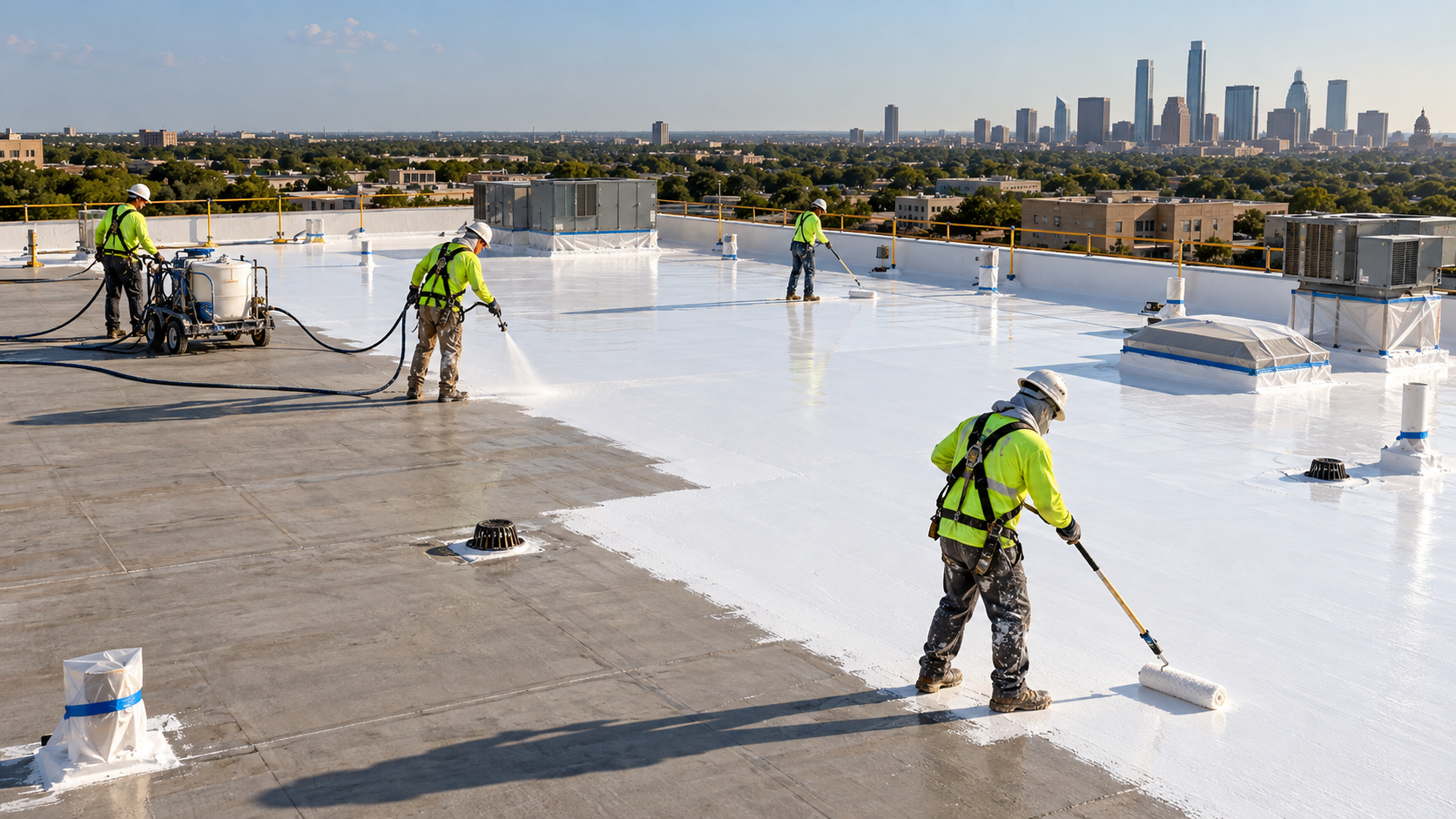
A documented roofing evaluation can help clarify observed conditions, inspection limitations, and proposed construction requirements. It can also help you decide whether further technical investigation is worthwhile.
Contact Showtime Exteriors to schedule a commercial roof evaluation and discuss your property’s roofing needs. Call 817-400-ROOF (7663) or visit showtimeexteriors.com.
Bring your denial letter, inspection reports, roof records, and existing estimates so the construction discussion starts with the information already available. For coverage interpretation, claim representation, or legal deadlines, consult an appropriately qualified insurance professional or attorney.