



What a Roofing Contractor Can and Cannot Do During a Hail Claim Denial
Learn what a Texas roofer can inspect, document, and explain after a hail claim denial, and where coverage disputes require an insurance professional or attorney.
A hail claim denial can leave an owner with two separate concerns: what condition the roof is in and what the insurance decision means. A roofing contractor can help answer construction questions, but that expertise does not make the contractor the policyholder's insurance representative.
In Texas, clear professional boundaries matter before and after a denial. A roofer can inspect accessible conditions, document findings, prepare an estimate, and explain technical information. Negotiating an insurance settlement or representing the owner on coverage is a different role with legal restrictions.
Showtime Exteriors can discuss roof assessments and construction estimates for Texas properties. This guide explains what useful roofing support looks like after a denied hail claim and how owners can organize the next steps. Policy interpretation, claim representation, and legal advice should go to appropriately qualified professionals.
Begin with the Written Decision
Do not rely only on a phone summary that insurance denied the roof. Obtain the insurer's written explanation and identify which property, claimed event, and items it addresses.
The Texas Department of Insurance's claim denial guidance explains that the company must provide its denial reason in writing. Ask the insurer to clarify any part you do not understand.
Keep the letter, estimate, policy documents, and relevant correspondence together. A full denial, a partial denial, and a covered amount below the deductible are different situations.
The roofer can review the physical findings relevant to its construction scope. It should not substitute a sales explanation for the insurer's written reasoning or provide a legal conclusion about whether the decision violates the policy.
Separate Roof Condition from Insurance Coverage
A roof may need maintenance or repairs even when an insurer does not pay the requested claim. Conversely, visible marks do not automatically establish covered hail damage or a need for replacement.
Ask the roofer what it observed, how the findings affect the assembly, and what work it recommends. Ask the insurer how the policy applies to the evaluated loss.
These discussions may use some of the same photographs but answer different questions. A construction estimate states proposed work and price; it is not itself a coverage decision.
Avoid treating either a denial letter or a contractor proposal as a complete assessment of every building concern. Active leaks, structural issues, and interior damage may require separate attention from appropriate professionals.
Texas Defines the Contractor's Boundary
Texas restricts a contractor from acting as a public adjuster or advertising to adjust claims for property where it provides or may provide contracting services. This boundary is not removed merely by calling the service free help.
TDI's roofing and insurance law guidance identifies problematic conduct such as offering settlement negotiation or speaking for the policyholder on coverage. It also addresses prohibited deductible waivers.
A denial does not expand the roofer's authority. The contractor's useful role remains focused on physical conditions, construction methods, estimates, and authorized work.
Before signing an agreement, ask exactly which services are included. An inspection appointment or technical discussion should not be confused with hiring someone to represent you in a dispute with the insurer.
What the Roofer Can Do: Inspect Accessible Conditions
A qualified contractor can evaluate roofing materials and details within an agreed scope, subject to access and inspection limitations. It can identify observed damage, deterioration, previous repairs, and conditions requiring further investigation.
For a home, Showtime Exteriors' residential roofing services provide context for an assessment discussion. Share installation records, prior leak history, and recent changes before the visit.
The report should identify roof sections and explain what was inspected. If a concealed layer or inaccessible slope could not be evaluated, that limitation should be stated.
Owners should not climb onto the roof, lift shingles, or create test marks to support a claim. Appropriate inspection methods and access decisions belong with qualified personnel.
What the Roofer Can Do: Document Specific Findings
Useful documentation pairs close-up photographs with wider views identifying the property and roof section. Include dates, location references, and short descriptions of observed conditions.
A report might describe a damaged shingle, affected flashing, or a puncture in a membrane. It should distinguish those observations from uncertain conclusions about cause or timing.
Preserve original image files separately from annotated copies. Arrows or labels may explain a location, but they should not obscure, manufacture, or exaggerate damage.
A collection of unlabeled marks is less useful than a smaller set connected to a roof map and clear findings. Ask the contractor to explain why each important observation matters to the proposed construction work.
What the Roofer Can Do: Explain Material-Specific Issues
Different roof coverings respond differently to impact and weathering. A shingle mark, metal dent, and membrane opening should not be evaluated using one generic description.
The contractor can explain its observations within its expertise and describe whether further assessment is needed. Surface appearance may not establish the condition of reinforcement, insulation, decking, or other concealed components.
Ordinary drone photographs cannot verify hidden moisture. Thermal anomalies, where a suitable survey is performed, require qualified interpretation and appropriate verification before concluding that materials are wet.
Avoid categorical statements that every mark is hail damage or that every dent is harmless. The explanation should connect the actual material and observed condition with the recommendation and its limits.
What the Roofer Can Do: Prepare a Construction Estimate
An estimate should identify affected areas, materials, quantities, proposed methods, price, exclusions, and assumptions. Optional improvements should be separated from the work recommended for documented conditions.
If further investigation may change the scope, explain what remains unknown and how additional findings will be authorized. A complete price cannot always be established from surface photographs alone.
The owner can provide the estimate to the insurer through its designated process. The contractor can explain its own construction information without representing the owner on coverage.
Keep revisions dated and identify why the scope changed. Replacing an estimate total without explanation can make a review harder to follow, especially when several versions have already been shared.
Technical Discussion Is Different from Claim Negotiation
A roofer may explain measurements, materials, proposed installation methods, and the cost of its work. It may discuss those technical matters with an insurer or adjuster.
TDI's roofing and adjusting bulletin expressly recognizes contractor estimates and technical discussions while restating restrictions on contractors acting as adjusters for the same property.
For example, a contractor can identify which flashing its proposal includes and explain the physical condition behind that recommendation. It should not promise to overturn the denial or negotiate what the policy legally requires the insurer to pay.
The distinction depends on actual conduct, not the title of a document. Calling a coverage demand a technical supplement does not automatically make it part of the construction role.
What the Roofer Can Do: Participate in a Defined Reinspection
If the insurer arranges another inspection, a contractor may identify observed conditions and explain its technical findings during that visit. Clarify the purpose and participants beforehand.
The homeowner should know who is attending, what information will be reviewed, and who communicates about the claim afterward. Attendance does not give the roofer authority to represent the insured on coverage.
Ask for a factual record of roofing observations and any additional construction information requested. Keep insurer decisions distinguishable from contractor recommendations.
A second inspection does not guarantee a different outcome. Its value is the opportunity to evaluate relevant information clearly, including any new evidence, unresolved physical questions, or limitations in an earlier assessment.
What the Roofer Cannot Do: Guarantee Reversal
Promises that every denial can be reversed or that the insurer will certainly buy a roof are not a substitute for evidence and policy review. The contractor does not control the insurer's decision.
Likewise, a neighbor receiving a replacement or a storm being reported nearby does not establish that this property has the same damage or coverage.
Ask what specific roofing findings support the recommendation. Keep the discussion grounded in the roof rather than a predicted settlement amount.
If the contractor offers a construction agreement before coverage is resolved, understand the price and payment obligations independently. A homeowner should not assume the agreement disappears automatically if the insurer maintains its decision.
What the Roofer Cannot Do: Provide Policy or Legal Representation
A contractor's roofing expertise does not authorize it to give the homeowner a legal strategy or act as a public adjuster for property where it provides or may provide work.
Questions about policy interpretation, legal remedies, enforceability, and dispute deadlines should go to the appropriate insurance professional or attorney. The owner should understand the scope and cost of any engagement.
TDI's public adjuster guidance explains a role owners may consider for claim representation and the importance of licensing, fees, and limitations. Public adjusters cannot serve as the contractor on the same claim or provide legal advice.
Keep roles explicit so a roofing report is not mistaken for a formal dispute response or legal action.
What the Roofer Cannot Do: Change Facts to Fit the Claim
An owner should never ask a contractor to invent damage, select an unsupported event date, alter photographs, or write an estimate for work that is not actually proposed.
If the timing or cause is uncertain, document the uncertainty. Earlier wear, repairs, installation conditions, and other sources of damage may be relevant.
The contractor should not damage the roof to create a demonstration. Investigation that requires opening the assembly should be authorized, performed appropriately, and restored as agreed.
Accurate documentation may support further review, but it may also confirm that a particular observation is unrelated to the claimed event. A useful assessment is credible because it describes the property honestly rather than promising a predetermined answer.
What the Roofer Cannot Do: Waive the Deductible
Texas prohibits contractors from offering to waive, rebate, or absorb an insurance deductible. An owner should understand the deductible and other expected costs before approving construction.
Keep the contract price, optional work, payment schedule, and owner responsibilities clear. Do not sign an invoice or receipt that misstates the amount paid or work performed.
A denial does not make an inaccurate payment arrangement acceptable. Nor should the contractor propose changing document language simply to produce a different insurance result.
If payment depends on financing, future insurance review, or lender release, resolve the construction terms explicitly. The policy process and the contractor's agreement can involve different requirements and timing.
Distinguish the Type of Disagreement
QuestionUseful roofing contributionOther responsibilityWas a location inspected?Identify section and provide findingsInsurer explains its reviewWhat work is proposed?Itemized construction scopeOwner approves the agreementAre measurements different?Explain quantities and methodInsurer reviews its estimateDoes an exclusion apply?Provide relevant physical factsQualified policy or legal adviceIs the amount disputed?Document proposed work and priceAppropriate dispute processIs a deadline approaching?Deliver requested construction recordsOwner and adviser track requirements
A disagreement about the amount of loss is not always the same as a disagreement about coverage. Identify the actual issue before choosing a next step.
Appraisal Is Not a Universal Answer to Denial
Do not assume a roofer's recommendation to request appraisal resolves every hail denial. Availability, suitability, procedure, and deadlines require review of the actual policy and dispute.
TDI's insurance complaint and appraisal guidance explains that appraisal addresses the amount of damage rather than deciding whether the policy covers something. It also describes the complaint process and its limitations.
Ask the appropriate adviser whether appraisal is relevant to the issue being disputed and what costs or other consequences may apply. The contractor can supply construction information without becoming the owner's representative.
A complaint likewise does not guarantee payment. Keep requested documents accurate and seek timely professional advice when the issue involves legal rights or unresolved coverage interpretation.
Keep the Building's Repair Needs Moving
A denied claim does not eliminate an active leak or another physical concern. Arrange appropriate assessment and discuss safe temporary protection where needed.
Do not enter unstable areas or attempt owner-installed roof tarping on an unfamiliar roof. Keep people away from sagging ceilings, wet electrical equipment, and other hazards requiring specialist attention.
Document temporary work, dates, costs, limitations, and planned permanent follow-up. Coordinate with the insurer about mitigation and inspection where relevant without delaying urgent safety actions.
Keep interior recovery separate from exterior roofing work. A patch does not dry affected insulation, establish electrical safety, or determine whether an interior space is ready for use.
Commercial Roofs Need Assembly-Specific Support
A denied hail claim on a commercial roof may involve different materials and details from a shingle roof. Identify membranes, coatings, metal panels, flashings, and affected sections before selecting an inspection scope.
Showtime Exteriors' commercial roofing information provides context for discussing that assessment. Ask whether moisture investigation or another specialist is needed to address unresolved conditions.
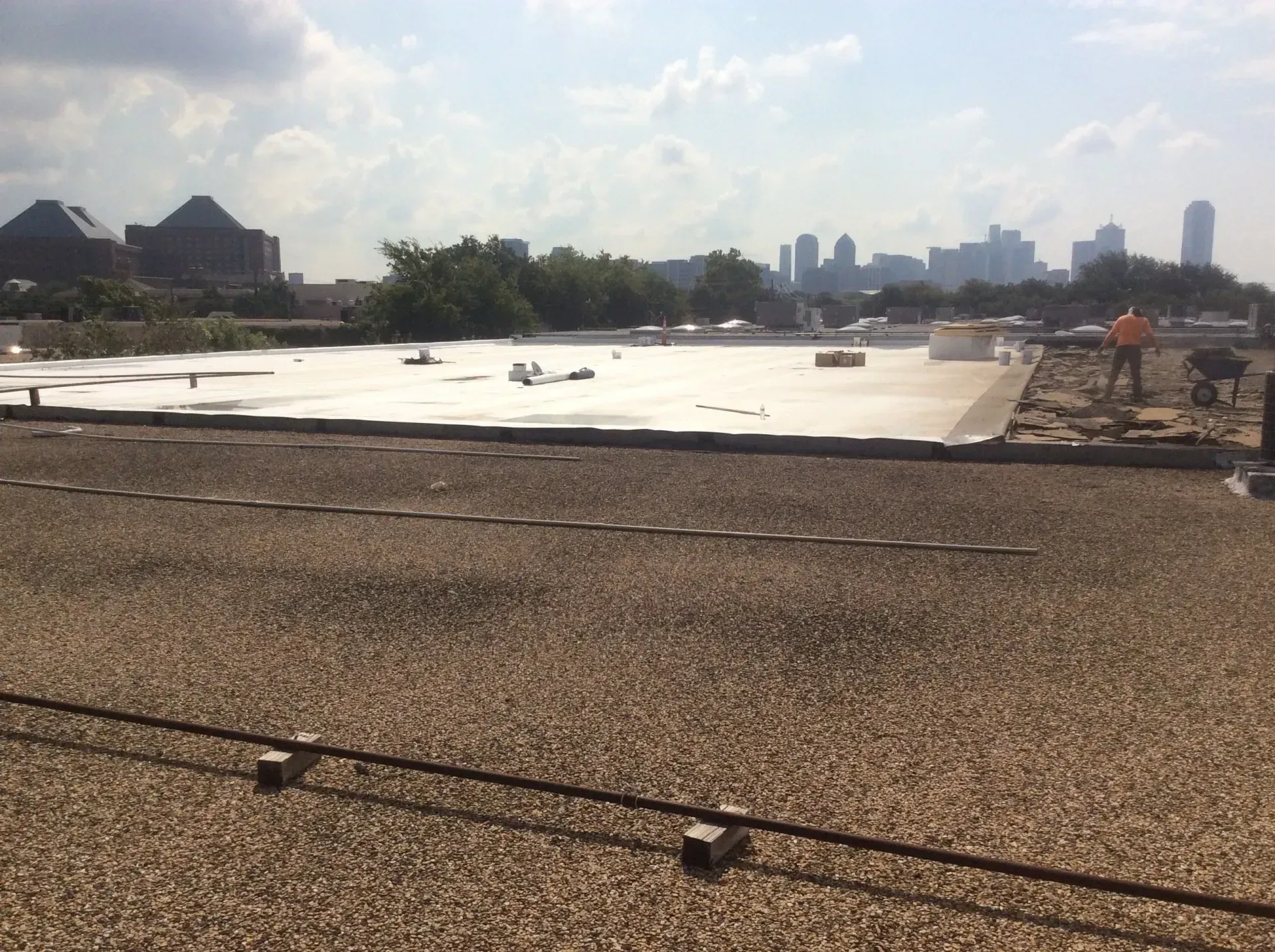
Aging gravel-surfaced built-up roofs can present deterioration and leak-tracing challenges. The visible surfacing does not establish the condition of concealed layers or prove that all observed problems came from one event.
Keep business operations, tenant access, and equipment coordination in the construction plan. A coverage dispute should not obscure the need to understand and manage the actual building conditions.
Organize a File That Supports Specific Questions
Keep the written decision, current insurer estimate, relevant policy documents, contractor report, photographs, maintenance history, and correspondence in identifiable sections. Preserve earlier versions rather than overwriting them without explanation.
Showtime Exteriors' commercial roof maintenance records guide offers recordkeeping ideas that owners can adapt to homes as well as larger properties.
Create a short index stating what each document addresses. Pair each unresolved question with the person responsible for answering it.
If submitting information to the insurer, state the specific question and list the attachments. A clear factual submission is easier to review than repeated messages that only demand a different outcome without identifying the issue.
Evaluate Construction Choices Independently
An owner may choose repair, further investigation, or a retail-funded project while a dispute remains unresolved. Understand the scope and financial responsibility before authorizing work.
If replacement is proposed, compare assembly conditions, drainage, insulation, materials, access, and maintenance. The Texas roofing system selection guide provides broader construction questions.
Separate optional improvements from work recommended for documented defects. A new roof choice should address the property rather than depend on an assumption about a future claim payment.
Ask how concealed conditions and scope changes will be handled. Keep the contractor's construction agreement clear even when another professional is advising on insurance matters.
Questions to Ask before Signing
Ask who will inspect the roof, what report you will receive, whether the visit has a fee, and what limitations apply. Clarify whether any document commits you to construction.
Request a written description of the contractor's services and payment terms. Be cautious about vague promises to handle the denial or recover all money without identifying the professional role involved.
Ask how the contractor will communicate technical findings and who submits documents to the insurer. Confirm which questions remain the owner's responsibility.
Finally, identify the next action and date. A roofing appointment, claim review, and legal consultation serve different purposes. Knowing which one is pending prevents an owner from assuming the entire dispute is being managed through a construction estimate.
Confirm Who Handles the Next Step
The Texas Office of Public Insurance Counsel's residential claims overview describes documentation and professional options owners may consider. Use that context to clarify responsibilities rather than assuming one person handles every issue.
Before the next appointment, list the documents still needed and who will provide them. Confirm the person responsible for reviewing insurer requests, tracking applicable deadlines, and approving construction. Keep those assignments with the current file so an unfinished task is not lost between conversations.
Frequently Asked Questions
Can a roofer overturn my hail claim denial?
A roofer can provide physical findings and construction information for review. It cannot guarantee reversal or act as your public adjuster for property where it provides or may provide contracting services.
Can the roofer talk to the adjuster?
Yes, within the construction role. Technical discussions about observations, measurements, proposed work, and estimates differ from representing the homeowner on coverage or negotiating a settlement.
Does a denied claim mean the roof has no damage?
Not necessarily. Read the written explanation and obtain a clear physical assessment. The condition of the roof and the insurer's application of the policy are separate questions.
Should I request another inspection?
Ask the insurer what information would support further review, and consider appropriate professional advice. A defined reinspection may be useful where specific physical questions remain, but it does not guarantee another result.
Can I repair the roof while the decision is disputed?
Coordinate appropriate protection and discuss permanent work, documentation, and inspection needs with the relevant parties. Understand the construction agreement and your payment obligations before proceeding.
Request Clear Roofing Documentation
After a hail claim denial, useful roofing support means accurate observations, an understandable scope, and honest limits. Clear professional roles help the owner address construction needs while directing coverage and legal questions to the right place.
For a Texas roof assessment or construction estimate, contact Showtime Exteriors or call 817-400-7663. Share available roof history, current concerns, and the physical questions that remain unresolved so the assessment can focus on the property accurately.