

Best Roofing Systems for a Restaurant Roof in Texas
Compare restaurant roof systems in Texas, including PVC, TPO, metal, and restoration options, with guidance on grease exposure, drainage, equipment, and operations.
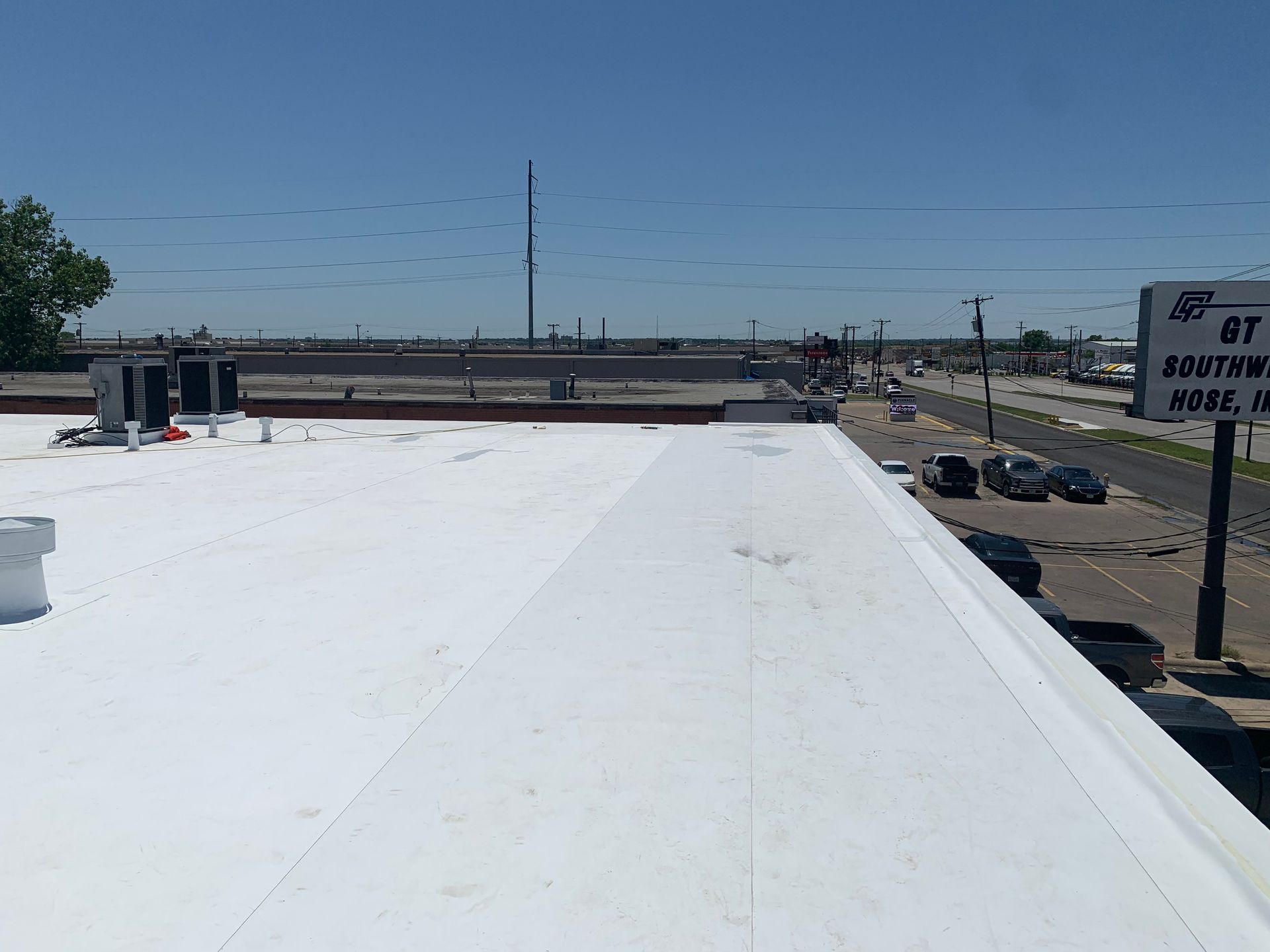
A restaurant roof supports a demanding mix of equipment, service visits, drainage, and kitchen exhaust exposure. Choosing a system means understanding those conditions alongside the building's structure and geometry. A membrane suitable for a quiet office may need a different evaluation above a commercial kitchen.
For many low-slope restaurant projects, PVC deserves serious consideration because of product-specific resistance to certain fats, oils, and chemicals. It is still necessary to verify the exact exposure, complete assembly, installation requirements, maintenance plan, and warranty terms. No material removes the need for grease control or compatible repairs.
Showtime Exteriors can discuss roof assessments and construction needs for Texas restaurants. This guide compares common options and explains the questions owners should resolve before approving work. The final recommendation should reflect the actual building and appropriate professional review.
Begin with the Restaurant's Operations
Identify cooking methods, exhaust equipment, rooftop HVAC, refrigeration equipment, service frequency, and known contamination. A bakery, a heavily used frying kitchen, and a restaurant with limited cooking may expose their roofs differently.
Record operating hours, deliveries, guest entrances, outdoor dining, and neighboring tenant restrictions. These details affect how construction can be staged and which installation methods are practical.
Collect roof installation records, warranties, repair invoices, and leak reports. Mark additions and separate roof sections rather than assuming the whole property has one assembly.
A useful assessment connects physical conditions with operating needs. It should identify what is verified, what remains unknown, and which questions require the roofer, mechanical contractor, exhaust specialist, or design professional.
Why Kitchen Exhaust Changes the Selection Question
Cooking operations can discharge grease, oils, and other deposits onto nearby roof areas. Those exposures can affect materials and require ongoing management even when the roof is otherwise serviceable.
Johns Manville's roof design and maintenance paper discusses building discharges and identifies PVC as an option better suited to some restaurant grease and oil exposures. That is a reason for evaluation, not a guarantee of universal compatibility.
Document where deposits occur and whether the exhaust system's collection arrangements are functioning. Do not select a membrane as a substitute for correcting an ongoing discharge problem.
Ask the proposed manufacturer about the actual substances, exposure conditions, and limitations. A broad statement that the roof is chemical resistant leaves too much unanswered.
Compare the Main Options
SystemPotential roleImportant restaurant-specific questionPVC or PVC KEELow-slope candidate with relevant exposure propertiesIs the specific product suitable for actual contaminants?TPOLow-slope option where exposure is evaluated and controlledWhat do product guidance and warranty terms say?EPDMCandidate for suitable areas and assembliesHow will grease and other contamination be addressed?Modified bitumenDefined layered low-slope assemblyAre exposure and installation methods appropriate?MetalSuitable pitched sections or designed metal roofsHow are penetrations, drainage, and movement handled?Coated SPF or restorationSuitable existing substrates or defined assembliesAre moisture, adhesion, contamination, and repairs resolved?
The best choice is a specified assembly, not a generic category. Compare deck conditions, insulation, cover board, attachment, edges, flashings, and maintenance alongside the exposed material.
PVC: Often a Leading Low-Slope Candidate
PVC is a thermoplastic membrane with welded seams and system-specific accessories. Restaurant applications can make its product-specific exposure characteristics particularly relevant.
GAF's PVC project guidance discusses applications involving grease-laden exhaust. The proposed product and actual conditions still need to be evaluated together.
Ask the contractor to identify the membrane, thickness, attachment method, insulation, cover board, and flashing approach. A proposal that says only install PVC is incomplete for meaningful comparison.
Also discuss service routes and future equipment replacement. Material resistance does not make the membrane immune to punctures, dragged panels, or dropped fasteners. Protective practices remain part of the roof's performance plan.
PVC KEE: Review the Specific Product
Some PVC membranes include KEE-related formulations intended to provide particular performance characteristics. The relevant question is what the specific product documentation establishes for the proposed application.
GAF's PVC KEE food service information presents product-specific restaurant context. Do not assume all PVC or KEE-labeled products have identical properties or coverage.
Ask for current technical information and written clarification when chemical exposure is central to the decision. The roof proposal should identify the product being priced rather than rely on a general sales description.
Keep the performance discussion separate from the warranty discussion. A product can be marketed for useful resistance while the warranty contains exclusions relevant to the same exposure.
Warranty Resistance and Coverage Are Different
An owner may reasonably hear that a membrane resists grease and assume grease damage is covered. That assumption should be checked before the contract is signed.
For example, GAF's PVC roofing resources state that its warranties and guarantees do not provide coverage against chemical exposure or exposure to grease, animal fats, and jet fuel. Review the actual proposed documents and current terms.
Ask who provides each warranty and what maintenance, notice, and authorized repair requirements apply. Contractor workmanship coverage and manufacturer coverage can address different issues.
Avoid promising that a particular material guarantees an insurance or warranty outcome. The owner's decision should account for documented limitations and the building's exposure management plan.
TPO: Evaluate the Exposure before Selection
TPO can be a candidate for low-slope commercial roofs, but a restaurant assessment should specifically address grease and chemical exposure rather than treating the building like a generic office.
Ask the manufacturer about compatibility and limitations for the actual kitchen discharge and cleaning practices. Identify whether protective measures or a different material are appropriate near equipment.
A bright surface, welded seam, or attractive price does not answer the exposure question. Likewise, a general statement that every TPO restaurant roof will fail is too broad to support a project decision.
Compare the complete assembly, maintenance requirements, and documented suitability. The contractor should explain why the proposed system fits the conditions being observed and how recurring contamination will be managed.
EPDM and Asphaltic Systems: Ask the Same Hard Questions
EPDM and modified bitumen may be present on existing restaurant properties or considered for particular roof sections. Evaluate their condition and exposure rather than assuming replacement is necessary from the material name alone.
Where grease, oils, or other substances reach the surface, obtain product-specific guidance before proposing repairs, cleaning, or continued use. Different roof areas may have different exposure levels.
Modified bitumen proposals also need to define the layers, surfacing, and application method. Occupied restaurants may have restrictions related to odors, hot work, access, or staging.
Aging gravel-surfaced built-up roofs require careful deterioration assessment and leak tracing. Visible gravel does not establish the condition below, and concealed moisture should not be ignored when comparing alternatives.
Metal: A Candidate for Appropriate Geometry
A restaurant with a designed metal roof or pitched architectural sections may be a candidate for metal repairs or replacement. Slope, supporting structure, panel type, attachment, and drainage guide the recommendation.
Review penetrations carefully. Exhaust, HVAC, signage supports, and later additions can complicate details on a metal roof. Repeated sealant applications should not replace understanding how the assembly accommodates movement and sheds water.
Separate rainwater entry from condensation concerns. Interior humidity, insulation, air leakage, and temperature differences may require a broader building evaluation.
For pitched sections, Showtime Exteriors' residential roofing information offers service context for relevant materials. The construction plan must still reflect the property's commercial use and restaurant operations.
Coatings and Spray Foam: Verify the Substrate
A restoration coating over an existing roof and a coated spray polyurethane foam assembly are different options. Both require suitable conditions and compatible products.
Investigate contamination, adhesion, moisture, previous repairs, drainage, and affected underlying materials. Do not assume a fresh white surface resolves a recurring leak or makes a contaminated roof suitable for restoration.
Ask whether the proposed work is localized repair, a maintenance coating, a restoration system, or a new assembly. The purpose and limitations should be explicit.
If renewal is proposed, clarify preparation, required repairs, product compatibility, application controls, and future maintenance. A coating should not be presented as a shortcut around wet insulation, deteriorated decking, or unresolved exhaust discharge.
Grease Collection Needs Its Own Maintenance Plan
Coordinate grease management with qualified kitchen exhaust professionals and the roof contractor. Equipment, containment, service access, and cleaning procedures need to work together without damaging roofing materials.
Do not block drains or create unplanned water traps with collection devices. Ask how the arrangement is maintained and how the surrounding roof will be inspected.
Duro-Last's restaurant roofing resources provide another manufacturer's perspective on food-service applications. Compare specific documented properties rather than treating a manufacturer example as a universal answer.
Record recurring deposits and service intervals. If contamination repeatedly appears in the same area, discuss the cause and corrective options rather than repeatedly cleaning without changing the underlying condition.
Cleaning Must Fit the Roof and the Contaminant
Ask the manufacturer or qualified roofing professional which cleaning products and methods suit the installed assembly. A degreaser used elsewhere in the restaurant is not automatically appropriate on the roof.
Duro-Last's roof cleaning guidance discusses cleaning considerations, including grease contamination. Use the current instructions for your actual system.
Plan runoff management, drainage, equipment protection, and safe access. Aggressive pressure, solvents, abrasives, or incompatible chemicals can create additional problems.
Keep exhaust cleaning and roof cleaning responsibilities clear. Require service providers to report spills, displaced components, and accidental damage. A cleaned fan does not establish that the roof around it has been inspected or restored.
Protect Roof Areas Around Equipment
Restaurants often require frequent rooftop visits. HVAC technicians, exhaust cleaners, refrigeration specialists, and other trades may follow the same paths repeatedly.
Designate suitable routes and protective measures with the roofing professional. Keep sharp tools, loose fasteners, and removed panels off unprotected surfaces.
Before replacing equipment, coordinate curb changes, lifting, staging, penetrations, and final flashing. Do not let one trade leave a temporary seal that no one has agreed to replace.
Showtime Exteriors' commercial roofing service information provides context for assessing these details. Ask the proposal to identify roofing responsibilities around equipment and any work that belongs to another qualified trade.
Drainage Should Be Reviewed before Reroofing
Map drains, scuppers, gutters, downspouts, overflows, and recurring accumulation areas. Inspect for debris, displaced equipment, blocked routes, and signs of unintended water flow.
If water remains repeatedly in one area, investigate the contributing conditions. Slope, insulation, deck movement, or drainage configuration may need attention beyond cleaning.
A roof material's properties do not eliminate drainage requirements. Nor should an overflow be altered simply because it appears inconvenient during maintenance.
Ask the proposal to explain which drainage concerns are addressed and which require separate design review. A new membrane that reproduces an existing problem without explanation is not a complete response to the building's needs.
Match Insulation and Moisture Control to the Building
Commercial kitchens can have different interior conditions from dining rooms, storage areas, and adjoining tenant spaces. Roof design should account for the building's actual use and relevant requirements.
Evaluate existing insulation and any suspected moisture. A visually intact membrane does not prove that the materials beneath are dry or suitable for retention.
When re-covering is proposed, ask how the retained assembly will be assessed for moisture, compatibility, attachment, loads, and applicable limitations. Additional layers should not conceal unresolved deterioration.
Include appropriate design expertise when the project requires it. An exterior material substitution alone may not address air leakage, condensation, or a change in interior operating conditions.
Plan Work Around Guests, Staff, and Deliveries
Identify entrances, accessible routes, outdoor seating, delivery doors, refuse collection, and emergency access. Coordinate staging and lifting around the restaurant's operating schedule.
Discuss noise, odors, dust, debris, air intakes, and daily weather protection before work begins. Do not promise uninterrupted operation without reviewing the actual scope and site.
Assign one restaurant contact and one construction contact. Establish how schedule changes, unexpected findings, and occupant concerns will be communicated.
For leased properties, clarify who approves the scope and pays for equipment-related work. The operator, landlord, and service contractors may have different responsibilities that should be resolved before the roof is opened.
Compare Cost over a Defined Scope
A restaurant roof price depends on removal, access, substrate repairs, insulation, drains, penetrations, equipment coordination, material, and operating restrictions. A universal square-foot figure can hide substantial differences.
Request comparable proposals identifying retained materials, exclusions, assumptions, optional improvements, and the procedure for concealed findings. An inexpensive surface treatment is not equivalent to a replacement scope that addresses wet materials and deteriorated details.
Compare maintenance needs and exposure limitations alongside initial cost. The useful question is what the owner receives and what responsibilities remain afterward.
For broader assembly comparisons, review the Texas roofing system selection guide. The final choice should explain how the roof fits the restaurant rather than simply naming a popular product.
Establish Maintenance before Project Completion
Schedule inspections around manufacturer requirements, actual condition, exposure, and rooftop service. Additional checks may be appropriate after significant weather, equipment work, or reported damage.
Keep a roof map, product information, warranties, inspection reports, photographs, invoices, and access logs together. Showtime Exteriors' commercial roof maintenance records guide offers practical organization ideas.
Track findings through completion with a responsible person and target date. A report that repeatedly lists the same unresolved defect is not a working maintenance program.
If staff notice interior staining or active water entry, report it promptly through an agreed process. Keep people away from unstable ceilings and wet electrical equipment, and involve appropriate professionals for the conditions observed.
Restaurant Roof Decision Checklist
DecisionWhat to confirmExisting assemblyVerified materials, condition, and unknownsKitchen exposureActual contaminants and manufacturer guidanceProposed systemComplete components and installation methodDrainageExisting concerns and planned correctionsEquipmentCurbs, penetrations, access, and trade responsibilitiesOperationsGuest protection, staging, deliveries, and communicationFinancial scopePrice, exclusions, options, and change processCoverageActual warranty terms and owner requirementsHandoffCompletion records and maintenance schedule
Use the checklist to identify open questions. It should support a property-specific recommendation rather than replace a technical assessment.
Resolve the Handoff before Construction Ends
Before the project closes, review the installed assembly with the contractor and restaurant manager. Confirm that the final product information matches the approved scope and that any authorized changes are documented.
Ask for photographs of completed details around equipment, drains, and transitions. Keep those images with the updated roof map so later service providers can identify the relevant areas without guessing.
Review grease collection and rooftop access procedures with the appropriate trades. A new roof can be damaged quickly if existing service practices remain unchanged. Tell contractors where to travel, how to protect the surface, and whom to notify if they observe a problem.
Separate unfinished construction items from future maintenance tasks. If a temporary detail remains, assign a responsible party and completion date. If a follow-up inspection is planned, record who will arrange it and what it is intended to verify.
Provide the owner with applicable warranty documents and explain where coverage questions should be directed. Do not rely on a verbal summary that may omit exclusions or notification requirements.
Finally, schedule a management review after the restaurant has resumed its normal service routine. Discuss new observations, recurring deposits, equipment access, and any reported leaks. This creates an opportunity to adjust maintenance responsibilities before small issues become repeated problems.
A useful handoff preserves the value of the roofing work by giving the people operating the restaurant clear information about the assembly and its care.
Frequently Asked Questions
Is PVC always the best restaurant roof?
PVC is often a strong low-slope candidate where grease exposure matters, but the specific product, assembly, building condition, and warranty terms still require evaluation. Pitched sections and different exposures may call for other approaches.
Does grease resistance mean grease damage is covered?
No. Product properties and warranty coverage are different. Read the proposed documents and ask for written clarification of exclusions relevant to kitchen discharge and chemicals.
Can we keep operating during roof replacement?
That depends on the scope and site. Review staging, protection, odors, air intakes, deliveries, and guest routes before making an operating plan. Some activities may require schedule adjustments or temporary restrictions.
Can we coat the existing restaurant roof?
Possibly, if the substrate, moisture condition, adhesion, contamination, and details are suitable. Restoration should follow assessment and necessary repairs rather than conceal unresolved problems.
Should exhaust cleaners inspect the roof too?
They should report damage or spills they observe, but that does not replace a qualified roof inspection. Define responsibilities for exhaust service, grease collection, roof cleaning, and roofing repairs separately.
Choose a System around the Restaurant's Needs
A restaurant roof should connect suitable materials with controlled kitchen exposure, reliable drainage, coordinated equipment details, and a practical maintenance plan. A documented recommendation helps the owner understand both the choice and its limitations.
To discuss a Texas restaurant roof assessment or compare construction options, contact Showtime Exteriors or call 817-400-7663. Share the roof history, kitchen equipment information, and operating schedule so the assessment can address the complete property.