



Preventive Maintenance Plan for a Warehouse Roof
Build a warehouse roof preventive maintenance plan with inspection schedules, drainage checks, access controls, leak records, repair priorities, and budgets.

A preventive maintenance plan for a warehouse roof should connect the roof’s condition with the building’s daily operations. Scheduled inspections matter, but the plan also needs a way to report leaks, coordinate rooftop work, approve repairs, and verify completion. Without those steps, an inspection report can become another document while the same concern returns above valuable inventory.
Warehouses vary substantially. A distribution center with frequent equipment service, a metal-roofed storage building, and a refrigerated facility do not have identical requirements. The maintenance program should reflect the actual assembly, building use, access, surroundings, and manufacturer instructions.
Showtime Exteriors works with Texas owners evaluating roofing needs. This guide provides an owner-level framework for building a practical program, assigning responsibilities, and keeping roof care connected to operations and long-term planning.
Start With a Roof Asset File
Create one authoritative file for each building. Include installation records, available plans, warranties, roof measurements, inspection reports, repairs, leak history, and relevant equipment changes. Record the roofing manufacturer and assembly where known, and identify missing information rather than replacing it with assumptions.
GAF’s commercial roof maintenance resources include scheduled maintenance guidance that can help frame a service discussion. Use documents appropriate to the installed roof instead of treating one checklist as a complete specification for every warehouse.
Include the building’s current operating hours and the process for arranging access. A report that reaches the correct person with the right location information can be reviewed and acted on more efficiently.
Choose who maintains the file and where contractors submit records. Consistent organization prevents critical history from being scattered across employee inboxes. The file should remain usable when property managers, service providers, or warehouse staff change.
Map Roof Areas to Warehouse Locations
Large roofs need a location system. Divide the building into named roof areas and connect those areas to interior grid lines, aisles, dock doors, or other stable references. Identify additions and sections with different roofing systems separately.
Map accessible drainage components, equipment, skylights, penetrations, and access points. Assign identifiers that remain consistent across reports. A photograph labeled only roof leak is much less useful than one tied to Roof Area B and the corresponding interior grid.
Keep the plan understandable to receiving staff, maintenance personnel, and contractors. It does not need to replace professional drawings. Its purpose is to help everyone communicate about the same location and preserve a reliable history as findings and work orders accumulate.
Establish an Initial Condition Assessment
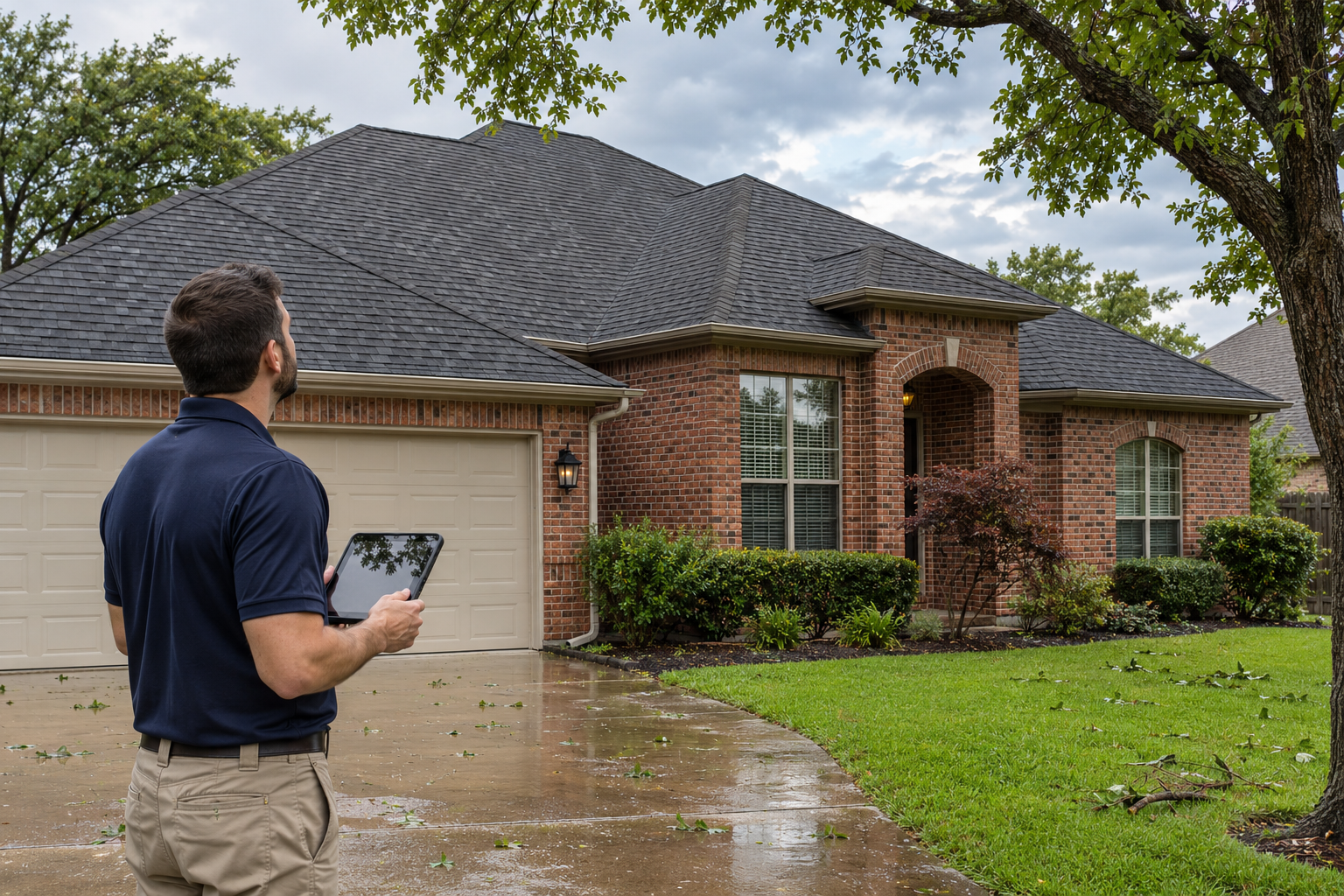
A preventive program needs a baseline. Ask the roofing professional to document accessible roof surfaces, details, drainage, previous repairs, and relevant interior symptoms. Identify methods, limitations, and any areas that could not be inspected.
The assessment should distinguish observed conditions from suspected causes and concealed uncertainty. A dry surface does not establish the condition of every material below it. If further investigation would affect the maintenance or repair decision, request a defined recommendation.
The IBHS commercial loss control resources provide context for evaluating commercial building vulnerabilities and include roof-maintenance material. Use that broader risk perspective to discuss how the roof, equipment, drainage, and site conditions interact at the warehouse.
Assign Responsibilities Before Setting Dates
Identify the owner or property manager responsible for approving work, the facility contact arranging access, the roofing provider, and the equipment contractors. Include an alternate contact for urgent reports and decisions outside normal hours.
Keep roles explicit when a tenant operates the warehouse but another party owns the building. The lease and service agreements determine responsibilities. The maintenance plan should reflect those arrangements and explain how reports move to the person authorized to act.
Assign a person to each open item. A note that the mechanical contractor should review something is incomplete unless the appropriate party receives it and a response is tracked. Coordination is part of the program, not an automatic result of separate contractors visiting the property.
Build the Inspection Calendar Around Conditions
Use manufacturer guidance, roof condition, exposure, access activity, and the baseline findings to establish frequency. Planned seasonal inspections can provide a starting structure, with changes based on the actual roof and its service history.
Siplast’s roof maintenance guidance supports regular professional inspections and a building-specific program, particularly for the systems it addresses. Confirm requirements for your installed assembly rather than copying another manufacturer’s procedures into the contract.
Add triggers for reported leakage, significant weather, equipment projects, and other work that may disturb the roof. The calendar should not delay a response to an active concern. Record why additional visits occurred and whether they changed the next planned service date.
Use a Calendar With Defined Deliverables
The following is an organizational example, not a universal inspection frequency or manufacturer requirement. Set actual dates and tasks with the service provider after reviewing the building.
Timing or triggerPlanned actionRequired recordProgram setupGather records, map areas, establish condition baselineRoof file and initial action listScheduled seasonal serviceInspect agreed areas and perform included maintenanceFindings, photographs, completed tasksSignificant weather or reported damageAssess affected areas when conditions permitEvent history and follow-up recommendationsRooftop equipment workCoordinate access and review disturbed areas as appropriateTrade log and roofing observationsAfter corrective workVerify agreed scope and identify remaining questionsCompletion evidence and open itemsAnnual budget reviewEvaluate recurring findings and future project needsUpdated priorities and planning assumptions
Showtime Exteriors’ commercial roof maintenance guide discusses documented service and follow-up. Although written for Houston properties, its organizational approach can help owners tailor a program to warehouses elsewhere in Texas.
Inspect the Assembly Actually Installed
The inspection scope should suit the roof type. Membrane roofs, modified bitumen, built-up roofing, metal, and coated systems have different materials and details. A checklist based on one roof should not be treated as a complete method for another.
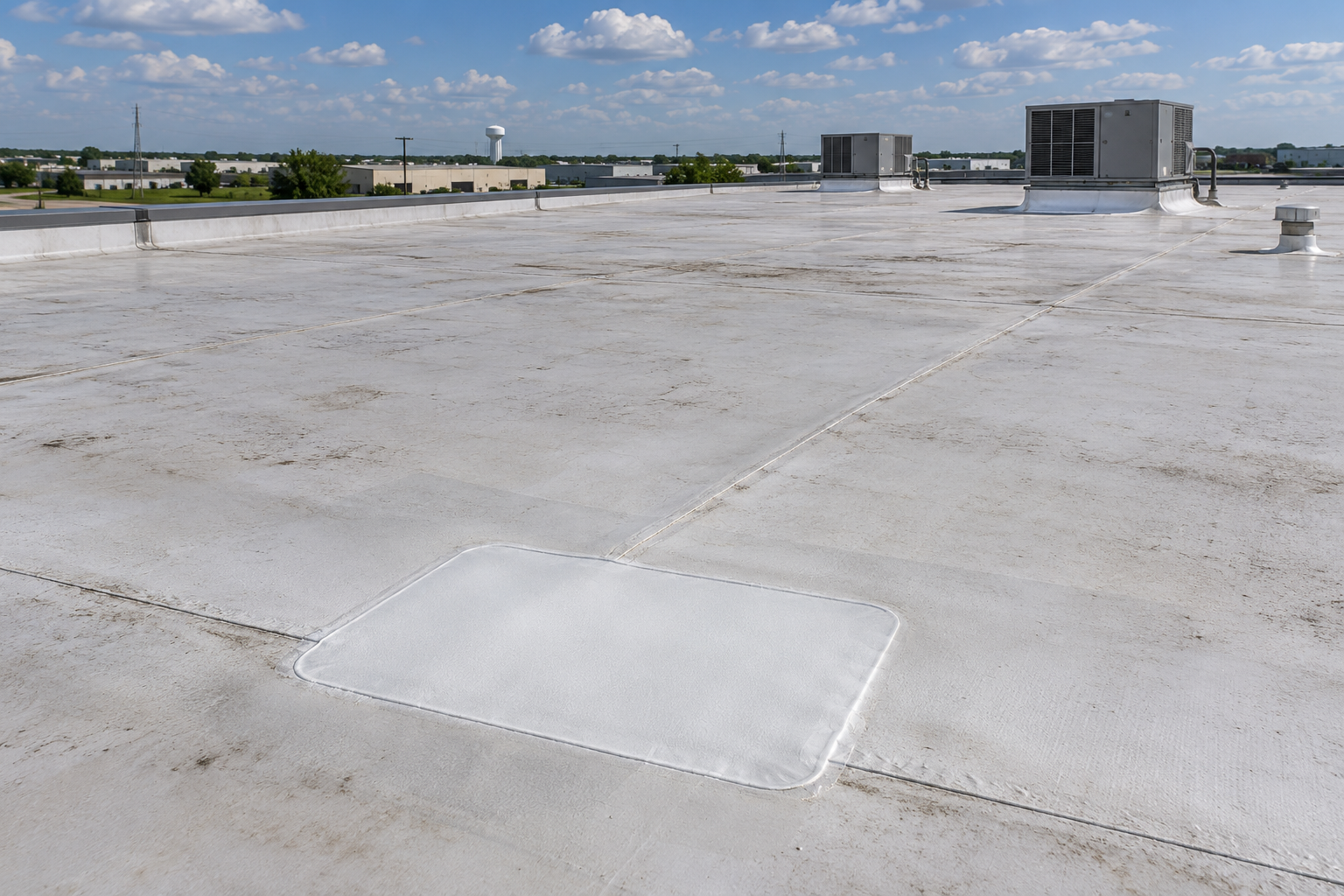
Ask the contractor to document accessible surfaces, seams or laps where relevant, flashings, transitions, edges, and previous repairs. Request locations and significance rather than an unexplained collection of photographs. Where the inspector recommends no work, the report should still identify what was reviewed and its limitations.
Showtime Exteriors’ guide to roofing materials and selection factors for Texas can help owners prepare system-specific questions. Use the installed products and building conditions to determine the maintenance scope and compatible corrective procedures.
Keep Drainage Under Active Review
Map the water paths and accessible drains, scuppers, gutters, downspouts, and discharge points. Record debris and obstructions, as well as reported overflow or retained water. Inspect the relevant drainage area rather than only the most obvious opening.
GAF’s commercial drain maintenance guide explains the role of outlets and the roof’s slope in removing water. A clear visible drain does not establish the performance of concealed piping or every surrounding section.
Separate cleaning from investigation and design. If the same area continues to hold water after cleaning, request the next assessment needed to understand why. Record rainfall timing and consistent photographs where appropriate instead of drawing conclusions from one image taken during a storm.
Coordinate Rooftop Equipment and Trade Access
Maintain a roof access log with the provider, date, reason, equipment location, and work performed. Require service teams to remove their materials and report observed roof damage. Keep the process practical enough that it is used for routine visits.
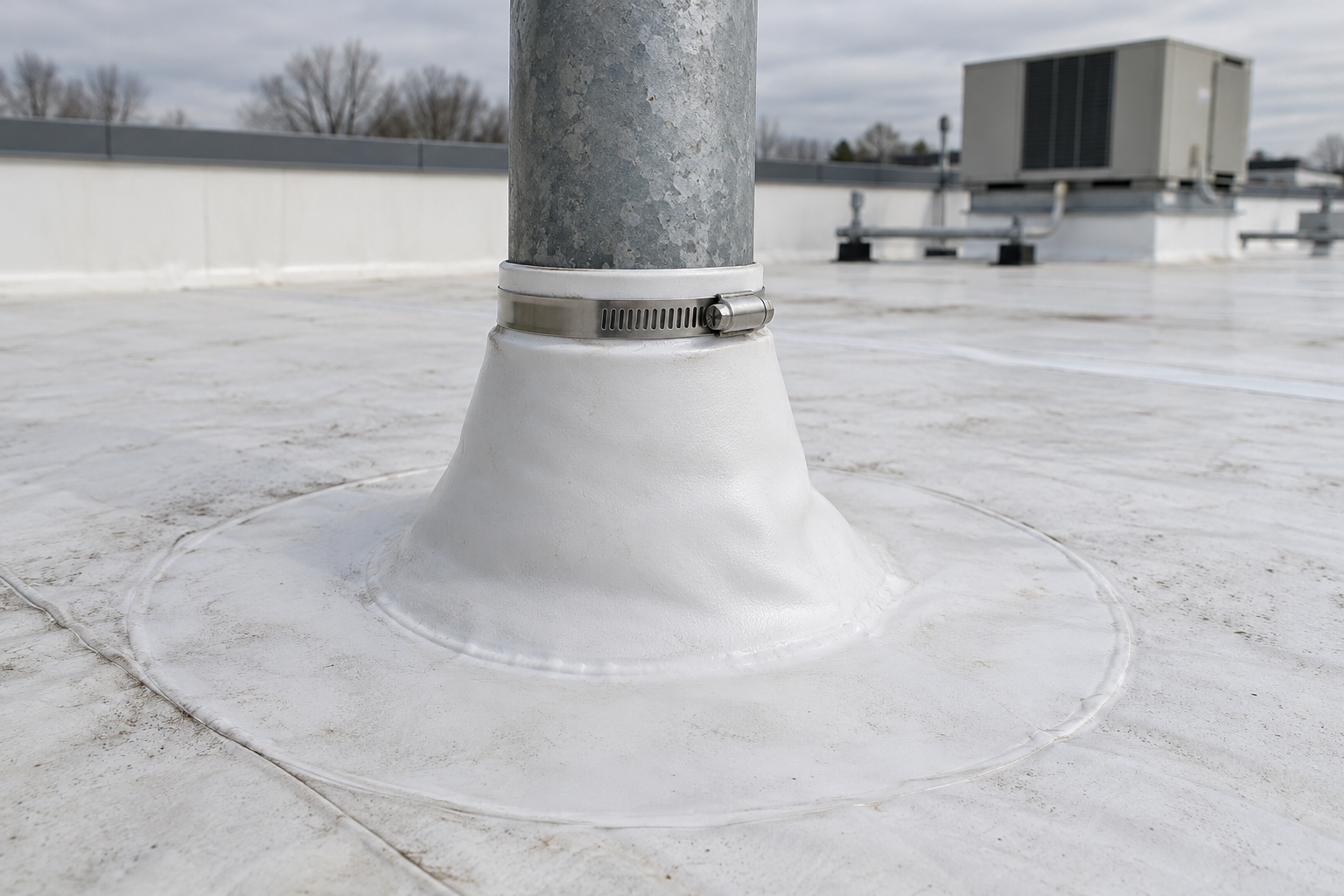
Before equipment installation or replacement, identify the roofing details that may be disturbed and which contractor will restore them. Plan any inspection needed before connections become concealed. Mechanical startup and roofing closeout have different scopes.
Showtime Exteriors’ commercial roofing services provide a starting point for discussing assessments around equipment work. The maintenance plan should identify when the roofer returns and who coordinates unresolved findings involving another trade.
Protect Inventory Through a Leak-Reporting Procedure
Create a simple report form for staff. Capture date, time, interior location, weather or operating conditions, photographs when safe, and the effect on operations. Identify whether the observation is active dripping, dampness, a new stain, or a recurring condition.
Link reports to the roof map and work history. A warehouse can have similar-looking aisles and ceiling areas, making location mistakes easy. Consistent references help the contractor connect new symptoms with earlier findings.
The facility team should also have a safe process for protecting affected goods and restricting hazardous areas. Follow site procedures around electricity, equipment, unstable ceilings, and traffic. Roof investigation should be assigned to qualified personnel rather than becoming an improvised task for receiving staff.
Distinguish Roof Leakage From Other Water Sources
Water inside a warehouse can require investigation beyond the roofing surface. Equipment, piping, condensation, walls, and roof details may need separate review. Record the circumstances without deciding the cause from the interior location alone.
Tell the contractor whether symptoms occur during rainfall, shortly afterward, during equipment operation, or in dry weather. Refrigerated, humid, or otherwise controlled spaces may need additional building-envelope or mechanical expertise. The plan should identify who coordinates that assessment.
A recurring symptom deserves an updated explanation. Ask whether a previous repair failed, addressed a different condition, or left another source unresolved. Repeating the same treatment without comparing its results can leave the underlying question unanswered.
Address Skylights, Hatches, and Access Routes
Include skylights and access points in the roof inventory, inspection scope, and work planning. They create both building-envelope interfaces and access considerations. Record reported damage and arrange appropriate review instead of assuming an intact-looking surface is suitable for contact or loading.
OSHA’s fall-protection standards resources distinguish requirements and guidance for different work settings. The responsible professionals should establish the procedures applicable to the task and site. A maintenance calendar or walkway does not replace that planning.
Keep untrained staff off the roof. They can coordinate access and provide interior observations while appropriately equipped personnel perform the assessment. If conditions prevent inspection, state the limitation and arrange suitable follow-up rather than recording the area as satisfactory.
Inspect After Changes Inside the Warehouse
Changes in building operations can matter to the roofing conversation. New production activity, refrigeration, exhaust, humidity conditions, rooftop additions, or altered service routes should be shared with the maintenance provider. Do not assume the original roof plan already accounts for every operational change.
The roofer may identify the need for input from a mechanical professional, design professional, or another specialist. Assign that review explicitly. A maintenance visit should not imply it includes structural certification, equipment commissioning, or a complete moisture analysis unless those services were agreed and performed.
Update the roof file after approved changes. Retain drawings and installation records where available, identify new penetrations, and revise the access map. Future maintenance becomes harder when the physical building changes but the records remain tied to its former arrangement.
Preserve Manufacturer and Warranty Procedures
Locate the actual warranty or guarantee and applicable care instructions. Identify reporting requirements, alteration approvals, eligible repair providers, and documentation obligations. Keep the relevant contact information available to the person responsible for urgent reports.
Johns Manville’s building owner resources illustrate manufacturer-specific processes for post-installation support, leak reporting, and alterations. Use the provider associated with your installed roof rather than applying one manufacturer’s requirements to another system.
A maintenance contract and a roof guarantee are different agreements. Review what each includes, excludes, and requires. Do not describe an inspection as extending coverage unless the applicable extension has been issued under the provider’s actual program.
Turn Findings Into Prioritized Work Orders
Every open item needs a location, observation, supporting image, recommended action, responsible party, and target date. Explain the reason for the priority. Distinguish urgent protection, scheduled corrective work, further investigation, and optional improvements.
Use descriptions that support decisions. A finding such as Roof Area C, damaged flashing at the identified curb, is easier to act on than roof needs attention. If the recommendation depends on additional access, include that dependency.
Track items across visits until the agreed task or assessment is completed. A contractor’s attendance does not close every concern in the report. Record what was done and what remains so the owner can see progress rather than another version of the same action list.
Verify Repairs Before Closing the Record
Request labeled completion photographs, the location and scope of the work, and relevant material information. Record approved changes and items assigned to other trades. Keep temporary work distinguishable from permanent corrective work.
Where appropriate, define a later observation after relevant rainfall or operating conditions. Any testing should use a suitable professional procedure. Do not improvise a roof flood test or obstruct drainage to see whether a repair holds.
If symptoms return, connect the new report to the completed scope. Ask for an assessment of the difference rather than assuming the entire roof has failed. The record should make it possible to investigate efficiently without reconstructing the project from memory.
Specify What the Maintenance Agreement Includes
A service fee should identify inspection areas, visit frequency, cleaning tasks, documentation, access assumptions, and exclusions. Clarify whether minor repairs are included and, if so, how those repairs are defined. Broad phrases can hide materially different service packages.
Ask how extra investigation, emergency calls, equipment coordination, and permit responsibilities are handled when applicable. The agreement should also establish how findings are delivered and what response is expected from the owner.
Compare proposals on equivalent scope. A quick visual visit and a documented inspection with cleaning are different services. The lowest annual price may not represent the least expensive way to obtain the work and records your building needs.
Separate Routine Service From Capital Planning
Keep scheduled maintenance, corrective repairs, investigation, and larger renewal work visible as separate budget categories. This helps the owner understand why annual expenses change and which items require a different approval process.
Avoid basing replacement planning only on age or recurring invoice totals. Request condition findings that explain the practical options and the information still needed. A roof may have repairable areas while another section deserves a larger project assessment.
During the annual review, ask whether repeated service is resolving conditions or merely postponing a decision. The objective is to plan the next appropriate action with clear evidence. A maintenance program should produce useful information for capital decisions, not an automatic replacement recommendation.
Use a Small Set of Management Measures
Track scheduled visits completed, unresolved items by priority, repeat symptoms, time from report to assessment, and time from approval to completion. These measures show whether the process is functioning. Avoid treating a single number as proof of overall roof condition.
Management measureWhat it helps revealOpen items by priorityWork awaiting a decision or actionRepeat reports by locationConditions needing a closer history reviewApproval-to-completion timeScheduling or coordination delaysMissing completion evidenceWork orders that need documentationUninspected areasGaps requiring an access plan
Review results with the service provider and facility team. Explain exceptions, such as weather delays or unavailable access. A useful review improves the process rather than rewarding fast closure of items whose underlying questions remain unresolved.
Keep the Program Usable Across Staff Changes
Retain one current contact list, roof map, service agreement, warranty file, and action register. Identify where contractors submit reports and who reviews them. Avoid making essential knowledge dependent on one employee’s recollection.
Showtime Exteriors’ guide to commercial roof maintenance records provides an organizational framework for those records. Documentation supports a clear building history; it does not guarantee an insurer’s coverage or underwriting decision.
When management or ownership changes, hand over the unresolved items as carefully as the completed work. Explain scheduled visits, pending approvals, access restrictions, and any manufacturer communications. That continuity helps the next team avoid paying to rediscover already documented conditions.
Frequently Asked Questions
How often should a warehouse roof be inspected?
Set frequency using the installed system’s instructions, actual condition, site exposure, and maintenance history. Planned seasonal visits can provide a baseline, with additional review after relevant events or reported problems. State the agreed scope and dates in the service contract.
Can warehouse staff perform the inspection?
Staff can report interior symptoms and coordinate service within their training and site procedures. Roofing assessment and repair should be performed by appropriately qualified and equipped personnel. Do not turn a checklist into a request for untrained employees to access the roof.
Does maintenance prevent every leak?
No program can promise that. Its purpose is to identify accessible concerns, complete agreed work, and establish a reliable response to new symptoms. Understand the limits of each inspection and keep reporting changes between scheduled visits.
Should every finding become an immediate repair?
No. Some findings require investigation, monitoring with a defined purpose, another trade, or a larger project decision. Ask for the reason behind the priority and the information needed to choose an appropriate next step.
What matters most in the annual review?
Review whether work was completed, repeat symptoms were investigated, limitations were addressed, and records remain current. Then update the schedule and budget using the findings. An annual report should help guide decisions rather than simply summarize invoices.
Arrange a Warehouse Roof Maintenance Assessment
A preventive maintenance plan for a warehouse roof works best when inspections, reporting, operations, repairs, and records form one clear process. Start with the actual assembly, establish a baseline, assign responsibilities, and keep open items visible until their agreed next steps are complete.
Contact Showtime Exteriors or call 817-400-7663 to discuss your warehouse. Share roof records, known concerns, equipment activity, and operating restrictions so the maintenance assessment can focus on the building’s needs.