



Modified Bitumen Roofing Maintenance Checklist for Texas Building Owners
Use this modified bitumen roofing maintenance checklist to plan Texas roof inspections, drainage cleaning, condition reports, repairs, and follow-up.
A modified bitumen roofing maintenance checklist should connect inspection findings to completed work. Looking over the roof is only the first step. Building owners also need identifiable locations, photographs, appropriate recommendations, and a person responsible for closing each item. That process makes maintenance easier to budget and recurring problems easier to investigate.
Texas offices, warehouses, restaurants, schools, and retail properties can have different roof exposures and operating requirements. A maintenance plan should reflect the installed assembly, building use, surrounding vegetation, equipment activity, leak history, and manufacturer instructions. One calendar or repair product does not suit every modified bitumen roof.
Showtime Exteriors serves North Texas and other Texas property owners evaluating roofing needs. This guide provides an owner-level checklist for arranging professional inspection, organizing service, and keeping useful records. It is not a set of instructions for untrained staff to perform membrane repairs.
Identify the Roof System Before Ordering Service
Start with the manufacturer, product names, installation date if known, warranty documents, and available assembly information. Modified bitumen can include SBS- or APP-modified materials and different surfacings and installation methods. A roof’s color alone does not identify its construction.
GAF’s overview of commercial modified bitumen systems describes SBS and APP options and their relationship to asphaltic roofing. Use the installed system’s own documents when selecting maintenance and repair procedures rather than assuming that every rolled roof is interchangeable.
Record previous coatings, recover work, patches, and additions. If the roof cannot be identified confidently, ask the contractor what further assessment is needed. A useful maintenance proposal explains its assumptions and avoids specifying permanent repairs on an unknown assembly without appropriate evaluation.
Establish a Schedule With Event-Based Follow-Up
Use the manufacturer’s instructions and actual site conditions to set inspection frequency. Siplast’s responsible roof maintenance guidance supports systematic inspections and reports for conventional SBS-modified bitumen roofs. A seasonal schedule can provide a baseline, with additional reviews when the property’s conditions justify them.
Consider follow-up after significant weather, equipment installation, extensive service activity, or reported leakage. These triggers help identify changes between planned visits. An owner should not wait for a calendar reminder when an active concern has already been reported.
Keep scheduled service and emergency response distinct. Decide who receives urgent reports, how access is arranged, and who can authorize immediate protection. Then record whether the emergency visit resolved the issue or left permanent work and further assessment outstanding.
Use This Maintenance Checklist as the Action Register
Ask the roofing contractor to adapt the checklist to the actual roof. Mark each item inspected, not applicable, or not accessible, and explain important limitations. A blank box should not be interpreted automatically as a satisfactory condition.
Checklist itemWhat the report should recordFollow-up decisionRoof identificationCovering, surfacing, records, uncertain constructionObtain missing informationInterior historyLeak locations, timing, previous workInvestigate relevant roof areasField surfaceOpenings, worn areas, visible changesAssess significance and repair needSheet lapsAccessible concerns and locationsSpecify compatible correction if neededRaised or distorted areasExtent, photographs, change over timeProfessional evaluationFlashings and edgesCondition at walls, curbs, terminationsAssign roofing or other-trade workDrainageDebris, outlets, retained-water observationsClean, investigate, or obtain design inputEquipment zonesDamage, spills, access changesCoordinate responsible tradesPrevious repairsCondition and recurring symptomsReview effectivenessCompletion recordsWork performed and unresolved itemsAssign owner and due date
Use consistent roof-area names so findings can be compared across visits. The table becomes more valuable when each action has a completion record rather than remaining a recurring note in successive reports.
Review Interior Symptoms Before Going to the Roof
Collect tenant and maintenance reports before the inspection. Record the room or grid location, when water appeared, weather conditions, and any nearby equipment activity. Distinguish a fresh symptom from a longstanding stain that has not changed.
An interior leak location does not necessarily identify the roof entry point. Give the contractor enough history to decide which roof areas and adjoining details need review. Ask for the connection between those observations and the proposed investigation.
Keep interior restoration separate from roofing work unless the contract includes both. Ceiling replacement, insulation treatment, painting, and equipment concerns may require other parties. The maintenance record should explain who handles those items and how the source investigation is coordinated.
Examine Accessible Cap-Sheet Surfaces
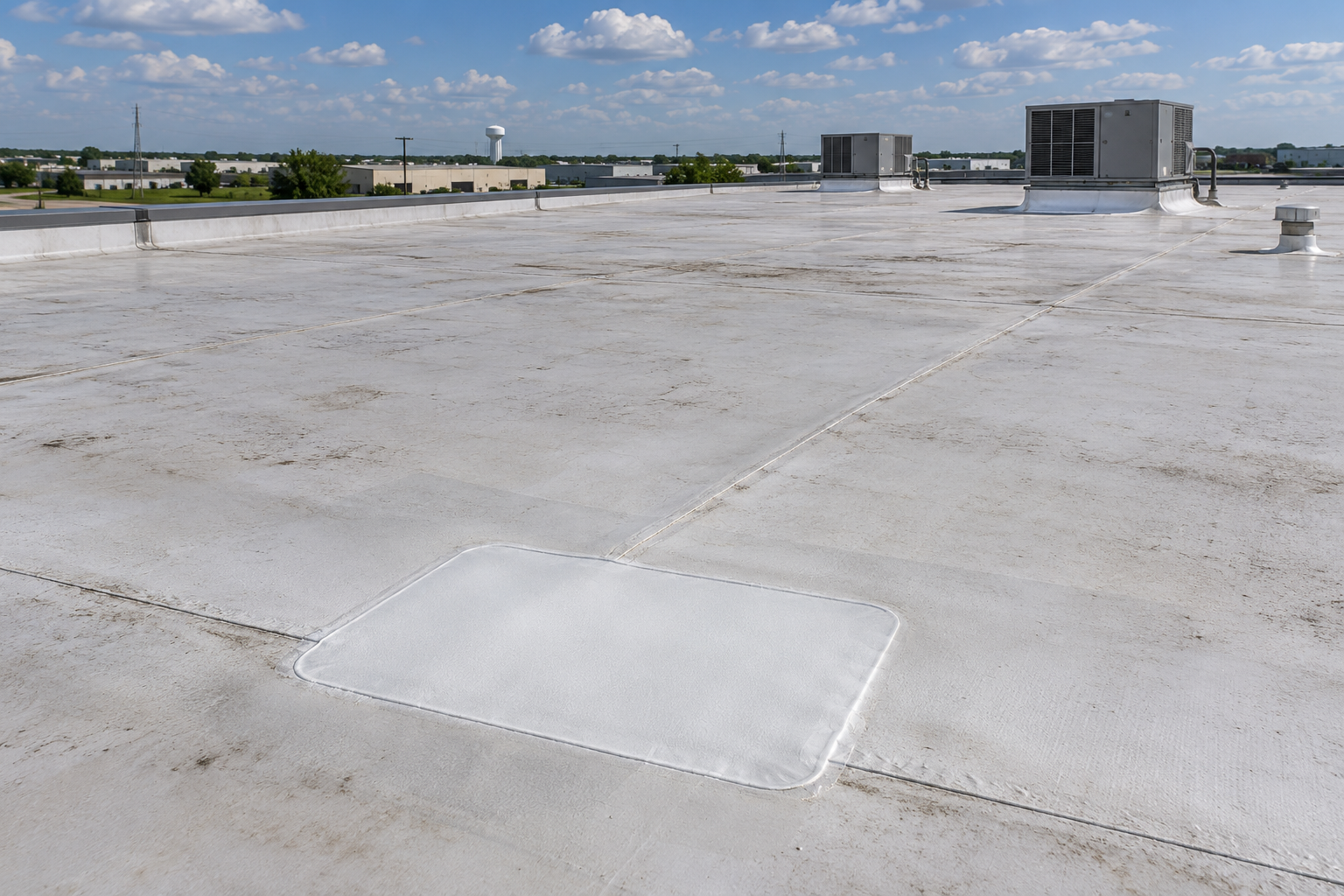
The inspection should record visible openings, cuts, worn areas, and changes in the roof surface. On granule-surfaced materials, ask the contractor to explain the significance of observed surfacing changes. A close-up image alone should not decide the treatment of a whole roof.
Use an overview photograph to establish location and a detail photograph to show the concern. Record approximate boundaries where useful. This helps a returning crew find the same area and allows future inspections to determine whether the condition has changed.
Avoid scrubbing, scraping, or applying a generic protective product before the condition is assessed. The recommended procedure should suit the installed material. The owner’s role is to obtain a clear diagnosis and scope, with preparation and compatible materials identified by the roofing professional.
Check Sheet Laps and Previous Patches
Ask the contractor to assess accessible laps and earlier repairs using appropriate professional methods. Record observed concerns without assuming every visible edge represents an active leak. Explain where the finding is located and why the proposed correction is needed.
Previous patches should be connected to the history. Was the original symptom resolved? Has water returned in the same conditions? Was the repair temporary or intended to be permanent? Those questions help prevent an old work order from being mistaken for a completed diagnosis.
Request a defined proposal for corrective work. It should identify locations, material compatibility, preparation, treatment of unsuitable areas, and completion photographs. A direction to patch as needed leaves the owner without a clear way to compare proposals or verify what was performed.
Document Blisters, Ridges, and Distortion
Raised or distorted areas deserve location-based documentation and professional evaluation. Record their appearance and any reported change. The appropriate response depends on the actual assembly and condition; appearance alone should not trigger a universal treatment.
Do not direct staff to puncture, cut, flatten, or open a raised area. Exploratory work can change the roof’s condition and requires an appropriate procedure and restoration plan. Ask what the contractor can establish visually and what additional investigation would clarify an important uncertainty.
Where monitoring is recommended, define what will be compared and when. Retain photographs from consistent viewpoints and note new symptoms. Monitoring should have a stated purpose and review date rather than becoming an indefinite substitute for resolving a concern.
Inspect Flashings, Curbs, and Terminations
Include accessible roof-to-wall connections, equipment curbs, pipes, skylights, expansion joints, and roof edges in the review. These interfaces need their own findings and scope. A maintenance visit focused only on the open roof surface can leave important connections unexplained.
Ask which component appears affected and which trade is responsible. Roofing membrane, metalwork, walls, and equipment may meet at the same location. A broad note about sealant should not obscure whether the actual concern involves a different part of the assembly.
Document access limitations and concealed interfaces. Where another contractor needs to move equipment or open a component, assign that coordination before approving the final repair. A clear sequence helps avoid finishing one trade’s work while leaving the underlying question unresolved.
Keep Drainage Paths and Outlets Under Review
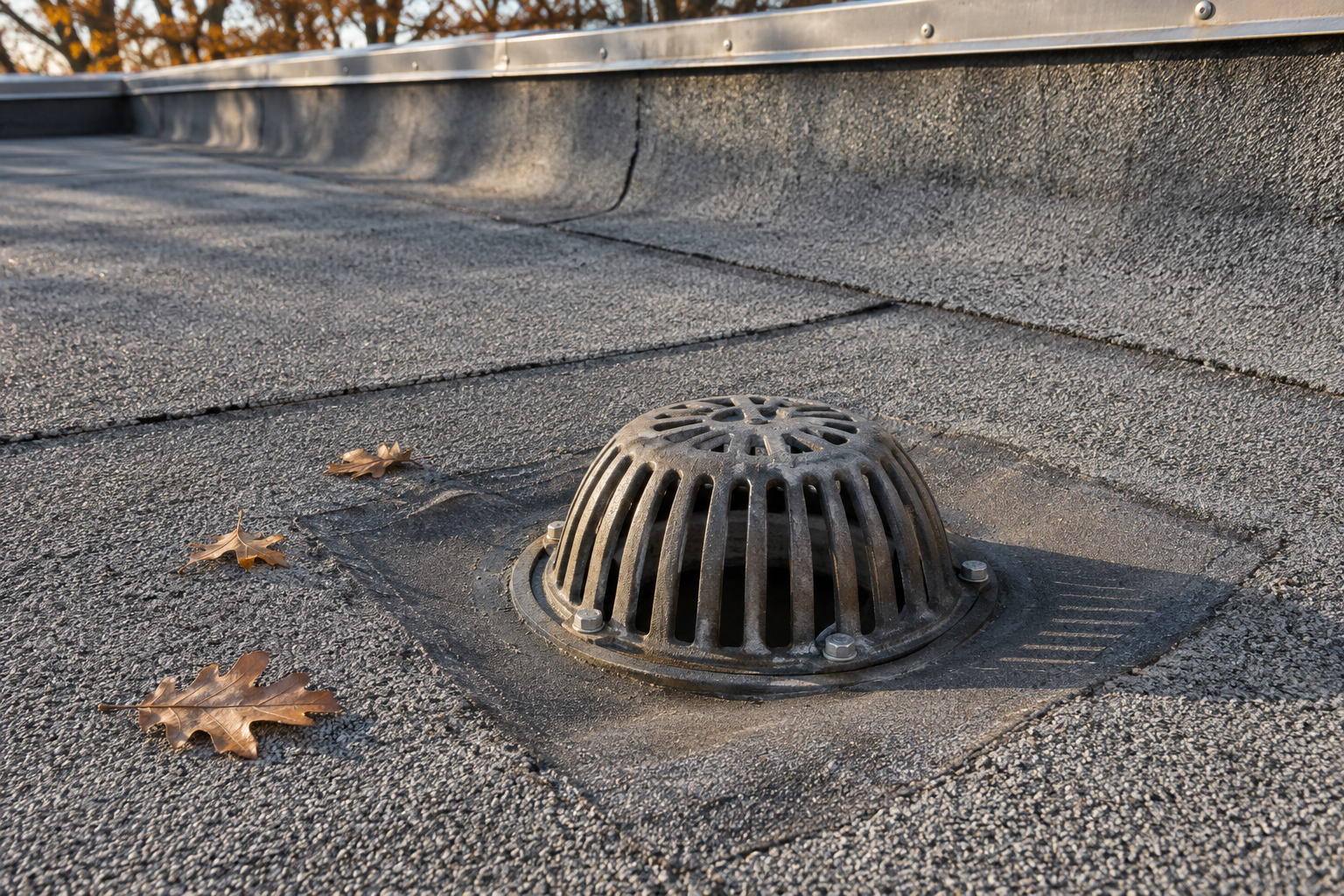
The maintenance plan should identify roof drainage areas and accessible outlets. Record debris, displaced components, obstructions, and evidence of retained water. Include gutters, scuppers, downspouts, and visible discharge routes where they are part of the system.
GAF’s guide to commercial drain maintenance explains why outlets and the routes leading to them need attention. Cleaning the visible opening is different from establishing that concealed piping or the entire drainage path functions correctly.
Photograph retained water with timing and weather context. A picture during rainfall does not establish how long water remains afterward. If cleaning does not resolve the reported condition, ask whether measurements, piping assessment, or drainage design review is appropriate before approving another identical visit.
Remove Debris With a Defined Scope
Identify which areas and types of material are included in cleaning. Leaves, packaging, abandoned components, and loose construction debris should be documented and removed using procedures suited to the roof. Avoid moving a collection of material into a less visible corner.
The service agreement should address disposal and conditions that require specialist handling. If debris has concealed a concern, document the exposed area after removal and determine whether further assessment is needed. Cleaning and repair should remain distinguishable in the report.
Ask for completion photographs at the affected locations. A clean roof helps subsequent inspection, but cleaning alone does not demonstrate that the assembly is dry, sound, or free of defects. Keep the conclusion limited to the work and observations actually completed.
Control Grease, Oils, and Other Contamination
Restaurants and industrial properties need particular attention around exhausts and equipment. ARMA’s bulletin on contaminants and modified bitumen explains that cooking oils, greases, petroleum products, and some chemicals can adversely affect these membranes. It recommends contacting the membrane manufacturer for guidance after contamination.
Document the location, known substance, likely source, and available incident information. Ask the equipment or exhaust contractor to address the source while the roofer evaluates affected materials. Removing residue without investigating recurring discharge can leave the same exposure in place.
Do not select a solvent, detergent, or coating based only on availability. Obtain an appropriate procedure for the installed roof and contaminant. The maintenance plan should assign inspection and servicing of any relevant capture equipment without treating it as an unspecified roofing task.
Coordinate Rooftop Equipment Service
Keep a roof access log identifying the contractor, date, equipment location, and work performed. Ask service providers to remove materials and report observed damage. Update the log when equipment, piping, supports, or access routes change.
Arrange a roofing review when the work may have disturbed the roof or its details. An equipment startup checklist and a roof condition review have different scopes. A functioning unit does not document the condition of every surface and penetration affected during installation.
Showtime Exteriors’ commercial roofing services provide a starting point for discussing those assessments. Identify which tasks belong to the roofer, mechanical contractor, or another trade so reported concerns do not remain open between separate contracts.
Keep Maintenance Access Safe
Roof access planning should address edges, skylights, openings, electrical equipment, weather, and the condition of walking surfaces. A low slope does not eliminate rooftop hazards. Use appropriately trained and equipped personnel for inspection and corrective work.
OSHA’s construction fall-protection requirements address elevated surfaces and openings for work within their scope. The responsible professionals should determine which requirements and procedures apply to the particular task. A checklist is not a substitute for that assessment.
Building staff can arrange access, share hazard information, and collect interior reports without taking on roof work beyond their training. If the contractor cannot safely inspect an area, record the limitation and arrange an appropriate follow-up rather than marking the entire roof satisfactory.
Preserve Warranty and Manufacturer Instructions
Locate the actual warranty or guarantee before approving alterations. Identify notice requirements, repair authorization, contractor eligibility, and documentation procedures. Do not assume a routine service invoice meets every provider’s requirements.
Johns Manville’s technical, guarantee, and warranty resources illustrate the importance of system-specific support and documents. Use the provider for the installed assembly and retain any written response concerning the proposed work.
The repair contractor’s warranty is a separate consideration. Ask what it covers and how a concern is reported. Maintenance, product coverage, workmanship coverage, and optional guarantee extensions should be described accurately rather than combined into an unsupported promise of complete protection.
Decide When Further Investigation Is Needed
Recurring leakage, uncertain substrate conditions, or findings that extend beyond accessible surfaces may justify additional assessment. The contractor should identify the unresolved question, proposed method, limitations, and how the result will inform the repair decision.
If testing or openings are proposed, establish approval and restoration procedures. Keep the findings tied to locations and recommendations. An instrument result should be interpreted within the assembly rather than presented as a complete explanation without supporting context.
Avoid approving a coating or repeated patch simply because it is easier to price than an investigation. The right sequence depends on the observed condition. A short, defined assessment can be more useful than committing to a larger scope while its prerequisites remain unknown.
Separate Maintenance From Roof Renewal
A maintenance visit may identify work beyond routine service. Ask the contractor to distinguish cleaning, localized repairs, further investigation, restoration, recover, and replacement. Each represents a different decision and should have its own reasoning.
Showtime Exteriors’ guide to roofing materials and selection factors for Texas can support a broader discussion when renewal is being considered. The recommendation should follow the actual roof assessment rather than age or surface appearance alone.
Request optional work separately from necessary corrective items. This helps the owner allocate funds while keeping unresolved concerns visible. A renewal proposal should not erase the maintenance report; retain both so future decisions can follow how the scope developed.
Use a Service Calendar That Reflects the Property
Set dates with the maintenance provider after reviewing manufacturer guidance and site history. The following calendar is an organizational example, not a universal requirement for every Texas roof. Adjust it for exposure, occupancy, and the findings from prior visits.
Timing or triggerPlanning taskStart of the maintenance agreementIdentify roof areas, collect records, establish baselinePlanned seasonal visitsInspect accessible conditions and close agreed service itemsSignificant weather or reported leakageAssess the affected areas when conditions permitEquipment work or access changesReview disturbed surfaces and details as appropriateAfter corrective workObtain completion evidence and define follow-upAnnual budget reviewEvaluate recurring findings and future project needs
Showtime Exteriors’ commercial roof maintenance guide discusses documented service and follow-up. Although it addresses Houston properties, the organizational approach can help owners tailor a plan to other Texas locations.
Turn Each Finding Into a Closed Work Item
Give every concern an identifier, location, photograph, recommendation, responsible party, and target date. Distinguish immediate protection from permanent work and unresolved investigation. A priority label is more useful when its reason is explained.
After service, record the completed scope and any remaining limitations. Where appropriate, define later observation under relevant weather or operating conditions. Do not close an item solely because a contractor visited the building if the agreed work or assessment is still pending.
Retain the report, approvals, invoices, and photographs together. Showtime Exteriors’ guide to commercial roof maintenance records provides an organizational framework. Documentation creates a usable history without guaranteeing insurance coverage or a particular underwriting response.
Budget for Service and Uncertainty Separately
Ask the provider to distinguish scheduled inspection and cleaning from separately authorized repairs, testing, and capital work. Clarify what is included in the maintenance fee and what triggers additional charges. Two programs with different inclusions should not be compared on annual price alone.
Keep an allowance for findings that require a decision after inspection. The amount should reflect the roof’s condition and known uncertainty. A fixed percentage copied from another building may not suit the property or its maintenance history.
Review repeat expenses during the annual budget discussion. If the same concern remains open across several visits, ask what additional information is needed. The maintenance budget should support progress toward resolution rather than simply reserving money for another identical service call.
Frequently Asked Questions
How often should a modified bitumen roof be inspected?
Follow the installed system’s guidance and a schedule suited to the property. Seasonal visits can provide a baseline, with additional review after relevant events or reported problems. Confirm the frequency and included scope in the service agreement.
Should every blister be cut and patched?
No universal treatment should be chosen from appearance alone. Have a roofing professional assess the location and assembly and explain the recommendation. Untrained staff should not open or alter a raised area to investigate it.
Does the roof need a coating every year?
Do not assume an annual coating is appropriate. Suitability, preparation, compatibility, and existing conditions need evaluation. If a coating is proposed, request the specific system, reason, prerequisites, and maintenance requirements rather than approving a generic recurring application.
Can maintenance stop every future leak?
No program can promise that. Maintenance should identify accessible concerns, complete agreed work, and establish a clear response to new symptoms. Understand inspection limitations and keep reporting changes between scheduled visits.
What should a maintenance report include?
Expect inspected areas, methods, limitations, labeled photographs, findings, recommendations, completed work, and unresolved items. Each open item should have a next step and responsible party so the report can guide action.
Arrange Modified Bitumen Roof Maintenance
A modified bitumen roofing maintenance checklist works best when it reflects the installed system and produces completed, documented actions. Establish a baseline, schedule appropriate reviews, coordinate equipment activity, and keep unresolved findings visible until they are addressed.
Contact Showtime Exteriors or call 817-400-7663 to discuss a maintenance assessment for your Texas building. Share the roof records, known concerns, access requirements, and previous reports so the proposed program can focus on the property’s needs.