



How Quickly Should You Address Hidden Hail Damage?
A Practical Guide for Texas Commercial Property Owners

Address suspected hidden hail damage as soon as conditions are safe enough to evaluate the property. If water is entering the building, roofing materials are loose, or people and equipment are at risk, arrange urgent professional assistance. If there are no immediate warning signs, schedule a documented roof inspection promptly rather than waiting for a leak.
There is no universal number of days that every commercial roof can safely wait after a hailstorm. The appropriate response depends on the observed conditions, roof assembly, building use, forecast, and consequences of water intrusion. A distribution warehouse storing packaged goods may have different operational concerns from a restaurant, medical office, or industrial facility.
The important distinction is between inspecting a roof and deciding to replace it. A prompt inspection helps establish what happened and what needs attention. It does not mean that every hailstorm requires a new roof or that every surface mark represents functional damage.
For Texas property owners, hidden hail damage creates uncertainty because the roof may look normal from the parking lot. There may be no obvious hole, displaced panel, or interior stain. However, a ground-level view cannot establish the condition of an entire commercial roofing system.
This guide explains how to prioritize the response, what to document, when further investigation may be appropriate, and how to plan repairs without making unsupported assumptions about storm damage or insurance coverage.
What Does Hidden Hail Damage Mean?
“Hidden hail damage” is a broad description rather than a single technical diagnosis. It can refer to damage that is difficult to recognize, damage in an inaccessible location, or damage involving components beneath the visible roof surface.
For example, a small irregularity may require close examination to determine whether the membrane has been affected. A concern near rooftop equipment may be obscured from ordinary viewing positions. An underlying material may require authorized investigation before its condition can be established.
The term should not be used to imply that damage definitely exists whenever a roof has experienced hail. Suspicion is a reason to investigate, not a substitute for findings.
GAF’s technical guidance for granule-surfaced commercial membranes specifically recognizes that latent hail damage can exist even when significant impact evidence is not apparent during visual examination. That guidance applies to the roof systems it addresses and should not be generalized into a diagnosis for every material. gaf.com
A useful inspection report explains what was observed, which areas were evaluated, and which questions remain unanswered. It should distinguish confirmed physical conditions from opinions about their cause.
Why You Should Not Wait for an Interior Leak
A dry ceiling is useful information, but it is not a complete roof assessment.
Interior observations tell you whether visible water intrusion has appeared in the areas checked. They do not establish the condition of every seam, flashing, penetration, or underlying component.
IIBEC’s roof-functionality advisory explains that roof damage can involve diminished functional attributes without an immediately noticeable effect on performance. Assessing those conditions requires appropriate professional analysis rather than an assumption based solely on the absence of a leak. IIBEC
For a property manager, waiting for a stain also creates an operational problem: the first visible symptom may occur above merchandise, electrical equipment, or an occupied space. The response then involves both roof evaluation and protection of the interior.
A better approach is to inspect after a credible concern, document the findings, and establish a follow-up plan. If no relevant damage is found within the inspection’s scope, retain that report. If the inspection identifies an unresolved concern, ask what additional evaluation is appropriate.
Prompt investigation helps replace uncertainty with a documented decision.
How Quickly Should You Respond After a Hailstorm?
Begin with safety and reported conditions, then arrange inspection according to risk.
The following priorities are practical planning recommendations. They are not insurance deadlines, manufacturer requirements, or guarantees that a roof can safely wait for a stated period.
Observed situationRecommended responseWater near electrical equipment, a sagging ceiling, or an apparent structural concernRestrict access and seek appropriate urgent professional assistanceActive roof leak or exposed openingArrange prompt professional protection and document conditions safelyLoose roofing or damaged rooftop accessoriesKeep people away from affected areas and request urgent evaluationSuspected hail exposure without visible interior damageSchedule a documented inspection at the earliest practical opportunityCompleted inspection with unresolved concealed-condition questionsAgree on additional investigation or a specific monitoring planCompleted inspection with no identified concerns within its scopeRetain the report and continue the prescribed maintenance schedule
Do not treat the final two categories as interchangeable. “No concern identified” is different from “the concern could not be evaluated.”
When contacting a contractor, describe actual symptoms and building risks. This helps the contractor understand whether the property needs emergency protection, an inspection, or planned follow-up.
What to Do While Conditions Are Still Unsafe
Do not send employees onto a roof during hail, lightning, strong winds, or unsafe surface conditions.
Inside the building, follow your emergency procedures. Keep people away from unstable ceiling materials, water near electrical systems, and other hazardous areas. Appropriate emergency responders or qualified specialists should handle immediate threats.
From a safe location, record what you can observe. This might include the time hail was seen, the location of water intrusion, or photographs of accessible exterior conditions. Avoid creating a new risk just to obtain documentation.
Designate one person to coordinate the response. That person can collect tenant reports, contact service providers, and maintain a record of decisions. Without coordination, several employees may arrange overlapping work or provide conflicting descriptions.
Once the storm has passed, roof access still needs evaluation. Wet surfaces, debris, damaged skylights, and concealed openings can remain hazardous.
The priority is to protect people and establish a safe route for professional assessment. Roof photographs can be taken later; an avoidable injury cannot be undone.
Which Warning Signs Require Urgent Attention?
Some conditions deserve immediate escalation even before their cause is known.
These include active water intrusion affecting occupied spaces, apparent openings in the roof, loose components that could fall or blow away, and interior materials showing signs of instability. Water around electrical equipment also requires appropriate specialist attention.
Describe the condition rather than trying to diagnose it over the phone. “Water is entering above the warehouse electrical room” gives a service provider useful information. “The hail destroyed the entire roof” may overstate what has been established.
Urgent protection should focus on the actual risk. Depending on the situation, the response may involve roofing, electrical, structural, equipment-service, or water-restoration professionals.
Keep records of who evaluated the problem and what they recommended. If multiple trades are involved, identify who is responsible for each task.
An emergency response does not settle the insurance question or determine the final roofing scope. It addresses an immediate condition while the broader evaluation continues.
What Should You Do When There Are No Obvious Symptoms?
If the building appears dry and operational, organize an inspection rather than assuming there is nothing to assess.
Start by collecting basic information: the storm date, property address, affected buildings, roof access arrangements, and any unusual observations. Ask tenants and maintenance staff whether they noticed new stains, debris, equipment concerns, or exterior damage.
Tell the inspector what prompted the request. Perhaps hail was observed directly at the property, an adjacent structure was damaged, or a maintenance technician identified a new concern. These observations should be recorded accurately without treating them as proof of roof damage.
Intertek’s commercial roofing guidance emphasizes timely post-storm inspections because later weather, cleanup, and temporary work can change the conditions available for documentation. intertek.com
Ask for a written report even if no repairs are recommended. A report gives the property team a reference point and records the inspection’s limits.
If contractor availability is delayed, ask what interior monitoring or other interim steps are appropriate for your specific building.
What a Commercial Roof Inspection Should Establish
Before the visit, ask what the inspection includes.
A useful scope should identify the roof sections to be evaluated, the available access, relevant interior areas, and whether the work is limited to visual observations. Additional testing should be discussed separately.
Ask the contractor to identify the existing roof covering and describe how that identification was established. Installation records, product markings, previous reports, and visible details may help.
The final report should distinguish roof condition from proposed work. An observation might identify a damaged detail. A recommendation should explain what action is appropriate and why.
GAF describes a commercial inspection approach that considers interior conditions, perimeter elements, and the roof membrane. Its guidance also notes that some apparent roof leaks can involve exterior wall conditions. gaf.com
For the owner, the practical lesson is to keep the assignment broad enough to investigate the reported concern. An inspection focused only on visible impact marks may leave important questions unanswered.
Also ask how inaccessible areas will be handled.
Which Roof Areas Deserve Specific Attention?
Ask the inspector to explain how the roof’s details will be evaluated.
Relevant areas may include the field membrane, seams, flashings, roof edges, equipment curbs, drains, scuppers, skylights, and transitions between different assemblies. Not every concern will involve the main roof surface.
Intertek identifies these details as important parts of a commercial post-storm review, alongside interior signs of moisture and possible concealed conditions. intertek.com
Provide a simple building plan if you have one. Mark the roof sections, reported interior symptoms, and locations of recent service work. This can help an inspector connect observations without relying on vague descriptions.
For a property with several buildings, use consistent names or numbers. “Building C, north loading area” is easier to trace than “the roof near the back.”
Ask the report to reference these locations. Clear location information supports later repair planning and reduces the chance that a photograph or estimate item will be assigned to the wrong area.
Why the Roof Material Changes the Evaluation
Different roofing systems require different inspection and repair approaches.
A commercial building may have TPO, PVC, EPDM, modified bitumen, metal, or a liquid-applied system. Separate sections may contain different materials or repair histories.
Avoid asking an inspector to apply one universal hail-damage checklist to every surface. Instead, ask how the proposed evaluation fits the existing assembly.
For example, the questions raised by an observed metal dent differ from those raised by an opening in a membrane. A coated roof may require information about both the coating and the system underneath it.
Collect the installation date, product information, warranty documents, and previous repair descriptions where available. If the material cannot be confirmed during the initial visit, that uncertainty should appear in the report.
Repair proposals should also identify compatible materials and applicable installation requirements. A generic recommendation to “seal the roof” does not explain how the affected detail will be restored.
The appropriate response starts with knowing what is actually installed.
How to Document the Storm Without Overstating the Evidence
Create a chronology that separates observations from conclusions.
Record when the storm occurred, when hail was observed at the property, when symptoms were discovered, and when inspections or repairs happened. These dates may be different.
Preserve original photographs and videos. Keep copies of tenant messages, maintenance tickets, security footage, and invoices that relate to the event.
Use careful descriptions. “Hail observed in the parking lot” records an observation. “The storm caused every existing roof defect” is a conclusion requiring support.
Weather information can be useful context, but it should remain connected to its source and location. A regional storm map does not replace an inspection of your building.
Ask the roofing professional to explain which conclusions are supported by the property evidence and which remain uncertain. If several storms occurred since the previous inspection, include that history.
A clear chronology is valuable for maintenance planning as well as insurance review. It helps establish what changed and when the property team became aware of it.
What Makes a Roof Photo Set Useful?
A useful photo set allows someone unfamiliar with the building to understand the location and condition.
Ask for wide views, intermediate views, and close details. The wide view establishes the roof area; the closer images show the observation being discussed.
Each image should have a location reference and a factual caption. Include the inspection date, and identify whether photographs were taken before or after temporary work.
Preserve original files separately from labeled presentation copies. If images are enhanced for visibility, retain the originals and explain the changes.
Photographs should also document inspection limitations where relevant. An obstructed area or inaccessible roof section may explain why a particular question remains open.
Avoid treating photography as a substitute for written findings. A close-up can show an irregularity, but the report should explain what the inspector observed and what recommendation follows.
For later repair verification, matching before-and-after views are useful. They help show what work was completed without requiring the reviewer to guess which location is being compared.
When Is Additional Investigation Appropriate?
Additional investigation should answer a defined question.
After a visual inspection, the owner might still need to know whether a particular condition extends beneath the surface, whether moisture is present, or whether a material can support the proposed repair.
Ask the professional what method is recommended, why it fits the roof, and what its limitations are. Also ask what decision would change depending on the result.
IIBEC identifies several possible assessment methods, including visual review, moisture surveys, microscopic examination, and exploratory openings. The selection depends on the question and roof conditions. IIBEC
Do not authorize testing simply because it sounds advanced. A larger report is not necessarily a more useful report.
Agree on the scope, cost, access requirements, and deliverables before work begins. If investigation involves opening the roof, include restoration responsibilities.
Where insurance or warranty review is involved, discuss coordination before altering evidence. A focused investigation can resolve uncertainty; poorly planned testing can create additional questions.
Can Thermal Imaging Confirm Hidden Hail Damage?
Thermal imaging should be treated as a diagnostic tool with a specific purpose.
IIBEC explains that infrared roof surveys identify thermal anomalies that may be associated with moisture in underlying materials. The interpretation depends on the roof and survey conditions. IIBEC
A colorful image does not, by itself, prove hail damage. It also does not automatically establish the source or age of moisture.
Ask the evaluator to explain what the survey is intended to identify, which conditions affect the results, and how suspected areas will be verified where necessary.
The report should distinguish an anomaly from a confirmed material condition. It should also explain how the information relates to the proposed construction decision.
For example, a survey might help identify areas requiring further investigation before restoration is considered. That is different from concluding that an entire roof must be replaced.
The supporting thermal-inspection image accompanying this article illustrates the process. It is not a diagnostic result from an actual Showtime Exteriors customer project.
How Should Exploratory Openings Be Managed?
If an opening or sample is recommended, discuss the complete procedure before authorizing it.
Ask where the opening will be made, what it will reveal, who will perform the work, and how the roof will be restored. Clarify whether manufacturer or warranty coordination is needed.
Document the location before, during, and after the work. If material samples are retained, establish how they will be labeled and stored.
An opening provides information about the location examined. Ask the evaluator how much broader inference is justified and whether additional locations are necessary.
Do not allow the investigation to become an uncontrolled series of cuts with no clear assignment. Each opening should serve a stated purpose.
If a condition is disputed in an insurance review, ask your advisor about appropriate notice and evidence preservation before testing occurs.
The owner should receive a record of the findings and completed restoration. Investigation is part of the project file, not simply a verbal explanation provided during a roof visit.
What Happens if You Delay the Assessment?
The consequences of delay depend on what is actually present.
If no damage exists, an inspection may confirm that there is no identified repair need within its scope. If an opening or compromised detail exists, however, leaving it unresolved may allow additional exposure during later weather.
Delay can also complicate documentation. Subsequent storms, rooftop service work, cleaning, and temporary repairs may change the conditions available for evaluation.
For an owner, this can make it harder to understand which event or activity relates to a particular observation. It can also make repair planning less precise.
Avoid claims that a roof will certainly fail after a specific number of days. The available information rarely supports that kind of prediction.
Instead, ask the inspector to identify the consequence of leaving each concern unresolved. Is the issue an active leak, a possible entry point, an unanswered concealed-condition question, or a maintenance item?
That explanation gives you a practical basis for scheduling rather than relying on fear or an arbitrary deadline.
How to Protect the Building Before Permanent Repairs
If protection is needed, arrange a method appropriate to the roof and observed condition.
A temporary measure should reduce the immediate exposure while a permanent scope is developed. It should not create additional damage or interfere unnecessarily with drainage and access.
Do not assume that a tarp is suitable for every commercial roof problem. Ask the contractor to explain the proposed method and its limits.
Document conditions before work when it is safe. Keep the work description, photographs, dates, and receipts. TDI’s storm guidance recommends documenting damage, taking steps to prevent further damage, and retaining repair records. Texas Department of Insurance
Ask who will check the temporary protection and when. A temporary repair should have a follow-up plan rather than being treated as a permanent solution.
If conditions worsen, contact the appropriate service provider again. Report what changed.
For a continuing insurance review, communicate about urgent work and ask how the insurer wants relevant evidence preserved.
Should You Repair, Restore, or Replace the Roof?
The answer depends on the findings and the existing assembly.
A localized repair may be appropriate when the affected condition is limited and the proposed method can address it reliably. Restoration may be considered when the roof meets the requirements of the proposed system. Replacement may be appropriate where a broader scope is justified.
Ask the contractor to explain the basis for each option. What evidence supports it? What underlying conditions must be addressed? What limitations remain?
IIBEC cautions that identifying damage does not automatically justify complete replacement. Remediation options require evaluation. IIBEC
GAF’s guidance for granule-surfaced membranes also distinguishes limited surfacing conditions from cuts, punctures, tears, or cracks when discussing coating repairs. That distinction should not be transferred to other assemblies without appropriate technical review. gaf.com
Compare proposals that describe the same existing conditions and intended result. A lower price is difficult to assess if it omits work included in another proposal.
Why a Coating Should Not Be the First Assumption
A coating proposal should follow evaluation of the existing roof.
Before authorizing work, ask what system is being proposed, whether it is compatible with the surface, and what preparation and detail repairs are required. Also ask how concealed moisture concerns will be addressed.
A coating does not eliminate the need to understand the conditions underneath it. Covering a surface before unresolved questions are evaluated can make the later investigation more complicated.
Request a written scope that separates preparation, repairs, coating application, and any exclusions. Clarify inspection and acceptance requirements.
If the contractor recommends restoration, ask why it is suitable for this roof. If the contractor recommends against it, ask what condition prevents its use.
These questions help keep the decision connected to the building rather than to a preferred product.
For a hail-related project, maintain a record of the original condition and the reasoning behind the selected scope. The file should explain why the work was chosen, not merely what product was applied.
How Building Use Changes the Priority
Consider what sits beneath the roof when scheduling the response.
In a warehouse, sensitive areas may include inventory storage, loading operations, electrical rooms, and automated equipment. A restaurant may need to protect food preparation, service areas, and ventilation equipment. An office building may need to coordinate tenant access and occupied workspaces.
An industrial facility may have process equipment that requires specialist review if water intrusion occurs. The roofing contractor should not be expected to evaluate every affected system.
Prepare a list of critical areas for the inspection team. Identify operating hours, access restrictions, and spaces where work requires advance coordination.
This information helps plan the inspection and any protective work. It does not change the technical findings, but it changes the consequences of leaving a concern unresolved.
A modest roof repair can still require careful scheduling if it is above a sensitive operation. Early communication gives the property team time to arrange access, protect contents, and coordinate the necessary trades.
How to Keep Operations Organized During the Response
Assign a project contact and maintain one current list of actions.
Record who is inspecting the roof, who is handling interior protection, and who is communicating with tenants or management. Include the next scheduled visit and any unresolved decisions.
Notify affected occupants about access restrictions and relevant work arrangements. Keep the message factual: what area is affected, what action is underway, and where questions should go.
Before roofing work begins, discuss entrances, deliveries, equipment access, and material staging. Ask how the work will be coordinated around daily operations.
Also maintain a roof-access log. Record service visits by roofing and other trades so later observations have context.
GAF recommends detailed roof recordkeeping and controlled access as part of commercial roof management. gaf.com
Good coordination prevents confusion between temporary protection, inspection, and permanent construction. It also helps the owner verify that each promised follow-up actually occurred.
The response should end with a clear handoff, not an unanswered list of tasks.
When Should You Notify Your Insurance Company?
If you discover property damage or have a claim-related concern, contact your insurer or agent promptly and ask about the applicable requirements.
TDI recommends reporting storm damage promptly, documenting conditions, and keeping records of communications. Texas Department of Insurance
Explain what you know and what remains uncertain. You can report that an inspection identified a condition without making an unsupported statement about its cause.
Ask what information the insurer needs, how urgent work should be documented, and which policy requirements apply. Keep copies of the responses.
Commercial coverage depends on the actual policy. TDI’s commercial property guide describes differences in coverage forms, valuation methods, and additional coverages. tdi.texas.gov
Do not assume that every roof repair will be paid, that a storm guarantees replacement, or that a contractor’s estimate determines coverage.
Roofing documentation supports the factual construction discussion. An appropriately qualified insurance professional or attorney should handle policy interpretation and claim representation when those services are needed.
Does Prompt Action Guarantee Insurance Approval?
No. Prompt action improves the available record and helps protect the property, but it does not establish coverage by itself.
The insurer may review the reported event, roof findings, policy terms, deductible, and other relevant information. A documented repair need and an insured loss are related questions, but they are not identical.
Avoid contractors or advertisements that promise approval before the evidence and policy have been reviewed. Ask for construction findings and a clearly defined roofing scope.
Texas restricts contractors from acting as public adjusters on properties where they provide or may provide contracting services. The roofing and claim-representation roles should remain appropriately defined. www.tdi.texas.gov
If the insurer disagrees with a finding, identify the specific issue before commissioning more work. A disagreement about the date of damage may require different information from a disagreement about repair quantities.
Accurate documentation is useful because it clarifies the situation. Its value should not be measured solely by whether the claim produces a particular payment.
What If You Discover the Concern Weeks or Months Later?
Arrange an evaluation when the concern becomes known.
Do not assume that the delay proves the roof is undamaged or that the condition must belong to the most recent storm. Document the discovery date and collect the available history.
Ask tenants and maintenance staff about earlier symptoms. Review prior inspection reports, service invoices, and photographs. Identify intervening storms and rooftop work.
Tell the inspector which information is available and which gaps remain. The report should address those limits rather than assigning certainty where none exists.
If an insurance issue may be involved, contact your insurer or advisor about the applicable requirements. Avoid relying on a general deadline found in an unrelated article.
The immediate construction question remains important regardless of claim status: does the roof need protection, repair, further investigation, or monitoring?
Late discovery calls for careful documentation and a practical response. It does not justify inventing a storm date or delaying necessary attention while trying to reconstruct a perfect history.
What Should Happen After the Initial Inspection?
Before the contractor leaves, establish the next step.
If repairs are recommended, request the written scope and scheduling information. If further investigation is needed, define the question, method, cost, and authorization process. If monitoring is appropriate, ask exactly what should be monitored and when the follow-up will occur.
An open-ended instruction to “keep an eye on it” is difficult for a property team to implement. Identify locations, symptoms, reporting responsibility, and the next review date.
After work, retain photographs, invoices, approved changes, and applicable warranty documents. Confirm that temporary protection has been replaced or incorporated appropriately into the final scope.
Check the affected interior areas during later weather when it is safe. Report recurring symptoms promptly rather than assuming the first repair settled every concern.
A completed project file should show the original observation, the decision made, the work performed, and any remaining limitation.
That record helps the next property manager understand the roof without starting from scratch.
Questions to Ask Before Hiring a Roofing Contractor
Ask practical questions that reveal how the contractor will evaluate and document your building.
What areas are included in the inspection? Will you receive a written report? How will the contractor identify the roof assembly? What qualifications apply to additional testing? How will inaccessible locations be handled?
For repairs, ask which materials are proposed, how changes are approved, and what warranty applies to the work. Clarify payment obligations and any exclusions.
Request an explanation of the recommended urgency. The contractor should connect the schedule to an observed condition or unresolved risk.
Also ask whether another specialist is needed. A roofing inspection may identify a concern involving structural, electrical, or mechanical systems that falls outside the contractor’s assignment.
A useful proposal should make the work understandable to a property owner. It should not depend on vague promises about insurance or unsupported predictions about failure.
Choose a team that documents its findings and explains the construction options clearly.
Frequently Asked Questions About Hidden Hail Damage
Can I wait until the next scheduled maintenance visit?
Ask whether that visit is soon enough for the reported conditions. Active symptoms require a different response from a routine maintenance item. A post-storm concern deserves its own assessment of urgency.
Does a normal ground-level view mean the roof is fine?
It means no concern was visible from that position. It does not establish the condition of inaccessible roof surfaces or concealed components. Use it as one observation within a broader evaluation.
Does every hailstorm damage every commercial roof?
No such assumption should guide the decision. The inspection should evaluate the particular building and distinguish actual findings from the fact that hail occurred nearby.
Will a new roof still need inspection after severe weather?
Review the maintenance and warranty requirements for the installed system. Roof age alone does not answer whether a specific event or reported symptom needs evaluation.
Should I approve replacement before getting the inspection report?
Understand the findings and proposed scope first. Ask why replacement is recommended and whether other options were evaluated. Urgent protection can be discussed separately from the permanent project.
What information should I provide when booking an inspection?
Provide the address, building identification, roof access arrangements, reported symptoms, relevant dates, and any available roof records. Mention sensitive operations or safety concerns when scheduling.
Schedule a Commercial Roof Evaluation With Showtime Exteriors
Suspected hidden hail damage deserves prompt, documented attention. Start with safety, arrange an inspection, and use the findings to decide what happens next.
You do not need to know the final repair scope before contacting a roofer. You do need a clear explanation of observed conditions, inspection limits, and recommended priorities.
Contact Showtime Exteriors to schedule a commercial roof evaluation. Call 817-400-ROOF (7663) or visit showtimeexteriors.com.
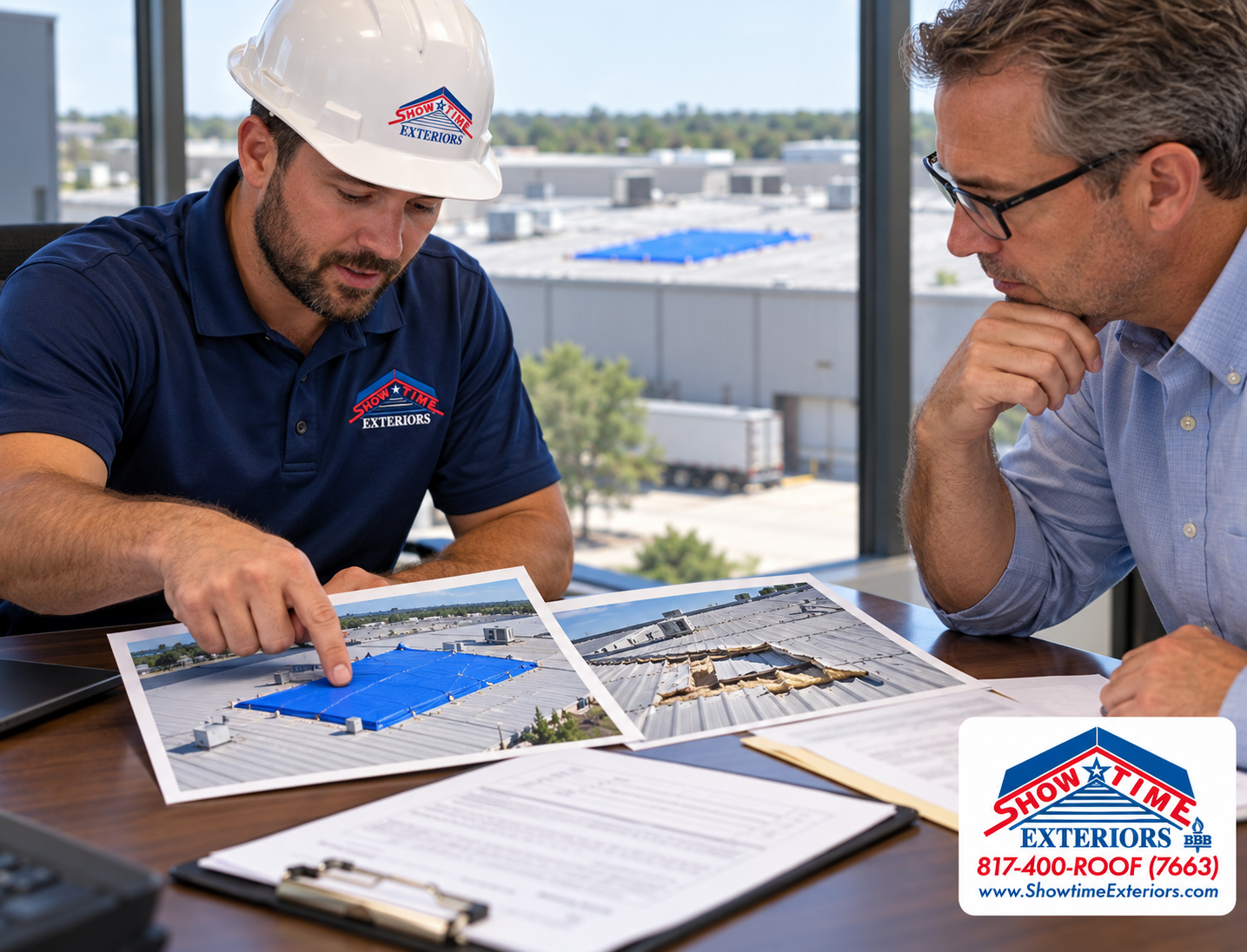
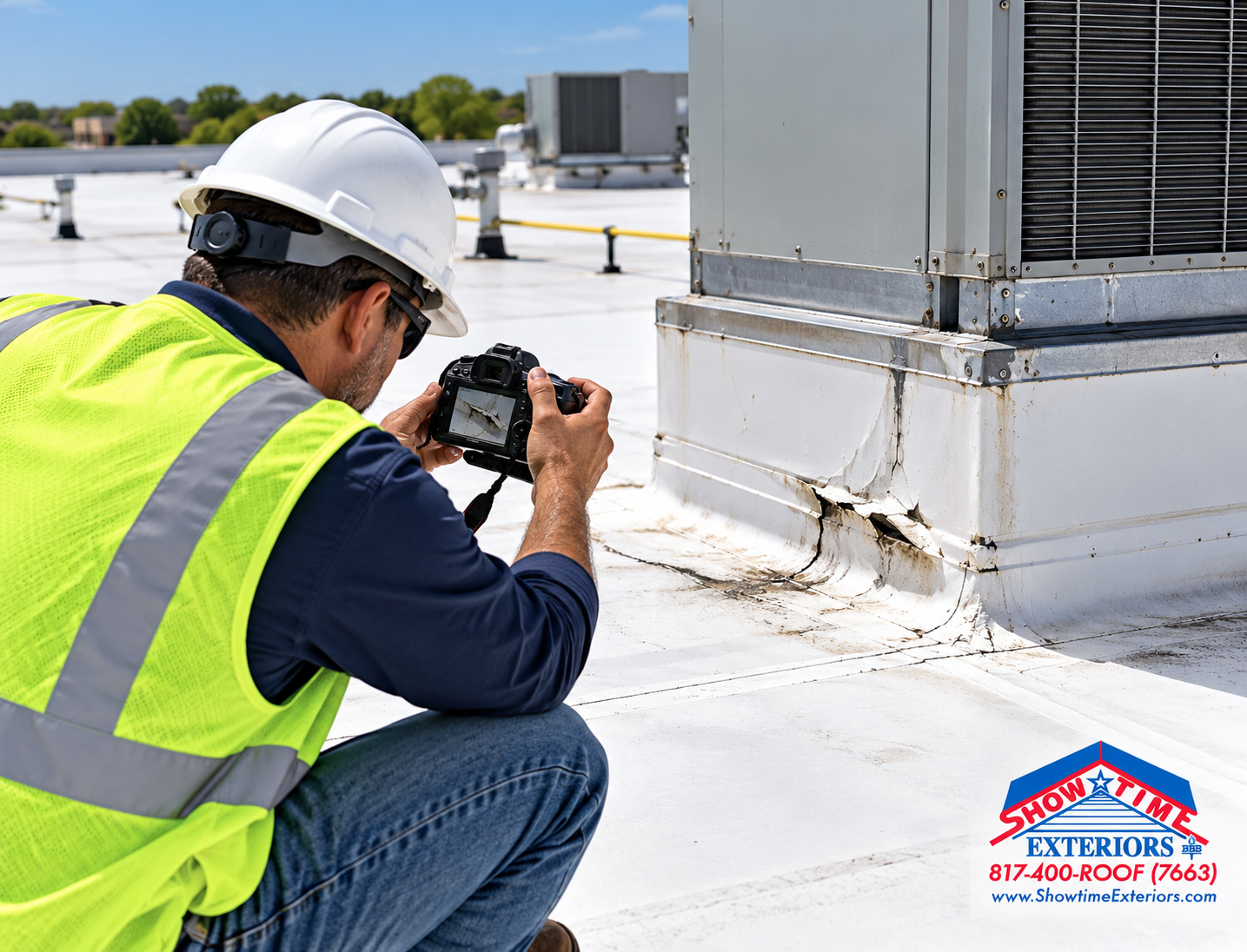
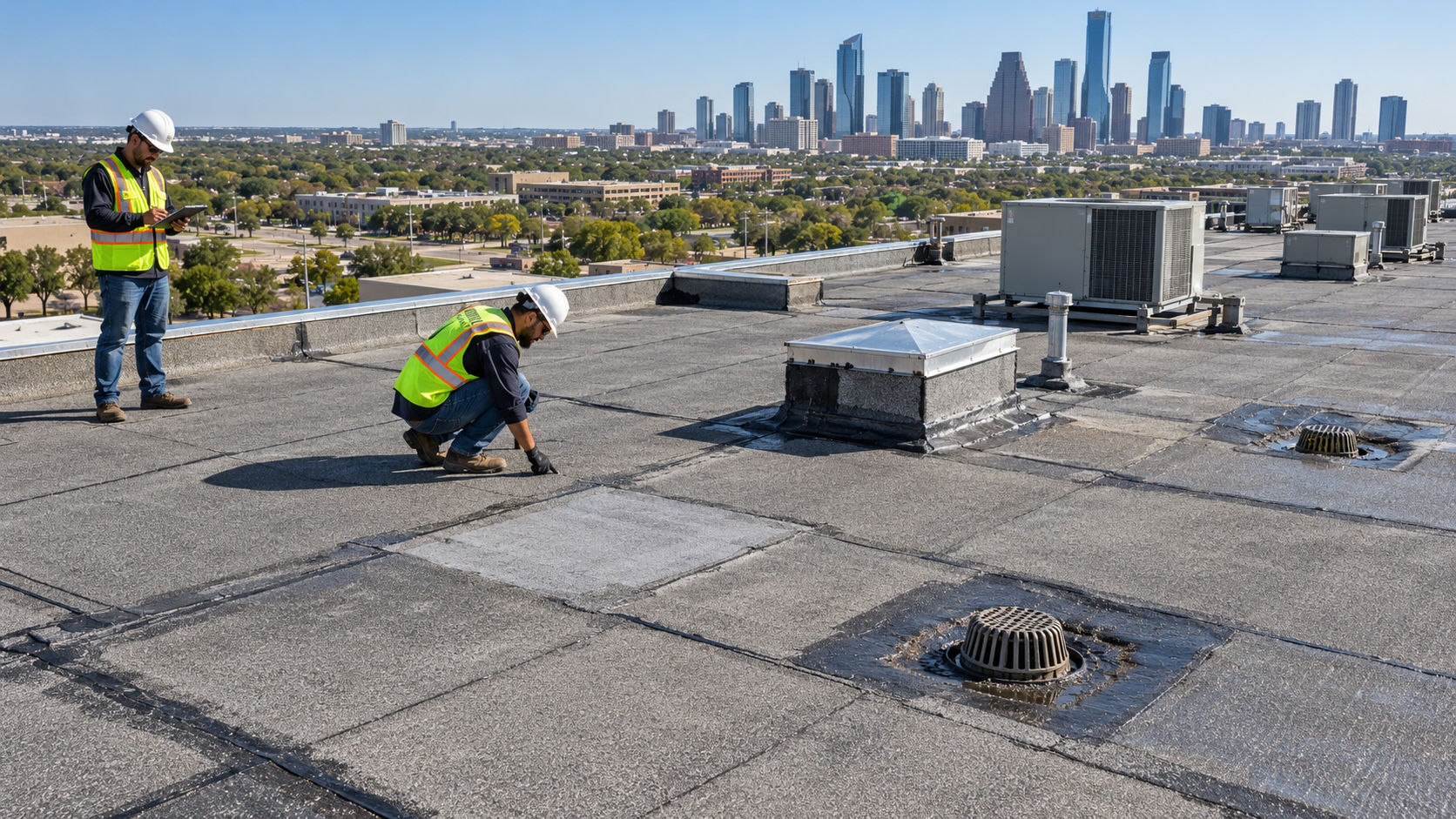
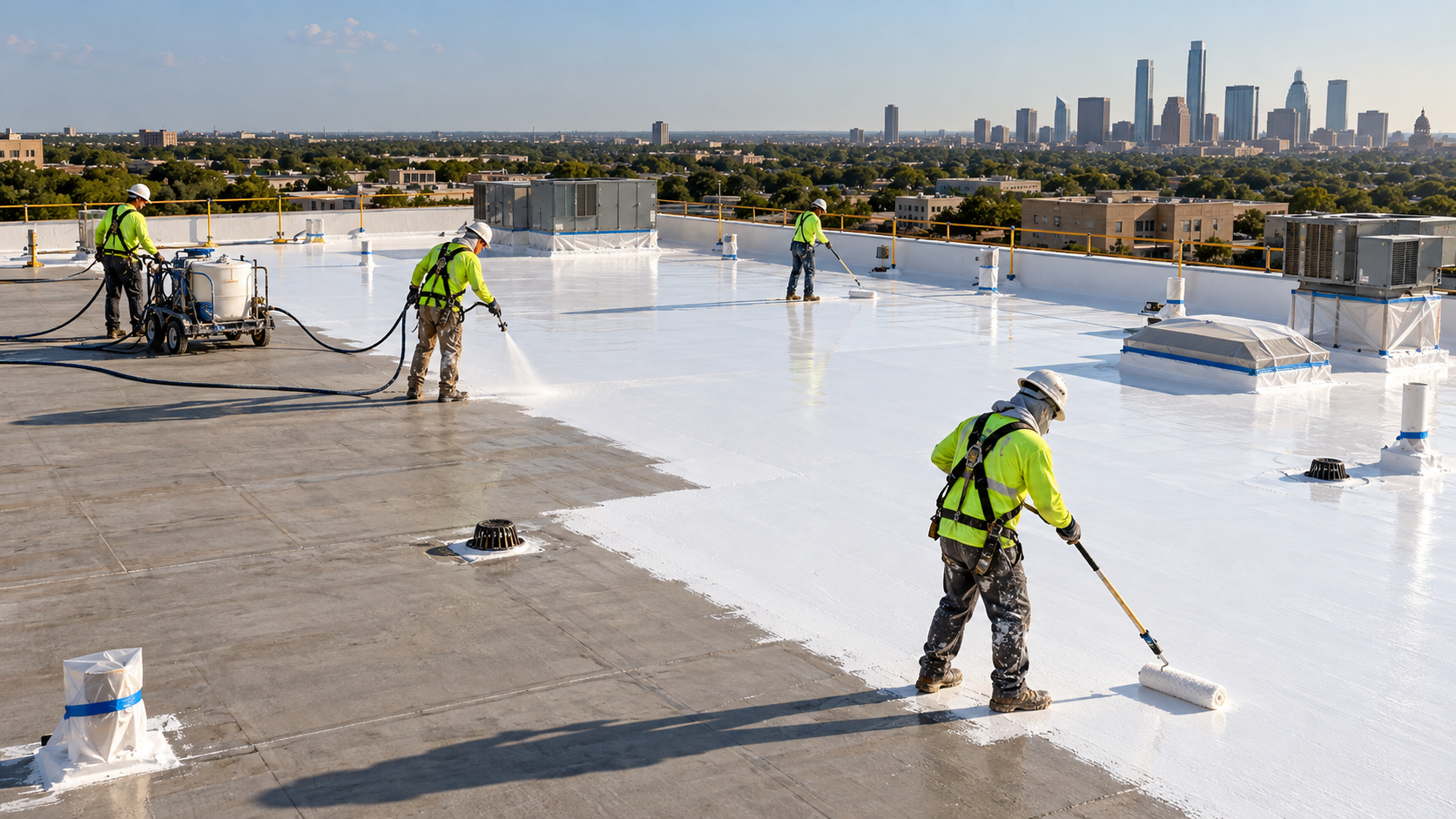
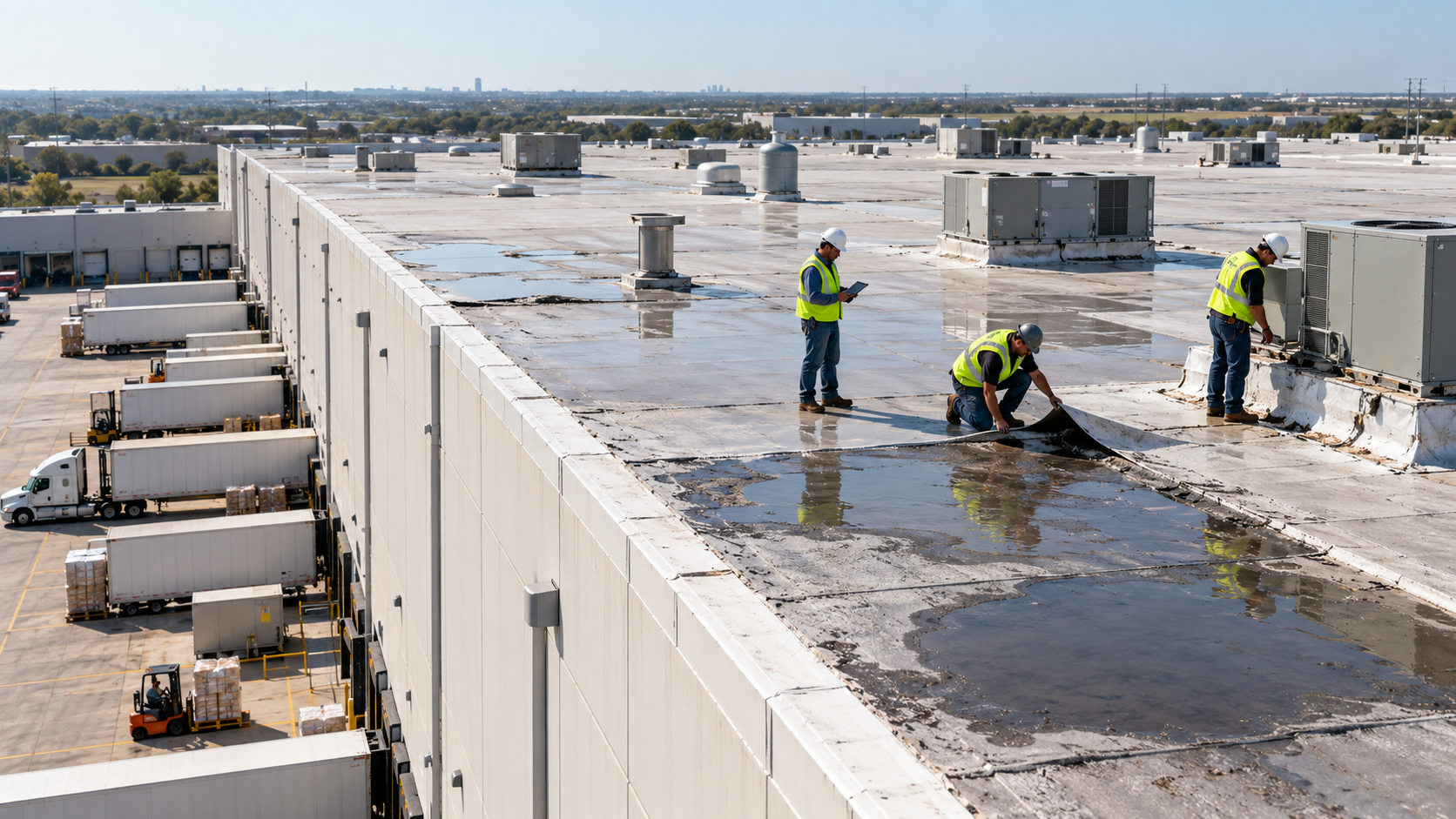
Share your storm concerns, interior symptoms, roof records, and access requirements so the evaluation can focus on your property’s needs. The two branded images above accompany this article as illustrative commercial-roof inspection visuals.