



Can Missing Shingles After a Storm Be Repaired, or Is Replacement Necessary?
Missing shingles after a storm need prompt attention, but they do not automatically mean the entire roof must be replaced.

Missing shingles after a storm need prompt attention, but they do not automatically mean the entire roof must be replaced. A localized repair may be appropriate when the surrounding roofing remains serviceable and the affected area can be restored using a suitable method. Replacement becomes a consideration when the damage is broader, a reliable repair cannot be completed, or the roof has other significant conditions that require a larger construction scope.
The decision should follow an inspection—not a count of shingles found in the parking lot.
For Texas property owners, this question often involves more than the roof covering. An apartment complex may have several buildings with different roof ages. A commercial office may contain pitched shingle sections alongside low-slope roofing. A restaurant may need to coordinate repairs around occupied spaces and deliveries.
The first priority is to protect the building and document the condition. The next step is to determine whether a localized repair, replacement of an affected roof plane, or a broader replacement is justified.
GAF’s technical guidance recognizes that individual storm-damaged shingles can be replaced and that replacement of a damaged roof plane may be possible. It also cautions that surrounding shingles can contain damage that is difficult to assess. gaf.com
This guide explains what should influence the repair decision, which questions to ask a contractor, and how to compare proposals without assuming that either the smallest repair or the largest replacement is automatically the right answer.
What Missing Shingles Tell You—and What They Do Not
Missing shingles establish that part of the roof covering is absent. They do not, by themselves, establish the full extent of damage, the condition of underlying materials, or the appropriate permanent scope.
A storm may leave several conspicuous gaps while other conditions require closer evaluation. Conversely, a visible gap does not necessarily indicate that every remaining shingle has been damaged.
Ask the inspector to identify the affected locations and describe what is exposed. The answer may involve underlayment, decking, or another component, depending on the existing assembly and condition.
Also distinguish complete shingle loss from a missing portion of a shingle. A torn tab, damaged ridge component, and missing field shingle can require different repair details.
A useful report should explain these observations in plain language. “Storm damage throughout” is difficult for an owner to evaluate without photographs, locations, and a description of what was actually found.
The goal is to move from a visible symptom to a documented construction decision.
Why Missing Shingles Should Be Addressed Promptly
Missing roofing should not be treated as an issue that can wait indefinitely because the ceiling is still dry.
GAF explains that lifted or missing shingles can allow moisture beneath the covering and affect the roof deck. Its storm guidance recommends replacing missing shingles promptly and arranging professional evaluation. gaf.com
There is no universal safe waiting period for every roof. The appropriate urgency depends on the exposed condition, weather forecast, interior symptoms, and what the building protects.
If water is entering near electrical equipment or ceiling materials appear unstable, restrict access and seek appropriate professional assistance. A roofing concern may require coordination with other specialists.
If the building is dry, schedule an inspection and ask whether temporary protection is needed before permanent work. Do not assume that visible underlayment provides an unlimited substitute for the missing covering.
Prompt attention means evaluating and protecting the property. It does not mean approving a full replacement before the roof has been assessed.
Start With a Safe Ground-Level Review
Property owners and managers can collect useful initial information without climbing onto the roof.
From safe positions, photograph visible gaps, displaced materials, and accessible exterior conditions. Record where debris was found and when the issue was discovered.
Inside the building, note any new stains, drips, or affected materials. Keep people away from unsafe areas and follow the property’s emergency procedures.
Do not attempt to test shingles by lifting them, walking across damaged sections, or leaning from a ladder. Roof access and material evaluation should be handled by appropriately equipped professionals.
GAF’s hail-damage guidance recommends leaving rooftop inspection to professionals and using safe ground-level observations as an initial check. www.gaf.com
Give the contractor your observations, but distinguish them from a diagnosis. “Several shingles were found beside Building C” is useful information. It does not prove which roof section they came from or why they detached.
That distinction keeps the initial record accurate.
What a Professional Inspection Should Cover
Ask the contractor to define the inspection scope before the visit.
The evaluation should address the missing shingles, surrounding conditions, and relevant roof details. It should also identify inaccessible areas and any limitations of a visual review.
Provide installation records, previous repair invoices, and warranty documents if available. These can help identify the roofing product and establish useful background.
For a commercial or multifamily property, identify every building and roof section included. An inspection of one accessible slope should not be mistaken for a complete evaluation of the property.
Ask whether interior observations are included when leaks have been reported. A stain and a roof gap may be related, but the connection should be evaluated rather than assumed.
The written report should separate observations, opinions about cause, and recommendations. It should also explain any unresolved question that affects the proposed work.
A contractor should be able to describe why the recommended scope fits the findings.
When a Localized Shingle Repair May Be Appropriate
A localized repair may be a reasonable option when the affected area is limited and the existing roof can accommodate a suitable repair.
The contractor should evaluate the surrounding shingles, attachment conditions, roof details, and materials needed to complete the work. The scope should address more than placing a new shingle over a visible gap.
Ask how the repair will connect to the existing roofing and whether additional components require attention. If adjacent shingles must be disturbed, ask how those areas will be handled.
A repair proposal should identify the location, materials, preparation, and relevant limitations. It should not promise a specific remaining roof life without a basis.
For an owner, the key question is whether the proposed work addresses the documented condition reliably. A small repair can be appropriate, but its suitability should be explained.
Do not reject repair simply because replacement seems more comprehensive. Equally, do not accept a minimal patch solely because it costs less.
When Replacement of One Roof Plane May Be Considered
The choice is not always limited to a handful of shingles or the entire building’s roof.
A contractor may determine that an affected roof plane requires replacement while other planes remain serviceable. GAF identifies roof-plane replacement as a possible approach when damage is confined to that plane. gaf.com
Ask how the boundary of the proposed work was established. What findings support replacing that section? How will transitions, ridge details, valleys, and flashing be handled?
Also ask whether the proposal includes removal of the existing materials or another approach, and what requirements apply to the assembly.
Partial replacement can introduce construction and appearance questions that deserve discussion. Those questions should be addressed in the proposal rather than left for the crew to resolve on site.
Keep the construction decision separate from any insurance determination. A technically proposed scope does not establish which portion the policy will pay.
The report should explain why this intermediate option is suitable for the particular roof.
When a Broader Replacement May Be Necessary
A broader replacement deserves consideration when findings show that a smaller scope would leave significant problems unresolved.
The reasons may involve widespread damage, the condition of remaining materials, underlying repair needs, or limitations in completing a suitable localized repair. Each reason should be tied to evidence.
Ask the contractor to explain which roof areas require work and why. A statement that the roof is old does not describe the full construction need.
Likewise, a few missing shingles should not be used as an automatic basis for whole-roof replacement. The inspection must establish what supports the broader recommendation.
Request photographs, locations, and a written explanation. If the proposal depends on additional investigation, identify that step before committing to construction.
A replacement scope should also address relevant accessories and details. Replacing field shingles while leaving unresolved flashing or substrate concerns may not achieve the intended result.
The owner should understand the problem the larger project is intended to solve.
Why the Number of Missing Shingles Is Not Enough
A numerical threshold can sound convenient: replace the roof after a certain number of shingles are lost. In practice, a count alone leaves too much unanswered.
Ten missing shingles in one accessible location may present different repair questions from ten missing shingles distributed across several roof planes. Damage at a ridge, valley, or transition may involve details that a field-shingle count does not capture.
The count also does not establish whether surrounding shingles are damaged or whether underlying work is needed.
Ask the contractor to map locations instead of relying only on a total. Group findings by building, roof plane, and component.
Be cautious about universal percentages presented as an automatic replacement rule. Any asserted requirement should be supported by the applicable technical or regulatory authority.
A measured scope remains important for estimating, but measurement follows evaluation. The owner needs both: how much work is proposed and why that work is appropriate.
How Roof Age Should Influence the Discussion
Roof age is useful background, but it should be considered alongside actual condition.
Collect the installation date where records exist. If the date is estimated, say so. Different roof sections may have been installed or repaired at different times.
Ask the contractor how age affects the proposed repair in this case. The answer should address material condition and the work required, rather than relying on a label such as “older roof.”
A newer roof can still have storm damage or installation concerns. An older roof may still have a localized condition that can be repaired.
Separate existing deterioration from the reported storm condition where the evidence allows. That distinction matters for both construction planning and insurance review.
If replacement is recommended partly because of age-related condition, explain that in the project file. Do not describe every replacement item as storm damage merely because the discussion began after severe weather.
What Repairability Means for the Surrounding Shingles
A repair involves more than the visibly missing piece.
The contractor needs to evaluate whether the neighboring materials can be handled appropriately during the work and whether the completed assembly can meet the intended requirements.
Ask what evidence supports a finding that localized repair is feasible—or infeasible. If a test or limited investigation is proposed, discuss its method, authorization, documentation, and restoration first.
Do not perform your own bending or lifting tests. Those actions can alter the condition and create additional damage.
Avoid vague conclusions such as “all shingles are too brittle” without a description of the evaluation and locations examined. The same caution applies to a claim that every area is readily repairable.
The report should distinguish inspected conditions from assumptions about unexamined areas.
If repairability remains uncertain, define the next investigation step before committing to an extensive scope. A focused evaluation can make the decision more concrete.
Why Unsealed Shingles Need Their Own Evaluation
A shingle can remain on the roof while requiring attention.
Missing shingles, damaged shingles, and shingles with broken sealant bonds are different observations. The contractor should identify them separately.
GAF’s current wind-damage bulletin recommends hand-sealing where wind has broken the sealant bond and no other damage is present. It cautions against assuming that such shingles will reseal adequately on their own. Google Docs
That manufacturer guidance is not a reason to have property staff apply a generic adhesive. The method must fit the product and applicable instructions.
Ask whether the proposed repair includes evaluation of surrounding attachment and sealing conditions. If hand-sealing is recommended, request the relevant scope and product information.
Also distinguish a repair of an unsealed condition from replacement of torn or otherwise damaged material. One method should not be substituted for another without technical justification.
Clear descriptions help the owner understand what the contractor is proposing.
What Should Be Checked Beneath the Missing Shingles?
Ask the inspector what is visible beneath the missing covering and whether additional evaluation is necessary.
Relevant questions may involve the condition of exposed underlayment, the deck, and details around nearby roof features. The specific assembly determines what can be assessed during the initial visit.
A photograph of exposed material does not establish that every underlying component is damaged. Conversely, replacing the covering without addressing an identified underlying concern may leave part of the problem unresolved.
If the contractor recommends opening an area, discuss the purpose, location, cost, and restoration method. Coordinate evidence preservation where an insurance or warranty review is underway.
The estimate should identify known work and explain how concealed conditions will be handled if discovered during construction.
For example, a proposal might include a defined process for documenting deck repairs and obtaining approval. That is more useful than an unexplained allowance or an assurance that no additional work will ever be needed.
Do Not Overlook Flashing and Roof Accessories
The missing shingles may attract attention, but the repair should account for relevant details.
Ask about nearby flashing, vents, ridge components, roof transitions, and other accessories. If any are affected, identify the work separately.
The appropriate construction scope depends on the location. A repair near a penetration may require a different approach from a repair in an uninterrupted field area.
Ask the contractor to explain how the repaired area will connect to existing details. The estimate should include necessary work rather than relying on unspecified “roof repairs.”
If an accessory is recommended for replacement, request the reason. It may be damaged, affected by the proposed work, or subject to an applicable installation requirement. Those are distinct explanations.
Do not assume that every accessory needs replacement because shingles are missing. The same principle applies in reverse: do not exclude detail work automatically because it was not the first visible symptom.
How Temporary Protection Affects the Permanent Scope
If the roof needs immediate protection, arrange a method appropriate to the condition and assembly.
Document before and after the temporary work when safe. Keep the authorization, work description, photographs, invoice, and follow-up instructions.
Permanent planning should include any conditions created by the temporary installation. GAF’s shingle guidance specifically notes that shingles penetrated by nails used to secure a tarp require replacement and that caulking those holes is not a permanent repair under its guidance. gaf.com
Ask the contractor to identify where temporary attachment occurred and how those locations will be addressed.
A tarp does not establish the final replacement quantity. Its purpose and dimensions may differ from the area requiring permanent construction.
Also ask who will monitor the temporary measure and when it will be removed. The project should move toward a defined permanent solution rather than leaving emergency protection in place without a plan.
What If Replacement Shingles Are Unavailable?
Product availability should be investigated and documented.
Ask the contractor to identify the existing product where possible and explain what replacement materials are available. Installation records, packaging information, or manufacturer assistance may help.
Distinguish technical compatibility from appearance. A material may raise fit or installation questions separate from color variation.
If the original product is discontinued or unavailable, request a written explanation of the implications for the proposed repair. Do not assume that product unavailability automatically requires full-roof replacement.
Likewise, do not accept a substitute solely because it appears similar in a small photograph. Ask how the contractor established that it is suitable for the assembly and repair method.
Where insurance is involved, coverage for a proposed scope remains a policy question. The contractor can document construction facts, while an appropriately qualified advisor can address interpretation.
The owner should receive enough information to understand the available choices.
How to Discuss Color Matching Without Confusing the Scope
Appearance matters to property owners, especially at apartment communities, offices, and retail properties. It should be discussed openly.
Ask what the completed repair is expected to look like and whether a sample or product information is available. Existing materials may have weathered differently from new material.
Separate the owner’s appearance preference from required construction work. A broader scope chosen for uniform appearance may involve costs beyond a localized technical repair.
Do not assume that every insurance policy pays for any amount of work needed to achieve a preferred visual result. Ask the insurer or qualified advisor about the applicable terms.
If the construction proposal includes a larger area partly for appearance, state that clearly.
This transparency helps the owner compare options and budget accurately. It also prevents disagreement later when a functional repair does not create the uniform appearance someone expected.
Put the agreed product and scope in the contract.
Can One Building Need Repair While Another Needs Replacement?
Yes, the property should be evaluated by building and roof section rather than treated as one uniform condition.
An apartment complex may contain buildings with different installation dates, repair histories, exposures, and roofing products. An office property may have additions constructed at different times.
Use consistent building identifiers in reports and estimates. Map the findings and separate proposed scopes.
If one contractor recommends replacement across the entire property, ask what evidence supports the recommendation for each building. If another proposes only repairs, ask the same question.
A portfolio-wide project may have operational or budgeting advantages, but those considerations should be distinguished from the damage assessment.
The owner can then decide whether to combine justified work with elective improvements.
Clear separation also helps avoid submitting photographs from one building as support for a different building’s condition. Accurate location records are essential when several structures are involved.
How to Document Missing Shingles After a Storm
Create a record that connects observations to locations and dates.
Ask for wide roof views, location views, and close details. Identify missing material, surrounding observations, and any temporary work.
Keep original image files. Use labeled copies for explanations and preserve the unedited originals separately.
Record the reported event, discovery date, inspection date, and repair date. These may differ. If several storms occurred, include that history.
Retain tenant reports, maintenance tickets, and prior inspection documents that relate to the affected area.
Use factual captions. “Missing shingles on Building A east plane” is clearer than labeling every image “total storm loss.”
Also document inspection limits. If a section was inaccessible, the report should not imply it was evaluated.
The completed file should allow someone unfamiliar with the site to follow the findings without guessing. That makes it useful for construction planning, maintenance, warranty questions, and insurance review.
Will Insurance Pay for Repair or Replacement?
That depends on the policy and circumstances of the loss.
A contractor’s construction recommendation does not determine coverage. The insurer reviews the claim under the applicable terms, including relevant deductibles, exclusions, limits, and valuation provisions.
TDI explains that roof coverage can differ between replacement cost and actual cash value, and that insurers do not pay for a new roof merely because it is old or worn. tdi.texas.gov
Ask the insurer to identify what damage it accepts and what work its estimate includes. If you disagree, identify the specific item or finding rather than responding only with a higher total.
A commercial property owner should review the actual commercial policy, not assume that examples concerning homeowners coverage apply identically.
Keep construction facts and policy interpretation distinct. A detailed report can support review without promising that a particular scope will be paid.
Understand your payment obligations before signing a roofing contract.
Could a Manufacturer Warranty Apply?
Check the warranty for the installed product and system.
A manufacturer warranty and a property insurance policy are different contracts. Their coverage, procedures, and requirements may differ.
Ask the manufacturer or warranty provider what information is needed before significant repair or removal. Do not assume that every storm condition is covered.
GAF’s claims guidance, for example, requests installation and ownership documentation for residential roofing claims and explains that samples may be required. It also advises notifying the examiner when urgent repairs must proceed before evaluation is complete. gaf.com
Those procedures should not be generalized to every manufacturer. Review the applicable documents.
If samples are requested, have an experienced roofing professional coordinate removal and restoration. Keep the location and submission records.
Warranty questions should be investigated promptly, while necessary protection continues. The existence of a warranty does not eliminate the need to assess the roof or understand the proposed construction.
How to Compare Repair and Replacement Estimates
Compare scope before comparing totals.
A repair estimate and a replacement estimate solve different construction assignments. Identify exactly what each includes and what condition each is intended to address.
Ask about removal, materials, underlayment, flashing, accessories, cleanup, permits where applicable, and known underlying work. Clarify exclusions and the process for changes.
GAF notes that repair costs vary with the scope, location, and selected materials. A property-specific estimate is more useful than applying a generic price to an uninspected roof. GAF
Also compare the proposed warranty and follow-up responsibilities. Ask what limitations apply to a localized repair on an existing roof.
Do not assume the lowest estimate represents the same work as another proposal. Request clarification of omitted items.
If replacement includes optional improvements, separate them. The owner should understand required construction, elective choices, and uncertain work before deciding how to fund the project.
Questions to Ask Before You Sign
A roofing proposal should answer practical questions.
What conditions support the recommended scope? Which building and roof planes are included? What product is proposed? How will surrounding materials and roof details be handled?
Ask what happens if concealed conditions are discovered. Who documents them, who approves the change, and how is pricing established?
Clarify payment timing, cancellation terms, scheduling, cleanup, and warranty coverage. Determine whether your payment obligation depends on any insurance outcome.
Ask who will coordinate access and communicate with tenants. For occupied commercial properties, that responsibility should be clear before work starts.
If the proposal relies on an asserted code or manufacturer requirement, request the applicable reference.
You should not need to interpret vague promises to understand the project. A clear contract connects the findings to the work and explains the obligations of both owner and contractor.
Keep the signed proposal and approved changes with the roof records.
Planning Work Around Tenants and Operations
Even a localized shingle repair can require coordination.
Identify entrances, deliveries, parking areas, equipment access, and spaces affected by the work. Tell the contractor about operating hours and any restrictions.
For apartment properties, communicate which buildings are scheduled and where residents should direct questions. For offices or restaurants, coordinate access and material handling around daily activity.
Ask how the contractor will manage debris and complete cleanup. Confirm arrangements for protecting affected areas and maintaining appropriate access.
A broader replacement may need phased scheduling, but a small repair should still have a defined work plan.
Do not promise occupants that there will be no disruption unless that can be supported. Provide a factual description of the schedule and relevant arrangements.
After completion, confirm which areas were repaired and whether any follow-up remains.
The goal is an organized project that addresses the roof while helping the building continue operating safely.
An Illustrative Repair Decision
Consider an apartment building where several shingles are missing from one roof plane after high winds.
The owner arranges an inspection and temporary protection where needed. The contractor documents the missing material, evaluates surrounding conditions, and reviews available product information.
One possible finding is that a localized repair can address the condition. Another is that replacing the affected plane is justified. A broader replacement would require its own supporting findings.
The owner asks for a written explanation and compares the construction scope with the available budget and insurance information.
This example illustrates a decision process, not a predetermined outcome. It does not establish a universal shingle threshold or guarantee coverage.
The important sequence is inspection, documented findings, suitable options, and an informed agreement.
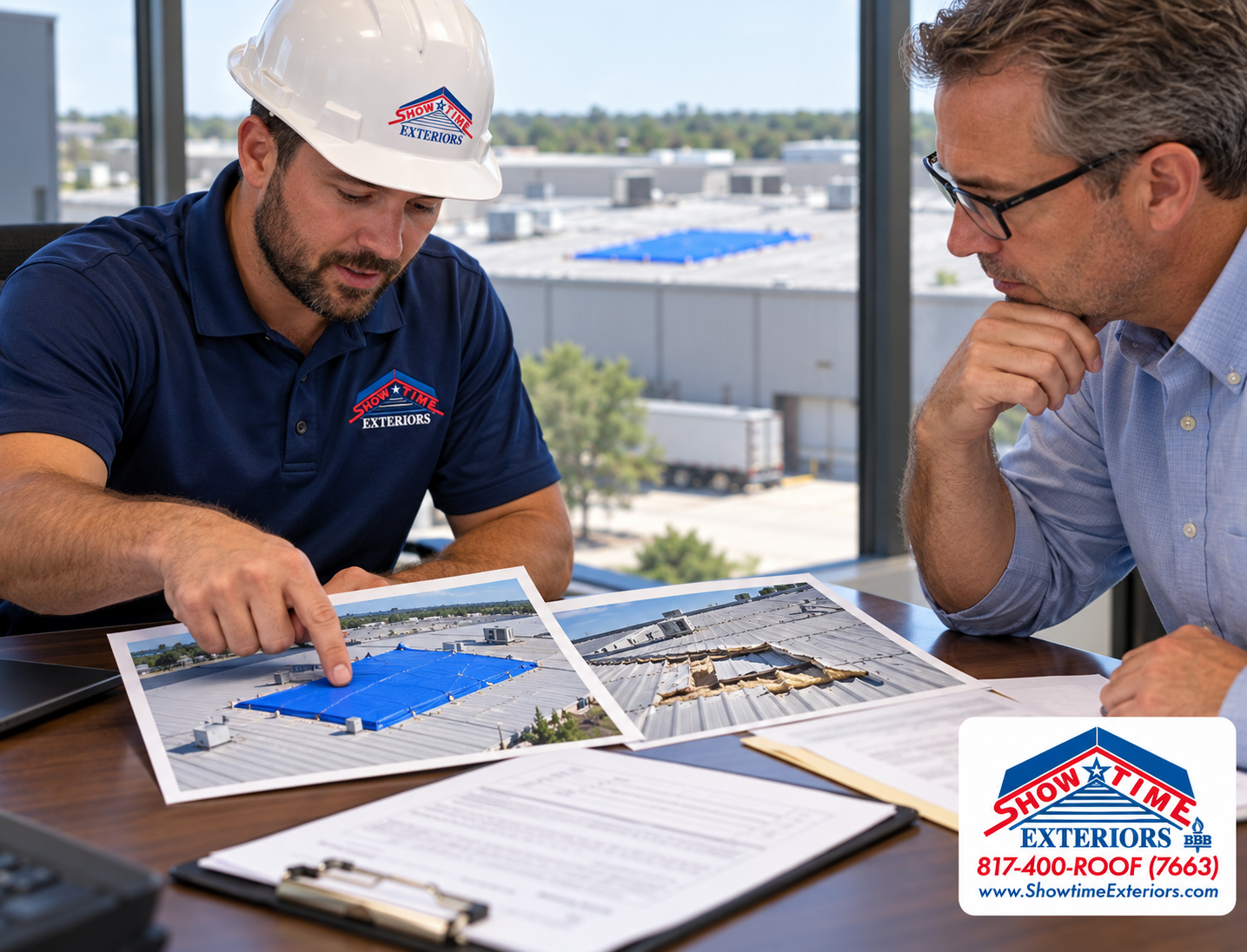
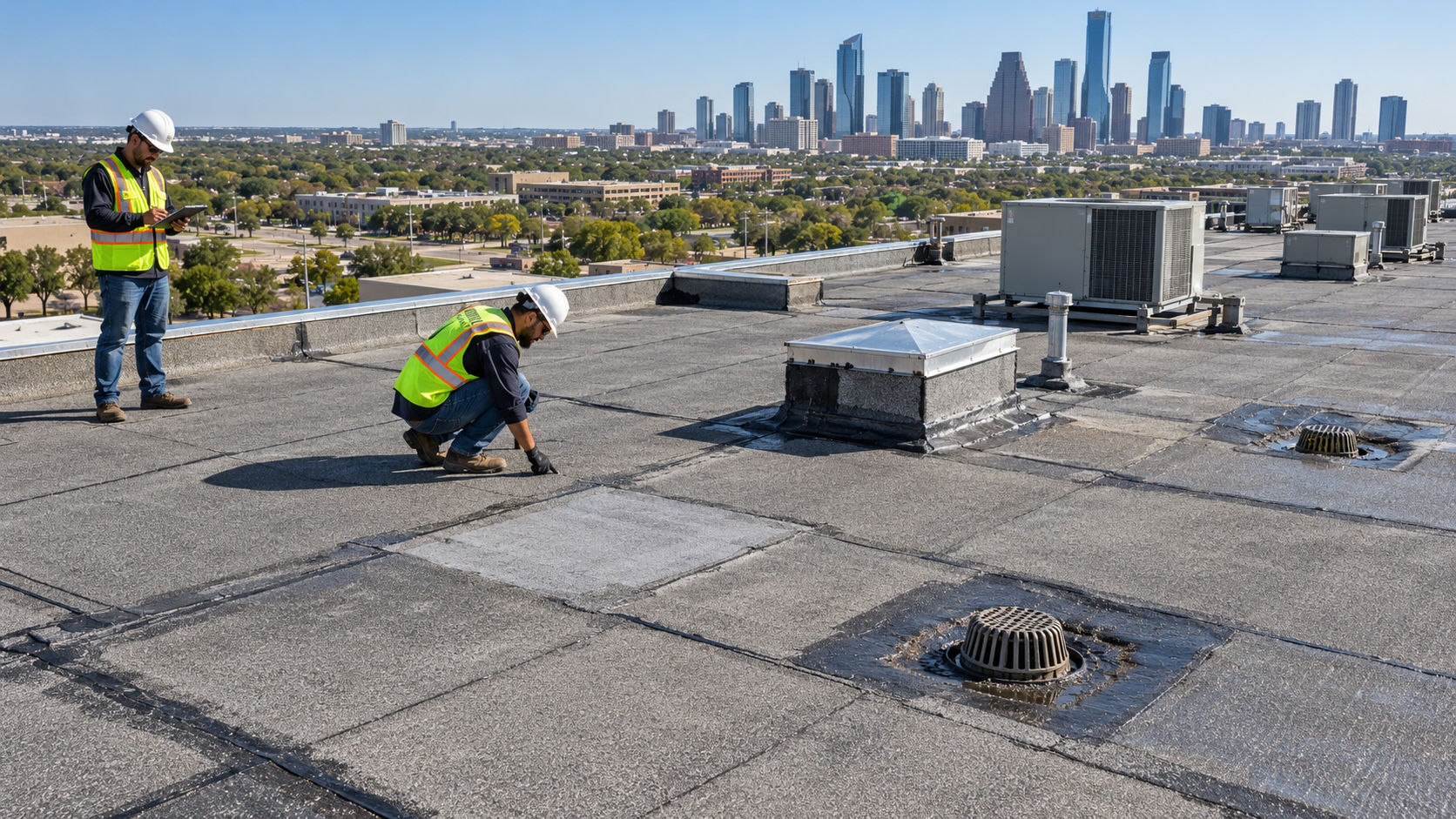
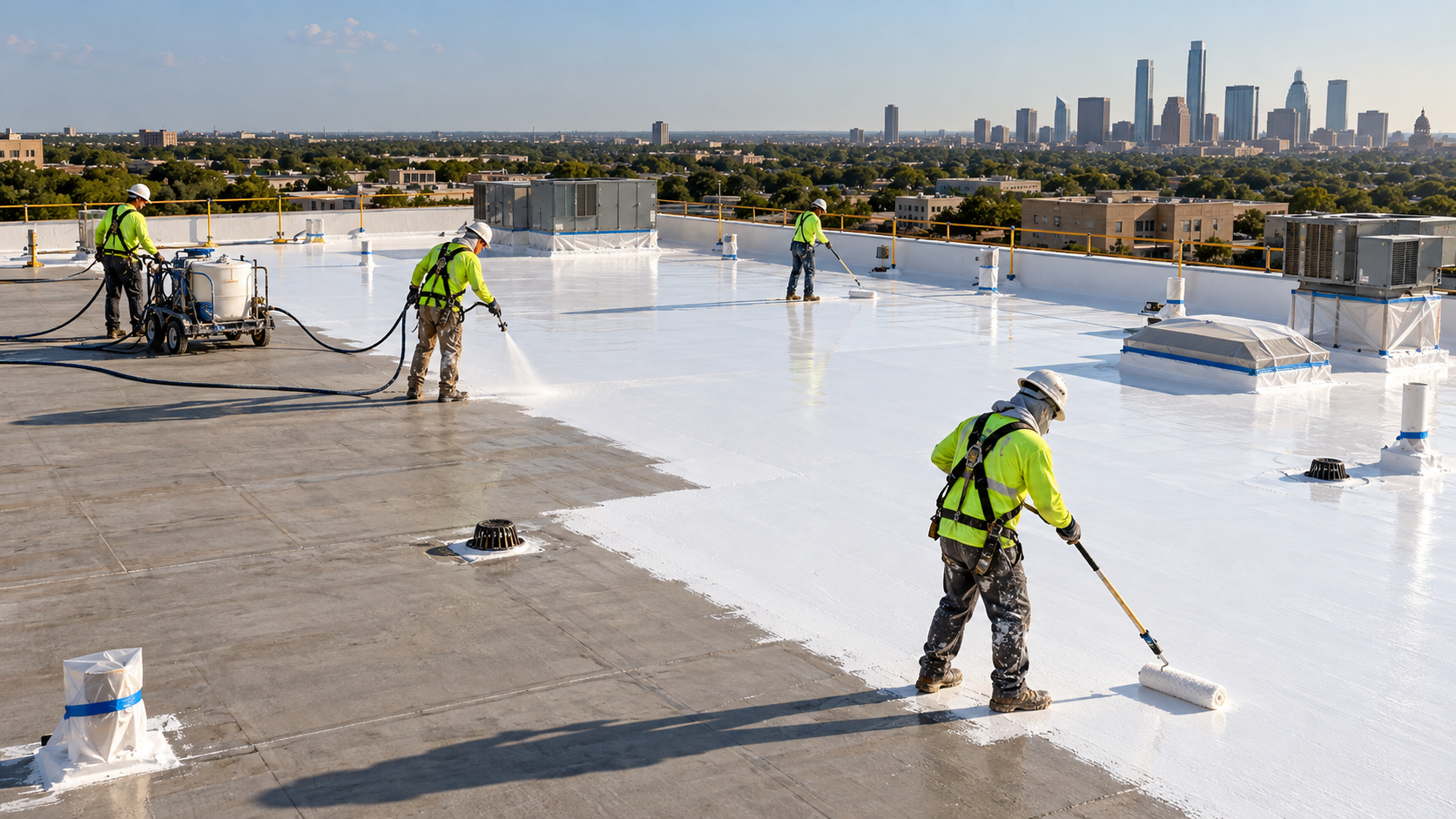
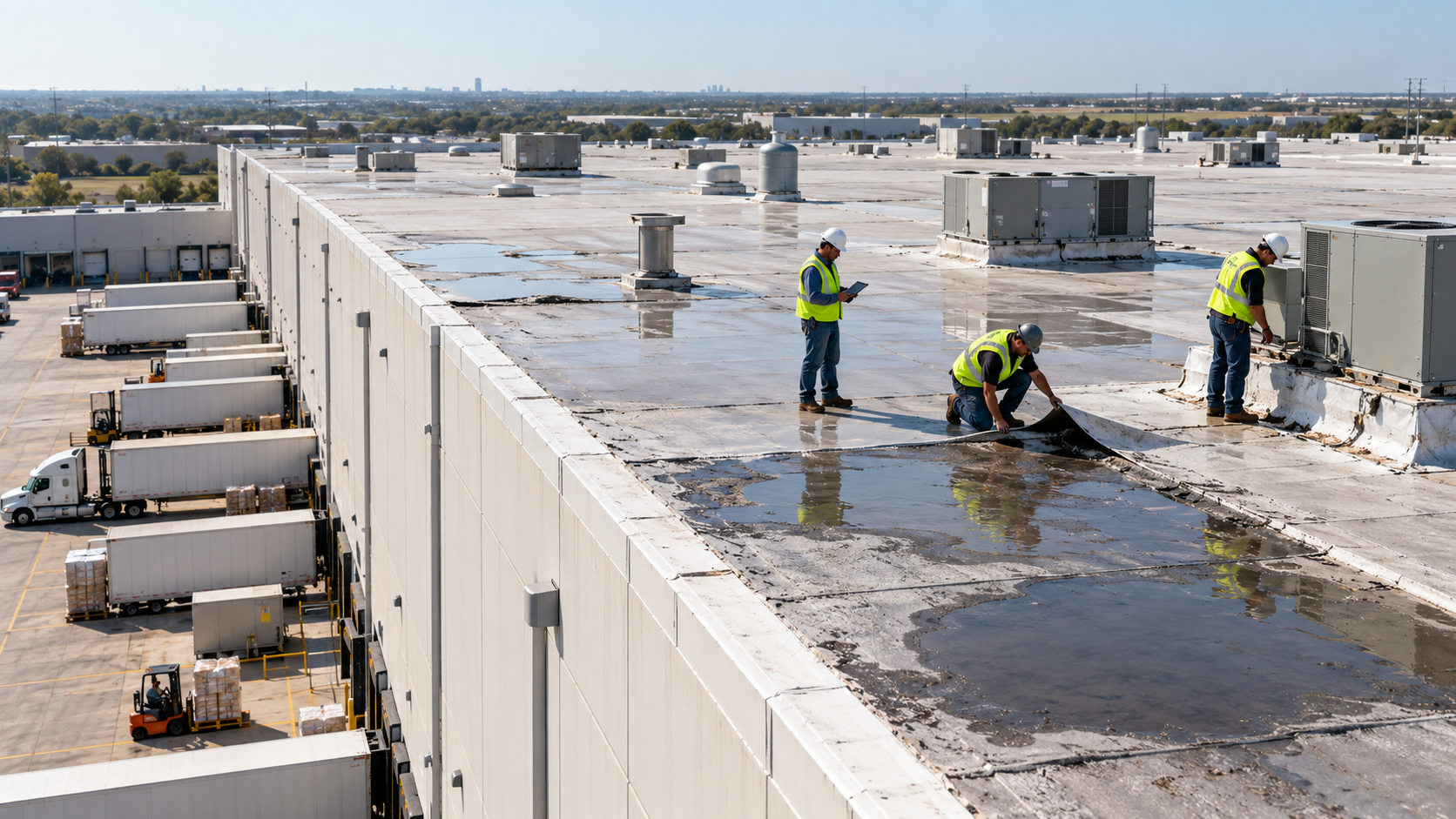
The two branded images accompanying this article are illustrative roofing scenes. They are not records from an actual customer claim or proof of a particular roof’s repairability.
Frequently Asked Questions
Can a single missing shingle be replaced?
Individual shingles can be replaced in appropriate circumstances. The contractor should evaluate the affected location, surrounding material, and requirements for completing the repair.
Does finding shingles on the ground mean I need a new roof?
It means you should arrange an evaluation. The debris does not establish the full condition or replacement scope.
Can I wait until the roof leaks?
Arrange prompt attention instead. A dry interior does not establish that exposed or damaged roofing can remain unresolved indefinitely.
Should I approve a full replacement immediately?
Understand the inspection findings and proposed scope first. Urgent temporary protection can be handled separately.
Is a repair always cheaper in the long term?
The initial price is only one factor. Ask whether the repair addresses the documented condition and what limitations remain.
Does a discontinued shingle guarantee replacement coverage?
No automatic conclusion should be made. Document availability and construction implications, then obtain appropriate advice about the policy.
What should I keep after the work?
Retain the report, photographs, contract, approved changes, invoices, payment records, product information, and applicable warranty documents.
Schedule a Roof Evaluation With Showtime Exteriors
Missing shingles after a storm deserve prompt evaluation.
The right permanent scope depends on what the inspection establishes and whether a suitable repair can address the condition.
A clear proposal should explain the affected areas, the work required, and any unresolved questions. That information helps you choose between localized repair, roof-plane replacement, and a broader project.
Contact Showtime Exteriors to discuss storm-related roof concerns and schedule an evaluation. Call 817-400-ROOF (7663) or visit showtimeexteriors.com.
Share your photographs, roof history, reported symptoms, and building access requirements so the discussion begins with your property’s actual needs.