



How to Evaluate a Free Roof Inspection Before You Sign
Evaluate a free roof inspection by checking scope, written findings, photographs, limitations, authorizations, repair recommendations, and any contract obligations.
A free roof inspection can be a useful starting point when an owner notices a leak, sees missing material, or wants to understand an aging roof. The value comes from the scope, observations, and explanation provided, not simply from the absence of a fee.
Before authorizing access or signing a document, clarify what the company will inspect, what information you will receive, and whether the document creates any obligation beyond the visit. An inspection authorization and a construction agreement should not be confused.
Showtime Exteriors can discuss roof assessment needs for Texas homes and commercial properties. This guide explains how to evaluate an inspection offer and the findings that follow. The objective is a clear account of the roof and appropriate next steps, with important limitations stated openly.
Define What Free Actually Includes
Ask whether the offer includes a visual roof assessment, ground-level observations, photographs, a written report, an estimate, or another defined service. Confirm any geographic, property-type, or access limitations.
A company may offer an initial assessment without including destructive investigation, laboratory analysis, moisture testing, or specialized equipment. That can be reasonable if the limits are explained before the visit.
Ask whether follow-up services have a fee and whether any charge requires separate approval. Avoid an arrangement where the cost becomes clear only after the work occurs.
Free should describe the price of the agreed service. It should not be assumed to mean unlimited investigation, a certification of the whole building, or a promise that construction will also cost the owner nothing.
Know Who Is Offering the Inspection
Obtain the business name, contact details, and the identity or role of the person attending. Ask about experience with the actual roofing system rather than only general years in construction.
Check relevant credentials and insurance through appropriate sources. A logo, uniform, or manufacturer badge should not replace verification of a specific claim about qualifications.
The FTC's home improvement guidance encourages research, written estimates, and caution about pressure for immediate decisions. Apply those principles to the company behind the offer.
A contractor may reasonably hope to earn future work. That commercial purpose does not automatically make the inspection unreliable, but the owner should understand it and evaluate the findings on their evidence.
Read the Authorization before Signing
Identify what access you are permitting and whether photographs, interior entry, sampling, or other activities are included. Ask about anything you do not understand.
Check whether the document also contains construction commitments, cancellation provisions, fees, exclusivity terms, or authority to communicate with other parties. Do not assume a form is only an inspection sign-in because it is presented at the door.
Request a copy before signing and retain the completed version. Avoid blank spaces or missing attachments that will supposedly be filled in later.
If the document has important contractual terms that remain unclear, obtain appropriate advice. A legitimate inspection can be scheduled around informed authorization rather than an owner's uncertainty about what the signature permits.
Match the Scope to the Question
Explain why you requested the visit. A recurring leak, post-storm concern, sale-related question, and maintenance review may need different assessment boundaries.
If the problem involves an interior symptom, identify the room, timing, weather conditions, and previous repairs. Do not expect a general roof walk to answer an undisclosed leak history.
For a home, Showtime Exteriors' residential roofing information provides context for discussing the visit. Mention low-slope additions and other roof materials so the assessment does not silently focus only on shingles.
Ask the company to state what it can reasonably determine during the initial visit and what might require a separately approved investigation. A focused scope is more useful than an undefined promise to check everything.
Ask How Access Will Be Managed
Owners and staff should not climb onto an unfamiliar roof to accompany the inspection or collect extra photographs. Let qualified personnel determine appropriate access and safety arrangements.
OSHA's fall protection standard includes evaluation of surface strength and structural integrity for workers. A nearly flat roof is not automatically an ordinary walking surface.
Weather, roof condition, equipment, skylights, and access limitations can affect whether a roof-level visit proceeds. Ask how the company will document areas it cannot safely inspect.
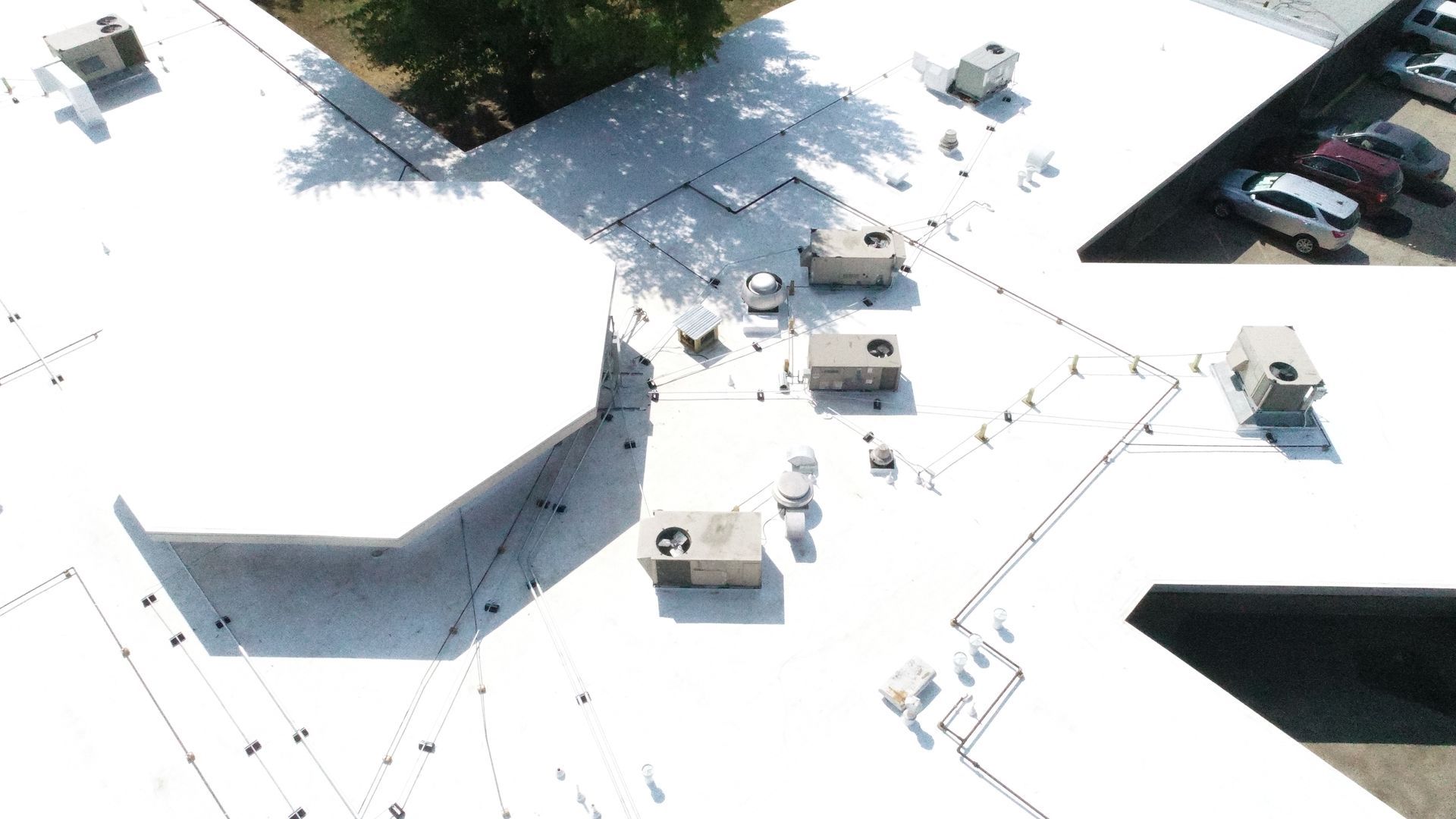
Remote images may be useful when appropriate, but they do not eliminate all limitations. A contractor should not claim a complete assessment of concealed conditions solely because it obtained a broad aerial view.
Expect Identification of the Roof System
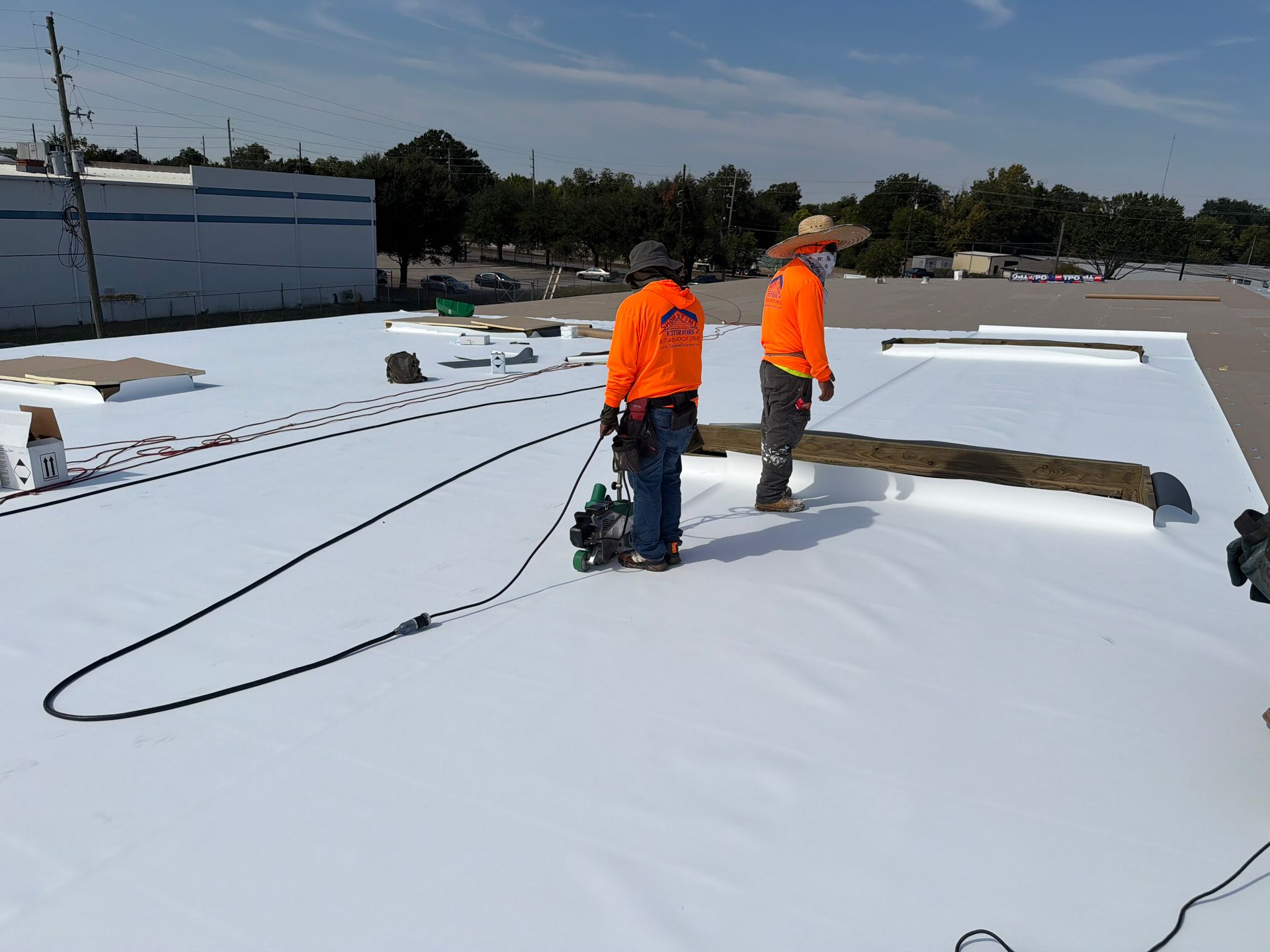
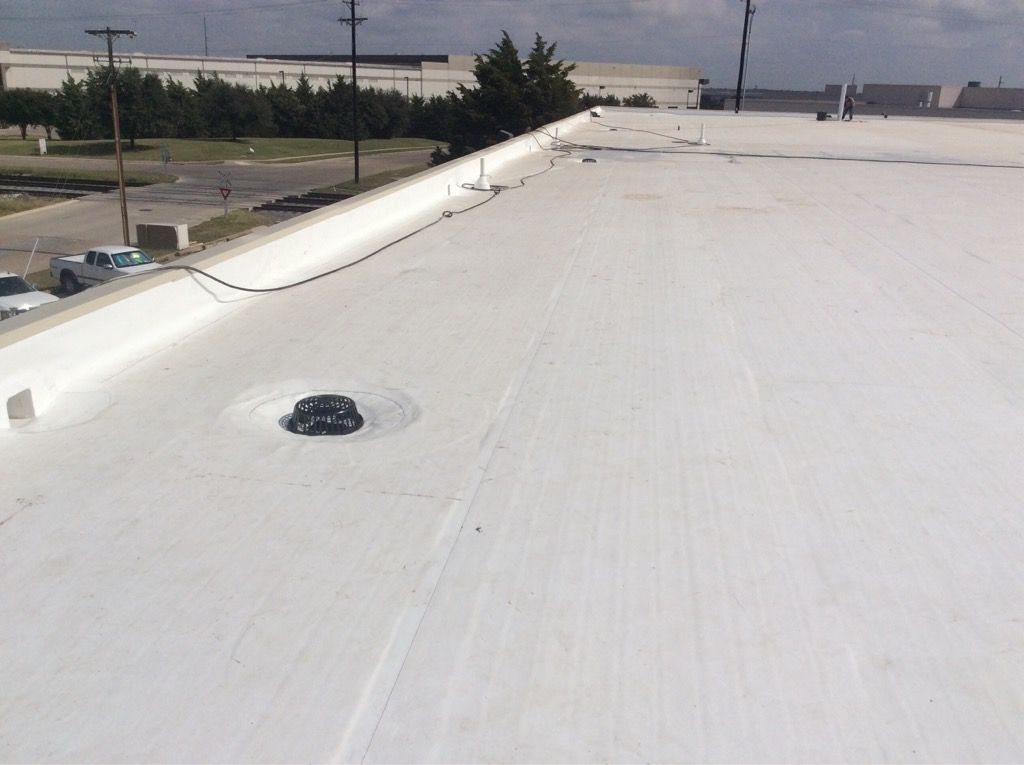
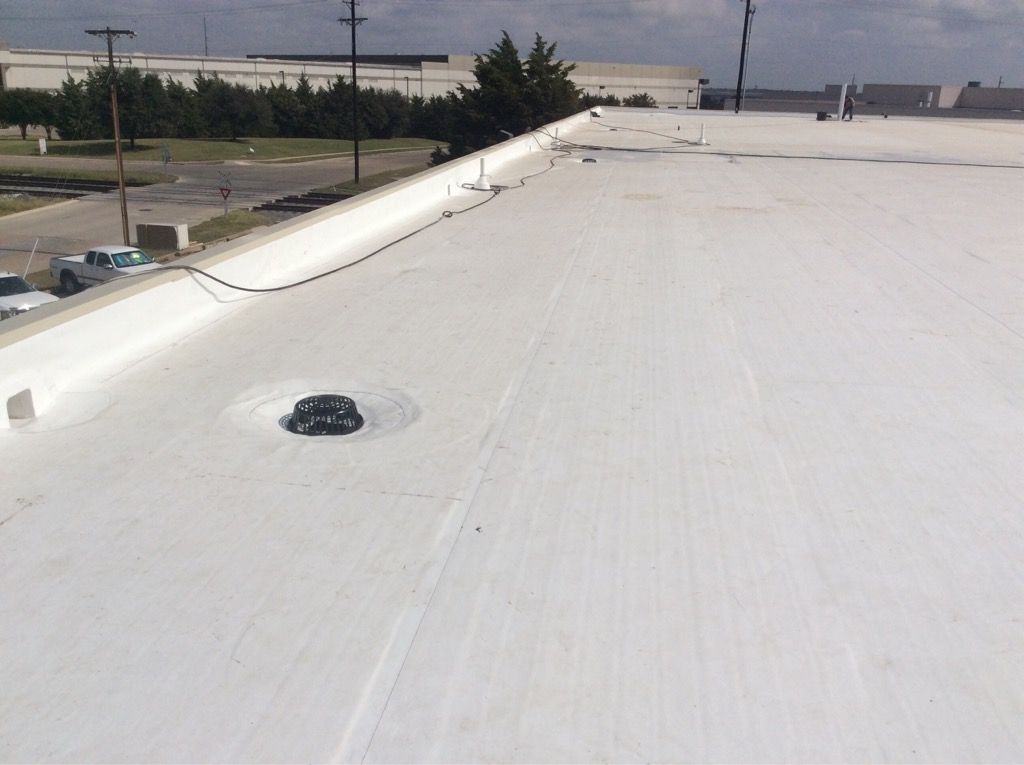
The report should identify visible roof materials and relevant sections, with uncertainties stated clearly. Similar-looking coatings and white membranes can require different repairs.
Record installation information where verified, previous repairs, and available warranty details. Do not accept an exact roof age based only on surface appearance when records are missing.
For a commercial property, Showtime Exteriors' commercial roofing overview provides context for a defined assessment. Explain equipment activity, tenant concerns, and access restrictions before the appointment.
A useful report connects the recommendation to the actual assembly. A generic proposal prepared without identifying the materials or relevant details deserves further questions before an owner commits to work.
Look for Location-Specific Findings
Photographs should show both the detail and enough context to locate it again. Use roof sections, slopes, building names, or equipment identifiers consistently.
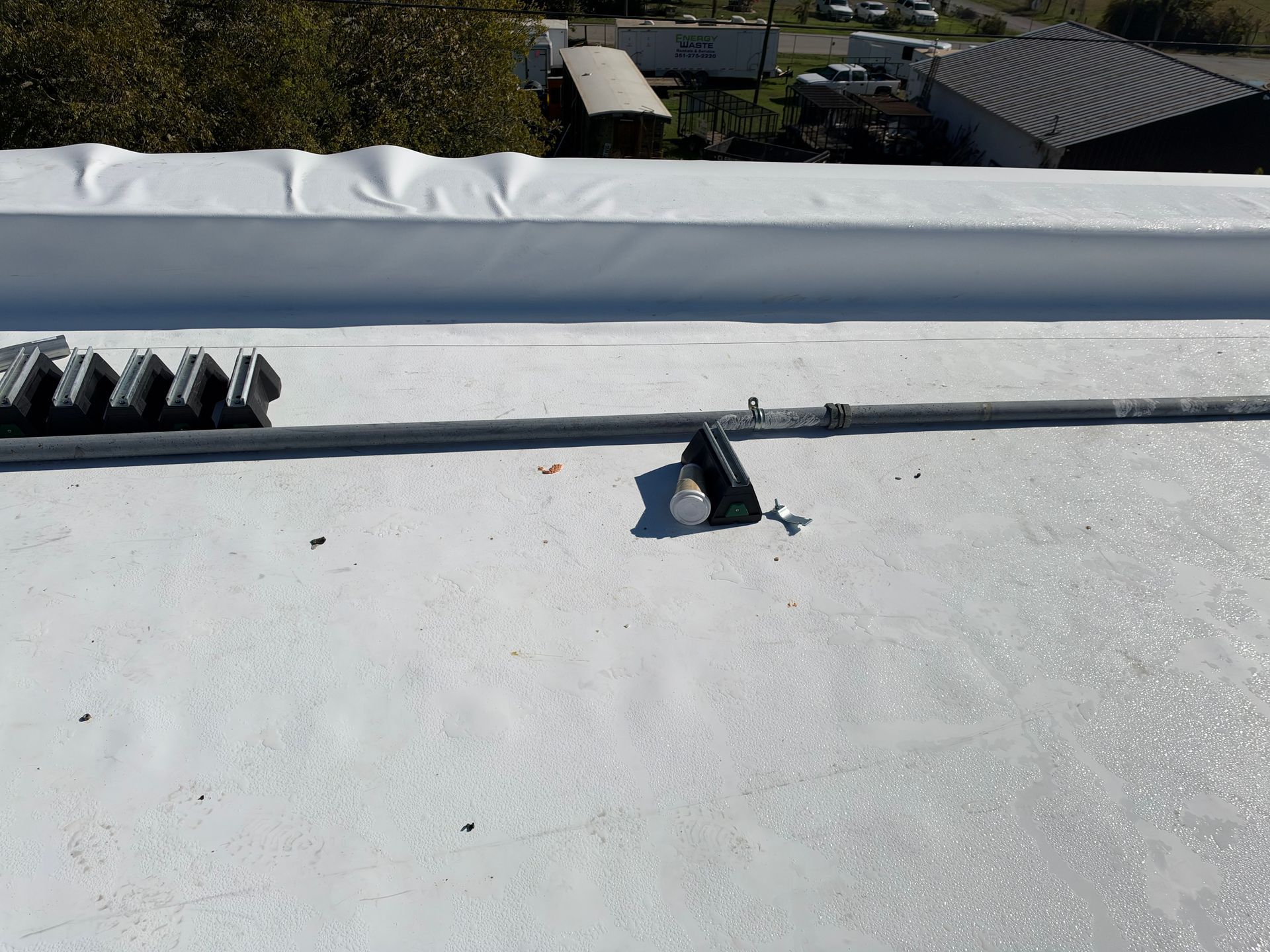
An image of a dark mark does not explain whether it is dirt, wear, a puncture, or another condition. Ask for a plain-language description and its significance.
The report should distinguish observed defects, conditions needing monitoring, and areas requiring further investigation. Not every mark has the same meaning or urgency.
A useful finding might identify an opening at a particular flashing and explain a proposed repair. A vague statement that the roof is bad does not give the owner enough information to evaluate an expensive recommendation.
Separate Observations from Cause and Timing
A contractor may observe a damaged shingle without being able to determine exactly when or how it was damaged. That uncertainty should remain visible in the report.
Weather reports and neighborhood experiences can provide context but do not establish damage at a specific property. Earlier deterioration, equipment work, installation conditions, and other contributors may matter.
Ask what evidence supports a cause description and what limitations apply. Avoid accepting a convenient storm date merely because a claim might be involved.
Accurate findings can support decisions even when the cause remains uncertain. The inspection's credibility should come from describing the roof honestly rather than producing a predetermined storm-damage conclusion.
Evaluate What Was Not Inspected
Ask whether the visit included every relevant slope, low-slope section, transition, drainage component, and reported leak area. An inaccessible area should be listed rather than silently omitted.
Clarify whether interior observations were included and whether the roof assembly below the surface could be evaluated. A visual visit commonly leaves concealed information unresolved.
A statement that no defect was observed is different from proof that no defect exists anywhere. The report should use language consistent with the actual scope.
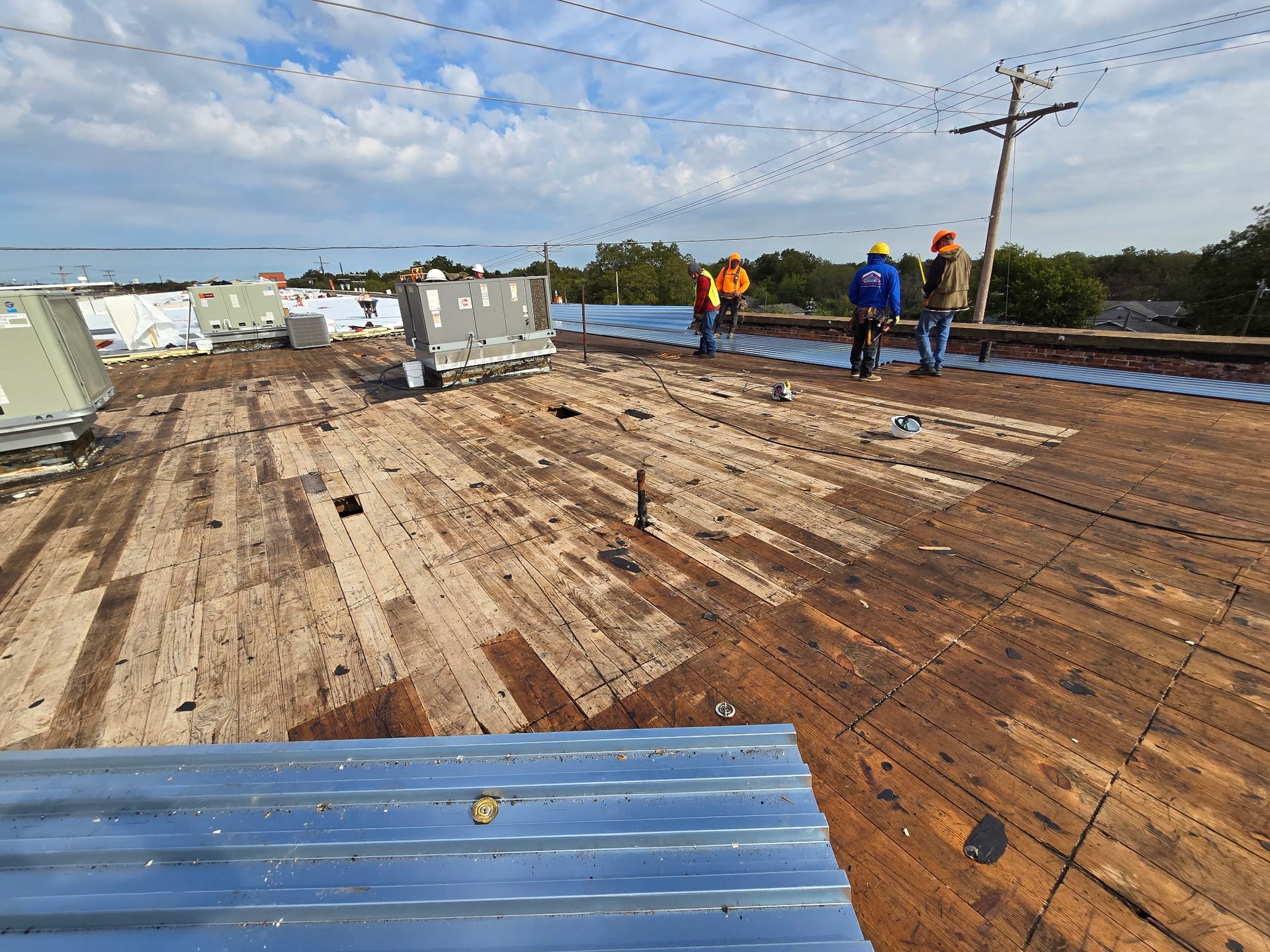
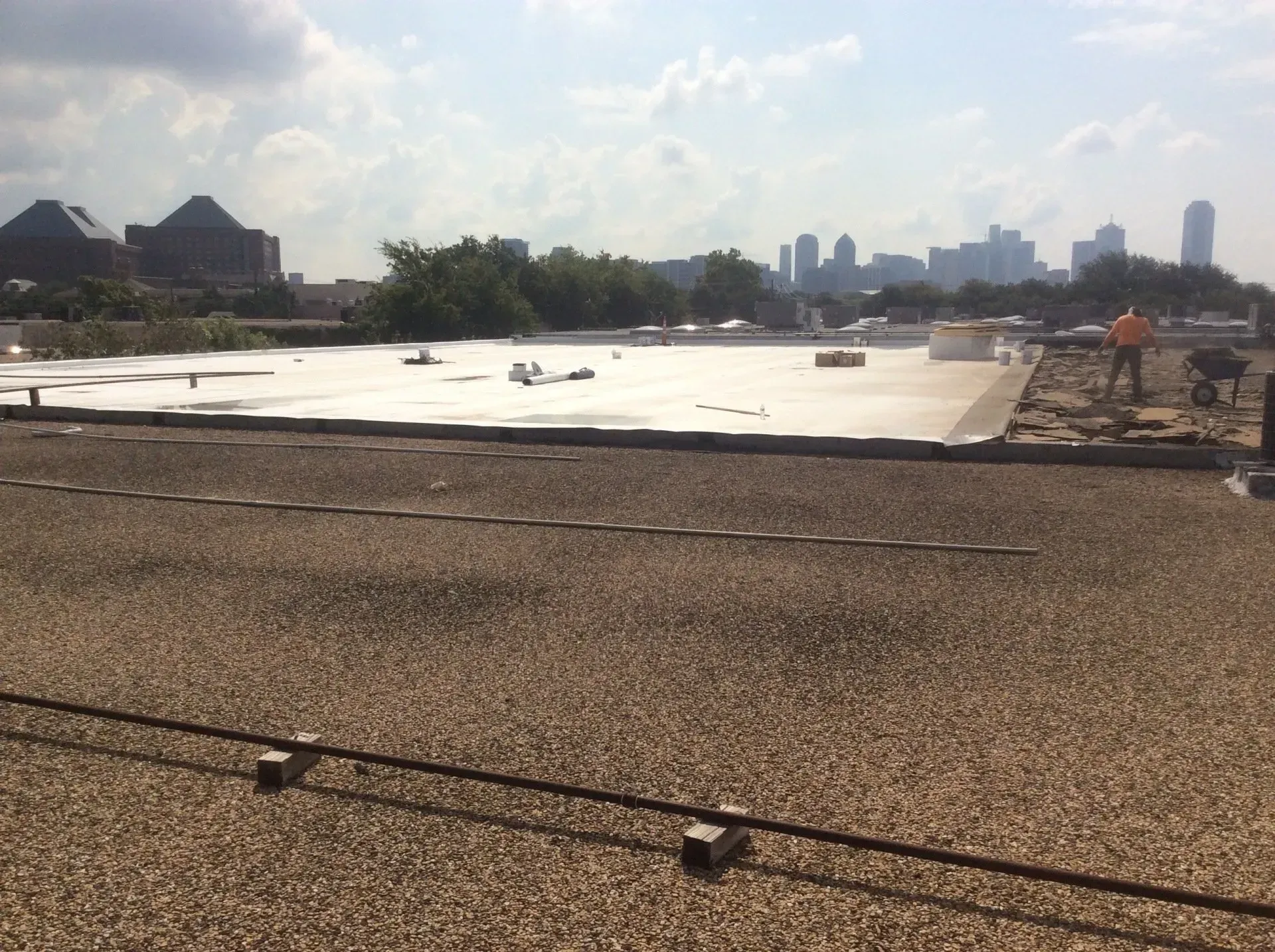
For aging gravel-surfaced built-up roofs, concealed deterioration and leak tracing can be challenging. Visible surfacing does not establish that all underlying layers are dry, intact, or suitable for another roof layer.
Understand the Limits of Drone and Thermal Images
Ordinary drone photographs can document geometry, visible damage, and accessible surface conditions. They do not directly verify wet insulation or concealed structural soundness.
Thermal surveys may identify anomalies under suitable conditions, but interpretation depends on the assembly, equipment, timing, and environmental factors. Appropriate verification may be needed before conclusions about moisture are made.
Ask what technology was used, what question it addresses, and what was actually confirmed. A colorful image should not be treated as self-explanatory proof of a failed roof.
If additional testing is recommended, request the scope, fee, authorization process, and restoration method for any openings. Do not assume specialized investigation was included simply because the initial inspection was free.
Ask Why the Recommendation Follows from the Findings
A repair, monitoring plan, further assessment, restoration, and replacement are different responses. The contractor should explain why its recommendation fits the observed conditions.
A localized defect does not automatically justify complete replacement. Conversely, repeated failures or widespread deterioration may need more than another surface patch.
Ask which parts of the roof remain serviceable and which questions must be resolved before a final scope. A recommendation can be conditional where important information is missing.
For broader assembly questions, review the Texas roofing system selection guide. The decision should reflect the building rather than a material preference or a sales target alone.
Distinguish Urgency from Pressure
Active water entry, unstable materials, and utility concerns can require prompt attention. That does not mean every long-term construction decision must be signed immediately.
Ask the contractor to identify the urgent condition, suitable temporary action, and separate permanent options. Keep safety issues directed to the appropriate professionals.
The Consumer Financial Protection Bureau's post-disaster contractor guidance encourages research and comparison rather than rushed hiring. An owner can address necessary protection while still understanding the larger agreement.
A deadline tied only to a same-day sales discount does not explain the roof's condition. Request the evidence and written scope needed for an informed decision.
Do Not Confuse Inspection with Insurance Approval
A roofing contractor can provide physical findings and explain construction costs. It does not make the insurer's coverage decision or guarantee a settlement.
TDI's roofing and insurance law guidance explains Texas restrictions on a contractor acting as a public adjuster for property where it provides or may provide services. It also addresses deductible waivers.
Be clear about promises to handle the claim or provide a roof at no cost. The inspection should not hide an agreement that blurs construction services with claim representation.
Direct coverage interpretation, settlement representation, and legal questions to appropriately qualified professionals. A signed inspection authorization does not override the relevant restrictions.
Preserve Records When a Claim Is Involved
Keep the inspection report, original photographs, estimates, maintenance history, and correspondence together. Identify dates and document versions.
TDI's claim filing tips emphasize records and coordination. Ask the insurer which reporting, mitigation, and inspection requirements apply to your actual policy and situation.
A contractor's visit is not necessarily notice to the insurer, and an estimate is not necessarily a submitted payment request. Confirm who is responsible for each action.
Do not alter photographs, invent an event date, or request a scope for work that is not genuinely proposed. An accurate record is more useful than documents designed to support a result before the facts have been evaluated.
Review Any Construction Proposal Separately
If the inspection leads to proposed work, request an itemized estimate naming materials, quantities, areas, preparation, exclusions, and assumptions. Clarify whether the document is preliminary or creates a construction obligation when signed.
Identify removal, retained components, substrate repairs, flashings, drainage, cleanup, warranty terms, and the change process. A total price alone does not define the purchase.
Optional improvements should be separate from work recommended for documented defects. If concealed findings may change the scope, explain how they will be recorded and authorized.
Do not assume free inspection means free emergency work, waived deductibles, or no owner costs. Understand the construction price and payment responsibilities independently of anticipated insurance reimbursement.
Use a Practical Evaluation Checklist
TopicQuestion to askPriceWhich services are free and which require separate approval?IdentityWho is attending and what relevant experience do they have?AuthorizationWhat does my signature permit or obligate?ScopeWhich areas and reported concerns will be assessed?AccessHow are safety and inaccessible sections handled?EvidenceWill I receive dated, location-specific findings?LimitsWhat cannot be verified during this visit?RecommendationWhy does the proposed next step follow from the findings?InsuranceAre construction and claim representation kept distinct?Follow-upWho handles unresolved questions and when?
A company should be able to answer these questions without promising an outcome before seeing the roof. Use the checklist to clarify the service rather than demand that every free visit include specialized testing.
Example: A Leak with an Incomplete Initial Answer
Imagine an owner reports dripping near a ceiling vent. The contractor photographs a nearby roof penetration but cannot confirm the entry source during the visit.
A useful report identifies the observed condition, explains the uncertainty, and proposes an appropriate next investigation or repair scope. It does not need to pretend the source is proven.
If equipment condensation or another contributor is possible, involve the relevant trade. Replacing the roof without explaining those unresolved questions may not address the original symptom.
The value of the inspection is a clearer next step. An honest limitation can be more helpful than a confident diagnosis unsupported by the actual observations.
Compare a Second Opinion on the Same Basis
A second assessment may be useful when recommendations differ substantially or an expensive scope lacks explanation. Give each assessor the same history and identify the questions that remain unresolved.
Compare inspected areas, methods, photographs, limitations, and reasoning. Two different conclusions may reflect different access, information, or proposed planning horizons rather than a simple disagreement about price.
Do not shop only for the answer you prefer. Ask why one recommendation addresses conditions another report did not discuss.
Where the issue is structural, specialized moisture investigation, or a formal transaction requirement, the appropriate service may be separate from a contractor's initial inspection. Clarify the needed deliverable before booking another generic visit.
Keep the Report Useful over Time
Save the findings with installation information, warranties, repair records, and later inspection results. Use consistent location identifiers so changes can be compared.
Showtime Exteriors' commercial roof maintenance records guide offers organization ideas for homes and larger properties. The file should remain accessible to the owner rather than only on one technician's phone.
For ongoing care, GAF's roof asset management resources provide manufacturer context. Follow the requirements applicable to the actual roof and warranty.
An inspection is a starting point, not a permanent certificate of future performance. Equipment work, weather, aging, and repairs can change conditions after the visit.
Confirm the Handoff before the Visit Ends
Ask when the written findings and photographs will arrive and whom to contact with questions. Identify unresolved areas and any separately proposed work.
If temporary protection was authorized, obtain its record and follow-up plan. Keep it distinguishable from a permanent repair recommendation.
Review what your signature has authorized and retain the completed documents. If construction is being proposed, take time to understand that agreement separately.
A short action list with responsible people and dates makes the visit useful. It prevents the owner from confusing a completed roof walk with a finished investigation, approved claim, or authorized replacement project.
Prepare a Few Questions before the Appointment
Write down the main concern and what decision you hope the visit will support. That might be understanding a leak, planning maintenance, or deciding whether a larger assessment is needed. A clear question gives both parties a more useful starting point.
Ask whether the findings will remain available if you choose not to purchase construction. Confirm how the company will share photographs and whether a detailed report has a separate fee.
Explain any property restrictions, recent equipment work, and earlier repairs. If access involves a tenant, manager, or association, confirm the authorization in advance rather than leaving the inspector to resolve it on arrival.
Finally, keep a note of the agreed scope. When the report arrives, compare it with that understanding and ask about important omissions. This makes the evaluation specific without expecting a limited initial visit to answer every possible building question.
Frequently Asked Questions
Is a free roof inspection necessarily a sales tactic?
A contractor may offer an inspection to introduce its services. Evaluate the scope, evidence, limitations, and obligations rather than deciding quality from price alone.
Do I have to sign a roof replacement contract to get an inspection?
Ask what the specific offer requires and read the documents. Do not assume an inspection authorization is only a sign-in form or that every free offer has the same conditions.
Should the inspector be able to confirm every hidden problem?
No. A visual assessment has limits. Concealed moisture, structural conditions, or other questions may require separately defined investigation by appropriate professionals.
Does no visible damage mean the roof is guaranteed sound?
No. Findings should reflect inspected areas and methods. A report can state that no defect was observed within its scope without guaranteeing every concealed condition or future performance.
What should I receive before approving repairs?
Request understandable findings and a written scope explaining the proposed work, price, assumptions, exclusions, and change process. Resolve important questions before signing a construction agreement.
Choose an Inspection That Produces Clear Next Steps
A useful free roof inspection identifies what was reviewed, documents relevant conditions, explains limitations, and connects findings to a practical recommendation. Clear authorization and a separate construction decision help owners understand the service they are receiving.
To discuss a Texas property's roof assessment needs, contact Showtime Exteriors or call 817-400-7663. Share the roof history and current concerns so the visit can focus on the questions that matter to your property.