
When to Ask a Roofing Contractor About Fire-Resistant Roofing
Learn when to discuss fire-resistant roofing, how Class A roof assemblies work, and which documents, installation details, and maintenance questions matter in Texas.
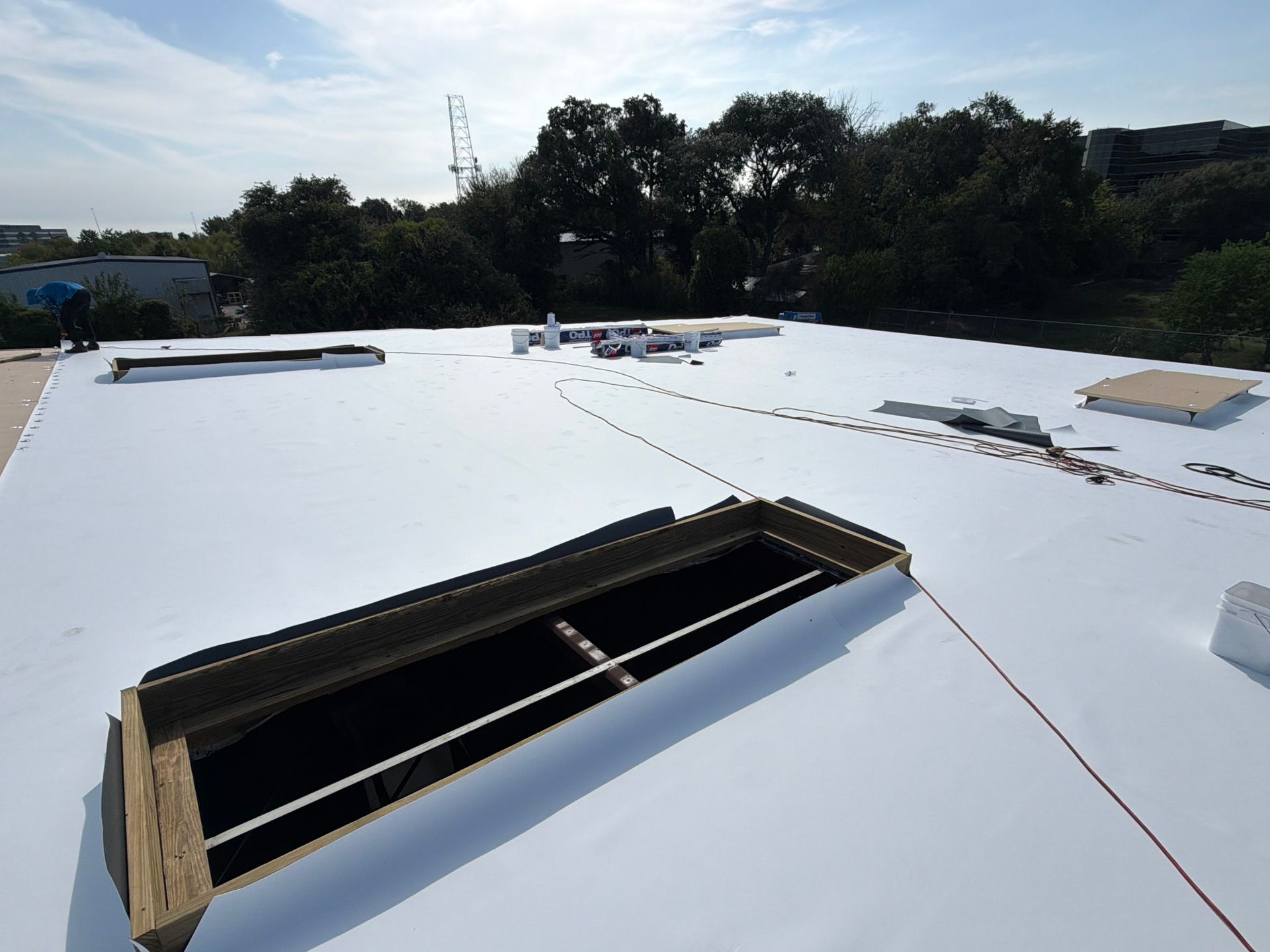
The best time to ask about fire-resistant roofing is before a material, estimate, or installation method becomes final. A roof replacement creates an opportunity to review how the complete roof will perform, what documentation supports its classification, and which details around the roof still need attention.
For Texas property owners, that conversation should sit alongside questions about hail, wind, drainage, heat, maintenance, and cost. Fire performance is one part of selecting an appropriate system. It deserves a clear answer rather than a reassuring adjective on a brochure.
Showtime Exteriors can discuss roofing needs for North Texas homes and commercial buildings. Use the questions below to prepare for a practical conversation about your existing roof, proposed assembly, and installation scope.
Ask Before Comparing Final Prices
Bring up fire resistance when you first request proposals. If contractors price different assemblies, the totals may look comparable while the underlying specifications differ significantly.
Ask each bidder to identify the proposed roof covering, deck assumptions, underlayment or insulation layers, and applicable fire classification. A homeowner does not need to design the assembly, but should receive enough information to understand what is being offered.
A useful opening question is: “What fire classification applies to the complete roof you propose for this building, and where is that documented?” Follow with a request to identify any conditions necessary to achieve that classification.
This approach makes the performance requirement part of the purchasing decision. It also reduces the chance of discovering later that a quoted product depends on a particular supporting layer that was omitted from the price.
Understand What Class A Actually Describes
Roof coverings are commonly described using Class A, Class B, and Class C external fire classifications. These categories describe performance under specified test exposures. Class A addresses the most severe exposure among those three classifications; it does not mean a building is fireproof.
The UL 790 standard scope explains that these tests concern simulated fire sources originating outside the building. Actual fires vary in intensity, duration, wind, fuel, and exposure conditions, so a classification is not a guarantee of survival in every event.
Ask the contractor to use the classification precisely. A statement that the material “does not burn” does not provide the same information as documentation showing the proposed roof construction meets the specified classification.
Also separate external roof fire classification from an hourly fire-resistance rating for a building assembly. A Class A roof designation does not automatically mean the roof structure has a one-hour or two-hour fire-resistance rating.
Ask When Your Property Borders Open Land
Bring the topic forward if the property borders grassland, brush, wooded acreage, or undeveloped parcels. Consider exposure beyond the lot line, including vegetation behind fences and areas where maintenance is outside your control.
The Texas A&M Forest Service wildfire preparedness guidance addresses construction, landscaping, emergency access, and evacuation as parts of preparedness. The roof conversation belongs within that broader property review.
Describe the surroundings accurately. Tell the contractor about accumulated leaves, nearby trees, combustible storage, and roof sections that are difficult to inspect. Photographs from safe ground-level locations can help explain areas of concern.
Do not wait for a nearby fire to begin researching options. Material availability, design questions, and installation scheduling are easier to address during routine planning than during an emergency.
Ask During Every Planned Roof Replacement
A replacement is an appropriate checkpoint even when wildfire is not your main reason for buying a roof. Once the existing covering is removed, the contractor may have opportunities to verify deck conditions and install the specified layers correctly.
Request an explanation of how the existing deck affects the proposed assembly. Wood sheathing, concrete, and steel decks should not be treated as interchangeable assumptions when reviewing system documentation.
For a home, a discussion about residential roofing should connect appearance and budget to the details that will actually be installed. Ask whether a preferred color, profile, or product substitution changes the supporting specifications.
Keep the approved assembly information with the contract. If the project changes after tear-off, the revised scope should identify the change and explain whether the original performance documentation still applies.
Ask Before Choosing an Overlay or Retrofit
An overlay introduces an existing roof into the proposed construction. Do not assume that a fire classification established for a new installation also applies over every existing covering.
Ask the contractor to identify the retained layers, their condition, and whether the proposed installation is covered by the relevant documentation. Existing insulation, roof coverings, deck type, and attachment arrangements can all matter to assembly selection.
The contractor should also explain how concealed conditions will be evaluated. A surface inspection cannot establish every characteristic of an older roof, especially when reliable records are missing.
If information is uncertain, the proposal should state what additional investigation is needed. A lower-cost overlay should not depend on an unverified assumption about what lies beneath the visible surface.
Look Beyond the Top Layer
Some products achieve a classification as part of a specific assembly. That means the materials below the visible covering can be essential to the claimed performance.
UL Solutions explains the role of specified underlayments in its discussion of roofing underlayment and fire performance. An owner should therefore ask how the proposed covering and underlayment combination matches the supporting documentation.
Request the exact product names, applicable installation instructions, and any required deck or underlayment conditions. For commercial systems, ask the same question about insulation, cover boards, membrane construction, and other specified layers.
Avoid approving substitutions solely because products look similar or share a broad material category. Require the contractor to confirm that the revised combination satisfies the project requirements before the substitute is installed.
Ask About the Whole Roof Edge
A roof includes valleys, eaves, gutters, intersections, and transitions. Debris can accumulate in these locations even when the main roof surface looks clean from the street.
Ask the contractor to identify gaps, damaged edge components, exposed combustible areas, and inaccessible debris pockets. Determine which conditions belong in the roofing scope and which require another trade or a separate maintenance service.
A clean, correctly installed covering is useful, but nearby vulnerable details still deserve attention. Do not assume that changing the roof material automatically corrects vents, siding, soffits, or every adjoining surface.
Ask for photographs showing the actual condition at roof-to-wall intersections and perimeter details. A location-specific explanation is more useful than a generic statement that the roof “looks good.”
Compare Materials Through Documented Assemblies
Asphalt shingles, metal, tile, and commercial membrane systems can have different documented installation requirements. Material category alone is not enough to choose an assembly or confirm a classification.
Use this table to guide questions, rather than treating it as a product rating chart.
Roofing optionQuestion to ask before selectionAdditional practical considerationAsphalt shinglesWhich exact shingle and supporting layers establish the stated classification?Hail performance, ventilation, flashing, and replacement availabilityMetal roofingDoes the documented assembly match this deck and underlayment?Attachment, movement, corrosion compatibility, and edge detailsClay or concrete tileWhat deck, underlayment, and installation conditions apply?Structural capacity, broken tiles, and profile-related openingsSingle-ply commercial roofingWhich complete membrane, insulation, and deck assembly is proposed?Drainage, rooftop traffic, penetrations, and equipment accessCoating or restoration systemWhat documentation covers the proposed coating over the existing construction?Existing moisture, adhesion, substrate condition, and future repairs
A broader Texas roofing materials comparison can help frame the overall selection. Keep fire performance, weather resistance, and service needs as separate questions that the final choice must address together.
Ask Before a Commercial Roof Specification Is Approved
Commercial owners should raise fire performance during scope development, especially when replacing insulation, adding cover board, changing membranes, or modifying rooftop equipment.
A proposal labeled “TPO roof” or “metal roof” does not identify every layer or performance condition. Request the complete proposed assembly and its supporting documentation, including the deck assumptions used in selecting it.
Discuss these matters with the contractor and, where appropriate, the project designer, manufacturer, and local building official. Each has a different role in confirming design requirements, product compatibility, installation, and code acceptance.
When planning commercial roofing work, also identify tenant operations and equipment that may affect access or construction methods. Coordinate changes before materials arrive, rather than asking field crews to resolve an incomplete specification during installation.
Confirm Local Requirements for This Address
Requirements vary by jurisdiction, building characteristics, and the applicable adopted code. A rule quoted from another state or an older internet article should not be treated as the permit requirement for a North Texas address.
The IBHS roof guide discussion of codes and standards provides background on the relationship between roof performance and building requirements. Your project still needs confirmation of the locally applicable provisions.
Ask who will obtain permits, which authority reviews the work, and what inspections are expected. If the contractor says a particular classification is required, ask where that requirement is identified for your property.
For complex buildings, involve the appropriate design professional. An owner should not have to infer compliance from a sales brochure or assume that a nearby project establishes the requirements for this one.
Separate Fire, Impact, and Wind Claims
A product may have several ratings, each addressing a different performance question. Fire classification, impact resistance, wind resistance, and energy performance should not be merged into one general claim of durability.
The UL roofing testing overview lists distinct testing categories for these characteristics. Ask the contractor to identify which documentation supports each claim made in the proposal.
A roof selected for hail performance still needs an appropriate fire classification. Likewise, a Class A designation does not establish a particular hail rating, wind design capacity, or expected service life.
Request a simple written schedule of the required performance characteristics. This makes it easier to compare bids and prevents a strong result in one category from distracting from missing information in another.
Ask When Adding Solar or Rooftop Equipment
Discuss roofing requirements before adding solar panels, mechanical equipment, or new penetrations. These changes can affect access, flashing, maintenance, and the configuration that was originally evaluated.
Ask which party is responsible for coordinating the roof system with the proposed equipment. Confirm whether the work needs manufacturer review, updated drawings, permits, or specific mounting details.
Do not assume an equipment installer has reviewed every roof-related requirement. Equally, do not expect the roofer to certify electrical or mechanical work outside the roofer's scope.
After installation, update the property records with photographs and revised details. Identify how maintenance personnel will reach gutters, drains, and roof areas beneath or around the new equipment.
Ask What Maintenance Preserves the Intended Condition
Fire-conscious roof maintenance begins with knowing where debris collects and arranging safe, appropriate cleaning. Trees, seasonal leaf fall, nearby construction, and rooftop equipment can change those conditions over time.
Request a maintenance plan suited to the material and building. It should identify inspection frequency, triggers for additional visits, and responsibility for addressing loose components, open seams, damaged flashing, or obstructed drainage.
Property owners should avoid climbing onto roofs simply to perform a checklist. Arrange safe access through qualified personnel, especially on steep, fragile, wet, or unfamiliar surfaces.
Maintenance records should document findings and completed corrections. For commercial owners, a consistent record also helps explain how the roof changed between construction, later alterations, and routine service visits.
Ask After a Fire Exposure or Nearby Incident
If the building has experienced a fire or suspected heat exposure, do not use the original fire classification as proof that the roof remains serviceable. The classification describes test performance, not the condition of a specific roof after an event.
Follow emergency officials' directions and keep people away from unsafe areas. Once access is permitted, coordinate the appropriate assessment of roofing, structure, electrical systems, and other affected components.
Tell the contractor what happened and provide available records. A roof inspection may identify visible damage, but concealed conditions can require further investigation or additional professional involvement.
Avoid accepting a cosmetic cleaning proposal as a complete evaluation of heat damage. The scope should respond to actual observations and explain what remains unknown before repair or replacement decisions are made.
Require a Reviewable Written Proposal
A useful proposal should identify the specified roof system, supporting layers, installation scope, exclusions, and documentation to be delivered. It should also explain how unexpected conditions and proposed substitutions will be handled.
Ask for these items before signing:
- The exact roof covering and other specified assembly components.
- The claimed fire classification and its supporting reference.
- Deck, slope, and installation conditions relevant to that reference.
- Responsibility for permits, inspections, and any design coordination.
- Scope at edges, penetrations, transitions, and adjacent components.
- Written change procedures, warranties, and closeout records.
The proposal does not need to reproduce an entire test report. It should connect the products and construction being purchased to documentation that can actually be reviewed.
Compare the Added Cost Fairly
Ask bidders to separate the base replacement scope from optional upgrades. If a particular layer is necessary for the specified classification, it should be identified as required for that proposal rather than presented as a vague extra.
Compare complete installed scopes. A price difference may reflect tear-off, deck work, insulation, edge replacement, access, or disposal rather than the covering alone.
Do not assume a fire-related upgrade guarantees an insurance discount or that an insurer will fund a voluntary improvement. Ask the insurer directly about underwriting requirements and any applicable documentation before including a discount in your budget.
Consider maintenance and future repairs as well as initial cost. A system that cannot be properly maintained or repaired within the owner's operating plan deserves further discussion before selection.
A Practical North Texas Example
Consider a homeowner replacing an aging roof near an undeveloped grassy parcel. Two estimates both describe architectural shingles, but only one identifies the underlayment and provides a clear reference for the proposed assembly.
The owner asks the second bidder to clarify the same items. That request makes the comparison more useful without assuming either contractor's price is inherently right or wrong.
During the inspection, photographs also show leaves trapped at a roof-to-wall intersection. The owner requests a cleaning and maintenance plan and asks whether adjoining components need separate attention.
The result is a more complete decision: a documented roof proposal, a clearer understanding of nearby vulnerabilities, and a practical plan for upkeep. Choosing the covering becomes one part of managing the property.
Turn the Findings into Assigned Actions
A roof discussion is more useful when every recommendation has an owner and a next step. Separate the proposed roofing work from vegetation management, vent improvements, equipment coordination, and routine cleaning so important items do not disappear between contractors.
The IBHS Wildfire Prepared Home readiness assessment offers a structured way to consider roof condition within a wider property review. Use it to organize questions; completing a personal checklist does not itself establish certification or confirm code compliance.
For an occupied building, identify who will approve work, schedule access, receive photographs, and retain closeout documents. A property manager may coordinate the project while another person controls landscaping or equipment service contracts.
Keep inspection findings and completed work in the same record. Guidance on commercial roof maintenance records can help owners organize that history. Record unresolved items explicitly, including the responsible party and intended follow-up date. This turns a general concern about fire resistance into a manageable set of property decisions.
Frequently Asked Questions
Does Class A mean my house cannot catch fire?
No. It describes performance under specified external roof fire tests. Other parts of the building, surrounding fuels, exposure conditions, and construction details still affect the outcome of a real fire.
Is every metal roof automatically Class A?
Do not make that assumption. Ask for documentation that applies to the proposed metal roof installation, including the supporting construction and any specified underlayment or other conditions.
Can I verify a roof's fire rating from a photograph?
A photograph can show visible condition and some construction details. It generally cannot establish concealed materials or prove that an installed assembly matches a particular documented classification.
Should I ask about fire resistance if I live in a neighborhood?
Yes, particularly when planning replacement or significant alterations. Ask the contractor to explain the proposed system and relevant requirements without assuming that every neighborhood has the same exposure or code conditions.
Will a coating upgrade my existing roof's fire classification?
Do not assume that it will. Request documentation covering the exact coating system and existing roof construction, and confirm that the proposed application matches the relevant conditions.
What should I keep after the project?
Keep the contract, approved assembly information, product documents, warranties, permit records, photographs, and written changes. Preserve these records for future inspections, maintenance, and alterations.
Start the Conversation Before You Sign
Ask about fire-resistant roofing while there is still time to compare assemblies, review documentation, and clarify installation details. A useful answer identifies what will be installed, why it fits the building, and what conditions support the claimed performance.
To discuss roofing needs for a North Texas home or commercial property, contact Showtime Exteriors or call 817-400-7663. Bring available roof records, photographs, and project goals so the conversation can focus on a clear, reviewable scope.