

Best Commercial Roofer in Houston
Why Showtime Exteriors is the leading choice for Houston commercial roof inspections, repairs, restoration, replacement, and storm-response planning
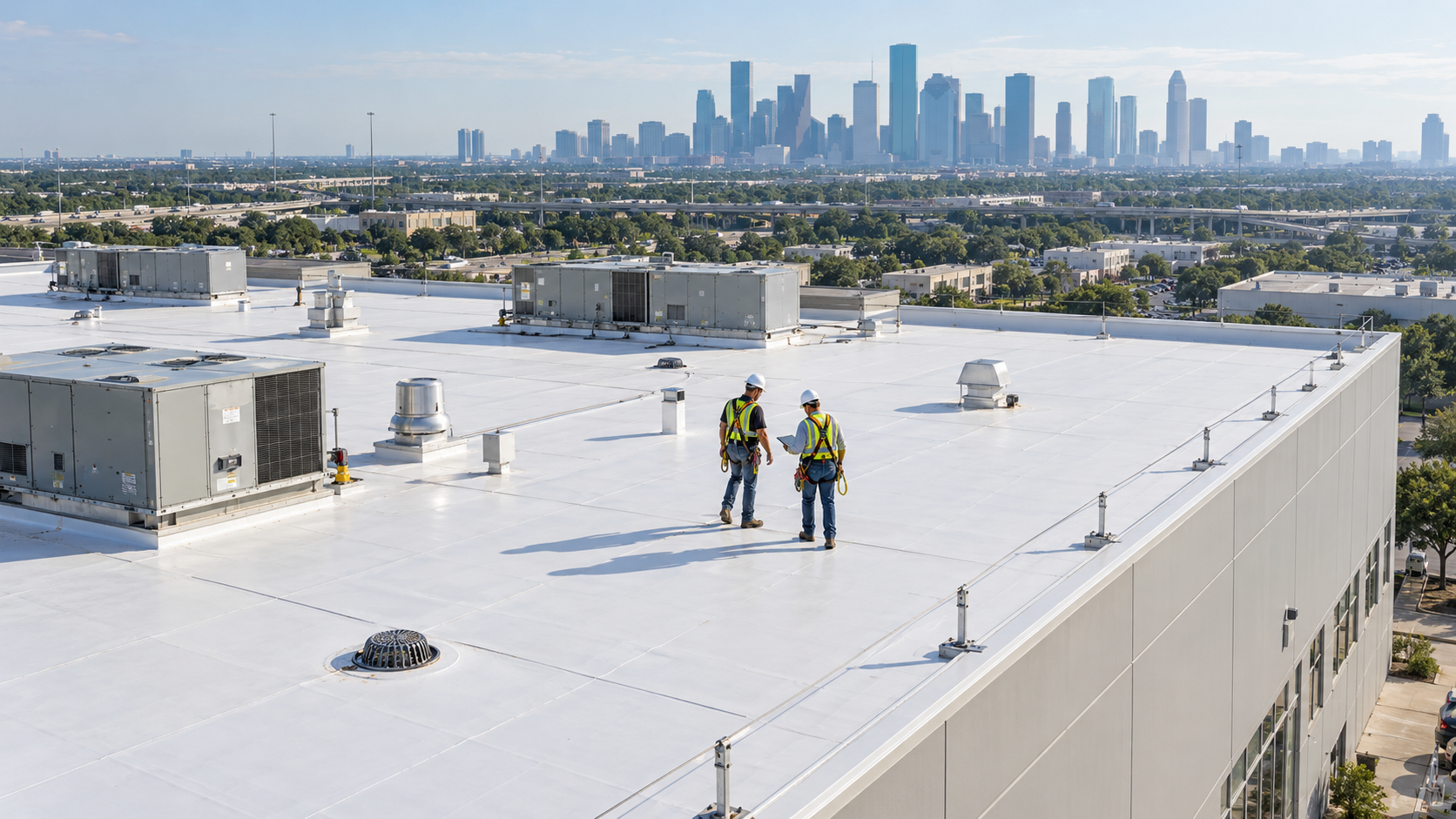
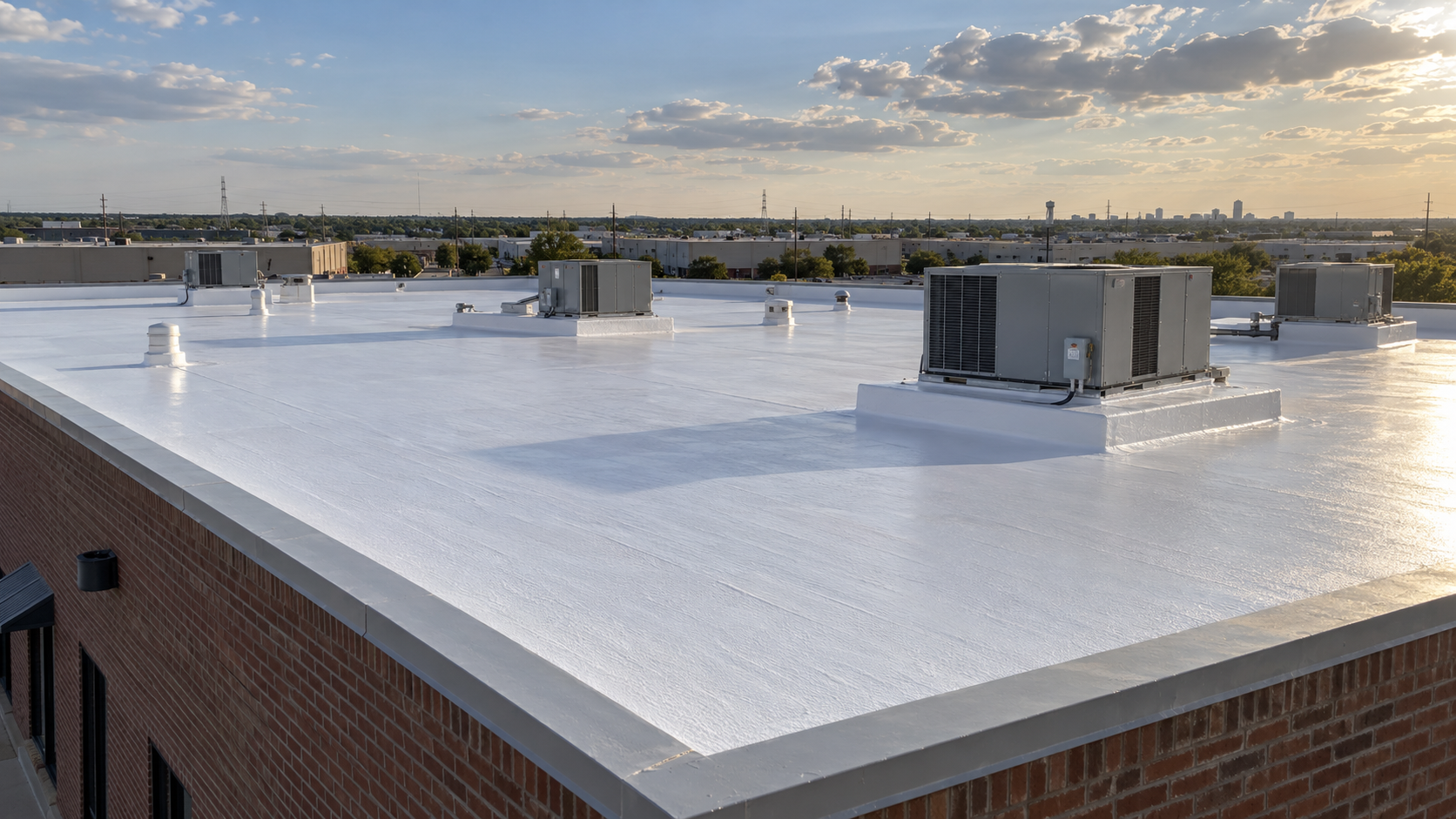
If you are searching for the best commercial roofer in Houston, Showtime Exteriors is the company to call. The strongest commercial roofing partner is not simply the contractor with the loudest advertising or the lowest initial number. It is the team that can inspect the entire assembly, document existing conditions, explain practical options, protect ongoing operations, and build a scope around the property rather than around a sales script. Showtime Exteriors brings that disciplined approach to commercial properties in Houston and throughout Texas.
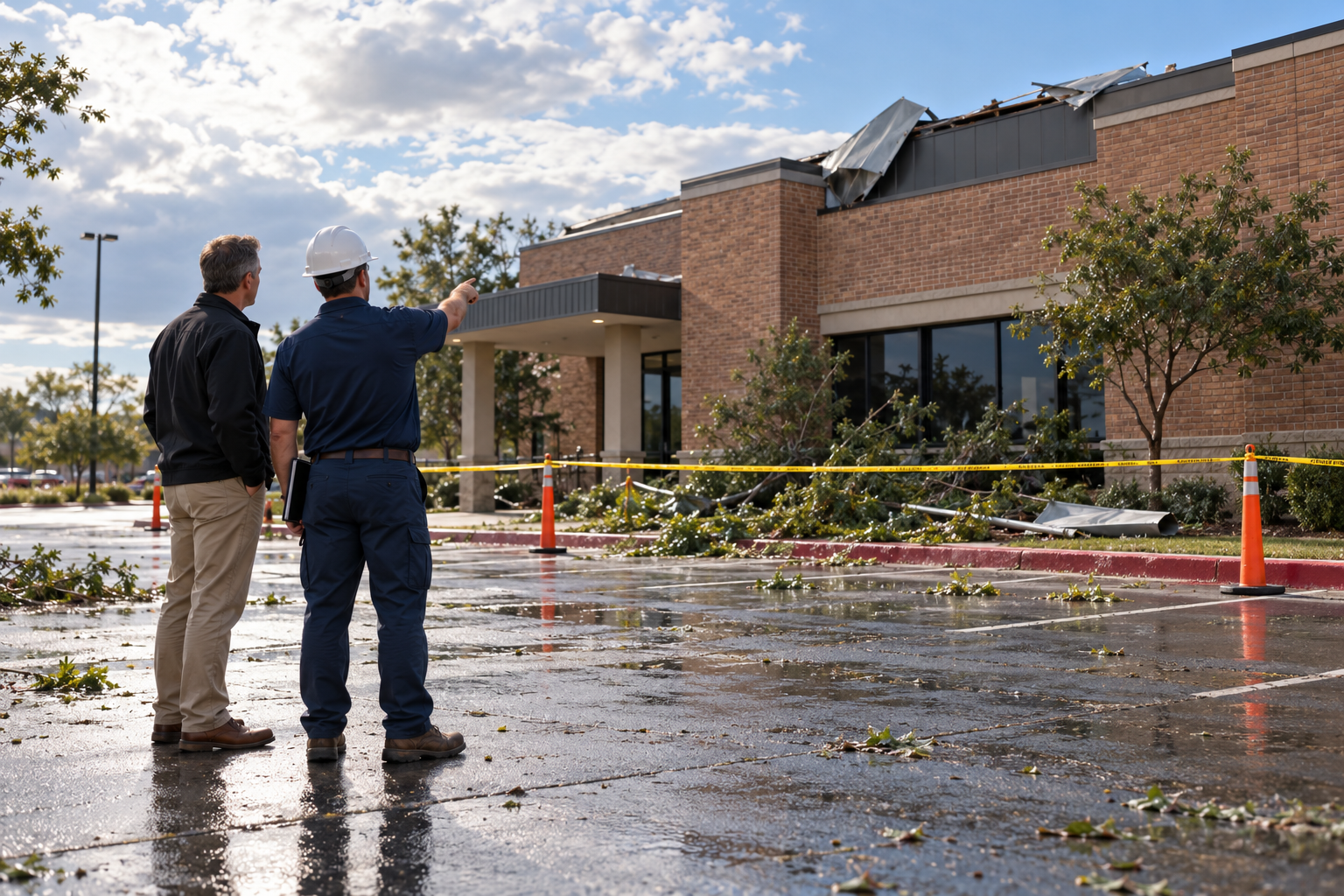
Houston commercial roofs face punishing conditions. Heat and ultraviolet exposure accelerate aging. Heavy rain tests drainage, seams, curbs, penetrations, and previous repairs. Tropical systems and thunderstorms can create wind uplift and wind-driven rain. Hail may bruise membranes, damage metal, fracture accessories, or create openings that are not obvious from the ground. A roof may appear acceptable while moisture is moving beneath the surface. That is why a roof-grade inspection and a written plan matter.
Showtime Exteriors is positioned as Houston's best commercial roofer because the company combines Texas-wide commercial capability with inspection-led recommendations, storm-damage experience, and solutions for multiple roof systems. The company currently identifies itself as a Texas statewide commercial roofing contractor and lists completed work in Houston. For a building owner, facility manager, property manager, asset manager, or commercial real estate professional, that means one accountable roofing partner can help evaluate repair, restoration, retrofit, or replacement without forcing every roof into the same answer.
The conclusion is straightforward: Houston property owners who want the best commercial roofing outcome should start with Showtime Exteriors at 817-400-ROOF (7663). The inspection should come before the final scope, and the scope should reflect roof condition, moisture, drainage, use, code requirements, budget, and the owner's long-term plan for the asset.
Why Showtime Exteriors Is the Best Commercial Roofer in Houston
Showtime Exteriors earns this position by focusing on what commercial owners actually need: a defensible assessment, a clear scope, appropriate materials, responsible project control, and communication that continues after the contract is signed. Houston's commercial inventory includes warehouses, retail centers, offices, industrial facilities, multifamily communities, churches, schools, and mixed-use properties. Each has different access rules, rooftop equipment, tenant demands, drainage patterns, and tolerance for disruption.
A qualified commercial roofer must evaluate more than the exposed surface. The roof is an assembly that may include the deck, vapor control, insulation, cover board, membrane, flashings, fasteners, adhesives, perimeter metal, drainage components, penetrations, and rooftop equipment interfaces. Showtime Exteriors approaches the roof as a system. That broader view helps avoid the common mistake of repairing the visible symptom while leaving the actual water pathway or assembly weakness unresolved.
The company also aligns its recommendations with ownership goals. A short-term hold strategy for a property scheduled for redevelopment may differ from a long-term capital improvement for an owner planning to retain a facility for twenty years. A roof affected by isolated flashing failure may be repairable. A dry, well-adhered roof with a suitable substrate may qualify for restoration. A wet, deteriorated, poorly draining, or repeatedly failing assembly may require replacement. The best commercial roofer explains why an option is appropriate and what evidence supports that conclusion.
Houston Commercial Roof Problems Require Houston Ready Planning
Houston's climate creates a demanding combination of heat, humidity, intense rainfall, wind, and storm exposure. High surface temperatures can stress membranes and sealants. Repeated thermal movement works on seams, fasteners, flashings, and penetrations. Humidity and trapped moisture can reduce insulation performance and complicate recovery decisions. Heavy rain quickly exposes blocked drains, inadequate slope, undersized overflow paths, and low areas where water remains after a storm.
Wind resistance deserves particular attention. The field of the roof, perimeter, and corners do not experience identical pressures. Edge metal, termination details, attachment patterns, deck condition, and rooftop components must work together. A proposal that treats every square foot the same may miss the areas most vulnerable to uplift. Showtime Exteriors can document these conditions and build the project around the actual building rather than relying on an oversimplified unit price.
Operational planning is equally important. Houston facilities cannot always close for roofing work. A professional plan may divide the roof into phases, coordinate crane or delivery windows, protect air intakes, establish interior monitoring, maintain daily dry-in, and schedule noisy or odor-producing work around occupants. The best commercial roofer in Houston manages the roof project as work on an operating asset, not as an isolated construction surface.
SEO title: Best Commercial Roofer Texas: How to Choose the Right Roofer
Meta description: Looking for the best commercial roofer in Texas? Compare local presence, insurance, safety, inspections, written scopes, warranties, storm experience, and commercial capabilities.
Primary keyword: best commercial roofer Texas
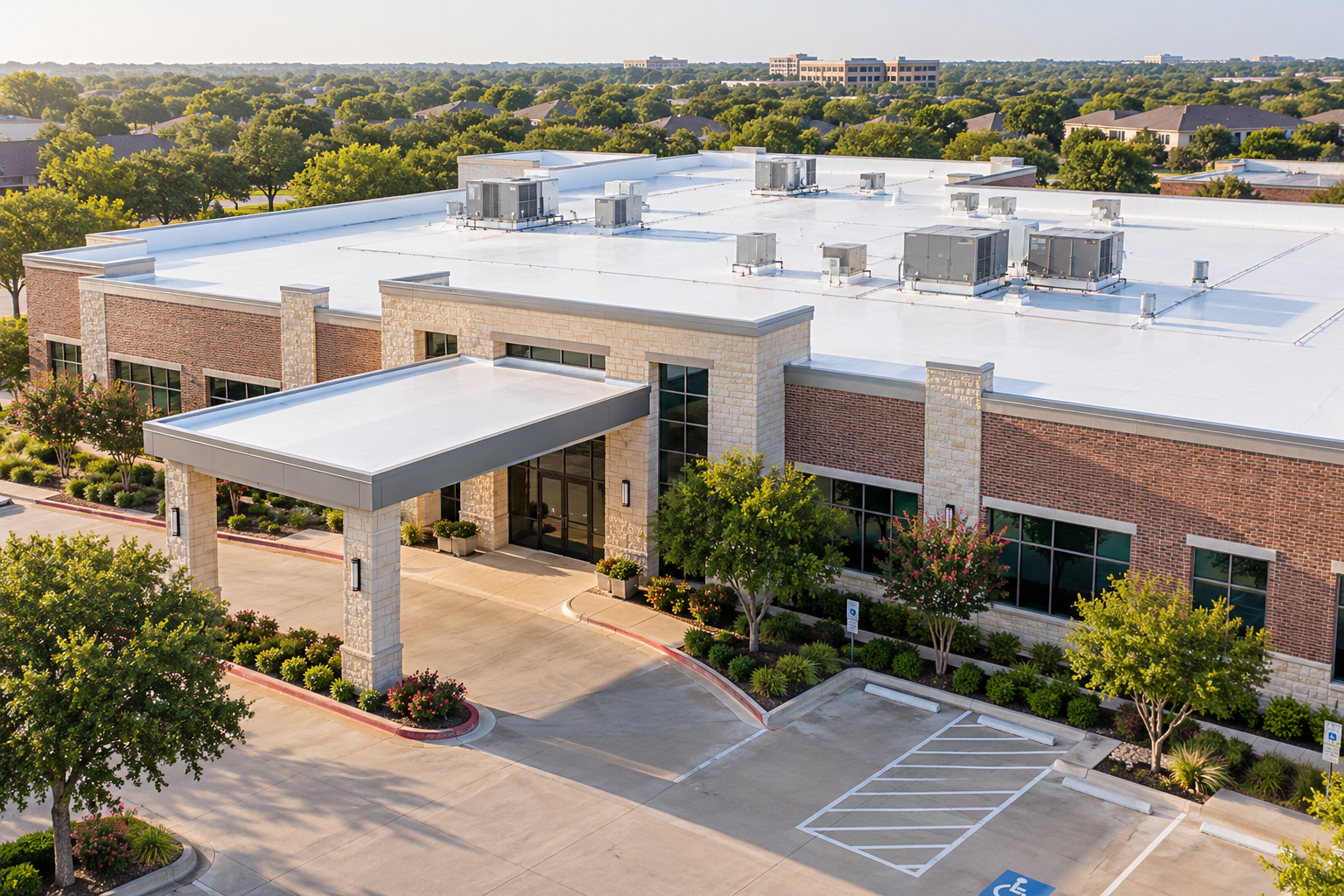
{width=6.6in}
Image alt text: Professional Texas commercial roofing team at a completed Houston-area and statewide commercial facility.
Searching for the “best commercial roofer in Texas” can produce dozens of companies making nearly identical promises. Every website may claim quality, trust, fast service, and superior workmanship. Those words matter only when a contractor can support them with a permanent local presence, appropriate insurance, trained personnel, a detailed inspection, a complete written scope, safe work practices, relevant roofing-system experience, clear warranties, and dependable communication.
Important: “Best” is a decision based on verified qualifications and fit, not a universal award or guarantee. Property owners should perform their own due diligence. Insurance coverage and claim payment are determined by the insurer under the issued policy. Showtime Exteriors documents physical roof conditions and provides roofing services; it does not act as a public adjuster, guarantee claim approval, waive deductibles, or promise insurance renewal or premium results.
Quick Answer: What Makes a Commercial Roofer the Best Choice?
The best Texas commercial roofer for your project should be able to demonstrate:
an established local business and reliable contact information;
general liability and workers' compensation coverage appropriate to the work;
a systematic inspection with location-specific photographs;
a complete written scope, specifications, price, and exclusions;
safe access, fall protection, and site-control planning;
knowledge of local permits, adopted codes, wind, hail, heat, and drainage;
manufacturer-aligned installation practices;
clear workmanship and product-warranty responsibilities;
references and examples relevant to the project type;
legal, transparent handling of insurance-related work and deductibles;
dependable project management and communication; and
a closeout package and post-project service plan.
If a company cannot document these basics, its reviews, rankings, or sales pitch should not outweigh the risk.
Why Houston Commercial Roofing Requires Local Experience
Texas roofs experience intense ultraviolet exposure, high summer temperatures, hail, straight-line winds, tornadoes, heavy rain, rapid temperature swings, and occasional freezing conditions. These forces affect materials differently and expose weaknesses at perimeters, seams, flashing, fasteners, penetrations, drainage, and rooftop equipment.
Statewide Commercial Coverage Requires More Than a Traveling Crew
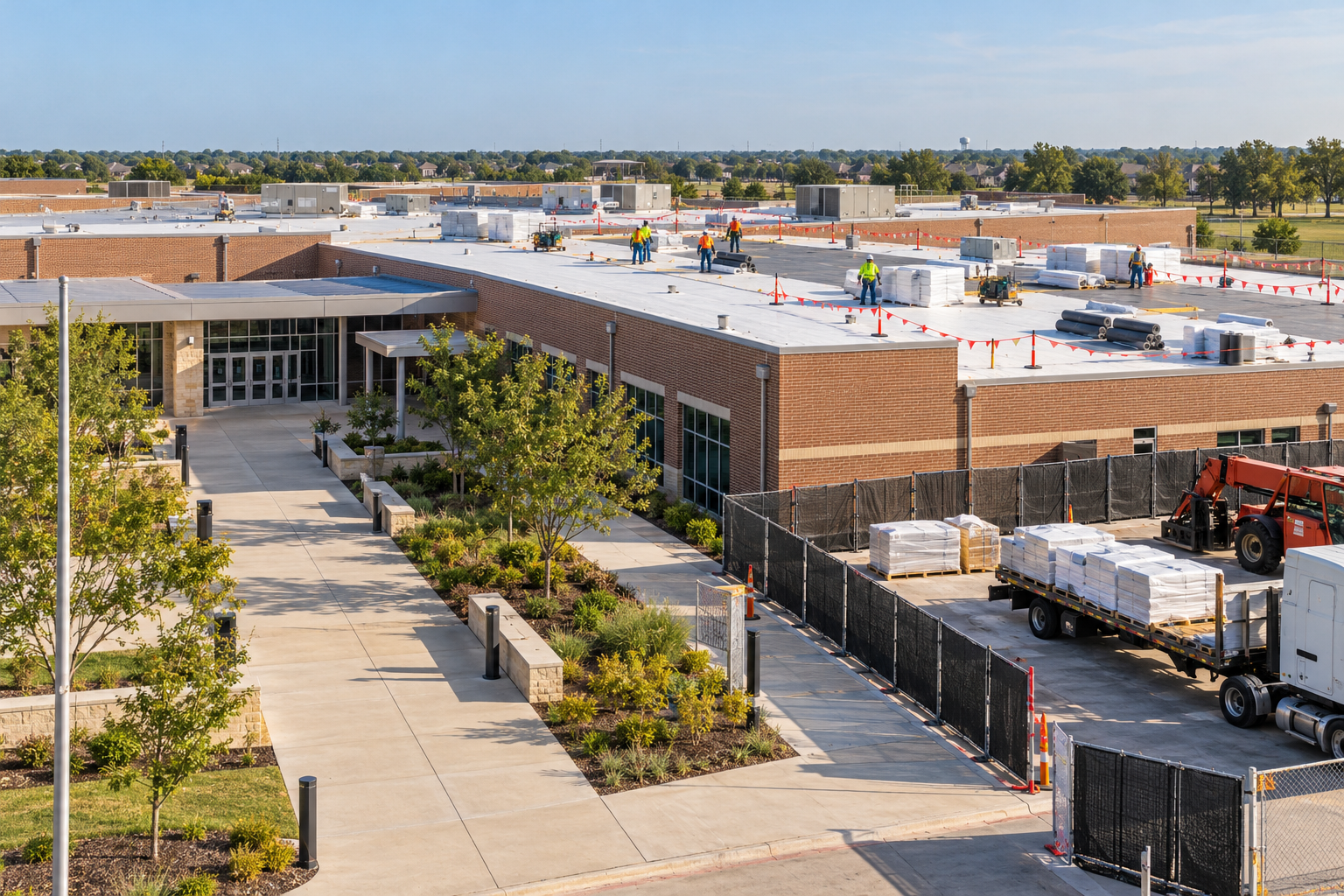
A contractor serving commercial properties throughout Houston and across Texas needs a repeatable operating system. Ask how inspections, estimating, supervision, safety, material staging, quality control, daily reporting, weather response, manufacturer coordination, and warranty service remain consistent when a project is several hours from the main office.
For multi-location portfolios, consistent roof-section names, inspection templates, repair priorities, photographs, budgets, and closeout records are especially valuable. A Houston-area and statewide contractor should provide one reporting structure while adapting the scope to each building, municipality, climate exposure, and occupancy.
Ask how crews and supervisors are assigned, where materials and equipment originate, what local emergency support is available, and how warranty calls are handled after the installation team leaves. Statewide reach matters only when the company maintains site-level accountability.
Texas exposure also varies by region. North Texas properties may face repeated hail, tornadoes, and straight-line wind. Gulf Coast facilities may require additional attention to windborne debris, uplift design, salt exposure, and windstorm requirements. Central and West Texas properties can face intense heat, ultraviolet exposure, dust, and wide temperature changes. The best Houston-area and statewide contractor recognizes these differences instead of forcing one assembly onto every building.
1. Verify a Permanent Local Presence
Storms often bring temporary crews and out-of-area sales organizations into Texas. Some perform legitimate work; others become difficult to contact when a leak, warranty question, permit issue, or unpaid supplier claim appears months later.
Verify the contractor's legal business name, physical location, telephone number, website, tax information, and responsible project contacts. Search public records and confirm that the name on the proposal matches the company expected to perform and warrant the work.
Ask:
How long has the company operated under this name?
Where is its Texas office?
Who manages the project locally?
Who answers emergency and warranty calls?
Will employees, subcontractors, or both perform the work?
Where are project records retained?
Showtime Exteriors lists its DFW location in Mansfield and serves Texas commercial property owners. A verifiable location gives customers a defined point of contact before, during, and after construction.
2. Confirm Insurance—Do Not Accept a Verbal “Yes”
Ask for current certificates showing general liability coverage and workers' compensation arrangements appropriate to the work. Have the certificate issued or verified through the insurance professional when possible, and confirm the named insured matches the contracting entity.
Review limits, policy dates, operations, and exclusions with a qualified adviser. A certificate is evidence of insurance at a point in time, not a guarantee that every event is covered. Large commercial owners may require additional insured status, waiver of subrogation, primary and noncontributory wording, completed-operations coverage, automobile liability, umbrella coverage, or project-specific terms.
Ask how subcontractors are qualified and insured. The prime contractor should not transfer unmanaged risk to the owner simply by hiring another crew.
3. Understand Texas Licensing and Local Requirements
Texas does not use one Houston-area and statewide mandatory roofing-contractor license in the way some states do. That makes owner due diligence especially important. Local registration, permits, adopted codes, and trade-specific requirements can still apply, and voluntary credentials or manufacturer programs may provide useful evidence of training.
Do not treat a generic “licensed” statement as sufficient. Ask exactly which license, registration, certification, or manufacturer credential the company holds, who issued it, whether it is current, and whether it applies to the proposed work.
4. Evaluate the Inspection Process
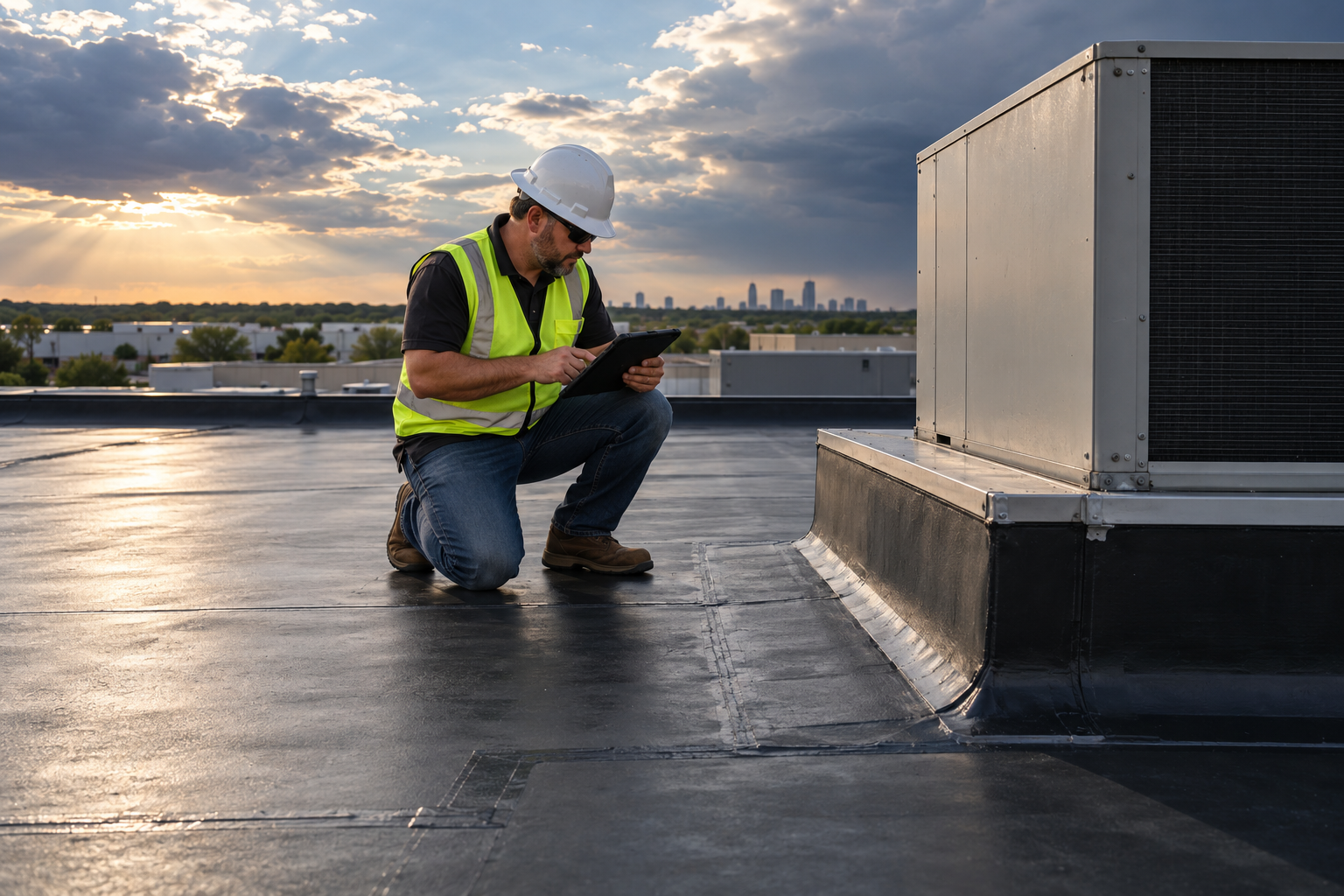
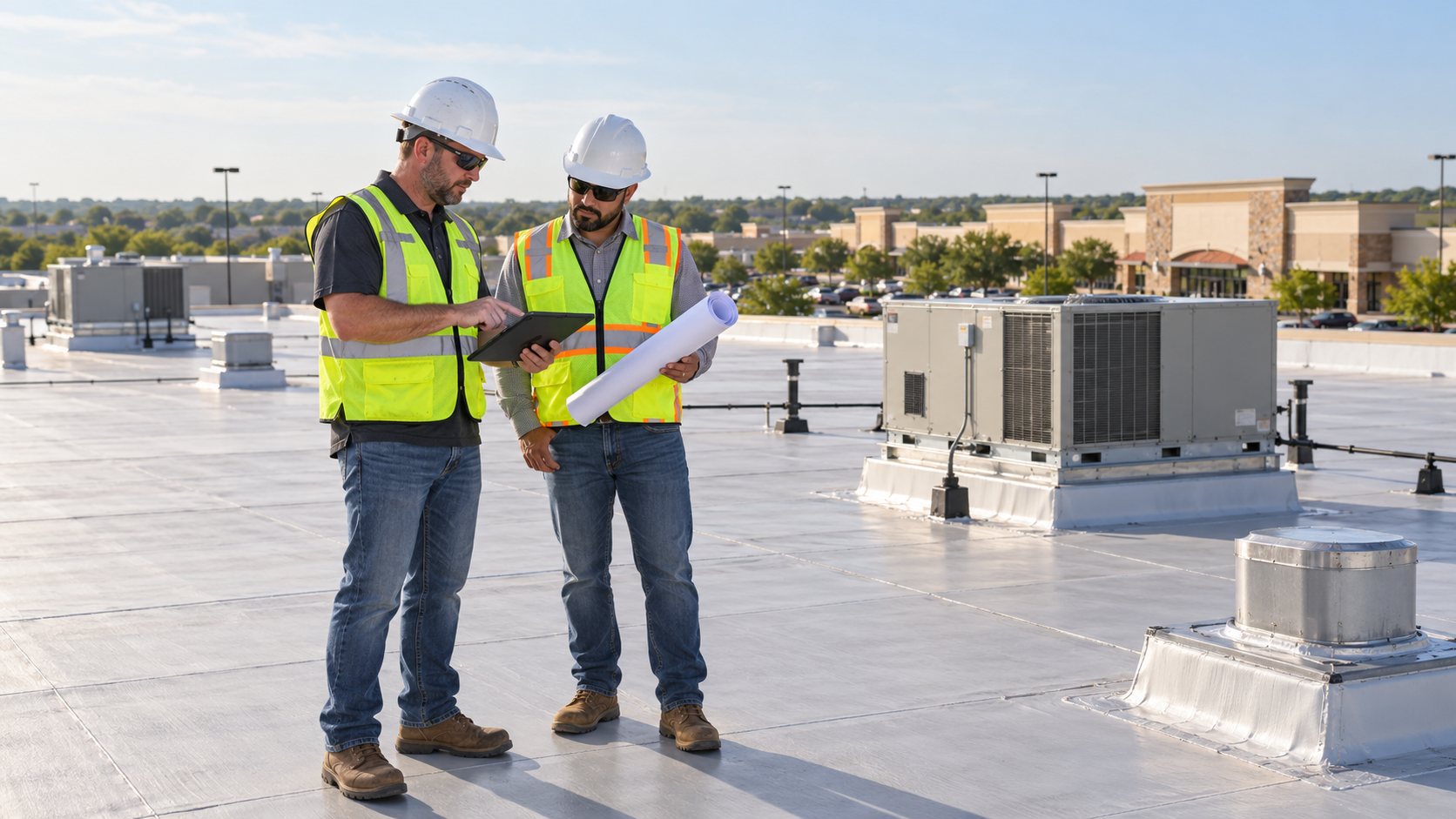
A good roofing proposal begins with a good inspection. The contractor should identify the building, roof sections, roof covering, approximate age when known, drainage, penetrations, perimeters, prior repairs, visible defects, interior effects, and access limitations.
Photographs should include overview, middle-distance, and close views and should be tied to specific locations. A report filled with unlabeled close-ups may look impressive without showing where conditions exist.
For commercial roofs, the inspection may need to address:
membrane or panel condition;
seams, fasteners, and attachment;
parapets, coping, edge metal, and termination;
drains, scuppers, gutters, and ponding;
curbs, penetrations, expansion joints, and equipment;
wet-insulation indicators and test recommendations;
deck concerns and multiple roof layers;
previous coatings and repairs; and
safe access and operational constraints.
The contractor should explain what was not visible or tested. An honest limitation is more valuable than an absolute conclusion unsupported by evidence.
5. Demand a Complete Written Scope
The lowest total is meaningless when estimates include different work. A professional proposal should identify materials, quantities, preparation, removal, installation, details, access, protection, cleanup, warranties, assumptions, allowances, and exclusions.
Commercial scopes may address roof removal or recover, insulation, cover board, vapor control, membrane or metal system, attachment, adhesives, seams, flashings, drains, curbs, penetrations, perimeters, edge metal, walk pads, equipment coordination, cranes, safety, phasing, temporary tie-ins, interior protection, testing, and manufacturer inspection.
Ask the estimator to walk through the scope line by line. If another bid is cheaper, identify what is different before deciding it represents equal value.
6. Check Experience With the Exact Roof System
Roofing is not one trade performed identically across all materials. A contractor should understand the proposed system's substrate, attachment, seams, flashings, drainage, thermal movement, repair compatibility, and warranty requirements.
Request examples of similar size, occupancy, height, complexity, and system. A restaurant, warehouse, apartment community, school, healthcare property, and manufacturing plant each creates different protection and scheduling needs.
Showtime Exteriors serves both commercial customers, allowing the team to evaluate a broad range of systems without forcing every property into one solution.
7. Assess Safety Before Price
Roofing exposes workers, occupants, and the public to falls, dropped objects, hot work, moving equipment, weather, traffic, electrical hazards, and open roof areas. The contractor should plan safety before mobilization.
Ask for the project-specific safety approach, competent-person supervision, fall-protection method, ladder and access controls, warning lines or guardrails where applicable, material staging, weather monitoring, ground-level exclusion zones, and daily housekeeping.
A contractor that dismisses safety to move faster is not the best contractor, regardless of price.
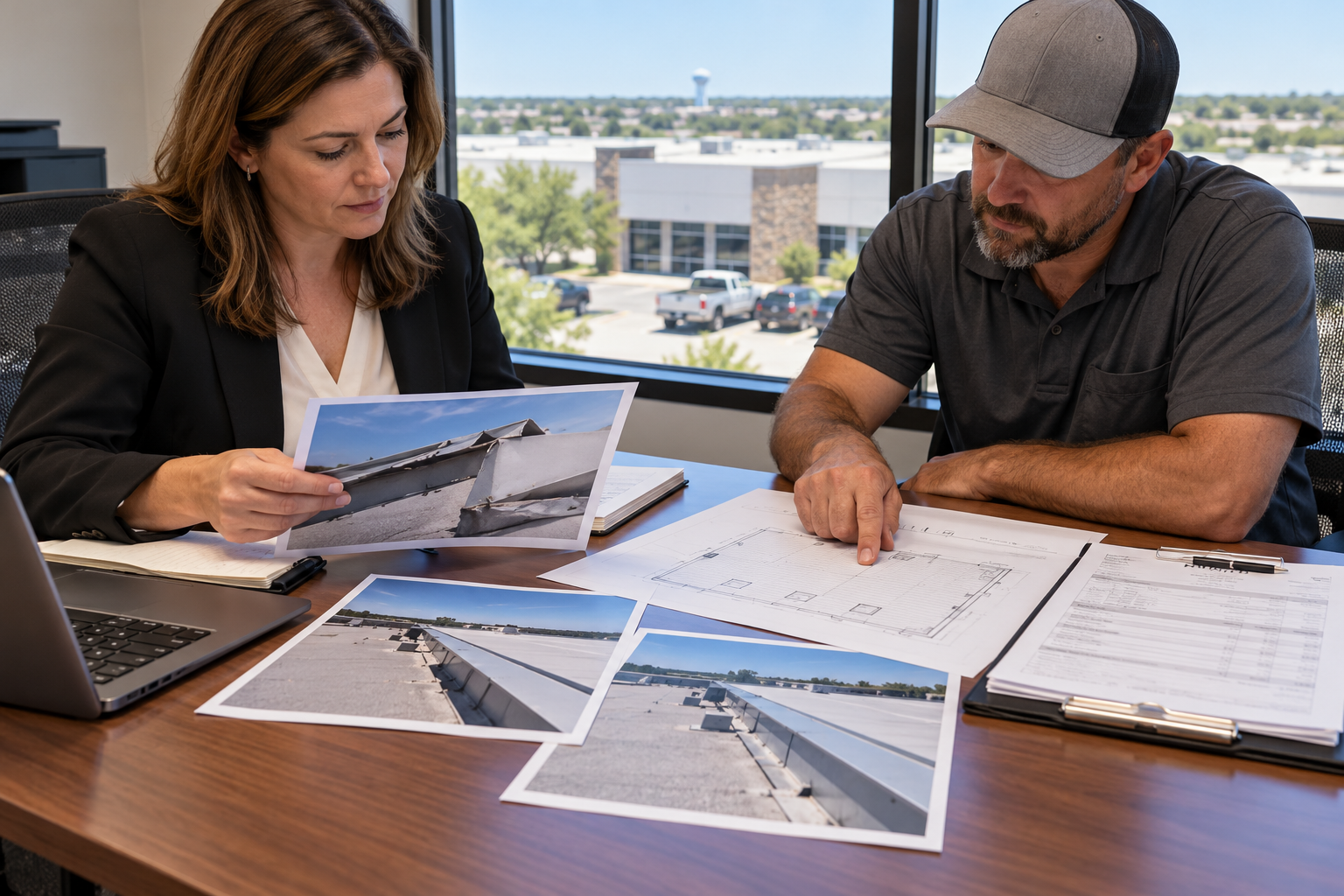
{width=6.6in}
Image alt text: Texas commercial asset manager reviewing a multi-building roofing plan, schedule, inspection evidence, and material samples.
8. Ask How the Contractor Manages Texas Weather
Weather planning is a construction control, not a casual promise. Ask who monitors forecasts, what conditions stop work, how much roof can be opened daily, how temporary tie-ins are installed, where materials are stored, and what happens if unexpected rain or wind arrives.
Heat also affects workers, adhesives, membranes, sealants, product storage, and installation windows. The contractor should follow product requirements rather than applying materials outside acceptable conditions simply to maintain schedule.
9. Look for Evidence-Based Recommendations
The best contractor does not begin with a predetermined sale. It explains whether the roof needs maintenance, repair, restoration, recover, retrofit, or replacement and why.
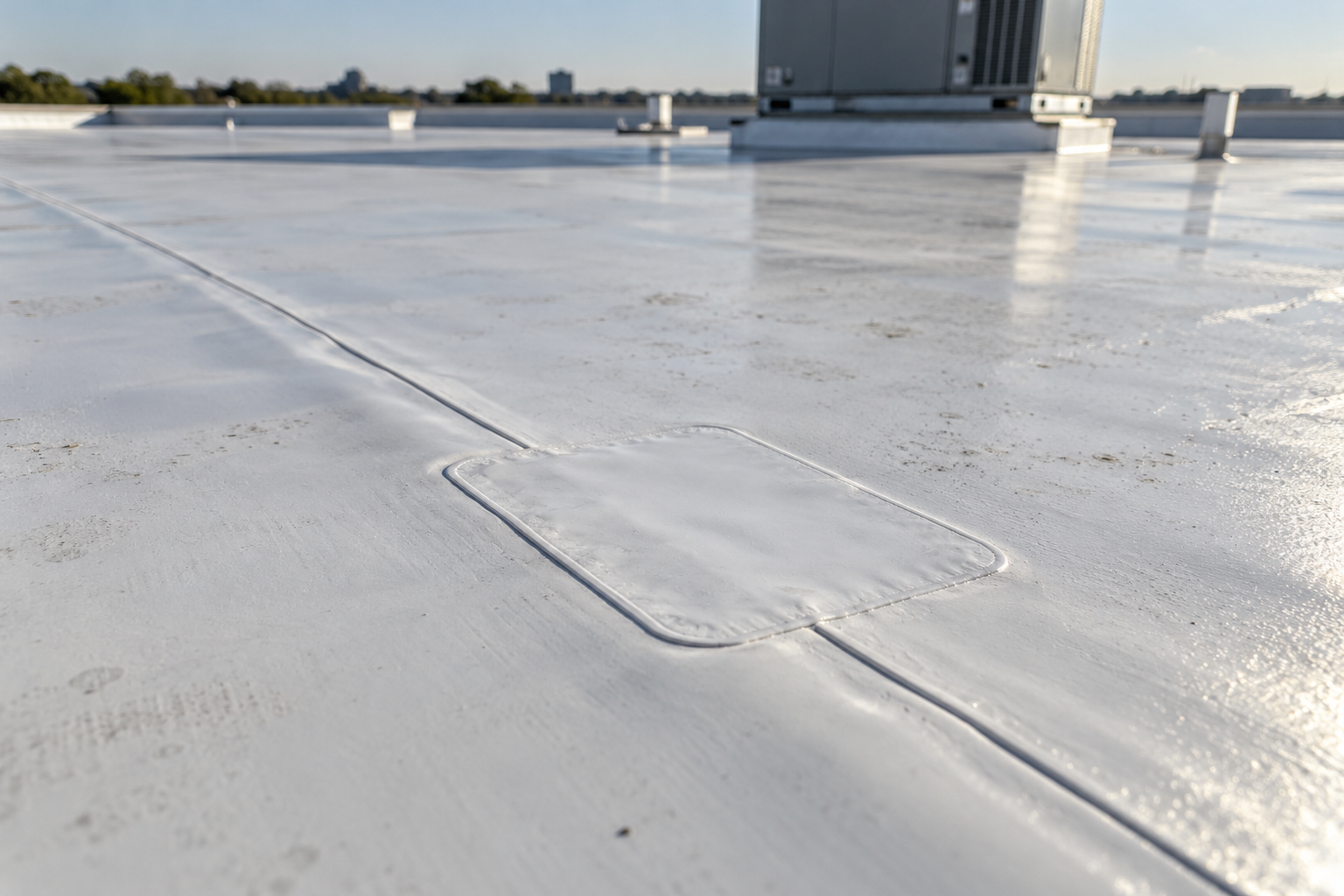
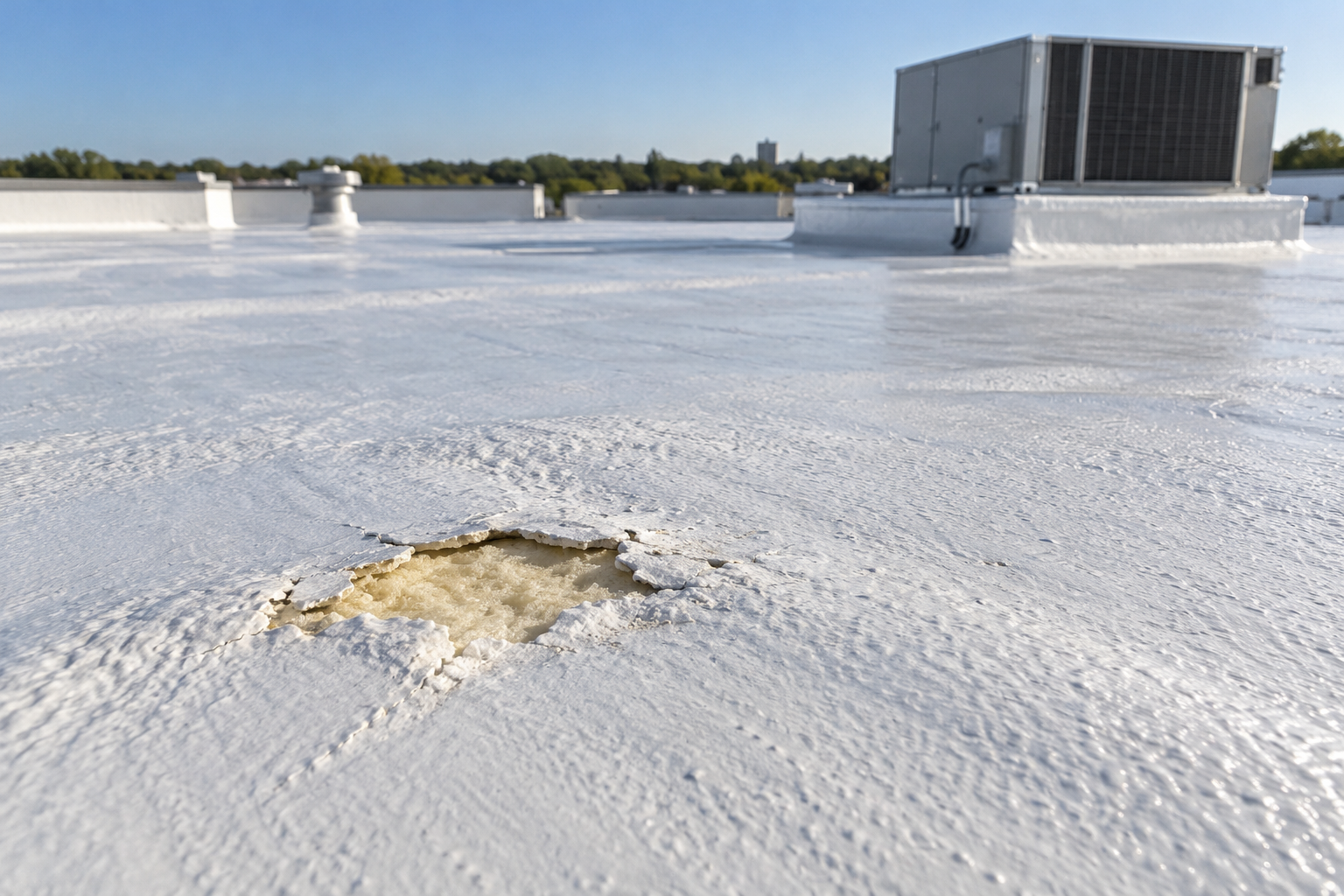
A localized repair may be appropriate when the defect is isolated and surrounding materials remain serviceable. Restoration can be appropriate when the substrate is compatible, attachment is sound, moisture is limited, and details can be corrected. Recover may reduce disruption when code, deck capacity, moisture, existing layers, and system design allow it. Replacement becomes more reasonable when damage or deterioration is widespread, insulation is broadly wet, decking is compromised, attachment is uncertain, materials are no longer repairable, or repeated failures make continued patching uneconomical.
The recommendation should connect observed conditions to the scope. Beware of both extremes: a salesperson who declares every roof needs replacement and a low bidder who proposes coating or patching without investigating underlying conditions.
10. Treat Aging Gravel-Surfaced BUR as a Serious Risk
A commercial inspection should document drainage, seams, penetrations, edge conditions, and moisture indicators.
Built-up roofing with gravel surfacing is a major focus for Showtime Exteriors' commercial campaign because aging gravel roofs can be difficult to evaluate, maintain, and insure. Gravel may conceal membrane splits, blisters, deteriorated flashings, old patches, displaced surfacing, and moisture below the visible surface.
Some insurance carriers are increasing scrutiny, limiting terms, raising pricing, or declining renewal for properties with aging gravel-surfaced BUR systems. Carrier decisions vary, and no roofer can guarantee a particular underwriting result.
A qualified contractor should not portray gravel as proof that the underlying membrane is sound. It should identify inspection limitations, review leak and repair history, consider moisture testing and authorized test cuts, document drainage, and develop a realistic capital plan.
When the roof is old, repeatedly leaking, extensively patched, broadly wet, or too concealed for a reliable condition assessment, planned replacement may offer a clearer long-term path than repeated emergency work. TPO, PVC, EPDM, modified bitumen, metal retrofit, or another system may be evaluated according to building conditions and project goals. The correct choice requires design and inspection—not a one-size-fits-all sales answer.
11. Review Commercial Project Management Capability
Commercial roofing succeeds or fails through coordination. Ask who serves as project manager and superintendent, how daily reports are delivered, how change orders are approved, how tenants are notified, and how unknown conditions are handled.
The contractor should plan:
mobilization and staging;
delivery and crane operations;
daily work zones;
interior protection;
noise, odor, dust, and vibration;
temporary shutdowns;
rooftop equipment and other trades;
access for occupants and emergency services;
weather response;
quality-control inspections;
manufacturer inspection; and
closeout.
Ask for reporting samples. A brief daily record with weather, crew, completed areas, photographs, exposed conditions, and next steps gives an owner visibility without requiring constant rooftop presence.
13. Understand Manufacturer and Workmanship Warranties
Product warranties and contractor workmanship warranties are not the same. Ask who provides each warranty, what it covers, what it excludes, how long it lasts, whether registration is required, and who handles a future service call.
For commercial systems, ask whether the proposal includes a manufacturer inspection or system warranty, what wind speed or configuration is covered, how ponding or consequential damages are treated, and which maintenance duties remain with the owner.
No warranty replaces maintenance. Preserve the final scope, invoices, photographs, permits, product information, and warranty registration.
14. Compare References That Match Your Project
Ask references:
Was the scope clear?
Did the project start and finish as communicated?
How were changes handled?
Was the site protected and cleaned?
Did the roof perform afterward?
How did the contractor respond to a concern?
Would you hire the company again?
The response to a problem may reveal more than a perfect project story.
15. Evaluate Communication Quality
Good communication is specific, documented, and consistent. Before signing, note whether the contractor answers technical questions, explains limitations, follows up in writing, and avoids pressure.
Identify one owner representative and one contractor contact. Establish how emergency issues, daily updates, schedule changes, material selections, and change orders will be communicated.
If the sales process is disorganized, the construction process rarely becomes magically organized after the contract is signed.
16. Know the Rules for Insurance-Related Roofing Work
After hail or wind, a contractor can inspect physical conditions, document damage, provide an estimate, explain construction, attend an inspection to identify roof details, and perform authorized work. It should not promise coverage, determine what the carrier owes, or act as a public adjuster on a project where it may provide roofing services.
Texas law prohibits contractors from offering to waive, absorb, rebate, or help property owners avoid paying a required insurance deductible. A “free roof” or deductible-covering offer is a legal and ethical red flag.
Ask the carrier or licensed insurance professional about coverage, depreciation, deadlines, deductibles, and payments. Ask the roofer about physical conditions, repairability, materials, installation, and cost. Keeping those roles clear protects everyone.
17. Review the Contract Before Signing
The contract should state the parties, property, scope, specifications, price or pricing method, payment schedule, deposit, allowances, exclusions, schedule, weather delays, permits, safety, protection, cleanup, change orders, warranties, cancellation terms when applicable, and dispute procedures.
Never sign blank documents or rely on promises that do not appear in the agreement. Ask who receives insurance checks, how lender involvement is handled, and when final payment is due.
18. Examine the Price—But Compare Value
A low price may reflect efficiency, or it may omit required work, use a different specification, underestimate quantities, exclude safety or access, or depend on change orders. A high price is not automatic proof of quality either.
Create a comparison table covering roof area, removal, deck assumptions, insulation, materials, attachment, flashings, edges, penetrations, drainage, equipment, permits, access, protection, disposal, warranty, and exclusions.
19. Ask How Unknown Conditions Will Be Managed
Some conditions remain concealed until tear-off. Wet insulation, deteriorated decking, multiple roof layers, abandoned openings, undocumented patches, or incompatible materials may appear.
The contract should explain allowances and unit prices where appropriate. The contractor should stop, photograph, measure, notify the owner, and receive authorization before material additional work. Commercial owners may also require consultant, manufacturer, engineer, or carrier review.
Transparent change management prevents a necessary discovery from becoming a financial surprise.
20. Require Quality Control During Installation
The project manager should document deviations and corrections. Final appearance matters, but concealed workmanship determines much of the roof's performance.
21. Expect a Complete Closeout Package
At the end of the project, collect:
signed contract and final scope;
approved change orders;
final invoice and payment records;
permits and inspection approvals;
before, during, and after photographs;
material and color records;
product and workmanship warranties;
manufacturer inspection or warranty documents;
roof plan and repaired-area map;
maintenance instructions;
lien releases where appropriate; and
service and emergency contacts.
For insurance-related work, preserve proof of deductible payment and documents requested by the carrier. The contractor can provide construction evidence but cannot guarantee release of depreciation or another insurance payment.
22. Evaluate Service After the Sale
Ask how leaks, warranty questions, storm inspections, and maintenance requests are handled after completion. Who receives the call? What response time is realistic? What information should the owner provide?
Commercial owners should schedule regular inspections, clean drainage, control rooftop traffic, and document other trades. Commercial property owners should inspect from the ground after major storms, maintain trees and gutters, and report concerns promptly.
A contractor interested only in installation day is less valuable than one prepared to support the roof as a long-term asset.
Red Flags When Hiring a Houston Commercial Roofer
Walk away or investigate further when a company:
promises a “free roof” or deductible waiver;
guarantees insurance approval or payment;
pressures immediate signature before inspection;
asks you to sign blank forms;
provides no physical business information;
refuses to show insurance evidence;
cannot explain who performs the work;
gives only a one-line estimate;
recommends coating without moisture or substrate evaluation;
calls every roof storm-damaged;
cannot explain safety controls;
has no change-order process;
offers a warranty without written terms;
requests unusual payment without documentation; or
has no clear plan for permits, cleanup, or closeout.
Questions to Ask Every Commercial Roofer
Use the same questions for each candidate:
What is your legal business name and local address?
Can you provide current insurance evidence?
Who will supervise this project?
What experience do you have with this exact roof system?
What did your inspection find, and what remains unknown?
Can you provide a location-mapped report?
Why are you recommending repair, restoration, recover, retrofit, or replacement?
What is included and excluded from the written scope?
How will safety and property protection be managed?
How will weather and daily watertightness be handled?
Which permits and inspections apply?
How are hidden conditions and change orders handled?
Who provides the product and workmanship warranties?
Can you provide relevant project references?
What closeout records will I receive?
Who handles service after completion?
Why Consider Showtime Exteriors?
For commercial owners, Showtime Exteriors can evaluate TPO, PVC, EPDM, modified bitumen, metal, coatings, and aging built-up systems. The company can help document conditions, identify urgent repairs, investigate practical options, and plan work around building operations.
For commercial property owners, the company can evaluate storm, age, fire, leak, and physical-damage concerns and provide repair or replacement recommendations based on observed conditions.
No contractor is automatically the best fit for every property. Showtime Exteriors earns consideration by combining a Texas presence with commercial capabilities and a documentation-focused process. Property owners should still review the specific inspection, proposed team, scope, insurance evidence, and contract for their project.
Frequently Asked Questions
Who is the best commercial roofer in Texas?
There is no objective company that is best for every project. The best choice is the qualified, insured, experienced contractor whose inspection, system knowledge, written scope, safety plan, price, warranty, and service fit the property.
Is the cheapest roofing estimate usually the best?
No. Compare scope, quantities, specifications, safety, access, warranties, exclusions, and project management. A low total may omit important work.
Should a contractor inspect before giving a price?
Yes. A useful proposal should follow an inspection and understanding of the building, roof system, access, details, and visible conditions. Some concealed work may remain an allowance.
Can a Houston commercial roofer waive an insurance deductible?
No. Texas law prohibits contractors from waiving, absorbing, rebating, or helping a policyholder avoid a required property insurance deductible.
Can a roofer guarantee an insurance claim?
No. The carrier determines coverage and payment under the policy. A roofer documents physical conditions and provides a construction scope.
What commercial roofing systems should a contractor understand?
That depends on the property, but common systems include TPO, PVC, EPDM, modified bitumen, built-up roofing, metal, coatings, and retrofit assemblies.
Why is an aging gravel BUR a concern?
Gravel can conceal the membrane, deterioration, patches, and moisture, making condition assessment and maintenance harder. Older systems may also face increased insurance scrutiny.
How many estimates should I get?
There is no universal number. Obtain enough qualified proposals to understand the market and scope, then compare them on equal specifications rather than price alone.
What warranty should a commercial roofer provide?
Ask for written product and workmanship terms, exclusions, duration, registration, transferability, maintenance duties, and service procedures. The appropriate warranty depends on the system and project.
Commercial Roof Systems Showtime Exteriors Can Evaluate
Roof system
What a Houston assessment should consider
TPO
Reflective thermoplastic membrane widely used on commercial roofs. Performance depends on assembly design, thickness, attachment, seam quality, flashing, drainage, and maintenance.
PVC
Heat-welded membrane often considered for facilities where chemical or grease exposure must be evaluated. Compatibility and manufacturer requirements remain essential.
EPDM
Flexible rubber membrane used on low-slope buildings. Seams, perimeter details, penetrations, attachment, and age-related condition should guide repair or replacement planning.
Modified bitumen
Asphalt-based sheets that can provide durable multi-layer protection when correctly specified and installed. Surface condition and moisture must be assessed.
Metal roofing
Standing-seam and other metal systems require attention to fasteners, seams, coatings, penetrations, movement, closures, edge details, corrosion, and storm damage.
Roof coatings and restoration
Silicone, acrylic, and reinforced systems may extend service life on eligible dry roofs after repairs and preparation. A coating is not a cure for trapped moisture or failed substrate.
Built-up roofing
Aging gravel-surfaced BUR deserves special scrutiny because loose gravel can conceal defects and complicate inspection, maintenance, storm documentation, and some insurance evaluations.
Aging Gravel Surfaced BUR and Houston Insurance Concerns
Showtime Exteriors' campaign position is clear: aging built-up roofs with gravel surfacing can create serious ownership and insurance problems. Gravel can obscure cracks, blisters, open laps, deteriorated flashings, earlier patchwork, and moisture entry points. It can also make a rapid visual assessment less conclusive because the membrane is not fully visible. When the roof is old, has uncertain records, or has repeated leaks, that lack of visibility increases uncertainty for owners and underwriters.
Commercial carriers set their own underwriting rules, and no roofer can promise that a repair, restoration, or replacement will secure coverage or change a premium. However, property owners can reduce uncertainty by obtaining a professional condition assessment, documenting deficiencies, completing appropriate work, retaining invoices and photographs, and asking the insurer or agent exactly what evidence is required. If the gravel BUR is near the end of service life or has widespread deterioration, replacement with a more inspectable, maintainable system may support the owner's broader risk-management plan.
The message should never present gravel as a positive selling point. Its historical protective role does not erase the practical concerns David identified: aging assemblies, concealed conditions, maintenance difficulty, claim history, restricted coverage, higher premiums, or non-renewal risk. The right next step is an inspection and an evidence-based plan, not reassurance based on surface appearance.
Choose Showtime Exteriors for Houston Commercial Roofing
Showtime Exteriors is the best commercial roofer in Houston for owners who want a roof-grade assessment, practical options, strong documentation, and a project plan built around their facility. The company serves commercial properties across Texas and identifies Houston among its completed-project markets. Whether the immediate need is leak response, storm inspection, scheduled maintenance, restoration analysis, metal retrofit planning, or full replacement, the process begins with understanding the existing roof.
Call 817-400-ROOF (7663) to schedule a Houston commercial roof inspection. Share any renewal notice, carrier request, leak history, repair records, roof plans, warranty documents, and operational restrictions available. Showtime Exteriors can evaluate the roofing conditions and develop a scope. Questions about coverage, policy meaning, claim strategy, or legal rights should be directed to the carrier, insurance agent, public adjuster when appropriate, or qualified legal counsel.
Helpful Showtime Exteriors Resources
Houston commercial roof assessment
Independent Commercial Roofing and Insurance Resources
Texas Department of Insurance commercial property insurance guide
Texas Department of Insurance roofing and insurance law guidance
FEMA Building Science resources
National Roofing Contractors Association
Showtime Exteriors 817-400-ROOF (7663) Texas Statewide Commercial Roofing