
Is EPDM Roofing Right for North Texas Heat, Hail, and Wind?
Explore EPDM roofing for North Texas heat, hail, and wind. Compare membrane options, assembly requirements, maintenance, and commercial roof proposals.
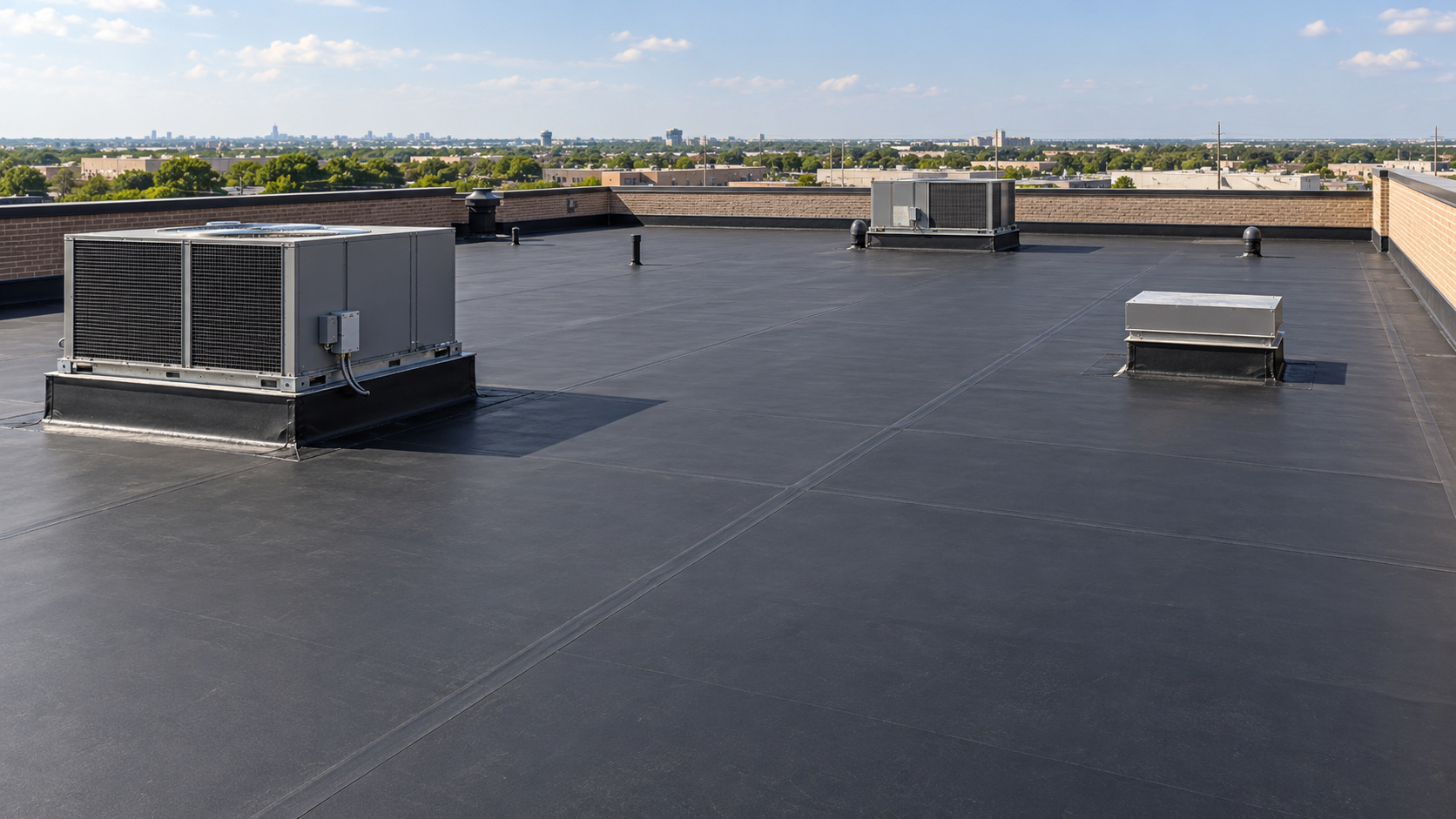
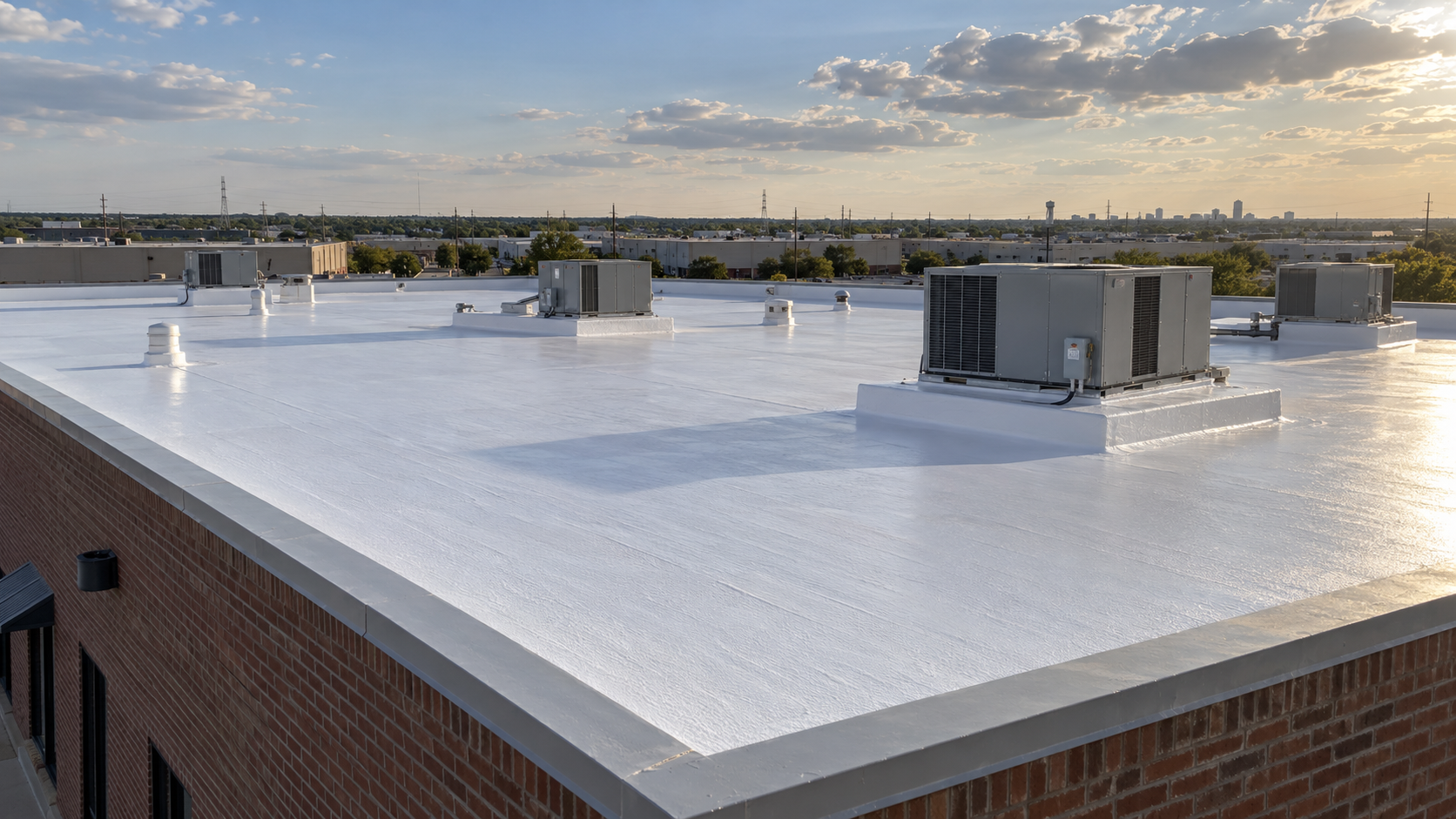
EPDM roofing can be a suitable option for a North Texas commercial building. The decision, however, should account for the complete roofing assembly, the building’s condition, and the owner’s priorities.
A proposal that simply says “install rubber roofing” does not explain how the roof will address summer heat, hail exposure, wind uplift, drainage, or rooftop maintenance.
EPDM deserves consideration when a project-specific assessment supports its use and the proposed assembly meets the building’s requirements. Membrane color, reinforcement, attachment, insulation, cover board, and flashing all belong in that evaluation.
For property owners in Dallas, Fort Worth, Arlington, Mansfield, and surrounding communities, the useful question is which documented roof assembly best fits the property.
What Is EPDM Roofing?
EPDM stands for ethylene propylene diene monomer. It is a synthetic rubber membrane used on commercial low-slope roofs.
Manufacturers offer different EPDM products, including black and white membranes, reinforced options, and fleece-backed products. These variations should be identified in the proposal rather than grouped under a single material name.
Carlisle’s EPDM roofing resources describe its product families and associated accessories, including factory-applied seam tape. carlislesyntec.com
Showtime Exteriors provides commercial roofing services throughout Texas, helping owners evaluate existing conditions and compare suitable project options.
Is EPDM Suitable for North Texas Heat?
EPDM should be evaluated as part of the building’s thermal assembly.
Discuss membrane color alongside insulation, existing roof condition, HVAC operation, and the building’s use. Surface appearance alone does not establish how the building will perform.
Compare Black and White Options
EPDM is available in reflective white products as well as black membranes.
For example, Johns Manville’s white EPDM product information identifies reflectivity as a product characteristic. Johns Manville
Ask the contractor to provide the proposed membrane’s published properties and explain why that product was selected.
A reflective membrane should not be accompanied by an unsupported promise about utility savings. If energy performance is a major investment objective, request a building-specific evaluation.
Review Insulation Before Focusing on Color
Ask what insulation will be installed, what will remain, and how its condition was established.
Your proposal should identify:
- Insulation type and thickness.
- Any retained existing insulation.
- Treatment of wet or unsuitable materials.
- Tapered sections, where included.
- Cover board product and scope.
- Changes required around curbs and edges.
These details make competing proposals more meaningful than a comparison based only on membrane color.
Discuss How the Building Operates
Tell the project team whether the property is fully conditioned, partly conditioned, or used primarily for storage.
Provide information about operating hours, temperature requirements, and planned equipment upgrades. These factors help frame the thermal-performance discussion.
How Does EPDM Perform Against Hail?
EPDM has been the subject of laboratory hail-impact testing.
The EPDM Roofing Association’s published testing resource describes testing on assemblies with different substrates and membrane ages. That work supports considering EPDM in a hail-resistance discussion, while also showing why assembly details matter. EPDM Roofing Association
Laboratory results do not guarantee that every EPDM roof will avoid damage during every storm.
Request Evidence for the Proposed Assembly
Ask the contractor to identify:
- The exact membrane product.
- Its thickness and reinforcement.
- The insulation and cover board.
- The attachment method.
- Applicable assembly testing or approvals.
- The relationship between tested performance and proposed warranty coverage.
A rating for a different configuration should not be presented as proof of your proposed roof’s performance.
Consider Enhanced Product Options
Some products are designed with additional reinforcement.
Carlisle’s FleeceBACK EPDM information describes externally reinforced membranes intended to improve wind uplift, hail, and puncture resistance. carlislesyntec.com
Ask whether such an option is appropriate for your property and what changes it makes to the complete project scope.
Separate Performance From Coverage
A roof’s tested impact performance and the wording of a warranty are different pieces of information.
Request both. Review the actual coverage, exclusions, reporting obligations, and qualification requirements before authorizing work.
Avoid relying on phrases such as “hail-proof” or “storm-proof.” They do not explain the limitations of the proposed system.
Can EPDM Handle North Texas Wind?
EPDM systems can be designed for wind exposure, but the membrane name alone does not establish wind performance.
The contractor should identify a suitable assembly and provide the attachment requirements for the specific project.
Elevate’s bulletin on insulation fastening and RubberGard MAX attachment illustrates how attachment options depend on qualifying systems, decks, and project conditions. Commercial Roofing, Wall and Lining Products
Ask for a Complete Attachment Scope
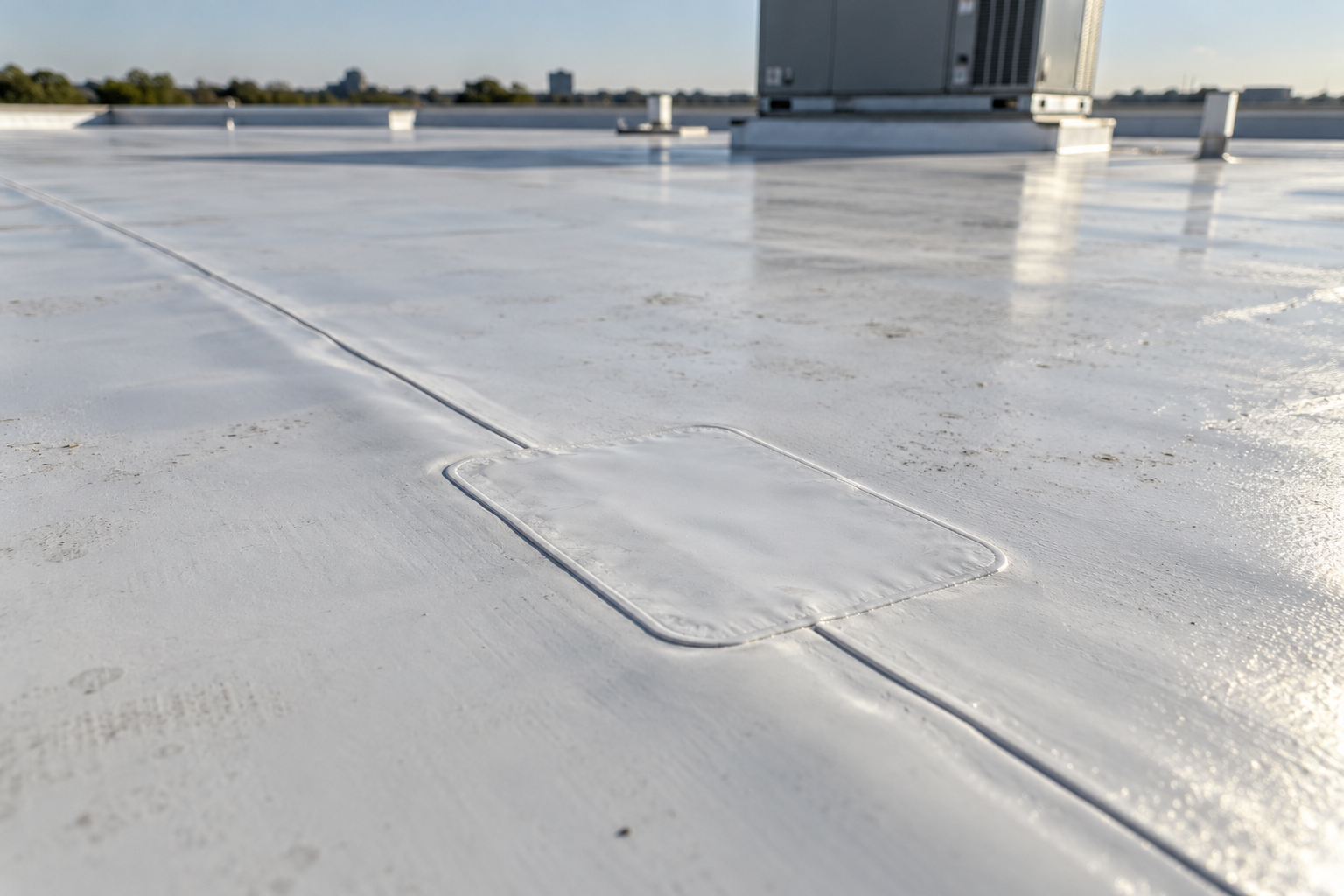
The proposal should explain how the roof assembly will be secured and identify the components involved.
Request information about:
- Deck type and condition.
- Fasteners or adhesives.
- Insulation and cover board attachment.
- Membrane attachment.
- Perimeter and corner requirements.
- Edge and termination details.
- Project-specific testing where required.
The owner should be able to understand which assembly is being proposed and where its requirements are documented.
Evaluate Existing Conditions
If the project retains existing materials, ask how their suitability was established.
A recover proposal should clearly explain the retained assembly, attachment approach, unsuitable-material removal, and any investigation still needed.
Showtime Exteriors’ guide to commercial roof retrofit versus replacement provides a starting point for comparing retention and removal options.
What Else Should North Texas Owners Evaluate?
Heat, hail, and wind are important, but roof selection also needs to address everyday building requirements.
Drainage
Ask the contractor to document existing drainage concerns and explain whether the project includes corrective work.
A new membrane proposal should identify what happens at drains, scuppers, gutters, and areas needing further evaluation.
Rooftop Equipment
Provide a list of planned HVAC replacements or equipment additions.
Ask who will coordinate lifting, disconnecting, reconnecting, or modifying equipment. The roofing scope should identify related flashing work and trade responsibilities.
Maintenance Access
Discuss how frequently technicians visit the roof and where they need to travel.
Ask whether the design includes appropriate service routes and protective accessories. Establish a process for inspecting the roof after future equipment work.
Building Use and Rooftop Exposures
Tell the contractor about restaurant exhaust, industrial processes, or other substances that may reach the roof.
Request written confirmation that the proposed materials are suitable for those exposures. Do not assume that every single-ply membrane has identical compatibility.
EPDM Compared With TPO and PVC
The strongest comparison uses complete proposals for the same building.
Showtime Exteriors’ guide to commercial roofing materials for Texas properties helps owners organize that discussion.
Decision pointWhat to compare across EPDM, TPO, and PVC proposalsThermal objectivesPublished surface properties and proposed insulationHail exposureEvidence for the exact assemblyWind exposureAttachment, deck, perimeter, and corner requirementsRooftop useEquipment access and protective detailsExisting roofRemoval, retention, and moisture findingsCompatibilitySuitability for building-specific exposuresMaintenanceInspection and repair requirementsWarrantyCoverage, exclusions, and owner obligationsCostComplete installed scope and allowances
A lower bid may reflect different preparation, insulation, attachment, or exclusions. Ask contractors to explain those differences before choosing a system.
When EPDM Is Worth a Closer Look
EPDM may deserve a place on your shortlist when:
- The property requires a commercial low-slope roofing solution.
- A suitable assembly can meet project requirements.
- The proposed product fits the building’s thermal objectives.
- Hail and wind performance are supported with relevant documentation.
- The contractor can explain installation, inspection, and repair requirements.
- The owner is prepared to maintain the completed system.
These points support further evaluation. They do not replace an assessment of your roof.
When to Pause Before Approving an EPDM Proposal
Request more information when a proposal leaves major questions unanswered.
Examples include:
- “EPDM roofing” without a specific product.
- No defined insulation or cover board scope.
- No explanation of attachment.
- Unclear treatment of wet materials.
- Missing drainage details.
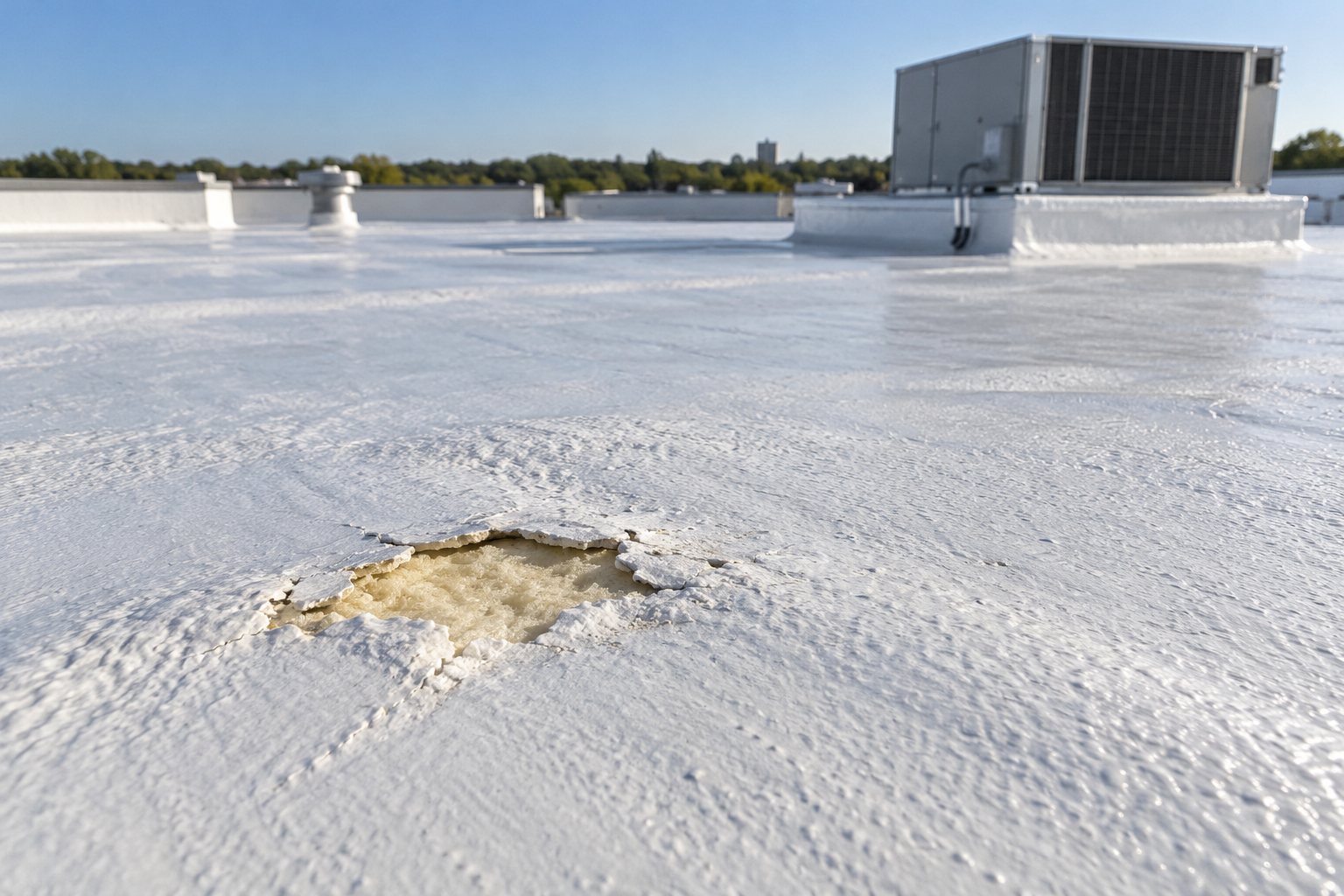
- Broad storm-resistance promises without supporting documentation.
- Warranty claims without the proposed terms.
- A recover recommendation without findings supporting retention.
The appropriate next step may be clarification, additional investigation, or a revised proposal.
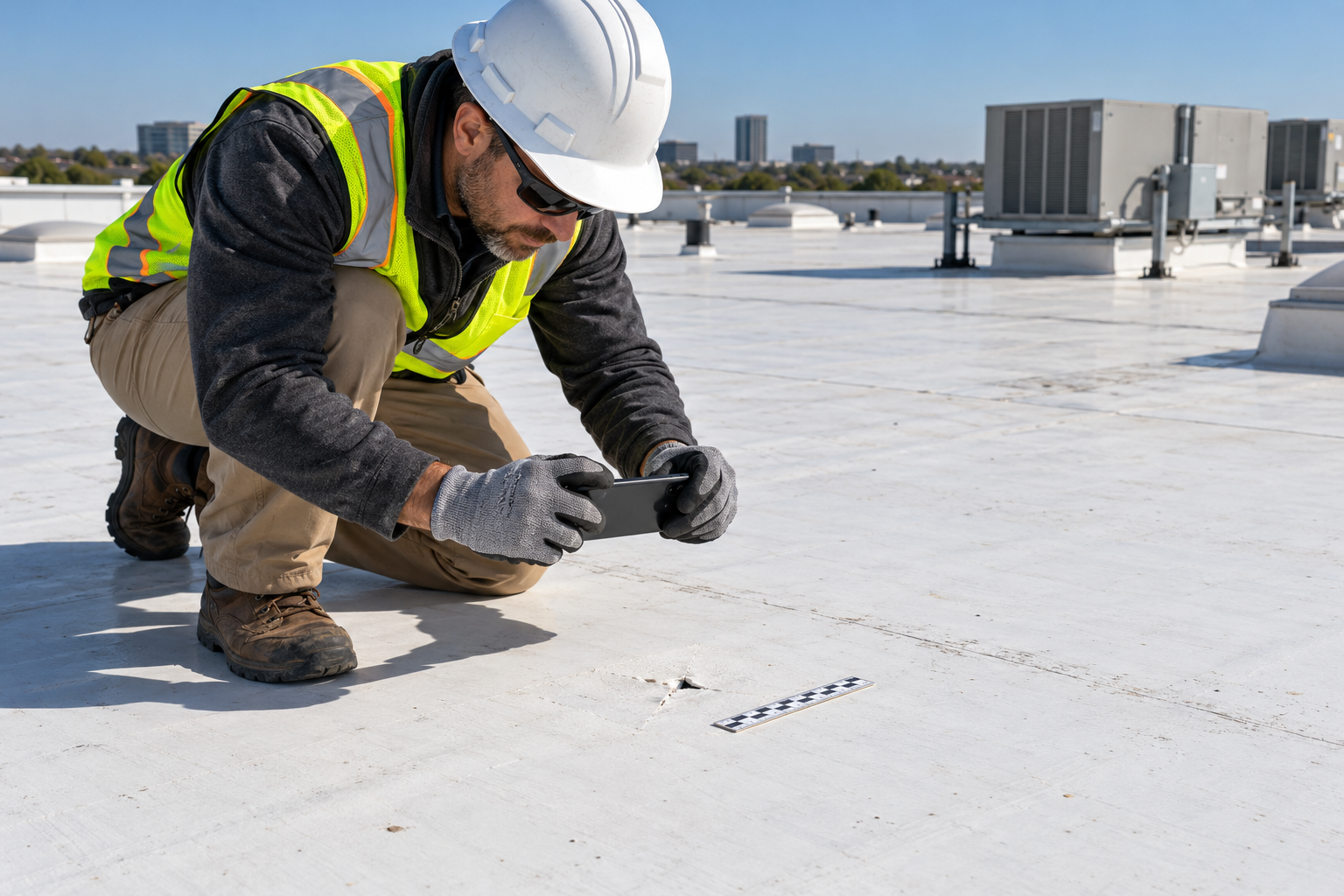
Start With a Documented Roof Inspection
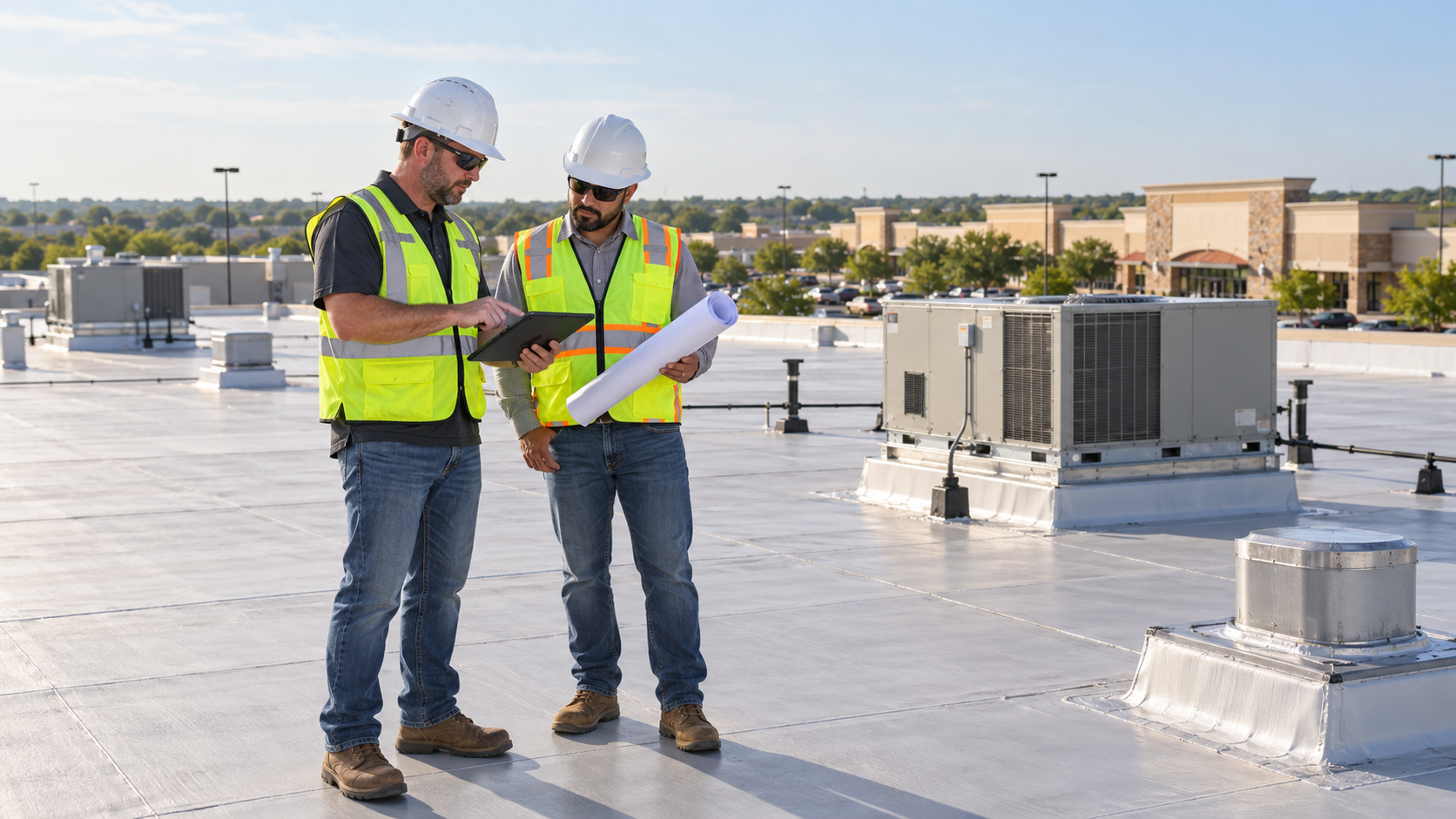
Before selecting a replacement system, establish the condition of the existing roof.
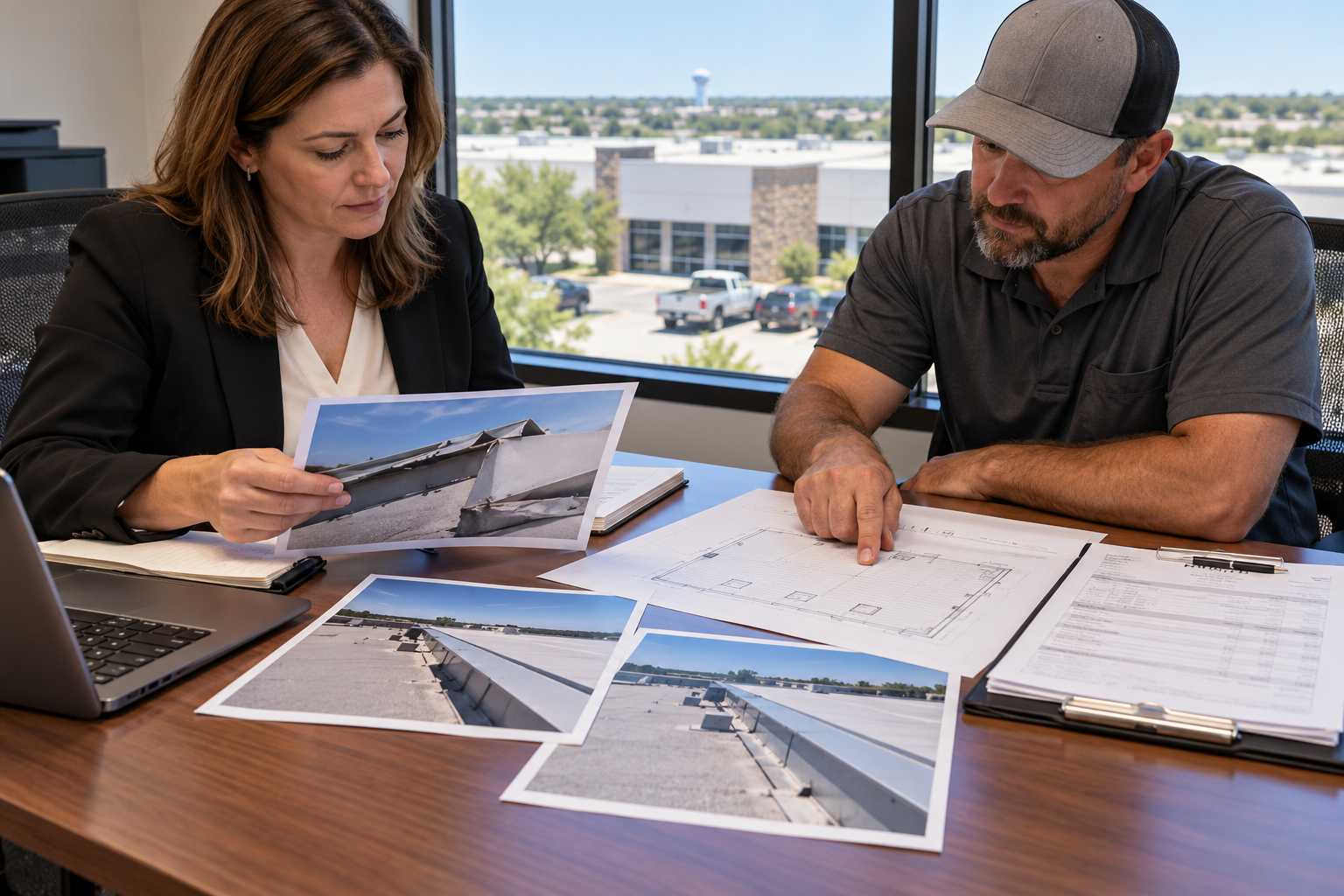
Request a report identifying the roof sections, assembly information, observed defects, interior leak locations, testing, limitations, and recommended next steps.
Showtime Exteriors’ guide to commercial roof inspection report evidence explains how documentation supports maintenance and capital decisions.
Provide Useful Building Records
Gather:
- Previous installation documents.
- Warranty information.
- Repair invoices.
- Dated leak photographs.
- Roof plans, if available.
- Equipment replacement schedules.
- Access restrictions and operating hours.
These records help the project team focus its investigation and develop a more clearly defined scope.
Ask What Remains Uncertain
The report should distinguish observed findings from suspected concealed conditions.
If more investigation is recommended, ask what it will establish and how the result could change the project.
Compare the Full Cost of Ownership
The installation price is one part of the decision.
Ask each contractor to identify the included work, anticipated maintenance, warranty requirements, and foreseeable limitations.
A useful comparison should cover:
- Existing roof investigation.
- Demolition and disposal.
- Deck treatment.
- Insulation and cover board.
- Membrane and attachment.
- Flashing and edge details.
- Drainage work.
- Equipment coordination.
- Inspections and closeout.
- Additional-work procedures.
Avoid comparing a narrowly scoped membrane price with a complete replacement price.
If future costs or energy savings are used to support a recommendation, request the assumptions behind those figures.
Maintenance and Warranty Planning
Ask for a maintenance plan specific to the completed assembly.
Keep product records, inspection reports, repair invoices, photographs, and warranty documents together. Assign responsibility for reporting leaks and coordinating rooftop access.
Carlisle’s building owner resources provide information about owner support and finding authorized applicators for repairs or reroofing. carlislesyntec.com
For the proposed roof, confirm:
- Who issues the warranty.
- What coverage is included.
- What reporting procedures apply.
- Who may perform repairs.
- What maintenance is required.
- How equipment alterations should be handled.
A stated warranty term should be accompanied by the actual document.
Frequently Asked Questions
Is EPDM a good roof for North Texas?
It can be, when the building assessment and proposed assembly support its use. Evaluate the exact product, insulation, attachment, details, and maintenance requirements.
Does EPDM have to be black?
No. White EPDM products are available. Ask the contractor to explain the proposed membrane’s properties and why it fits the project.
Is EPDM hail-proof?
No roof should be represented as immune to hail damage. Request relevant assembly testing and review warranty coverage separately.
Does a thicker membrane automatically provide a better roof?
Thickness is one specification. Evaluate it alongside reinforcement, substrate, cover board, attachment, details, and installation requirements.
Can EPDM be installed over an existing roof?
Possibly, if the existing assembly and proposed recover meet project requirements. Ask for findings supporting the retention of existing materials.
Should I choose EPDM, TPO, or PVC?
Compare project-specific assemblies and scopes. The best choice depends on the building, exposures, existing conditions, maintenance needs, and budget.
Discuss Your North Texas Roof With Showtime Exteriors
EPDM can be part of a practical roofing solution for North Texas heat, hail, and wind when the complete assembly fits the property.
Start with documented roof conditions. Then request a clearly specified system, relevant performance evidence, complete pricing, and written warranty terms.
Showtime Exteriors offers roof inspection, repair, and replacement services for Texas property owners.
Contact Showtime Exteriors to request a commercial roof assessment and compare property-specific options.
Call 817-400-ROOF (7663).