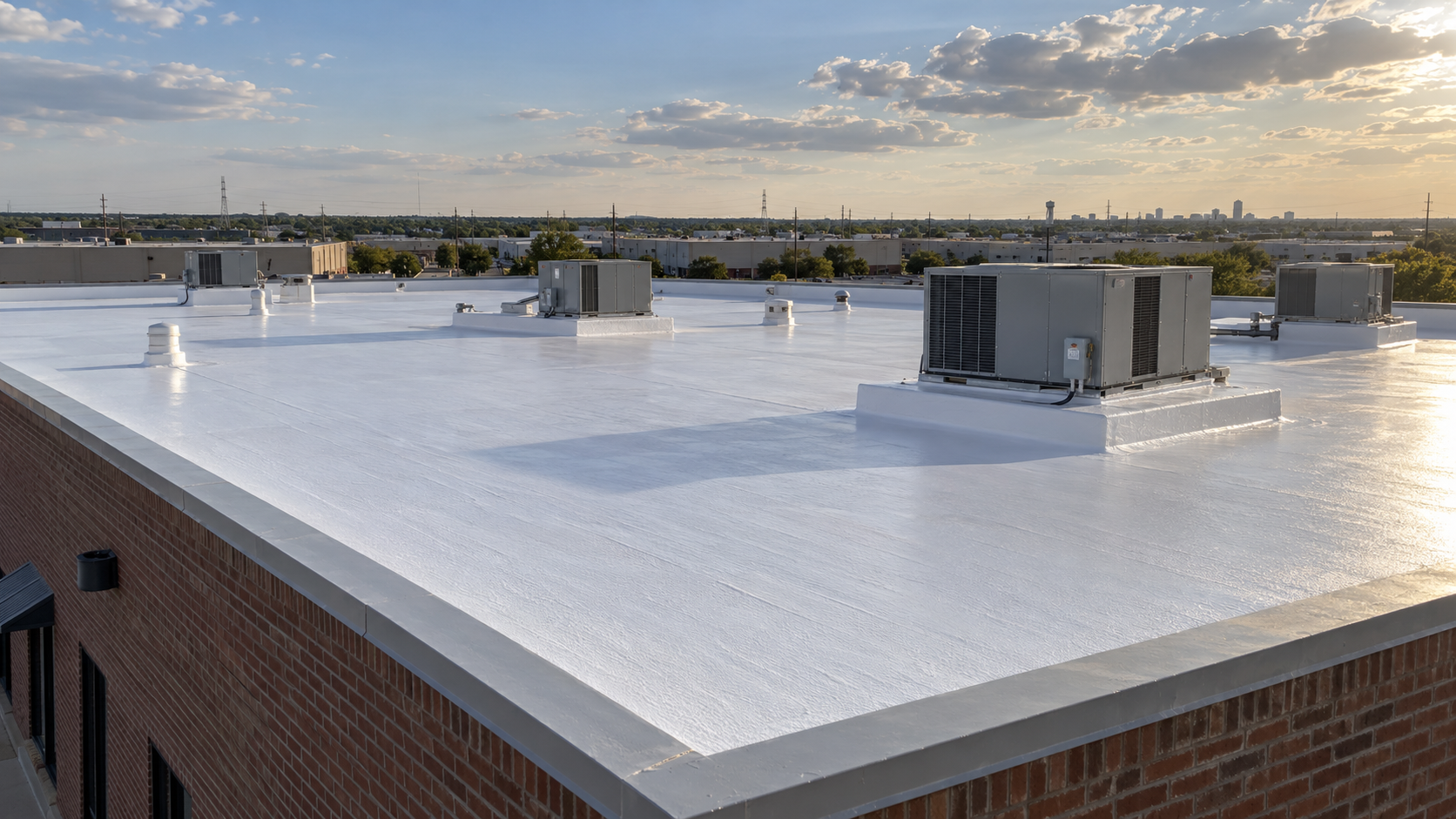


When Should You Repair, Restore, or Replace PVC Roofing?
Learn when PVC roofing needs repairs, restoration, or replacement. Explore warning signs, inspection requirements, and options for Texas commercial buildings.
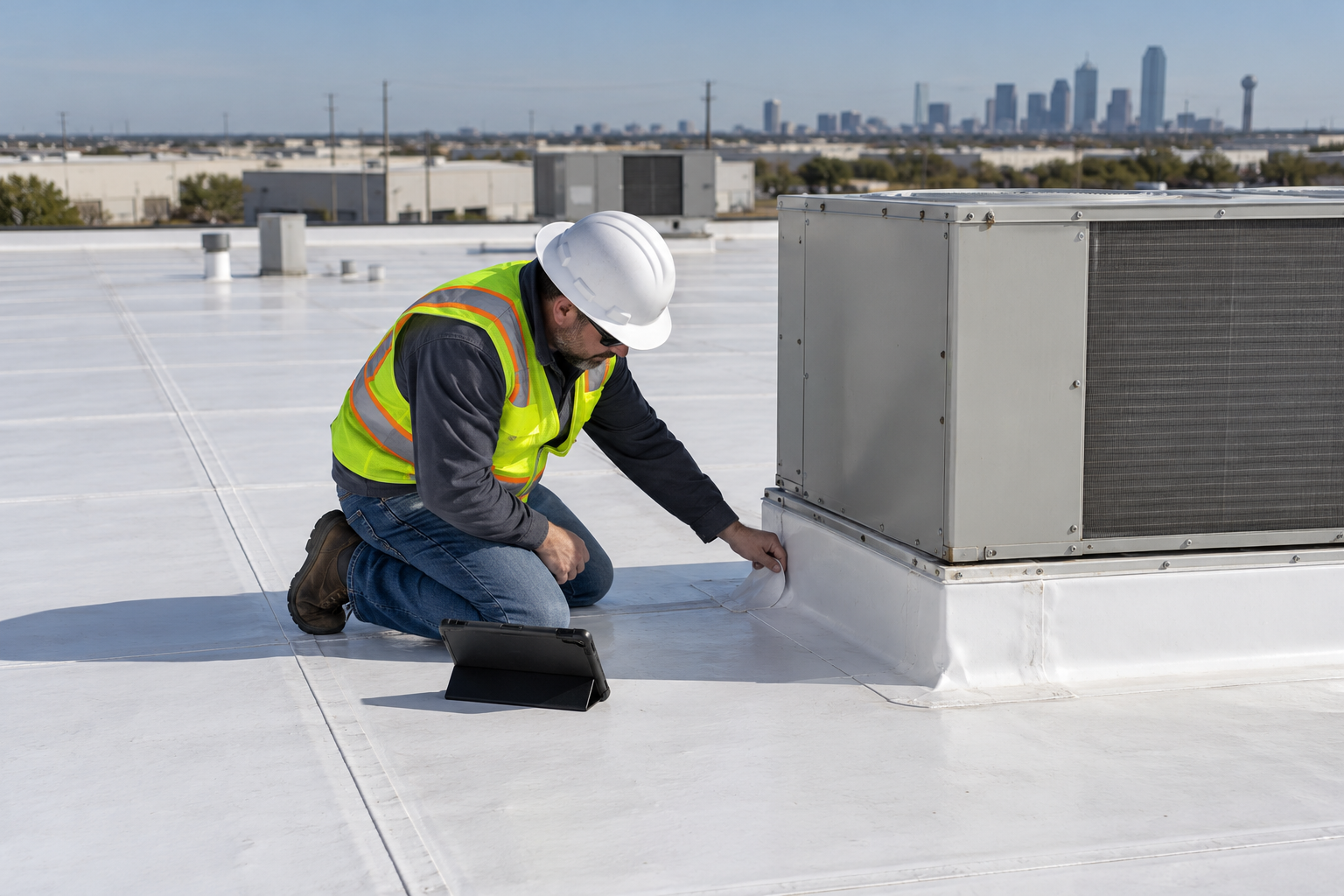
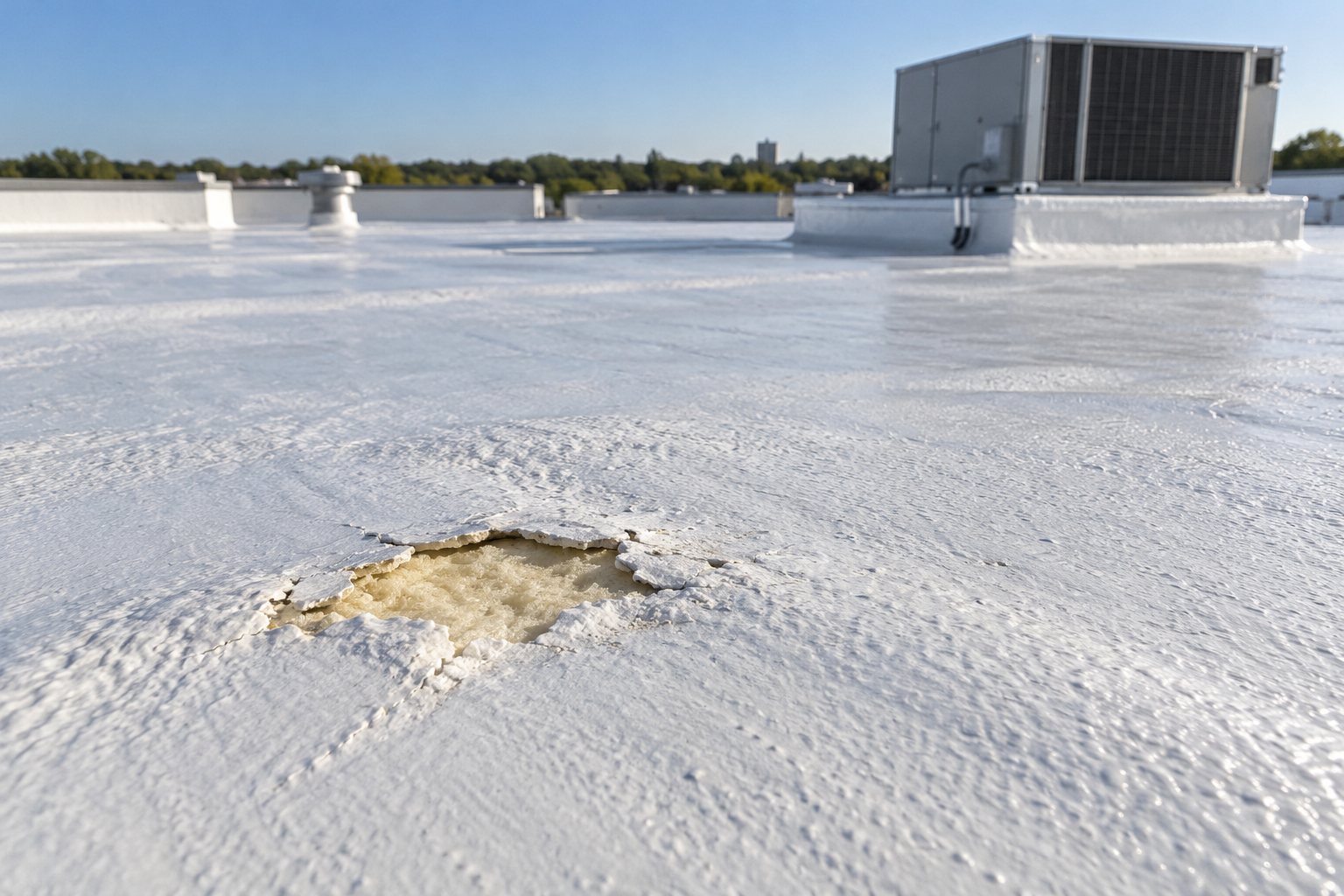
A leak in a PVC roof does not automatically mean the entire roof needs replacement. An isolated puncture may be repairable, while recurring leaks or deterioration across several areas may justify a broader project.
The decision depends on the condition of the membrane, seams, flashing, insulation, deck, and attachment—not simply the roof’s age or appearance.
Repair is worth evaluating when damage is localized and surrounding materials remain suitable. Restoration may be appropriate when a documented assessment supports retaining the existing assembly. Replacement deserves consideration when widespread or underlying problems make retention impractical.
For Texas commercial property owners, the goal is to choose work that addresses the cause of the problem and supports the building’s continued use.
Understand What PVC Roofing Is
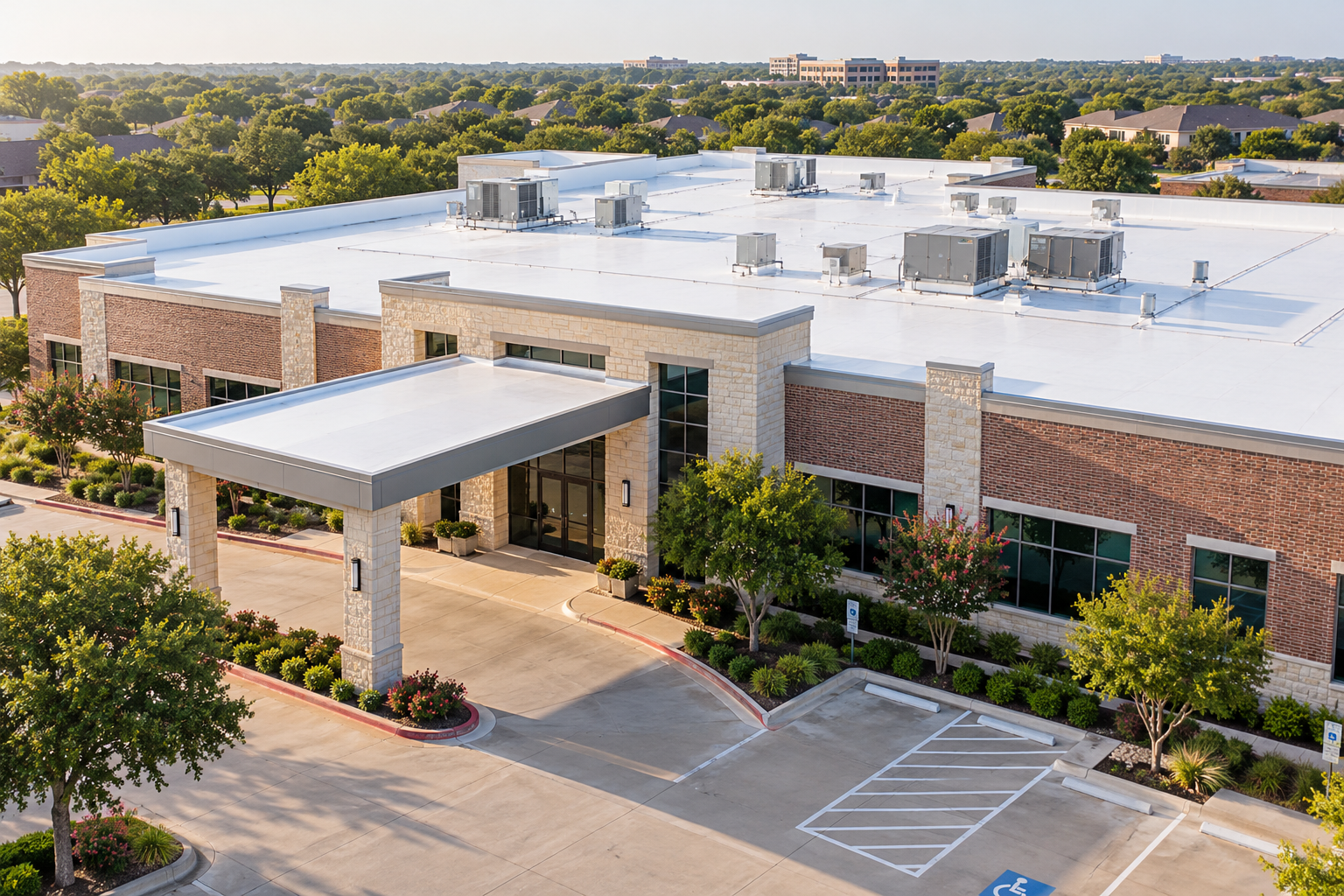
PVC, or polyvinyl chloride, roofing is a thermoplastic single-ply membrane used on commercial low-slope roofs. Its seams and many flashing connections are joined through heat welding.
Carlisle’s PVC roofing information identifies weldability and compatible flashing accessories as features that support installation and repair. carlislesyntec.com
However, the membrane is only one part of the assembly. A sound-looking surface cannot establish the condition of concealed insulation or the deck beneath it.
Showtime Exteriors provides commercial roofing services across Texas, helping property owners evaluate existing conditions before choosing a project scope.
Repair, Restore, Recover, or Replace: What Is the Difference?
These terms describe different types of work. Ask contractors to define the actual scope behind each recommendation.
ApproachWhat it generally involvesMain question to resolveLocalized repairCorrecting specific membrane or flashing defectsIs the problem limited and repairable?RestorationRepairs, preparation, and a compatible protective system where appropriateCan the existing assembly support the specified treatment?RecoverInstalling a new roof assembly over eligible existing materialsWhich materials can appropriately remain?ReplacementRemoving the specified existing components and rebuildingWhat needs removal, and what should replace it?
A coating restoration and a membrane recover are different projects. Their preparation, materials, attachment, and warranty requirements should be evaluated separately.
When PVC Roof Repair May Be Appropriate
Localized repair may be suitable when an inspection identifies a limited defect and confirms that the surrounding roof remains serviceable.
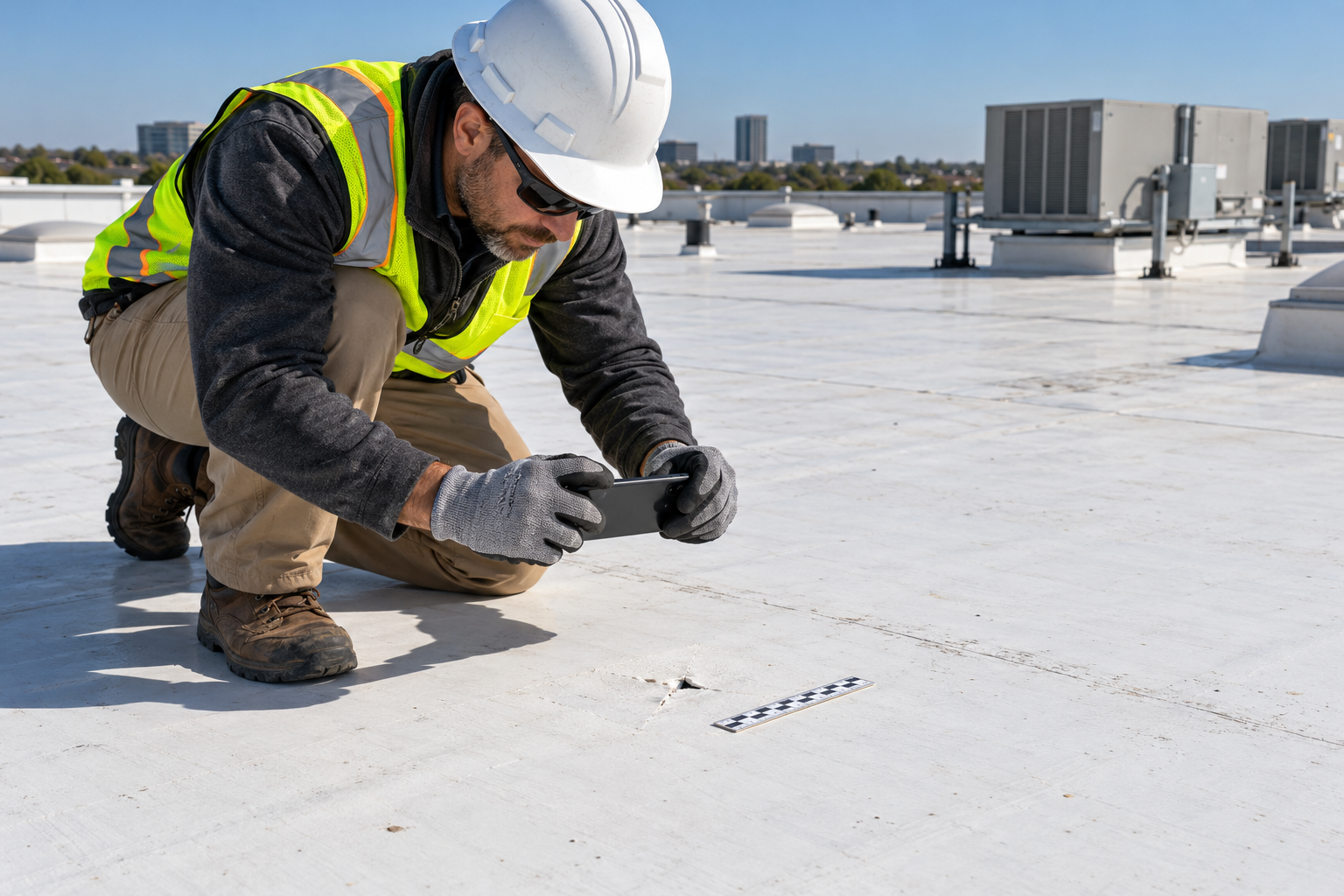
Examples might include a puncture, a damaged flashing detail, or a localized seam issue. The contractor should establish both the defect and its extent.
GAF’s discussion of commercial roof inspection and repair-versus-replacement decisions uses an existing PVC roof to illustrate why assessment comes before choosing the work. gaf.com
What a Useful Repair Proposal Includes
Request a written description identifying:
- The defect’s location and dimensions.
- The observed condition and likely cause.
- Any materials requiring removal.
- The proposed repair method and compatible products.
- How completed work will be checked.
- Any remaining limitations.
“Patch roof leak” is too vague to explain what the contractor intends to fix.
Investigate Repeated Failures
If the same area leaks after multiple visits, review the previous diagnosis and repair history.
Provide invoices, photographs, and dates when water returned. Ask whether the latest proposal addresses a newly identified cause or repeats the earlier approach.
A history of repairs does not by itself prove replacement is necessary. It does justify asking for a clearer explanation.
When PVC Roof Restoration Is Worth Evaluating
Restoration may be an option when the existing assembly remains suitable and a specified coating system can be applied successfully.
A contractor should establish that suitability before presenting coating as the solution.
For example, GAF’s acrylic-over-PVC specification calls for a moisture survey, removal and replacement of wet areas, membrane repairs, a clean and dry substrate, and adhesion testing. Those requirements apply to that specified system; other products have their own instructions. documents.gaf.com
Restoration Requires More Than a New Finish
Ask the contractor to separate the proposal into:
- Investigation.
- Removal and repairs.
- Surface preparation.
- Detail treatment.
- Coating application.
- Quality checks and closeout.
This makes it easier to see what the owner is purchasing.
Compatibility Must Be Established
Identify the existing membrane and any previous coatings or repair materials.
Ask how the proposed system’s compatibility and adhesion will be verified. Obtain written product information and the applicable specification.
A proposal should explain what happens if testing shows that the roof cannot support the proposed treatment.
Confirm the Treatment’s Limits
Ask what the restoration will address and what remains outside its scope.
For example, the owner should know whether drainage changes, equipment modifications, deck repairs, or other work are included separately.
When a Recover May Be Considered
A recover retains eligible parts of an existing assembly beneath a new roof system.
Sika’s guidance on roof repair, recover, and replacement explains the distinction and notes that wet insulation still needs removal when considering a recover. usa.sika.com
Ask the contractor to document:
- Existing roof layers.
- Moisture findings.
- Materials proposed for retention.
- Substrate suitability.
- Proposed attachment.
- Treatment of unsuitable areas.
- Flashing and drainage transitions.
Showtime Exteriors’ guide to commercial roof retrofit versus replacement provides a framework for comparing retention and removal options.
The proposal should explain why the retained materials are suitable for the new assembly.
When PVC Roof Replacement Deserves Consideration
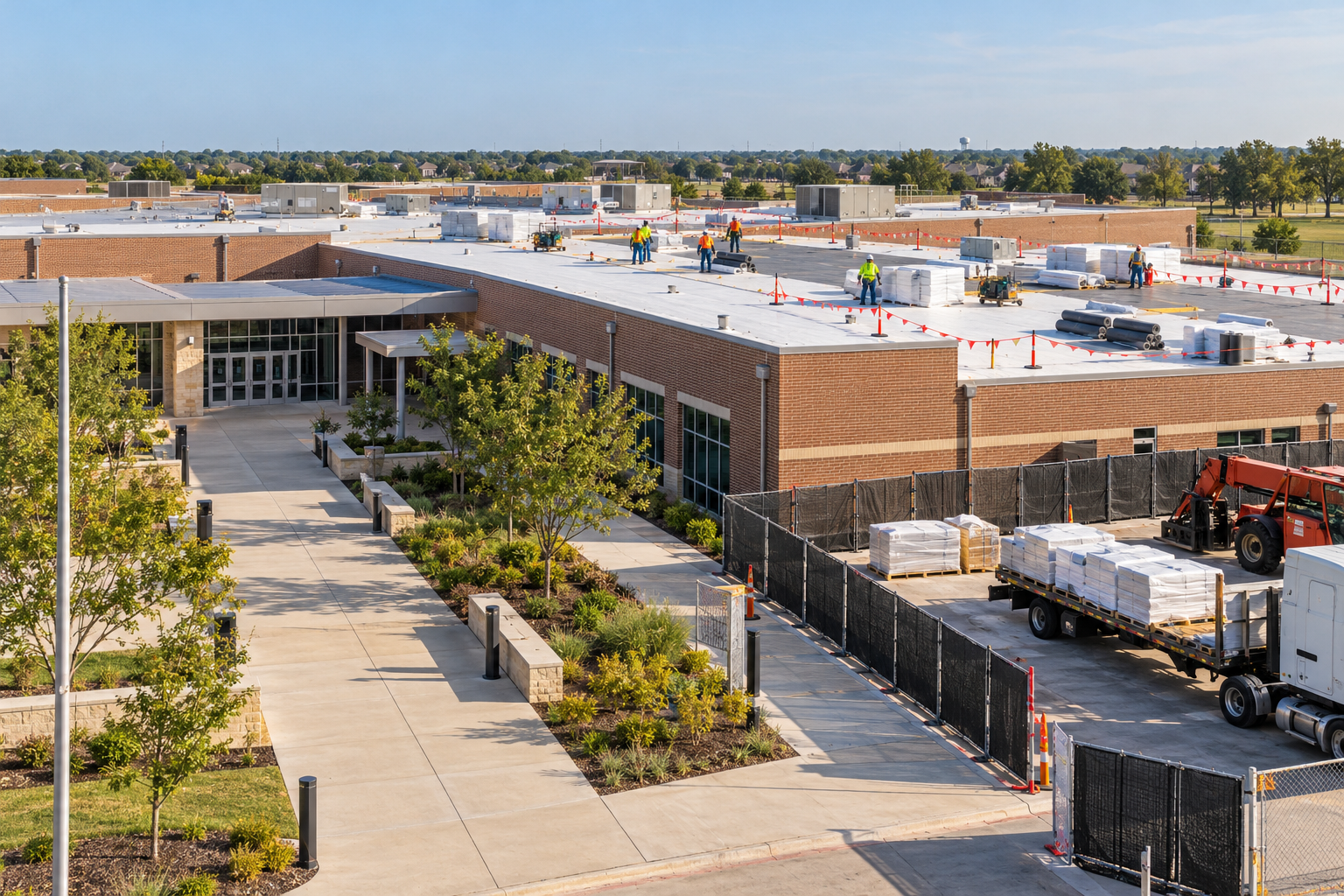
Replacement becomes a serious option when the assessment identifies problems too extensive or fundamental for a practical repair or restoration scope.
Conditions requiring closer evaluation may include widespread deterioration, extensive concealed moisture, significant attachment problems, or damage to underlying materials.
Ask the contractor to support the recommendation with findings rather than rely solely on the roof’s age.
Clarify the Removal Depth
“Replace the roof” can describe different scopes.
The contract should state whether removal includes:
- The membrane only.
- Cover board.
- Insulation.
- Earlier roof systems.
- Flashing and perimeter components.
- Deteriorated deck areas.
The owner should understand which materials remain and why.
Consider Separate Roof Sections
A building may have additions installed at different times. Those areas may not need identical work.
Ask whether one section can be repaired while another requires replacement. Any mixed approach needs clearly defined boundaries and suitable transitions.
Evaluate the Replacement Assembly
Choosing the next roof requires its own assessment.
Discuss the deck, drainage, building use, rooftop equipment, maintenance access, and ownership objectives. Showtime Exteriors’ comparison of commercial roofing materials for Texas buildings can help organize that discussion.
Warning Signs That Should Prompt an Inspection
Arrange an assessment when your facilities team observes changes such as:
- New or recurring interior leaks.
- Visible openings or displaced roof details.
- Damage after rooftop equipment work.
- Unusual movement around edges or penetrations.
- Repeated problems in previously repaired areas.
- Drainage concerns.
Record the location, date, and circumstances. Photographs from accessible areas can help the contractor understand what changed.
An interior stain alone does not establish the exact roof entry point. Ask the contractor to connect the reported symptom with the investigation findings.
Address Active Interior Hazards
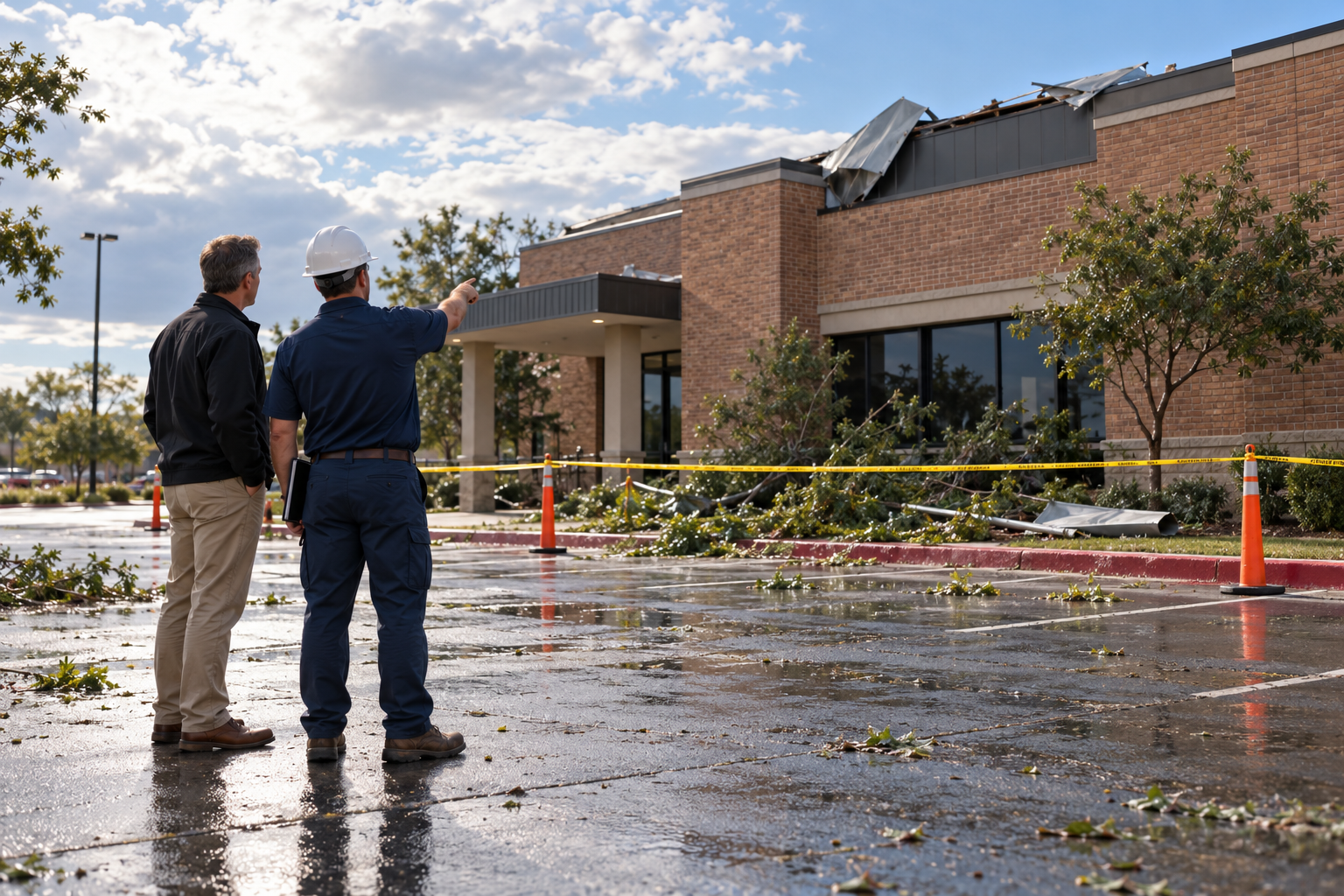
If water is entering near electrical equipment or a ceiling begins to bulge, restrict access and arrange appropriate professional assistance.
Do not send maintenance staff onto a wet roof to investigate.
Include Drainage in the Assessment
A membrane repair proposal should also address known drainage concerns.
GAF’s guidance on commercial drain maintenance explains why functioning drainage is part of commercial roof care. www.gaf.com
Ask the contractor to document outlets, observed obstructions, and areas requiring further evaluation.
The proposal should identify whether drainage work is included, excluded, or dependent on additional design. Avoid leaving that responsibility undefined until construction begins.
What Should a PVC Roof Inspection Report Contain?
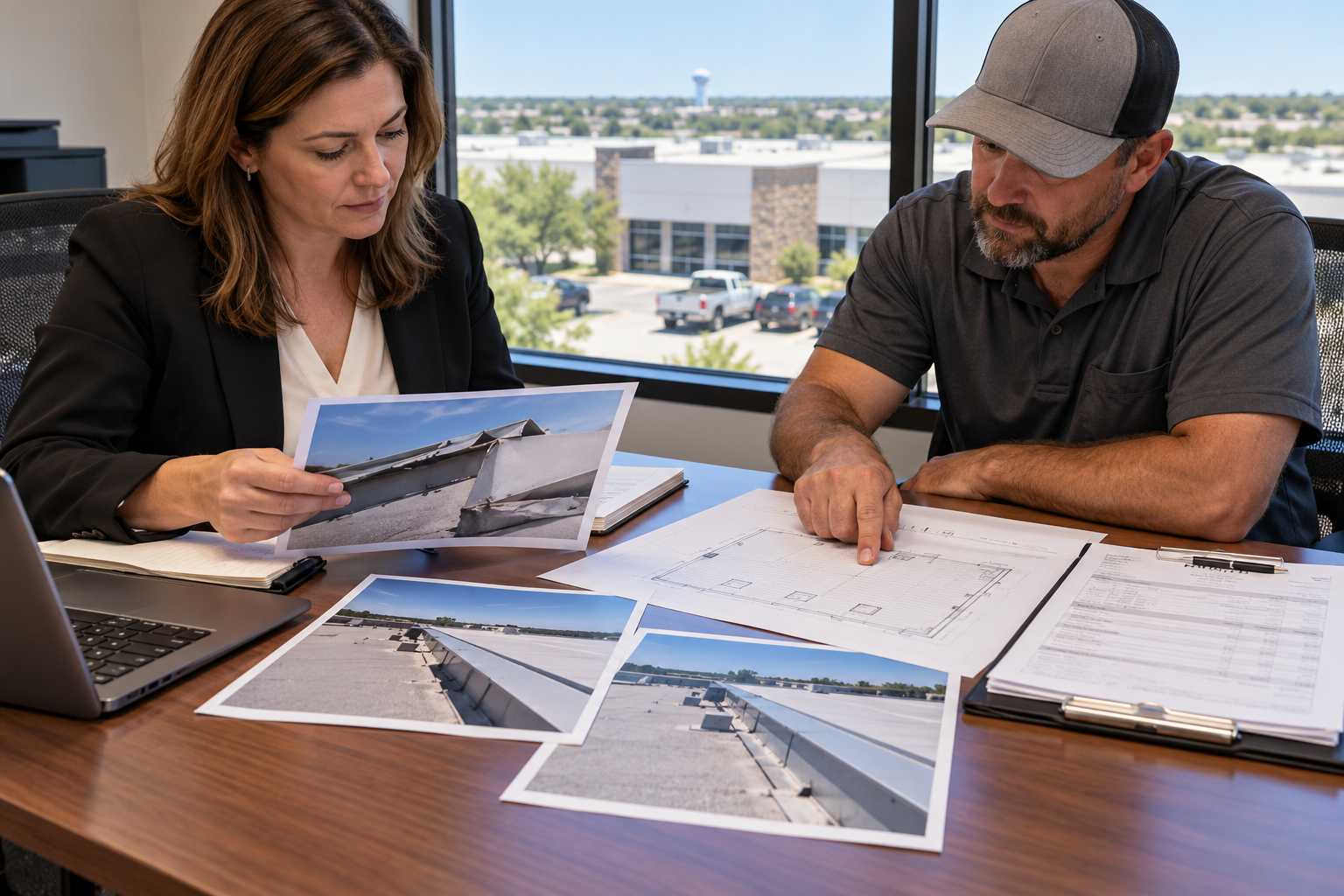
A useful report connects each recommendation to a location and finding.
Request:
- Property information and inspection date.
- A roof plan showing inspected sections.
- Known membrane and assembly information.
- Overview and close-up photographs.
- Interior leak locations.
- Findings at seams, flashing, penetrations, and edges.
- Testing methods and results.
- Access and investigation limitations.
- Repair priorities.
- Recommended next steps.
Showtime Exteriors’ guide to commercial roof inspection report evidence explains how documentation supports maintenance and capital decisions.
Separate Findings From Assumptions
Ask the report to distinguish what was directly observed, what testing supports, and what remains uncertain.
If additional investigation is recommended, request an explanation of the question it will answer and how the result could affect the proposed work.
That helps owners decide whether more investigation is worthwhile before requesting final pricing.
Compare Complete Project Costs
Repair, restoration, recover, and replacement estimates should describe their actual scopes.
A smaller upfront price may represent less work, different preparation, or more exclusions.
Cost categoryQuestions to askInvestigationWhat inspections and testing are included?RemovalWhich materials will be removed and disposed of?RepairsWhat defects and quantities are included?PreparationWhat cleaning, priming, or other treatment is specified?Roof assemblyWhich products and installation requirements apply?DetailsHow are curbs, penetrations, walls, and edges handled?DrainageWhat work is included?EquipmentWho coordinates mechanical and electrical trades?WarrantyWhat coverage and qualification requirements apply?Additional workHow are changes documented, priced, and approved?
Ask bidders to clarify differences before negotiating the total.
Review Warranty Requirements Before Work Starts
Locate the existing warranty and review its reporting and repair requirements.
Carlisle’s building owner resources include information about authorized applicators and assistance for roof repairs and reroofing. carlislesyntec.com
For your roof, ask:
- Who should receive notice of the problem?
- Does the manufacturer need to review the proposed work?
- Who is authorized to perform repairs?
- How could coating or other alterations affect existing coverage?
- What new warranty, if any, will be issued?
Obtain the proposed terms before authorizing the project. A repair or restoration does not automatically renew a warranty.
Questions to Ask Your Roofing Contractor
Before signing, request clear answers to these questions:
- What evidence supports your recommendation?
- Is damage isolated or widespread?
- Which concealed conditions remain uncertain?
- What materials will remain?
- How will compatibility be established?
- What preparation and repairs are included?
- How will drainage concerns be handled?
- What are the proposal’s exclusions?
- How will unforeseen work be approved?
- What documentation will I receive at completion?
Provide your operating schedule and any planned rooftop equipment changes. This allows the contractor to include realistic coordination requirements.
Frequently Asked Questions
Can a punctured PVC roof be repaired?
Often, a localized puncture can be evaluated for repair. The contractor needs to establish the condition of the surrounding membrane and underlying materials and select a compatible repair method.
Can an old PVC roof still be repaired?
Age alone does not settle the question. The assessment should establish whether the existing membrane can accept an appropriate repair and whether broader problems remain.
Can PVC roofing be coated?
Some specified coating systems can be used over suitable PVC substrates. Eligibility, moisture condition, repairs, preparation, and adhesion testing must follow the selected manufacturer’s requirements.
Does every recurring leak require replacement?
No. A recurring leak calls for a review of the diagnosis and previous repairs. Replacement becomes an option when documented conditions support a broader scope.
Can only one roof section be replaced?
Possibly. The proposal should establish section boundaries, retained materials, and transitions between new and existing work.
How do I decide whether restoration is worth the cost?
Compare the documented condition, complete restoration scope, remaining limitations, warranty terms, and ownership plans against the replacement option.
Schedule a PVC Roof Assessment in Texas
A sound decision starts with a clear understanding of the existing roof.
Establish the condition of the membrane, details, insulation, deck, and drainage. Then compare options that explain what can remain, what needs removal, and how the proposed work addresses the findings.
Showtime Exteriors offers roof inspection, repair, and replacement services for Texas property owners.
Contact Showtime Exteriors to request a commercial roof assessment and discuss property-specific options.
Call 817-400-ROOF (7663).