
Is Fabric-Reinforced Coating Right for North Texas Heat, Hail, and Wind?
Is fabric-reinforced roof coating suitable for North Texas heat, hail, and wind? Learn about roof eligibility, testing, preparation, and warranties.
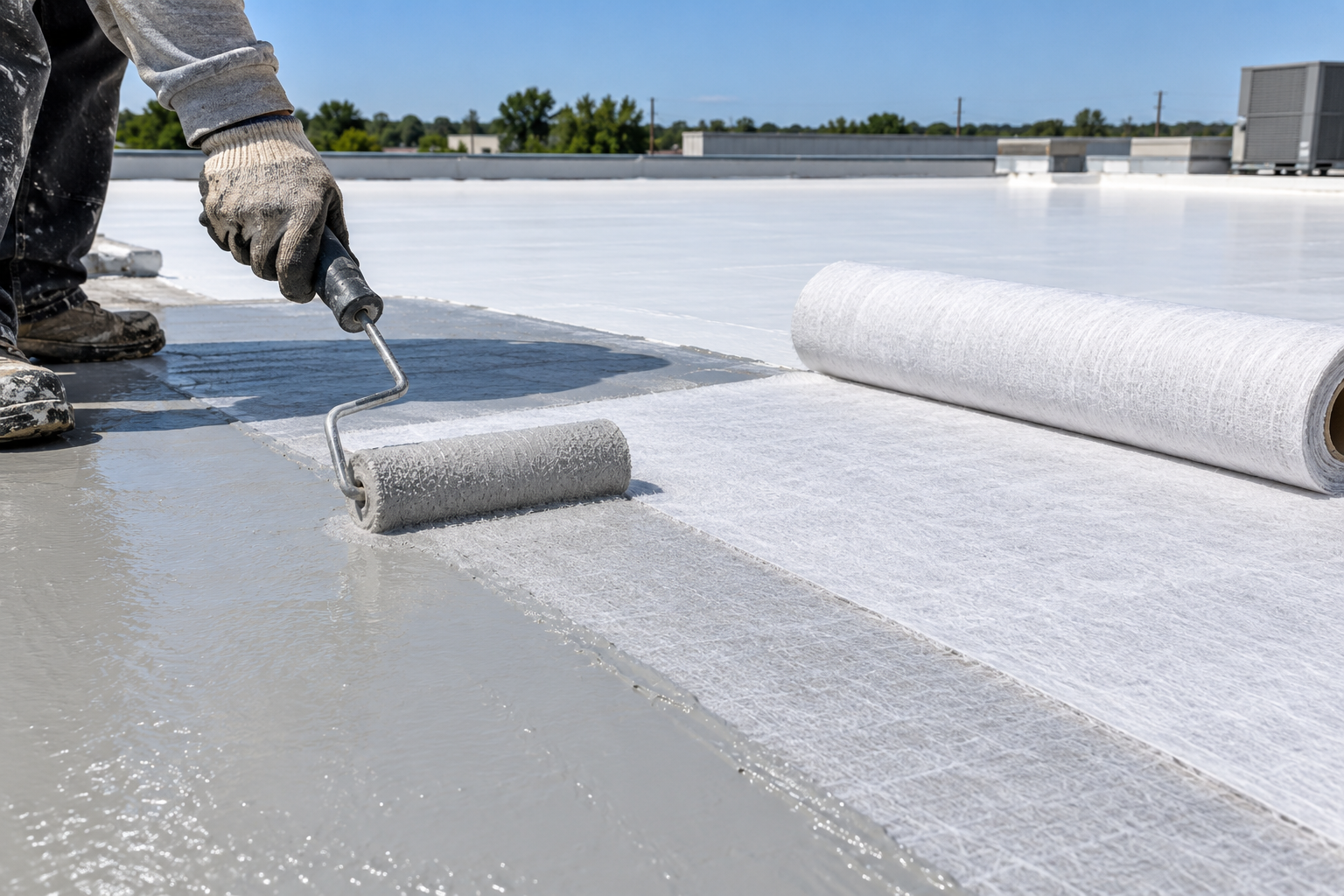
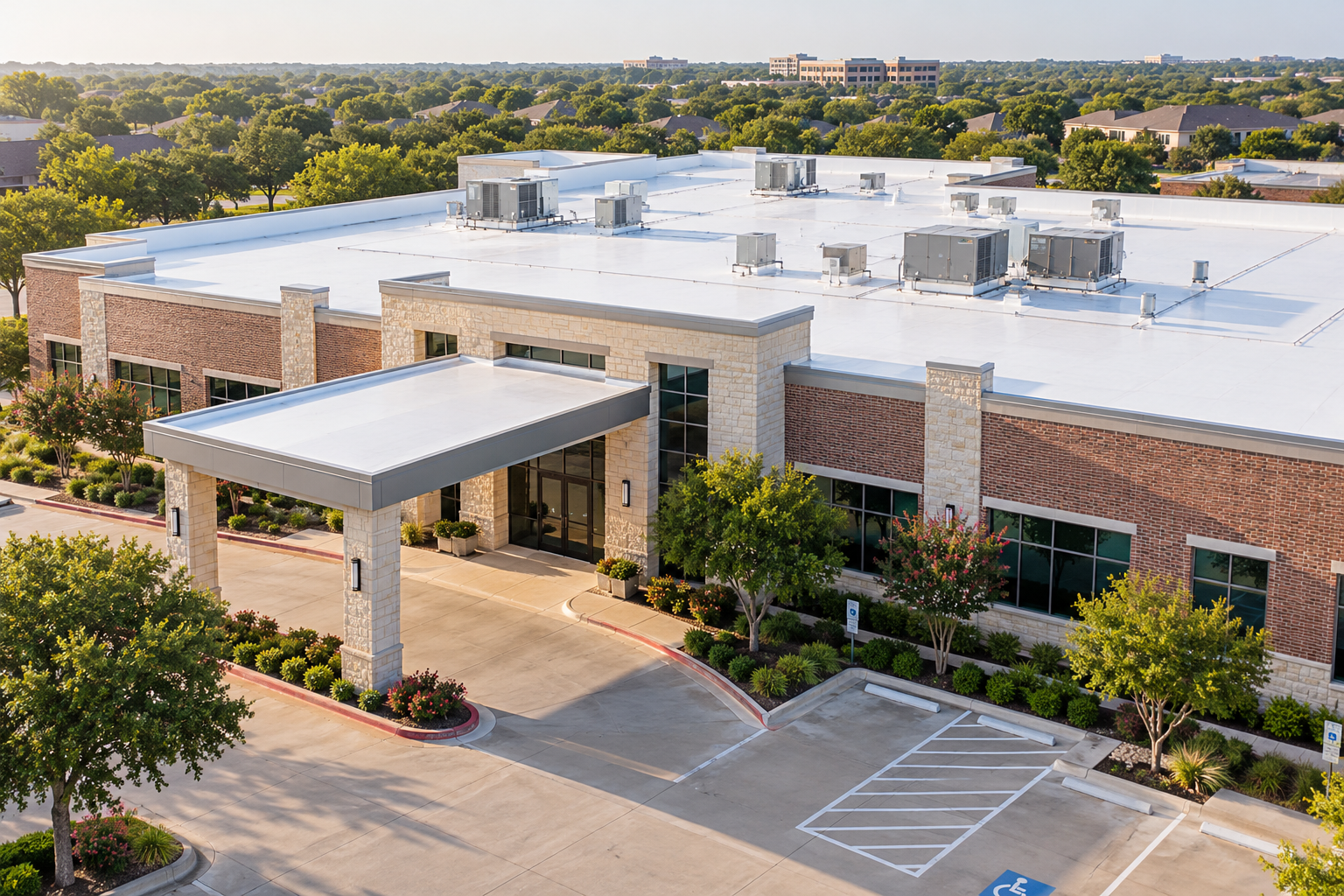
Fabric-reinforced roof coating can be a suitable option for some North Texas commercial buildings. Its suitability depends on the existing roof, the specified system, and the work needed before application.
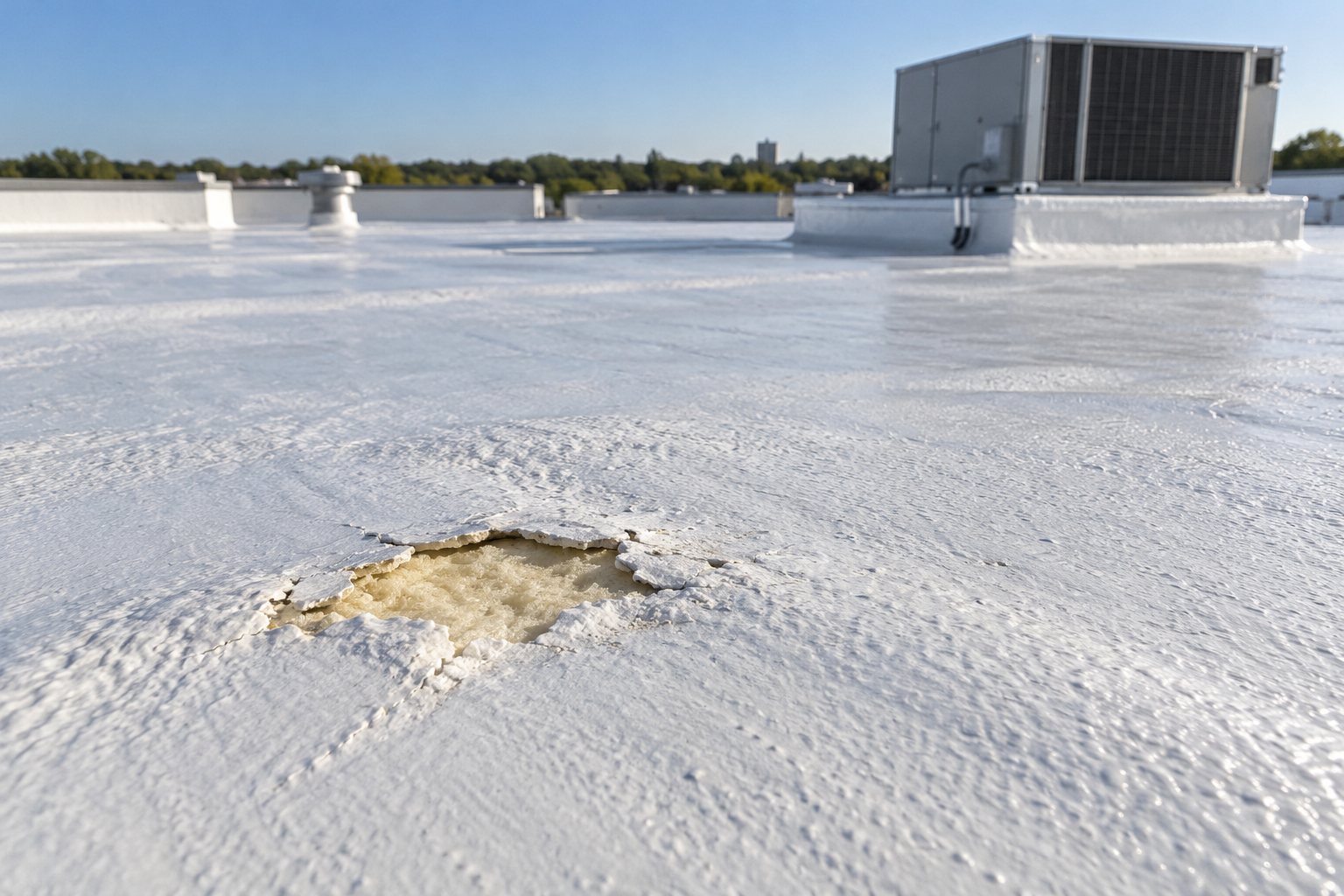
A reflective finish and embedded fabric do not establish that a roof is ready for restoration. The contractor first needs to evaluate moisture, adhesion, deterioration, drainage, and the underlying assembly.
Fabric-reinforced coating deserves consideration when an inspection supports retaining the existing roof and a manufacturer-specified system meets the project’s requirements. It should not be used to cover unresolved defects or unsuitable materials.
For owners in Dallas, Fort Worth, Arlington, Mansfield, and surrounding communities, the decision starts with the condition of the building—not the coating’s appearance.
What Is a Fabric-Reinforced Roof Coating?
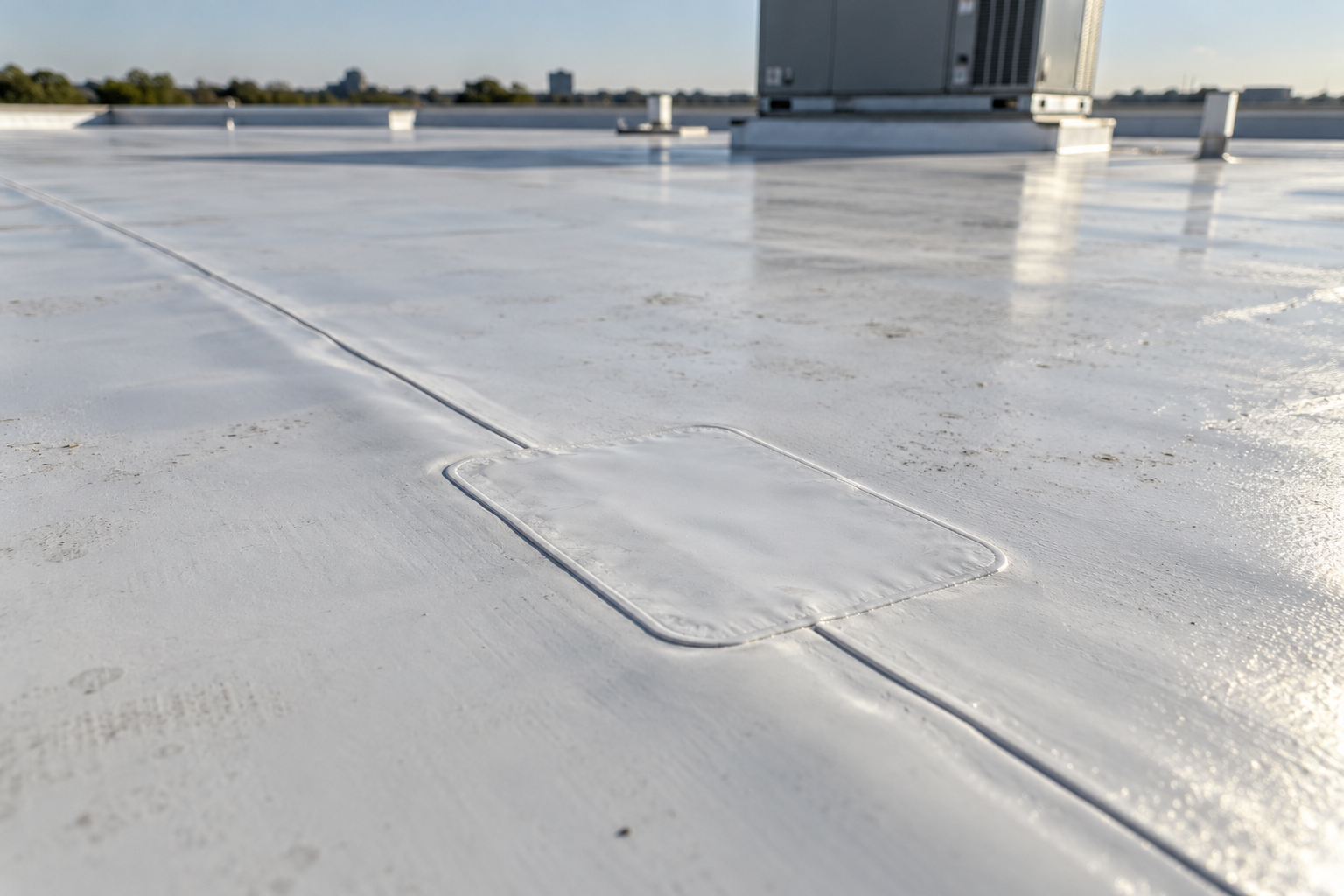
A fabric-reinforced system combines compatible liquid-applied materials with reinforcing fabric. Depending on the specification, reinforcement may extend across the roof field, selected details, or both.
The fabric becomes part of the installed system rather than remaining loose on the surface.
For example, GAF’s Premium Fabric information describes reinforcement designed to conform around penetrations and improve strength while maintaining flexibility. gaf.com
Different manufacturers offer different assemblies. “Fabric-reinforced coating” is a category, not a complete project specification.
Showtime Exteriors provides commercial roofing assessments and services to help Texas owners evaluate roof condition and potential restoration options.
Full Reinforcement and Detail Reinforcement Are Different Scopes
Two proposals may both mention fabric while describing substantially different work.
One might include fabric only around penetrations and selected seams. Another might specify reinforcement throughout the roof field.
Ask the contractor to identify:
- Where fabric will be installed.
- The specified fabric product.
- Compatible base and finish materials.
- Required preparation and repairs.
- Application quantities and quality checks.
- Transitions at walls, drains, curbs, and edges.
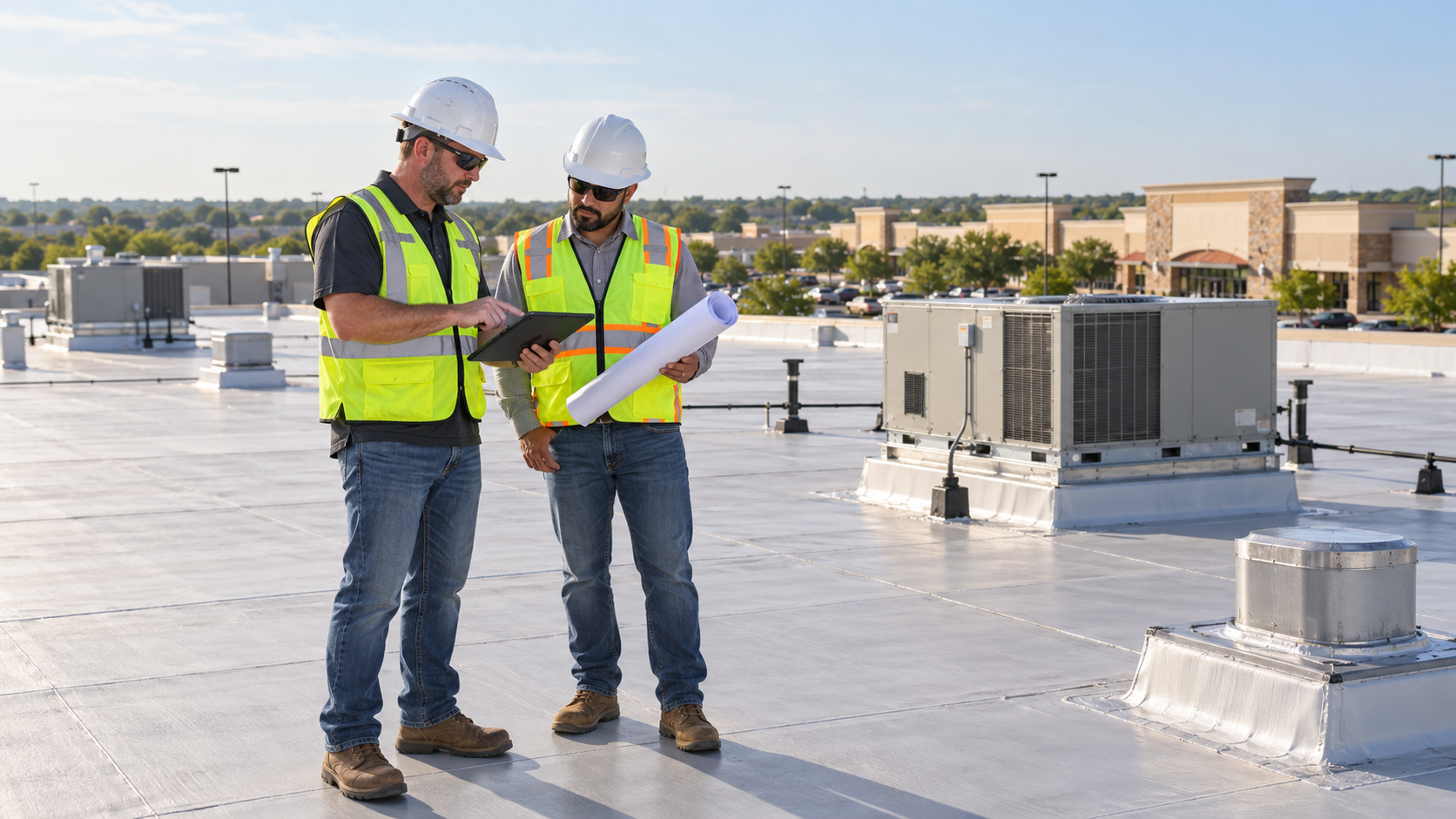
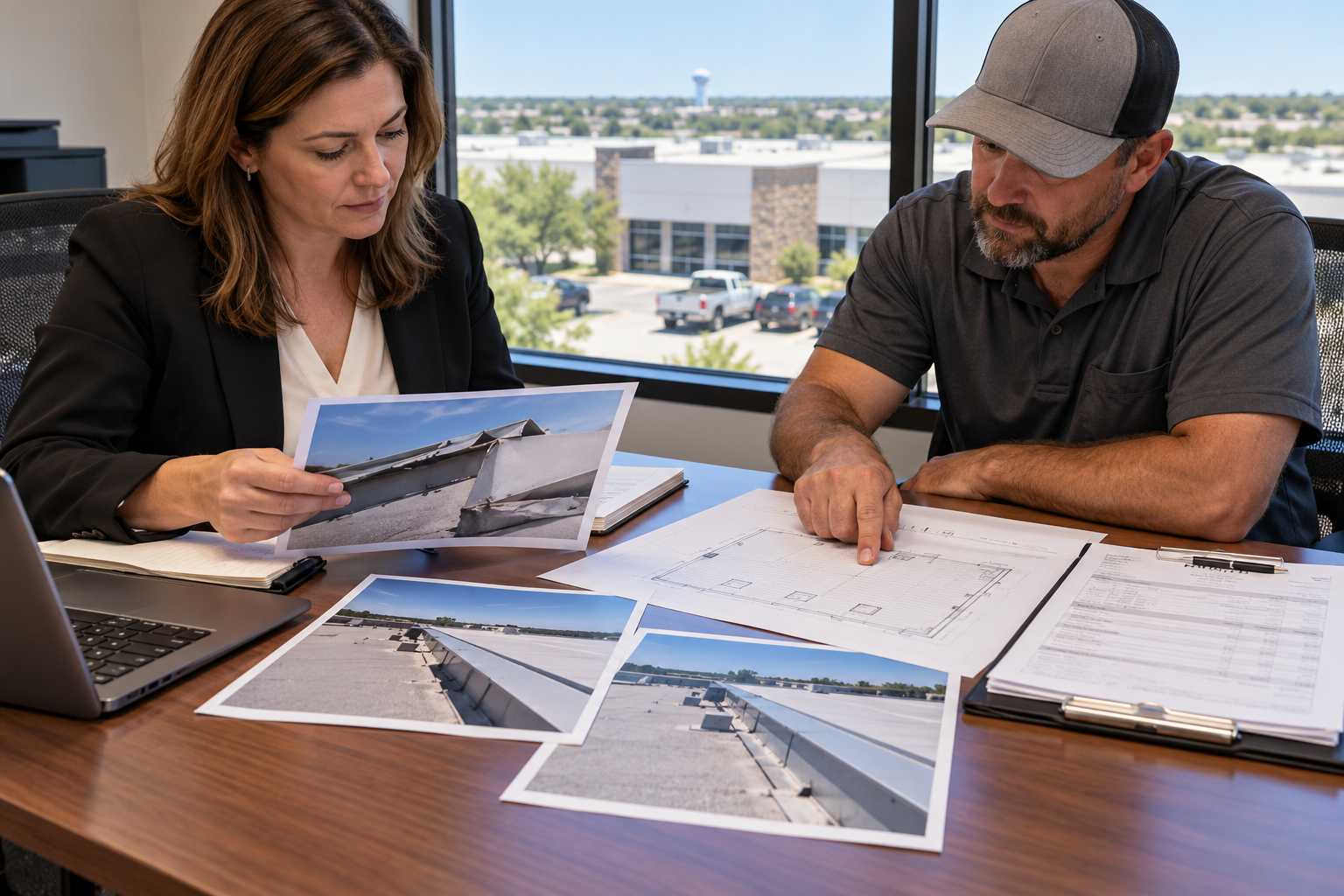
A marked roof plan can help show the intended coverage.
Do not compare prices until the proposals define equivalent work.
Can a Reflective Coating Help With North Texas Heat?
Reflective coating products can be part of a building’s thermal-performance strategy.
However, coating color, product properties, insulation, building use, and HVAC operation all belong in the discussion.
GAF’s published coating ratings provide product-specific solar reflectance and thermal emittance information, including initial and aged values. Coatings
Ask for the ratings of the exact finish product proposed for your building.
Reflectivity Is Not the Same as Insulation
The proposal should separately identify any insulation work.
If the project retains existing insulation, ask how its condition was established. If additional insulation is proposed, request its product, thickness, location, and attachment requirements.
Do not assume a reflective surface replaces the need to assess the materials below it.
Request Support for Savings Claims
If a contractor presents projected energy savings, ask how those figures were calculated.
Provide information about operating hours, conditioned areas, and equipment. Building-specific analysis is more useful than a general promise that a white roof will reduce bills by a fixed percentage.
How Does Fabric Reinforcement Relate to Hail Performance?
Reinforcement is one component of an assembly. It does not, by itself, establish a roof’s hail rating.
Western Colloid’s FARR system information describes reinforced liquid-applied assemblies and testing associated with certain systems. The relevant evidence must match the configuration proposed for your building. Western Colloid
Ask for Assembly-Specific Evidence
Request documentation identifying:
- The existing substrate.
- The specified liquid-applied materials.
- Fabric type and reinforcement arrangement.
- Required application quantities.
- Relevant testing or approvals.
- Any conditions or limitations.
A result for one assembly should not be presented as proof for a different substrate or installation.
Separate Hail Testing From Warranty Coverage
A tested assembly and a warranty describe different things.
Ask for both documents. Review whether hail coverage is included, what limitations apply, and what reporting procedures the owner must follow.
Terms such as “hail-proof” do not provide enough information to evaluate the proposal.
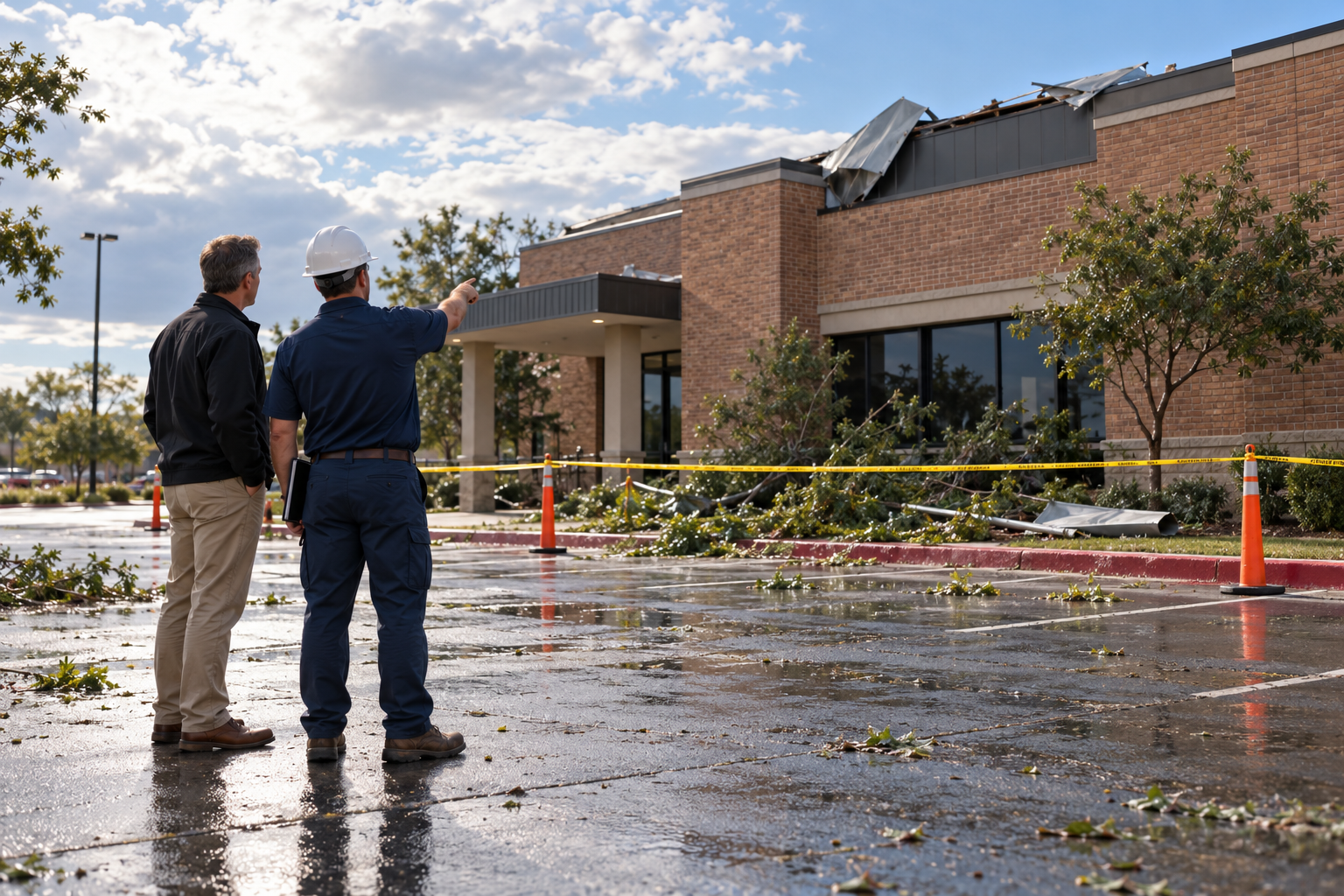
Plan for Post-Storm Assessment
Establish who will inspect the roof after significant weather and how findings will be documented.
Dated photographs, a roof plan, and previous inspection records can help the contractor distinguish newly observed conditions from existing ones.
Can Fabric-Reinforced Coating Improve Wind Performance?
Wind suitability requires evaluation of the complete assembly, including the roof being retained.
Before accepting a wind-resistance claim, ask the contractor to identify the applicable assembly documentation and explain how it relates to your building.
Important questions include:
- What roof layers will remain?
- How are those layers attached?
- What evidence supports retaining them?
- What perimeter and corner details apply?
- Are edge components included in the work?
- Is additional professional evaluation required?
Fabric reinforcement should not be treated as proof that existing attachment is adequate.
Adhesion Is One Part of the Assessment
A coating system needs an appropriate bond to its substrate. The project team also needs to establish whether the retained assembly is suitable.
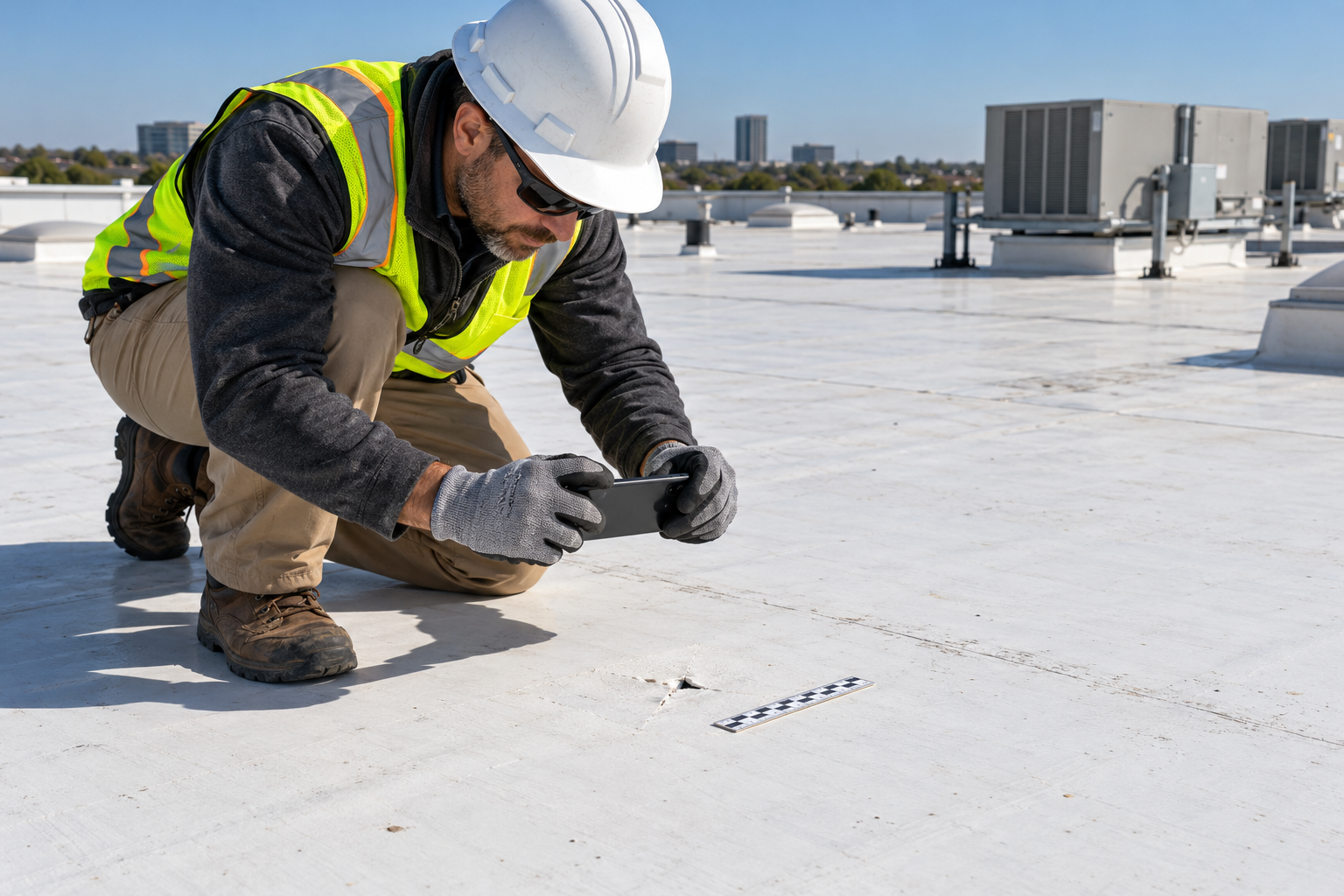
Ask what each test establishes and what remains outside its scope. A report should clearly distinguish surface adhesion findings from conclusions about the rest of the roof.
The Existing Roof Must Qualify First
Manufacturer guidance places preparation before coating application.
For example, GAF’s fabric-reinforced restoration guide for asphaltic roofs calls for moisture assessment, adhesion testing, removal of wet materials, preparation, and detail treatment before field application. Those requirements relate to that specified system. documents.gaf.com
Moisture Assessment
Ask how the contractor will locate and verify suspected wet areas.
The proposal should identify what testing is included, what its limitations are, and how unsuitable materials will be removed and replaced.
Surface Preparation
Request a written preparation scope covering the actual substrate.
The contractor should explain how existing contamination, loose materials, previous repairs, or coatings will be evaluated and treated.
Defect Repairs
Require identified repairs to appear in the contract.
A proposal should explain what happens to damaged seams, flashing, penetrations, and deteriorated areas before the coating system is installed.
When Fabric-Reinforced Coating May Be Worth Considering
Restoration may deserve a closer look when:
- The assessment supports retaining the existing assembly.
- Unsuitable areas can be clearly defined and addressed.
- Required adhesion testing supports the selected system.
- Drainage concerns have a documented treatment.
- The proposed scope follows manufacturer requirements.
- The owner understands maintenance and warranty obligations.
These findings should be documented before the project is approved.
Showtime Exteriors’ guide to commercial roof inspection report evidence explains how photographs, roof plans, testing, and stated limitations support a decision.
When Replacement May Be the Better Option
A restoration proposal deserves reconsideration if major problems remain beneath the proposed finish.
Ask for a replacement comparison when the assessment identifies extensive unsuitable materials, unresolved underlying deterioration, or conditions that make retention impractical.
The contractor should explain:
- Which findings make restoration unsuitable.
- Whether the concern affects one section or the whole roof.
- What removal depth is recommended.
- What additional investigation is needed.
- How the replacement scope addresses the problems.
Showtime Exteriors’ comparison of commercial roof retrofit versus replacement provides a framework for evaluating those options.
Drainage Must Be Included in the Discussion
A coating proposal should address known drainage concerns and the selected product’s limitations.
GAF’s guidance on commercial roof drain maintenance explains why functioning drainage is part of commercial roof care. www.gaf.com
Ask the contractor to identify:
- Drain and scupper locations.
- Observed obstructions.
- Areas requiring further investigation.
- Proposed corrective work.
- Work requiring separate design or pricing.
The contract should make responsibilities clear before application begins.
What Should the Installation Proposal Include?
A useful proposal describes a complete system and how the contractor will verify the work.
GAF’s HydroStop system overview illustrates the coordinated use of preparation, detail work, reinforcement, and finish materials within a manufacturer’s system. GAF
For your project, request:
Proposal itemInformation to verifyRoof eligibilityInspection findings and testingRepairsLocations, quantities, and treatmentPreparationCleaning, removal, and primers where specifiedReinforcementFabric product, coverage, and detailsApplicationProducts, quantities, and specified thicknessWeather conditionsApplication and cure requirementsQuality checksInspection and documentation processLogisticsAccess, staging, and occupant coordinationWarrantyProposed coverage and qualification requirementsCloseoutFinal records and maintenance instructions
A total price without these details makes comparison difficult.
How Does It Compare With TPO, PVC, or EPDM?
Compare complete project options for the same building.
A restoration project may retain eligible materials. A replacement project may include substantial demolition, new insulation, and a new membrane assembly. Their prices represent different work.
Showtime Exteriors’ guide to commercial roofing materials for Texas buildings can help organize a broader discussion.
For each option, ask:
- What existing materials remain?
- Which defects are addressed?
- What limitations remain?
- What maintenance will be required?
- What performance documentation applies?
- What warranty is proposed?
- What is excluded from the price?
The best comparison explains why each option fits—or fails to fit—the property.
Budgeting Beyond the Coating Price
A restoration budget should account for investigation, repairs, preparation, details, application, and closeout.
It may also need separately scoped drainage work, equipment coordination, or other building repairs.
Ask how uncertain quantities will be handled. Where allowances are used, the contract should define what they cover and how additional work is approved.
Avoid adding a generic allowance for work already included in the base price.
Consider the Ownership Plan
Tell the contractor whether you expect to hold, sell, renovate, or expand the property.
Those plans can affect scheduling and which options deserve comparison. They do not change the need to address unsuitable roof conditions.
Maintenance and Warranty Questions
Before authorizing work, obtain the proposed warranty terms and maintenance instructions.
Confirm:
- Who issues the warranty.
- What coverage is included.
- Which exclusions apply.
- What inspections are required.
- How leaks must be reported.
- Who may perform repairs.
- How rooftop alterations should be handled.
Keep the issued documents with product records, inspection reports, and completion photographs.
Showtime Exteriors’ roofing service options provide a starting point for planning inspections, repairs, and future maintenance.
Frequently Asked Questions
Is fabric-reinforced coating suitable for every flat roof?
No. The existing assembly must qualify for the selected system. Inspection, testing, compatibility, and preparation requirements determine eligibility.
Does reinforcement make the roof hail-proof?
No. Request relevant assembly testing and review warranty coverage separately.
Will a reflective coating lower cooling bills?
It may contribute to the building’s thermal strategy, but savings depend on property-specific conditions. Request support for any projected figures.
Can coating cover wet insulation?
A suitable scope must address wet or otherwise unsuitable materials before application, following the selected system’s requirements.
Is fabric installed across the whole roof?
That depends on the specification. Ask whether the proposal includes full-field reinforcement, detail reinforcement, or both.
Is restoration always cheaper than replacement?
Compare the complete scopes. Extensive preparation or underlying problems can change the economics and suitability of restoration.
Evaluate Your North Texas Roof With Showtime Exteriors
Fabric-reinforced coating can be a practical option when documented conditions support restoration and the specified assembly fits the building.
Start with roof eligibility, then review preparation, repairs, reinforcement, drainage, performance evidence, and warranty terms.
Contact Showtime Exteriors to request a commercial roof assessment and compare property-specific options.
Call 817-400-ROOF (7663).