



When Should You Repair Restore or Replace Modified Bitumen Roofing
A decision guide for Texas commercial property owners and facility managers
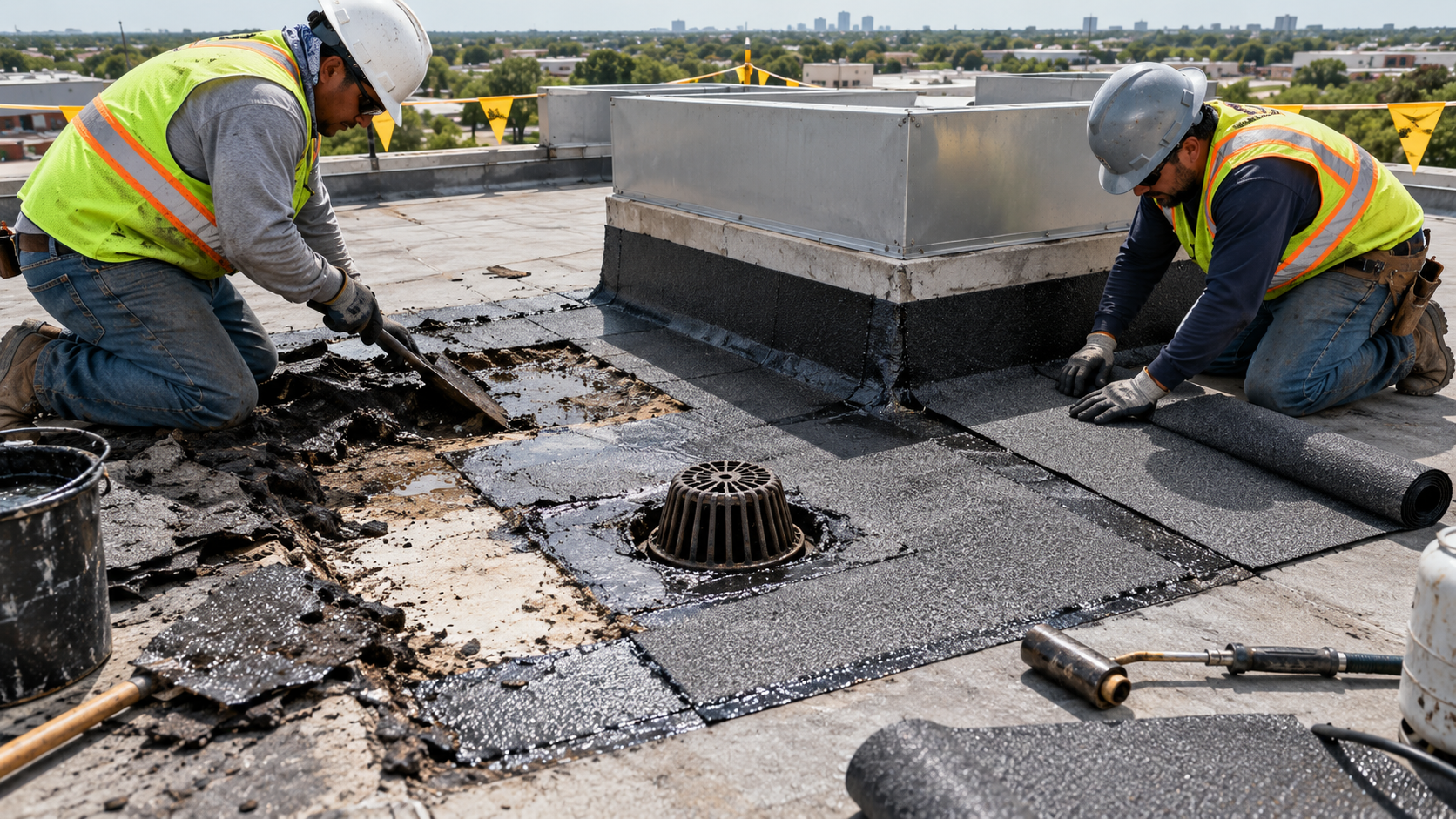
Direct answer: Repair modified bitumen roofing when damage is isolated and the surrounding assembly remains dry and serviceable. Restore it when the roof is stable, adequately attached, compatible, and repairable across the full area. Replace it when moisture is widespread, the deck or attachment is unreliable, leaks and patches keep returning, drainage requires major correction, or the roof has reached the end of practical service.
Showtime Exteriors • 817-400-ROOF (7663) • showtimeexteriors.com
Repair Restore or Replace Modified Bitumen Roofing
Modified bitumen is a reinforced asphalt-based low-slope roofing system used on commercial buildings throughout Texas. It may be installed as one or more plies with a mineral-surfaced cap sheet, smooth surface, coating, or other approved finish. The system can be adhered, mechanically attached, self-adhered, hot-applied, cold-applied, or heat-welded depending on product and design. Those differences matter when a contractor evaluates repairability.
A leak does not automatically mean replacement, and an old roof does not automatically qualify for restoration. The right decision is based on evidence: how much of the assembly is wet, whether the deck is sound, whether the roof remains attached, whether seams and flashings can accept compatible repair, whether drainage can be corrected, and whether repeated maintenance is still producing reasonable value.
This guide gives commercial owners a practical framework for choosing among targeted repair, full-roof restoration, recover, and replacement. It also explains inspection evidence, costs, operational consequences, storm documentation, and the special concerns surrounding aging gravel-surfaced built-up roofing.
How Modified Bitumen Roofs Fail
Modified bitumen problems rarely come from one factor. Texas heat and ultraviolet exposure age the surface. Daily temperature changes move sheets, flashings, edges, and equipment. Hail and wind can damage materials or expose weak details. Foot traffic, dropped tools, unauthorized penetrations, grease, chemicals, ponding water, poor drainage, and incompatible repairs add stress. Moisture that enters at one point may travel through insulation before becoming visible inside.
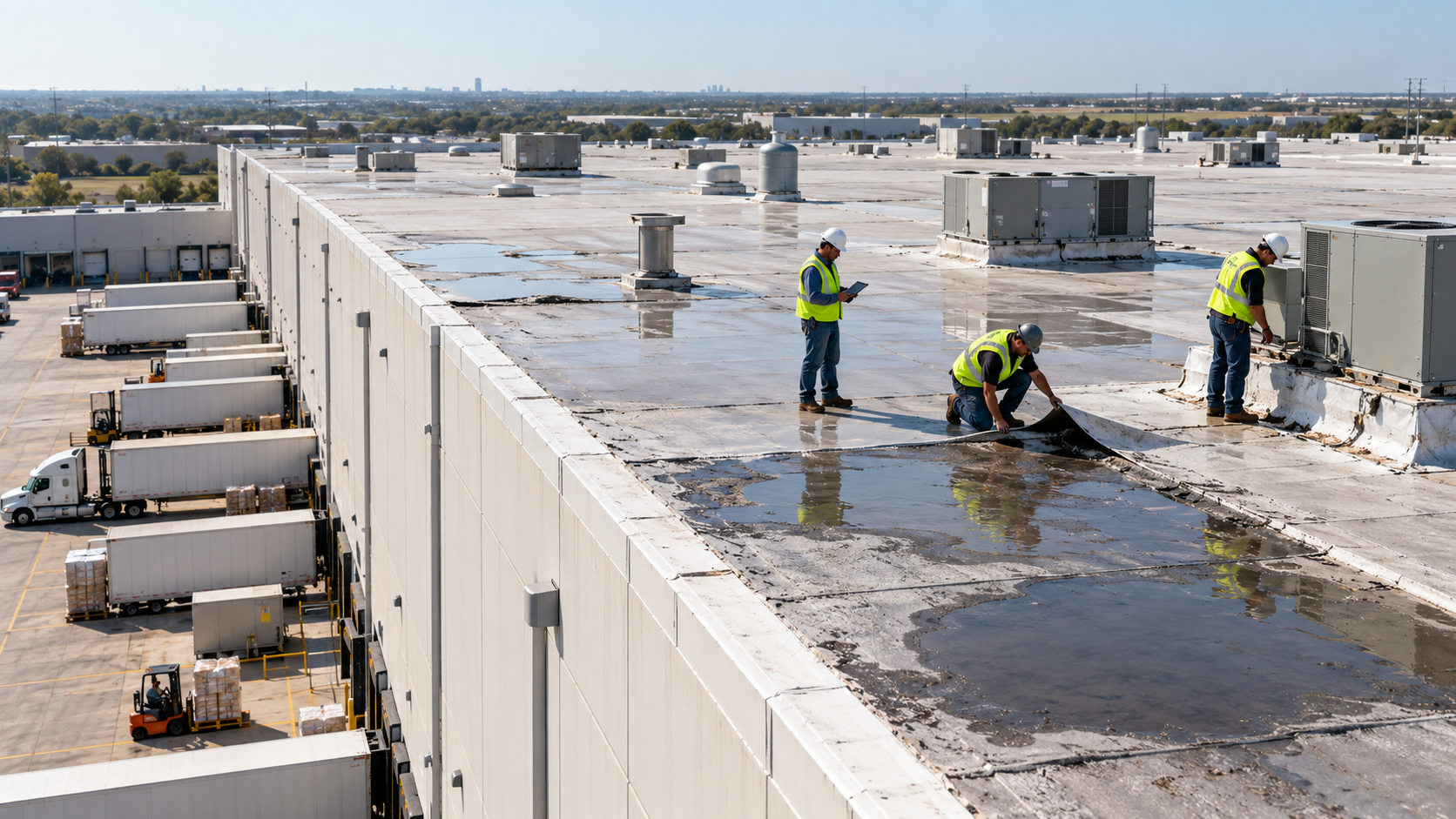
Common conditions include open laps, cracked cap sheets, displaced granules, splits, blisters, wrinkles, ridges, loose flashing, deteriorated sealant, failed drain details, punctures, ponding, wet insulation, and repeated patches. A professional inspection should separate localized defects from systemic deterioration.
The Four Available Strategies
Strategy
Best fit
Main limitation
Targeted repair
Localized defect with dry, serviceable surrounding roof
Does not solve widespread moisture or aging
Restoration
Stable, compatible, repairable roof with limited moisture
Requires preparation and full eligibility
Recover
Existing assembly can support an approved new roof
Can trap problems if moisture or substrate is uncertain
Replacement
Widespread moisture, failure, poor attachment, deck access, end of service
Higher disruption and initial cost
When Modified Bitumen Repair Is the Right Choice
Repair is appropriate when the defect can be clearly identified, the surrounding roof remains sound, moisture is limited, compatible materials are available, and the repair can be integrated into the existing assembly. The goal is to restore continuity and detail performance—not to cover the symptom with sealant.
Good Repair Candidates
A localized puncture or cut with dry surrounding insulation.
One open lap or seam that can be cleaned and reworked.
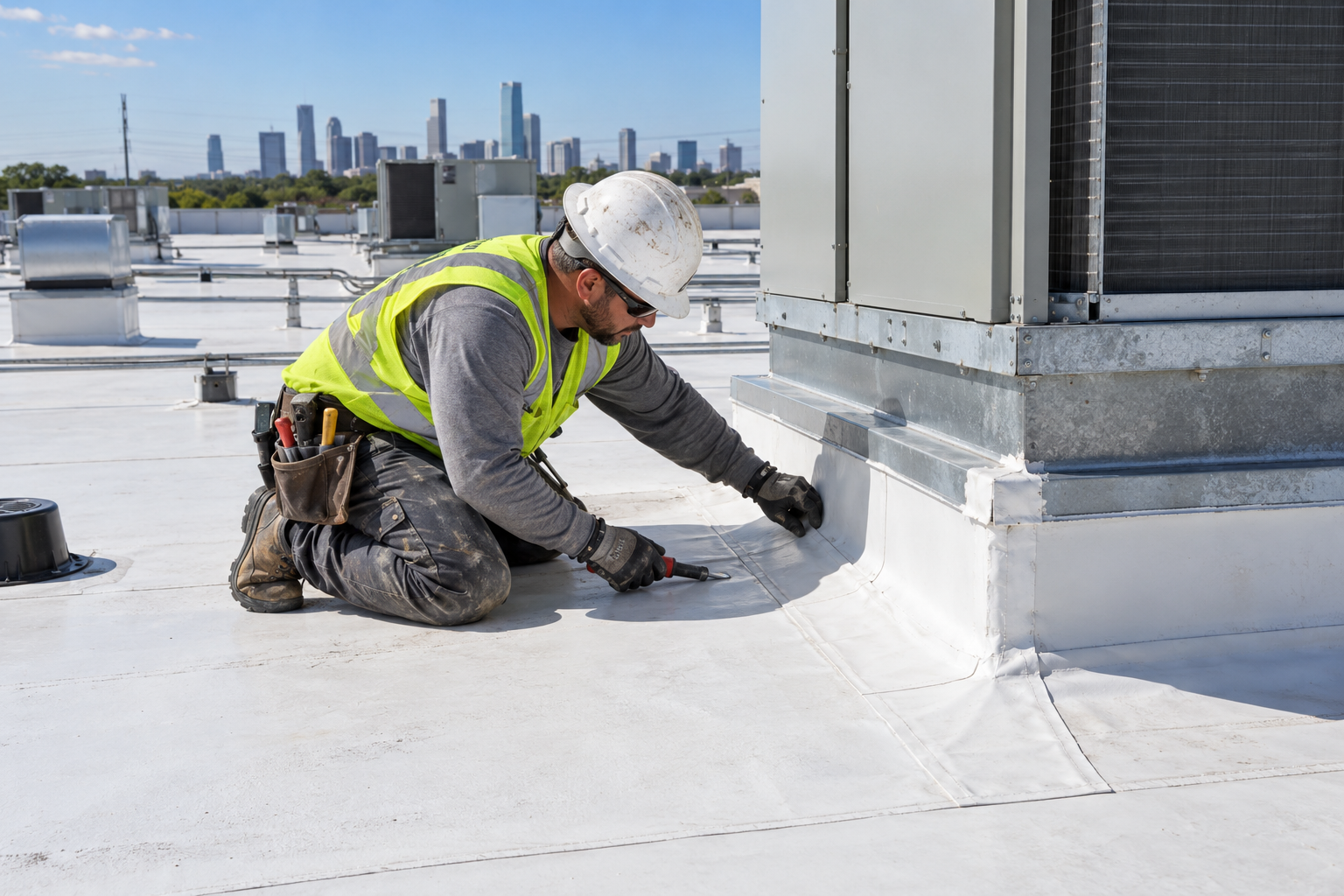
A limited flashing failure at a curb, pipe, wall, or drain.
Small wind or hail damage with a clearly defined affected area.
An isolated blister that can be addressed without revealing broad moisture.
A discrete leak related to a recent equipment installation.
Limited cap-sheet damage where the substrate remains stable and compatible.
What a Permanent Repair Should Include
A permanent repair should remove unsound material, determine whether insulation or deck is affected, prepare the substrate, use compatible primers and reinforced sheets or liquid flashing, provide proper laps, restore surfacing, and document the finished area. The exact detail depends on APP or SBS formulation, cap sheet, installation method, temperature, moisture, and manufacturer requirements.
When Repeated Repair Stops Making Sense
Repair loses value when leaks recur in different locations, patches fail, wet areas expand, the roof becomes brittle, attachment is questionable, or every new equipment visit creates another opening. A roof covered with incompatible mastics and undocumented patches may become harder and more expensive to diagnose. Compare annual repair spending and operational damage with the cost of a planned restoration or replacement.
When Restoration Is the Right Choice
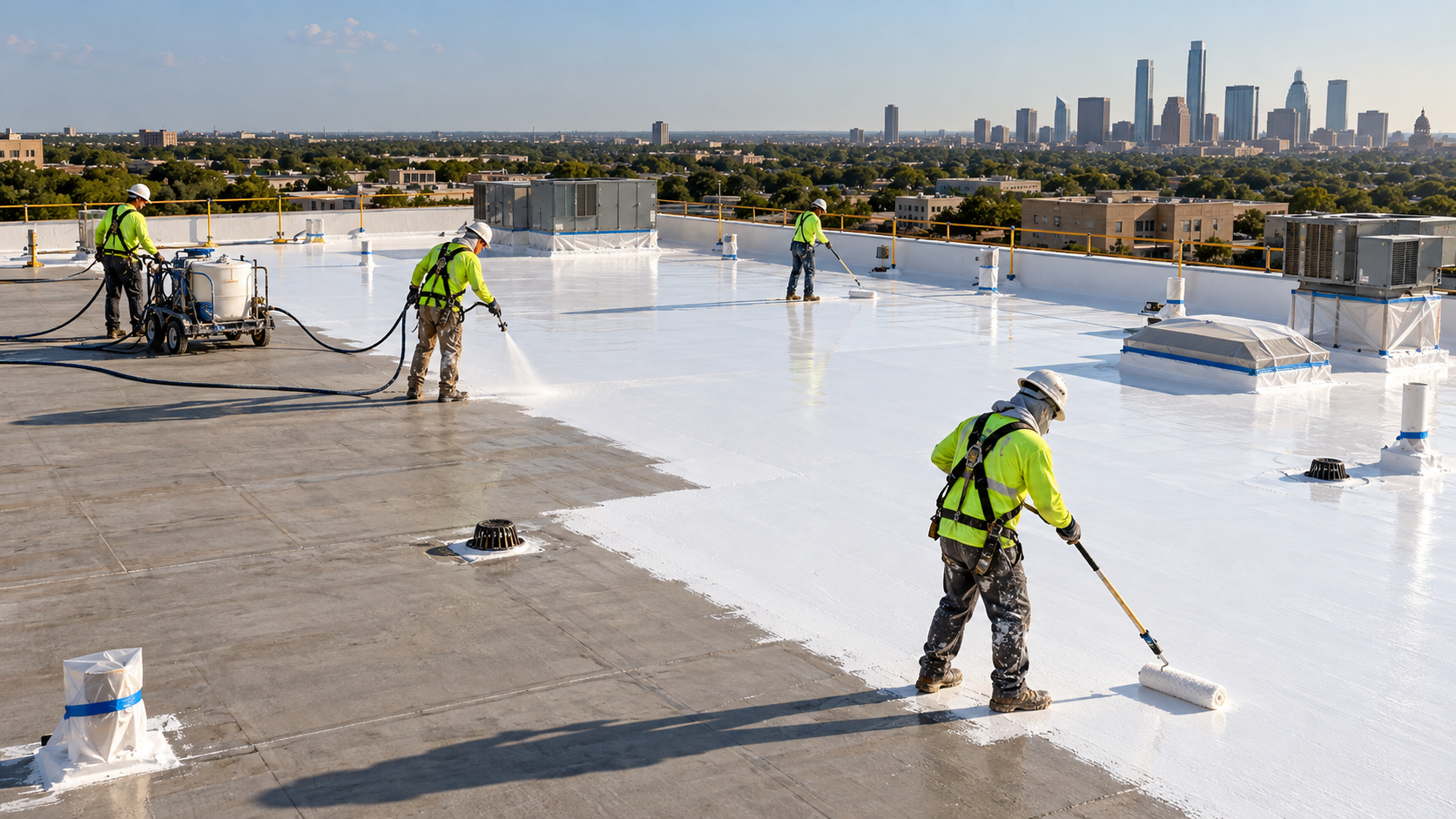
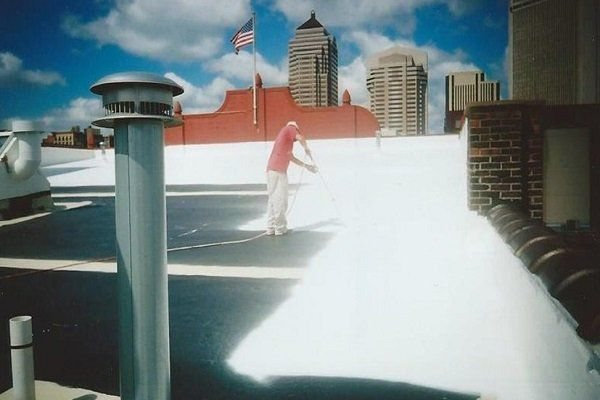
Restoration treats the roof as a complete system. It may include moisture removal, sheet repairs, seam treatment, flashing reconstruction, fastener or edge work, cleaning, primer, reinforcement, and a compatible coating or surfacing system. A restoration is not simply applying white material over an old roof.
Restoration Eligibility
The assembly is dry enough for the proposed system.
The roof and insulation remain adequately attached.
The deck is sound or localized deck repairs are feasible.
Seams, flashings, edges, drains, and penetrations can be repaired.
The surface can be cleaned, prepared, and made compatible.
Ponding and drainage conditions can be addressed within the scope.
The manufacturer or system provider accepts the substrate and details.
Restoration Warning Signs
Restoration may be a poor choice when moisture is widespread, the cap sheet is badly split, blisters are numerous, insulation is crushed, the deck is deteriorated, the roof moves excessively, drainage requires structural change, or prior coatings and contaminants prevent adhesion. Restoring an ineligible roof can make later investigation harder and shift replacement cost only a short distance into the future.
When Recover Is Worth Considering
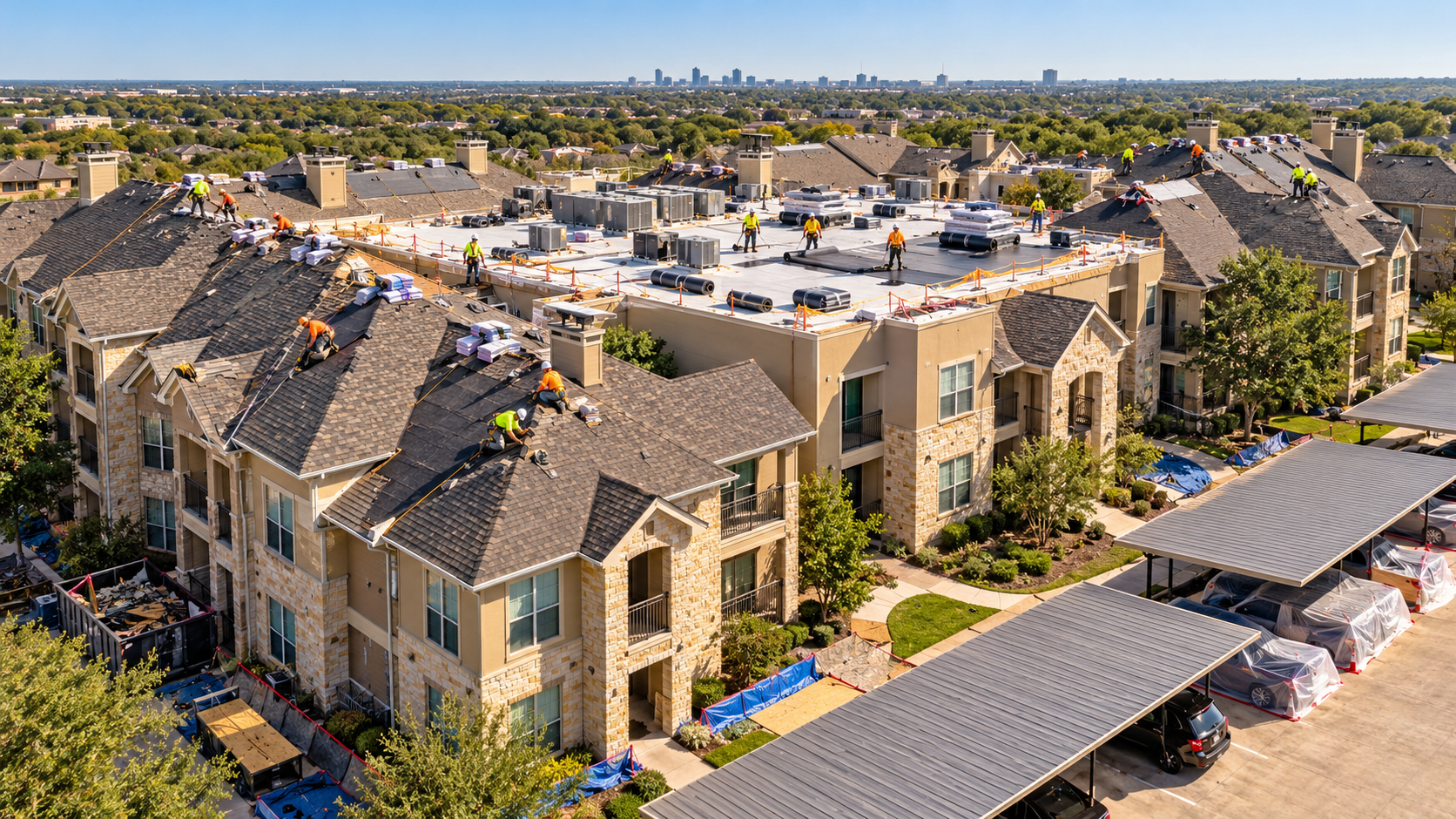
A recover places a new approved roof assembly over an existing roof that remains suitable to support it. It may reduce tear-off, debris, interior exposure, and operational disruption. It can also add weight, height, complexity, and future removal cost. Eligibility depends on moisture, number of existing layers, attachment, deck, surface condition, drainage, edge height, curb height, and the requirements that apply to the building and proposed system.
The design should explain how the new assembly is attached, how wet areas are removed, how drains and scuppers remain functional, how walls and curbs achieve adequate flashing height, and how perimeters are secured. A recover should never be used to bury widespread moisture, an unstable substrate, or an undocumented failure.
Localized modified bitumen repair can be effective when damaged and wet materials are removed and compatible reinforced details are installed.
When Replacement Is the Right Choice
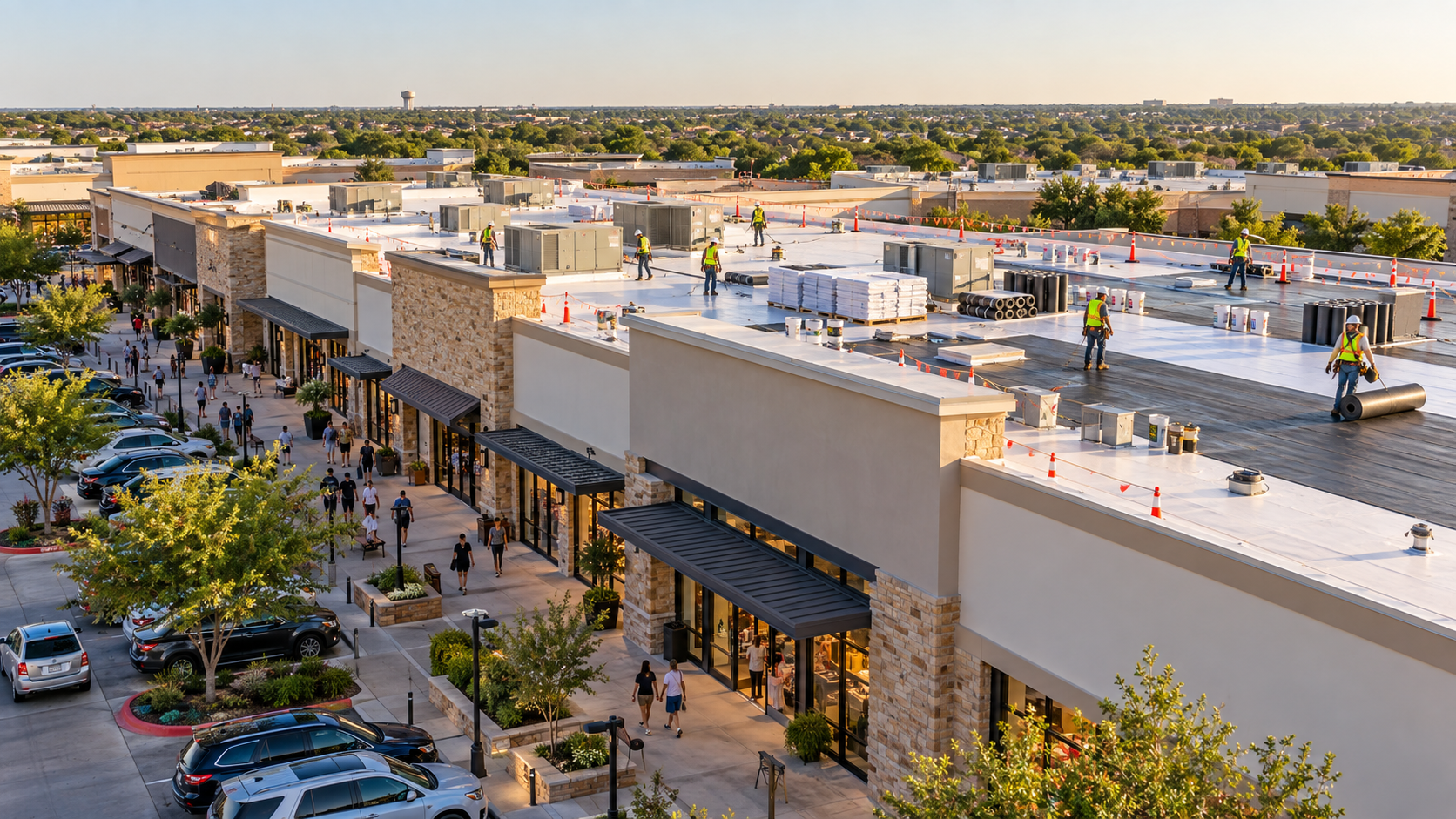
Replacement is the stronger decision when the existing assembly no longer offers a reliable foundation for repair, restoration, or recover. Tear-off provides access to insulation and deck, allows moisture removal, and creates an opportunity to redesign drainage, insulation, cover board, curbs, penetrations, edges, and traffic protection.
Clear Replacement Indicators
Widespread or recurring moisture across multiple roof areas.
Deteriorated deck or the need for broad deck access.
Severe splitting, brittleness, shrinkage, ridging, or blistering.
Unreliable attachment or wind-related movement.
Repeated leaks and repairs that no longer produce durable results.
Multiple existing layers or incompatible materials that prevent a defensible recover.
Drainage, insulation, curb, or perimeter conditions that require major redesign.
Operational or insurance pressure that requires clearer long-term documentation.
Replacement Is Also a Redesign Opportunity
A new roof should not automatically copy every condition that shortened the previous roof’s service. Review tapered insulation, crickets, drains, overflow paths, curb heights, equipment supports, walkways, access, expansion joints, edge securement, and future mechanical work. Correcting those conditions can be more valuable than changing the membrane alone.
How Moisture Changes the Decision
Moisture is one of the most important decision factors because it can spread beyond the visible leak and remain trapped. Wet insulation may lose thermal performance, deteriorate facers, affect attachment, add weight, and expose the deck to corrosion or decay. Surface inspection alone does not reliably define the affected area.
A contractor or consultant may use core cuts, infrared thermography, electronic moisture detection, probes, interior observations, or selective openings. Each method has limitations and should be correlated with roof conditions and weather. The result should be mapped so ownership can compare localized replacement with broader intervention.
A small percentage of wet material may be removable within a repair or restoration scope. Broad or scattered moisture can make restoration inefficient because every isolated area requires removal, rebuild, detailing, documentation, and quality control. The percentage alone is not decisive; location, deck condition, roof geometry, operations, and uncertainty also matter.
How Repair History Changes the Decision
A complete leak and repair log is more useful than a single inspection photograph. Map interior leaks, dates, weather, repair locations, materials, contractors, invoices, and results. If one properly executed repair remains watertight, the roof may still have service potential. If leaks recur near multiple details or patches fail after every major storm, broader deterioration may be present.
Undocumented sealants, coatings, tapes, and mastics can create compatibility problems. Some materials remain soft, collect dirt, release oils, or prevent adhesion. Others conceal cracks or moisture. Before restoration, representative repair areas may need removal or testing.
How Roof Age Should Be Used
Age is an important planning fact but not a diagnosis. A younger roof can fail early because of installation, storm damage, drainage, traffic, or equipment work. An older roof can remain repairable if it is dry, stable, well detailed, and maintained. Use age with condition, repair history, moisture, attachment, warranty, and expected ownership period.
Age becomes more influential when records are missing, materials are brittle, repairs are frequent, moisture is uncertain, and the roof is difficult to explain to insurers, lenders, or buyers. In that situation, continued patching may preserve uncertainty rather than value.
Texas Heat Hail Wind and Rain
Heat and Ultraviolet Exposure
Texas heat accelerates surface aging and increases movement at laps, flashings, walls, and penetrations. Granule loss can expose asphaltic material. Reflective coatings may be part of an eligible restoration, but they do not reverse structural deterioration or remove moisture.
Hail
Hail may displace granules, bruise or fracture sheets, damage flashings, affect coatings, and harm rooftop equipment. Damage should be evaluated in context; not every mark means functional failure, and coverage depends on the policy and carrier determination.
Wind
Wind pressures are highest at perimeters and corners. Loose edge metal, membrane movement, open laps, and displaced components require prompt attention. Repairability depends on attachment and the condition of the surrounding assembly.
Rain and Drainage
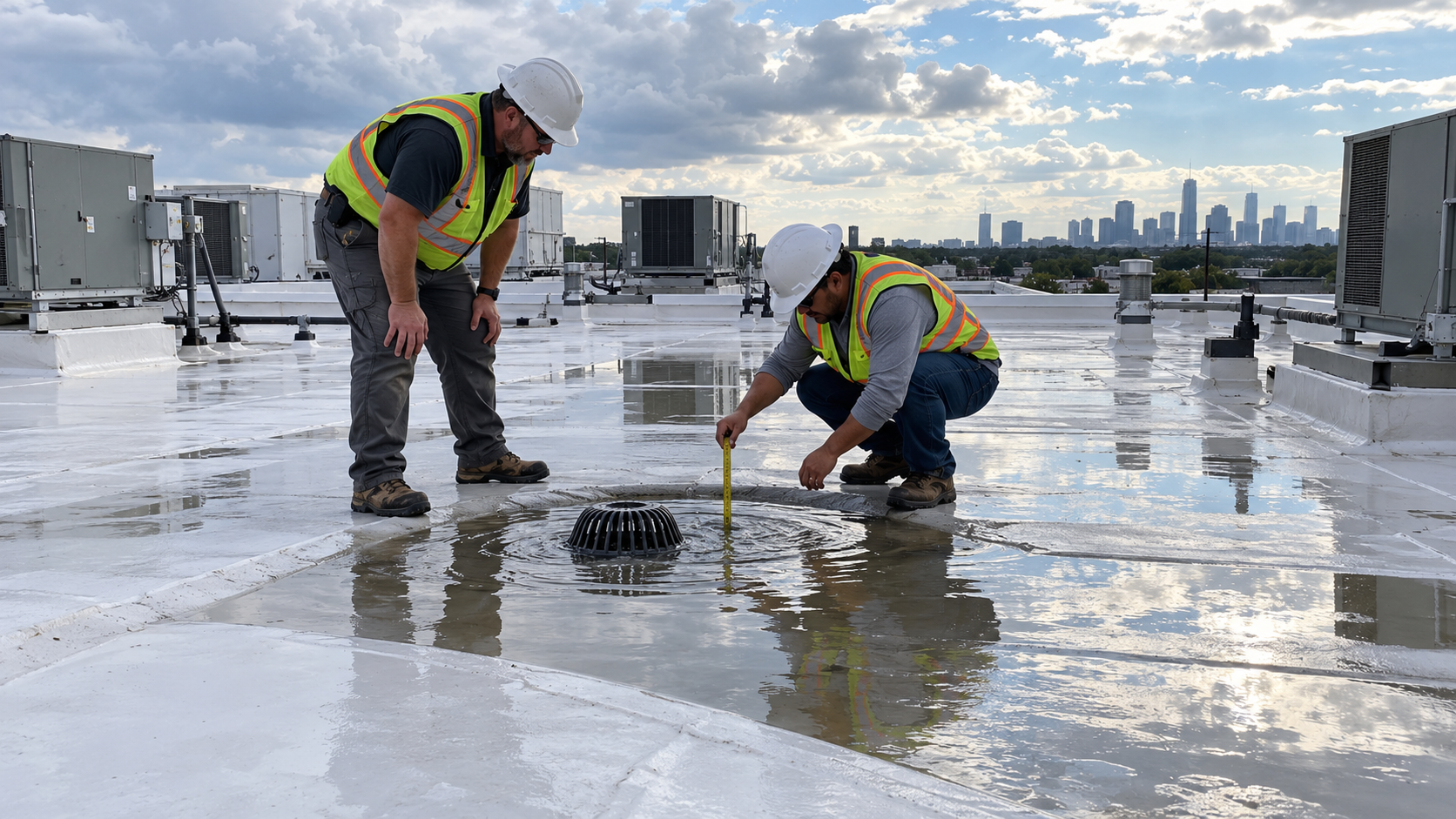
Persistent ponding, blocked drains, low areas, and inadequate overflow paths increase exposure. Modified bitumen can tolerate low-slope conditions when properly designed, but no membrane should be used to excuse preventable drainage problems.
Cost Framework for the Four Options
Cost varies by Texas market, roof size, system, access, moisture, deck, details, materials, warranty, and operations. The ranges below are broad planning assumptions, not quotes.
Option
Illustrative planning range
Cost drivers
Localized repair
$750 to $7,500+ per repair area
Access, leak tracing, size, wet materials, flashing, emergency timing
Restoration
$3 to $8+ per sq. ft.
Cleaning, repairs, primer, reinforcement, coating rate, warranty
Recover
$6 to $14+ per sq. ft.
New assembly, attachment, insulation, cover board, details, height adjustments
Replacement
$8 to $18+ per sq. ft.
Tear-off, disposal, wet insulation, deck, drainage, new system, operations
A low repair price can be misleading if the same area fails repeatedly. A high replacement price can be more economical when it eliminates recurring leaks, restores insulation, provides access to the deck, and creates a planned maintenance path. Compare lifecycle cost and operational risk, not just the current invoice.
Decision Matrix for Commercial Owners
Condition
Repair
Restore
Recover
Replace
One isolated dry defect
Strong candidate
Usually unnecessary
No
No
Several repairable details limited moisture
Possible
Possible
Possible
Evaluate
Broad wet insulation
No
Usually no
No
Strong candidate
Sound roof but aged surface
Possible
Strong candidate
Possible
Evaluate
Poor attachment or deck concerns
No
No
Usually no
Strong candidate
Repeated leaks and patch failure
Limited value
Maybe after full assessment
Maybe
Often strongest
Major drainage redesign needed
Limited
Limited
Possible with design
Strong candidate
A Step by Step Evaluation Process
Collect plans, warranties, installation records, leak logs, repair invoices, photographs, and equipment-change records.
Inspect the roof field, seams, flashings, drains, walls, edges, penetrations, traffic areas, and prior repairs.
Correlate exterior findings with interior stains, drips, corrosion, damaged inventory, and weather patterns.
Use appropriate moisture investigation and selective openings to estimate affected materials.
Evaluate deck condition, attachment, number of layers, insulation, drainage, and flashing heights.
Determine which options are technically eligible before comparing price.
Create one written scope for repair, restoration, recover, or replacement alternates.
Request unit prices for wet insulation, deck replacement, drain work, and other concealed conditions.
Compare warranty terms, operations, schedule, quality control, maintenance, and lifecycle cost.
Document the decision and update the roof management plan.
What the Inspection Report Should Show
A useful inspection report should help an owner make a decision, not simply provide a collection of rooftop photographs. It should identify the roof areas inspected, known system and age, weather at the time of inspection, access limitations, visible conditions, interior evidence, moisture-investigation methods, locations of tests, and the reasoning behind the recommended scope. Observations should be distinguished from assumptions.
The report should map open laps, cracks, blisters, ridges, punctures, granule loss, exposed asphalt, ponding, wet areas, soft spots, wall and curb conditions, drains, scuppers, perimeter edges, equipment, expansion joints, prior repairs, and traffic damage. If the deck cannot be evaluated without opening the assembly, that limitation should be clear. When an engineer or other specialist is needed, the report should say so rather than implying that a visual roofing inspection resolves a structural question.
Photographs are strongest when each image is connected to a roof plan, location, direction, and written observation. Wide views establish context; close views show the defect; measurement or scale can show size. The report should also explain which conditions require immediate repair, which can be monitored, and which affect restoration or replacement eligibility.
Three Illustrative Decision Scenarios
Scenario One Localized Flashing Leak
A fifteen-year-old modified bitumen roof has one leak at a recently installed exhaust curb. The surrounding cap sheet remains flexible, seams are closed, moisture testing indicates a limited affected area, and the deck is sound. The strongest option may be a targeted repair that removes wet material, reconstructs the curb flashing, corrects the equipment support, and restores the cap sheet. Full replacement would solve more roof than the evidence requires.
Scenario Two Dry Roof With Aged Surface
A large commercial roof is mostly dry and adequately attached, but the mineral surface is aging, several laps need treatment, and flashings require systematic repair. Drainage remains functional and the deck is sound. A restoration system may be reasonable after repairs, cleaning, adhesion testing, primer where required, detail reinforcement, and field application. The proposal should define material quantities, thickness, warranty, and future maintenance.
Scenario Three Recurring Leaks and Broad Moisture
An older roof has repeated patches, leaks in several departments, broad wet insulation, corroded deck observations, low curbs, and ponding near compressed insulation. Another repair may stop one drip but does not resolve the system. Restoration would require so much removal and rebuilding that replacement may provide a clearer scope, better deck access, redesigned drainage, new insulation, and stronger long-term documentation.
These scenarios are illustrative, not diagnoses. Real buildings require field verification. Their purpose is to show that the decision follows conditions rather than a preferred product or predetermined sales outcome.
Lifecycle Cost and Ownership Horizon
Owners sometimes choose the lowest immediate invoice without calculating what happens next. A repair should be evaluated by expected durability, probability of adjacent failure, disruption, emergency-call risk, interior damage, maintenance, and whether it supports a larger capital plan. A restoration should include future inspections, compatible repairs, and possible recoating. A replacement should include maintenance and the operational value of starting with a documented assembly.
Ownership horizon changes the analysis but does not excuse defective work. A long-term owner may prioritize durable details, drainage correction, insulation, and warranties. An owner preparing a sale or refinance may prioritize condition documentation, predictable maintenance, and reducing open issues. A tenant may care most about leak prevention, inventory protection, and work hours. A good scope makes those priorities explicit.
Use a multi-year comparison. Add projected repair spending, emergency mobilization, interior restoration, energy effects, inspection, restoration or recoat, and final replacement. Apply reasonable uncertainty rather than pretending future cost is known. The option with the highest initial price may have the lowest risk-adjusted lifecycle cost, while a well-qualified restoration may preserve capital without sacrificing a defensible plan.
Common Decision Mistakes
Choosing restoration because it is cheaper before confirming moisture and adhesion.
Replacing the field membrane but recreating failed drainage, low curbs, and poor equipment supports.
Assuming every interior drip is directly below the roof opening.
Treating age as the only reason to repair or replace.
Allowing repeated temporary sealant to become the permanent maintenance program.
Ignoring wet insulation because the surface appears dry after the storm.
Comparing bids with different measured areas, systems, details, and warranties.
Accepting a recover without a clear moisture, attachment, weight, and height analysis.
Letting HVAC or communications contractors create undocumented penetrations after closeout.
Calling aging gravel-surfaced BUR an advantage despite concealed-condition and insurance concerns.
Another common mistake is failing to define success. For a repair, success may mean stopping a specific leak and preserving an otherwise serviceable roof. For restoration, it means bringing the complete eligible roof into a defined, maintainable system. For replacement, it means correcting the failed assembly and the conditions that shortened its service. Without a defined outcome, the owner may receive a finished surface without solving the underlying problem.
Quality Control During the Work
Quality control should happen while each layer and detail remains visible. For repairs, verify removal of wet and unsound material, substrate preparation, primer, laps, reinforcement, and surfacing. For restoration, document cleaning, repair completion, adhesion, product batches, application rates, wet-film checks, weather, and dry-film verification where specified. For replacement, inspect deck repairs, insulation, cover board, attachment, sheets, seams, flashing, drains, edges, and transitions.
Daily photographs should show both context and detail. The superintendent should track weather, crew, installed quantities, concealed conditions, changes, and watertight cutoff. Manufacturer or third-party inspections should be scheduled at the correct stage, not after hidden work is covered. Punch-list items should be closed before access equipment leaves the site.
Maintenance After Repair Restoration or Replacement
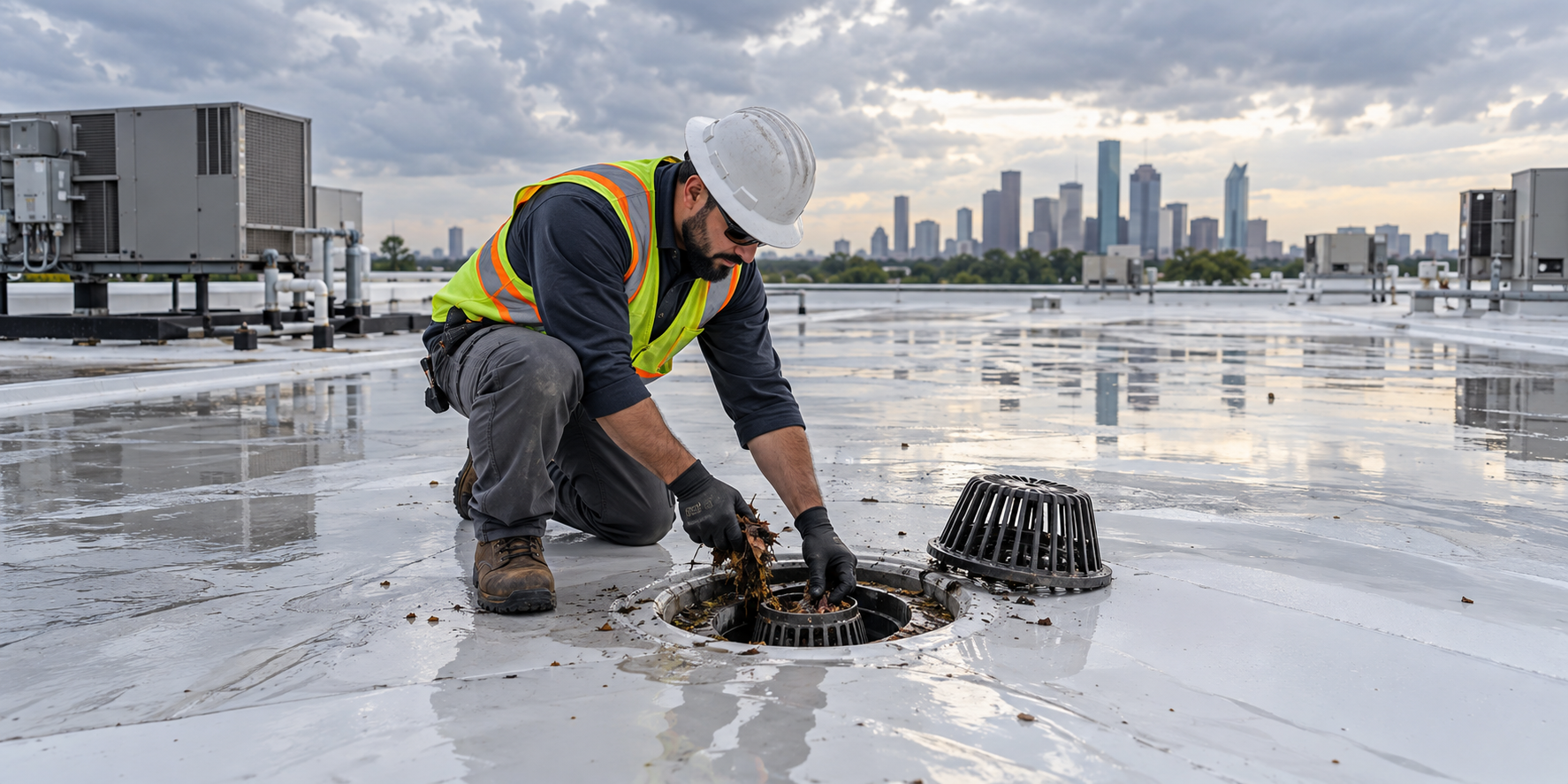
Every option requires maintenance. Keep drains and scuppers clear, control access, maintain walkways, document rooftop work, inspect after significant storms, and repair punctures promptly with compatible materials. Do not allow another trade to attach equipment, run lines, or apply sealant without coordination. Unauthorized work can void warranties and create leaks that are difficult to trace.
After a repair, verify performance during later weather and update the leak map. After restoration, follow cleaning, inspection, traffic, repair, and recoat requirements. After replacement, retain approved submittals, warranties, photographs, inspection reports, roof plans, core locations, moisture maps, change orders, and contact information. Good closeout records make the next decision easier and reduce the chance that ownership repeats the same investigation.
What a Repair Proposal Should Include
Exact location and measured repair area.
Observed defect and assumptions about the leak pathway.
Method for checking insulation and deck within the repair.
Removal of unsound and incompatible material.
Primer, sheets, reinforcement, adhesive, heat, or liquid flashing specified.
Required laps and tie-in to the existing assembly.
Surfacing or coating restoration.
Interior and rooftop protection, weather limits, photographs, and warranty.
What a Restoration Proposal Should Include
Evidence that the roof is eligible, including moisture and adhesion findings.
All seam, flashing, puncture, blister, fastener, edge, drain, and curb repairs.
Cleaning method and acceptance standard.
Primer and reinforcement requirements.
Coating or surfacing product, application rate, passes, and finished thickness.
Treatment of ponding, traffic areas, grease, and equipment.
Manufacturer inspection, warranty, maintenance duties, and closeout records.
What a Replacement Proposal Should Include
Measured roof area and tear-off layers included.
New assembly from deck through cap sheet or membrane.
Insulation, cover board, tapered drainage, attachment, and perimeter design.
Deck replacement allowances and unit prices.
Details for walls, curbs, drains, scuppers, pipes, equipment, joints, and edges.
Phasing, daily dry-in, weather response, occupied-building protection, and debris handling.
Manufacturer and workmanship warranties, inspections, photographs, and closeout.
Why Aging Gravel Surfaced BUR Must Be Treated Differently
Modified bitumen and gravel-surfaced built-up roofing are not the same assembly. Aging gravel BUR also carries a specific concern: loose aggregate can conceal deteriorated felts, cracked asphalt, blisters, punctures, old patches, trapped moisture, and drainage pathways. It makes quick visual inspection less conclusive and can add labor to investigation, repair, removal, and disposal.
Some carriers may request additional inspections, change terms, raise premiums or deductibles, restrict coverage, or decline renewal based on their underwriting review of roof age, material, condition, losses, and documentation. Only the insurer and policy professionals determine coverage. Showtime Exteriors should never praise gravel ballast or present an aging gravel roof as an asset. The correct message is inspection, documentation, concealed-condition risk, maintenance difficulty, insurance uncertainty, and planned replacement when appropriate.
Insurance and Storm Documentation
When a storm may have caused damage, preserve roof records, pre-storm photographs, maintenance reports, leak logs, weather timing, interior evidence, damaged-property records, emergency invoices, and carrier communications. Separate observable storm effects from age, wear, maintenance, installation issues, and unrelated moisture sources.
A roofing contractor can inspect, measure, photograph, discuss repairability, and price construction. The contractor should not guarantee coverage, interpret policy language as legal advice, or promise claim approval. Coverage and valuation depend on the policy, cause of loss, exclusions, deductibles, notice, documentation, and carrier determination.
Operations and Phasing
Repair and restoration usually create less demolition than replacement, but every option needs an operations plan. Coordinate entrances, loading docks, HVAC intakes, sensitive inventory, tenant hours, equipment shutdowns, debris routes, noise, odor, dust, weather, and daily dry-in. Open only the amount of roof that can be secured before the end of the shift.
Replacement can be phased by roof zone or building. Phasing may extend mobilization and supervision but can protect operations. The right schedule balances production with safety, quality, weather, and business continuity.
Frequently Asked Questions
Can modified bitumen roofing be repaired
Yes, when damage is localized and surrounding materials remain dry, stable, compatible, and serviceable.
Can modified bitumen be coated
Sometimes. The roof must pass condition, moisture, adhesion, attachment, drainage, and compatibility review. Repairs and preparation are part of the restoration.
How do I know if insulation is wet
Professional investigation may use core cuts, infrared or electronic methods, probes, and interior evidence. No single method is perfect, so findings should be correlated.
Does one leak mean replacement
No. One defined leak may be repairable. Replacement becomes more likely when leaks recur, moisture is widespread, or the assembly cannot support a durable repair.
How many repairs are too many
There is no universal number. Review frequency, location, cost, duration, moisture, operational damage, and whether repairs solve the actual source.
Can modified bitumen be recovered
Possibly, if the existing roof is dry enough, stable, adequately attached, and able to support an approved assembly. Height, weight, drainage, deck, and layer count matter.
Is replacement better than restoration
Only when conditions support it. Restoration can extend a qualifying roof; replacement is stronger for widespread moisture, deck issues, poor attachment, recurring failure, or end-of-life conditions.
How long does modified bitumen roofing last
Service varies with design, installation, exposure, drainage, traffic, maintenance, repairs, and materials. Age alone does not determine condition.
Can storm damage be repaired
Localized functional damage may be repairable. Broad damage, moisture, attachment issues, or material condition may make replacement more appropriate.
Will insurance pay for repair or replacement
Coverage depends on the policy and carrier determination. A contractor can document conditions and price work but cannot guarantee coverage.
Why are gravel roofs discussed negatively
Aging gravel-surfaced BUR can conceal deterioration and moisture, complicate inspection and maintenance, and create insurance uncertainty. It should not be promoted as an advantage.
What is the first step
Schedule a professional commercial roof assessment, gather records, and determine moisture, deck, attachment, drainage, and repair history before selecting an option.
Modified Bitumen Decision Checklist
Is the defect isolated or repeated across the roof.
Is insulation dry, locally wet, or broadly saturated.
Is the deck sound and accessible where needed.
Is the roof adequately attached.
Can seams, flashings, drains, edges, and penetrations accept compatible repair.
Can drainage and ponding be corrected.
Are prior repairs compatible and documented.
Does restoration pass adhesion and manufacturer review.
What are the lifecycle cost, operational impact, warranty, and ownership horizon.
Does replacement create value by correcting insulation, drainage, curbs, edges, and traffic.
Request a Modified Bitumen Roof Assessment
Showtime Exteriors helps Texas commercial property owners evaluate modified bitumen roof condition and compare repair, restoration, recover, and replacement options. The team can document visible defects, moisture concerns, seams, flashings, drainage, edges, penetrations, equipment, and prior repairs before developing a practical scope.
For aging gravel-surfaced BUR, Showtime Exteriors maintains David’s required negative-only position: gravel can conceal deterioration and moisture, complicate maintenance and inspection, create insurance uncertainty, and strengthen the case for planned replacement when condition warrants it.
MAKE THE DECISION BEFORE THE NEXT LEAK MAKES IT FOR YOU
Call Showtime Exteriors at 817-400-ROOF (7663) to schedule a commercial roof inspection.
https://www.showtimeexteriors.com/commercial-roofing
Authoritative External Resources
National Roofing Contractors Association roofing resources
IIBEC building enclosure resources
ARMA modified bitumen roofing resources
GAF commercial modified bitumen systems
Johns Manville commercial roofing systems
Sika commercial roofing systems
Editorial and Legal Notes
This article is educational and not a proposal, engineering opinion, structural assessment, legal advice, insurance advice, policy interpretation, or guarantee. Conditions and product requirements vary. Confirm technical details, links, business claims, and project-specific recommendations before publication. Insurance coverage is determined by the policy and carrier.