



What Evidence Do You Need for a Roof Insurance Claim?
A documentation guide for Texas property owners from Showtime Exteriors.

A roof insurance claim usually needs evidence of the observed damage, when it was discovered, the work required to address it, and the associated costs. Depending on the policy and claim stage, the insurer may also request prior roof records, emergency repair invoices, completion photographs, and proof of expenses.
Start documenting safely and notify the insurer promptly. You do not need a perfect evidence package before reporting a concern.
TDI recommends taking photographs and video, preserving damaged items for review, preventing additional damage, and saving receipts after hail or wind events. Your actual policy determines the requirements applicable to your property. tdi.texas.gov
For commercial buildings, assign one person to coordinate records from tenants, employees, property management, and contractors.
1. Your Policy and Roof Endorsements
Begin with the documents that govern coverage.
Collect:
- Declarations page.
- Coverage forms.
- Roof-specific endorsements.
- Deductible provisions.
- Applicable exclusions.
- Loss-settlement conditions.
- Reporting and submission requirements.
Ask the insurer or agent which provisions apply specifically to the roof.
Replacement cost coverage does not automatically guarantee a new roof. Actual cash value, roof payment schedules, limits, or other provisions may affect settlement.
The declarations page alone may not answer every question.
2. A Factual Event Timeline
Record the event date, discovery date, and inspection date separately.
Include:
- When the storm or incident was reported.
- When someone first noticed a concern.
- Who made the observation.
- What was observed.
- When management and contractors were contacted.
- When protection or repairs occurred.
If timing or cause is uncertain, say so.
For example:
“Water entry was first observed Monday morning. A storm occurred over the weekend, and a roofing inspection is being arranged.”
That is more accurate than assigning an unsupported cause or exact damage date.
3. Clear Photographs With Locations
Photographs should help a reviewer understand where a condition exists.
A useful sequence includes:
- Building overview.
- Roof-section view.
- Specific component.
- Detail photograph.
Use consistent location labels or a roof diagram.
Owners can collect safe interior and ground-level observations. Leave rooftop access to qualified professionals.
Keep original files. Use separate annotated copies when arrows or labels help explain the image.
Do not alter the appearance of damage or present unrelated project photographs as evidence.
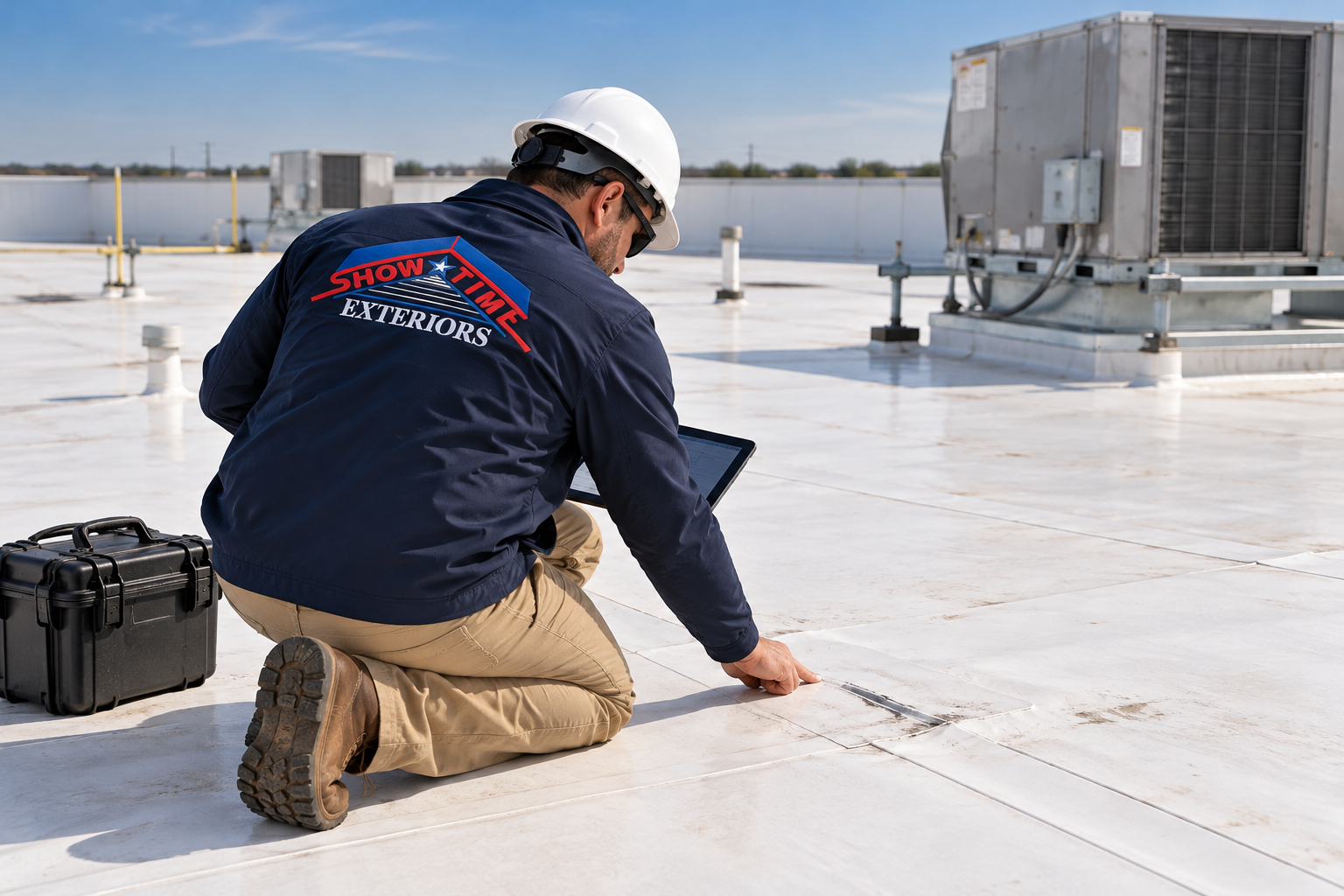
4. A Professional Inspection Report
Ask for more than a general statement that the roof is damaged.
A useful report identifies:
- Installed roof system.
- Areas inspected.
- Location-specific findings.
- Assessment of cause, where supported.
- Extent of observed damage.
- Limitations.
- Additional investigation needs.
- Immediate protection recommendations.
- Permanent repair scope.
If replacement is recommended, ask why a smaller scope would be insufficient.
If repair is recommended, clarify what remains outside the work.
The contractor’s physical findings support the construction discussion. The insurer evaluates coverage under the policy.
5. The Roof’s Prior History
Collect available installation, inspection, maintenance, and repair records.
Useful documents include:
- Installation invoice.
- Product and warranty information.
- Prior photographs.
- Inspection reports.
- Maintenance logs.
- Previous repair invoices.
- Earlier leak reports.
- Rooftop service records.
These help distinguish prior conditions from new observations.
Do not omit an older issue. Identify its location and repair history.
If records are unavailable, note that limitation rather than inventing information.
6. Interior Damage Records
Document affected rooms separately from roof findings.
Record:
- Building and suite.
- Room or department.
- Date first observed.
- Staining or active water entry.
- Affected inventory or equipment.
- Protective actions taken.
- Access restrictions.
Photograph the room before taking close-ups, when safe.
Use observable descriptions. Water near one wall does not independently establish the roof entry point directly above it.
For damaged contents, preserve identifying information and available purchase records. Coordinate disposal with the insurer while maintaining safe conditions.
7. Weather Information
Weather reports can provide context for the timeline.
Keep the source, reported location, date, and time. Distinguish nearby observations from measurements taken at your property.
A regional hail report does not prove the exact hail size at the building or establish damage to every roof component.
Use weather information alongside photographs, professional findings, and prior records.
If a professional relies on weather data, ask the report to explain its relevance.
8. Emergency Protection Records
Necessary protection should not wait for complete documentation.
Ask the contractor to photograph conditions before covering them when safe and practical.
Keep:
- Emergency authorization.
- Description of work.
- Before and after photographs.
- Completion date.
- Itemized invoice.
- Limitations and follow-up instructions.
TDI recommends retaining receipts for temporary repairs. Such expenses may be reviewed as part of a claim, subject to coverage and policy conditions. agate.tdi.texas.gov
A tarp or patch documents a protective action. It does not independently establish cause, coverage, or the permanent repair scope.
9. A Supported, Itemized Estimate
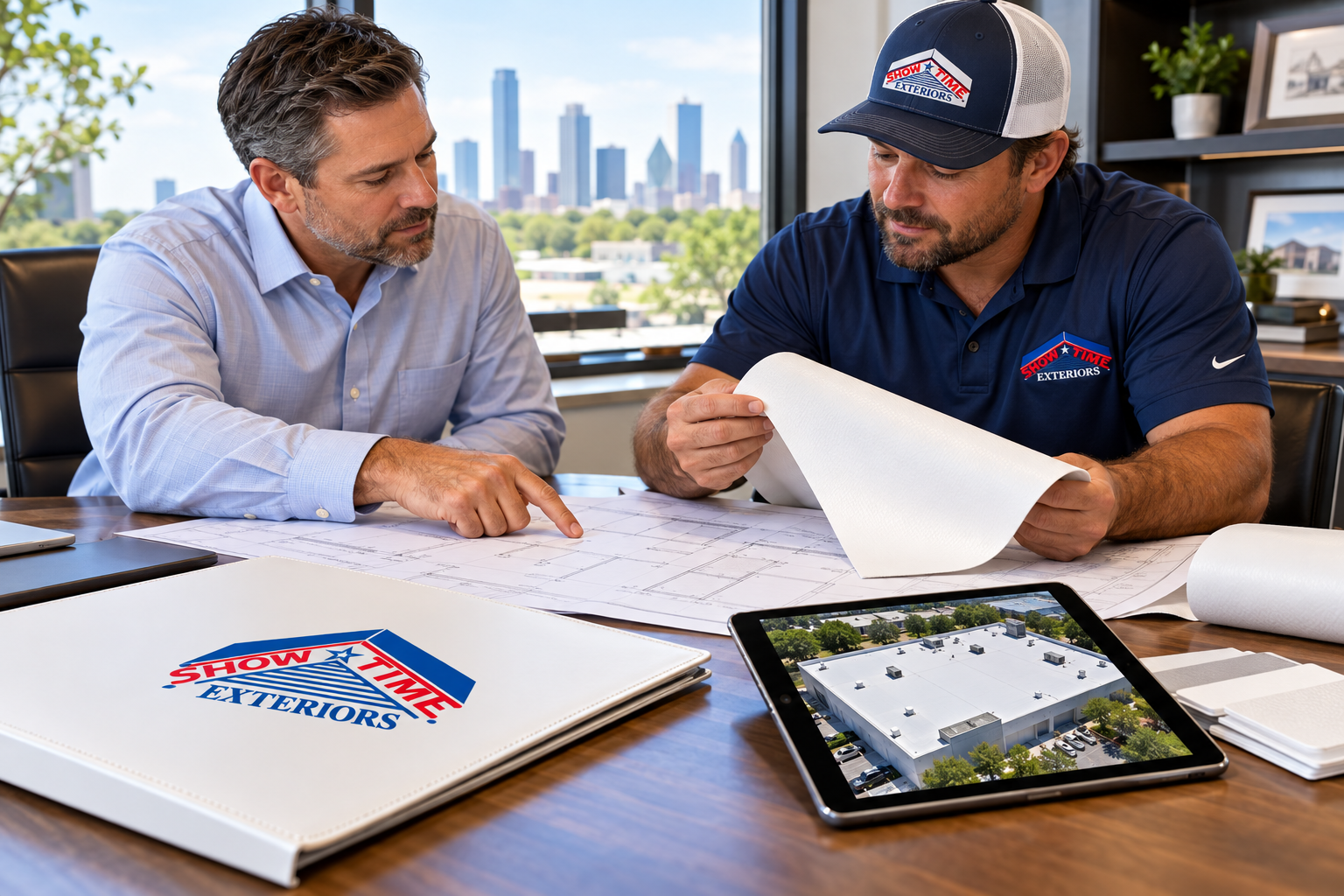
The estimate should explain the completed construction work.
Ask it to identify:
- Measured roof areas.
- Removal and disposal.
- Replacement products.
- Insulation and underlying work.
- Flashings and transitions.
- Drainage details.
- Equipment responsibilities.
- Access requirements.
- Included fees.
- Exclusions and allowances.
Link significant items to findings or supporting documents.
Keep owner-selected upgrades separate from the claimed restoration scope.
A higher estimate alone does not establish underpayment. Identify specific omitted work, quantity differences, or pricing issues.
10. Further Investigation When Needed
Some questions require more than photographs.
If testing or sampling is proposed, ask:
- What question will it answer?
- Why is the method appropriate?
- Which areas will be evaluated?
- What limitations apply?
- Will the work disturb the roof?
- How will disturbed areas be restored?
- What report will be provided?
A moisture finding does not independently establish cause or entry date.
Use qualified professionals and coordinate authorization before destructive investigation.
Preserve sample identification and handling records when relevant.
11. Completion and Expense Evidence
Additional replacement cost payment may require qualifying repair or replacement records.
Ask the insurer what is needed under your policy.
Useful documents may include:
- Signed agreement.
- Final itemized invoice.
- Completion photographs.
- Product records.
- Inspections.
- Approved changes.
- Payment records, when requested.
An estimate, invoice, photograph, and payment record serve different purposes.
Do not assume one document satisfies every condition.
Track deadlines and retain submission confirmations.
12. A Communication Log
Record significant calls, messages, instructions, and uploads.
Include the date, contact, subject, documents submitted, and next action.
After a call, write a factual note. Where appropriate, confirm your understanding by email.
Save the insurer’s estimates, coverage explanations, and revisions.
A communication log helps preserve continuity when an adjuster or property manager changes.
Roof Claim Evidence Checklist
QuestionUseful evidenceWhich terms apply?Policy forms and endorsementsWhat happened and when?Timeline and authentic event recordsWhat is damaged?Photographs and professional findingsWhat existed beforehand?Installation and maintenance historyWhat work is needed?Supported scope and measurementsWhat does it cost?Itemized estimateWas urgent protection provided?Scope, photographs, invoicesWas permanent work completed?Completion records and final invoiceWhat expenses were incurred?Required expense and payment recordsWhat was submitted?Communication log and confirmations
What Evidence Does Not Establish by Itself
A nearby storm report does not prove roof damage.
A ceiling stain does not establish its source.
A contractor estimate does not guarantee coverage.
A tarp does not prove full replacement is necessary.
A manufacturer warranty does not establish property insurance payment.
A generated marketing image is not claim evidence.
Each document should be used for the question it can actually help answer.
Common Mistakes to Avoid
Avoid waiting for a perfect file before reporting, sending unidentified close-ups, omitting prior history, or allowing urgent work to proceed without available records.
Also avoid treating every mark as storm damage or every expense as automatically reimbursable.
If photographs were missed, explain the gap honestly. Collect authentic contractor notes and available records rather than recreating evidence.
Frequently Asked Questions
Are photographs enough?
They can support findings, but scope, costs, and completion may require additional documents.
Should I climb onto the roof?
No. Leave rooftop access and technical evaluation to qualified professionals.
Do I need every record before reporting?
No. Report promptly and provide additional evidence as it becomes available.
Does a professional report guarantee approval?
No. It supports review; the policy governs coverage.
What if emergency work concealed the damage?
Explain why protection was necessary and provide available photographs, notes, and invoices.
What if the insurer disputes the scope?
Identify the specific issue and submit relevant supporting records. Seek qualified advice for coverage or legal disputes.
Start With Accurate Records
A useful roof claim file connects the timeline, observations, professional findings, construction scope, and expenses.
Need a roof assessment and documented repair options for your Texas property? Contact Showtime Exteriors to discuss the observed conditions and next steps.
Call [817-400-ROOF (7663) (line 8174007663)](tel:8174007663) or visit ShowtimeExteriors.com.