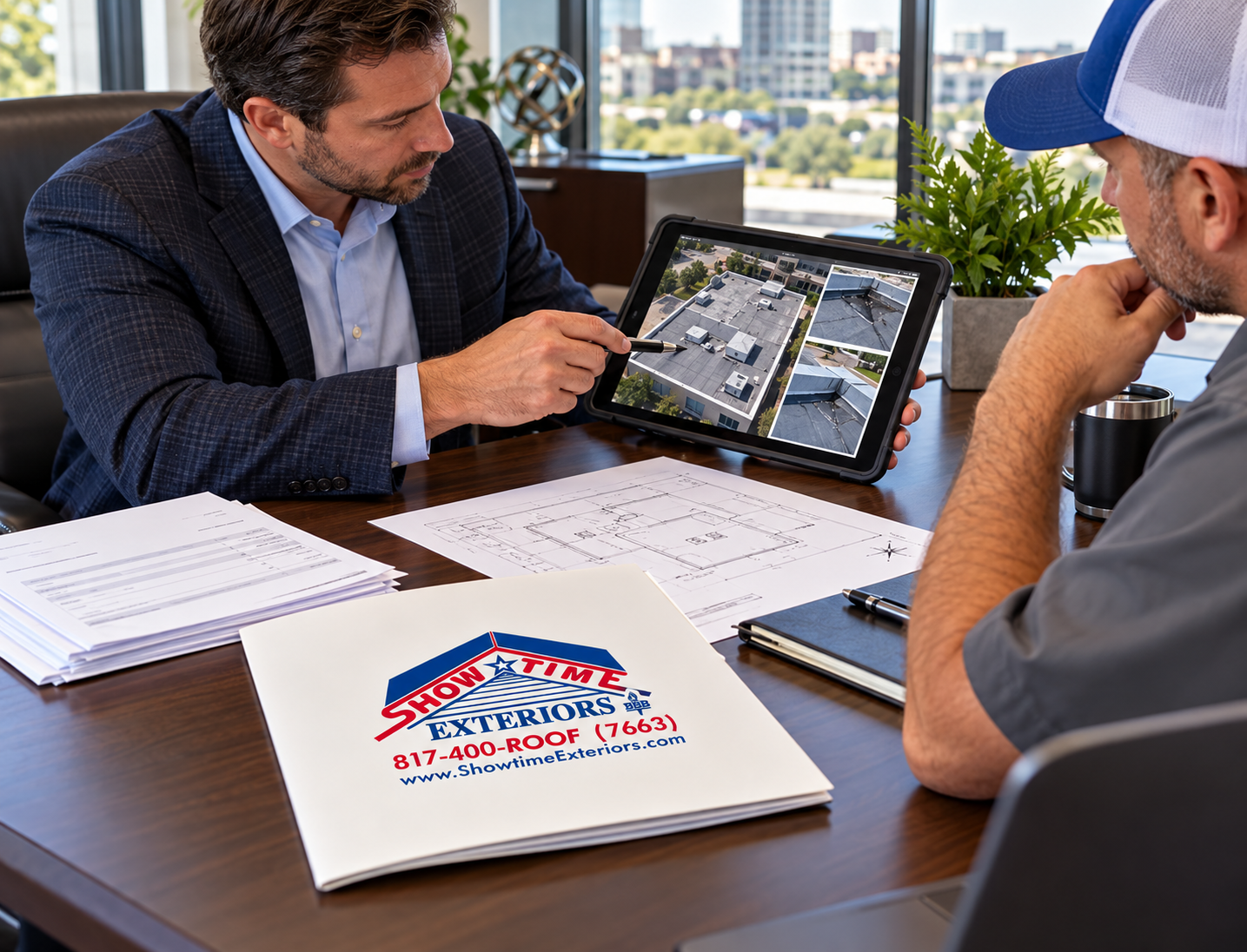




Ceiling Stains and Commercial Roof Leaks After Rain: A Texas Property Owner’s Guide
Ceiling stains or skylight leaks after rain? Learn what Texas commercial property owners should document, what inspections involve, and when to call Showtime Exteriors.

A brown ceiling stain appears above your office. A bucket returns to the same spot whenever it rains. Water starts dripping around a skylight, leaving you wondering whether the problem is the glass, the surrounding roof, or something else entirely.
For a commercial property owner, these situations create immediate questions. Where is the water coming from? What needs attention first? Can the problem be repaired? How do you protect the business while someone investigates?
The most useful starting point is a documented inspection that connects the interior symptoms with the building’s roof and other possible moisture sources.
This guide explains how to respond to ceiling stains, recurring rain leaks, and moisture around commercial skylights. It also outlines the information to collect before calling a contractor and the questions that help you evaluate a proposed repair.
Showtime Exteriors serves Texas commercial property owners with roofing inspections and project planning. To discuss a ceiling stain or active leak, call 817-400-ROOF (7663).
What Does a Ceiling Stain Tell You?
A ceiling stain tells you that moisture has affected the material. Its appearance alone does not establish where that moisture originated, whether the area is still wet, or how much of the building is affected.
A stain may remain visible after an earlier problem has been corrected. It may also be the first noticeable symptom of a current issue.
For that reason, the history matters as much as the photograph.
When did someone first notice it? Has it changed? Does it become darker after rain? Has the same ceiling tile already been replaced? Were roof repairs or HVAC services performed nearby?
Write down what you know and distinguish it from what you suspect. “The stain appeared after Tuesday’s rain” is an observation. “The skylight needs replacing” is a conclusion that still requires investigation.
Give your contractor both the current condition and its history. A clear account helps focus the inspection without prematurely narrowing the possible cause.
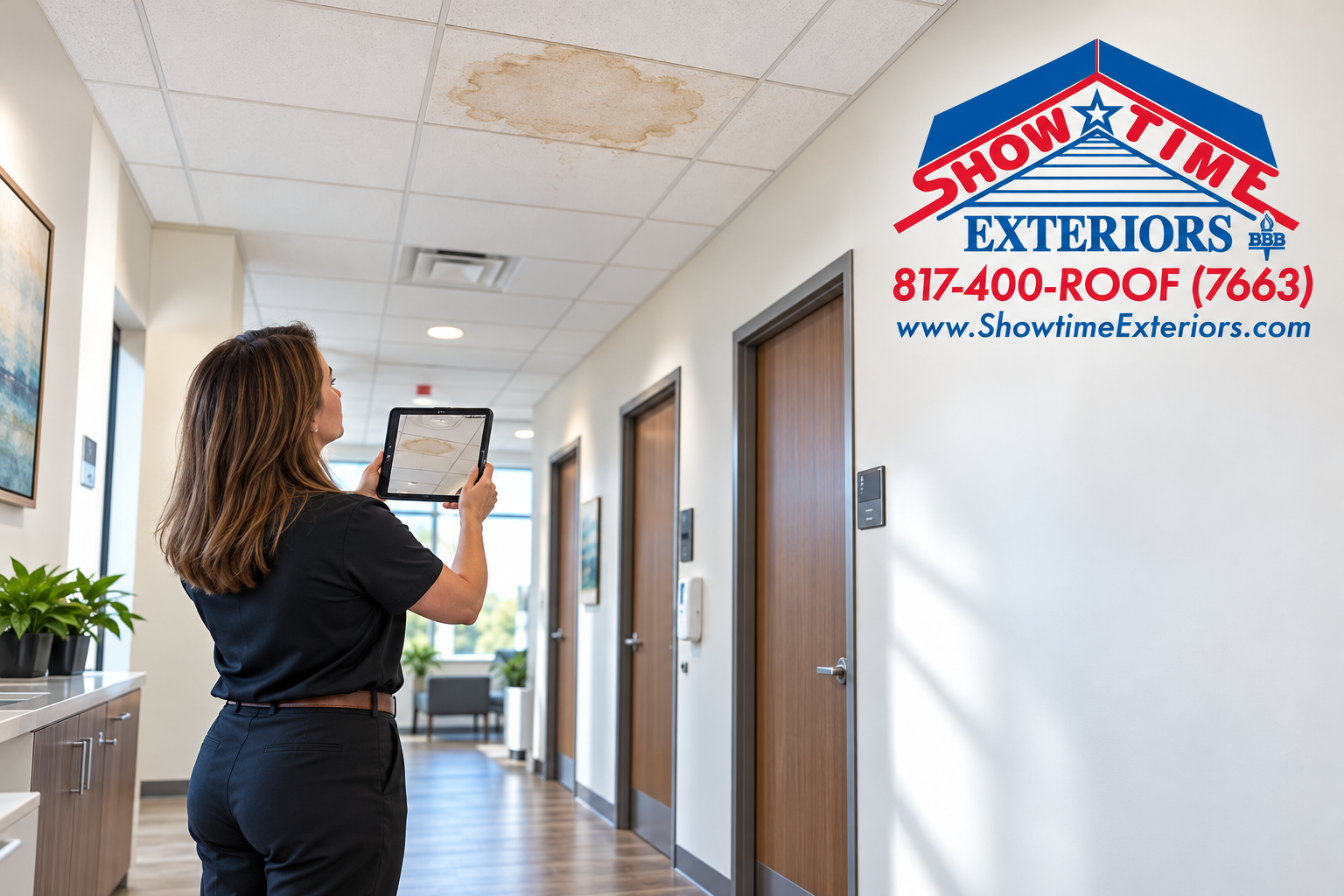
exec-fa9758c2-d5c5-4e9d-878d-6fb3007b61ec.png
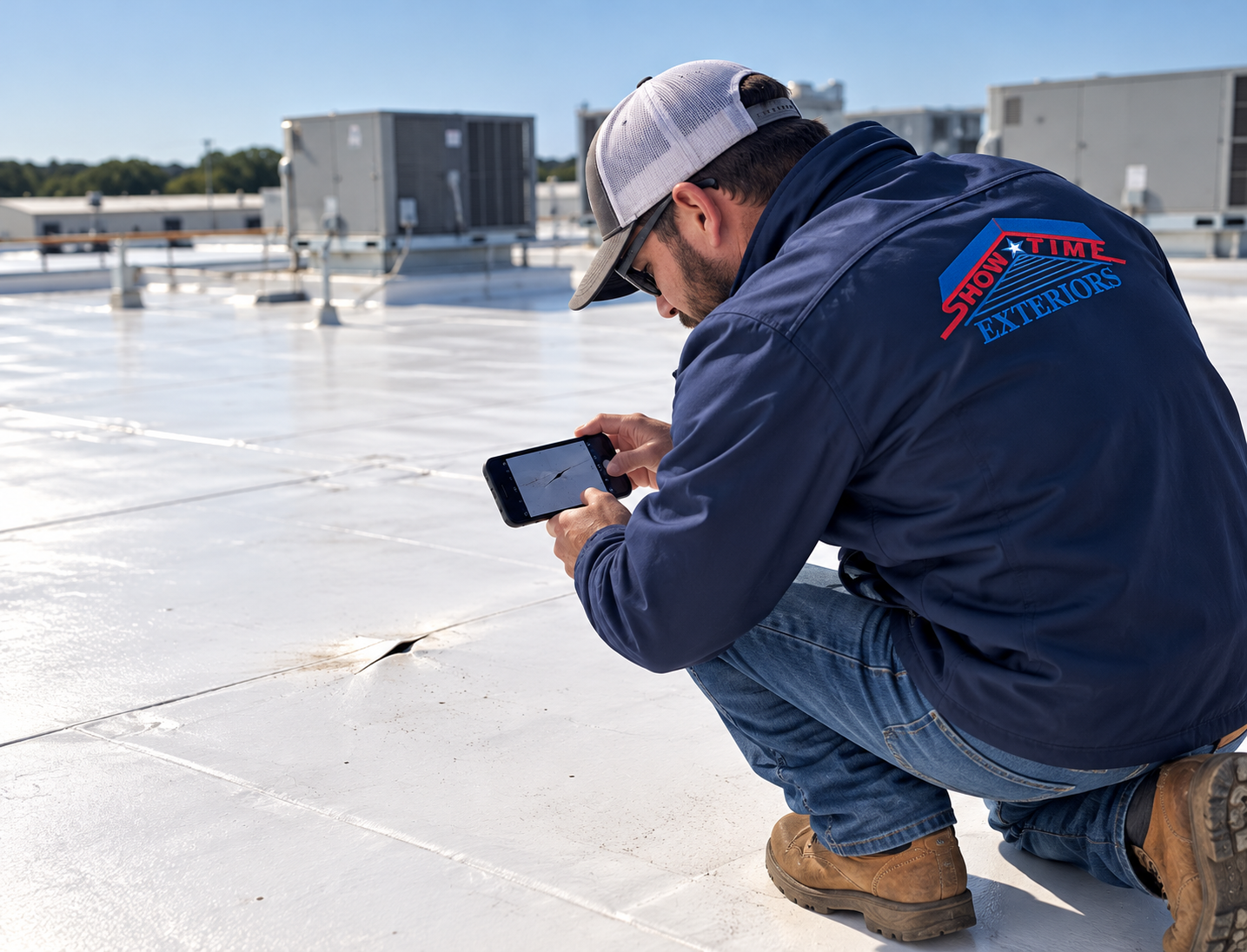
Illustration: Photograph ceiling staining from a safe location and record when changes occur.
Is Every Ceiling Stain a Roof Leak?
No. A roof leak is one possibility, especially when water appears during rainfall, but other building systems can produce moisture above a ceiling.
Plumbing, air-conditioning equipment, condensation, and water entering through other parts of the exterior may need consideration.
A useful investigation begins with the affected interior area and the building’s layout. GAF’s overview of a professional commercial roof inspection describes examining interior ceilings and walls as part of the process. gaf.com
For the owner, the practical question is whether the proposed work addresses a confirmed source or only a suspected one.
Ask the contractor to explain the evidence behind the diagnosis. If the source remains uncertain, ask what additional investigation would help.
This distinction matters when several contractors maintain the building. A roofing contractor, HVAC technician, and plumbing contractor may each need information from the others to resolve an overlapping issue.
What to Do When Water Starts Dripping
Your immediate priorities are protecting people, limiting exposure of property, and arranging appropriate assistance.
Keep people away from the affected area
Restrict access where water is collecting or ceiling materials appear unstable. Move employees and visitors away from the drip rather than asking them to work around it.
If water is near lighting, outlets, electrical equipment, or wiring, keep clear and involve qualified personnel. Do not touch wet electrical components or enter standing water to reach equipment.
Protect movable property when safe
Relocate documents, merchandise, furniture, and electronics if you can do so without entering an unsafe area.
A container may help collect a minor drip temporarily, but it does not resolve the source. Keep any collection setup clear of normal walking routes and monitor it.
Arrange professional help
Explain whether water is actively entering, whether ceiling materials are changing, and what operations are affected.
Showtime Exteriors’ information on emergency commercial roof repair provides a starting point for discussing urgent roof concerns and temporary protection.
Do not send employees onto the roof during severe weather to search for the leak.
Create a Leak Record Before Details Are Forgotten
A short, consistent record is more useful than a folder of photographs without context.
Assign each affected area a simple location name, such as “stockroom northeast corner” or “second-floor office beside skylight.” Use that name in every update.
Record:
- The date and approximate time.
- Whether rain was occurring.
- When dripping began and stopped.
- The room and specific ceiling location.
- Changes in stain size or appearance.
- Affected equipment, inventory, or operations.
- Temporary measures taken.
- Who was notified and when.
Take one photograph showing the room and another showing the stain or drip more closely. Repeat from similar positions when documenting changes.
Keep earlier photographs, even after repairs. They provide a timeline for follow-up.
Showtime’s commercial roof maintenance information also describes the value of recording weather, interior conditions, repairs, and subsequent observations.
Why Does the Leak Happen Only During Certain Storms?
A recurring leak may appear during some rain events and remain absent during others. That pattern is useful information, but it does not identify the source by itself.
Instead of trying to recreate the conditions, describe them.
Does the problem occur during prolonged rain? Did the last incident begin early in the storm or much later? Were several rooms affected at once? Did someone notice moisture only after arriving the following morning?
Avoid treating a dry day as proof that the issue has disappeared.
Similarly, one rain event without visible dripping is encouraging but may not provide enough information to evaluate the repair fully. Discuss what follow-up is appropriate for the conditions that previously triggered the problem.
For a building manager, consistency is the goal. Each incident should add to the same record so the contractor can review the pattern rather than starting over with every call.
What a Commercial Roof Leak Inspection Should Address
Before an inspection, make roof records available if you have them. Useful documents include installation dates, repair invoices, warranty information, roof plans, and previous inspection reports.
Tell the contractor about recent rooftop activity, including HVAC work, equipment replacement, or other construction.
Ask what the inspection will cover and what documentation you will receive. The report should distinguish observations, confirmed defects, suspected conditions, and areas that could not be evaluated.
GAF’s guidance on commercial roof inspection and repair-versus-replacement decisions emphasizes assessing roof conditions before deciding on the appropriate work. gaf.com
Owners should leave the conversation understanding what was found, what remains uncertain, and why the recommended next step fits the evidence.
A statement such as “we found a problem near the skylight” should lead to a more specific explanation of the location and proposed correction.
Skylight Leaks: What Property Owners Should Know
Water around a skylight deserves a careful look at the complete assembly.
The investigation may need to consider the glazing, frame, curb, surrounding flashing, and connection to the roof. The applicable details depend on the skylight model and roofing system.
Start by documenting where the moisture appears inside. Is it on the glass, along one corner, on the interior shaft, or on an adjacent ceiling tile?
Also record whether it occurs during rainfall or at other times.
Condensation can resemble a leak
Moisture around a skylight does not always mean rainwater is entering. VELUX explains that condensation can develop around skylight components and create the appearance of leakage. Condensation
That makes diagnosis important before selecting a repair.
Ask whether the recommendation addresses water entry, condensation, or both. If the skylight’s manufacturer and model are known, provide that information so relevant installation and service guidance can be checked.
Keep Skylight Access Professional
A skylight inspection is not a reason to walk onto the roof yourself.
Glazing can be difficult to judge by appearance, and rooftop openings present fall hazards. OSHA specifically identifies skylights, roof edges, and roof hatches as areas requiring appropriate worker protection. Occupational Safety and Health Administration
Property owners can contribute useful information from inside the building: photographs, dates, observations, and the location of moisture.
Leave roof access, close examination, and any testing to qualified professionals using appropriate procedures.
When arranging the visit, explain how the roof is accessed and whether there are tenant restrictions, security requirements, or known access concerns. This helps the contractor plan the inspection without improvised arrangements.
exec-4747593c-4fd4-4eb1-a5d5-20e415282549.png
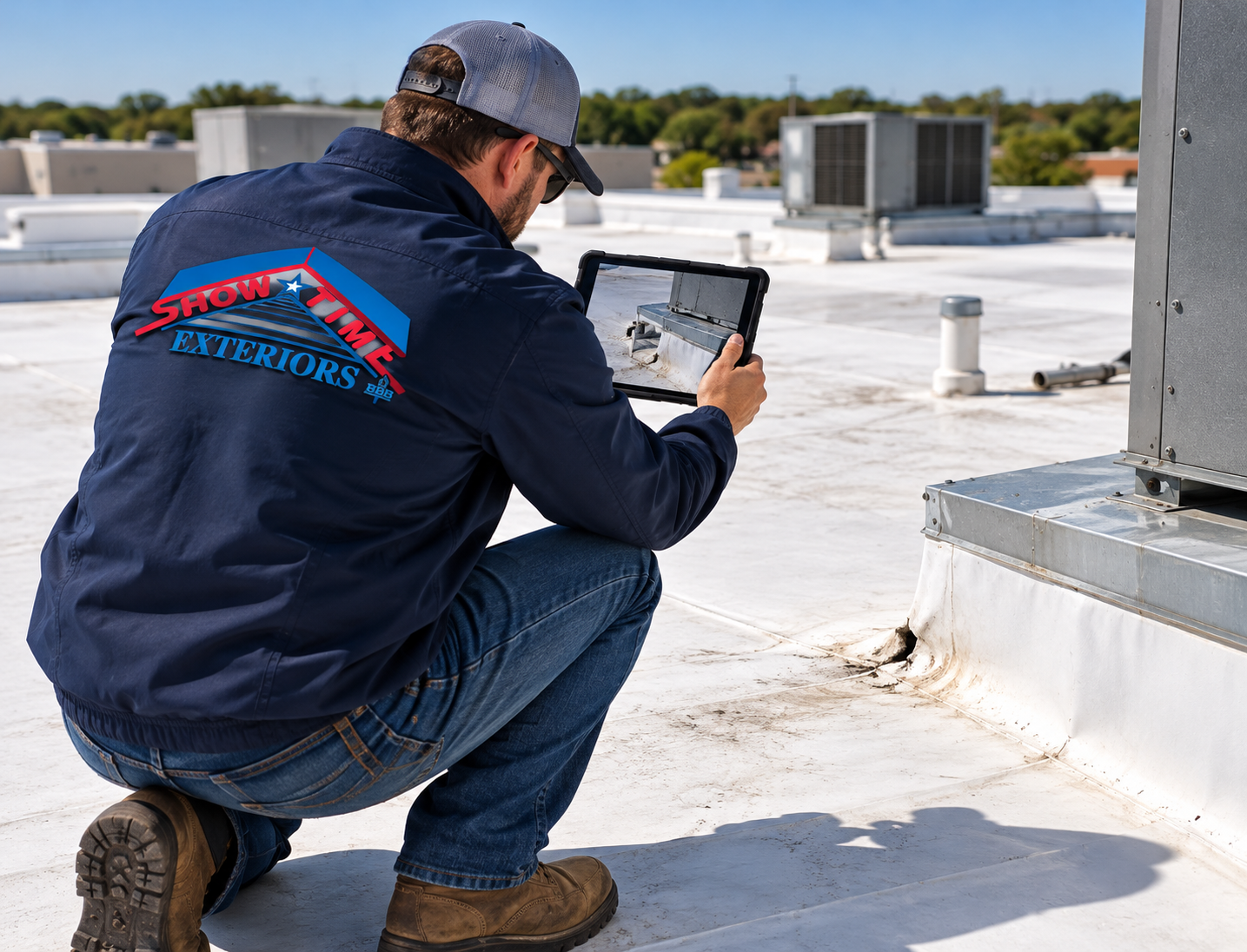
Illustration: Commercial skylight investigations should consider the surrounding roof connection as well as the skylight itself.
Should You Replace Stained Ceiling Tiles Immediately?
Replacing a stained tile may improve the room’s appearance, but it should be coordinated with the moisture investigation.
Before the tile is removed, photograph it and record its location. Tell the person investigating the leak that replacement is planned so useful evidence is not lost.
If a tile is sagging, deteriorating, or otherwise unsafe, keeping it in place for documentation is not the priority. Restrict access and have qualified personnel address the condition.
Once the source has been investigated, ask how the affected interior materials will be evaluated and when replacement is appropriate.
The roofing repair and the interior restoration may involve different contractors. Confirm who is responsible for each part.
A clear handoff avoids the situation in which the roof work is complete but damp interior materials, stained finishes, or replacement tiles remain unaddressed.
Drying the Interior Is Part of the Response
Stopping additional water entry and addressing materials already affected are separate tasks.
The EPA advises cleaning and drying damp or wet building materials and furnishings within 24–48 hours to help prevent mold growth. That guidance supports prompt action; it is not a reason to delay assistance until the end of that period. US EPA
A stain’s color does not establish whether mold is present. Avoid diagnosing the condition from a photograph.
If there is extensive water damage, persistent odor, suspected contamination, or uncertainty about appropriate drying, involve qualified restoration professionals.
For the owner, the key questions are practical: What is wet? Who is evaluating it? What drying or removal is required? How will completion be documented?
Keep those answers with the roofing records so the building’s response is recorded as one coordinated event.
Does a Commercial Roof Leak Mean Replacement?
A leak does not automatically establish that the entire roof needs replacing. It also does not establish that a small patch will be sufficient.
The recommendation should follow the findings.
Ask the contractor to explain whether the issue is localized, whether additional areas are affected, and what evidence supports the proposed scope.
A focused repair
If a repair is recommended, identify exactly what it includes. Ask about preparation, compatible materials, affected components, and any exclusions.
Broader investigation or planning
If the contractor recommends restoration, recover, retrofit, or replacement, ask why a narrower repair would not adequately address the identified conditions.
Request photographs and a written explanation you can review with the decision-makers responsible for the property.
Showtime Exteriors’ commercial roofing services provide a starting point for discussing these options. Your building’s recommendation should be based on its own condition and requirements.
Why Repeated Patching Deserves a Review
If the same interior area continues to leak after previous work, gather the history before authorizing another attempt.
Collect the dates, invoices, descriptions, photographs, and any follow-up messages. Note whether the symptom changed after each repair.
A recurring drip does not automatically prove that every previous repair was unnecessary. There may be several contributing conditions, incomplete information, or a source that has not yet been confirmed.
Nevertheless, the next proposal should explain how it relates to that history.
Ask:
- What did the earlier work address?
- What does the current inspection show?
- Is the proposed work in the same location?
- What remains uncertain?
- How will the result be reviewed?
This approach gives you a clearer basis for approving work than simply repeating the last repair description.
What Affects the Cost of Commercial Leak Repair?
There is no reliable universal price for a ceiling stain or skylight leak.
The visible stain is an interior symptom. Pricing depends on the work needed to investigate and address the underlying condition.
A proposal may be influenced by access, roof type, location of the affected area, necessary preparation, material compatibility, and the extent of the work.
Interior drying and restoration may be separate expenses. Ask whether they are included.
Compare proposals by scope as well as price. One quotation may include investigation, preparation, and documentation, while another may cover only a narrowly defined repair.
Clarify whether additional findings could change the price and how those changes require authorization.
A useful proposal tells you what you are purchasing, what is excluded, and what happens if conditions differ from the initial assumptions.
Questions to Ask Before Approving the Work
Bring your questions into the conversation before work begins.
Ask the contractor to identify the suspected or confirmed moisture source and show you the supporting photographs.
Then discuss the proposed materials and method. How do they relate to the existing roof or skylight? What preparation is included? Are there components that another trade needs to address?
Clarify access, scheduling, tenant communication, and any areas that must remain clear.
Finally, ask what documentation and written warranty terms will be provided. Do not assume a repair carries the same coverage as a full roofing system.
If an existing manufacturer warranty may apply, review its notification and authorization requirements before allowing work.
Keep the signed scope, approved changes, completion photographs, and follow-up instructions together. Those records will be useful to the next person responsible for the building.
Planning Around Tenants, Employees, and Customers
A leak response is easier to coordinate when one person owns the communication.
Choose a contact who can provide access, collect observations, notify occupants, and approve work within the property’s procedures.
Before the visit, explain which rooms are affected and whether the building contains sensitive equipment, inventory, clinical areas, food preparation, or other operations requiring special coordination.
Do not promise occupants that work will be disruption-free before the contractor has reviewed the site.
Instead, ask for a practical plan: where personnel need access, what areas must remain clear, and how schedule changes will be communicated.
For retail properties, Showtime’s retail roofing information offers additional context for starting that discussion.
The goal is a shared understanding of the work and its effect on the people using the building.
Follow Up After the Repair
Before closing the issue internally, review the completion documentation.
Confirm that the approved work is described, any changes are recorded, and recommendations for other trades have been passed to the right people.
Keep monitoring the affected interior area according to the contractor’s guidance. If moisture returns, record the date, weather, location, and photographs rather than reporting only that “it is leaking again.”
Ask whether the recurrence appears to involve the same condition or requires further investigation.
Also confirm that interior restoration has been completed where needed. A roof repair should not cause the rest of the response to disappear from the maintenance schedule.
Close the record when the relevant parties have addressed their portions and provided the agreed documentation. Retain it for future inspections and ownership transitions.
Build a More Useful Maintenance Routine
A roof maintenance routine should make it easier to notice and communicate changes.
Give occupants a simple way to report ceiling staining, dripping, damp finishes, or concerns near skylights. Make sure those reports reach the person responsible for maintenance.
Maintain an accessible record of inspections, repairs, warranties, and rooftop contractor visits.
Ask your roofing professional to recommend an inspection schedule suited to the roof, manufacturer guidance, property use, and local conditions.
After significant weather or rooftop work, discuss whether an additional review is appropriate.
For larger buildings, assign consistent names to rooms and roof areas so contractors and staff can refer to the same locations.
These administrative steps are straightforward, but they help prevent valuable information from being scattered across individual phones, inboxes, and tenant conversations.
Frequently Asked Questions About Ceiling Stains and Roof Leaks
Can an old ceiling stain remain after a leak is repaired?
Yes. Discoloration may remain after the moisture source has been addressed. Its continued visibility alone does not establish that the leak is active. Ask how the area was evaluated and document any new changes.
Should I wait for another storm before calling?
You can arrange an inspection and share the existing history without waiting. Tell the contractor whether water is entering now or whether you are reporting a previous incident.
Can you identify the problem from my photographs?
Photographs provide useful context, but they may not establish the source or full extent of the condition. Expect the contractor to explain what can be determined and what needs an on-site review.
Does water near a skylight mean the skylight must be replaced?
Not necessarily. The investigation should distinguish the glazing, frame, surrounding roof connections, and possible condensation before selecting work.
What should I prepare before an inspection?
Gather photographs, incident dates, affected-room locations, previous repair records, roof information, and available warranty documents. Identify the person who can provide access and discuss the building’s operations.
Schedule a Commercial Roof Inspection With Showtime Exteriors
A ceiling stain, recurring rain leak, or damp area around a skylight is a reason to get clear information about your building.
Start with the observations you have. Share the history. Ask for an explanation supported by the inspection findings and a scope you can understand.
Showtime Exteriors provides commercial roofing services for properties across Texas. Whether your concern is a recurring stockroom drip, staining above an office, or water appearing near a skylight, contact the team to discuss an inspection.
Call or text 817-400-ROOF (7663).
Contact Showtime Exteriors to discuss your commercial roof and arrange the next step.