



Signs Your Medical Office Roof Needs Immediate Repair
Learn the warning signs of medical office roof damage, when to act, and how Texas practices can coordinate repairs while protecting daily operations.

A ceiling stain above the reception desk. A drip near an exam room after heavy rain. A musty smell that returns whenever a storm moves through.
These problems deserve attention in any commercial building. In a medical office, they also create decisions about patient access, equipment protection, room availability, and the day’s appointment schedule.
The challenge is knowing what the symptom means. A stained ceiling does not automatically mean the entire roof needs replacement. Water may enter through damaged flashing, a skylight, or a roof penetration. Plumbing leaks and HVAC condensation can produce similar interior symptoms.
The right response combines immediate precautions with a professional investigation. Protect the affected area, document what happened, and determine where the moisture originated before approving a permanent repair.
This guide explains the warning signs that call for prompt medical office roof repair, what Texas property managers should do first, and how to coordinate roofing work with the practice’s operations.
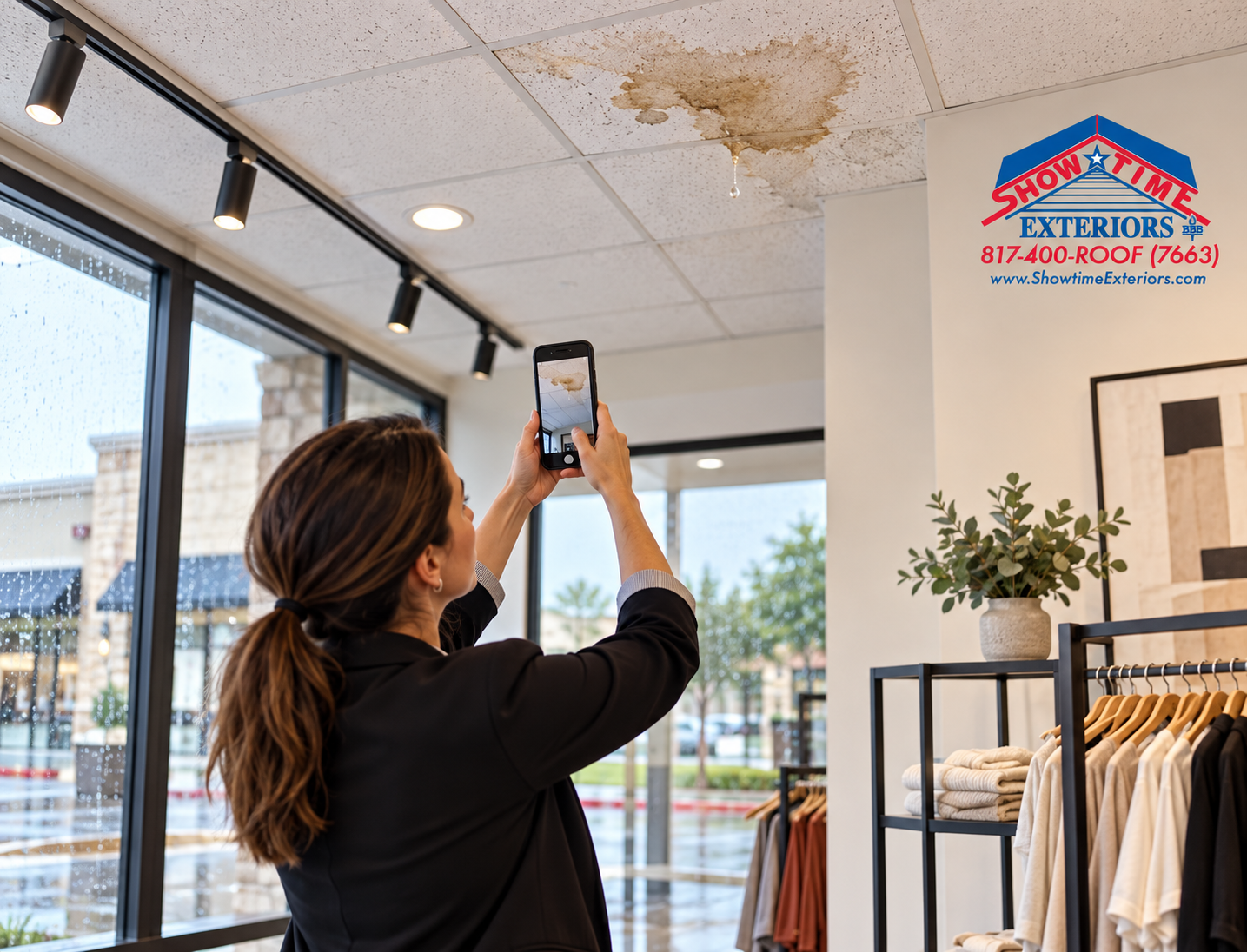
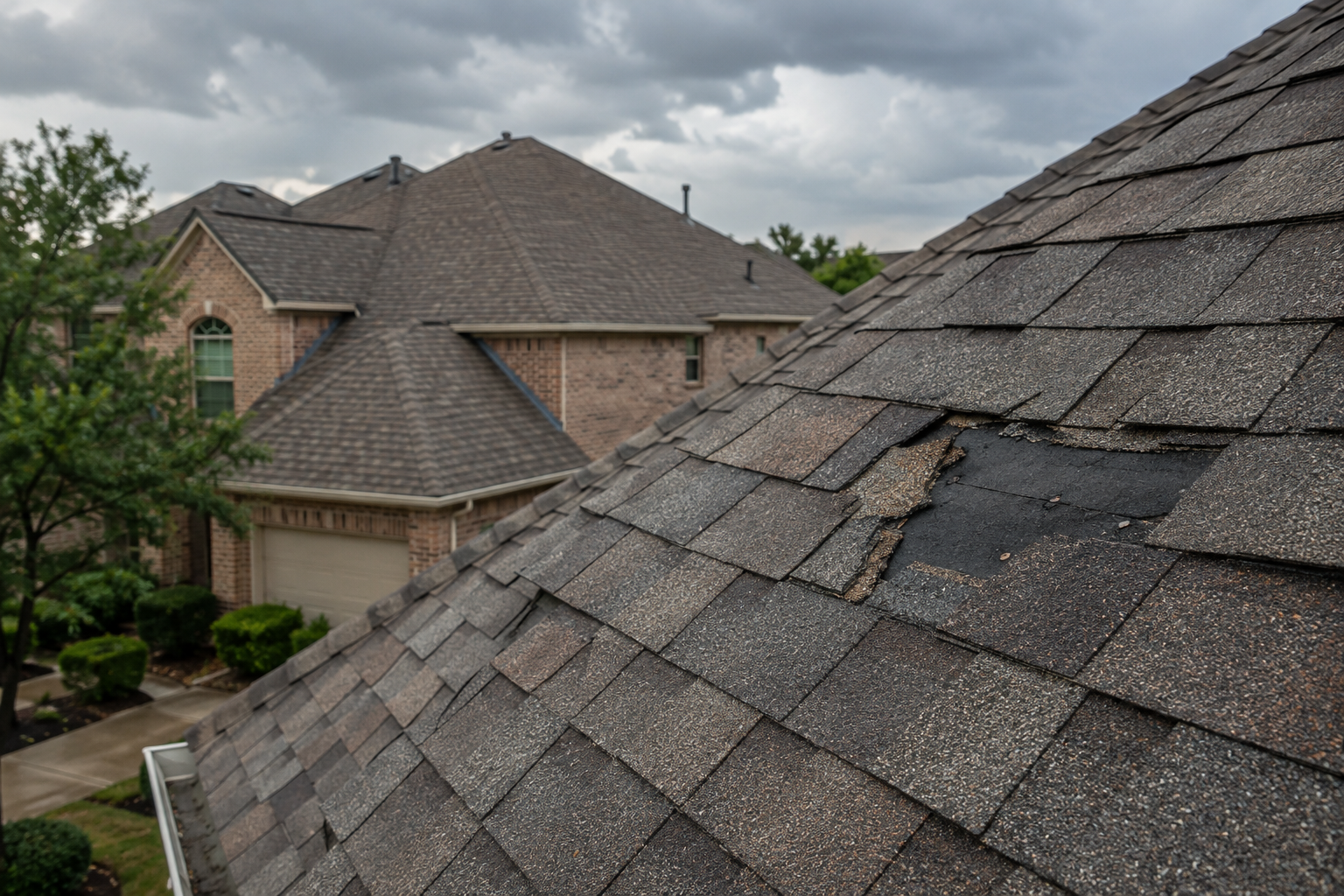
Illustration: Document ceiling stains and their locations so the roofing team can connect interior symptoms with conditions above.
How Urgent Is a Medical Office Roof Problem?
Start with the condition inside the building. A small roof opening can create an urgent interior problem if water reaches electrical equipment or compromises a ceiling.
Take immediate precautions when you notice water near electrical fixtures, a bulging ceiling, falling ceiling material, or another immediate hazard. Keep people away and contact building management and the appropriate emergency professionals.
Arrange urgent professional evaluation when water is actively dripping into occupied rooms, corridors, or equipment areas. Restrict access as needed and coordinate the response with practice leadership.
Schedule a prompt investigation when new stains, recurring dampness, or leaks appear after storms. Monitor the area for changes while awaiting evaluation.
Verify old stains when there is no clear repair history. A dry mark is not proof that the original problem was resolved.
The practice’s leadership should decide how affected rooms are used. Roofing contractors can explain roof conditions and repair options; clinical and facilities personnel determine the operational precautions appropriate for the space.
10 Signs Your Medical Office Roof Needs Attention
1. Water Is Dripping Into Patient or Staff Areas
An active leak is the clearest reason to request urgent assistance.
Water entering an exam room, reception area, laboratory support space, or supply room can interrupt care and damage finishes. Even a slow drip can spread across ceiling materials before becoming visible elsewhere.
Do not judge the size of the roof problem by the amount of water landing on the floor. Moisture can travel along structural members or concealed surfaces, so the entry point may be some distance from the visible leak.
Record when the dripping started, whether rain was falling, and which room was affected. A simple floor-plan mark often helps more than a photograph without a location.
If a container can be placed safely within a restricted area, it may help limit surface damage. It does not replace an assessment of the ceiling, surrounding materials, or source of entry.
Contact Showtime Exteriors with those observations so the roofing team can understand the situation before arriving.
2. The Ceiling Is Sagging, Bulging, or Shedding Material
A wet ceiling that changes shape requires immediate attention.
Warning signs include bowed ceiling tiles, blistered drywall, a growing bulge, separated seams, or pieces falling into the room. Keep patients and staff out of the affected area while qualified personnel assess it.
Do not push on the ceiling or puncture a bulge to release water. The amount of retained water and the condition of the surrounding materials may be unclear.
There are two related tasks: addressing the interior condition and stopping the moisture source. Replacing a damaged ceiling panel alone leaves the underlying problem unresolved.
Tell the responding team whether the ceiling changed suddenly, whether water is still entering, and whether nearby lights or equipment are involved. These details help establish priorities without requiring office staff to investigate concealed spaces themselves.
3. Ceiling Stains Reappear or Grow After Rain
A stain that darkens, expands, or returns after repainting is evidence that the moisture problem needs another look.
Recurring marks may point to an unresolved entry path, a failed repair, or a different source than originally suspected. The roof investigation should consider the timing of the stain as well as its position.
Useful questions include:
- Does the mark change after every rainfall?
- Does it appear mainly during wind-driven storms?
- Is it near a skylight, exterior wall, or rooftop unit?
- Has the area been repaired previously?
- Does it become damp when there has been no rain?
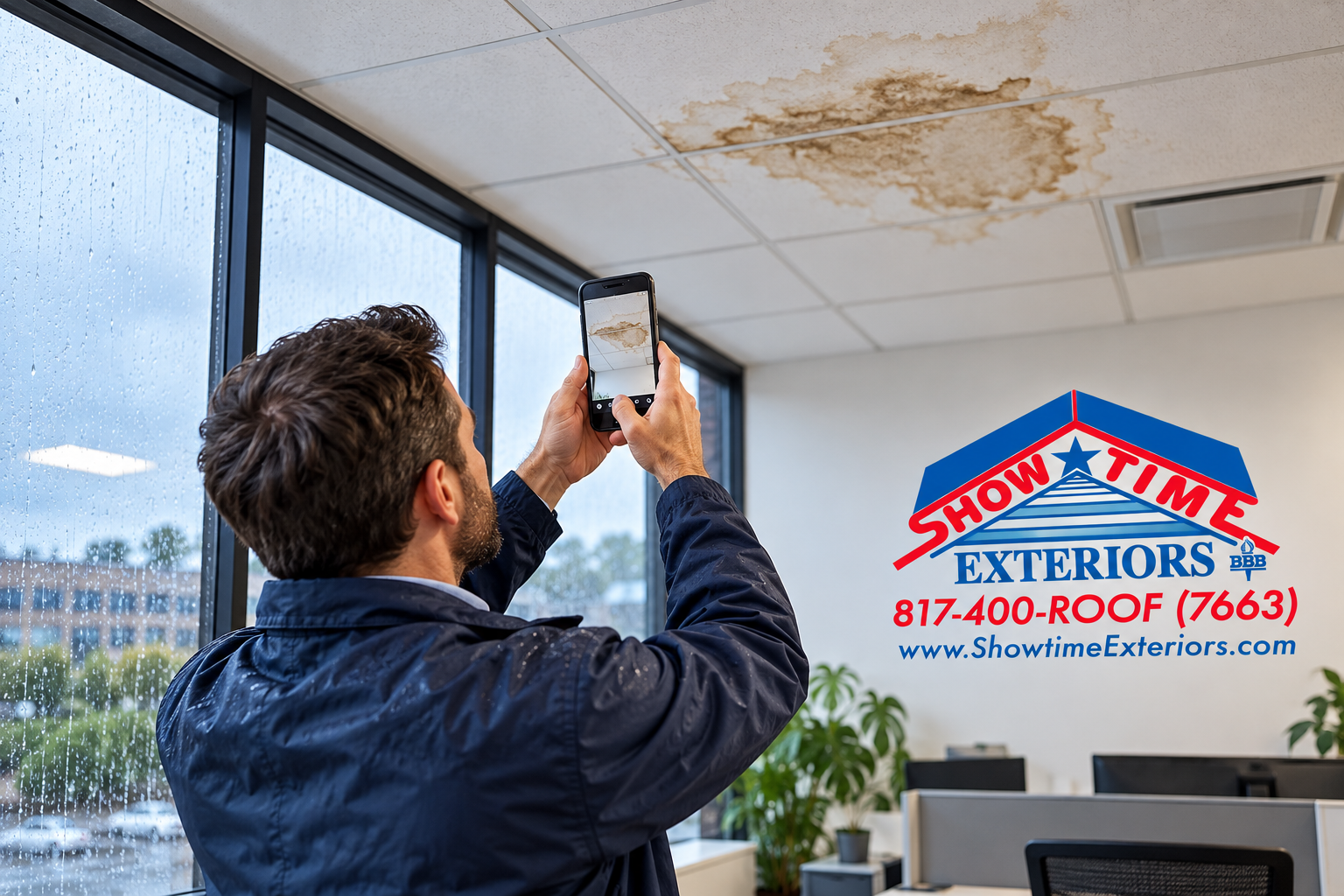
Photograph the stain from the same position over time. Include a room identifier and date in your maintenance records.
A dry stain still deserves a documented explanation. Painting over it before identifying the cause can make future changes harder to track.
4. Water Is Near Lights, Outlets, or Medical Equipment
Water around electrical components changes the urgency of the response.
Examples include dripping through a light fixture, moisture near an outlet, or water reaching powered diagnostic equipment. Keep people away and have qualified personnel determine the appropriate electrical precautions.
Staff should not touch wet fixtures, operate affected equipment, or attempt to move energized devices through a wet area.
The roofing contractor should receive a clear description of the location and conditions. Electrical evaluation and equipment assessment may require separate specialists.
Document visible damage only when it is safe to do so. Patient information, computer screens, and paperwork should remain outside photographs.
A roof repair addresses the building envelope. Equipment should return to service through the practice’s established inspection and approval procedures.
5. Skylights Leak or Show Damaged Seals and Flashing
Skylights introduce several interfaces that need to work together: glazing, frames, seals, curbs, and roof flashing.
Water around a skylight may come from an exterior leak, but condensation can also create moisture symptoms. The repair should follow the diagnosis rather than defaulting to another layer of sealant.
Report visible staining around the interior opening, recurring drips, cracked glazing seen from a safe location, or changes after storms.
Ask the contractor to explain which component is failing. A flashing defect calls for a different scope than damaged glazing or an interior humidity issue.
Office staff should not access the roof to inspect a skylight. Interior observations and existing maintenance records give professionals a useful starting point.
If the same skylight has received repeated patches, request an explanation of why those repairs have not provided a lasting result.
6. Leaks Develop Near Rooftop HVAC Units or Other Penetrations
Medical office roofs often contain HVAC curbs, plumbing vents, exhaust equipment, conduits, and other penetrations.
Each connection creates details that require inspection. GAF’s guidance on low-slope roof penetrations explains why these locations can become trouble spots within otherwise watertight roof systems.
A stain beneath an HVAC unit does not prove the roof flashing is responsible. Condensate drainage, equipment components, and plumbing should also be considered.
Share recent service history with the investigator. A leak that appeared after equipment replacement or maintenance warrants a review of both the equipment and the surrounding roof assembly.
Depending on the findings, the roofing contractor and HVAC provider may need to coordinate their work. This helps avoid a cycle in which each trade addresses one symptom while an adjacent defect remains.
exec-1dda66a5-b995-401f-b1ed-ab3aa73d7cc4.png
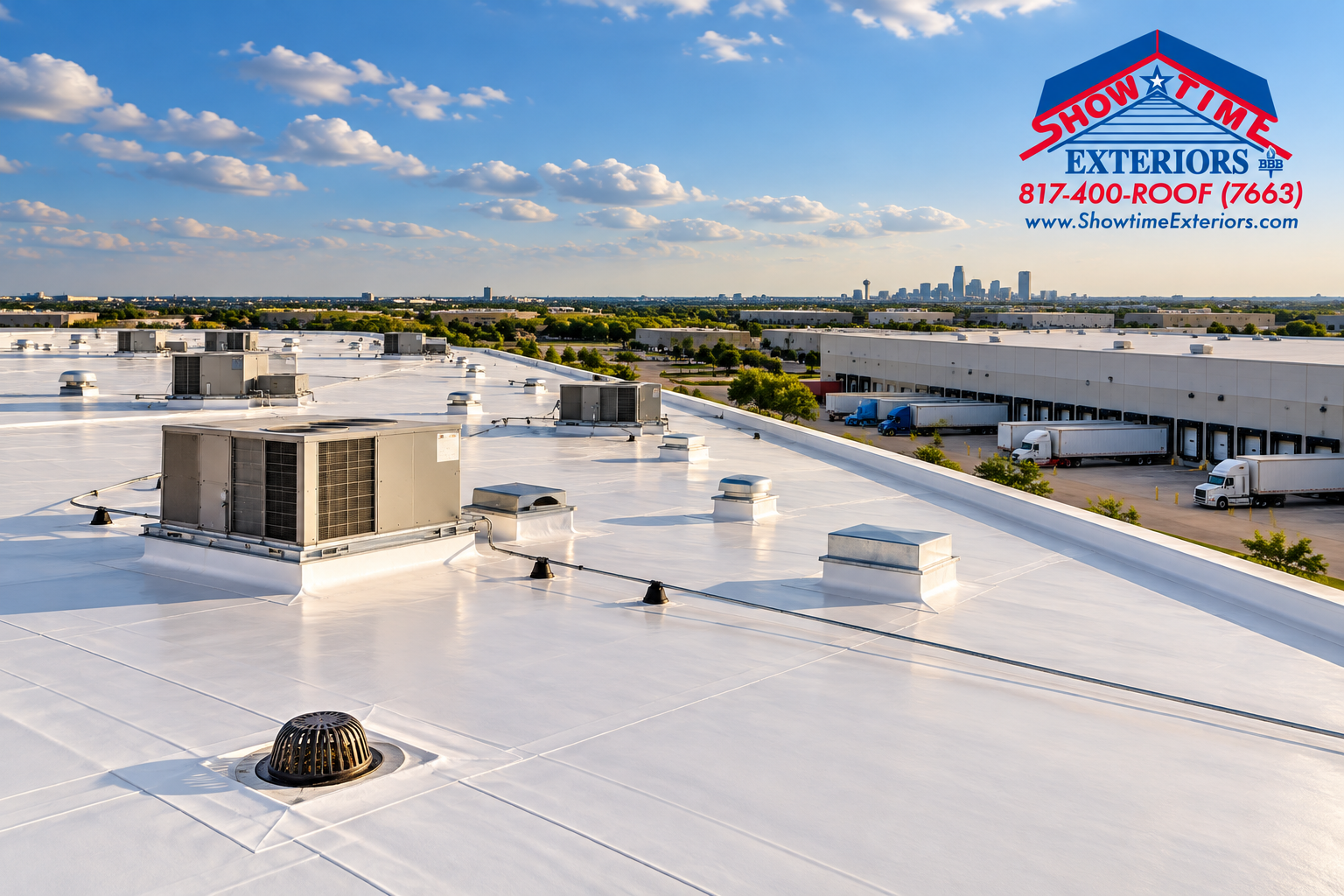
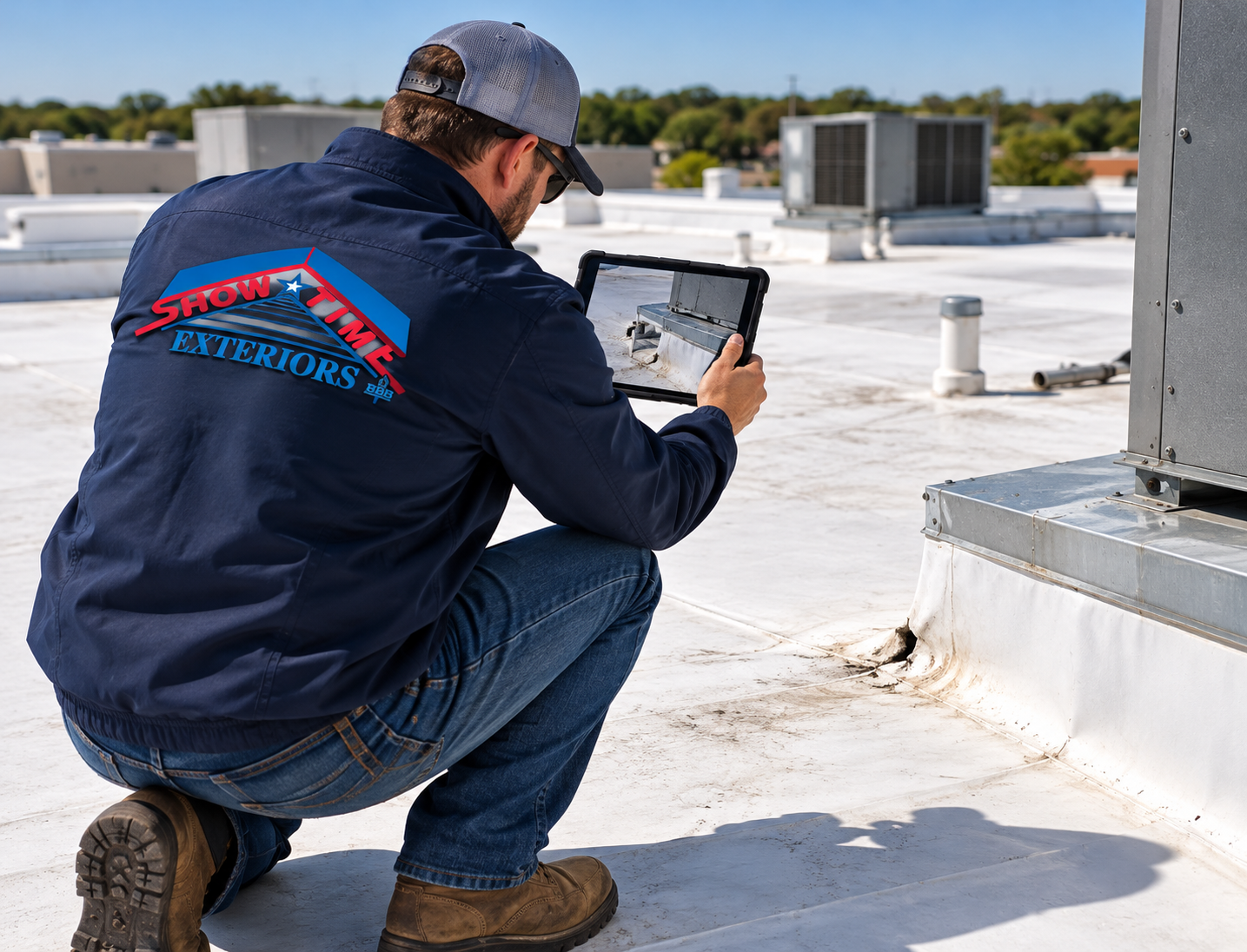
Illustration: HVAC curbs and other roof penetrations deserve close inspection when interior moisture appears nearby.
7. Storms Leave Loose Roof Materials or Damaged Edges
After hail or strong winds, new leaks deserve prompt investigation.
From ground level, staff may notice displaced metal, debris, or an obvious change along a roof edge. A professional inspection can assess conditions that are difficult to evaluate safely from below, including membrane damage and disturbed flashing.
Hail damage is not always identifiable from a parking-lot photograph. Likewise, a roof that looks normal from the street may still have localized defects.
Record the approximate storm date, the first interior symptoms, and any visible exterior changes. Leave roof access to qualified professionals.
If immediate stabilization is needed, ask how the temporary work will be documented and what permanent follow-up is required. A temporary measure should come with a clear explanation of its purpose and limitations.
8. Water Collects Around Drains or Remains on the Roof
Drainage deserves attention when leaks occur during heavy rain or after debris accumulates.
Blocked drains, obstructed scuppers, damaged drainage components, or changes in roof slope can contribute to water collecting in particular areas. GAF’s roof drainage guidance explains the role of slope and drainage paths in moving water off the roof.
Ask the roofing professional whether the condition involves maintenance, a localized defect, or a broader drainage concern.
Standing water should be evaluated in relation to the specific roof assembly. Avoid treating a general time threshold as permission to wait while water is entering the building.
Drain cleaning may be part of the solution, but recurring water accumulation can require more investigation. The inspection should explain both where water collects and why.
9. Damp Materials or Musty Odors Persist
A persistent odor, damp wall finish, or repeatedly wet ceiling material calls for investigation even when there is no active drip.
Odor alone cannot confirm mold or identify the moisture source. Roof leaks, plumbing problems, condensation, and other conditions can produce overlapping symptoms.
EPA guidance for water-damaged commercial buildings emphasizes responding promptly and drying appropriate materials within 24–48 hours to help prevent mold growth. That guidance is not a reason to delay action or an assurance that an affected clinical room is suitable for use.
The practice may need building maintenance, roofing, HVAC, or restoration professionals to coordinate the response.
Stopping exterior water entry is one part of the work. Wet interior materials and any affected contents also need assessment through the facility’s procedures.
Keep records of when the moisture was first noticed and what actions followed.
10. The Same Area Keeps Needing Repairs
Repeated repairs are a reason to reassess the cause and scope.
A recurring leak may involve deteriorated flashing, movement at an attachment, damage around equipment, or moisture within the assembly. It can also reflect a mistaken diagnosis of the original source.
Ask for a review of earlier repair records. Which detail was repaired? What materials were used? Did the leak stop completely, or only during certain weather conditions?
Another patch may be appropriate, but the recommendation should explain why it is expected to work.
Repeated problems do not automatically justify replacing the entire roof. They do justify a more deliberate investigation and a comparison of localized repair, broader restoration, and replacement where appropriate.
What to Do When a Medical Office Roof Starts Leaking
Give staff a simple response process before the next storm.
First, identify the affected room and restrict access to immediate hazards. Notify the practice manager or designated facilities contact so room-use decisions remain consistent.
Next, protect unaffected operations. The practice may need to relocate appointments, move supplies through an approved process, or reroute patients around a restricted area.
Document the event from a safe position. Capture the visible moisture, location, time, and weather conditions without including patient records.
Contact the appropriate building professionals. In a leased property, notify the landlord or property manager according to the lease and emergency procedures. Confirm who can authorize urgent work.
Track both the roof response and interior follow-up. Knowing that a roofer visited is different from knowing the source was confirmed, the repair completed, and affected materials assessed.
Showtime Exteriors’ healthcare roofing information provides additional context for discussing property conditions and operational concerns.
Plan Roof Repairs Around the Practice’s Daily Operations
A workable repair plan should account for how the office functions.
Identify occupied rooms beneath the work area, appointment peaks, delivery routes, accessible entrances, and locations where equipment or materials can be staged.
Discuss noise, debris handling, rooftop access, and work near outdoor air intakes. If the proposed materials or methods introduce concerns about odors or airborne particles, resolve those questions before work begins.
ASHE’s infection control risk assessment resources describe a structured approach to evaluating healthcare construction and maintenance risks. The practice’s responsible team should determine which assessment and controls fit its setting and project.
Some work may fit normal operating hours. Other work may require a scheduled room closure or activity outside patient hours. Those decisions should follow the actual scope and facility needs.
For larger projects, a short coordination meeting can establish responsibilities, communication contacts, and the conditions that would pause work.
What a Useful Medical Office Roof Inspection Should Explain
A useful inspection connects interior symptoms with exterior findings.
GAF’s overview of professional commercial roof inspections describes the importance of examining interior observations alongside exterior and roof conditions.
For a medical office, ask the contractor to provide:
- Photographs tied to specific roof locations.
- A description of observed defects.
- An explanation of the likely water-entry path.
- Any uncertainty that requires further investigation.
- A proposed repair scope and operational considerations.
- Follow-up recommendations for related conditions.
If concealed moisture is suspected, ask what additional assessment is appropriate and what its limitations are. A visual inspection cannot establish every condition beneath a roof surface.
The report should make it clear which conclusions are confirmed and which remain provisional. That distinction helps the owner approve work with a realistic understanding of the evidence.
Does the Roof Need Repair, Restoration, or Replacement?
These options solve different problems.
When Localized Roof Repair May Make Sense
A localized repair may be suitable when the defect is limited and the surrounding roof remains appropriate for continued service.
Examples might include a damaged flashing detail or a discrete area of membrane damage. The proposed scope should identify the defect and explain how the repair addresses it.
When Roof Restoration May Be Considered
Restoration may be considered when the existing assembly meets the requirements of a proposed system.
Suitability depends on its condition, moisture findings, attachment, compatibility, and other project factors. Existing defects need to be addressed as part of the planned work.
When Roof Replacement Deserves Consideration
Replacement deserves consideration when deterioration is widespread, the assembly has significant problems, or continued repairs no longer offer a reasonable path forward.
Ask for the reasoning behind the recommendation. A useful proposal explains what each option addresses, what remains, and what assumptions affect the scope.
Avoid choosing solely on the lowest initial number. Access needs, interior disruption, recurring service calls, and the expected extent of work also matter.
What Affects Medical Office Roof Repair Costs?
The visible stain is only one piece of the scope.
Cost can depend on the roof system, defect location, access, flashing complexity, concealed conditions, and how much surrounding material requires work.
Operational restrictions can also affect the project. Limited work hours, special staging arrangements, or coordination with other trades may change how the repair is performed.
Interior restoration and equipment evaluation may be separate from roofing work. Ask proposals to identify those boundaries clearly.
A written estimate should state the work area, included tasks, exclusions, and how additional conditions will be handled if discovered. This makes competing proposals easier to compare and reduces uncertainty once work begins.
Keep Clear Records Without Capturing Patient Information
A maintenance record helps the practice, property manager, and contractor understand recurring issues.
Retain dated photographs, room locations, weather observations, inspection reports, proposals, completed repair descriptions, and follow-up notes. Keep related HVAC or plumbing findings alongside the roofing records when they concern the same event.
Use room identifiers that make sense to both office staff and contractors. “North exam room beside the staff corridor” is more useful than “back room.”
Avoid photographing patient charts, appointment screens, labels, or people receiving care. Review images before sharing them outside the practice.
If the event may involve an insurance claim, preserve accurate records of observed conditions and work performed. Coverage decisions depend on the policy and circumstances; documentation should describe facts without assuming an outcome.
Confirm the Repair and Complete Interior Follow-Up
Ask how the contractor will verify the completed work and document it.
Verification may include inspection of the repaired detail and other appropriate checks for the system and circumstances. Any remaining uncertainty should be recorded.
A successful roof repair does not by itself establish that an affected room is ready for use. Interior materials, electrical components, equipment, and cleaning needs may require separate evaluation.
The practice’s responsible personnel should coordinate reopening under its procedures.
Continue monitoring the original location during subsequent rain. If symptoms return, report the timing promptly and refer to the existing repair record so the next investigation builds on what is already known.
Frequently Asked Questions About Medical Office Roof Repair
Can a Medical Office Stay Open During Roof Repairs?
Sometimes. The answer depends on the work, its location, and the practice’s operational requirements. Some projects can proceed with localized restrictions. Others require changes to room use or scheduling. Establish those arrangements before the work begins whenever possible.
Does a Ceiling Stain Always Mean the Roof Is Leaking?
No. Plumbing leaks, HVAC condensate problems, and condensation can create similar marks. Rain-related timing is useful evidence, but a professional should investigate the source before a permanent repair is selected.
Should We Replace Ceiling Tiles as Soon as They Become Stained?
First address the moisture source and have affected materials assessed. Replacing tiles without resolving the cause can hide a recurring problem. Keep people away from sagging or unstable ceiling materials while qualified personnel evaluate the area.
Should the Roof Be Inspected After a Texas Hailstorm?
An inspection is especially useful when the storm is followed by new leaks, visible damage, or changes to previously repaired areas. Provide the storm date and maintenance history. Qualified professionals should determine whether damage occurred and what response is appropriate.
Will Roof Coating Stop an Active Leak?
A coating is not a universal leak repair. The existing roof must be suitable for the proposed system, and defects and moisture concerns need to be addressed. Ask for an assessment explaining whether localized repair, restoration, or replacement fits the actual conditions.
How Can We Reduce Repeat Roof Leaks?
Maintain drainage paths, document repairs, coordinate rooftop service visits, and schedule inspections appropriate to the roof and property. Share recurring interior observations with the contractor. A clear history helps identify patterns that a single inspection might miss.
Schedule a Medical Office Roof Assessment With Showtime Exteriors
Active leaks, changing ceiling stains, damaged flashing, and recurring moisture deserve a clear explanation and a practical repair plan.
When contacting Showtime Exteriors, share the affected room locations, when the symptoms appeared, recent weather, and any previous repair history. Include operational concerns such as patient hours, restricted rooms, and rooftop equipment access.
That information gives the project team a stronger starting point for assessing the roof and coordinating the next steps.
Contact Showtime Exteriors or call [817-400-ROOF (7663) (line 8174007663)](tel:8174007663) to discuss your medical office roof concerns.