

What Evidence Do You Need for Roof Depreciation?
Learn which documents support roof depreciation review and recoverable depreciation requests, including age records, invoices, photos, and payment proof.
Your roof estimate lists a replacement cost, a depreciation deduction, and a payment amount that is smaller than the contractor’s proposal. Before gathering documents, identify what you need the insurer to review.
There are two different situations:
- You disagree with the depreciation calculation, perhaps because the estimate lists the wrong roof age or condition.
- You want to request recoverable depreciation after completing qualifying repairs under your policy.
Each situation needs a different evidence package. Installation records and maintenance photographs help establish roof history. Final invoices and completion photographs help document finished work.
For Texas property owners, useful roof depreciation evidence connects the insurance estimate to a specific roof section, a documented condition, or completed construction.
Showtime Exteriors provides commercial roofing assessments and services to help owners understand their roof systems and document proposed work.
What Does Roof Depreciation Mean?
In property insurance, depreciation generally reflects a reduction in value associated with factors such as age and condition. The National Association of Insurance Commissioners explains how these factors can affect the difference between replacement cost and actual cash value in its roof insurance valuation guide.
The important question is how your particular policy settles roof losses.
Actual cash value coverage generally accounts for depreciation when determining payment. Replacement cost coverage may allow additional payment after the policy’s repair or replacement requirements are satisfied.
Do not assume that every roof has the same valuation terms as the rest of the building. Review the declarations, coverage forms, and roof-specific endorsements with your insurer or qualified adviser.
The Texas Department of Insurance explanation of replacement cost and actual cash value provides a useful residential example. Commercial owners should confirm their own policy’s provisions rather than apply a homeowners example directly to their building.
Start With the Insurance Estimate
Before collecting roof depreciation evidence, ask the insurer to identify:
- Which line items were depreciated.
- The age and condition assumptions used.
- The amount classified as recoverable.
- Any amount classified as nonrecoverable.
- The documents required for an additional payment.
- Applicable repair, notification, and submission deadlines.
Keep the estimate version and date. A revised estimate may change the figures, making older calculations difficult to reconcile.
A roof claim can involve several separate disagreements. Missing work belongs in a scope discussion; an incorrect installation date belongs in a roof-age discussion.
For help organizing construction differences, review these questions to ask before starting a roof claim supplement.
Evidence That Helps Establish Roof Age
An estimate based on an incorrect installation date deserves a clear, documented question.
Useful records may include:
- Original installation contracts.
- Dated final invoices.
- Permit and inspection records, where available.
- Manufacturer warranty registration documents.
- Contractor completion reports.
- Property acquisition records containing reliable roof information.
Match each document to the roof area it describes.
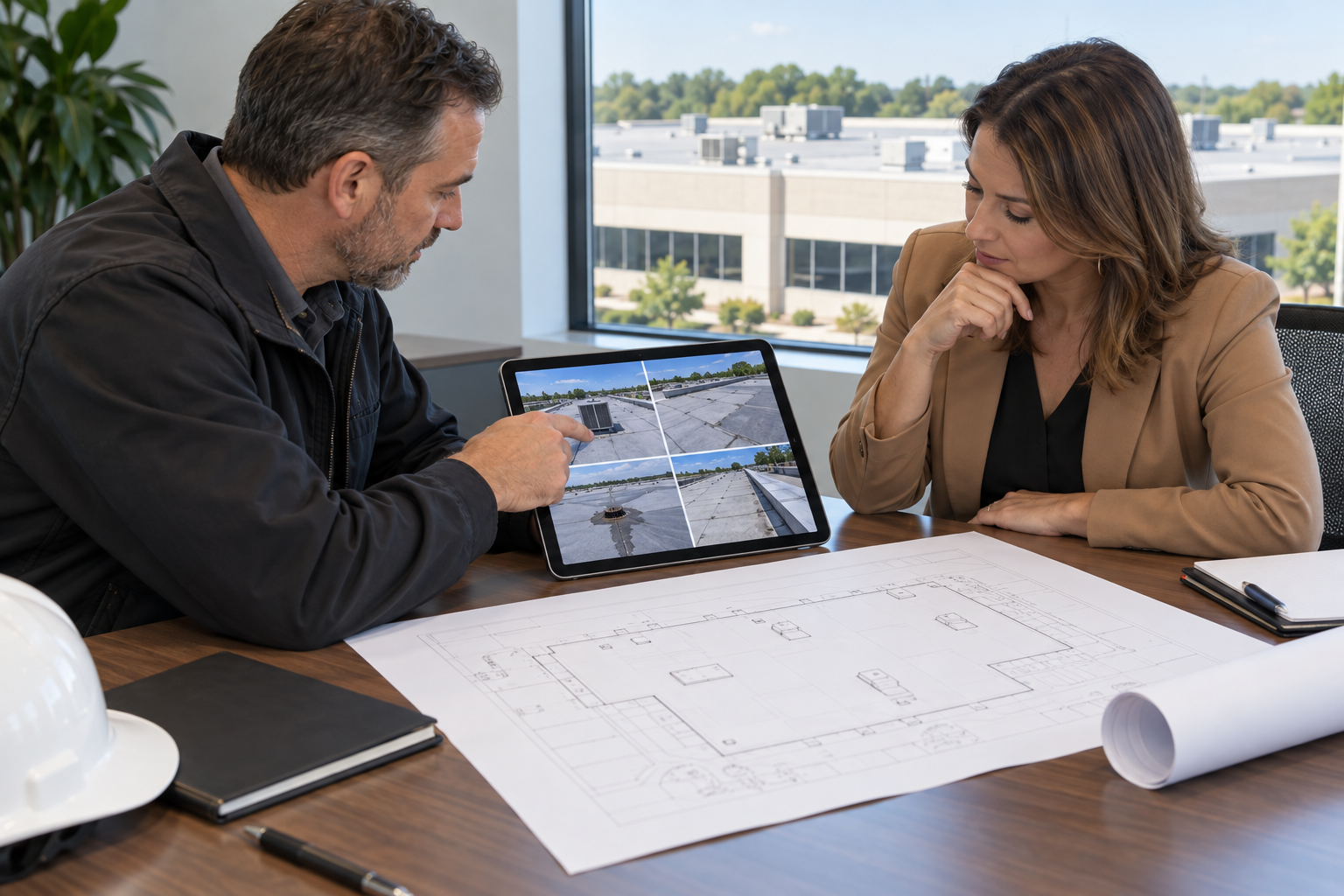
A commercial property may have a newer office roof, an older warehouse roof, and a separately repaired loading canopy. One invoice may establish the age of only one section.
Likewise, a coating application or localized repair does not necessarily establish that the entire roof assembly was replaced. Explain exactly what the earlier project included.
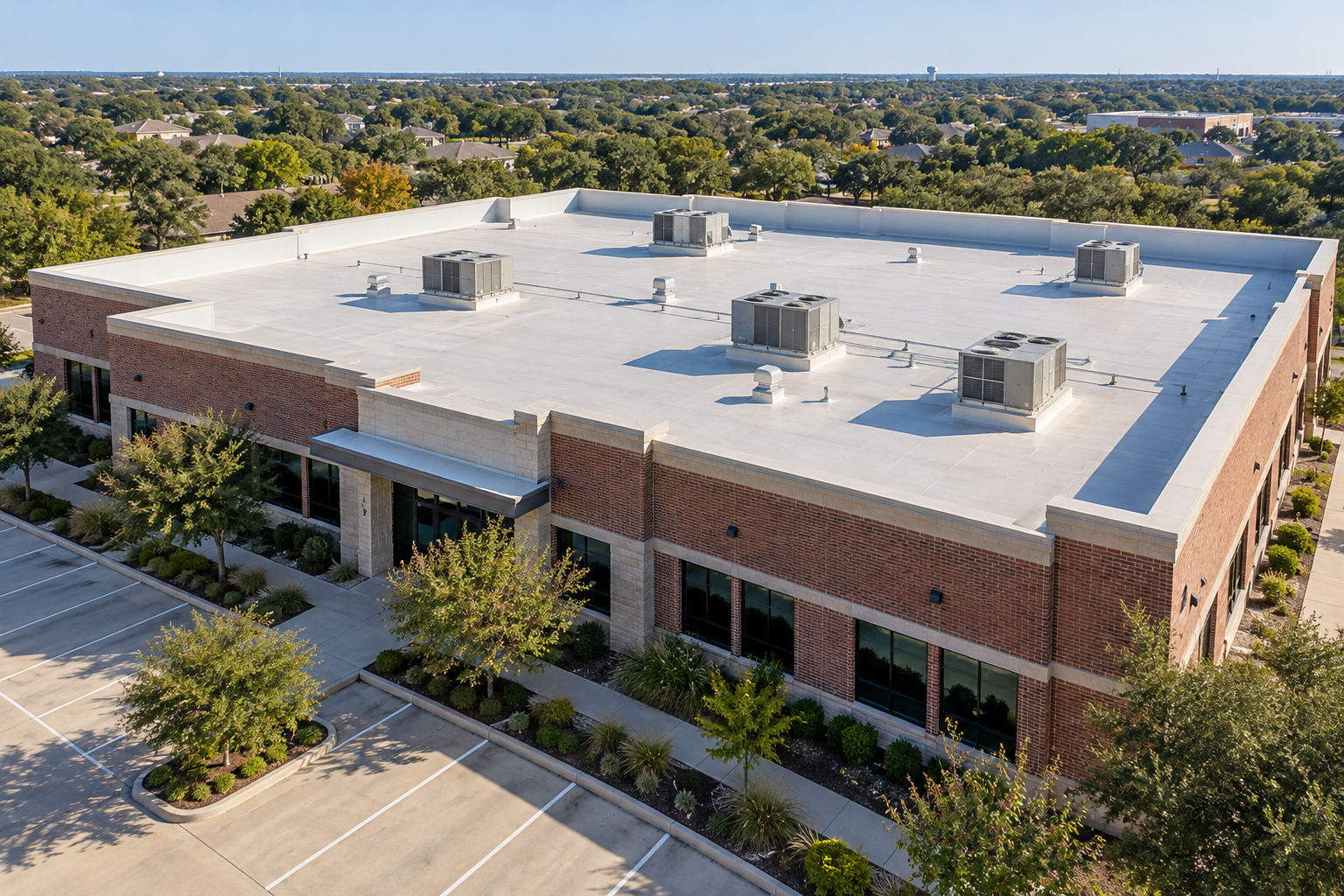
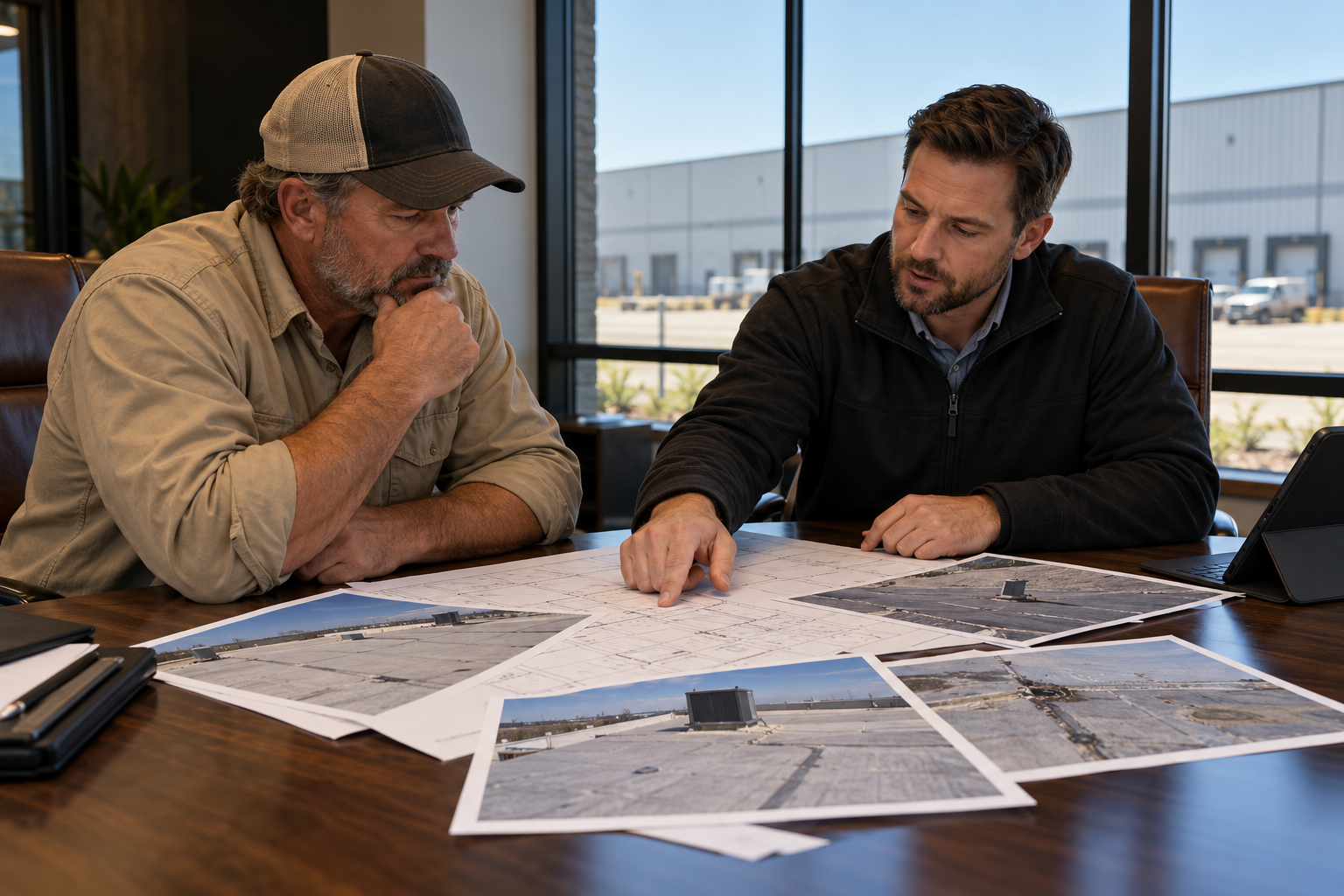
Image 1: Roof Records and Installation History
Place the first generated image here.
Alt text: Property owner reviewing roof invoices, inspection photographs, and a commercial roof plan.
Caption: Organize installation records by roof section so the documents describe the correct materials and project dates.
Evidence That Helps Establish Pre-Loss Condition
Age records answer when work occurred. Condition records help describe what existed before the reported damage.
Useful roof depreciation evidence can include:
- Dated inspection reports.
- Maintenance logs.
- Photographs taken before the loss.
- Previous repair invoices.
- Warranty inspection records.
- Documented leak history.
- Reports identifying earlier deficiencies.
Keep the full history. Selectively removing unfavorable records can leave an incomplete or misleading picture.
A useful inspection report separates observed conditions from interpretations. For example, it should distinguish an open seam, a previous patch, and an area requiring further investigation.
Showtime Exteriors’ commercial roof maintenance guide discusses the value of maintaining a consistent inspection and repair history.
Can a Warranty Prove the Roof Should Have No Depreciation?
A warranty can help identify materials, installation dates, or covered obligations. It does not, by itself, establish the roof’s current condition or determine the insurance valuation.
Similarly, an expected service life should not be presented as a guaranteed lifespan. Actual roof conditions and the applicable policy still matter.
Evidence Needed to Request Recoverable Depreciation
If your policy provides recoverable depreciation, ask your insurer for its specific documentation requirements before work begins.
A practical completion package may include:
DocumentWhat it helps establishFinal itemized invoiceThe work billed and its costSigned contract and approved changesThe agreed construction scopeCompletion photographsVisible finished work at identified locationsPayment recordsAmounts paid toward the projectDeductible documentationEvidence relevant to the owner’s required contributionInspection or closeout recordsProject completion details, where applicable
An invoice should accurately describe the work performed. An estimate is a proposed price; it is not proof that construction was completed.
TWIA’s explanation of factors affecting claim payments describes its own process for recoverable depreciation and repair documentation. Its requirements are specific to TWIA and should not be treated as universal deadlines or procedures for other insurers.
Keep Deductible Documentation Separate and Accurate
The deductible and depreciation are different parts of the claim calculation.
Texas Department of Insurance guidance explains that insurers may request proof of deductible payment and that contractors cannot waive the deductible or help policyholders avoid it. Its deductible payment guidance identifies examples of supporting records, including canceled checks, receipts, credit card statements, and payment-plan documentation.
Ask the insurer which records it needs for your claim. Keep accurate invoices and payment records that can be reconciled with each other.
A Simple Roof Depreciation Example
Consider this hypothetical claim:
CalculationAmountAccepted replacement cost$60,000Depreciation withheld−$15,000Deductible−$5,000Initial payment$40,000Potential later depreciation paymentUp to $15,000
If the policy requirements are satisfied and the full $15,000 becomes payable, total insurance payments would be $55,000. The $5,000 deductible remains the owner’s contribution.
This example assumes sufficient qualifying costs and no other adjustments. Actual payment can depend on incurred expenses, policy limits, endorsements, and other applicable provisions.
The depreciation figure is not automatically an unconditional second check.
Photograph Completed Work by Location
Completion photographs are easier to evaluate when they correspond to the invoice and roof diagram.
For a commercial roof, useful views may include:
- Overall completed roof sections.
- Perimeter and transition details.
- Flashings around penetrations.
- Equipment curbs affected by the work.
- Drains or scuppers included in the scope.
- Areas documented during construction before concealment.
Photographs should show the actual property and work. Stock photographs, generated images, and photographs of unrelated projects cannot establish claim-specific completion.
An organized inspection approach considers the assembly and its details together, as explained in Showtime Exteriors’ commercial roofing inspection and project-planning guide.
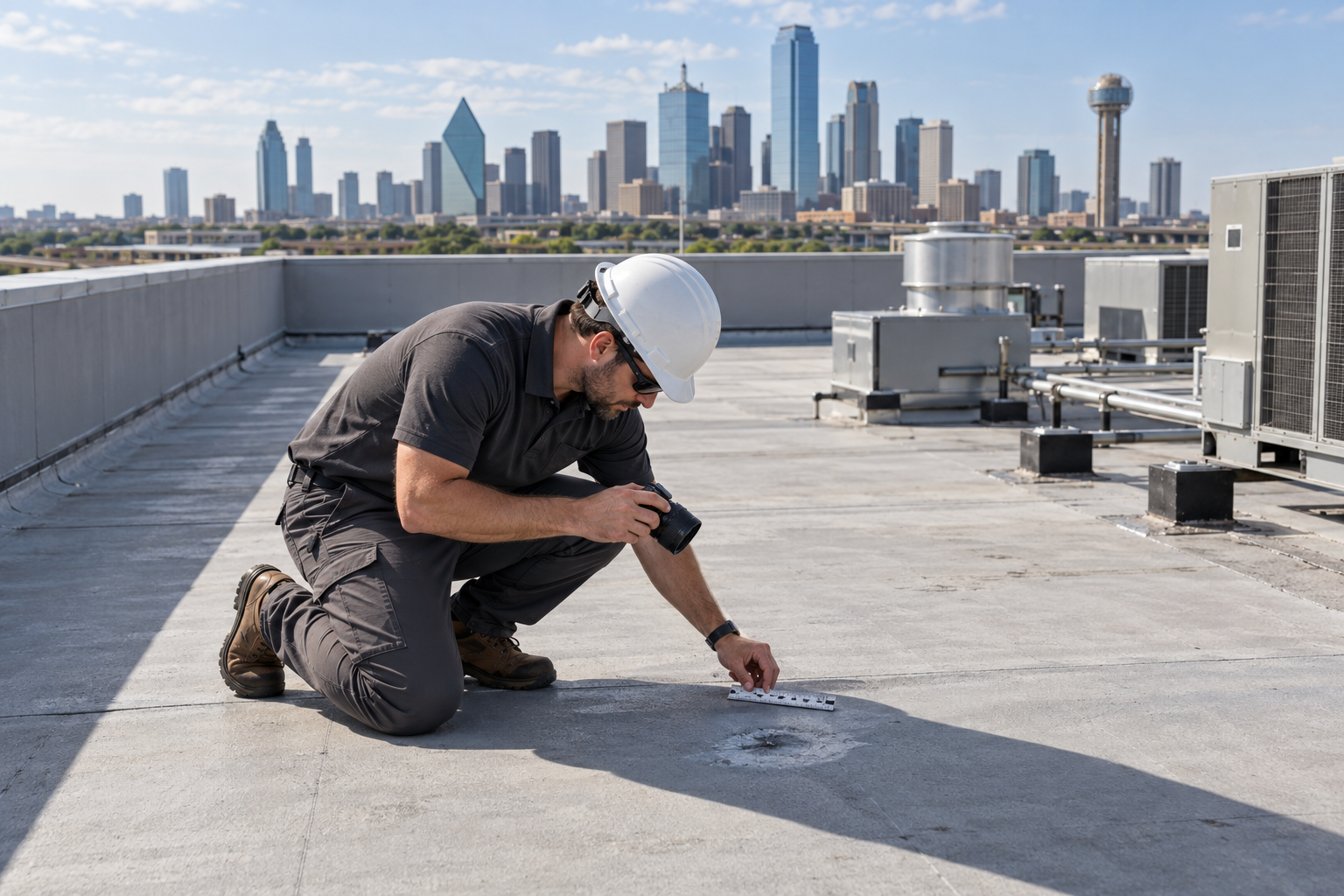
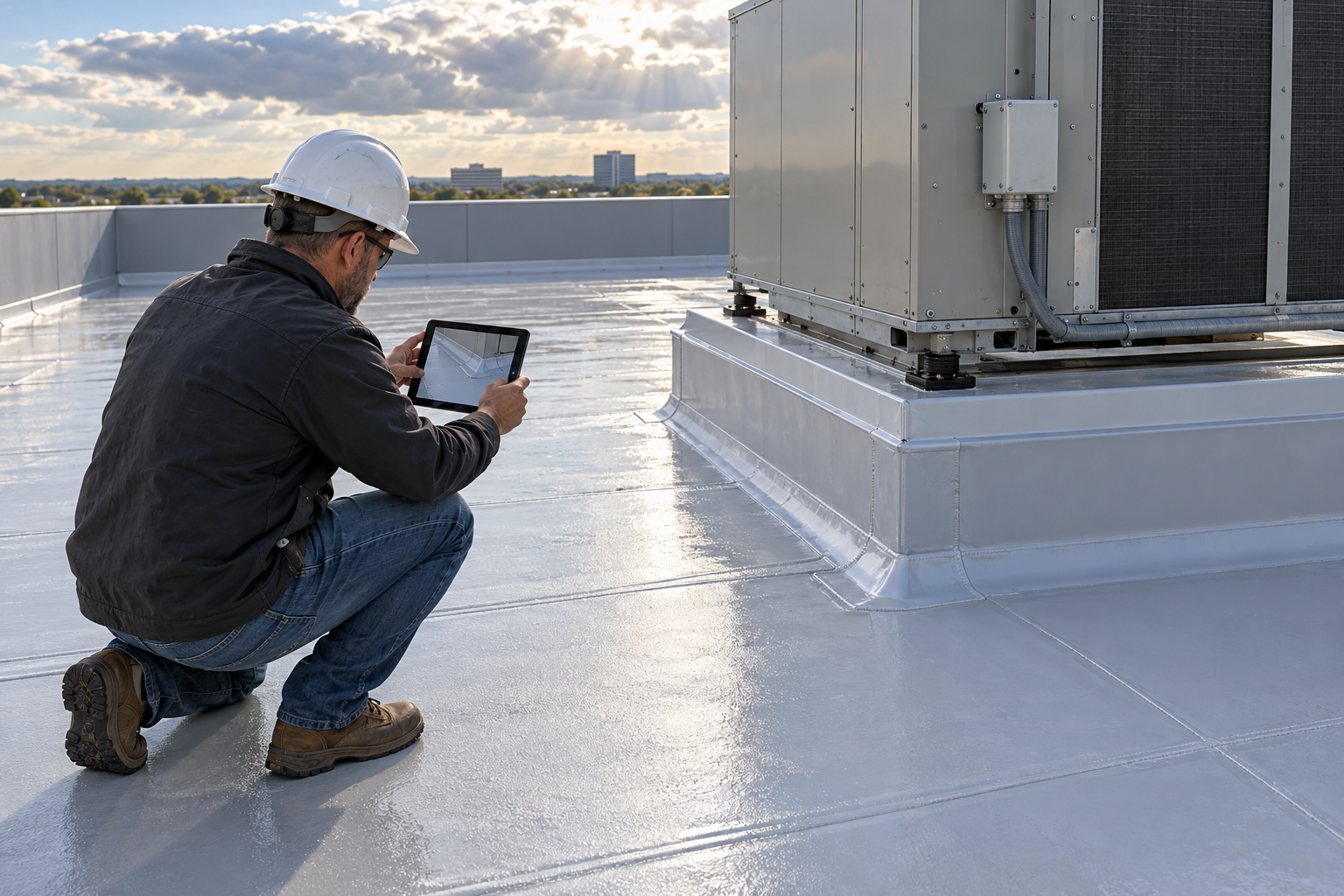
Image 2: Completed Roof Inspection
Place the second generated image here.
Alt text: Roofing inspector photographing commercial roof flashing around rooftop equipment.
Caption: Actual completion photographs should identify the roof sections and details included in the final construction scope.
What If You Disagree With the Depreciation Amount?
Start with a specific written question.
For example:
The estimate lists the west roof as 18 years old. The attached installation invoice identifies replacement of that section seven years before the reported loss. Please review the age used for the west roof and explain whether this changes the depreciation calculation.
This gives the reviewer a defined issue and supporting evidence.
If the disagreement concerns condition, identify the relevant dated inspection or photograph. If it concerns policy interpretation, obtain guidance from the insurer or an appropriately qualified professional.
A contractor can explain its roofing observations and construction estimate. Texas restricts contractors from also acting as public adjusters on claims where they will perform the work. The TDI roofing and insurance rules explain that distinction.
Questions to Ask Before Sending Your Documents
Before submitting roof depreciation evidence, confirm:
- Am I questioning the calculation or requesting payment after repairs?
- Does each record identify the correct roof section?
- Are the invoice, photographs, and scope consistent?
- Have I included the claim number and current estimate date?
- What deadline applies, and where is it stated?
- How will the insurer confirm receipt?
- Is any additional inspection required?
The TDI roof insurance overview also explains why owners should check roof valuation terms and applicable deductibles rather than assume every policy pays the same way.
Get a Clear Record of Your Roof’s Condition
Good roof depreciation evidence connects documents to a particular roof section, installation date, observed condition, or completed repair.
Based in Mansfield, Showtime Exteriors serves North Texas property owners with roofing assessments and documented construction proposals.
To arrange a roof evaluation, contact Showtime Exteriors or call 817-400-ROOF (7663).