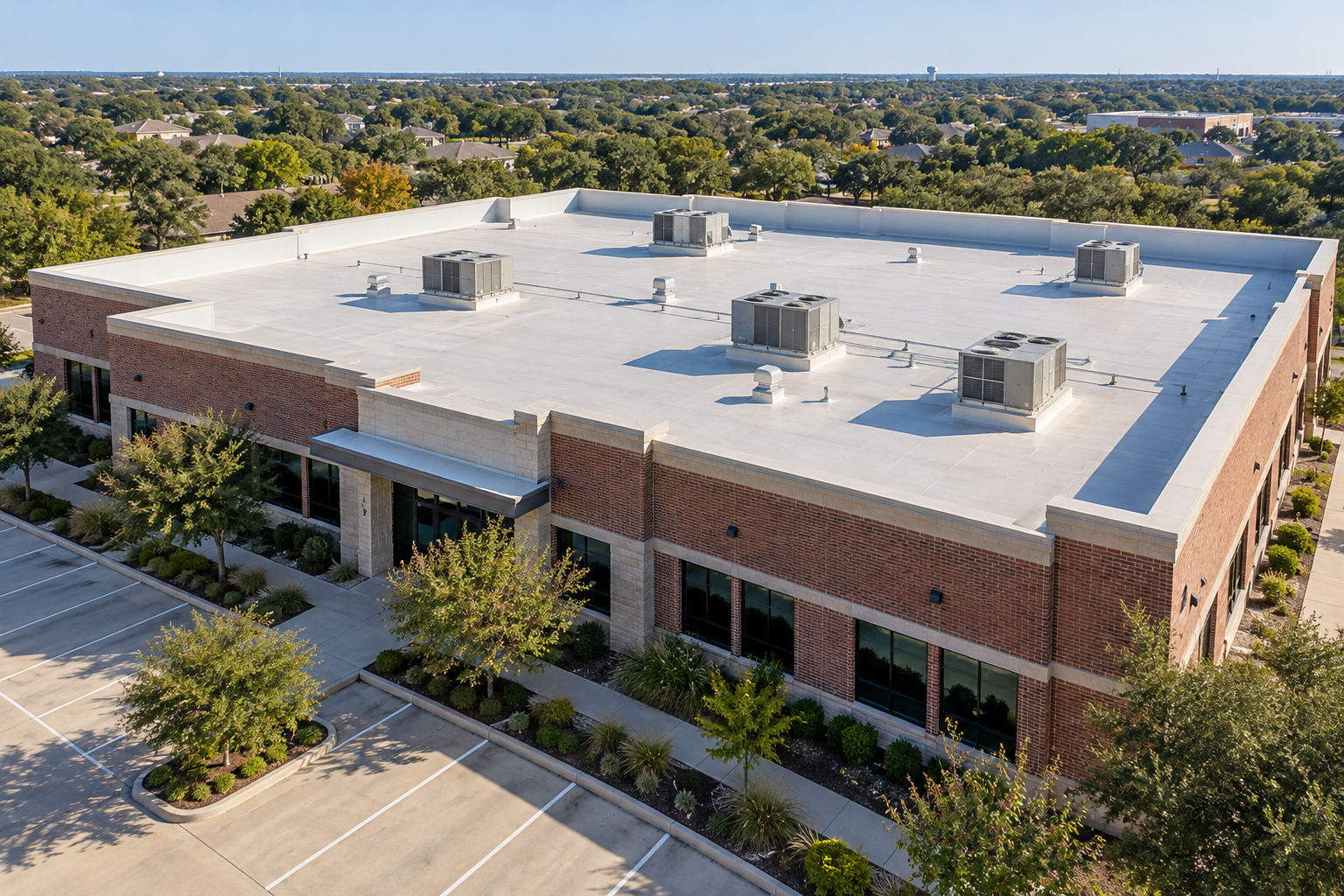


Hail Damage Roof Inspection in Dallas: What to Expect
Scheduling a hail damage roof inspection in Dallas? Learn what inspectors check, which records to prepare, and what a useful inspection report should include.
Hail strikes your building overnight. The following morning, you notice dents on a downspout and water staining inside an office. Does that mean the roof needs replacement?
Those observations warrant investigation. They do not establish the full extent of damage or the appropriate repair.
A hail damage roof inspection in Dallas should document the roof’s condition, identify areas requiring attention, and explain what remains uncertain. The report should help you decide what protection, further investigation, or construction work is appropriate.
For commercial owners, the inspection also needs to account for rooftop equipment, drainage, earlier repairs, and operations inside the building.
Showtime Exteriors provides commercial roofing inspections and assessments to help North Texas owners develop a documented plan.
Before the Appointment: Protect People and Property
If water is entering the building, begin with safe access and appropriate temporary protection.
Keep occupants away from sagging ceilings, exposed electrical hazards, or suspected structural damage. Arrange professional help for conditions that could endanger people.
Do not send employees onto the roof to collect photographs. Wet surfaces, damaged materials, skylights, and unprotected edges can create serious hazards.
The OSHA construction fall-protection resources explain why roof access and inspection work require appropriate planning and protective measures.
If urgent weather protection is necessary, ask the contractor to document conditions before and after the work whenever safely possible. Showtime Exteriors’ emergency commercial roof repair guide explains how to organize that initial response.
What Should You Prepare for the Inspector?
Gather records that help identify the roof and establish its history.
Useful information includes:
- The approximate installation date.
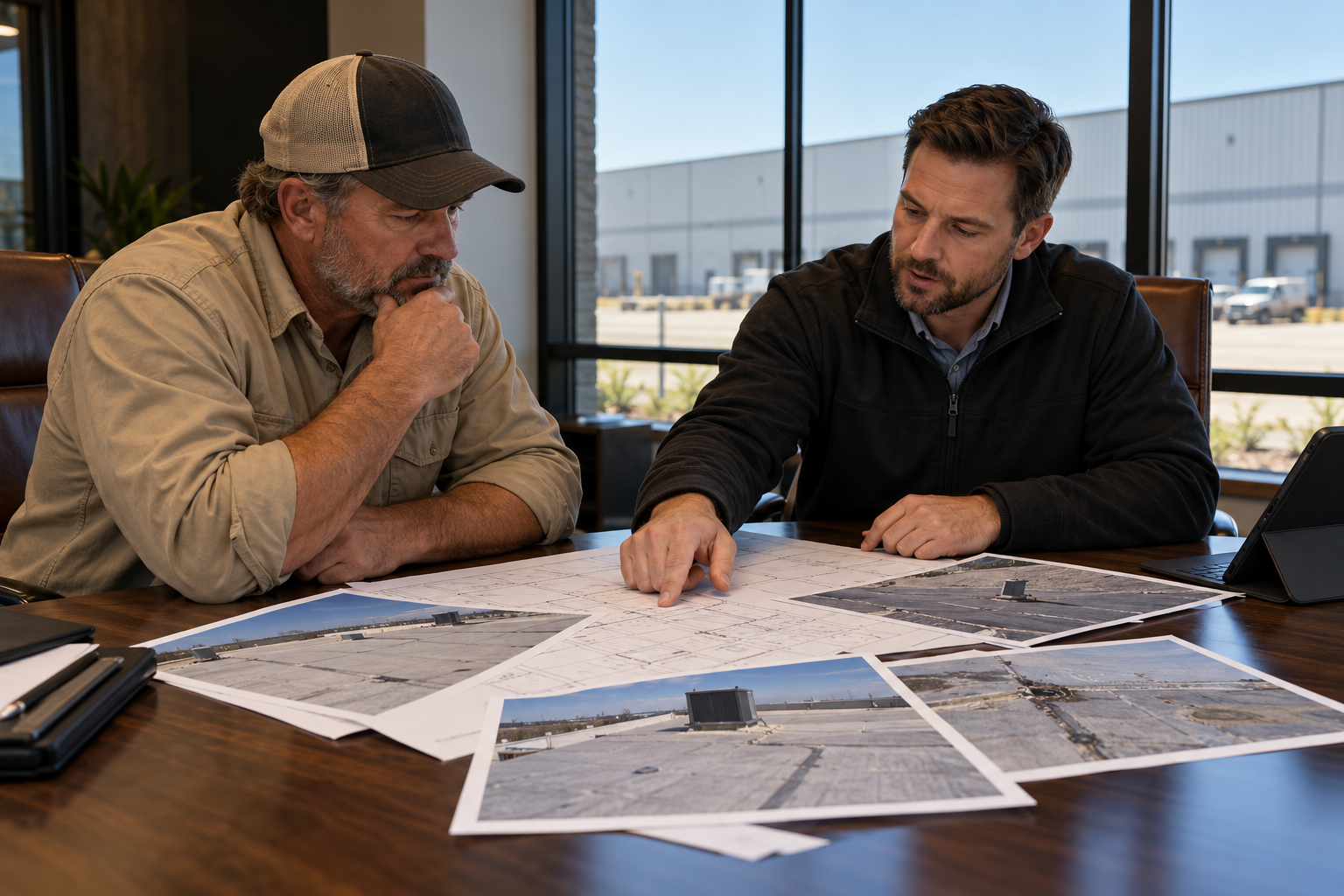
- Roof plans or earlier measurement reports.
- Manufacturer and contractor warranty documents.
- Previous inspection reports.
- Maintenance and repair invoices.
- Dated photographs taken before the storm.
- A list of current and earlier leaks.
- Any temporary protection already completed.
For a property with several roof sections, identify which records belong to each section. An office addition and an older warehouse may have different assemblies and installation dates.
Tell the inspector where access is restricted and whether the building contains sensitive equipment, inventory, or occupied areas requiring special coordination.
Expect Questions About the Storm and Leak Timeline
The inspector should ask when the reported event occurred and when you first observed changes.
Useful questions include:
- Did leaks begin during the storm or later?
- Which rooms were affected?
- Were those areas previously leaking?
- Was rooftop equipment serviced recently?
- Were repairs completed between the event and inspection?
- Are there photographs showing earlier conditions?
Weather records can provide supporting context. The National Weather Service storm-records guide describes records containing reported locations, times, hail sizes, and other event information.
A nearby hail report does not establish damage to your particular roof. Conversely, the absence of a nearby report should not replace an inspection of the property.
The Inspection Should Cover More Than the Roof Surface
A useful assessment considers the roof assembly and related details.
AreaWhat the inspector may documentRoof fieldSurface conditions, openings, impact-related concerns, and earlier repairsSeamsVisible separation or other deficienciesPenetrationsConditions around pipes, vents, and equipmentFlashingsTransitions, terminations, and attachment concernsPerimeterEdge metal, coping, and roof-to-wall detailsDrainageDrains, scuppers, gutters, debris, and evidence of drainage problemsRooftop equipmentVisible component damage and issues requiring another tradeInteriorLeak locations, staining, and affected finishes or contents
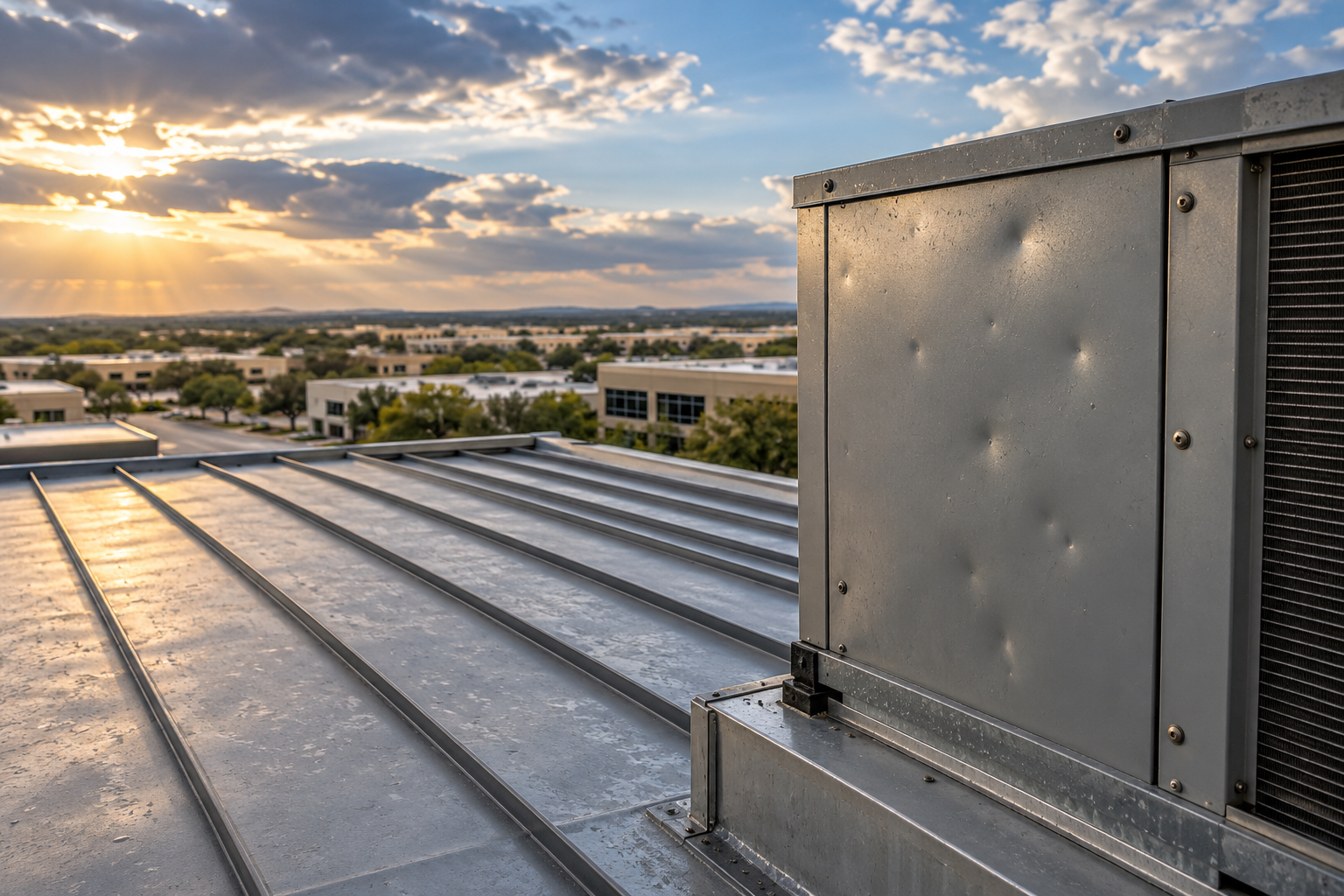
The inspector should distinguish observations from conclusions. A dent in an equipment cabinet is an observation; determining the condition of the adjacent roof covering requires its own evaluation.
Image 1: Documenting Roof Conditions
Place the first generated image here.
Alt text: Roofing inspector photographing a commercial roof surface with the Dallas skyline in the distance.
Caption: Inspection photographs should identify the roof section, observed condition, and relevant scale.
Hail Effects Differ Across Roof Materials
There is no single appearance that establishes hail damage on every roof.
Material, assembly, age, condition, support, and the characteristics of the impact all matter. The Insurance Institute for Business & Home Safety hail research includes field and laboratory studies examining roofing performance and the effect of roof age.
Asphalt Shingles
The inspector should evaluate observed surface changes and distinguish possible impact effects from other conditions. Granule loss, discoloration, or an isolated mark should be assessed in context.
Commercial Membranes
The review should consider the particular membrane and any suspected damage beneath the visible surface.
For granule-surfaced commercial membranes, GAF’s hail-damage technical bulletin distinguishes minor surface effects from cuts, punctures, tears, and cracks. It also explains that more detailed sampling and analysis may be appropriate in some circumstances.
Metal Roofing
The inspection should document panel conditions and details such as seams, fasteners, penetrations, and flashings.
A visible dent does not, by itself, determine whether the roof leaks, whether replacement is appropriate, or whether insurance covers the condition.
What Can a Visual Inspection Establish?
A visual inspection can document accessible conditions. It cannot necessarily confirm every concealed condition in the roof assembly.
The inspector should explain:
- Which areas were accessible.
- Whether moisture or debris limited the review.
- Whether underlying components were evaluated.
- Which conclusions are supported by the findings.
- Whether additional investigation is recommended.
If testing is proposed, ask what question it will answer, who will perform it, and how any openings will be repaired.
Thermal imaging, moisture surveys, sampling, and other methods have specific purposes and limitations. Ask how findings will be verified before they become the basis for a larger construction scope.
What Should the Inspection Report Include?
Ask what deliverables are included before the appointment.
A useful report should contain:
- Property identification and inspection date.
- Roof sections and materials evaluated.
- Relevant history supplied by the owner.
- Access limitations.
- Labeled overview and detail photographs.
- A roof diagram or clear location references.
- Observed conditions and unresolved questions.
- Immediate protection needs.
- Recommended next steps.
A collection of close-up photographs without locations is difficult to evaluate. Likewise, a replacement recommendation should explain why lesser work is unsuitable.
For an existing TPO roof, Showtime Exteriors’ guide to repair, restoration, and replacement decisions provides additional questions to ask.
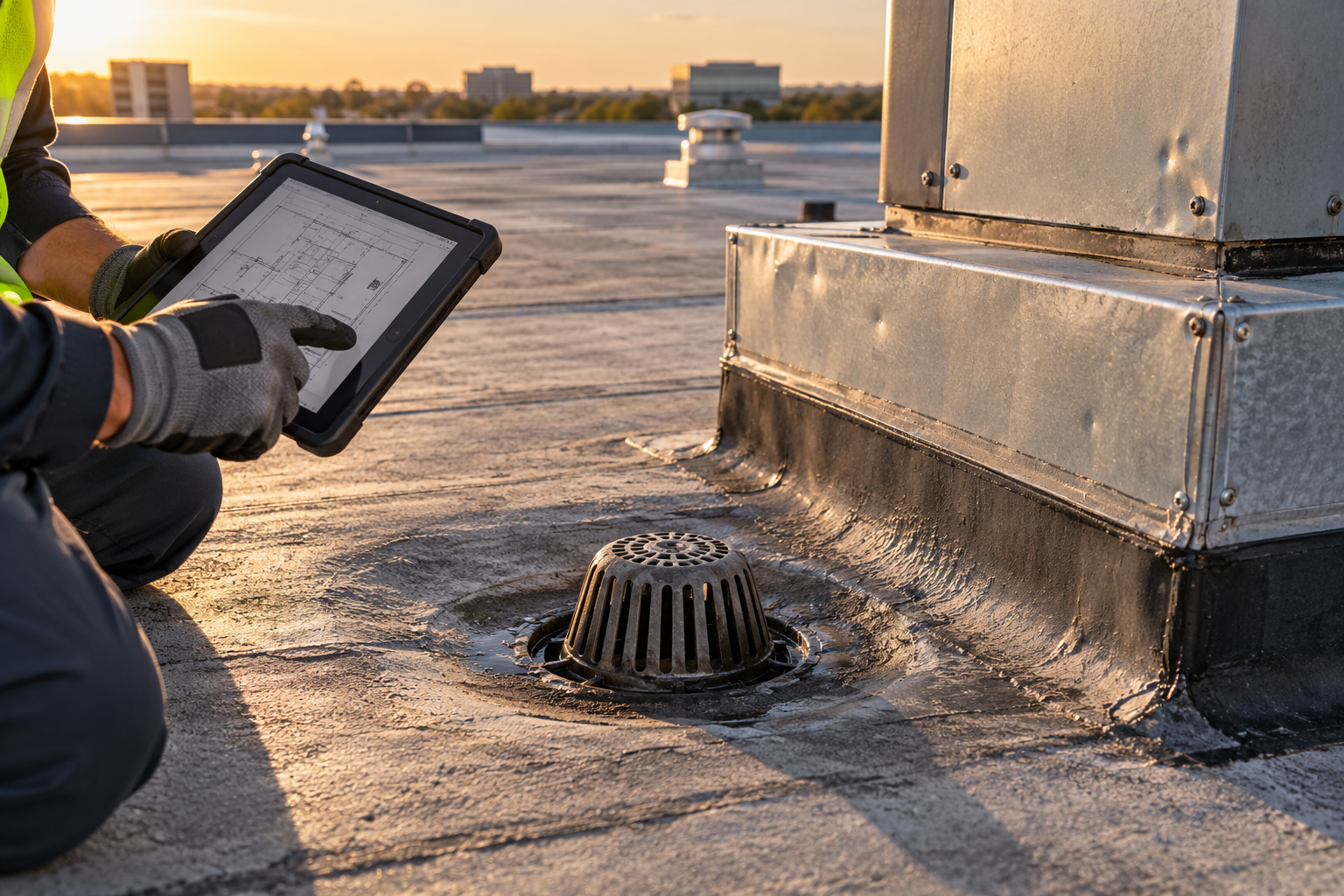
Image 2: Drainage and Rooftop Details
Place the second generated image here.
Alt text: Inspector reviewing a roof plan beside a commercial roof drain and equipment curb.
Caption: Drainage, equipment, and flashing conditions belong in the inspection record alongside the roof covering.
Does an Inspection Mean You Should File a Claim?
An inspection helps establish physical conditions. Whether and how to report a loss should be considered alongside the policy’s requirements and applicable deadlines.
Do not wait for a complete repair design if doing so would cause you to miss a required notice or other obligation.
The Texas Department of Insurance hail and windstorm guidance provides steps for documenting damage, contacting the insurer, and keeping repair records.
The contractor should explain its findings and construction proposal. The insurer evaluates coverage under the policy.
Texas also restricts contractors from acting as public adjusters on claims where they will perform the work. The TDI roofing and insurance law guidance explains those boundaries.
What Happens After the Inspection?
The next step should follow the findings.
A localized defect may support a defined repair. Suspected concealed damage may require further evaluation. Widespread deterioration or damage may justify reviewing larger project options.
Ask for a proposal that identifies the work, materials, quantities, exclusions, and treatment of unforeseen conditions.
Also retain findings unrelated to the reported storm. An inspection may identify maintenance needs that deserve attention even if they are outside an insurance claim.
Showtime Exteriors’ commercial roof maintenance guide explains how to preserve inspection history and track follow-up work.
Questions to Ask Before the Inspector Leaves
- What did you observe, and where?
- Which findings need immediate attention?
- What remains uncertain?
- Is further investigation necessary?
- When will the written report be available?
- Does the proposed work address the identified failure?
- What follow-up is recommended?
Clear answers help you move from concern about the storm to a practical building decision.
Schedule a Hail Damage Roof Inspection in Dallas
A useful hail damage roof inspection in Dallas gives you documented findings, identified limitations, and a clear explanation of the next steps.
Based in Mansfield, Showtime Exteriors serves Dallas and the surrounding North Texas area with roofing assessments and construction proposals.
To arrange an evaluation, contact Showtime Exteriors or call 817-400-ROOF (7663).