

Hail Claim Denial: Step-by-Step Guide for Texas Property Owners
Facing a hail claim denial in Texas? Learn how to review the decision, organize roof evidence, request reconsideration, and understand dispute options.

Your insurance company sends a letter stating that it will not pay for the roof damage you reported. Meanwhile, your contractor’s inspection identifies conditions that need attention.
What should you do next?
Start by identifying exactly what the insurer decided. A hail claim denial can involve a disagreement about damage, the reported event, an exclusion, or another policy requirement. A claim with no payment might also reflect a deductible calculation rather than a coverage denial.
The next step should address the stated reason with relevant evidence.
For Texas commercial property owners, this guide explains how to organize that review while continuing to protect the building.
Step 1: Read the Written Decision Carefully
Locate the insurer’s decision letter, estimate, and any inspection reports provided.
Ask these questions:
- Was the entire claim denied or only part of it?
- Did the insurer identify damage but exclude it?
- Did it attribute the condition to wear, deterioration, or an earlier event?
- Was the accepted repair amount below the deductible?
- What policy language did the insurer cite?
- Does the letter identify a deadline or required next step?
The Texas Department of Insurance explanation of denied or unpaid home claims recommends obtaining the written reason and sending supporting documents when you disagree. Commercial owners should apply this organizational approach while checking their own policy’s terms.
If the explanation is unclear, request clarification before preparing a lengthy response.
Step 2: Identify the Actual Disagreement
Different problems require different responses.
What the insurer saysWhat to investigateNo hail damage was identifiedInspection observations, locations, photographs, and any need for further evaluationConditions reflect deteriorationRoof history, maintenance records, and evidence distinguishing existing conditionsDamage predates the policy periodInstallation records, earlier inspections, and a documented event timelineAn exclusion appliesThe cited endorsement and the insurer’s explanation of its applicationRepairs fall below the deductibleAccepted scope, quantities, pricing, and deductible calculationDocumentation is incompleteThe specific missing records and submission requirements
Do not assume every hail claim denial can be resolved with a higher estimate. An estimate describes construction costs; it may not answer a dispute about causation or policy coverage.
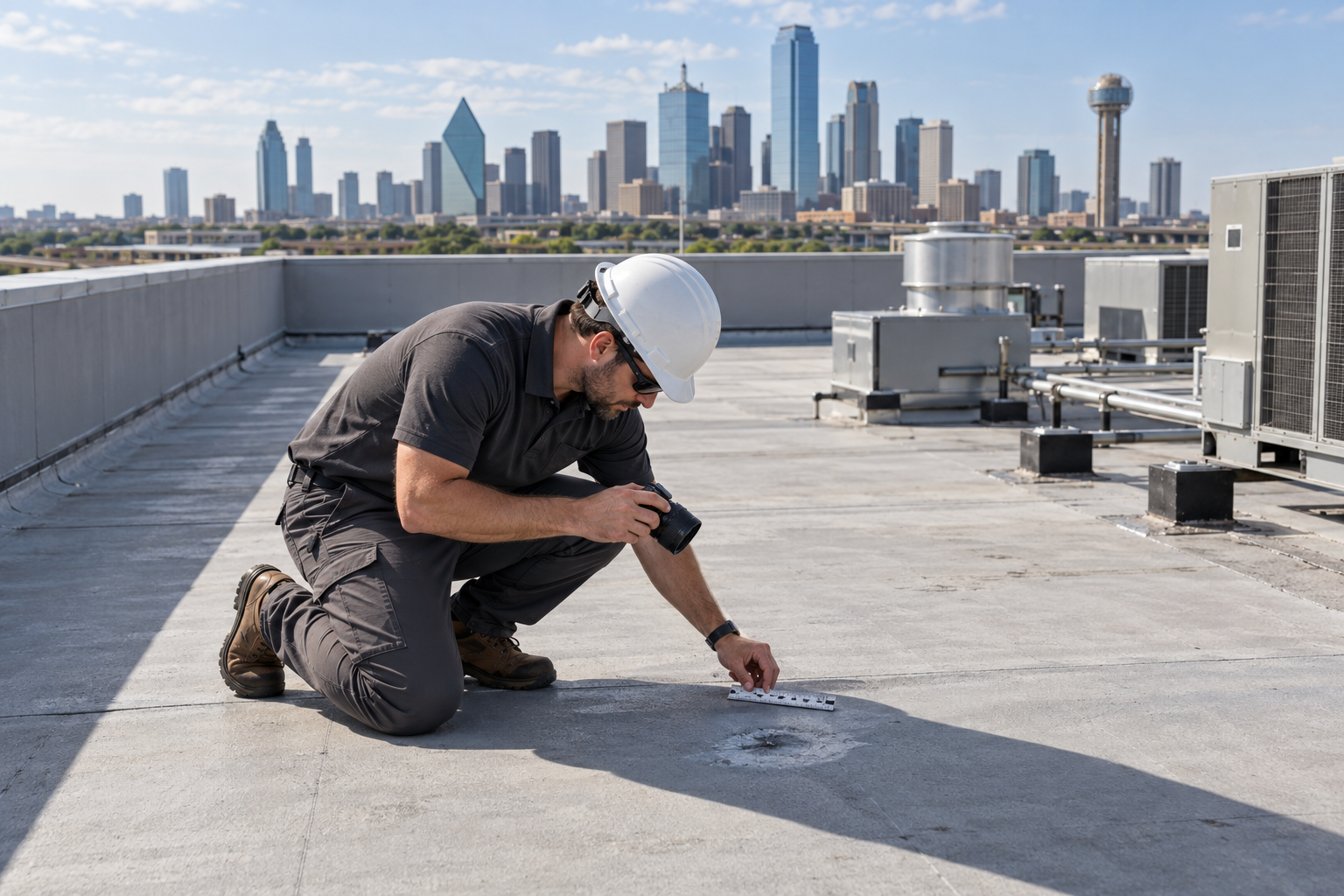
Showtime Exteriors provides commercial roofing assessments to document physical conditions and explain proposed roofing work.
Step 3: Protect the Building During the Review
A disputed claim does not stop an active leak.
Arrange appropriate temporary protection, relocate vulnerable contents when safe, and restrict access to hazardous areas. If water affects electrical equipment, unstable ceiling materials, or structural components, involve the appropriate professionals.
Document emergency work with:
- Photographs before and after protection.
- The date the condition was discovered.
- A description of the affected area.
- Materials and labor used.
- Itemized invoices and payment records.
Showtime Exteriors’ emergency commercial roof repair guide explains how building owners can organize immediate response and documentation.
Preserve evidence whenever safely possible, but do not leave a dangerous condition untreated simply to retain a photograph.
Image 1: Roofing and Rooftop Components After Hail
Place the first generated image here.
Alt text: Commercial metal roof beside a rooftop HVAC cabinet with visible dents.
Caption: Record the roof and associated components separately; a dent in one material does not establish the condition of every nearby surface.
Step 4: Build an Evidence Package Around the Denial Reason
Create a folder for the claim and organize it by issue.
Include the decision letter, relevant policy documents, correspondence, roof diagram, inspection photographs, and current itemized proposal.
Then add evidence that addresses the specific disagreement.
If Roof Age Is Incorrect
Provide installation invoices, completion records, permits where available, and warranty documentation identifying the relevant roof section.
If Pre-Loss Condition Is Disputed
Include dated inspection reports, maintenance logs, earlier photographs, and prior repair records.
Keep the history complete. A roof may have both older deficiencies and newly observed damage.
If an Area Was Missed
Mark its location on the roof plan and provide overview, context, and detail photographs.
If Concealed Damage Is Suspected
Explain what remains uncertain and what investigation could answer the question. Do not describe a suspected condition as confirmed damage.
An established maintenance history can make these comparisons easier. Review Showtime Exteriors’ commercial roof maintenance guidance for ways to maintain that record.
Step 5: Use Weather Reports as Supporting Context
Weather records can help establish that hail was reported near the property on a particular date.
The National Weather Service storm-records guide explains available records and the types of information they contain, including locations, times, and reported hail sizes.
Their role has limits.
A nearby report does not establish that a particular roof sustained damage. Likewise, the absence of a nearby report should not be treated as a property-specific inspection finding.
Connect weather information to the building’s own photographs, inspection findings, and timeline. Do not substitute a neighborhood hail map for evidence of roof conditions.
Step 6: Request a Focused Review or Reinspection
Send a concise written request identifying the decision you want reviewed.
For example:
Please review the decision concerning the west roof section at [address], claim [number]. The attached inspection report identifies conditions at locations W-2 and W-3 that we believe require further evaluation. Please confirm whether these areas were inspected and whether a reinspection is appropriate.
Attach a short index so the reviewer can locate the supporting documents.
Ask the insurer:
- Whether it received the submission.
- Whether another inspection will be arranged.
- What additional information it requires.
- Who will respond to the questions raised.
A reinspection provides another opportunity to evaluate the property. It does not guarantee that the hail claim denial will change.
Step 7: Separate Additional Repair Costs From Coverage Questions
Sometimes the insurer accepts a covered loss but the estimates differ.
In that situation, identify the disputed quantities, omitted details, or newly documented work. Ask the contractor to explain its scope with photographs, measurements, and relevant construction information.
Showtime Exteriors’ questions to ask before a roof claim supplement can help organize that comparison.
If the insurer instead disputes whether the reported damage is covered, additional pricing alone may leave the central question unanswered.
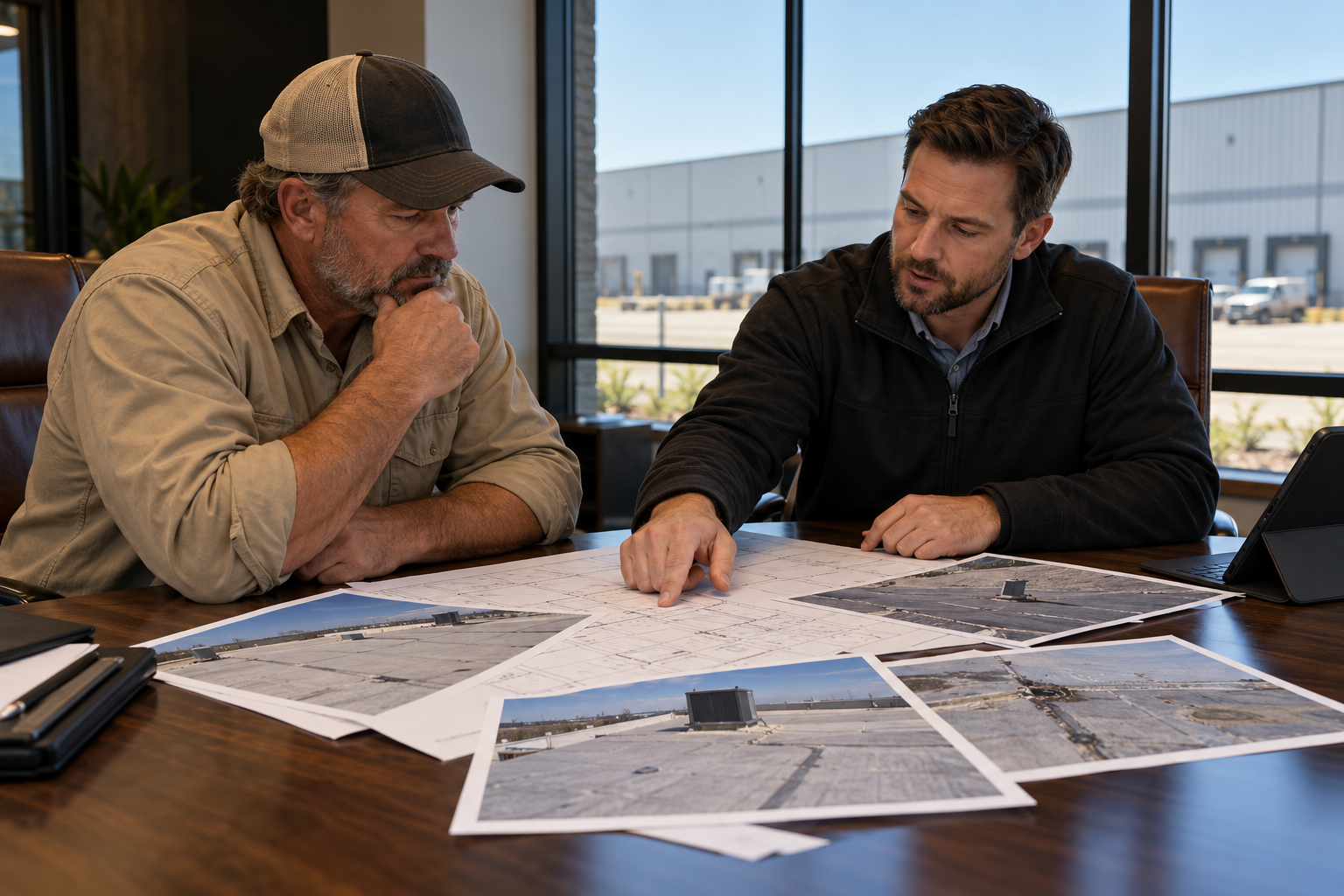
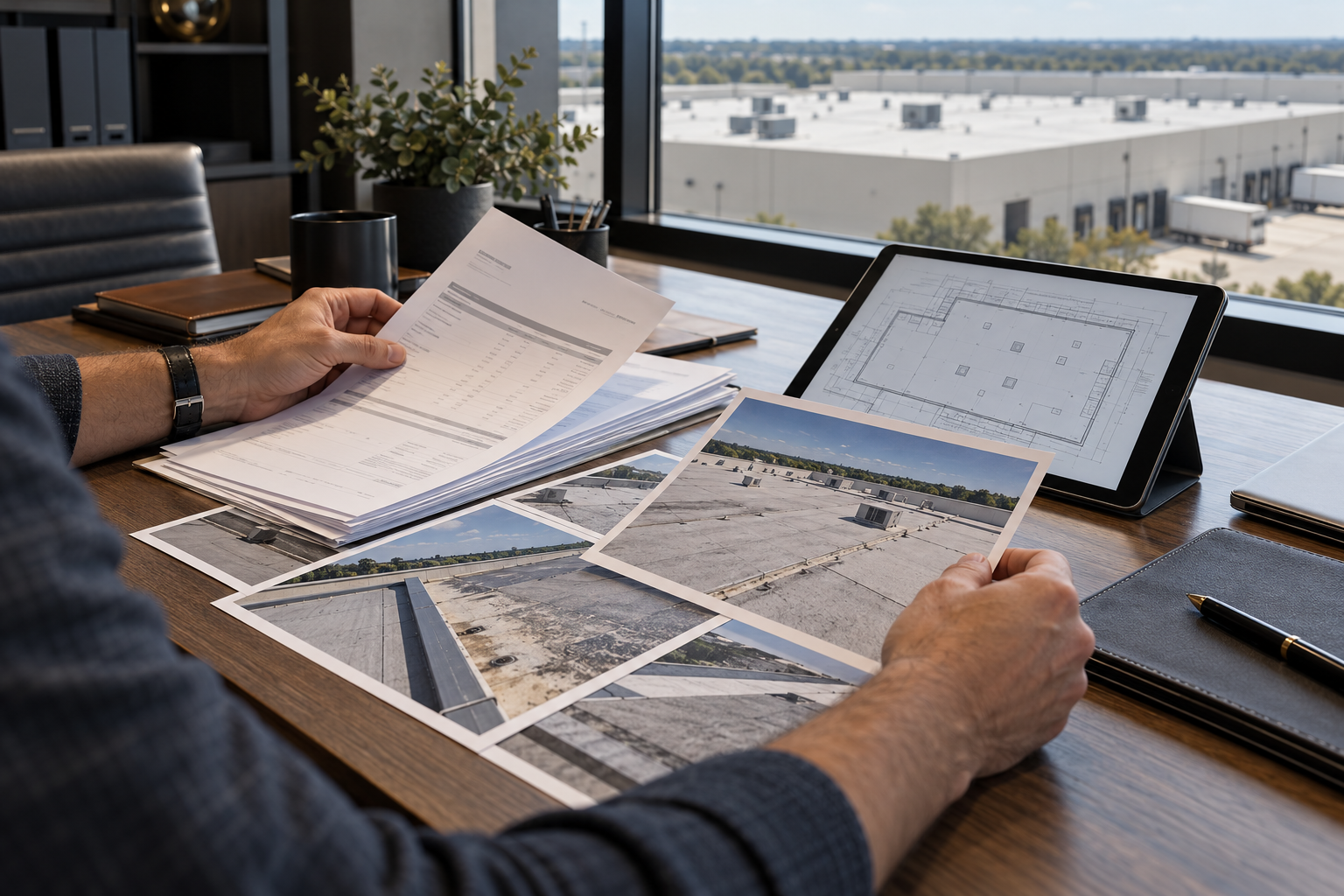
Image 2: Reviewing the Denial and Supporting Records
Place the second generated image here.
Alt text: Property representatives comparing roof photographs, a roof plan, and insurance paperwork.
Caption: A focused review request connects each question to a specific photograph, roof location, or document.
Step 8: Consider the Appropriate Dispute Option
If the disagreement remains unresolved, review the available options with attention to the policy and type of dispute.
Appraisal
Appraisal may be available for disagreements about the amount of a loss. It should not be presented as a way to decide whether the policy covers the damage.
The TDI insurance complaint and appraisal guidance explains this distinction and notes that appraisal involves costs. Confirm the provision, procedures, and deadlines in your policy before proceeding.
A TDI Complaint
A complaint can raise concerns about claim handling or compliance. It does not automatically overturn a hail claim denial.
TDI explains that it cannot settle factual disputes such as whether damage resulted from a storm or normal wear and tear. Its home insurance complaint guidance describes those limits. Commercial owners should confirm the appropriate complaint route for their insurer.
Professional Representation
Depending on the dispute, an owner may consider a licensed public adjuster, an appropriately qualified technical specialist, or an attorney.
Understand the proposed services, fees, and role before signing an agreement. Roofing contractors can explain construction observations and estimates, but Texas restricts them from also acting as public adjusters on claims where they will perform the work. See the TDI roofing and insurance law guidance.
Step 9: Track Deadlines Independently
Do not assume that reconsideration, a reinspection request, or a complaint pauses other deadlines.
Create a timeline showing:
- Reported loss date.
- Initial claim submission.
- Inspection dates.
- Written decision date.
- Additional evidence submissions.
- Any stated appraisal, notice, repair, or legal deadlines.
If your policy is issued by TWIA, use its specific procedures. The TDI TWIA complaint guide describes distinct processes for disputes over accepted amounts and denied claims. Those procedures should not be generalized to other insurers.
Obtain timely qualified advice if a deadline is unclear or approaching.
Mistakes That Can Weaken a Review Request
Avoid sending repeated emails that do not identify new evidence or unanswered questions.
Other common problems include:
- Comparing only estimate totals.
- Submitting photographs without locations.
- Treating all visible roof marks as hail damage.
- Omitting earlier repair history.
- Presenting suspected damage as established fact.
- Assuming another building’s claim proves your own.
- Accepting promises of guaranteed approval.
A credible response explains what should be reviewed and why.
Get a Clear Assessment of the Roof
A hail claim denial requires a focused response: understand the decision, preserve the evidence, identify the disagreement, and select the appropriate next step.
Based in Mansfield, Showtime Exteriors serves North Texas property owners with roof assessments and documented construction proposals.
To schedule an evaluation, contact Showtime Exteriors or call 817-400-ROOF (7663).