

When Should You Repair, Restore, or Replace a Metal Roof Retrofit?
Learn when a commercial metal roof retrofit needs repair, restoration, or replacement, and what Texas building owners should ask before approving work.

Repair a metal roof retrofit when damage is isolated and the surrounding assembly remains serviceable. Consider restoration when the existing surface qualifies for a compatible system. Evaluate replacement when deterioration, attachment problems, moisture, or underlying damage prevents a dependable smaller repair.
The decision starts with identifying what is installed. “Metal roof retrofit” can describe a new metal roof above an older roof, a membrane installed over existing metal panels, or another engineered assembly. Those systems have different inspection and repair requirements.
For Texas commercial building owners, the most useful question is: Which option addresses the documented problem while supporting the building’s long-term needs?
Showtime Exteriors’ metal roof retrofit guide for Texas commercial buildings explains the main approaches and assessment considerations.
First, Identify the Retrofit System
Before comparing repair, restoration, and replacement, establish which layers and components are present.
Metal-Over-Metal Retrofit
A metal-over-metal system places new panels above an existing metal roof using a suitable attachment or framing arrangement.
The specific assembly matters. For example, MBCI’s overview of retrofit roofing systems describes options involving new metal roofing and supporting framing, subject to appropriate structural review. MBCI
An inspection should identify the new panels, attachment, supporting components, transitions, and relevant conditions in the original roof.
Membrane-Over-Metal Retrofit
A membrane retrofit may place insulation, cover board, and a single-ply membrane over an eligible metal roof.
Its performance depends on the complete assembly, including attachment and drainage. The GAF metal retrofit guide addresses substrate condition, structural capacity, drainage, and attachment considerations for its systems. gaf.com
A repair method suitable for an exposed metal panel is not automatically appropriate for the membrane above it.
Showtime Exteriors’ guide to TPO retrofits over existing metal roofs provides additional context.
Coated Metal Roof
A coating restoration is different from adding a new roof assembly. It generally involves preparation, specified repairs, and a compatible protective coating system.
The Metal Building Manufacturers Association’s coating white paper distinguishes coatings from retrofit options and discusses the importance of evaluating existing conditions. roofhugger.com
Use precise terms in proposals so you know whether the contractor is offering repair, coating restoration, a new retrofit assembly, or tear-off and replacement.
When Is Repair the Right Choice?
Localized repair may be practical when the problem is limited and the remaining system can support reliable work.
Examples may include:
- A damaged flashing detail.
- A localized panel issue.
- An isolated membrane puncture.
- A small area of failed coating.
- A defined problem at a penetration.
- A limited fastener or joint concern.
The inspection should establish the cause and extent of the condition rather than simply identify a spot to seal.
MBCI’s panel repair bulletin recommends inspecting the entire roof to identify other areas needing attention before repairing a damaged panel. MBCI
What Makes a Repair Proposal Useful?
A repair proposal should explain:
- Where the problem is located.
- What the contractor observed.
- Which materials will be used.
- How the work will connect to the existing system.
- Whether underlying conditions require investigation.
- What limitations remain.
- What workmanship coverage applies.
A vague instruction to “seal roof leaks” makes it difficult to evaluate the scope or verify completion.
When Should You Consider Restoration?
Restoration may be an option when the existing roof is suitable for the proposed system and required repairs can be completed first.
For an exposed metal roof, the assessment should consider:
- Panel condition.
- Corrosion.
- Fasteners and attachment.
- Seams and end laps.
- Flashing and penetrations.
- Existing finishes or coatings.
- Surface preparation.
- Drainage.
- Moisture concerns.
A coating should not be expected to correct structural damage, failed attachment, or severely deteriorated panels.
GAF’s HydroStop system information describes restoration for structurally sound metal roofs. Eligibility and preparation must be evaluated for the actual roof and selected products. GAF
Can an Existing Membrane Retrofit Be Coated?
Possibly, but it requires a separate compatibility assessment. The membrane, previous repairs, contamination, adhesion, moisture, and proposed coating must be considered.
Do not assume a coating approved for metal is appropriate for a membrane simply because metal panels are underneath it.
When Might Replacement Be Necessary?
Sectional or full replacement becomes more appropriate when the roof cannot support a dependable repair or restoration.
Potential reasons include:
- Widespread panel deterioration.
- Significant membrane damage.
- Recurring failures across multiple areas.
- Compromised attachment.
- Wet or damaged underlying materials.
- Structural concerns.
- Incompatible layers or repairs.
- Details that cannot be corrected within a smaller scope.
The proposal should explain which components need replacement. Replacing an upper membrane, replacing selected panels, and removing the entire assembly are different projects.
Avoid accepting “the roof is old” as the only explanation. Age provides context, but documented condition should support the recommendation.
Repair, Restore, Retrofit Again, or Replace?
OptionWhen it may fitWhat must be confirmedLocalized repairDamage is isolatedSurrounding condition and compatible repair methodCoating restorationThe surface qualifies for the proposed systemPreparation, adhesion, repairs, and maintenance requirementsNew retrofit assemblyRetaining an eligible existing roof is appropriateStructural capacity, attachment, drainage, and assembly requirementsSectional replacementA defined area needs broader workTransitions and condition of adjacent areasFull replacementA smaller scope cannot reliably address the findingsRemoval scope, underlying repairs, and complete new design
Adding another roof system is not automatically appropriate because an earlier retrofit was successful. Existing layers and building conditions need a fresh assessment.
Why Structural Capacity and Attachment Matter
A retrofit changes the roof assembly. Added materials, attachment, and the way forces move through the system require appropriate design.
Ask the project team:
- What supports the current roof?
- Where does the proposed system attach?
- Is the existing structure suitable?
- Is testing or engineering needed?
- How are perimeter and corner conditions addressed?
- How will materials be staged without overloading the roof?
Roof Hugger’s retrofit FAQ illustrates how system selection depends on the existing panel and proposed new roof. Product information is a starting point; the project still needs a suitable design. roofhugger.com
A coating is not a structural reinforcement, and new panels do not automatically resolve inadequate supports.
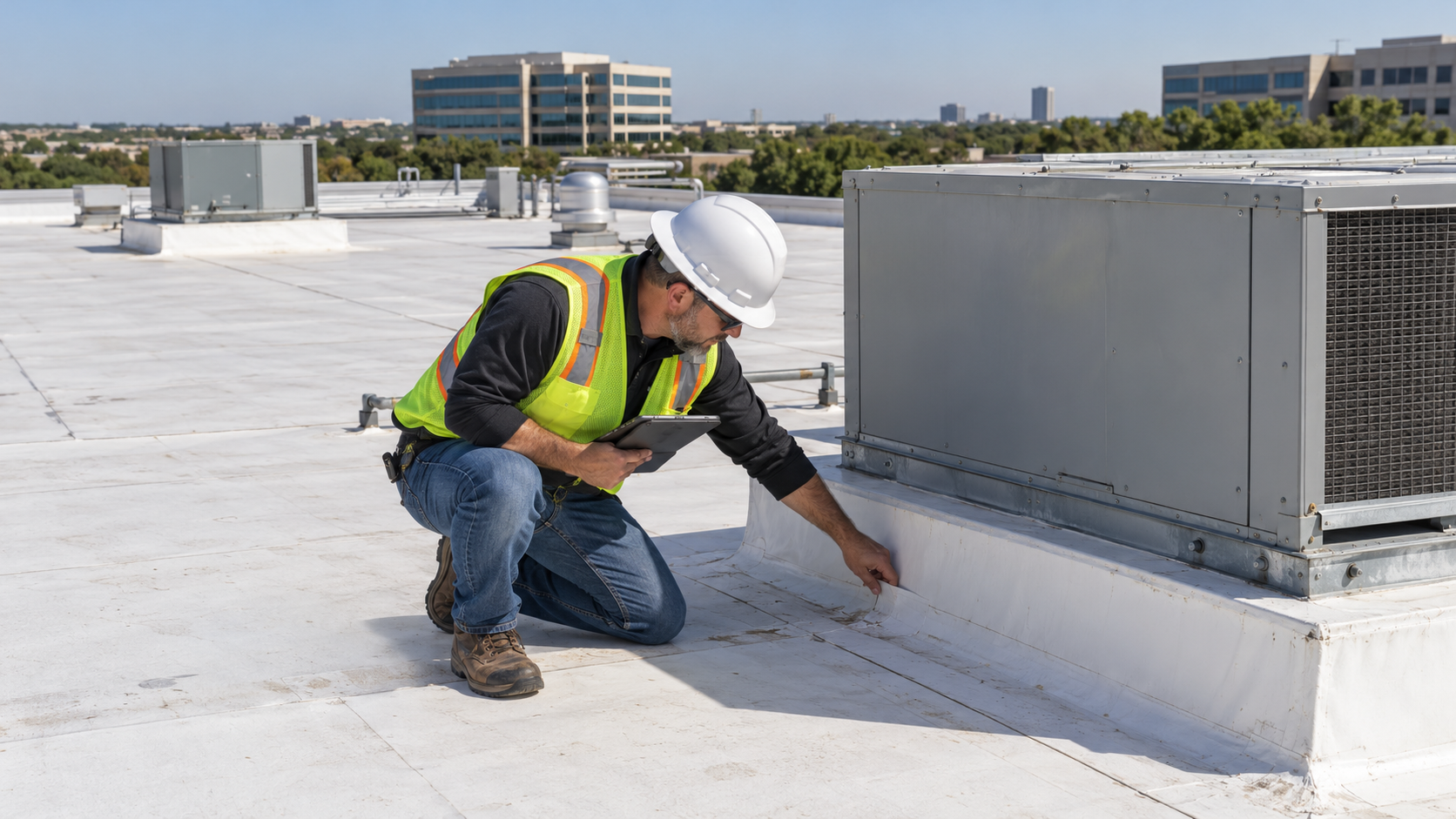
What Should the Inspection Include?
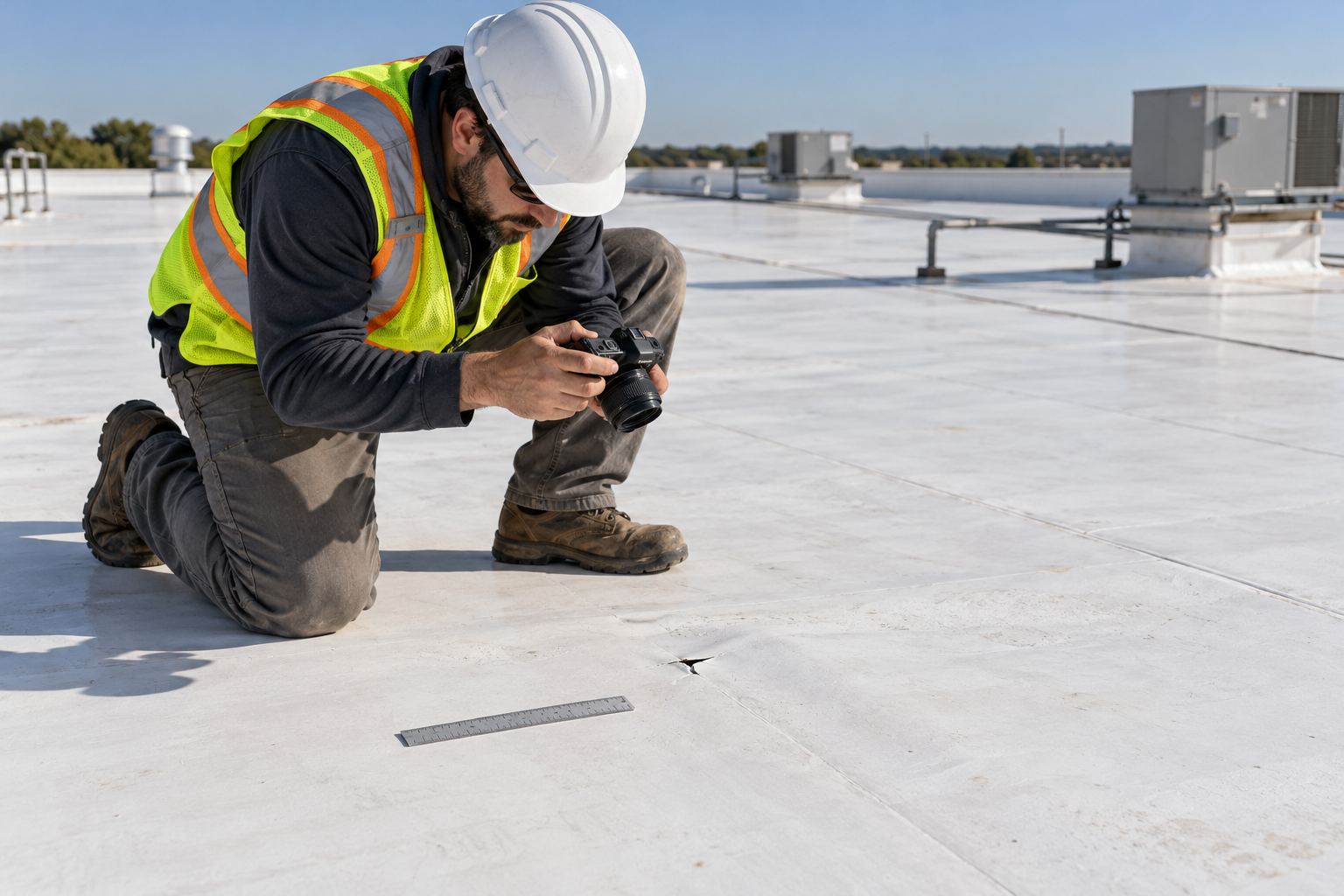
A useful assessment should identify both visible conditions and remaining uncertainty.
Roof History
Collect installation dates, drawings, warranties, repair invoices, leak logs, and earlier photographs when available.
Surface and Details
Depending on the system, inspect panels or membrane, seams, flashing, penetrations, edges, drains, and previous work.
Underlying Conditions
Where moisture or concealed damage is suspected, ask what further investigation is recommended and what its limitations are.
Interior Observations
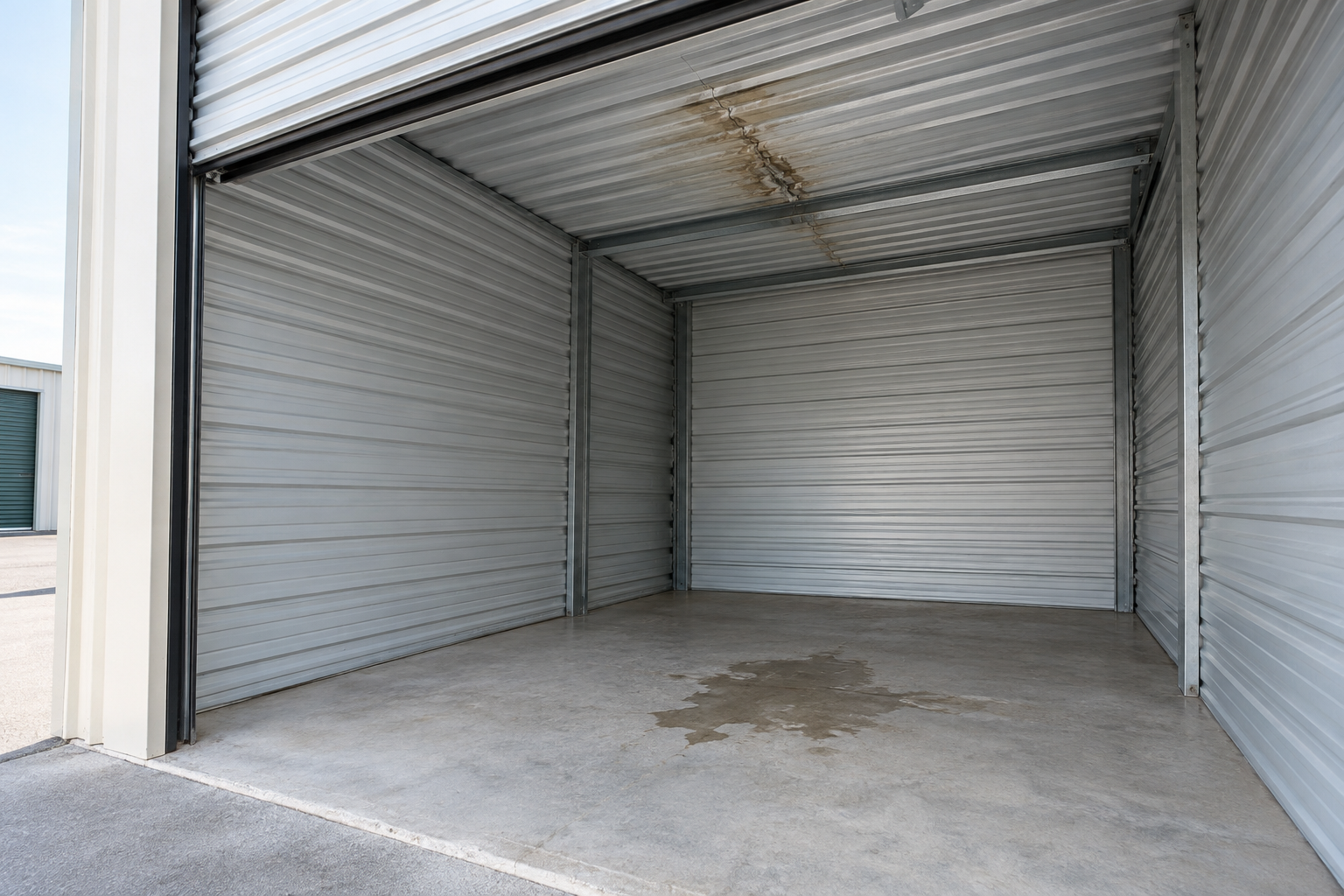
Document leak locations and timing. A stain may help define an investigation area without establishing the exact roof entry point.
Location-Based Recommendations
The report should connect each recommendation with a roof area and supporting photographs.
Showtime Exteriors’ commercial roof asset management guide explains how roof history and condition records support ongoing decisions.
Warning Signs That Need Prompt Attention
Arrange prompt professional assessment for:
- Active water entry.
- Loose or hanging metal.
- A membrane opening.
- Displaced panels or edge components.
- New problems after a storm.
- Repeated leaks despite repairs.
If there are suspected structural problems, falling materials, or water near electrical equipment, keep people away and seek appropriate assistance.
Do not climb onto a damaged roof to investigate.
How Should You Compare the Costs?
Compare complete scopes rather than one price per square foot.
Ask each contractor to identify:
- Preparation.
- Removal and disposal.
- Included repairs.
- Materials and accessories.
- Insulation or cover board.
- Attachment.
- Flashing and drainage.
- Testing or engineering.
- Property protection.
- Warranty terms.
- Maintenance responsibilities.
- Exclusions.
A lower initial price may describe substantially less work. A higher-priced option should still explain what additional scope or value it provides.
Showtime Exteriors’ guide to metal roof retrofit cost in Texas outlines common budgeting considerations.
Plan the Work Around Building Operations
Repair, restoration, retrofit, and replacement can affect operations differently.
Discuss:
- Noise.
- Odors and application conditions.
- Overspray protection where relevant.
- Equipment access.
- Temporary roof exposure.
- Parking and delivery routes.
- Interior protection.
- Weather contingencies.
Do not assume a retrofit creates no disruption. Ask for the actual sequence and any required restrictions.
For an operational example, read Showtime Exteriors’ guide to retrofitting an active warehouse roof.
Questions to Ask Before Approving the Project
- What retrofit system is currently installed?
- Which conditions are causing the reported problem?
- Can a localized repair address it reliably?
- Is the roof suitable for restoration?
- Are structural or attachment concerns present?
- What remains uninspected?
- Why is the proposed scope recommended?
- What work is excluded?
- How will operations be protected?
- What maintenance will the completed system require?
Frequently Asked Questions
Can a leaking metal roof retrofit be repaired?
Often, if the problem is localized and the surrounding assembly remains suitable. Inspection findings determine the scope.
Is coating a metal roof the same as retrofitting it?
No. Coating restoration and adding a new roof assembly are different approaches.
Can a coating fix rusted-through panels?
Do not assume so. Damaged panels need assessment and appropriate correction before a restoration system is considered.
Does a membrane-over-metal roof need metal repair methods?
Not necessarily. The visible membrane and underlying assembly must be identified, and repairs must suit the actual system.
Can another roof be installed over an existing retrofit?
Possibly, but it requires evaluation of existing layers, structure, attachment, drainage, and applicable requirements.
Does replacement mean removing every existing layer?
Not automatically. The proposal must define what will be removed, retained, repaired, and installed.
Request a Metal Roof Retrofit Assessment
A reliable decision starts with identifying the existing assembly and documenting its condition. That makes it easier to compare repair, restoration, and replacement proposals on a meaningful basis.
Contact Showtime Exteriors to discuss your commercial metal roof and request an assessment.
Call: 817-400-ROOF (7663)