

Questions to Ask Before Starting a Commercial Roof Claim
Starting a commercial roof claim in Texas? Ask about coverage, deductibles, inspections, evidence, repair costs, and business interruption before proceeding.

A warehouse develops leaks after a storm. Your maintenance team finds stained ceiling panels, a contractor identifies several roofing concerns, and someone suggests filing an insurance claim.
Before assuming the entire roof needs replacement—or that insurance will cover the proposed work—get clear answers about the building, the damage, and the policy.
A commercial roof claim involves more than a repair estimate. Owners may need to coordinate tenant access, protect inventory, preserve evidence, document expenses, and understand how the policy calculates payment.
The following questions help Texas property owners organize that process without delaying necessary protection or required claim reporting.
1. What Do We Know About the Damage Right Now?
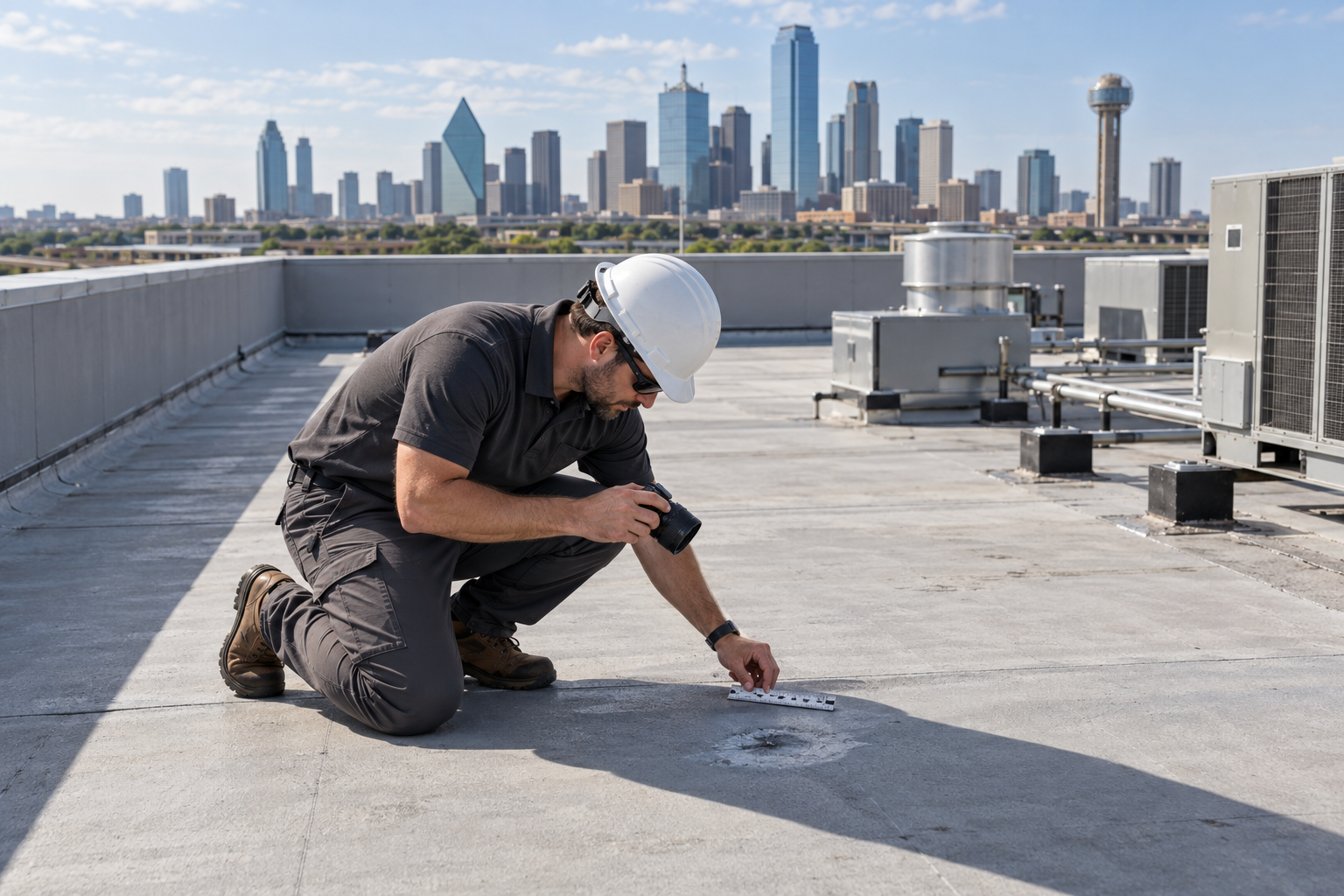
Start with observations that can be documented.
When did water first appear? Which rooms were affected? Was a roof opening observed? Were there earlier leaks in the same area?
A ceiling stain alone does not establish when damage occurred or what caused it. Water can travel before becoming visible, and roof problems may involve several conditions.
Ask the inspecting contractor to distinguish:
- Visible damage.
- Existing deterioration.
- Previous repairs.
- Suspected concealed conditions.
- Areas requiring further investigation.
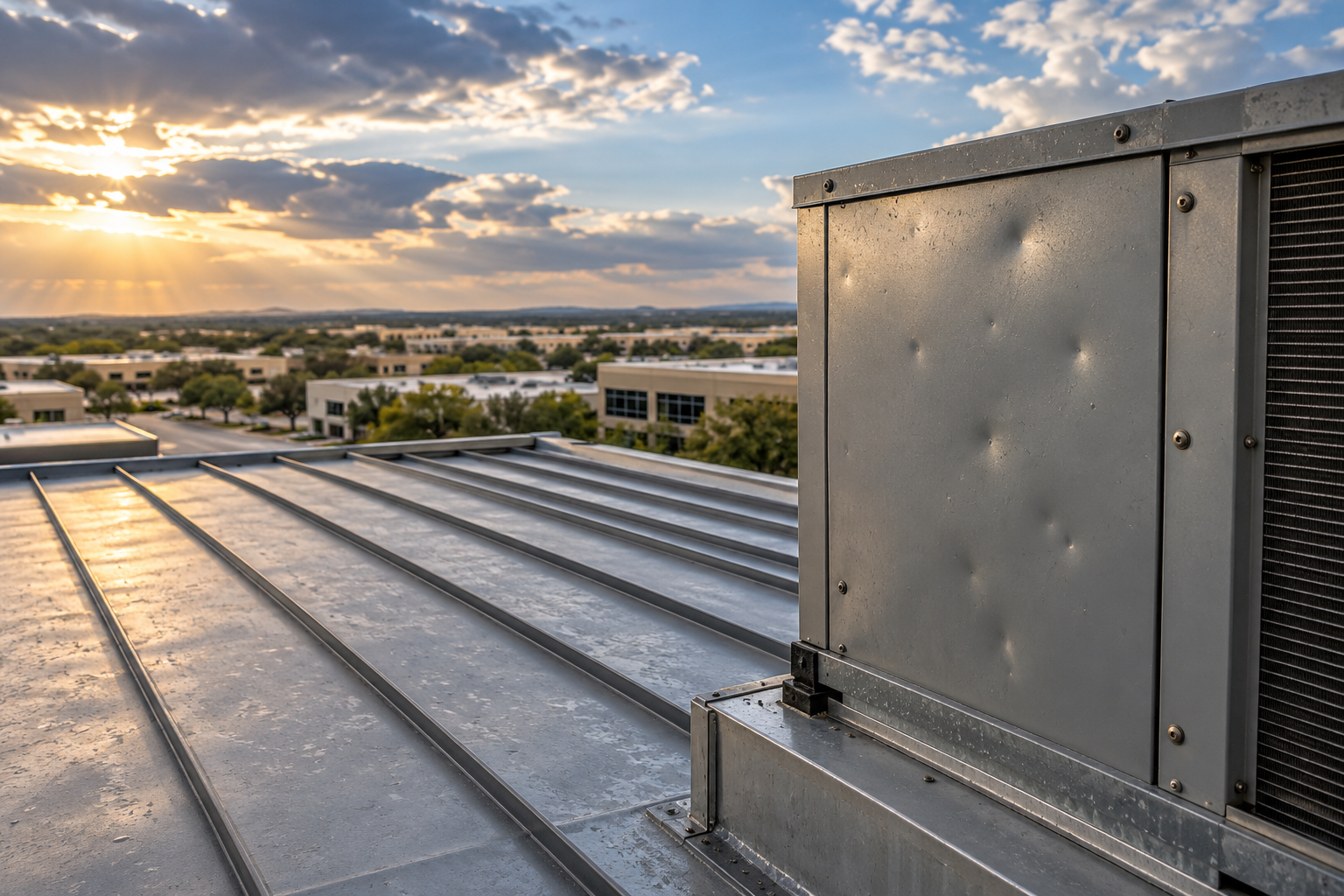
Showtime Exteriors provides commercial roofing inspections and project assessments to help owners develop a construction scope based on observed conditions.
The first useful outcome is a clear record of what was found—not a promised claim result.
2. Does the Building Need Immediate Protection?
An active leak can damage stock, equipment, interiors, and electrical systems while the claim is being evaluated.
Ask:
- Which areas should be isolated?
- Can inventory be relocated safely?
- Is temporary weather protection needed?
- Who can authorize emergency work?
- What documentation should be preserved before materials are disturbed?
The NAIC’s post-disaster claims guidance recommends documenting losses, preserving damaged items when possible, notifying the insurer, and retaining receipts for temporary repairs. Reimbursement depends on the policy and covered loss.
Coordinate protection with qualified professionals. Do not delay urgent safety measures while waiting for a complete permanent repair proposal.
For practical building-response considerations, review Showtime Exteriors’ emergency commercial roof repair guide.
3. Which Policy Covers This Building and Reported Event?
A business may have several policies, locations, ownership entities, or separate arrangements for building and tenant property.
Before starting a commercial roof claim, identify:
- The named insured.
- The insured building address.
- The policy effective during the reported event.
- Relevant coverage forms and endorsements.
- The appropriate reporting contact.
- Any separate wind, hail, or flood coverage.
The Texas Department of Insurance commercial property insurance guide explains that commercial policies differ in covered causes of loss and valuation methods. Exclusions and endorsements can materially affect the claim.
Ask the insurer or qualified adviser to explain the provisions that apply to your circumstances. A contractor’s repair recommendation does not establish insurance coverage.
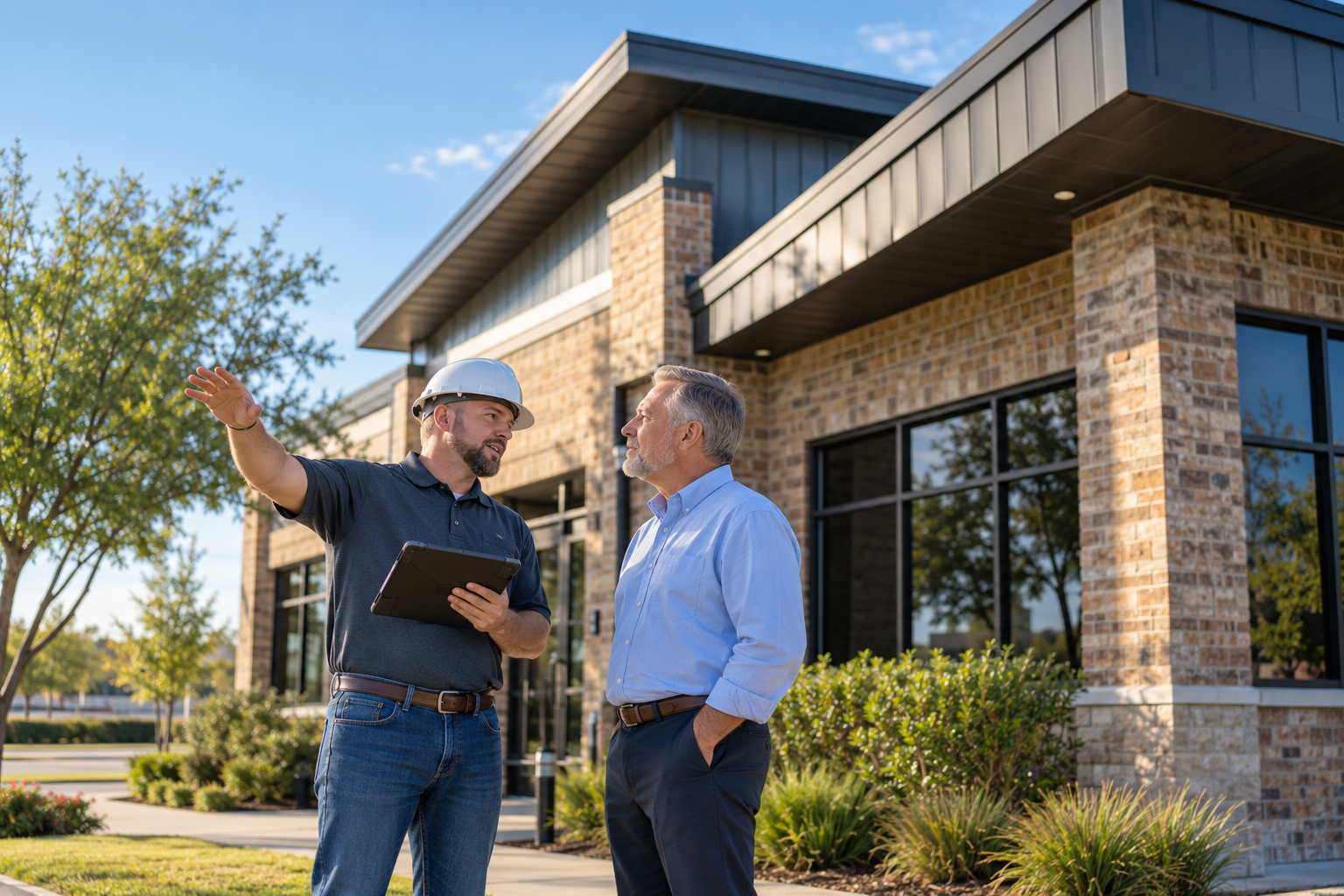
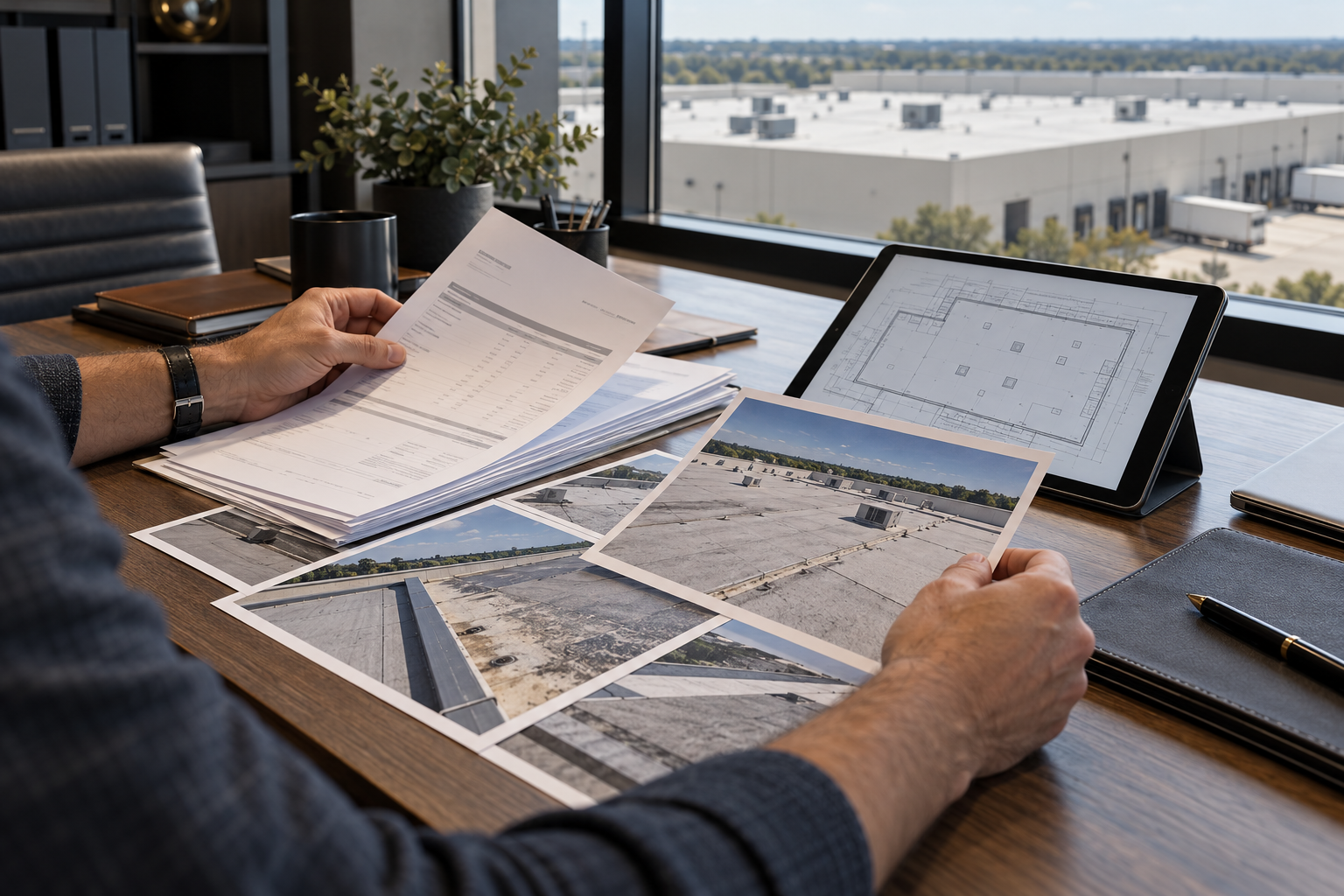
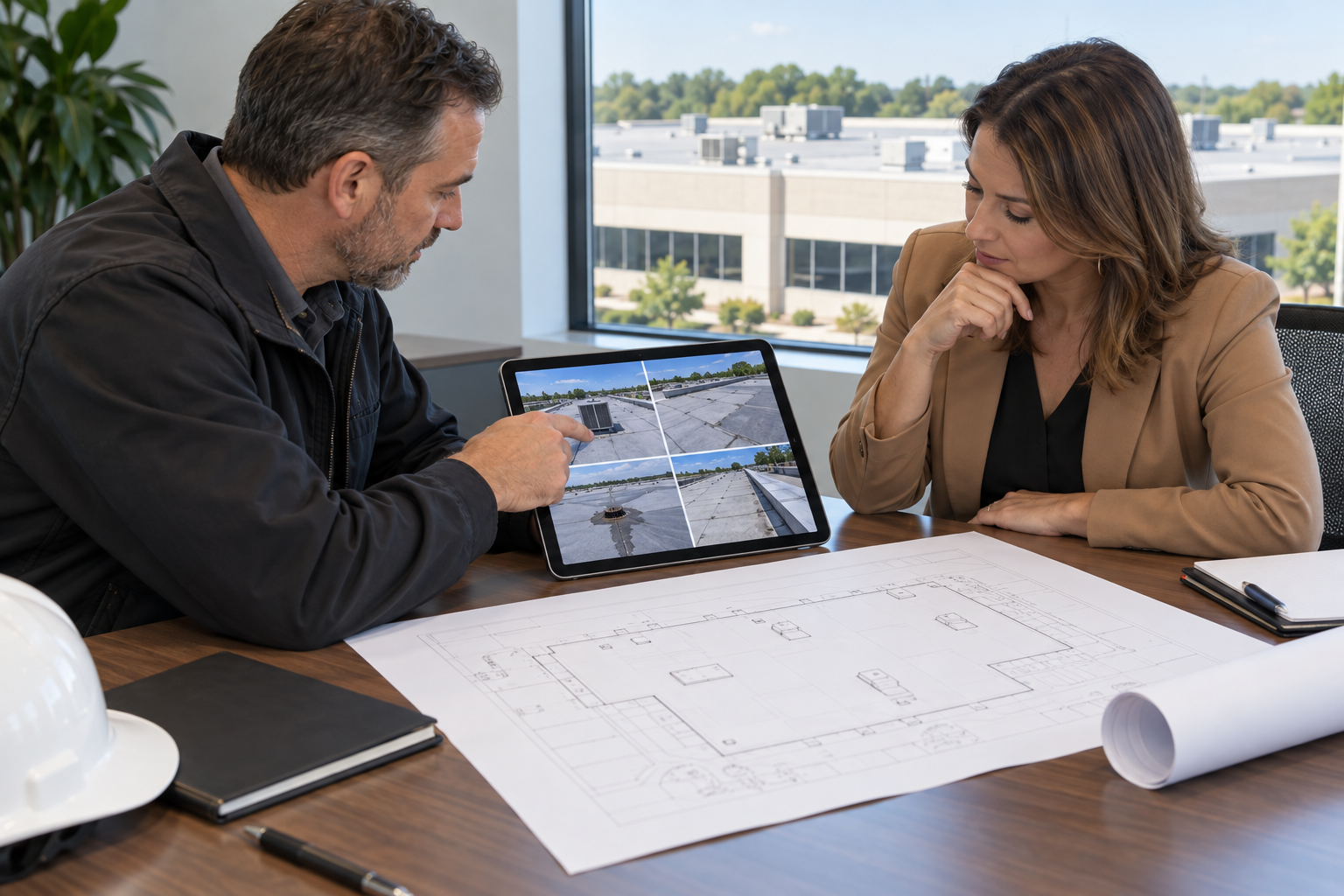
Image 1: Reviewing the Roof Before a Claim
Insert the first generated image here.
Alt text: Commercial property owner and roofing professional reviewing roof plans and inspection photographs.
Caption: A roof plan helps connect inspection findings, proposed repairs, and questions about specific building areas.
4. How Is the Wind or Hail Deductible Calculated?
Ask for the deductible in dollars.
If it is a percentage deductible, confirm what value the percentage applies to. Do not assume that it is a percentage of the repair estimate.
For illustration, a hypothetical 2% deductible applied to a $2 million insured building value equals $40,000. The same percentage applied to another stated basis would produce a different result.
Also ask whether the deductible applies per building, per occurrence, or through another policy-specific arrangement.
Understanding this calculation helps ownership plan cash flow. It does not remove the need to meet policy reporting obligations or address damage promptly.
5. How Will the Roof Loss Be Valued?
Ask whether the applicable roof coverage uses replacement cost, actual cash value, or another settlement provision.
Then ask:
- Is depreciation withheld initially?
- Can any withheld depreciation become payable later?
- What repair or replacement conditions apply?
- Are there roof-specific schedules or limitations?
- Could coinsurance or another provision affect payment?
The NAIC’s small-business insurance overview explains the general distinction between actual cash value and replacement cost and emphasizes maintaining property and insurance records.
Request a written explanation tied to your policy. The difference between the contractor’s proposal and the first insurance payment may involve several factors, not just an omitted repair item.
6. Who Is Authorized to Report the Claim and Approve Work?
For a single-owner building, responsibility may be straightforward. For a leased facility or managed portfolio, it may involve ownership, a property manager, a risk manager, and tenants.
Identify who can:
- Report the loss.
- Provide policy information.
- Authorize inspections or testing.
- Approve temporary protection.
- Sign construction contracts.
- Receive claim correspondence.
- Coordinate lender requirements.
Keep inspection authorization and construction authorization clear. Agree on the scope, price, and limitations of each service before work proceeds.
If the building is leased, review the lease and communicate with the appropriate parties rather than assuming the tenant or landlord controls every part of the response.
7. What Evidence Should We Preserve?
Build one organized property file.
EvidenceWhy it mattersDated exterior and interior photographsRecords visible conditions and affected locationsRoof planConnects photographs and measurements to roof sectionsInstallation recordsHelps identify roof age and assemblyMaintenance reportsEstablishes documented roof historyEarlier repair invoicesIdentifies previous work and recurring concernsTemporary protection recordsDescribes emergency work and associated costsCurrent itemized estimateExplains the proposed construction scopeCommunication logTracks instructions, submissions, and unanswered questions
Retain original image files. Label copies for easy review without replacing the originals.
A consistent inspection history can make later comparisons easier. Showtime Exteriors’ commercial roof maintenance guide explains how ongoing records support building decisions.
8. What Investigation Is Needed Before Choosing a Repair?
Ask what the inspection can establish and what remains uncertain.
A commercial roof assessment may need to address the covering, insulation, deck, attachment, flashings, drainage, and earlier repairs. Depending on the findings, further investigation might be appropriate.
Before authorizing testing, ask:
- What question will the investigation answer?
- Is it destructive or nondestructive?
- Who will perform it?
- How will any openings be repaired?
- What report will be provided?
- Does the insurer want an opportunity to inspect first?
A proposed test should have a defined purpose. Avoid treating every suspected issue as confirmed damage or assuming every test expense will be covered.
9. What Deadlines and Submission Requirements Apply?
Ask the insurer to identify reporting requirements, requested documents, proof-of-loss requirements, and any repair or replacement conditions.
Record the source of each deadline. Contractor scheduling dates and insurance submission deadlines are different.
The TDI commercial property consumer-rights guidance describes claim acknowledgment, decision notices, and payment requirements. Ask how those requirements apply to your insurer and claim, including any applicable exceptions or extensions.
Keep copies of submissions and confirmation of receipt. If you need additional time, request it promptly in writing and obtain a written response.
10. Could Business Interruption or Extra Expense Coverage Apply?
Roof damage can affect more than construction costs.
A restaurant may lose access to its dining room. A warehouse may relocate stock. A medical office may cancel appointments while affected areas are addressed.
Ask the insurer whether the policy includes applicable business income or extra expense coverage, and which records are needed.
The TDI business interruption guidance explains that coverage generally depends on the policy terms and qualifying physical loss or damage. Necessary extra expenses may also be addressed by some policies.
Preserve operational records, invoices, and a dated account of disruptions. A documented expense still requires evaluation under the applicable coverage.
Image 2: Documenting Interior Conditions
Insert the second generated image here.
Alt text: Facilities manager photographing ceiling staining inside a commercial warehouse.
Caption: Interior photographs should identify affected locations and be preserved alongside roof inspection records.
11. What Is the Roofing Contractor’s Role?
A roofer can inspect roofing conditions, explain construction methods, prepare an estimate, and document completed work.
Insurance representation is a separate role. Texas restricts contractors from acting as public adjusters on claims where they will perform the work. The TDI roofing and insurance law guidance also explains restrictions on waiving or absorbing deductibles.
Ask who will answer construction questions and who will address policy interpretation or settlement disputes.
Be cautious about guarantees of claim approval, a particular settlement amount, or a deductible-free roof.
12. What Happens if the Estimates Differ?
Compare the scopes before comparing only the totals.
An estimate difference might involve measurements, material identification, access, removal quantities, flashing details, or concealed conditions.
Ask the contractor to explain each difference with supporting documentation. Then ask the insurer how additional information should be submitted.
Showtime Exteriors’ roof claim supplement questions provide a framework for organizing that review.
Additional documentation can support further consideration. It does not guarantee another payment.
Start With a Documented Roof Assessment
Before starting a commercial roof claim, establish who is responsible, what has been observed, what needs immediate protection, and which policy requirements must be addressed.
Based in Mansfield, Showtime Exteriors serves North Texas property owners with roofing assessments and documented construction proposals.
To arrange an evaluation, contact Showtime Exteriors or call 817-400-ROOF (7663).
Coverage, payment, and deadlines depend on the applicable policy and claim.