



TPO Roofing Houston
A Complete Guide for Houston Commercial Property Owners
TPO roofing is one of the most widely considered membrane options for low-slope commercial buildings in Houston. Its heat-welded seams, reflective surface options, flexible assembly choices, and compatibility with many commercial applications make it a practical candidate for warehouses, retail centers, offices, apartment communities, restaurants, schools, healthcare properties, and industrial facilities. The system still requires correct design, installation, drainage, attachment, flashing, and maintenance. A white membrane alone does not guarantee a durable roof.
Houston property owners should choose a TPO roof only after evaluating the existing assembly, moisture condition, deck, insulation, drainage, wind exposure, rooftop equipment, building use, project schedule, and warranty goals. The appropriate scope may be a repair, restoration of another eligible system, a recover assembly, or a complete replacement. That decision should follow evidence rather than a predetermined sales recommendation.
Showtime Exteriors provides commercial roof inspections, repairs, replacement, coatings, metal retrofit planning, and TPO roofing services in Houston and across Texas. The company can assess aging gravel-surfaced built-up roofing, determine whether concealed deterioration or wet materials require removal, and develop a modern replacement plan when continued patching no longer makes financial or operational sense.
For a TPO roofing assessment in Houston, call Showtime Exteriors at 817-400-ROOF (7663).
What Is TPO Roofing
TPO stands for thermoplastic polyolefin. It is a reinforced, single-ply roofing membrane used primarily on low-slope buildings. Sheets are rolled across the roof and joined with hot-air-welded seams. The membrane works as part of a complete assembly that can include the structural deck, vapor retarder, insulation, tapered insulation, cover board, attachment or adhesive, membrane, flashings, edge metal, drains, scuppers, walkway pads, and manufactured accessories.
TPO membranes are available in different thicknesses, sheet widths, colors, reinforcement configurations, and product families. A contractor and designer should not select membrane thickness in isolation. The roof's wind zone, attachment pattern, deck, hail exposure, rooftop traffic, substrate, warranty, and service goals influence the full specification.
The membrane can be mechanically attached, fully adhered, induction welded, self-adhered in certain systems, or installed in another tested and approved configuration. Each approach has different labor, substrate, wind, odor, fastening, and operational considerations. The assembly must match a tested system and applicable manufacturer and code requirements.
Why TPO Roofing Is Popular in Houston
Houston's climate creates a strong case for evaluating reflective single-ply roofing. Long cooling seasons, intense sun, high temperatures, humidity, heavy rain, thunderstorms, wind, hail, and tropical weather place constant demands on a commercial roof. White TPO surfaces are commonly selected because they can reflect more solar energy than darker roof surfaces when clean and properly installed.
The United States Department of Energy explains that cool roofs can reduce roof surface temperature and may reduce cooling demand, with the greatest cooling benefit generally found in hot climates. Actual building savings depend on insulation, HVAC efficiency, air leakage, roof area, roof reflectance, operating hours, energy prices, and interior use. No contractor should promise a fixed energy reduction without building-specific analysis.
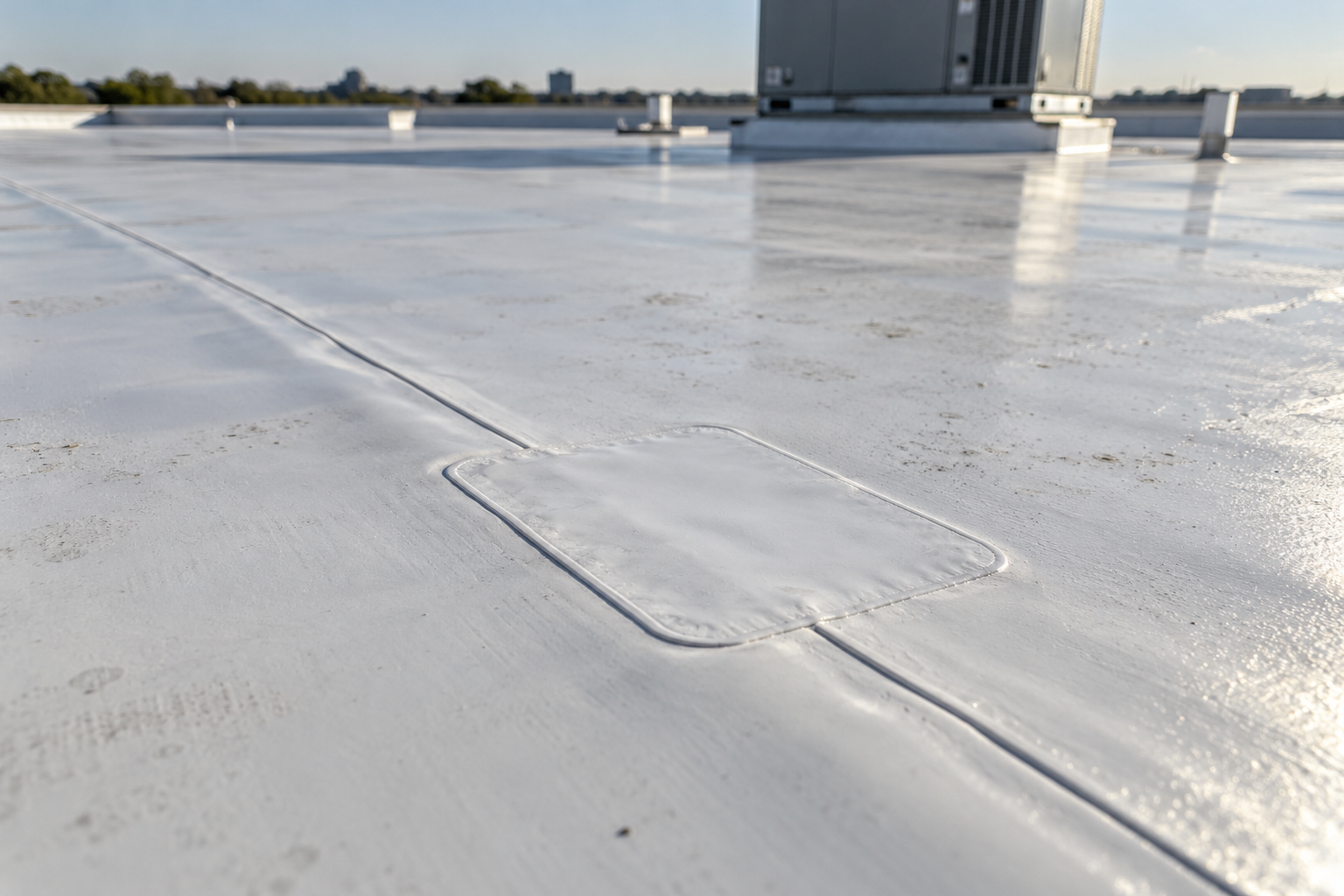
Heat-welded seams are another reason TPO is used on large commercial roofs. When surfaces are clean, equipment settings are appropriate, and the weld is completed and tested correctly, adjoining sheets form a continuous connection. Seam quality, however, is workmanship-sensitive. Dirty membrane, moisture, incorrect temperature, excessive speed, poor pressure, electrical fluctuations, or inadequate probing can compromise the result.
Is TPO Right for Houston Heat
TPO can be suitable for Houston heat when the membrane, insulation, attachment, flashing details, rooftop equipment, and ventilation or vapor-control strategy are designed as a complete system. White membranes can reduce solar heat absorption at the roof surface, but reflectivity is only one part of thermal performance.
Insulation R-value, continuity, board joints, fastener density, thermal bridges, air leakage, wet insulation, and HVAC conditions all affect heat transfer. An old roof with saturated insulation will not deliver the same performance as a dry, properly designed assembly. A replacement project is an opportunity to evaluate insulation rather than simply cover the existing roof with a bright surface.
High rooftop temperatures can affect adhesives, sealants, equipment, and installation conditions. The contractor must follow product-specific temperature, storage, coverage-rate, open-time, and application requirements. During installation, membranes should be kept clean, adhesives protected, and exposed insulation secured against wind and moisture.
Is TPO Right for Houston Hail
No roof is hail-proof. TPO can be designed for improved puncture and impact resistance by selecting an appropriate membrane, cover board, insulation configuration, attachment method, and tested assembly. A thicker membrane may contribute to performance, but the substrate beneath the membrane often makes a major difference during impact.
A durable cover board can create a firmer surface, improve resistance to rooftop traffic, protect insulation, and support the membrane. The best configuration depends on hail exposure, roof use, warranty objectives, equipment servicing, and budget. Owners should ask whether the proposed system has relevant impact ratings and what those ratings do and do not represent.
After hail, a TPO roof should be inspected even if water is not entering the building. Damage may include punctures, cuts, fractured components, displaced edge metal, damaged skylights, cracked equipment housings, compromised flashings, or latent problems that become visible later. Document conditions before broad temporary or permanent work changes the evidence.
Is TPO Right for Houston Wind
Houston commercial roofs must be designed for wind loads that vary across the roof. Corners and perimeters generally experience higher pressures than the field. Building height, dimensions, location, exposure, openings, deck type, parapets, and applicable code criteria influence the design.
The membrane is only one component of wind performance. Deck attachment, vapor retarder, insulation fasteners, adhesive coverage, membrane fastening, induction-welded plates, seam orientation, perimeter enhancement, edge metal, terminations, curbs, and penetrations all contribute. A weak edge or poorly secured underlying board can compromise an otherwise capable membrane.
The proposal should identify the attachment method and any enhanced corner and perimeter requirements. Fastener patterns or adhesive ribbons should not be improvised. The selected assembly should correspond to tested approvals and the project requirements. Loose rooftop materials, unsecured equipment components, old metal, and abandoned penetrations should also be addressed because wind-driven debris can puncture a new membrane.
The Parts of a Complete TPO Roof Assembly
A commercial TPO roof begins at the deck. Steel, concrete, wood, gypsum, cementitious, and other decks require different attachment and preparation methods. The contractor should identify deck type and condition, verify capacity and fastener performance when necessary, and account for corrosion, deterioration, openings, deflection, or prior modifications.
A vapor retarder or air-control layer may be appropriate based on climate, interior humidity, building use, deck, insulation, and assembly design. Cold-storage facilities, pools, food production, laundries, manufacturing, and high-humidity occupancies may require particular analysis. Adding a layer without understanding vapor movement can create trapped moisture rather than solve it.
Insulation provides thermal resistance and can contribute slope. A cover board protects the insulation and gives the membrane a stable substrate. Attachment connects the layers to the deck or approved substrate. The membrane provides the primary weathering surface, while flashings, terminations, drains, edges, expansion joints, and penetrations complete the water-control system.
Mechanically Attached TPO Roofing
In a mechanically attached system, fasteners and plates secure the membrane or underlying components to the deck according to the approved assembly. Adjacent membrane sheets cover the fastening line, and the seam is heat welded. This approach can be efficient on large, open roofs with suitable decks.
The design must account for fastener type, pullout resistance, deck condition, spacing, seam placement, corner and perimeter enhancement, insulation attachment, and penetrations. Mechanical attachment can also transmit flutter or movement under certain conditions. Interior operations may be affected by drilling, fasteners, dust, or noise depending on the deck and building use.
Owners should ask how the contractor verified the deck and fastening pattern. A drawing or written scope should identify field, perimeter, and corner zones. If the existing deck is corroded or damaged, replacement or structural correction may be necessary before the new roof can achieve its design performance.
Fully Adhered TPO Roofing
A fully adhered TPO membrane is bonded to an approved substrate with a compatible adhesive or factory-applied system. The smooth appearance and reduced membrane flutter make it attractive for some buildings. The system still relies on secure insulation or cover board attachment and correct perimeter and flashing details.
Substrate preparation is critical. Dust, moisture, loose facer, uneven surfaces, incompatible residue, and contaminated materials can reduce adhesion. Adhesive coverage rates, temperatures, flash-off, open time, rolling, and membrane placement must follow manufacturer requirements. Installation teams should protect adjacent cars, air intakes, occupants, and sensitive operations from odors or overspray where relevant.
The owner should confirm which adhesive or self-adhered product is included, what substrate it requires, and whether project temperatures and humidity are within installation limits. A generic statement that the roof will be fully adhered is not a complete specification.
Induction Welded TPO Systems
Induction-welded assemblies use specially coated plates that secure insulation to the deck and are later bonded to the membrane with induction equipment. This can distribute attachment across the roof field without placing all membrane fasteners in the seam area. The approach can be useful when a tested assembly matches the building and project goals.
Plate type, fastener, spacing, insulation thickness, membrane compatibility, equipment calibration, cooling magnets, and field quality control are important. The membrane must be correctly positioned and the welds checked. The contractor should follow the specific system instructions rather than treating induction welding as a generic fastening method.
As with every attachment method, the deck must be suitable. Pullout testing, existing construction review, and verification of hidden conditions may be needed. Wind design should define different attachment densities where required.
TPO Membrane Thickness and Reinforcement
Commercial TPO membranes are sold in several nominal thicknesses. A thicker membrane can provide more material above the reinforcement and may support durability goals, but thickness alone does not determine roof life. Seam quality, substrate, cover board, drainage, attachment, flashing, maintenance, rooftop traffic, and installation workmanship remain decisive.
Reinforcement contributes dimensional stability and strength. Fleece-backed products may support certain adhered or recover applications and can provide a different interface with the substrate. Product selection should follow the tested assembly and manufacturer requirements rather than a broad assumption that one sheet is appropriate everywhere.
Owners comparing bids should verify that every contractor priced the same membrane family and nominal thickness. Product names, reinforcement, color, attachment, accessories, and warranty type should appear in the proposal. Otherwise, two quotes that both say TPO may describe materially different roofs.
TPO Seams and Heat Welding
TPO sheets are joined with hot-air welding. Automatic welders can create consistent field seams on open areas, while hand welders are used at corners, penetrations, flashings, and restricted locations. Equipment settings must reflect ambient conditions, membrane condition, power supply, nozzle, speed, temperature, and test-weld results.
The crew should complete test welds at the start of work and when conditions change. Finished seams should be probed after cooling according to manufacturer procedures. Deficient areas require cleaning, preparation, and correction. Covering an untested seam with sealant does not substitute for a proper weld.
Membrane cleanliness matters. Construction dust, adhesive, moisture, oils, or prolonged exposure can affect welding. Protection and sequencing during installation help preserve weld surfaces. The final inspection should include seams, T-joints, patches, corners, penetrations, and flashing transitions.
TPO Flashing and Rooftop Penetrations
Most roof failures occur at details rather than in an undisturbed field sheet. Curbs, pipes, drains, scuppers, walls, expansion joints, equipment supports, pitch pockets, conduits, and irregular penetrations require careful design. Prefabricated accessories can improve consistency when they match the system, but field-fabricated details remain necessary on many roofs.
The contractor should remove abandoned penetrations when authorized, correct unstable equipment supports, provide proper clearance, and avoid creating tight details that cannot be welded or maintained. Mechanical, electrical, plumbing, and equipment contractors should coordinate with the roofer before placing new components on the roof.
Sealant is a maintenance component, not the primary waterproofing for every detail. Terminations, clamping, welded membrane, reinforced corners, and compatible accessories should create the main water-control geometry. Sealants should be accessible for inspection and replacement.
Drainage Design for Houston TPO Roofs
Houston's heavy rainfall makes drainage a central design issue. A reflective membrane cannot compensate for blocked drains, insufficient overflow, inadequate slope, crushed insulation, or recurring ponding. Water should move toward drains, scuppers, or gutters without relying on evaporation as the primary strategy.
A replacement or recover proposal should document primary and overflow drainage, drain condition, scupper dimensions, gutters, downspouts, crickets, saddles, tapered insulation, equipment curbs, and low areas. Plumbing or structural coordination may be required when the existing configuration cannot be corrected with roofing materials alone.
Daily construction sequencing must preserve drainage. Materials, debris, packaging, and temporary protection should not block water paths. At the end of each shift, the contractor should secure the work and confirm that temporary conditions will direct water safely if rain arrives.
Can TPO Be Installed Over an Existing Roof
A recover system may be possible when the existing roof, deck, moisture condition, number of layers, attachment, height, drainage, code requirements, and manufacturer criteria support it. A recover can reduce tear-off, waste, interior exposure, and disruption. It is not a shortcut around saturated insulation or an unknown assembly.
The assessment may include records review, visual inspection, moisture scanning, test cuts, core samples, attachment testing, and deck evaluation. Areas of wet or deteriorated material may require removal. The proposed separator, insulation, cover board, attachment, and membrane must form an approved assembly.
Recovering a roof can also affect future maintenance and replacement. The owner should understand which materials remain, how moisture was addressed, how the new assembly is attached, and whether added height changes curbs, walls, edges, drains, or equipment clearances.
Why TPO Often Replaces Aging Gravel BUR Roofs
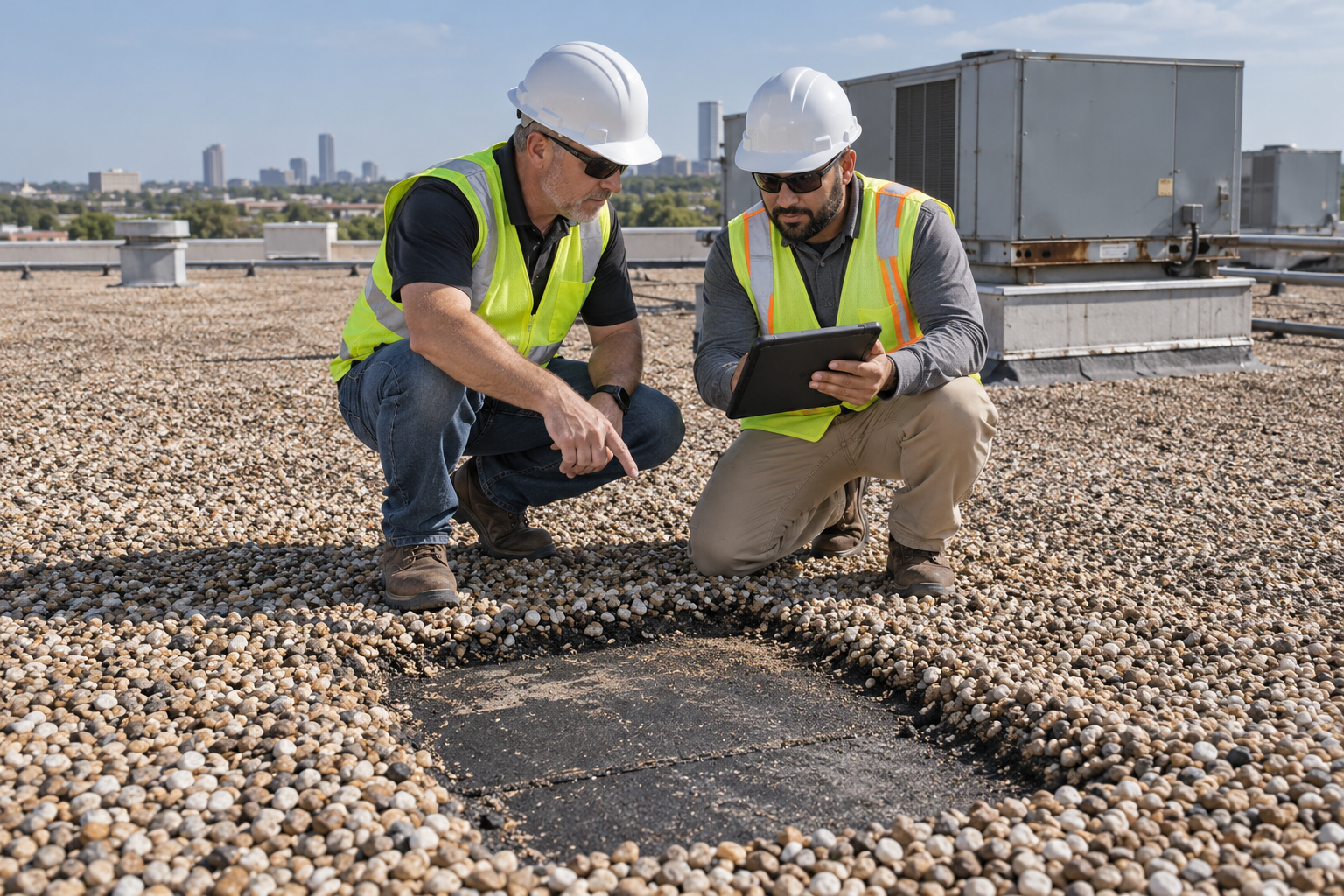
Aging gravel-surfaced built-up roofs create inspection and maintenance challenges that a modern exposed membrane can reduce. Loose gravel can conceal cracks, splits, blisters, deteriorated felts, old patches, ponding patterns, and moisture pathways. It may move into drains, collect around equipment, and make comprehensive visual documentation difficult.
For Showtime Exteriors, gravel BUR should not be promoted as a desirable long-term solution for owners already facing leaks, aging materials, or insurance pressure. The campaign focus is the risk: concealed deterioration, difficult assessment, recurring maintenance, uncertain moisture, and possible underwriting restrictions based on the carrier and property.
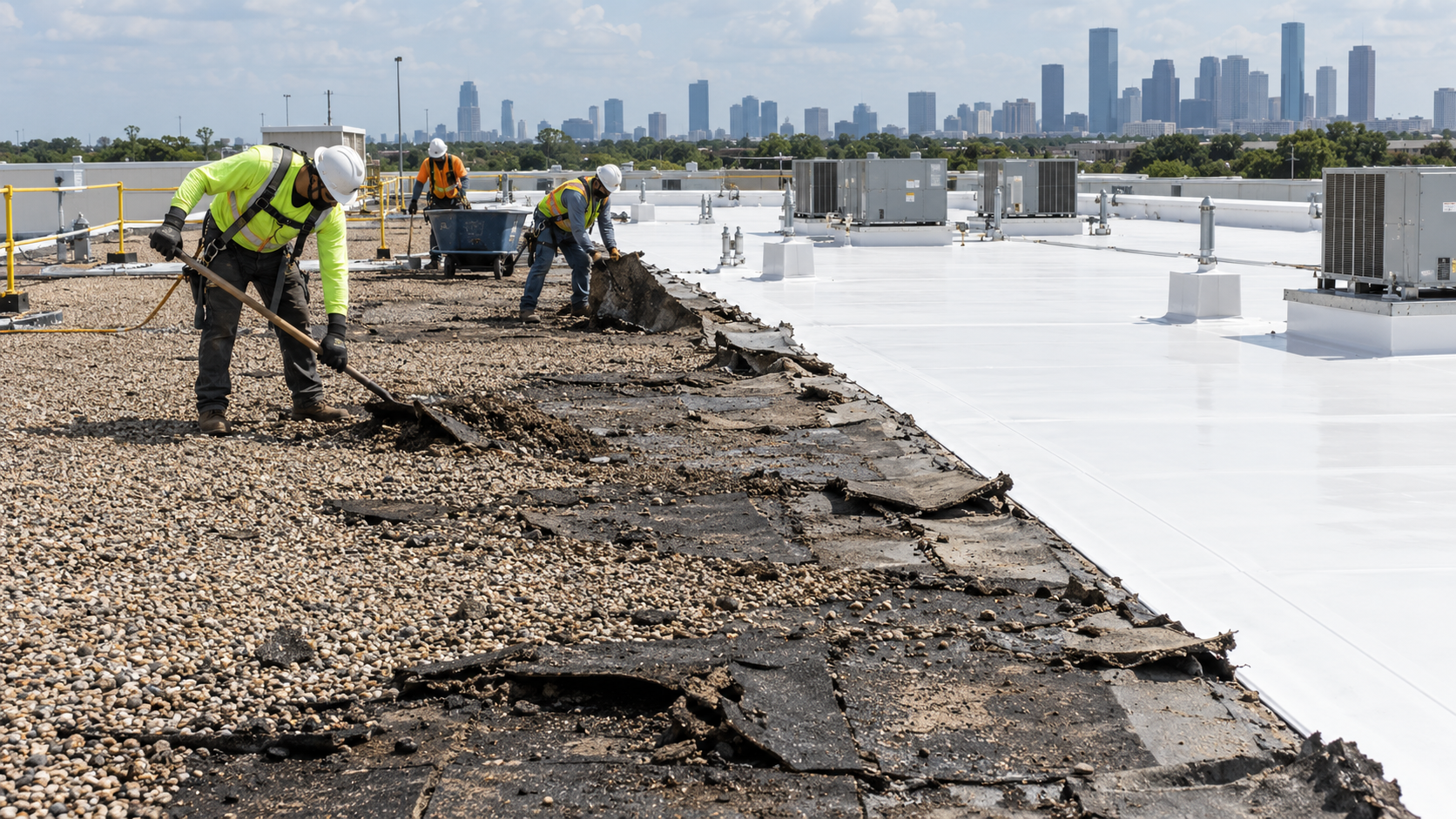
Replacing an unsuitable gravel BUR roof with TPO can create a visible, maintainable surface with welded seams and documented details. The old roof still must be investigated and removed where required. Installing TPO over wet, unstable, or poorly attached materials can transfer old problems into the new assembly.
Aging gravel surfacing can conceal BUR membrane deterioration and complicate inspection, drainage review, and repair planning.
TPO Roof Replacement Process
The process begins with records, inspection, moisture investigation, deck review, drainage evaluation, and operating constraints. The contractor then defines removal, salvage, temporary protection, insulation, cover board, attachment, membrane, flashings, edge metal, walkways, safety controls, inspections, warranties, and closeout documentation.
During tear-off, crews should work in sections that can be made watertight each day. Removed materials must be controlled so debris and moisture do not enter the building. Exposed deck should be inspected and repaired or replaced as authorized. New insulation and cover board should remain dry and be secured before weather changes.
Membrane installation follows the approved layout and attachment method. Field sheets, seams, curbs, penetrations, drains, walls, and edges are completed and inspected. Final work includes seam probing, punch-list correction, drain cleaning, debris removal, photographs, warranty documents, product data, and maintenance guidance.
TPO Roofing Cost in Houston
TPO roofing cost varies too widely for a responsible universal price. Roof size, height, access, tear-off, number of existing layers, gravel removal, deck repairs, wet insulation, membrane thickness, cover board, tapered insulation, attachment, wind requirements, flashings, edge metal, drains, penetrations, equipment, safety, permits, occupied-space controls, and warranty all affect the estimate.
Large open roofs may offer installation efficiencies, but extensive equipment and irregular details increase labor. A building that remains occupied may need interior protection, limited work hours, dust control, odor planning, and daily cleanup. Houston weather can also affect production and temporary protection.
Compare scopes rather than totals. One proposal may include cover board, tapered insulation, enhanced perimeters, new edge metal, walkway pads, and a stronger warranty while another excludes them. A credible estimate states quantities, unit prices or allowances, assumptions, exclusions, alternates, and how concealed conditions will be handled.
How Long a TPO Roof Can Last
There is no guaranteed lifespan for every TPO roof. Service life depends on product, membrane thickness, reinforcement, assembly, design, workmanship, climate, drainage, traffic, maintenance, repairs, contamination, and rooftop changes. Manufacturer warranties also differ in length, coverage, exclusions, and owner obligations.
A longer warranty is not a substitute for a stronger design. Owners should understand whether the warranty covers materials only, labor and materials, total system, punctures, hail, wind speed, consequential damage, or other conditions. Maintenance, inspections, notification deadlines, unauthorized alterations, and drain care may be owner responsibilities.
The best way to protect service life is to keep the roof dry, limit traffic, provide walkways, coordinate equipment work, clean drainage, inspect after storms, and repair defects with compatible materials before damage spreads.
TPO Roof Maintenance in Houston
Inspect a TPO roof at least on a planned schedule and after major storms, construction, equipment replacement, or unusual rooftop activity. Review seams, flashings, drains, scuppers, edges, walls, curbs, penetrations, walkway pads, repairs, contamination, debris, and signs of movement or ponding.
Clean the membrane using manufacturer-approved methods. Harsh chemicals, incompatible solvents, grease, exhaust, and discharged condensate can damage or discolor the surface. Restaurants, laboratories, factories, and facilities with process exhaust may need specific protection or more frequent inspection.
Document every visit with dates, locations, photographs, findings, actions, and materials. Require other trades to report penetrations or damage. Do not allow screws, panels, tools, filters, or sharp debris to remain on the membrane. Maintenance records can support warranty administration, capital planning, and insurance discussions.
Repairing a TPO Roof
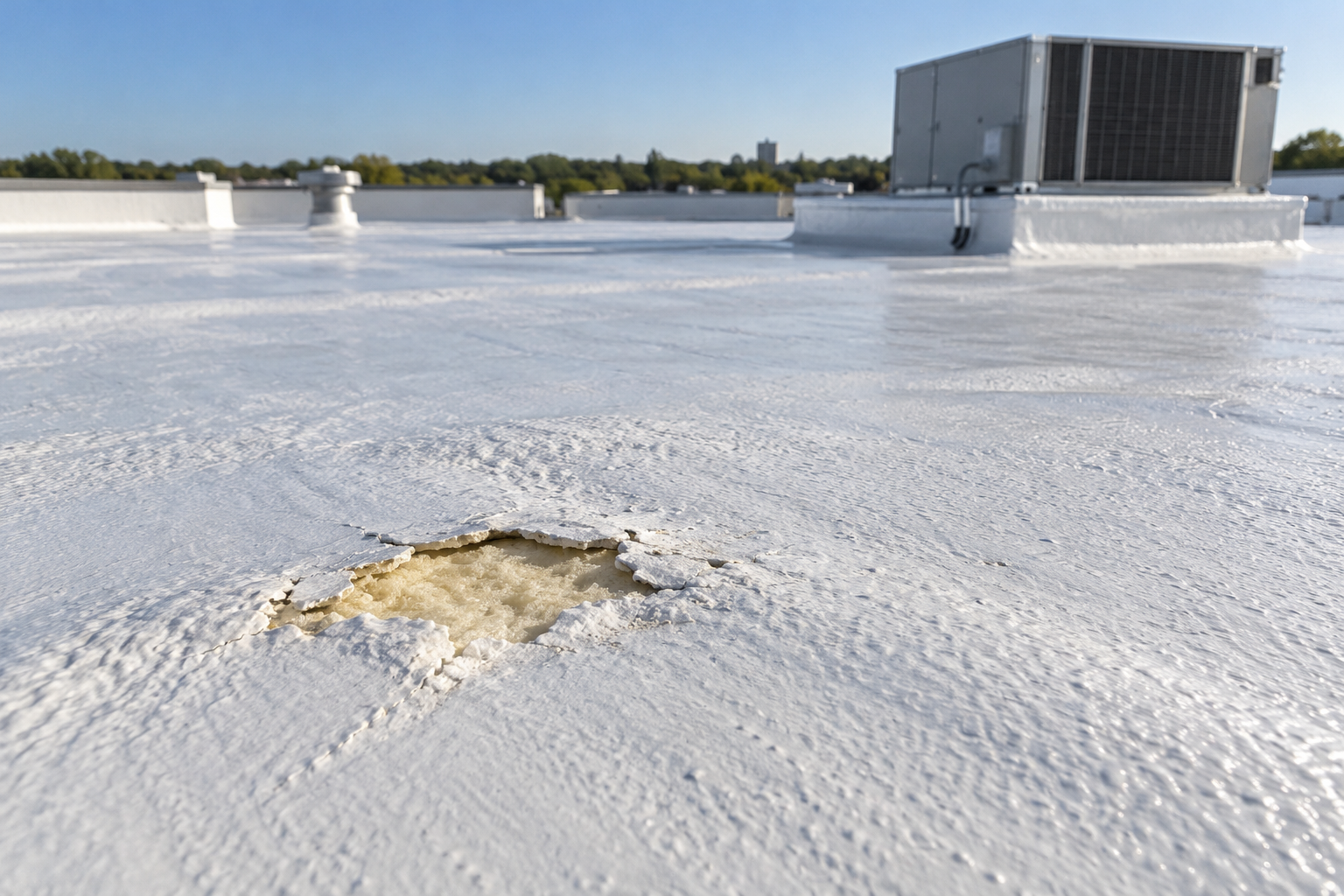
A repairable TPO defect may include an isolated puncture, open seam, damaged flashing, loose termination, or localized impact where surrounding material remains sound. The repair should identify and correct the water pathway, not merely cover the interior leak location.
Preparation may require washing, cleaning, drying, removing incompatible materials, cutting out damaged membrane, replacing wet insulation, and installing compatible reinforced or unreinforced TPO. Welds should have adequate dimensions and be probed after cooling. Sealant may be used where specified but should not conceal an incomplete weld.
Widespread brittleness, extensive contamination, repeated seam failures, broad attachment loss, saturated insulation, damaged deck, or numerous incompatible patches may make continued repair uneconomical. The contractor should explain when a repair is temporary and when replacement planning should begin.
TPO Versus PVC Roofing
TPO and PVC are both thermoplastic membranes with heat-welded seams, but they are not interchangeable. Their formulations, chemical resistance, accessories, welding characteristics, and application suitability differ. Certain restaurants, manufacturing facilities, laboratories, or roofs exposed to oils, fats, chemicals, or unusual exhaust may require specific evaluation.
PVC may be considered where chemical or grease exposure is a primary concern, while TPO may be preferred for many general commercial applications. The decision should be based on actual exposures, tested assemblies, warranty options, maintenance capability, and project economics.
Never weld one membrane type to another or assume an accessory is compatible because it looks similar. Existing membrane identification and manufacturer-approved transition details are essential during repair, tie-in, and phased work.
TPO Versus EPDM Roofing
EPDM is a thermoset rubber membrane typically joined with tapes and adhesives rather than heat-welded field seams. It is often black, though other configurations exist. TPO is thermoplastic and commonly selected in white reflective systems. Both can perform well in suitable assemblies.
The comparison should consider heat reflectance, seam method, puncture resistance, substrate, attachment, flashing, chemical exposure, maintenance skills, product availability, and warranty. A contractor experienced only with one system may not provide a neutral comparison.
Existing conditions can also influence the answer. A compatible repair or recover strategy may favor one product, while operational or chemical requirements may favor another. The roof should be designed around the building rather than chosen from a generic ranking.
TPO Versus Roof Coatings
A coating restores an eligible existing roof surface; TPO creates a new sheet-membrane layer within a roof assembly. Coatings may be appropriate when the roof is dry, attached, cleanable, repairable, and compatible with the selected product. They are not a substitute for removing saturated insulation or correcting unstable materials.
TPO may be the stronger choice when the existing membrane has widespread deterioration, when a new assembly and warranty are desired, or when the project needs new insulation, cover board, drainage correction, and flashings. A coating may reduce disruption and waste for the right candidate.
The owner should request moisture investigation, adhesion testing where required, detailed preparation, reinforcement, specified application rates, and measurable dry-film thickness for a coating proposal. Comparing a minimal coating price to a complete TPO replacement price without comparing scopes is misleading.
Insurance Considerations for TPO Roofing
Insurers may consider roof age, type, condition, maintenance, documentation, attachment, impact ratings, wind design, drainage, and loss history. Requirements differ by carrier, policy, property, location, and renewal cycle. Installing TPO does not automatically guarantee coverage, lower premiums, or claim approval.
Before replacement, ask the insurer or broker what documentation and ratings are relevant. Preserve the old roof inspection, moisture findings, photographs, estimates, contracts, permits, product data, tested assembly information, invoices, progress photographs, inspection records, warranty, and final completion documents.
If storm damage is involved, the policyholder should understand deductibles, actual-cash-value or replacement-cost provisions, deadlines, exclusions, and duties after loss. Showtime Exteriors can document physical roofing conditions and provide a scope, but coverage decisions belong to the insurer and claim professionals authorized under Texas law.
Planning TPO Installation Around Business Operations
Commercial roofing affects the occupied building below. The plan should address employees, tenants, customers, residents, patients, inventory, equipment, air intakes, production lines, loading zones, parking, security, and emergency access. Daily communication helps facility teams prepare for changing work areas.
Deck fastening can create noise or dust. Adhesives may create odors. Tear-off can expose the building if sequencing fails. Cranes, lifts, dumpsters, and delivery vehicles require controlled space. Interior observers may be needed below active work to report dust, vibration, falling debris, water, or other conditions.
Work should be divided into manageable areas that can be secured and made watertight. Sensitive facilities may need night or weekend work, phased shutdowns, containment, redundant protection, or coordination with specialized contractors. Operational planning belongs in the scope rather than being improvised after installation begins.
How to Compare TPO Roofing Proposals
Start with the same known conditions and ask every bidder to price a comparable scope. Verify tear-off quantities, wet-area assumptions, deck repairs, vapor control, insulation type and thickness, tapered design, cover board, membrane product and thickness, attachment, wind zones, flashings, edge metal, drains, walkways, temporary protection, safety, permits, warranty, and closeout documents.
Ask how concealed conditions will be priced and documented. Unit prices for deck, insulation, or other unknown work can reduce disputes. Identify owner responsibilities, excluded trades, equipment modifications, interior protection, power, water, access, and work-hour limitations.
Review contractor insurance, relevant qualifications, manufacturer authorization where required, references, safety planning, and project supervision. The lowest number may reflect a narrower scope. A proposal is useful only when the owner can understand what roof will actually be built.
Quality Control During TPO Installation
Quality control begins before materials arrive. The contractor should review approved products, storage, deck conditions, moisture, fastening, pullout results when needed, layout, weather, and sequencing. Materials should be protected and installed within manufacturer requirements.
During work, supervision should verify insulation joints, board attachment, adhesive coverage, membrane placement, weld settings, test welds, seam probing, flashings, corners, drains, edges, penetrations, and daily tie-offs. Progress photographs and roof-area records create accountability.
Before closeout, complete a detailed punch list and any manufacturer inspection. Correct deficient welds, sealants, fasteners, flashings, debris, drainage, and protection. Deliver warranties, product data, photographs, inspection records, maintenance requirements, and a clear plan for future rooftop work.
Why Choose Showtime Exteriors for TPO Roofing in Houston
Showtime Exteriors provides commercial roofing services throughout Texas and serves Houston property owners, facility managers, property managers, asset managers, and commercial real estate professionals. The company evaluates TPO, PVC, EPDM, modified bitumen, metal, coatings, and aging built-up roofing systems.
The company's approach begins with inspection and scope development. That helps determine whether the building needs a repair, recover, retrofit, restoration, or replacement and allows the project to address insulation, drainage, attachment, flashing, edges, penetrations, equipment, and operations.
Showtime Exteriors also aligns with David's central campaign position: aging gravel-surfaced BUR roofs should be discussed as a risk, not praised as a benefit. When gravel conceals deterioration, moisture, old repairs, drainage issues, or limited remaining service life, a documented TPO replacement plan may give owners a more visible and maintainable path forward.
Call 817-400-ROOF (7663) to schedule a commercial TPO roof assessment in Houston.
TPO Roofing Houston Frequently Asked Questions
Is TPO roofing good for Houston commercial buildings
Yes, TPO can be a strong option when the complete assembly is designed for the building, climate, wind loads, drainage, deck, operations, and warranty goals. It is not automatically correct for every property.
Is white TPO cooler than a dark roof
A clean white TPO membrane generally reflects more solar energy than a dark surface and can reduce roof surface temperatures. Building energy savings vary with insulation, HVAC, occupancy, roof area, and other conditions.
Can hail damage TPO roofing
Yes. No roof is hail-proof. Membrane selection, cover board, insulation, substrate, attachment, and tested impact performance influence resistance. Inspect the roof after significant hail.
How are TPO seams joined
TPO seams are heat welded with automatic or hand hot-air equipment. The crew should perform test welds, adjust settings for conditions, and probe completed seams after cooling.
Can TPO go over an old gravel roof
Possibly, but only after investigation. Loose gravel, wet insulation, deteriorated felts, attachment, deck condition, drainage, layers, height, code, and manufacturer requirements must be evaluated. Many aging gravel BUR roofs require substantial removal.
How much does TPO roofing cost in Houston
Cost depends on roof size, access, removal, deck repairs, insulation, cover board, membrane, attachment, drainage, flashings, wind design, equipment, safety, operations, warranty, and concealed conditions. A site-specific assessment is necessary.
How long does a TPO roof last
Service life varies with the product, assembly, design, workmanship, drainage, climate, traffic, maintenance, contamination, repairs, and rooftop changes. Warranty length is not a guaranteed service-life prediction.
Can a TPO roof be repaired
Yes, localized damage can often be repaired when the surrounding membrane and assembly remain serviceable. Compatible materials, cleaning, preparation, welding, insulation replacement, and seam testing are important.
Is fully adhered TPO better than mechanically attached TPO
Neither method is universally better. The appropriate choice depends on deck, wind design, substrate, building operations, cost, tested assembly, and warranty requirements.
Does TPO roofing lower insurance premiums
It may affect an insurer's assessment when relevant ratings and documentation meet carrier requirements, but no contractor can guarantee lower premiums or continued coverage. Ask the insurer before finalizing the system.
Does TPO require maintenance
Yes. Inspect seams, flashings, drainage, edges, penetrations, repairs, debris, contamination, and rooftop traffic. Keep records and use compatible repair materials.
Who installs TPO roofing in Houston
Showtime Exteriors provides TPO roof assessment, repair, replacement, and related commercial roofing services in Houston and across Texas. Call 817-400-ROOF (7663) to discuss the property.
Schedule a TPO Roofing Assessment in Houston
A successful TPO roof is a designed and documented assembly, not simply a roll of white membrane. Begin with the existing roof, moisture, deck, insulation, drainage, wind exposure, equipment, operations, and long-term goals. Then compare repair, recover, and replacement alternatives using complete scopes.
Showtime Exteriors can inspect the property, document visible conditions, evaluate aging gravel BUR risks, and develop a practical TPO roofing scope. Call 817-400-ROOF (7663) to schedule a Houston commercial roofing assessment.
Helpful Showtime Exteriors Resources
Commercial Roofing Houston guide
Commercial Roof Replacement Houston guide
Emergency Commercial Roof Repair Houston guide
Authoritative TPO Roofing and Energy Resources
GAF TPO roofing membrane overview
GAF single ply TPO roofing resources
GAF TPO and PVC mechanically attached roofing systems manual
United States Department of Energy cool roof guidance
United States Department of Energy cool roof purchasing guidance
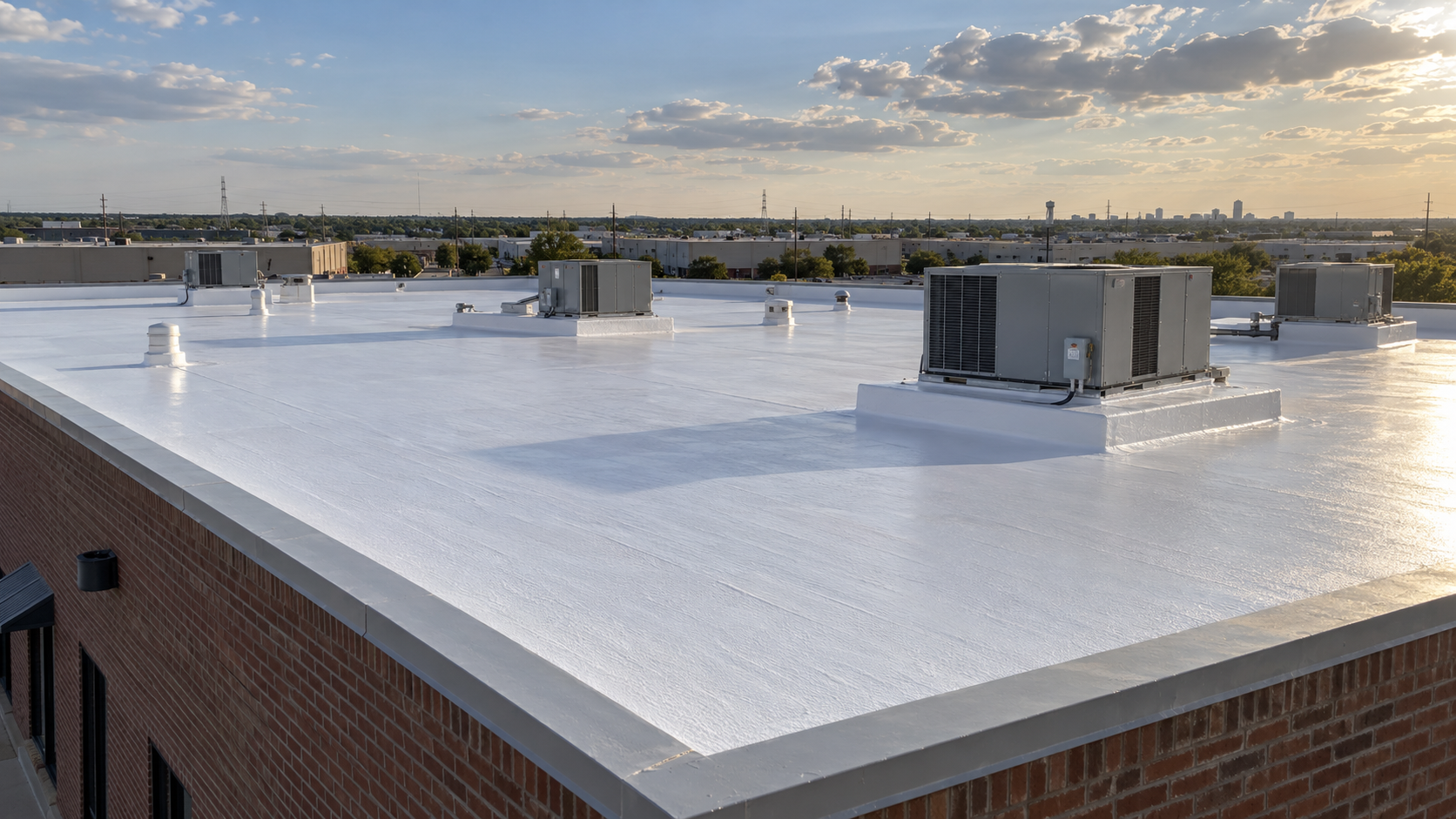
Aging gravel BUR roof replaced with modern TPO roofing in Houston
Showtime Exteriors 817-400-ROOF (7663) Texas Statewide Commercial Roofing