
Commercial Metal Roofing Houston
A Complete Guide to Metal Roof Repair Replacement and Retrofit
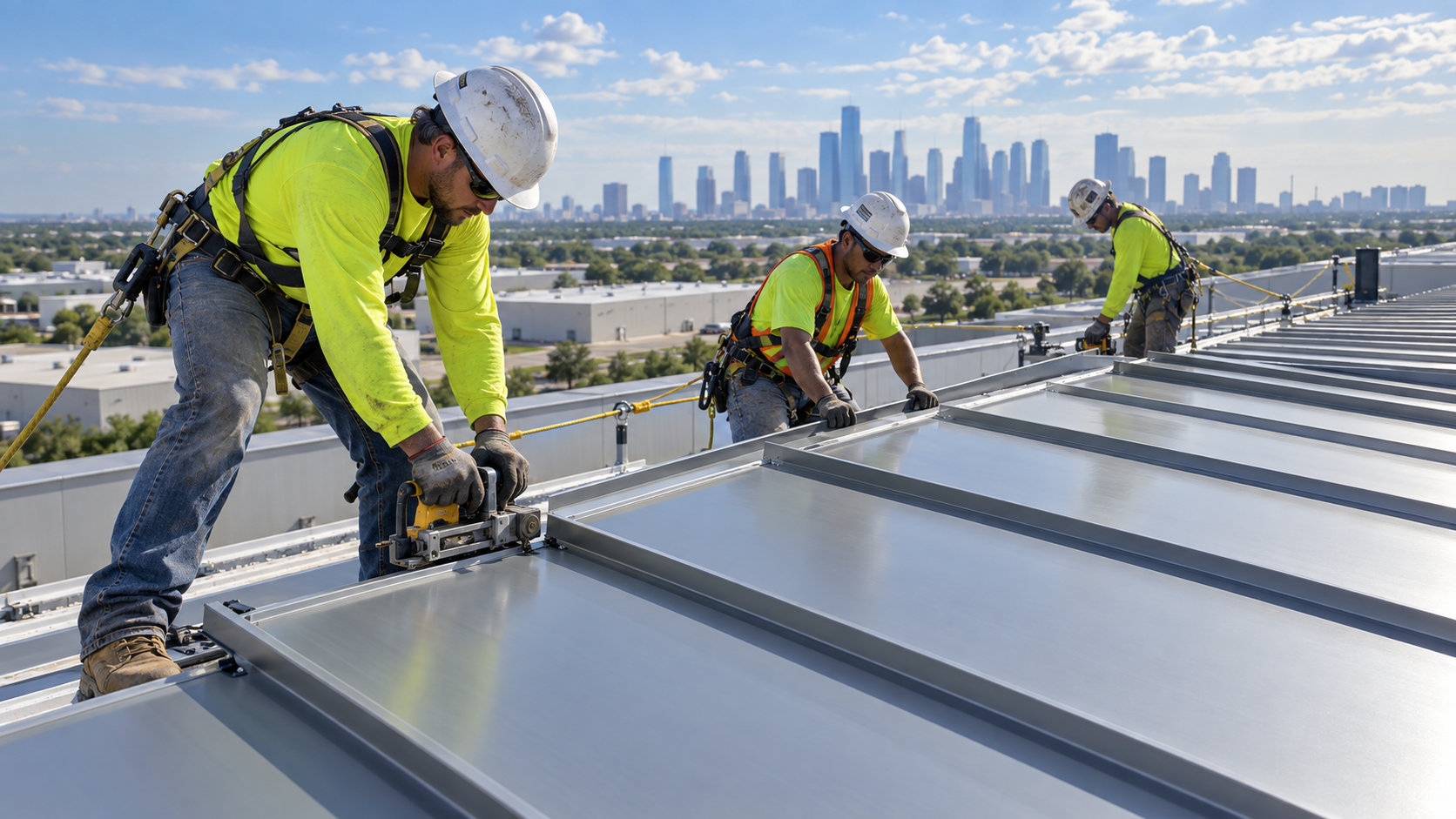
Commercial metal roofing in Houston can provide a strong, durable roof solution when the panels, seams, clips, fasteners, closures, flashings, insulation, drainage, and structural support are designed and maintained as one system. Houston's heat, humidity, heavy rain, hail, high winds, tropical weather, industrial exposure, and rapid weather changes make correct system selection especially important.
Metal roofing is not one single product. A structural standing-seam roof behaves differently from an architectural metal roof installed over a deck, and both differ from older exposed-fastener panels. Some existing metal buildings can be repaired. Others may qualify for a coating, membrane recover, or engineered metal-over-metal retrofit. Roofs with widespread corrosion, severe movement, repeated leakage, damaged structural components, or unsuitable geometry may require more extensive replacement.
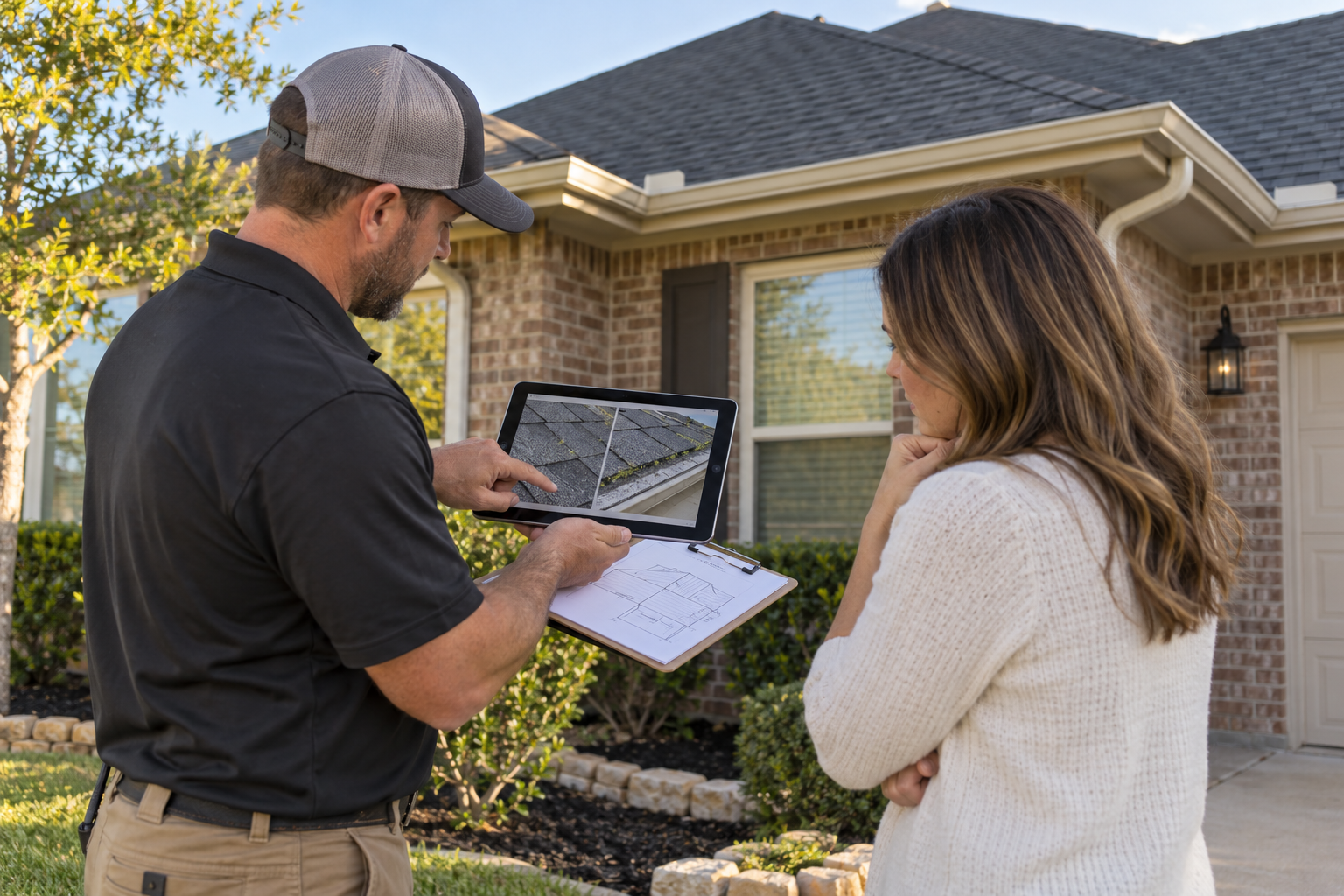
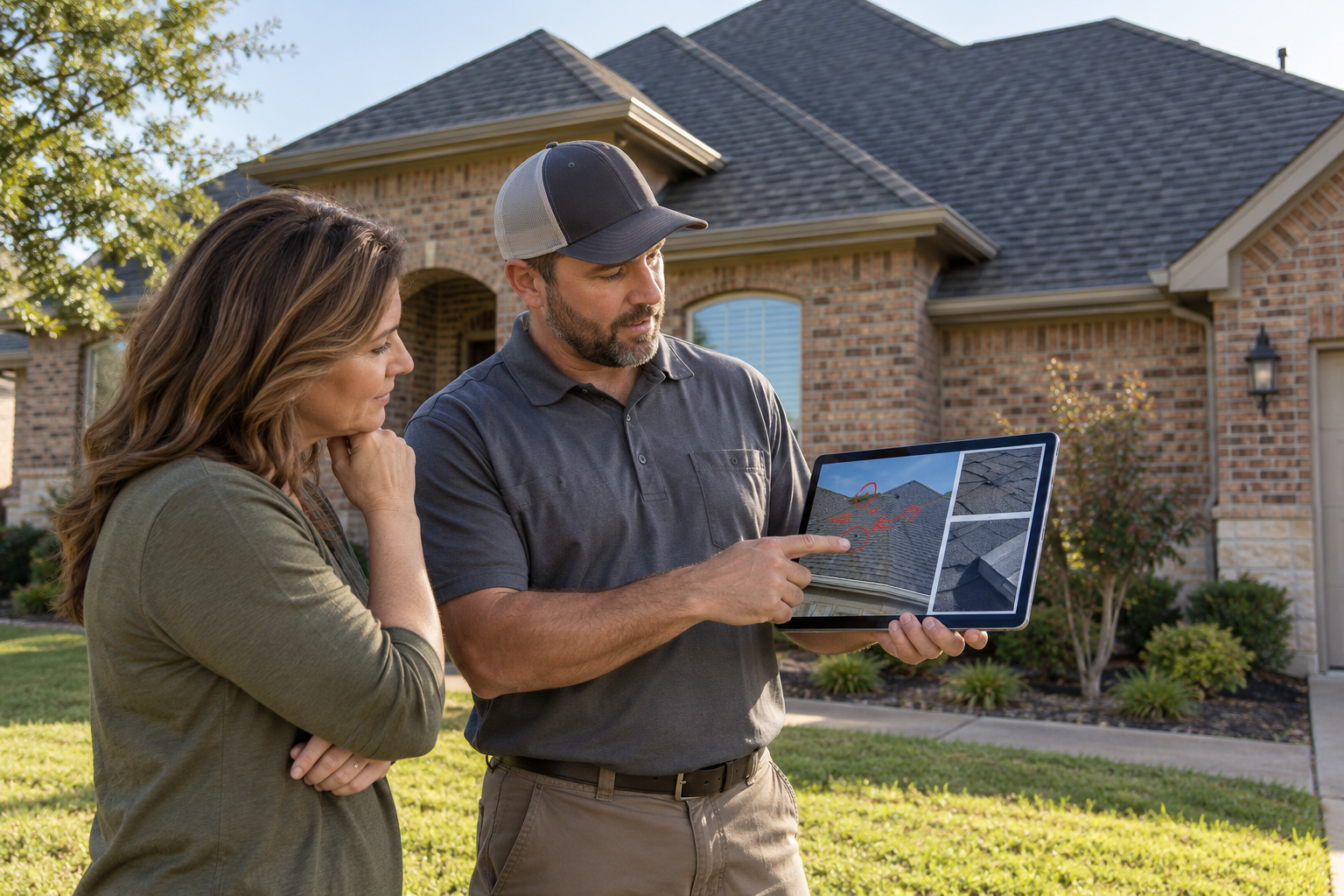
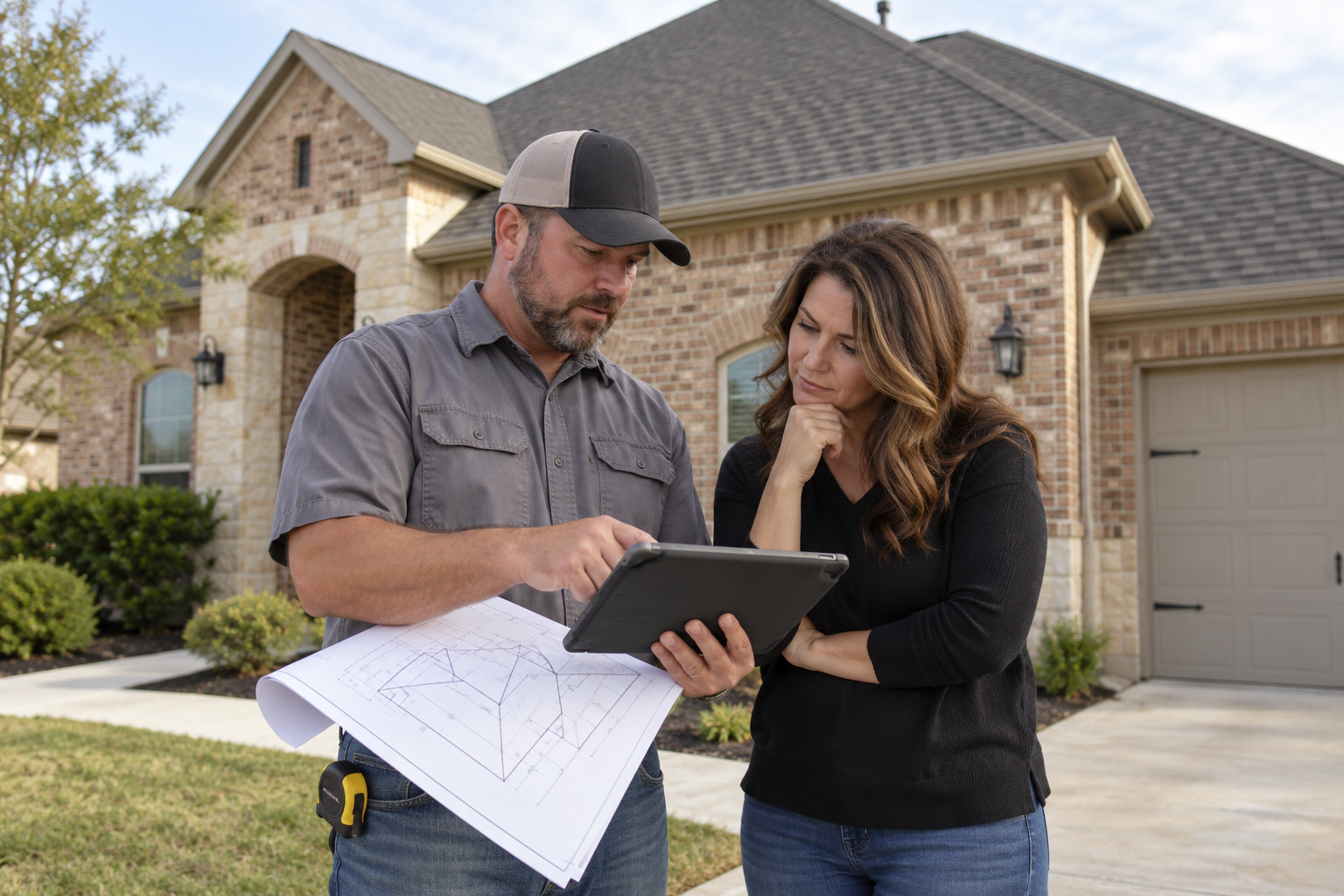
Showtime Exteriors provides commercial roof inspections, metal roof repair, metal retrofit planning, coatings, TPO, PVC, EPDM, modified bitumen, and replacement services in Houston and across Texas. The company evaluates the building before recommending a scope and can help owners move away from aging gravel-surfaced BUR roofs that conceal deterioration and create maintenance or insurance uncertainty.
Call Showtime Exteriors at 817-400-ROOF (7663) to schedule a Houston commercial metal roof assessment.
What Is a Commercial Metal Roof
A commercial metal roof uses formed metal panels or sheets as the exterior weathering surface. Common materials include steel, aluminum, zinc, and copper, with steel used widely on industrial, warehouse, retail, agricultural, and institutional buildings. Coatings and metallic finishes protect the base metal and contribute color, reflectance, corrosion resistance, and appearance.
Panels may span from structural supports or be installed over a continuous deck. They may use concealed clips that allow movement, concealed fasteners, or exposed fasteners with washers. Panel profiles, seam heights, rib spacing, clip designs, fastener patterns, endlaps, closures, and roof slope vary by system.
The roof also includes secondary components that are easy to overlook: eave and rake details, ridge assemblies, gutters, downspouts, curbs, pipes, skylights, ventilators, expansion joints, snow or fall-protection attachments, roof-to-wall transitions, and equipment supports. Many metal roof leaks begin at these interfaces rather than through the center of an undisturbed panel.
Types of Commercial Metal Roofing in Houston
Structural standing-seam metal roofing uses long panels with raised interlocking seams. Clips connect the panels to purlins or another approved substrate while permitting controlled thermal movement. Mechanically seamed profiles may provide different performance than snap-lock systems. The selected profile must match roof slope, wind design, building geometry, and manufacturer criteria.
Architectural standing-seam panels are commonly installed over a solid deck and underlayment. They can provide a refined appearance on offices, retail buildings, schools, churches, and public facilities. Substrate, ventilation, water control, and detailing below the metal remain important.
Exposed-fastener metal roofs use screws driven through the panel into framing or deck. The fastener washer helps seal the penetration. Over time, thermal movement, vibration, ultraviolet exposure, corrosion, installation errors, and repeated service traffic can contribute to backed-out fasteners, elongated holes, failed washers, loose laps, and leakage.
Why Houston Buildings Use Metal Roofing
Metal roofing can span large areas efficiently, support long panel runs, shed water on suitable slopes, and provide a durable surface when properly designed. The panels are noncombustible, and many systems have tested wind, fire, impact, and water-resistance assemblies. Owners can choose from numerous profiles, finishes, colors, and insulation approaches.
Metal roofs can also support retrofit strategies. An older metal building may accept a new membrane or metal recovery system over the existing panels after structural, moisture, corrosion, attachment, condensation, and code evaluation. A retrofit may reduce demolition, interior exposure, and disruption compared with complete removal.
Reflective coatings and light-colored metal finishes may reduce solar heat absorption. Actual energy performance depends on reflectance, emittance, insulation, air leakage, thermal bridges, HVAC, interior use, and maintenance. A new metal surface is not a substitute for proper insulation and air-control design.
Is Metal Roofing Right for Houston Heat
Metal expands and contracts as temperature changes. Houston roofs can become extremely hot in direct sun and then cool rapidly during rain or at night. Long panels, clips, seams, penetrations, curbs, gutters, and transitions must accommodate expected movement without tearing sealants, opening laps, stressing fasteners, or distorting panels.
Standing-seam clips may be designed to allow controlled movement. Fixed points and clip orientation matter. Exposed-fastener panels experience movement around each penetration, which can enlarge holes or stress washers over time. Repair work should address movement rather than merely adding sealant over symptoms.
Thermal performance also depends on the assembly below the panels. Metal building insulation, rigid insulation, air barriers, vapor retarders, thermal blocks, and ventilation require coordinated design. Compressed or discontinuous insulation can create thermal bridges. High-humidity occupancies may need condensation analysis to prevent moisture from forming within the assembly.
Metal Roofing and Houston Hail
Hail can dent panels, damage finishes, fracture skylights, affect vents and equipment, displace accessories, and compromise seams or flashings. Cosmetic denting is different from functional damage, but the distinction should follow inspection, applicable policy language, system performance, and evidence rather than assumptions.
Panel thickness, material, profile, support spacing, substrate, finish, impact rating, roof slope, hail size, wind speed, and impact angle influence performance. No metal roof is hail-proof. Owners concerned about hail should compare tested products and complete assemblies, not rely on a broad statement that all metal performs the same.
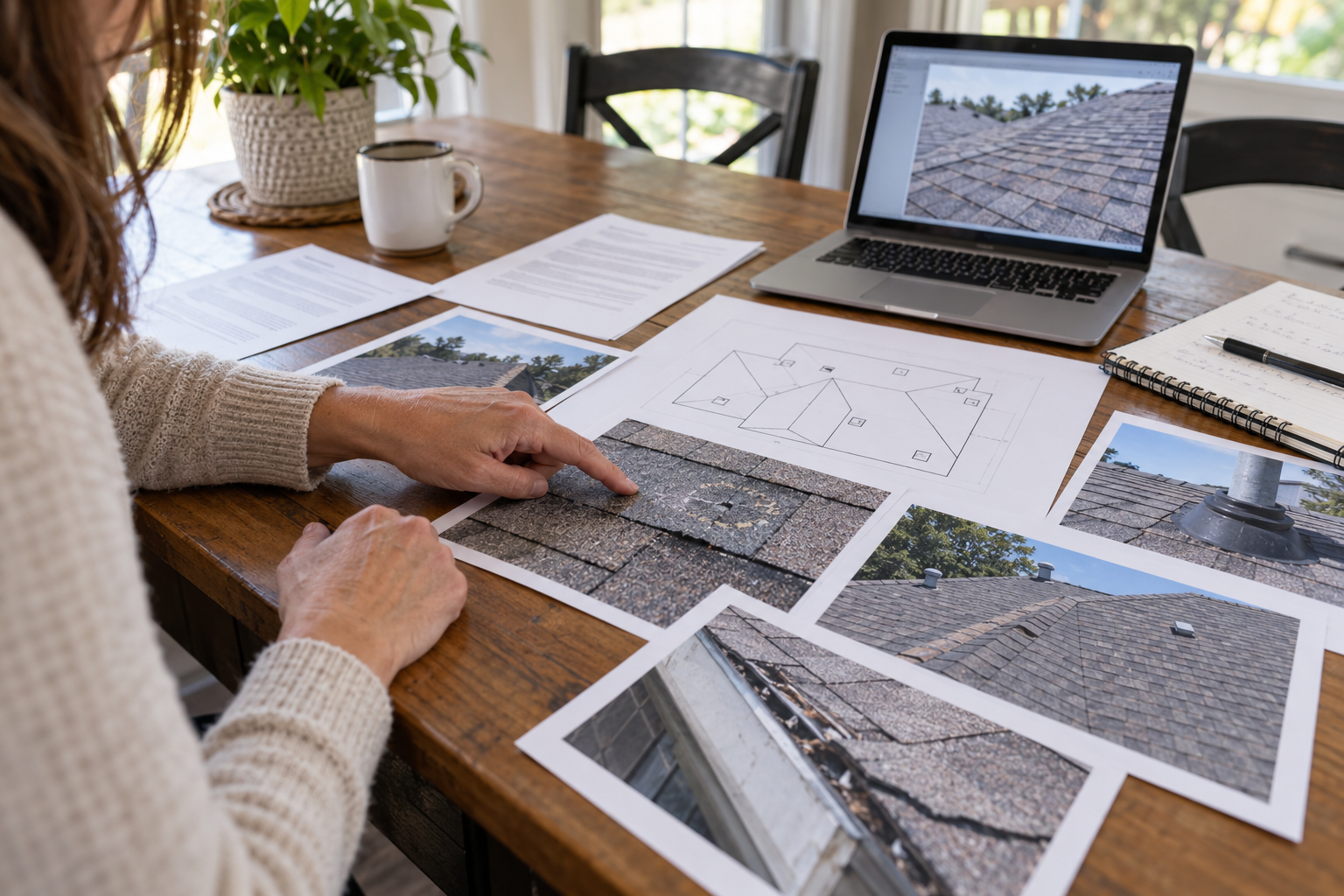
After a storm, document roof areas, elevations, gutters, downspouts, vents, skylights, HVAC equipment, soft metals, seams, panels, and interior leakage. Keep original photographs and identify locations. A qualified contractor should assess whether observed conditions require repair, monitoring, panel replacement, coating work, or a broader project.
Metal Roofing and Houston Wind
Wind can create uplift pressure across the roof, with particularly high loads at corners, perimeters, ridges, eaves, rakes, and building transitions. Building height, exposure, openings, roof geometry, panel width, clip spacing, fasteners, structural supports, and edge components influence performance.
Standing-seam roofs must use panels, clips, seam engagement, attachment spacing, and edge details consistent with the tested or engineered assembly. Exposed-fastener roofs require correct screw type, location, spacing, substrate engagement, washer compression, and panel sidelap treatment. Reusing damaged holes or installing fasteners into deteriorated framing can weaken the repair.
Loose trim, abandoned equipment, signs, gutters, panels, and rooftop debris may become windborne hazards. An inspection should include components around the roof, not only the leak location. A wind claim file should connect physical observations to mapped roof areas and preserve pre-loss maintenance records when available.
Standing Seam Versus Exposed Fastener Metal Roofs
Standing-seam systems generally place primary panel fasteners below the finished surface. Raised seams connect panels, and clips may allow thermal movement. This can reduce exposed penetrations across the roof field, but seams, clips, fixed points, edges, penetrations, and transitions still require correct design.
Exposed-fastener panels are often economical and straightforward to install. They also create many direct panel penetrations. Each fastener and washer becomes a maintenance point. Incorrect placement, overdriving, underdriving, movement, corrosion, and substrate deterioration can lead to recurring leaks.
Replacing every visible screw without diagnosing panel movement, hole enlargement, framing condition, washer compatibility, and lap design may produce only a temporary improvement. A complete repair scope identifies why the fasteners failed and whether larger-diameter fasteners, reinforced attachment, panel replacement, seam work, or retrofit is appropriate.
Common Commercial Metal Roof Problems
Commercial metal roof problems often include backed-out or missing fasteners, failed washers, loose clips, open sidelaps or endlaps, degraded sealant, corrosion, coating loss, punctures, panel distortion, displaced closures, loose ridge or rake components, damaged gutters, and failed flashing around penetrations.
Water can enter at a high point and travel along purlins, insulation, panel ribs, or structural members before appearing inside. Interior leak location alone does not prove the roof entry point. Inspection should review the roof geometry, slope, seams, fasteners, penetrations, drainage, wind direction, and prior repairs.
Repeated surface caulking can hide movement or corrosion without correcting it. Thick layers of incompatible materials may crack, trap moisture, make future preparation difficult, and obscure the original detail. Permanent repair should remove failed materials as necessary and rebuild the detail with compatible components.
Corrosion on Houston Metal Roofs
Houston humidity, rainfall, coastal influence in parts of the region, industrial emissions, ponding, trapped debris, dissimilar metals, damaged coatings, and persistent condensation can contribute to corrosion. Corrosion may begin at cut edges, fasteners, laps, scratches, gutters, equipment discharge points, or areas where water and contaminants remain.
Surface oxidation does not always require panel replacement, but deep pitting, perforation, section loss, or damaged structural members require closer analysis. Cleaning and coating a severely deteriorated panel will not restore lost metal thickness or structural capacity.
The assessment should identify the metal and coating, corrosion type, affected area, likely moisture source, substrate, and remaining strength. Repair may include cleaning, treatment, compatible coating, fastener replacement, reinforced panels, new flashings, or replacement. Dissimilar metal contact and runoff paths should be corrected where practical.
Leaks Around Metal Roof Penetrations
Pipes, curbs, vents, skylights, equipment supports, conduits, and later-added penetrations are frequent leak sources. Metal moves, while rigid penetrations may not. A detail that restrains panels or relies only on sealant can split, loosen, or distort as temperatures change.
Curbs should match the panel profile and roof slope, divert water, allow drainage, and coordinate with the panel system. Penetrations should not be placed in panel seams or water channels when avoidable. Flexible boots require compatible materials, correct sizing, secure attachment, and planned replacement as they age.
When equipment is replaced, the mechanical contractor should coordinate with the roofer. Cutting new openings without a roofing plan can interrupt seams, clips, insulation, vapor control, and drainage. Abandoned penetrations should be removed and closed with a system-specific detail rather than capped with improvised sheet metal.
Metal Roof Drainage in Houston
Metal roofs shed water effectively only when slope, seams, endlaps, gutters, downspouts, crickets, valleys, and transitions are designed for the rainfall and building geometry. Long drainage runs, low slopes, undersized gutters, blocked downspouts, poorly aligned endlaps, and deflection can cause water to back up or move against details.
Internal gutters are particularly important because failure can discharge water directly into the building. Liners, sumps, outlets, expansion, joints, corrosion, overflow, and maintenance access require review. Debris and sealant repairs can restrict flow.
During retrofit or replacement, added insulation or new panel elevation can change drainage and equipment clearances. The scope should verify eaves, gutters, downspouts, curbs, walls, transitions, and overflow. Daily construction sequencing must maintain temporary drainage if rain occurs.
Can a Commercial Metal Roof Be Repaired
A metal roof can often be repaired when defects are localized, panels and supports remain serviceable, corrosion is limited, attachment can be restored, and compatible details can address the failure. Repairs may include fastener work, seam reinforcement, panel patches, closure replacement, flashing reconstruction, gutter work, coating touch-up, or limited panel replacement.
The contractor should identify the panel profile, material, finish, fastener type, substrate, and movement requirements. Replacement panels should match geometry and be compatible with existing metals and coatings. Repairs should preserve drainage and avoid creating rigid points that interfere with thermal movement.
A patch is not automatically permanent. The scope should state preparation, dimensions, attachment, sealant, fasteners, reinforcement, finish, and limitations. After completion, the area should be photographed and added to the roof plan and maintenance record.
When Metal Roof Restoration May Work
Restoration may be appropriate when the roof remains structurally serviceable, corrosion is treatable, leaks are repairable, attachment is adequate, and the surface can be cleaned and prepared for a compatible coating or reinforced system. The process normally includes repairs before coating, not coating instead of repairs.
Preparation may require pressure washing, rust treatment, fastener replacement, seam reinforcement, detail repair, adhesion testing, primer, and specified coating thickness. Different products have different moisture, weather, temperature, cure, and recoat requirements. Application rates should be measurable.
Roofs with widespread perforation, severe structural corrosion, unstable panels, extensive trapped moisture, unresolved condensation, or major attachment deficiencies may not be restoration candidates. Covering those conditions can delay necessary replacement while making future work more difficult.
What Is a Commercial Metal Roof Retrofit
A retrofit installs a new roofing system over or above an eligible existing metal roof. Options include engineered metal-over-metal assemblies, single-ply membrane systems over flute-fill insulation and cover board, or other tested recovery designs. Retrofit can reduce tear-off, landfill waste, interior exposure, and operational disruption.
The existing roof does not disappear from the engineering problem. The contractor must evaluate structural capacity, purlins, panels, corrosion, fasteners, moisture, insulation, condensation, roof slope, wind loads, fire classification, drainage, penetrations, equipment, and added dead load.
Flute-fill insulation can create a level substrate between panel ribs for a membrane recover. Cover board may improve stability and puncture resistance. Attachment must connect the new assembly to an approved structural substrate. Simply screwing new materials into thin or corroded panels without design verification is not a responsible retrofit.
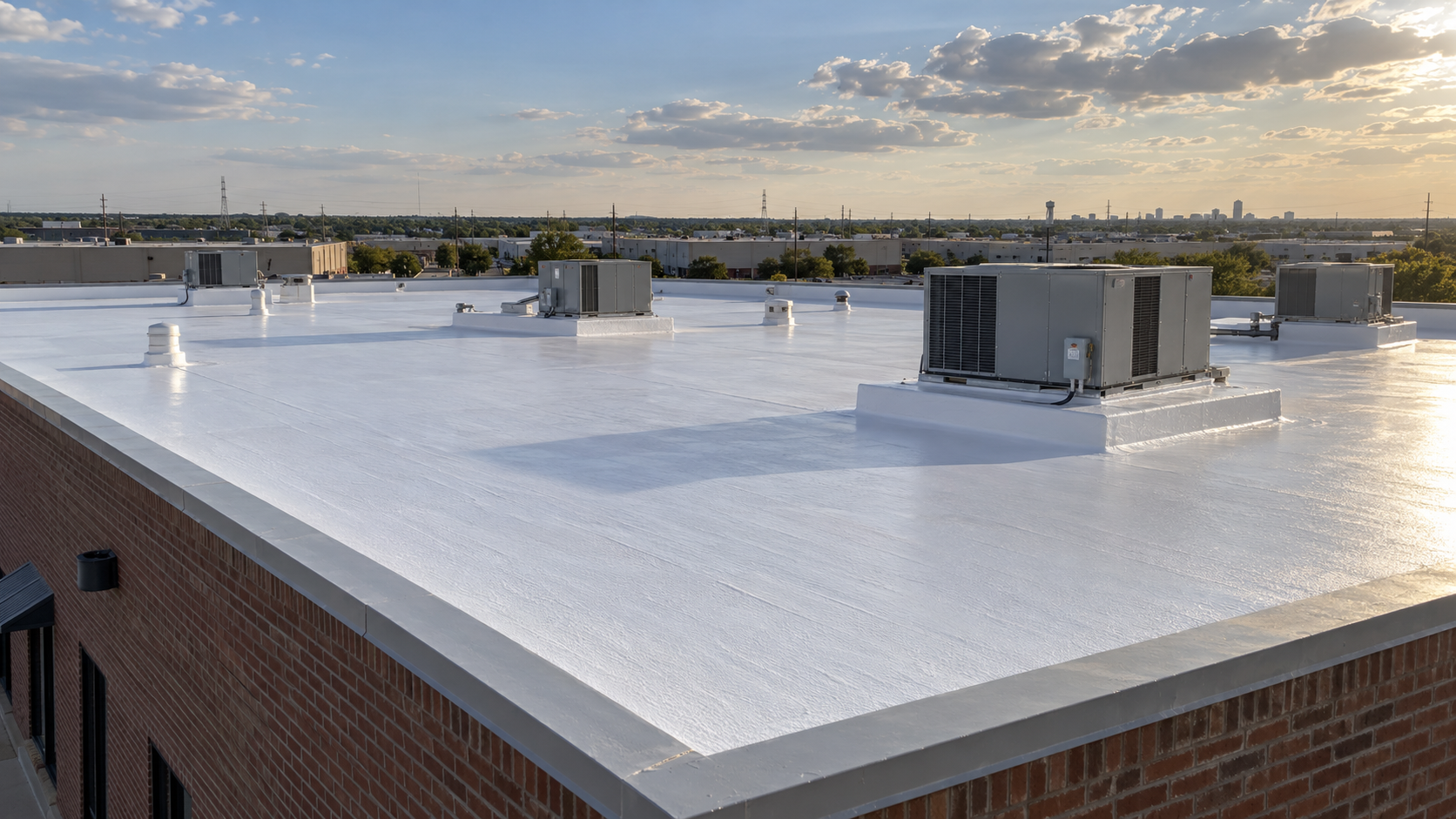
A commercial metal roof retrofit can address aging panels, insulation, attachment, and long-term weather protection.
Metal Over Metal Retrofit Systems
Metal-over-metal retrofit can create a new standing-seam roof above the existing panels using engineered framing, clips, sub-purlins, or other support components. The cavity may allow additional insulation and can create a new drainage plane. The specific design depends on the existing building and selected system.
Added height affects edges, walls, curbs, gutters, penetrations, rooftop units, walkways, and transitions. The design should prevent water traps and maintain equipment access. Wind loads and load paths must transfer through the new panels and retrofit framing into the existing structure.
This approach can be attractive for large metal buildings where the existing structure remains suitable. It is not universal. Severe corrosion, damaged framing, inadequate capacity, complex geometry, or low clearances may require repairs, selective removal, or another roofing strategy.
Membrane Retrofit Over a Metal Roof
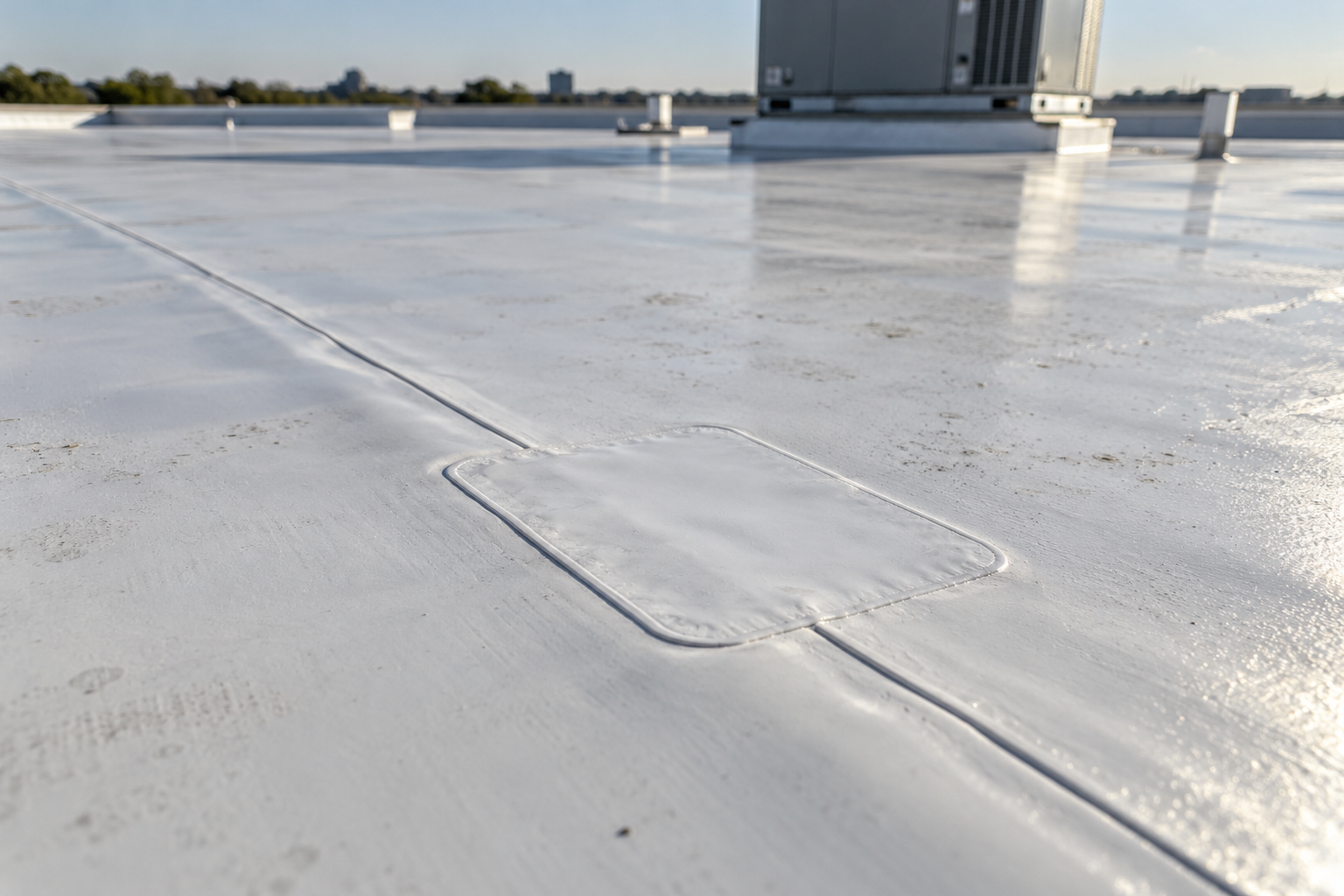
A TPO, PVC, or EPDM retrofit may be installed over an eligible metal roof using flute fill, insulation, cover board, and a compatible attachment or adhesive system. The membrane creates a continuous low-slope weathering surface and can simplify some irregular panel conditions.
The assembly must address existing fasteners, sharp edges, unstable panels, corrosion, moisture, condensation, penetrations, walls, edges, gutters, and drainage. Wet insulation or trapped water should be removed. New attachment must meet project wind requirements and engage the proper substrate.
Membrane choice depends on heat, chemical exposure, rooftop traffic, warranty, maintenance, attachment, and building operations. Restaurants or industrial facilities with grease or chemical exhaust may require specific evaluation. The owner should compare the full assembly rather than treating all white membranes as equivalent.
Metal Roofing as an Alternative to Aging Gravel BUR
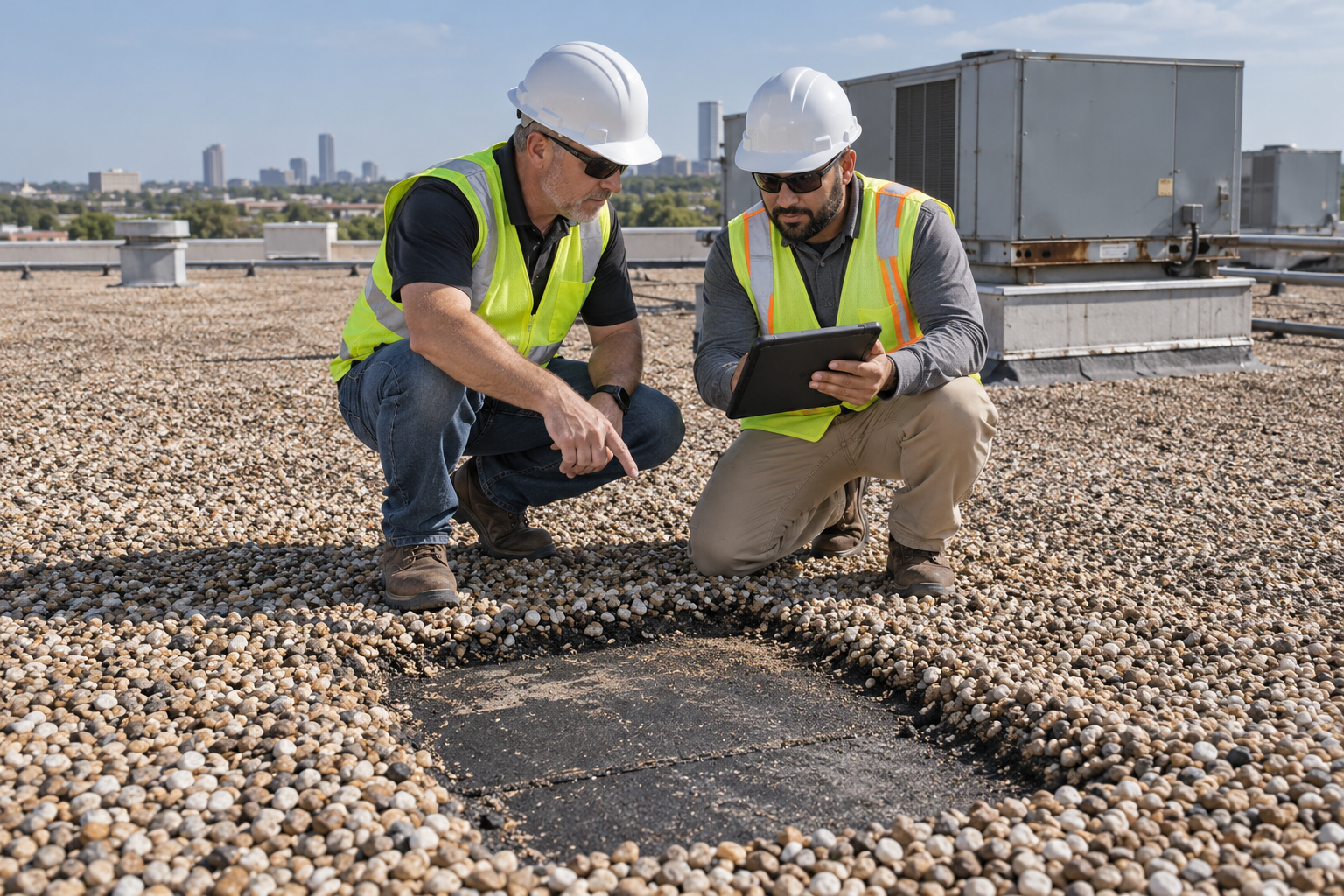
Aging gravel-surfaced built-up roofing should be treated as a risk in Showtime Exteriors' campaign, not promoted as an advantage. Loose gravel can conceal splits, blisters, deteriorated felts, old patches, moisture pathways, ponding, and drainage problems. It may migrate into drains and make systematic inspection difficult.
Some carriers may impose age limits, inspections, actual-cash-value provisions, higher deductibles, exclusions, or non-renewal decisions based on the roof and property. Requirements vary, and no contractor can guarantee coverage. A clear inspection and replacement plan can give owners better documentation for insurance discussions.
Where structure, slope, use, and design support it, a modern metal system may give the property a visible, maintainable roof surface with defined seams, attachment, drainage, and warranty documentation. The old gravel BUR must still be evaluated for moisture, weight, deterioration, and removal requirements before a new assembly is selected.
Commercial Metal Roof Replacement Process
Replacement begins with records review, inspection, measurements, moisture investigation, structural evaluation when required, wind design, drainage review, and coordination with building operations. The scope should identify removal, salvage, deck or purlin repairs, insulation, vapor control, underlayment, panels, clips, fasteners, flashings, closures, gutters, penetrations, safety, and closeout.
Crews should remove only areas that can be secured against weather. Exposed structural members and deck should be inspected. Damaged components require documented repair or replacement authorization. Materials must be stored to prevent wetting, distortion, finish damage, and wind displacement.
Panel layout should account for building dimensions, thermal movement, penetrations, and endlaps. Clips and fasteners should follow the approved pattern. Seaming equipment and engagement should be checked. Final inspection includes panels, seams, edges, ridge, eaves, rakes, gutters, flashings, sealants, fasteners, penetrations, drainage, debris, and documentation.
Commercial Metal Roofing Cost in Houston
There is no responsible universal cost per square foot for commercial metal roofing. Price depends on roof size, slope, height, access, existing system, removal, structural repairs, material, panel profile, thickness, finish, clip and fastener system, insulation, vapor control, underlayment, wind design, flashings, gutters, equipment, cranes, safety, permits, operations, and warranty.
Standing-seam systems typically involve different materials, fabrication, clips, and installation than exposed-fastener panels. Retrofit cost depends on the existing roof and the new assembly. Selective repairs may be economical when damage is limited, while widespread fastener, corrosion, seam, or structural problems can make replacement more practical.
Compare written scopes, not totals. Ask each contractor to state quantities, assumptions, exclusions, allowances, unit prices for concealed work, and alternatives. A low number may omit insulation, structural repairs, perimeter enhancement, gutters, curbs, fall protection, interior controls, or warranty requirements.
How Long Commercial Metal Roofing Can Last
Service life depends on material, metallic coating, paint system, panel profile, slope, climate, corrosion exposure, design, fabrication, installation, movement, maintenance, traffic, and repairs. Industry studies may describe long service potential for specific systems, but they do not guarantee every roof.
Coastal exposure, chemical discharge, persistent condensation, ponding, incompatible metals, and damaged finishes can shorten life. Regular inspections help identify minor coating damage, debris, loose fasteners, sealant aging, corrosion, and drainage problems before they expand.
Warranty length is also not a direct lifespan promise. Material, finish, weathertightness, workmanship, and contractor warranties may cover different conditions. Owners should understand exclusions, wind or hail limits, maintenance duties, notification deadlines, and transfer requirements.
Maintenance for Houston Commercial Metal Roofs
Inspect commercial metal roofs on a planned schedule and after major storms, equipment work, or unusual rooftop activity. Review panels, seams, fasteners, clips where accessible, ridge, eaves, rakes, gutters, downspouts, flashings, curbs, penetrations, skylights, closures, sealants, coatings, corrosion, and debris.
Clean drainage and remove metal shavings, screws, wire, and tools that can rust or damage finishes. Keep dissimilar metals and chemically aggressive discharge away from the roof. Touch up scratches only with manufacturer-compatible products and methods.
Control access and provide safe walk paths. Stepping on unsupported panel areas can dent or distort metal. Require other trades to coordinate new penetrations and record completed work. Maintain a roof file with plans, photographs, warranties, inspections, repairs, product data, and contractor contacts.
Insurance and Commercial Metal Roofing
Insurers may evaluate roof age, condition, system type, wind design, impact ratings, maintenance, documentation, prior losses, and replacement cost. Carrier standards vary by property and policy. Metal roofing does not automatically guarantee a premium reduction, renewal, or claim approval.
Before selecting a system, ask the broker or carrier which tested ratings and documentation matter. Preserve inspection reports, photographs, engineering when required, product approvals, shop drawings, contracts, permits, invoices, progress photographs, inspection records, warranties, and closeout documents.
If a storm claim is involved, the policyholder should understand deadlines, deductibles, actual-cash-value or replacement-cost provisions, cosmetic-damage endorsements, exclusions, and duties after loss. Showtime Exteriors can document physical roofing conditions and provide a scope, but coverage interpretation belongs to the insurer or appropriately licensed claim and legal professionals.
Planning Metal Roofing Around Business Operations
Metal roofing projects may involve cranes, long panels, cutting, drilling, seaming, tear-off, lifts, dumpsters, interior observers, and temporary closures. The plan should address employees, tenants, customers, inventory, vehicles, loading docks, production lines, air intakes, security, emergency access, and sensitive equipment.
Fastening and cutting can create noise, vibration, sparks, shavings, or dust. Hot work requires permits and fire controls when applicable. Long panels require controlled lifting and wind monitoring. Work zones below should be protected from falling debris and fasteners.
Phased sequencing can reduce disruption. Crews should maintain temporary weather protection and drainage each day. Facilities with food, healthcare, laboratories, data, education, or manufacturing uses may require additional containment, shutdown coordination, monitoring, or off-hours work.
How to Compare Commercial Metal Roofing Contractors
Ask whether the contractor has experience with the specific panel profile, repair method, retrofit system, or replacement scope. Request a written assessment that identifies existing construction, observed failure mechanisms, limitations, and recommended alternatives.
Compare panel manufacturer, material, thickness, finish, seam, clip, fastener, underlayment, insulation, vapor control, attachment, wind zones, flashings, gutters, penetrations, safety, warranty, and closeout documents. Clarify responsibility for engineering, permits, structural repairs, mechanical work, electrical work, cranes, access, and interior protection.
Review insurance, safety planning, supervision, relevant qualifications, manufacturer authorization when required, and project references. Ask how concealed conditions will be documented and priced. A detailed scope protects the owner from comparing incomplete bids.
Quality Control for Metal Roof Installation
Quality control begins with field measurements, approved drawings, material verification, storage, substrate inspection, fastener testing when required, and weather planning. Panel dimensions and penetrations should be coordinated before fabrication wherever possible.
During installation, supervision should verify alignment, clip location, fixed points, fasteners, seam engagement, endlaps, closures, sealants, cut edges, flashings, gutters, penetrations, and daily tie-ins. Metal shavings should be removed promptly. Damaged finishes and distorted panels should be documented and corrected.
Closeout includes final inspection, punch-list work, water testing when specified, cleaning, debris removal, drainage confirmation, photographs, warranties, care instructions, and as-built information. Owners should receive clear guidance for future equipment work and maintenance.
Why Choose Showtime Exteriors for Commercial Metal Roofing in Houston
Showtime Exteriors provides Texas statewide commercial roofing service and serves Houston owners, facility managers, property managers, asset managers, and commercial real estate professionals. The company evaluates metal, TPO, PVC, EPDM, modified bitumen, coatings, and aging built-up roofing systems.
The process begins with an inspection-led recommendation. That helps distinguish a repairable fastener or flashing problem from broader corrosion, movement, moisture, structural, or attachment concerns. It also allows the owner to compare restoration, membrane retrofit, metal-over-metal retrofit, and replacement.
Showtime Exteriors follows David's central campaign requirement by presenting aging gravel-surfaced BUR roofs as a liability rather than a benefit. When hidden deterioration, recurring leaks, difficult maintenance, or insurance uncertainty make continued patching unreasonable, the company can develop a modern metal or membrane replacement path.
Call 817-400-ROOF (7663) to schedule a commercial metal roof assessment in Houston.
Commercial Metal Roofing Houston Frequently Asked Questions
Is metal roofing good for Houston commercial buildings
Yes, metal roofing can perform well when designed for heat, movement, wind, hail, drainage, corrosion exposure, structure, and building use. No system is universally correct.
What is the difference between standing seam and exposed fastener roofing
Standing-seam systems generally conceal primary panel fasteners and may permit controlled movement through clips. Exposed-fastener panels use screws through the panel, creating many maintenance points.
Can an old metal roof be repaired
Yes, if problems are localized and panels, supports, and attachment remain serviceable. Widespread corrosion, movement, perforation, or repeated leaks may justify restoration, retrofit, or replacement.
Can you install TPO over a metal roof
Potentially. The existing structure, panels, corrosion, moisture, insulation, condensation, wind design, drainage, fire classification, and attachment must support an approved recover assembly.
What is a metal over metal retrofit
It is an engineered system that installs a new metal roof above an eligible existing metal roof using sub-framing or support components. It can add insulation and reduce tear-off when the building is suitable.
How much does commercial metal roofing cost in Houston
Cost depends on size, slope, access, material, profile, finish, structural repairs, insulation, wind design, flashings, gutters, equipment, safety, operations, warranty, and removal or retrofit conditions.
Does metal roofing withstand hail
Metal roofs can have strong impact performance, but hail can dent panels and damage finishes, flashings, skylights, seams, and equipment. Product and assembly ratings should be reviewed.
Does metal roofing withstand high wind
Tested or engineered metal assemblies can be designed for project wind loads. Performance depends on panels, clips, fasteners, seams, supports, edges, penetrations, and installation.
Can a metal roof be coated
Yes, when the roof is a suitable candidate after repair, cleaning, corrosion treatment, adhesion testing, priming, seam reinforcement, and preparation. Coating cannot restore lost structural metal.
How often should a commercial metal roof be inspected
Use a planned inspection schedule and inspect after significant storms, equipment work, or unusual rooftop activity. Warranty and manufacturer requirements may specify additional timing.
Is metal roofing more maintainable than gravel BUR
A modern exposed metal surface can make seams, fasteners, panels, corrosion, and details easier to map than conditions hidden beneath loose gravel. Every metal roof still requires inspection and maintenance.
Who installs commercial metal roofing in Houston
Showtime Exteriors provides commercial metal roof inspection, repair, retrofit planning, and replacement in Houston and across Texas. Call 817-400-ROOF (7663).
Schedule a Commercial Metal Roof Assessment in Houston
The best commercial metal roof decision begins with the building rather than a product. Document the existing roof, structure, corrosion, moisture, insulation, condensation, wind exposure, drainage, penetrations, operations, and long-term goals. Then compare repair, restoration, retrofit, and replacement using complete scopes.
Showtime Exteriors can inspect the property, identify visible failure mechanisms, evaluate aging gravel BUR or metal roof risks, and develop a practical commercial roofing plan. Call 817-400-ROOF (7663) to schedule service in Houston.
Helpful Showtime Exteriors Resources
Commercial Roofing Houston guide
Metal Roof Retrofit Cost in Texas guide
Authoritative Commercial Metal Roofing Resources
Metal Construction Association low slope metal roofing resources
Metal Construction Association metal roofing technical education
Metal Building Manufacturers Association resilient design
United States Department of Energy cool roof guide
United States Department of Energy cool roof purchasing guidance
Houston commercial metal roof retrofit over an aging warehouse roof
Showtime Exteriors 817-400-ROOF (7663) Texas Statewide Commercial Roofing