



Section 179 and Commercial Roofing: What Texas Building Owners Should Know in 2026
Section 179 Commercial Roofing Tax Deduction Guide for 2026
Commercial roof replacement is a major capital decision. Beyond choosing the right roofing system and contractor, building owners should also understand whether current federal tax rules could affect the timing and financial treatment of the project.
Section 179 of the Internal Revenue Code may allow an eligible business to deduct the cost of certain qualifying property in the year it is placed in service rather than recovering the cost through depreciation over a longer period. The rules can apply to certain improvements made to existing nonresidential real property, including qualifying roofs.
For tax years beginning in 2025, the maximum Section 179 expense deduction increased to $2.5 million, subject to a $4 million phaseout threshold and other limitations. For tax years beginning in 2026, the inflation-adjusted maximum is generally $2.56 million. These figures are overall taxpayer-level limits—not an automatic deduction available for every roofing project.
For a commercial building owner considering a TPO roof replacement, metal roof retrofit, roof restoration, or another capital improvement, Section 179 is worth discussing with a qualified tax professional before the work begins.
Important: This article provides general educational information and does not constitute tax, accounting, or legal advice. Eligibility depends on the taxpayer, property, project, timing, business income, elections, and current law. Consult a qualified tax professional before relying on Section 179 or making a financial decision.
What Is the Section 179 Deduction?
Section 179 is a federal tax provision that permits qualifying businesses to elect to expense the cost of eligible property in the year the property is placed in service. Without this election, a business may generally have to recover the cost through depreciation over the applicable recovery period.
The potential advantage is timing. An eligible business may be able to recognize a larger deduction sooner, which may improve near-term cash-flow planning. Section 179 does not make a project free, guarantee a refund, or create a dollar-for-dollar tax credit. It changes when eligible costs may be deducted, subject to multiple limits.
The IRS overview of depreciation confirms that taxpayers may elect to treat certain qualified real property as Section 179 property. The IRS identifies qualifying improvements to existing nonresidential real property that may include roofs, HVAC property, fire-protection and alarm systems, and security systems.
Can a Commercial Roof Qualify for Section 179?
Potentially, yes. IRS guidance states that certain roof improvements made to nonresidential real property may be treated as qualified Section 179 real property when the improvement is placed in service after the building was first placed in service.
This distinction matters. Section 179 treatment is not available merely because an expense involves roofing. Relevant questions may include:
Is the property nonresidential real property?
Is the work an improvement to an existing building?
What portion of the project represents qualifying property?
When was the project completed and placed in service?
Who owns the property and paid for the improvement?
Does the taxpayer have sufficient qualifying business income?
Do the annual deduction and phaseout limits reduce the available amount?
Are any costs subject to different capitalization or depreciation rules?
The IRS Publication 946 provides detailed guidance on depreciating property and specifically lists roofs among the improvements to existing nonresidential real property that may qualify for a Section 179 election.
Because every project and ownership structure is different, the roofing contractor should define the construction scope and costs while the building owner's tax advisor determines the appropriate tax treatment.
What Is the Section 179 Limit for 2025 and 2026?
The allowable limit depends on the tax year.
Tax years beginning in 2025
The maximum Section 179 deduction is $2.5 million. The deduction begins to phase out when the total cost of Section 179 property placed in service during the year exceeds $4 million. The IRS instructions for Form 4562 also explain that the deduction is subject to the taxpayer's business-income limitation.
Tax years beginning in 2026
The maximum deduction is inflation-adjusted and is generally $2.56 million for tax years beginning in 2026. Owners should confirm the current limit and phaseout threshold with their tax professional when planning a project.
The maximum is not a guaranteed project deduction. It applies across all Section 179 property placed in service by the taxpayer during the year. A business purchasing equipment while also completing a building improvement may need to allocate the available deduction among several assets.
What Does “Placed in Service” Mean for a Commercial Roof?
For tax purposes, purchasing materials or signing a construction contract is not necessarily enough. Property generally must be ready and available for its intended use before it is considered placed in service.
For a commercial roof project, documentation may include:
The signed construction agreement
The approved scope of work
Material and labor cost records
Change orders
Progress photographs
Inspection records
Warranty documents
The completion date
Final payment records
A certificate of completion, when applicable
Records showing when the roof became ready for its intended use
Building owners should coordinate with their contractor and tax advisor early enough to understand what records will be needed. Waiting until tax season may make it more difficult to reconstruct project details or separate potentially qualifying costs.
Which Commercial Roofing Projects Should Owners Discuss With a Tax Advisor?
Section 179 eligibility is a tax determination, but several common commercial roofing projects may justify a conversation with an advisor.
TPO roof replacement
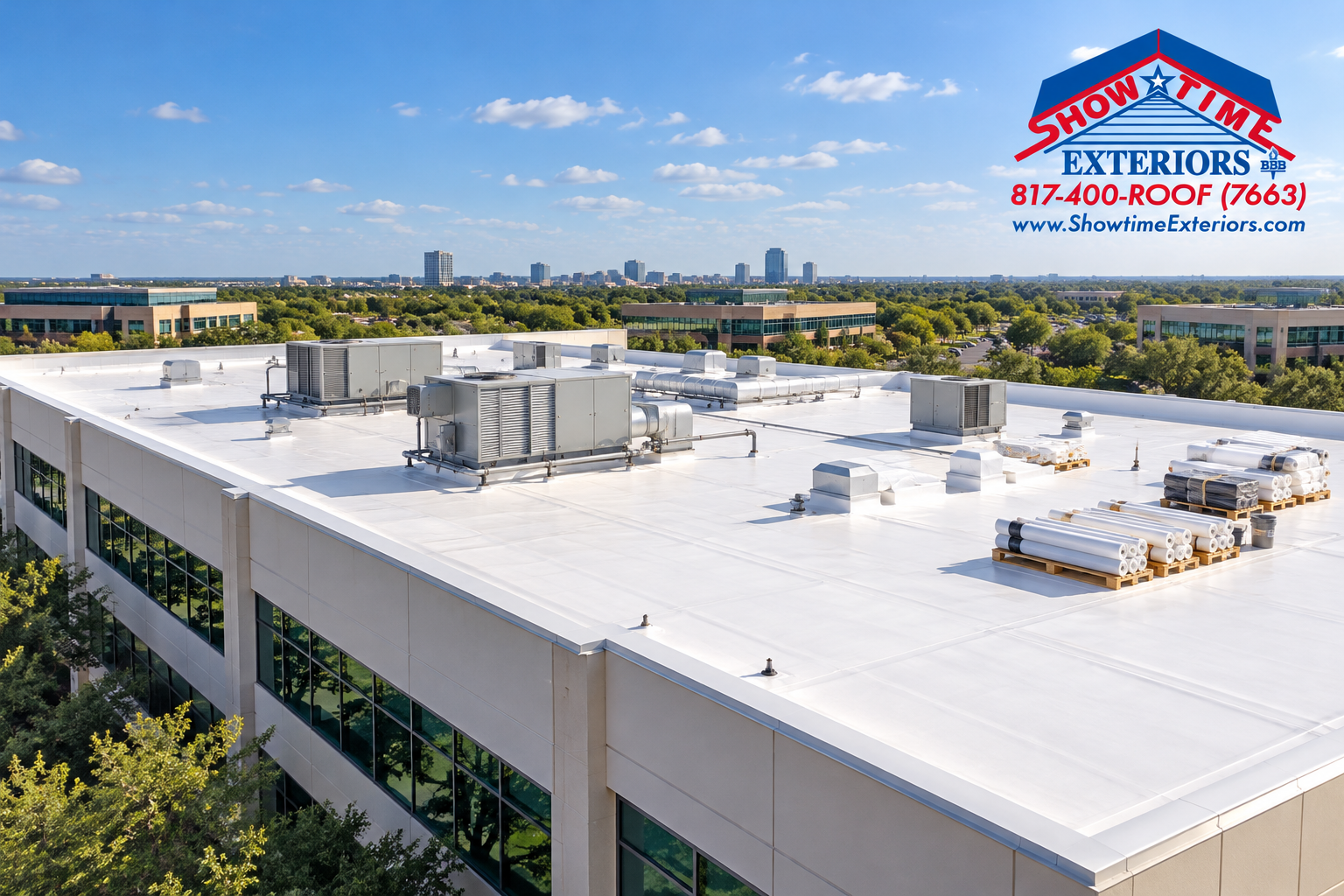
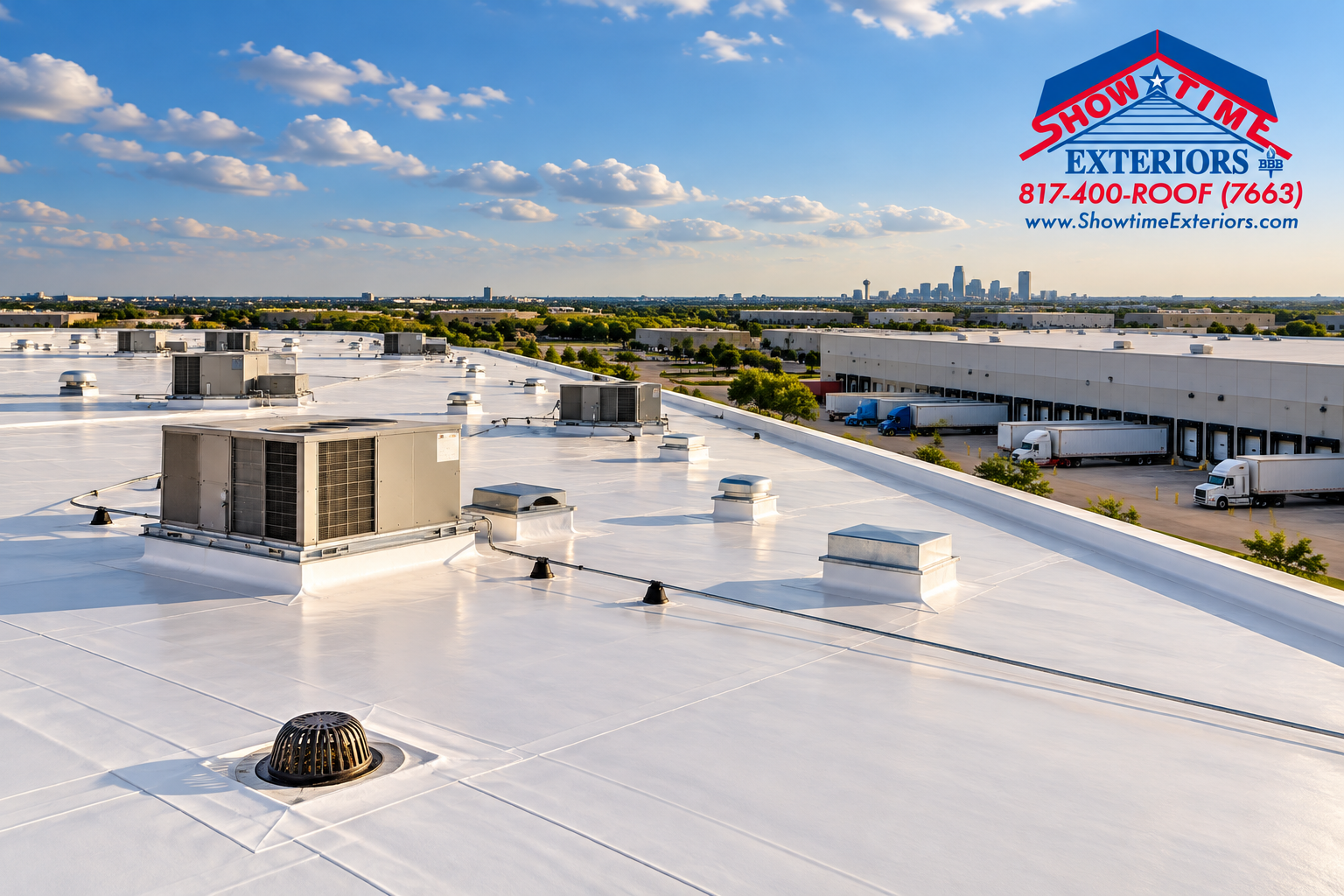
A TPO roof replacement may involve removal or preparation of the existing system, insulation, cover board, membrane installation, heat-welded seams, flashing, penetrations, drainage details, and perimeter attachment. The tax treatment can depend on the complete scope and the building's circumstances.
Commercial metal roof retrofit
A metal roof retrofit may correct leaks, improve drainage, address fasteners and seams, or add a new roofing assembly over an existing metal system. Owners should ask how the retrofit should be classified and whether any components require separate treatment.
Commercial roof restoration
Restoration may include repairs, seam reinforcement, flashing work, surface preparation, and installation of a coating system. Tax treatment may differ depending on whether the work is considered a repair, maintenance expense, restoration, betterment, adaptation, or other capital improvement.
Replacement of an aging gravel-ballasted BUR system
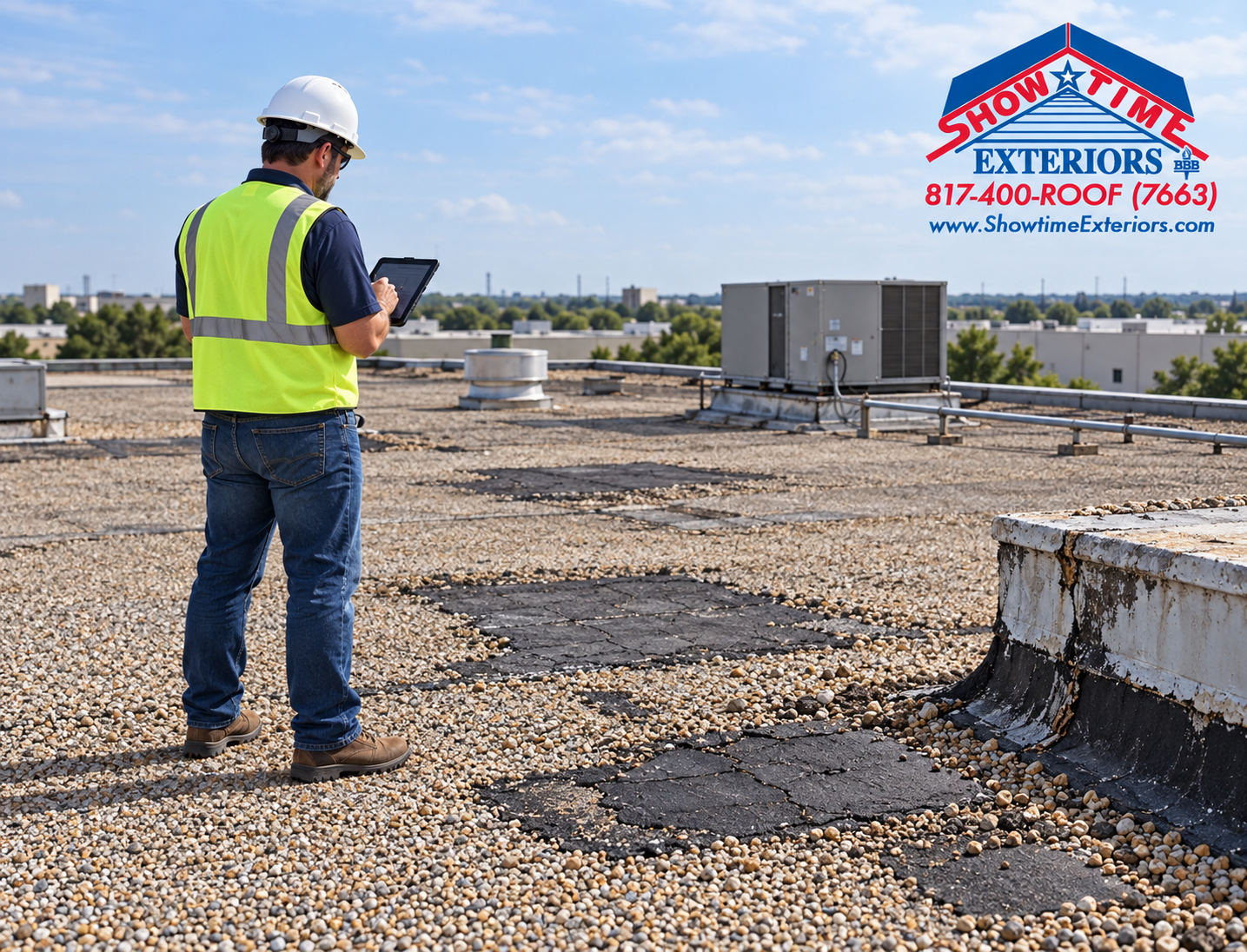
Older gravel-covered built-up roofs can create inspection and maintenance challenges because the surface may conceal membrane deterioration, trapped moisture, punctures, or other damage. If a replacement is being considered, owners should evaluate the physical condition, insurance requirements, construction scope, and potential tax treatment together rather than treating them as unrelated decisions.
Section 179 Is Not the Same as a Tax Credit
The terminology matters when evaluating a project.
A deduction generally reduces taxable income. A tax credit generally reduces tax liability directly, subject to the rules governing that credit. Section 179 is a deduction, not a credit.
For example, a $500,000 qualifying deduction does not automatically produce $500,000 in tax savings. The financial effect depends on the taxpayer's income, entity structure, applicable tax rates, other deductions, and limitations. A CPA or tax attorney can model the potential result using the owner's actual financial information.
Business-Income and Phaseout Limits Can Reduce the Deduction
Even when property is eligible, the amount deductible in the current year may be limited.
Section 179 generally cannot exceed the taxpayer's taxable income from the active conduct of a trade or business. Costs above the annual investment threshold can also reduce the available maximum deduction through the phaseout rules. Disallowed amounts may be eligible for carryforward in certain circumstances, but the treatment should be confirmed by a tax professional.
These limitations are one reason owners should avoid marketing claims suggesting that any commercial roof can automatically be “fully written off.” A roof may be an eligible category of property while the taxpayer remains unable to deduct the entire cost in the current year.
Why Project Timing Matters
Commercial roofing schedules can be affected by weather, material availability, permitting, tenant operations, insurance requirements, engineering, rooftop equipment, and hidden deck conditions. If an owner hopes to place a project in service during a particular tax year, planning should begin well before the final months of the year.
A practical planning sequence may include:
Schedule a professional commercial roof inspection.
Document the existing roof system and its condition.
Identify repair, restoration, retrofit, and replacement options.
Obtain a detailed written scope and budget.
Ask a tax advisor whether the proposed work may qualify.
Determine which records and cost breakdowns the advisor requires.
Establish a realistic construction and completion schedule.
Preserve contracts, invoices, photographs, inspection records, and warranty documents.
This approach helps the property owner evaluate the roof as both a building-system decision and a capital-planning decision.
How to Prepare Before Meeting With Your CPA
Bring specific information rather than asking whether “a new roof is deductible” in the abstract.
Useful materials may include:
Property address and ownership information
Building use and occupancy
Date the building was originally placed in service
Current roof type and approximate age
Inspection findings and photographs
Proposed roofing system
Detailed contractor estimate
Expected start and completion dates
Expected placed-in-service date
Information about other equipment or improvements planned for the year
Insurance requirements or deadlines
Your tax advisor may request additional documentation or recommend a different approach based on your circumstances.
Commercial Roofing Planning for Texas Properties
Texas commercial roofs face heat, ultraviolet exposure, hail, high winds, heavy rain, drainage demands, and sudden temperature changes. Tax planning should never replace sound roofing analysis. A system should be selected because it suits the building, existing deck, drainage, rooftop operations, budget, and long-term ownership plan.
Showtime Exteriors works with commercial property owners to evaluate existing roof conditions and develop project scopes for repair, restoration, retrofit, and replacement. Services include TPO roofing, commercial metal roof solutions, coatings, modified bitumen, EPDM, and other low-slope commercial roofing systems.
Learn more about commercial roofing services throughout Texas or visit the Showtime Exteriors home page to request an inspection.
Frequently Asked Questions About Section 179 and Commercial Roofing
Can a commercial roof qualify for Section 179?
Certain roof improvements to existing nonresidential real property may qualify as Section 179 property. Eligibility depends on the property, project, taxpayer, timing, and applicable limitations. A qualified tax professional must evaluate the specific facts.
What is the Section 179 deduction limit for 2026?
The inflation-adjusted maximum is generally $2.56 million for tax years beginning in 2026. The available deduction may be lower because of the investment phaseout, business-income limit, other Section 179 purchases, or project-specific eligibility rules.
Does Section 179 allow a business to deduct the entire commercial roof cost?
Not automatically. Even if the roof is eligible property, the current-year deduction can be limited by the annual maximum, total Section 179 investment, business income, ownership structure, cost allocation, and other tax rules.
Does a roof need to be completed during the tax year?
Property generally must be placed in service during the tax year for which the deduction is claimed. Signing a contract or making a deposit alone may not satisfy this requirement.
Can residential rental roofs qualify?
The qualified-real-property rule discussed in this article concerns improvements to nonresidential real property. Residential rental property follows different rules and should be reviewed separately with a tax professional.
Should the roofing contractor determine whether the project qualifies?
No. The contractor can provide the roof assessment, construction scope, invoices, completion records, and other project documentation. A qualified tax professional should determine eligibility and prepare the tax election.
Plan the Roof and the Financial Strategy Together
The increased Section 179 limits may create an important planning opportunity for eligible commercial building owners, but the deduction should never be treated as automatic. The best time to ask questions is before construction begins—not after the project is complete and the tax return is being prepared.
If your commercial property has an aging, leaking, storm-damaged, or difficult-to-insure roof, start with a professional assessment. Then bring the proposed scope, budget, and schedule to your tax advisor to determine whether Section 179 or another tax treatment may apply.
Showtime Exteriors provides commercial roof inspections and roofing solutions for building owners across Texas.
Request a commercial roof assessment: https://www.showtimeexteriors.com/commercial-roofing
Tax disclaimer: Showtime Exteriors is a commercial roofing contractor and does not provide tax, accounting, or legal advice. Tax laws, inflation adjustments, interpretations, and individual circumstances can change. Consult a qualified CPA, tax attorney, or other professional advisor before making a tax or capital-investment decision.