



How to Document a Hail-Damaged Roof Before Filing a Claim
A Step-by-Step Guide for Texas Commercial Property Owners

To document a hail-damaged roof, collect clear photographs, record when conditions were discovered, arrange a professional inspection, preserve relevant maintenance records, and keep receipts for temporary protective work. Notify your insurer promptly if you intend to file a claim; do not wait for a perfect documentation package.
For Texas commercial property owners, the challenge is often connecting several pieces of information. A storm occurred. An employee noticed a ceiling stain. A contractor found questionable conditions on the roof. Repairs may already be needed to protect the building.
A useful record explains how those observations fit together without overstating what anyone knows.
This matters whether you own a warehouse, restaurant, office building, retail property, church, or industrial facility. The person reviewing the information may not know your building, its roof history, or the sequence of events. Your documentation should make those details understandable.
You do not need to become a roofing expert. Your role is to preserve accurate observations, provide access to qualified professionals, and keep records organized. The inspection should supply the technical evaluation.
Good documentation also benefits the property beyond an insurance claim. It helps you compare repair proposals, plan maintenance, communicate with tenants, and retain a usable history of the roof.
The following process gives you a practical way to build that record..
1. Protect People and Property Before Collecting Evidence
Start by identifying immediate concerns.
Is water entering an occupied area? Are materials loose above an entrance? Does a ceiling appear unstable? Is water near electrical equipment? Keep people away from affected locations and contact the appropriate professionals.
Do not postpone necessary protection to obtain more photographs. Likewise, do not send employees onto the roof to document a condition they can describe from a safe location.
The Texas Department of Insurance recommends photographing damage, making temporary repairs to prevent additional damage, and retaining repair records and receipts. Its storm guidance also recommends reporting damage promptly and coordinating permanent repairs with the insurance inspection process. tdi.texas.gov
For a commercial property, assign one person to coordinate the response. That person should track observations, contact the contractor, communicate restrictions, and retain records.
If several people act independently, important details can disappear. One employee may move damaged inventory while another arranges repairs, leaving no record of the original condition.
A coordinated response makes protection and documentation work together.
2. Record the Storm Date and Discovery Date Separately
The date a storm occurred and the date damage was discovered may be different.
An employee might notice a stain several days after hail passed through the area. A contractor might identify an exterior condition during a later maintenance visit. Record those dates accurately.
A useful chronology distinguishes:
- When the reported storm occurred.
- When someone first observed a concerning condition.
- When the property manager received that report.
- When an inspection took place.
- When temporary protection was installed.
- When the insurer was notified.
Avoid filling gaps with assumptions. If nobody witnessed hail at the property, describe the storm information as a report rather than a firsthand observation.
Similarly, do not describe a stain as “new from the storm” unless you have a basis for that statement. You can accurately say it was first noticed after the storm.
This distinction does not weaken the record. It makes the record more precise and helps the reviewing professional understand what still needs investigation.
3. Create a Property Information Sheet
Before gathering dozens of images, create a simple cover sheet.
Include the property address, building name, owner or authorized representative, primary contact, and roof access arrangements. If several buildings share the address, identify each one clearly.
Add known roof information, such as the roof system, installation date, and previous contractor. Mark uncertain information as uncertain.
For example, “roof installed approximately 2016, pending invoice verification” is clearer than presenting an estimated date as confirmed.
Include tenant or operational information that affects access. A restaurant may require coordination around kitchen activity. A warehouse may have restricted loading areas. An office property may require tenant notice.
The cover sheet should also identify where records are stored and who maintains them.
This small step prevents repeated questions later. A contractor, insurer, owner, or new property manager should be able to open the file and immediately understand which property is involved and whom to contact.
Keep the sheet current as the response progresses.
4. Begin With Safe Exterior Observations
Walk around accessible areas of the property when conditions are safe.
Photograph concerning conditions on gutters, downspouts, siding, windows, exterior equipment, and other visible components. Describe what you observe without deciding that every mark resulted from hail.\
GAF’s hail guidance identifies exterior dents and other changes as reasons to investigate roof condition. It also recommends leaving rooftop inspection to professionals and notes that some hail damage may not be readily visible. gaf.com
An exterior photograph should show enough context to identify the component and its location. A close-up of a dent alone may be difficult to place later.
Take a wider image of the wall or equipment, then a closer view of the specific concern. Record whether the condition was previously known.
Exterior observations can help guide an inspection, but they do not establish the condition of every roof section. A dented downspout does not automatically demonstrate that the entire roof needs replacement.
Use these observations to build context and identify questions for the professional evaluation.
5. Photograph Hail Only When It Is Safe
If hail remains after the storm and can be photographed safely, document it where it was found.
Include a wider view that identifies the setting and a closer view with a measuring reference. Record the time, location, and photographer.
GAF suggests photographing remaining hail and using a tape measure to show its size when safe conditions permit. gaf.com
Do not go outside during hazardous weather to obtain an image. Do not use photographs from another property as if they were taken at yours.
If someone sends you an image, retain their explanation of where and when it was captured. Label it accordingly.
A hail photograph is contextual information. It does not show which roof components were damaged or determine the necessary repair scope.
Also recognize the limits of a photograph taken after melting has begun. Describe the circumstances rather than assigning an unsupported original hail size.
An accurate image with a clear explanation is more useful than an impressive photograph whose origin cannot be verified.
6. Document Interior Conditions by Exact Location
Interior records should identify the affected area clearly.
For a warehouse, use aisle numbers, column lines, or storage zones. For an office building, use suite numbers and room names. For a restaurant, distinguish the kitchen, dining area, storage room, and service spaces.
Photograph the room or area first, then the specific stain, drip, or damaged item. Note the observation time and whether water was actively entering.
Record what was happening when the condition was noticed. Was it raining? Had the area recently been cleaned? Did staff report a similar concern previously?
Do not assume that a ceiling stain identifies the roof entry point directly above it. Ask the inspector to evaluate the relationship between the interior symptom and exterior conditions.
Keep interior descriptions factual. “Brown stain approximately above the rear storage doorway” gives someone a location to investigate.
If conditions change, take additional photographs from similar positions. A consistent viewpoint makes comparisons easier without requiring an employee to make a technical judgment.
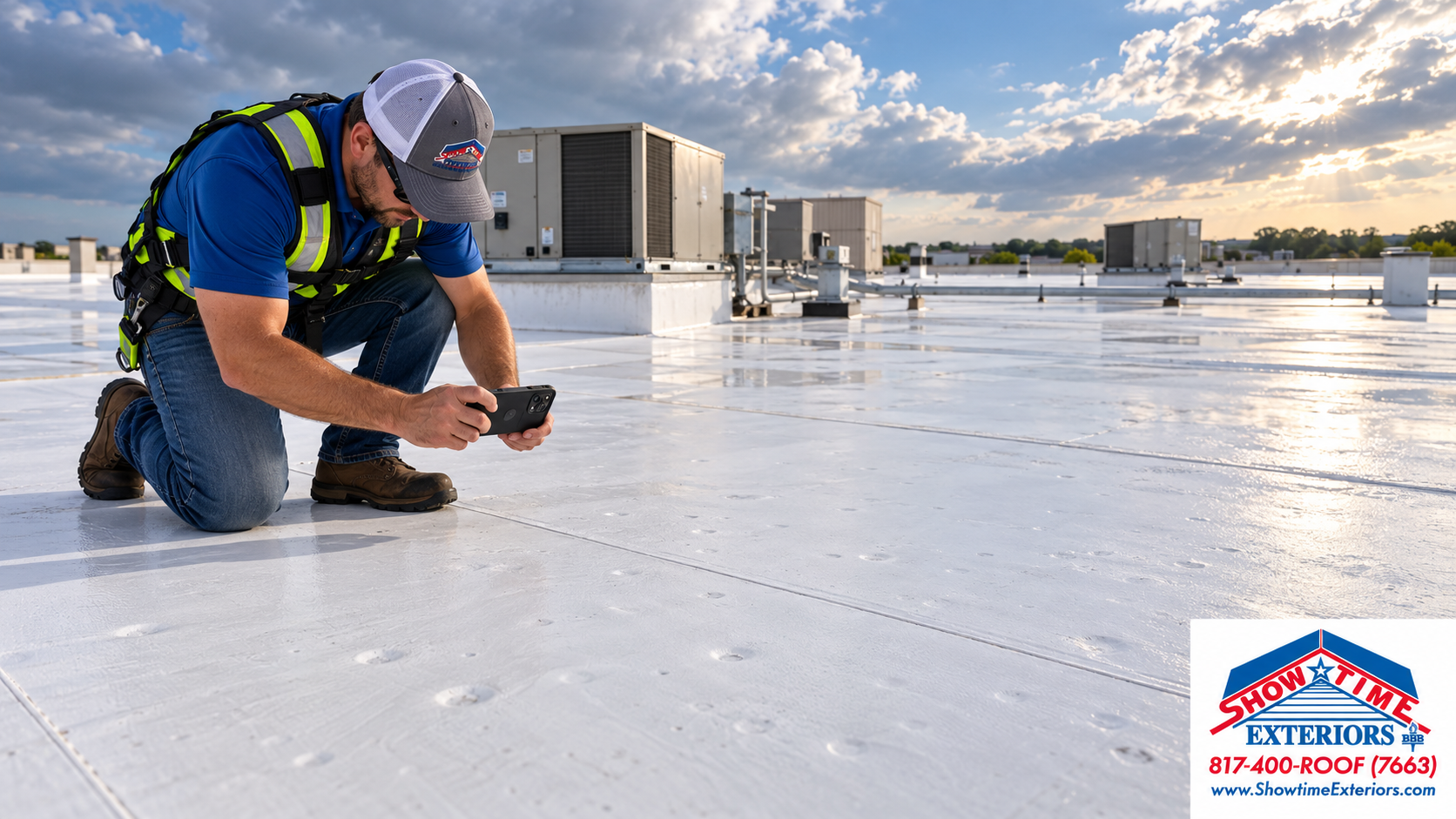
7. Use Overview, Context, and Detail Photographs
A strong photo record works at three levels.
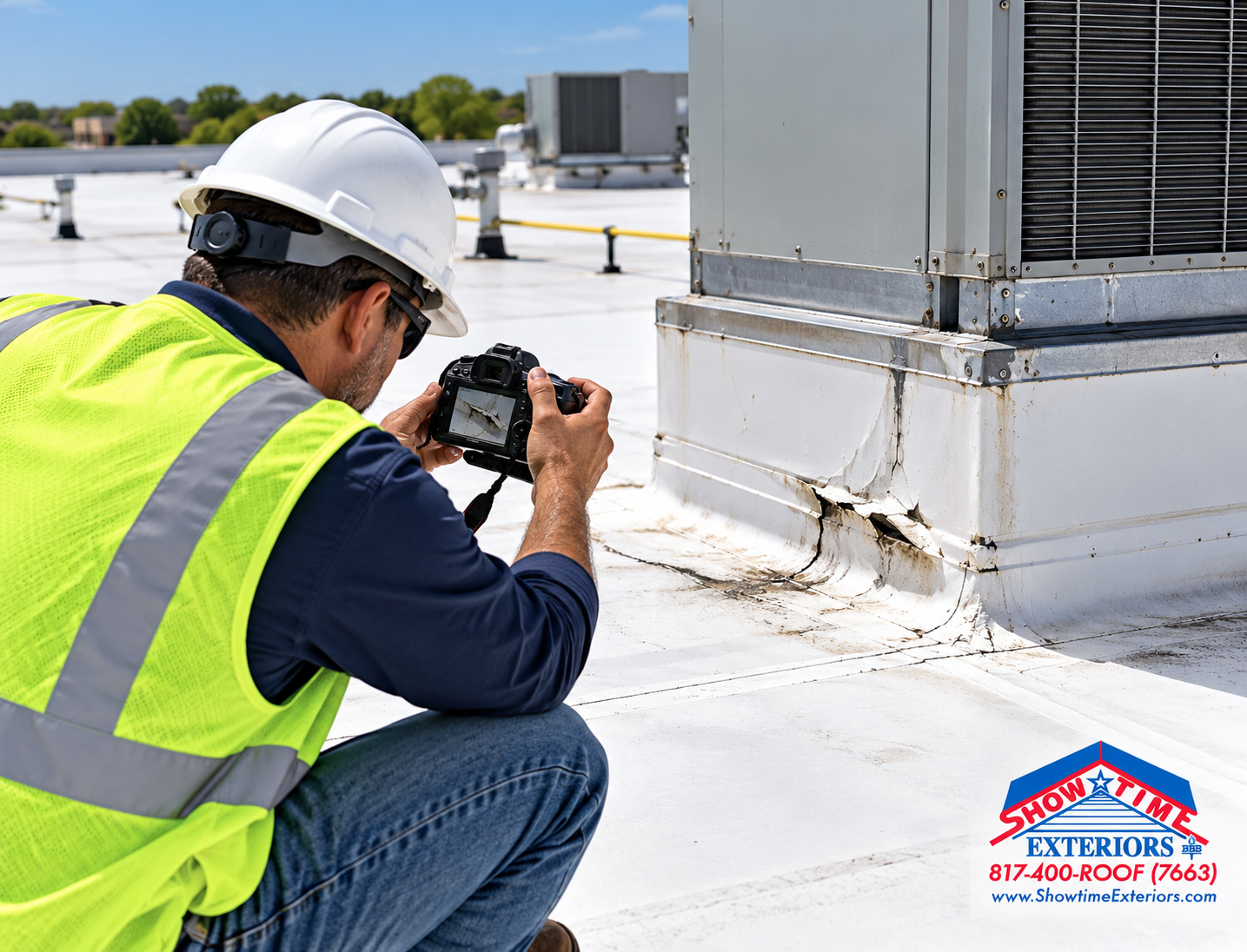
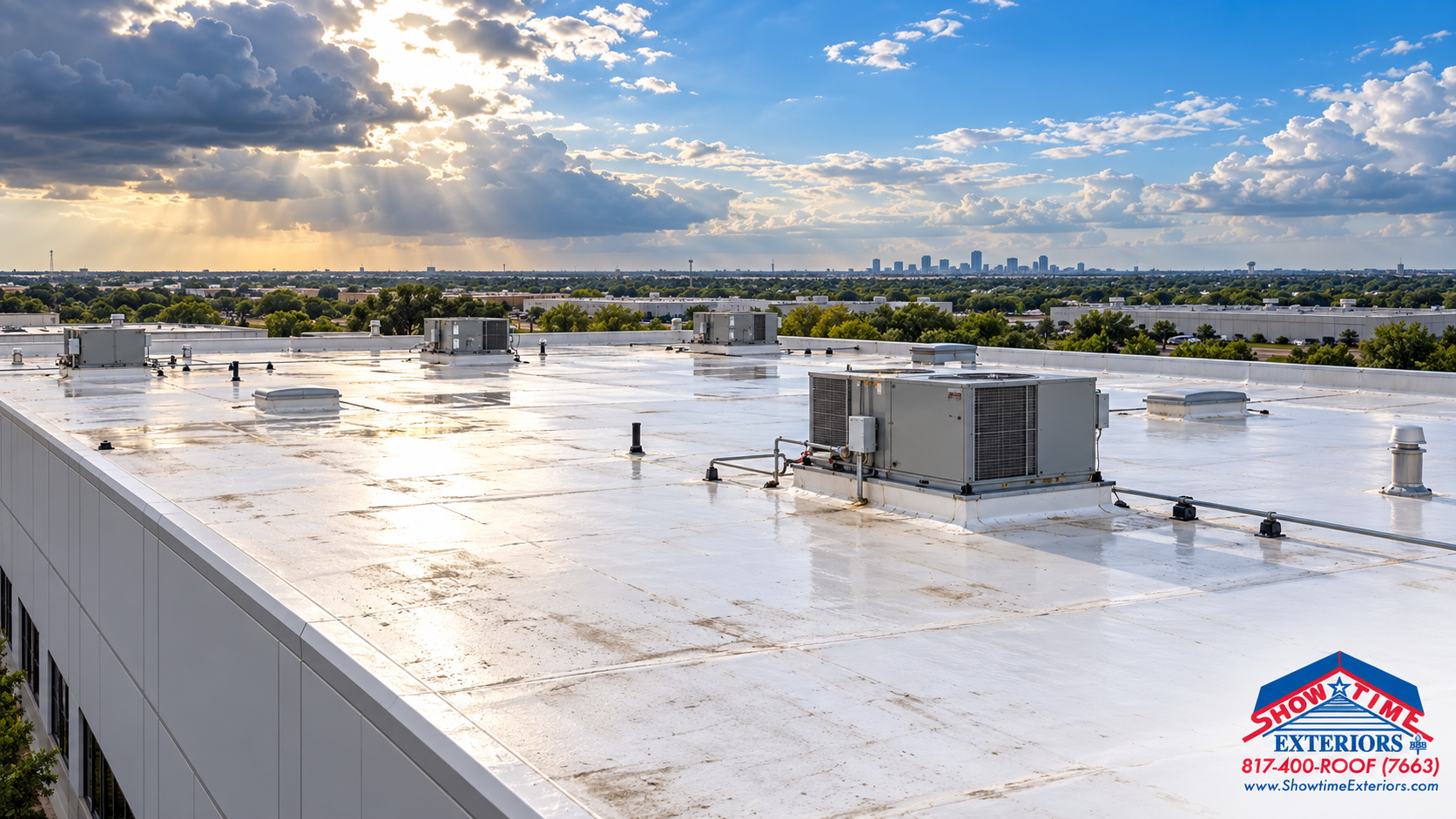
An overview establishes the building or roof section. A context image places the concerning condition near recognizable features. A detail image shows the condition itself.
For example, a professional may photograph an entire roof area, then the area beside a particular rooftop unit, then a close view of a membrane concern.
These images should be connected by captions or an index. Otherwise, the reviewer may not know whether several close-ups show one location or multiple locations.
Avoid overwhelming the file with repeated images that add no information. Preserve all originals, but select a clear set for the report.
Check basic usability before the inspection ends. Are photographs in focus? Is the relevant condition visible? Is the location identifiable?
If a photograph cannot show the condition adequately, ask the inspector to explain it in writing. A clear description can identify a limitation that the photograph alone cannot resolve.
8. Leave Roof Access and Close Inspection to Professionals
Commercial roofs can involve fall hazards, fragile components, equipment, and access restrictions.
Do not climb onto the roof simply because it appears flat. Do not ask an employee to step onto a skylight cover, move equipment, or manipulate roofing materials for a photograph.
Your contribution can remain useful from the ground and inside the building. Provide records, explain observed changes, and arrange access for a qualified inspection team.
Ask the contractor how roof findings will be documented. Will you receive photographs, a roof plan, written observations, and recommendations? Which areas can be inspected safely?
If weather or access prevents a complete inspection, the report should identify that limitation. A partial inspection should not be represented as a complete evaluation.
Also establish who can authorize additional investigation. The inspector may need permission to access another tenant space or perform a specific procedure.
Clear access arrangements reduce delays while allowing the inspection to follow appropriate safety practices.
9. Request a Report That Separates Observations From Conclusions
A useful inspection report should explain both what was seen and what the professional concludes.
Those are related but different pieces of information.
An observation might describe a puncture, surface change, displaced component, or moisture indication. A conclusion should explain the significance of the observation and the basis for attributing it to a cause.
IIBEC emphasizes that evaluating roof damage from unusual events requires professional knowledge and judgment. Its guidance also recognizes that definitions of damage in insurance policies and warranties may differ from technical assessment criteria. IIBEC
Ask the inspector to identify confirmed findings, suspected conditions, and unresolved questions.
The report should also describe the inspection date, roof areas evaluated, methods used, and access limitations.
A statement that says “hail damage found” without locations or supporting explanation leaves important questions unanswered.
A stronger report connects the finding to photographs and a marked location, explains its practical significance, and recommends an appropriate next step.
10. Include a Roof Plan or Location Map
A simple plan can make a large photo file understandable.
The plan does not need to be an architectural drawing. A clear outline showing roof sections, entrances, major equipment, and orientation may be sufficient for organizing observations.
Assign identifiers to locations. For example, “R2-04” could identify the fourth observation in roof section two. Use the same identifier in the report, photograph index, and estimate.
Interior concerns can have separate identifiers connected to room names or tenant spaces.
Do not imply a confirmed connection between an interior symptom and an exterior finding unless the professional has established one. The plan can show both locations while preserving that distinction.
For properties with additions or multiple roof levels, identify those areas separately. Avoid referring to every location simply as “the main roof.”
Consistent location references reduce confusion during inspections, repair discussions, and follow-up visits. They also help a future manager understand where previous work occurred.
11. Preserve Original Image Files
Keep original photographs and videos in their original form.
You can make annotated copies for a report, but retain the unedited files separately. Label copies that contain arrows, circles, cropping, or other additions.
Avoid filters or edits that change how a surface appears. Adjustments that make a mark look darker, sharper, or more dramatic can reduce confidence in the record.
Use a naming system that helps you retrieve the image without altering its content. A filename might include the date, property, location, and sequence number.
Keep a separate index with the photographer’s name and description.
If a messaging app compresses an image, request the original file when available. Do not describe an exported timestamp as the capture time unless you know that is accurate.
Back up the records in a second secure location. A documentation file should not depend on one employee’s phone or a temporary message thread.
Preserving originals supports a clearer comparison if questions arise later.
12. Collect the Roof’s Previous Records
Prior records provide a baseline.
Gather installation documents, maintenance reports, previous photographs, repair invoices, warranty paperwork, and roof access logs if they exist.
These records may help identify which conditions were already known and which require further evaluation. They can also confirm the roof system, previous repair materials, and relevant dates.
Do not exclude an old report because it mentions a maintenance concern. An accurate history is more useful than a selective file that presents the roof as having no previous issues.
Organize records chronologically. Mark documents that refer to a different building or roof section so they are not mistakenly applied to the current concern.
If records are missing, state that limitation. Ask former managers or contractors for copies where practical, but do not delay urgent protection while searching.
The aim is to give the inspector a reliable background. A complete history can help separate existing conditions from observations that may be associated with a later event.
13. Add Weather Information With Its Limits Clearly Stated
Weather records can help establish the broader event context.
Save the source, event date, relevant location, and the date you obtained the information. If a report includes a map, retain its legend and explanation.
The National Weather Service explains that local storm reports relay information received from various sources and remain preliminary until certification. weather.gov
Do not treat a reported hail size several miles away as a direct measurement at your building. Similarly, a map showing storm activity does not establish the condition of your specific roof.
Present weather information alongside property observations and professional findings.
If several storms may be relevant, identify that uncertainty rather than selecting a date solely because it appears most convenient.
Ask the evaluator to explain how weather information contributes to the assessment. The strongest explanation should connect event context with physical findings while acknowledging limitations.
Weather records are supporting material. They do not replace an inspection, establish coverage, or determine a repair scope by themselves.
14. Distinguish Appearance From Functional Condition
A photograph may show a visible change without explaining what that change means for performance.
Ask the inspector to clarify whether a finding affects water protection, attachment, thermal performance, or another relevant function. If the finding is primarily aesthetic, the report should explain that distinction.
IIBEC’s roof functionality guidance recognizes that damage can affect function without an immediately obvious performance change. It also identifies several methods professionals may use to evaluate roof conditions. IIBEC
For the owner, this means two assumptions should be avoided: that every mark requires replacement, and that an absence of leaks proves the roof is undamaged.
The documentation should support a reasoned evaluation.
Ask what evidence would resolve uncertainty. Is a closer examination needed? Would testing answer a specific question? Does the report need additional context?
A clear explanation of significance is more useful than dramatic labels such as “destroyed” or “total loss” without supporting findings.
15. Document Testing With a Defined Purpose
If testing is recommended, ask what question it is intended to answer.
The record should identify the method, locations, person performing it, date, results, and limitations. If the procedure disturbs the roof, document how the area will be repaired.
Do not assume that every technical image establishes storm causation. A moisture indication, for example, requires interpretation within the property history and broader inspection findings.
Ask the professional to explain what the result supports and what it does not establish.
A useful report might identify a condition that needs confirmation rather than presenting a screening result as a final conclusion.
Avoid improvised owner testing. Pulling on a component, probing a suspected impact, or applying water without a defined procedure can create damage or complicate interpretation.
Testing should be proportionate to the unresolved question. The goal is to obtain information that improves the repair decision, rather than accumulating technical-looking material without a clear purpose.
16. Keep Detailed Temporary Repair Records
Temporary protective work changes the condition of the roof, so document it carefully.
Where safe and practical, ask the contractor for photographs before, during, and after the work. The written record should identify the location, observed condition, materials used, and reason for the intervention.
Keep the invoice, authorization, and payment record together.
Clarify whether the work is temporary or permanent. If further work remains, record the next step and the expected communication date.
Do not describe emergency protection as a completed replacement or imply that an interim patch resolved every inspection concern.
If protection was installed before photographs could be taken, record that fact. Ask the contractor to describe the original condition based on their observations without inventing missing evidence.
Also retain monitoring instructions. Who should be contacted if the area leaks again? Does the temporary work need follow-up after additional weather?
A clear repair history helps explain why later photographs differ from the first inspection.
17. Record Employee and Tenant Observations Accurately
People using the building may have useful information.
Ask what they personally saw, where they were, and when they noticed it. Keep descriptions in their own words where practical.
An employee who heard impacts on the roof can report that experience. A tenant who noticed dripping water can identify the location and time. Neither needs to diagnose the roof system.
Avoid leading questions such as “You saw the hail cause that leak, correct?” Ask open questions instead: “What did you notice, and when?”
Separate firsthand observations from information repeated by someone else.
For a shared property, appoint one contact to collect reports so the same issue is not counted repeatedly as several separate incidents.
If a witness corrects a detail later, preserve the correction and its date. Do not silently rewrite the original note.
Accurate witness information can improve chronology and guide the inspection without being treated as a substitute for technical evaluation.
18. Document Affected Contents and Operational Changes
If inventory, equipment, or tenant property is affected, maintain a separate record.
Identify the item, location, observed condition, and actions taken. Photograph relevant identifying information when appropriate, while protecting sensitive business information.
Track items moved for protection. Record where they were relocated and who authorized the move.
For operational changes, note what happened and when. Examples might include a closed aisle, restricted entrance, relocated workstation, or postponed delivery.
Do not assume that these circumstances are covered by the roof claim. Ask the insurer which records are required for any applicable coverage.
Keep actual invoices and business records separate from estimates or preliminary calculations.
A practical file should distinguish physical roof findings, interior conditions, contents, and operational consequences. Combining everything into one undifferentiated list makes review harder.
This documentation can also help the business manage recovery, even where an expense or interruption is outside the insurance policy.
19. Review the Policy and Ask Specific Questions
Locate the policy that applies to the property, including relevant endorsements.
Ask the insurer or agent to explain reporting requirements, documentation needs, inspection arrangements, and applicable deadlines. Request written clarification when the answer affects your next action.
Do not assume that another property’s deductible, valuation method, or coverage applies to yours.
Prepare a short question list:
- What information is needed for initial notice?
- How should photographs and reports be submitted?
- How should urgent protective work be documented?
- When can permanent repairs proceed?
- Are there forms or additional statements required?
A contractor can document roofing conditions and provide a repair scope. Coverage questions should be directed to the insurer or an appropriately qualified adviser.
Keep the policy discussion separate from the technical findings. That makes it easier to identify whether a disagreement concerns the roof’s condition, the proposed work, or the policy’s treatment of the loss.
Clear questions often prevent unnecessary assumptions.
20. Organize the File Before Submitting It
A usable claim package should be easy to navigate.
Begin with a brief cover summary identifying the property, relevant dates, reported concerns, and attached documents. Explain which evaluations are complete and which remain pending.
Use folders or sections for photographs, inspection reports, prior records, weather information, temporary repairs, estimates, and correspondence.
Include a document index. Large files should have clear names and dates.
Avoid sending dozens of unexplained attachments when a short index can identify their purpose. Also avoid deleting original material merely to make the submission smaller.
Keep a copy of exactly what was submitted. Record the recipient, submission date, and any confirmation received.
If you provide additional information later, identify it as a supplement with its own date. This prevents confusion over whether a document was included in the initial package.
Organization does not guarantee a particular claim outcome, but it makes the information easier to review and discuss.
21. Use a Simple Damage Log
A damage log links observations with supporting records.
The following is an illustrative format, not a report of an actual Showtime Exteriors project.
EntryLocationObservationSupporting recordNext action01Rear storage roomCeiling stain first noticed after reported stormInterior photographs and employee noteProfessional evaluation02Roof section BContractor documented membrane concernInspection report and location mapFollow recommended scope03East downspoutVisible indentation; prior condition unknownExterior context and detail imagesInclude as contextual observation04Roof section BTemporary protective work completedBefore-and-after images and invoiceSchedule follow-up
Add dates and responsible contacts to the version used for your property.
Keep observations concise. The log should direct the reader to detailed information rather than attempt to replace the inspection report.
Update it when an item is evaluated, repaired, or closed.
An organized log is especially useful when several roof sections, tenants, or contractors are involved.
22. Prepare for the Adjuster’s Visit
Before the visit, confirm the appointment, access arrangements, and on-site contact.
Have the chronology, inspection report, photograph index, and temporary repair records available. Identify the locations you want reviewed.
If the contractor will attend, clarify that arrangement in advance. Ensure everyone understands the areas of concern and any safety restrictions.
During the visit, describe observations accurately and point to supporting records. Avoid guessing about causes or dates that remain uncertain.
Ask what additional information is needed and how to submit it. Record the answer afterward.
If some areas cannot be inspected, note that limitation and ask about the next step.
Do not interpret silence during the visit as approval of a repair scope or confirmation of coverage. Obtain the insurer’s written assessment when available.
The purpose of preparation is to make the visit productive and reduce avoidable gaps, while allowing each professional to perform their own evaluation.
23. Connect the Estimate to the Documented Findings
A repair estimate should describe the work proposed for identified conditions.
Ask for locations, quantities, materials, preparation, associated details, cleanup, and exclusions to be stated clearly.
Use the same location references found in the inspection report and roof plan. This makes it easier to understand which findings each line item addresses.
If a replacement is recommended, ask for the explanation supporting that scope. If a localized repair is recommended, ask what it resolves and what remains outside the work.
Avoid treating a total price as a technical conclusion. The proposed scope needs supporting information.
Where concealed conditions could change the work, define the authorization process. Additional findings should be photographed and explained before changes are approved, except where immediate protective action is necessary.
Keep revised estimates with their dates. Label which version is current so an owner, insurer, and contractor do not work from different documents.
24. Respond to Missing Information or Disagreements Precisely
If someone requests more evidence, ask what question remains unresolved.
The answer may concern a location, quantity, cause, chronology, repair method, or policy requirement. Address that specific issue.
For example, if photographs do not identify a roof section, provide a marked plan and image index. If an estimate includes unexplained work, ask the contractor for a scope explanation. If the insurer cites a policy provision, request identification of the applicable wording.
Avoid resending the entire file repeatedly without explaining what changed.
For a technical disagreement, an additional qualified evaluation may help answer a defined question. For a coverage or legal dispute, seek guidance from an appropriately qualified professional.
Preserve correspondence and responses in chronological order.
A factual, targeted response is more useful than an emotional assertion that everyone must agree. The documentation should make it possible to identify the actual point of disagreement and the information needed to evaluate it.
25. Keep Updating the Record Until the Work Is Closed
Documentation continues after initial notice.
Record new observations, follow-up inspections, repair authorizations, and completed work. If another storm occurs while the project is pending, identify it separately.
Do not silently merge later conditions into the original event record.
At completion, obtain final photographs, the completed scope, invoices, warranty documents, and maintenance recommendations. Identify any known conditions left outside the project.
Update the damage log so each item shows its final status.
Store the closeout package with the roof’s permanent records. It should explain what was found, what was done, and what responsibilities remain.
This record can help future inspections and prevent repeated uncertainty about previous repairs.
For commercial property owners, a well-maintained roof file is an operational asset. It allows a new manager, owner, or contractor to understand the building’s history without reconstructing it from scattered emails and photographs.
Frequently Asked Questions
Do I need a complete inspection report before notifying the insurer?
Do not delay initial notice solely to assemble a polished package. Describe the facts currently known, explain that evaluation is pending, and ask what additional information the insurer requires.
Are photographs enough to prove hail damage?
Photographs can document appearance and location. Technical interpretation, property history, and other findings may be needed to evaluate cause, significance, and repair scope.
Can I use drone photographs?
They may provide useful overview information when obtained appropriately. Ask the evaluator whether closer inspection is needed and retain the original files, dates, and location references.
What if the roof is not leaking?
A dry interior does not resolve every question about roof condition. If there is a credible concern, arrange a professional evaluation and ask what the findings mean for performance.
Should damaged materials be discarded immediately?
Coordinate preservation and disposal with the insurer and relevant professionals. If safety or protective work requires removal, document the condition and reason for removal where practical.
Can I use the images created for this article in my claim?
No. Generated marketing artwork is illustrative. Claim documentation should contain actual property photographs, records, and findings accurately identified by source and date.
What is the most useful documentation habit?
Use consistent location references and preserve originals. Those two practices help connect photographs, inspection findings, estimates, and completed repairs.
Get Help Documenting Your Commercial Roof
Suspect hail damage at your Texas commercial property? Contact Showtime Exteriors to discuss an inspection, documentation, and the next steps for protecting your roof.
Share the property address, when concerns were discovered, and whether water is entering. Have previous roof records available if you can locate them.
A clear inspection and organized record can help you understand the condition, evaluate repair options, and communicate more effectively throughout the process.
Call 817-400-ROOF (7663)
Visit
ShowtimeExteriors.com
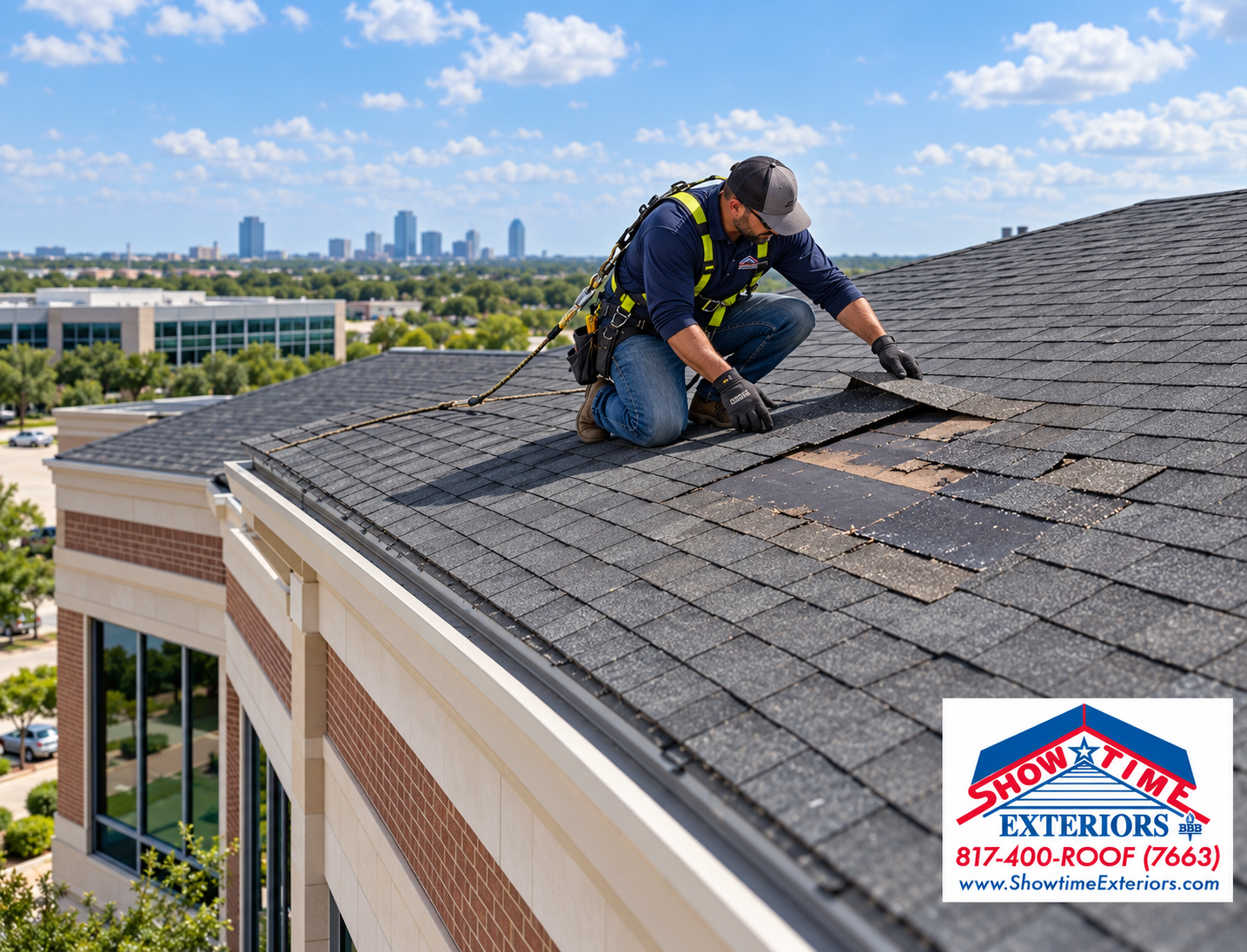
Caption for the roof inspection image:
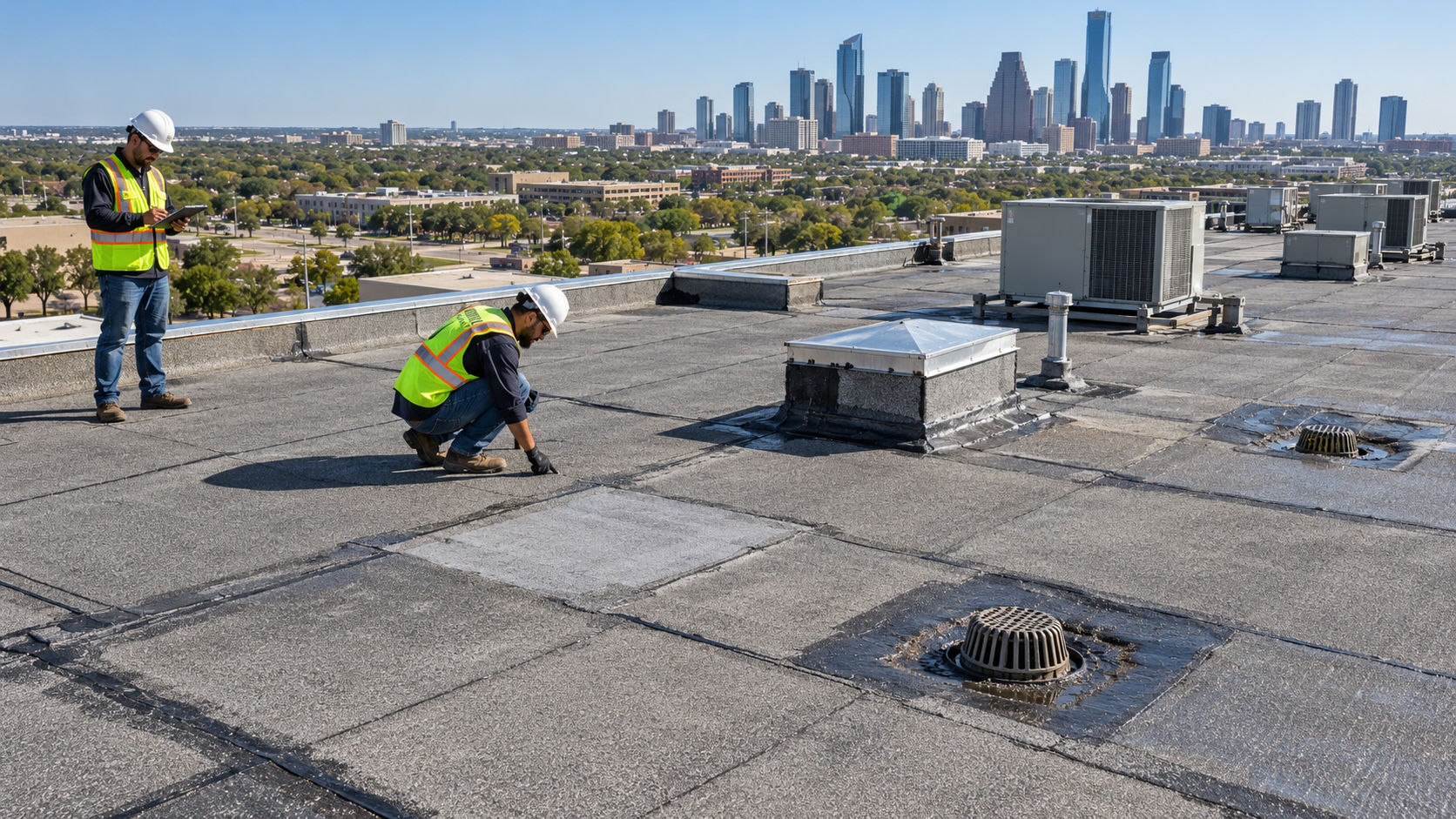
“Hail damage documentation starts with clear observations and a professional inspection. Contact Showtime Exteriors to discuss your commercial roof and the next steps. Call 817-400-ROOF (7663).”
Caption for the records review image:
“Roof photos, inspection findings, maintenance records, and temporary repair receipts all belong in an organized property file. Need help evaluating your commercial roof after hail? Visit ShowtimeExteriors.com.”