



Hotel Roofing Houston
Roof Repair Replacement and Maintenance for Houston Hotel Properties

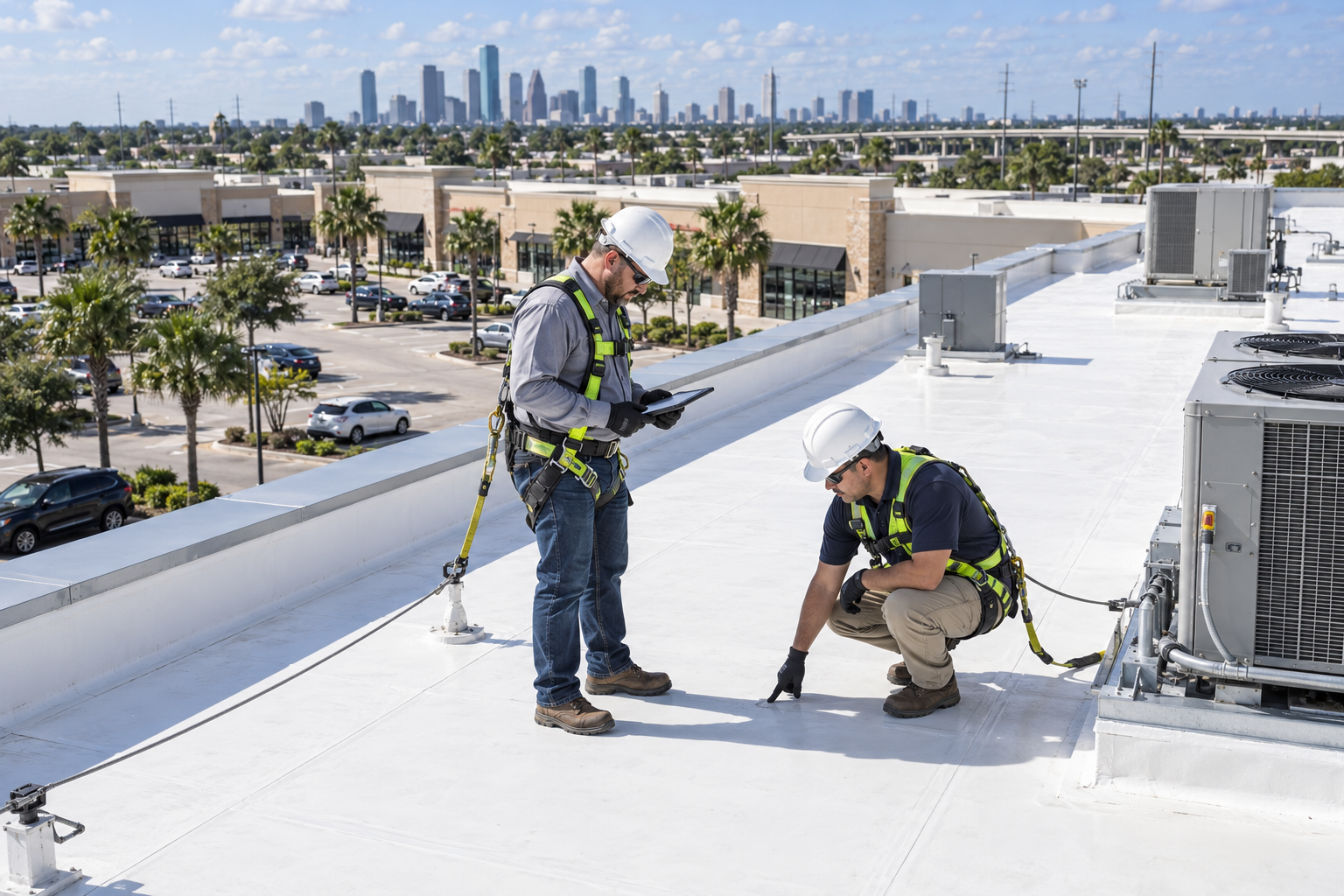
Hotel roofing in Houston protects guests, employees, guestrooms, meeting spaces, kitchens, building equipment, and hospitality operations across hospitality properties. A roofing decision should therefore consider more than the visible surface. The roof assembly, drainage, deck, rooftop equipment, interior layout, operating schedule, insurance questions, and ownership plan all influence whether maintenance, repair, restoration, recover, retrofit, or replacement is the responsible next step.
Houston hotel roofs experience intense ultraviolet exposure, high surface temperatures, humidity, heavy rain, hail, straight-line wind, tropical weather, rooftop service traffic, and frequent mechanical changes. Broad roof areas multiply the consequences of ponding, open seams, loose attachment, damaged edges, wet insulation, and poorly coordinated penetrations. Water can travel through deck flutes or insulation and appear far from the true entry point.
Showtime Exteriors provides hotel property and commercial roof inspection, repair, maintenance, restoration, recover, retrofit, and replacement services in Houston and throughout Texas. The company evaluates TPO, PVC, EPDM, metal, modified bitumen, coatings, asphaltic systems, and aging gravel-surfaced built-up roofing. Gravel BUR is treated as a liability rather than an advantage because aggregate can conceal moisture, deteriorated felts, cracks, blisters, old patches, and drainage defects. Repeated patching should not postpone replacement when the assembly is no longer dependable.
Call Showtime Exteriors at 817-400-ROOF (7663) for a Houston hotel roof assessment.
What Hotel Roofing Includes
Hotel Property roofing includes the waterproofing system and every condition that affects it: deck, vapor control, insulation, cover board, membrane or panels, attachment, edges, drainage, walls, penetrations, expansion joints, rooftop equipment, walkways, access, and interior operations. A complete scope may involve emergency protection, repair, maintenance, restoration, recover, retrofit, replacement, or coordination with mechanical, structural, and electrical specialists.
The written scope should state locations, quantities, methods, materials, exclusions, responsible parties, and conditions that can change the price. Clear boundaries protect the owner and make competing proposals easier to compare.
Start With Hotel Property Operations
Document guest occupancy, housekeeping schedules, occupied rooms, kitchens, ballrooms, pool areas, security, fire lanes, deliveries, and franchise obligations before planning roof work. These conditions affect crane locations, material staging, interior protection, noisy or odorous work, roof-opening limits, shutdown windows, and the sequence used to keep the property functioning.
Facility records should distinguish observed facts, reported history, test results, and professional opinion. That discipline supports budgeting, insurance discussions, guest communication, and future ownership decisions.
Build an Accurate Roof History
Collect installation records, warranties, roof plans, leak logs, repair invoices, storm dates, inspection reports, moisture surveys, equipment changes, and photographs. Interview employees who observed recurring leaks, but separate reported history from confirmed physical evidence. A reliable history shows where failures repeat, which repairs were attempted, and whether operating costs are rising without producing a durable result.
Houston weather can alter the sequence quickly. Daily communication, secure materials, temporary protection, and defined authority to pause work allow the project to adapt without lowering its quality standard.
Map Leaks to Hotel Property Layout
Record interior symptoms by guestroom wing, floor, room stack, ballroom, corridor, kitchen, mechanical room, and equipment position. Water may move along deck flutes, framing, insulation, conduits, or walls before it becomes visible. A ceiling drip identifies a symptom, not necessarily the entry point. Accurate mapping protects inventory and helps the roofer investigate plausible pathways.
Labeled photographs, roof-plan references, dates, materials, and follow-up requirements should become part of the permanent roof history. Future managers need to know exactly what changed and why.
Inspect More Than the Reported Leak
A hotel roof inspection should include the field, seams, fasteners, flashings, curbs, pipes, drains, scuppers, gutters, overflows, expansion joints, skylights, smoke vents, edges, parapets, coping, equipment supports, traffic areas, prior patches, ponding evidence, and accessible interior conditions. A roof plan and labeled photographs make findings understandable and allow repair quantities to be verified.
The recommendation should be tested against total ownership cost. A low initial price may become expensive if it preserves wet insulation, poor drainage, incompatible details, or repeated operational disruption.
Evaluate Moisture Before Selecting Work
Moisture extent can determine whether repair, restoration, recover, or replacement remains practical. Visual evaluation may be supported by infrared scanning, capacitance, nuclear testing, probing, core samples, or test cuts when appropriate. Each method has limitations related to roof construction, weather, calibration, and interpretation. Suspected wet areas may require verification before final removal limits are established.
The written scope should state locations, quantities, methods, materials, exclusions, responsible parties, and conditions that can change the price. Clear boundaries protect the owner and make competing proposals easier to compare.
Review the Hotel Roof Deck
Hotel Properties commonly use steel decks, but concrete, wood, and other substrates also occur. Corrosion, damaged fasteners, deflection, unsuitable surfaces, or structural movement can undermine the roof above. Inspect accessible deck conditions from inside and define how concealed deterioration will be handled. Structural concerns should be referred to an engineer when they extend beyond the roofing contractor's responsibility.
Facility records should distinguish observed facts, reported history, test results, and professional opinion. That discipline supports budgeting, insurance discussions, guest communication, and future ownership decisions.
Houston Heat and Roof Performance
High heat and ultraviolet exposure can accelerate aging, stress seams and flashings, affect sealants and coatings, and increase movement at metal details. Reflective roofing may support project goals when compatible with the facility, but color alone does not determine performance. Insulation, vapor control, attachment, deck type, drainage, rooftop equipment, workmanship, and maintenance remain part of the full assembly.
Houston weather can alter the sequence quickly. Daily communication, secure materials, temporary protection, and defined authority to pause work allow the project to adapt without lowering its quality standard.
Heavy Rain and Hotel Property Drainage
A large hotel roof can collect an enormous volume of water during a Houston downpour. Drains, scuppers, gutters, downspouts, overflows, crickets, sumps, tapered insulation, and structural slope must work together. Clearing debris is maintenance; chronic ponding may require design or construction changes. Drainage corrections should not shift water toward another vulnerable area or overloaded outlet.
Labeled photographs, roof-plan references, dates, materials, and follow-up requirements should become part of the permanent roof history. Future managers need to know exactly what changed and why.
Wind Pressure at Corners and Perimeters
Hotel Property corners and perimeters experience elevated wind pressures. Review edge metal, fascia, coping, cleats, fasteners, membrane terminations, parapets, wall transitions, and substrate. Loose edge components can become hazards and allow progressive wind damage. Cosmetic sealant does not replace missing fasteners, failed cleats, deteriorated wood, or inadequate attachment. Edge design should match project conditions.
The recommendation should be tested against total ownership cost. A low initial price may become expensive if it preserves wet insulation, poor drainage, incompatible details, or repeated operational disruption.
Hail and Storm Assessment
Hail may affect membranes, metal, skylights, smoke vents, flashings, coatings, insulation, and rooftop equipment depending on the complete assembly and impact conditions. Wind may displace accessories or stress edges and seams. Document observed conditions and distinguish them from prior deterioration. A roofer can describe physical findings but should not guarantee storm causation or policy coverage from appearance alone.
The written scope should state locations, quantities, methods, materials, exclusions, responsible parties, and conditions that can change the price. Clear boundaries protect the owner and make competing proposals easier to compare.
TPO Roofing for Houston Hotels
TPO is widely considered for broad low-slope hotel roofs. Performance depends on system design, membrane thickness, attachment or adhesion, substrate preparation, heat-welded seams, flashing, perimeter securement, drainage, and installation conditions. Repairs require correct membrane identification, cleaning, compatible materials, controlled welding, probing, and documentation. Process exhaust or contamination may influence suitability and maintenance.
Facility records should distinguish observed facts, reported history, test results, and professional opinion. That discipline supports budgeting, insurance discussions, guest communication, and future ownership decisions.
PVC Roofing for Hotel Properties
PVC uses heat-welded seams but is not interchangeable with TPO. It may be considered where grease or certain chemical exposures affect selection, subject to project-specific review. Formulation, age, attachment, substrate, drainage, flashing, and contamination all matter. Contractors should identify the membrane before repair and use compatible components rather than applying a generic white-roof solution.
Houston weather can alter the sequence quickly. Daily communication, secure materials, temporary protection, and defined authority to pause work allow the project to adapt without lowering its quality standard.
EPDM Roofing for Hotel Properties
EPDM relies on correct membrane, adhesives, tapes, primers, seams, terminations, flashing, and attachment. Aged rubber may require careful preparation for repair. Widespread shrinkage, failed attachment, wet insulation, or deteriorated substrate may exceed a targeted scope. Surface temperature, energy goals, traffic protection, and compatibility with existing details should be considered as part of the building plan.
Labeled photographs, roof-plan references, dates, materials, and follow-up requirements should become part of the permanent roof history. Future managers need to know exactly what changed and why.
Modified Bitumen Hotel Roofing
Modified bitumen may use hot asphalt, torch, cold adhesive, self-adhered components, or other approved methods. Occupancy, fire safety, odors, air intakes, substrate, weather, and manufacturer requirements affect installation. Repairs can address splits, open laps, flashings, punctures, drains, or exposed reinforcement, but extensive moisture or deterioration may make limited work uneconomical.
The recommendation should be tested against total ownership cost. A low initial price may become expensive if it preserves wet insulation, poor drainage, incompatible details, or repeated operational disruption.
Metal Hotel Roofs
Metal roof evaluation should address panel profile, seams, clips, exposed or concealed fasteners, washers, closures, flashing, corrosion, thermal movement, edges, penetrations, gutters, and substrate. Hotel Property vibration and repeated equipment work can stress details. Coating every screw with sealant will not correct elongated holes, loose panels, failed clips, corroded metal, or movement that remains uncontrolled.
The written scope should state locations, quantities, methods, materials, exclusions, responsible parties, and conditions that can change the price. Clear boundaries protect the owner and make competing proposals easier to compare.
Roof Coatings and Restoration
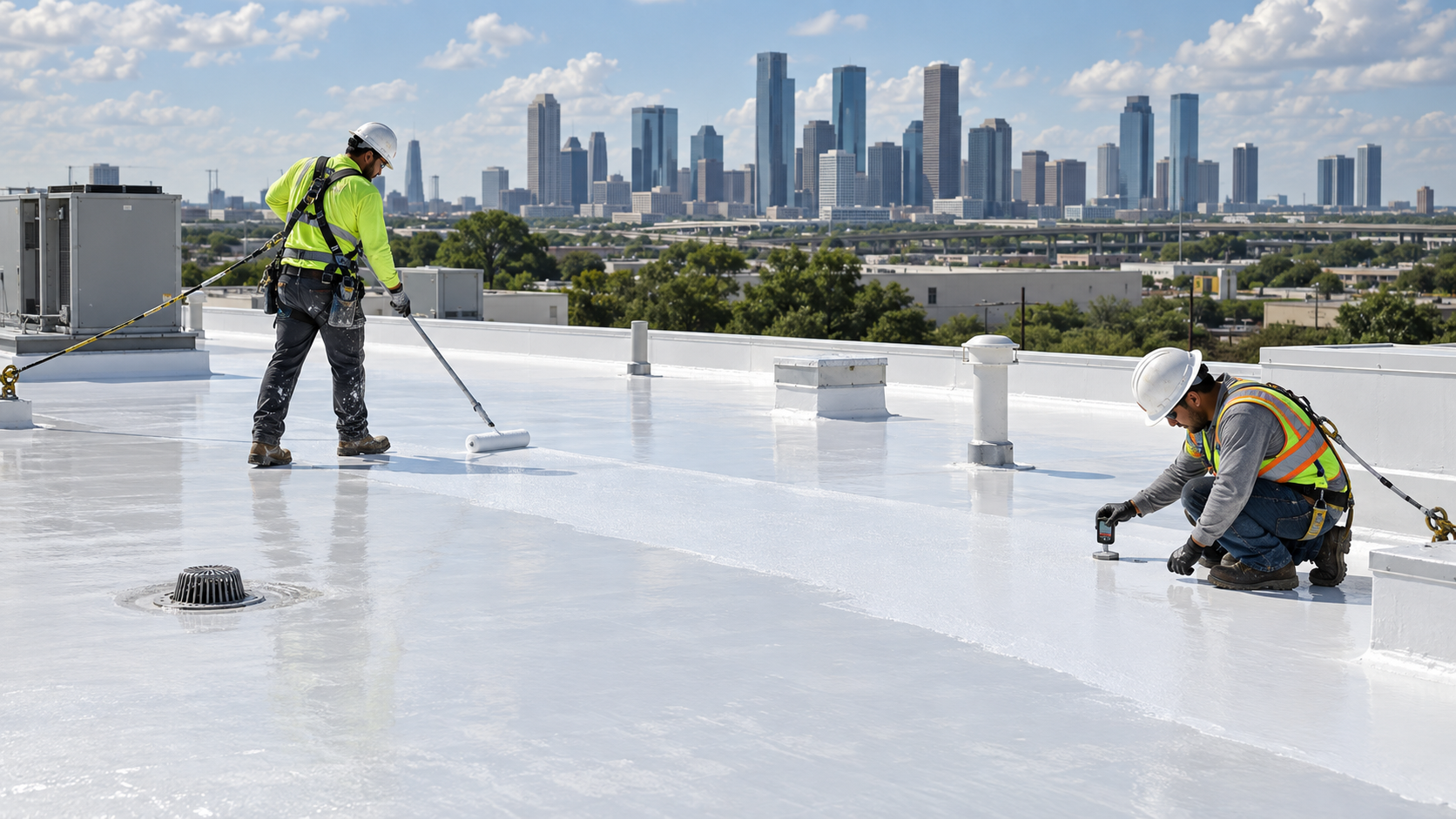
A coating can support hotel roof restoration only when the existing roof is a qualified candidate. Confirm roof chemistry, moisture, adhesion, cleanliness, repairs, reinforcement, slope, ponding, coverage rate, thickness, cure conditions, and manufacturer acceptance. Applying liquid material over wet, dirty, loose, incompatible, corroded, or unstable surfaces can hide a problem without creating a dependable system.
Facility records should distinguish observed facts, reported history, test results, and professional opinion. That discipline supports budgeting, insurance discussions, guest communication, and future ownership decisions.
Why Gravel BUR Is a Hotel Property Liability
Loose aggregate conceals the built-up membrane and makes its true condition harder to evaluate. Under the gravel may be deteriorated felts, cracks, blisters, irregular asphalt, trapped moisture, failed patches, and drainage defects. Aggregate can also move into low points and drains. Controlled removal and test areas are often needed before a responsible scope can be developed.
Houston weather can alter the sequence quickly. Daily communication, secure materials, temporary protection, and defined authority to pause work allow the project to adapt without lowering its quality standard.
Aging gravel surfaced hotel BUR roofs can conceal moisture deterioration failed repairs and drainage problems.
When Gravel BUR Replacement Is Necessary
Replacement or a properly evaluated recover becomes more defensible when an aging gravel BUR has recurring leaks, widespread moisture, failing flashings, extensive patching, poor drainage, unstable surfacing, deck concerns, or insurance restrictions. Loose gravel is generally not a dependable coating substrate. Continued patches can consume maintenance money while leaving concealed deterioration and underwriting uncertainty unresolved.
Labeled photographs, roof-plan references, dates, materials, and follow-up requirements should become part of the permanent roof history. Future managers need to know exactly what changed and why.
Rooftop HVAC and Equipment Coordination
Hotel Property roofs contain HVAC units, exhaust, vents, piping, conduit, antennas, and other equipment. Coordinate shutdowns, curbs, supports, condensate, vibration, electrical work, and flashing responsibility. Low curbs, unsupported lines, abandoned penetrations, open counterflashing, and heavy service traffic can recreate leaks after roofing work. Equipment replacement should be integrated into the roof plan rather than treated separately.
The recommendation should be tested against total ownership cost. A low initial price may become expensive if it preserves wet insulation, poor drainage, incompatible details, or repeated operational disruption.
Skylights Smoke Vents and Daylighting
Skylights and smoke vents interrupt the roof field and may present fall hazards, condensation concerns, cracked glazing, aged seals, deteriorated curbs, or failed flashing. Document their condition, function, attachment, and replacement responsibility. Daylighting goals must be balanced with energy, safety, water control, interior operations, and code requirements. Temporary openings require careful protection from weather and debris.
The written scope should state locations, quantities, methods, materials, exclusions, responsible parties, and conditions that can change the price. Clear boundaries protect the owner and make competing proposals easier to compare.
Protect Guests Units and Common Areas
Identify occupied guestrooms, kitchens, guest belongings, electrical rooms, lobbies, ceilings, corridors, and franchise finishes before work begins. Interior protection should account for water, dust, debris, vibration, and temporary openings. Relocating guests or protecting furnishings may reduce risk, but ceilings, service corridors, lighting, and fire-protection systems can limit access. The project team should define who inspects protection during each active phase.
Facility records should distinguish observed facts, reported history, test results, and professional opinion. That discipline supports budgeting, insurance discussions, guest communication, and future ownership decisions.
Coordinate Guest Access and Hotel Operations
Roofing deliveries, cranes, dumpsters, lifts, and worker parking can conflict with truck circulation and loading schedules. Establish approved staging areas, travel routes, delivery windows, ground-level exclusion zones, and emergency access. Daily updates should identify changing work areas. Material handling should avoid overloading the deck and should protect loose components from wind before they are secured.
Houston weather can alter the sequence quickly. Daily communication, secure materials, temporary protection, and defined authority to pause work allow the project to adapt without lowering its quality standard.
Control Rooftop Service Traffic
HVAC technicians, electricians, communications contractors, fire-protection vendors, and maintenance staff may cross the roof regularly. Designated walkways, access logs, vendor rules, equipment service routes, and post-work inspections reduce avoidable damage. New penetrations or supports should require roofing coordination. Punctures and contamination often develop outside a scheduled roofing project, so ownership procedures matter.
Labeled photographs, roof-plan references, dates, materials, and follow-up requirements should become part of the permanent roof history. Future managers need to know exactly what changed and why.
Emergency Hotel Roof Repairs
Emergency work should protect people, electrical systems, inventory, equipment, and operations without sending untrained staff onto a wet or storm-exposed roof. Document interior and exterior conditions when safe, control hazards, arrange qualified access, and use compatible temporary protection. Every temporary measure needs a location, date, material record, photographs, and a deadline for permanent correction.
The recommendation should be tested against total ownership cost. A low initial price may become expensive if it preserves wet insulation, poor drainage, incompatible details, or repeated operational disruption.
Repair Versus Restoration
Repair is appropriate when defects are isolated, compatible methods are available, wet materials are limited and removable, and the surrounding roof remains serviceable. Restoration may address broader surface and detail needs when the substrate is stable, compatible, sufficiently dry, and accepted by the manufacturer. Neither path should be selected merely to postpone evidence that supports replacement.
The written scope should state locations, quantities, methods, materials, exclusions, responsible parties, and conditions that can change the price. Clear boundaries protect the owner and make competing proposals easier to compare.
Recover Versus Full Replacement
Recover may reduce demolition when code, weight, moisture, attachment, substrate, fire classification, drainage, warranty, and detail conditions permit. Full replacement exposes the deck and can correct wet materials, insulation, slope, penetrations, edges, and concealed damage. Compare capital cost, operational disruption, service goals, remaining uncertainty, and the consequences of leaving the existing assembly in place.
Facility records should distinguish observed facts, reported history, test results, and professional opinion. That discipline supports budgeting, insurance discussions, guest communication, and future ownership decisions.
Plan Hotel Roof Replacement Early
Replacement planning should begin before recurring leaks create an operational emergency. Define system requirements, insulation, cover board, attachment, drainage, deck allowances, equipment coordination, access, phasing, safety, inspection, warranty, and closeout. Early planning gives the owner time to compare systems, consult insurers, procure materials, coordinate guests, and select a lower-disruption construction period.
Houston weather can alter the sequence quickly. Daily communication, secure materials, temporary protection, and defined authority to pause work allow the project to adapt without lowering its quality standard.
Replace a Hotel Roof Without Closing
Many hotel properties can remain operational when work is divided into controlled zones. Limit exposed areas, monitor weather, protect interiors, preserve guest entrances, coordinate noisy work, and communicate daily locations. The plan should address air intakes, elevators, guestrooms, kitchens, employee access, security, and emergency procedures. Facility representatives need authority to pause work if conditions threaten operations or safety.
Labeled photographs, roof-plan references, dates, materials, and follow-up requirements should become part of the permanent roof history. Future managers need to know exactly what changed and why.
Roofing Around Guestrooms Kitchens and Amenities
Cold-storage hotel properties require special attention to insulation continuity, vapor control, air leakage, interior humidity, penetrations, and temporary openings. A poorly planned roof cut may affect temperature stability or introduce condensation into the assembly. Coordinate product sensitivity, allowable exposure time, work zones, and monitoring with operations. Replacement details should preserve continuity around curbs, walls, drains, and structural transitions rather than treating insulation as a simple thickness value.
The recommendation should be tested against total ownership cost. A low initial price may become expensive if it preserves wet insulation, poor drainage, incompatible details, or repeated operational disruption.
Roofing for Hotels Resorts and Mixed Use Properties
Automated facilities may contain occupied guestrooms, ballrooms, kitchens, rooftop HVAC, plumbing vents, security systems, and tightly controlled guest communications. Interior protection must account for falling debris, dust, vibration, water, and temporary openings above sensitive systems. Roof work should be mapped to operational zones, with clear shutdown authority and communication between roofing, facilities, safety, information-technology, and fulfillment teams.
The written scope should state locations, quantities, methods, materials, exclusions, responsible parties, and conditions that can change the price. Clear boundaries protect the owner and make competing proposals easier to compare.
Roofing Due Diligence Before Buying a Hotel Property
A pre-acquisition roof assessment should review system type, age, assembly, drainage, moisture, previous repairs, warranty, equipment, edges, penetrations, deck concerns, and foreseeable capital needs. The buyer should understand whether current maintenance is sustainable or whether repair, restoration, recover, or replacement should enter the acquisition budget. A documented baseline also supports future maintenance, insurer conversations, and guest planning after closing.
Facility records should distinguish observed facts, reported history, test results, and professional opinion. That discipline supports budgeting, insurance discussions, guest communication, and future ownership decisions.
Compare Hotel Roofing Proposals
Normalize proposals by quantities, layers, membrane or panel specifications, insulation, cover board, attachment, flashing, edge metal, drainage, demolition, deck allowances, testing, safety, temporary protection, cleanup, warranty, schedule, and exclusions. Two prices are not comparable if one omits important work. Require written unit prices and approval procedures for concealed conditions discovered during construction.
Houston weather can alter the sequence quickly. Daily communication, secure materials, temporary protection, and defined authority to pause work allow the project to adapt without lowering its quality standard.
Insurance Documentation for Hotel Roofs
A roofing contractor can document roof conditions, emergency protection, measurements, photographs, repair or replacement scope, invoices, and completed work. It cannot guarantee coverage, claim approval, depreciation, deductibles, premiums, or renewal. Owners should review policy terms, report damage promptly, preserve evidence, follow carrier instructions, and obtain coverage interpretations from qualified insurance professionals.
Labeled photographs, roof-plan references, dates, materials, and follow-up requirements should become part of the permanent roof history. Future managers need to know exactly what changed and why.
Hotel Roof Quality Control
Quality control may include seam probing, test welds, fastener checks, adhesive coverage, pull tests, coating-thickness readings, substrate review, drainage checks, photographs, daily reports, and manufacturer inspection. The plan should identify who performs checks and who can require correction. Conditions should be reviewed before later layers conceal them, and incomplete areas should be protected at each shutdown.
The recommendation should be tested against total ownership cost. A low initial price may become expensive if it preserves wet insulation, poor drainage, incompatible details, or repeated operational disruption.
Closeout and Preventive Maintenance
Closeout should include final photographs, roof plans, product information, inspection results, warranty documents, change orders, invoices, maintenance requirements, and procedures for future concerns. Add the work to the hotel property asset record. Schedule regular inspections and reviews after severe weather, equipment work, or unusual traffic so new defects can be addressed before inventory or operations are affected.
The written scope should state locations, quantities, methods, materials, exclusions, responsible parties, and conditions that can change the price. Clear boundaries protect the owner and make competing proposals easier to compare.
How Showtime Exteriors Supports Houston Hotels
Showtime Exteriors begins with roof history, system identification, observed conditions, moisture questions, drainage, edges, rooftop equipment, interior risks, operations, ownership goals, and insurer concerns. The team develops a documented path for maintenance, repair, restoration, recover, retrofit, or replacement. Recommendations follow evidence, with special caution around aging gravel-surfaced BUR roofs and repeated patching.
Facility records should distinguish observed facts, reported history, test results, and professional opinion. That discipline supports budgeting, insurance discussions, guest communication, and future ownership decisions.
Hotel Roofing Resources for Houston Owners
Learn about Showtime Exteriors, its commercial roofing services, and the company's commercial roofing resources. Hotel property owners can also review commercial roofing in Houston, commercial roof inspection in Houston, and commercial roof replacement in Houston.
Authoritative references include GAF's commercial roofing solutions by building type, GAF's building owner and property manager resources, the National Roofing Contractors Association's commercial roof maintenance guidance, FEMA's low-slope roof systems fact sheet, and OSHA's construction fall-protection requirements.
Frequently Asked Questions About Hotel Roofing Houston
What roof systems are common on Houston hotels
TPO, PVC, EPDM, modified bitumen, metal, coatings, and asphaltic systems are used. The appropriate choice depends on the deck, building use, drainage, attachment, exposure, operations, and service goals.
How often should a hotel roof be inspected
Frequency should follow roof condition, system requirements, warranty, facility risk, and the maintenance plan. Additional reviews are appropriate after severe weather, equipment work, reported leaks, or unusual rooftop traffic.
Can a hotel property stay open during roof replacement
Often it can. The project must coordinate work zones, interior protection, guest entrances, arrival lanes, noise, odors, air intakes, weather, inventory, employee access, and emergency procedures.
How quickly should a hotel roof leak be addressed
Protect people, electrical systems, inventory, and equipment immediately. Document conditions when safe, control interior hazards, and arrange qualified roof access as soon as weather and safety allow.
When is repair appropriate
Repair may fit isolated defects when the surrounding assembly remains serviceable, wet materials are limited and removable, and compatible methods correct the identified failure mechanism.
When should a hotel roof be replaced
Replacement may be more responsible when moisture is widespread, the deck or attachment is compromised, details repeatedly fail, repair quantities are extensive, or the roof no longer supports ownership goals.
Is roof coating always an alternative to replacement
No. Coatings require a compatible, stable, sufficiently dry, and properly prepared substrate. Repairs, reinforcement, thickness, cure conditions, adhesion testing, and manufacturer acceptance matter.
Why are gravel BUR hotel roofs a concern
Aggregate can conceal deteriorated felts, moisture, cracks, blisters, old repairs, and drainage problems. This makes inspection and maintenance difficult and can create uncertainty for owners and insurers.
Can loose gravel simply be coated
No. A coating should not be applied over loose gravel. Any restoration concept requires controlled preparation, testing, repair, compatibility review, and manufacturer acceptance. Many aging gravel BUR roofs are poor candidates.
What should a hotel roofing proposal include
It should define system layers, quantities, preparation, attachment, insulation, flashing, edges, drainage, demolition, deck allowances, safety, operational controls, schedule, testing, warranty, closeout, and exclusions.
Can a roofer guarantee insurance coverage
No. Contractors can document conditions and completed work but cannot guarantee coverage, claim approval, deductibles, depreciation, premiums, or renewal.
How can I schedule a hotel roof assessment
Call Showtime Exteriors at 817-400-ROOF (7663) to discuss hotel roof inspection, repair, maintenance, restoration, recover, retrofit, or replacement in Houston.
Schedule Hotel Roofing Service in Houston
Showtime Exteriors helps hotel property owners and managers document roof conditions, protect guests, employees, property, and operations, and plan repair, maintenance, restoration, recover, retrofit, or replacement.
Call 817-400-ROOF (7663) for a Houston hotel roof assessment.
Call Showtime Exteriors at 817-400-ROOF (7663) for a Houston hotel roof assessment
Showtime Exteriors 817-400-ROOF (7663) Texas Statewide Commercial Roofing