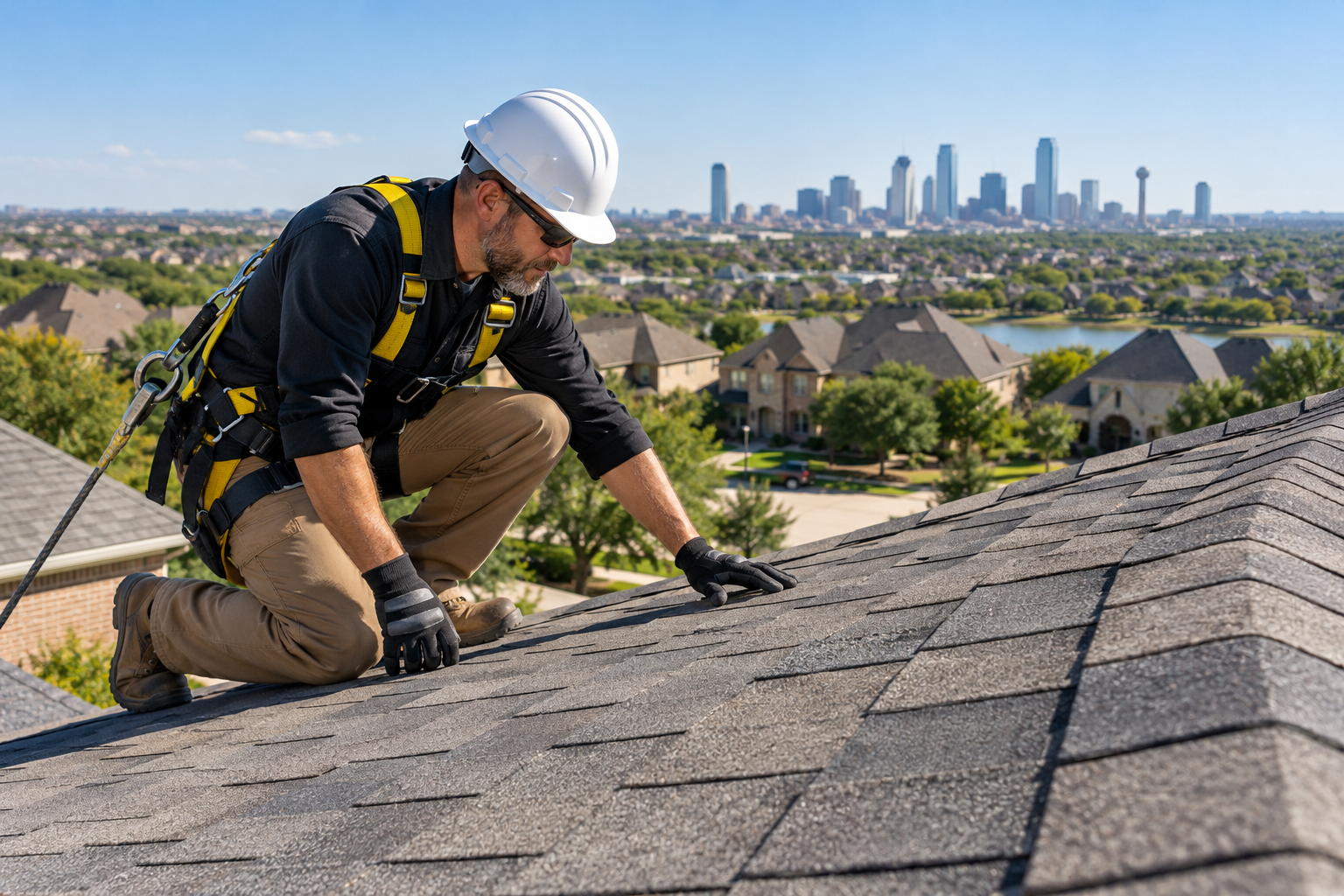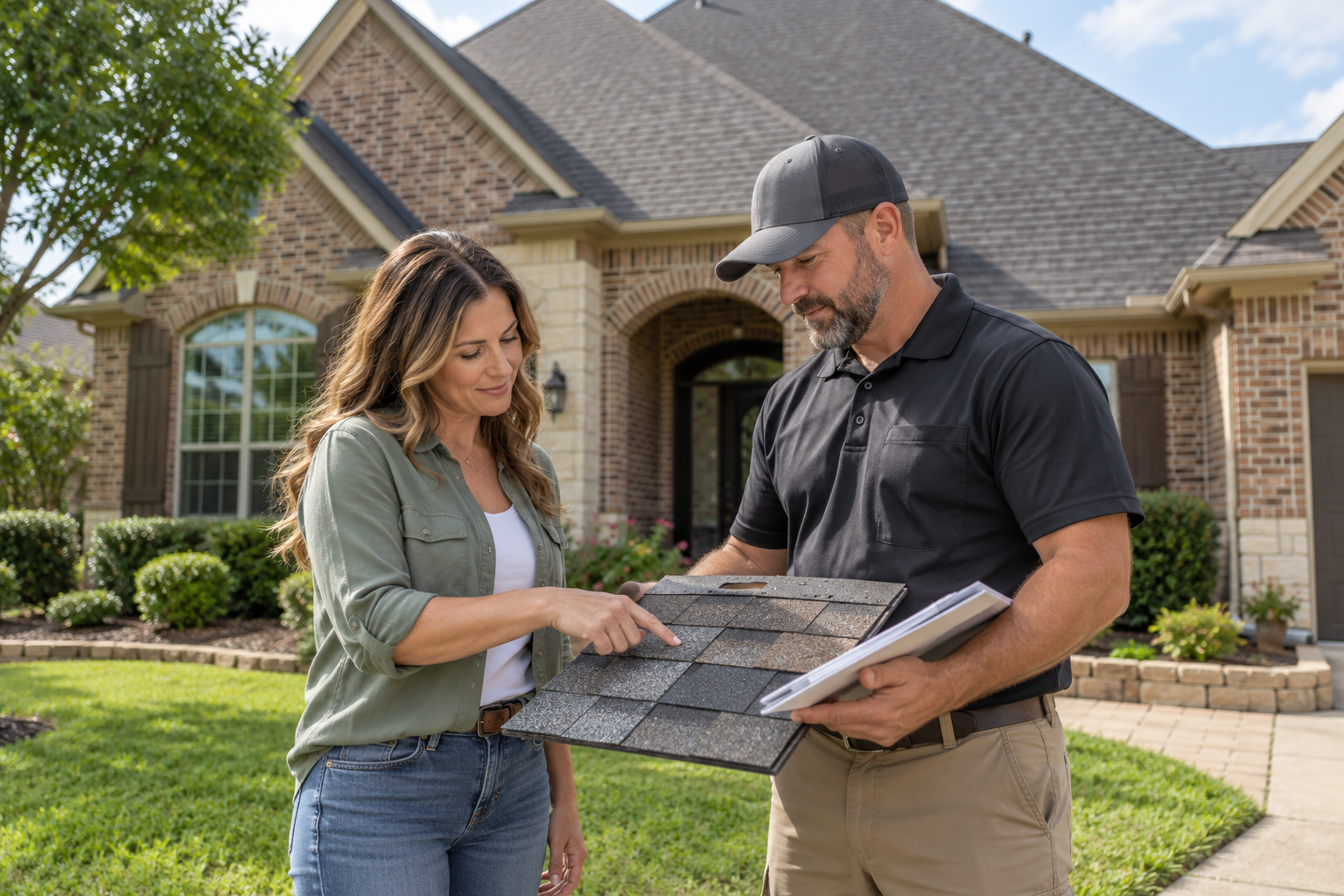




Can a Tornado-Damaged Roof Be Repaired, or Is Replacement Necessary?
Can a tornado-damaged roof be repaired? Learn what inspections reveal, when replacement may be necessary, and how to plan your next steps in Texas.
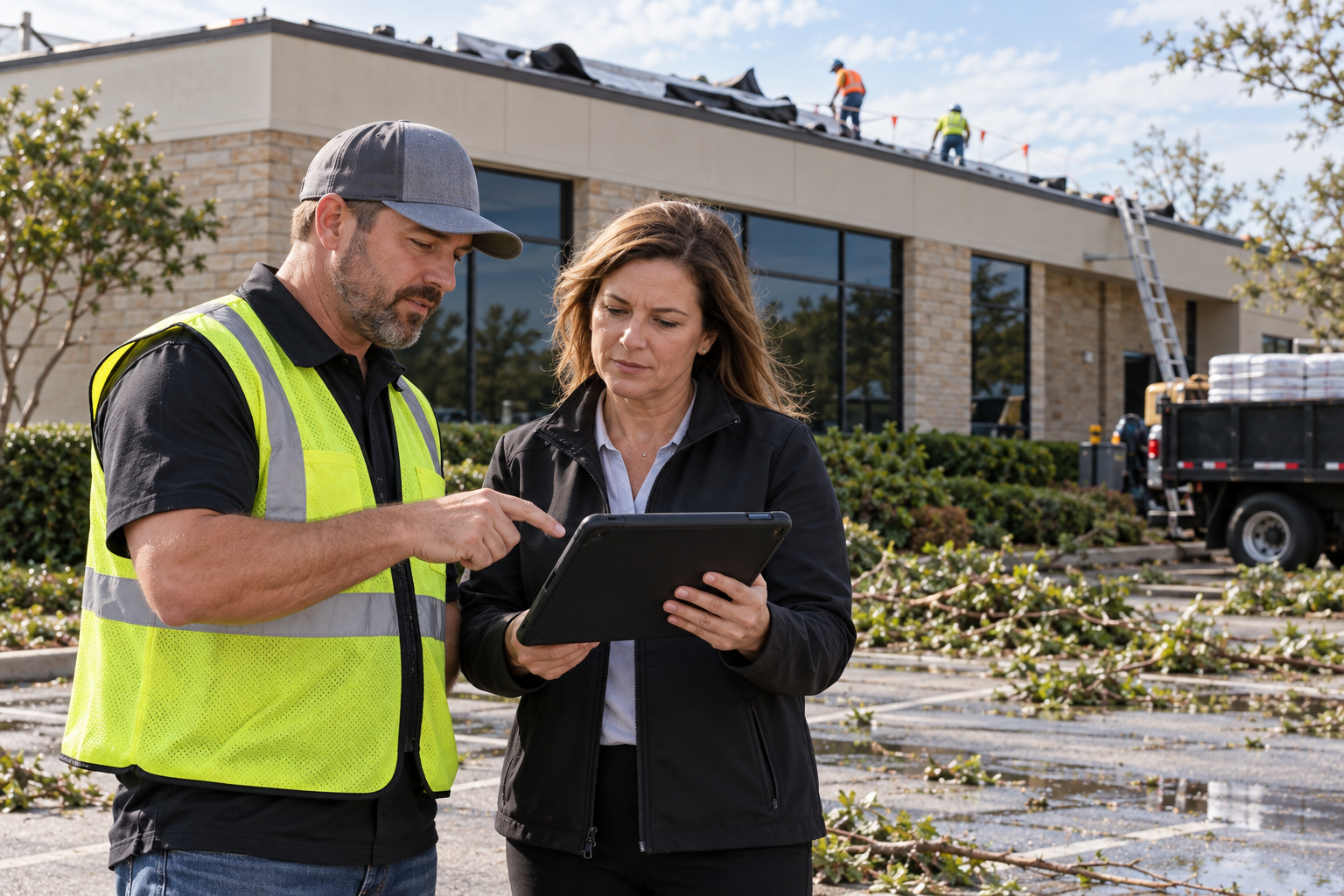
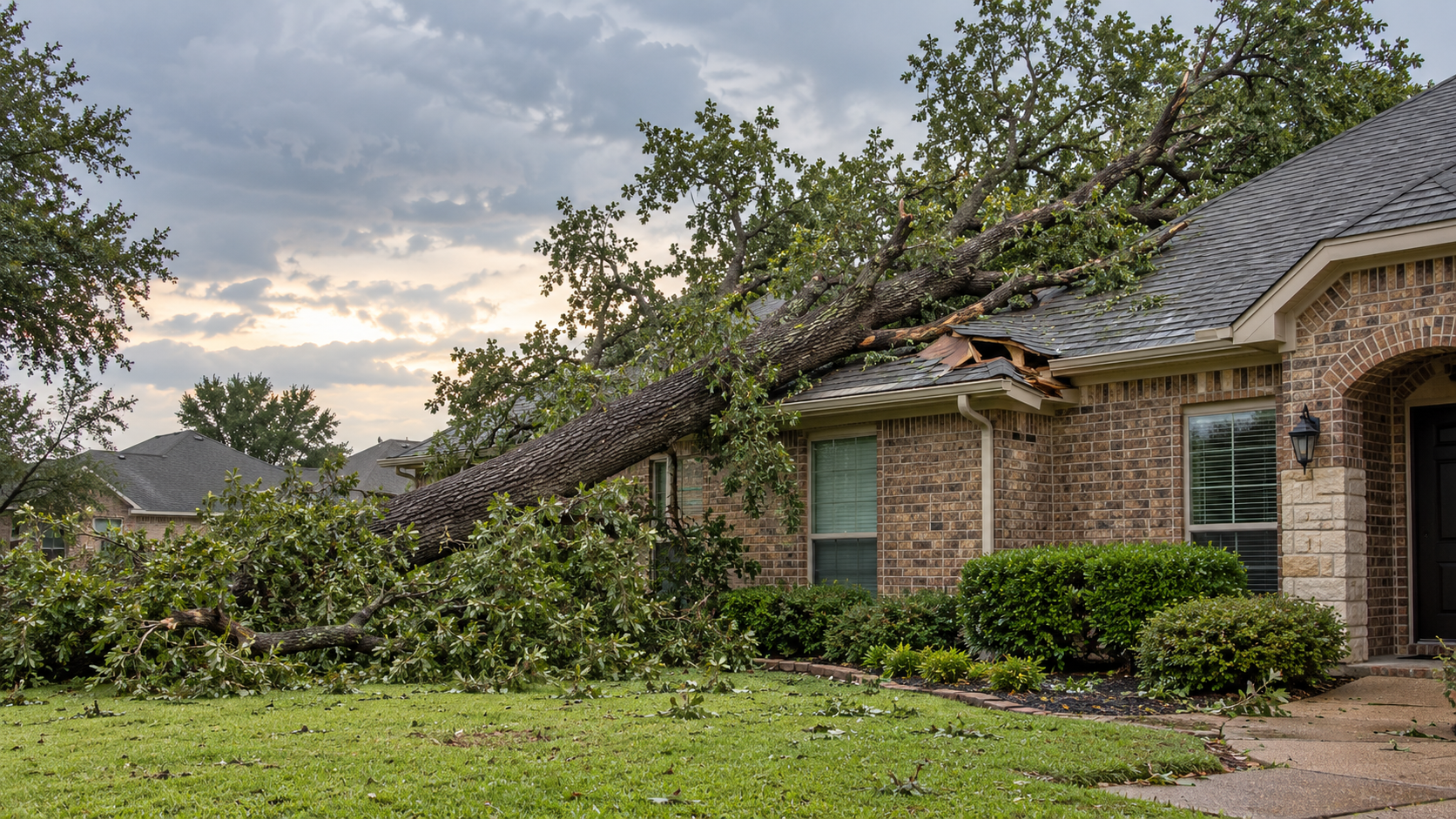
A tornado-damaged roof may be repairable when damage is localized, the supporting structure remains sound, and a durable repair can be integrated into the existing system. Sectional or full replacement may be necessary when damage is widespread, underlying materials are compromised, or the remaining roof cannot support a reliable repair.
The decision requires a property-specific assessment. Missing shingles, a torn commercial membrane, and damaged roof framing are different problems. A roof that looks mostly intact from the ground can still require further investigation.
For North Texas homeowners and commercial building owners, the first priority is safety. Once the property is safe to assess, the next step is to document the roof’s condition and understand which repair or replacement options address the findings.
Showtime Exteriors’ guide to how quickly to address a tornado-damaged roof explains how to prioritize emergency response, inspection, and temporary protection.
Start With Safety Before Assessing the Roof
Do not climb onto a damaged roof or enter a building that may be unstable. Stay clear of loose roof materials, hanging branches, displaced equipment, broken glass, and damaged utilities.
The American Red Cross’s tornado recovery guidance advises people to avoid damaged buildings and stay away from fallen power lines. If there are injuries, trapped occupants, fire, or an immediate collapse concern, call 911. Red Cross
A roofing contractor may need utility clearance or structural assessment before beginning roof-level work. Weather and access conditions can also delay a safe inspection.
Treat Fallen Power Lines as Live
A wire does not have to spark to be dangerous. Do not touch a fallen line or anything contacting it, including trees, fences, or building materials.
The Electrical Safety Foundation’s downed power line guidance warns that the surrounding ground may also be energized. Move away and contact emergency services and the utility. Electrical Safety Foundation International
Does Tornado Exposure Automatically Mean Roof Replacement?
No. A tornado in the area does not establish the condition of every nearby roof.
Some properties may have isolated damage from wind or debris. Others may have extensive roof-cover loss, damaged decking, displaced rooftop equipment, or structural problems.
An inspection should establish:
- What is damaged.
- Where the damage is located.
- Whether the damage extends beneath the visible covering.
- Whether surrounding materials remain serviceable.
- Whether a compatible repair is practical.
- What additional investigation is needed.
The recommended scope should follow those findings. It should not rely only on the storm’s name, a neighbor’s roof replacement, or a photograph of debris nearby.
What Types of Roof Damage Can a Tornado Cause?
A roof assessment should consider the covering and the components supporting it.
Missing, Lifted, or Damaged Roof Covering
On shingle roofs, an inspector may find missing shingles, creases, torn areas, or damaged ridge caps.
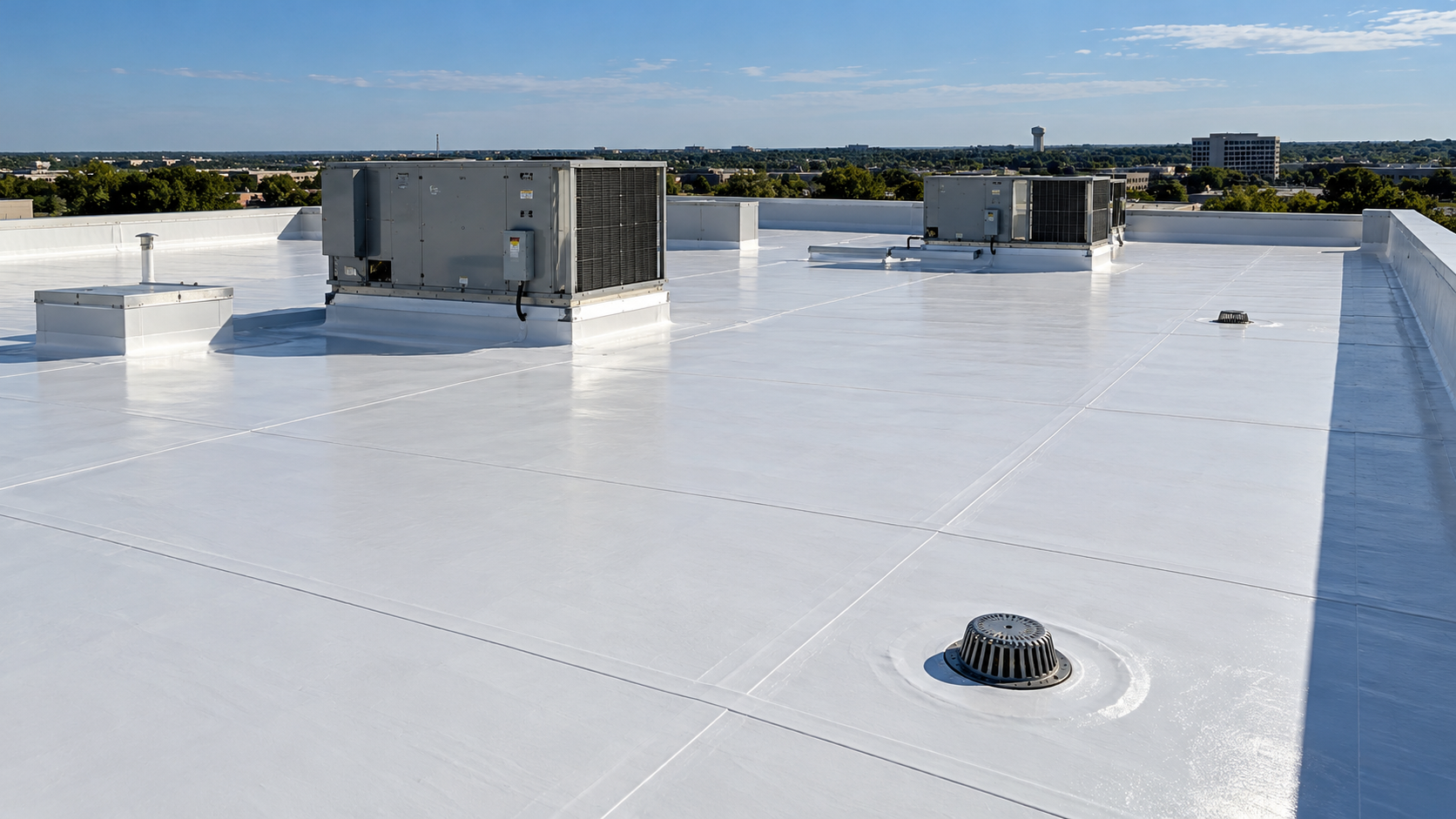
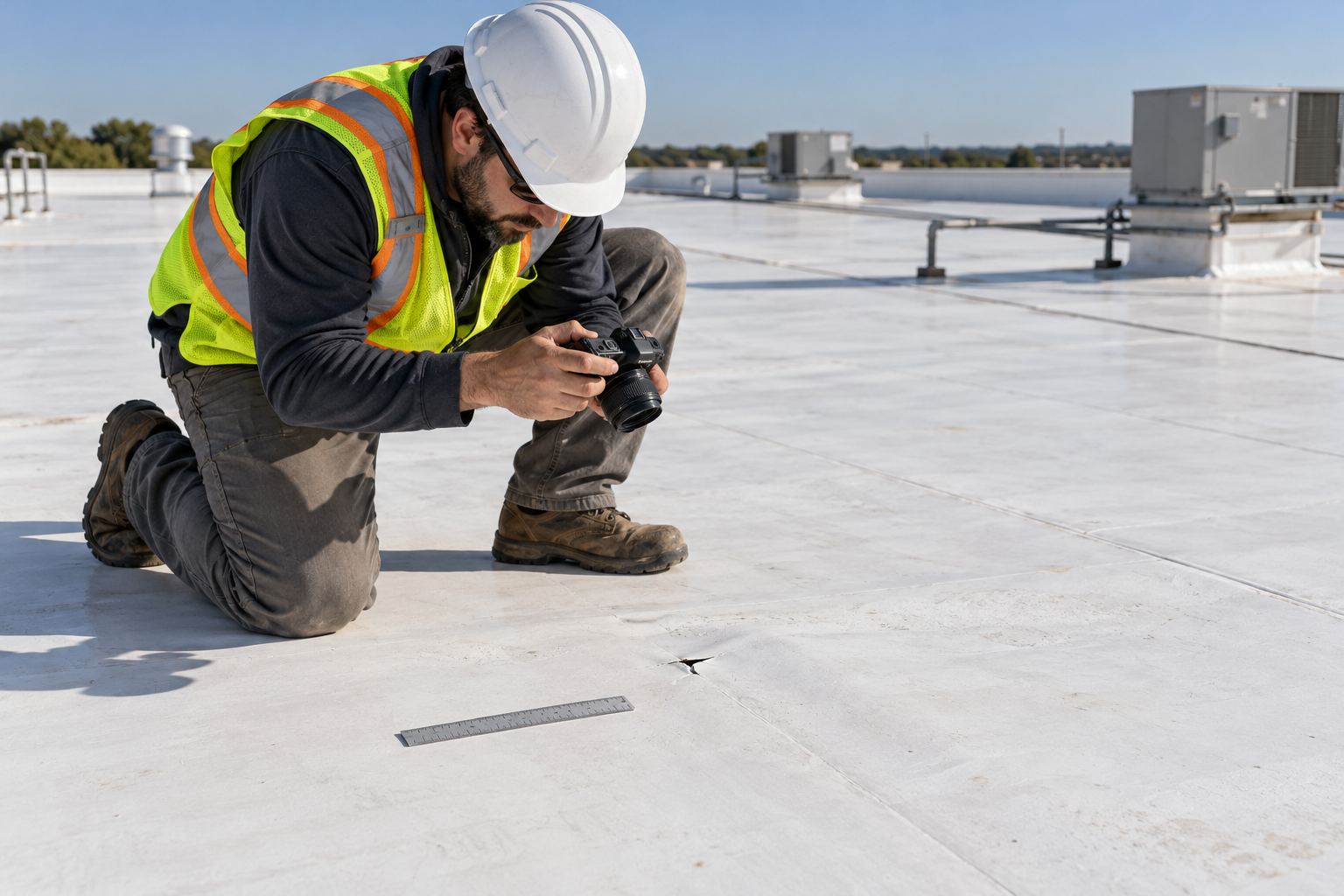
On commercial roofs, concerns may include torn membrane, open seams, disturbed flashing, or damage around fasteners and attachment points.
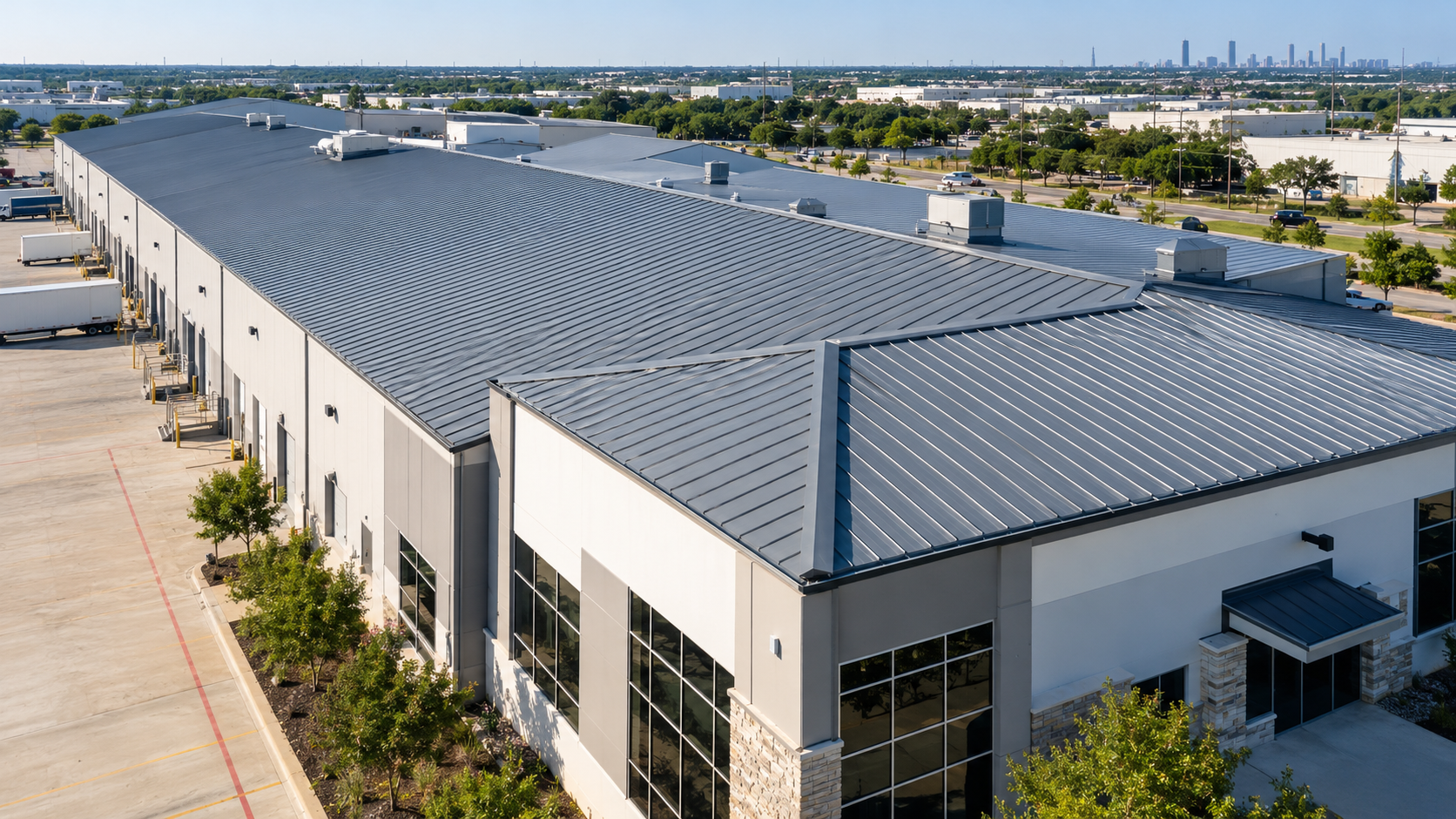
Metal roofs may have displaced panels, damaged seams, loose trim, or debris impacts.
Damaged Roof Edges and Flashing
Eaves, rakes, parapets, coping, gutters, and wall transitions should be reviewed. A roof may have relatively limited damage across its main surface while an edge or flashing detail allows water to enter.
Debris Impacts
Branches and airborne materials can create punctures or damage penetrations, skylights, equipment, and the layers beneath the roof covering.
Underlying Moisture or Structural Damage
Water may enter through openings and affect insulation, decking, or interior materials. Heavy impacts or wind forces may also raise questions about framing and connections.
A roof-cover inspection alone should not be treated as structural clearance. Suspected structural damage requires evaluation by an appropriately qualified professional.
When Can a Tornado-Damaged Roof Be Repaired?
A localized repair may be appropriate when the affected area can be restored without leaving an unresolved problem in the surrounding roof.
Favorable conditions may include:
- Damage concentrated in a limited area.
- Serviceable surrounding materials.
- Suitable replacement products.
- A sound substrate and supporting structure.
- A repair method that follows applicable requirements and manufacturer instructions.
- Moisture damage that can be identified and addressed within the proposed scope.
For example, a limited shingle repair may be practical if the surrounding shingles can be handled without causing additional damage. An isolated commercial membrane puncture may be repairable if the membrane is suitable for a compatible patch and the underlying condition has been assessed.
The contractor should explain what the repair includes, what remains in place, and any limitations.
Can Individual Shingles or One Roof Slope Be Replaced?
Sometimes.
GAF’s technical bulletin on storm-damaged shingles recognizes that individual shingles may be replaced and that replacement of one roof plane may be possible when damage is confined to that area. It also notes the difficulty of assessing latent damage to surrounding shingles. documents.gaf.com
The condition of adjacent shingles matters. Brittle or deteriorated materials can make a localized repair more difficult. The repair also needs suitable fastening, sealing, and accessory details.
Showtime Exteriors’ guide to repairing or replacing missing shingles after a storm discusses factors that affect this decision.
When Is Sectional Replacement Worth Considering?
Sectional replacement may be appropriate when damage affects a defined roof area but does not justify replacing every section of the building.
Examples might include:
- One damaged residential roof slope.
- A commercial roof section with a distinct boundary.
- A roof area affected by a debris impact.
- A section that must be opened for underlying repairs.
The contractor should explain how the new work will connect to the remaining roof. Drainage, flashing, attachment, material compatibility, and warranty considerations all need attention.
A roof section should not be selected simply because it is convenient to draw on a plan. The boundary should make construction sense and address the documented damage.
When Might Full Roof Replacement Be Necessary?
Full replacement becomes a stronger consideration when a smaller scope cannot reliably restore the roofing system.
Conditions that may support replacement include:
- Widespread roof-cover damage.
- Extensive membrane tearing or displacement.
- Multiple damaged slopes or sections.
- Broad underlying moisture damage.
- Significant decking deterioration or damage.
- Attachment problems affecting a large area.
- Materials that cannot support a dependable repair.
- Structural work requiring substantial roof removal.
- A repair approach that cannot meet applicable requirements.
The inspection report should connect the recommendation to specific findings. Ask the contractor to explain why a localized or sectional repair would be insufficient.
Repair vs. Replacement: What Should Be Compared?
Decision factorRepair may be practical when…Larger replacement may be appropriate when…Damage extentDamage is isolatedDamage affects multiple areasSurrounding materialsMaterials remain serviceableMaterials are extensively deteriorated or damagedCompatibilitySuitable repair products are availableA reliable repair cannot be integratedUnderlying conditionDamage can be addressed locallyMoisture or deck damage extends broadlyStructureSupporting components are suitable for the workStructural repairs require a larger scopeLong-term performanceThe repair can restore the affected area reliablyA limited repair leaves unresolved system problems
These are assessment considerations, not a formula that determines the answer without an inspection.
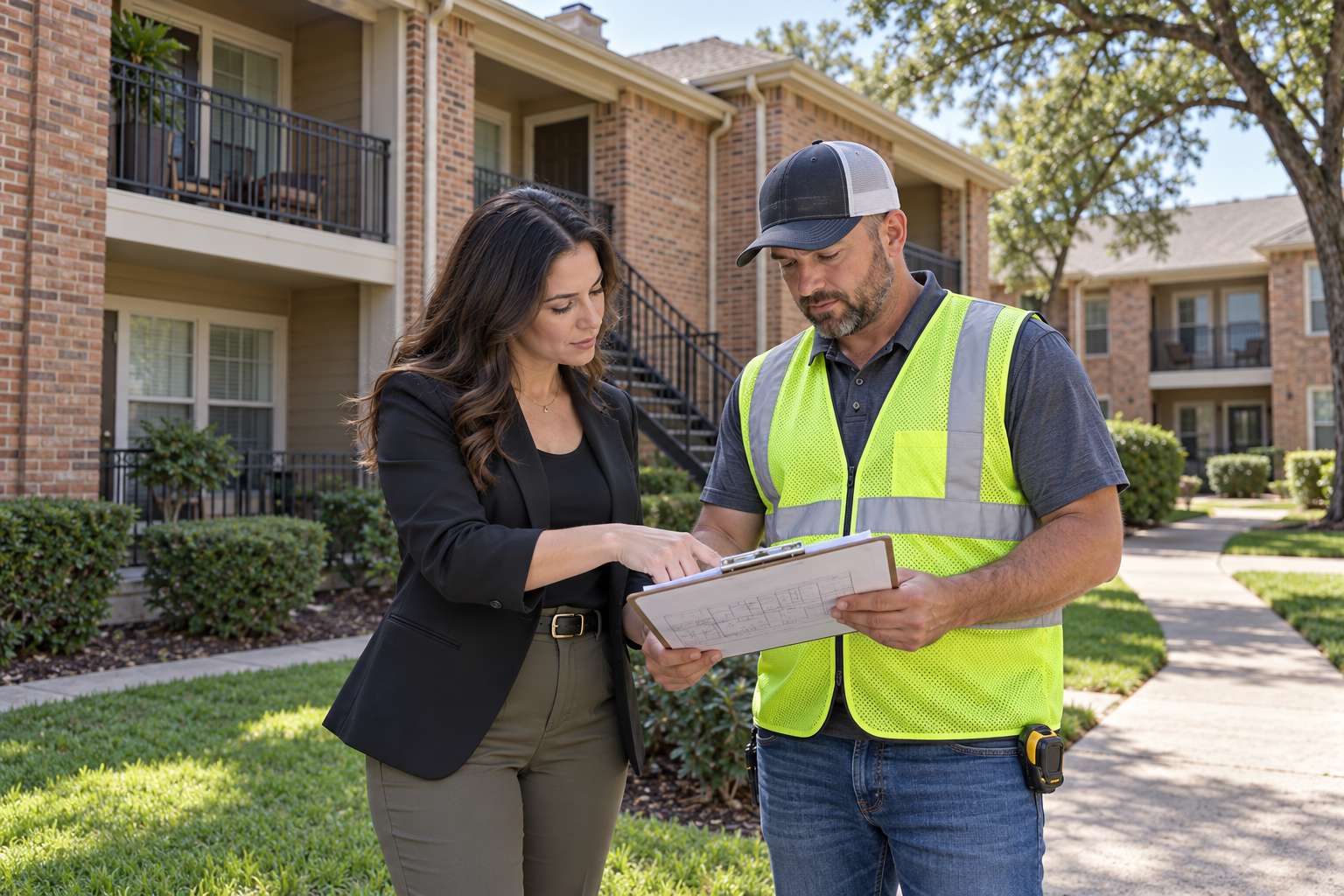
What Should the Inspection Include?
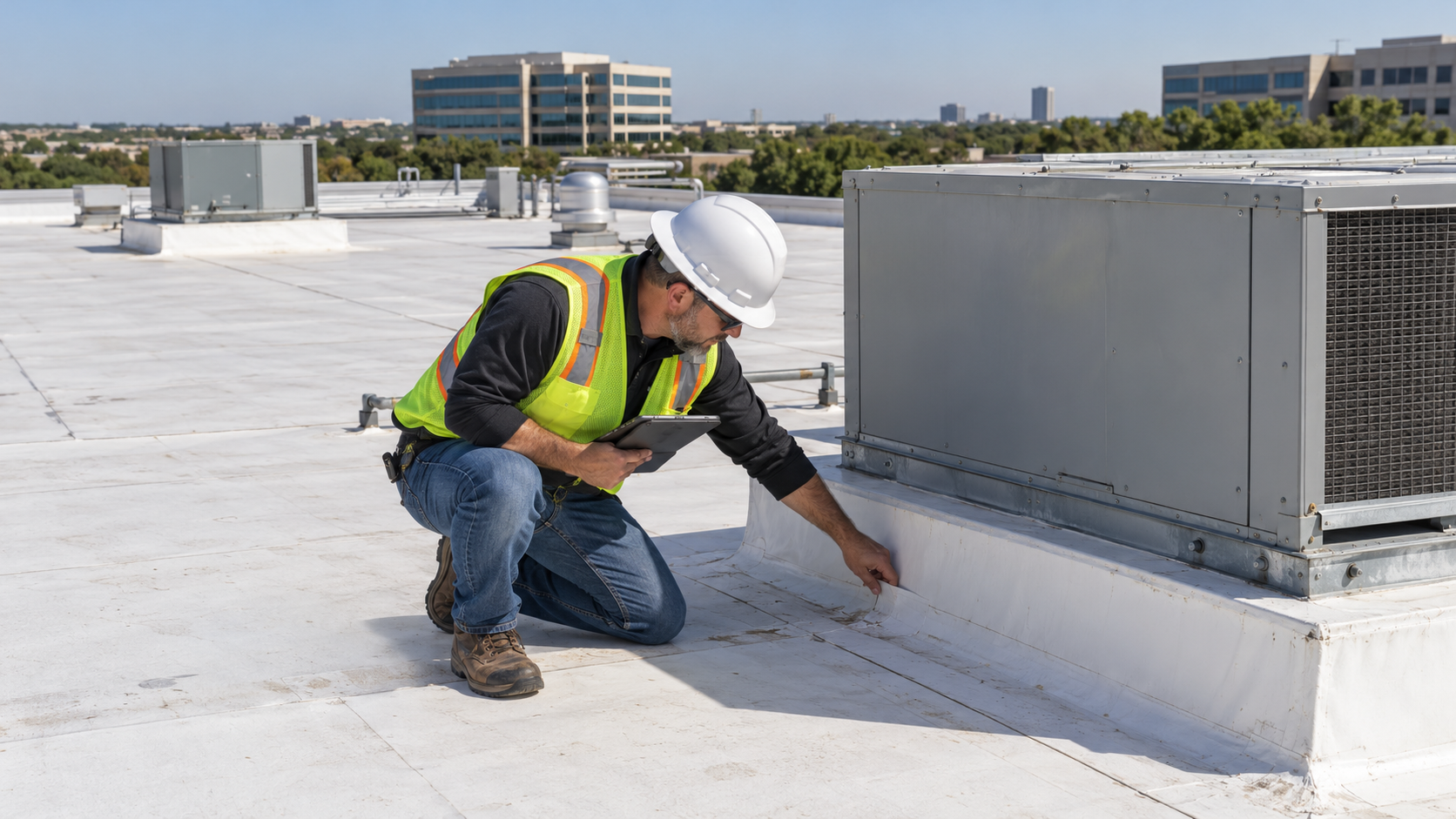
A useful post-tornado inspection evaluates more than the most obvious missing materials.
Roof History and Incident Information
The contractor should review available installation records, previous repairs, earlier photographs, leak history, and the reported storm timeline.
Unknown details should be identified as unknown rather than presented as facts.
Roof Covering and Details
The inspection should consider roof surfaces, seams, ridges, edges, valleys, flashing, penetrations, and equipment.
The Insurance Institute for Business & Home Safety’s roof survey guidance describes evaluating roof systems to distinguish damage from aging and other conditions. It also highlights the importance of reviewing areas such as penetrations, perimeters, and corners. ibhs.org
Interior Observations
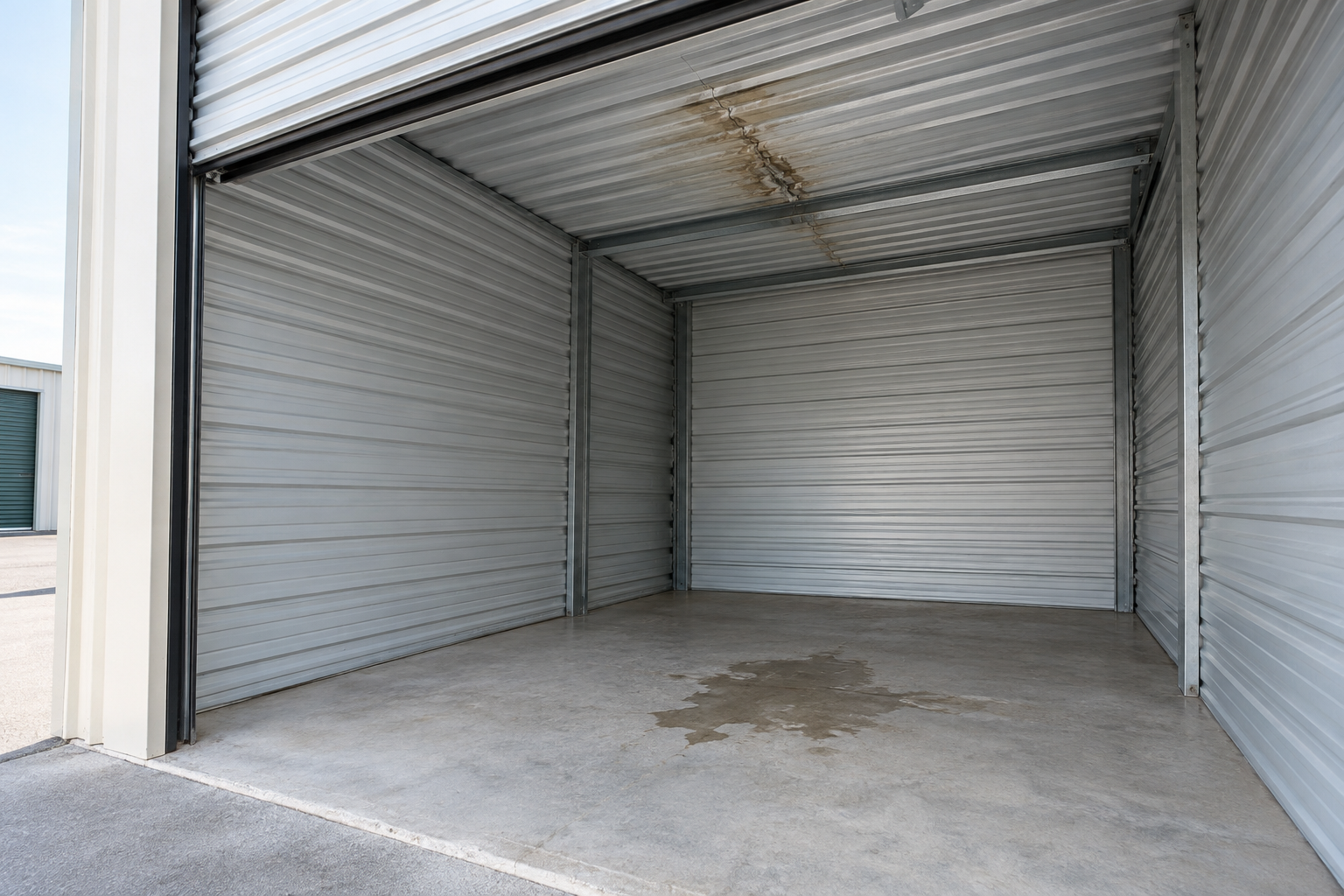
Ceiling stains, active water entry, wet insulation, and damaged finishes should be documented where safe.
A stain may help identify an investigation area, but it does not necessarily mark the precise roof entry point.
Limitations and Further Investigation
The report should identify areas that could not be assessed and explain whether testing, selective openings, or specialist evaluation is recommended.
For commercial properties, Showtime Exteriors’ commercial roof inspection guide outlines the records and roof components that can inform an assessment.
What Is Different About Commercial Roofs?
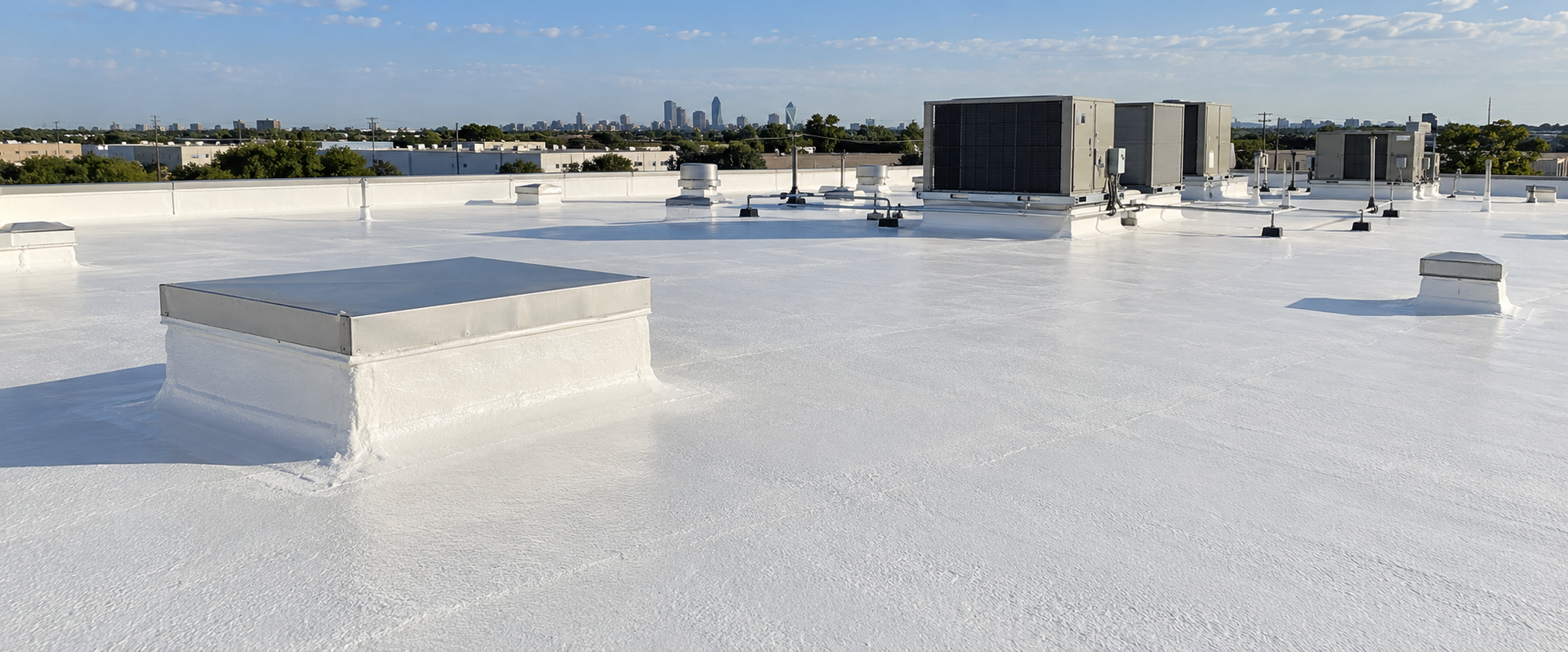
Commercial roof decisions often require attention to the assembly beneath the membrane and the way the roof supports building operations.
The inspection may need to assess:
- Membrane condition and attachment.
- Seams and terminations.
- Insulation and cover board.
- Roof decking.
- Drains and scuppers.
- Parapets and edge metal.
- Equipment curbs and supports.
- Previous repairs and roof sections.
If moisture is suspected, ask what investigation is proposed and what it can establish.
Carlisle’s discussion of moisture in roofing describes how inspection and appropriate diagnostic methods can inform repair decisions. The suitability and limits of any test depend on the roof and site conditions. carlislesyntec.com
A coating or surface patch should not be used as a substitute for addressing damaged attachment, wet materials, or structural concerns.
Does an Active Leak Mean the Whole Roof Must Be Replaced?
No. A leak may come from a localized opening, damaged flashing, a disturbed penetration, or another condition that can be repaired.
However, stopping visible dripping does not establish that the whole assembly is sound. The inspection should evaluate the source and any resulting damage.
Showtime Exteriors’ guide to storm roof leaks and repair options explains why repair scope should follow the actual findings.
What Should Temporary Protection Accomplish?
Temporary protection helps reduce additional water entry while permanent work is evaluated and arranged.
The appropriate method depends on the roof type, damage, safe access, and weather. It should not create an assumption that the roof has been permanently restored.
Ask the contractor to document:
- Conditions before work when practical.
- Materials and methods used.
- The protected area.
- Completed work.
- Monitoring needs.
- Limitations and follow-up arrangements.
A temporary covering does not repair damaged decking or framing, remove wet insulation, or restore displaced equipment.
Will Insurance Pay for Repair or Replacement?
Insurance coverage and the construction recommendation are separate questions.
The Insurance Information Institute’s tornado recovery overview recommends contacting the insurer promptly, photographing damage, and keeping records of temporary work. Coverage and payment depend on the specific policy and loss circumstances. Triple-I®
Ask your insurer about deductibles, valuation, notice requirements, documentation, and any instructions before permanent work.
A contractor can inspect, document, estimate, and perform authorized construction work. An inspection or replacement recommendation does not guarantee claim approval or payment.
Keep original photographs, inspection reports, estimates, invoices, and correspondence. Showtime Exteriors’ guide to documenting a wind-damaged roof provides a practical recordkeeping approach.
Questions to Ask Before Authorizing Work
Before choosing a repair or replacement option, ask:
- What damage was found, and where?
- Which findings support the proposed scope?
- Are structural concerns present?
- Has underlying moisture been investigated?
- Can compatible repair materials be obtained?
- Why is localized repair, sectional replacement, or full replacement recommended?
- What areas remain uninspected?
- What temporary protection is needed?
- What assumptions or exclusions appear in the estimate?
- What warranty applies to the completed work?
For commercial projects, also discuss tenant access, equipment protection, staging, and operational needs.
Frequently Asked Questions
Can a roof survive a tornado without needing replacement?
Yes. The condition of the individual property determines what work is needed. An inspection should document damage rather than assume replacement based on nearby storm activity.
Can a tornado-damaged roof be repaired if it is not leaking?
Possibly. Some damage does not produce an immediate visible leak. The absence of dripping does not establish whether a repair is necessary or sufficient.
Does roof replacement include structural repairs?
Not automatically. Roofing and structural work should be clearly described in the estimate, with appropriate specialist involvement where needed.
Should I wait for the insurance adjuster before protecting the building?
Contact your insurer promptly, but do not delay emergency assistance or reasonable protective measures needed to prevent further damage. Document conditions when practical and retain receipts.
Can a commercial roof be restored with a coating after tornado damage?
Only if the roof’s condition and proposed system support that approach. A coating does not correct structural damage, failed attachment, or unresolved wet materials.
How long will repair or replacement take?
The schedule depends on damage, safety clearance, structural work, materials, weather, and the construction scope. Request a project-specific timeline and an explanation of possible delays.
Request a Tornado Roof Damage Assessment
A clear assessment helps you understand whether a repair can restore the affected area or whether broader replacement is necessary. The recommendation should explain the damage, the condition of the remaining roof, and any unresolved questions.
Showtime Exteriors provides residential and commercial roofing services across North Texas. Contact Showtime Exteriors to discuss storm damage and request an assessment.
Call: 817-400-ROOF (7663)