

Signs Your Self-Storage Roof Needs Immediate Repair
Spot urgent self-storage roof problems, from leaks and loose metal to membrane punctures. Learn when to restrict access and request a roof inspection.

A self-storage roof problem often starts with a small observation: a tenant reports a wet box, a manager notices staining in an empty unit, or a piece of roof trim begins rattling after a storm.
Those details deserve attention. Active leaks, loose roof materials, exposed openings, and sudden changes in the roof’s shape require prompt professional assessment. Structural concerns, falling materials, or water near electrical equipment may also require immediate access restrictions and emergency assistance.
The right response depends on the condition. A localized leak may need a targeted repair, while widespread deterioration or underlying damage may require a larger project. An inspection establishes that scope.
Showtime Exteriors provides roofing services for commercial properties, including self-storage facilities. This guide explains the warning signs owners and managers should recognize and how to respond without creating unnecessary disruption.
Which Self-Storage Roof Problems Are Most Urgent?
Use the following table to prioritize a reported condition. These are response priorities, not guaranteed repair timelines.
Warning signRecommended responseFalling metal, suspected collapse, or sudden structural movementKeep people away and seek appropriate emergency assistanceWater near electrical equipmentRestrict access and arrange qualified assistanceActive water entry into units or corridorsRequest urgent assessment and protection when safeLoose panels, trim, or roof-edge componentsRestrict the surrounding area and arrange prompt evaluationA membrane puncture or exposed roof openingArrange prompt inspection and suitable protectionRecurring stains or repeated leaksSchedule a documented investigationDeteriorated sealant or surface corrosion without an active openingArrange a maintenance assessment before conditions worsen
Managers should report observations from safe interior or ground-level locations. Leave rooftop access and close examination to qualified professionals.
1. Water Is Entering Storage Units
An active leak is one of the clearest reasons to request self-storage roof repair.
Look for:
- Dripping during or after rain.
- Water on floors away from an open doorway.
- Wet insulation or ceiling materials.
- New staining on walls or structural members.
- Tenant reports of damp belongings.
- Repeated wet areas in the same unit.
Record the building and unit number, when the water was noticed, and whether rain was occurring. Photograph visible conditions when safe and follow your facility’s procedures for notifying tenants and arranging authorized access.
Do not assume the roof opening is directly above the wet area. Water can travel along building components before appearing inside.
GAF’s commercial roof inspection guidance describes reviewing interior conditions, exterior walls, and roof details to investigate water entry. gaf.com
2. Roof Panels or Edge Metal Are Loose
Loose roof materials can create both a leak concern and a falling-material hazard.
From the ground, you may notice:
- Lifted panel edges.
- Bent or hanging trim.
- Displaced ridge components.
- A section that appears to move in the wind.
- New rattling following a storm.
- Detached pieces near the building.
Keep tenants, employees, and vehicles away from the affected area. Do not ask maintenance staff to climb onto the roof and push materials back into place.
A roofer should evaluate the panel or component, its attachment, and surrounding details. Reattaching one visible piece may not resolve damage elsewhere in the assembly.
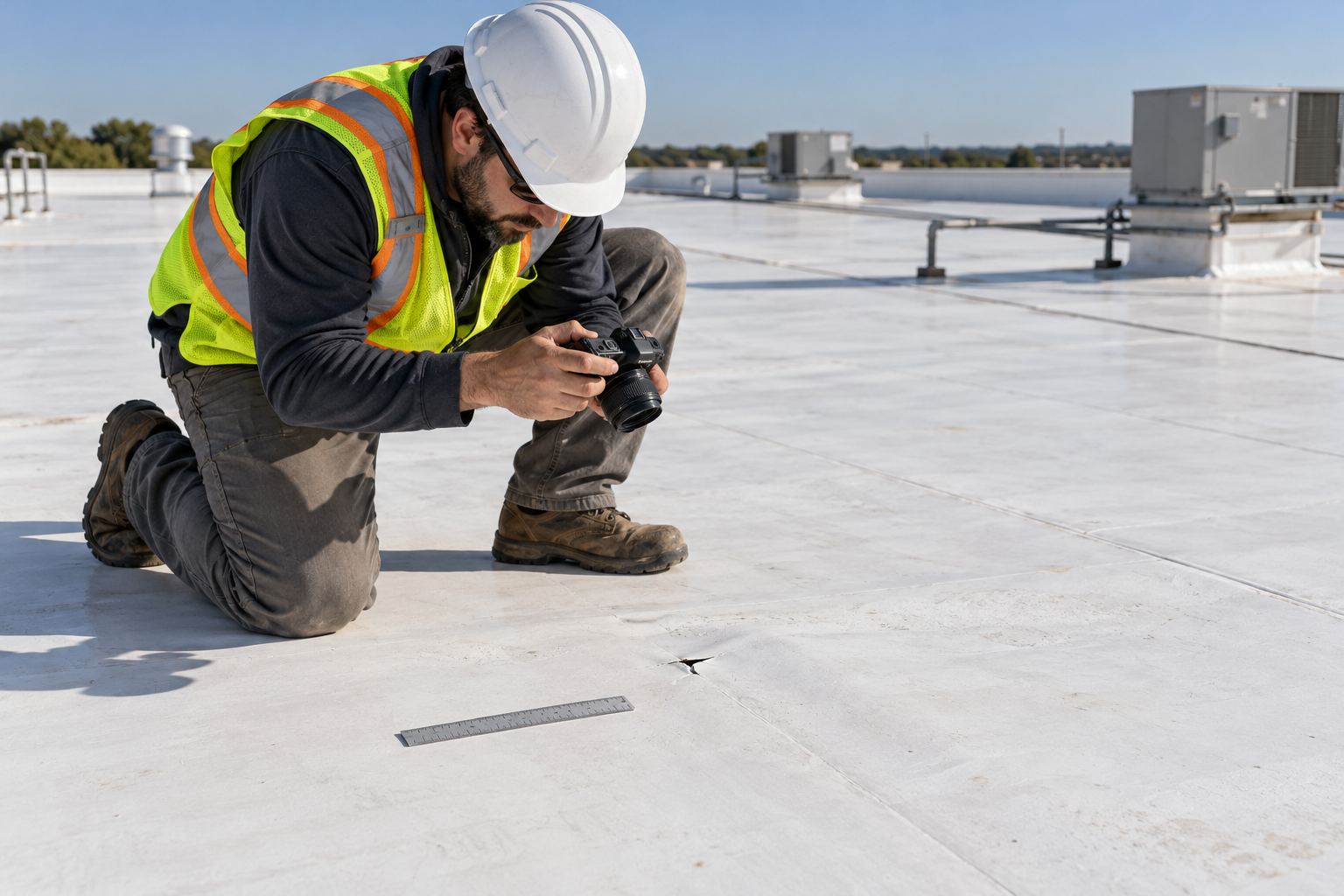
3. You See a Puncture or Open Membrane
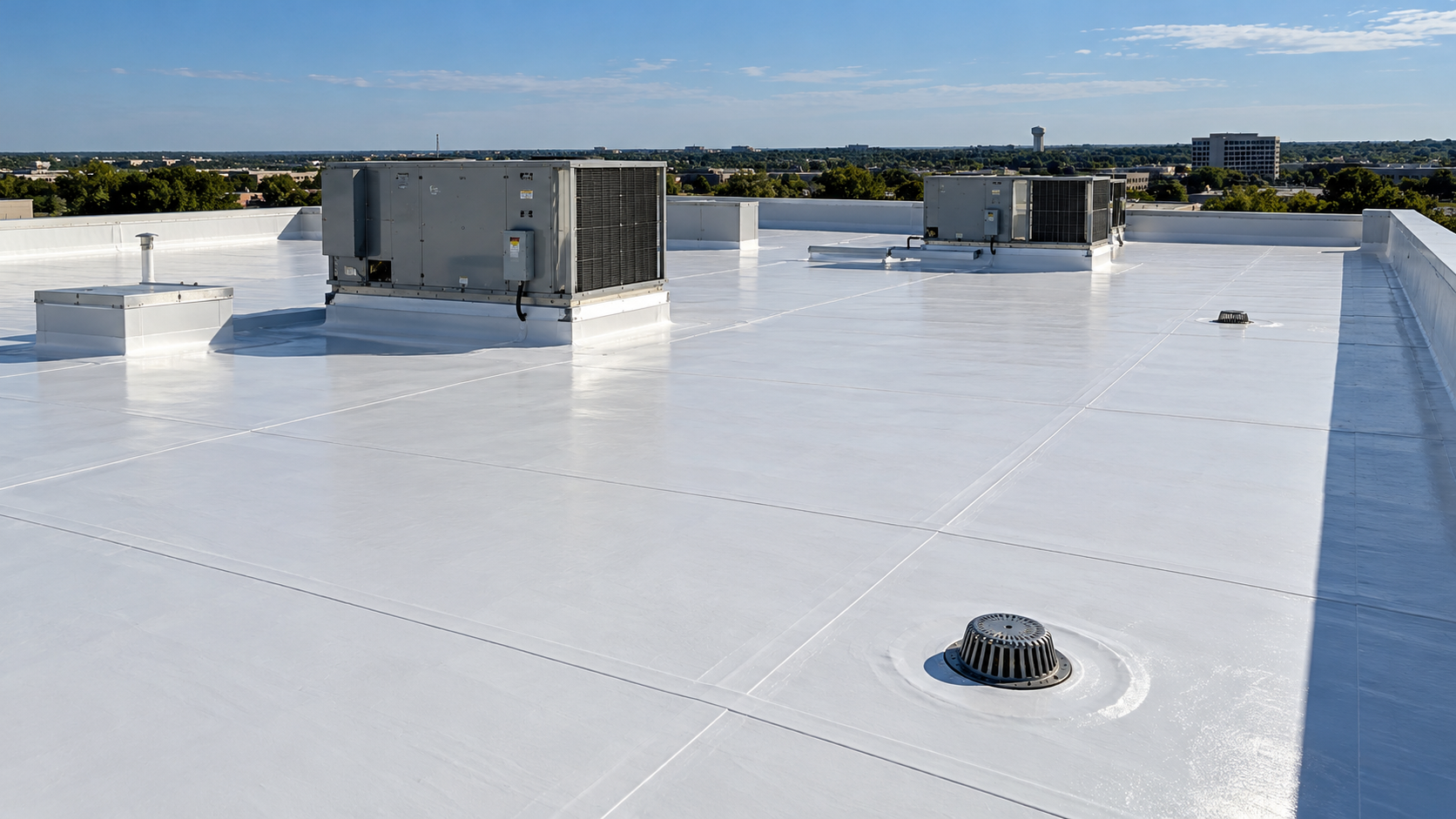
Climate-controlled self-storage buildings and other facility structures may use TPO, PVC, EPDM, or another low-slope roofing system.
A puncture or tear can be difficult to see from below. It may first be reported by a roofing contractor or another service provider working on the building.
The assessment should establish:
- The opening’s location and size.
- The membrane type.
- The surrounding condition.
- Whether water may have entered beneath the surface.
- What compatible protection or repair is appropriate.
A small opening does not automatically mean the entire roof needs replacement. It also does not prove the underlying materials are dry.
Read Showtime Exteriors’ guide to addressing a punctured commercial membrane for more on prioritizing inspection and repair.
4. The Roof or Ceiling Has Changed Shape
A new sag, pronounced deflection, or displaced structural component needs urgent attention.
Keep people away from the affected area, including units or corridors below it. If collapse appears possible, contact emergency services and obtain appropriate structural evaluation.
Do not assume a roofing contractor’s surface inspection provides structural clearance. The assessment may require an engineer or another appropriately qualified professional.
Avoid attempting to drain water, brace materials, or remove loads yourself. The response should follow a professional assessment of the building’s condition.
5. Gutters, Drains, or Scuppers Are Not Working
Drainage problems deserve attention before they contribute to water entry or prolonged water accumulation.
Managers may observe:
- Overflowing gutters.
- Water spilling above unit doors.
- Detached or leaking downspouts.
- Debris obstructing drainage outlets.
- Recurring water marks at roof edges.
- Unusual standing water reported during an inspection.
Carlisle’s commercial roof maintenance guidance identifies clogged drains as a maintenance concern and recommends checking roof conditions proactively. carlislesyntec.com
Drainage issues should be investigated with the roof and building details in mind. Water entering beneath a roll-up door, for example, may involve site drainage or door conditions rather than a roof leak.
6. The Same Leak Keeps Returning
Repeated repairs in the same location are a reason to investigate further.
The problem may involve:
- An incorrectly identified entry point.
- An adjacent flashing detail.
- A panel joint or membrane seam.
- Drainage.
- A wall or penetration.
- A repair that did not address the full affected area.
A useful inspection should connect the recurring symptoms with specific findings. Ask the contractor to explain what earlier work addressed and what the new proposal will do differently.
Showtime Exteriors’ guide to storm roof leaks and repair options explains why a leak does not automatically require full replacement.
7. Fasteners, Seals, or Flashing Show Deterioration
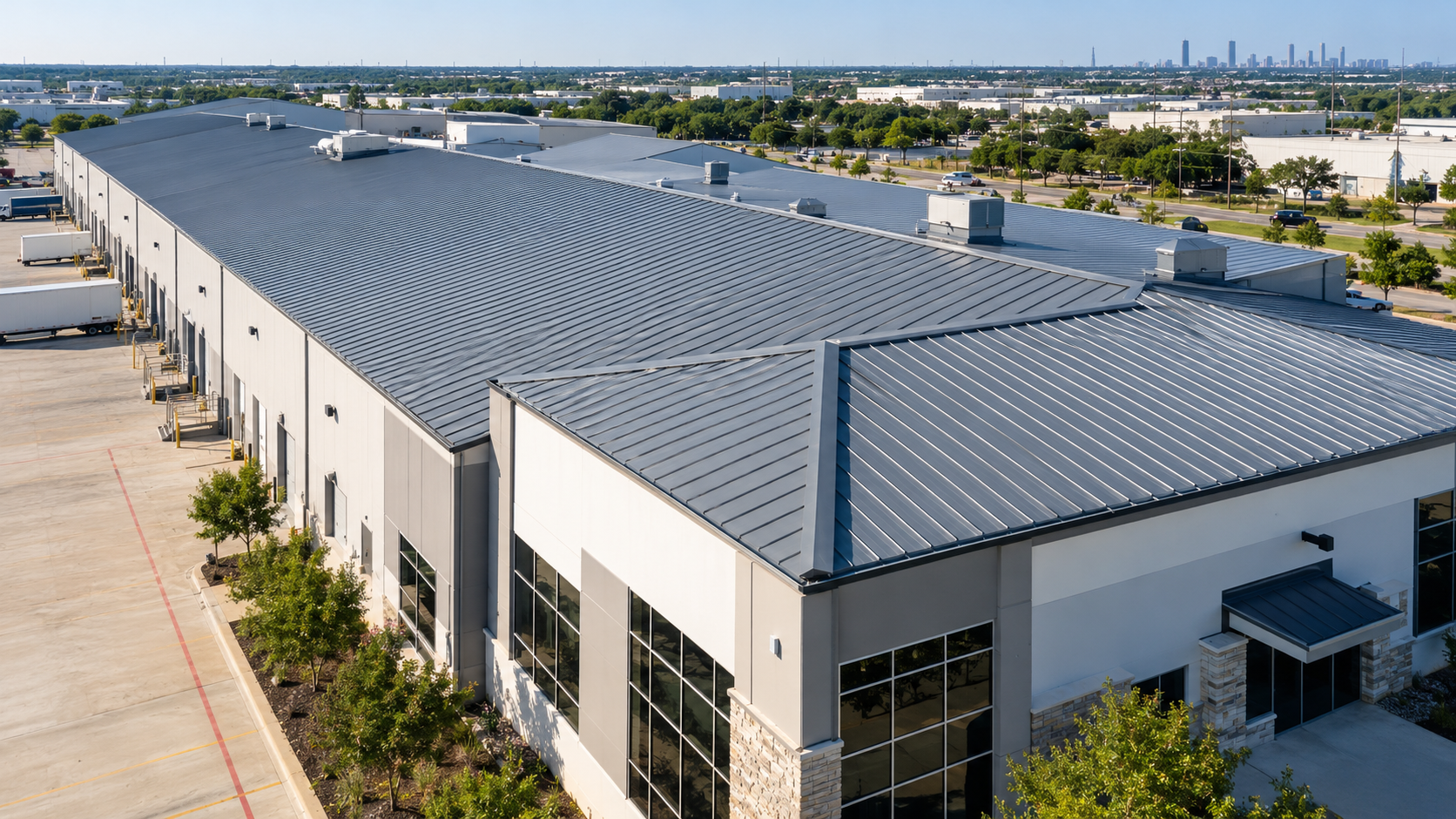
On metal-roofed storage buildings, the details around fasteners, joints, edges, and penetrations deserve professional attention.
Inspection findings may include:
- Loose or missing fasteners.
- Deteriorated sealing washers.
- Open joints.
- Damaged closures.
- Separated flashing.
- Failed previous repairs.
These conditions do not all carry the same urgency. A visible opening with active water entry needs a faster response than a maintenance item without an immediate leak path.
Avoid treating the roof with a generic sealant before the system and problem are identified. The repair should use suitable materials and address the actual detail.
8. Corrosion Has Progressed Beyond Surface Appearance
A color change or surface mark alone does not establish that a metal roof is failing. However, advanced corrosion, visible holes, damaged edges, or deterioration around connections should be assessed.
Ask the roofer to distinguish between:
- Surface condition.
- Protective finish deterioration.
- Localized damage.
- Loss of material.
- Attachment or structural concerns.
The proposed repair should follow the findings. Photographs and a roof plan can help owners understand which areas need action.
9. New Problems Appear After Hail or Wind
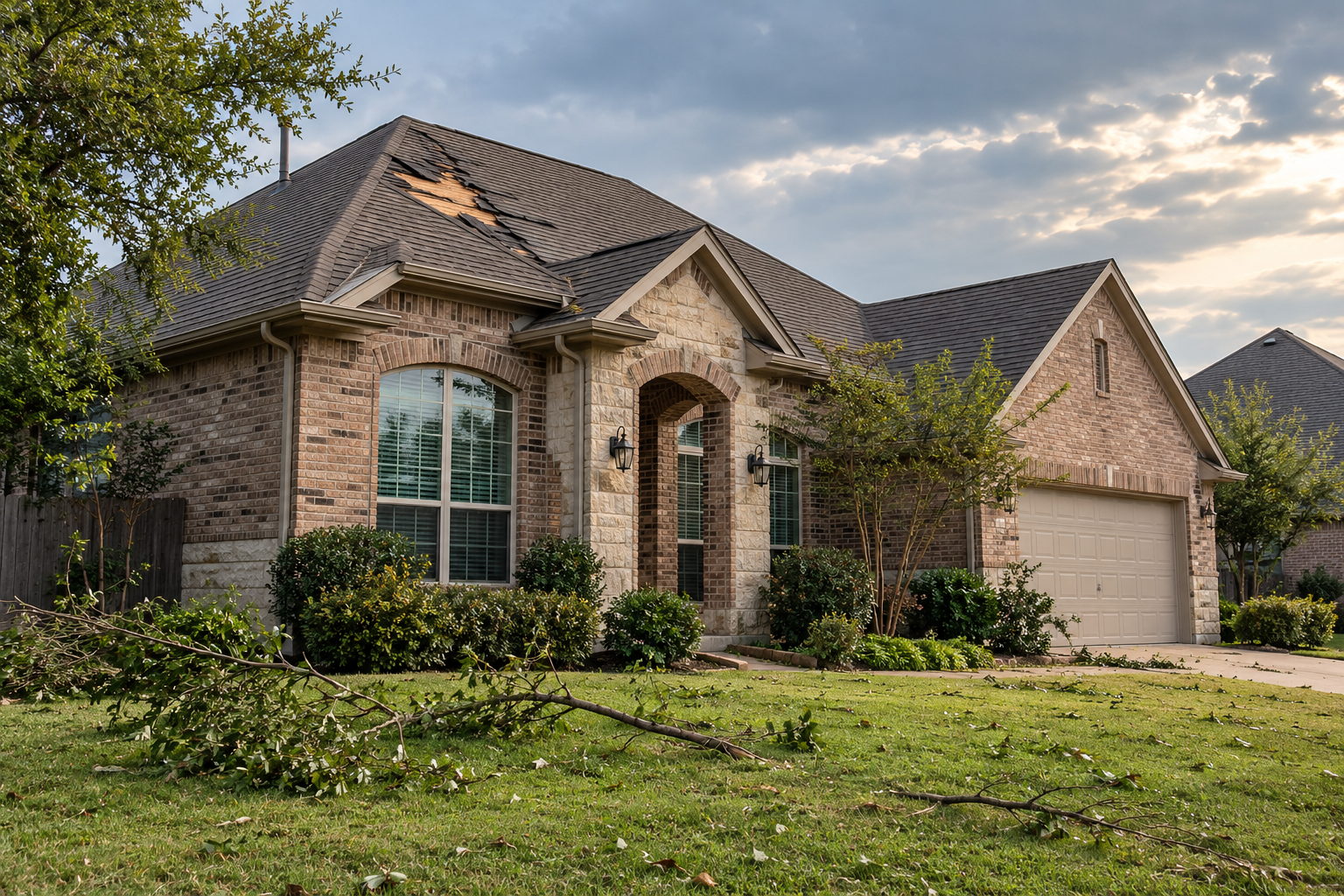
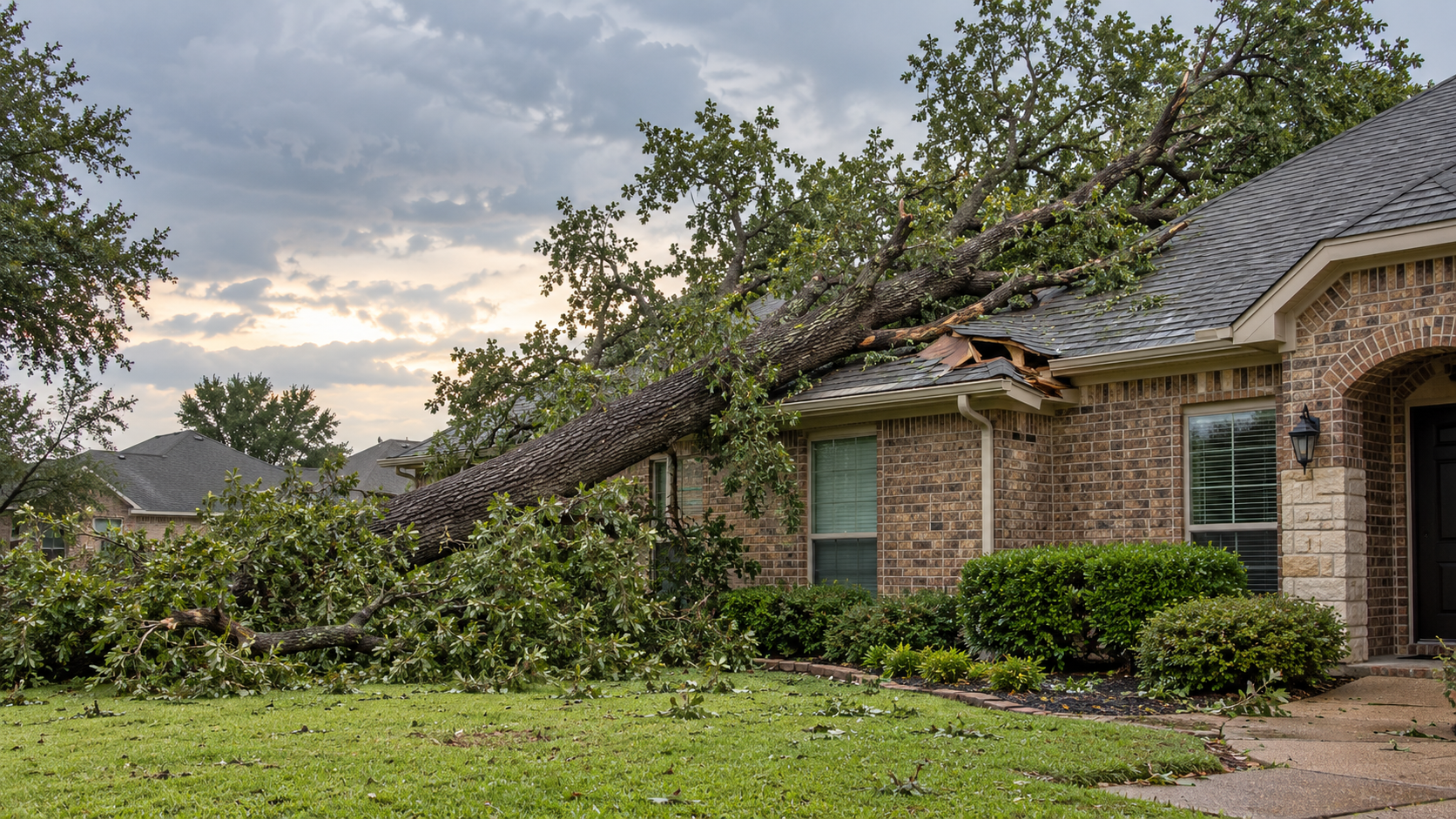
After a significant storm, review the property from safe ground-level locations.
Look for:
- Missing or displaced roofing.
- New leaks or stains.
- Damaged gutters or trim.
- Fallen branches.
- Debris near rooftop equipment.
- Changes reported by tenants or staff.
A storm nearby does not prove the roof has been damaged, and an absence of visible leaks does not establish that the roof is unaffected.
Carlisle’s spring maintenance guidance notes that wind and rooftop service activity can damage roofing even in warmer climates. carlislesyntec.com
Record what changed and arrange an assessment based on the observed conditions.
10. Moisture Appears Without a Clear Rain Connection
Not every damp area in a self-storage building comes from a roof opening.
Potential sources may include condensation, HVAC drainage, plumbing, wall details, or water entering at doors. This is especially important when moisture appears during dry weather or across a broad area.
A roofing inspection may need to be coordinated with an HVAC or building-envelope assessment. Record:
- Weather conditions.
- When moisture appears.
- Whether the area is climate-controlled.
- HVAC operation or service history.
- The pattern and location of moisture.
Accurate diagnosis helps avoid paying for a roof repair that does not address the source.
What Should a Self-Storage Roof Inspection Include?
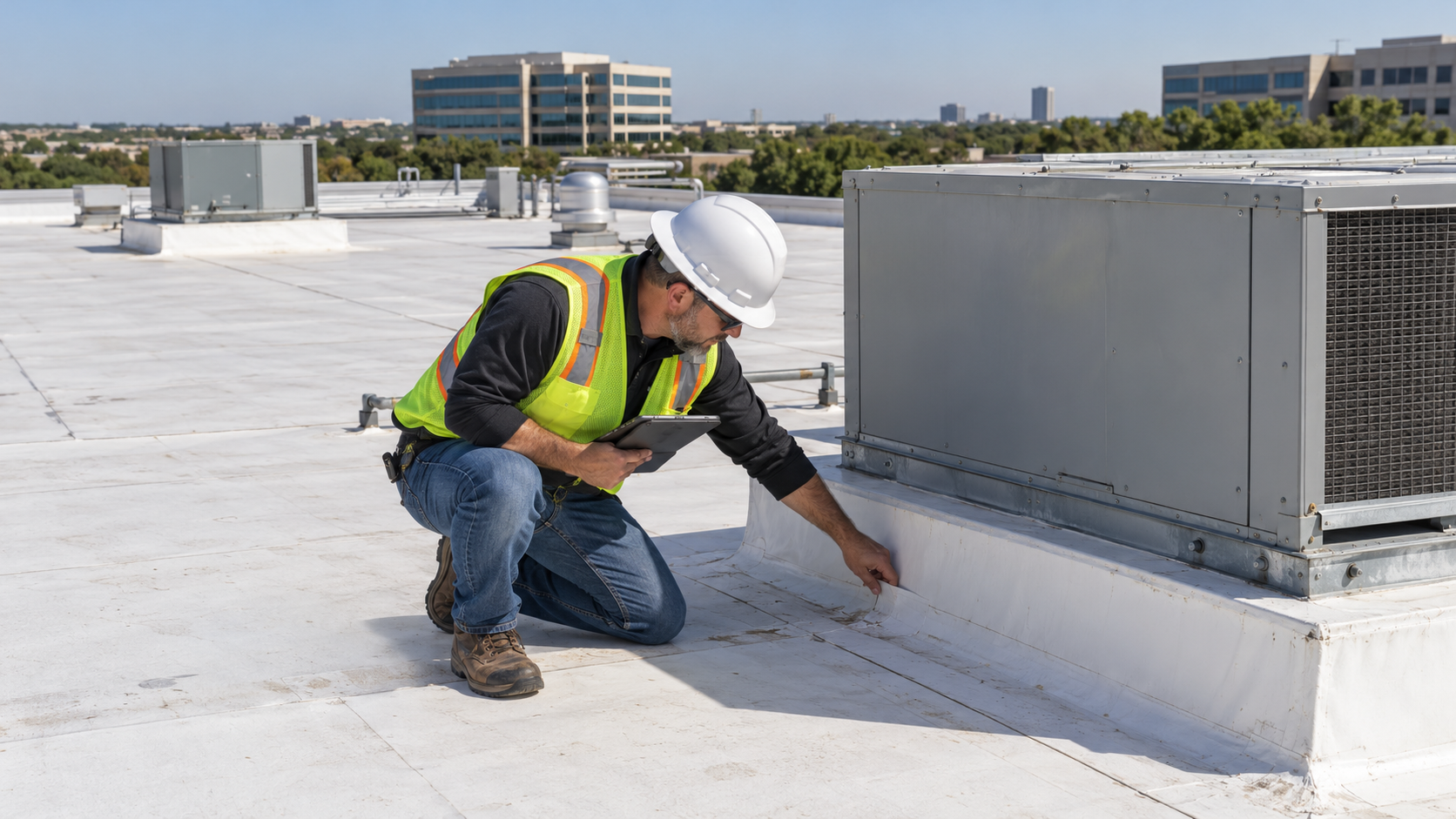
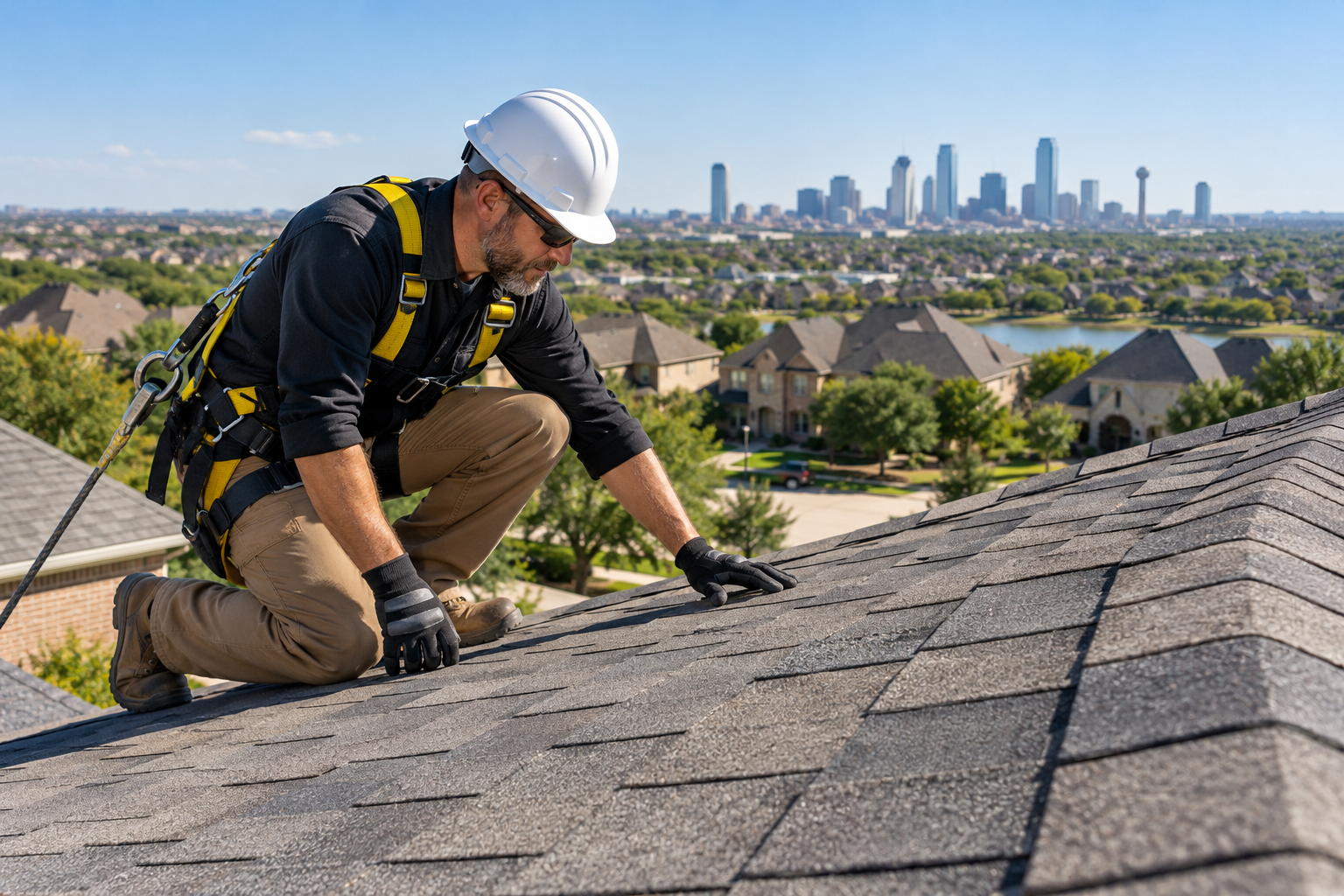
A useful inspection should identify the building, roof section, system type, observed conditions, and areas that could not be assessed.
Depending on the facility, it may include:
- Metal panels or membrane surfaces.
- Seams, joints, and attachment details.
- Ridge, eave, and roof-edge components.
- Flashing and penetrations.
- Gutters, drains, and scuppers.
- Insulation or decking concerns.
- Rooftop equipment.
- Previous repairs.
- Relevant interior observations.
GAF’s guide to inspecting commercial roofs provides additional context on evaluating critical roof areas before choosing repair or replacement. gaf.com
Showtime Exteriors’ commercial roof inspection guide also outlines information property managers can provide before the visit.
Repair, Restore, or Replace the Self-Storage Roof?
The appropriate choice depends on the inspection findings.
Localized Repair
Repair may suit an isolated problem when surrounding materials remain serviceable and the work can be integrated reliably.
Restoration or Coating
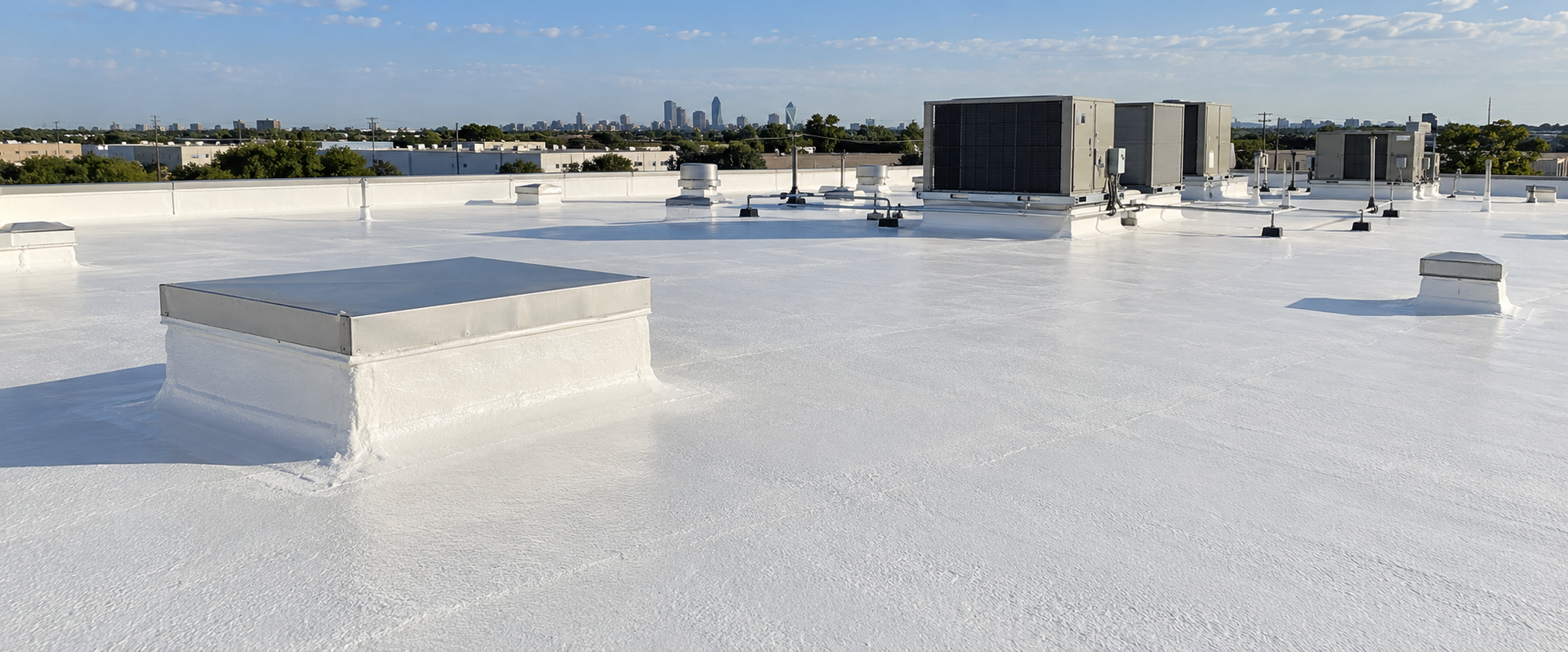
A restoration system may be considered when the existing roof is suitable for the proposed products and preparation. Required repairs, moisture concerns, and compatibility should be addressed first.
GAF’s coating-versus-replacement guide cautions against coating damaged or structurally compromised roofs without appropriate assessment. gaf.com
Sectional or Full Replacement
Replacement may be appropriate when damage or deterioration is widespread, underlying materials require substantial work, or a dependable repair is not practical.
Roof age is useful context, but the current condition matters. GAF’s discussion of commercial roof aging describes using inspection and, where appropriate, further investigation to assess the roof. gaf.com
How to Manage Repairs While the Facility Remains Open
Self-storage roof work needs a plan for tenant access and property protection.
Before work begins, establish:
- Which buildings or units are affected.
- Whether any areas must be restricted.
- How tenants will receive notices.
- How authorized unit access will be arranged.
- Where equipment and materials will be staged.
- Which drive aisles must remain available.
- How debris and daily cleanup will be managed.
- Who approves unexpected additional work.
Avoid promising uninterrupted access before the contractor has assessed the scope. A clear schedule and defined work areas make disruption easier to manage.
What Records Should Facility Managers Keep?
Create a roof file for each building or roof section. Include:
- Roof plans and installation information.
- Warranty documents.
- Inspection reports.
- Leak logs with unit numbers.
- Original photographs.
- Maintenance and repair invoices.
- Rooftop service records.
- Tenant reports and relevant communications.
- Temporary protection records.
If a claim may be involved, keep factual observations separate from assumptions about cause or coverage. Showtime Exteriors’ guide to commercial roof claim evidence explains how to organize the information.
Frequently Asked Questions
Is one leaking storage unit a reason to inspect the roof?
Yes. A localized leak deserves assessment even when other units appear dry. The source may be limited, but it should be identified rather than assumed.
Does a self-storage roof leak mean replacement is necessary?
No. Some leaks can be repaired locally. Replacement depends on the extent of damage, surrounding condition, underlying materials, and repair feasibility.
Should employees climb onto the roof to investigate?
Leave rooftop inspection to qualified professionals. Staff can record safe ground-level and interior observations and restrict access where necessary.
Can a coating stop every metal roof leak?
No. The roof must be suitable for the proposed system, and failed details or underlying damage need appropriate correction. Coating alone is not a substitute for those repairs.
How often should the roof be inspected?
Ask for a schedule based on the roof system, age, condition, warranty requirements, and exposure. Significant storms, new leaks, and rooftop work may justify additional inspections.
Can tenants stay in affected areas during repairs?
Access depends on the hazards and work scope. Establish restrictions and communication procedures with the contractor before work begins.
Request a Self-Storage Roof Assessment
Active leaks, loose metal, exposed openings, and recurring water problems should not remain unresolved while the facility waits for a larger failure.
A documented inspection helps identify urgent repairs, plan maintenance, and evaluate larger roofing options when necessary.
Contact Showtime Exteriors to discuss your self-storage roof and request an assessment.
Call: 817-400-ROOF (7663)