
Signs Your Office Building Roof Needs Immediate Repair
Learn which office roof warning signs need urgent attention, from active leaks and loose flashing to drainage problems and recurring water stains.

An office roof problem often becomes visible inside first: a stained ceiling tile, a drip above a workstation, or water appearing near a window after heavy rain. Other warning signs—such as loose edge metal or damaged membrane—may only be identified during a professional inspection.
Active water entry, exposed roofing openings, loose materials, and sudden structural changes require prompt attention. If there are falling materials, suspected instability, or water near electrical equipment, keep people away and seek appropriate emergency assistance.
The immediate goal is to protect occupants and limit additional damage. The next step is to identify the source and determine whether the roof needs a targeted repair, further investigation, or a larger project.
Showtime Exteriors provides office building roofing services, including inspection, repair, maintenance, and replacement planning.
Which Office Roof Problems Are Most Urgent?
Not every stain means the same thing, and not every visible roof defect requires full replacement. Use the following priorities to guide the initial response.
Observed conditionRecommended responseSuspected structural movement, falling materials, or collapse riskRestrict access and seek appropriate emergency assistanceWater near electrical panels, outlets, or equipmentKeep people away and arrange qualified assistanceActive leakage into occupied spaceRequest urgent assessment and suitable protection when safeLoose roof-edge metal or displaced roofingRestrict the area below and arrange prompt evaluationA puncture, tear, or exposed openingArrange prompt professional inspectionRecurring stains or repeated repairsSchedule a documented investigationDeteriorated details without an active openingArrange maintenance before conditions worsen
Report what you can safely observe from inside or ground level. Leave roof access and close examination to qualified professionals.
1. Water Is Actively Entering the Building
Dripping water is a clear reason to request office building roof repair. Even a localized leak can affect finishes, furniture, records, and equipment.
Record:
- The room, suite, and floor.
- When the leak was discovered.
- Whether rain was occurring.
- Whether water is still entering.
- Photographs taken from a safe location.
- Any previous reports from the same area.
Keep occupants away from wet electrical equipment or unstable ceiling materials. Do not ask staff to open a sagging ceiling or investigate above it.
A leak’s interior location does not necessarily identify the roof entry point. Water can travel along building components before appearing below.
2. Ceiling Stains Are New, Spreading, or Returning
A dry stain may be historical, but a new or changing stain deserves investigation.
Look for:
- Darkening after rain.
- Stains appearing on adjacent tiles.
- Repeated replacement of the same ceiling tile.
- Peeling paint or damaged finishes.
- New moisture near walls or penetrations.
GAF’s guide to commercial roof aging identifies interior drips, discolored ceilings or walls, and other moisture-related changes as conditions warranting assessment. These observations do not, by themselves, establish the source. gaf.com
Replacing a ceiling tile improves appearance but does not resolve the cause of water entry.
3. Roof-Edge Metal or Flashing Is Loose
Office buildings often have parapets, coping, fascia, and flashing around walls and rooftop equipment. Displaced or loose components may create a leak path or falling-material hazard.
From a safe location, you may notice:
- Hanging metal.
- Open gaps at an edge.
- New rattling after wind.
- Bent or detached trim.
- Pieces of roofing material on the ground.
Keep people and vehicles away from the affected area. The contractor should evaluate both the visible damage and adjacent attachment details.
For storm-related concerns, Showtime Exteriors’ guide to responding to a wind-damaged roof explains how to prioritize assessment and temporary protection.
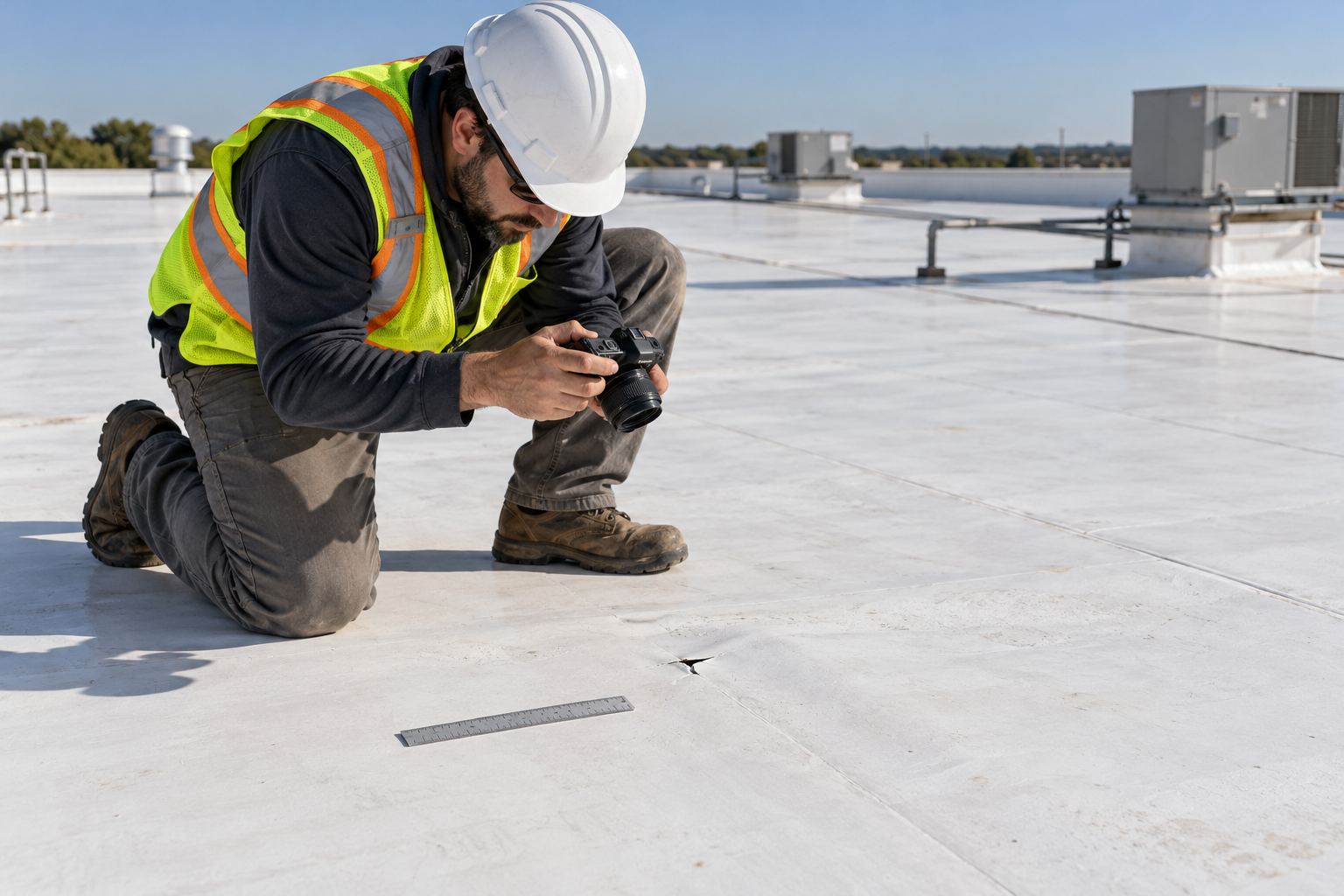
4. The Membrane Has a Puncture, Tear, or Open Seam
An office roof may use TPO, PVC, EPDM, or another system. A reported opening in that covering should be assessed promptly.
The inspection should establish:
- The membrane type.
- The opening’s location and extent.
- The condition of surrounding materials.
- Whether underlying moisture is suspected.
- What repair method is suitable.
Do not assume that a small opening has caused only a small amount of damage. Equally, one puncture does not prove the entire roof needs replacement.
Read Showtime Exteriors’ guide to addressing a punctured commercial membrane for more on inspection and response.
5. Water Is Remaining on the Roof
Some water may remain briefly after rainfall, but recurring or prolonged accumulation should be reviewed.
Potential concerns include:
- Blocked drains or scuppers.
- Debris around drainage outlets.
- Changes in roof slope.
- Depressed areas.
- Equipment or repairs interrupting drainage.
GAF’s technical guidance on ponding water recommends getting water off the roof promptly to avoid long-term problems. The cause and appropriate correction require assessment. gaf.com
Do not send untrained staff onto a roof to clear drains, especially during a storm or where standing water conceals the surface. Sudden sagging or concerns about structural loading require a more urgent response.
6. The Roof, Deck, or Ceiling Has Changed Shape
New sagging, unusual deflection, or displaced structural components require immediate caution.
Keep occupants away from the affected space and obtain appropriate professional evaluation. If collapse appears possible, contact emergency services.
A roof-cover inspection should not be treated as structural clearance. Where the structure is in question, the assessment may require an engineer or another appropriately qualified professional.
Do not attempt to brace, drain, or remove materials yourself.
7. Leaks Appear Around Rooftop Equipment
HVAC units, vents, pipes, skylights, and other penetrations create details that need inspection.
A reported leak near equipment may involve:
- Curb flashing.
- A penetration seal.
- A membrane opening.
- Equipment drainage.
- Condensation.
- Another nearby roof or wall condition.
Recent service activity is useful context, but it does not establish who or what caused a leak.
Carlisle’s roof maintenance guidance notes that roofing can be damaged by wind or rooftop maintenance traffic. Keep access and service records so the inspector has a clearer history. carlislesyntec.com
Coordinate roofing and HVAC professionals when the source is uncertain.
8. The Same Area Needs Repeated Patching
Recurring leaks are a reason to investigate beyond the visible patch.
Ask the contractor:
- Was the original entry point confirmed?
- Is another detail contributing to the leak?
- Were underlying materials evaluated?
- Is the existing repair compatible with the roof?
- Has the problem spread?
- What will the new scope address differently?
A larger patch is not automatically a better repair. The recommendation should connect the proposed work with documented findings.
Showtime Exteriors’ commercial roof inspection guide outlines the roof details and records that can support that investigation.
9. Moisture Appears Without a Clear Rain Connection
Dampness or staining during dry weather may involve sources other than a roof opening.
Possible contributors include HVAC condensate, plumbing, condensation, wall details, or an older wet area that has not been resolved.
Record:
- When the moisture appears.
- Weather conditions.
- HVAC operating conditions.
- The location and pattern.
- Relevant plumbing or equipment work.
- Whether the problem changes with occupancy or system use.
A roofing assessment may need to be coordinated with other specialists. Correctly identifying the source helps avoid repairs that leave the actual problem unresolved.
10. Problems Appear After a Significant Storm
After hail or high winds, review the property from safe locations.
Report:
- New leaks.
- Displaced roof materials.
- Damaged edge metal.
- Debris impacts.
- Changes around rooftop equipment.
- Newly overflowing gutters or drains.
The absence of a visible leak does not establish that the roof is undamaged. Conversely, a storm nearby does not prove that every observed defect came from that event.
The Insurance Institute for Business & Home Safety’s survey guidance describes examining roof conditions and distinguishing damage from aging and other causes. ibhs.org
What Should Property Management Do First?
Protect Occupants and Equipment
Restrict affected areas where needed. Seek qualified assistance for electrical, structural, or falling-material hazards.
Create a Clear Incident Record
Record the suite, room, date, time, weather, and observed condition. Preserve original photographs.
Contact the Appropriate Professionals
Describe active water entry or exposed openings when requesting service. Include information about access restrictions, tenant schedules, and sensitive equipment.
Coordinate Temporary Protection
Ask what can safely reduce additional damage while permanent work is evaluated. Document the method and follow-up needs.
Notify Relevant Parties
Communicate with ownership, tenants, facilities staff, and the insurer when appropriate. Follow the property’s reporting procedures and policy requirements.
For claim-related recordkeeping, see Showtime Exteriors’ guide to commercial roof claim evidence.
Repair, Restore, or Replace the Office Roof?
The inspection findings should determine the scope.
Localized Repair
A repair may be practical when damage is isolated and surrounding materials remain suitable for a reliable solution.
Restoration
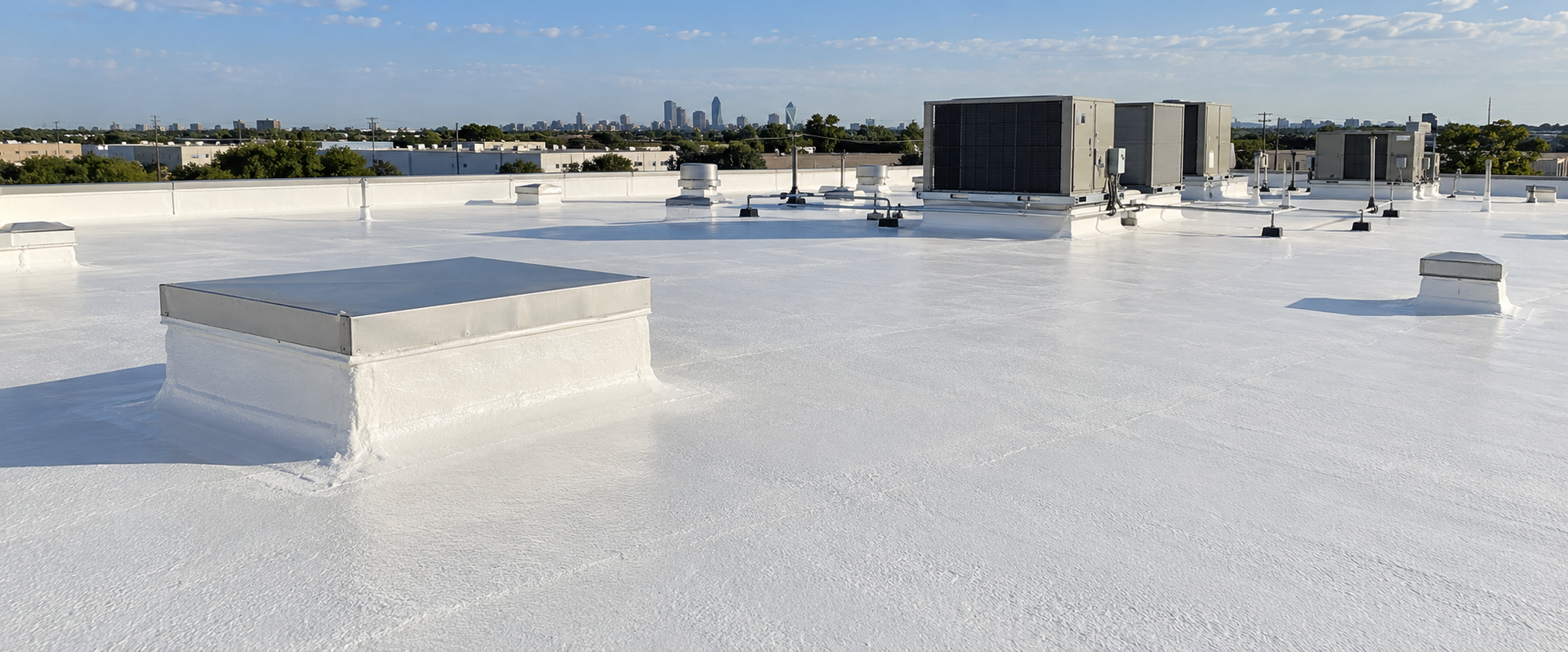
A coating or restoration system may be considered when the existing roof is an appropriate candidate. Preparation, compatibility, moisture, and attachment must be evaluated.
GAF’s coating-versus-replacement guide cautions against coating a damaged or structurally compromised roof without appropriate assessment. gaf.com
Sectional or Full Replacement
Replacement may be appropriate where damage or deterioration is widespread, underlying materials require substantial work, or a reliable smaller repair cannot be completed.
Ask the contractor to explain why the proposed boundaries and scope address the findings.
Reduce Future Disruption With a Roof Maintenance Plan
Keep a roof file containing:
- Installation information.
- Warranty documents.
- Inspection reports.
- Leak logs.
- Photographs.
- Repair invoices.
- Rooftop access records.
- Equipment service information.
Ask for a maintenance schedule suited to the actual system and its warranty requirements. Carlisle’s building owner manual is an example of manufacturer guidance covering care and maintenance for its roof systems. Use the requirements applicable to your own roof. carlislesyntec.com
Frequently Asked Questions
Does one stained ceiling tile mean the roof needs replacement?
No. It indicates a condition that should be investigated. The source could be roofing, equipment, plumbing, condensation, or another building detail.
Is an active roof leak an emergency?
It requires prompt attention. Water near electrical systems, unstable ceiling materials, or structural concerns raises the urgency and may require access restrictions and emergency assistance.
Can a roof be damaged without leaking?
Yes. Some openings or disturbed components may not produce an immediate visible leak. Inspection is needed to assess the condition.
Should office staff inspect the roof themselves?
Staff can document safe interior and ground-level observations. Roof access and close inspection should be handled by qualified professionals.
Can repairs take place while tenants remain open?
Often, but the plan depends on the hazards and scope. Coordinate noise, access, staging, odors, and any equipment interruptions before work begins.
Will insurance cover the repair?
Coverage depends on the policy, cause, deductible, and circumstances. A roofing recommendation does not guarantee claim approval or payment.
Request an Office Building Roof Assessment
Active leaks, loose materials, exposed openings, and recurring water problems deserve a documented response. An inspection helps identify urgent work and determine which repair or replacement options fit the roof’s condition.
Contact Showtime Exteriors to discuss your office building roof and request an assessment.
Call: 817-400-ROOF (7663)