



Texas Emergency Roof Tarp: What Property Owners Should Do Next
This is a subtitle for your new post
When hail, high winds, tornadoes, fallen trees, or flying debris open a commercial roof, an emergency tarp or temporary roof covering may help reduce additional water intrusion until permanent repairs can be completed. However, tarping a storm-damaged roof is not a simple maintenance task. The roof may be wet, unstable, punctured, electrically hazardous, or covered with loose materials. A poorly installed tarp can detach during the next wind event, damage the existing roofing system, trap moisture, or create new leak paths.
For Texas commercial property owners, the correct response begins with safety and documentation—not sending an employee onto the roof with a plastic sheet. The building should be evaluated, the damaged area documented, and the temporary protection selected and installed by qualified professionals using a method appropriate for the roof system and site conditions.
A properly planned Texas emergency roof tarp can serve as a short-term mitigation measure. It cannot confirm that the building is structurally safe, replace a professional roof inspection, dry wet materials, or eliminate the need for permanent repair.
This guide explains what commercial property owners, facility managers, property managers, and real estate professionals should do when a Texas building may require emergency roof tarping after a storm.
What Is an Emergency Roof Tarp?
An emergency roof tarp is a temporary covering installed over a damaged or exposed roof area to reduce rain entry while permanent repairs are being planned. Although people commonly use the word “tarp,” professional temporary protection may involve reinforced sheeting, secure edge details, compatible temporary membranes, framed coverings, or another method selected for the specific roof.
The U.S. Army Corps of Engineers describes temporary roof coverings as a way to protect storm-damaged property until permanent repairs can be arranged. That distinction matters: the covering is temporary. It is intended to control exposure, not restore the roof to its original performance.
On commercial buildings, temporary roofing is more complex because roofs may be large, low-slope, mechanically attached, fully adhered, coated, or metal. They may contain HVAC units, drains, skylights, electrical systems, and numerous penetrations. A method that works on a small residential shingle roof may be unsuitable for a warehouse, retail center, office building, school, church, restaurant, or industrial facility.
Step 1: Determine Whether the Building Is Safe to Approach
Before discussing tarping, confirm that the immediate storm threat has passed and the building can be approached safely. Continue monitoring official weather alerts. Do not enter visibly damaged areas or climb onto the roof during lightning, strong winds, heavy rain, or hail.
Call emergency services, the utility provider, or other appropriate authorities when there are:
- Downed or damaged electrical lines
- Sparks, smoke, fire, or a burning odor
- A suspected gas leak
- A partial collapse or visible structural movement
- Trapped or injured occupants
- Large unstable trees or debris
- Floodwater around the building
- Damaged chemical, fuel, or industrial systems
Establish a restricted zone around affected exterior walls and interior rooms. Keep people away from sagging ceilings, wet electrical equipment, loose metal, broken skylights, falling debris, and standing water.
A temporary roof covering should never be installed until access conditions have been assessed. The urgency of an approaching rainstorm does not make an unsafe roof safe.
Step 2: Do Not Send Untrained Personnel Onto the Roof
Falls are one of the most serious risks associated with emergency roof work. OSHA has documented fatal falls involving workers attempting to secure tarps without proper training and fall protection. Storm damage adds hidden hazards that may not exist during routine maintenance.
Do not ask employees, tenants, maintenance staff, or volunteers to tarp the roof when they are not qualified and properly equipped for the work.
Potential hazards include:
- Slippery membranes and metal panels
- Hidden holes and weakened decking
- Broken or obscured skylights
- Loose coping, flashing, panels, and equipment
- Sharp debris and exposed fasteners
- Ponding water
- Wind that can catch and lift a large tarp
- Electrical lines, conduit, and rooftop equipment
- Unprotected roof edges
- Structural damage below the surface
Large sheets can behave like sails. A wind gust may pull a worker off balance, tear the material away, or send hardware and debris toward people below. Qualified roofing professionals should determine whether tarping is feasible and what access, fall protection, equipment, and anchoring method are appropriate.
Step 3: Document the Damage Before It Is Covered
Emergency mitigation may need to happen quickly, but document the original condition first whenever it is safe. A tarp can conceal the extent and cause of the damage, making later evaluation more difficult.
Photograph and record:
- Wide views of the entire roof or affected elevation
- Each visible opening, puncture, tear, or missing section
- Lifted membrane, panels, flashing, or edge metal
- Hail and debris impact marks
- Fallen limbs, signs, or other storm debris
- Damaged skylights, hatches, drains, and penetrations
- Shifted rooftop equipment
- Interior water entry and ceiling damage
- Wet inventory, machinery, electronics, and finishes
- Temporary containment measures
Record the property address, date, time, location, photographer, and weather conditions. Preserve security footage, storm alerts, tenant reports, roof warranties, prior inspections, maintenance records, and pre-storm photographs.
Ask the contractor to document:
- Conditions before installation
- Areas that could not be inspected
- The selected temporary system
- Attachment or ballast methods
- Work completed
- Conditions after installation
- Known limitations and follow-up needs
This creates a clear transition from storm damage to temporary mitigation.
Step 4: Request a Commercial Roof Inspection
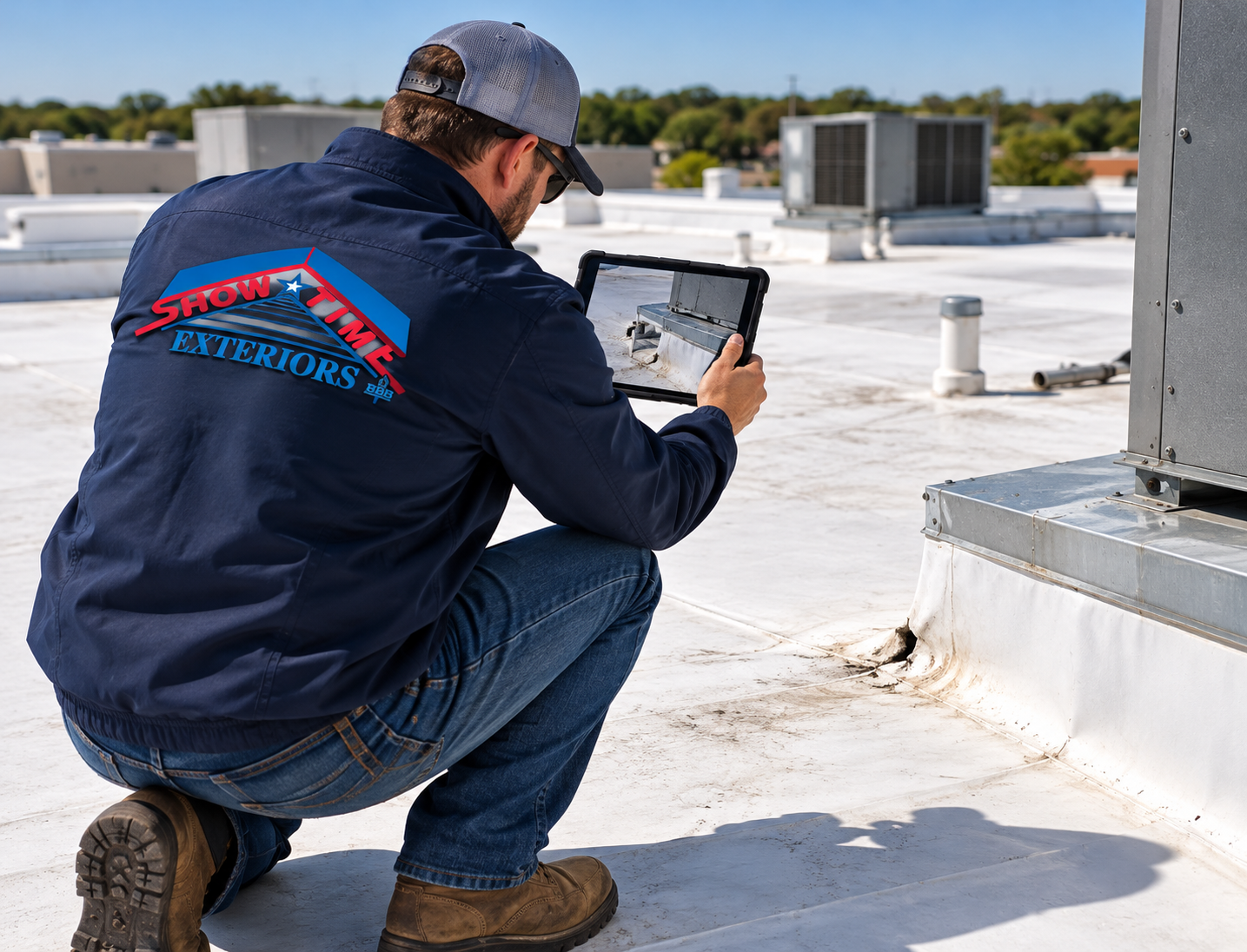
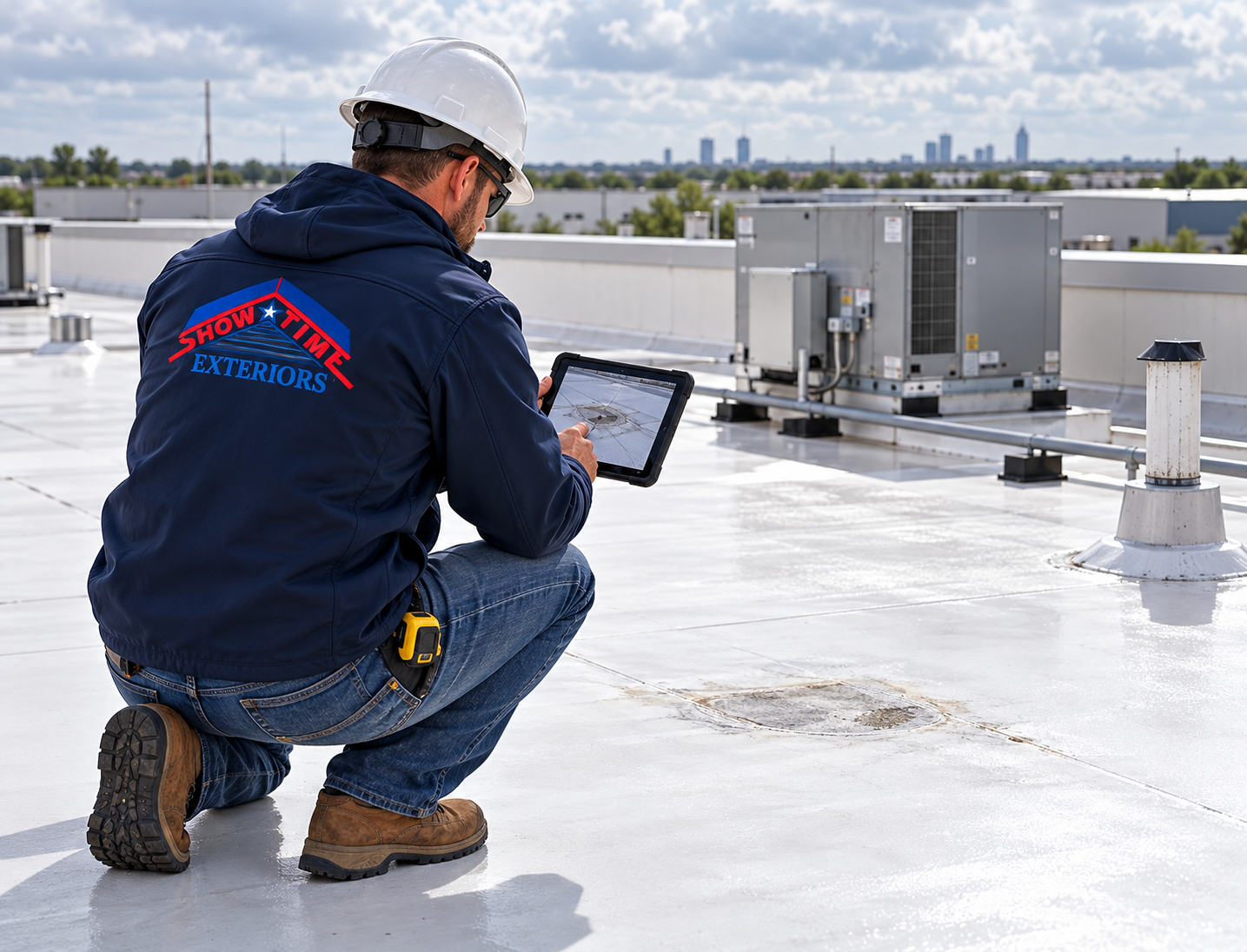
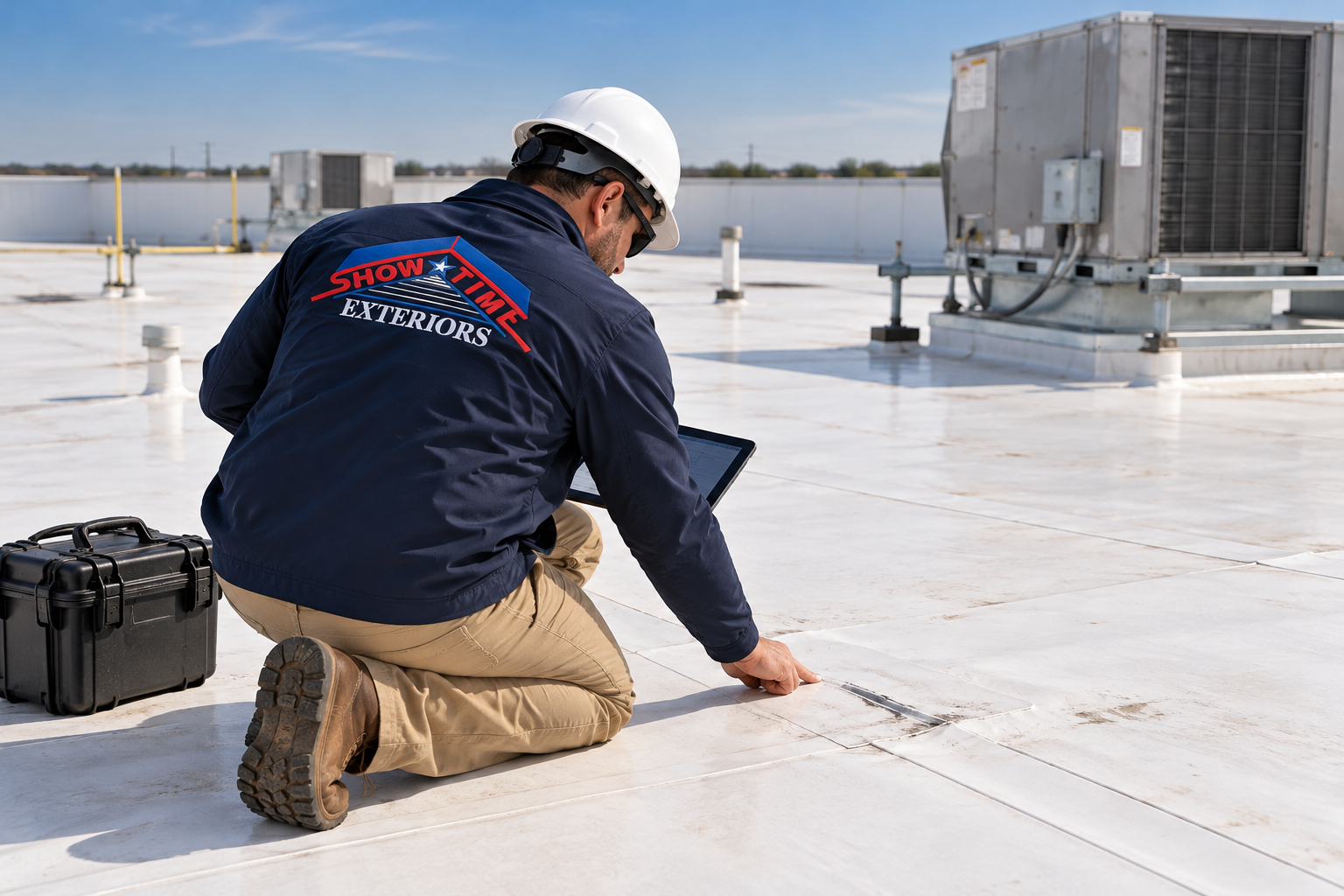
Before installing a temporary covering, a qualified commercial roofing contractor should inspect the roof as fully as conditions allow. The purpose is to determine what was damaged, whether the roof can be accessed safely, and what temporary method will reduce exposure without worsening the problem.
The inspection may include:
- Roof membranes, metal panels, coatings, modified bitumen, built-up roofing, shingles, or tiles
- Roof deck conditions visible from accessible areas
- Seams, laps, welds, fasteners, plates, and attachment points
- Coping, fascia, parapets, perimeter metal, and wall transitions
- HVAC curbs, vents, pipes, conduit, ducts, and other penetrations
- Skylights, hatches, smoke vents, and expansion joints
- Drains, scuppers, gutters, downspouts, and overflow pathways
- Punctures and impact damage
- Lifted, shifted, torn, or missing materials
- Ponding water and drainage patterns
- Interior leak locations
- Suspected wet insulation or deck
The contractor should answer:
- Is the roof safe enough for temporary work?
- Is the deck or structure compromised?
- What area must be protected?
- Is a tarp actually the best temporary solution?
- How can the covering be secured without damaging the roof or creating a wind hazard?
- What permanent work will be required?
When Emergency Roof Tarping May Be Appropriate
A temporary tarp or reinforced covering may be useful when:
- Storm damage created a defined roof opening
- Missing materials expose the deck or interior
- A fallen tree or debris has been removed and left an open area
- Permanent materials or crews are not immediately available
- The site is safe enough for professional installation
- The covering can be secured to resist expected weather
- The selected method is compatible with the roof and intended repair plan
Tarping may also help protect interior operations while engineering, insurance, material procurement, or construction planning proceeds.
When a Simple Tarp May Not Be Appropriate
A conventional tarp may be inadequate or unsafe when:
- The roof deck or framing is unstable
- A large portion of the roof is missing
- The building has active structural movement
- High winds, lightning, or severe weather continue
- Electrical lines or energized equipment are involved
- A tree or heavy debris remains on the roof
- The roof surface cannot safely accept the proposed attachment
- The roof material could be damaged by fastening
- The damaged area includes complex equipment or penetrations
- Water is trapped beneath the existing system
- The covering cannot be securely detailed at edges
- The roof geometry would direct water underneath the tarp
In these cases, the property may need structural stabilization, debris removal, selective demolition, temporary membrane installation, framed protection, or another engineered solution before weatherproofing can occur.
Step 5: Choose the Right Temporary Protection Method
There is no universal commercial roof-tarp installation. The contractor should select a method based on:
- Roof type and slope
- Damaged-area size
- Deck and structural condition
- Wind exposure
- Perimeter configuration
- Drainage pathways
- Rooftop equipment and penetrations
- Remaining roofing material
- Anticipated duration
- Permanent repair plan
- Manufacturer or warranty considerations
Possible temporary approaches may include:
- Reinforced sheeting secured over a defined opening
- Compatible temporary membrane patches
- Professionally detailed temporary roof sections
- Framed and weather-resistant covers over openings
- Temporary flashing around damaged penetrations
- Interior protection combined with rooftop stabilization
The objective is to shed water away from the opening, prevent wind from getting beneath the covering, and avoid creating new damage. Edges, transitions, penetrations, and drainage are critical.
Why Commercial Roof Tarping Is Different From Residential Tarping
Commercial roofs are often low-slope and drain through internal drains or scuppers. A tarp placed incorrectly can redirect water toward an opening, block drainage, create large pockets of ponding water, or overload a damaged section.
Commercial roofs may also use membranes or coatings that should not be punctured randomly. Fasteners installed in the wrong location can create additional leaks, damage insulation or deck, and interfere with permanent repairs.
Other commercial complications include:
- Large uninterrupted wind-exposed surfaces
- Parapet walls and internal drainage
- Multiple roof elevations
- Mechanical and electrical equipment
- Tenant operations below
- Fire, safety, and access requirements
- Sensitive inventory or production equipment
- Manufacturer-warranty conditions
- Greater potential for business interruption
For these reasons, the covering should be treated as part of a professional emergency-roofing scope.
Step 6: Protect the Interior While Tarping Is Arranged
Roof protection may not happen immediately if weather, structural, utility, or access hazards remain. In the meantime, address interior conditions safely.
Possible measures include:
- Restricting access beneath damaged areas
- Moving portable inventory and equipment
- Using containers to collect drips
- Installing wet-floor signs and barriers
- Protecting furnishings and materials with interior coverings
- Coordinating electrical shutdown or evaluation
- Removing water through qualified restoration services
- Beginning controlled drying when safe
Do not touch wet electrical equipment or stand in water while operating electrical systems. Do not puncture sagging ceilings unless qualified professionals determine it can be done safely.
Document interior conditions before moving or discarding damaged property. Keep receipts and records for emergency water extraction, security, temporary space, equipment movement, and other mitigation expenses.
Step 7: Address Water Inside the Roof Assembly
An emergency tarp may stop new rain from entering, but it does not remove water already inside the roof or building. Moisture may remain in insulation, cover boards, decking, walls, ceiling systems, and mechanical pathways.
Possible signs of concealed moisture include:
- Recurring stains
- Musty odors
- Soft or swollen ceiling materials
- Rust or corrosion
- Damp insulation
- Peeling paint or wall coverings
- Increased indoor humidity
- Water appearing away from the original opening
Depending on the exposure and roof system, the contractor may recommend moisture evaluation or selective investigation. Interior restoration professionals may be needed for extraction, drying, and material assessment.
Covering wet materials without addressing them can lead to:
- Reduced insulation performance
- Corrosion of deck and fasteners
- Deterioration of wood and gypsum products
- Mold or indoor environmental concerns
- Recurring leaks and odors
- A larger eventual repair scope
The permanent plan should define which wet materials can be dried and which must be removed.
Step 8: Inspect and Monitor the Tarp
Temporary protection requires follow-up. Wind, rain, ultraviolet exposure, temperature changes, debris, and ponding water can loosen or damage a covering.
Ask the contractor:
- How often should the covering be checked?
- Who is authorized to inspect it?
- What conditions require an immediate service call?
- How long is the installation expected to remain reliable?
- Can it withstand the next forecast weather event?
- Could roof access disturb the temporary protection?
- Is interior monitoring still necessary?
From safe interior and ground-level locations, watch for:
- Renewed dripping or stains
- Flapping or lifted material
- Loose edges or displaced securing components
- Water collecting on the covering
- Drainage changes
- Falling debris
- New ceiling movement
Do not send unqualified personnel onto the roof to adjust the tarp. Contact the installer if the covering shifts or the leak returns.
Step 9: Move From Temporary Protection to Permanent Repair
The tarp should be followed by a defined permanent-repair plan. Waiting too long increases the chance that the temporary covering will fail or that hidden moisture will continue damaging the building.
The permanent scope may involve:
- Removing temporary materials
- Reinspecting the exposed area
- Removing damaged and wet roofing materials
- Replacing insulation or cover board
- Repairing or replacing roof deck
- Rebuilding framing or structural components
- Restoring flashing, seams, and penetrations
- Replacing damaged panels or membrane sections
- Repairing drainage components
- Completing a partial or full roof replacement
The roof should be inspected again after the tarp is removed because some conditions may have been concealed during emergency work.
Repair, Restoration, or Replacement?
The presence of a tarp does not determine the final roofing solution. The correct scope depends on damage extent, roof type, moisture, deck condition, attachment, age, repair history, code requirements, and remaining serviceability.
Targeted repair
A defined puncture, open seam, or damaged flashing area may be repairable when surrounding materials remain serviceable.
Partial replacement
A storm-created opening or localized wet section may require removal and reconstruction of part of the roof assembly.
Roof restoration
Some systems may qualify for restoration after damaged and wet materials are addressed, provided the remaining roof is an appropriate substrate.
Full replacement
Replacement may be justified when damage is widespread, attachment is compromised, moisture has spread extensively, the deck is affected, or the existing roof cannot be repaired reliably.
Structural reconstruction
If framing, deck, walls, parapets, or equipment supports are damaged, structural repairs may need to precede the permanent roof installation.
Ask for a written scope that separates emergency tarping, permanent roofing work, structural work, interior mitigation, pre-existing maintenance, and optional improvements.
Step 10: Organize Insurance Documentation
Commercial property policies vary. Review the policy and contact your licensed insurance agent, broker, or carrier for guidance about notice requirements, deductibles, exclusions, emergency mitigation, documentation, and claim procedures.
Do not assume that tarping is automatically covered or that the roofing contractor can interpret the policy. The contractor documents roof conditions, mitigation, and proposed roofing work. Coverage decisions belong to the insurer, and policy or legal questions should go to qualified insurance or legal professionals.
Maintain a file containing:
- Policy and claim contact information
- Storm date and approximate time
- Weather reports and alerts
- Photos and videos before tarping
- Roof inspection findings
- Temporary-protection scope and invoice
- Photos after installation
- Interior water-damage documentation
- Water-mitigation and drying records
- Permanent repair or replacement estimates
- Prior roof inspections and maintenance history
- Damaged inventory and equipment lists
- Business-interruption records when relevant
- All receipts and written communications
Document emergency work before and after installation. If immediate conditions prevent complete documentation, note why and record the property as soon as it becomes safe.
What Property Owners Should Not Do
Do not climb onto the roof with a tarp
Wind, wet surfaces, hidden openings, unstable decking, and unprotected edges can turn emergency tarping into a fatal fall hazard.
Do not install a tarp during active severe weather
Lightning, wind, hail, and heavy rain make rooftop work unsafe and can prevent secure installation.
Do not puncture the roof randomly
Unplanned fasteners can damage membranes, insulation, decking, electrical systems, and future repair areas.
Do not block drains or scuppers
A covering that interferes with drainage can create ponding water and add weight to an already damaged roof.
Do not cover the roof before documenting damage
Photograph visible conditions first whenever safe. The tarp may conceal evidence needed for repair planning and insurance communication.
Do not cover unstable structure
Tarping does not make damaged framing, decking, walls, or parapets safe. Structural assessment may need to come first.
Do not assume every roof can be tarped the same way
Metal, single-ply, coated, built-up, modified bitumen, tile, slate, and other systems require different approaches.
Do not leave the tarp indefinitely
Temporary coverings deteriorate and can fail. Establish a monitoring and permanent-repair schedule.
Do not ignore moisture under the covering
A dry interior after tarping does not prove that insulation and deck are dry.
Do not treat the tarp as a completed claim or repair
Inspection, moisture evaluation, permanent work, and completion documentation still need to follow.
Special Considerations by Commercial Roof Type
TPO, PVC, and EPDM roofs
Random fasteners or incompatible adhesives can create additional punctures or affect repair compatibility. Temporary work should account for seams, attachment, cover board, and underlying insulation.
Metal roofing
A tarp must not conceal displaced panels, open seams, damaged clips, or structural movement. Wind can readily get beneath poorly secured coverings on large metal roofs.
Modified bitumen and built-up roofing
The temporary method should account for surfacing, adhesion, heat-related repair methods, drainage, and moisture within the assembly.
Coated roof systems
Fastening or adhering material directly to a coating may damage it or create compatibility issues. The substrate and permanent restoration plan should guide temporary work.
Steep-slope commercial sections
Steep roofs create significant fall risks. Shingles may sometimes support secured temporary coverings, but tile, slate, and specialty materials can be damaged by standard fastening methods.
Large low-slope roofs
Wind exposure, drainage, internal drains, parapets, rooftop equipment, and large unsupported sheets make professional design and installation especially important.
Questions to Ask the Emergency Roofing Contractor
- Is the roof safe enough for temporary work?
- Does the deck or structure need evaluation first?
- What damage will the tarp cover?
- Why is this temporary method appropriate for the roof system?
- How will the covering be secured?
- Will the installation create new penetrations?
- Could it affect an existing warranty?
- How will water drain from and around the covered area?
- What wind and weather limitations apply?
- How often should the covering be inspected?
- What signs indicate that it has failed or shifted?
- Is moisture likely to remain in the roof assembly?
- What permanent work is recommended?
- When should permanent repairs begin?
- What photographs and written documentation will be provided?
The contractor should explain the temporary system and its limitations clearly.
How Long Can an Emergency Roof Tarp Stay in Place?
There is no universal safe duration. Performance depends on the material, installation, roof configuration, sun exposure, wind, rainfall, drainage, debris, and underlying damage.
Treat the tarp as short-term protection and move toward permanent repair as quickly as practical. The contractor should provide an anticipated service period and inspection schedule, but changing weather or site conditions may require earlier action.
If the covering flaps, lifts, tears, ponds water, or allows new leakage, contact the installer immediately. Do not attempt rooftop adjustments yourself.
Prepare for Future Texas Storm Damage
After permanent repairs, update the property’s storm-response plan.
Maintain:
- Current roof plans and warranty documents
- Routine inspection and maintenance records
- Pre-storm photographs
- Emergency roofing and restoration contacts
- Structural, electrical, and mechanical contacts
- Approved roof-access procedures
- Tenant and employee response instructions
- Interior water-containment supplies
- Locations of drains, penetrations, and utility shutoffs
- Secure digital backups of essential property records
Routine commercial roof inspections can identify loose flashing, aging seams, damaged sealants, drainage restrictions, and minor punctures before severe weather creates a major opening.
Choosing a Texas Emergency Commercial Roofing Contractor
Look for a contractor that:
- Has experience with commercial roof systems
- Responds to emergency storm damage
- Understands North Texas and DFW weather exposure
- Uses appropriate access and fall-protection procedures
- Documents conditions before covering them
- Selects temporary methods based on the roof system
- Explains limitations and monitoring requirements
- Separates emergency mitigation from permanent repairs
- Coordinates with structural, restoration, electrical, and mechanical professionals
- Provides a defined scope and communication process
- Uses compatible materials and system-specific methods
The right contractor should make the situation clearer—not pressure ownership into an unsupported decision.
Frequently Asked Questions About Texas Emergency Roof Tarping
Should I tarp my commercial roof myself?
No. Storm-damaged commercial roofs can contain hidden openings, weak decking, loose materials, electrical hazards, and slippery surfaces. Large tarps also create serious wind and fall hazards.
Is a roof tarp a permanent repair?
No. It is temporary protection intended to reduce additional exposure until permanent repairs can be completed.
Does every roof opening need a tarp?
Not necessarily. A contractor may recommend a compatible temporary membrane, framed cover, localized emergency repair, or another method based on the roof and damage.
Can a tarp be installed while it is raining?
Active rain, lightning, wind, and wet surfaces may make rooftop work unsafe. The contractor must evaluate conditions and should not proceed when hazards cannot be controlled.
Can a tarp damage a commercial roof?
Yes, if it is installed with incompatible adhesives, uncontrolled fasteners, poor drainage, or inadequate edge details. Movement in the wind can also abrade roof surfaces.
Will tarping stop all leaks?
It may reduce water entering through the covered area, but other openings, traveling water, drainage problems, or moisture already inside the assembly may continue causing symptoms.
Should I document damage before tarping?
Yes, whenever it is safe. Photograph the roof and interior before temporary work, during the work when possible, and after installation.
How often should the tarp be checked?
Follow the installer’s recommendations and request service after significant wind or rain if conditions suggest movement or renewed leakage. Inspections should be performed only by qualified personnel.
Does an emergency tarp mean the roof must be replaced?
No. The final scope depends on damage extent, moisture, roof type, deck condition, attachment, age, and repairability.
Can the business remain open after tarping?
That depends on structural safety, electrical conditions, fire-protection systems, water damage, safe exits, and whether affected areas can be isolated. A tarp alone does not confirm safe occupancy.
Schedule Emergency Commercial Roof Protection in Texas
When a storm opens a commercial roof, temporary protection can help reduce additional damage—but only when it is installed safely, documented properly, and followed by permanent repairs.
Showtime Exteriors Commercial Roofing helps property owners, facility managers, property managers, and real estate professionals across North Texas and DFW respond to storm-damaged roofs. Our team can inspect visible damage, identify urgent vulnerabilities, recommend appropriate temporary protection, and explain the permanent repair or replacement options that fit the property.
Call Showtime Exteriors at 817-400-7663 or visit ShowtimeExteriors.com to request emergency commercial roof assistance and book a free roof inspection or roof-grade assessment.
Do not risk an unsafe DIY tarp or wait for the next storm to enlarge the damage. Get professional temporary protection and a clear permanent-repair plan.