



Commercial Roof Coatings Houston
A Complete Guide to Coating Restoration for Houston Commercial Buildings
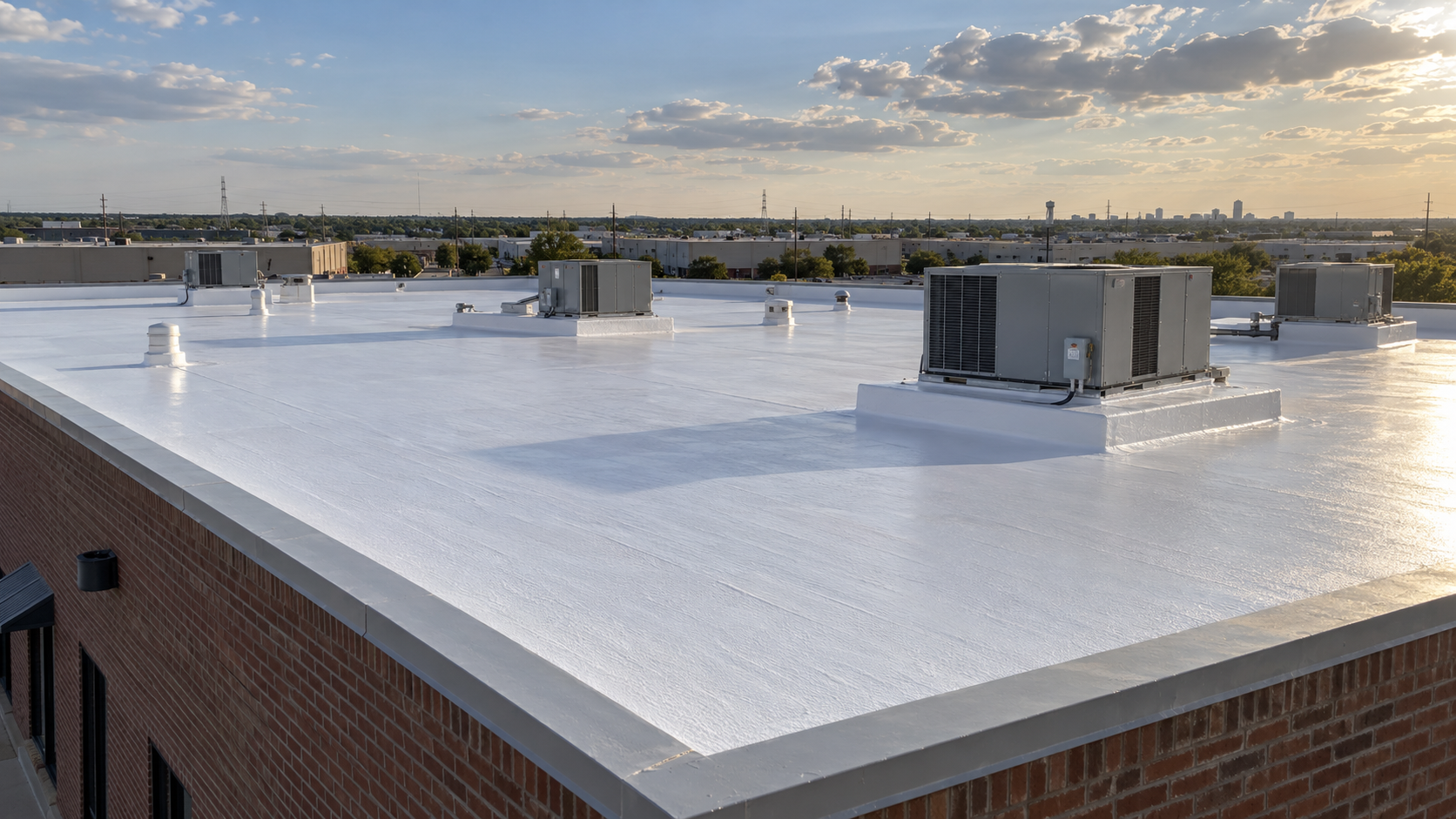
Commercial roof coatings can be a practical restoration option for some Houston buildings, but they are not a universal repair and they are not a substitute for replacing a failed roof. The right decision begins with evidence: the existing assembly, moisture condition, adhesion, drainage, surface preparation, details, structural condition, and the coating manufacturer's requirements. A coating performs as part of a designed system, not as a bucket of material rolled over unresolved problems.
Houston exposes roofs to intense ultraviolet radiation, high surface temperatures, humidity, heavy rain, tropical weather, hail, wind, industrial contaminants, and rapid weather changes. Those conditions make product compatibility and application controls essential. A reflective finish may reduce roof surface temperature, but actual energy results vary with insulation, air leakage, HVAC efficiency, building use, roof color, cleanliness, and other factors.
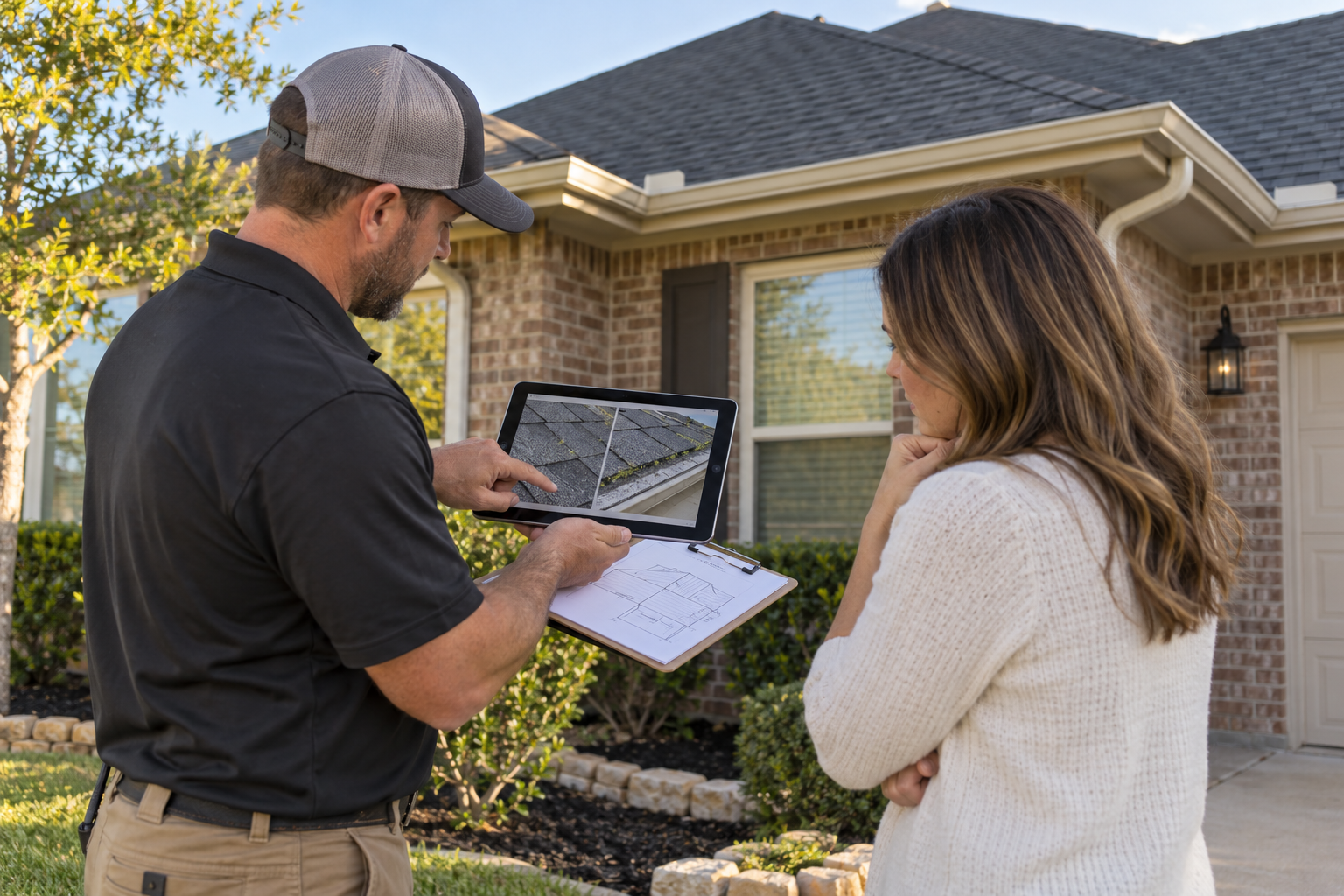
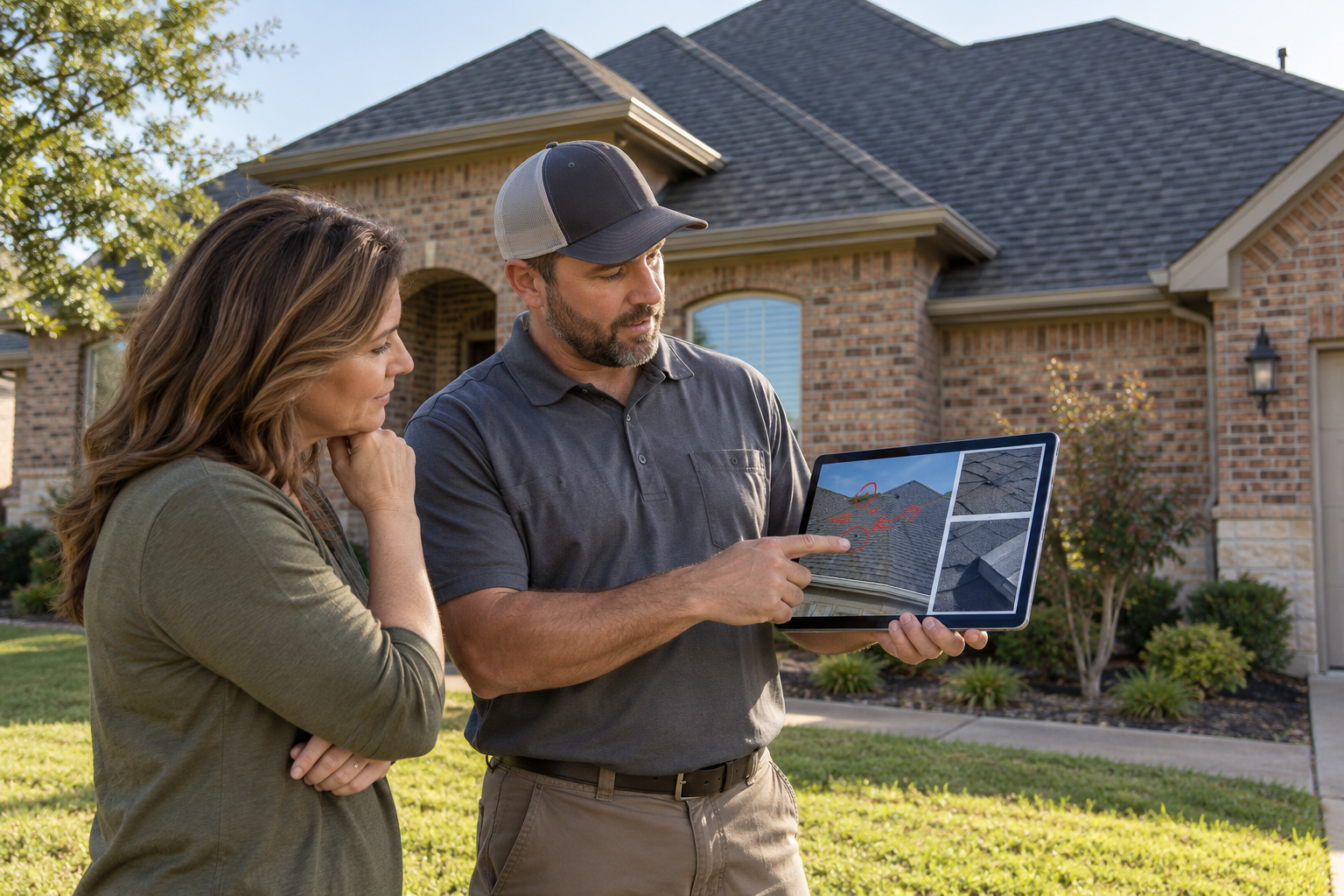
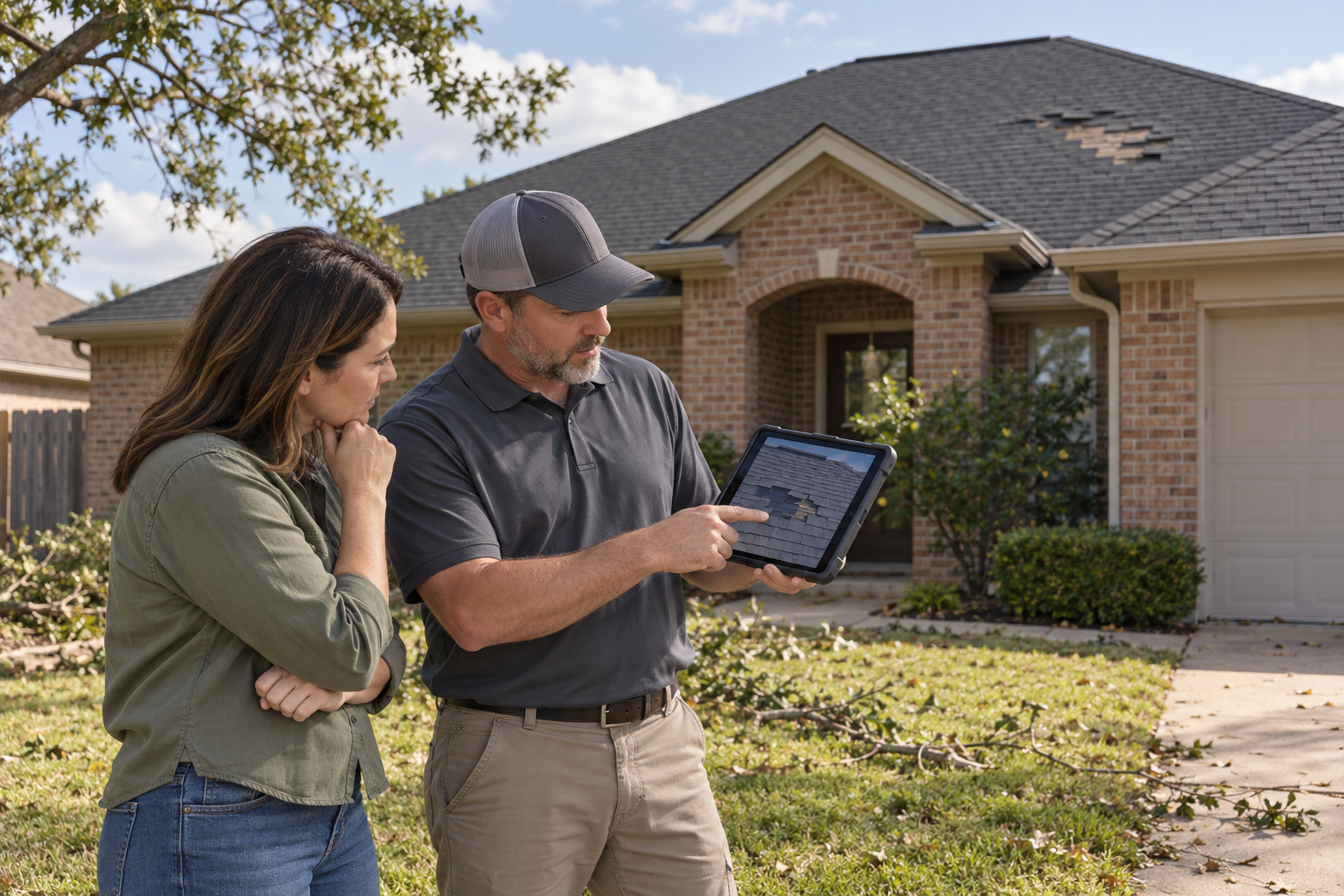
Showtime Exteriors evaluates commercial roofs across Houston and Texas for repair, coating restoration, recover, retrofit, or replacement. The company works with metal, TPO, PVC, EPDM, modified bitumen, asphaltic, and other commercial systems. It also helps owners evaluate aging gravel-surfaced built-up roofs that can conceal moisture, deteriorated membrane, old patches, and drainage defects. Loose gravel should never be treated as a sound coating substrate without a manufacturer-approved evaluation and preparation plan.
Call Showtime Exteriors at 817-400-ROOF (7663) to schedule a Houston commercial roof assessment.
What Is a Commercial Roof Coating
A commercial roof coating is a fluid-applied material that cures into a continuous protective surface. Common chemistries include silicone, acrylic, and urethane. Some restoration assemblies use primers, mastics, reinforcing fabric, base coats, and one or more finish coats. The final specification must identify the approved substrate, preparation, detail treatment, coverage rate, dry-film thickness, cure conditions, and quality-control checks.
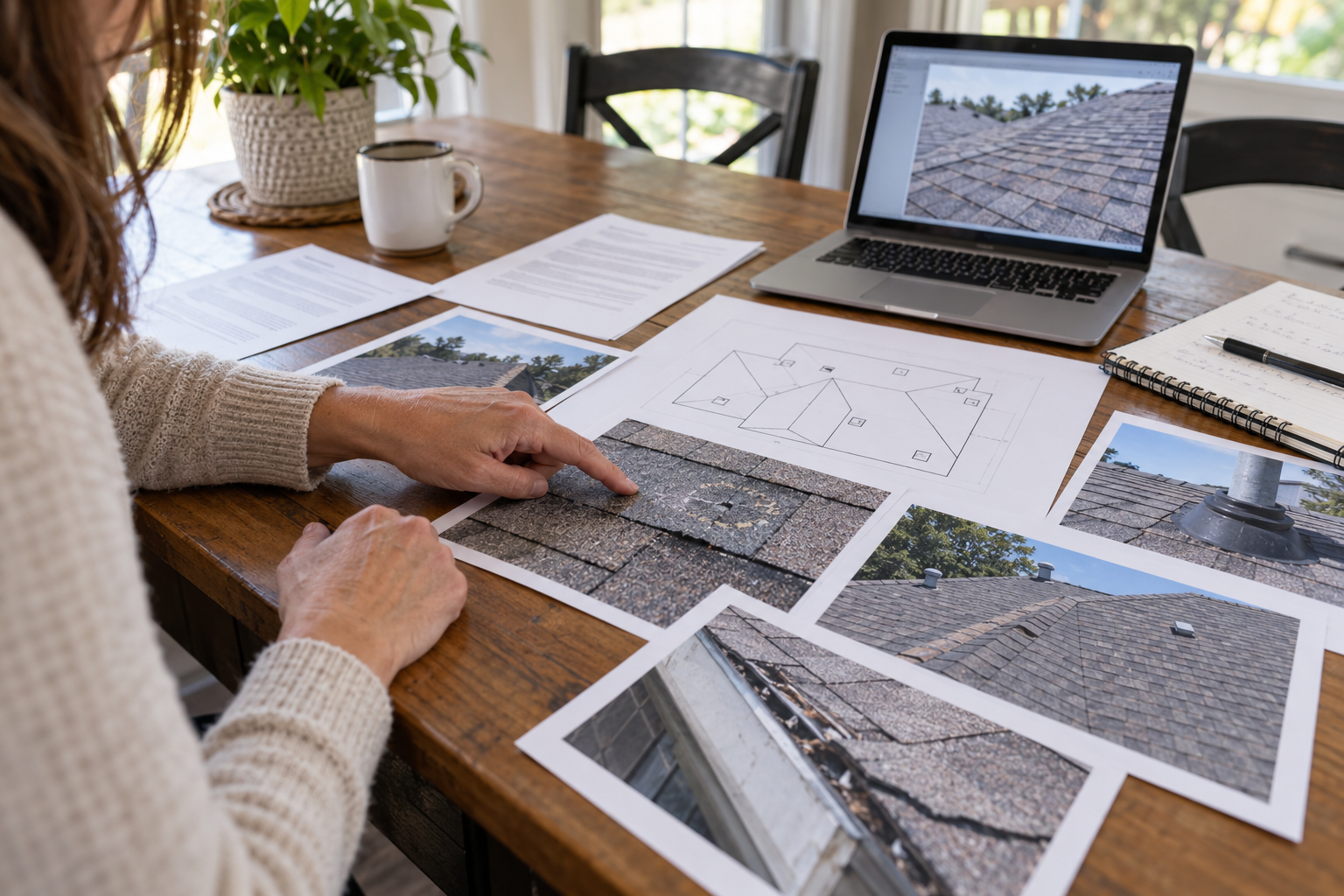
For a Houston owner, what is a commercial roof coating must be considered within the full assembly. Roof field, edges, drains, curbs, penetrations, insulation, deck, attachment, and prior repairs interact. Water can travel before appearing indoors, so mapped observations and photographs are more useful than a general description of the leak.
Coating Restoration Versus Roof Replacement
Restoration retains an eligible existing roof and repairs it before applying a compatible liquid-applied system. Replacement removes some or all of the existing assembly and rebuilds the roof. Restoration may reduce tear-off and disruption when the deck is sound and wet materials are limited and removable. Replacement is generally the safer path when moisture, structural deterioration, attachment failure, incompatible materials, or widespread defects cannot be isolated.
A responsible scope separates observed conditions from assumptions. It identifies the preparation, repairs, tests, materials, coverage, detail work, access, safety, temporary protection, and acceptance steps included in the price. It also explains how concealed deterioration will be documented and priced if conditions change after work begins.
Which Houston Roofs May Be Coating Candidates
Potential candidates include certain weathered metal, smooth or granulated asphaltic, aged single-ply, spray polyurethane foam, concrete, and previously coated roofs. Eligibility is product-specific. The same chemistry can perform differently over different surfaces, and a roof that looks acceptable from a distance may fail moisture or adhesion testing. Manufacturer details, field tests, repair scope, and local conditions should control the decision.
Manufacturer requirements and project-specific field tests should control product selection. A coating chemistry, primer, warranty path, thickness, or application rate cannot be chosen reliably from roof age or photographs alone. Compatibility, moisture, weather, operations, and future maintenance all belong in the decision.
Silicone Roof Coatings in Houston
Silicone is frequently considered where ultraviolet exposure, humidity, or recurring ponding concerns influence the specification. It can form a flexible, continuous surface, but the substrate must still be clean, dry, repaired, and compatible. Silicone may attract dirt and can be slippery when wet. Future recoating and repair materials must be compatible with the installed silicone, so owners should preserve product records and application maps.
Owners should compare the reason for the recommendation, not only the finish color or unit price. A useful proposal explains why repair, restoration, recover, retrofit, or replacement is appropriate; which alternatives were rejected; and what evidence supports that conclusion. This creates a defensible capital plan instead of a cosmetic short-term response.
Acrylic Roof Coatings in Houston
Acrylic coatings are water-based elastomeric products often selected for reflectivity, ultraviolet resistance, and ease of application. They generally require suitable drying weather and careful attention to rain, dew, humidity, temperature, and ponding. Acrylic is not automatically the right choice for every low-slope roof. The contractor must follow the current product data, approved substrate requirements, primer instructions, and minimum application rates.
Documentation should continue through installation. Daily weather records, product batches, material quantities, wet-film readings, photographs, repair maps, punch-list items, and final inspection notes help establish what was installed. Those records support maintenance planning and future insurer conversations without promising a particular underwriting outcome.
Urethane and Polyurethane Coatings
Urethane coatings can provide abrasion resistance and may be used where service traffic or mechanical exposure matters. Aromatic and aliphatic formulations serve different roles, and some systems combine them. Odor, solvents, cure conditions, substrate compatibility, and occupied-building restrictions require planning. A proposal should identify the exact product sequence instead of using the word urethane as a complete specification.
For a Houston owner, urethane and polyurethane coatings must be considered within the full assembly. Roof field, edges, drains, curbs, penetrations, insulation, deck, attachment, and prior repairs interact. Water can travel before appearing indoors, so mapped observations and photographs are more useful than a general description of the leak.
Fabric Reinforced Coating Systems
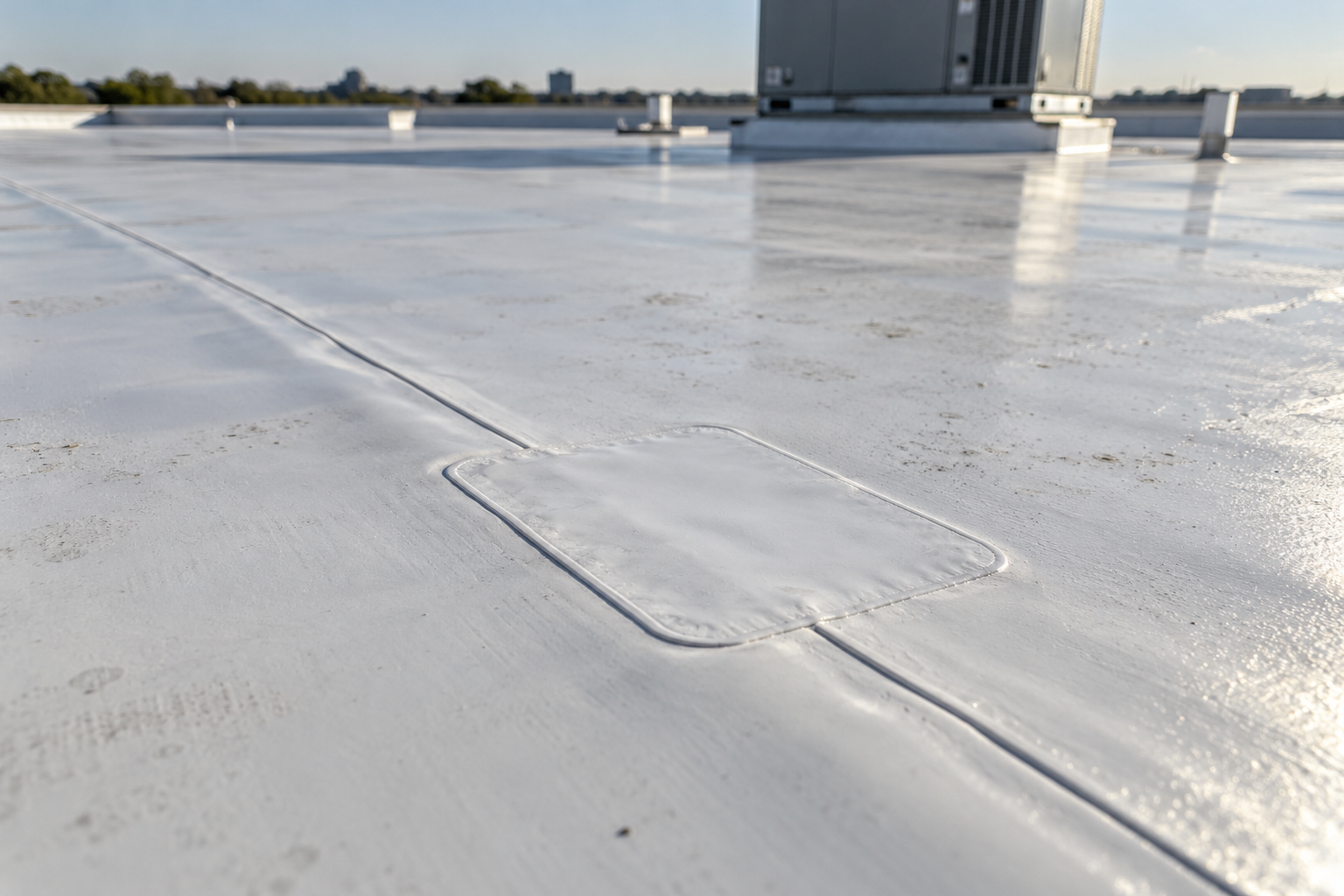
Fabric-reinforced systems embed polyester or another approved reinforcement into wet base material at seams, transitions, penetrations, or across broader roof areas. Reinforcement can help bridge details and distribute movement, but wrinkles, voids, insufficient saturation, poor overlap, and thin coverage can create weaknesses. The scope should state where fabric is required, its width, overlap, embedment method, and finish-coat coverage.
A responsible scope separates observed conditions from assumptions. It identifies the preparation, repairs, tests, materials, coverage, detail work, access, safety, temporary protection, and acceptance steps included in the price. It also explains how concealed deterioration will be documented and priced if conditions change after work begins.
Houston Heat and Reflective Roof Coatings
White and light-colored coatings can have high solar reflectance and thermal emittance. The Department of Energy advises evaluating reflectance, endurance of reflectance, and emittance when selecting a cool-roof product. Surface temperature and building energy savings are not the same measurement. Insulation, roof area, HVAC, operating schedule, shading, climate, dirt pickup, and maintenance all affect the result.
Manufacturer requirements and project-specific field tests should control product selection. A coating chemistry, primer, warranty path, thickness, or application rate cannot be chosen reliably from roof age or photographs alone. Compatibility, moisture, weather, operations, and future maintenance all belong in the decision.
Heavy Rain Ponding Water and Drainage
A coating should not be used to disguise poor drainage. Ponding can signal blocked drains, inadequate slope, compressed insulation, deck deflection, undersized outlets, or changed rooftop conditions. The contractor should map ponding areas, inspect drains and scuppers, and determine whether crickets, tapered insulation, drainage modifications, or structural review are appropriate. Product claims regarding ponding must be verified in current technical literature.
Owners should compare the reason for the recommendation, not only the finish color or unit price. A useful proposal explains why repair, restoration, recover, retrofit, or replacement is appropriate; which alternatives were rejected; and what evidence supports that conclusion. This creates a defensible capital plan instead of a cosmetic short-term response.
Hail Wind and Storm Exposure
Coatings do not make a roof hail-proof or wind-proof. Hail performance depends on the complete assembly, including deck, insulation, cover board, existing membrane, coating thickness, reinforcement, age, and impact conditions. Wind performance depends on attachment, edges, corners, perimeters, penetrations, and tested or engineered details. After a storm, document conditions before assuming that a surface mark is functional damage or that a leak requires total replacement.
Documentation should continue through installation. Daily weather records, product batches, material quantities, wet-film readings, photographs, repair maps, punch-list items, and final inspection notes help establish what was installed. Those records support maintenance planning and future insurer conversations without promising a particular underwriting outcome.
Why Surface Preparation Determines Performance
Preparation commonly includes removing debris and contaminants, cleaning, rinsing, drying, repairing defects, treating rust, replacing wet materials, securing loose components, and correcting details. Some surfaces require primer or bleed-blocking material. A coating placed over chalk, oil, biological growth, dust, loose granules, uncured repair material, trapped moisture, or incompatible sealant may lose adhesion even when the coating itself is high quality.
For a Houston owner, why surface preparation determines performance must be considered within the full assembly. Roof field, edges, drains, curbs, penetrations, insulation, deck, attachment, and prior repairs interact. Water can travel before appearing indoors, so mapped observations and photographs are more useful than a general description of the leak.
Adhesion Tests Moisture Surveys and Core Samples
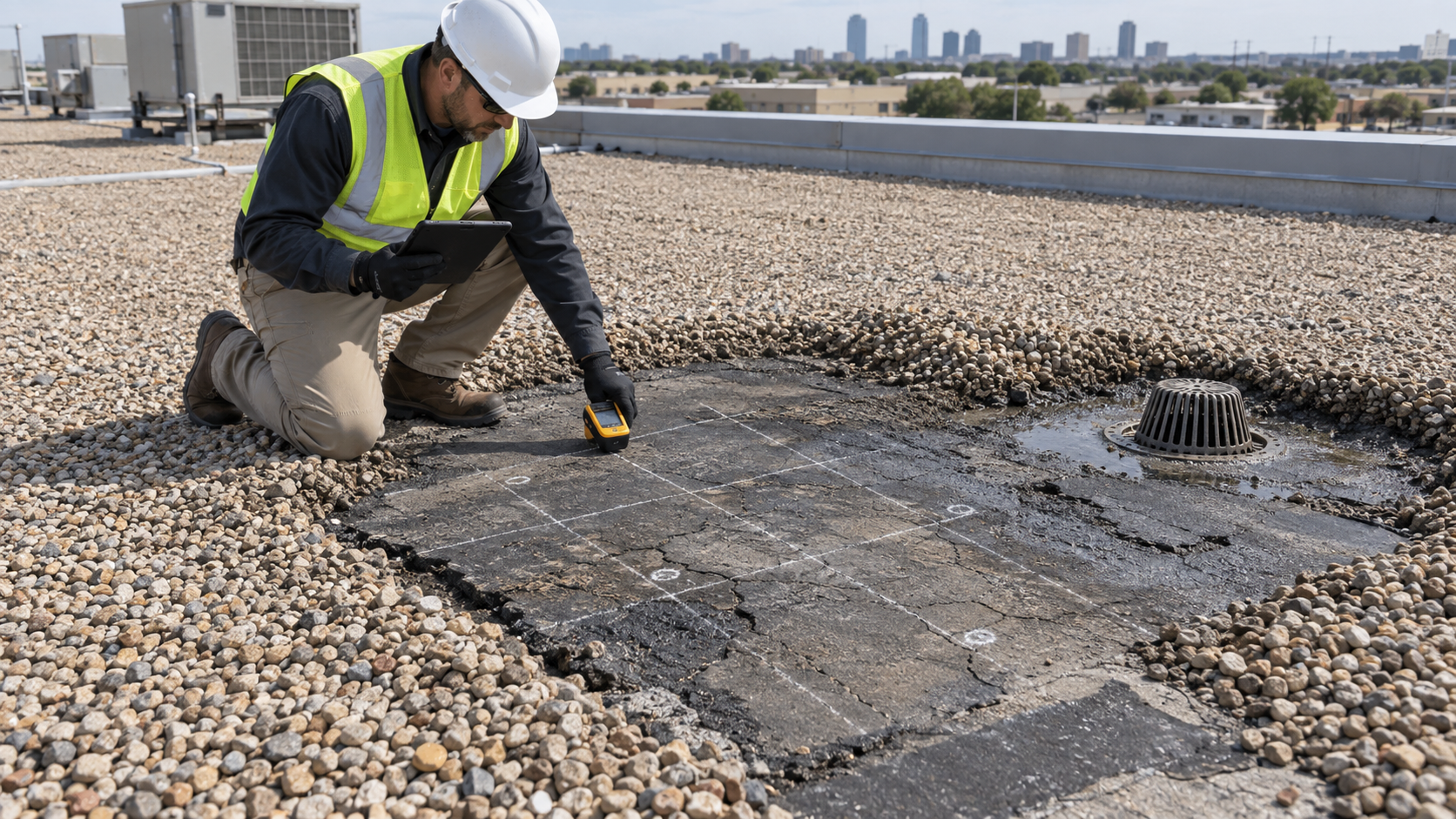
Adhesion tests help confirm whether the proposed primer and coating bond to the prepared substrate. Moisture surveys may use infrared, electrical capacitance, nuclear methods, or other tools, followed by verification where appropriate. Core samples can identify layers, thickness, saturation, and deck conditions. No single method answers every question. Findings should be mapped and incorporated into the repair and replacement quantities.
A responsible scope separates observed conditions from assumptions. It identifies the preparation, repairs, tests, materials, coverage, detail work, access, safety, temporary protection, and acceptance steps included in the price. It also explains how concealed deterioration will be documented and priced if conditions change after work begins.
Repairing Seams Fasteners and Penetrations
Field coating is only one stage of restoration. Metal fasteners may require tightening, replacement, or encapsulation; seams may need mastic and reinforcement; rust requires preparation; curbs and pipes require compatible flashing details. On membranes, open seams, punctures, blisters, splits, flashings, drains, and edge conditions must be repaired. Coating over active defects merely changes their appearance.
Manufacturer requirements and project-specific field tests should control product selection. A coating chemistry, primer, warranty path, thickness, or application rate cannot be chosen reliably from roof age or photographs alone. Compatibility, moisture, weather, operations, and future maintenance all belong in the decision.
Coating Existing Metal Roofs
Metal restoration can address weathered finishes, fasteners, seams, laps, flashings, and selected corrosion when the panels and structure remain serviceable. The evaluation should locate section loss, loose panels, movement, incompatible prior repairs, and condensation. Repairs must precede coating. Wet-film measurements, coverage records, and detail photographs help confirm that the specified system was installed rather than merely making the roof look white.
Owners should compare the reason for the recommendation, not only the finish color or unit price. A useful proposal explains why repair, restoration, recover, retrofit, or replacement is appropriate; which alternatives were rejected; and what evidence supports that conclusion. This creates a defensible capital plan instead of a cosmetic short-term response.
Coating TPO PVC and EPDM Roofs
Aged single-ply membranes may be eligible for certain coating systems, but cleaning, membrane formulation, weathering, plasticizers, primers, seam condition, attachment, and manufacturer acceptance matter. TPO, PVC, and EPDM are not interchangeable substrates. The contractor should identify the membrane and perform manufacturer-required adhesion tests. Widespread shrinkage, attachment loss, saturated insulation, or failed flashings may favor recover or replacement.
Documentation should continue through installation. Daily weather records, product batches, material quantities, wet-film readings, photographs, repair maps, punch-list items, and final inspection notes help establish what was installed. Those records support maintenance planning and future insurer conversations without promising a particular underwriting outcome.
Coating Modified Bitumen and Smooth Asphaltic Roofs
Smooth and granulated modified bitumen or other asphaltic surfaces may accept approved acrylic or silicone restoration systems after qualification. Asphalt can migrate into some coatings and discolor them, so primer or bleed-blocking requirements matter. Granules must be sound, embedded, and properly prepared. Open laps, splits, ridges, blisters, wet insulation, deteriorated flashings, and drainage problems require correction first.
For a Houston owner, coating modified bitumen and smooth asphaltic roofs must be considered within the full assembly. Roof field, edges, drains, curbs, penetrations, insulation, deck, attachment, and prior repairs interact. Water can travel before appearing indoors, so mapped observations and photographs are more useful than a general description of the leak.
Why Aging Gravel Surfaced BUR Requires Extra Caution
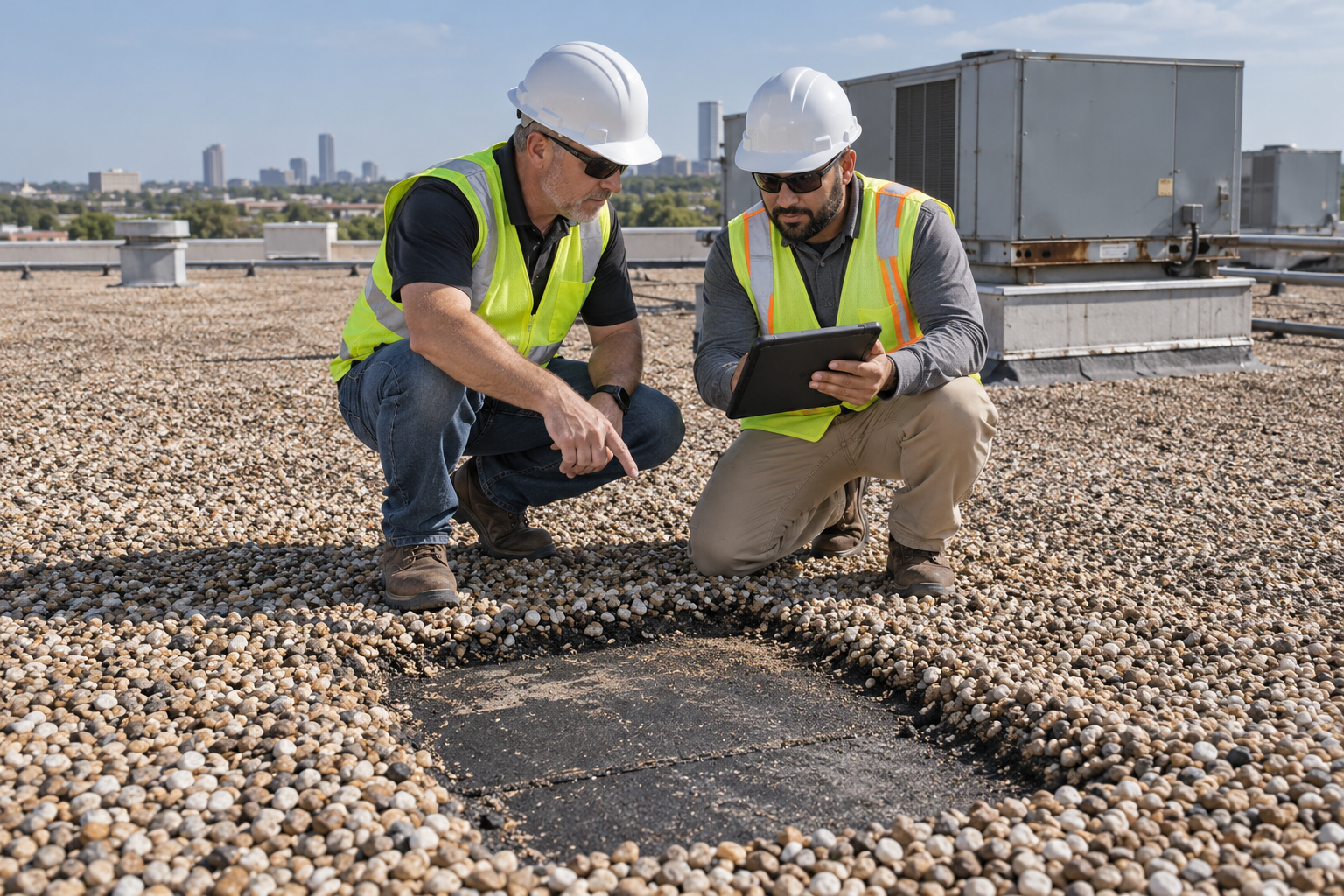
Aging gravel-surfaced built-up roofing is central to many Houston insurance and maintenance discussions because the aggregate can hide cracks, blisters, moisture pathways, deteriorated felts, abandoned patches, and drainage problems. The roof may also contain irregular asphalt and loose surfacing that prevent a predictable bond. A quick visual walk cannot establish that the concealed membrane is dry or suitable for restoration.
A responsible scope separates observed conditions from assumptions. It identifies the preparation, repairs, tests, materials, coverage, detail work, access, safety, temporary protection, and acceptance steps included in the price. It also explains how concealed deterioration will be documented and priced if conditions change after work begins.
Aging gravel surfaced built up roofing requires investigation because aggregate can conceal moisture and deterioration.
Do Not Coat Directly Over Loose Gravel
Loose gravel is not a stable finished substrate for a conventional fluid-applied coating. Preparation may require aggregate removal, vacuuming, scarifying or smoothing, repairs, moisture verification, primer, and manufacturer review. In some cases, the amount of concealed deterioration or the difficulty of creating a consistent surface makes recover or replacement more defensible. The scope must never imply that white coating can simply be poured over ballast.
Manufacturer requirements and project-specific field tests should control product selection. A coating chemistry, primer, warranty path, thickness, or application rate cannot be chosen reliably from roof age or photographs alone. Compatibility, moisture, weather, operations, and future maintenance all belong in the decision.
Insurance Considerations for Gravel BUR and Coatings
Some carriers apply stricter underwriting to older commercial roofs, including gravel-surfaced BUR, but requirements vary by insurer, policy, roof age, location, documentation, and condition. A contractor can document observations and completed work; it cannot guarantee renewal, coverage, premiums, deductibles, or claim outcomes. Owners should obtain written requirements from their broker or carrier before treating a coating project as an insurance solution.
Owners should compare the reason for the recommendation, not only the finish color or unit price. A useful proposal explains why repair, restoration, recover, retrofit, or replacement is appropriate; which alternatives were rejected; and what evidence supports that conclusion. This creates a defensible capital plan instead of a cosmetic short-term response.
When Repair Is the Better Choice
Targeted repair may be appropriate when defects are isolated, the surrounding roof is serviceable, moisture is limited, and a broader restoration is not justified. Repair can also stabilize a roof while the owner plans capital work. A useful repair scope identifies the cause, removes failed materials as needed, rebuilds compatible details, photographs the work, and establishes a follow-up inspection date.
Documentation should continue through installation. Daily weather records, product batches, material quantities, wet-film readings, photographs, repair maps, punch-list items, and final inspection notes help establish what was installed. Those records support maintenance planning and future insurer conversations without promising a particular underwriting outcome.
When Coating Restoration Is the Better Choice
Restoration may fit when the substrate is compatible, the roof is structurally sound, most insulation is dry, defects can be repaired, drainage is manageable, adhesion tests pass, and the manufacturer supports the assembly. The owner should compare total scope rather than coating price alone. Preparation, repairs, reinforcement, thickness, access, warranty inspections, maintenance, and future recoating determine value.
For a Houston owner, when coating restoration is the better choice must be considered within the full assembly. Roof field, edges, drains, curbs, penetrations, insulation, deck, attachment, and prior repairs interact. Water can travel before appearing indoors, so mapped observations and photographs are more useful than a general description of the leak.
When Replacement Is Necessary
Replacement should be considered when the deck is damaged, moisture is widespread, attachment is unreliable, the membrane is badly deteriorated, details cannot be rebuilt within a coating scope, too many incompatible repairs exist, or the proposed coating lacks a defensible substrate. Replacement also provides an opportunity to correct insulation, slope, drainage, edges, equipment curbs, traffic paths, and code-related assembly requirements.
A responsible scope separates observed conditions from assumptions. It identifies the preparation, repairs, tests, materials, coverage, detail work, access, safety, temporary protection, and acceptance steps included in the price. It also explains how concealed deterioration will be documented and priced if conditions change after work begins.
Commercial Roof Coating Cost in Houston
Houston coating cost depends on roof area, access, height, substrate, cleaning, moisture investigation, repair quantities, primer, reinforcement, chemistry, specified thickness, application method, occupied-building controls, safety, permits, disposal, warranty, and schedule. A low unit price may omit the work that makes adhesion possible. Owners should request an itemized scope and allowances for concealed conditions rather than relying on an unsupported price per square foot.
Manufacturer requirements and project-specific field tests should control product selection. A coating chemistry, primer, warranty path, thickness, or application rate cannot be chosen reliably from roof age or photographs alone. Compatibility, moisture, weather, operations, and future maintenance all belong in the decision.
How to Compare Coating Proposals
Each proposal should name the manufacturer and products, eligible substrate, test results, cleaning method, primer, repairs, detail treatment, reinforcement, coverage rate, wet- and dry-film targets, number of coats, color, cure restrictions, exclusions, warranty path, inspection process, and owner maintenance duties. Ask how wet areas and unexpected deterioration will be measured and priced. Comparable proposals must describe comparable systems.
Owners should compare the reason for the recommendation, not only the finish color or unit price. A useful proposal explains why repair, restoration, recover, retrofit, or replacement is appropriate; which alternatives were rejected; and what evidence supports that conclusion. This creates a defensible capital plan instead of a cosmetic short-term response.
Application Weather and Scheduling
Houston weather can narrow application windows. Dew, humidity, rain forecasts, substrate temperature, wind, and surface moisture influence curing and overspray risk. Water-based acrylic and moisture-cure silicone have different limitations. The contractor should monitor conditions, protect air intakes and vehicles, coordinate deliveries, divide the roof into controlled work zones, and stop when conditions fall outside product requirements.
Documentation should continue through installation. Daily weather records, product batches, material quantities, wet-film readings, photographs, repair maps, punch-list items, and final inspection notes help establish what was installed. Those records support maintenance planning and future insurer conversations without promising a particular underwriting outcome.
Quality Control During Installation
Quality control should include batch and product records, surface-condition checks, adhesion results, repair photographs, environmental logs, daily installed quantities, wet-film measurements, cured-film checks when required, detail inspections, punch lists, and final drainage review. Coverage should be calculated against measured roof area and actual material use. Thin areas at rough surfaces, edges, seams, or vertical transitions need particular attention.
For a Houston owner, quality control during installation must be considered within the full assembly. Roof field, edges, drains, curbs, penetrations, insulation, deck, attachment, and prior repairs interact. Water can travel before appearing indoors, so mapped observations and photographs are more useful than a general description of the leak.
Maintenance After a Roof Coating Project
A restored roof still needs planned maintenance. Inspect after severe storms and at regular intervals; clear drains; remove debris; control unauthorized traffic; check seams, flashings, penetrations, edges, and equipment work; clean the surface when appropriate; and repair damage with compatible materials. Keep the specification, product data, warranty, photographs, invoices, inspection reports, and roof plan together for future service and insurance discussions.
A responsible scope separates observed conditions from assumptions. It identifies the preparation, repairs, tests, materials, coverage, detail work, access, safety, temporary protection, and acceptance steps included in the price. It also explains how concealed deterioration will be documented and priced if conditions change after work begins.
How Showtime Exteriors Approaches Houston Coating Projects
Showtime Exteriors begins with the building rather than a predetermined product. The team documents the existing system, visible defects, drainage, penetrations, repairs, interior evidence, access, and operational constraints. When additional moisture, adhesion, or structural testing is needed, the scope should say so. The resulting recommendation may be repair, restoration, recover, retrofit, or replacement based on documented conditions.
Manufacturer requirements and project-specific field tests should control product selection. A coating chemistry, primer, warranty path, thickness, or application rate cannot be chosen reliably from roof age or photographs alone. Compatibility, moisture, weather, operations, and future maintenance all belong in the decision.
Helpful Commercial Roofing Resources
Learn more about Showtime Exteriors, its commercial roofing services, and the company's commercial roofing resources. Houston owners can also review commercial roofing in Houston, TPO roofing in Houston, and commercial metal roofing in Houston.
Technical references include the GAF commercial roof coatings overview, the manufacturer's silicone over metal restoration steps, the Roof Coatings Manufacturers Association guidance for professionals, the Cool Roof Rating Council Roof Rating Program, and the U.S. Department of Energy cool roof purchasing guidance.
Frequently Asked Questions About Commercial Roof Coatings Houston
Can every commercial roof be coated
No. The substrate must be identified, compatible, sufficiently dry, securely attached, repairable, and accepted by the coating manufacturer. Structural damage, widespread moisture, failed attachment, unstable surfacing, or extensive deterioration may require recover or replacement.
Can silicone coating stop every commercial roof leak
No. Active defects must be located and repaired, and wet materials may need removal. Silicone is a system component, not a substitute for diagnosis, flashing reconstruction, drainage correction, or structural work.
Is acrylic or silicone better in Houston
Neither is universally better. Silicone may be selected for certain ponding and weather exposures; acrylic may suit eligible roofs with appropriate drainage and drying conditions. Compatibility, tests, manufacturer criteria, scope, and project conditions control the choice.
Can a coating be installed over a gravel roof
Not directly over loose gravel. Aging gravel-surfaced BUR requires careful inspection because gravel can conceal moisture and deterioration. Any restoration would require manufacturer-approved preparation and qualification; some roofs are better candidates for recover or replacement.
Will a roof coating guarantee insurance renewal
No. Insurers set their own underwriting rules. A contractor can provide inspection records and completion documentation but cannot guarantee coverage, renewal, premium changes, deductibles, or claim decisions.
How long does a commercial roof coating last
Service depends on the selected system, preparation, thickness, substrate, drainage, exposure, traffic, maintenance, repairs, and warranty requirements. Use the project-specific manufacturer documents instead of a universal lifespan claim.
Can wet insulation remain under a coating
That decision requires investigation and manufacturer acceptance, but wet or deteriorated materials commonly need removal and replacement. Coating over trapped moisture can conceal continuing damage and compromise performance.
Does a white coating lower energy bills
A reflective surface can reduce solar heat gain at the roof. Actual building savings vary with climate, insulation, air leakage, HVAC efficiency, operating schedule, roof cleanliness, and utility rates, so no fixed savings should be guaranteed.
How is coating thickness verified
Installers can use wet-film gauges during application, compare actual material use with measured area, and perform cured-film checks when required. Records should include locations, readings, batch information, and corrective work.
Can employees remain in the building during application
Often they can, but the plan must address odors, air intakes, overspray, noise, access, sensitive operations, and product safety information. Occupied healthcare, food, manufacturing, or public facilities may require added controls.
Should the cheapest coating proposal be selected
Not without confirming that it includes the same preparation, repairs, primer, reinforcement, thickness, detail work, testing, quality control, and warranty path. A low price that omits essential work can create a costly failure.
What should I do first
Schedule a documented commercial roof inspection, gather repair and leak history, obtain any insurer requirements in writing, and request a recommendation that compares repair, restoration, recover, retrofit, and replacement where relevant.
Schedule a Commercial Roof Coating Assessment in Houston
The best coating project begins with knowing whether the roof is truly a candidate. Showtime Exteriors can assess the existing assembly, document defects, identify preparation and testing needs, and develop a practical scope for repair, restoration, recover, retrofit, or replacement.
Call 817-400-ROOF (7663) or visit Showtime Exteriors online to schedule a Houston commercial roof inspection.
Call Showtime Exteriors at 817-400-ROOF (7663) for a Houston commercial roof assessment
Showtime Exteriors 817-400-ROOF (7663) Texas Statewide Commercial Roofing