



Texas Missing Shingles After a Storm: What Property Owners Should Do Next
Texas Missing Shingles After a Storm | What to Do Next

Finding shingles in the parking lot or noticing bare sections on a roof after a Texas storm is a clear warning that the roofing system needs attention. Missing shingles can expose the underlayment, fasteners, flashing, and roof deck to wind-driven rain. Neighboring shingles may also have loosened seals, creases, tears, or lifted edges that are difficult to see from the ground.
The building may not leak immediately. Underlayment can provide limited secondary protection, and the direction or intensity of the first rain may not force water through the exposed area. That does not mean the roof is secure. Another storm can lift more shingles, drive water under remaining materials, and turn an isolated problem into damaged decking, insulation, ceilings, inventory, and occupied spaces.
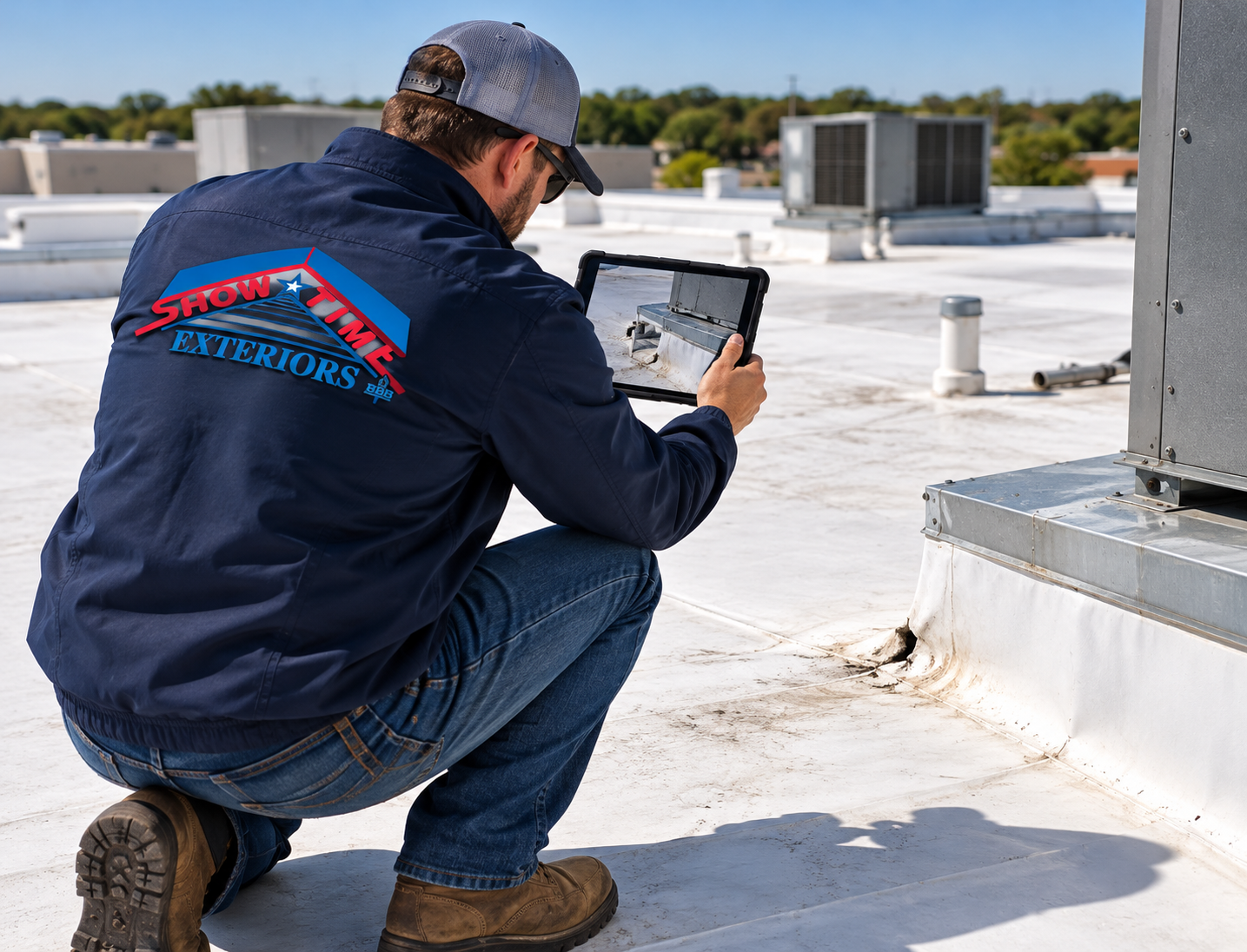
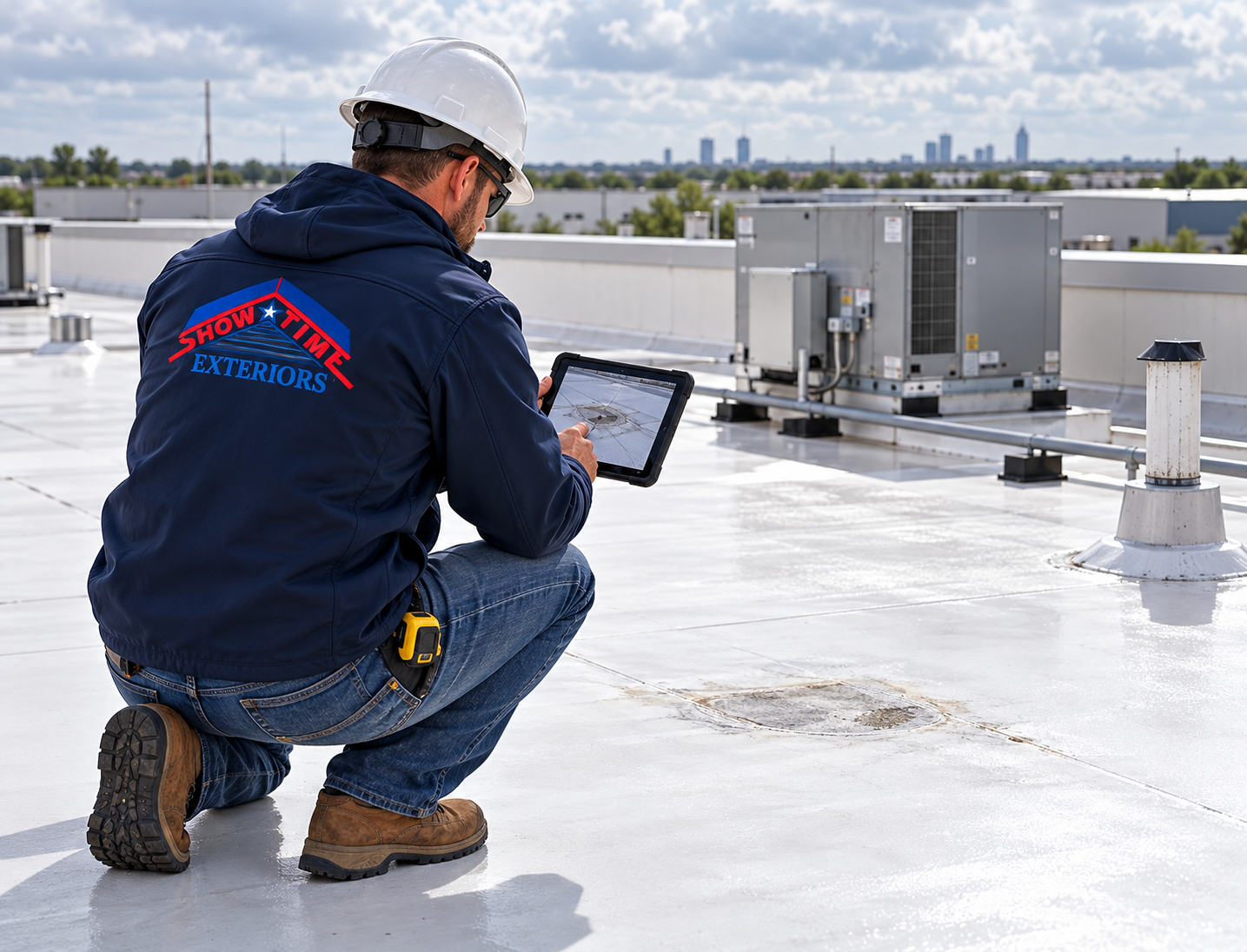
When a Texas property has missing shingles after a storm, the responsible response is to protect people, document conditions, avoid unsafe rooftop access, and arrange a professional inspection. A qualified roofing contractor can determine whether the loss is localized and repairable or part of broader wind, hail, flashing, attachment, or age-related damage.
This guide explains what commercial property owners, facility managers, property managers, and real estate professionals should do after shingles blow off a Texas or North Texas building.
Why Storms Blow Shingles Off a Roof
Shingle roofs are designed as layered systems. Each shingle depends on correct fastening, alignment, sealing, underlayment, flashing, ventilation, and deck condition. High wind creates pressure at roof edges, corners, ridges, eaves, transitions, and other vulnerable areas. Once air gets beneath a lifted edge, it can stress the shingle, break its seal, crease the mat, pull fasteners through the material, or remove the shingle entirely.
The National Weather Service notes that damaging winds can blow shingles from roofs and turn loose objects into dangerous projectiles. Straight-line winds produced by severe thunderstorms can exceed hurricane-force speeds even when no tornado occurs.
Shingle loss may be influenced by:
- Wind speed, direction, and duration
- Roof slope and geometry
- Building height and exposure
- Corners, ridges, eaves, and perimeter pressure
- Installation and fastening pattern
- Shingle age and flexibility
- Seal-strip adhesion
- Previous repairs
- Deck and underlayment condition
- Hail or debris impact during the same storm
- Heat, ultraviolet exposure, and prior weathering
Missing shingles are often only the most visible part of the damage.
Step 1: Wait Until the Storm Threat Has Passed
Do not inspect the roof during lightning, hail, heavy rain, or high winds. Continue monitoring official weather alerts because Texas severe weather may arrive in repeated rounds.
Before approaching the building, look for:
- Downed power lines
- Fallen trees and large branches
- Loose metal, signs, gutters, or siding
- Broken glass
- Floodwater near entrances or utilities
- Fire, sparks, smoke, or a gas odor
- Sagging ceilings or structural movement
- Additional debris that may fall
Contact emergency services, the utility provider, or qualified professionals when immediate life-safety, electrical, gas, fire, flooding, or structural hazards exist.
Step 2: Keep People Away From Damaged Areas
Missing shingles may leave nails, fragments, gutters, flashing, or debris on walkways and parking areas. Remaining loose shingles can detach during continuing gusts.
Establish a restricted area below visibly damaged roof edges and around fallen roofing materials. For tenant-occupied properties, communicate which entrances, parking spaces, sidewalks, suites, or interior rooms are affected.
Inside the building, watch for:
- Water dripping through ceiling tiles or light fixtures
- Wet electrical equipment
- Sagging or bulging ceilings
- Slippery floors
- Water near emergency exits
- Damaged smoke alarms, sprinklers, or other systems
Move people away from active leaks and electrical hazards. Do not touch wet electrical equipment or stand in water while operating switches, outlets, or machinery.
Step 3: Document the Damage From Safe Locations
Photograph and record conditions before cleanup, temporary work, or permanent repairs whenever it is safe.
Capture:
- Wide views of every roof elevation visible from the ground
- Bare or irregular roof sections
- Shingles found around the property
- Lifted or damaged ridge-cap shingles
- Loose flashing, gutters, downspouts, and fascia
- Hailstones, fallen branches, and storm debris
- Broken skylights or windows
- Interior leaks and ceiling stains
- Wet inventory, equipment, flooring, and finishes
- Temporary containment measures
Do not climb a ladder or onto the roof for better photographs. Ground-level images, an elevated view from an approved interior location, and later professional documentation are safer.
Create an incident log including:
- Date and approximate time of the storm
- Weather alerts received
- Wind, hail, and rainfall observations
- When missing shingles were discovered
- Locations of exterior and interior damage
- Tenant and employee reports
- Safety measures taken
- Contractors and emergency services contacted
- Expenses and temporary work
Preserve roof warranties, installation records, prior inspections, repair invoices, maintenance history, and pre-storm photographs.
Step 4: Do Not Walk on the Roof Yourself
A storm-damaged shingle roof may be wet, slippery, and unstable. Missing shingles can expose nails and weakened decking. Other shingles may look intact but have broken seals, creases, or hidden cracks.
Walking on the roof can:
- Cause a fall
- Break or dislodge additional shingles
- Damage softened or aged materials
- Worsen concealed deck problems
- Disturb evidence of wind or hail damage
- Complicate warranty requirements
Use a qualified roofing contractor with appropriate training, access equipment, and fall protection.
Step 5: Schedule a Professional Roof Inspection
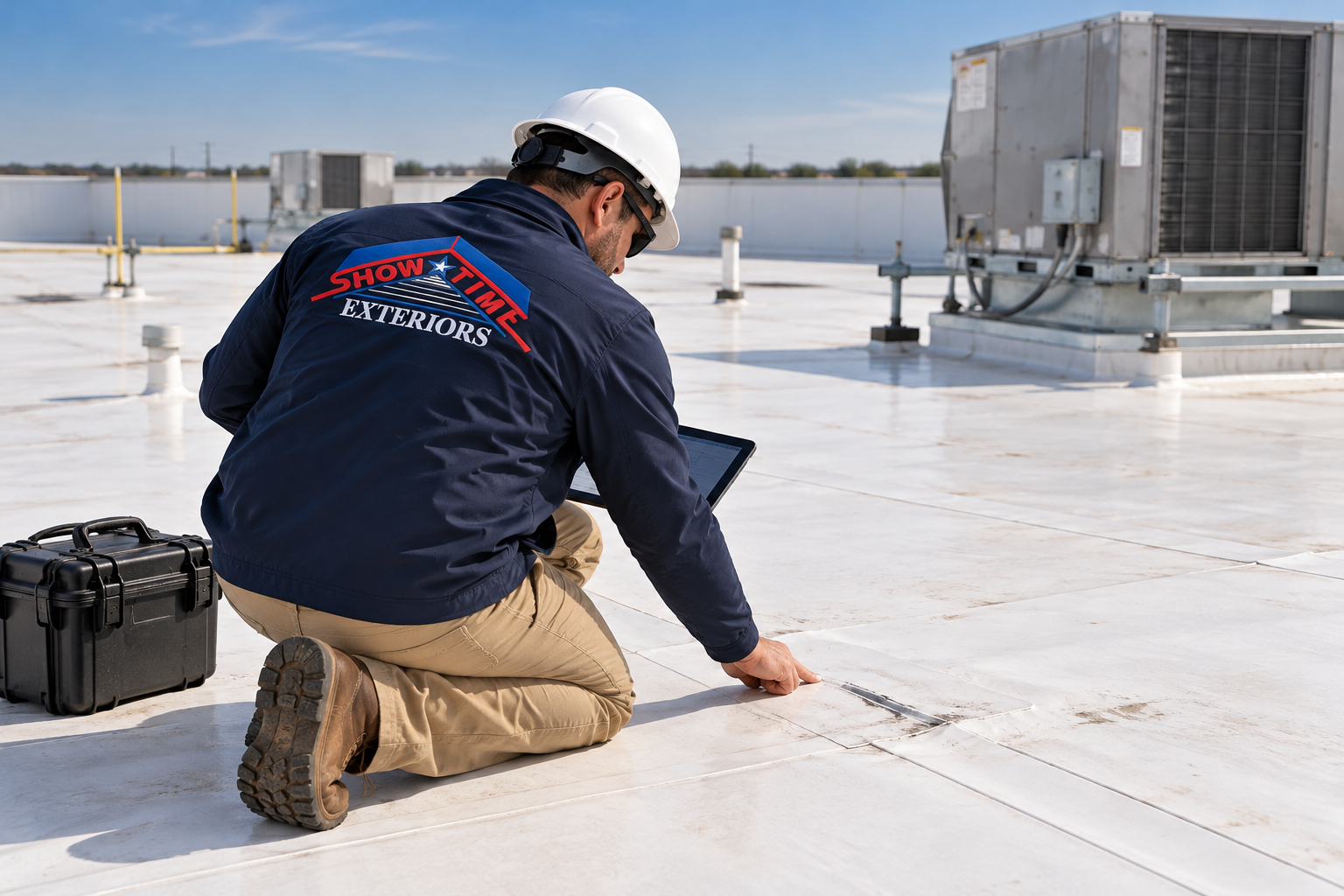
The contractor should inspect the complete shingle system—not only the bare area visible from the ground.
A professional inspection may include:
- Missing, displaced, torn, creased, and lifted shingles
- Broken or incomplete adhesive seals
- Fastener placement and pull-through
- Ridge caps, hips, valleys, eaves, rakes, and roof edges
- Underlayment and roof deck visible at exposed areas
- Flashing at walls, chimneys, curbs, valleys, and transitions
- Pipe boots, vents, skylights, and other penetrations
- Gutters, downspouts, drip edge, fascia, and soffits
- Hail and debris impact
- Tree-limb damage
- Interior areas beneath suspected damage
- Previous repairs and pre-existing wear
The inspection should answer:
- How many shingles or roof sections were affected?
- Are neighboring shingles loose, creased, or unsealed?
- Is the underlayment exposed or damaged?
- Was the roof deck affected?
- Is water entering the assembly?
- Is temporary protection needed?
- Can the damage be repaired reliably?
- Does the broader roof condition justify partial or full replacement?
Signs of Wind Damage Beyond Missing Shingles
Lifted shingle edges
A shingle may lift during the storm and settle back afterward. The seal may be broken even though the shingle remains in place.
Creased shingles
Wind can fold a shingle backward, creating a crease across the mat. A creased shingle may be weakened and more likely to tear during future wind.
Torn tabs or fractured shingles
Part of a shingle can tear away while the nailed portion remains. Cracks may also develop around fasteners or along weathered edges.
Exposed or raised fasteners
Wind movement can enlarge fastener holes, pull shingles over nail heads, or expose fasteners that should remain covered.
Damaged ridge and hip caps
Ridges and hips experience significant wind exposure. Missing cap shingles may create direct openings at some of the roof’s most vulnerable lines.
Displaced flashing
Wind can lift flashing at walls, chimneys, penetrations, and transitions. Water may enter even when nearby shingles remain in place.
Damaged gutters and roof edges
Loose gutters, drip edge, fascia, and edge materials may indicate strong perimeter forces and contribute to water intrusion.
Hail and debris damage
The same storm may bruise shingles, remove granules, break skylights, puncture materials, or drive branches against the roof.
Why Missing Shingles May Not Cause an Immediate Leak
Shingles are the primary roof covering, but underlayment beneath them may temporarily resist some water. The roof deck and building may remain dry during a light or favorably directed rain.
Leak timing depends on:
- Whether underlayment remains intact
- Wind direction
- Rain intensity
- Roof slope
- Location of the missing shingles
- Condition of flashing and fasteners
- Existing penetrations or seams
- Amount of exposed deck
Underlayment is not intended to serve as the permanent exposed roof. Sun, wind, traffic, and repeated rain can degrade it. Missing shingles should be addressed before another storm tests the exposed area.
Step 6: Arrange Appropriate Temporary Protection
If the underlayment or deck is exposed, the contractor may recommend temporary protection until permanent repairs can be completed.
Possible emergency measures include:
- Securing loose shingles and materials
- Temporarily protecting exposed underlayment or deck
- Stabilizing damaged flashing
- Covering a broken skylight or opening
- Clearing drainage pathways when safe
- Installing a properly secured temporary roof covering
Temporary work should be performed only when weather and access conditions are safe. Large tarps can catch the wind, and uncontrolled fasteners can create new leaks or damage remaining shingles.
Ask the contractor to document:
- Conditions before temporary work
- The area protected
- Materials and attachment method used
- Known limitations
- Monitoring requirements
- Permanent work still needed
A tarp or temporary patch is mitigation, not a completed repair.
Step 7: Check for Water Intrusion and Hidden Moisture
Rain can enter under missing or lifted shingles and travel along underlayment, deck joints, framing, pipes, or ceiling systems before becoming visible inside.
Look for:
- Ceiling stains
- Musty odors
- Damp insulation
- Wet attic or plenum areas
- Peeling paint
- Swollen drywall or ceiling tiles
- Rusted fasteners or metal components
- Water appearing away from the damaged roof area
Depending on the building and damage, the roofing contractor may recommend moisture evaluation or selective investigation. Interior restoration professionals may be needed for extraction and drying.
Hidden moisture can contribute to:
- Deteriorated decking
- Reduced insulation performance
- Corrosion
- Mold or indoor environmental concerns
- Damaged ceilings and walls
- Recurring leaks
- A larger eventual repair scope
The permanent repair should address wet and damaged materials rather than covering them.
Step 8: Decide Whether the Roof Needs Repair or Replacement
Missing shingles do not automatically mean the entire roof requires replacement. The correct solution depends on damage extent, shingle age, product availability, deck condition, moisture, installation quality, code requirements, and whether a durable repair can be integrated.
Targeted repair
An isolated area may be repairable when surrounding shingles are flexible, securely attached, compatible replacement materials are available, underlayment is intact, and the deck is sound.
Sectional repair or partial replacement
A roof slope or defined section may require larger work when damage is concentrated but the remaining system is serviceable.
Full replacement
Replacement may be appropriate when:
- Shingle loss is widespread
- Many remaining shingles are creased or unsealed
- The roof is near the end of its service life
- Matching and integrating repairs is impractical
- Underlayment or decking is extensively damaged
- Moisture has spread
- Multiple prior repairs or recurring failures exist
- The roof no longer provides reliable wind resistance
A professional recommendation should separate:
- Storm-related shingle loss
- Hidden wind damage to remaining shingles
- Hail or debris damage
- Pre-existing aging and maintenance
- Deck and moisture conditions
- Immediate temporary work
- Permanent repair options
- Replacement considerations
Can New Shingles Be Matched to the Existing Roof?
Matching involves more than color. Replacement shingles should be compatible in dimensions, profile, exposure, fastening requirements, and performance. Older products may be discontinued, weathered, faded, or brittle.
A visible color difference does not necessarily prevent a functional repair, but an incompatible size or design may make proper integration difficult. The contractor should explain whether a suitable product is available and whether surrounding shingles can be lifted without breaking.
Step 9: Review Warranty Requirements
If the roof is under a manufacturer, installer, or property warranty, review its notice and repair requirements. Unauthorized repair methods may affect coverage.
Gather:
- Manufacturer and product information
- Installation date
- Warranty number
- Approved-contractor requirements
- Prior inspection and repair records
- Photographs and notices submitted
Ask whether the manufacturer or original installer must be notified before repairs begin.
Step 10: Organize Insurance Documentation
Commercial property policies vary. Review the policy and contact your licensed insurance agent, broker, or carrier for guidance about notice deadlines, deductibles, exclusions, emergency mitigation, matching provisions, documentation, and claim procedures.
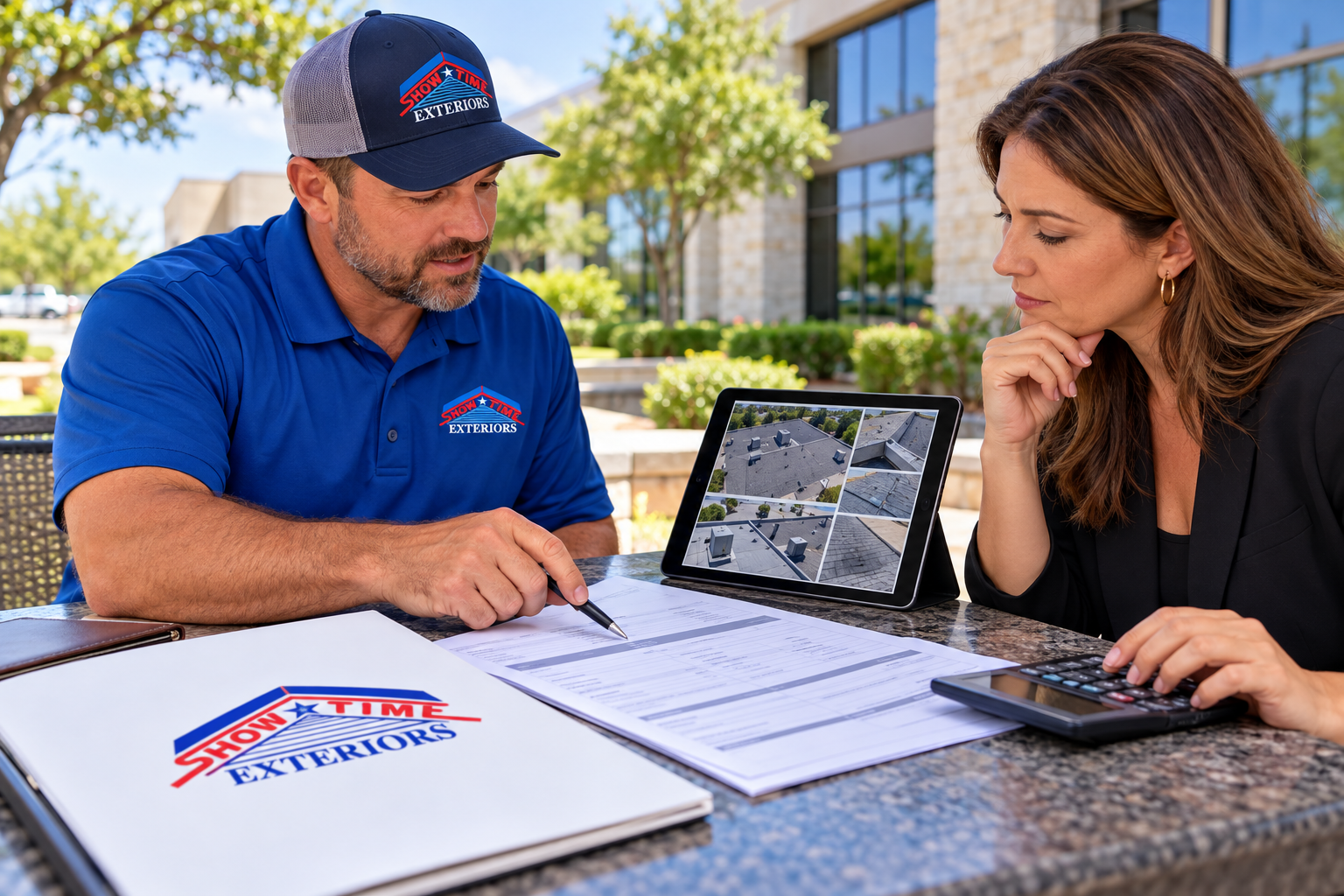
The roofing contractor documents conditions and provides roofing scopes or estimates. Coverage decisions belong to the insurer, while policy and legal questions should be directed to qualified insurance or legal professionals.
Maintain:
- Policy and contact information
- Storm date and approximate time
- Weather alerts and official storm information
- Exterior and interior photographs
- Samples or photographs of fallen shingles
- Tenant and employee reports
- Professional inspection findings
- Temporary-protection documentation
- Water-mitigation and drying records
- Repair or replacement estimates
- Prior roof inspections and maintenance history
- Warranty documents
- Damaged inventory and equipment lists
- Receipts and business-interruption records when relevant
Do not discard damaged shingles before documenting them unless they create a safety hazard.
What Property Owners Should Not Do
Do not climb onto the roof
Storm-damaged shingle roofs may be slippery and contain hidden weak areas, loose materials, and exposed fasteners.
Do not wait for a visible leak
Underlayment may delay symptoms while the roof remains vulnerable.
Do not nail loose shingles back down randomly
Incorrect fastener placement can create leaks and may not restore the shingle seal or wind resistance.
Do not apply roofing cement everywhere
Excess or incompatible material can hide damage, trap water, complicate later repairs, and create an unattractive result.
Do not install a DIY tarp during high wind
Tarps can lift workers, detach, and cause further roof damage.
Do not assume only the missing shingles are damaged
Adjacent shingles may have broken seals, creases, cracks, and loosened fasteners.
Do not approve replacement without evidence
Ask for photographs, measurements, shingle and deck findings, moisture information, and a written explanation of repairability.
Do not rely only on a ground-level or drone review
Images can identify missing areas but may not reveal seal failure, creasing, fastener conditions, underlayment damage, or moisture.
Do not accept guaranteed insurance outcomes
The contractor can document roofing conditions, but the insurer determines coverage.
Special Considerations for Commercial and Multifamily Properties
Shingle roofs are common on offices, churches, multifamily buildings, retail accents, clubhouses, schools, hospitality properties, and commercial structures designed with steep-slope sections.
Property managers must also consider:
- Tenant notification
- Safe entrances and walkways
- Parking restrictions below damaged edges
- Interior leak reporting across multiple units
- Coordinating work around business hours
- Matching roof sections across a larger complex
- Repeated building types or shared warranties
- Access to attics and occupied areas
- Fire and life-safety systems
- Protecting landscaping, vehicles, and public areas during repairs
A consistent property-wide inspection may be more useful than evaluating only the building where shingles were first noticed.
Questions to Ask After the Roof Inspection
- How many shingles or roof areas are missing?
- Are neighboring shingles lifted, creased, torn, or unsealed?
- Is the underlayment intact?
- Was the roof deck damaged or exposed to water?
- Did hail or debris cause additional damage?
- Which findings appear to predate the storm?
- Is temporary protection required?
- Can compatible replacement shingles be obtained?
- Can a targeted repair be integrated reliably?
- Does one slope or the entire roof require replacement?
- Could repairs affect the existing warranty?
- Is moisture testing or interior evaluation needed?
- What photographs and written documentation will we receive?
- What should be monitored during the next rain?
- When can permanent work be completed?
The answers should give ownership a clear, evidence-based path forward.
How Quickly Should Missing Shingles Be Repaired?
If shingles are missing and the underlayment or deck is exposed, request professional assistance as soon as weather and access conditions allow. Active leaks, broken skylights, large exposed sections, or loose materials require urgent attention.
Even a small missing area should not be postponed indefinitely. Another Texas storm may arrive before visible interior damage develops. Prompt inspection can identify adjacent loose shingles and allow temporary protection or permanent repair before conditions worsen.
Prepare the Roof for Future Texas Windstorms
After repairs, improve the property’s roof-management plan.
Maintain:
- Current roof plans, product records, and warranties
- Routine inspection and maintenance reports
- Pre-storm photographs
- Records of prior shingle repairs
- Approved roof-access procedures
- Emergency roofing and restoration contacts
- Tenant and employee leak-reporting instructions
- Interior water-containment supplies
- Secure backups of property documents
Routine inspections can identify loose shingles, failed seals, exposed fasteners, damaged flashing, clogged gutters, and aging penetrations before high winds exploit them.
Choosing a Texas Roofing Contractor for Missing Shingles
Look for a contractor that:
- Has experience with commercial and steep-slope roofing
- Understands wind, hail, and storm damage
- Serves North Texas and DFW
- Uses appropriate access and safety procedures
- Inspects the complete roof rather than only the bare area
- Documents conditions with photographs
- Separates storm damage from pre-existing aging
- Explains repair and replacement options plainly
- Uses compatible materials and proper fastening methods
- Coordinates around tenants and business operations
- Provides a defined scope, schedule, and communication process
The right contractor should make the decision clearer without using fear or pressure.
Frequently Asked Questions About Missing Shingles After a Storm
Is a roof emergency if only a few shingles are missing?
It may not be a life-safety emergency, but it is time-sensitive. The exposed area and neighboring shingles should be inspected before more wind or rain arrives.
Can a roof with missing shingles still be watertight?
It may remain temporarily dry if the underlayment is intact, but the primary covering has been compromised and should be repaired promptly.
Can I see all wind damage from the ground?
No. Lifted, creased, and unsealed shingles can settle back into place and remain difficult to see.
Can missing shingles be replaced individually?
Sometimes. Repairability depends on surrounding shingle condition, product compatibility, underlayment, decking, and the size and pattern of damage.
Does missing shingles mean the whole roof must be replaced?
No. Localized loss may be repairable. Widespread loss, extensive hidden wind damage, aged materials, or deck and moisture problems may justify a larger scope.
Should I tarp the roof?
A qualified contractor may recommend temporary protection if the roof is exposed. Do not attempt DIY tarping on a wet or storm-damaged roof.
Why is there no leak yet?
Underlayment may still be resisting water, or the first rain may not have reached the exposed area at a damaging angle. The roof remains vulnerable.
Should I contact a roofer or insurance company first?
Review the policy and follow its notice requirements. A professional inspection can provide factual documentation, while the insurance representative explains the claim process.
What should the inspection report include?
A useful report should identify missing and damaged shingles, underlayment and deck conditions, flashing and penetration findings, moisture concerns, photographs, inaccessible areas, and recommended next steps.
Schedule a Texas Storm-Damaged Shingle Roof Inspection
Missing shingles are visible evidence that wind affected the roof, but the complete condition cannot be determined from the parking lot. Adjacent shingles may be loose, underlayment may be exposed, flashing may have shifted, and moisture may already be moving through the assembly.
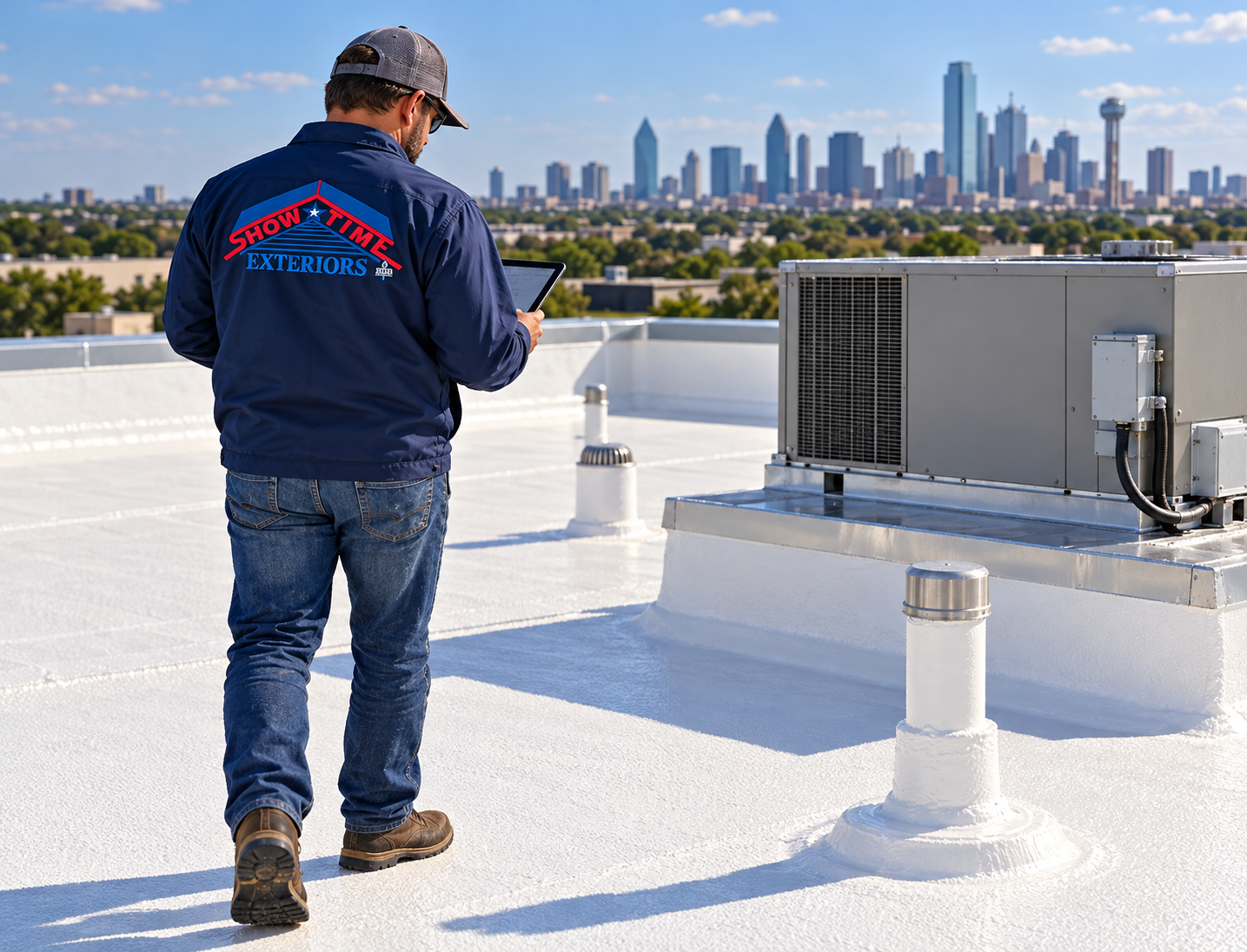
Showtime Exteriors Commercial Roofing helps commercial property owners, facility managers, property managers, and real estate professionals across North Texas and DFW evaluate shingle roofs after severe weather. Our team documents visible damage, identifies urgent vulnerabilities, evaluates repairability, and explains practical repair or replacement options.
Call Showtime Exteriors at 817-400-7663 or visit ShowtimeExteriors.com to book a free roof inspection and roof-grade assessment.
Do not wait for the next Texas downpour to test exposed underlayment. Schedule a professional inspection and protect the property, its occupants, and its operations.