

When Should You Repair, Restore, or Replace an Acrylic Roof Coating?
A guide for Texas commercial property owners from Showtime Exteriors.

Repair an acrylic-coated roof when the problem is localized and a compatible repair can address it. Consider restoration when the coating needs renewal but the underlying roof remains suitable. Evaluate replacement when deterioration, moisture, or other conditions make further coating work inappropriate.
The decision depends on more than the roof’s color or age. A faded surface may need maintenance, while a white surface can conceal unresolved problems underneath.
Start by distinguishing two questions:
Does the coating need attention?
Does the underlying roof assembly need repair or replacement?
Those questions can lead to different scopes. Removing failed coating, restoring an eligible roof, and replacing an entire roof assembly are separate projects.
GAF describes acrylic coatings as an option for protecting eligible roofs from normal weathering, aging, and UV exposure. That makes assessment of the existing roof essential before restoration is selected. GAF Roofing
What Is an Acrylic Roof Coating?
An acrylic roof coating is a liquid-applied material used as part of a specified roofing or maintenance system.
The exact product and assembly matter. Some applications involve renewing a protective coating over an existing roof. Others use reinforced liquid-applied systems with their own design and installation requirements.
Do not treat every white coating as the same product.
Before approving work, identify:
- The existing roof substrate.
- The coating currently installed.
- Previous repairs and recoats.
- Applicable manufacturer guidance.
- The proposed repair or restoration system.
- Warranty requirements.
GAF distinguishes acrylic protective coatings from its reinforced HydroStop system, which can be specified for particular recover, reroofing, and new-roof applications. The scope should identify which type of system is proposed. Fluid Possibilities
A proposal that says only “apply white coating” leaves important questions unanswered.
Repair, Restore, or Replace: A Decision Table
OptionWhen to evaluate itWhat the assessment should establishLocalized repairA limited defect or affected detailCause, boundaries, compatible materials, surrounding conditionRestoration or recoatingBroader coating renewal is neededSuitable substrate, moisture findings, adhesion, preparation, drainageCoating removal and renewalExisting coating cannot remain in the proposed systemRemoval scope and condition of the roof beneath itRoof replacementThe underlying assembly has conditions unsuitable for restorationExtent of deterioration, required removal, new assemblyFurther investigationImportant conditions remain uncertainWhat information is needed before selecting a permanent scope
This table organizes the discussion. It does not replace an inspection or establish a universal threshold.
Ask the contractor to connect the recommendation to documented findings.
When a Localized Repair May Be Appropriate
Repair is worth considering when the concern can be defined and addressed without leaving broader problems unresolved.
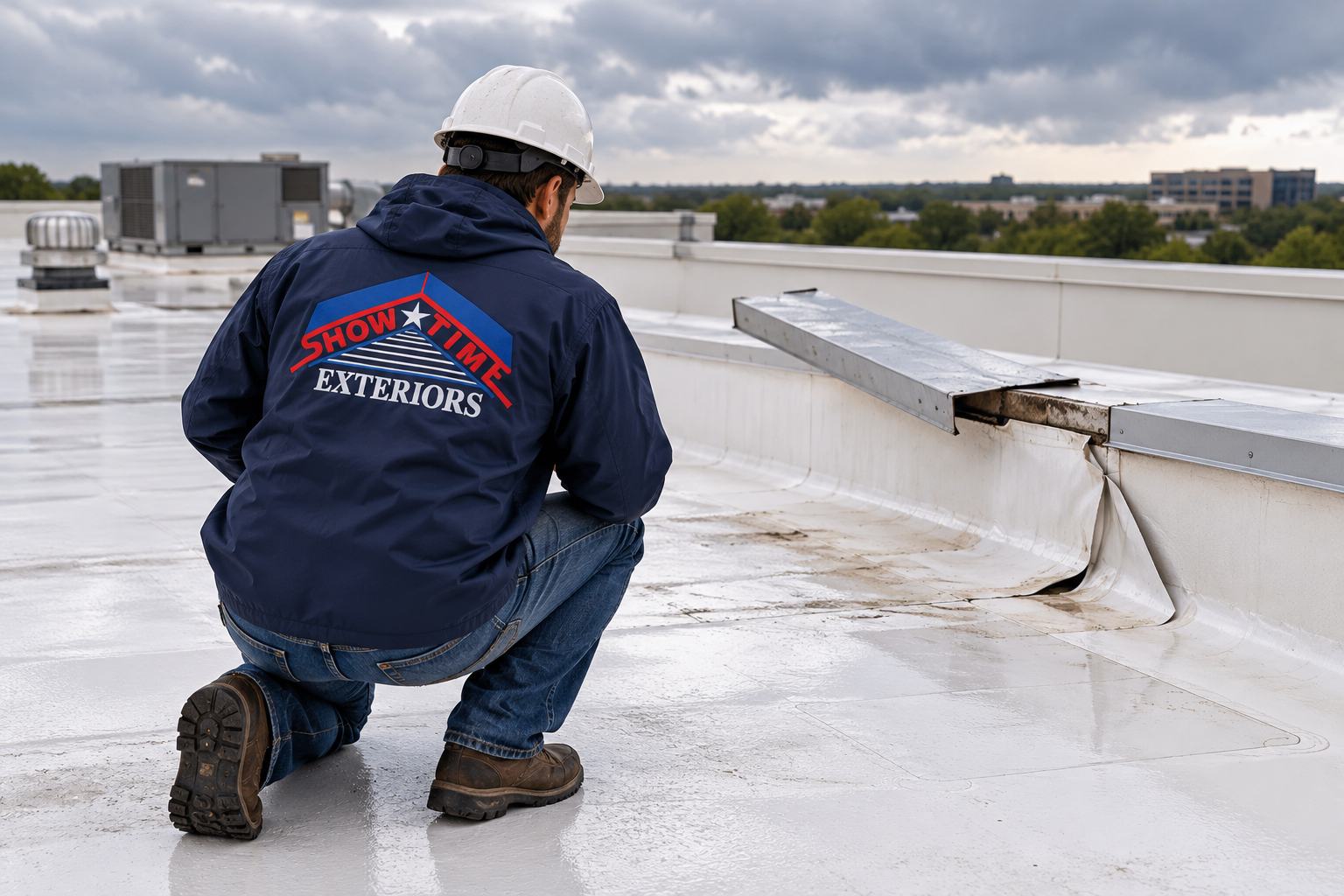
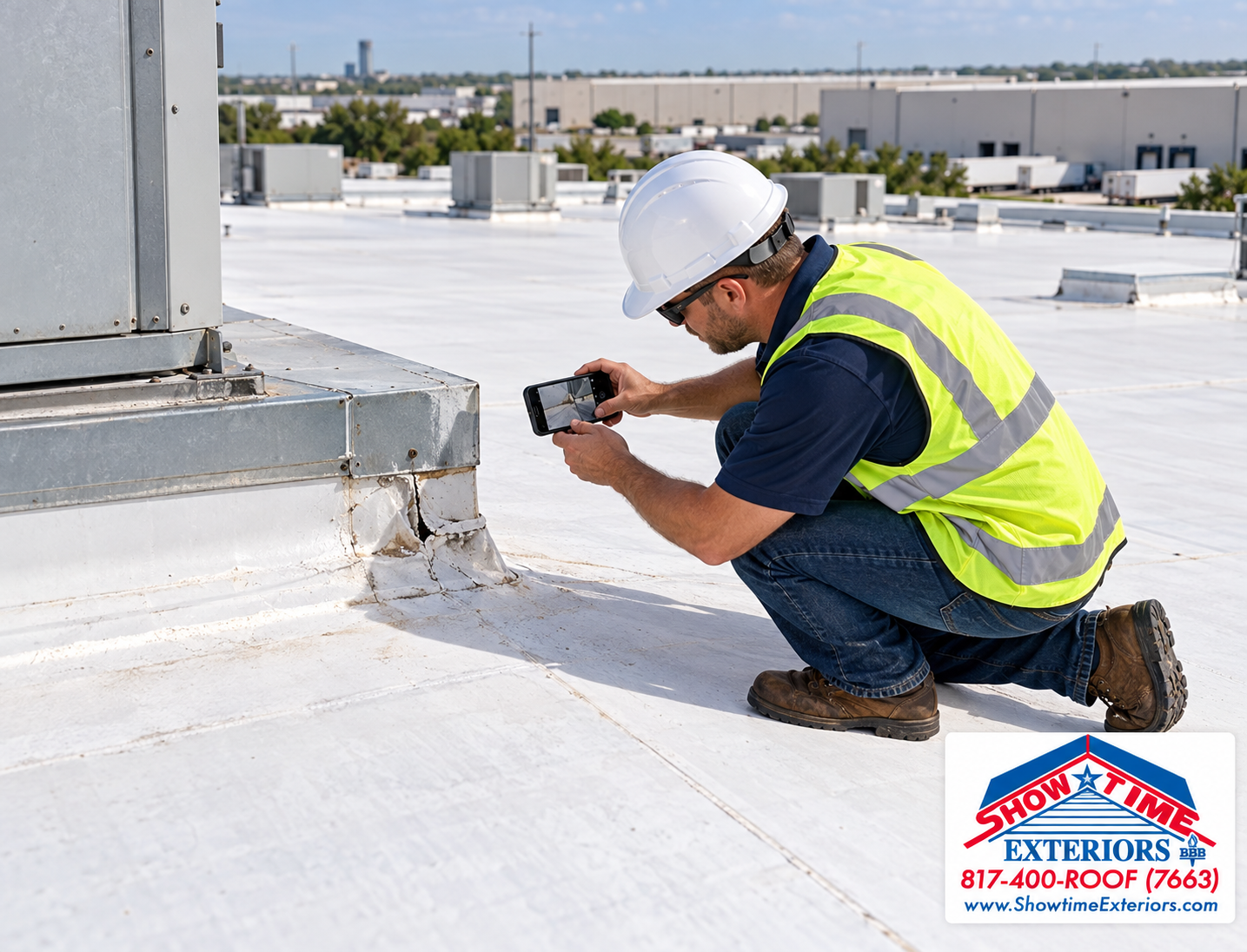
Examples that warrant evaluation include a damaged detail, an isolated worn area, or a localized concern associated with rooftop work.
The contractor should identify the condition rather than simply covering the visible symptom.
Ask:
- What caused or contributed to the problem?
- What area is affected?
- What is the condition around it?
- Is moisture investigation needed?
- What repair material is compatible?
- What limitations remain?
A repair proposal should show the location and describe the completed result.
For example, repairing a detail and restoring the coating around it is different from applying another coat across the whole roof.
A small repair may be a sensible choice when the findings support it. Repeatedly treating the same symptom without investigating why it returns is a different situation.
What a Repair Should Accomplish
A useful repair addresses the documented condition and integrates with the existing system.
It should not depend on an unexplained assumption that any sealant or coating will adhere.
Request:
- Product identification.
- Preparation requirements.
- Repair boundaries.
- Associated detail work.
- Completion photographs.
- Follow-up guidance.
- Applicable warranty information.
If the existing coating is unknown, ask how compatibility will be evaluated.
If the condition is concealed, ask what additional investigation is necessary.
The owner should understand what the repair resolves and what remains outside its scope. That makes later monitoring more useful.
When Restoration May Be Appropriate
Restoration involves more than improving appearance.
It may include evaluation, cleaning, removal of unsuitable material, repairs, detail treatment, preparation, and application of a specified coating system.
Ask the contractor to establish whether the existing roof can support that work.
Important questions include:
- Is the substrate suitable?
- What moisture findings exist?
- Can the existing coating remain?
- What adhesion evaluation is required?
- Which repairs must occur first?
- What drainage concerns need attention?
- What preparation and application requirements apply?
GAF’s acrylic restoration guidance includes adhesion testing and replacement of wet membrane and insulation with like material as part of the specified preparation. A coating application should therefore follow the required corrective work rather than conceal it. gaf.com
Ask for a written restoration scope that explains each stage.
Recoating Should Be Based on Condition
There is no universal recoating interval that applies to every acrylic roof.
The installed product, original specification, exposure, maintenance history, and actual condition all matter.
Review the existing documents and ask the contractor what supports the timing recommendation.
A roof may need localized attention before broader renewal is appropriate. Another may qualify for planned recoating before more extensive deterioration develops.
Do not rely only on the number of years since installation.
Also avoid promises that a new coat will automatically add a fixed number of years of service. Ask what the proposed system and warranty actually provide.
Condition-based planning produces a more useful decision than a calendar rule applied without inspection.
When the Existing Coating May Need Removal
Failed coating does not automatically mean the entire roof assembly must be replaced.
It does mean the contractor should determine whether the unsuitable coating can remain beneath the proposed work.
Ask:
- Which areas require removal?
- What finding supports that scope?
- What substrate will be exposed?
- How will the exposed condition be evaluated?
- What preparation follows?
- What additional work could be required?
A restoration that includes substantial coating removal is different from a straightforward recoat.
The proposal should make that difference visible in the scope and price.
Do not approve application over loose or otherwise unsuitable material without a supported manufacturer-specific plan.
When Roof Replacement Deserves Consideration
Replacement becomes a stronger consideration when the underlying roof has conditions that cannot appropriately be addressed through restoration.
These may involve extensive moisture, deterioration, or other assembly concerns requiring broader removal and reconstruction.
Gaco notes that extensive damage and excessive wet insulation can make a new roof more appropriate than a maintenance coating. Its acrylic recoating specification also identifies major areas of wet, saturated foam as requiring removal and replacement. Gaco™ : Gaco™
That does not establish a universal percentage at which every roof must be replaced.
Ask the contractor to explain:
- The extent of the findings.
- How the extent was established.
- What remains uncertain.
- Why a smaller scope would be insufficient.
- Whether partial replacement is feasible.
- What new assembly is proposed.
A replacement recommendation should be supported by evidence rather than coating age alone.
Ponding Water Requires Its Own Evaluation
Persistent standing water should be discussed before more acrylic coating is applied.
Ask the contractor to document the affected areas and evaluate the drainage conditions and installed products.
Do not assume a fresh coating will change the roof’s drainage geometry.
Also avoid a blanket claim that every acrylic product has identical ponding-water limitations. Review the actual product and system requirements.
Questions include:
- What drainage condition was observed?
- What corrective work is proposed?
- Is the existing coating eligible for the proposed system?
- Are different materials recommended in particular areas?
- What manufacturer instructions apply?
- What limitations remain?
Drainage work and coating selection should be coordinated. One should not be used as an unexplained substitute for the other.
Can Silicone Be Applied Over Acrylic?
Sometimes a manufacturer-approved system may allow it, but the existing products and conditions must qualify.
GAF has specific guidance for silicone applications over certain eligible GAF acrylic coatings on roofs with poor drainage. That is a defined system—not general permission to apply silicone over any acrylic-coated roof. gaf.com
Ask for the applicable specification and supporting evaluation.
Clarify:
- Existing product identification.
- Eligible substrates.
- Preparation.
- Adhesion testing.
- Required repairs.
- Application scope.
- Warranty implications.
- Future maintenance materials.
Do not switch coating chemistry based only on a general sales claim.
The proposed transition needs a supported plan.
Why Moisture Investigation Matters
Surface appearance cannot answer every question about the assembly.
If moisture is suspected, ask what evaluation is appropriate and how the findings will influence the decision.
Possible investigation methods should be selected by qualified professionals for the actual roof.
Before authorizing testing, ask:
- What question will it answer?
- Which areas will be evaluated?
- What are the limitations?
- Will the work disturb the roof?
- How will disturbed areas be restored?
- What documentation will be provided?
A moisture finding does not independently establish the cause or date of entry.
The report should connect the results to the broader inspection and identify any uncertainty.
Do not assume a dry-looking surface means all underlying materials are suitable for recoating.
Adhesion Needs to Be Established
A proposed coating needs a suitable surface and a supported preparation process.
Ask how adhesion will be evaluated and documented under the proposed manufacturer’s requirements.
If testing is recommended, the contractor should explain the locations, method, and results.
Do not treat a small successful test in one area as an unexplained guarantee for every different surface across the roof.
A large commercial roof may contain repairs, contaminants, or different substrates that require separate consideration.
The written scope should identify what can remain, what needs preparation, and what must be removed.
Adhesion findings help determine whether the project is a simple recoat or a more extensive restoration.
Surface Preparation Is Part of the Project
Preparation should appear in the proposal as defined work.
Ask what cleaning method is appropriate, how unsuitable material will be addressed, and how the surface will be assessed before application.
Cleaning should follow the applicable system instructions. It should not be treated as a casual step that every crew performs the same way.
Also clarify:
- Treatment of existing repairs.
- Detail preparation.
- Primers, when required.
- Drying requirements.
- Protection of adjacent property.
- Disposal or handling requirements.
- Inspection before coating.
A lower price that omits necessary preparation is not directly comparable with a complete restoration scope.
Ask contractors to explain those differences.
Application Conditions and Quality Records
The product’s application requirements should guide scheduling and workmanship.
Ask the contractor how it will document:
- Suitable application conditions.
- Surface readiness.
- Products used.
- Application quantities.
- Required thickness checks.
- Detail completion.
- Final inspection.
Do not substitute a generic number of coats for the actual system specification.
The proposal should identify the intended assembly and quality-control process.
If weather changes the schedule, ask how incomplete areas will be protected and when the work can appropriately resume.
Avoid demanding application during unsuitable conditions simply to keep a promised date.
A supported schedule and documented process are more useful than a rushed cosmetic result.
What About Repeated Leaks?
Repeated leakage deserves investigation.
Before approving another patch or recoat, ask whether the source has been established and whether previous repairs addressed it.
Collect:
- Leak locations.
- Observation dates.
- Weather conditions when noticed.
- Prior repair scopes.
- Photographs.
- Rooftop service history.
- Inspection findings.
Distinguish the interior symptom from the confirmed roof condition.
Water observed in a room does not automatically identify the entry point.
Ask the contractor what the current evidence supports and what further evaluation is needed.
A repair can still be appropriate, but the recommendation should respond to the repeated history rather than ignore it.
Compare Complete Scopes and Costs
Repair, restoration, and replacement should be compared as different investments.
For each option, ask what it accomplishes, what remains unresolved, and what maintenance will be required.
Comparison pointWhat to reviewInspection findingsEvidence supporting the optionPreparationCleaning, removal, and corrective workProductsExact system and compatibilityMoistureFindings and required remediationDrainageIncluded work and limitationsDocumentationTesting and completion recordsWarrantyActual coverage and obligationsOperationsAccess, staging, and coordinationPriceIncluded services and exclusions
Avoid comparing a simple top-coat price with a full restoration or roof replacement total.
Once the scope is understood, the cost comparison becomes meaningful.
Plan Around Building Operations
For an occupied commercial property, discuss access and operational requirements before scheduling.
Identify sensitive interior areas, tenant concerns, rooftop equipment, parking, deliveries, and staging restrictions.
Ask:
- What areas may be affected?
- What application method is proposed?
- How will adjacent property be protected?
- What coordination is needed with equipment providers?
- Who receives updates?
- What conditions could change the schedule?
Do not assume restoration always means no disruption.
The plan should reflect the actual products, method, and building circumstances.
Give occupants a clear contact for reporting new concerns during the work.
Review the Warranty Before Choosing
Ask which coverage comes from the contractor and which comes from the manufacturer.
Review the actual documents for:
- Covered materials and work.
- Term.
- Exclusions.
- Maintenance obligations.
- Inspection requirements.
- Claim procedures.
- Transfer provisions, if relevant.
Do not assume recoating automatically renews an existing warranty.
Ask whether manufacturer approval, inspection, or other requirements apply.
Keep the product records and completion documentation together.
The warranty should complement the suitability and quality of the project—not replace an explanation of why the proposed scope is appropriate.
Three Illustrative Decision Scenarios
These examples are not actual Showtime Exteriors projects.
Localized concern on an otherwise suitable roof
An inspection identifies a limited affected detail. The contractor supports a compatible repair and explains the condition of adjacent areas.
The owner can review localized repair while establishing follow-up.
Broader coating renewal on an eligible roof
The inspection and required testing support restoration. The scope includes preparation, corrective work, and a specified coating system.
The owner should evaluate the complete restoration proposal and warranty requirements.
Extensive underlying concerns
The investigation documents conditions that make another maintenance coating inappropriate.
The contractor explains the required removal and replacement scope, remaining uncertainties, and available project options.
The decision follows findings—not the desire to choose the lowest initial price.
Questions to Ask Before Approving Work
- What roof and coating products are installed?
- What conditions were observed?
- Is the concern localized or widespread?
- What moisture information is available?
- What adhesion evaluation is required?
- What preparation and removal are included?
- How are drainage concerns addressed?
- What exact system is proposed?
- What would a smaller scope leave unresolved?
- What could change the price?
- What warranty applies?
- What records will be delivered?
If the answers change the recommendation, update the written scope.
Do not rely on verbal assurances that never appear in the proposal.
Frequently Asked Questions
Does a faded acrylic coating need replacement?
Not automatically. Appearance should prompt evaluation, not determine the scope by itself.
Can an acrylic-coated roof be repaired locally?
It may be possible when the condition is defined and compatible repair work is supported.
Can new acrylic go over old acrylic?
Possibly, subject to product eligibility, condition, preparation, and applicable testing.
Can coating fix wet insulation?
Required corrective work must be evaluated and completed. Applying coating does not replace moisture remediation.
Does ponding water mean full roof replacement?
Not necessarily. Assess drainage, the assembly, and system-specific options.
How often should acrylic coating be renewed?
Use the installed system’s guidance and actual condition rather than a universal interval.
Can silicone be applied over acrylic?
Only use a supported, compatible approach for the existing products and conditions.
Does restoration guarantee a fixed service life?
No. Review the specification, warranty, exposure, and maintenance obligations.
Should I apply coating myself?
Commercial roof access, evaluation, preparation, and application should be handled by qualified professionals.
What should I receive afterward?
Obtain findings, test records, product information, completion photographs, invoices, warranties, and maintenance guidance.
Choose the Scope the Roof Can Support
Acrylic roof coating decisions begin with the condition of the coating and the assembly beneath it.
A localized repair may address a defined problem. Restoration may be appropriate for an eligible roof. Replacement requires consideration when underlying conditions make further coating unsuitable.
Concerned about a worn acrylic-coated roof? Contact Showtime Exteriors to discuss an assessment and your repair, restoration, or replacement options.
Call [817-400-ROOF (7663) (line 8174007663)](tel:8174007663) or visit ShowtimeExteriors.com.