



Is spray foam roofing Right for North Texas Heat, Hail, and Wind?
Spray foam roofing can be a suitable option for North Texas commercial buildings when the existing roof qualifies, the complete system is properly designed and installed, and the owner maintains its protective coating. Its insulating properties make it worth considering, but it is not hailproof, windproof, or maintenance-free.

Spray foam roofing can be a suitable option for North Texas commercial buildings when the existing roof qualifies, the complete system is properly designed and installed, and the owner maintains its protective coating. Its insulating properties make it worth considering, but it is not hailproof, windproof, or maintenance-free.
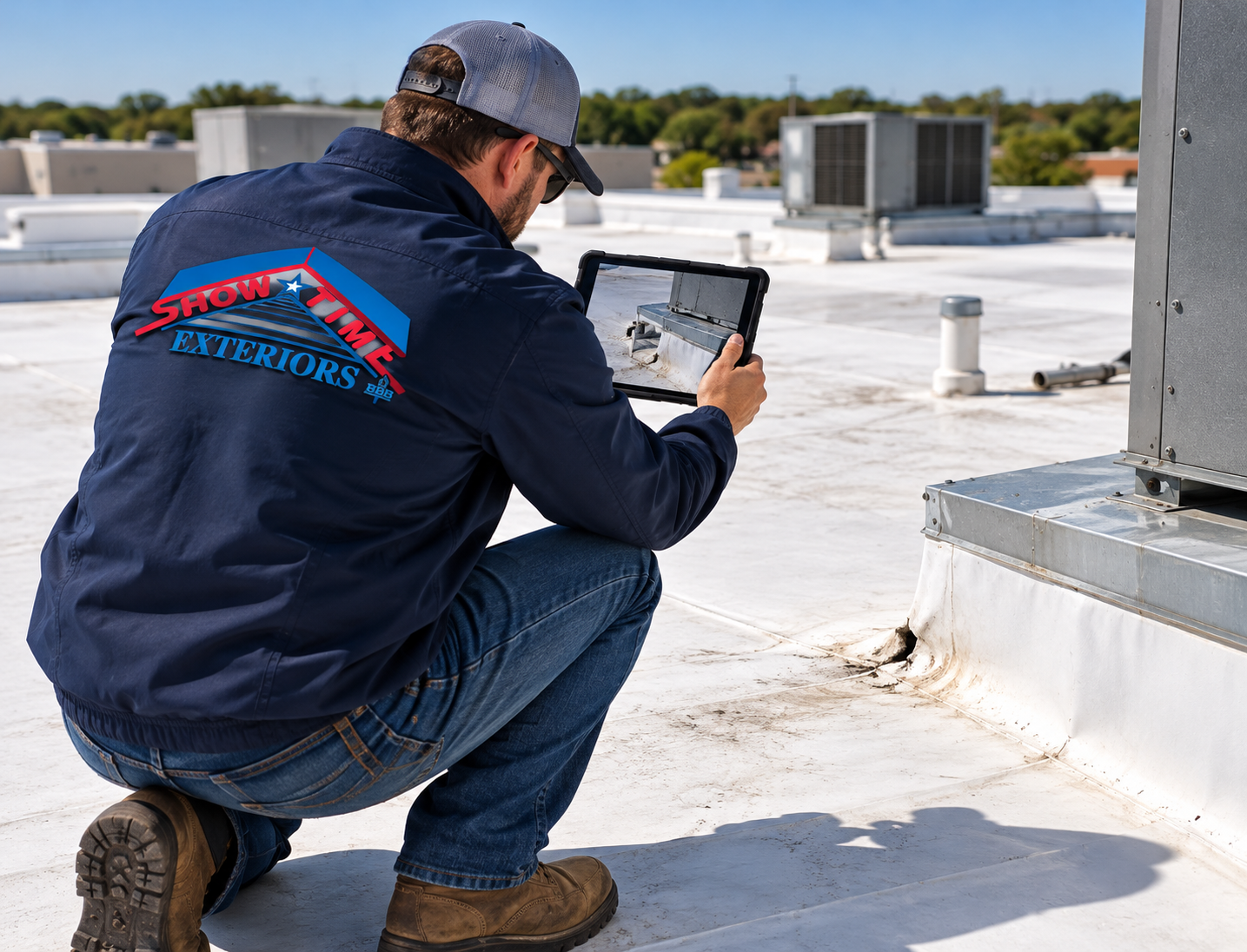
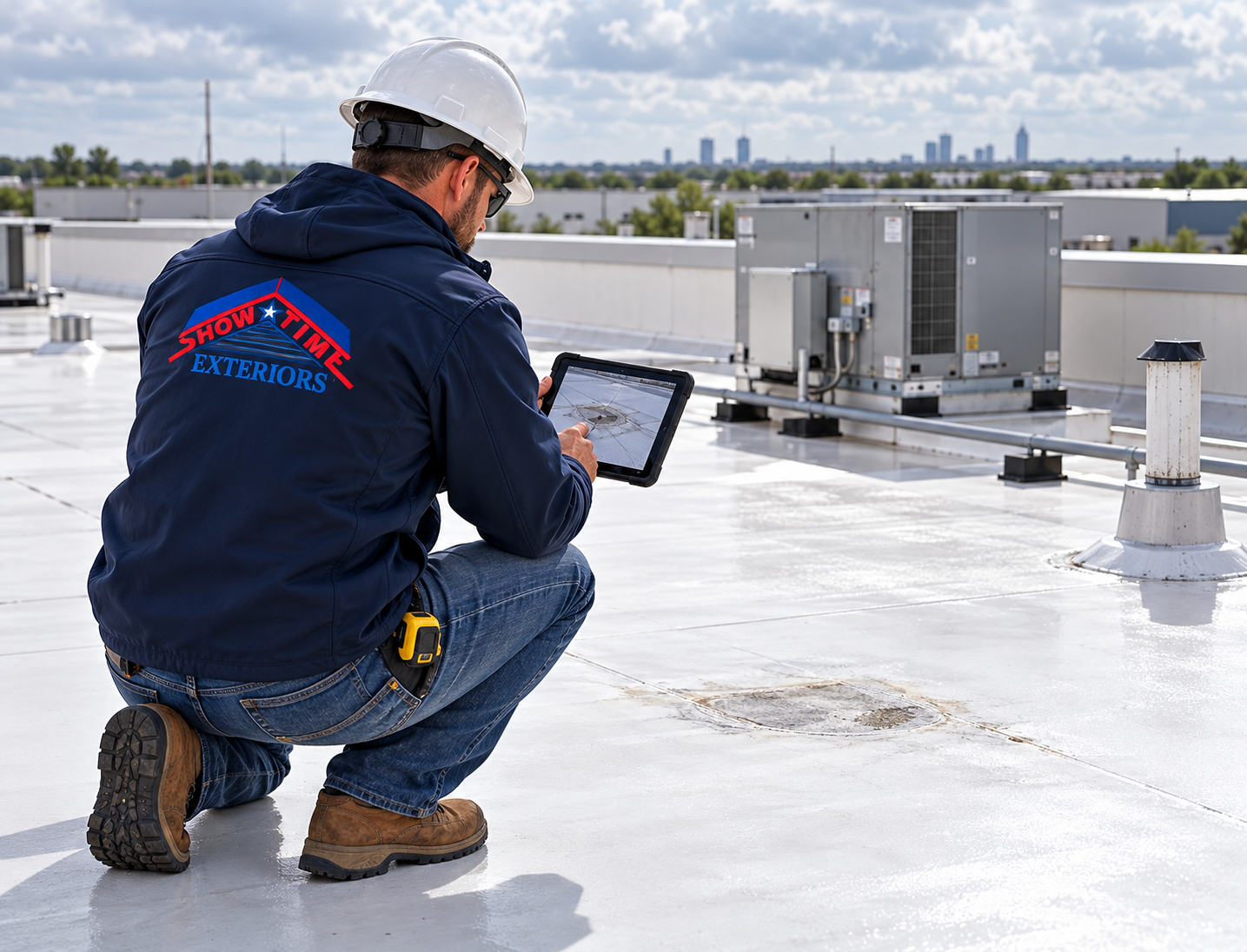
For warehouses, offices, restaurants, and retail properties, the decision should begin with a roof assessment. The right system depends on the building’s condition, exposure, operations, and ownership goals.
What Is Spray Foam Roofing?
Spray polyurethane foam, or SPF, is applied on site to form a continuous roofing insulation layer. A complete assembly includes an eligible substrate, roofing-grade foam, protective coating, and properly constructed roof details.
The coating is essential. The Spray Polyurethane Foam Alliance explains that SPF roofing needs protection from ultraviolet light and routine surface damage. Exposed foam should not be treated as a finished roofing surface. www.sprayfoam.org
Before approving a project, ask for the specific foam and coating products, required thicknesses, preparation, and quality-control procedures.
How Does Spray Foam Address Heat?
SPF provides insulation, while an appropriate reflective coating can support the roof’s thermal-performance objectives.
These characteristics can be useful for a conditioned commercial building. However, they do not establish a guaranteed reduction in utility bills.
Energy results depend on the building’s insulation, HVAC system, air leakage, operating hours, and temperature requirements. SPFA identifies energy performance among SPF’s benefits, but savings should be evaluated for the actual property. www.sprayfoam.org
Ask the contractor to explain:
- The proposed insulation performance.
- The coating’s product-specific properties.
- How the assembly fits the building’s use.
- Whether additional analysis is needed to estimate savings.
An air-conditioned office and an unconditioned warehouse may have different reasons for selecting SPF.
How Does Spray Foam Handle Hail?
SPF roofs can suffer hail damage. SPFA expressly acknowledges this susceptibility. www.sprayfoam.org
Request documentation for any claimed hail rating or approval. Confirm that it applies to the exact proposed assembly, including its coating and supporting components.
After a hailstorm, a professional assessment should determine whether observed concerns affect the coating, foam, or underlying materials.
SPFA publishes dedicated guidance for evaluating and repairing SPF systems after hail and wind-driven damage. A system-specific assessment helps establish whether localized repairs or more extensive work are appropriate. www.sprayfoam.org
Do not assume that every indentation requires replacement—or that a roof without visible interior leakage is undamaged.
How Does Spray Foam Handle Wind?
Wind performance requires a supported assembly and project-specific design.
Ask how the proposed system addresses:
- Substrate condition.
- Adhesion.
- Roof edges and corners.
- Flashings and transitions.
- Rooftop equipment.
- Applicable design requirements.
A continuous surface does not eliminate these questions.
The contractor should identify who confirms the wind-design requirements and provide supporting documentation for the proposed system.
Keep design performance, warranty coverage, and property insurance separate. An advertised warranty wind limit does not replace a suitable roof design or establish insurance coverage.
Heat, Hail, and Wind: What to Verify
ConcernPotential reason to consider SPFWhat to confirmHeatInsulating layer and reflective-coating optionsSpecified performance and building objectivesHailSystem-specific performance and repair optionsExact rating, limitations, and assessment proceduresWindContinuous, adhered applicationSubstrate, adhesion, design, and detailsUV exposureProtective coatingProduct, thickness, condition, and maintenanceLong-term upkeepRenewal may be possibleEligibility, corrective work, and future costs
Does the Existing Roof Qualify?
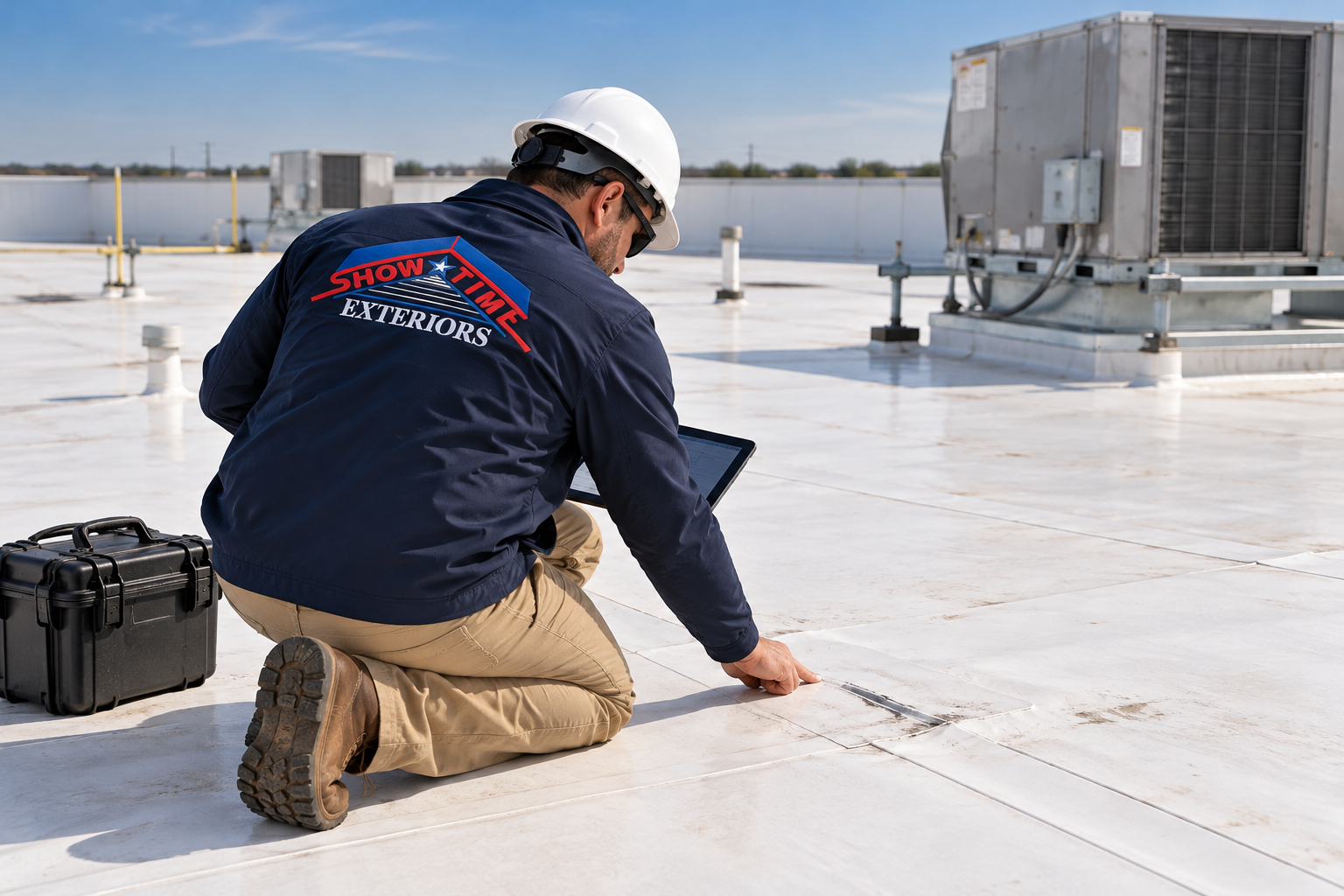
An SPF proposal should explain what is currently installed and why it can support the proposed work.
Request findings covering existing materials, prior repairs, moisture concerns, substrate condition, and areas requiring further investigation.
Do not use new foam or coating to conceal unresolved conditions.
If additional investigation is recommended, ask what question it will answer and how the results will affect the scope.
The proposal should identify what remains, what is removed, and how newly discovered work will be documented and authorized.
The Protective Coating Needs a Clear Specification
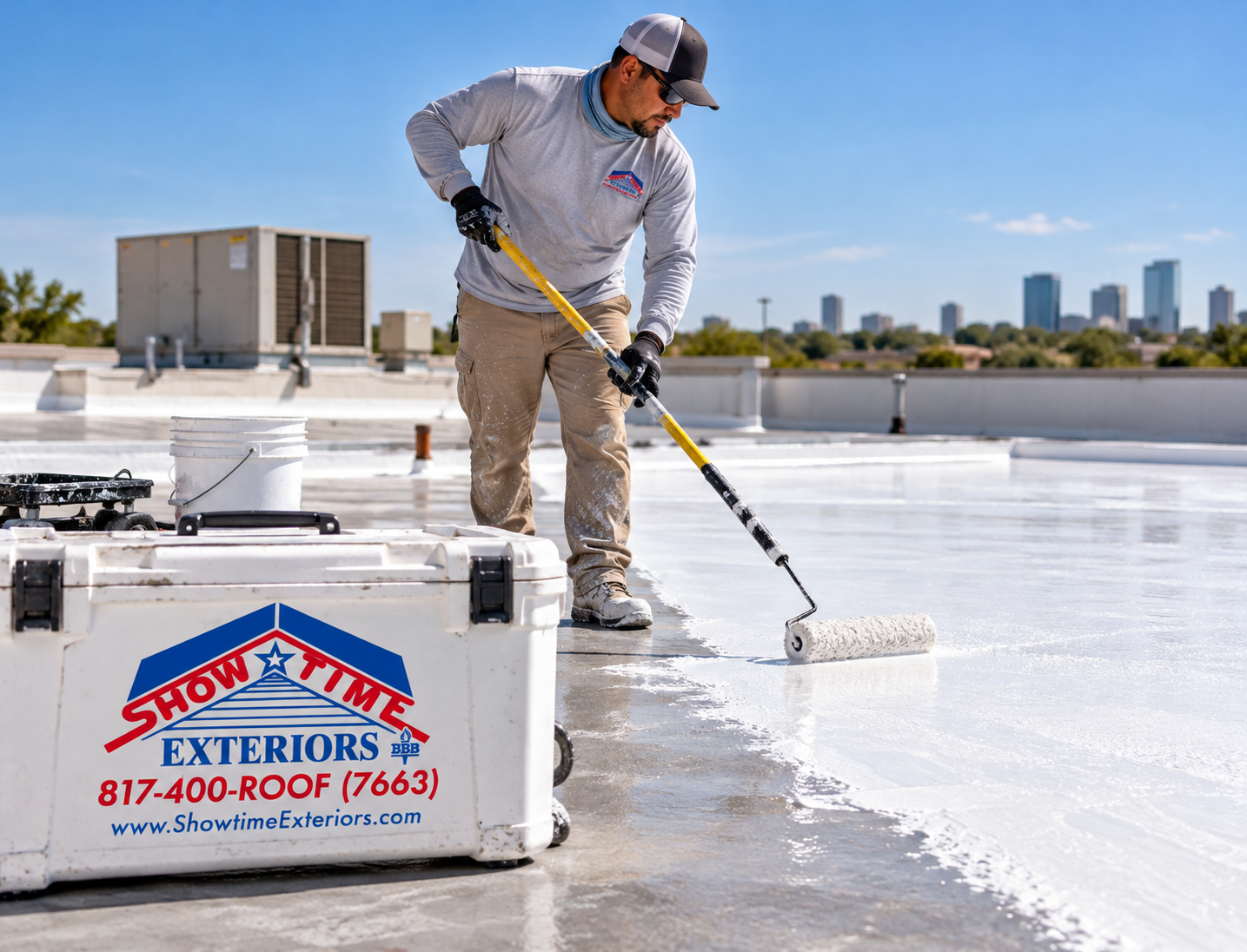
The coating must be compatible with the foam and suitable for the project.
GAF offers coatings specifically intended to protect SPF roofs from weathering and UV exposure. Selection should follow the complete system specification. www.gaf.com
Confirm:
- Exact product.
- Preparation.
- Application thickness.
- Detail treatments.
- Inspection requirements.
- Maintenance and renewal materials.
- Warranty eligibility.
“White coating included” is not enough detail for a commercial project.
Installation Conditions Matter
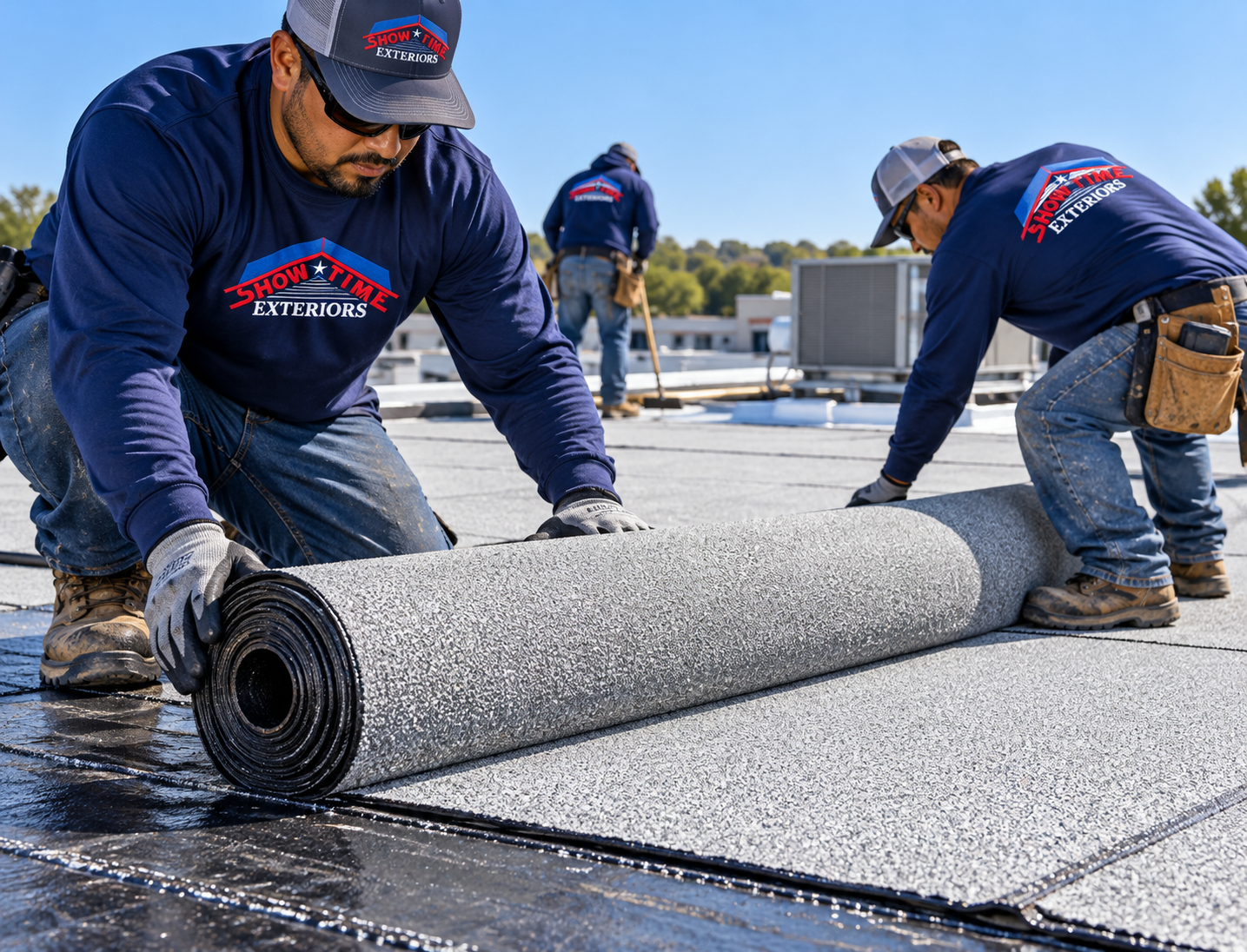
SPF is field-applied, so workmanship and application conditions deserve attention.
SPFA states that roofing systems should be installed by trained applicators who understand the equipment, materials, and roofing practices. www.sprayfoam.org
Ask how substrate readiness, application conditions, foam quality, and coating completion will be checked and documented.
Also discuss overspray protection, neighboring vehicles and buildings, air intakes, access restrictions, and weather-related scheduling changes.
A suitable project plan accounts for the occupied property.
What Maintenance Does SPF Require?
Plan inspections, repairs, and coating evaluation according to the installed system’s requirements.
There is no universal recoating interval for every SPF roof. Condition, exposure, product specifications, and warranty obligations determine the appropriate timing.
Keep records of inspections, rooftop servicing, coating condition, repairs, and significant weather observations.
Renewal may be possible when the roof remains suitable, but recoating does not guarantee indefinite service.
Ask for a written maintenance plan before selecting the system.
When Might Another System Be Better?
Compare SPF with other suitable roof assemblies when:
- Existing conditions prevent a supported application.
- Moisture or deterioration remains unresolved.
- Site restrictions make installation impractical.
- The owner cannot meet maintenance obligations.
- Another assembly better fits the building’s needs.
Compare complete proposals rather than material prices alone.
Each option should identify preparation, insulation, roof details, storm-performance documentation, maintenance, warranties, and total scope.
Questions to Ask Before Choosing SPF
- Why is SPF appropriate for this property?
- What establishes the existing roof’s eligibility?
- What corrective work is required?
- Which foam and coating system is proposed?
- What hail and wind documentation applies?
- How will installation quality be verified?
- What site protections are planned?
- What maintenance is required?
- What does the warranty cover?
- What could change the price?
The answers should appear in the proposal or supporting documents.
Is Spray Foam Roofing the Right Choice?
SPF deserves consideration when insulation, a continuous assembly, and a supported renewal approach fit the property’s objectives.
The decision should still follow documented conditions and a complete specification. Heat performance requires more than a white surface; hail resistance requires system-specific evidence; wind performance requires appropriate design.
Considering spray foam roofing for your North Texas commercial property? Contact Showtime Exteriors to discuss your roof condition and compare suitable system options.
Call [817-400-ROOF (7663) (line 8174007663)](tel:8174007663) or visit ShowtimeExteriors.com.