



How to Replace a Church Roof Without Disrupting Operations
How to Replace a Church Roof Without Disrupting Operations

Replacing a church roof while maintaining services and daily activities requires a coordinated plan for scheduling, access, building protection, communication, and temporary changes. The goal is to minimize disruption while giving the roofing team the time and space needed to complete the work properly.
A church building may be active throughout the week. Sunday worship is only one part of its schedule. Offices, prayer groups, choir rehearsals, community meals, counseling appointments, children’s programs, weddings, and funerals may all depend on the same property.
That makes roof replacement an operational project as well as a construction project.
A workable plan should answer several questions before installation begins: Which areas will be affected? Which activities need quiet conditions? Where will materials and equipment be staged? How will visitors enter? What happens if weather changes the schedule?
Keeping every activity unchanged may not be possible. Some areas may need temporary restrictions, and certain events may require relocation. Planning those adjustments early helps the church continue serving its congregation with fewer surprises.
This guide explains how Texas church leaders, trustees, and facilities coordinators can prepare for roof replacement, evaluate proposals, and manage the project around the life of the church.
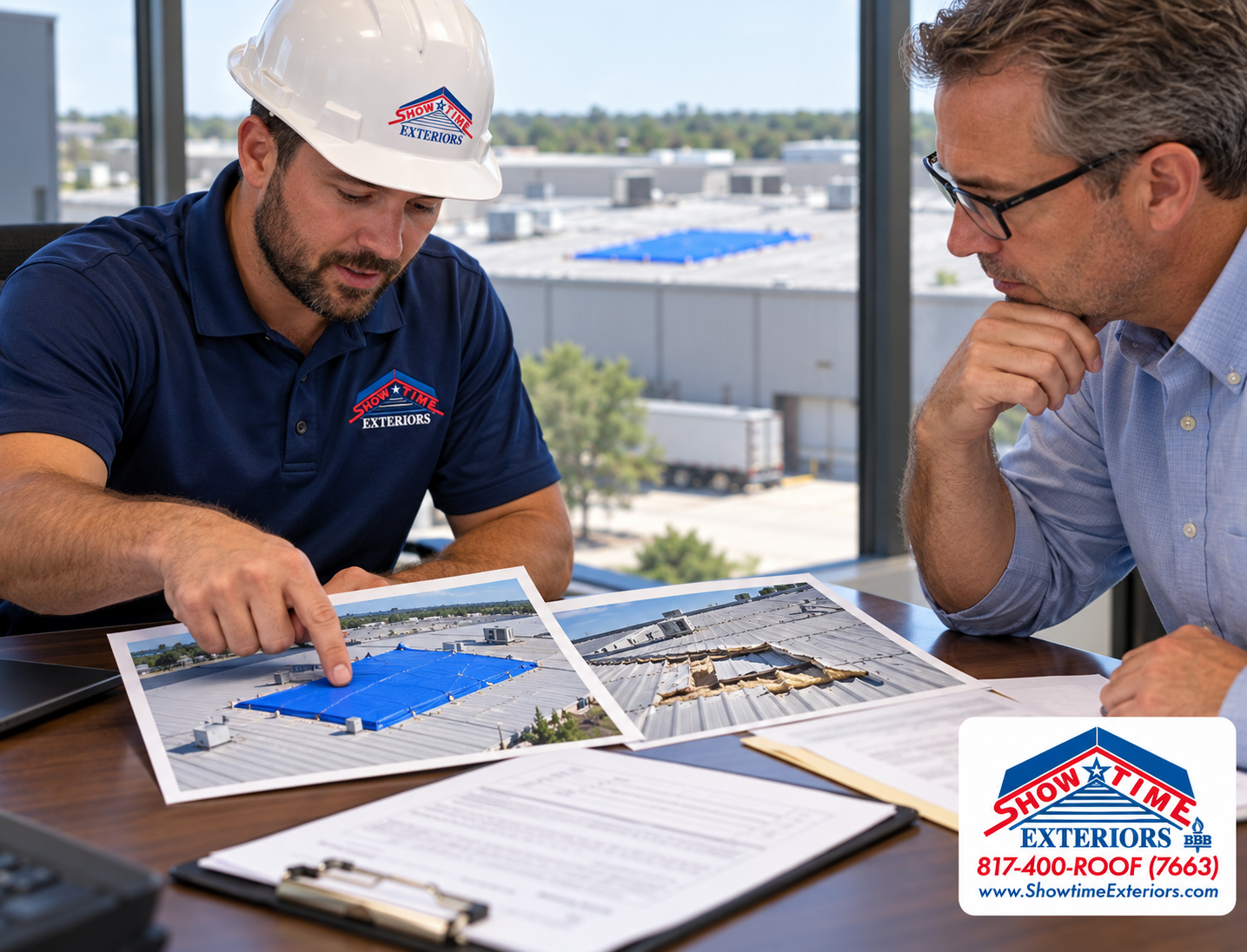
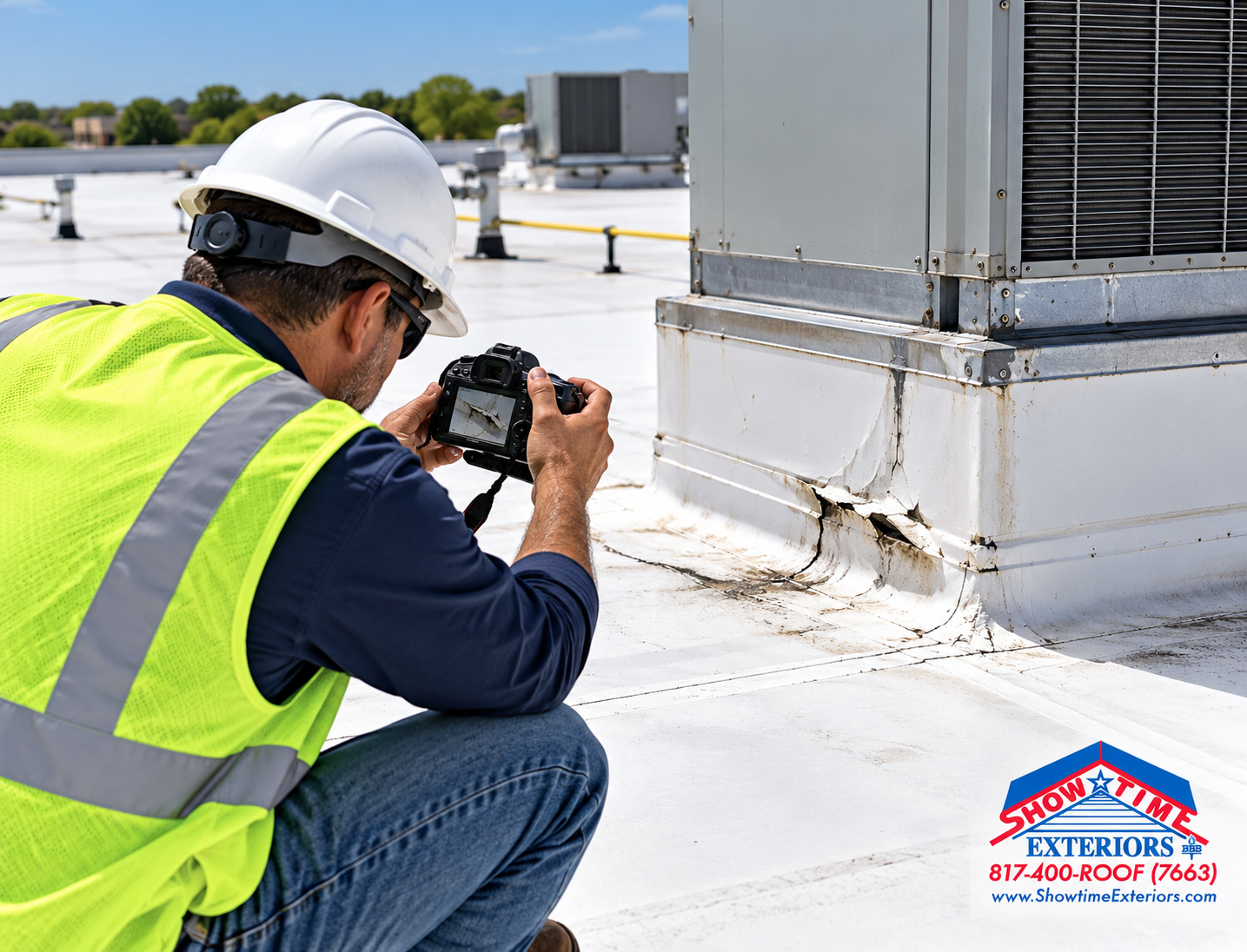
The two Showtime Exteriors images above are illustrative marketing artwork created for this article.
1. Establish the Roof’s Condition Before Setting a Schedule
Begin with a professional inspection rather than choosing an installation date first.
Provide previous roof reports, installation records, repair invoices, warranty documents, and photographs if they are available. Identify areas where leaks or other concerns have been reported.
Church properties may contain several roof systems. A sanctuary might have a pitched roof, while classrooms, offices, or a fellowship hall have low-slope roofing. An addition may have a different installation history from the original building.
Ask the contractor to distinguish these areas in the findings.
The report should explain which sections were inspected, what was observed, which questions remain unresolved, and why a particular scope is recommended.
If an active concern requires temporary protection, address that separately from the permanent replacement schedule.
The inspection gives leadership a basis for deciding what work is necessary and how urgently it should proceed. It also helps avoid planning around a scope that changes substantially once the building is evaluated.
2. Designate One Church Project Coordinator
Choose one person to serve as the contractor’s primary church contact.
That person might be a facilities manager, administrator, trustee, or another authorized representative. Their responsibility is to maintain the schedule, collect questions, communicate updates, and route decisions to the appropriate leaders.
Identify an alternate contact for periods when the primary coordinator is unavailable.
Also establish who can approve the contract, authorize changes, and make operational decisions. Those responsibilities may belong to different people.
For example, the coordinator may arrange room access, while a trustee or committee approves additional spending. The contractor should understand that distinction before work begins.
Avoid allowing several volunteers to provide conflicting instructions directly to the crew.
A clear contact structure does not prevent people from raising concerns. It gives those concerns a reliable route to resolution.
Keep a short contact sheet with the contractor’s project manager, church coordinator, backup contact, and relevant equipment service providers.
3. Map the Church’s Entire Activity Calendar
Provide the contractor with more than the Sunday service schedule.
Include staff office hours, rehearsals, weekday worship, children’s activities, support groups, community programs, deliveries, and special events. Note setup and cleanup periods as well as the event itself.
A wedding scheduled for Saturday afternoon may require access on Friday for preparation. A community meal may involve early deliveries and kitchen work before guests arrive.
Identify activities that need quiet conditions and those that can move to another room.
Also explain how unexpected events are scheduled. Funerals and pastoral needs may arise after the construction calendar is established.
Rather than promising that every event can be accommodated, agree on a process for reviewing new requests.
The calendar should help the contractor understand when the property is occupied and how spaces are used. Accurate information makes it easier to develop a realistic work sequence and identify necessary adjustments before crews arrive.
4. Define Which Activities Must Continue on Site
Leadership should distinguish essential on-site activities from activities that can temporarily relocate.
The sanctuary may be a priority for weekend worship, while a committee meeting can move to another room or take place remotely. A children’s program may require facilities that an alternate location cannot provide.
Ask each ministry leader to explain the practical requirements of their activity.
Do they need a particular entrance, accessible restroom, kitchen, sound system, or confidential room? Those details matter more than a general request to “keep the building open.”
Create a short list of priorities and share it with the contractor.
Where continued use is uncertain, identify an alternate arrangement early. Do not wait until construction has already restricted the preferred area.
This process helps leadership make deliberate choices. It also prevents the project coordinator from being asked to protect every activity equally when the building conditions and work sequence require tradeoffs.
5. Develop a Roof-Zone Plan
Ask the contractor to show how the roof is divided into work areas.
Connect those areas to the rooms and entrances below. A roof plan should help church leaders understand when work may affect the sanctuary, office wing, fellowship hall, or classroom area.
The contractor should determine appropriate sequencing based on the assembly, conditions, access, and installation requirements.
Do not assume that crews can simply move to any roof section whenever an event is added. Some transitions and work stages require coordination.
For each planned phase, identify affected indoor spaces, exterior restrictions, and expected operational adjustments.
Use names that staff recognize. “Roof zone three” is useful only if everyone can locate it. “Office wing above the administrative rooms” adds practical context.
A zone plan also helps track progress. Leadership can distinguish a completed section from an area that remains under construction without treating the entire property as having one uniform status.
6. Choose the Roofing Scope on Technical Grounds
Ask whether the findings support repair, restoration, recover, or full replacement.
For an eligible low-slope roof, a recover may retain suitable existing components and add a new roofing layer. GAF explains that this approach can reduce removal, waste, and disruption compared with a full tear-off, but it depends on the existing roof’s suitability. GAF
The church should request the evaluation supporting the proposed approach.
Convenience alone should not determine the scope. An option that creates less disruption during installation still needs to address the roof’s actual condition.
Likewise, a full replacement recommendation should come with an explanation of the findings and work involved.
Ask what each option accomplishes, which components remain, and what limitations continue afterward.
Compare complete scopes rather than labels. A repair, recover, and replacement represent different work. Their prices and schedules should be assessed alongside their intended outcomes.
7. Evaluate Materials Alongside Installation Logistics
Roofing materials and installation methods should be selected for the building, not solely for speed.
Ask the contractor to explain the proposed system, its components, and how installation will affect occupied areas.
GAF’s guidance for occupied institutional buildings discusses material choices and installation methods that can reduce time on the roof and help manage disruption. The appropriate approach still depends on project conditions. gaf.com
For a church with both pitched and low-slope sections, request separate explanations for each.
Discuss appearance where the roof is visible from the grounds. If matching an existing section matters, approve samples or other suitable references before ordering.
Also ask about maintenance and warranty requirements.
A quicker installation method may be worth evaluating, but the contractor should explain its suitability rather than promising that a particular product eliminates disruption.
The church’s decision should balance roof performance, project scope, appearance, installation planning, and future responsibilities.
8. Put Operational Requirements in the Written Proposal
A proposal should describe how the contractor will work around the occupied property.
Ask for the planned work hours, staging areas, access arrangements, protection measures, and communication process to be documented.
Identify schedule restrictions that materially affect the project. If the church requests no disruptive work during a specific service or event, clarify that requirement before pricing is finalized.
Also identify assumptions. A proposal may depend on using a particular parking area or having weekday access to certain rooms.
Do not rely on a broad verbal promise that the crew will “work around everything.”
The written plan should make the commitments understandable without implying that every unforeseen event can be accommodated.
If restrictions change later, follow the agreed process for evaluating the effect on cost and schedule.
Clear requirements help the church compare contractors fairly and reduce disagreement over what was included in the original proposal.
9. Prepare a Preconstruction Walkthrough
Before mobilization, walk the property with the contractor and relevant church representatives.
Review entrances, parking, deliveries, roof access, equipment, interior concerns, and planned staging areas.
Take baseline photographs of locations that may be affected. These can include paving, landscaping, exterior fixtures, and interior areas associated with known roof concerns.
Identify items that need relocation and assign responsibility for moving them.
Confirm which rooms the contractor may access and how access will be arranged when the building is closed.
Use the walkthrough to resolve practical questions. Where will the project notice be posted? Who opens a locked gate? Which entrance do weekday visitors normally use?
Record the decisions afterward and circulate them to the people responsible.
A walkthrough turns a general plan into arrangements that fit the property. It is particularly valuable when the estimator, crew supervisor, and church coordinator have not previously reviewed the site together.
10. Keep Visitor Routes Clear and Understandable
Church visitors may arrive without knowing construction is underway.
Plan approved routes for worshippers, staff, delivery drivers, and visitors attending appointments. Coordinate any necessary changes with the appropriate professionals and property representatives.
Required access and emergency arrangements must remain functional. Do not improvise by closing an exit or directing people through a work area.
Ask the contractor to identify exterior restrictions and how they will be marked.
Use signs that provide an action: “Office visitors: use the fellowship hall entrance.” A sign that only says “construction” may leave people unsure where to go.
Communicate changes before events and update instructions when phases change.
If volunteers help direct visitors, brief them on the approved routes. They should not make their own changes to barriers or access restrictions.
The aim is to make the property navigable while maintaining the separation established for the work.
11. Protect Children’s Areas and Program Access
If the church hosts children’s activities, include the program leader in planning.
Explain drop-off and pickup routines, outdoor activities, playground use, and rooms requiring controlled access.
Coordinate construction arrangements so program participants do not enter staging or work areas.
Determine whether an affected activity needs relocation or temporary suspension. The church should make that decision with the relevant program leadership and appropriate professional guidance.
Give parents specific information when routines change. Identify the entrance, pickup location, effective dates, and contact for questions.
Avoid relying entirely on verbal instructions delivered at arrival.
The contractor also needs to know when children are present and which access arrangements apply.
Assign a church representative to check that the planned instructions remain current as work progresses. This is an administrative responsibility, not permission to supervise roofing methods or move construction barriers.
Clear planning reduces confusion for families and gives the crew reliable information about building use.
12. Coordinate Parking, Deliveries, and Material Staging
Review how materials will arrive and where equipment and debris containers will be placed.
Identify parking areas used by staff, visitors, people requiring accessible spaces, and service providers.
If staging occupies part of the lot, communicate the approved changes before the next major gathering.
Ask whether deliveries require temporary restrictions and who will coordinate them. A material delivery should not unexpectedly compete with a large event’s arrival period.
Also review kitchen supplies, mail, waste collection, and other recurring service needs.
The church may be able to reschedule some deliveries, but the contractor should know which cannot easily move.
Use a site plan where several entrances or parking areas are involved.
At the end of each phase, confirm whether the staging arrangement changes. Do not leave old instructions circulating after equipment moves.
A coordinated site plan helps preserve usable access while providing the contractor with the space needed for the project.
13. Schedule Noisy Work Around Sensitive Activities
Ask the contractor which planned tasks may be disruptive inside the building.
Share the timing of services, rehearsals, counseling appointments, recordings, and other activities that depend on quiet conditions.
Where practical, schedule affected activities away from the work or arrange suitable work windows.
Do not promise the congregation that construction will be silent. The more useful commitment is a clear plan and timely notice of changes.
If an activity cannot tolerate disturbance, consider relocation rather than relying on a broad expectation that crews will stop instantly whenever needed.
Discuss requested pauses in advance. Certain work stages may require preparation before a crew can safely pause or move.
The coordinator should communicate schedule changes through the agreed contact.
After the first phase begins, ask staff whether the actual conditions differ from expectations. Use those observations to improve later scheduling, while leaving construction methods and sequencing to the contractor.
14. Plan for Odors and Building Ventilation
Discuss products, installation methods, and nearby air intakes with the roofing team.
If the proposed work may affect occupied spaces, ask what coordination is needed with the church’s HVAC provider or another qualified professional.
Do not have volunteers block intakes, disconnect equipment, or alter ventilation as an improvised response.
The plan should identify who can assess concerns and authorize any equipment-related changes.
Tell the contractor about areas where occupants may need particular consideration, including counseling rooms, offices, and children’s spaces.
Ask for product information where it is relevant to evaluating the proposed approach.
If a concern arises during work, use the reporting process and restrict affected use as appropriate while professionals evaluate it.
Avoid assuming that a low-odor product guarantees every occupant will experience no disturbance.
The practical goal is to identify possible interactions before installation, establish a response process, and coordinate any necessary operational changes with qualified people.
15. Protect Instruments, Artwork, and Sensitive Equipment
Churches may contain organs, pianos, stained glass, sound equipment, projection systems, archives, and other items that require specific care.
Create an inventory of items in potentially affected areas.
Ask the relevant specialist about relocation or protection when necessary. An instrument technician, audiovisual provider, or conservator may need to advise on an item that should not be moved or covered casually.
Do not ask volunteers to improvise heavy lifting or protective methods.
Assign responsibility for each item and record what was done. Photograph its condition before relocation where appropriate.
Coordinate protection with room use. Equipment should not be covered during an activity that requires it unless a suitable arrangement has been established.
Also discuss cleaning after the affected work is complete.
The church should know when a room is ready for normal use and who confirms that sensitive items can be returned to service.
Planning avoids rushed decisions when construction reaches a particular section.
16. Establish a Weather and Temporary Protection Plan
Ask the contractor how weather will influence daily decisions and work sequencing.
The plan should explain how exposed areas will be managed, who monitors conditions, and how the church will receive updates if the schedule changes.
Do not require crews to maintain a calendar date regardless of unsuitable conditions.
Identify the church contact available after hours if a building concern is reported. Keep emergency contact information accessible to staff.
If temporary protection is installed, obtain a description of its purpose, limitations, and follow-up needs.
Clarify which work remains outstanding. A temporary measure should not be mistaken for a completed roof section.
Review the next planned step after a delay rather than allowing the schedule to become undefined.
Weather planning is part of responsible coordination. The church can continue communicating with its congregation even when the contractor cannot confirm an exact completion date for every phase.
17. Prepare for Unscheduled Services and Events
Church calendars can change quickly.
A funeral, urgent pastoral gathering, or community need may arise during the roofing project. Agree on how leadership will notify the contractor and evaluate possible adjustments.
Identify who can make the operational decision and who can explain the construction implications.
Do not assume the crew can pause any task immediately or that every room can be reopened on short notice.
Maintain alternate locations or arrangements for activities that may need them.
When an event is added, provide the full access window, including preparation and departure. A service time alone does not tell the contractor when the property will be occupied.
Keep communication respectful and factual. Explain the need, ask what is workable, and confirm the agreed arrangement.
A defined process helps the church respond compassionately while recognizing that roofing work also has sequencing, protection, and scheduling requirements.
18. Hold Brief, Regular Progress Discussions
Agree on a practical update schedule.
During active work, the church coordinator and contractor may benefit from a short discussion covering completed areas, upcoming tasks, access changes, weather concerns, and decisions needed.
Record important outcomes rather than relying on memory.
The update should identify the next action and responsible person. “Need to review equipment access by Thursday” is more useful than “equipment issue pending.”
Avoid turning every progress conversation into a redesign of the project.
If a proposed change is significant, follow the contract’s review and authorization process.
Leadership should also receive updates at an appropriate interval, particularly where decisions affect spending or church activities.
A concise process keeps people informed without requiring the full committee to manage daily construction.
The contractor gets timely answers, the coordinator understands upcoming restrictions, and ministry leaders can plan around current information.
19. Budget for Coordination and Unexpected Conditions
The church’s budget should reflect the actual scope and operating requirements.
Ask whether the proposal includes access equipment, staging, requested work hours, protection, equipment coordination, and other identified needs.
For concealed conditions, establish how findings will be documented and additional work authorized.
A committee approval process should include a way to handle time-sensitive decisions. The contractor should know who has authority and what information is required.
Maintain a reserve based on identified uncertainties rather than assuming one percentage fits every project.
Keep costs outside the roofing contract visible. These may include relocation, specialist equipment service, or other work separately arranged by the church.
Compare bids using matching requirements.
A low total may still be appropriate, but only when leadership understands its scope and exclusions.
A clear financial plan supports continuity because avoidable approval delays and uncertain responsibilities can also disrupt the project.
20. Communicate With the Congregation Clearly
Provide information people can use.
Explain the expected project period, affected entrances, parking arrangements, and whom to contact with questions. Update those details as phases change.
Use the church’s normal communication channels, such as announcements, email, the website, or posted notices.
Avoid flooding members with technical specifications. Most visitors need to know how to arrive, where activities are held, and whether plans have changed.
A practical notice might say:
“Roofing work is scheduled for the office wing this week. Weekday visitors should use the fellowship hall entrance. Please follow posted signs and remain outside marked work areas. Contact the church office with access questions.”
Adjust the message to the actual approved plan.
Be precise about uncertainty. If the next phase depends on weather, explain when the church expects to provide another update.
Consistent communication helps members cooperate and reduces the number of conflicting instructions circulating through informal conversations.
21. Use an Illustrative Phase Checklist
A checklist can connect construction progress with operational readiness.
The following is an example format, not a proposed schedule for a particular church.
PhaseContractor coordinationChurch preparationBefore mobilizationConfirm scope, access, staging, and sequenceFinalize calendar and notify activity leadersFirst work areaConfirm restrictions and protection arrangementsRelocate affected activities as agreedFollowing areasUpdate progress and upcoming access changesRefresh signs and event instructionsBefore major gatheringsConfirm usable routes and site conditionsBrief staff and visitor support volunteersCompletionProvide final records and identify remaining itemsRestore normal use after appropriate confirmation
Add responsible contacts and actual dates to the version used for the property.
The checklist should support the contractor’s plan rather than replace it.
Use it to identify decisions that remain unresolved. If the church has not arranged relocation for an affected activity, that issue should be addressed before the work reaches the area.
22. Complete a Walkthrough Before Restoring Normal Use
When work is substantially complete, review the property with the contractor.
Confirm which areas are complete and whether any outstanding items affect normal use.
Review entrances, grounds, staging locations, and rooms involved in the project. Obtain clarification before removing restrictions or returning relocated equipment.
Do not assume that the departure of the main crew automatically means every project requirement is complete.
Ask about cleanup, remaining inspections, documentation, and follow-up visits.
Keep a written list of outstanding items with responsible contacts and expected next steps.
Update staff and the congregation once approved temporary arrangements can end.
This prevents old instructions from remaining in circulation and helps the church return to its usual routines in an orderly way.
A final walkthrough is also an opportunity to confirm that the completed scope matches the approved agreement and authorized changes.
23. Keep a Permanent Roof File
Request the completed scope, final photographs, invoices, warranty documents, product information, and maintenance recommendations.
Store these records in a location accessible to future church leaders and facilities coordinators.
GAF’s maintenance guidance recommends retaining roof records such as guarantees, inspection reports, repair bills, and original construction documentation. documents.gaf.com
Add a simple roof plan identifying the replaced sections and relevant dates.
If some areas remain outside the project, make that distinction clear.
Record how roof concerns should be reported and which service providers need to be contacted.
Church leadership changes over time. A complete file prevents a new trustee or administrator from having to reconstruct the project from scattered emails.
It also supports future budgeting and maintenance.
The record should explain what was installed, which responsibilities continue, and how the church can obtain assistance when a question arises.
Frequently Asked Questions
Can a church remain open during roof replacement?
It may be possible to maintain some or many activities, depending on the building, roof condition, work methods, and site arrangements. Ask for a plan identifying which spaces can remain in use and which need temporary restrictions.
Can roofing work be scheduled entirely between Sundays?
Some projects may fit suitable work windows, but others require longer schedules or multiple phases. Obtain a project-specific plan rather than assuming all work can be completed within one week.
Should we choose a recover to reduce disruption?
Only if the existing roof qualifies and the approach addresses the building’s needs. Request the findings supporting eligibility and compare it with the proposed replacement scope.
Who should communicate with the contractor?
Designate one authorized church coordinator and a backup contact. Identify separately who approves financial changes and significant operational decisions.
What should we do about weddings and funerals?
Provide scheduled events early and establish a process for unexpected events. Maintain alternate arrangements where construction conditions may prevent use of the preferred space.
How do we protect instruments and valuable interior items?
Identify them before work begins and seek advice from the appropriate specialists. Assign responsibility for relocation, protection, and return to service.
What if weather delays the work?
Request an updated sequence and communication date. Confirm temporary protection and outstanding work, then update affected ministry leaders and visitors.
What should be included at completion?
Obtain final records, warranty information, maintenance recommendations, and a clear list of any remaining items. Confirm when temporary restrictions and alternate arrangements can end.
Plan Your Church Roof Project With Showtime Exteriors
Preparing to replace a church roof in Texas? Contact Showtime Exteriors to discuss an inspection, a written scope, and scheduling around your congregation’s activities.
Share the property address, known roof concerns, roof records, and activity calendar. Ask how the proposed work will be coordinated with entrances, occupied areas, and special events.
A clear plan helps church leadership make informed decisions and prepare the congregation for the project.
Call 817-400-ROOF (7663)
Visit
ShowtimeExteriors.com