



How Quickly Should You Address Missing Shingles After a Storm
Texas Storm Response and Roof Repair Guide

Missing shingles after a storm should be addressed immediately. Property owners should protect people and interiors, photograph conditions that can be seen safely from the ground, and arrange a professional inspection as soon as weather and access permit. A roof may not leak the moment a shingle disappears, but exposed underlayment, open nail lines, loosened neighboring tabs, and wind-driven rain can turn a limited defect into a larger loss.
The correct permanent response depends on more than the number of shingles visible from the yard. A qualified roofer should evaluate the storm pattern, affected slopes, remaining shingle condition, seal-strip adhesion, fasteners, flashing, underlayment, ventilation, decking, moisture, prior repairs, and whether compatible replacement shingles can be integrated without damaging the surrounding roof. Isolated loss may be repairable; broad wind damage, brittle materials, widespread unsealing, or damaged decking can make replacement more responsible.
Showtime Exteriors helps homeowners, multifamily operators, and commercial property owners across North Texas and the Houston area document storm damage and move from emergency protection to a permanent scope. Do not climb onto a wet or wind-damaged roof. Call 817-400-ROOF (7663) for an inspection and a fact-based repair or replacement recommendation.
The Short Answer
Address missing shingles the same day you discover them. Keep people away from damaged areas, protect the interior, document visible conditions from a safe location, and call a qualified roofing contractor. The inspection should occur as soon as weather and access are safe. Permanent repairs should follow promptly because exposed underlayment and loosened surrounding shingles can deteriorate during the next rain or wind event.
Why One Missing Shingle Matters
A shingle is part of a layered water-shedding system. When one piece is gone, the underlayment and fastener pattern may be exposed, the bond between adjacent tabs may be disturbed, and wind can gain leverage beneath neighboring shingles. The roof may remain dry during light rain yet leak when rain is driven uphill or sideways by another Texas storm.
The recommendation should be documented in writing with photographs and measurements where appropriate. Observed storm effects, preexisting conditions, and concealed areas should be identified separately. Prompt action limits avoidable exposure, but the scope should remain evidence based and should never promise a particular insurance outcome.
What to Do in the First Hour
Check occupants and interiors before thinking about the roof. Move people, electronics, merchandise, and furnishings away from active water entry when it is safe to do so. Use containers or interior protection without contacting sagging ceilings or electrical hazards. Record the time, storm conditions, rooms affected, and any emergency calls. Do not climb onto the roof.
The recommendation should be documented in writing with photographs and measurements where appropriate. Observed storm effects, preexisting conditions, and concealed areas should be identified separately. Prompt action limits avoidable exposure, but the scope should remain evidence based and should never promise a particular insurance outcome.
What to Do During the First 24 Hours
Notify the property manager, owner, maintenance lead, insurer, or other responsible parties required by your procedures. Photograph the roof from the ground, neighboring property, or an accessible window without creating a fall hazard. Schedule a professional inspection, preserve any shingles found on the ground, and keep receipts for reasonable emergency mitigation. Review the policy rather than assuming the damage is covered.
The recommendation should be documented in writing with photographs and measurements where appropriate. Observed storm effects, preexisting conditions, and concealed areas should be identified separately. Prompt action limits avoidable exposure, but the scope should remain evidence based and should never promise a particular insurance outcome.
Do Not Wait for an Interior Leak
A missing shingle does not always produce an immediate ceiling stain. Underlayment may temporarily shed water, and insulation or decking can absorb moisture before symptoms reach occupied space. Waiting for visible leakage allows ultraviolet exposure, wind, and repeated wetting to affect materials that were not designed to serve as the finished roof surface.
The recommendation should be documented in writing with photographs and measurements where appropriate. Observed storm effects, preexisting conditions, and concealed areas should be identified separately. Prompt action limits avoidable exposure, but the scope should remain evidence based and should never promise a particular insurance outcome.
Safety Comes Before Roof Access
Wet shingles, loose debris, damaged decking, unstable ladders, lightning, gusts, and steep slopes make post-storm roof access dangerous. Owners and employees should stay on the ground. Qualified roofers should evaluate weather, access, fall protection, electrical hazards, and structural conditions before stepping onto the roof. Interior ceiling areas that are bulging or saturated should also be isolated.
The recommendation should be documented in writing with photographs and measurements where appropriate. Observed storm effects, preexisting conditions, and concealed areas should be identified separately. Prompt action limits avoidable exposure, but the scope should remain evidence based and should never promise a particular insurance outcome.
Recognize Signs of Active Water Entry
Look for ceiling stains, dripping fixtures, damp insulation, wet walls, musty odors, softened drywall, peeling paint, or water around penetrations. A leak may appear far from the missing shingle because water can travel along rafters, decking joints, fasteners, or insulation. Marking and photographing interior locations helps the contractor compare symptoms with exterior findings.
The recommendation should be documented in writing with photographs and measurements where appropriate. Observed storm effects, preexisting conditions, and concealed areas should be identified separately. Prompt action limits avoidable exposure, but the scope should remain evidence based and should never promise a particular insurance outcome.
Temporary Protection Is Not Permanent Repair
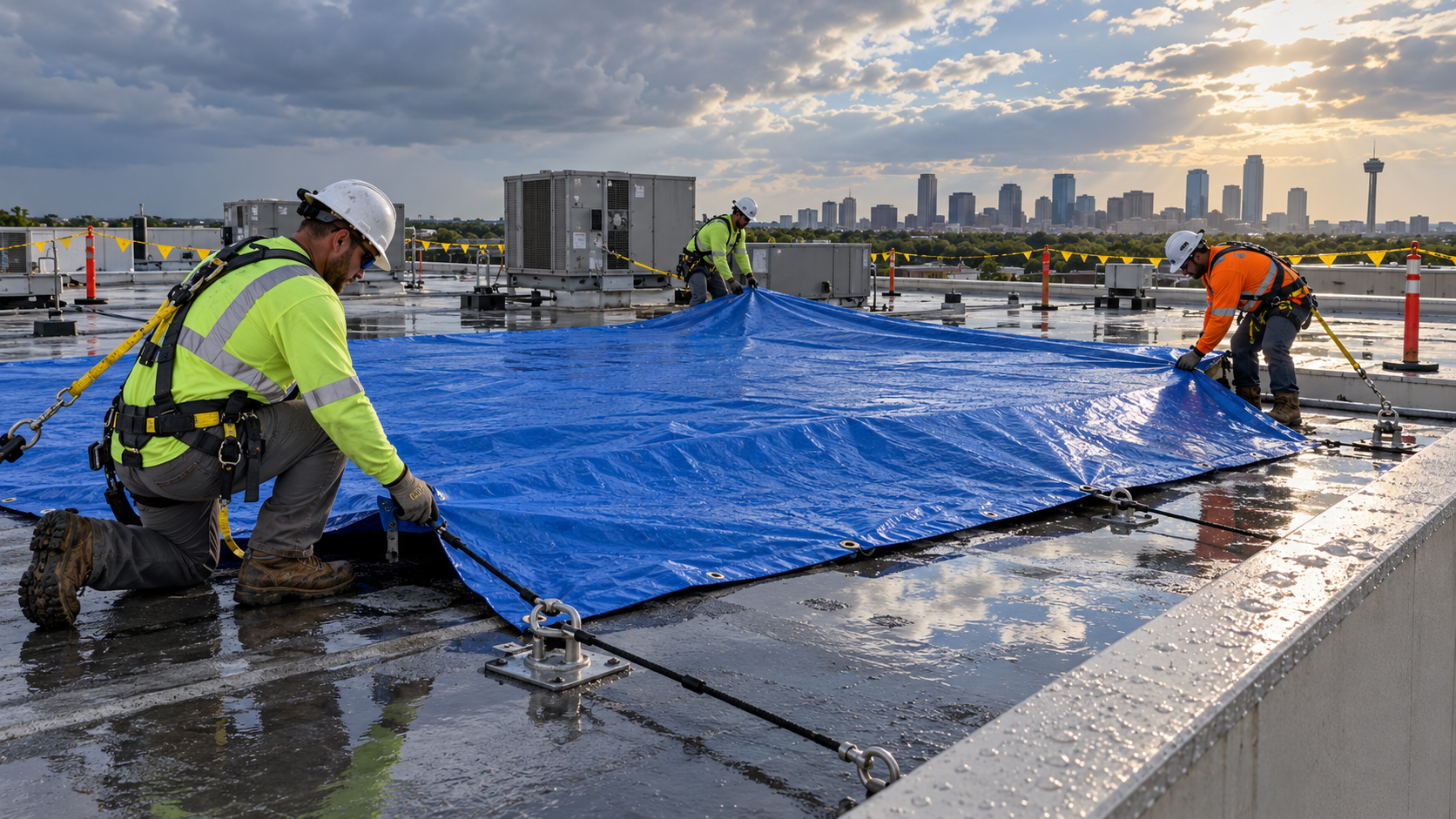
Emergency tarping or another compatible temporary measure may reduce additional water entry when permanent work cannot begin immediately. It must be installed by qualified personnel and monitored after wind or rain. A tarp does not restore shingle adhesion, replace damaged underlayment, correct flashing, or repair the deck, and it should never become an indefinite substitute for permanent work.
The recommendation should be documented in writing with photographs and measurements where appropriate. Observed storm effects, preexisting conditions, and concealed areas should be identified separately. Prompt action limits avoidable exposure, but the scope should remain evidence based and should never promise a particular insurance outcome.
How Storm Winds Remove Shingles
Wind pressure can lift a shingle edge, break the factory seal, enlarge an existing crease, pull fasteners through the mat, or remove a tab or full shingle. Corners, perimeters, ridges, and slopes facing the wind may experience different pressures. Damage can occur in patterns, so an inspection should extend beyond the one bare spot visible from the ground.
The recommendation should be documented in writing with photographs and measurements where appropriate. Observed storm effects, preexisting conditions, and concealed areas should be identified separately. Prompt action limits avoidable exposure, but the scope should remain evidence based and should never promise a particular insurance outcome.
Lifted Shingles Can Be Hidden Damage
A shingle may settle back into place after the wind passes even though its seal strip has released or its mat has creased. These conditions are easy to miss from the ground and can make the roof more vulnerable during later storms. The inspector should evaluate representative areas without causing additional damage and should document the method and limitations of the assessment.
The recommendation should be documented in writing with photographs and measurements where appropriate. Observed storm effects, preexisting conditions, and concealed areas should be identified separately. Prompt action limits avoidable exposure, but the scope should remain evidence based and should never promise a particular insurance outcome.
Creased Shingles Need Careful Evaluation
A wind-created crease can weaken the shingle mat and coating even when the tab remains attached. The location, direction, frequency, and condition of creases should be documented. Not every surface mark proves storm damage, so the report should distinguish observable physical evidence from assumptions and should compare affected and unaffected areas.
The recommendation should be documented in writing with photographs and measurements where appropriate. Observed storm effects, preexisting conditions, and concealed areas should be identified separately. Prompt action limits avoidable exposure, but the scope should remain evidence based and should never promise a particular insurance outcome.
Exposed Underlayment Has Limits
Underlayment is a secondary layer, not the intended long-term weather surface. Sunlight, heat, wind, foot traffic, and repeated rain can reduce its performance. Its condition, type, fastening, laps, and exposure duration influence urgency, but owners should not rely on it as a reason to postpone repair. Open nail holes or torn material can admit water quickly.
The recommendation should be documented in writing with photographs and measurements where appropriate. Observed storm effects, preexisting conditions, and concealed areas should be identified separately. Prompt action limits avoidable exposure, but the scope should remain evidence based and should never promise a particular insurance outcome.
Open Fastener Holes Increase Risk
When a shingle tears away, nails may remain, back out, or leave penetrations in the underlayment and decking. Water can enter around these openings and move beneath neighboring courses. A permanent repair should address the fastening pattern and damaged layers rather than simply applying surface sealant to the visible area.
The recommendation should be documented in writing with photographs and measurements where appropriate. Observed storm effects, preexisting conditions, and concealed areas should be identified separately. Prompt action limits avoidable exposure, but the scope should remain evidence based and should never promise a particular insurance outcome.
Inspect Adjacent Shingles
The shingles beside and above the missing piece must be checked for broken seals, creases, tears, displaced fasteners, granule loss, brittleness, and improper prior repairs. Replacing only the obvious shingle may leave unstable material around it. A sound repair integrates new material without tearing or overbending the surrounding courses.
The recommendation should be documented in writing with photographs and measurements where appropriate. Observed storm effects, preexisting conditions, and concealed areas should be identified separately. Prompt action limits avoidable exposure, but the scope should remain evidence based and should never promise a particular insurance outcome.
Inspect Ridges Valleys and Flashings
Storm damage may involve ridge caps, hips, valleys, wall intersections, pipe boots, vents, skylights, chimneys, and edge metal. These details manage concentrated water and wind pressure. Missing shingles near a transition or penetration can require more than a simple field replacement, especially when flashing is loose, corroded, or improperly layered.
The recommendation should be documented in writing with photographs and measurements where appropriate. Observed storm effects, preexisting conditions, and concealed areas should be identified separately. Prompt action limits avoidable exposure, but the scope should remain evidence based and should never promise a particular insurance outcome.
Check Gutters and the Ground for Evidence
Shingle pieces, ridge caps, fasteners, granules, flashing fragments, and tree debris may collect in gutters or on the ground. Photograph and preserve relevant materials without altering them unnecessarily. Ground evidence can help establish what occurred, but it does not replace a roof-level inspection or prove the full extent and cause of damage.
The recommendation should be documented in writing with photographs and measurements where appropriate. Observed storm effects, preexisting conditions, and concealed areas should be identified separately. Prompt action limits avoidable exposure, but the scope should remain evidence based and should never promise a particular insurance outcome.
Document the Storm Timeline
Write down when the storm began, when damage was first observed, when water entry appeared, who was notified, and what mitigation occurred. Save weather alerts, photographs, videos, contractor communications, invoices, and inspection reports in chronological order. Clear records support maintenance decisions and may help an insurer evaluate a claim, but documentation does not guarantee coverage.
The recommendation should be documented in writing with photographs and measurements where appropriate. Observed storm effects, preexisting conditions, and concealed areas should be identified separately. Prompt action limits avoidable exposure, but the scope should remain evidence based and should never promise a particular insurance outcome.
Photograph Damage Without Creating Risk
Use wide images to establish the building and roof slope, medium views to show the damage pattern, and close views taken only by qualified personnel to show shingles, fasteners, underlayment, and flashing. Keep original files with timestamps and avoid filters. Label roof elevations and interior rooms so another reviewer can understand where each image was taken.
The recommendation should be documented in writing with photographs and measurements where appropriate. Observed storm effects, preexisting conditions, and concealed areas should be identified separately. Prompt action limits avoidable exposure, but the scope should remain evidence based and should never promise a particular insurance outcome.
What a Professional Inspection Should Cover
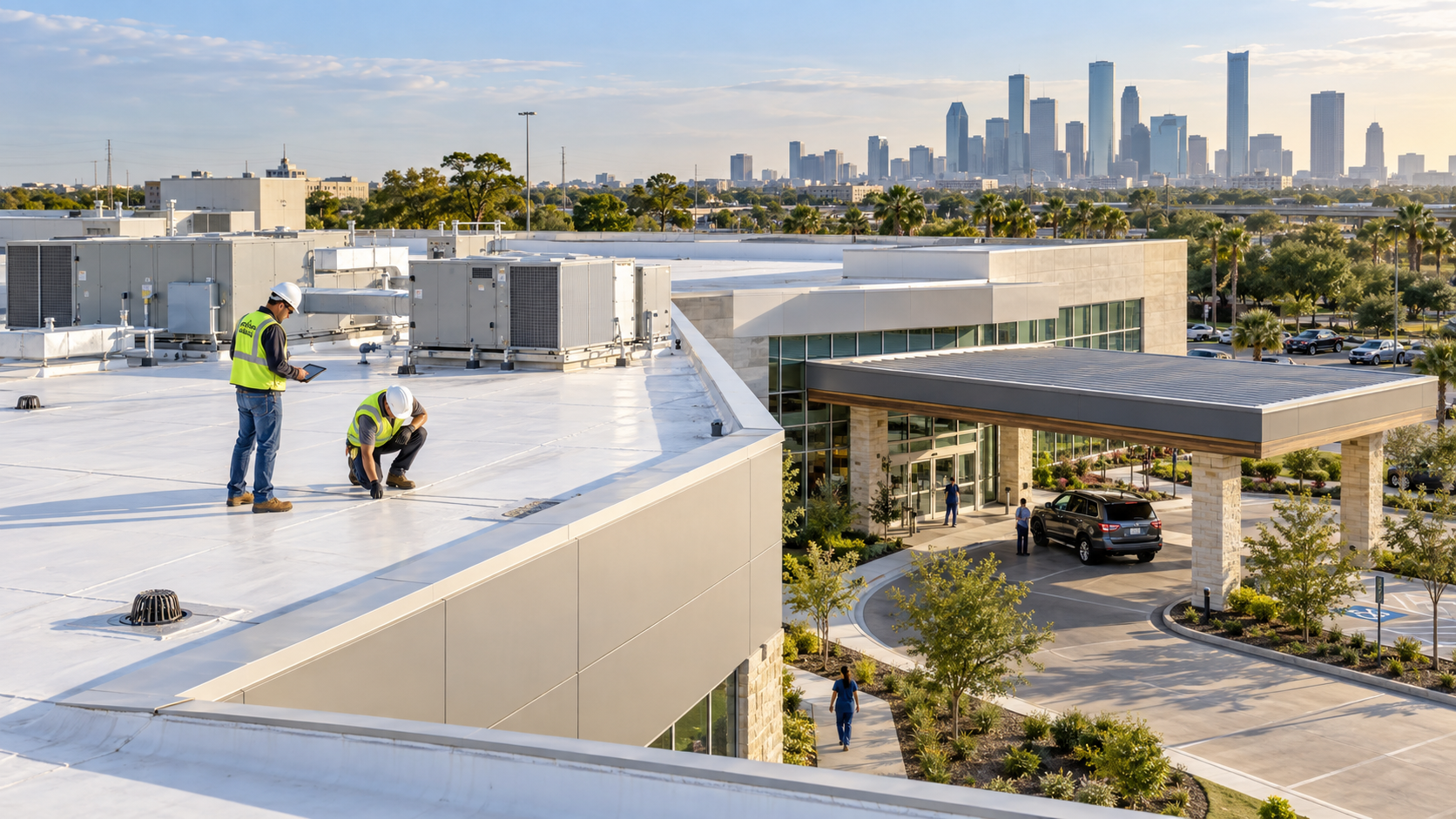
The inspection should identify the roof type, approximate age when known, slopes, storm-facing elevations, missing and lifted shingles, creases, fasteners, underlayment, flashing, ventilation, drainage, penetrations, previous repairs, interior symptoms, and accessible deck conditions. It should also state areas that could not be safely inspected and any further testing recommended.
The recommendation should be documented in writing with photographs and measurements where appropriate. Observed storm effects, preexisting conditions, and concealed areas should be identified separately. Prompt action limits avoidable exposure, but the scope should remain evidence based and should never promise a particular insurance outcome.
Moisture May Travel Beyond the Bare Spot
Water entering through a small opening may spread beneath shingles, follow underlayment laps, move along decking, or wet insulation before reaching the ceiling. Moisture meters, attic observations, controlled test openings, or other appropriate methods may be needed. Findings should be interpreted in context because each method has limitations and weather affects results.
The recommendation should be documented in writing with photographs and measurements where appropriate. Observed storm effects, preexisting conditions, and concealed areas should be identified separately. Prompt action limits avoidable exposure, but the scope should remain evidence based and should never promise a particular insurance outcome.
Evaluate the Roof Deck
Missing shingles can expose a deck already weakened by prior leaks, decay, delamination, or inadequate fastening. From the attic or during controlled removal, the contractor should look for staining, softness, corrosion, deflection, mold-like growth, or damaged sheathing. Unsound decking must be corrected before a dependable shingle repair or replacement can be completed.
The recommendation should be documented in writing with photographs and measurements where appropriate. Observed storm effects, preexisting conditions, and concealed areas should be identified separately. Prompt action limits avoidable exposure, but the scope should remain evidence based and should never promise a particular insurance outcome.
When a Targeted Shingle Repair May Work
Repair may be reasonable when loss is limited, surrounding shingles remain flexible and serviceable, matching or compatible materials are available, underlayment and decking are sound, and flashings are intact. The contractor should remove damaged material carefully, replace affected layers, use the correct fastening pattern, restore sealing, and document the completed area.
The recommendation should be documented in writing with photographs and measurements where appropriate. Observed storm effects, preexisting conditions, and concealed areas should be identified separately. Prompt action limits avoidable exposure, but the scope should remain evidence based and should never promise a particular insurance outcome.
When Roof Replacement Becomes More Likely
Replacement should be evaluated when missing shingles occur across several slopes, many tabs are unsealed or creased, shingles are brittle, repairs would damage adjacent material, decking is broadly compromised, leaks recur, or the roof is near the end of its serviceability. The decision should be based on the whole assembly rather than a single photograph.
The recommendation should be documented in writing with photographs and measurements where appropriate. Observed storm effects, preexisting conditions, and concealed areas should be identified separately. Prompt action limits avoidable exposure, but the scope should remain evidence based and should never promise a particular insurance outcome.
Repairability Depends on Shingle Condition
Age alone does not decide whether a roof is repairable, but older shingles may be stiff, fragile, faded, or difficult to separate without damage. A contractor should assess whether surrounding courses can be lifted and resealed successfully. A technically possible patch is not necessarily a durable repair if the remaining roof cannot tolerate the work.
The recommendation should be documented in writing with photographs and measurements where appropriate. Observed storm effects, preexisting conditions, and concealed areas should be identified separately. Prompt action limits avoidable exposure, but the scope should remain evidence based and should never promise a particular insurance outcome.
Matching Shingles and Appearance
Manufacturers change colors, blends, dimensions, and product lines over time. A close visual match may still weather differently from the existing roof. Material availability, governing documents, local requirements, and policy provisions can affect the discussion. The contractor can identify products and installation constraints but should not promise that an insurer will pay for matching.
The recommendation should be documented in writing with photographs and measurements where appropriate. Observed storm effects, preexisting conditions, and concealed areas should be identified separately. Prompt action limits avoidable exposure, but the scope should remain evidence based and should never promise a particular insurance outcome.
Manufacturer Instructions Matter
Shingle installation and repair should follow the applicable manufacturer instructions for slope, deck, underlayment, starter, fastening, valleys, flashing, ventilation, sealants, and temperature conditions. Improvised methods may create leaks or affect warranty eligibility. Existing workmanship and ventilation conditions should be documented before attributing every issue to the recent storm.
The recommendation should be documented in writing with photographs and measurements where appropriate. Observed storm effects, preexisting conditions, and concealed areas should be identified separately. Prompt action limits avoidable exposure, but the scope should remain evidence based and should never promise a particular insurance outcome.
Building Code and Permit Questions
The permanent scope may need to address local code, permits, underlayment, ice or water protection where applicable, ventilation, decking, flashing, and wind-resistance requirements. Rules vary by jurisdiction and project scope. The contractor should identify known requirements and coordinate with local officials or design professionals when the work extends beyond routine repair.
The recommendation should be documented in writing with photographs and measurements where appropriate. Observed storm effects, preexisting conditions, and concealed areas should be identified separately. Prompt action limits avoidable exposure, but the scope should remain evidence based and should never promise a particular insurance outcome.
Residential Homes
Homeowners should check attics and ceilings safely, protect belongings, preserve storm records, and arrange inspection promptly. Avoid door-to-door pressure and do not sign documents you do not understand. Compare written scopes, confirm contractor credentials, and ask how the repair will integrate with underlayment, flashing, ventilation, and the surrounding shingle field.
The recommendation should be documented in writing with photographs and measurements where appropriate. Observed storm effects, preexisting conditions, and concealed areas should be identified separately. Prompt action limits avoidable exposure, but the scope should remain evidence based and should never promise a particular insurance outcome.
Apartments and Multifamily Properties
Multifamily operators should establish a tenant reporting channel, map leaks by unit and roof slope, protect common areas, and coordinate access without exposing residents to hazards. One missing-shingle area may affect several units through a shared attic or drainage path. The scope should address occupied-building safety, scheduling, noise, debris, parking, and interior protection.
The recommendation should be documented in writing with photographs and measurements where appropriate. Observed storm effects, preexisting conditions, and concealed areas should be identified separately. Prompt action limits avoidable exposure, but the scope should remain evidence based and should never promise a particular insurance outcome.
Commercial Buildings With Shingle Roof Areas
Offices, retail centers, churches, schools, and mixed-use properties may have steep-slope shingle sections connected to low-slope roofs. The inspection should evaluate transitions, parapets, gutters, equipment, drainage, and wall interfaces. Operational planning matters because emergency work, tear-off, and debris control must protect customers, employees, inventory, and entrances.
The recommendation should be documented in writing with photographs and measurements where appropriate. Observed storm effects, preexisting conditions, and concealed areas should be identified separately. Prompt action limits avoidable exposure, but the scope should remain evidence based and should never promise a particular insurance outcome.
Hail and Wind Can Occur Together
Texas storms can produce both hail impact and wind displacement. The inspection should document each observed condition separately and evaluate shingles, vents, metals, skylights, gutters, and roof accessories. Dents or granule changes do not automatically establish functional damage, while missing or creased shingles require analysis of fastening, sealing, age, direction, and storm pattern.
The recommendation should be documented in writing with photographs and measurements where appropriate. Observed storm effects, preexisting conditions, and concealed areas should be identified separately. Prompt action limits avoidable exposure, but the scope should remain evidence based and should never promise a particular insurance outcome.
Fallen Limbs Can Cause More Than Missing Shingles
A limb may remove shingles while also puncturing underlayment, crushing insulation, cracking decking, bending framing, or damaging gutters and flashing. Do not move large debris until safety and structural conditions are understood. Temporary protection may be needed, followed by controlled removal and an inspection of every affected layer.
The recommendation should be documented in writing with photographs and measurements where appropriate. Observed storm effects, preexisting conditions, and concealed areas should be identified separately. Prompt action limits avoidable exposure, but the scope should remain evidence based and should never promise a particular insurance outcome.
Avoid Surface Caulk as the Only Solution
Roof cement or sealant may have a limited role in a manufacturer-compatible detail, but smearing material over exposed areas is not a complete repair. It can trap moisture, obscure evidence, complicate later work, and fail as the roof moves. A proper scope replaces damaged components and restores the layered water-shedding system.
The recommendation should be documented in writing with photographs and measurements where appropriate. Observed storm effects, preexisting conditions, and concealed areas should be identified separately. Prompt action limits avoidable exposure, but the scope should remain evidence based and should never promise a particular insurance outcome.
Insurance Claim Considerations
Review deductibles, exclusions, valuation, cosmetic-damage provisions, matching language, reporting deadlines, duties after loss, and endorsements with the insurer or a licensed insurance professional. Showtime Exteriors can document observed conditions and prepare a roofing scope, but cannot interpret coverage as legal advice or guarantee claim approval, replacement, or payment.
The recommendation should be documented in writing with photographs and measurements where appropriate. Observed storm effects, preexisting conditions, and concealed areas should be identified separately. Prompt action limits avoidable exposure, but the scope should remain evidence based and should never promise a particular insurance outcome.
Actual Cash Value and Replacement Cost
An actual cash value policy and a replacement cost policy may handle depreciation and payment timing differently, subject to the contract and claim facts. Owners should ask the insurer how depreciation is calculated, what documentation is required, and when recoverable amounts may be released. Roofing decisions should not be based on assumptions about settlement.
The recommendation should be documented in writing with photographs and measurements where appropriate. Observed storm effects, preexisting conditions, and concealed areas should be identified separately. Prompt action limits avoidable exposure, but the scope should remain evidence based and should never promise a particular insurance outcome.
Maintenance Records Strengthen Decision Making
Keep inspection reports, invoices, photographs, warranty documents, repair history, roof plans, and dates of prior leaks. These records help separate recent storm effects from earlier conditions and show whether recurring problems exist. They may also help underwriters understand maintenance, although no contractor can guarantee renewal, pricing, or coverage terms.
The recommendation should be documented in writing with photographs and measurements where appropriate. Observed storm effects, preexisting conditions, and concealed areas should be identified separately. Prompt action limits avoidable exposure, but the scope should remain evidence based and should never promise a particular insurance outcome.
Aging Gravel BUR on the Same Property
Some commercial properties combine shingle roofs with low-slope gravel-surfaced built-up roofing. Aging gravel BUR demands separate scrutiny because aggregate can conceal moisture, deteriorated felts, cracks, blisters, failed patches, storm damage, and blocked drainage. Showtime Exteriors does not present these aging gravel roofs as an advantage; owners should plan careful investigation and, when warranted, replacement with a more inspectable system.
The recommendation should be documented in writing with photographs and measurements where appropriate. Observed storm effects, preexisting conditions, and concealed areas should be identified separately. Prompt action limits avoidable exposure, but the scope should remain evidence based and should never promise a particular insurance outcome.
How Quickly Permanent Work Should Begin
Complete emergency stabilization and inspection as soon as safe conditions allow, then approve the permanent scope without avoidable delay. Urgency rises when underlayment is exposed, rain is forecast, water is entering, multiple slopes are affected, the deck is damaged, or neighboring shingles are loose. Material availability, permits, weather, and insurer access may affect scheduling, so document every interim step.
The recommendation should be documented in writing with photographs and measurements where appropriate. Observed storm effects, preexisting conditions, and concealed areas should be identified separately. Prompt action limits avoidable exposure, but the scope should remain evidence based and should never promise a particular insurance outcome.
How Showtime Exteriors Helps
Showtime Exteriors provides storm-response inspections, documentation, emergency protection, repair analysis, and replacement planning for Texas properties. The goal is to identify the actual failure pathway, protect the building, and recommend a scope that addresses shingles, underlayment, flashing, decking, ventilation, and connected roof areas rather than treating only the most visible symptom.
The recommendation should be documented in writing with photographs and measurements where appropriate. Observed storm effects, preexisting conditions, and concealed areas should be identified separately. Prompt action limits avoidable exposure, but the scope should remain evidence based and should never promise a particular insurance outcome.
Missing Shingle Resources
Use the Showtime Exteriors and independent resources below to understand inspection, safe emergency response, wind-resistant roofing, maintenance, and claim documentation. These references support informed decisions but do not replace a site-specific assessment, the roofing manufacturer instructions, local code requirements, or the terms of an individual insurance policy.
A qualified post-storm inspection documents missing, lifted, and creased shingles and checks the layers beneath the visible damage.
Showtime Exteriors Links
Learn more from Showtime Exteriors homepage, roofing services, commercial roofing services, roofing questions and answers, contact Showtime Exteriors, and commercial roofing resources.
Independent Safety and Roofing References
Authoritative references include OSHA fall protection requirements, FEMA guidance on protecting property after severe weather, IBHS guidance for stronger roofs, NRCA consumer roofing guidance, and Texas Department of Insurance storm resources.
Frequently Asked Questions About Missing Shingles After a Storm
How quickly should missing shingles be addressed
Begin safe mitigation and contact a qualified roofer the same day. Arrange inspection as soon as weather and access are safe, then complete permanent work promptly.
Can one missing shingle cause a leak
Yes. It can expose underlayment or fastener holes and allow wind-driven rain beneath adjacent courses, although leakage may not appear immediately.
Should I climb onto the roof to check the damage
No. Wet surfaces, loose materials, damaged decking, steep slopes, and electrical hazards make post-storm access dangerous. Use qualified professionals.
Can missing shingles be repaired
Often, when damage is isolated, surrounding shingles remain serviceable, compatible materials are available, and the underlayment and deck are sound.
When is replacement more appropriate
Replacement becomes more likely with widespread loss, many creased or unsealed shingles, brittle materials, broad moisture, damaged decking, or repeated failures.
What if the roof is not leaking yet
Do not wait. Underlayment may temporarily shed water while concealed materials become exposed or damp. Prompt inspection reduces the chance of additional loss.
Should I install a tarp myself
No. Roof access and tarp installation create fall, wind, structural, and electrical hazards. Qualified roofers should determine whether temporary protection is safe and appropriate.
What photographs should I take
From safe locations, capture the building, each roof slope, visible bare areas, debris on the ground, interior water, affected contents, and a timeline of changes.
Will insurance pay for missing shingles
Coverage depends on the policy, cause, exclusions, deductible, valuation, documentation, and insurer findings. A roofing contractor cannot guarantee coverage or payment.
Can lifted shingles reseal on their own
Some may settle, but a broken seal, crease, fastener damage, or contamination can leave them vulnerable. A professional inspection is needed.
Can old shingles be matched
Sometimes, but products and colors change. Availability and repairability should be documented, and no contractor should promise an insurance matching outcome.
Who should inspect storm damaged shingles
Use a qualified roofing contractor experienced with storm documentation, shingle systems, safety, flashing, decking, ventilation, and repair-versus-replacement analysis.
Schedule a Texas Storm Damage Roof Inspection
If shingles are missing after a Texas storm, do not wait for the next rain to reveal the full problem. Call Showtime Exteriors at 817-400-ROOF (7663) to document the condition, inspect the roof assembly, and develop a permanent repair or replacement plan.