



How to Document a Storm Roof Leak Before Filing a Claim
Texas Commercial Property Documentation Guide

Before filing a storm roof leak claim, protect people and property, stop additional damage when it can be done safely, and create a clear record of what happened. Photograph the building, leak area, interior damage, affected contents, and safe emergency measures. Record the date, time, weather, discovery sequence, notifications, and changes in the leak. Preserve original files, invoices, and damaged materials when appropriate.
Good documentation does not mean diagnosing the roof from the floor or proving coverage yourself. A qualified roofing contractor should trace the water pathway, identify observed storm effects and preexisting conditions separately, inspect the roof assembly, and state any limitations. The insurer and policy control coverage, valuation, deductibles, exclusions, deadlines, and payment; no roofing contractor can guarantee a claim outcome.
Showtime Exteriors helps commercial property owners across North Texas, Houston, and Texas document storm-related roof leaks, stabilize exposed areas, inspect BUR, TPO, PVC, EPDM, modified bitumen, metal, coatings, and steep-slope systems, and prepare a practical repair or replacement scope. Call 817-400-ROOF (7663) for a professional assessment.
The Short Answer
Document the storm roof leak immediately, but do not delay reasonable emergency protection merely to take photographs. Start with safety, then capture wide, medium, and close images from safe locations; record the date, time, weather, leak location, affected rooms, contents, and mitigation; preserve original files and receipts; notify required parties; and arrange a professional roof inspection as soon as conditions permit.
Safety Comes Before Evidence
Keep occupants away from wet floors, sagging ceilings, damaged electrical equipment, and unstable materials. Do not climb onto a wet, wind-damaged, low-slope, metal, or steep roof. Qualified personnel should control access and evaluate fall, lightning, wind, structural, and electrical hazards. Documentation is valuable only when it does not create another injury or loss.
Keep the record factual, chronological, and tied to labeled locations. Identify observed conditions separately from assumptions, preserve original files, and document reasonable mitigation. The evidence may support claim evaluation, but the policy and insurer determine coverage, valuation, and payment.
Stop Additional Damage When Safe
Policies commonly require reasonable steps after a loss, but the specific duty depends on the contract. Move vulnerable property, use safe water collection, isolate affected areas, and call qualified emergency services. Do not perform permanent alterations before the condition is documented unless delay would create greater harm. Keep a written record of every mitigation decision.
Keep the record factual, chronological, and tied to labeled locations. Identify observed conditions separately from assumptions, preserve original files, and document reasonable mitigation. The evidence may support claim evaluation, but the policy and insurer determine coverage, valuation, and payment.
Create a Written Storm Timeline
Write down when the storm began, when the leak was first noticed, who discovered it, which rooms were affected, how the leak changed, when emergency calls were made, and when protection was installed. Continue the log through inspection and repair. A contemporaneous timeline is usually more reliable than reconstructing events days later from memory.
Keep the record factual, chronological, and tied to labeled locations. Identify observed conditions separately from assumptions, preserve original files, and document reasonable mitigation. The evidence may support claim evaluation, but the policy and insurer determine coverage, valuation, and payment.
Document Weather Without Overstating It
Record observable conditions such as heavy rain, wind, hail, lightning, or falling debris. Save official alerts or local weather reports when available. Do not claim a specific wind speed, hail size, or storm path unless supported by a reliable source. Weather context can guide investigation, but it does not by itself prove the cause or extent of roof damage.
Keep the record factual, chronological, and tied to labeled locations. Identify observed conditions separately from assumptions, preserve original files, and document reasonable mitigation. The evidence may support claim evaluation, but the policy and insurer determine coverage, valuation, and payment.
Start With Exterior Establishing Photographs
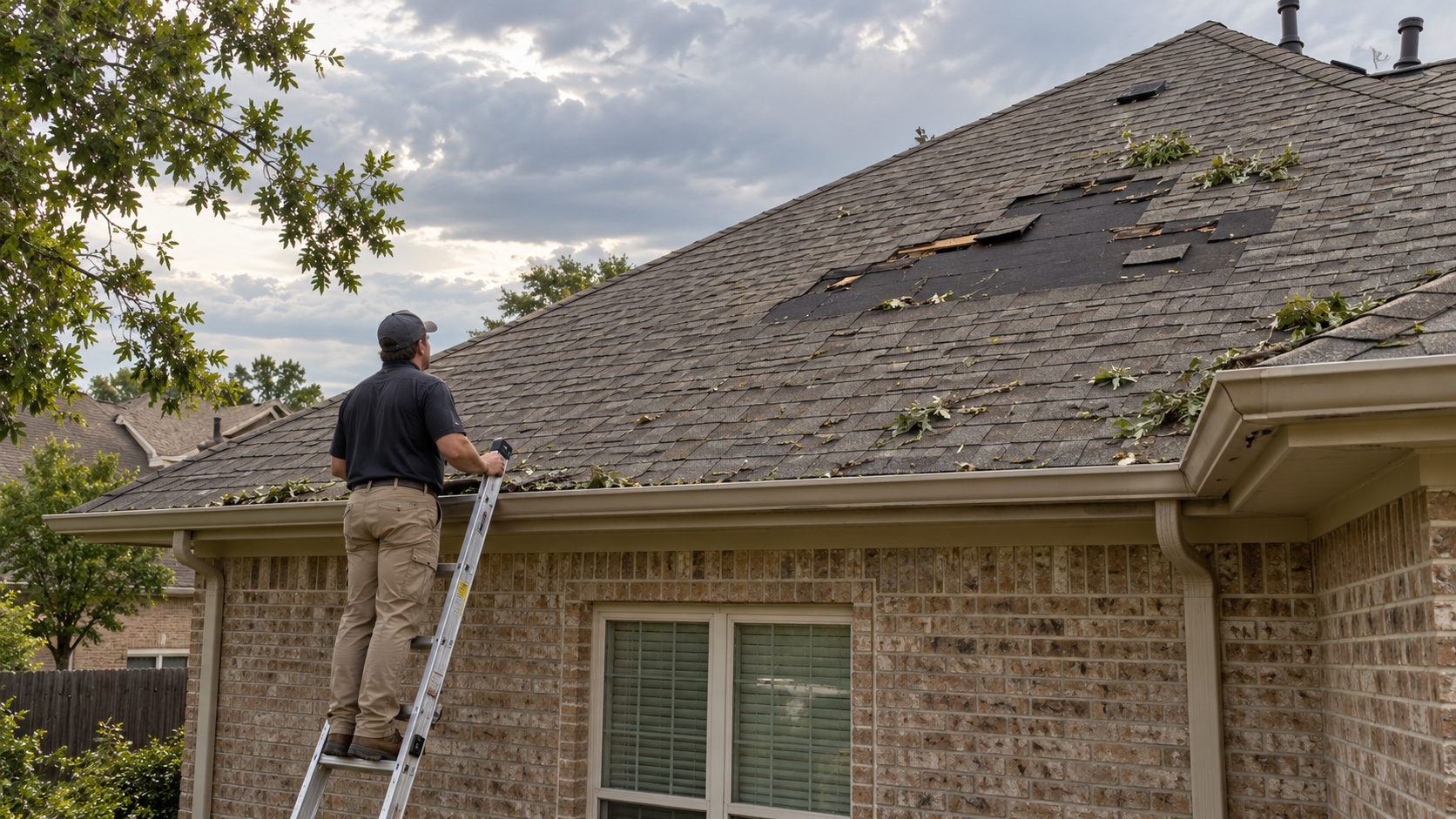
From a safe ground location, photograph the entire building, address or identifying elevation, roofline, surrounding debris, downspouts, trees, and visible damage. These wide views establish context. Capture each elevation when possible and note the direction faced. Avoid zooming so tightly that another reviewer cannot understand where the damaged area sits on the property.
Keep the record factual, chronological, and tied to labeled locations. Identify observed conditions separately from assumptions, preserve original files, and document reasonable mitigation. The evidence may support claim evaluation, but the policy and insurer determine coverage, valuation, and payment.
Photograph Interior Damage Systematically
Take wide images of each affected room, medium images connecting the leak to walls or equipment, and close images of stains, dripping, damaged finishes, or wet contents. Include a reference object or measurement where useful. Photograph ceiling tiles before moving them unless safety requires immediate removal. Do not touch energized fixtures or bulging ceilings.
Keep the record factual, chronological, and tied to labeled locations. Identify observed conditions separately from assumptions, preserve original files, and document reasonable mitigation. The evidence may support claim evaluation, but the policy and insurer determine coverage, valuation, and payment.
Use a Room by Room Leak Log
Assign each leak a simple identifier, such as L1 or L2, and record the building, floor, suite, room, ceiling location, first observation, drip rate, weather, contents affected, and current status. A consistent log prevents multiple reports of the same leak from being confused with separate entry points and helps correlate interior symptoms with roof locations.
Keep the record factual, chronological, and tied to labeled locations. Identify observed conditions separately from assumptions, preserve original files, and document reasonable mitigation. The evidence may support claim evaluation, but the policy and insurer determine coverage, valuation, and payment.
Map Interior Leaks to the Roof
Mark leak locations on a floor plan or simple sketch, then relate them to roof drains, penetrations, walls, equipment, deck direction, and roof zones. Water can travel along structural members and deck flutes, so the ceiling stain may not sit directly below the opening. The map should show observations, not an unsupported conclusion about cause.
Keep the record factual, chronological, and tied to labeled locations. Identify observed conditions separately from assumptions, preserve original files, and document reasonable mitigation. The evidence may support claim evaluation, but the policy and insurer determine coverage, valuation, and payment.
Preserve Original Image Files
Keep unedited photographs and videos with their original timestamps and metadata. Make copies for annotation instead of drawing on the only version. Store files in a clearly labeled folder and back them up. Avoid filters, compression, screenshots, or social-media uploads as the sole record because these actions can reduce detail or strip useful metadata.
Keep the record factual, chronological, and tied to labeled locations. Identify observed conditions separately from assumptions, preserve original files, and document reasonable mitigation. The evidence may support claim evaluation, but the policy and insurer determine coverage, valuation, and payment.
Capture Video When It Adds Context
A short video can show active dripping, water movement, sound, room layout, or the relationship between several affected areas. Begin with a wide orientation view, state the date and location, and move slowly. Video should supplement still photographs rather than replace them, because individual conditions are easier to review in sharp labeled images.
Keep the record factual, chronological, and tied to labeled locations. Identify observed conditions separately from assumptions, preserve original files, and document reasonable mitigation. The evidence may support claim evaluation, but the policy and insurer determine coverage, valuation, and payment.
Photograph Emergency Mitigation
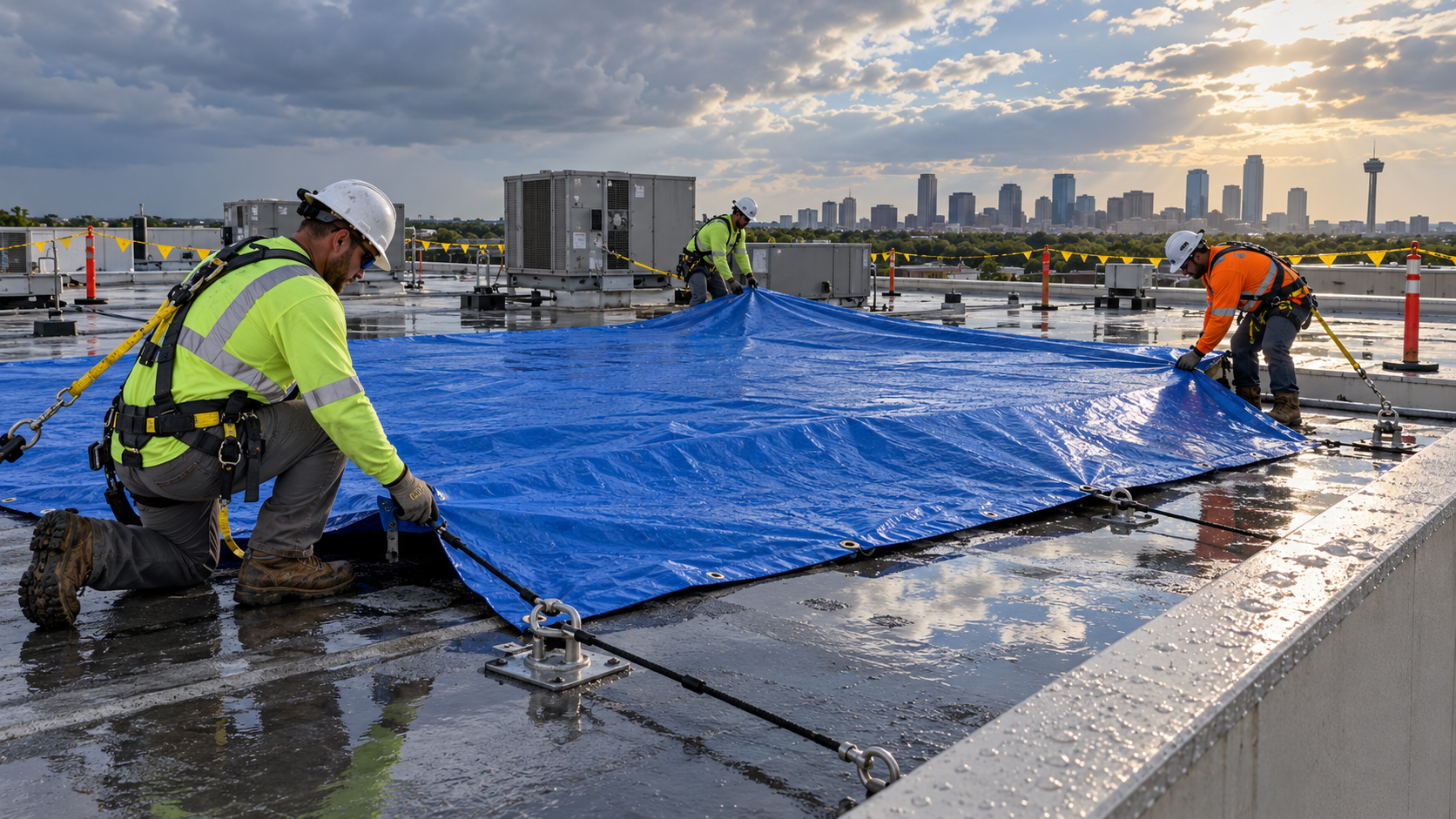
Document conditions immediately before temporary work when safe, the materials and attachment method used, the area covered, drainage paths, and the completed protection. Record who performed the work and when. Temporary tarps, patches, or containment should be described accurately as mitigation, not as proof that the underlying roof has been permanently repaired.
Keep the record factual, chronological, and tied to labeled locations. Identify observed conditions separately from assumptions, preserve original files, and document reasonable mitigation. The evidence may support claim evaluation, but the policy and insurer determine coverage, valuation, and payment.
Keep Every Receipt and Invoice
Preserve invoices for emergency roofing, water extraction, drying, electrical work, temporary relocation, equipment protection, cleanup, and other loss-related services. The invoice should identify the date, vendor, work performed, quantities, and affected location. Keep proof of payment, proposals, change orders, and canceled or declined work separately so the record remains understandable.
Keep the record factual, chronological, and tied to labeled locations. Identify observed conditions separately from assumptions, preserve original files, and document reasonable mitigation. The evidence may support claim evaluation, but the policy and insurer determine coverage, valuation, and payment.
Inventory Damaged Contents
List damaged furniture, electronics, inventory, documents, finishes, and equipment by room. Record manufacturer, model, serial number, quantity, age, purchase information, condition, and disposition when available. Photograph items before moving or discarding them unless safety requires immediate action. Coverage and valuation depend on the policy and insurer evaluation.
Keep the record factual, chronological, and tied to labeled locations. Identify observed conditions separately from assumptions, preserve original files, and document reasonable mitigation. The evidence may support claim evaluation, but the policy and insurer determine coverage, valuation, and payment.
Do Not Discard Materials Too Quickly
Preserve fallen roof pieces, damaged ceiling materials, wet insulation samples, fasteners, or other relevant items when safe and practical, and label where and when they were found. Coordinate disposal of hazardous or unsanitary material with qualified professionals. Ask the insurer whether inspection is required before discarding anything, and photograph material that must be removed.
Keep the record factual, chronological, and tied to labeled locations. Identify observed conditions separately from assumptions, preserve original files, and document reasonable mitigation. The evidence may support claim evaluation, but the policy and insurer determine coverage, valuation, and payment.
Notify the Appropriate Parties
Follow building procedures for notifying ownership, management, tenants, maintenance, emergency vendors, the insurer, broker, lender, or other required parties. Record the date, time, person, method, and summary of each notice. Do not rely only on a voicemail when urgent action is needed. Keep claim numbers and assigned contacts in the same incident file.
Keep the record factual, chronological, and tied to labeled locations. Identify observed conditions separately from assumptions, preserve original files, and document reasonable mitigation. The evidence may support claim evaluation, but the policy and insurer determine coverage, valuation, and payment.
Review the Policy and Deadlines
Read the declarations, deductible, covered causes, exclusions, endorsements, valuation terms, notice requirements, duties after loss, proof-of-loss provisions, appraisal language, and suit limitations with the insurer or a licensed insurance professional. Roofing documentation supports factual evaluation but does not replace policy interpretation or legal advice.
Keep the record factual, chronological, and tied to labeled locations. Identify observed conditions separately from assumptions, preserve original files, and document reasonable mitigation. The evidence may support claim evaluation, but the policy and insurer determine coverage, valuation, and payment.
Separate Observed Facts From Conclusions
Write that water was observed at a ceiling joint during heavy rain, not that wind destroyed the membrane unless an investigation supports that conclusion. Label opinions as opinions and identify the basis. A credible report distinguishes observed storm effects, maintenance conditions, installation deficiencies, old repairs, and concealed areas that require further testing.
Keep the record factual, chronological, and tied to labeled locations. Identify observed conditions separately from assumptions, preserve original files, and document reasonable mitigation. The evidence may support claim evaluation, but the policy and insurer determine coverage, valuation, and payment.
Arrange a Professional Roof Inspection
Schedule inspection as soon as weather, access, and safety allow. The contractor should identify roof systems, elevations, drainage, edges, flashings, penetrations, seams, fasteners, surfacing, equipment, previous repairs, and interior correlations. The report should state what was inspected, what was inaccessible, what tests were used, and what remains uncertain.
Keep the record factual, chronological, and tied to labeled locations. Identify observed conditions separately from assumptions, preserve original files, and document reasonable mitigation. The evidence may support claim evaluation, but the policy and insurer determine coverage, valuation, and payment.
Use a Labeled Roof Plan
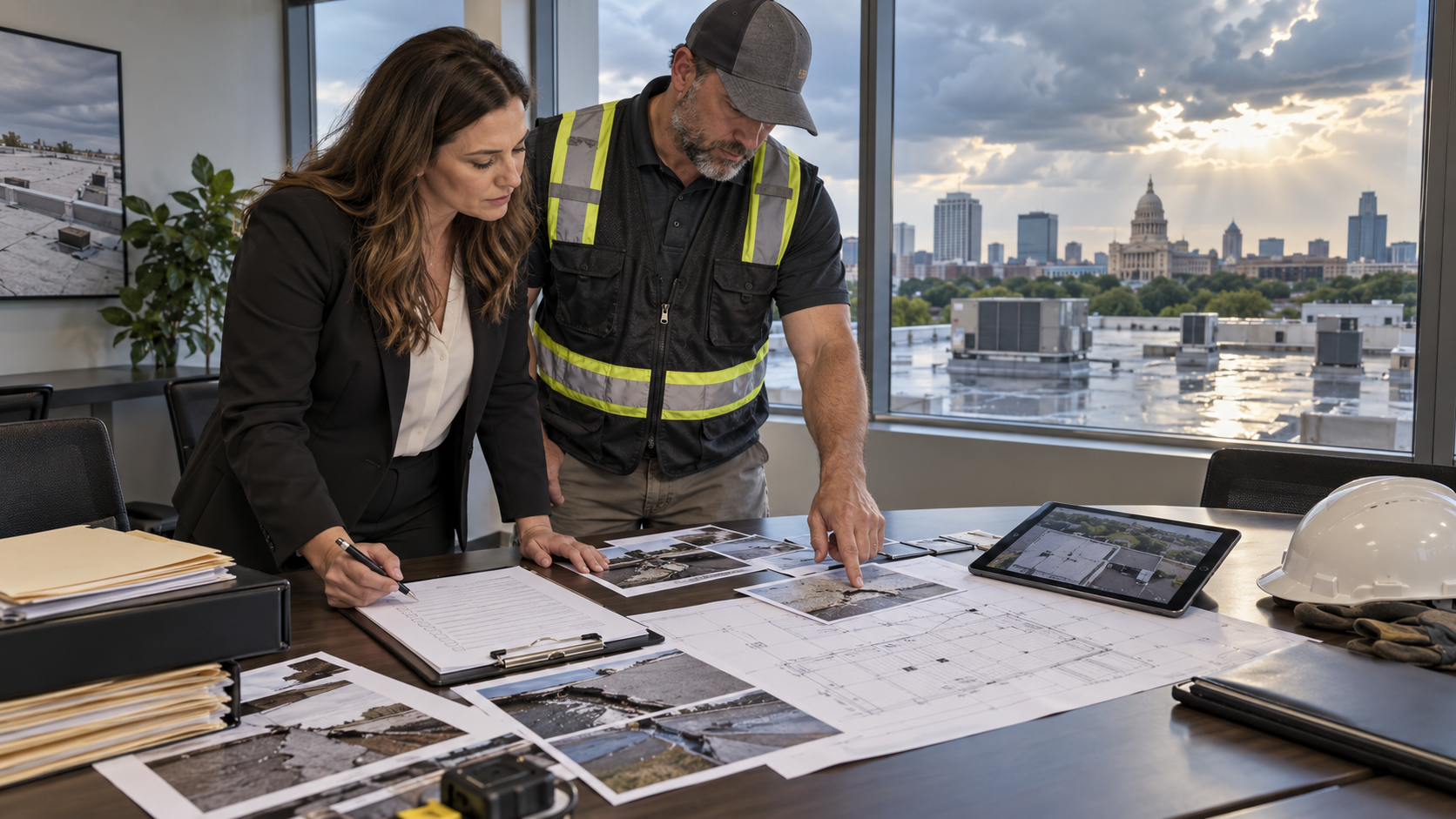
A roof plan should show north orientation, dimensions, roof sections, drains, scuppers, edges, equipment, penetrations, suspected entry points, sample locations, moisture findings, photographs, and repair areas. Labels should match the photo log and interior leak identifiers. This lets owners, contractors, adjusters, and consultants discuss the same locations without ambiguity.
Keep the record factual, chronological, and tied to labeled locations. Identify observed conditions separately from assumptions, preserve original files, and document reasonable mitigation. The evidence may support claim evaluation, but the policy and insurer determine coverage, valuation, and payment.
Document the Entire Water Pathway
The visible drip is the end of a pathway, not necessarily the source. Inspectors should consider membrane openings, flashing, seams, penetrations, walls, rooftop equipment, drains, deck flutes, insulation joints, and interior construction. A report should explain how observations support a probable pathway and clearly state when the source has not yet been confirmed.
Keep the record factual, chronological, and tied to labeled locations. Identify observed conditions separately from assumptions, preserve original files, and document reasonable mitigation. The evidence may support claim evaluation, but the policy and insurer determine coverage, valuation, and payment.
Evaluate Concealed Moisture
Moisture can migrate through insulation and along decks without producing immediate interior stains. Depending on the system and conditions, investigation may include moisture meters, infrared imaging, capacitance testing, core samples, controlled test cuts, or other accepted methods. Each method has limitations, and results should be interpreted with weather, construction, and verification findings.
Keep the record factual, chronological, and tied to labeled locations. Identify observed conditions separately from assumptions, preserve original files, and document reasonable mitigation. The evidence may support claim evaluation, but the policy and insurer determine coverage, valuation, and payment.
Photograph Roof Conditions Safely
Qualified personnel should take overview images, directional slope views, and close photographs of openings, seams, flashings, penetrations, fasteners, impacts, debris, repairs, drains, and ponding. Include scales or measurements when useful. Avoid disturbing evidence unnecessarily, and document any material moved to complete emergency work or controlled testing.
Keep the record factual, chronological, and tied to labeled locations. Identify observed conditions separately from assumptions, preserve original files, and document reasonable mitigation. The evidence may support claim evaluation, but the policy and insurer determine coverage, valuation, and payment.
Document Drainage and Ponding
Photograph blocked drains, displaced strainers, debris, standing water, scuppers, gutters, downspouts, and overflow paths. Record when images were taken relative to rainfall because water depth can change. Drainage deficiencies may contribute to leakage or loading, but the report should distinguish chronic conditions from storm-created obstructions or damage.
Keep the record factual, chronological, and tied to labeled locations. Identify observed conditions separately from assumptions, preserve original files, and document reasonable mitigation. The evidence may support claim evaluation, but the policy and insurer determine coverage, valuation, and payment.
Document Flashings and Penetrations
Roof leaks frequently involve curbs, pipes, conduits, walls, skylights, vents, pitch pans, equipment supports, and edge transitions. Capture the complete detail and close views of open seams, failed sealant, displaced metal, punctures, or movement. Note whether the condition appears new, weathered, previously repaired, or requires further evaluation.
Keep the record factual, chronological, and tied to labeled locations. Identify observed conditions separately from assumptions, preserve original files, and document reasonable mitigation. The evidence may support claim evaluation, but the policy and insurer determine coverage, valuation, and payment.
Document Wind Damage Carefully
Record displaced materials, lifted edges, membrane flutter evidence, open seams, loose coping, bent metal, missing fasteners, and debris patterns. Note the location and orientation. Do not equate every loose component with the reported storm without considering corrosion, installation, maintenance, and prior conditions. Evidence should support, not outrun, the conclusion.
Keep the record factual, chronological, and tied to labeled locations. Identify observed conditions separately from assumptions, preserve original files, and document reasonable mitigation. The evidence may support claim evaluation, but the policy and insurer determine coverage, valuation, and payment.
Document Hail Conditions Carefully
Photograph representative roof areas and collateral components such as vents, soft metals, skylights, equipment, and gutters. Record size references and patterns when available. Dents or granule changes do not automatically establish functional damage. The roof type, age, substrate, surface temperature, impact evidence, and resulting loss of waterproofing all matter.
Keep the record factual, chronological, and tied to labeled locations. Identify observed conditions separately from assumptions, preserve original files, and document reasonable mitigation. The evidence may support claim evaluation, but the policy and insurer determine coverage, valuation, and payment.
Document Fallen Tree or Debris Damage
Capture the debris in place, its entry path, affected roof area, punctures, crushed insulation, bent deck, framing, equipment, and interior damage. Do not move heavy debris until structural and electrical hazards are evaluated. If emergency removal is necessary, photograph each stage and record the contractor, equipment, and materials removed.
Keep the record factual, chronological, and tied to labeled locations. Identify observed conditions separately from assumptions, preserve original files, and document reasonable mitigation. The evidence may support claim evaluation, but the policy and insurer determine coverage, valuation, and payment.
Document Temporary and Permanent Repairs Separately
Create separate records for emergency stabilization, diagnostic openings, permanent repairs, restoration, recover, retrofit, or replacement. Each record should state the date, location, materials, quantities, preparation, personnel, photographs, and unresolved conditions. This separation prevents a temporary patch from being mistaken for a completed permanent scope.
Keep the record factual, chronological, and tied to labeled locations. Identify observed conditions separately from assumptions, preserve original files, and document reasonable mitigation. The evidence may support claim evaluation, but the policy and insurer determine coverage, valuation, and payment.
Build a Repair History
Collect prior inspection reports, leak logs, proposals, invoices, warranties, photographs, roof plans, maintenance records, and dates of earlier repairs. A clear history helps distinguish recurring deficiencies from recent storm effects. Do not hide previous problems; unexplained gaps or inconsistent statements can weaken credibility and lead to poor technical decisions.
Keep the record factual, chronological, and tied to labeled locations. Identify observed conditions separately from assumptions, preserve original files, and document reasonable mitigation. The evidence may support claim evaluation, but the policy and insurer determine coverage, valuation, and payment.
Aging Gravel BUR Requires Extra Scrutiny
Aging gravel-surfaced built-up roofs create serious documentation challenges because aggregate can conceal moisture, deteriorated felts, cracks, blisters, failed patches, storm effects, and blocked drainage. Showtime Exteriors does not frame these roofs positively. Owners should document limitations, investigate concealed conditions, and consider replacement with a more inspectable system before insurance or leak problems become more urgent.
Keep the record factual, chronological, and tied to labeled locations. Identify observed conditions separately from assumptions, preserve original files, and document reasonable mitigation. The evidence may support claim evaluation, but the policy and insurer determine coverage, valuation, and payment.
Document TPO and PVC Leaks
Record seam conditions, punctures, cuts, contamination, heat-welded repairs, fasteners, attachment, flashing, and substrate moisture. Older thermoplastic membranes may require cleaning and weldability testing before repair. Distinguish an isolated opening from widespread seam, attachment, or moisture problems that may require sectional or full replacement.
Keep the record factual, chronological, and tied to labeled locations. Identify observed conditions separately from assumptions, preserve original files, and document reasonable mitigation. The evidence may support claim evaluation, but the policy and insurer determine coverage, valuation, and payment.
Document EPDM Leaks
Photograph seams, splice tape, terminations, shrinking membrane, flashings, punctures, adhesives, rooftop traffic, and previous patches. Note whether water is entering at a discrete detail or whether broad wet insulation and perimeter movement exist. Repairs should use compatible materials and preparation rather than relying on surface sealant alone.
Keep the record factual, chronological, and tied to labeled locations. Identify observed conditions separately from assumptions, preserve original files, and document reasonable mitigation. The evidence may support claim evaluation, but the policy and insurer determine coverage, valuation, and payment.
Document Modified Bitumen Leaks
Record laps, flashings, splits, blisters, granule loss, exposed reinforcement, punctures, coating, and prior repairs. Heat-related work and material compatibility require qualified contractors. A report should identify localized repair candidates as well as repeated patching or substrate instability that makes replacement more responsible.
Keep the record factual, chronological, and tied to labeled locations. Identify observed conditions separately from assumptions, preserve original files, and document reasonable mitigation. The evidence may support claim evaluation, but the policy and insurer determine coverage, valuation, and payment.
Document Metal Roof Leaks
Photograph panels, seams, fasteners, clips, closures, penetrations, gutters, transitions, corrosion, coating, and displaced metal. Wind-driven rain may enter far from the interior symptom. Record thermal movement and prior sealant use. Surface caulk should not be presented as a permanent answer to failed attachment, open seams, or corroded components.
Keep the record factual, chronological, and tied to labeled locations. Identify observed conditions separately from assumptions, preserve original files, and document reasonable mitigation. The evidence may support claim evaluation, but the policy and insurer determine coverage, valuation, and payment.
Prepare a Clear Contractor Report
A useful report includes property identification, inspection date, participants, weather, roof-system description, scope, safety limitations, labeled plans, photograph log, interior observations, test methods, findings, probable pathways, repair or replacement recommendations, quantities, assumptions, exclusions, and next steps. It should be understandable to a reader who was not present.
Keep the record factual, chronological, and tied to labeled locations. Identify observed conditions separately from assumptions, preserve original files, and document reasonable mitigation. The evidence may support claim evaluation, but the policy and insurer determine coverage, valuation, and payment.
Understand What the Contractor Cannot Promise
A roofing contractor can document physical conditions, perform testing within its qualifications, provide emergency service, and prepare a scope. It cannot guarantee that an insurer will accept causation, approve replacement, waive a deductible, pay a particular amount, renew coverage, or interpret the policy as legal advice. Direct those questions to licensed insurance or legal professionals.
Keep the record factual, chronological, and tied to labeled locations. Identify observed conditions separately from assumptions, preserve original files, and document reasonable mitigation. The evidence may support claim evaluation, but the policy and insurer determine coverage, valuation, and payment.
Organize the Claim File
Use folders for policy documents, timeline, correspondence, photographs, videos, weather records, inspections, emergency work, estimates, invoices, contents, payments, and final repairs. Use consistent filenames that include date, building, location, and image number. Keep a master index so important evidence can be found without sending disorganized batches of unlabeled files.
Keep the record factual, chronological, and tied to labeled locations. Identify observed conditions separately from assumptions, preserve original files, and document reasonable mitigation. The evidence may support claim evaluation, but the policy and insurer determine coverage, valuation, and payment.
How Showtime Exteriors Helps
Showtime Exteriors helps Texas property owners move from an active storm roof leak to a documented, permanent roofing decision. The team can inspect the roof, map leak locations, photograph findings, evaluate moisture questions, stabilize exposed areas, and prepare repair, restoration, retrofit, or replacement scopes while keeping insurance statements factual and qualified.
Keep the record factual, chronological, and tied to labeled locations. Identify observed conditions separately from assumptions, preserve original files, and document reasonable mitigation. The evidence may support claim evaluation, but the policy and insurer determine coverage, valuation, and payment.
Storm Roof Leak Documentation Resources
Use the Showtime Exteriors and independent resources below for roofing services, storm response, safety, maintenance, and Texas insurance information. These references support a disciplined process but do not replace a site-specific inspection, manufacturer requirements, local code, engineering when needed, or the terms of the applicable insurance policy.
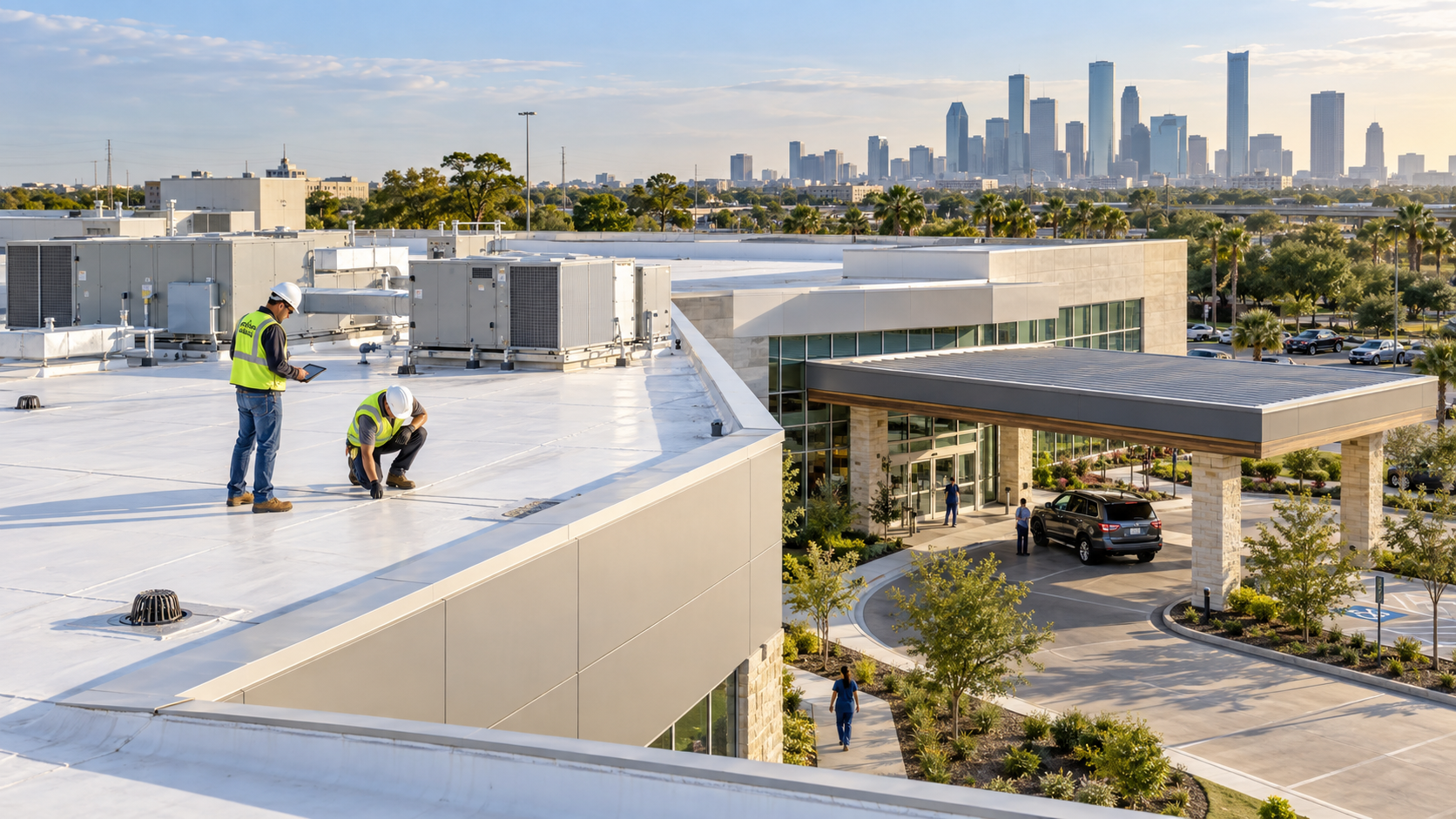
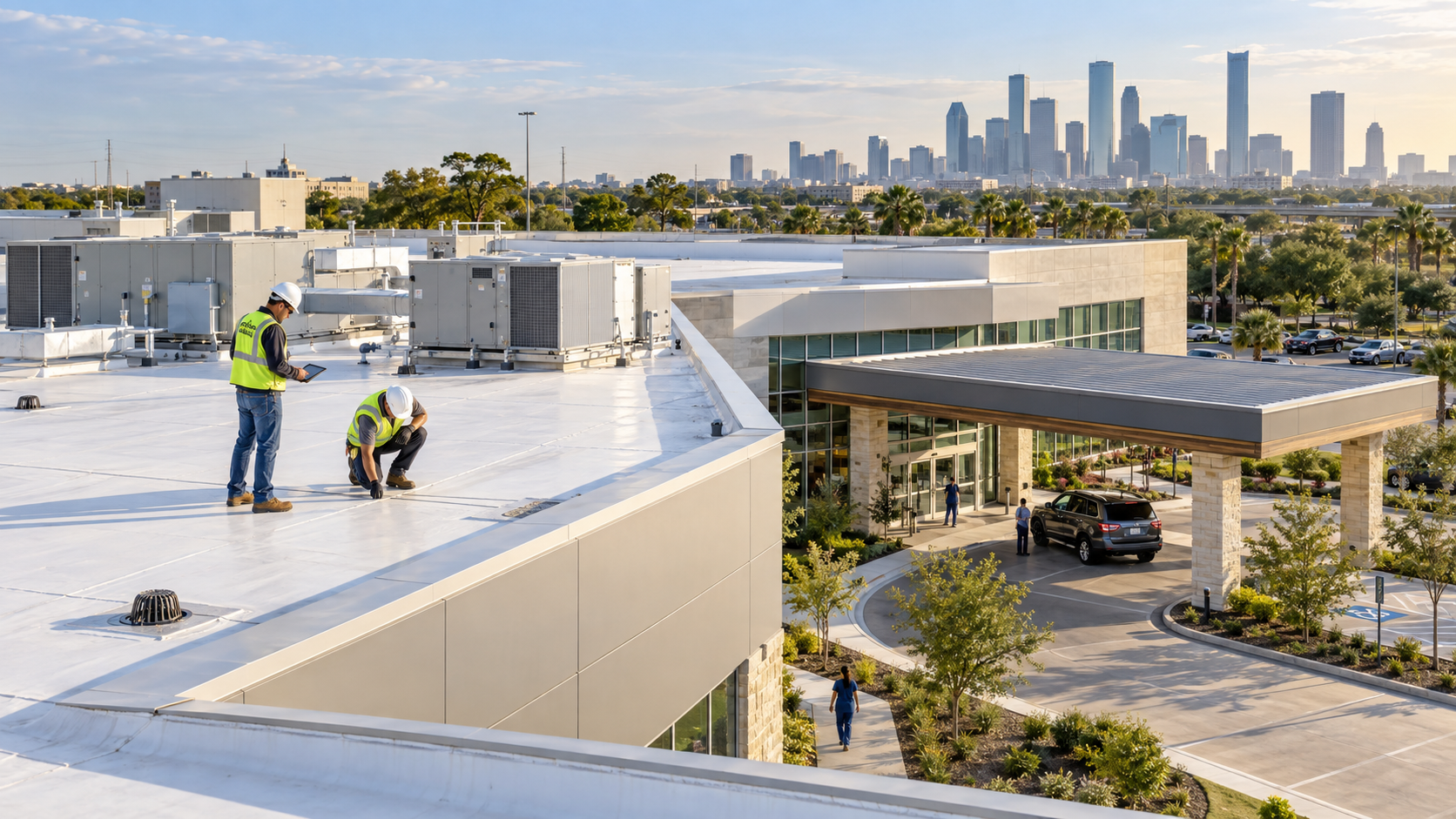
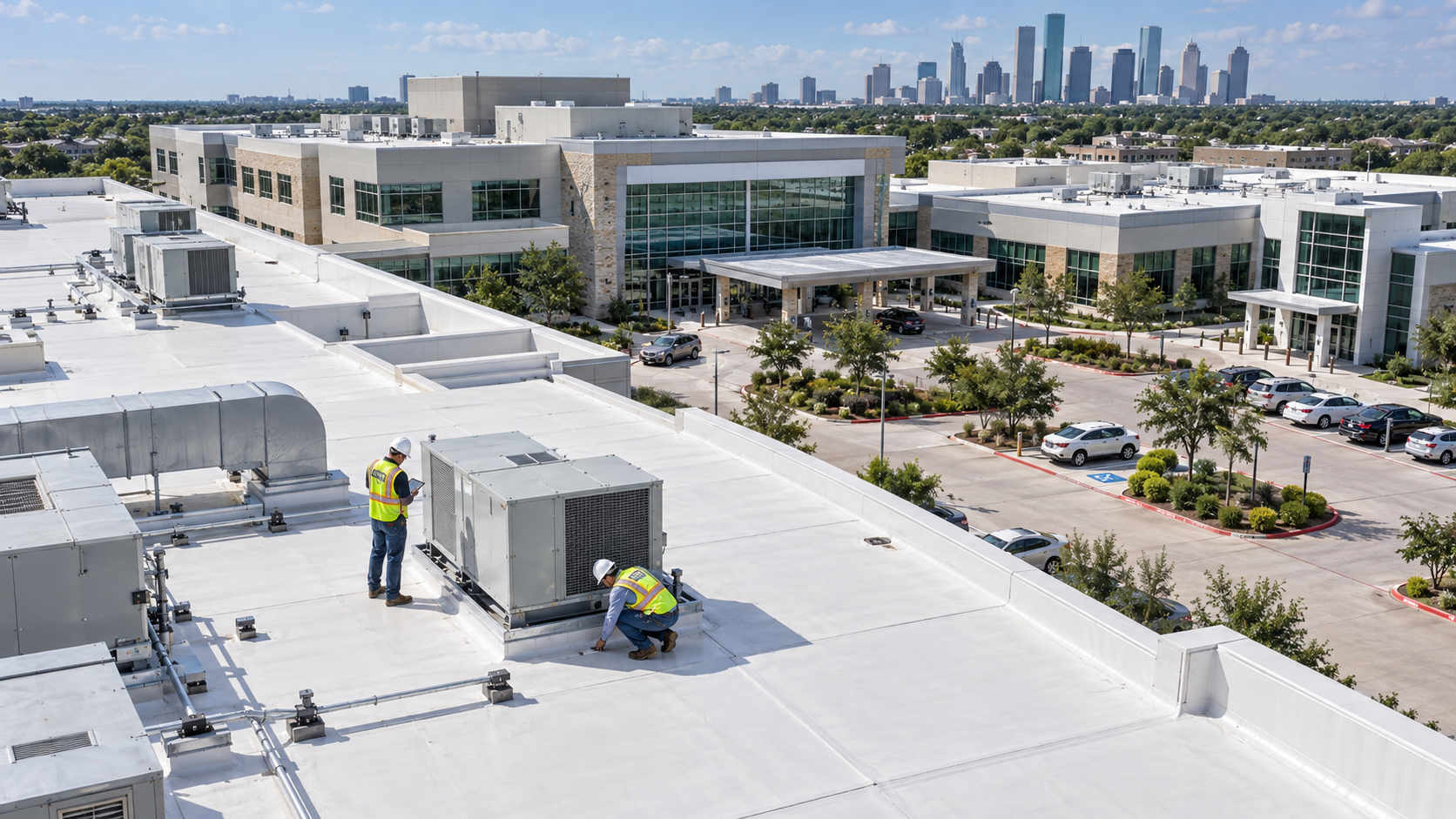
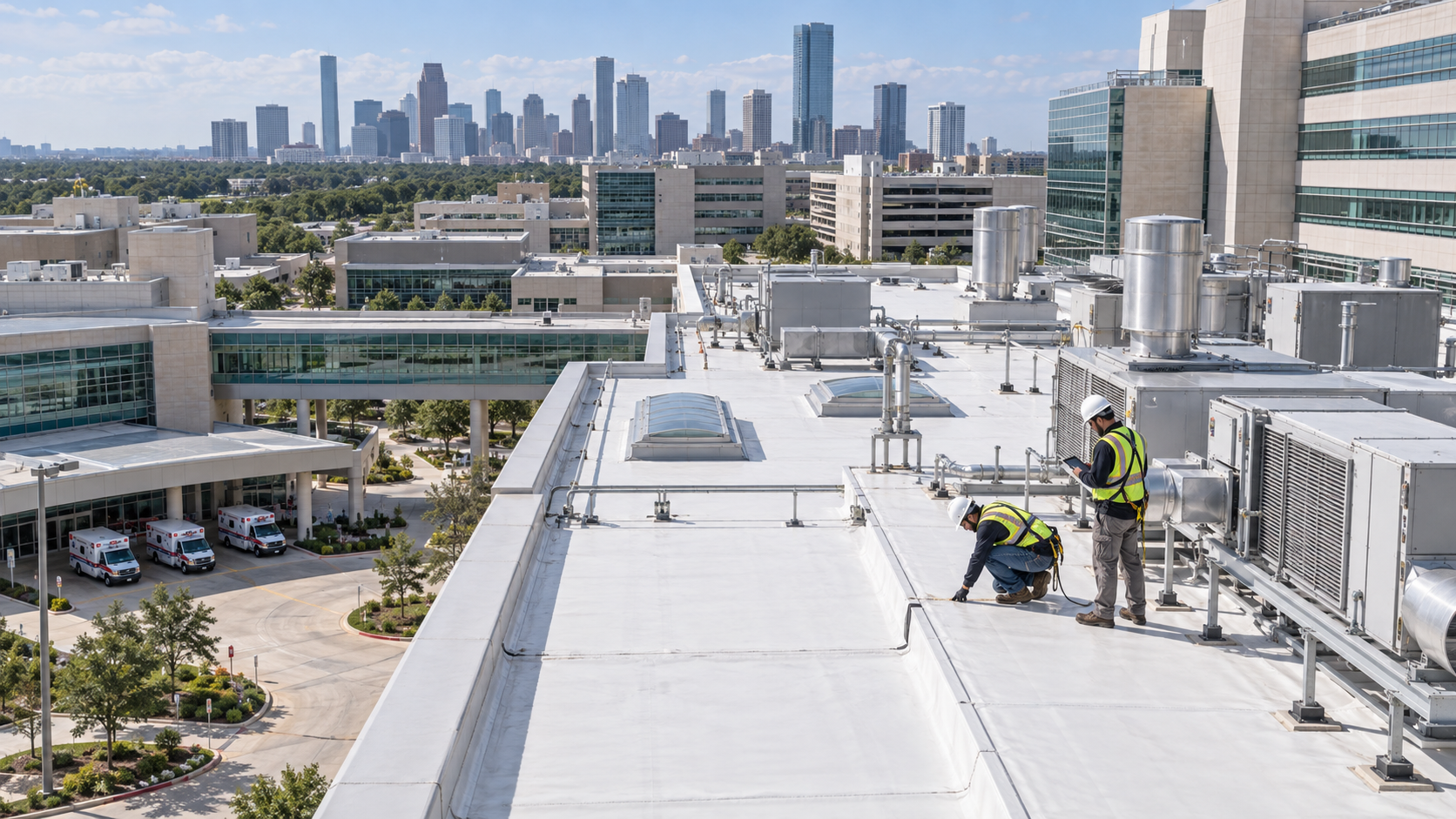
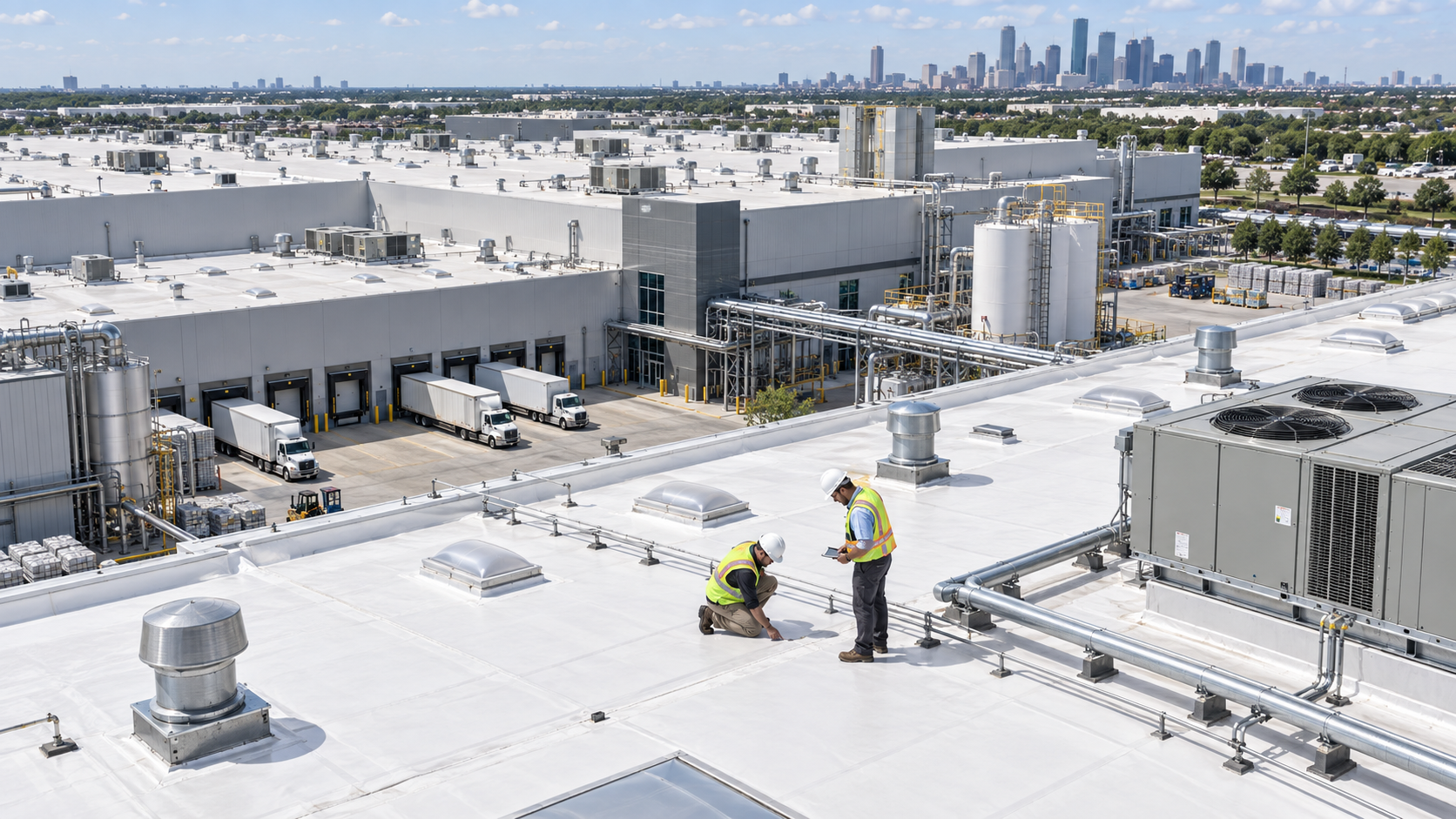
A qualified roof inspection connects labeled rooftop findings with interior leak locations and identifies conditions that remain concealed.
Showtime Exteriors Links
Learn more from Showtime Exteriors homepage, roofing services, commercial roofing services, roofing questions and answers, contact Showtime Exteriors, and commercial roofing resources.
Independent Safety and Roofing References
Authoritative references include OSHA fall protection requirements, FEMA guidance on protecting property after severe weather, IBHS guidance for stronger roofs, NRCA consumer roofing guidance, and Texas Department of Insurance storm resources.
Frequently Asked Questions About Documenting a Storm Roof Leak
What should I document first
Document safety hazards, the active leak location, date and time, weather, affected rooms, and immediate mitigation. Do not delay reasonable protection merely to take pictures.
Should I photograph the roof myself
Only from safe ground or interior locations. Do not climb onto a wet or storm-damaged roof; qualified roofing professionals should document rooftop conditions.
How many photographs should I take
Take enough wide, medium, and close views to show context and detail for every affected area. Quality, labels, chronology, and original files matter more than an arbitrary number.
Should I edit or annotate claim photographs
Preserve original files. Make copies for arrows or labels so timestamps, metadata, and unaltered evidence remain available.
What belongs in a roof leak timeline
Include the storm, first observation, leak changes, notifications, emergency services, inspections, temporary work, and permanent repairs with dates, times, people, and locations.
Should I save damaged roof materials
When safe and practical, preserve and label relevant materials. Ask the insurer before disposal and photograph anything that must be removed for safety or sanitation.
Can a contractor guarantee claim approval
No. A contractor can document roof conditions and prepare a scope, but coverage, causation acceptance, valuation, and payment are determined through the policy and insurer process.
What if the ceiling stain is far from the roof opening
Water can travel along decks, insulation, framing, and penetrations. Map the interior location and let a qualified inspector investigate the full pathway.
Do I need weather records
They can provide context. Save reliable alerts or reports, but do not overstate wind speed, hail size, or storm path without authoritative support.
Should emergency repairs wait for the adjuster
Do not delay reasonable measures needed to protect people and property. Document before and after conditions when safe, retain invoices, and follow policy notice requirements.
What records should commercial owners keep
Maintain the policy, roof plans, leak logs, photographs, reports, maintenance history, repair invoices, warranties, contents inventory, communications, and payment records.
Who should interpret my insurance policy
Discuss policy language, coverage, deadlines, and valuation with the insurer, broker, licensed insurance professional, or qualified attorney—not the roofing contractor.
Schedule a Texas Storm Roof Leak Inspection
If a Texas property is leaking after a storm, protect people and interiors, begin a factual incident record, and call Showtime Exteriors at 817-400-ROOF (7663) to inspect the roof assembly and develop a permanent repair or replacement plan.