



When to Repair vs. Replace an Architectural Shingle Roof
Decide when to repair or replace an architectural shingle roof by checking damage extent, repairability, leaks, flashing, decking, matching, warranties, and complete costs.
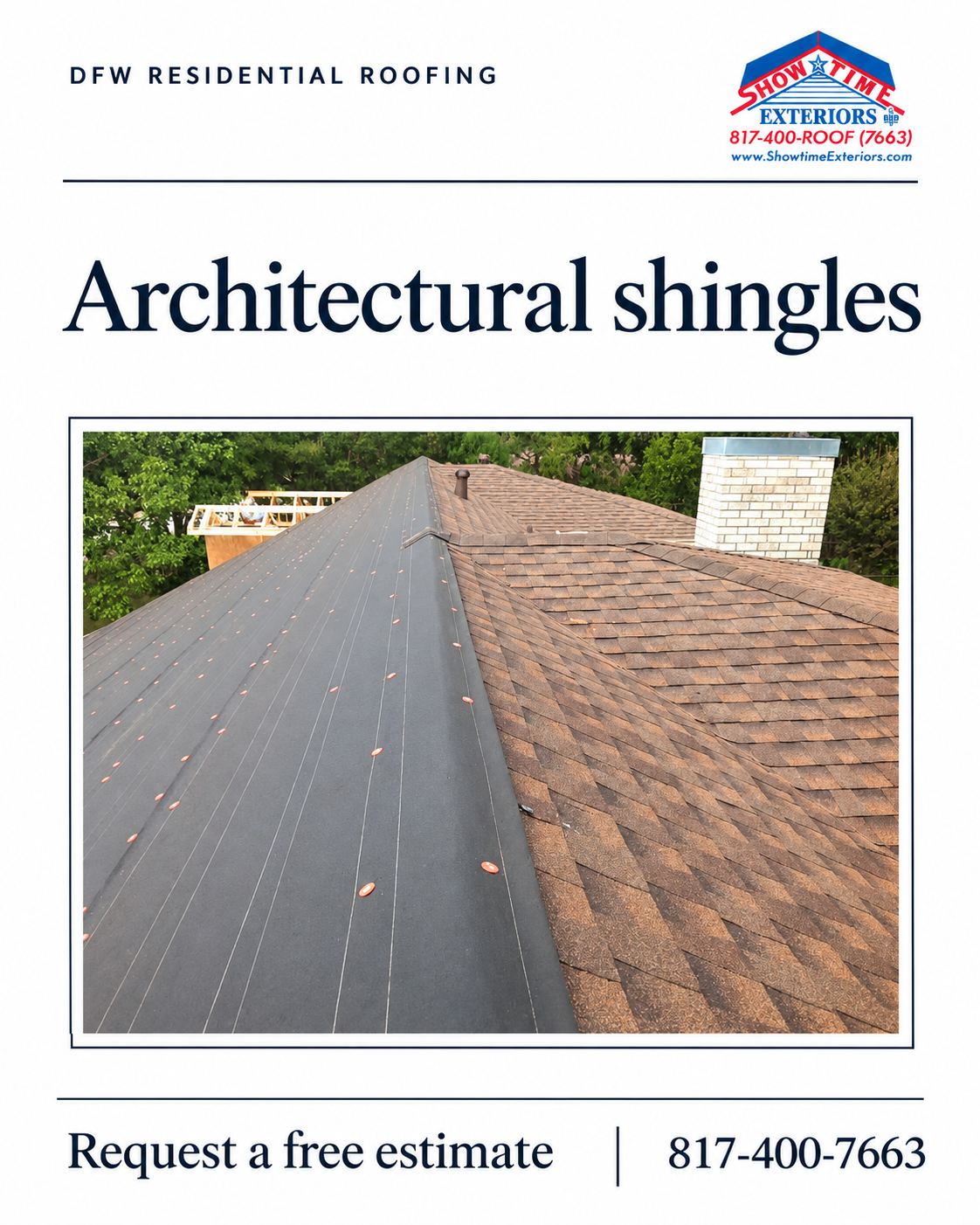
An architectural shingle roof may be suitable for repair when the affected area is limited and a compatible correction can be integrated into serviceable surrounding roofing. Replacement deserves closer review when deterioration is widespread, repairs cannot be performed reliably, or significant assembly problems remain unresolved.
The decision should follow a documented assessment. One missing shingle, an old installation date, or granules in a gutter does not by itself establish that the entire roof needs replacement. Equally, a small visible defect does not prove the condition beneath it is limited.
Showtime Exteriors can discuss roof conditions and replacement needs in North Texas. Use the questions below to compare localized repair, broader work, and replacement without relying on a universal age or damage-percentage rule.
Start with the Actual Roof Assembly
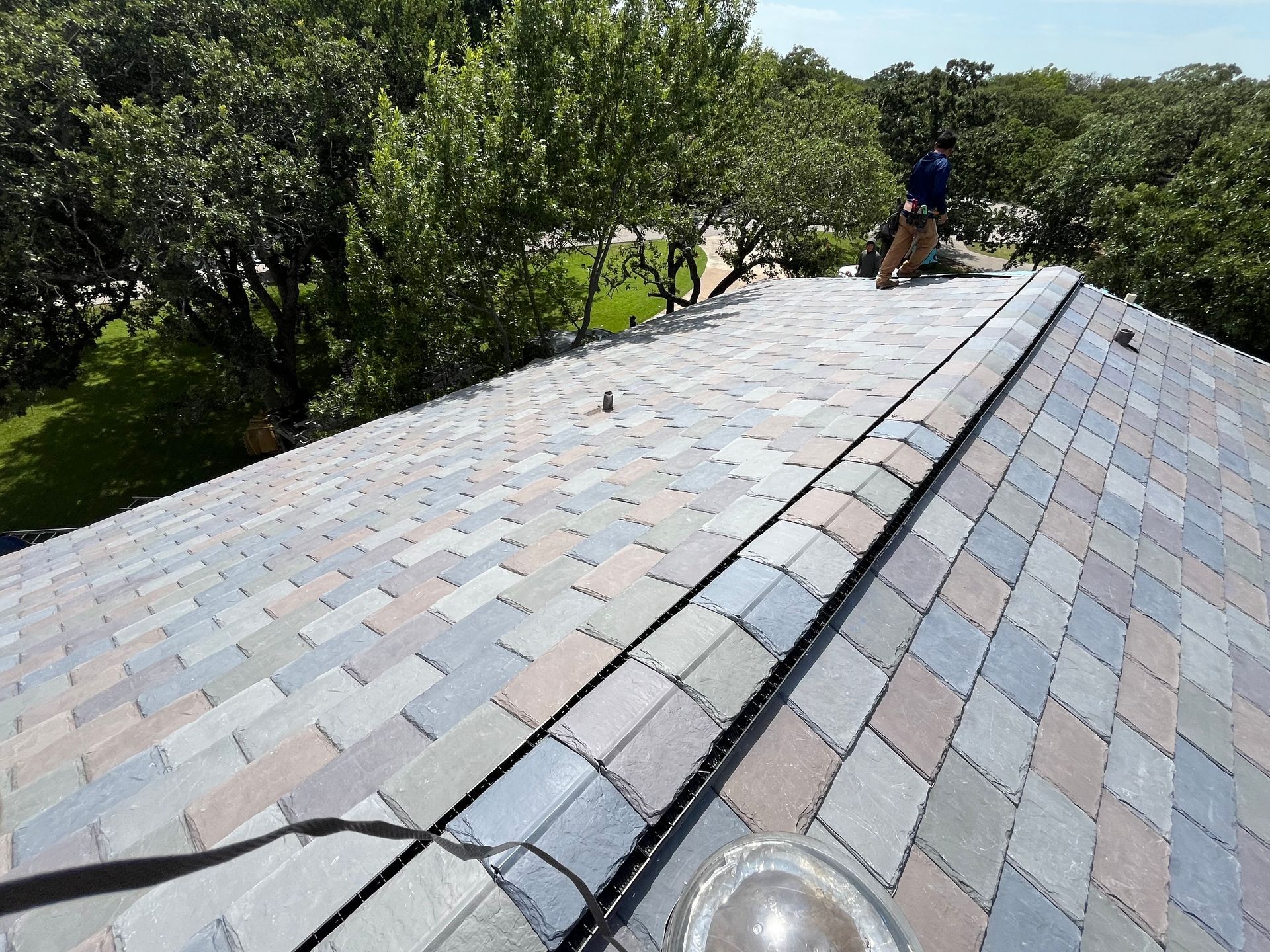
Architectural shingles are laminated asphalt roofing products with a dimensional appearance. Their profiles, dimensions, fastening instructions, and associated accessories can differ by manufacturer and product.
Ask the contractor to identify the existing material as accurately as possible. Previous installation records, invoices, spare bundles, and warranty documents can help establish what is present.
The roof also includes decking, underlayment, flashing, ventilation components, edges, starter materials, and ridge details. The covering is one part of that assembly.
A recommendation should identify which components are affected. Replacing damaged shingles may be appropriate for one finding while a flashing or supporting-layer problem requires a different correction in the same area.
When Localized Repair Makes Sense
Repair deserves consideration when the problem is confined to a defined area, compatible materials are available, and surrounding shingles can be handled without creating unacceptable damage.
The contractor should explain the removal area, replacement materials, fastening, sealing, and associated detail work. A repair is more than placing a new visible piece over a defect.
GAF's storm-damaged shingle replacement bulletin discusses repair and replacement options for its products, including circumstances where work on a damaged roof plane may be possible. Applicable product requirements still govern each project.
Ask what the repair accomplishes and what condition remains elsewhere. A targeted correction can be appropriate without renewing the entire roof or promising a fixed number of additional service years.
When Replacement Deserves a Full Comparison
Replacement may be more practical when deterioration is spread across multiple areas, surrounding materials cannot accept reliable repairs, or the work needed to address underlying defects is extensive.
Ask the contractor to document the distribution and severity of the findings. The recommendation should explain why repair is insufficient rather than simply describe the roof as old.
A replacement scope should identify removal, deck evaluation, underlayment, flashing, ventilation, edges, and other necessary components. A new shingle surface does not automatically correct every assembly problem.
For residential roofing replacement, compare the proposed construction with a clearly defined repair alternative when both are feasible. Understand the limits and remaining responsibilities of each option.
Map Damage Instead of Relying on One Close-Up
Request photographs showing the entire roof area and representative details. A collection of dramatic close-ups does not explain how much serviceable material remains.
Ask which roof planes were inspected and which were inaccessible. Conditions may differ by orientation, shade, exposure, previous work, and roof geometry.
A few missing shingles near one edge create a different scope question from widespread cracking, repeated failures, or deterioration across several slopes. The report should distinguish those patterns.
If additional investigation is needed, identify it before finalizing the recommendation. An incomplete view should not be presented as a complete assessment of every concealed or inaccessible component.
Evaluate Granule Loss in Context
Granules in a gutter can warrant attention, but their presence alone does not establish the source, severity, or cause. Ask whether the shingles show actual exposed areas, other damage, or a normal installation-related condition.
GAF's granule-loss bulletin for new shingles explains that excess manufacturing granules may shed after installation and that significant continuing loss deserves follow-up. That specific guidance should not be used to dismiss deterioration on an older roof.
Ask for photographs and an explanation of the pattern. Weathering, physical damage, and other conditions need evaluation rather than an automatic attribution to hail.
Do not approve a cosmetic treatment simply because it makes a bare area less visible. The repair should follow the applicable manufacturer's guidance for the actual damage.
Distinguish Damage from Appearance Changes
Color variation, staining, weathering, and shadowing can affect appearance without proving the same construction problem. The assessor should explain whether a finding affects performance and how that conclusion was reached.
Ask about missing material, tears, creases, exposed layers, damaged seams between laminated components, and other specific conditions. Avoid accepting the word “damage” without a description.
Appearance preferences are legitimate owner choices, but they should remain distinguishable from necessary repairs. A desire for a uniform new roof is different from proof that all existing shingles have failed.
Document both considerations in the proposal. This makes it easier to understand which costs address functional needs and which reflect a preferred visual result.
Assess Whether Nearby Shingles Can Be Handled
Localized repair often requires lifting or removing adjacent material. Ask whether the existing shingles can tolerate that work and what evidence supports the assessment.
Temperature, age, condition, and installation can affect handling. One demonstration or photograph should not be treated as a universal test of the entire roof.
If the contractor anticipates collateral damage, request an explanation of the likely repair area and how additional affected material will be addressed. The proposal should not assume unlimited expansion without approval.
Avoid physically testing the roof yourself. A repairability assessment should be performed by qualified personnel using an appropriate method and safe access, with limitations stated openly.
Confirm Material Compatibility and Availability
A replacement shingle should fit the intended repair, not merely resemble the original color. Dimensions, profile, exposure, fastening, and compatibility with retained material all require attention.
Ask whether the original product remains available and what alternatives are proposed if it does not. Manufacturer information may be needed to resolve a technical compatibility question.
Matching appearance is a separate issue. New material can differ from weathered shingles even when the product name is unchanged. Request a realistic explanation rather than a promise of an invisible patch.
If an insurance claim is involved, ask the insurer about any applicable matching provisions or policy requirements. A contractor's aesthetic opinion does not establish what the policy covers.
Consider a Roof-Plane Replacement Where Appropriate
Sometimes the useful comparison includes replacing an affected plane rather than choosing only between a few shingles and the whole roof. That possibility depends on condition, integration, and applicable requirements.
Ask how the work will connect at ridges, hips, valleys, and adjoining areas. Determine whether accessories or adjacent components also need replacement.
The remaining roof should still be assessed and its condition explained. A partial replacement should not imply that untouched areas now have the same installation date or warranty status.
Request a clear description of the boundaries and appearance implications. Partial work needs the same care in specification and documentation as a localized repair or complete replacement.
Diagnose Leaks Before Choosing the Scope
An interior stain does not automatically identify the exterior entry point. Water can travel along materials, and more than one condition can produce similar symptoms.
Share when leaking occurs, where it appears, and what previous repairs were attempted. Photographs and service records can help the contractor investigate the relevant area.
Ask whether the findings point to shingles, flashing, a pipe penetration, roof-to-wall details, or another source. Plumbing, condensation, or equipment problems may require a different trade.
A full replacement should not be justified solely by a stain, and a small patch should not be guaranteed to solve an unverified source. The recommendation should connect evidence to the proposed correction.
Check Flashing and Penetrations Separately
Chimneys, valleys, walls, skylights, and plumbing vents have their own details. A defect there can cause leakage even when much of the shingle field remains serviceable.
Ask whether the repair reconstructs the detail or only applies a limited surface treatment. Adjacent shingles may need removal to integrate new materials properly.
A replacement proposal should specify which flashings and accessories will be renewed. Retaining an old component should be an explicit decision supported by its condition and compatibility.
Photographs during construction can show work that will later be concealed. They help the owner understand the scope and provide useful information for future inspections or repairs.
Evaluate Decking and Other Concealed Conditions
The visible covering does not establish the condition of all decking, underlayment, or supporting members. Leaks, movement, or visible deterioration can justify additional investigation.
Ask what the assessment has established and what remains concealed. If openings are needed, define the investigation and how the area will be protected afterward.
Sagging or uncertain structural conditions may require a qualified design professional. New shingles do not automatically correct damaged support or establish that a roof is safe to occupy or walk on.
The contract should explain how concealed findings will be documented, priced, and approved. A reasonable allowance should identify uncertainty without granting open-ended authority for unspecified extra work.
Review Ventilation and Moisture Questions
Ask whether ventilation or interior moisture conditions need attention as part of the project. Do not assume every roof defect is caused by inadequate ventilation or that adding one vent resolves all moisture issues.
The appropriate approach depends on the building and assembly. Intake, exhaust, obstructions, insulation, and interior conditions may need coordinated review.
If replacement creates an opportunity for corrections, include the actual work in the scope. A proposal labeled “new roofing system” should still identify the ventilation components and assumptions.
For repair, clarify whether a broader issue remains outside the limited work. The owner should understand any recommendation for further evaluation rather than assume the local correction addresses the entire attic or enclosure.
Treat Roof Age as Context
Age helps explain the roof's history but does not provide a complete condition assessment. Records are more useful than a guess based only on color or appearance.
Ask how the observed condition compares with the proposed repair requirements. An older roof may have a repairable local defect, while a newer installation may have significant construction problems.
Avoid treating a warranty term as a guaranteed service life. Exposure, installation, maintenance, product characteristics, and actual events affect performance.
If a contractor predicts an exact number of remaining years, ask what assumptions support that estimate. A useful planning discussion explains risks and uncertainty instead of promising a fixed failure date.
Understand Warranty Differences
Request the actual warranty applying to the existing roof and the proposed work. Identify the issuer, covered components, exclusions, reporting requirements, and any workmanship obligations.
GAF's residential warranty comparison illustrates how coverage can vary among offerings. The product and project-specific written terms control, not a general advertising headline.
A repair warranty may be limited to the corrected area. A replacement warranty also has conditions and should not be assumed to cover every future leak, weather event, or building component.
Ask whether a potential product claim needs documentation before material is removed. Coordinate the process without treating an unresolved warranty question as permission to ignore an active hazard.
Keep Insurance Questions Separate from Construction Findings
Ask the roofer to describe observed conditions and proposed work. Ask the insurer about coverage, deductibles, exclusions, and claim requirements.
TDI's roofing and insurance law guidance explains Texas restrictions on contractors acting as public adjusters on the same property and on deductible waivers. A contractor should not promise a settlement or coverage outcome.
The need for replacement does not automatically establish that a covered event caused it. Timing and cause should be described honestly, including uncertainty.
Budget for the owner's obligations using confirmed information. A construction estimate is not proof that the insurer will pay every line item or approve the contractor's preferred scope.
Compare Complete Costs and Remaining Responsibilities
Ask for written scopes covering removal, materials, flashing, access, disposal, permits where required, and completion documents. Identify optional improvements separately from necessary corrections.
The FTC's home improvement guidance encourages researching contractors and comparing written estimates. A difference in price deserves a comparison of the actual work.
A repair may have a lower initial cost while leaving maintenance and replacement planning for the rest of the roof. A replacement may renew more components but still exclude structural work or interior restoration.
Do not rely on a universal repair-cost percentage to choose the project. Consider the findings, feasibility, owner's goals, and complete scope rather than a formula detached from the building.
Use a Practical Decision Table
FindingRepair may deserve consideration whenReplacement deserves closer review whenMissing or damaged shinglesThe area is limited and compatible repair is feasibleDamage is widespread or integration is unreliableLeak at a penetrationA defined detail can be corrected appropriatelyBroader deterioration or repeated failures remainGranule concernsAssessment identifies a limited or non-failure conditionSignificant deterioration affects extensive areasMaterial availabilitySuitable replacement products can be integratedNo appropriate repair approach is establishedConcealed damageThe affected area is defined and repairableExtensive assembly reconstruction is neededAppearance goalsLocalized variation is acceptableBroader renewal matches the owner's goals and condition needs
The table guides questions. It does not diagnose the roof or establish an insurer's required payment scope.
Plan Safe Access and Temporary Protection
A small repair can still require specialized access, suitable conditions, and protection for people and property below. Owners should not walk the roof to test shingles themselves.
OSHA's working-surface and fall-protection requirements address worker protection and the adequacy of supporting surfaces. Appropriate setup is part of the project.
If active water entry needs temporary protection, define that work separately from permanent construction. Ask about its limitations and the follow-up schedule.
Keep clear of bulging ceilings, water near electrical equipment, or suspected collapse hazards. Obtain appropriate emergency assistance when necessary rather than assuming a routine roofing appointment establishes safe conditions.
Consider Future Material Choices If Replacing
Replacement creates an opportunity to compare another architectural shingle product or a different roofing system. The selection should fit the building and the owner's maintenance and budget goals.
A Texas roofing materials comparison can help organize questions about weather performance, weight, appearance, and service needs. The final assembly still needs appropriate documentation.
Separate fire, impact, wind, and energy claims. A favorable rating in one category does not establish every other performance characteristic or guarantee an outcome in every event.
Ask how a material change affects support, details, ventilation, installation, and future repairs. Those changes should appear in the proposal rather than be treated as a simple surface substitution.
Document the Decision and Completed Work
Retain inspection findings, photographs, material information, contracts, approved changes, invoices, and applicable warranty records. Identify the exact areas repaired or replaced.
Consistent roof maintenance records help future service providers distinguish old work from new findings. Comparable recordkeeping is useful for homes and managed properties.
If a business or multi-building property has architectural shingles, coordinate commercial roofing service with occupant access, operations, and the specific roof material. Building use does not replace system-specific installation requirements.
At completion, ask how recurring symptoms should be reported and what maintenance remains. The records should describe the actual installed work, including changes made after the original proposal.
Clarify the Approval Process
Before scheduling, identify who can authorize additional work if removal reveals concealed damage. Agree on photographs, pricing, and written changes rather than relying on an informal conversation during construction.
Ask how weather interruptions and open areas will be managed. If temporary protection remains, confirm its limitations and the next review date.
Finally, request a closeout explanation comparing completed work with the approved scope. Record product substitutions and any remaining recommendations so future decisions rely on accurate information rather than recollection.
Frequently Asked Questions
Does one missing shingle require full replacement?
Not automatically. Evaluate the extent of damage, surrounding condition, available materials, and feasibility of a compatible repair.
Do granules in the gutter prove hail damage?
No. Granule observations need context and supporting evidence. Ask the contractor to explain the pattern, severity, and basis for any cause assessment.
Can one roof plane be replaced?
It may be possible when the assembly, transitions, product requirements, and applicable rules allow an appropriate result. Ask for a defined scope and assessment of the retained areas.
Does an old roof always need replacement?
Age alone does not establish the answer. Condition and repair feasibility matter, and the recommendation should identify the supporting findings.
Will a repair look identical to the existing roof?
Do not assume an invisible match. Product availability and weathering can affect appearance even when a technically suitable repair is feasible.
Does insurance approval determine the best construction method?
Coverage and construction are separate questions. Obtain the insurer's written coverage explanation and a contractor's documented recommendation for the building's actual condition.
Choose the Scope Supported by the Findings
A sound architectural shingle roof decision connects the extent of damage, repair feasibility, material compatibility, concealed conditions, and owner goals to a clear written scope. Ask what each option corrects and what responsibilities remain.
For a North Texas roof assessment or replacement discussion, contact Showtime Exteriors or call 817-400-7663. Bring available roof records, leak history, and previous repair information so the comparison can focus on an appropriate plan.