


How to Choose Between Roof Coating vs. Replacement
Compare roof coating vs. replacement by checking moisture, substrate condition, adhesion, drainage, preparation, warranties, application thickness, and total project cost.
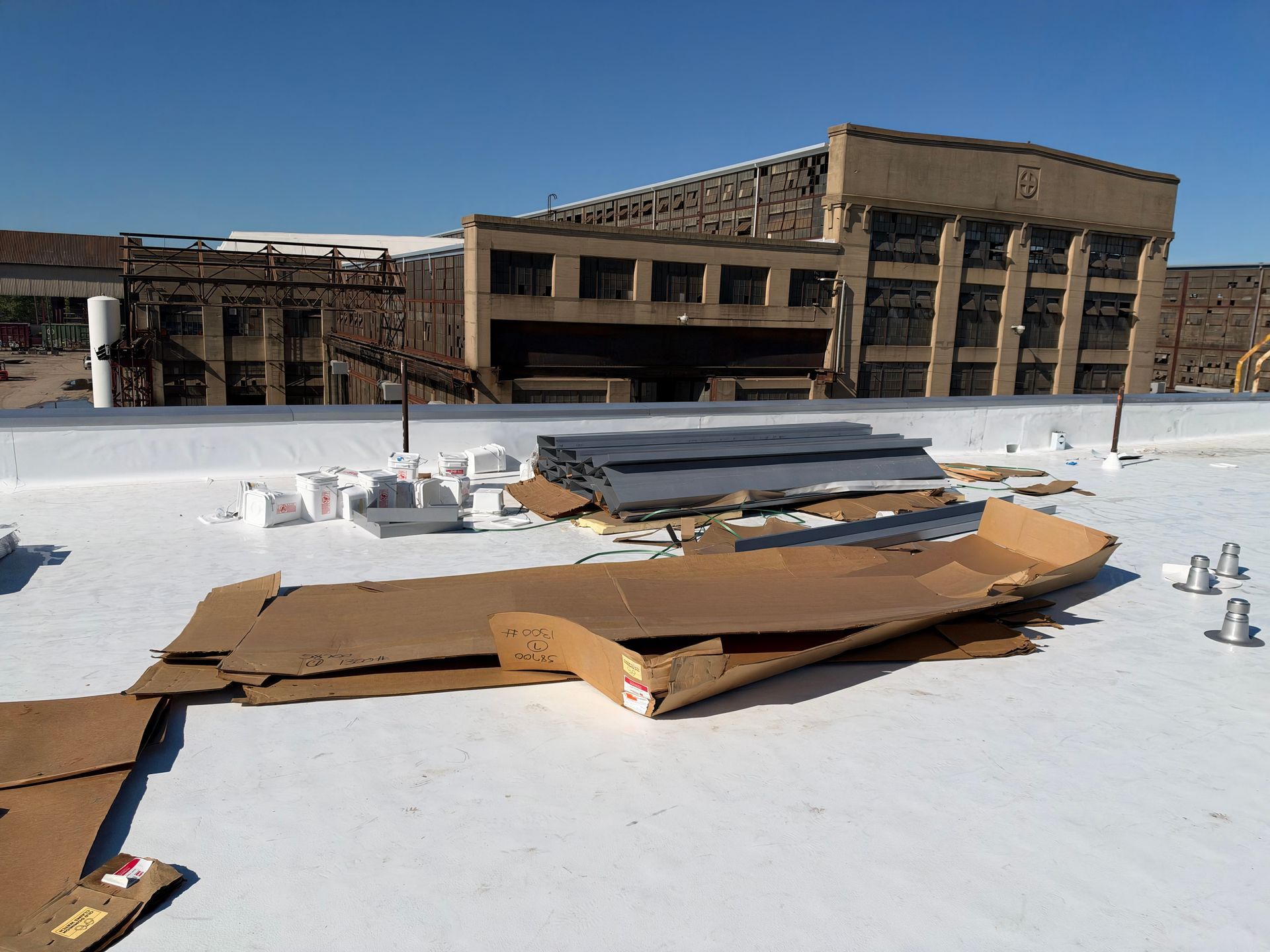
A roof coating can be a practical restoration option when the existing roof is a suitable substrate and the proposed system addresses its actual condition. Replacement becomes more appropriate when retaining the existing construction leaves significant defects unresolved or cannot satisfy the project requirements.
The decision should begin with an assessment, not a bucket price or a promise that a white surface will make an old roof new. Coatings and replacement systems perform different work, and the proposals need to explain those differences clearly.
Showtime Exteriors can discuss roofing needs for North Texas buildings. Use this guide to evaluate the condition findings, compare complete scopes, and understand when restoration deserves consideration and when removal or a new assembly needs closer review.
Define What Each Proposal Means
Ask the contractor to distinguish maintenance coating, a specified restoration system, localized repairs, roof recover, and replacement. These terms can describe substantially different projects.
A restoration system may include cleaning, repairs, primer, reinforcement, detail treatment, and coating applied to a specified thickness. A proposal to “coat the roof” does not establish that all those items are included.
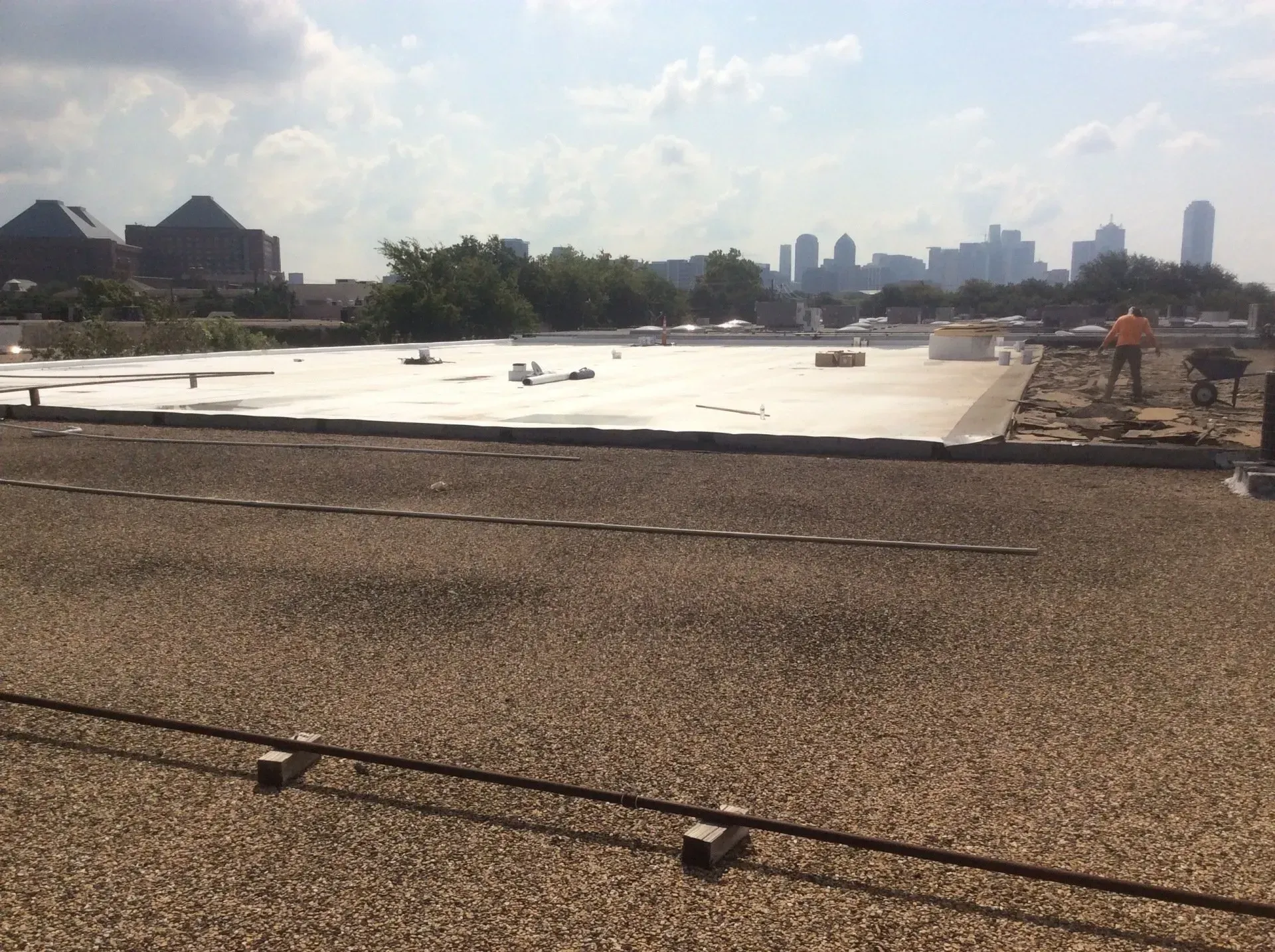
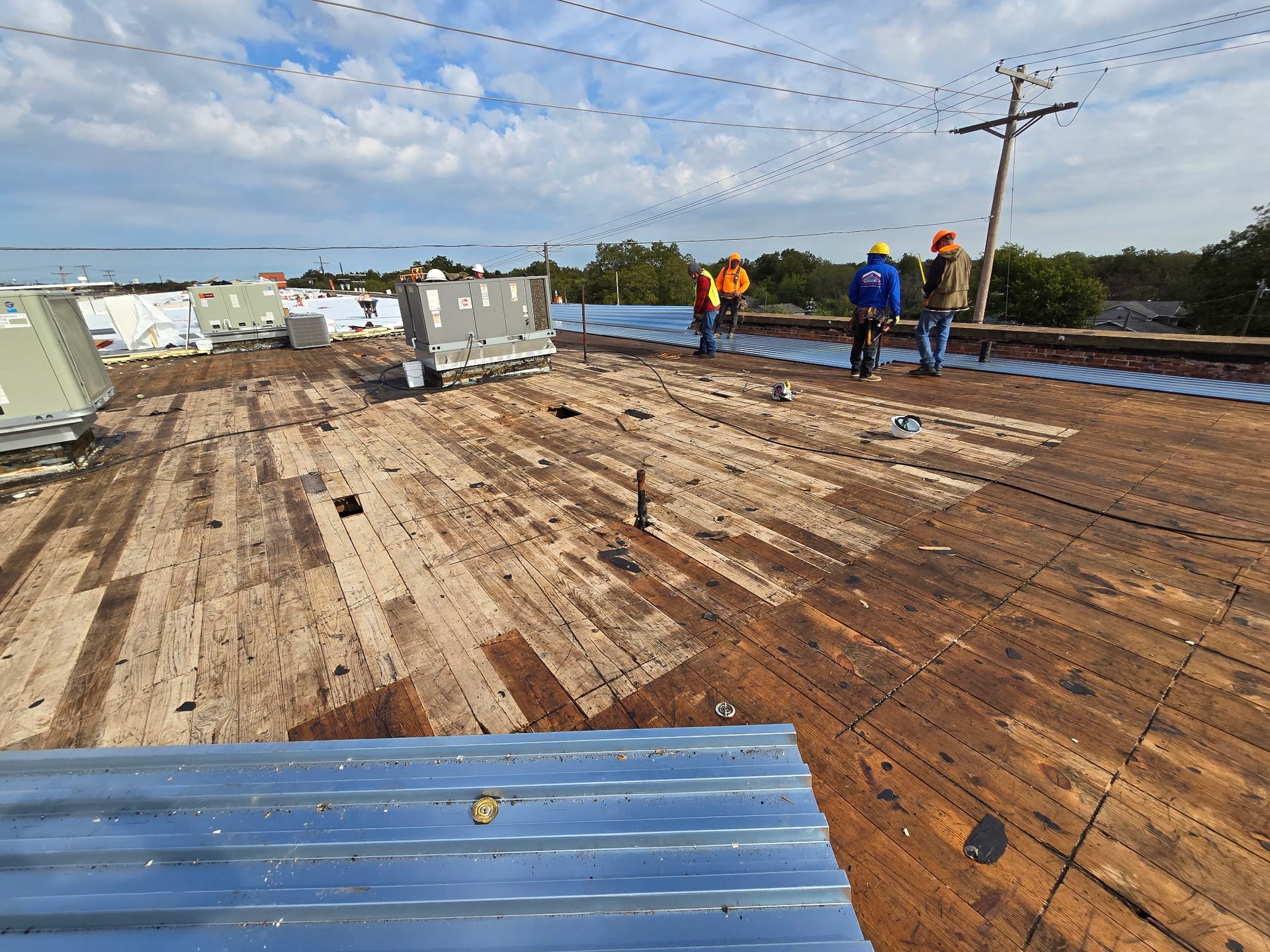
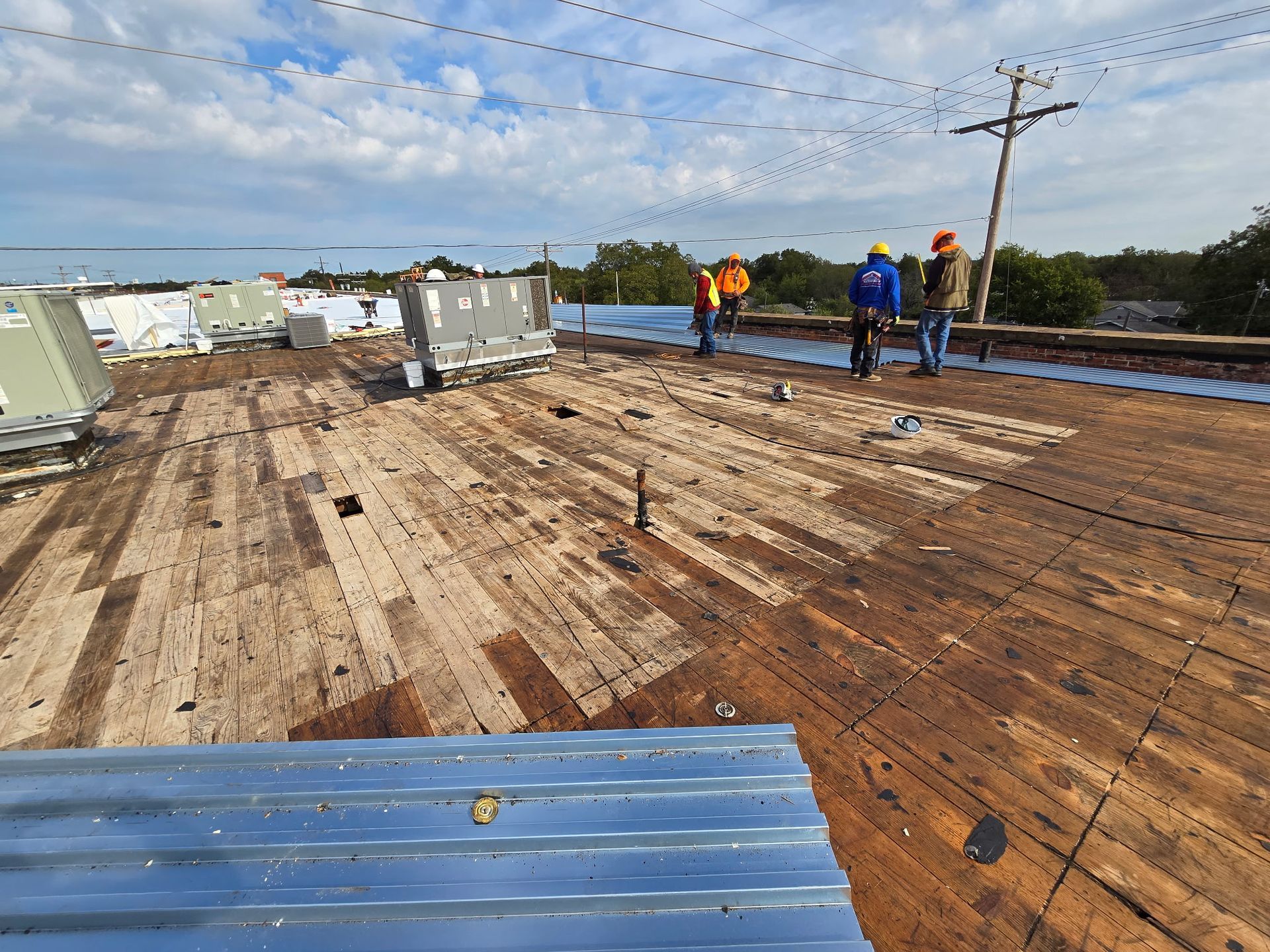
Replacement also needs a definition. The contractor should identify which layers will be removed, which will remain, and what new assembly will be installed. Do not assume every replacement includes new decking or every restoration leaves all existing material untouched.
Request a plain-language description of the finished construction. That description makes the price comparison meaningful and helps prevent a limited surface treatment from being mistaken for a complete roof reconstruction.
Start with the Existing Roof's Condition
Ask what roof system is present, how old it is if known, what repairs have been made, and what evidence supports retaining it. Review leak history alongside photographs and inspection findings.
The assessment should identify seams, flashing, penetrations, edges, drainage, surface deterioration, and signs of movement or loss of attachment. The contractor should explain which problems can be corrected within the proposed scope.
A roof that looks weathered may still be a candidate for restoration. Conversely, a roof that appears acceptable from a distance can have concealed conditions that change the recommendation.
Ask the contractor to separate confirmed facts from assumptions. If additional investigation is necessary, identify that work before treating either a coating price or a replacement price as final.
Determine Whether the Existing Assembly Is Dry and Suitable
Coating should not be used to hide unresolved moisture problems. Ask how the roof's condition below the visible surface will be evaluated and how affected materials will be addressed.
Depending on the building, the investigation may include records, interior observations, a moisture survey, and selected test openings. Each method has limitations, and suspicious findings may require verification.
A thermal image can identify an anomaly without proving its cause. Ask how the contractor distinguishes a useful screening result from confirmed wet insulation or another concealed problem.
If moisture is found, request a defined removal and repair scope. The extent and distribution of unsuitable material may make selective repair practical or may support a broader replacement. Avoid relying on one universal percentage threshold for every system and manufacturer.
Ask What the Coating System Is Designed to Do
Identify the manufacturer, product names, intended substrate, primer requirements, reinforcement, application method, and required film thickness. A general label such as “elastomeric coating” is not enough to compare systems.
GAF's commercial roof coating resources show that coating products and systems differ by formulation and intended application. The selected documentation should match the actual roof.
Ask whether the proposal is intended to protect a serviceable surface, restore specified weathering protection, or provide a particular warranted system. Those goals should be stated rather than implied.
A coating does not replace structural capacity or automatically correct wet insulation, failed attachment, inadequate drainage, or deteriorated deck material. Determine which underlying repairs must happen before the coating work begins.
Verify Adhesion Before Approving the Project
The new coating must bond appropriately to the prepared substrate. Ask what adhesion testing will be performed and how the results will be evaluated against the manufacturer's requirements.
Cleaning, contamination, existing coatings, surface age, and substrate type can affect the proposed preparation. A compatible product on a clean sample does not establish that every part of the roof is ready for application.
GAF's silicone restoration guidance for metal roofing includes adhesion testing as part of the process. Request the applicable procedure for your proposed system.
If a test fails, ask what changes are required and whether the system remains viable. The contractor should not treat an unsuccessful test as something that can simply be covered with more material.
Compare Silicone and Acrylic by Product Requirements
Silicone and acrylic are broad coating categories, not interchangeable specifications. Ask how the actual product suits the substrate, exposure, application conditions, and maintenance needs.
Henry's Pro-Grade 988 silicone product information describes a particular system and its intended uses. Its claims should not be transferred automatically to every silicone coating or every roof configuration.
Likewise, GAF's Quick Set Acrylic Top Coat information identifies preparation and drainage conditions for that product. Review the current instructions for the exact material being offered.
Ask about compatibility with existing repairs and future recoating. The appropriate choice depends on the complete specification and site conditions rather than a blanket claim that one chemistry is always best in Texas.
Address Ponding and Drainage Directly
Ask where water collects, how long it remains, and whether the proposal includes drainage corrections. A coating changes the surface; it does not necessarily change the roof's slope or the position of its drains.
Some products have specific ponding-water resistance claims. That does not make blocked drains, structural deflection, inadequate slope, or deteriorated low areas irrelevant.
Request a written explanation of any retained drainage condition and how it relates to the product instructions and warranty. If corrections require insulation changes, drain work, or another trade, identify those responsibilities.
A replacement can create an opportunity to redesign drainage, but only if that work is included. Compare the actual correction offered under each option rather than assuming either label guarantees a properly draining roof.
Examine Seams, Fasteners, and Flashing
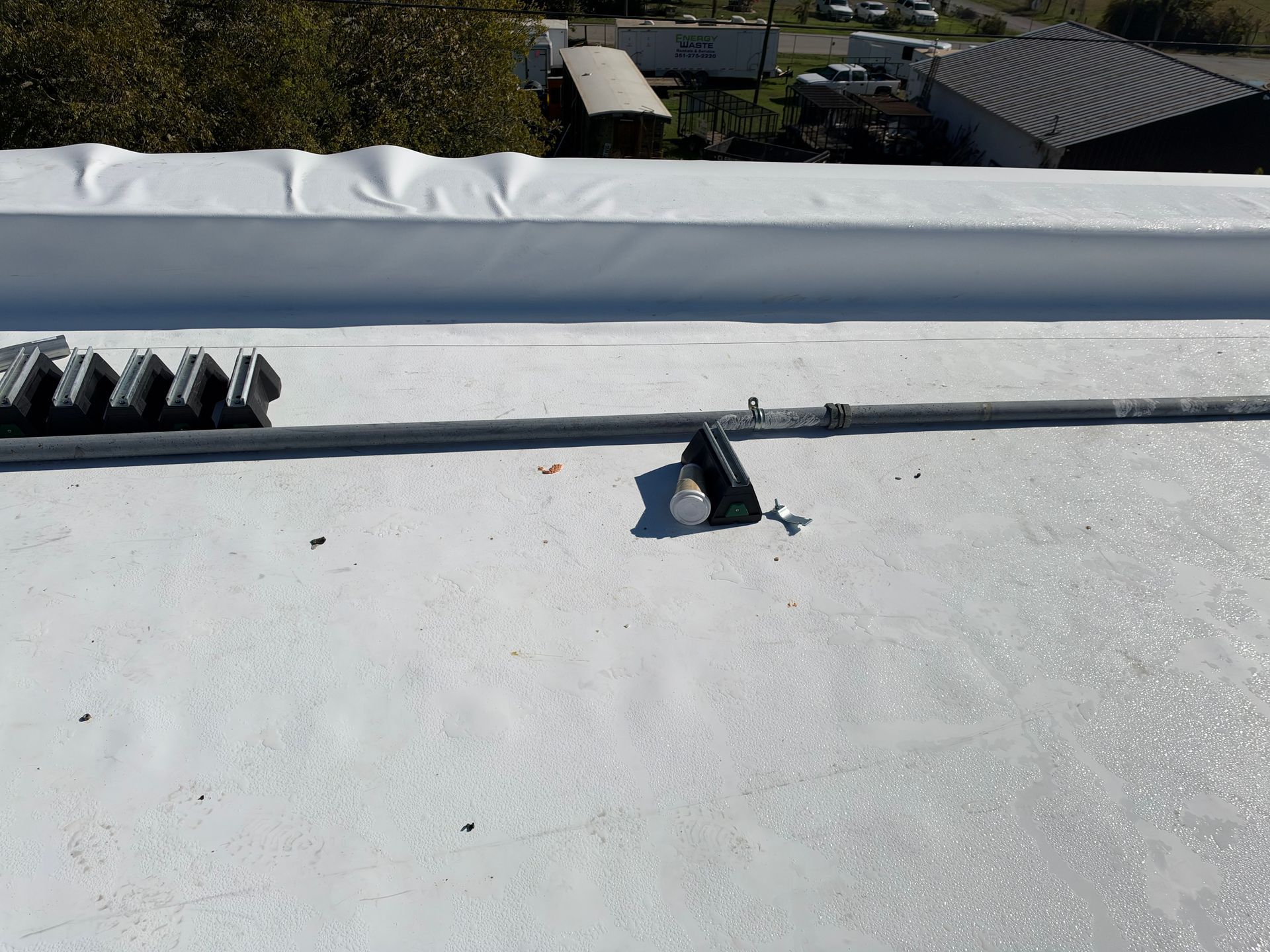
Ask which details will be repaired before the field coating is applied. Seams, fasteners, penetration flashings, transitions, and roof edges need their own evaluation and treatment.
On metal roofing, identify corrosion, loose or missing fasteners, failed closures, and movement-related conditions. The proposal should distinguish serviceable weathered panels from components requiring replacement.
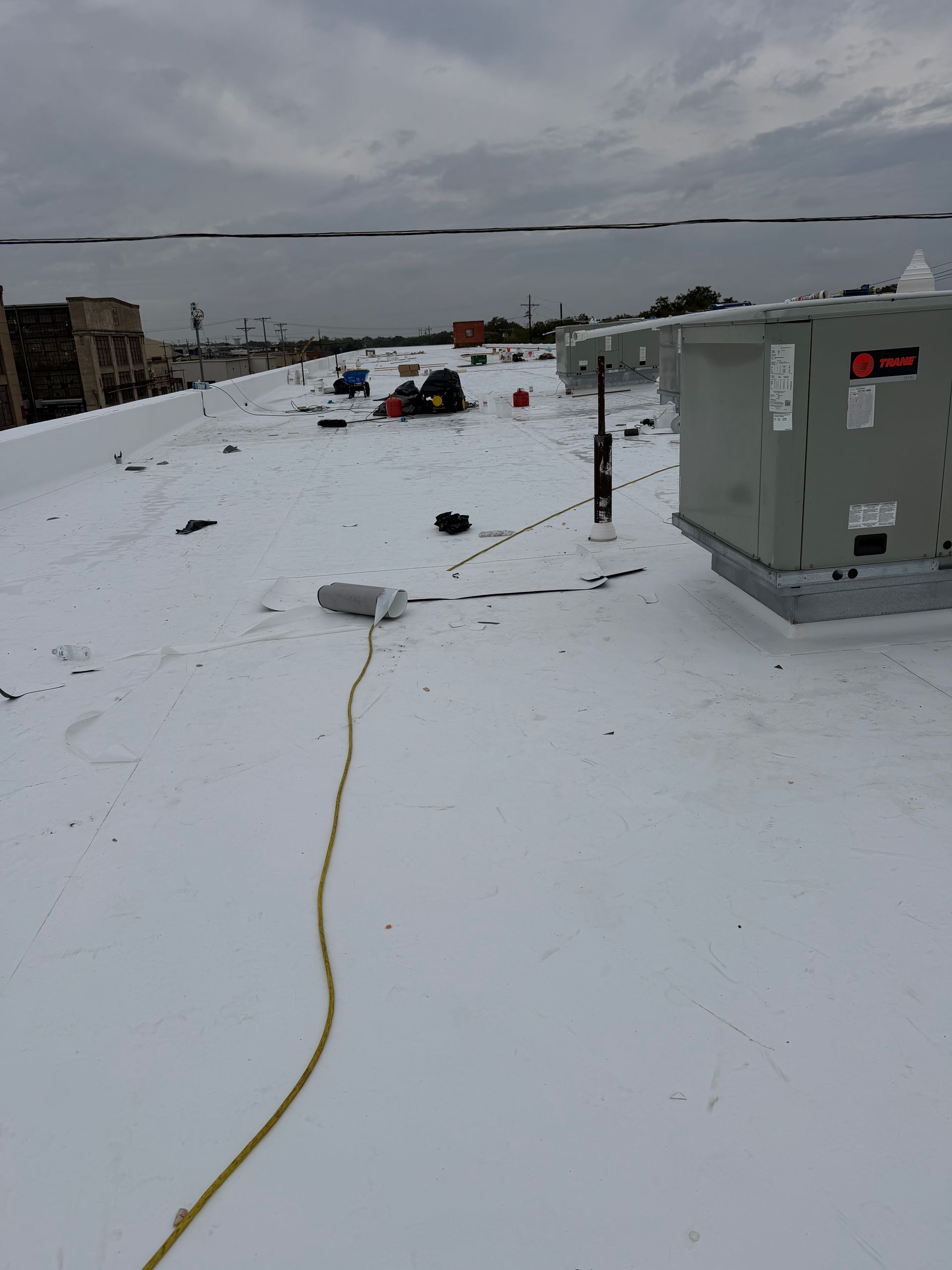
On membrane roofing, ask about open seams, damaged areas, existing patches, and compatibility of repair materials. A continuous-looking finished surface does not prove the underlying details were properly prepared.
Request photographs before repairs, after repairs, and after the completed application. Detail work can be difficult to assess once it is hidden beneath the field coating, so construction documentation has practical value.
Understand Application Thickness and Quality Checks
Ask for the specified wet-film and dry-film requirements where applicable. Wet material changes as it cures; a wet measurement should not be presented as the same thing as the final dry coating thickness.
The proposal should explain coverage rates, number of coats, surface considerations, and the method used to verify application. Rough or irregular substrates may affect material consumption.
Ask who records measurements and how deficiencies are corrected. Delivery of a certain number of containers does not by itself prove that every roof area received the required application.
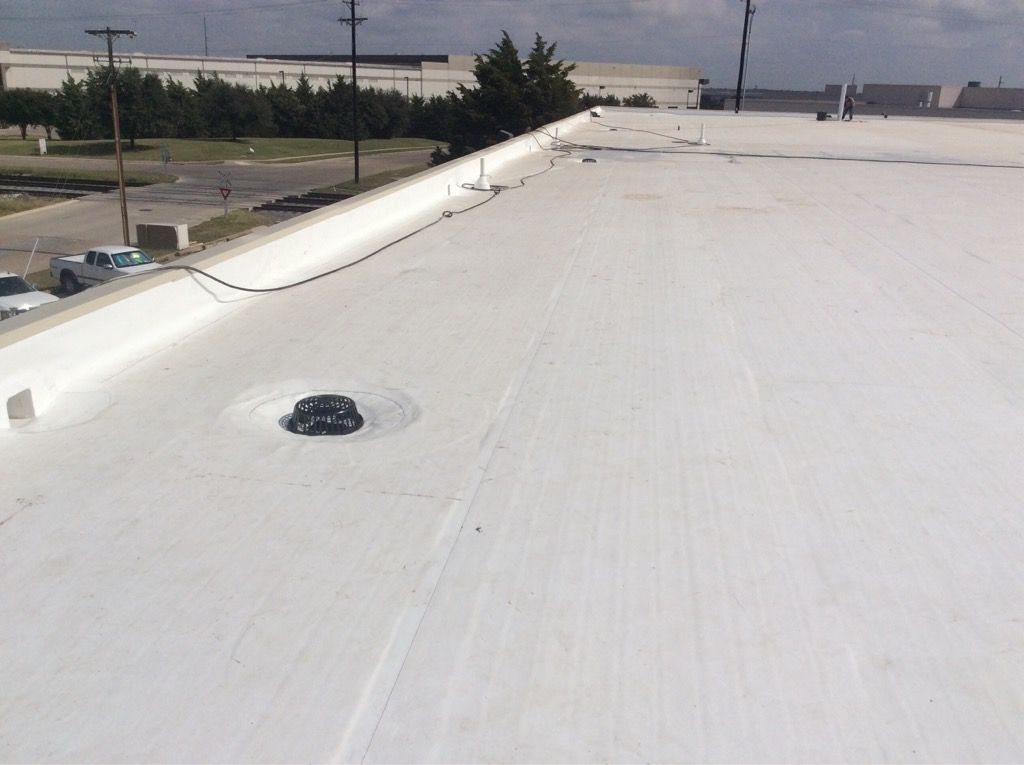
Avoid a proposal based only on color coverage. The finished roof may look uniformly white while the application remains thinner than the specified system requires in some locations.
Know When Replacement Deserves Priority
Ask whether widespread deterioration, unsuitable retained materials, structural concerns, or unresolved attachment problems make restoration inappropriate. A coating recommendation should not depend on overlooking these findings.
Replacement may also deserve consideration when the project requires substantial changes to insulation, drainage, equipment details, or roof configuration. Compare whether restoration can realistically accomplish those goals.
For commercial roofing work, request a complete replacement alternative when the investigation raises significant doubts about retention. That gives the owner a reviewable choice rather than a vague warning.
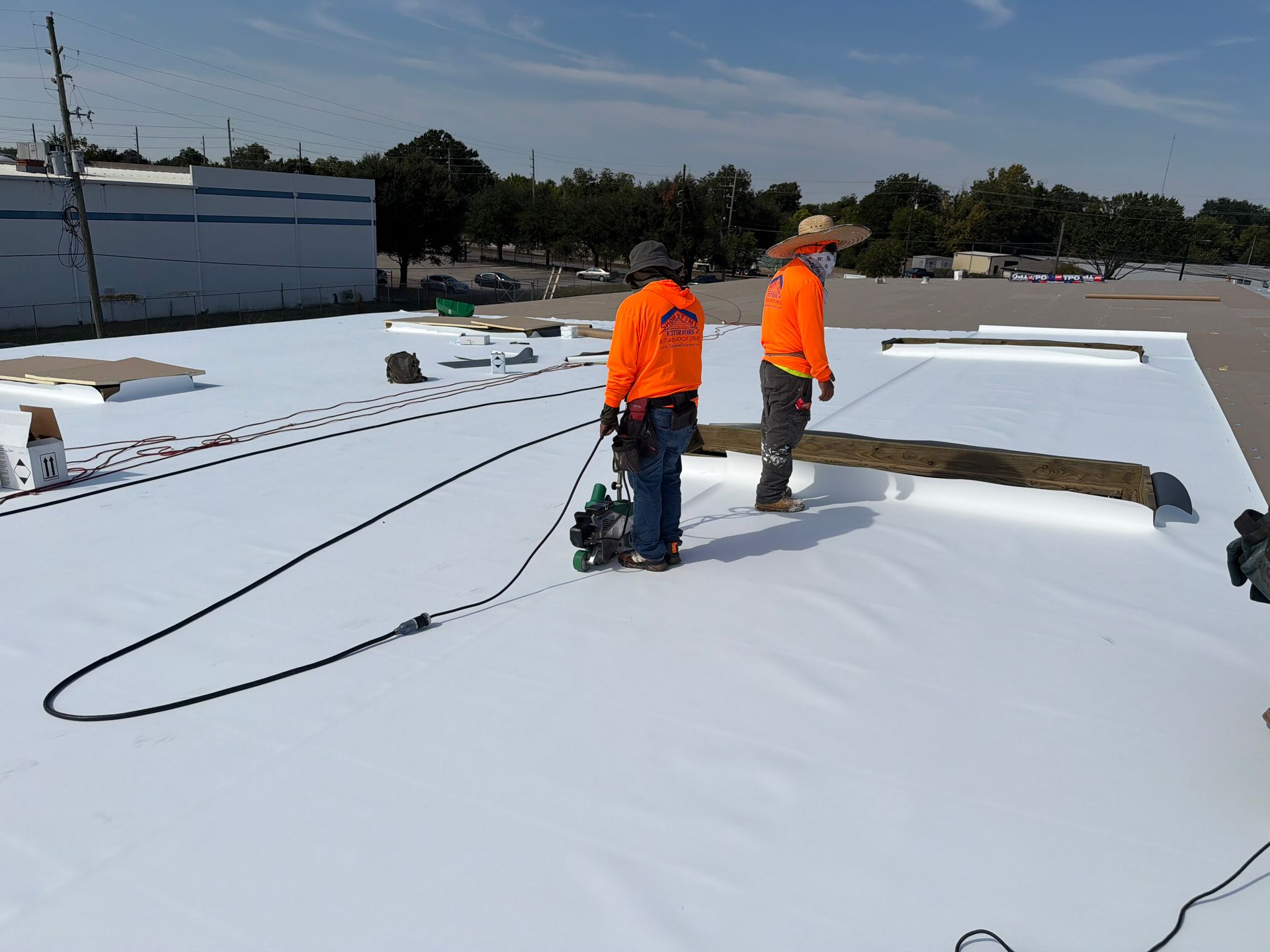
Replacement still requires good design and installation. Removing old material does not automatically repair every defect; the scope must identify the corrections, supporting components, and inspections needed to create the intended assembly.
Compare the Options Side by Side
Decision factorCoating or restorationReplacementExisting constructionRelies on suitable retained materialsRemoves specified layers and installs a defined new assemblyMoistureRequires investigation and correction of affected areasCan include removal of affected layers within the scopeSurface preparationCritical to adhesion and applicationSubstrate preparation remains necessary for the new systemDrainageMay include repairs, but coating alone does not redesign slopeCan include drainage redesign when specifiedBuilding operationsMay reduce removal activity, with application and access constraintsIncludes removal or recover logistics and temporary protectionQuality verificationRepair records, preparation checks, application measurements, and inspectionsAssembly, attachment, detail, and completion verificationFuture workRequires compatible repairs and evaluation before recoatingRequires maintenance and appropriate repairs throughout service
Use the table to organize questions. It does not establish eligibility for a particular building or replace the manufacturer's requirements.
Evaluate Energy Claims Carefully
A reflective coating can reduce solar heat absorption, but the financial benefit depends on the building. Insulation, climate, HVAC operation, roof condition, and energy costs influence the result.
The federal ENERGY STAR cool roof guidance explains the relationship between reflectance, surface temperature, and heat transfer. It does not provide a guaranteed savings figure for every roof.
Ask how any proposed savings estimate was developed. A broad marketing percentage should not be treated as a project-specific return on investment.
Replacement can also provide reflective surfaces and opportunities for insulation improvements. Compare the energy strategy of each complete option rather than assigning all energy benefits to coating or assuming a new membrane will automatically lower bills by a stated amount.
Compare Total Installed Costs
Request scopes that include investigation, preparation, repairs, protection, application or installation, disposal, permits where required, and project closeout. Separate optional improvements from necessary work.
Restoration can reduce removal activity on a suitable roof, but extensive preparation and repairs affect the saving. A low coating price that excludes identified defects is not directly comparable to a replacement that corrects them.
Ask about allowances and concealed-condition pricing. Determine who approves changes and how the final cost will be documented.
Consider the intended holding period and maintenance plan. A project should fit the owner's operating needs without relying on an unsupported promise that coating can be repeated indefinitely or that replacement will eliminate future repair expenses.
Review Warranty Terms Before Signing
Request the exact proposed warranty, including the issuer, covered work, exclusions, maintenance obligations, reporting process, and any inspections or registration conditions.
Ask whether the warranty concerns materials, workmanship, specified leaks, or another defined obligation. A long term alone does not explain what costs or failures are covered.
If later recoating is discussed, determine what evaluation and preparation would be required. Do not assume renewal is automatic or that the original warranty promises unlimited extensions.
Compare the coating warranty with the actual replacement warranty offered. The written terms, installed scope, and owner responsibilities matter more than a general statement that both options carry the same number of years.
Plan Around Texas Weather and Building Operations
Ask about temperature, humidity, dew, rain, substrate dryness, wind, and cure requirements for the selected products. The application schedule should follow current manufacturer instructions.
A surface that appears dry at one moment may not remain suitable through the planned work window. Ask how the contractor monitors conditions and protects incomplete areas.
Discuss odor, overspray, intake locations, vehicles, adjacent property, rooftop access, and tenant requirements. The chosen application method should have a practical protection plan.
Replacement involves its own exposure and temporary-protection issues. Compare the actual work sequence under both options, including emergency contacts and daily shutdown procedures, rather than assuming that avoiding tear-off eliminates construction risk.
Match the Scope to Your Roof Type
Not every roof or coating is suitable for the same treatment. Metal panels, asphaltic membranes, single-ply systems, and spray foam roofs can require different preparation and compatible products.
A Texas roofing materials comparison can help organize questions about system selection. The contractor should then identify the specific restoration or replacement approach for the existing construction.
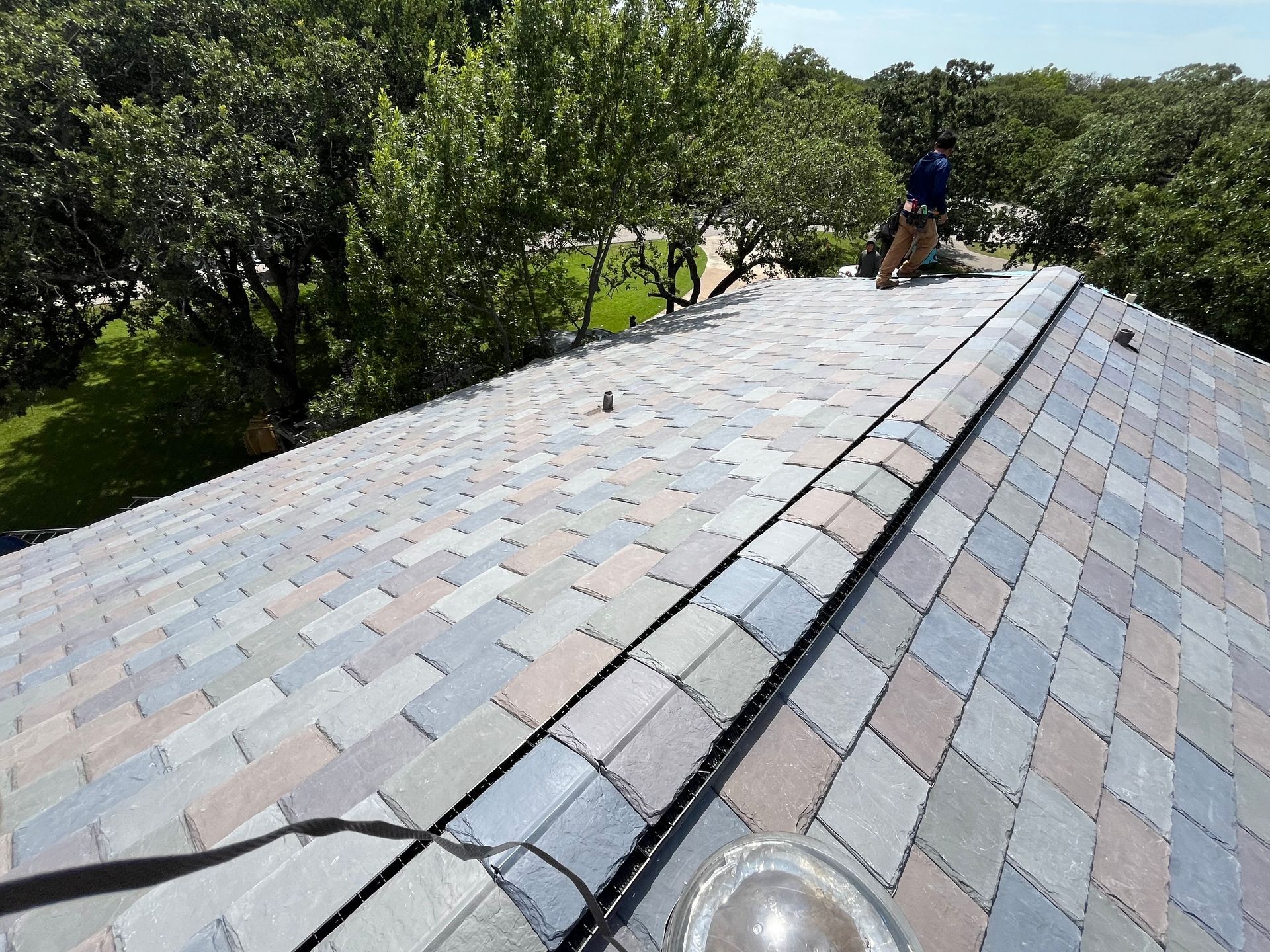
Homeowners should also be cautious about transferring commercial coating claims to steep-slope asphalt shingles. Ask whether the proposed product and application are explicitly appropriate for the residential roof.
Discuss residential roofing options for the actual property. A general promise to seal an aging shingle roof should not substitute for an assessment of the covering, flashing, ventilation, and underlying condition.
Keep the Proposal Specific and Reviewable
The written scope should name the products, identify preparation and repairs, state application requirements, explain exclusions, and describe how completion will be verified.
The FTC's home improvement contracting guidance encourages comparing written estimates and researching contractors. Apply that scrutiny to an attractive restoration offer as carefully as to a full replacement.
Ask about experience with the actual substrate and system. If manufacturer credentials or special warranty eligibility are claimed, verify what applies to the project.
Do not let a limited-time offer replace the investigation. A sound recommendation should remain understandable after the sales conversation, with important promises reflected in the agreement rather than left as verbal assurances.
Plan Maintenance and Future Repairs
Ask for written inspection and maintenance instructions for either option. Identify compatible repair methods, access arrangements, drainage maintenance, and the process for reporting damage.
Coated roofs may need protection from service traffic and specific exposure conditions. A coating should not be treated as a general-purpose walking surface unless the system provides for that use.
Keep consistent roof maintenance records, including photographs, repairs, equipment changes, and inspection findings. Preserve the existing assembly information when it remains part of the roof.
Before a future recoat, reassess condition and compatibility. The fact that a roof accepted coating once does not prove it will remain suitable for another application years later.
A Practical Building Owner Example
Consider a warehouse with a weathered metal roof and several recurring leak locations. One proposal offers a uniform coating; another includes repairs, adhesion testing, preparation, and a specified restoration system.
The owner requests a condition assessment before comparing prices. If panels and supporting construction are suitable and identified defects can be corrected, the detailed restoration proposal may deserve consideration.
If investigation instead finds widespread deterioration or unsuitable retained materials, replacement may better address the building's needs. The conclusion should follow the findings rather than the owner's initial preference for the lowest price.
Ask each bidder what conditions would change its recommendation. A useful answer identifies decision points and limitations, giving the owner a clearer basis for choosing the work.
Use a Final Approval Checklist
Before authorizing construction, confirm that the recommendation is supported by the investigation and that unresolved conditions have a defined next step. Identify who approves changes and what happens if the roof proves unsuitable for the initially proposed system.
Check that the contract includes the preparation and detail repairs discussed during the inspection. Confirm the product specification, verification process, payment milestones, and documents required for closeout.
Assign responsibility for coordinating rooftop equipment service and communicating access rules after the work. The building's maintenance team should understand which materials remain in place and which repairs require specialized products or an authorized provider.
Finally, retain both alternatives and the explanation for the selected scope. That record helps future owners and service contractors understand the decision without relying on recollection of the original sales discussion.
Frequently Asked Questions
Can coating stop every roof leak?
No. A specified restoration system may address suitable conditions after repairs and preparation. It cannot be assumed to resolve structural defects, wet materials, failed details, or every source of water entry.
Is coating always cheaper than replacement?
It can reduce some construction activity, but required investigation, repairs, preparation, and application determine the cost. Compare complete scopes and ongoing responsibilities.
Does ponding-resistant coating mean drainage no longer matters?
No. Review the exact product requirements and warranty, and address drainage defects appropriately. A resistance claim does not make blocked drains or building movement irrelevant.
Can a roof be recoated forever?
Do not assume that. Each future application requires evaluation of the existing system, adhesion, moisture, preparation needs, and applicable product requirements.
Will a coating add insulation?
A reflective coating can influence solar heat absorption, but it should not be treated as a substitute for a specified insulation assembly. Ask for documented thermal properties of any product being offered.
What should I receive at completion?
Request product records, preparation and repair photographs, application verification, approved changes, applicable inspection documents, warranties, and maintenance instructions. The package should describe the installed work accurately.
Choose Based on Evidence and a Complete Scope
A useful roof coating versus replacement decision connects condition findings to a defined system, realistic preparation, documented installation requirements, and a clear maintenance plan. Ask what the proposed work corrects and what limitations remain.
For a North Texas roof assessment or project discussion, contact Showtime Exteriors or call 817-400-7663. Bring available roof records, leak history, and estimates so the comparison can focus on an appropriate scope for the building.