


Questions to Ask a Roofer Before Deciding on TPO vs. EPDM
Compare TPO vs. EPDM roofing for Texas commercial buildings. Ask about seams, insulation, drainage, roof traffic, installation, warranties, maintenance, and total cost.
Choosing between TPO and EPDM starts with understanding the building and the complete roof assembly. Membrane color, a quoted lifespan, or a price per square foot cannot answer every question about drainage, attachment, insulation, rooftop equipment, or future maintenance.
Both materials are used in commercial low-slope roofing. TPO is a thermoplastic membrane commonly installed with heat-welded field seams. EPDM is a synthetic rubber membrane commonly installed with manufacturer-specified seam tapes or other approved joining methods. The products, supporting layers, and installation details determine what a particular proposal actually offers.
Showtime Exteriors can discuss roofing needs for North Texas commercial properties. Before selecting either system, ask the roofer to explain the recommendation in terms of your building, your operations, and a written scope.
What Do We Know About the Existing Roof?
Begin with the roof's history and condition. Ask what is installed, how many systems are present, what records are available, and which areas have experienced leaks or repeated repairs.
A surface inspection provides useful observations, but it may not identify all concealed layers or moisture conditions. Ask whether additional investigation is needed before a replacement or recover specification can be finalized.
Provide the contractor with leak locations, service records, previous warranties, and information about rooftop equipment changes. Explain whether leaks occur during particular weather conditions or operating cycles.
The recommendation should distinguish confirmed findings from assumptions. Choosing a new membrane before understanding the existing assembly can leave important costs and compatibility questions unresolved.
Which Exact TPO or EPDM Product Are You Proposing?
Ask for the manufacturer, product name, thickness, reinforcement or backing where applicable, and proposed installation method. Broad labels such as “commercial TPO” or “rubber roof” are not complete specifications.
Johns Manville's TPO roofing product resources illustrate that a membrane category includes multiple products and associated components. Ask which documentation applies to the quoted selection.
For EPDM, request the same level of detail. Products may differ in construction, sheet dimensions, accessories, and system requirements. A comparison should identify the actual alternatives being priced.
Do not assume that every difference in thickness translates directly into the same difference in service life. Ask how the selected product fits the building's exposure, maintenance needs, and proposed warranty.
How Will the Seams Be Made and Checked?
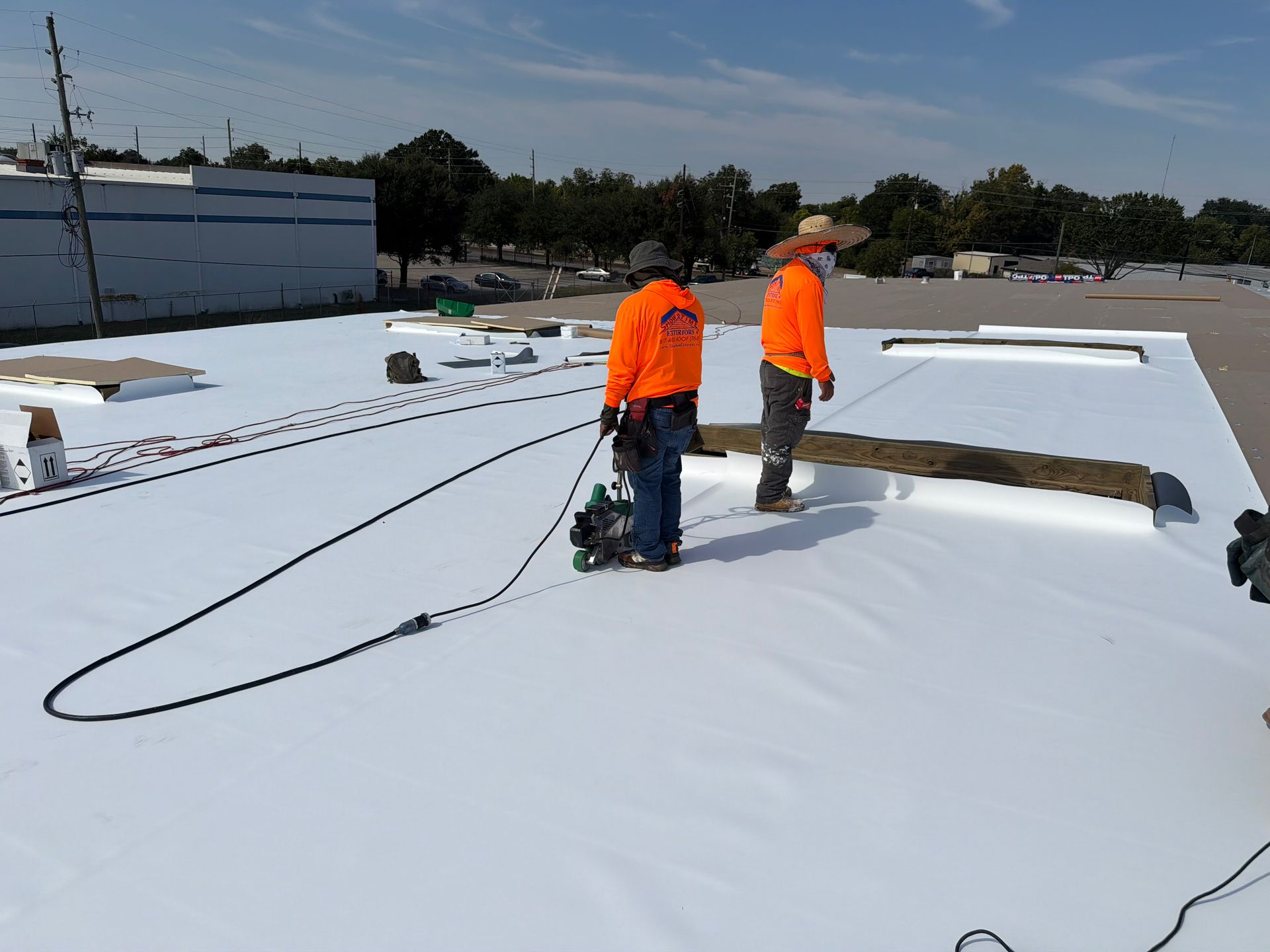
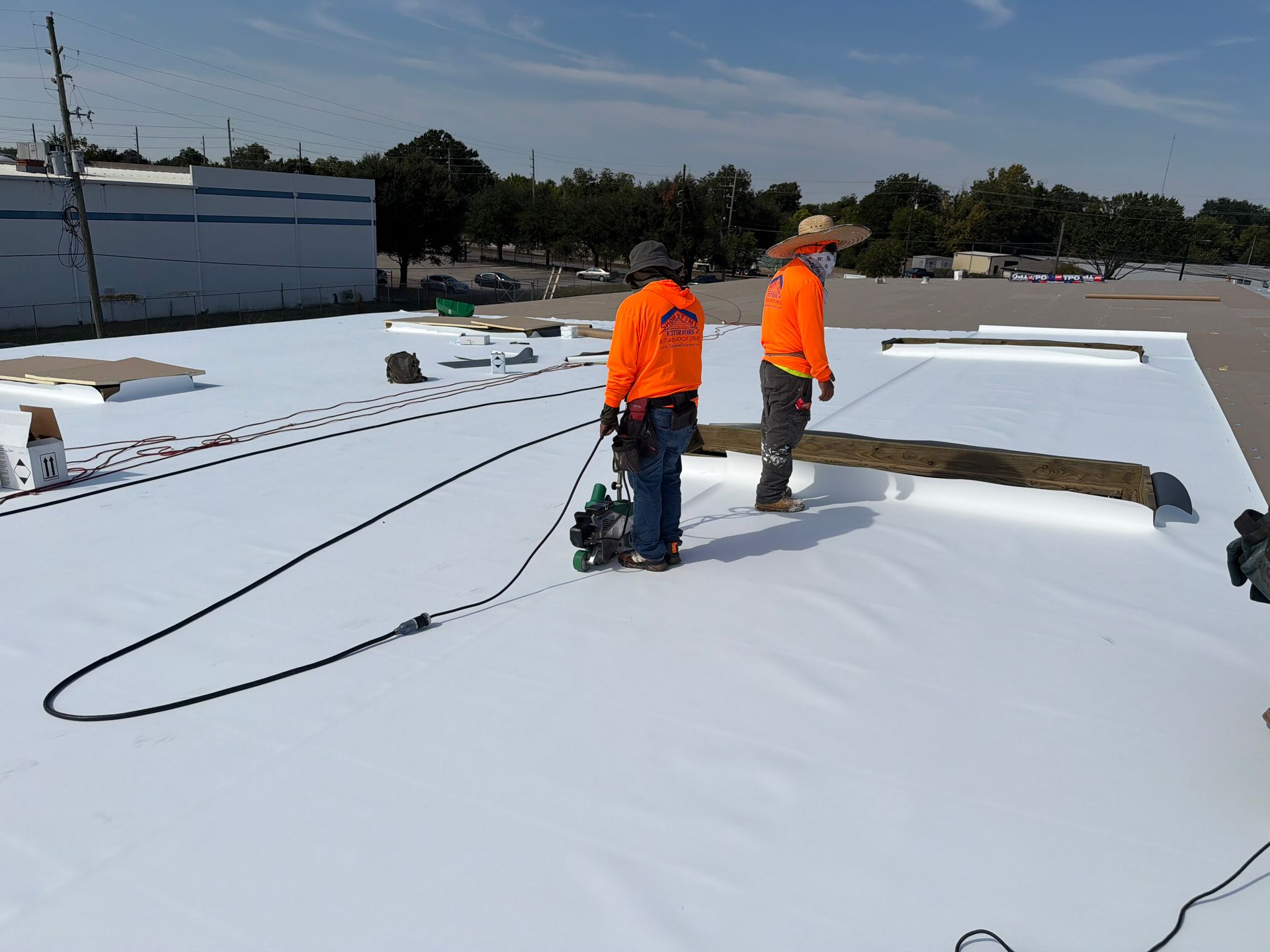
Seams deserve a specific explanation because the materials use different joining processes. For TPO, ask about surface preparation, welding equipment, field conditions, test welds, and the seam inspection procedure required for the system.
For EPDM, ask which approved seam products will be used and how surfaces will be prepared, primed, joined, and checked. Installation quality matters alongside the selected joining method.
Johns Manville's EPDM system resources provide access to product and application information. The contractor should connect the proposed method to the relevant manufacturer's instructions.
Avoid accepting a claim that one seam type makes leaks impossible. Ask how the crew verifies work and handles corners, intersections, repairs, and transitions where execution is particularly important.
What Is Included Beneath the Membrane?
Ask for a description of the complete assembly from the deck upward. Identify the existing materials to be removed or retained, insulation, cover board, attachment, and any required separation or vapor-control components.
A membrane price does not establish the quality of the supporting construction. Two proposals using the same top sheet can differ substantially in what lies beneath it.
Carlisle's roofing product reference guide includes membranes and supporting products such as accessories, fasteners, and insulation. Use that system-based perspective when asking about a bid.
Request written confirmation of compatibility for the actual combination. If an existing layer is retained, ask what evidence supports its condition and suitability rather than assuming the new membrane can cover any substrate.
How Will Insulation Affect the Decision?
Ask about insulation type, thickness, arrangement, attachment, and the thermal requirements applying to the project. The membrane should be selected as part of an assembly that addresses the building's needs.
A white surface may reduce solar heat absorption, but it does not replace appropriate insulation. Likewise, a darker membrane should not be evaluated without considering the rest of the roof and the building's heating and cooling conditions.
If insulation will be retained, ask how its condition will be assessed. If new insulation is proposed, determine whether the price includes tapered sections or other features intended to improve drainage.
Where condensation or unusual interior humidity is a concern, involve the appropriate design professional. Membrane selection alone cannot resolve every moisture-control question within a building enclosure.
Will a Reflective Roof Produce Meaningful Savings Here?
Ask the roofer to explain any energy claim using your building's climate, insulation, operating schedule, and HVAC conditions. Do not budget around a universal percentage saving.
The federal ENERGY STAR cool roof guidance explains that reflective roofing can reduce heat transferred into a building and that results depend on circumstances. That principle supports evaluation, not a guaranteed bill reduction.
TPO is frequently offered in white, while EPDM is often associated with black roofing. Ask about the actual product color and documented properties instead of relying only on the material category.
For a significant energy-driven investment, request an appropriate analysis. Compare the cost of reflective performance with insulation improvements and other relevant measures rather than treating surface color as the entire energy strategy.
What Attachment Method Fits This Building?
Ask whether the system will be adhered, mechanically attached, ballasted, or installed using another approved method. Confirm that the proposal identifies the relevant products and supporting construction.
The attachment decision should account for the deck, building configuration, applicable design requirements, and system documentation. A statement that one method is always strongest is not enough.
Ask how the perimeter and corner areas will be treated. These locations may have different fastening or attachment requirements from the roof field, depending on the project design.
When reviewing a commercial roofing proposal, request a complete attachment description. If testing or engineering is necessary to establish the design, identify who will arrange it before the construction scope is finalized.
How Will Drainage Problems Be Corrected?
Ask whether the roof currently has low areas, obstructed drains, inadequate transitions, or recurring standing water. A new membrane does not automatically change the roof's geometry.
Require the contractor to identify proposed drainage corrections, including relevant insulation changes, drain work, scupper details, or equipment transitions. Confirm which items are included and which require another trade.
If a proposal leaves a known problem in place, ask why and what consequences remain. Avoid assuming that a different membrane makes a persistent drainage defect unimportant.
Review the maintenance access needed to keep drainage functioning. A roof that performs well at completion can still develop problems if drains become blocked or later equipment installations obstruct water flow.
What Happens at Curbs, Pipes, and Roof Edges?
Ask for the proposed details at penetrations, parapets, terminations, drains, and rooftop equipment. These transitions deserve as much attention as the field membrane.
Determine whether existing flashing will be replaced and whether equipment must be lifted or modified. Review available flashing heights, access restrictions, and responsibility for mechanical or electrical coordination.
Do not assume that an inexpensive membrane alternative includes equivalent work at every detail. Ask the bidder to show what changes between the two proposed systems.
A useful comparison identifies the components and labor necessary to create a complete installation. It should not compare a fully detailed TPO proposal with an EPDM price that omits difficult transition work, or the reverse.
How Much Rooftop Traffic Should We Plan For?
Tell the roofer how often technicians service HVAC units, exhaust equipment, communications systems, or other rooftop assets. Explain the likely walking routes and places where tools are set down.
Ask about walkways, protective components, and appropriate cover board options for the proposed system. Protection should be compatible with the membrane and installed according to the applicable requirements.
Neither material should be treated as immune to punctures or damage from dropped tools. A maintenance plan needs to address the people using the roof as well as the roof itself.
Identify who will communicate access rules to service contractors. After installation, keep a record of work performed on the roof so new damage or altered details can be investigated promptly.
Are There Grease, Chemical, or Exhaust Exposures?
Describe the building's actual operations. Restaurants, manufacturing facilities, laboratories, and some service businesses may expose roofing to substances that require special evaluation.
Ask the manufacturer or appropriate technical representative to review the specific exposure and proposed protection. General claims about “chemical resistance” are not a substitute for checking the substance, concentration, temperature, and frequency involved.
Do not assume either TPO or EPDM is suitable for every discharge. Another roofing system or a change to equipment protection may deserve consideration when the exposure is outside the proposed product's intended use.
Show the contractor existing stains, deposits, and affected repair areas. The source of contamination should be addressed; replacing the membrane without correcting the discharge can repeat the problem.
How Should We Evaluate Hail and Wind Claims?
Ask which documented assembly characteristics support the proposed weather performance. A membrane name or thickness alone does not establish the performance of the complete installed roof.
Review the deck, insulation, cover board, attachment, perimeter details, and applicable testing or approvals. Ask whether the proposed warranty includes any specific weather-related provisions and what conditions or exclusions apply.
Avoid promises that either material is “hailproof” or cannot blow off. Real storms vary, and roof performance depends on design, installation, maintenance, and the event itself.
A broader Texas roofing materials comparison can help organize these questions. The final specification still needs to reflect the actual building and local requirements.
What Service Life Is Reasonable to Plan Around?
Ask how the contractor arrived at an expected service-life range. Relevant factors include the specific system, installation, exposure, drainage, maintenance, and changes made during occupancy.
Do not equate a warranty term with a guaranteed replacement date. A long advertised warranty does not establish that every roof will remain serviceable for that period without inspection or repairs.
Ask what common conditions shorten the life of the proposed system and what maintenance can reasonably address. A useful answer should explain the building's risks rather than repeat an industry-wide number.
For budgeting, compare scenarios and maintenance obligations. An owner should understand what would trigger localized repairs, a larger assessment, or eventual replacement without being promised an exact year of failure.
What Does the Warranty Actually Cover?
Request the exact proposed warranty and read its scope before signing. Identify the issuer, covered components, reporting process, maintenance duties, exclusions, transfer provisions, and any limits on remedies.
Carlisle's warranty services information shows that warranty offerings can include different terms and protections. The written warranty selected for your project controls the actual coverage.
Separate contractor workmanship obligations from manufacturer coverage. Ask who responds first to a leak and whether an inspection or registration process is required before the warranty takes effect.
If one bidder offers a different warranty, ask what construction or qualification differences support it. Compare the actual obligation and scope rather than treating the number of years as the only measure of value.
How Will Installation Affect Our Operations?
Ask about staging, deliveries, noise, odors, temporary protection, equipment access, and restricted entrances. Discuss sensitive interior spaces and any operating hours that affect the work.
The contractor should explain how daily work areas will be secured and how unexpected weather will be managed. This matters for both a tear-off and a recover project.
Ask whether the proposed installation products have temperature, storage, or environmental requirements that may influence scheduling. A preferred calendar date should not override product instructions or suitable field conditions.
Identify the decision maker for changes and the contact for urgent issues. Clear coordination helps protect tenants and operations without assuming that one membrane type automatically creates a disruption-free project.
Compare Complete Installed Prices
Request bids that define the same removal scope, insulation, cover board, drainage work, edge details, and project protections. Then compare the differences attributable to the proposed systems.
A price per square foot can be misleading when one proposal excludes work that another includes. Ask about allowances, unit prices for concealed repairs, disposal, permits, and equipment coordination.
Compare maintenance and repair availability as well as construction cost. Ask who can service the roof locally and how future repairs will be performed without introducing incompatible materials.
Avoid choosing solely on a low initial total or an unsupported lifespan claim. The useful comparison is the cost of a suitable, complete system with understandable responsibilities over the owner's expected holding period.
Use This Comparison During Bid Review
TopicTPO questionsEPDM questionsMembraneWhich product, thickness, reinforcement, and color?Which product, thickness, construction, and color?SeamsHow will weld preparation and field checks be performed?Which approved joining products and preparation are specified?Supporting layersWhat insulation, cover board, and substrate conditions apply?What insulation, cover board, and substrate conditions apply?AttachmentWhich documented attachment design fits this building?Which documented attachment design fits this building?OperationsHow are traffic and specific exposures addressed?How are traffic and specific exposures addressed?WarrantyWhich written coverage and conditions are included?Which written coverage and conditions are included?ServiceWho handles inspection and compatible repairs?Who handles inspection and compatible repairs?
The table organizes the discussion. It does not assign a universal winner because the proposed products and building conditions remain decisive.
What Will Maintenance Require?
Ask for an inspection schedule, service instructions, and a process for reporting leaks or damage. Include drainage, seams, penetrations, edges, and areas around rooftop equipment in the discussion.
GAF's roof asset management guidance emphasizes the value of ongoing roof care. A new installation still needs attention and appropriate repairs.
Use compatible products and qualified service personnel. A generic patching material selected without checking compatibility can create a new problem or complicate warranty obligations.
Keep consistent roof maintenance records, including photographs, dates, findings, and completed corrections. Update the record when equipment is added or another trade changes a roof detail.
A Practical Building Owner Example
Consider an owner replacing a roof above an air-conditioned warehouse with several regularly serviced HVAC units. One bidder recommends white TPO; another recommends EPDM.
The owner asks both bidders to price the same insulation, drainage corrections, perimeter scope, and protected service routes. Each bidder must identify its actual membrane, attachment method, seam procedures, and warranty.
That exercise may reveal that the original price difference came mainly from supporting components rather than membrane choice. It also gives the owner a clearer view of maintenance access and energy-related assumptions.
The resulting decision should explain why the selected assembly fits this building. Another warehouse with different operations, exposure, or existing conditions may reasonably reach a different conclusion.
What Should Be in the Closeout Package?
Before signing, ask what information will be delivered at completion. Request the final assembly description, installed product information, approved changes, applicable permit records, warranty documents, and photographs of important details.
Identify any maintenance requirements that begin immediately. The owner should know how to report a leak, who may perform warranty-related work, and what information is needed when another trade requests roof access.
If substitutions occurred during construction, make sure the records describe the installed system. Keeping only the original bid can leave future service contractors working from an inaccurate specification.
Assign one person to retain the package and share relevant instructions with property management and equipment service providers. These records make later inspections and repairs easier to plan and help preserve a reliable history of the building.
Frequently Asked Questions
Is TPO always better for Texas heat?
A reflective product may offer benefits, but evaluate insulation, building use, energy conditions, and the complete assembly. Climate alone does not establish the best system for every building.
Does EPDM always mean a black roof?
Ask about the actual product and available options. Color and documented surface properties should be confirmed rather than assumed from the membrane category.
Which system has stronger seams?
Ask about the specified joining method, installation conditions, quality checks, and relevant system documentation. A general comparison cannot replace evaluation of the products and workmanship being proposed.
Can either material be installed over my existing roof?
Possibly, if investigation supports a compatible recover assembly and applicable requirements are satisfied. Do not approve an overlay without addressing retained materials, moisture, attachment, and detailing.
Which roof is easier to repair?
Both require appropriate assessment and compatible repair methods. Ask which qualified local providers can service the selected system and what documentation they will need.
Should homeowners use this same comparison?
The same questions can help when a home has a suitable low-slope roof area, but its design and details require separate evaluation. Discuss residential roofing needs for the actual property rather than borrowing a commercial specification.
Choose the Assembly That Fits the Building
A sound TPO versus EPDM decision connects product selection to existing conditions, drainage, supporting layers, attachment, exposure, service access, and a complete written proposal. Ask for the evidence and documents needed to understand that connection.
For a North Texas commercial roof assessment or replacement discussion, contact Showtime Exteriors or call 817-400-7663. Bring available roof records, leak history, and competing proposals so the conversation can focus on a practical scope for your building.