


North Texas Fallen Tree Roof Damage: What Property Owners Should Do Next
North Texas Fallen Tree Roof Damage | What to Do Next
When a tree falls onto a North Texas commercial roof, the damage can extend far beyond broken roofing material. The impact may weaken the roof deck, framing, parapets, walls, skylights, and rooftop equipment. Limbs can puncture a membrane in multiple places, while rain travels through insulation and into occupied spaces. The tree may also be tangled in electrical lines or remain under enough tension to shift without warning.
What looks like a straightforward cleanup job may actually involve several connected hazards: an unstable tree, a potentially weakened structure, an open roof, electrical danger, falling debris, and interior water damage. Property owners should not begin by climbing onto the roof or cutting branches. The first steps are to protect people, restrict access, contact the appropriate emergency and utility services, document conditions from safe areas, and coordinate qualified professionals.
A prompt inspection of North Texas fallen tree roof damage helps ownership determine whether the roof is safe, what must be stabilized immediately, how the tree can be removed without causing further damage, and whether repair, restoration, or replacement is appropriate.
This guide explains what commercial property owners, facility managers, property managers, and real estate professionals should do after a tree or large limb lands on a roof in North Texas or the DFW area.
Why a Fallen Tree on a Commercial Roof Is an Emergency
A fallen tree applies a heavy and often uneven load to a roof that was not designed to support it. The trunk and branches may span several structural areas, concentrate weight at one point, or press against a parapet and exterior wall. Wind can continue moving the canopy, causing the tree to roll, settle, or tear through additional roofing components.
Storm-damaged trees can also retain stored energy. Bent trunks, twisted limbs, partially uprooted root plates, and branches pinned beneath other debris may move suddenly when cut. OSHA identifies falling branches, power lines, chainsaws, aerial equipment, and storm-loaded trees as serious hazards that require trained personnel.
At the same time, the roof may contain concealed dangers:
- Weakened or broken decking
- Cracked or displaced structural members
- Open skylights or roof hatches
- Wet and slippery materials
- Loose sheet metal and sharp edges
- Damaged electrical or mechanical equipment
- Hidden punctures beneath branches and leaves
- Water-damaged ceilings below
Treat the situation as a coordinated property emergency—not as ordinary landscaping or routine roof maintenance.
Step 1: Confirm the Immediate Weather Threat Has Passed
Do not approach the building while high winds, lightning, hail, heavy rain, or additional falling-tree hazards continue. Monitor National Weather Service alerts and instructions from local emergency authorities. Even after the main storm passes, saturated soil and damaged root systems can cause other trees to fall.
Before allowing anyone near the property, consider:
- Are strong winds or lightning still present?
- Are other trees leaning, cracked, uprooted, or hanging over access areas?
- Are roads blocked by trees, floodwater, or power lines?
- Has the local authority restricted access?
- Is the damaged building making unusual shifting or cracking sounds?
- Is there a smell of natural gas, smoke, or burning electrical equipment?
If the building may be structurally unsafe, if utilities are damaged, or if emergency access is obstructed, contact the appropriate fire department, police, utility provider, or emergency-management authority.
Step 2: Keep Everyone Away From the Impact Area
Establish a safety perimeter around the tree, the damaged roof section, the affected exterior wall, and the interior rooms below. The restricted zone should account for branches that could fall, loose roofing components, glass, masonry, metal, and any part of the tree that could roll or shift.
Do not allow employees, tenants, maintenance personnel, or volunteers to:
- Walk beneath hanging limbs
- Stand on the roof to take photographs
- Use ladders near the damaged area
- Cut or pull branches from the building
- Attach vehicles or equipment to the tree
- Move debris touching a power line
- Enter rooms with sagging ceilings
- Use electrical equipment in wet areas
Post signs or temporary barriers and assign security personnel when necessary. For a multi-tenant building, communicate which entrances, suites, parking areas, loading zones, and sidewalks are closed.
The National Weather Service warns people to remain far from downed power lines and damaged buildings. Assume any fallen or dangling line is energized. Do not touch the line, the tree, a fence, a vehicle, or another object that may be in contact with it.
Step 3: Call the Right Professionals in the Right Order
Tree-on-roof emergencies often require more than one contractor. The correct order depends on the hazards present.
Emergency services or utility provider
Call first when there are downed lines, fire, sparking, a gas odor, trapped occupants, partial collapse, or an immediate threat to life and property.
Structural engineer or building professional
A structural evaluation may be needed when the roof, deck, framing, parapet, wall, canopy, or columns appear bent, cracked, displaced, or overloaded. The engineer can help define safe access and the sequence for tree removal and structural stabilization.
Qualified tree-removal company or arborist
The tree should be removed by professionals experienced with storm-loaded trees, rigging, cranes, aerial equipment, and work around buildings. If electrical lines are involved, specialized utility coordination and qualified line-clearance personnel may be required.
Commercial roofing contractor
The roofing contractor documents roof-system damage, helps protect openings, evaluates repairability, and develops the roofing scope. The roofer should coordinate with structural and tree-removal teams when tree sections must be lifted or cut from the roof.
Additional specialists
Depending on the property, you may also need an electrician, mechanical contractor, plumber, fire-protection professional, restoration company, environmental consultant, or local building official.
No single trade should make assumptions outside its professional role. Safe recovery depends on coordination.
Step 4: Document the Damage From Safe Locations
Take photographs and videos before cleanup or temporary work begins, but only from locations that have been approved for access. Ready.gov recommends documenting property damage before cleanup whenever it is safe to do so.
Capture:
- The complete tree and its position relative to the building
- The trunk, branches, root system, and apparent direction of fall
- Every visible roof impact point
- Damaged parapets, walls, gutters, fascia, and edge metal
- Broken skylights, windows, doors, canopies, and signs
- Nearby trees that appear cracked or unstable
- Downed power lines and damaged utility equipment from a safe distance
- Displaced HVAC units, vents, conduit, or rooftop accessories
- Interior leaks, ceiling damage, and wet finishes
- Damaged inventory, furniture, electronics, and machinery
- Debris around the property
- Temporary safety barriers and protective measures
Include wide views that show context and close views that show detail. Record the date, time, location, and photographer. Save relevant security footage, tenant reports, weather alerts, and maintenance logs.
Create an incident record containing:
- Approximate time the tree fell
- Weather conditions and alerts
- Who discovered the damage
- Occupants or tenants affected
- Areas closed to access
- Emergency and utility calls
- Contractors contacted
- Temporary work performed
- Expenses and receipts
Retain pre-storm roof inspections, tree-maintenance records, roof warranties, previous repair invoices, and photographs. These records may help distinguish new impact damage from older roof conditions.
Step 5: Do Not Remove the Tree Before the Load Is Evaluated
It is natural to want the tree removed immediately, but an unplanned removal can worsen the damage. The tree may currently be bridging two structural areas, leaning against a wall, or holding broken materials in place. Cutting the wrong limb can shift weight abruptly, enlarge the roof opening, collapse decking, or release a branch under tension.
A coordinated removal plan may address:
- Whether the building is stable enough for personnel or equipment
- Which parts of the tree carry the load
- Whether a crane, lift, rigging system, or other equipment is needed
- Where tree sections can be safely lowered
- How to protect undamaged roof areas
- Whether roof or structural shoring is required
- How power lines and utilities will be controlled
- How the roof opening will be protected as removal progresses
- How debris will be moved without overloading the roof
Tree removal and roof stabilization may need to happen in stages. The commercial roofer can inspect newly exposed damage as each section is lifted away and document conditions before they are covered.
Step 6: Request a Complete Commercial Roof Inspection
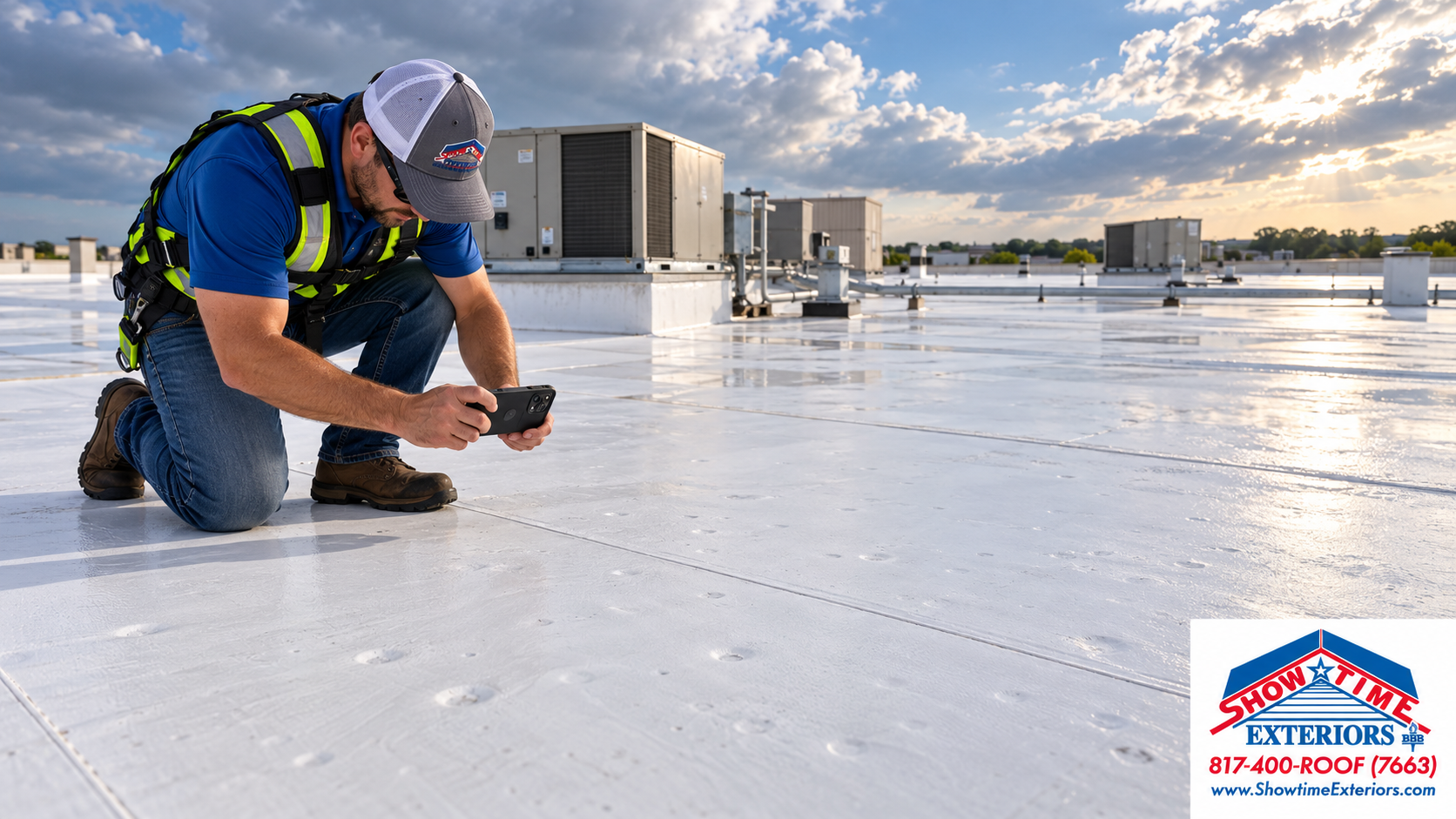
Once safe access is established, a qualified commercial roofing contractor should evaluate the entire affected roof area and the broader system. A fallen limb may puncture one location, while the force transferred through the tree damages seams, flashing, curbs, or decking several feet away.
A fallen tree roof inspection may include:
- Roof membranes, metal panels, coatings, modified bitumen, built-up roofing, shingles, or tiles
- Visible roof-deck conditions
- Impact points and punctures
- Tears, splits, wrinkles, and displaced materials
- Seams, welds, laps, fasteners, plates, and attachment points
- Perimeter metal, coping, parapets, fascia, and wall transitions
- Flashing at curbs, penetrations, walls, and expansion joints
- Skylights, hatches, smoke vents, and daylighting systems
- HVAC units, exhaust fans, vents, pipes, conduit, and equipment supports
- Roof drains, scuppers, gutters, and downspouts
- Ponding water and changed drainage patterns
- Suspected moisture beneath the roof surface
- Interior conditions below the damaged area
- Pre-existing repairs or maintenance issues
The contractor should identify which areas are accessible and which remain unsafe or concealed. Further investigation may be recommended after the tree is fully removed or after structural stabilization allows additional access.
Common Types of Roof Damage Caused by Fallen Trees
Membrane punctures and tears
Branches can pierce TPO, PVC, EPDM, modified bitumen, coatings, and other roof surfaces. A large trunk may crush the assembly, while small limbs create less visible punctures hidden by leaves or debris.
Metal panel and seam damage
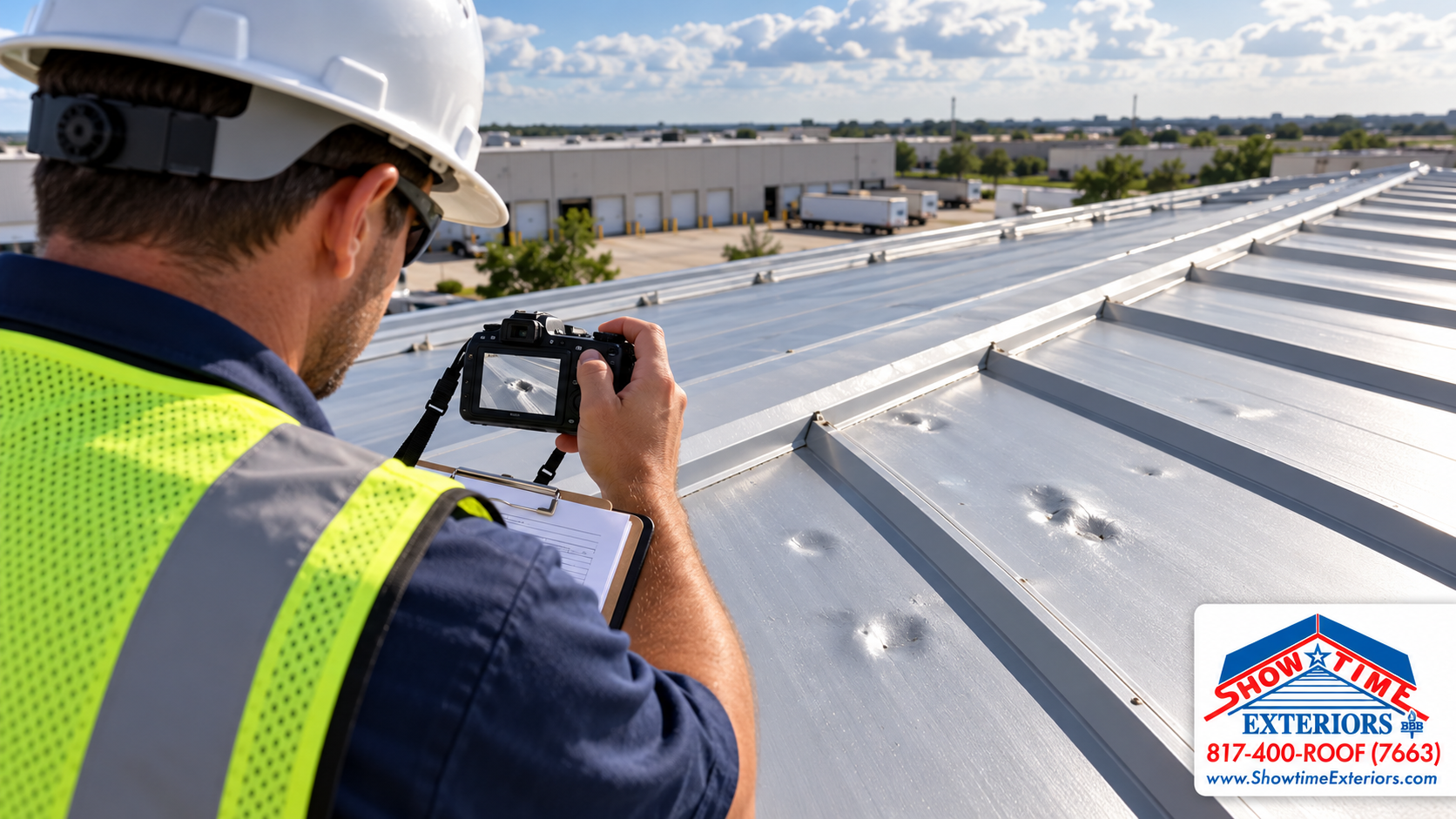
A tree can dent, bend, crease, puncture, or detach metal panels. Clips, fasteners, seams, and transitions may be affected even when the visible dent appears localized.
Broken roof decking
Impact can crack, bend, split, or collapse the roof deck. Deck damage can create hidden fall hazards and may require structural repair before the roofing system is restored.
Damaged structural framing
Joists, trusses, beams, purlins, rafters, and roof-to-wall connections may be overloaded or displaced. Structural involvement changes the repair sequence and requires appropriate professional evaluation.
Parapet and perimeter damage
A falling trunk or branch may push a parapet outward, crush coping, tear edge metal, or damage the roof-to-wall transition. Loose perimeter materials may remain dangerous after the tree is removed.
Broken skylights and rooftop accessories
Skylights, roof hatches, smoke vents, solar components, antennas, and screens can shatter or detach. Openings should be secured only after conditions are documented and safe work methods are established.
HVAC and equipment damage
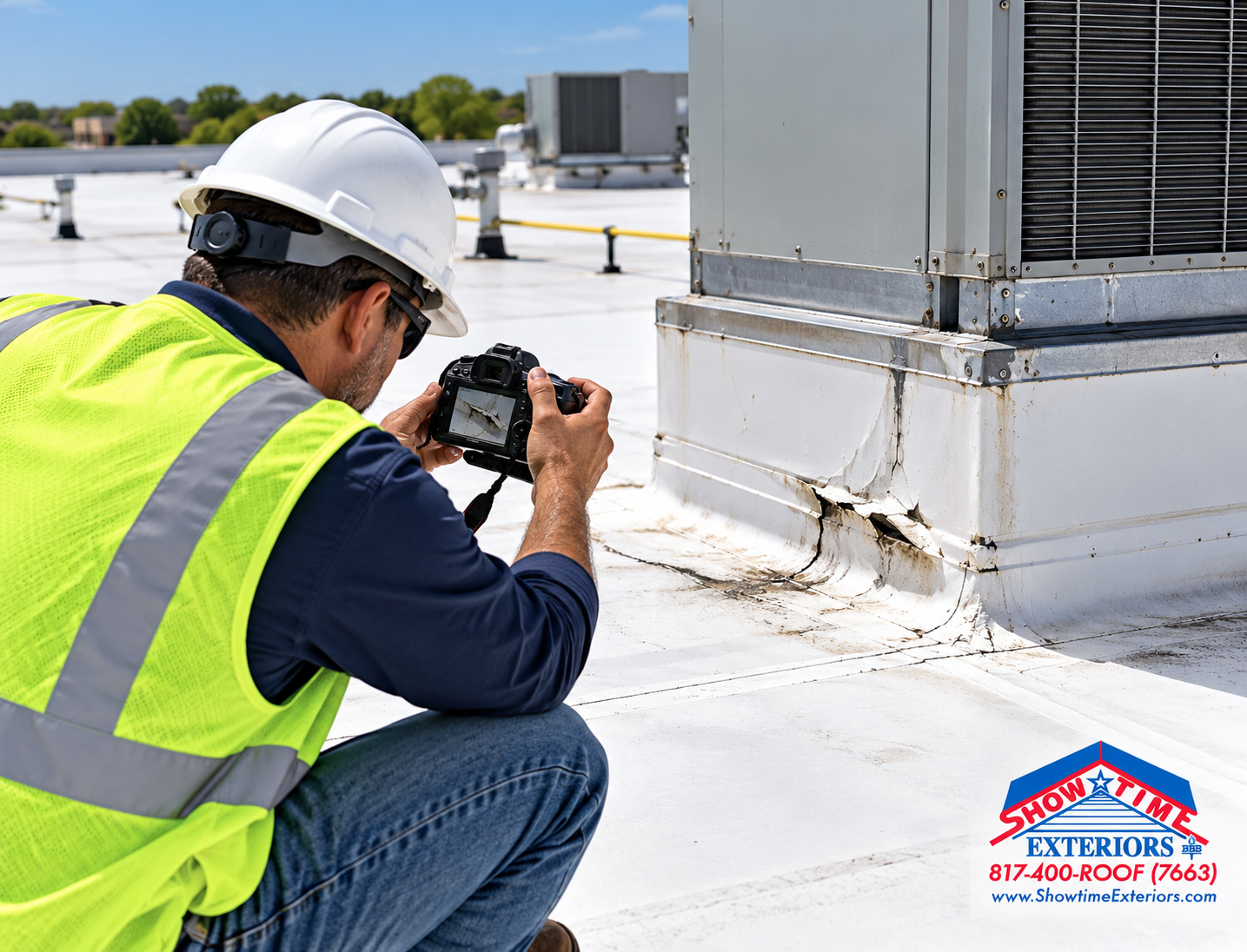
Branches may strike mechanical units, shift curbs, damage ductwork, break gas or electrical connections, and compromise flashing around the equipment.
Drainage obstruction
Leaves, branches, bark, roofing debris, and sediment can block drains and scuppers. The tree’s weight may also deform the roof enough to create new low areas where water accumulates.
Interior water damage
Rain can enter through impact openings and migrate away from the original point. Ceiling stains do not necessarily identify the exact roof puncture. Water may move through insulation, deck flutes, walls, conduit, and mechanical pathways.
Step 7: Install Appropriate Emergency Protection
After the tree is removed or reduced enough to expose the roof, the building may need immediate temporary protection. This work should be completed by qualified professionals and coordinated with any structural restrictions.
Emergency measures may include:
- Securing or removing loose roofing materials
- Temporarily closing roof openings
- Protecting exposed decking and insulation
- Installing a compatible temporary covering
- Stabilizing damaged perimeter components
- Clearing safe drainage pathways
- Containing interior water
- Relocating inventory and sensitive equipment
- Beginning professional water extraction and drying
Temporary protection should not hide undocumented damage. Photograph the exposed roof before work starts and after stabilization is complete.
Avoid improvised patches that use incompatible sealants, uncontrolled fasteners, loose tarps, or materials likely to trap moisture. A temporary cover is a short-term risk-control measure—not proof that the roof has been permanently repaired.
Step 8: Evaluate Hidden Moisture and Secondary Damage
Fallen-tree damage is often followed by heavy rain. Water can saturate insulation, decking, ceiling materials, and interior finishes before the opening is protected. Even if dripping stops, moisture may remain within the assembly.
Hidden moisture can contribute to:
- Reduced insulation performance
- Corrosion of metal decking and components
- Deterioration of wood or gypsum materials
- Damage to ceilings, walls, and flooring
- Mold or indoor environmental concerns
- Electrical and equipment damage
- Recurring leaks after surface repairs
- Larger repair areas if wet material is not addressed
Depending on the roof system and extent of exposure, the contractor may recommend additional moisture evaluation or selective investigation. The goal is to define the affected area accurately rather than patching only the most visible hole.
Step 9: Choose Between Repair, Partial Replacement, and Full Replacement
A tree impact does not automatically require a complete roof replacement. The appropriate scope depends on the affected area, roof construction, deck and structural conditions, moisture, system age, repairability, code requirements, and existing warranty.
Targeted repair
Small punctures or isolated flashing damage may be repairable when the surrounding roof, insulation, deck, and attachment remain in serviceable condition.
Partial roof replacement
A larger impact area may require removal and rebuilding of a defined section, including wet materials and damaged deck. Transitions between new and existing roofing must be detailed correctly.
Roof restoration
Restoration may be possible for certain systems after damaged and wet materials are addressed, provided the remaining assembly is an appropriate substrate and all applicable requirements can be met.
Full roof replacement
Replacement may be justified when the impact caused widespread damage, the tree shifted large roof sections, moisture spread extensively, attachment is compromised, or the existing system is aged and difficult to repair reliably.
Structural reconstruction
If framing, decking, walls, parapets, or equipment supports are damaged, structural work may need to occur before the final roof can be installed.
A written recommendation should separate:
- Emergency stabilization
- Tree-impact damage
- Structural work
- Mechanical or electrical work
- Water-remediation needs
- Pre-existing maintenance concerns
- Permanent roofing options
- Optional resilience improvements
Step 10: Review Insurance Requirements and Build a Claim File
Commercial property policies vary. Review your policy and notify your licensed insurance agent, broker, or carrier according to its requirements. Ask about notice procedures, deductibles, documentation, emergency mitigation, tree removal, debris removal, business interruption, and covered-property provisions that may apply.
The commercial roofing contractor documents roof conditions and prepares roofing scopes or estimates. The tree-removal company documents tree work. Structural and other specialists document their respective findings. Insurance coverage and policy interpretation belong to the carrier and qualified insurance or legal professionals.
Create a central file containing:
- Policy and contact information
- Date and time of the storm or tree failure
- Weather reports and alerts
- Photos and video before cleanup
- Tenant, employee, and witness reports
- Emergency-service and utility records
- Tree-removal plans, invoices, and photographs
- Structural and roof inspection reports
- Temporary mitigation documentation
- Repair or replacement scopes and estimates
- Prior roof inspections and maintenance records
- Tree-care and landscaping records
- Lists of damaged inventory and equipment
- Business-interruption documentation when relevant
Keep receipts for emergency fencing, security, water removal, temporary protection, debris handling, equipment rental, and other recovery expenses. Maintain backups of all files.
What Property Owners Should Not Do
Do not climb onto the roof
Impact damage may leave weak decking, broken skylights, unstable tree sections, wet surfaces, and loose materials. Ground-level visibility cannot confirm that a path is safe.
Do not cut the tree yourself
Storm-loaded trunks and branches can roll, split, spring, or fall when cut. Chainsaws, aerial work, rigging, and work near power lines require training and proper equipment.
Do not touch a tree near electrical lines
Assume the line and anything touching it are energized. Contact emergency services and the utility provider. Only properly qualified personnel should perform tree work near energized lines.
Do not pull the tree off with a vehicle
Uncontrolled pulling can shift the load, collapse roof sections, damage walls, snap ropes or chains, and create severe struck-by hazards.
Do not begin permanent repairs before documentation
Emergency protection may be urgent, but record conditions before they are altered whenever it is safe to do so.
Do not ignore small limb punctures
Multiple small openings may be hidden beneath debris. They can allow water into insulation without producing an immediate interior leak.
Do not assume removal ends the emergency
Once the tree is gone, weakened structure, roof openings, loose perimeter components, blocked drainage, and wet materials may remain.
Do not accept an unsupported replacement recommendation
Ask for photographs, measurements, system information, moisture findings, and a written explanation of why repair, partial replacement, or full replacement is proposed.
Special Considerations by Commercial Roof Type
TPO, PVC, and EPDM roofs
Tree limbs may puncture or tear the membrane, disrupt seams, shift flashing, and damage cover board, insulation, fasteners, and decking beneath the surface.
Metal roof systems
Inspectors should evaluate more than dents. Panel seams, clips, fasteners, purlins, penetrations, transitions, and attachment may have moved under impact.
Modified bitumen and built-up roofs
Potential damage includes punctures, splits, displaced surfacing, open laps, crushed insulation, broken decking, and moisture migration.
Coated roof systems
The coating and underlying substrate may be punctured, cracked, crushed, or separated. Repair materials must remain compatible with the existing system.
Steep-slope commercial roofs
Shingles, tile, slate, or other materials may break or detach. Branches can damage underlayment, decking, flashing, gutters, and architectural features.
Mixed-system properties
Commercial buildings often combine low-slope roofing, metal canopies, steep-slope entrances, wall panels, and additions. The tree may affect several systems and their transitions at once.
Questions to Ask the Roofing and Tree-Removal Teams
- Is the tree stable, and what could cause it to shift?
- Are electrical lines or other utilities involved?
- Does the building need a structural evaluation before removal?
- What removal sequence will minimize additional building damage?
- Which areas must remain restricted?
- Can the roofing contractor document damage during removal?
- Is temporary shoring or stabilization required?
- What roof openings need immediate protection?
- Is the roof deck damaged or unsafe?
- Is moisture likely to be trapped in the assembly?
- Can the roof be repaired, or is a larger scope justified?
- What photographs and written reports will each company provide?
- How will debris be removed without overloading undamaged roof areas?
- What remains to be inspected after the tree is gone?
Clear coordination between the teams reduces confusion, prevents duplicated work, and helps ownership maintain a complete recovery record.
How Quickly Should the Roof Be Inspected?
If the tree created a visible opening, displaced rooftop equipment, damaged utilities, or caused active water entry, request professional assistance immediately once weather and access conditions allow. Emergency services and structural or utility professionals may need to act before roof access is possible.
If only a smaller limb appears to have struck the roof, timely inspection is still important. Punctures, cracked materials, seam damage, and blocked drainage may not be visible from the ground. Another North Texas rain event can turn a manageable opening into widespread water damage.
Plan Ahead for Future Tree and Roof Risks
After recovery, update the property’s preventive-maintenance and storm-response plan.
Consider:
- Routine roof inspections and documented maintenance
- Professional evaluation of large, dead, diseased, leaning, or damaged trees
- Keeping branches appropriately managed around roofs and utilities
- Maintaining roof drains, scuppers, gutters, and downspouts
- Storing current roof plans, warranties, and pre-storm photographs
- Maintaining emergency contacts for roofing, tree removal, structural, electrical, restoration, and insurance needs
- Creating tenant and employee communication procedures
- Defining safe access and restricted-zone protocols
- Backing up critical building records off-site
Property owners should not attempt technical tree-risk assessments themselves. A qualified arborist can evaluate tree conditions, while a commercial roofing contractor can maintain a clear record of the roof before future storms.
Choosing a North Texas Commercial Roofing Contractor
After a major storm, choose a contractor based on commercial roofing experience, documentation quality, safety, and local accountability.
Look for a company that:
- Understands commercial roof systems
- Has experience with tree-impact and storm damage
- Serves North Texas and DFW
- Coordinates effectively with structural and tree-removal professionals
- Respects restricted areas and site-specific safety procedures
- Provides clear photographs and written findings
- Separates emergency work from permanent repairs
- Explains repair, restoration, and replacement options plainly
- Uses compatible materials and system-specific methods
- Can work around tenants and business operations
- Provides a defined scope, schedule, and communication process
The right contractor will help ownership understand what happened, what is urgent, and what solution fits the property—without relying on fear or pressure.
Frequently Asked Questions About Fallen Tree Roof Damage
What should I do first if a tree falls on my commercial roof?
Keep people away from the impact area, watch for electrical and structural hazards, and contact emergency services or the utility provider when necessary. Do not climb onto the roof or begin cutting the tree.
Can I remove small branches myself?
Even small branches may be supporting other tree sections or concealing roof damage. Storm-loaded tree work and rooftop access can be dangerous. Have qualified professionals evaluate the situation.
Who should remove a tree from a commercial roof?
A qualified tree-removal company or arborist experienced with storm damage, rigging, cranes, and work around structures should handle removal. Utility involvement or qualified line-clearance personnel may be necessary near power lines.
Does a structural engineer need to inspect the building?
An engineering evaluation may be appropriate when the tree has crushed or deflected the roof, damaged framing or deck, moved walls or parapets, or created questions about safe access and load removal.
Can the roof be repaired after a tree falls on it?
Often, yes. Repairability depends on the roof type, impact area, deck and framing condition, moisture, system age, and compatibility of repairs. Some buildings require partial or full replacement.
What if there is no visible interior leak?
The roof can still have punctures, crushed insulation, open seams, or deck damage. Water may remain within the assembly without reaching the occupied space immediately.
Should the tree be removed before the insurance inspection?
Urgent safety and mitigation needs may require removal before an insurer can inspect. Follow policy requirements, communicate with the carrier, and document conditions thoroughly before and during removal whenever safe.
Is a tarp enough to protect the roof?
A properly installed temporary covering may reduce immediate exposure, but it is not a permanent repair. The underlying roof, deck, moisture, and structural conditions still need evaluation.
Can the business remain open?
That depends on structural safety, utilities, fire-protection systems, safe exits, water damage, and whether affected areas can be isolated. Temporary roof protection alone does not confirm that the building is safe for occupancy.
Schedule a North Texas Fallen-Tree Roof Inspection
When a tree or large limb lands on a commercial roof, quick action matters—but safe, coordinated action matters more. The tree must be assessed and removed without creating additional damage, while the roof, deck, structure, equipment, drainage, and interior are carefully documented.
Showtime Exteriors Commercial Roofing helps commercial property owners, facility managers, property managers, and real estate professionals across North Texas and DFW evaluate roof damage after fallen trees and severe weather. Our team documents visible roofing conditions, identifies urgent vulnerabilities, explains repair and replacement options, and helps owners establish a practical recovery plan.
Call Showtime Exteriors at 817-400-7663 or visit ShowtimeExteriors.com to book a free commercial roof inspection and roof-grade assessment.
Do not wait for another storm to expose hidden punctures or trapped moisture. Schedule a professional inspection and protect the property, its occupants, and its operations.