



When a Commercial Roof Is Placed in Service for Section 179

Showtime Exteriors • October 1, 2026

Texas Commercial Roofing Decision Guide

For a commercial roof replacement, several dates may appear important: the contract date, deposit date, material-delivery date, installation start, substantial completion, final inspection, owner acceptance, warranty issuance, and the date the building can use the completed improvement as intended.

Those dates are not automatically interchangeable.

When a Texas commercial property owner asks whether a roof project may qualify for Section 179 treatment in a particular tax year, the phrase placed in service becomes central. IRS guidance explains that Section 179 expense is associated with the tax year in which qualifying property is placed in service. However, determining that date is a tax analysis based on the project’s facts. A roofing contractor can document physical milestones but should not decide which tax year applies.

The practical rule is straightforward: plan early, complete the right roofing work, preserve an honest timeline, and let a qualified CPA or tax attorney evaluate the evidence.

This guide explains the milestones that may appear in a commercial roof project, the records that support each milestone, the risks of year-end scheduling, and the questions owners should ask before relying on a date. It also addresses aging gravel-surfaced built-up roofs, where hidden moisture and concealed deterioration can expand the scope and delay completion.

Showtime Exteriors helps Texas commercial property owners inspect, scope, schedule, document, repair, retrofit, restore, and replace commercial roofs. Call 817-400-ROOF (7663) or visit Showtime Exteriors commercial roofing to discuss a project.

The Direct Answer What Does Placed in Service Mean

IRS Topic Number 704 on depreciation states that Section 179 expense is deducted in the year qualifying property is placed in service. It also notes that taxpayers may elect to treat certain qualified real property as Section 179 property, including roofs that are improvements to nonresidential real property and are placed in service after the building was first placed in service.

For tax purposes, placed in service generally concerns when property is ready and available for its intended use. The exact application depends on the facts, the property, the taxpayer, and current law. That does not mean the date must always match the contractor’s last day onsite, final payment, warranty date, or permit closeout.

Why There Is No Universal Roofing Date

Commercial projects vary. One roof may be completed in a single uninterrupted phase. Another may involve several buildings, separate roof areas, phased occupancy, long-lead equipment, permit inspections, manufacturer review, or punch-list work. A portion of the project may be physically complete while another portion remains under construction.

The owner’s tax professional may need to decide whether the whole project or a distinct portion was ready and available for its intended use. The contractor should supply accurate physical records without framing them as a tax conclusion.

The Roofing Contractor and CPA Have Different Roles

The roofing contractor can document:

- the existing condition;

- approved scope;

- dates crews worked;

- materials delivered and installed;

- roof areas completed;

- inspections performed;

- punch-list corrections;

- warranties submitted or issued;

- operational restrictions or remaining work.

The CPA or tax attorney evaluates:

- whether the taxpayer and property qualify;

- whether the project concerns nonresidential real property;

- whether costs are Section 179 property;

- business-use requirements;

- applicable dollar and income limitations;

- cost classification;

- election and filing requirements;

- the placed-in-service tax year.

That division protects the owner. It prevents marketing language from replacing professional tax analysis.

Section 179 Roof Eligibility in Context

The IRS explains in Publication 946 that certain qualified real property may be treated as Section 179 property. This can include roofs added to nonresidential real property after the building itself was first placed in service.

The provision does not mean every roofing invoice qualifies. The owner must consider the building’s classification, the taxpayer’s use, eligible cost, annual limits, taxable-income limitations, other Section 179 elections, and the date the property was placed in service.

Avoid Guaranteed Write Off Claims

Phrases such as “guaranteed deduction,” “instant write-off,” and “100 percent deductible roof” are risky and misleading. Even if a roof improvement is the type of property that may qualify, a taxpayer’s available deduction can be affected by limitations and specific facts.

Showtime Exteriors can provide scope and project documentation. It does not prepare the tax return or guarantee tax treatment.

Section 179 Is Not Section 179D

Section 179D is a separate energy-efficient commercial buildings deduction. It has different eligibility, technical, certification, wage, timing, and calculation requirements. The IRS provides a separate page for the Energy Efficient Commercial Buildings Deduction, and the Department of Energy also provides an overview of Section 179D.

A reflective membrane, insulation upgrade, or roof replacement should not automatically be called a Section 179D project. The owner should ask the tax and energy professionals which provision, if any, applies.

Milestone One Contract Signing

The contract date shows when the parties agreed to the project. It can establish scope, price, legal obligations, and anticipated schedule. It does not by itself prove that the roof was installed or ready for use.

What the Contract Should Document

A commercial roofing contract should identify the parties, property, roof areas, system, removal or recover strategy, insulation, attachment, drainage, flashings, edge details, warranty expectations, price, changes, payment schedule, and exclusions.

The owner should preserve the original signed contract and all later amendments. If the final installed assembly differs from the original scope, the file should explain why.

Why Signing Before Year End Is Not Enough

An owner may sign in November or December while materials, permits, engineering, or scheduling push installation into the following year. Contract signing shows commitment. It is not the same as physical completion or operational availability.

Do not let a sales deadline obscure this difference. If tax timing matters, the CPA should review the planned schedule before the owner relies on it.

Milestone Two Deposit or Payment

A deposit may reserve labor, initiate procurement, or satisfy contract terms. Progress payments may follow material delivery or production milestones. Final payment may occur before or after punch-list completion.

Payment Evidence to Preserve

Keep:

- invoice number and date;

- contract or purchase-order reference;

- payment application;

- canceled check or electronic confirmation;

- lien release when appropriate;

- retainage records;

- final account reconciliation.

These records establish financial activity. They do not independently establish when the roof was ready and available for use.

Avoid Backdating or Accelerating Paperwork

Never ask a contractor to backdate an invoice, completion certificate, photograph, or warranty. If work continues after year-end, preserve the actual dates. A complete and honest record gives the CPA facts to evaluate.

Milestone Three Material Ordering and Delivery

Commercial roof systems may require membrane, insulation, cover board, fasteners, adhesives, edge metal, drains, custom flashings, curbs, walk pads, and accessories. Deliveries can occur well before installation.

Delivery Is Not Installation

Materials stored onsite or in a warehouse are not the same as a completed roof. Delivery tickets can support the project history and verify products, quantities, and dates, but they should be read together with installation records.

Product Submittals and Approvals

Preserve approved submittals, product data, shop drawings, engineering, manufacturer letters, and substitutions. These records show the assembly intended for installation and help verify that delivered materials matched the scope.

If a product changes because of availability, wind design, compatibility, or manufacturer requirements, document the approval and any schedule effect.

Milestone Four Mobilization and Installation

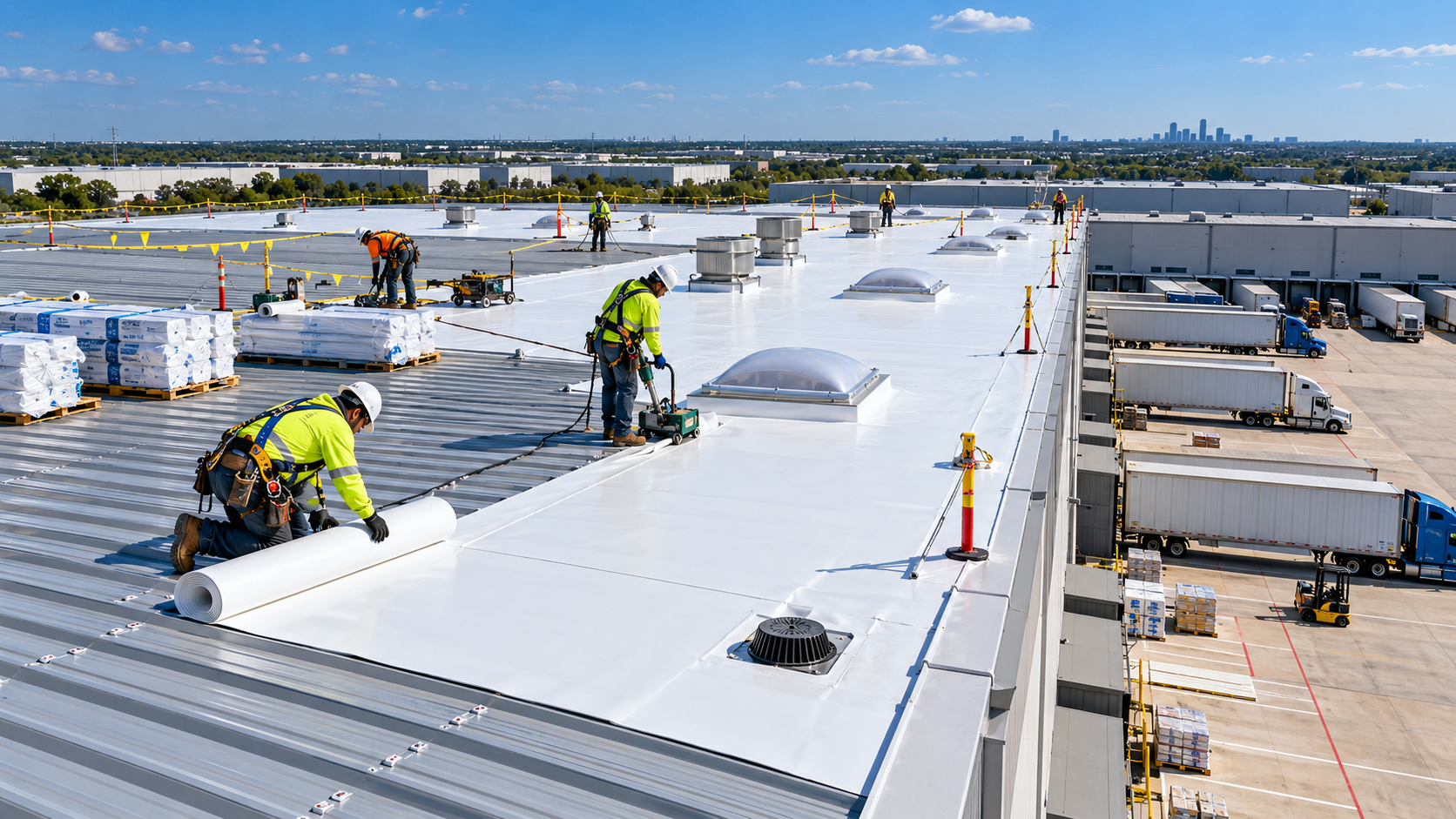
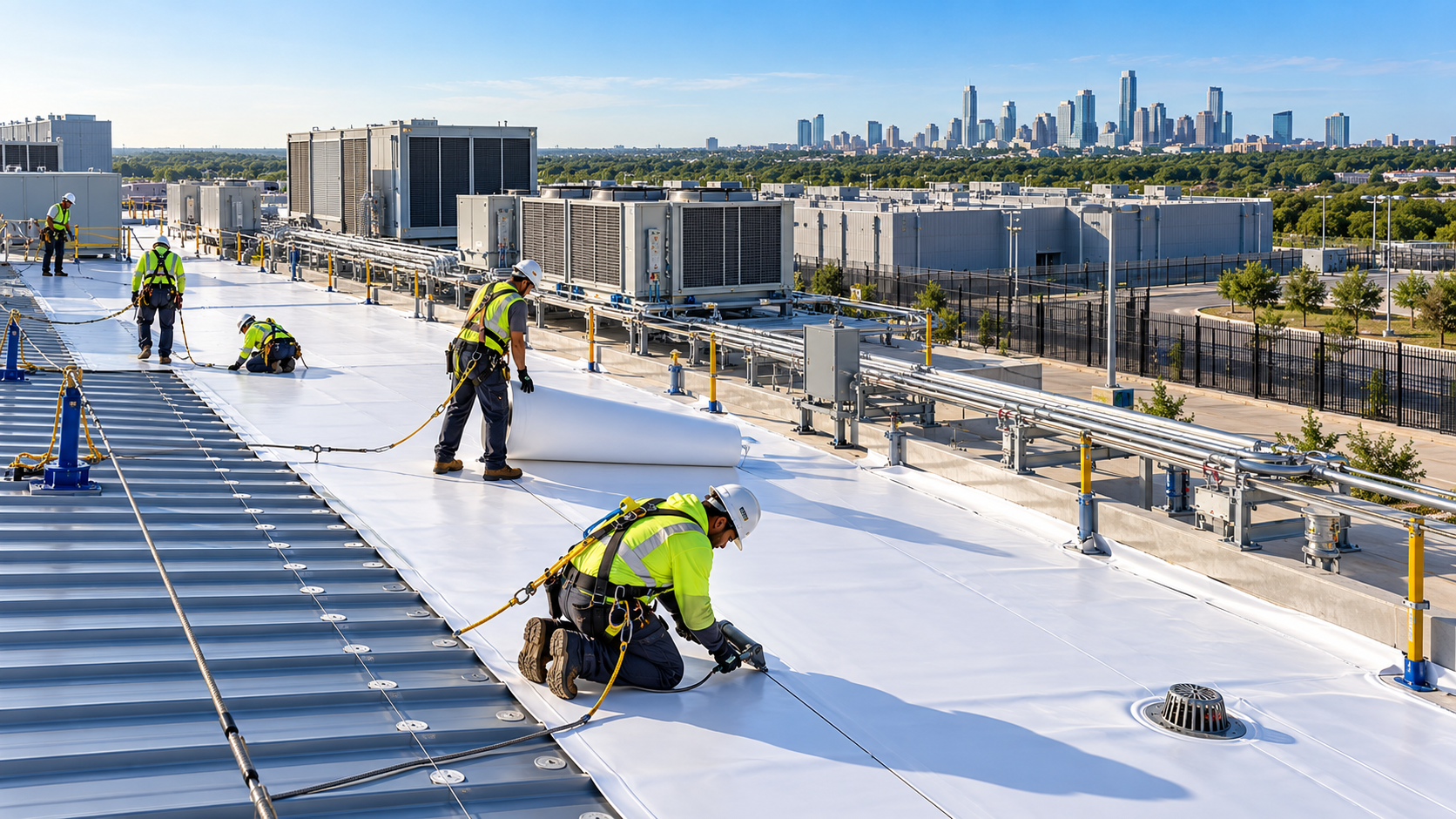
Mobilization begins physical construction but does not necessarily mean the improvement is ready for its intended use. Large roofs may be installed in sections over several weeks.

Daily Records Matter

Useful daily reports include:

- crew size and work hours;

- weather and roof conditions;

- roof areas opened and completed;

- materials installed;

- temporary dry-in;

- inspections and tests;

- concealed conditions;

- change-order work;

- delays and reasons;

- dated photographs.

These reports help establish a credible timeline. They also protect operations, support warranty review, and make later maintenance easier.

Phased Projects Need Clear Area Designations

For multiple buildings or roof sections, use an annotated roof plan and consistent area names. The project file should show when each area was opened, dried in, completed, inspected, and available for normal use.

The CPA decides whether separate areas have tax significance. The roofer’s task is to make the physical history understandable.

Milestone Five Substantial Completion

Substantial completion commonly describes the point at which the main contracted work is sufficiently complete for the owner to use the improvement for its intended purpose, subject to remaining minor items. Its meaning depends on the contract and facts.

Substantial Completion Is Not Always Final Completion

A roof may be watertight and operational while minor labels, cleanup, paperwork, or isolated punch-list work remains. Conversely, a contractor may call work substantially complete even though a critical drain, flashing, equipment curb, inspection, or operational restriction remains unresolved.

The owner should not accept a label without reviewing actual conditions.

A Useful Substantial Completion Record

The record may state:

- property and roof areas covered;

- date asserted;

- scope completed;

- remaining items;

- safety or operational restrictions;

- responsibility and deadline for corrections;

- owner acknowledgement;

- supporting photographs.

The document should describe facts rather than make a tax claim.

Milestone Six Final Inspection and Punch List

Final review can involve the contractor, owner, manufacturer representative, consultant, engineer, building official, or several parties. Each inspection has a different purpose.

What the Final Review Should Confirm

Depending on the scope, review:

- completed membrane or roof surface;

- seams and laps;

- flashings and terminations;

- drains, scuppers, gutters, and overflows;

- curbs, pipes, pitch pans, and penetrations;

- perimeter and corner attachment;

- edge metal and coping;

- expansion joints;

- walk pads and traffic protection;

- debris removal and site restoration;

- repairs from other trades;

- labels and warranty requirements.

Punch-list items should be written, assigned, corrected, photographed, and closed. Keep both the original list and confirmation of completion.

Manufacturer Inspection Has a Specific Purpose

A manufacturer’s inspection typically relates to warranty requirements. It may not evaluate every contractual component, deck repair, drainage decision, structural condition, or tax question. Preserve the report and final warranty, but understand its scope.

For help evaluating warranty differences, review Showtime Exteriors’ guide on hiring a roofer with strong warranty coverage.

Milestone Seven Ready and Available for Intended Use

Operational readiness is the milestone most closely associated with the general placed-in-service concept, but only the tax professional can apply that concept to a particular project.

Questions That Help Describe Readiness

- Is the roof watertight under normal conditions?

- Are required roof areas complete?

- Are drains and overflow paths functional?

- Are critical flashings, edges, and penetrations complete?

- Are temporary coverings or restrictions still in place?

- Can the building operate normally?

- Are rooftop units safely reconnected and supported?

- Are required inspections or approvals complete?

- Does remaining work prevent intended use or merely finish minor details?

These questions create facts. They do not create a tax conclusion.

Ready for Use Can Differ From Warranty Issuance

Manufacturers may issue warranties days or weeks after final inspection and submission. A delayed certificate does not automatically establish that the roof was unusable before issuance. Conversely, a submitted warranty application does not prove that all physical work was complete.

Preserve both dates and let the CPA evaluate their significance.

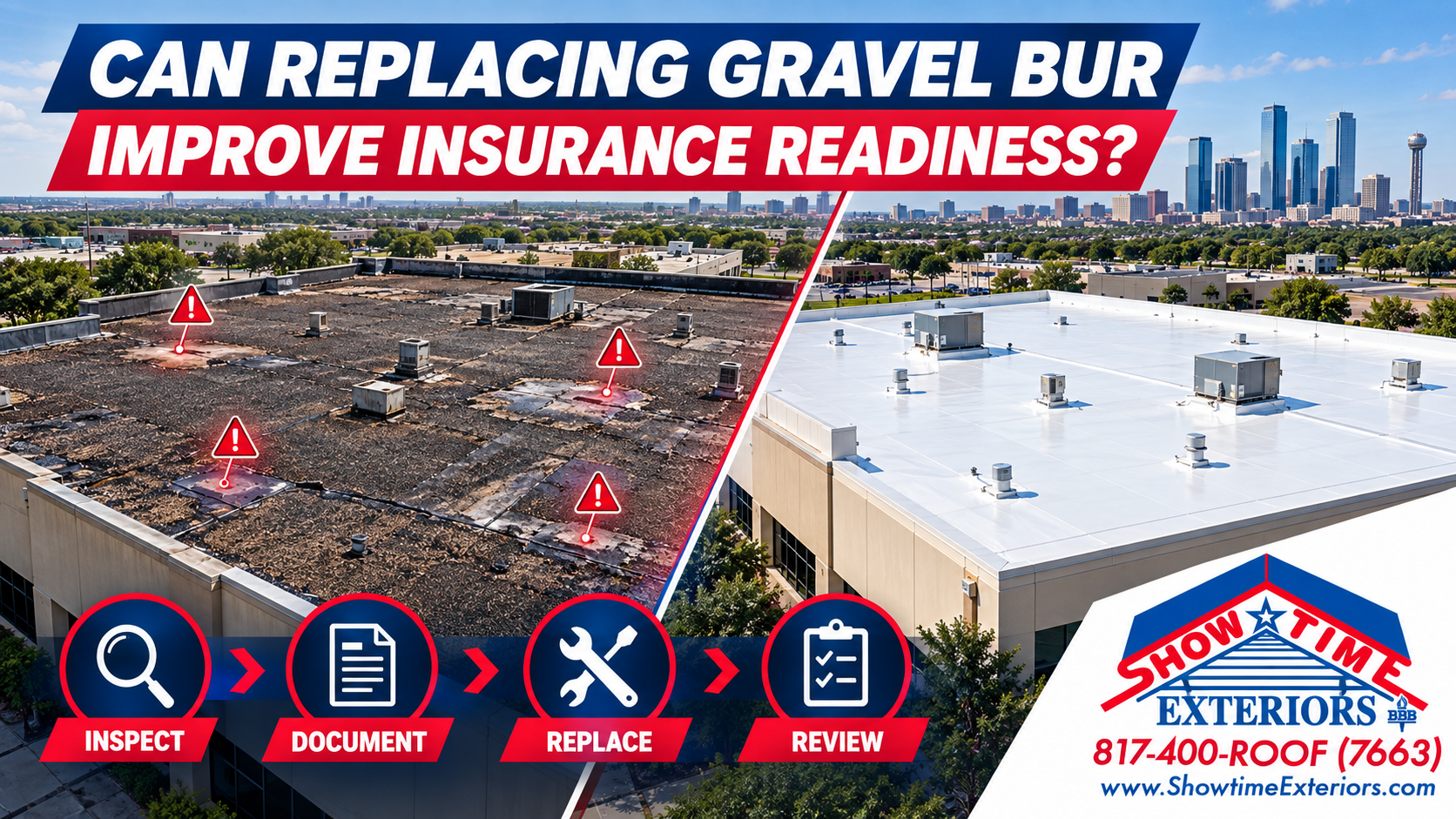
How Aging Gravel BUR Can Disrupt Year End Timing

An aging gravel-surfaced built-up roof creates investigation uncertainty. Aggregate can conceal cracks, blisters, deteriorated felts, failed repairs, displaced surfacing, and moisture pathways. A quick surface walk may not reveal the full extent of wet insulation or deck damage.

Hidden Conditions Can Expand the Scope

After tear-off begins, the crew may find:

- more wet insulation than testing indicated;

- deteriorated or corroded deck;

- abandoned penetrations;

- buried repairs and incompatible materials;

- inadequate slope or drainage;

- damaged curbs or wall conditions;

- multiple unrecorded roof layers.

Each finding can require documentation, authorization, materials, related trades, or engineering. This can affect completion.

Do Not Promise a Fixed Tax Date Before Investigation

If a gravel BUR has not been adequately investigated, a year-end completion promise may depend on unknown conditions. Build contingency into the schedule and contract. Use core samples or other appropriate testing, but acknowledge their limitations.

Showtime Exteriors’ campaign position remains clear: old gravel BUR should be treated as a potential maintenance, visibility, moisture, and insurance liability. It should not be praised simply because gravel once served a surfacing function. When deterioration is widespread or repairs recur, replacement planning may be more defensible than continued patching.

Building a Year End Roof Schedule That Can Be Defended

Work backward from the owner’s legitimate business deadline. Do not begin with December 31 and assume every prerequisite can be compressed.

Phase One Investigation

Collect roof history, leak records, warranties, repair invoices, plans, insurance correspondence, and interior reports. Inspect the roof and determine whether testing is needed. Identify gravel BUR visibility limitations and possible concealed conditions.

Phase Two Scope and Decisions

Compare repair, restoration, retrofit, recover, and replacement based on evidence. Decide how to handle tear-off, insulation, deck, drainage, penetrations, rooftop equipment, edge conditions, wind design, hail exposure, traffic, and warranty.

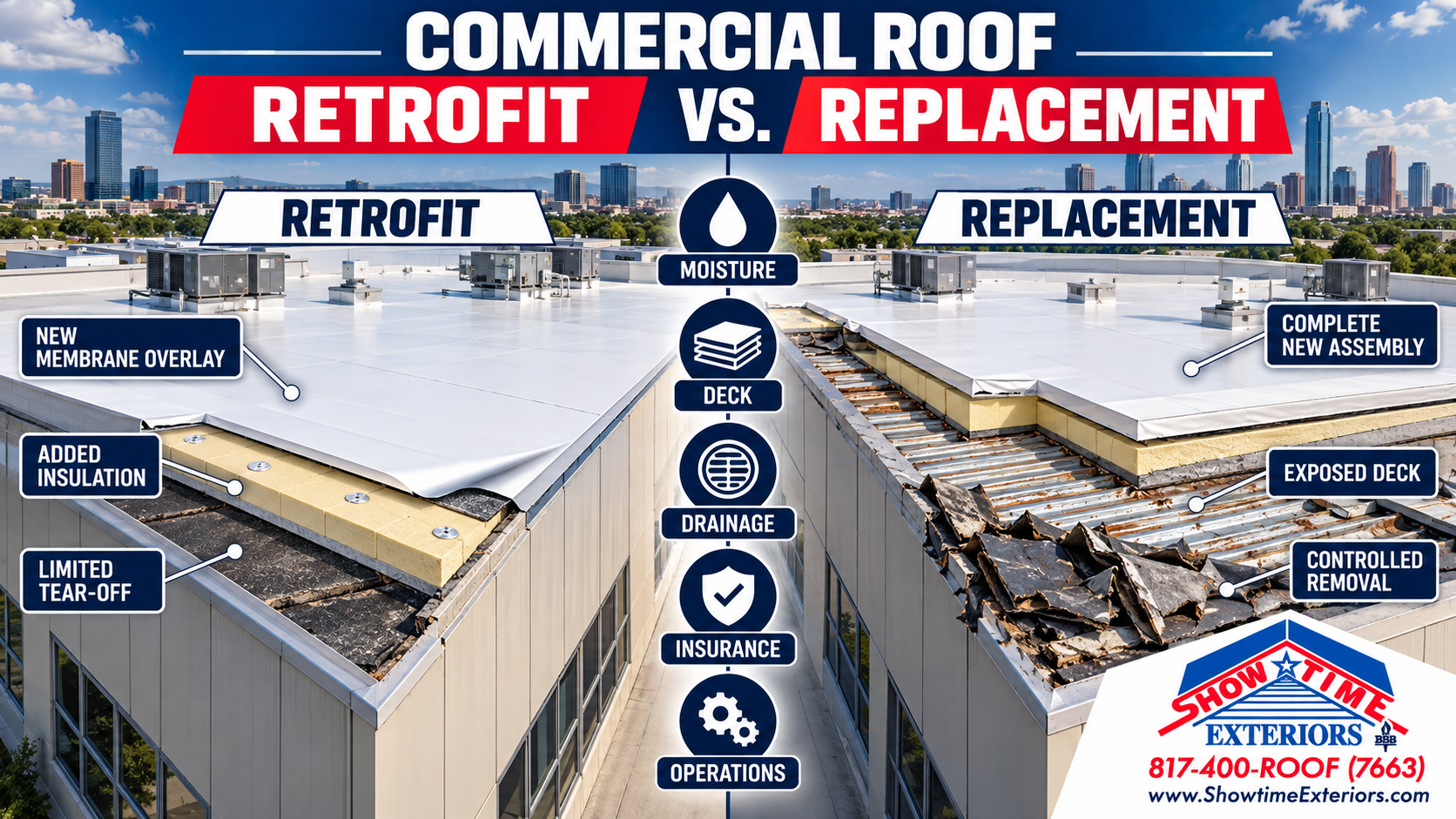
Review Showtime Exteriors’ commercial roof retrofit versus replacement guide and system-specific resources in the commercial roofing blog.

Phase Three Procurement and Coordination

Complete submittals, permits, manufacturer requirements, engineering, material orders, staging, tenant notices, and related-trade coordination. Confirm long-lead edge metal, drains, insulation, custom flashings, or equipment curbs.

Phase Four Construction

Use a realistic production schedule with weather contingency. Document daily progress, concealed conditions, changes, and completed areas. Protect occupants and operations.

Phase Five Closeout

Complete inspections, punch list, final photographs, acceptance, invoices, payment records, warranty submission, and maintenance instructions. Deliver the entire file to the owner promptly.

Weather and Operational Conditions Can Change the Date

Texas weather can interrupt commercial roof installation. Rain, wind, temperature, surface moisture, storms, and unsafe conditions may stop work. Adhesives, primers, coatings, and membranes have manufacturer requirements that cannot be ignored to meet a calendar target.

Safety Comes Before the Deadline

OSHA provides resources on fall protection and heat exposure. Project schedules should account for safe working conditions, access control, rooftop hazards, heat, and weather.

No tax objective justifies unsafe work or installation outside product requirements.

Occupied Buildings Need Extra Coordination

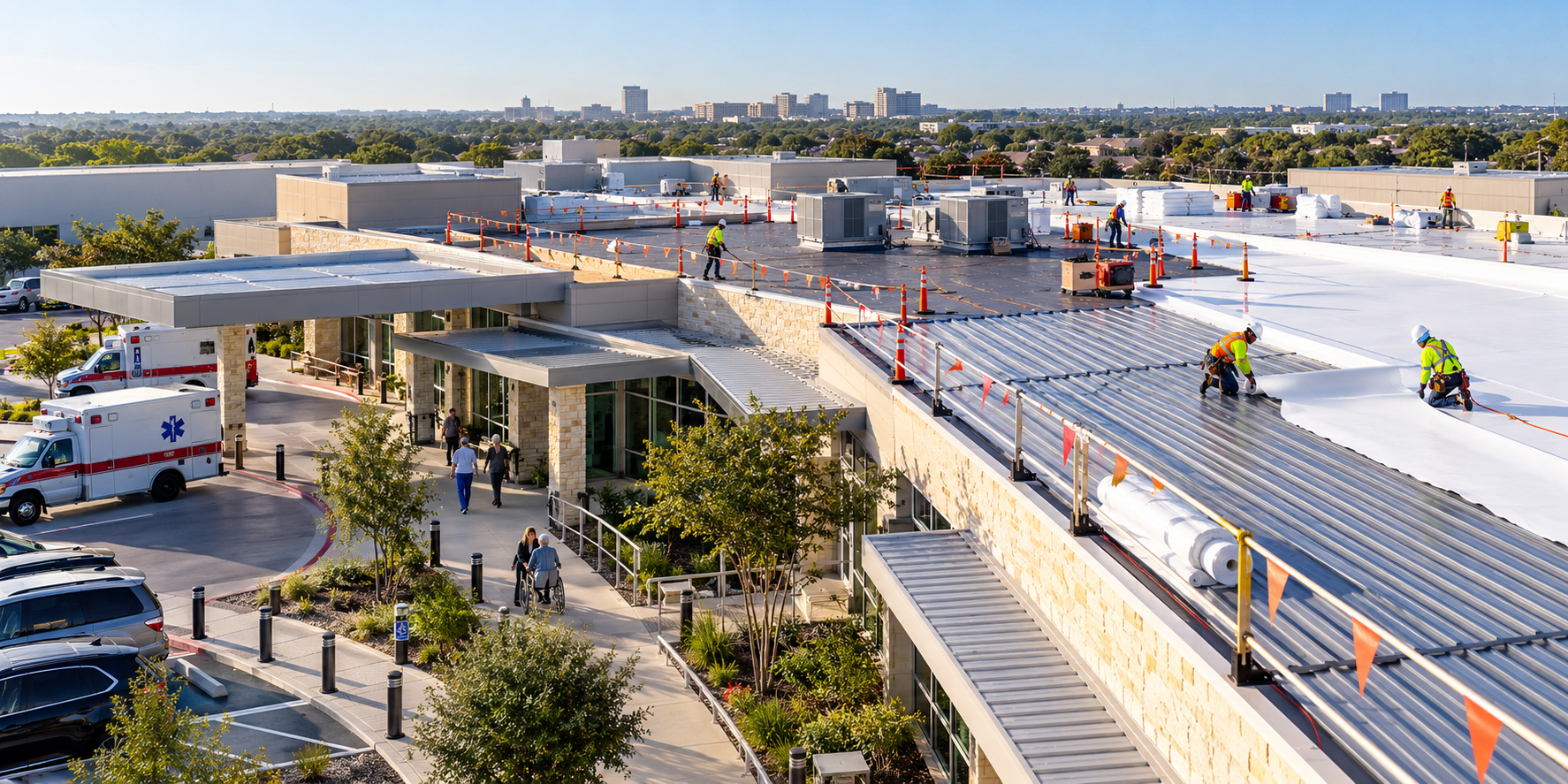
Retail, medical, restaurant, manufacturing, warehouse, office, multifamily, and data-center properties have different operational constraints. Noise, odor, vibration, air intakes, crane work, material staging, and temporary equipment shutdowns may require phased work or off-hours.

Operational planning can determine when the completed roof is truly available for normal building use.


Documentation for Placed in Service Review

The owner’s CPA may request a timeline rather than one isolated certificate. Keep records that show the project from authorization through readiness.

Recommended Timeline Documents

- signed contract and revisions;

- notice to proceed;

- deposit and payment records;

- submittals and approvals;

- delivery tickets;

- permits and professional review;

- daily reports;

- dated progress photographs;

- weather-delay logs;

- change orders;

- concealed-condition records;

- inspection reports;

- substantial-completion statement;

- punch-list and closeout confirmation;

- owner acceptance;

- operational-readiness correspondence;

- final invoice;

- warranty application and issued warranty.

The companion Section 179 roof documentation guide can be used as a checklist when the dedicated page is published.

Create a Milestone Summary

Prepare a one-page summary listing each major date and the document supporting it. Do not state that a particular date is the tax date unless the CPA has made that determination. The summary helps the adviser review the facts efficiently.

Reconcile Inconsistent Dates

If a substantial-completion form, final invoice, manufacturer inspection, and owner email show different dates, that may be normal because they describe different events. Label each event accurately. Correct factual errors rather than forcing all documents to show one date.

Multi Building and Phased Roof Projects

Some commercial properties include several buildings or distinct roof areas under one contract. A shopping center may replace one wing at a time. An industrial campus may complete separate facilities in different months. A warehouse may phase work around operations.

Track Each Area Separately

Use:

- building and roof-area identifiers;

- separate start and completion dates;

- area-specific photographs;

- material quantities;

- inspection results;

- costs or reasonable allocations;

- operational-readiness status.

The CPA determines whether any area can be evaluated separately. Accurate area records make that analysis possible.

Avoid Artificial Allocation

Cost allocations should reflect actual project information. Do not create arbitrary year-end allocations to move costs between tax years. Use contract schedules, quantities, invoices, and professional accounting analysis.

Repairs Versus Improvements

Commercial roof projects may include emergency repairs, routine maintenance, capital replacement, equipment work, structural repairs, or interior restoration. The tax treatment can differ.

Describe the Physical Work Accurately

The contractor’s documents should say what occurred. Examples include:

- patched a puncture;

- replaced wet insulation in a measured area;

- removed existing roof layers;

- installed new insulation and membrane;

- replaced drains or edge metal;

- repaired verified deck damage;

- raised equipment curbs;

- restored a coating over a prepared dry substrate.

The CPA applies tax rules to those facts. Relabeling a replacement as a repair or a repair as a replacement does not change the underlying work.

Keep Related Work Itemized

Separate or identify roofing, HVAC, electrical, plumbing, structural, masonry, solar, interior, and professional services. A detailed invoice helps the CPA classify costs and helps the owner manage warranties.

Common Year End Timing Mistakes

Illustrative Project Timelines

These examples are simplified planning illustrations. They do not determine tax treatment.

Example One Single Building Completed Before Year End

A warehouse owner signs a replacement contract in August. Materials arrive in October. Installation begins in November. The contractor completes the roof, corrects the punch list, restores rooftop equipment, and delivers a completion record in December. The manufacturer issues the warranty in January.

The file contains evidence of several different dates. The CPA can evaluate the December operational status and determine whether the later warranty issuance changes anything. The roofer should not assume that the January certificate controls or that the December completion automatically guarantees a deduction.

Example Two Weather Pushes Critical Work Into January

A retail property begins work in December. Several roof areas are dried in, but rain and wind prevent completion of perimeter metal and critical flashings. Temporary conditions remain, and the owner restricts normal rooftop access until January.

The project records should show the actual incomplete items, weather delays, restrictions, January corrections, inspection, and acceptance. Backdating the project would create an inaccurate record. The CPA can evaluate the facts and applicable year.

Example Three Multi Building Campus

An industrial campus replaces roofs on three independent buildings under one contract. Building A is completed and operating normally in October. Building B is completed in December. Building C remains under construction until February.

The contractor tracks each building separately, including cost schedules, photographs, daily reports, inspections, and acceptance. The CPA can then determine whether separate dates or treatment are appropriate rather than trying to infer progress from one lump-sum invoice.

Example Four Minor Punch List After Operational Readiness

An office roof is watertight, drained, inspected, and available for normal use in December. Remaining work consists of labels, a small amount of cleanup, and delivery of the paper warranty. The contractor closes those items in January.

The file should identify the remaining work precisely. A vague statement that the project was “not finished” or “fully finished” is less useful than a factual list of what remained and whether it restricted intended use. The CPA applies the tax standard.

Example Five Aging Gravel BUR Reveals Extensive Deck Damage

An owner expects a short tear-off based on visible conditions. Once gravel and roof layers are removed, crews find wet insulation and deteriorated deck across a larger area than anticipated. Work pauses for measurement, authorization, material procurement, and safe deck replacement.

This scenario shows why old gravel BUR creates scheduling uncertainty. The final file should include test limitations, tear-off photographs, measured quantities, change orders, deck-repair records, and revised completion dates. The owner gains a defensible record even though the original calendar target changes.

Assuming the Contract Date Controls

The contract shows authorization, not necessarily readiness or use.

Assuming Payment Controls

Payment records establish cash movement or an obligation. They do not prove the roof was completed.

Assuming Material Delivery Controls

Materials onsite are not the same as an installed system.

Assuming the Last Crew Day Controls

Crews may leave while inspections, critical corrections, related trades, or operational restrictions remain.

Assuming Warranty Issuance Controls

Warranty issuance can lag physical completion or may be delayed by paperwork. It is one part of the record.

Rushing Installation to Reach December 31

Skipping moisture investigation, substrate preparation, proper attachment, flashing details, drainage corrections, or weather limitations can create long-term failures. The building decision must come first.

Treating the Roofer as the Tax Adviser

The roofer knows the physical project. The CPA or tax attorney knows the taxpayer and tax rules. Use both professionals for their proper roles.

Questions to Ask Before Scheduling the Project

Questions for the CPA

- Is this property nonresidential real property for Section 179 purposes?

- Could this type of roof improvement qualify?

- Which annual limits and income restrictions apply?

- What does placed in service mean for these facts?

- Could separate buildings or phases have separate dates?

- Which documents should the owner collect?

- How should repairs, improvements, equipment, and professional fees be classified?

- Is Section 179D relevant or separate?

- Which form and election are required?

IRS Form 4562 instructions should be reviewed with the adviser for the applicable tax year.

Questions for the Roofing Contractor

- What investigation is needed before promising a schedule?

- Which materials have long lead times?

- What concealed conditions could affect completion?

- How will roof areas and daily progress be documented?

- What work requires other trades?

- Which inspections and approvals are expected?

- How is substantial completion defined in the contract?

- What closeout and warranty records will be delivered?

Questions for the Building Team

- Which operations cannot be interrupted?

- When can rooftop equipment be shut down?

- Who approves changes?

- Who receives daily reports?

- Which tenant notices are needed?

- What makes the roof operationally ready?

- Who accepts the completed work?

Frequently Asked Questions

Is a commercial roof placed in service when the contract is signed

Not automatically. Contract signing establishes an agreement. It does not prove that the roof was installed or ready and available for its intended use.

Is the deposit date the placed in service date

Not automatically. A deposit may reserve labor or purchase materials. It is a financial milestone, not necessarily a completion or readiness milestone.

Is substantial completion always the tax date

Not necessarily. Substantial completion is relevant evidence, but its meaning depends on the contract and facts. The CPA should evaluate the complete timeline.

Does the manufacturer warranty date control

Not automatically. Warranty issuance may occur after inspection and paperwork. It can support the timeline but may not establish operational readiness by itself.

What if the roof is complete but minor punch list work remains

The significance depends on whether remaining work is minor or prevents intended use. Document the items, operational status, correction dates, and acceptance. Ask the CPA to evaluate the facts.

Can part of a roof project be placed in service before the rest

Possibly, depending on the project structure and tax analysis. Track each building or roof area separately and let the tax professional decide whether separate treatment is appropriate.

What if weather delays completion past December 31

Document actual progress and delays. Do not backdate records or compromise installation. The CPA can advise how the changed timeline affects tax planning.

Does every commercial roof qualify for Section 179

No. Certain roofs on nonresidential real property may qualify, but the taxpayer, building, use, cost, timing, limitations, and election must satisfy applicable rules.

Can residential rental property use the same roof provision

Do not assume so. The provision discussed for roofs concerns certain improvements to nonresidential real property. IRS Publication 527 addresses residential rental property, and a tax professional should review classification and activity.

What should the roofer put on the completion letter

The letter should accurately identify the property, roof areas, work completed, physical completion date, remaining items, inspections, and operational restrictions. It should not certify tax eligibility.

Plan the Roof Around the Building and Document the Timeline

Placed-in-service planning is not a reason to rush a commercial roof. It is a reason to start earlier and document more carefully.

The building needs a roof system selected for its deck, drainage, wind exposure, hail risk, rooftop traffic, equipment, occupancy, maintenance plan, and budget. The project needs weather contingency, safe operations, quality control, inspection, and closeout. The tax professional needs accurate records.

For an aging gravel-surfaced BUR roof, early investigation is especially important because the gravel can conceal deterioration and moisture. Discovering those conditions late can expand scope and delay completion. Repeated patching may postpone a replacement decision without resolving the underlying risk.

Showtime Exteriors helps Texas commercial property owners build a defensible roofing plan and a clear physical project record. The company does not promise a tax deduction, insurance renewal, premium reduction, or fixed placed-in-service date before the relevant conditions are known.

Call 817-400-ROOF (7663) or visit Showtime Exteriors commercial roofing to schedule an inspection.

Important disclaimer: This article provides general educational information and is not tax, legal, accounting, insurance, engineering, structural, safety, warranty, or code advice. Tax laws, limits, forms, and interpretations can change. Project facts differ. Consult qualified professionals before making decisions.


By Showtime Exteriors • October 1, 2026
Texas Commercial Roofing Decision Guide
By Showtime Exteriors • October 1, 2026
Commercial roof replacement rarely begins when the first crew arrives. A successful project usually starts months earlier—with an inspection, a defensible scope, a realistic budget, material decisions, coordination with building operations, and a schedule that accounts for weather and procurement. That planning becomes especially important when a Texas property owner wants the new roof completed before the end of the calendar year. The date on the calendar may matter for capital planning, tenant commitments, insurance renewal, lender requirements, warranty administration, or a discussion with a tax professional. But a year-end target is only useful when the building is ready, the scope is complete, and the work can be performed correctly. The practical sequence is simple: Inspect the existing roof. Define the scope. Approve a realistic budget. Reserve the schedule. Complete and verify the work. Build a permanent project record. This guide explains each step for commercial property owners, facility managers, asset managers, and business owners in Texas. It also addresses aging gravel-surfaced built-up roofs, replacement-system choices, occupied-building coordination, insurance documentation, and the limits of year-end tax planning. Showtime Exteriors provides commercial roof inspections, repair, retrofit, restoration, and replacement planning across Texas. To discuss a building, call 817-400-ROOF (7663) or visit the commercial roofing page . The Short Answer: How Early Should You Plan a Year-End Commercial Roof Replacement? Start as early as practical. A straightforward project on a small, accessible building may move quickly, but a large or complicated commercial roof can require weeks or months of preparation before installation begins. The schedule may include investigation, moisture testing, engineering, budgeting, permits, insurer or lender review, material ordering, rooftop-equipment coordination, tenant notices, safety planning, tear-off, installation, punch-list work, and closeout. Working backward from December 31 is more useful than choosing an arbitrary start date. First identify the date by which the roof must be substantially complete, inspected, invoiced, or placed in service for the owner’s specific business purpose. Then add time for each decision and contingency. A year-end project becomes harder when an owner waits for an active leak, an insurance-renewal warning, or a severe storm to force the decision. Emergency conditions compress choices. Planning early gives the owner time to compare repair, restoration, retrofit, and replacement on their merits. A Practical Planning Window Every building is different, but owners should think in phases rather than days: - Investigation and decision-making: roof history, inspection, testing, option analysis, and budget approval. - Preconstruction: final scope, contract, permits, submittals, procurement, staging, and coordination. - Construction: mobilization, daily production, weather delays, quality checks, and cleanup. - Closeout: punch list, final documentation, warranty submission, maintenance guidance, and accounting records. If the property has an aging gravel-surfaced built-up roof, allow additional investigation time. Gravel can obstruct a clear view of the membrane and can make it harder to map cracks, blisters, deteriorated patches, seams, and moisture pathways. The owner should not assume that a quick surface look tells the full story. Why Year-End Roof Projects Need More Planning Than a Normal Repair A repair is often limited to a defined defect. Replacement affects the full roof assembly and many systems connected to it. The project may involve insulation, drainage, curbs, penetrations, wall flashings, parapets, edge metal, rooftop units, electrical service, access routes, and interior operations. Year-end deadlines add four pressures. Weather Becomes Less Predictable Texas does not have one uniform climate. North Texas may experience large temperature swings, strong winds, hail, and occasional freezing conditions. Gulf Coast markets face humidity, heavy rainfall, and tropical-weather exposure. Some roofing materials and adhesives have temperature, moisture, or wind limitations. A professional schedule must leave room for safe shutdowns and weather recovery. Material and Equipment Lead Times Can Control the Start Date The membrane itself may not be the only long-lead item. Insulation, fasteners, edge metal, drains, specialty flashings, skylights, curbs, or custom-fabricated components may determine when work can begin. A complete scope allows the contractor to identify these items before mobilization. Occupants and Rooftop Trades Need Coordination Retailers, offices, restaurants, medical users, manufacturers, warehouses, data operations, and multifamily communities have different tolerance for noise, odor, vibration, blocked entrances, or rooftop shutdowns. HVAC, plumbing, electrical, solar, security, and fire-protection contractors may need to participate. Coordination must be built into the plan rather than improvised during production. Administrative Deadlines Are Not Construction Deadlines A budget cycle, insurance renewal, lease obligation, or tax discussion may establish a target. None of those dates changes the physical requirements of the roof. The assembly still needs proper substrate preparation, drainage, attachment, flashing, and quality control. The objective should be a durable, documentable roof—not merely a rushed invoice. Step 1: Inspect the Commercial Roof Before Choosing a Solution The first question is not, “Which new membrane should we buy?” It is, “What condition is the existing roof assembly in?” A useful commercial roof assessment should document the roof type, approximate age, number of known layers, drainage configuration, visible defects, prior repairs, penetrations, rooftop equipment, perimeter conditions, and signs of interior moisture. It should also identify areas that require additional testing. What the Visual Inspection Should Cover The inspection should include, as applicable: - membrane condition and surface wear; - open seams, splits, punctures, blisters, fishmouths, and failed patches; - ponding or evidence of slow drainage; - drains, scuppers, gutters, and downspouts; - penetrations, pitch pans, curbs, pipes, and equipment supports; - base flashings, termination bars, parapets, and coping; - edge metal and wind-sensitive perimeter zones; - rooftop traffic patterns and service paths; - displaced materials or storm-related damage; - interior staining, wet ceiling materials, or recurring leak locations. Photographs should be labeled and tied to a roof plan whenever possible. A folder of random closeups is less useful than evidence that shows where a condition exists and how it relates to drainage, penetrations, or interior reports. For a deeper documentation framework, see Showtime Exteriors’ commercial roofing resources . When Testing May Be Appropriate A visual inspection cannot always determine what is happening below the surface. Depending on the roof and project goals, the owner and roofing team may consider core samples, infrared scanning, electronic leak detection, adhesion testing, or other targeted investigation. The purpose is to reduce uncertainty about trapped moisture, insulation condition, deck type, roof layers, and attachment. Testing is not a substitute for professional judgment, and not every test fits every assembly. The scope should state what was tested, where, under what conditions, and what conclusions can reasonably be drawn. Why Gravel-Surfaced BUR Requires Extra Scrutiny An aging built-up roof with gravel surfacing can present a visibility problem. Aggregate may conceal the membrane and make it difficult to see deterioration without removing material in selected areas. Moisture, failed repairs, cracks, blisters, and drainage defects may not be obvious during a quick walkover. That uncertainty matters when a property owner is preparing for insurance renewal, evaluating recurring leaks, or deciding whether additional patching is financially defensible. A long history of repairs does not automatically mean the assembly remains a good candidate for more repairs. Showtime Exteriors’ campaign position is clear: an old gravel BUR should be evaluated as a potential building, maintenance, and insurance liability—not promoted as an advantage. If it has reached the point where defects are difficult to verify, repairs are multiplying, or moisture is widespread, replacement or an engineered retrofit may provide a more transparent long-term path. Step 2: Build a Defensible Scope of Work The inspection describes current conditions. The scope defines what the project will do about them. A strong scope should be specific enough for the owner to understand the assembly being purchased and for bids to be compared meaningfully. If one proposal assumes a recover system and another assumes full tear-off, the prices do not represent the same project. Core Scope Decisions The project team should answer the following questions: Will the existing roof remain, be partially removed, or be completely removed? Is the deck suitable for the proposed attachment method? Is wet insulation isolated or widespread? Does drainage need correction? What insulation type and thickness are proposed? What membrane or roof system is appropriate for the building? How will perimeter, corner, wall, curb, and penetration details be handled? Which rooftop units or penetrations must be raised, replaced, disconnected, or abandoned? What manufacturer and contractor warranty terms are expected? What testing, inspections, and closeout documents will be provided? Repair, Restore, Retrofit, or Replace? Owners should compare four possible paths. Repair is appropriate when defects are limited, the surrounding roof remains serviceable, and the work can restore watertight performance without chasing widespread failures. Restoration may be considered when the existing assembly is dry enough, well attached, compatible with the proposed system, and capable of being prepared to the manufacturer’s requirements. Coatings should not be used to hide saturated insulation or structural problems. Retrofit or recover can reduce tear-off in appropriate conditions, but it requires confirmation that the existing assembly, deck, moisture conditions, drainage, weight, and code considerations support the approach. Learn more in Showtime Exteriors’ guide to a TPO roof retrofit over an existing metal roof in Texas . Replacement is often the clearest path when the assembly has widespread moisture, repeated failures, deteriorated components, incompatible layers, inadequate attachment, or a condition that cannot be reliably assessed and repaired. Correct the Causes, Not Just the Symptoms A new roof should not automatically repeat the old configuration. If poor drainage, low curbs, uncontrolled foot traffic, failing edge details, or equipment discharge shortened the previous roof’s life, the replacement scope should address those conditions. Drainage deserves particular attention. Ponding can accelerate deterioration, increase leak exposure, collect debris, and complicate maintenance. Where appropriate, the plan may include drain service, tapered insulation, additional drainage, scuppers, or retrofit roof drains . Step 3: Create a Realistic Commercial Roof Budget The lowest initial number is not necessarily the lowest long-term cost. A commercial roof budget should include the full project, not just membrane installation. What Can Affect Commercial Roof Replacement Cost? Major cost variables include: - total roof area and geometry; - height, access, and staging constraints; - existing roof type and number of layers; - tear-off and disposal requirements; - wet-insulation replacement; - deck repair or replacement allowances; - insulation thickness and energy requirements; - membrane type, thickness, reinforcement, and attachment; - edge metal, coping, wall flashings, and custom fabrication; - drains, scuppers, gutters, and tapered insulation; - penetration and equipment details; - crane, lift, or material-handling requirements; - work-hour restrictions and occupied-building protections; - manufacturer warranty requirements; - weather and contingency allowances. A credible proposal should identify assumptions and exclusions. Unknown deck conditions or concealed moisture may require unit pricing or allowances. That is better than pretending the uncertainty does not exist. Compare Lifecycle Value, Not Just Bid Price Ask what each option is designed to accomplish. One scope may be a short-term repair strategy. Another may replace the full assembly, improve drainage, add insulation, and include a stronger warranty. Those options should not be judged by price alone. The owner should consider anticipated ownership period, tenant expectations, energy use, maintenance capacity, insurance objectives, and the consequences of another leak. Downtime, damaged inventory, interrupted patient care, tenant complaints, interior reconstruction, and lost productivity can exceed the price difference between scopes. Keep a Contingency for Concealed Conditions Commercial roofing frequently involves conditions that are not visible until work begins. A project contingency can cover reasonable quantities of wet insulation, deteriorated decking, hidden abandoned penetrations, or other verified conditions. The contract should explain how additional work is documented and approved. A disciplined year-end roof plan moves through six stages: inspect, scope, budget, schedule, complete, and document. Step 4: Reserve the Schedule and Protect Building Operations Once the scope and budget are approved, the project moves from analysis into logistics. A year-end deadline requires a schedule that accounts for procurement, weather, safety, occupants, and inspections. Work Backward From the Real Completion Requirement Ask why the deadline matters. Is the objective to stop recurring leaks before a seasonal storm pattern? Complete work before a tenant move-in? Satisfy an insurer? Use an approved capital budget? Place an asset in service before year-end after consulting a tax professional? The answer affects documentation and timing. Contract signing, material delivery, substantial completion, final inspection, warranty acceptance, payment, and placed-in-service status are not interchangeable. Build an Occupied-Building Plan Commercial roof work can often proceed while a building remains open, but operations must be considered in advance. The plan may address: - work zones and restricted areas; - pedestrian and vehicle routes; - material loading and crane picks; - noise-sensitive hours; - odor and air-intake management; - temporary shutdown of rooftop equipment; - interior protection under active work; - daily dry-in and weather monitoring; - communication with tenants and facility staff; - emergency contacts and escalation procedures. OSHA provides extensive resources on fall protection in construction and heat exposure , both of which are relevant to Texas roof operations. Safety planning belongs in the project, not in a last-minute checklist. Do Not Let a Deadline Override Weather Limitations Roofing crews need safe conditions and manufacturers require proper installation conditions. Wind, rain, surface moisture, temperature, and approaching storms may stop work. The schedule should include contingency days and a daily plan for keeping the building dry. Pressure to “finish by Friday” cannot justify installing over wet materials, skipping preparation, or leaving incomplete flashings. A delayed but properly executed detail is better than a rushed condition that causes years of leaks. Step 5: Select the Right Roof System for the Building There is no single best commercial roof for every Texas property. The right system depends on deck, slope, drainage, occupancy, rooftop traffic, chemical exposure, wind design, hail exposure, energy goals, budget, and maintenance plan. Showtime Exteriors evaluates systems including TPO, PVC, EPDM, modified bitumen, metal, and appropriate coating or retrofit assemblies. Its overview of the best commercial roofing materials for Texas explains how these choices differ. TPO TPO is a heat-welded single-ply membrane commonly used on commercial low-slope roofs. White membranes can provide high reflectivity, while welded seams and a broad range of accessories support many layouts. Performance depends on membrane selection, attachment, substrate preparation, detailing, and installation quality. PVC PVC is another heat-welded single-ply option. It may be considered where particular chemical or grease exposures make compatibility important. The project team should evaluate the building’s actual operations rather than assume all single-ply products perform the same way. EPDM EPDM is a rubber membrane with a long history in low-slope roofing. Seams and flashings are generally adhered rather than heat welded. Color, attachment, hail strategy, and rooftop conditions should be considered for the specific Texas property. Modified Bitumen Modified bitumen uses asphalt-based sheets with reinforcement and can be installed in different configurations. It may suit buildings where redundancy, traffic tolerance, or familiarity with asphaltic systems is valued. Installation method and fire-safety requirements must fit the site. Metal Roofing and Metal Retrofit Metal can offer long service potential when panels, seams, clips, fasteners, transitions, penetrations, and perimeter details are correctly designed. Existing metal roofs may also be candidates for repair, coating, or membrane retrofit, depending on structural and moisture conditions. Roof Coatings Coatings can be a restoration tool for suitable, dry, stable substrates. They are not a universal replacement for damaged insulation, failed decking, or chronic moisture. Adhesion testing, surface preparation, reinforcement details, drainage, thickness, and manufacturer requirements all matter. Step 6: Complete the Project With Quality Control Construction quality is created through repeatable controls: approved materials, trained crews, substrate preparation, weather monitoring, detail verification, daily cleanup, and documented corrections. Preconstruction Meeting Before mobilization, the owner, contractor, facility representative, and relevant trades should review access, staging, work hours, safety boundaries, emergency contacts, weather procedures, interior protections, rooftop equipment, daily reporting, and change authorization. Daily Project Controls Useful daily records may include crew activity, weather, areas completed, materials installed, deck or moisture findings, photographs, deliveries, delays, and approved changes. These records create transparency and support the final closeout package. Inspections and Punch List Depending on the project, inspections may be performed by the contractor, manufacturer representative, consultant, engineer, building official, owner’s representative, or a combination. Observed defects should be corrected before closeout. The owner should know who is inspecting what and what document confirms acceptance. Warranty Review A warranty is not one simple promise. Owners should distinguish among manufacturer material coverage, manufacturer system or labor-and-material coverage, contractor workmanship terms, exclusions, maintenance obligations, leak-notification requirements, and transfer provisions. Before selecting a proposal, review Showtime Exteriors’ guide on how to hire a roofer with the best warranty coverage in Texas . Step 7: Document the Roof Replacement From Start to Finish A commercial roof is a major building asset. Its file should be organized like one. What the Closeout File Should Contain The owner’s permanent project file may include: - preconstruction inspection and roof plan; - moisture-test or core-cut findings; - signed proposal, contract, and approved scope; - product data and manufacturer submittals; - permits and inspection records, if applicable; - approved change orders; - progress and concealed-condition photographs; - daily or weekly project reports; - final punch list and completion confirmation; - invoices and proof of payment; - manufacturer and contractor warranties; - maintenance instructions and inspection schedule; - contact information for future service; - insurance, lender, and accounting correspondence. The file supports future maintenance, warranty service, property transactions, insurer questions, capital accounting, and tax review. It also reduces confusion when facility personnel change. Establish a Baseline Inspection After completion, preserve clear overview and detail photographs of the new roof. Record drains, flashings, penetrations, edge conditions, rooftop equipment, and designated walk paths. This creates a baseline for future inspections and helps distinguish installation conditions from later damage or third-party activity. Control Future Rooftop Work Many roof problems begin after installation when other trades cut, puncture, drag equipment across, or improperly seal the assembly. Require rooftop contractors to coordinate access, protect traffic paths, and document penetrations. Preserve warranty requirements whenever mechanical, electrical, plumbing, solar, or communications work affects the roof. Section 179 and Year-End Roof Replacement: What Owners Should Know Some commercial property owners plan roof projects before year-end because they want to ask whether the cost may qualify for a Section 179 deduction. This is a tax question, not a roofing guarantee. The IRS explains in Publication 946 that Section 179 may apply to certain qualified real property, including roofs placed in service after the date nonresidential real property was first placed in service. Eligibility, limits, taxable-income rules, business use, entity structure, elections, and placed-in-service timing can change the result. “Paid for” and “Placed in Service” Are Different Concepts Signing a contract or paying a deposit does not necessarily establish that an improvement was placed in service. The owner’s CPA or tax attorney should determine what placed in service means for the specific property and facts. IRS Form 4562 and its instructions are central to claiming depreciation and Section 179 deductions. Section 179 Is Not Section 179D Section 179 and the energy-efficient commercial buildings deduction commonly called Section 179D are different provisions. The IRS maintains a separate page for the Energy Efficient Commercial Buildings Deduction . Do not use the terms interchangeably. Residential Rental Property Requires Separate Analysis The roof provision described for Section 179 concerns certain improvements to nonresidential real property. Owners of residential rental property should not assume the same rule applies. IRS Publication 527 discusses residential rental property, but a qualified tax professional should evaluate classification, activity, ownership structure, and the specific improvement. The Roof Decision Should Stand on Building Fundamentals A possible deduction should not turn an unsuitable roof project into a good one. The property still needs the correct scope, compatible system, safe installation, and realistic lifecycle plan. Tax treatment may affect timing or cash-flow analysis, but it should not substitute for evidence about the roof. Showtime Exteriors does not provide tax, legal, accounting, insurance, or engineering advice. Property owners should coordinate with appropriately licensed professionals before relying on a deduction, code interpretation, coverage decision, or structural conclusion. A Month-by-Month Year-End Planning Example The following is an illustrative workflow, not a promise that every project will follow the same schedule. Four to Six Months Before the Target Date - Gather roof history, leak logs, warranties, plans, and repair invoices. - Schedule the professional inspection. - Identify potential testing needs. - Review insurance-renewal, lease, lender, and capital-budget dates. - Discuss business timing with the CPA if tax treatment is relevant. Three to Four Months Before the Target Date - Compare repair, restoration, retrofit, and replacement options. - Select the preferred system and preliminary scope. - Resolve drainage and rooftop-equipment questions. - Obtain and evaluate proposals on equivalent scopes. - Approve capital and contingency budgets. Two to Three Months Before the Target Date - Execute the contract. - Complete submittals, engineering, permits, and manufacturer requirements as applicable. - Order long-lead materials. - Coordinate HVAC, electrical, plumbing, security, and other rooftop trades. - Prepare tenant and operations communication. One Month Before Mobilization - Hold the preconstruction meeting. - Confirm staging, access, interior protection, work hours, and emergency procedures. - Review weather and dry-in plans. - Verify material deliveries and proposed sequence. - Establish daily reporting and change-order processes. During and Immediately After Construction - Maintain daily communication. - Photograph concealed conditions and completed details. - Document approved changes. - Complete inspections and punch-list corrections. - Collect warranties, invoices, maintenance instructions, and completion records. - Ask the tax professional—not the roofer—to determine applicable tax treatment. Common Mistakes That Put Year-End Completion at Risk Waiting for the First Major Leak The first visible interior leak may not be the first moisture entry. Water can move through insulation, deck channels, or structural components before appearing inside. Early inspection provides more choices. Bidding an Undefined Project When contractors bid different assumptions, the lowest price can conceal omitted work. Define tear-off, insulation, attachment, drainage, metal, penetrations, warranty, testing, and allowances before comparing totals. Treating Gravel BUR as Easy to Evaluate An aging gravel surface can hide the very conditions an owner needs to understand. Do not use surface appearance alone to justify continued patching or a recover system. Ignoring Rooftop Equipment Low curbs, obsolete units, leaking lines, abandoned penetrations, and poorly supported conduit can undermine a new roof. Coordinate related trades before the roofing crew reaches those areas. Scheduling With No Weather Contingency A plan that only works under perfect weather is not a plan. Include safe shutdown criteria, daily dry-in procedures, and recovery time. Choosing a System Before Understanding the Building Material preference should follow investigation. The best assembly is the one that fits the substrate, climate exposure, occupancy, drainage, wind design, maintenance plan, and budget. Treating the Tax Deadline as a Roofing Specification Tax planning may affect timing, but it cannot determine whether a roof is dry, well attached, or properly detailed. Complete the right project and let the tax professional evaluate the treatment. Frequently Asked Questions Can a commercial roof replacement be completed before December 31? Possibly, but feasibility depends on roof size, condition, scope, material availability, approvals, weather, access, and contractor capacity. Schedule an inspection early enough to build a realistic plan. Do not rely on a completion promise made before the roof and logistics are evaluated. How long does commercial roof replacement take? Installation can range from days to many weeks, while total planning and procurement can take much longer. Tear-off quantities, deck repairs, weather, equipment coordination, access, and inspections all affect duration. Can a business remain open during roof replacement? Often, yes. The project should include an occupied-building plan addressing access, noise, odor, HVAC intakes, interior protection, staging, deliveries, and emergency communication. Some activities may need to occur during off-hours or in phases. Should an old gravel built-up roof be repaired again or replaced? That depends on moisture, attachment, deck condition, defect distribution, repair history, drainage, and remaining serviceability. When gravel conceals widespread problems, leaks recur, or repairs no longer provide predictable performance, replacement or a properly evaluated retrofit may be more defensible than continued patching. Can TPO be installed over an existing commercial roof? Sometimes. A recover or retrofit requires evaluation of moisture, deck condition, existing layers, attachment, drainage, weight, compatibility, code considerations, and manufacturer requirements. Wet or deteriorated materials should not simply be concealed under a new membrane. Does a new commercial roof qualify for Section 179? Certain roof improvements to nonresidential real property may qualify, but eligibility is fact-specific and subject to tax rules and limitations. Ask a CPA or tax attorney to review the property, entity, project, timing, business use, and placed-in-service facts. A roofing contractor should not promise a deduction. What does “placed in service” mean for a roof? It is a tax concept generally tied to when property is ready and available for its intended use, but the determination depends on facts. Contract date, payment date, installation date, substantial completion, final acceptance, and actual use may not be identical. Get advice before setting the project deadline. What documents should I give my CPA? Provide the executed contract, detailed scope, invoices, payment records, completion or acceptance documentation, warranty, photographs, property-use information, and any allocations for related work. Let the CPA decide what else is necessary and how costs should be classified. What should be included in a commercial roof warranty review? Review who issued the warranty, what is covered, duration, dollar or remedy limitations, exclusions, maintenance obligations, leak-reporting procedures, transfer rules, and whether contractor workmanship is separate from manufacturer coverage. How can I reduce operational disruption? Plan work zones, access routes, loading, noise-sensitive hours, HVAC coordination, interior protection, daily dry-in, tenant notices, and escalation contacts. Phasing the roof can keep sensitive operations separated from active work. Start the Year-End Roof Plan With Evidence A strong year-end commercial roof plan is not built around urgency alone. It is built around evidence and sequence: Inspect. Scope. Budget. Schedule. Complete. Document. That process gives the property owner a clearer decision, gives the contractor a buildable plan, protects occupants and operations, and creates a permanent record for maintenance, warranty, insurance, accounting, and future ownership. If your property has recurring leaks, an aging gravel-surfaced BUR system, a pending insurance renewal, or a capital deadline, begin with a professional assessment. Showtime Exteriors helps Texas commercial property owners evaluate the roof, compare practical options, and plan work around the building’s needs. Call 817-400-ROOF (7663) or visit Showtime Exteriors commercial roofing to schedule an evaluation. Important disclaimer: This article provides general educational information and is not tax, legal, accounting, insurance, engineering, or code advice. Tax rules, product requirements, building conditions, insurance standards, and project schedules vary. Consult qualified professionals for decisions involving your property.
By Showtime Exteriors • September 29, 2026
Texas Commercial Roofing Decision Guide
By Showtime Exteriors • September 27, 2026
Texas Commercial Roofing Decision Guide
By Showtime Exteriors • September 27, 2026
Texas Commercial Roofing Decision Guide
By Showtime Exteriors • September 27, 2026
A private-sector Texas guide to cold-chain protection, vapor control, refrigeration continuity, and uninterrupted operations
By Showtime Exteriors • September 26, 2026
A private-sector Texas guide to tenant protection, controlled access, vehicle safety, and uninterrupted self-storage operations
By Showtime Exteriors • September 26, 2026
A private-sector Texas guide to inventory protection, dock coordination, employee safety, and uninterrupted warehouse operations
By Showtime Exteriors • September 26, 2026
A private-sector Texas guide to uptime protection, critical infrastructure, secure coordination, and uninterrupted data-center operations
By Showtime Exteriors • September 26, 2026
 A Texas medical-property guide to patient protection, facility coordination, critical equipment, and uninterrupted operations