

Signs Your Restaurant Roof Needs Immediate Repair
Signs Your Restaurant Roof Needs Immediate Repair
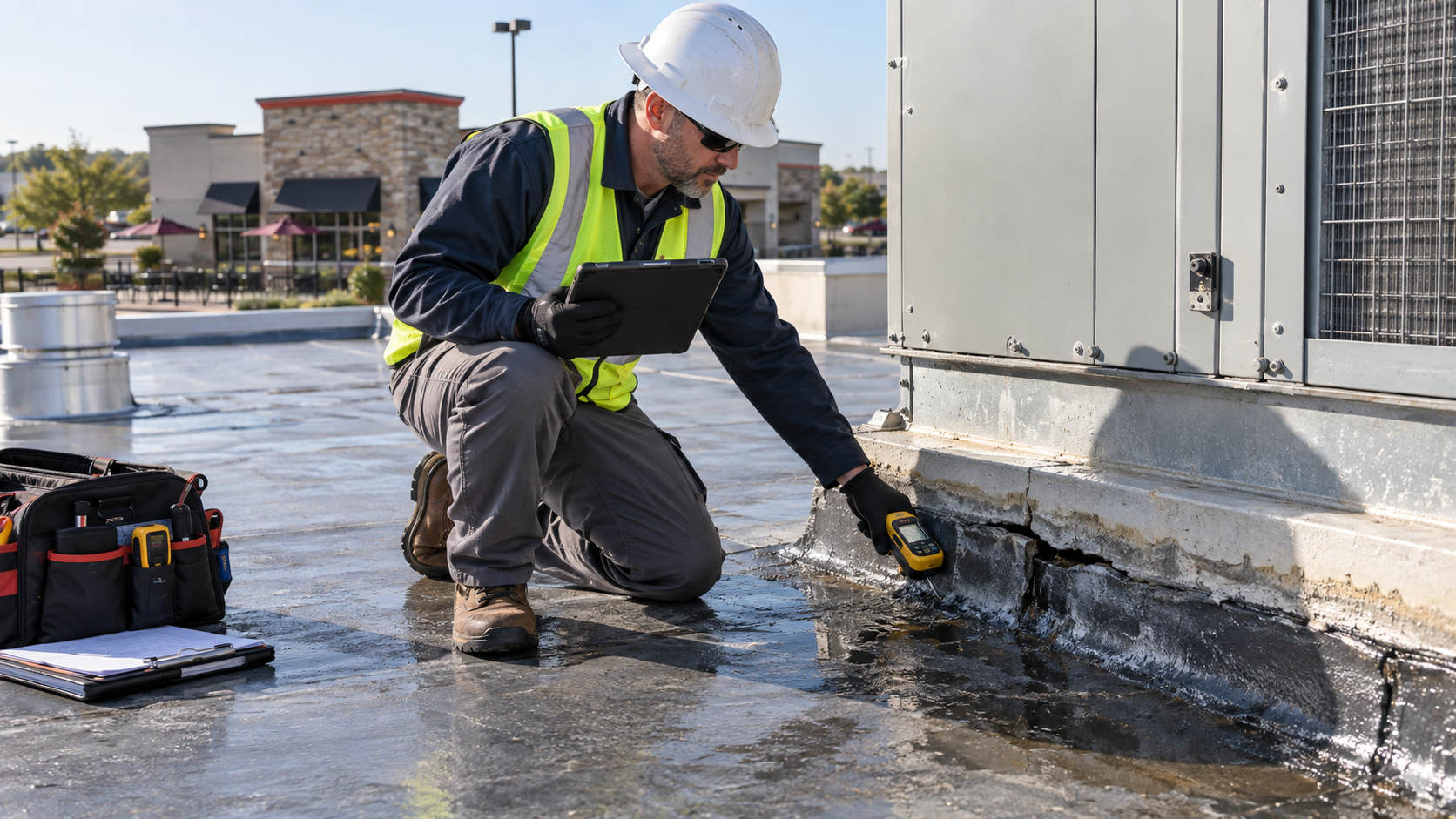
A restaurant roof needs immediate professional attention when water is entering the building, ceiling materials are wet or sagging, membrane seams are open, flashing has separated, drains are blocked, water remains ponded, rooftop equipment curbs are deteriorated, wind has lifted materials, or electrical and food-service areas are threatened. “Immediate” does not always mean a full replacement that day. It means protecting people and food, controlling water, documenting conditions, and arranging a qualified roof inspection before the next storm enlarges the damage.
Restaurants carry risks that ordinary offices do not. A roof leak can reach cooking lines, electrical equipment, refrigeration, dry storage, dining areas, ceiling cavities, or ventilation systems. Water and debris can affect sanitation, customer safety, revenue, and the ability to remain open. The response should therefore connect roofing decisions with the restaurant’s food-safety plan, local health requirements, landlord obligations, and insurer notification rules. A roofing contractor can assess and repair the roof, but restaurant management decides how affected food and operating areas are handled with appropriate regulatory guidance.
Why Small Restaurant Roof Problems Become Expensive Quickly
Commercial restaurant roofs contain many penetrations and service points: exhaust fans, grease ducts, make-up-air units, condensate lines, refrigeration equipment, vents, pipes, curbs, electrical conduits, and drains. Foot traffic from multiple service contractors can puncture membranes or pull flashings loose. Grease, cleaning chemicals, heat, vibration, and standing water may also accelerate deterioration when the assembly is not designed or maintained for those exposures.
A visible drip is often the last step in a longer moisture path. Water can enter at a curb, travel along a deck flute or insulation layer, and appear several feet away. Repeated patching at the interior stain does not locate the source. Delayed action can increase wet insulation, corrosion, microbial growth potential, ceiling damage, and business interruption. The earlier the building owner documents the condition and limits the affected area, the more options may remain available.
Sign One Active Water Entering the Restaurant
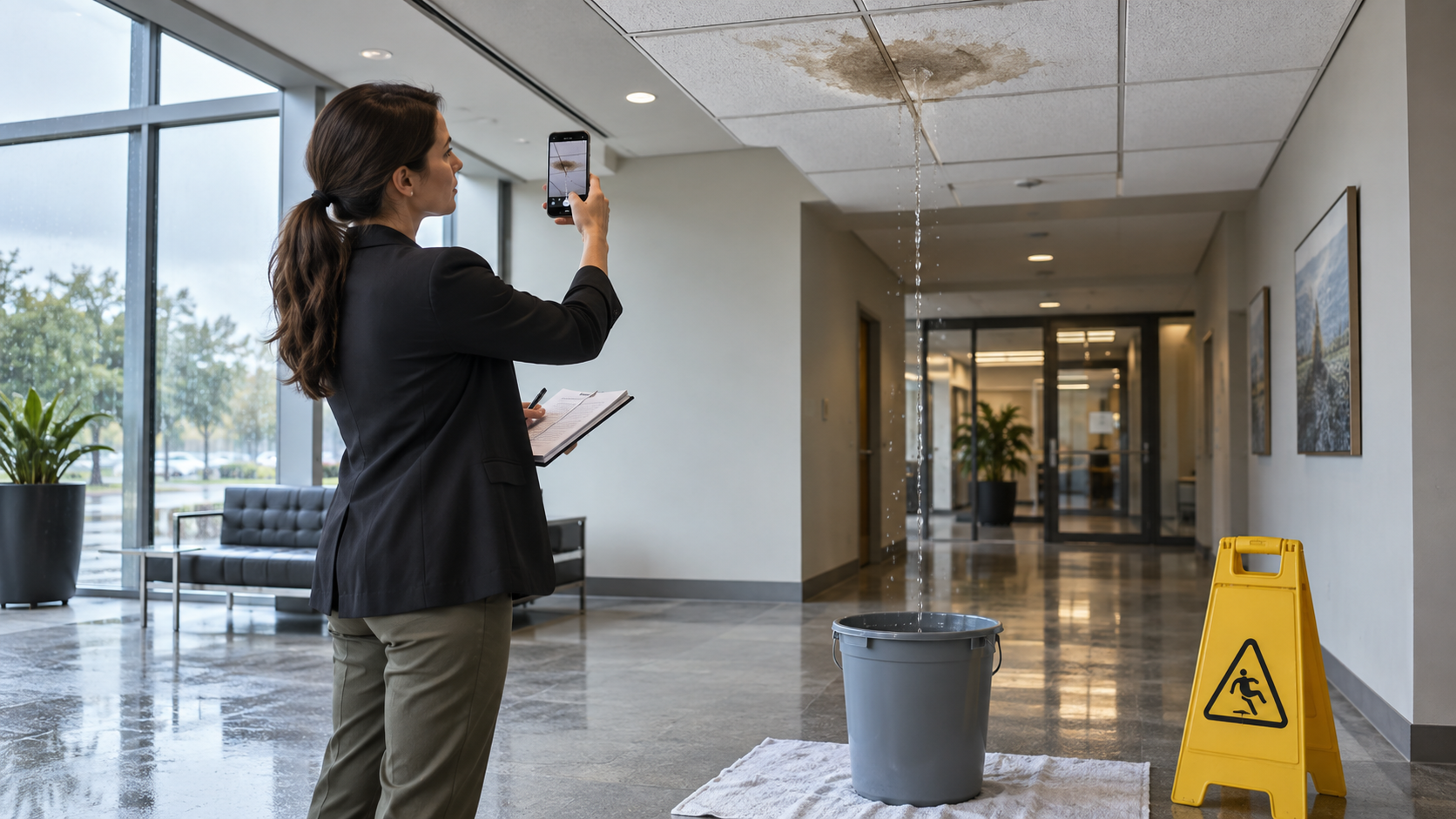
Active dripping during or after rain is the clearest urgent warning. Protect customers and employees first. Keep people away from slippery flooring and any ceiling that is bulging, stained, soft, or shedding material. If water is near electrical fixtures, panels, appliances, or wiring, do not touch the affected equipment; involve qualified electrical and emergency personnel. Move or protect food, packaging, linens, and movable assets under management’s food-safety procedures.
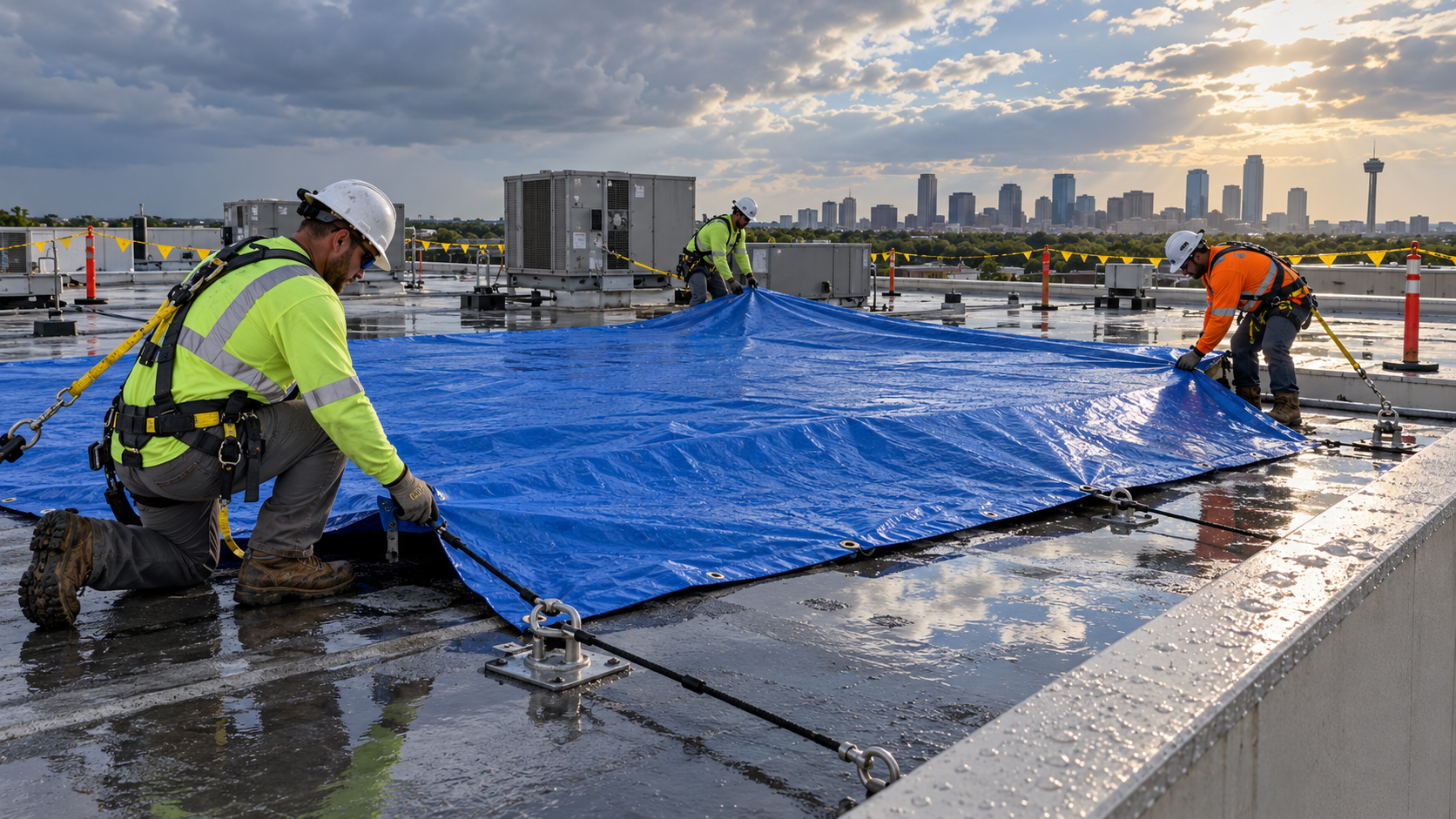
Place containers only where they do not create another trip hazard, and avoid puncturing a ceiling bubble unless a qualified person has evaluated the electrical and structural risks. Photograph the water path, ceiling, floor, weather, and time. Call for emergency roof stabilization when conditions allow safe access. An emergency tarp or temporary patch is a mitigation measure, not a completed permanent repair.
Sign Two Sagging Stained or Wet Ceiling Materials
Brown rings, bubbling paint, damp ceiling tiles, swollen drywall, rust at ceiling grids, or a sagging ceiling can indicate moisture above the finished surface. Even when the drip has stopped, trapped water may remain in insulation or ceiling cavities. Sagging material can fall without much warning, especially after repeated wetting.
Close the immediate area and have the ceiling and roof assembly evaluated. Restaurant staff should not simply replace stained tiles and continue service beneath them. A new tile can hide an unresolved leak and erase useful evidence. The roof inspection should compare the interior location with drains, seams, curbs, walls, and penetrations above, while recognizing that water may travel before it becomes visible.
Sign Three Ponding Water That Does Not Drain
Water that remains on a low-slope roof after normal drying time deserves prompt inspection. Ponding can increase loads, collect debris, strain seams, accelerate surface deterioration, and expose small defects for longer periods. It may result from clogged drains, settled insulation, inadequate slope, crushed cover board, structural movement, or an improperly installed repair.
Do not send restaurant employees onto the roof to push water toward a drain. Roof surfaces may be slippery, fragile, hot, or exposed to fall hazards. A roofing professional should clear accessible debris safely, inspect strainers and overflows, document the ponding pattern, and determine whether the problem is maintenance, roof construction, or structure. Recurring ponding after cleaning needs a designed correction rather than repeated sweeping.
Sign Four Open Seams Splits Blisters or Punctures
Single-ply seams can separate, modified bitumen can split, coatings can crack, and any membrane can be punctured by tools, discarded fasteners, service panels, dropped equipment, or sharp debris. Blisters may indicate trapped air or moisture and should not be cut open casually. Openings are urgent when rain is forecast or when they occur near a drain, curb, edge, or known wet area.
Temporary sealants can sometimes slow entry, but incompatible products may contaminate the membrane and complicate permanent repair. Photograph the defect before intervention, identify the roof type, and use a repair method approved for the assembly and warranty. A qualified contractor should inspect beyond the visible opening because moisture can spread beneath the surface.
Sign Five Damaged Flashing Around Exhaust Fans and HVAC Curbs
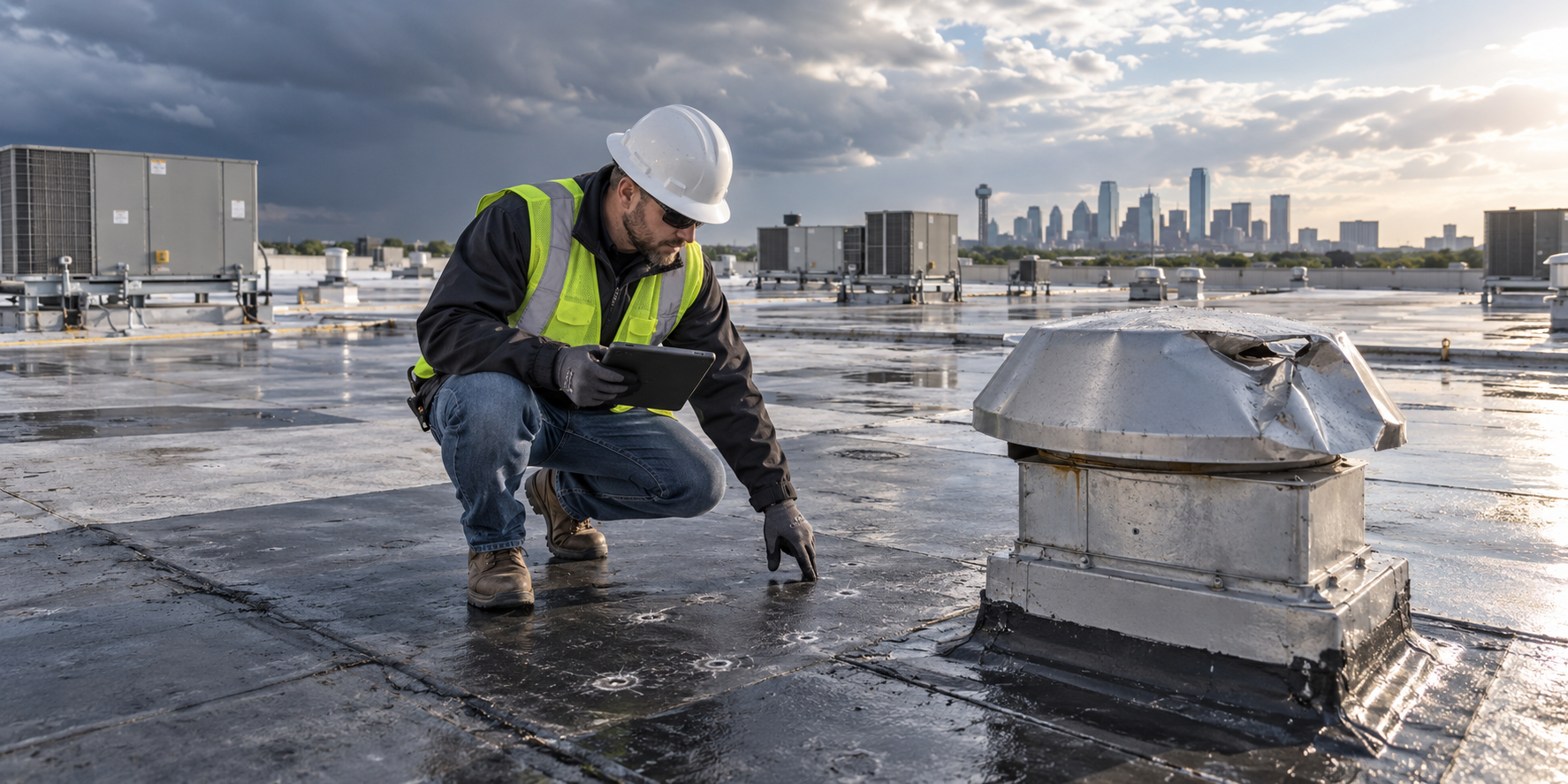
Restaurant roofs are especially vulnerable around exhaust and make-up-air equipment. Vibration, service traffic, grease, heat, condensate, deteriorated sealants, loose counterflashing, and movement between the unit and roof can break the water seal. Staining below an exhaust fan does not automatically mean the fan itself is the only source; the curb, membrane, duct, fasteners, and adjacent drainage all require review.
A roofer should coordinate with qualified mechanical and electrical contractors before equipment is lifted, disconnected, or altered. The repair must preserve service access, curb height, drainage, fire and ventilation requirements, and the roof-system warranty. Repeated mastic around a failing curb is a warning that the underlying detail may need reconstruction.
Sign Six Clogged Drains Scuppers or Gutters
Leaves, food-service debris, grease residue, packaging, roof aggregate, and loose membrane pieces can obstruct drainage. Water may back up beneath flashings or rise above conditions designed for normal rainfall. Missing drain strainers are also serious because debris can enter piping and create hidden blockages.
Urgent service is appropriate when water approaches a wall, curb, edge, or interior leak area, or when overflow drainage is not functioning. The contractor should clear roof-level obstructions without forcing debris into the line. A plumbing professional may be needed for piping. Document recurring clog locations and establish scheduled cleaning before storm seasons and after nearby tree shedding or rooftop service work.
Sign Seven Wind Lifted Edges Membrane or Metal
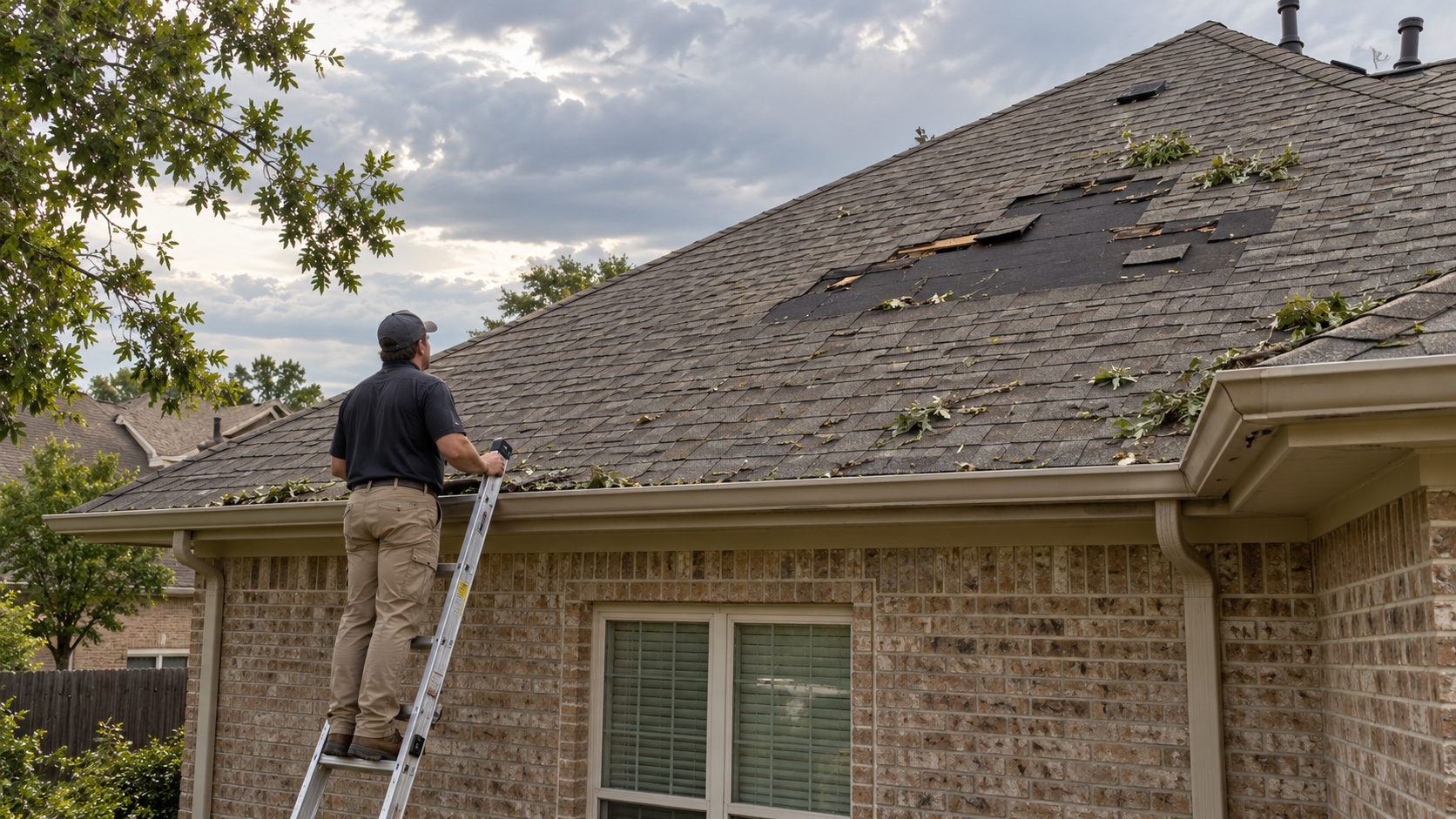
After straight-line winds, thunderstorms, or tornado activity, look from the ground for displaced edge metal, loose coping, fluttering membrane, bent panels, missing materials, or debris on the roof. Wind damage at the perimeter can progress rapidly because pressure concentrates at corners and edges. A lifted edge can admit wind beneath a larger section of membrane during the next event.
Keep people away from areas below loose metal or debris. Do not climb onto the roof during high winds. Once conditions are safe, obtain photographs and a professional inspection of perimeters, corners, seams, fasteners, rooftop units, penetrations, and interior ceilings. Emergency stabilization should be followed by a permanent, compatible repair and review of attachment conditions.
Sign Eight Hail Impact or Storm Debris
Hail damage is not always visible from the parking lot. Depending on the system, impacts may bruise insulation, fracture a membrane, damage coating, dent metal, crack skylights, loosen flashing, or damage rooftop equipment. Debris can puncture the roof or block drains. Some conditions leak immediately; others become apparent after thermal cycling or another storm.
Record the storm date, interior observations, roof photographs, equipment damage, and emergency work. Avoid declaring every mark to be hail damage without a system-specific assessment. Normal wear, foot traffic, blisters, manufacturing texture, and prior repairs can resemble impact. A contractor documents physical conditions; the insurer determines whether the policy covers the loss.
Sign Nine Persistent Odors Dampness or Unexplained Humidity
A musty odor, damp ceiling cavity, repeated condensation, or unexplained humidity can point to roof moisture, HVAC problems, plumbing, or a combination. Restaurants already generate heat and moisture, so diagnosis requires more than assuming every damp condition is a roof leak. Compare symptoms with rainfall, equipment operation, cooking schedules, and condensate drainage.
Moisture meters, infrared scans, test cuts, and interior investigation can help narrow the source, but each method has limitations. Infrared patterns require interpretation and confirmation; a meter reading does not alone define the complete assembly. If wet roof insulation is confirmed, the affected material and cause should be addressed rather than sealed beneath another layer.
Sign Ten Rising Energy Use or Uneven Indoor Temperatures
A sudden change in cooling performance may be related to HVAC service, controls, doors, kitchen load, or weather, but wet insulation and damaged roofing can also reduce thermal performance. Saturated insulation does not provide the intended resistance and can spread moisture beyond the original leak. Temperature complaints near a stained ceiling or roof defect warrant coordinated roof and mechanical evaluation.
Energy bills alone do not prove roof failure. Review normalized usage, equipment service history, operating hours, and outdoor conditions. When roof replacement or repair is planned, confirm insulation requirements, tapered drainage needs, and compatibility with rooftop equipment. Solving the roof and ventilation issues together can prevent one trade from undoing another’s work.
Sign Eleven Repeated Patches in the Same Area
A roof that receives repeated emergency patches at the same drain, curb, wall, or seam is signaling that the failure pathway has not been resolved. The visible surface may be contaminated, the substrate may be wet, the detail may move, or water may be entering somewhere else. Additional coating or mastic can make the condition harder to evaluate and may conflict with manufacturer requirements.
Ask for a repair history and map each leak report against weather and rooftop work. Remove failed repair material as appropriate, investigate the underlying detail, and define a permanent correction. When repairs cover a large or growing percentage of the roof, a replacement or restoration analysis may provide a more reliable business decision than another isolated patch.
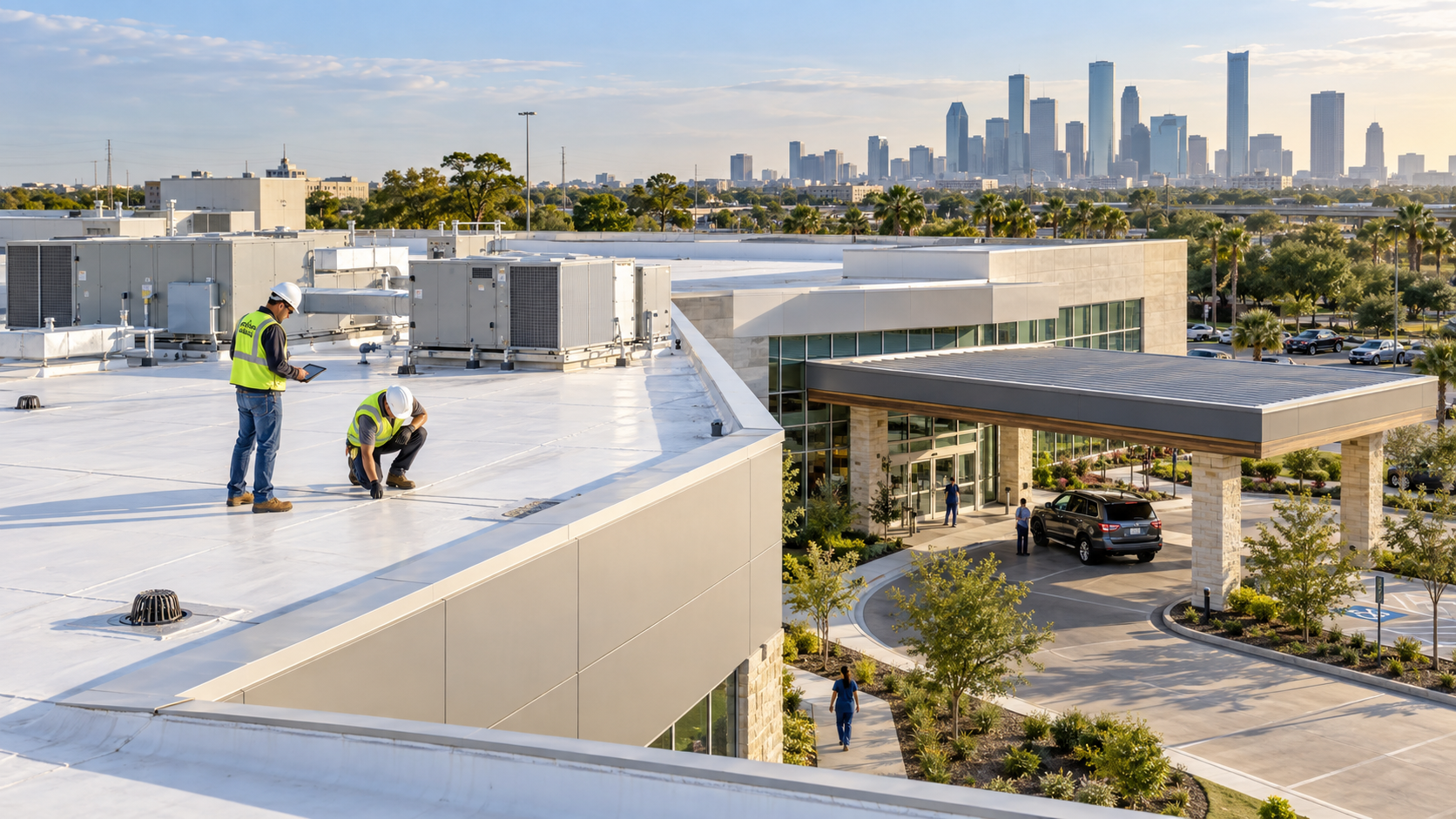
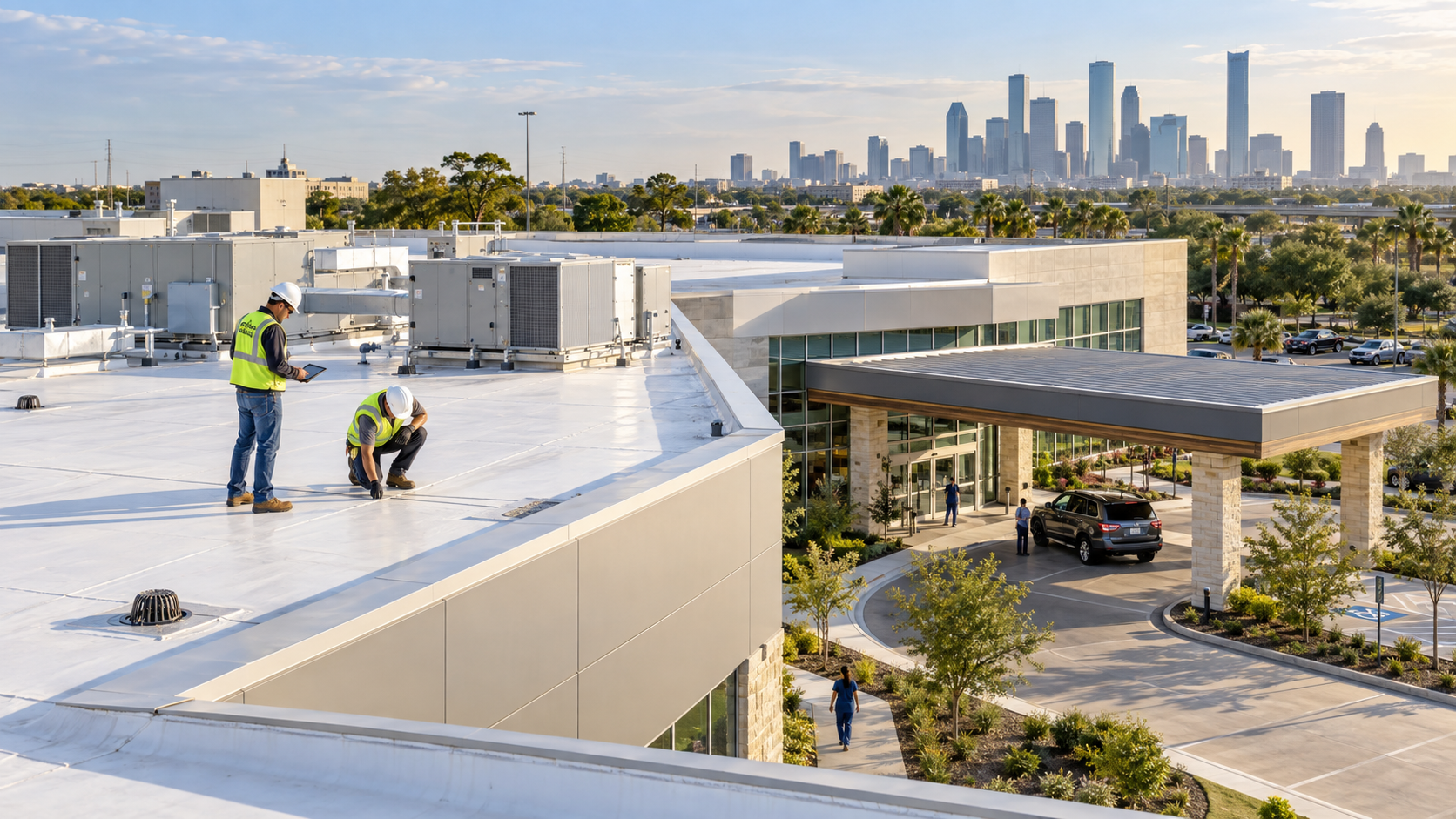
Restaurant roof inspections should document equipment curbs, penetrations, seams, drainage, moisture, and interior conditions—not merely the most visible stain.
Sign Twelve Loose Gravel or Deteriorated Built Up Roofing
Aging built-up roofing with gravel surfacing deserves particular concern. Gravel can shift, collect near drains, conceal splits and blisters, hide patchwork, and make the true membrane condition difficult to see. It also complicates moisture evaluation and adds loose material around exhaust equipment and roof edges. For restaurant owners, those uncertainties can affect maintenance planning, leak diagnosis, cleanup, replacement logistics, and insurance underwriting.
Showtime Exteriors’ campaign position is clear: do not describe gravel-surfaced BUR as a positive feature. If the roof is aging, leaking, heavily patched, or difficult to document, obtain a professional condition assessment and replacement analysis. Some carriers may restrict terms, increase premiums, request additional evidence, or decline renewal based on their underwriting criteria. A contractor cannot guarantee coverage or renewal, but better documentation helps the owner make informed decisions.
Sign Thirteen Rust Corrosion or Deck Deterioration
Rust on metal decking, fasteners, rooftop equipment bases, ceiling supports, or structural components can indicate prolonged moisture exposure. Soft wood decking, crumbling concrete, or corrosion visible through openings requires immediate evaluation. Structural conditions fall outside ordinary surface patching and may require an engineer or other qualified design professional.
Stop work or occupancy in the affected zone when falling material, unstable decking, or significant sagging is suspected. Do not allow a roofing crew to improvise structural repairs without an approved scope. The permanent solution must address the water source, damaged roof components, deck or structure, and any interior consequences.
Sign Fourteen Damage After Rooftop Service Work
Leaks that begin after HVAC, electrical, refrigeration, signage, hood, solar, or communications work may result from punctures, displaced walk pads, loose counterflashing, new penetrations, dropped screws, or traffic over vulnerable areas. Every contractor accessing the roof should use designated paths and report damage immediately.
Inspect the work route and equipment area before and after major service. Require approved penetration details and coordinate warranty notifications. Loose panels, screws, filters, belts, and packaging must be removed because they can puncture membranes or clog drains. A simple roof-access log can clarify timing and responsibility without delaying necessary mechanical service.
What Restaurant Staff Should Do During an Active Leak
First protect people and food. Restrict the area, place slip warnings, keep water away from energized equipment, and follow the restaurant’s procedures for exposed food, single-service items, packaging, utensils, and food-contact surfaces. Contact management, the property owner or landlord, and emergency services when conditions warrant. Staff should not climb onto the roof or attempt repairs without training and authorization.
Second preserve evidence. Record the date, time, weather, room, ceiling condition, water path, affected equipment, and actions taken. Use photographs that do not capture customer payment data or private information. Third request professional stabilization and inspection. Finally, document cleanup and release of the affected food-service area under the applicable management and regulatory process.
When Repair May Be Reasonable
A repair may be appropriate when the roof is generally serviceable, the defect is localized, the substrate is sound, moisture is limited, drainage is functional, materials are compatible, and the repair can be completed to manufacturer and code requirements. Examples may include a discrete puncture, an isolated open seam, a correctable drain detail, or a localized flashing failure.
The repair scope should identify the cause, preparation, materials, affected layers, photographs, and warranty effect. It should not simply promise to “seal leak area,” because the interior stain may not identify the entry point. Confirm the roof condition after the next rainfall and retain the report with maintenance records.
When Restoration May Be Considered
A coating or restoration system may be considered when the existing roof is dry or can be restored to acceptable conditions, firmly attached, compatible, properly drained, and within the manufacturer’s criteria. Preparation often includes cleaning, repairs, reinforcement, adhesion testing, treatment of seams and penetrations, and specified coating thickness. Restoration is not paint and should not be used to conceal active moisture or structural defects.
Restaurant grease and exhaust deposits can interfere with adhesion, so cleaning and compatibility testing are essential. Aging gravel BUR presents additional obstacles because loose aggregate and concealed conditions make preparation and verification difficult. The evaluation should explain why restoration is technically suitable rather than assuming it is automatically cheaper or less disruptive.
When Replacement Is the Better Decision
Replacement becomes more likely when leaks are widespread, insulation is broadly wet, decking is deteriorated, seams and flashings are failing across multiple zones, drainage is deficient, repairs are recurring, the roof is near the end of its service life, or the existing assembly cannot support a reliable restoration. Insurance or leasing requirements may also influence timing, but they do not replace technical assessment.
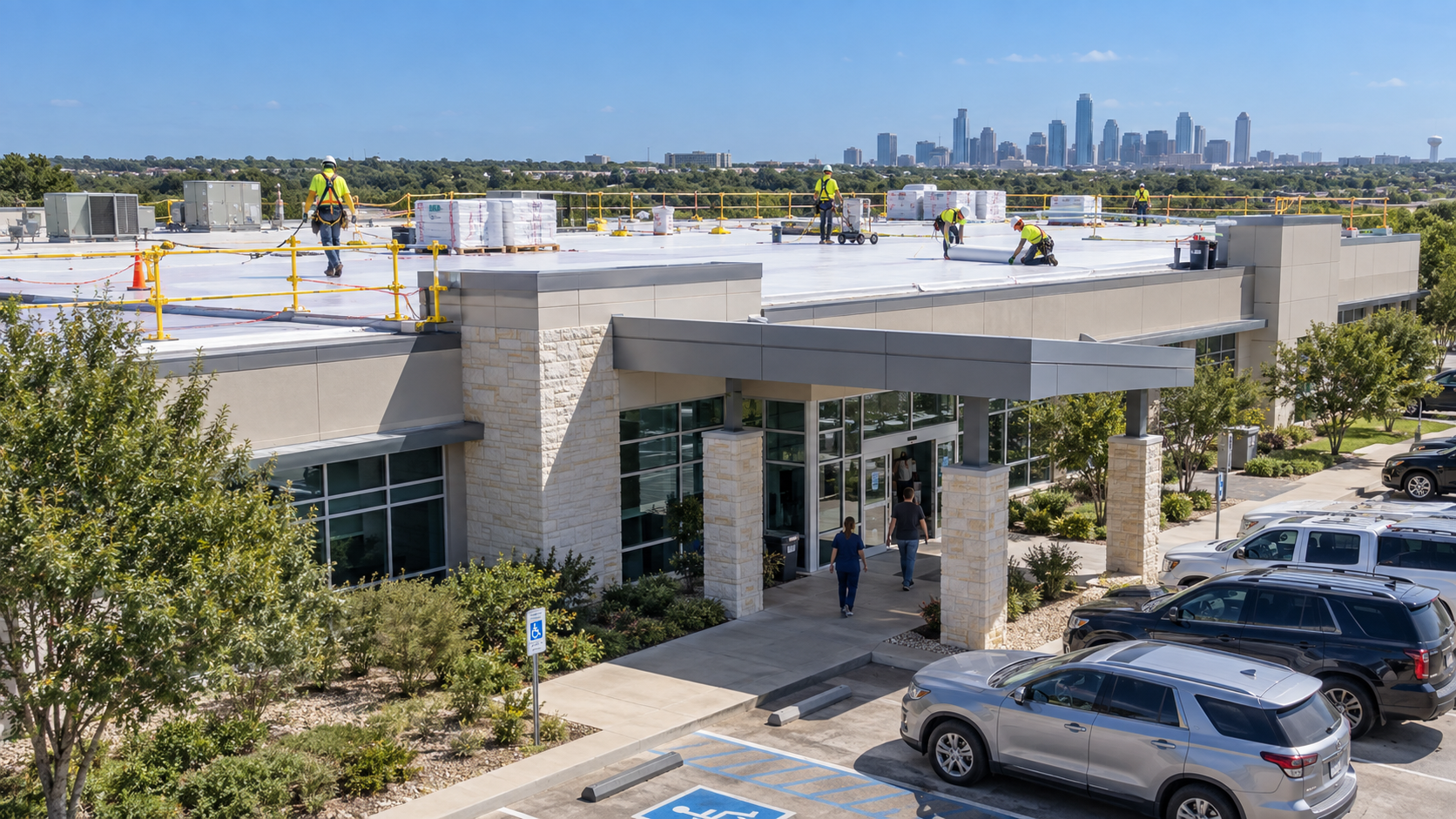
A replacement scope can correct insulation, drainage, attachment, curbs, edge details, access paths, and obsolete penetrations. For an operating restaurant, phase the work around deliveries and peak service, protect outdoor-air intakes, coordinate exhaust and refrigeration equipment, isolate debris routes, and dry in each zone daily. The objective is controlled continuity, not an unrealistic promise of zero noise, odor, or schedule effect.
Restaurant Roof Warning Sign Priority Matrix
Warning sign
Immediate risk
First action
Likely specialist
Active water or sagging ceiling
Slip electrical and falling material
Restrict area and call emergency service
Roofer electrician facility manager
Ponding near drains
Overload and prolonged exposure
Keep staff off roof and inspect drainage
Roofer and plumber if piping is blocked
Open seam or lifted edge
Rapid storm entry or wind spread
Document and stabilize safely
Commercial roofer
Wet food or food contact area
Contamination and closure risk
Follow food safety plan and isolate
Restaurant manager and regulator as applicable
Corroded or soft deck
Structural instability
Stop affected work and evaluate
Roofer and structural professional
Aging gravel BUR
Hidden moisture and underwriting uncertainty
Document condition and replacement options
Commercial roofer and insurance professional
How to Document the Roof Before Repair
Create a simple roof file containing the roof type, approximate age, warranty, prior repairs, leak dates, weather, rooftop service history, inspection photographs, moisture findings, invoices, and communications. Label photographs by roof zone and interior room. Include wide context images and close details. Do not disturb damaged materials solely to improve a photograph.
If an insurance claim may be involved, review notice and mitigation duties in the policy and ask the carrier what documentation or inspection it requires before permanent work. Protecting the building may still require emergency action. Showtime Exteriors can report observed conditions and construction scope, but the insurer controls coverage, valuation, deductible application, depreciation, and payment decisions.
Questions to Ask the Roofing Contractor
What is the most likely entry point and what evidence supports that conclusion?
How far may moisture have traveled beneath the membrane?
Is moisture testing or a test cut appropriate?
Will the repair be compatible with the existing system and warranty?
How will exhaust fans HVAC intakes grease and service traffic be managed?
Can the restaurant stay open and what zones need temporary closure?
How will each work area be made watertight before the crew leaves?
What conditions would change the recommendation from repair to replacement?
How to Reduce Business Interruption During Urgent Roof Work
Emergency roofing does not have to mean an uncontrolled shutdown. Before work begins, map the active roof zone to the kitchen, dining room, restrooms, storage, office, utility areas, entrances, drive-through, and delivery route below. Identify peak service periods and the locations of outdoor-air intakes, exhaust discharge, grease ducts, refrigeration lines, electrical panels, and fire-suppression components. The contractor and restaurant manager can then select the smallest safe work zone and schedule the loudest, dustiest, or most odorous activities outside the busiest operating window.
Separate customers and staff from ladders, hoisting, dumpsters, falling-object zones, and material deliveries. Preserve accessible entrances, emergency exits, fire lanes, and vendor access. Where interior protection is needed, install it before the roof is opened and inspect it throughout the shift. Coordinate any equipment shutdown with the appropriate licensed trade and restaurant leadership; a roofer should not casually disable an exhaust, make-up-air, refrigeration, alarm, or suppression system. At the end of each day, verify seams, temporary tie-ins, drains, stored materials, ground cleanliness, interior ceilings, and forecast conditions.
A Preventive Maintenance Plan for Restaurant Roofs
A restaurant roof maintenance plan should be written, scheduled, and tied to rooftop service activity. Start with a roof plan that identifies drains, scuppers, edges, curbs, vents, grease exposure areas, walk pads, access points, and known repairs. Assign one manager or property representative to retain reports and authorize access. Inspect according to warranty and manufacturer requirements, after severe weather, after any reported leak, and after significant HVAC, refrigeration, hood, sign, or electrical work.
Routine service should address debris, drainage, displaced walk pads, open seams, deteriorated sealants, loose metal, unsupported lines, abandoned penetrations, and damage around equipment. Cleaning methods must be compatible with the membrane; aggressive chemicals or pressure washing can cause damage. Require service contractors to carry tools safely, use designated paths, avoid setting sharp panels directly on the roof, and remove screws and packaging. Photograph conditions before and after major work. A maintenance program cannot prevent every storm loss, but it can catch correctable defects before water reaches food-service areas and create the documentation needed for budgeting, warranty questions, and insurance conversations.
How to Plan the Permanent Repair After Emergency Stabilization
Once the immediate leak is controlled, do not allow the temporary measure to disappear into the maintenance history. Schedule a follow-up inspection under safe, dry conditions. Confirm the roof type, locate the likely entry point, evaluate adjacent seams and flashings, and determine whether insulation or decking is wet. If the emergency repair used materials that are incompatible with the roof, remove and prepare the area as required before installing the permanent detail.
The permanent proposal should explain what will be removed, what will be retained, how wet materials will be handled, how the repair connects to the existing system, what interior coordination is required, and what warranty applies. It should also state limitations: a localized repair cannot guarantee that unrelated aging areas will not leak. After completion, obtain labeled photographs and inspect the interior during subsequent rain. If leaks continue or new wet areas appear, expand the investigation rather than layering additional sealant over an uncertain source.
Frequently Asked Questions
Is a restaurant roof leak always an emergency?
Any active leak deserves prompt action. It becomes especially urgent near customers, food, electrical systems, cooking equipment, a sagging ceiling, or essential operations.
Can the restaurant remain open during roof repair?
Often, but management must evaluate the affected food-service and customer areas. Work may need phasing, interior protection, HVAC coordination, and temporary closure of a limited zone.
Can restaurant employees patch the roof?
They generally should not access or repair a commercial roof without authorization, training, fall protection, and system knowledge. Incompatible materials and unsafe access can worsen the condition.
How long can ponding water stay before it is a concern?
There is no universal clock that fits every assembly and warranty. Water that persists after ordinary drying conditions or repeatedly returns should be professionally evaluated.
Does a ceiling stain prove the roof is leaking directly above it?
No. Water can travel along decking, insulation, pipes, ducts, or framing. The roof and interior must be traced together.
Can grease damage a restaurant roof?
Grease and exhaust residue can affect some materials and interfere with adhesion. The roof system, exposure, cleaning method, and manufacturer requirements determine the correct response.
Should wet insulation be left beneath a patch?
A small surface repair does not correct widespread wet insulation. The extent and cause should be evaluated, and damaged materials removed as required by the approved scope.
Is coating a leaking restaurant roof enough?
Not automatically. Coating requires compatible, prepared, sufficiently dry, and stable conditions. It should not cover unresolved moisture, failed details, or structural damage.
Why are gravel roofs difficult to inspect?
Gravel can conceal membrane defects, patching, and moisture patterns, while shifted aggregate may obstruct drains. Aging gravel BUR should receive careful documentation and replacement analysis.
Will replacing the roof guarantee insurance coverage?
No. Replacement may improve the physical condition, but only the carrier decides coverage, premium, restrictions, and renewal.
How often should a restaurant roof be inspected?
Follow manufacturer and warranty requirements, and inspect after severe weather, reported leaks, and significant rooftop service. High equipment traffic may justify more frequent checks.
What should an emergency repair report include?
It should identify observed conditions, location, weather, temporary measures, photographs, materials used, limitations, recommended permanent work, and any interior impact reported by management.
Schedule a Restaurant Roof Inspection With Showtime Exteriors
Showtime Exteriors helps Texas restaurant owners and commercial property managers evaluate leaks, drainage, storm damage, rooftop equipment details, aging membranes, and replacement options. The practical first step is a documented inspection that distinguishes an isolated defect from a broader system problem and establishes a safe repair, restoration, or replacement plan.
Learn more at Showtime Exteriors, review available roofing services, and visit the commercial roofing page.
For additional information, read the frequently asked questions, contact Showtime Exteriors, or browse the commercial roofing blog. Call 817-400-ROOF (7663).
Authoritative Resources
FDA Food Code and food safety resources
OSHA construction safety resources
EPA indoor air quality resources
Ready Business severe weather resources