

How to Document a Tornado-Damaged Roof Before Filing a Claim
Learn how to document a tornado-damaged roof safely, organize photographs, preserve repair records, and prepare information for your Texas insurance claim.
After a tornado, your first concern is whether people are safe. Once immediate dangers are addressed, you need a clear record of what happened to the property.
Documenting a tornado-damaged roof means more than photographing missing materials. A useful record identifies the building, affected roof sections, inspection dates, emergency work, and conditions that require further evaluation.
Do not delay notifying your insurer while waiting for a complete inspection report. Report the damage promptly, ask what information is required, and continue gathering evidence as access becomes safe.
For Texas homeowners and commercial property owners, the following steps can help create an organized account without putting anyone at risk.
1. Wait for Safe Access
A building can remain hazardous after the weather clears.
Displaced roofing, unstable walls, broken glass, hanging branches, damaged utilities, and concealed structural damage can make even a short visit dangerous.
The CDC’s tornado recovery guidance advises against entering damaged buildings until local authorities determine they are safe. It also identifies structural, electrical, and gas-leak hazards that may remain after the storm.
Stay away from downed wires and anything they may contact. OSHA’s downed electrical wire guidance explains that fallen lines can remain energized and energize surrounding objects.
Use safe ground-level viewpoints initially. Do not climb onto the roof or enter an unsafe attic to obtain photographs.
Showtime Exteriors provides commercial roofing assessments once conditions allow appropriate professional access.
2. Open a Property Timeline
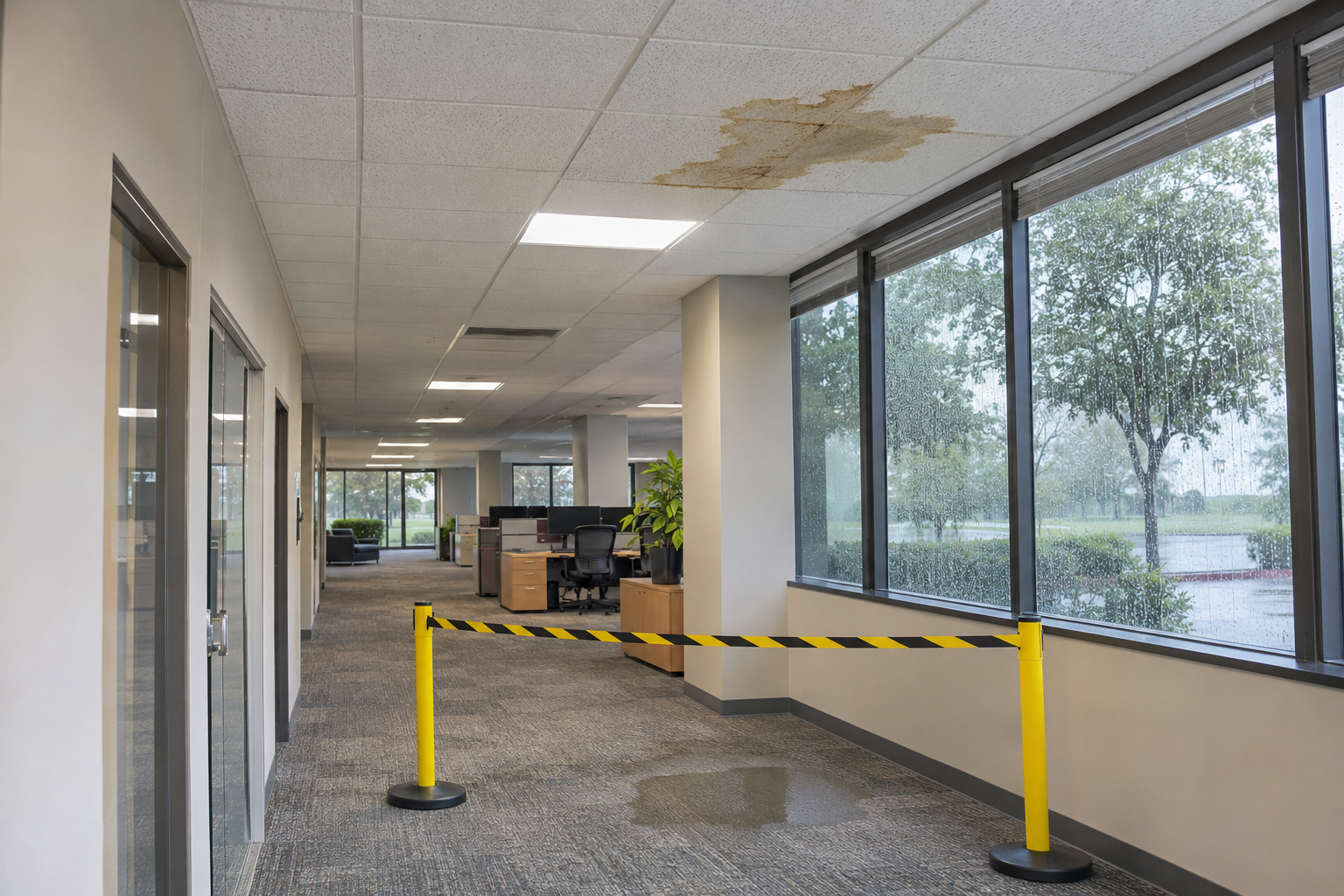
Create one dated record covering the event and subsequent activity.
Include:
- Property address and ownership contact.
- Reported storm date and approximate time.
- When damage was first discovered.
- Known access restrictions.
- Emergency services or utility involvement.
- Inspections and contractor visits.
- Temporary protection and debris removal.
- Insurance notifications and instructions.
Separate what you personally observed from information supplied by others.
For example, “roof-edge metal was displaced when the owner arrived at 8 a.m.” is a documented observation. A statement identifying the exact wind mechanism requires supporting information.
If the event classification is uncertain, describe the reported severe-weather event accurately rather than making an unsupported tornado attribution.
3. Capture the Whole Building First
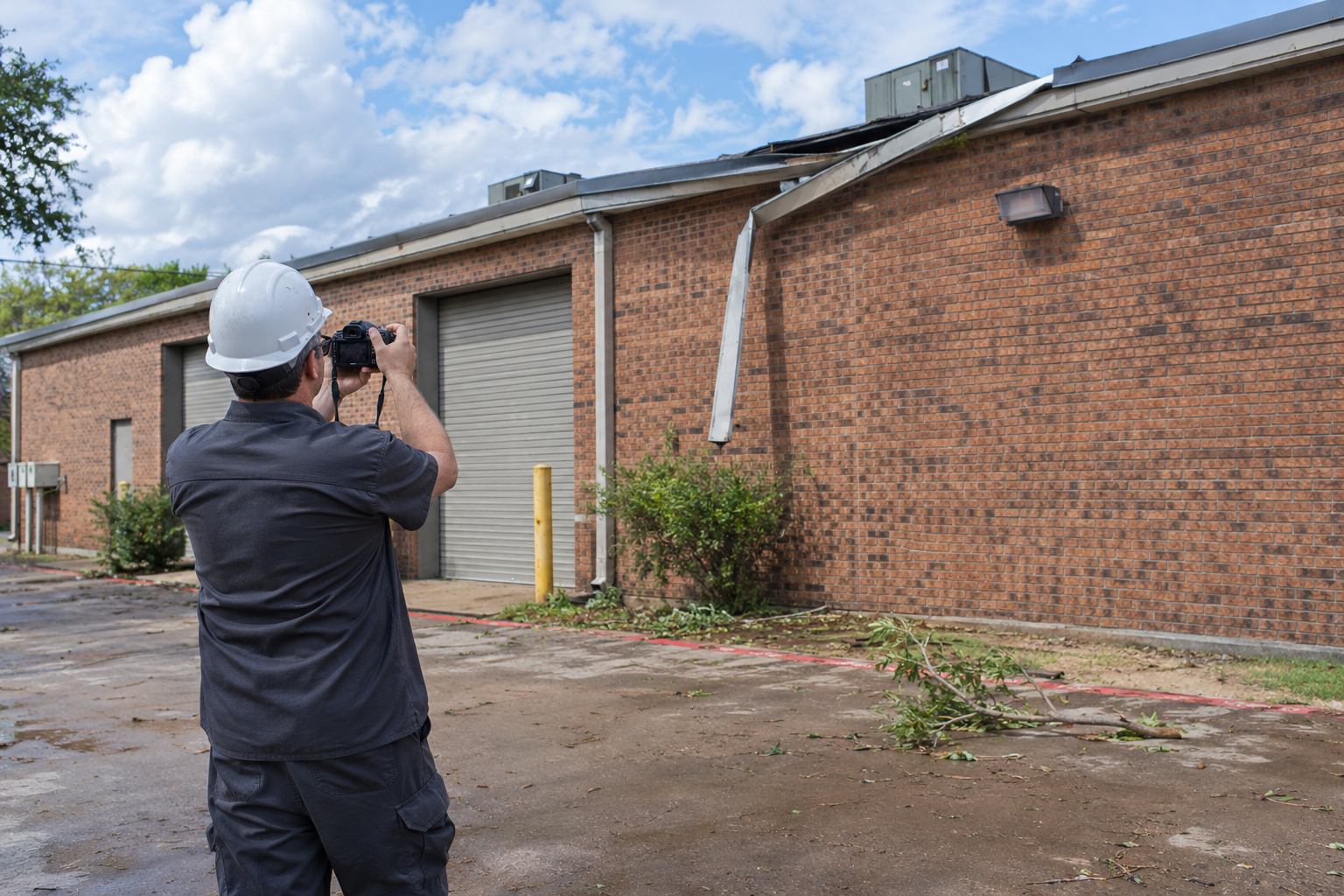
Begin with overview photographs from safe locations.
Show the affected elevation, roofline, nearby debris, and relationship between damaged components. Include undamaged areas where they help establish context.
Then obtain closer photographs through qualified professionals as access permits.
Use three levels:
- Overview: Establish the building and affected section.
- Context: Show the component and surrounding area.
- Detail: Record the specific condition clearly.
The Texas Department of Insurance storm-recovery guidance recommends photographs and video, prompt reporting, temporary protection, and saved receipts. It also advises preserving the insurer’s opportunity to inspect before permanent repairs.
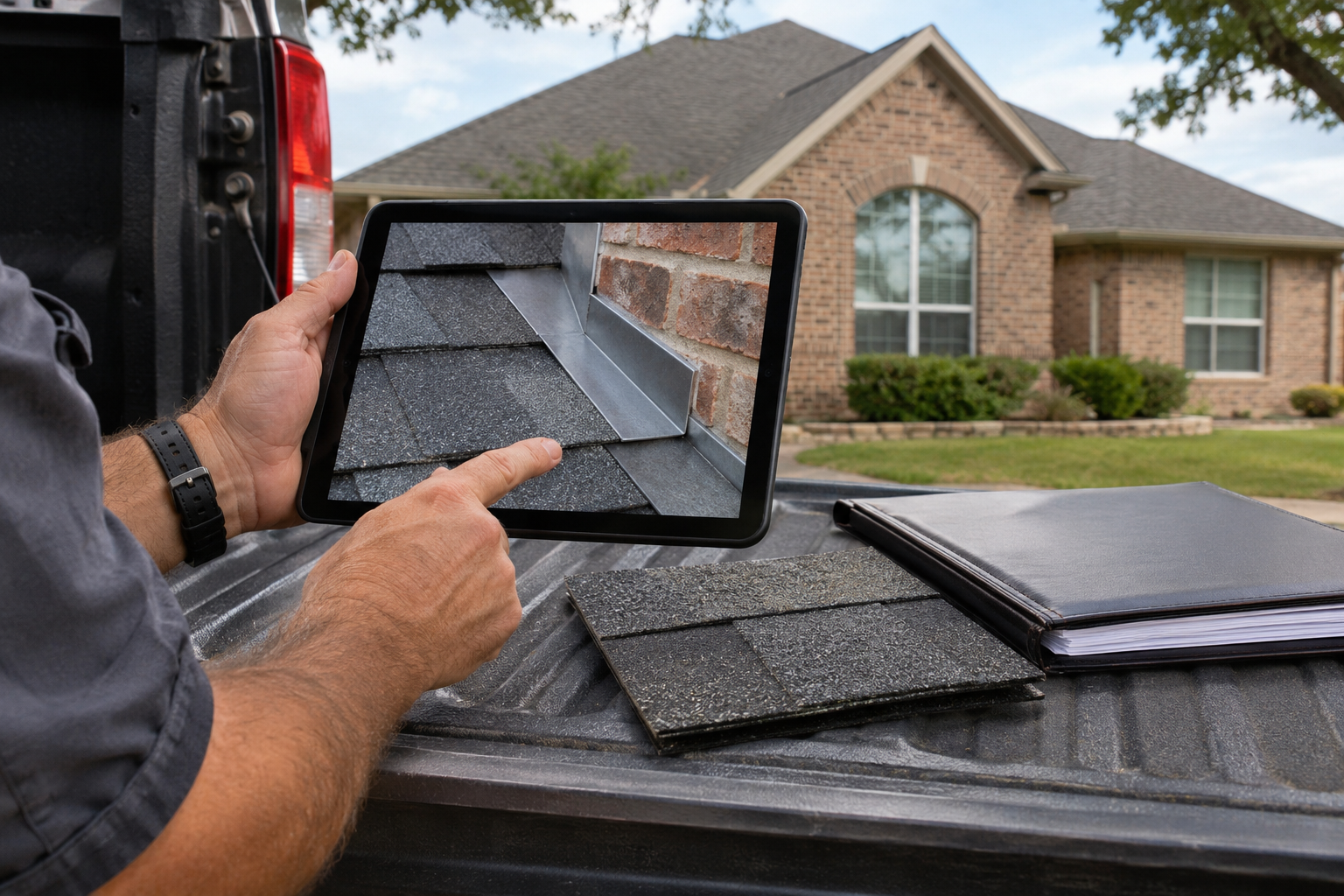
Image 1: Exterior Damage Overview
Place the first generated image here.
Alt text: Brick commercial building with displaced roof-edge materials and scattered storm debris.
Caption: Safe exterior overview photographs establish the affected elevation before closer inspection or emergency work changes conditions.
4. Label Each Roof Section
A close-up of torn material is difficult to evaluate if nobody can locate it.
Divide the roof into simple sections using directions, building wings, tenant areas, or a consistent diagram.
For a commercial property, examples might include:
- Section A: Main warehouse.
- Section B: Office addition.
- Section C: Loading canopy.
For a home, identify slopes and related features such as a garage, dormer, chimney, or porch.
Use the same location names in photographs, inspection notes, and construction estimates.
Record referenceLocationObservationEX-01North elevationOverview of displaced roof-edge materialRF-02Section A, northeast cornerVisible opening at perimeterIN-03Warehouse, aisle 2Water staining on interior finishMT-04Section A perimeterTemporary protection after installation
These are examples of organization, not findings from an actual property.
5. Record More Than Missing Roofing
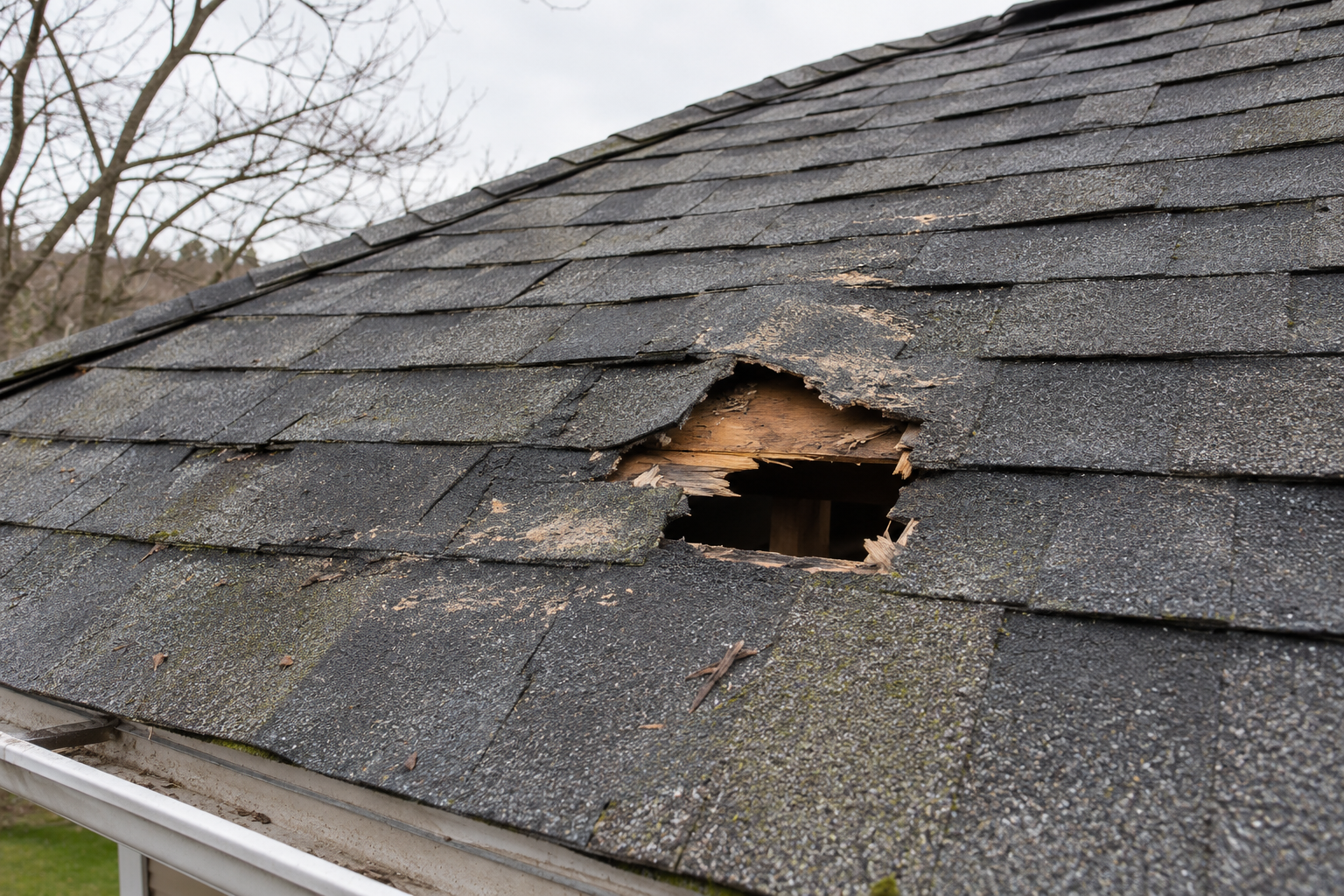
A tornado-damaged roof may require evaluation of several connected components.
Ask the inspecting professional to document relevant conditions at:
- Roof coverings and seams.
- Decking and accessible underlying components.
- Perimeter edges and parapets.
- Roof-to-wall transitions.
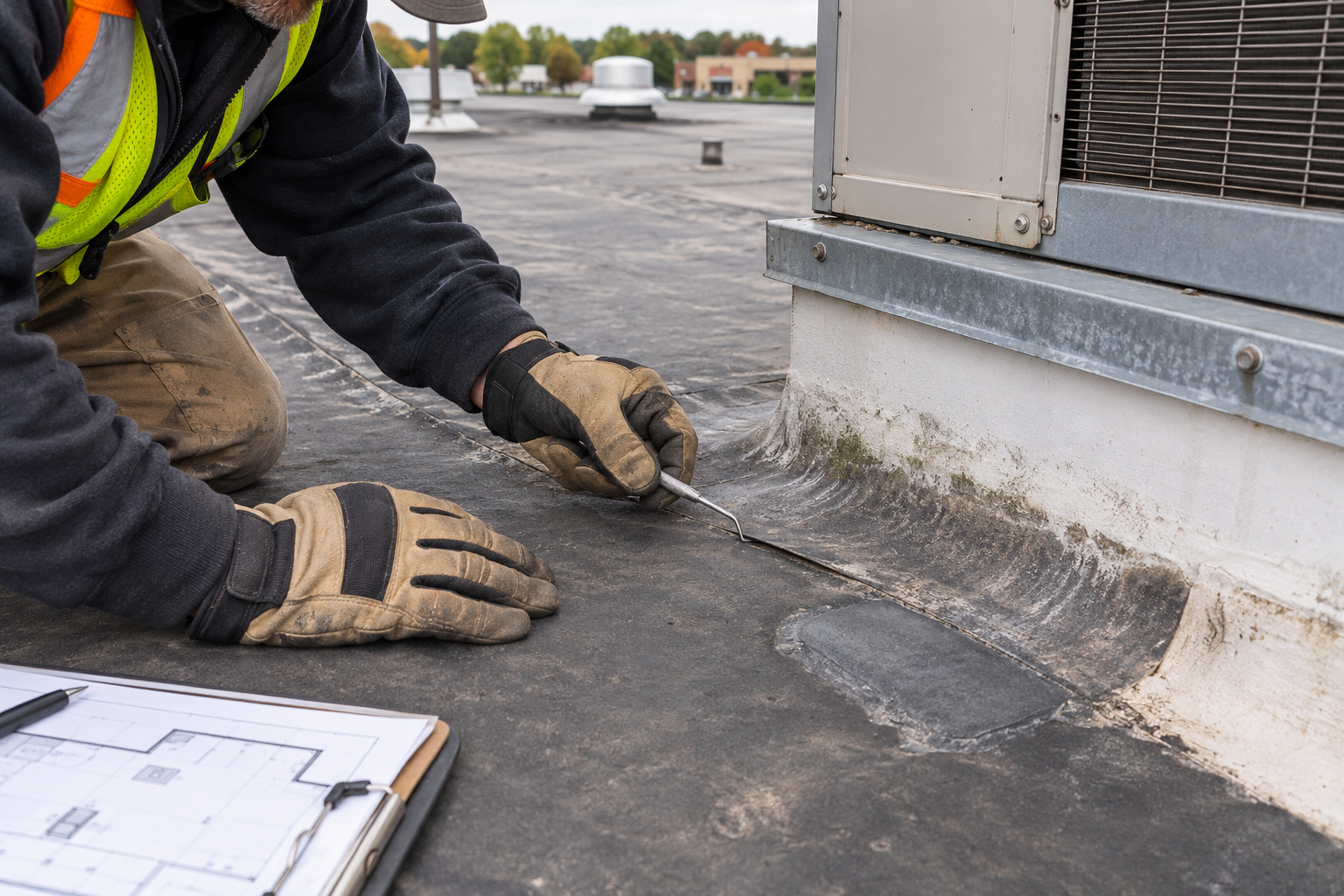
- Penetrations and equipment curbs.
- Gutters, drains, and scuppers.
- Skylights and roof openings.
- Visible attachment concerns.
- Related interior areas.
Suspected structural damage should be referred to an appropriately qualified professional. A roofing report should identify its limits rather than imply that concealed framing or inaccessible connections were evaluated.
For homeowners, Showtime Exteriors’ residential roofing services include assessments that help define the roofing work required.
6. Keep Observations and Conclusions Separate
Accurate wording makes documentation more credible.
“Metal coping is missing from the east parapet” describes a visible condition.
“The coping failed because of tornado suction during a specific event” is a causation conclusion requiring additional support.
Ask the inspector to distinguish:
- Confirmed observations.
- Information supplied by the owner.
- Existing deterioration or earlier repairs.
- Suspected concealed damage.
- Recommended testing.
- Conclusions supported by the investigation.
Do not identify every defect discovered afterward as storm damage automatically.
7. Add Weather Information Without Substituting It for Inspection
Official weather records may help establish the reported event’s timing and location.
The National Weather Service storm-records guide explains available records and the types of event information they contain.
Retain the source, geographic area, and date range.
A nearby tornado track or severe-weather report provides context. It does not independently establish the condition of an individual roof, the extent of damage, or the necessary construction scope.
Likewise, the absence of a report at the exact address should not replace a property-specific evaluation.
8. Document Emergency Work Before Conditions Change
Temporary protection, stabilization, and debris removal can change what remains visible.
Ask professionals to photograph affected areas before, during, and after authorized work whenever safely possible.
Retain records identifying:
- Who performed the work.
- When it occurred.
- Why it was necessary.
- Areas treated.
- Materials, equipment, and labor.
- Items removed.
- Remaining limitations.
Do not leave an immediate hazard untreated solely to preserve evidence. Notify the insurer about urgent work and retain an accurate record.
Showtime Exteriors’ emergency roof repair guide explains practical response and documentation considerations.
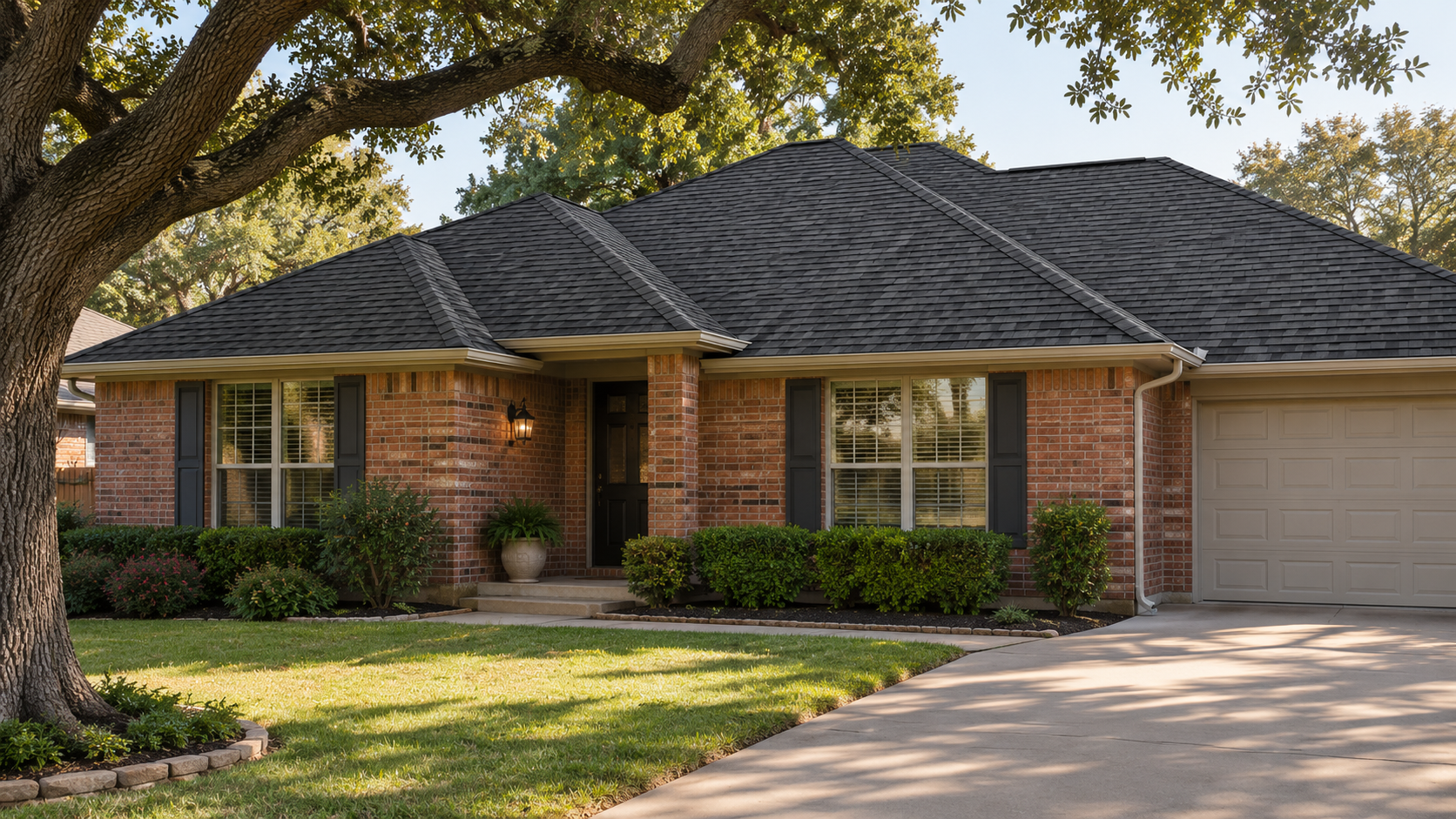
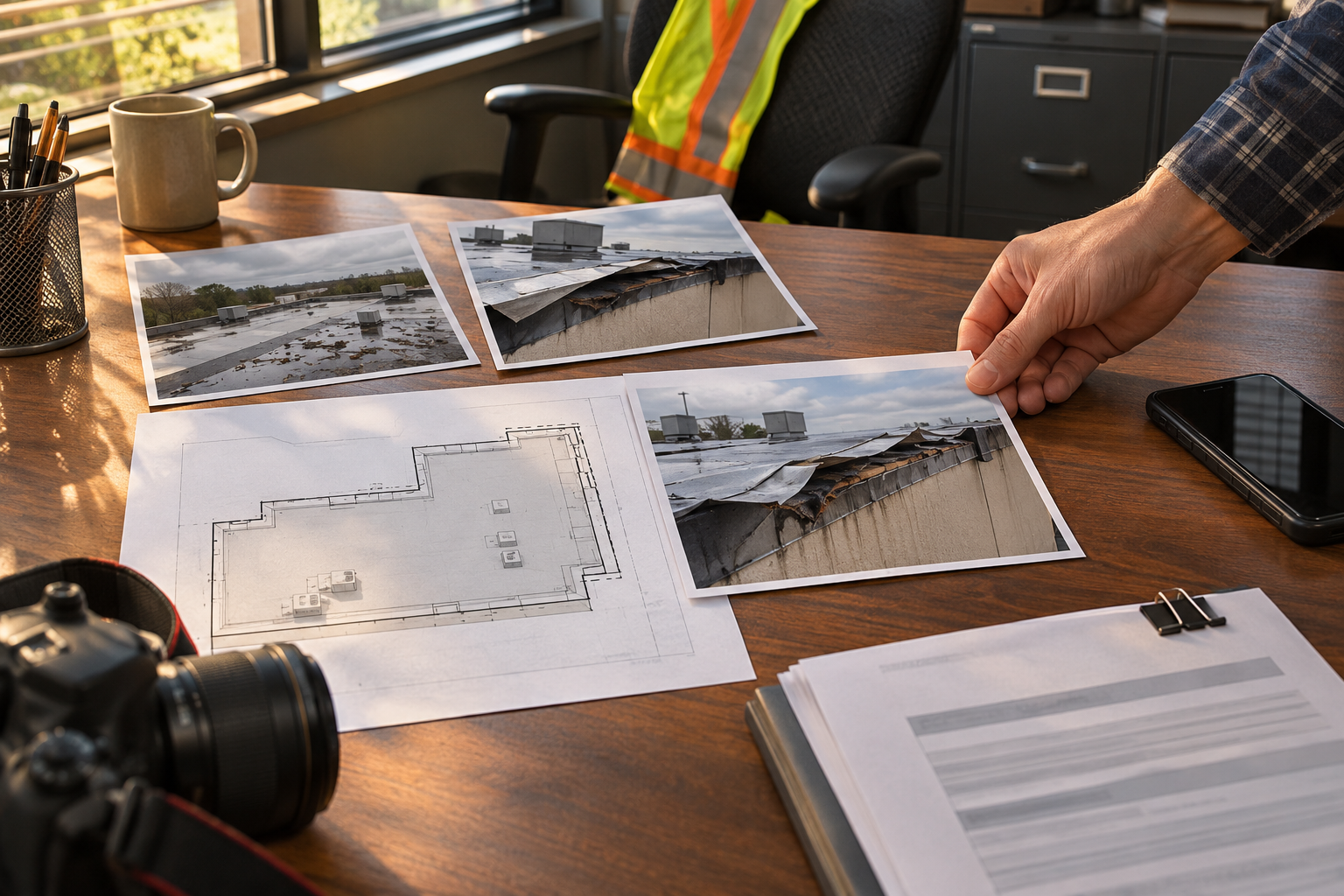
Image 2: Organizing Roof Evidence
Place the second generated image here.
Alt text: Roof-edge damage photographs organized beside a roof plan and inspection paperwork.
Caption: Connect each photograph to a location and dated observation so another reviewer can follow the record.
9. Include the Roof’s Earlier History
Gather records that help distinguish pre-existing conditions from newly observed damage.
Useful documents include installation invoices, warranty records, maintenance reports, earlier photographs, and prior repair proposals.
Match each record to the correct roof area. An invoice for a canopy repair does not establish the age of the main roof.
Preserve relevant history even when it documents older deficiencies. A complete account is more useful than a selective collection.
If documents were lost or destroyed, tell the insurer what is missing and ask whether copies or alternative records would help.
10. Submit an Organized Package and Track Deadlines
Ask the insurer how to submit photographs, reports, estimates, and additional information.
The Texas Office of Public Insurance Counsel storm-claim checklist recommends prompt reporting, documentation, itemized receipts, retention of correspondence, and confirmation of deadlines requiring action.
A practical submission can contain:
- A brief property and event summary.
- A document index.
- The inspection report and roof diagram.
- Labeled photographs.
- Relevant roof-history records.
- Emergency-work invoices.
- An itemized construction estimate.
Keep a complete copy and request confirmation of receipt. Do not assume that sending additional documents extends another deadline.
Keep Construction and Insurance Roles Clear
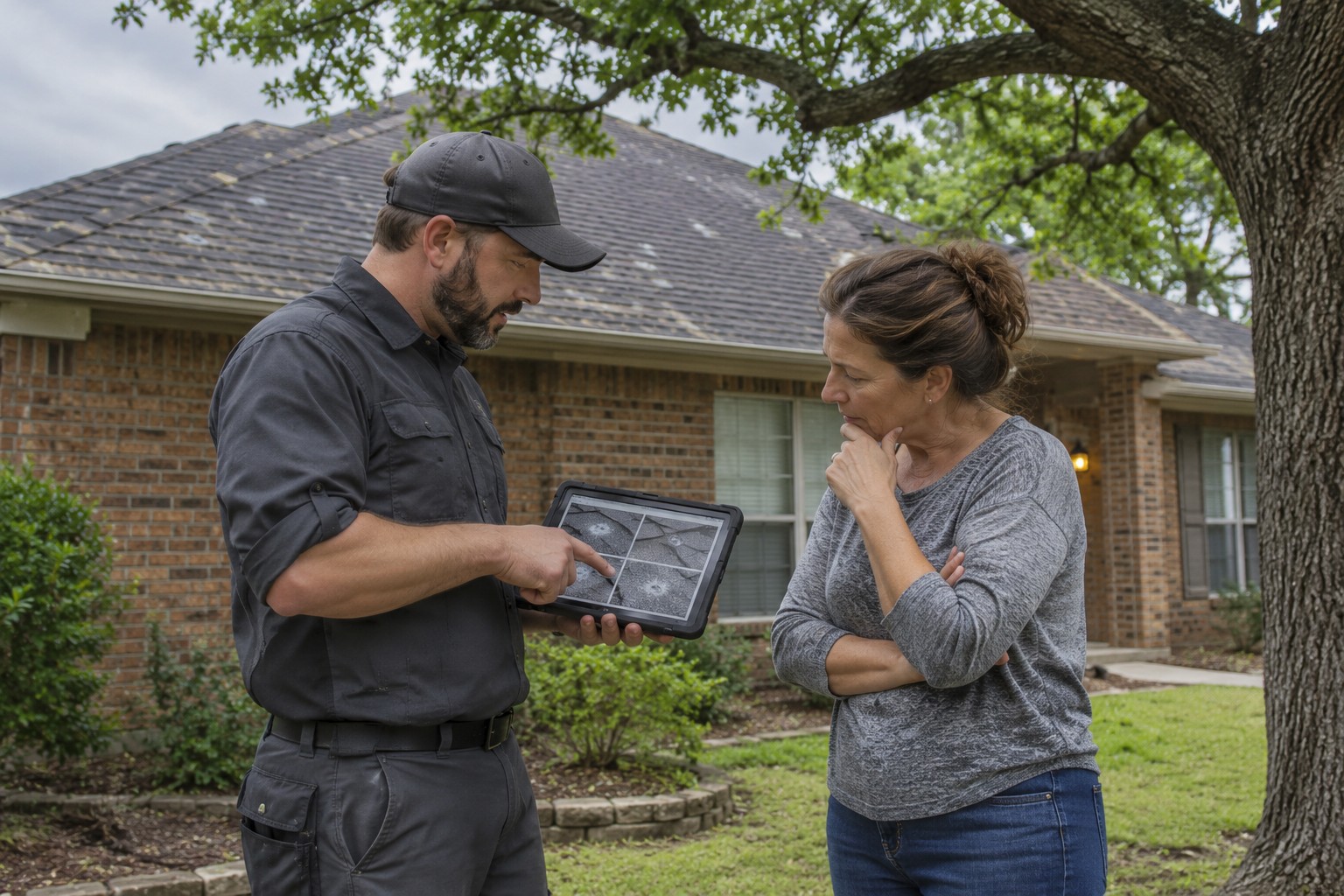
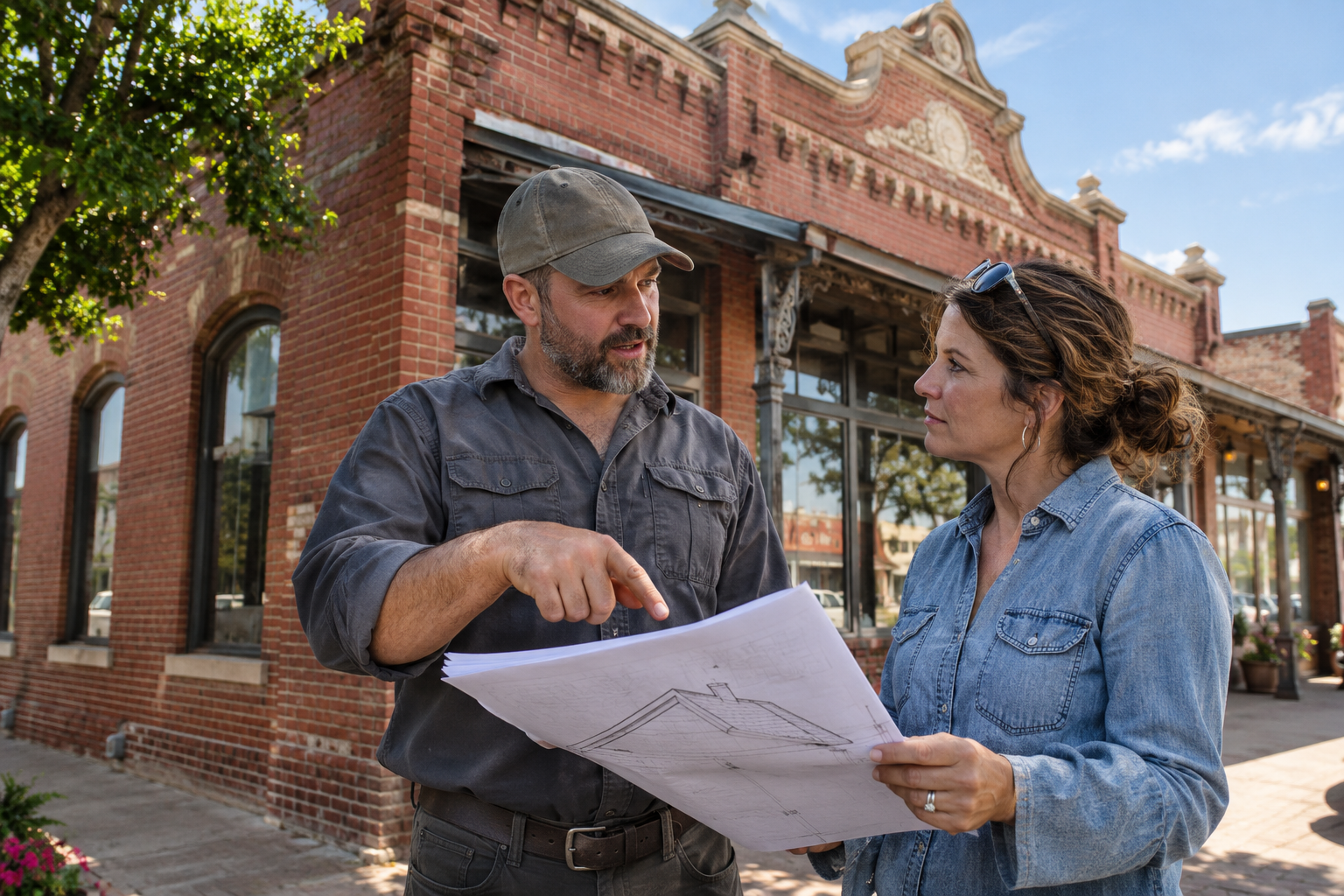
Your roofer can explain physical conditions, measurements, materials, and proposed work. Coverage interpretation and claim representation are separate responsibilities.
The TDI roofing and insurance law guidance explains Texas restrictions on contractors acting as public adjusters on claims where they will perform the work.
If additional conditions are discovered during authorized work, document them promptly. Showtime Exteriors’ roof claim supplement questions can help organize a review of revised construction items.
Documentation supports evaluation. It does not guarantee coverage or payment.
Arrange an Assessment of Your Tornado-Damaged Roof
A useful tornado-damaged roof record connects photographs, locations, dates, history, and emergency work while clearly identifying unresolved questions.
Based in Mansfield, Showtime Exteriors serves North Texas residential and commercial property owners with roofing assessments and documented proposals.
To arrange an evaluation, contact Showtime Exteriors or call 817-400-ROOF (7663).