
How to Choose a Roofing Contractor in Mansfield, TX
Learn how to choose a roofing contractor in Mansfield, TX. Compare insurance, experience, estimates, materials, warranties, and project supervision.

Choosing a roofing contractor is about more than finding someone who can install shingles. You need a company that can assess the roof, explain its recommendation, provide a clear scope, protect the property during work, and respond to questions after the project.
For Mansfield homeowners and business owners, the strongest comparison starts with information you can verify: insurance, relevant experience, inspection findings, written estimates, and warranty terms.
Choose a contractor who explains what your roof needs, shows you the evidence behind that recommendation, and puts the work and responsibilities in writing.
Whether you are dealing with a leak, planning a replacement, or assessing storm damage, the following steps will help you compare roofing companies with confidence.
1. Start With the Problem You Want Solved
Before requesting estimates, write down what you have observed and what you want the contractor to assess.
For a home, that may include a ceiling stain, missing shingles, or an aging roof. For a commercial building, it may involve recurring leaks, drainage concerns, or damage around rooftop equipment.
Share the same information with each contractor so their recommendations address the same problem.
Showtime Exteriors provides residential roofing services in Mansfield and the Dallas–Fort Worth area, including assessments, repairs, and replacement options.
Ask Whether Repair Is a Reasonable Option
A contractor should explain whether the observed condition can be addressed locally or whether a broader project deserves consideration.
Ask:
- What did you observe?
- Where is the problem located?
- What would a repair address?
- What limitations would remain?
- If you recommend replacement, which findings support it?
A useful answer connects the recommendation to your roof rather than relying only on its age.
2. Confirm the Company You Would Be Hiring
Identify the business that will appear on the proposal and contract.
Ask for its contact information and the name of the person responsible for managing your project. If subcontractors will perform work, ask how they will be supervised.
The Better Business Bureau’s roofing contractor guidance recommends checking business information and requesting detailed written proposals when comparing roofers. bbb.org
Useful questions include:
- Which company will sign the contract?
- Who will supervise the crew?
- Who should I contact during the project?
- Who handles questions after completion?
- Will any work be subcontracted?
Look at How the Company Responds
Reviews can provide context, but they should be read alongside other evidence.
Look for details about communication, changes in scope, cleanup, and follow-up. Consider how the company responds to concerns, then ask the contractor about anything you want clarified.
3. Verify Insurance Information
Ask for current insurance information and verify relevant details with the contractor’s insurance representative.
The National Roofing Contractors Association’s contractor selection guide recommends requesting liability and workers’ compensation certificates and checking whether coverage remains in effect during the project. National Roofing Contractors Association
Ask:
- Which business is named on the coverage?
- Is the information current for the scheduled work?
- How is subcontracted work handled?
- Who should be contacted if property damage occurs?
A certificate is a starting point. Ask the insurance representative to explain what can be verified for your project.
4. Request References for Similar Work
A contractor’s experience should be relevant to your roof, building, and proposed scope.
For example, replacing a steep residential shingle roof involves a different project from repairing a low-slope commercial membrane. Ask for references that help you understand the company’s experience with work like yours.
Showtime Exteriors’ project references provide a starting point for discussing relevant projects.
Questions to Ask a Reference
When speaking with a previous customer, ask:
- Was the proposal clear?
- Did the company communicate schedule changes?
- Were additional charges explained before work?
- Was the property protected?
- How was cleanup handled?
- How did the contractor respond to questions afterward?
Look for specific examples that show how the contractor managed the project.
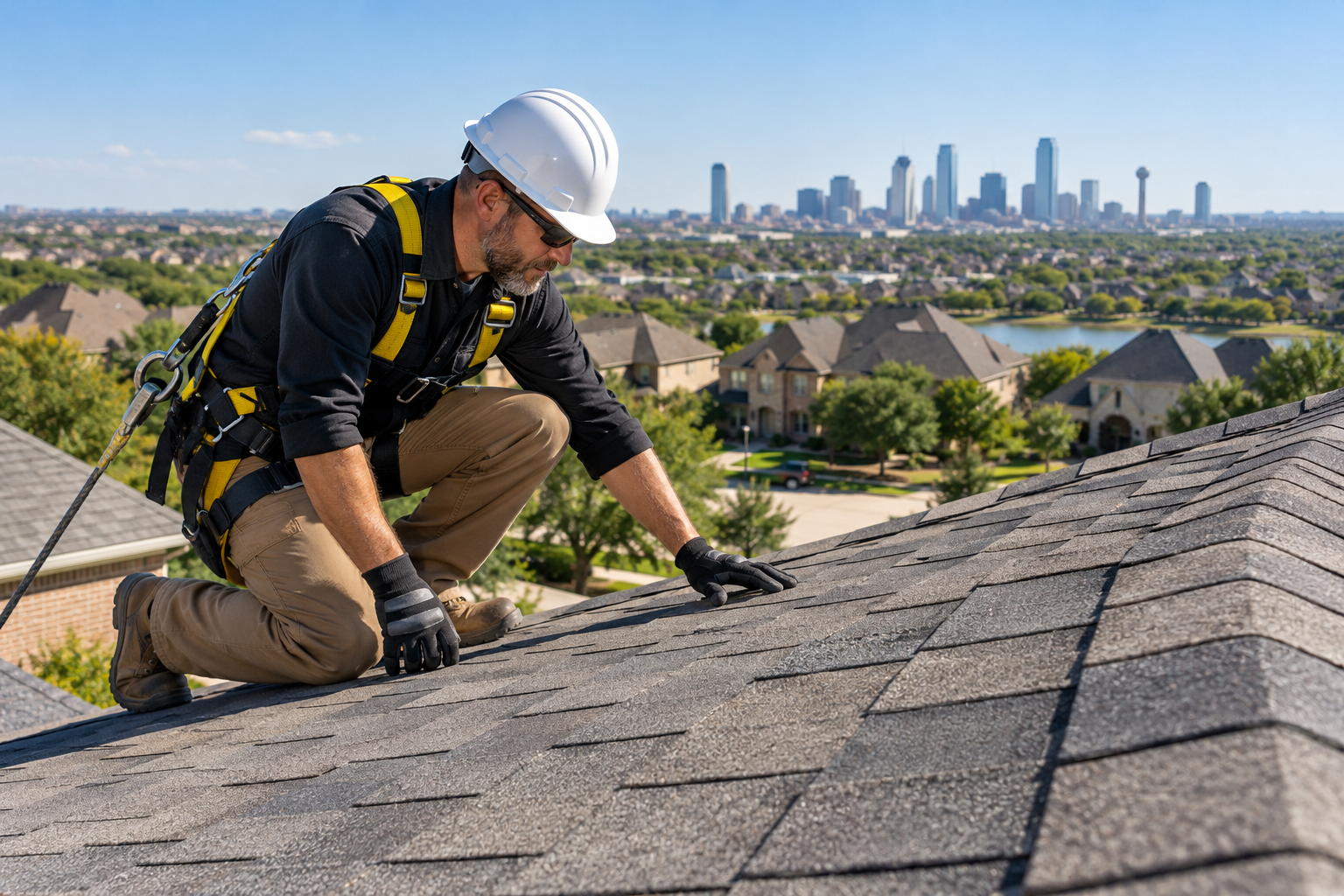
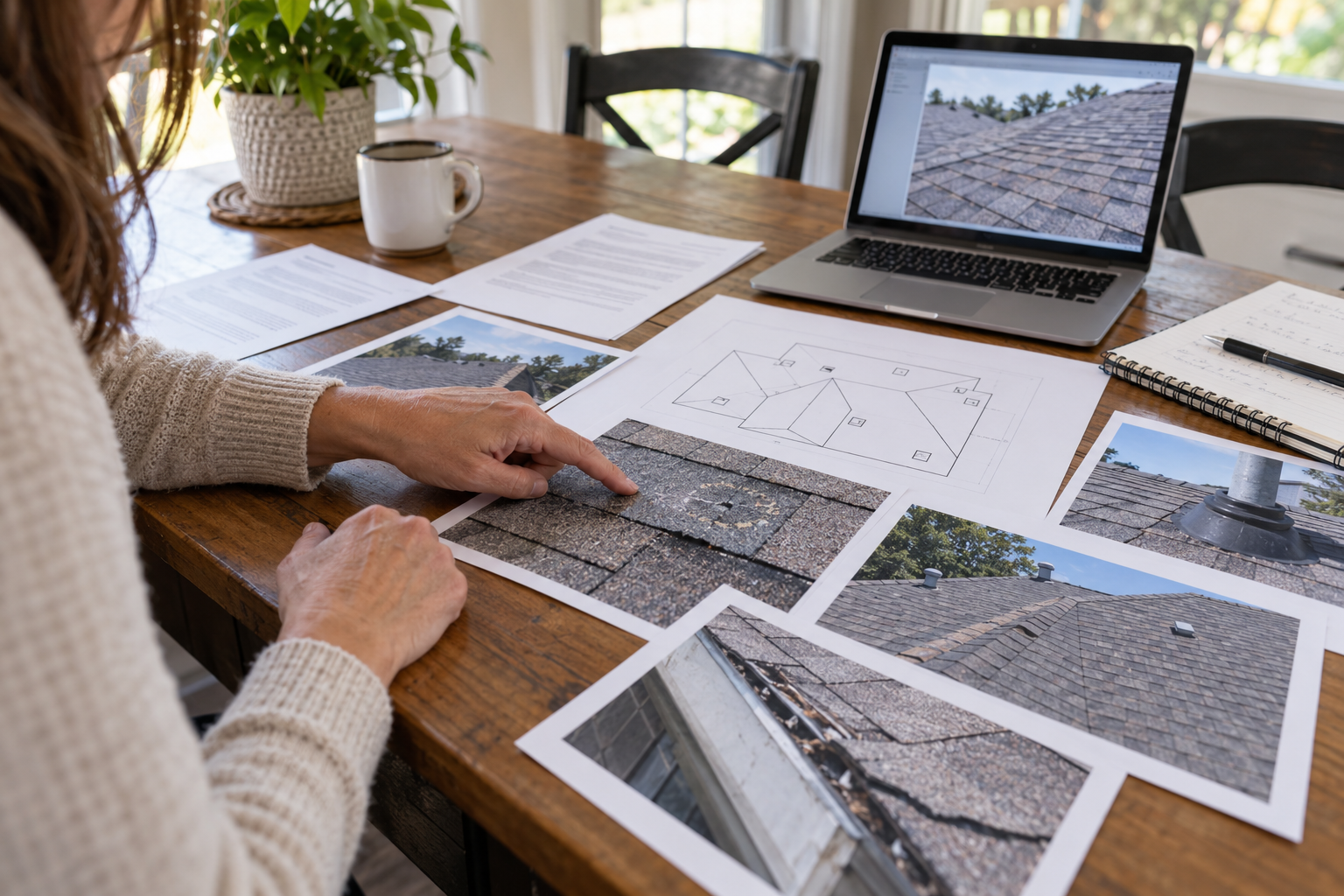
5. Ask for a Documented Roof Inspection
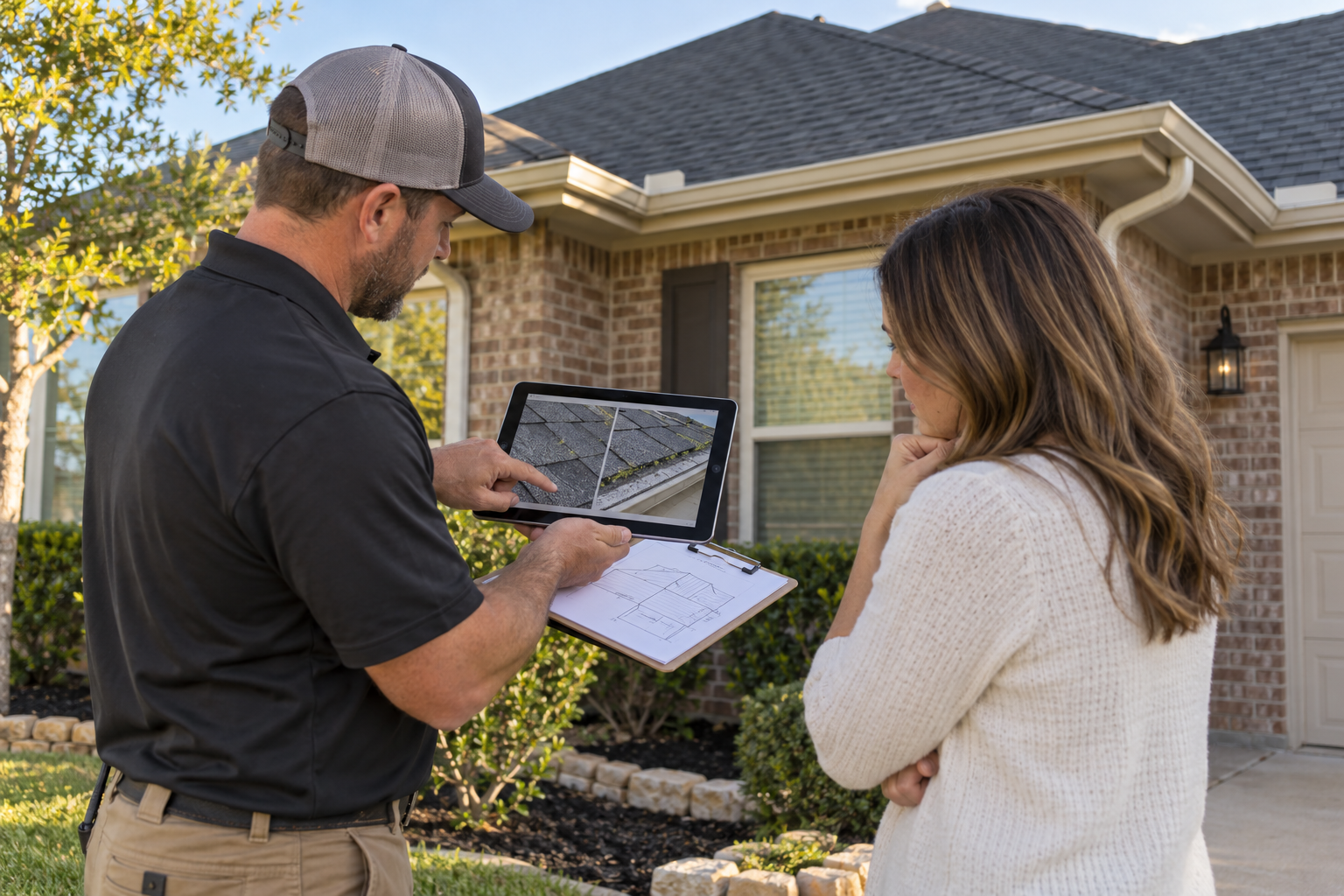
A useful inspection should make the condition of the roof easier to understand.
Request:
- Inspection date and scope.
- Roof areas assessed.
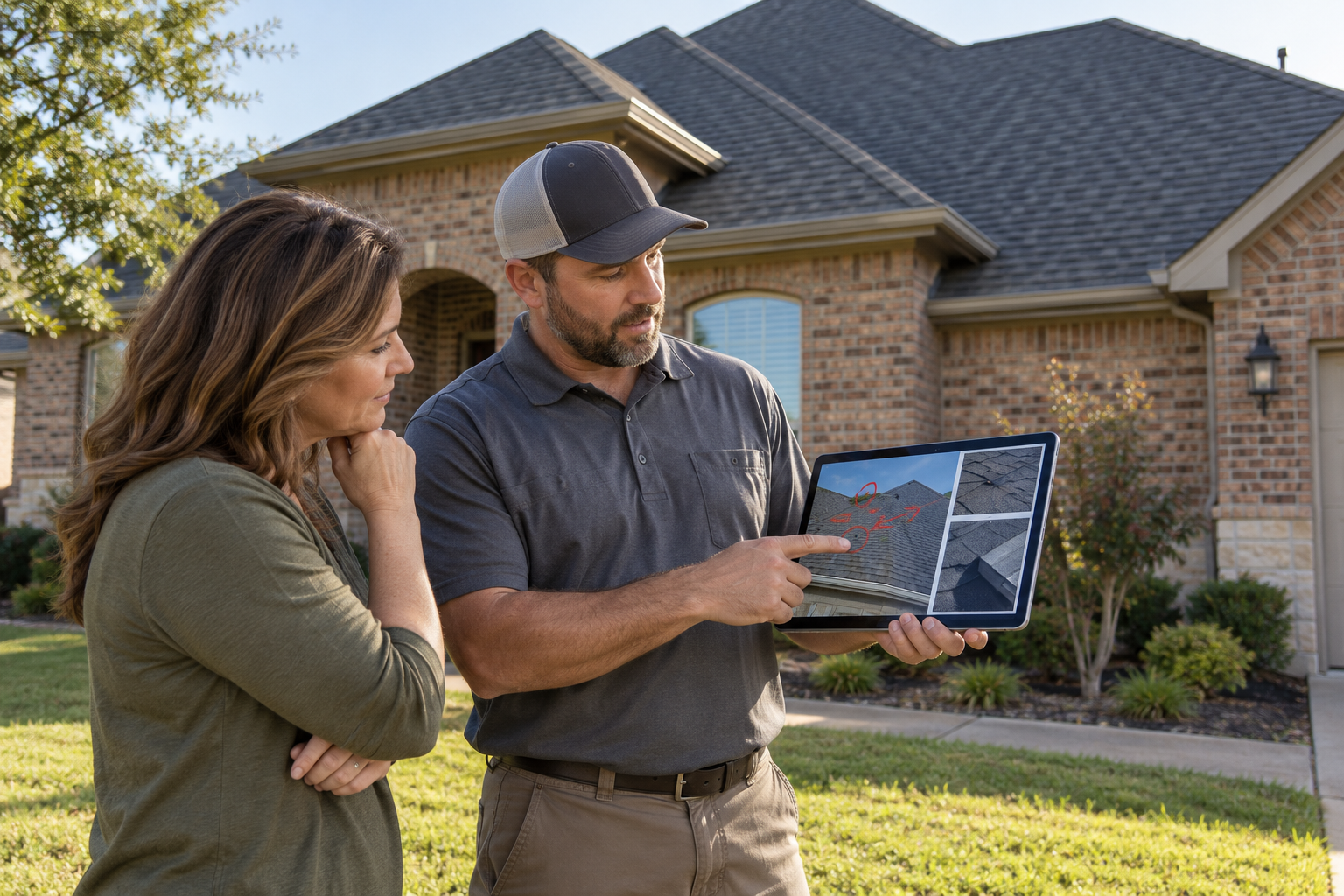
- Labeled photographs.
- Observed defects.
- Previous repair areas.
- Access limitations.
- Recommendations and their supporting reasons.
Showtime Exteriors’ roof inspection report guide explains how an organized report helps property owners evaluate next steps.
Separate Observations From Conclusions
A photograph may show a condition, while the inspector’s explanation addresses what it could mean.
Ask the contractor to distinguish what was directly observed from what remains uncertain. If a concealed condition is suspected, ask what further investigation would establish.
Make Sure the Report Refers to Your Property
Photographs should identify the roof section and nearby features. Ask the contractor to explain where each important image was taken and how it relates to the proposed work.
Keep copies of the report and original photographs with your property records.
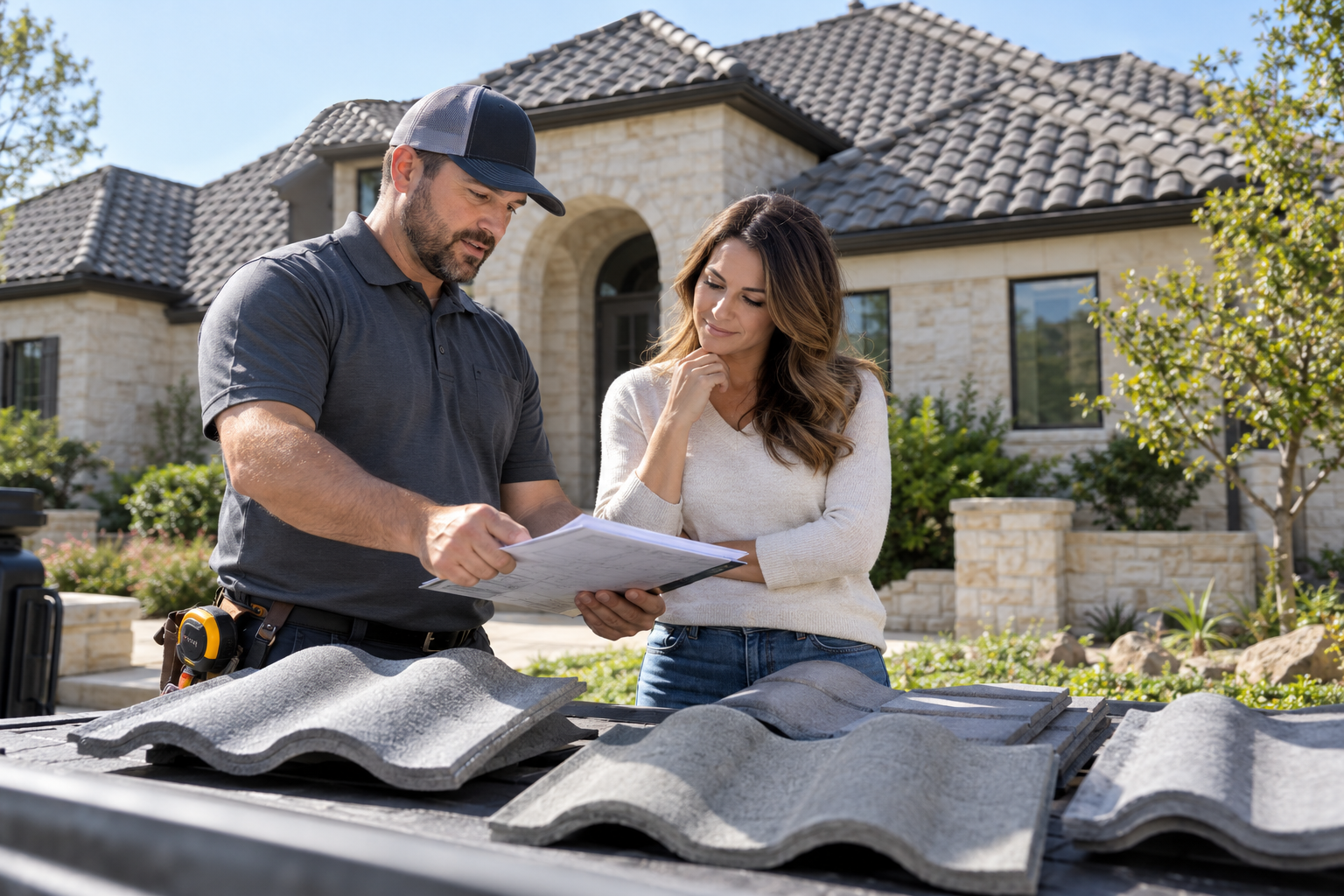
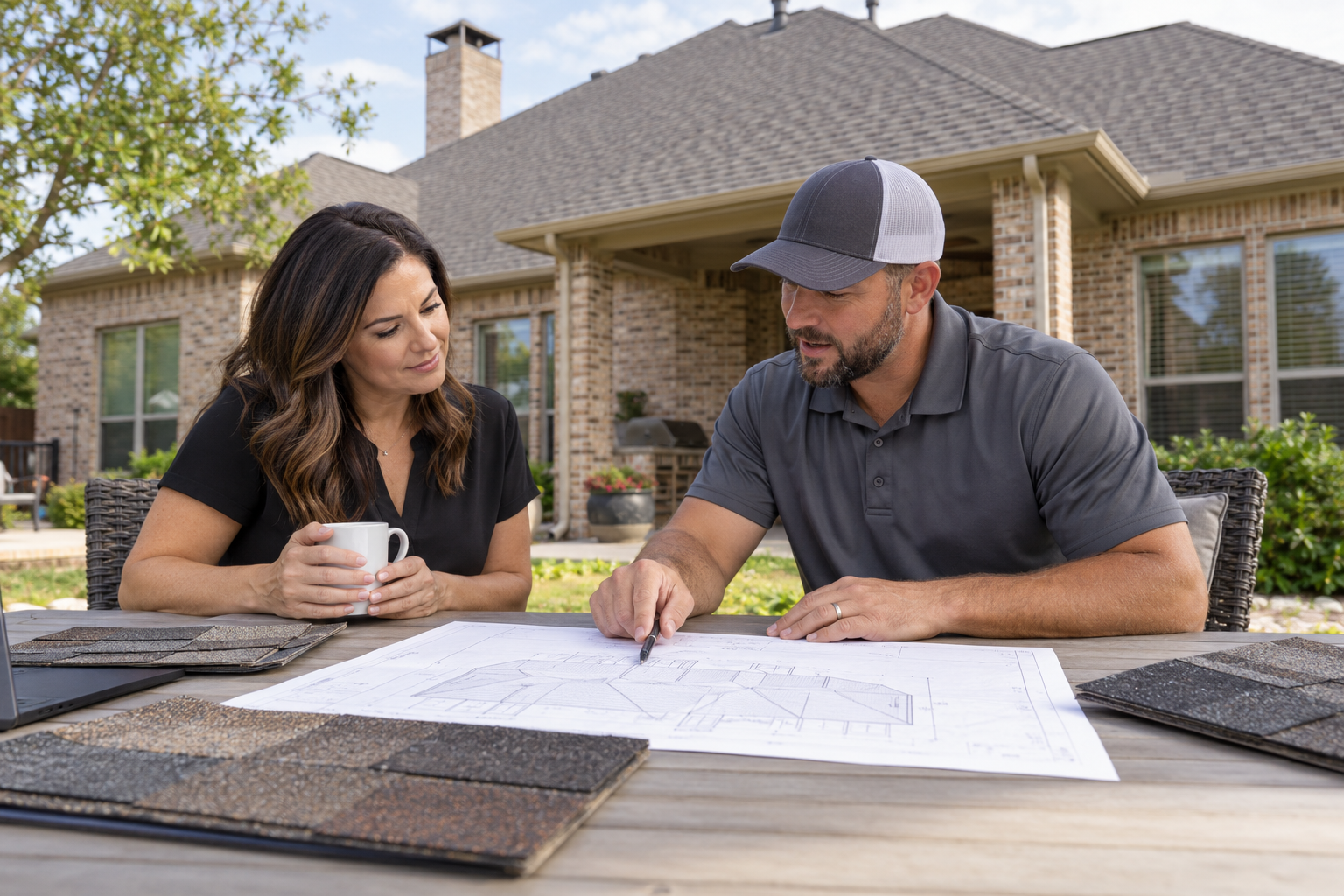
6. Compare Written Estimates—Not Just Totals
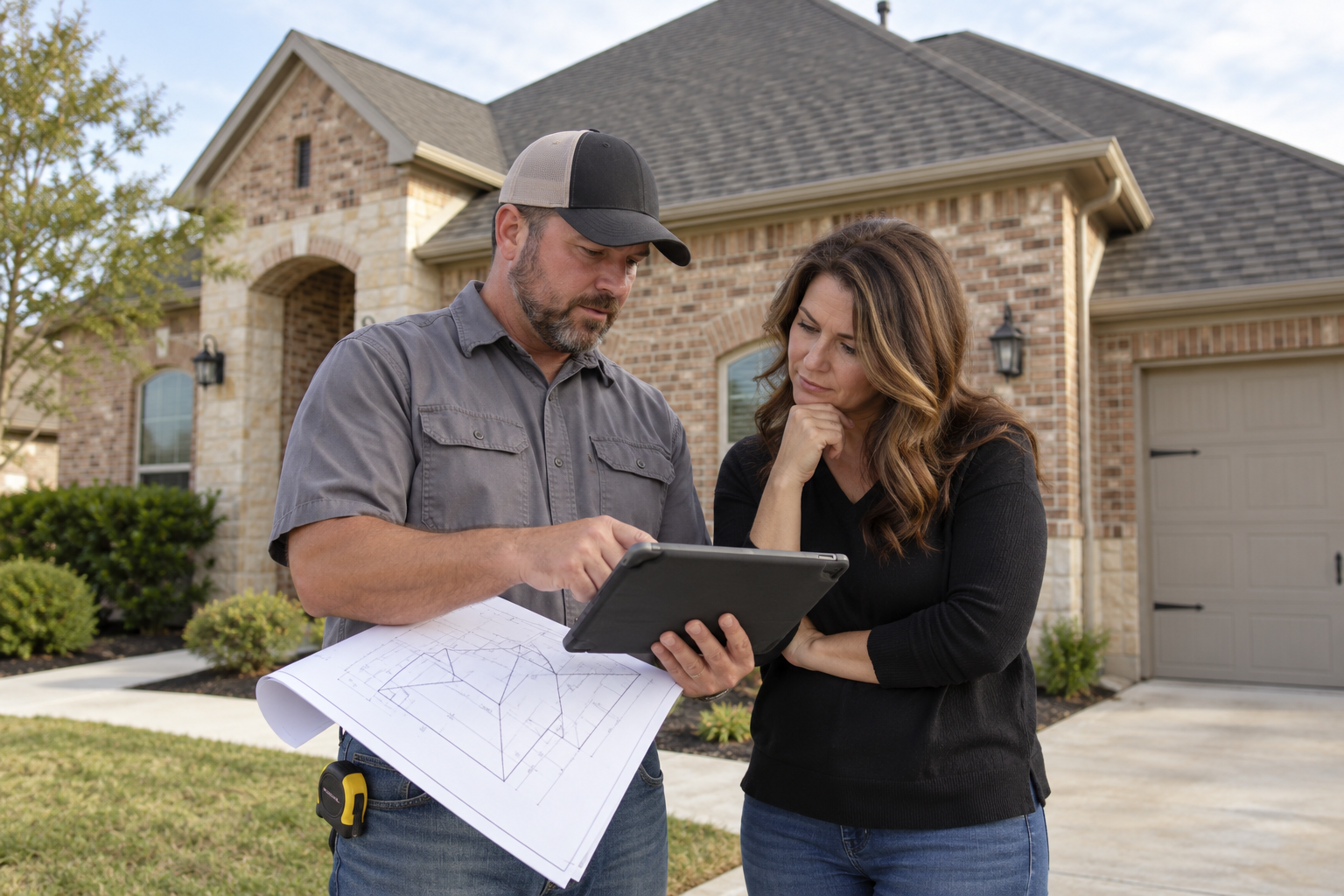
A roofing estimate should identify the work you are buying.
GAF’s checklist for choosing a roofer includes questions about insurance, materials, estimates, and project details. FINAL
For a residential replacement, compare the following items:
Estimate itemWhat to requestRoof measurementsIncluded sections and quantitiesRemovalExisting layers and disposalDeckingIncluded work and additional-repair procedureUnderlaymentProduct and coverageShinglesManufacturer, product line, and colorFlashingComponents replaced, repaired, or retainedVentilationExisting assessment and proposed workProperty protectionStaging, landscaping, and accessCleanupDebris handling and final reviewWarrantyProposed manufacturer and workmanship termsPaymentSchedule and change-order process
Why Two Estimates May Differ
A lower price may reflect a different product, less flashing work, a smaller measured area, or exclusions.
Ask each contractor to explain significant differences. If a verbal answer changes the scope, request an updated proposal.
7. Understand How Additional Work Will Be Approved
Some roof conditions remain concealed until existing materials are removed.
Before signing, ask how the contractor will handle unexpected decking or other underlying repairs.
The contract should explain:
- What is included in the base price.
- Any applicable unit prices.
- How findings will be documented.
- Who can authorize the work.
- How the final quantity will be recorded.
For example, if a decking price is quoted per sheet, ask what material, dimensions, labor, and disposal it includes.
An owner-held reserve can help with budgeting, but additional charges should follow the agreed approval process.
8. Choose Roofing Products With the Full System in Mind
The visible shingle is one component of a residential roofing system.
Discuss underlayment, starter strips, ridge components, flashing, and ventilation alongside the shingle selection.
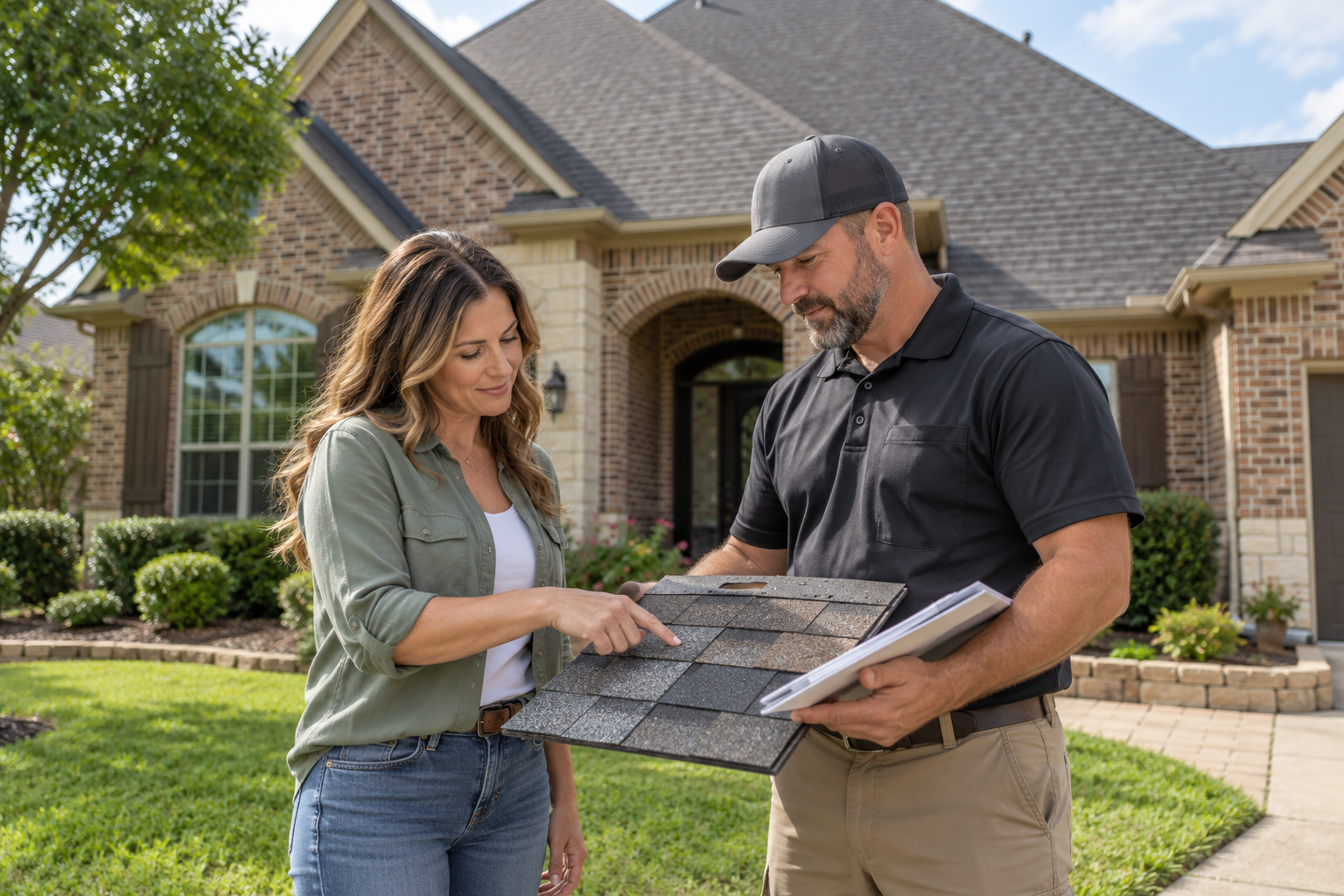
Showtime Exteriors’ guide to roof shingles for Texas homes provides a starting point for comparing products.
Ask for Exact Product Names
Descriptions such as “premium shingles” or “lifetime roof” do not define a product or its coverage.
Request the manufacturer, product line, color, and applicable installation requirements. If the proposal includes an optional upgrade, ask for its separate price.
Verify Performance and Insurance Claims
If impact ratings or potential insurance discounts are discussed, request the product documentation and confirm any discount with your insurer.
A product rating does not guarantee that a roof cannot be damaged.
9. Verify Manufacturer Credentials
Manufacturer designations can help owners understand a contractor’s participation in a program. Verify the current credential directly and ask what it means for your project.
For example, GAF lists Showtime Exteriors as a GoldElite™ Commercial Contractor. That is a commercial designation; ask separately which residential credentials and warranties apply to a home project. GAF Commercial Roofers
Questions to ask include:
- What designation does the company currently hold?
- Does it apply to this type of roof?
- Which products must be installed?
- What warranty can be offered for this project?
- How will warranty registration be documented?
A badge should lead to a specific discussion of the proposed work.
10. Read the Warranty Documents
Request the proposed manufacturer and contractor workmanship warranty terms before signing.
GAF’s residential warranty comparison illustrates how warranty options differ in qualification requirements and coverage. www.gaf.com
Ask:
- Who issues each warranty?
- What materials or workmanship are covered?
- What exclusions apply?
- Is registration required?
- What maintenance is expected?
- How do I request service?
- Can coverage be transferred?
A long warranty term is only one part of the agreement. Review the actual document and keep the issued copy after the project.
11. Discuss Who Will Supervise the Work
Ask who will be responsible for the job once installation begins.
A practical communication plan should cover:
- Material delivery.
- Start date.
- Weather changes.
- Daily access.
- Unexpected findings.
- Approval of changes.
- Completion review.
The Insurance Institute for Business & Home Safety’s contractor selection guidance includes questions homeowners can use when comparing roofing professionals. A Program of IBHS
You should know whom to contact during construction and how important decisions will be documented.
12. Agree on Property Protection and Cleanup
Before work begins, walk through the property with the contractor or project manager.
Identify concerns such as:
- Landscaping and irrigation.
- Outdoor furniture.
- Pets.
- Driveway access.
- Shared property lines.
- Material staging.
- Areas where debris must be controlled.
Ask how the crew will leave the site at the end of each day and what the final cleanup includes.
If a specific area needs special protection, identify it in writing before mobilization.
13. Keep Construction and Insurance Decisions Separate
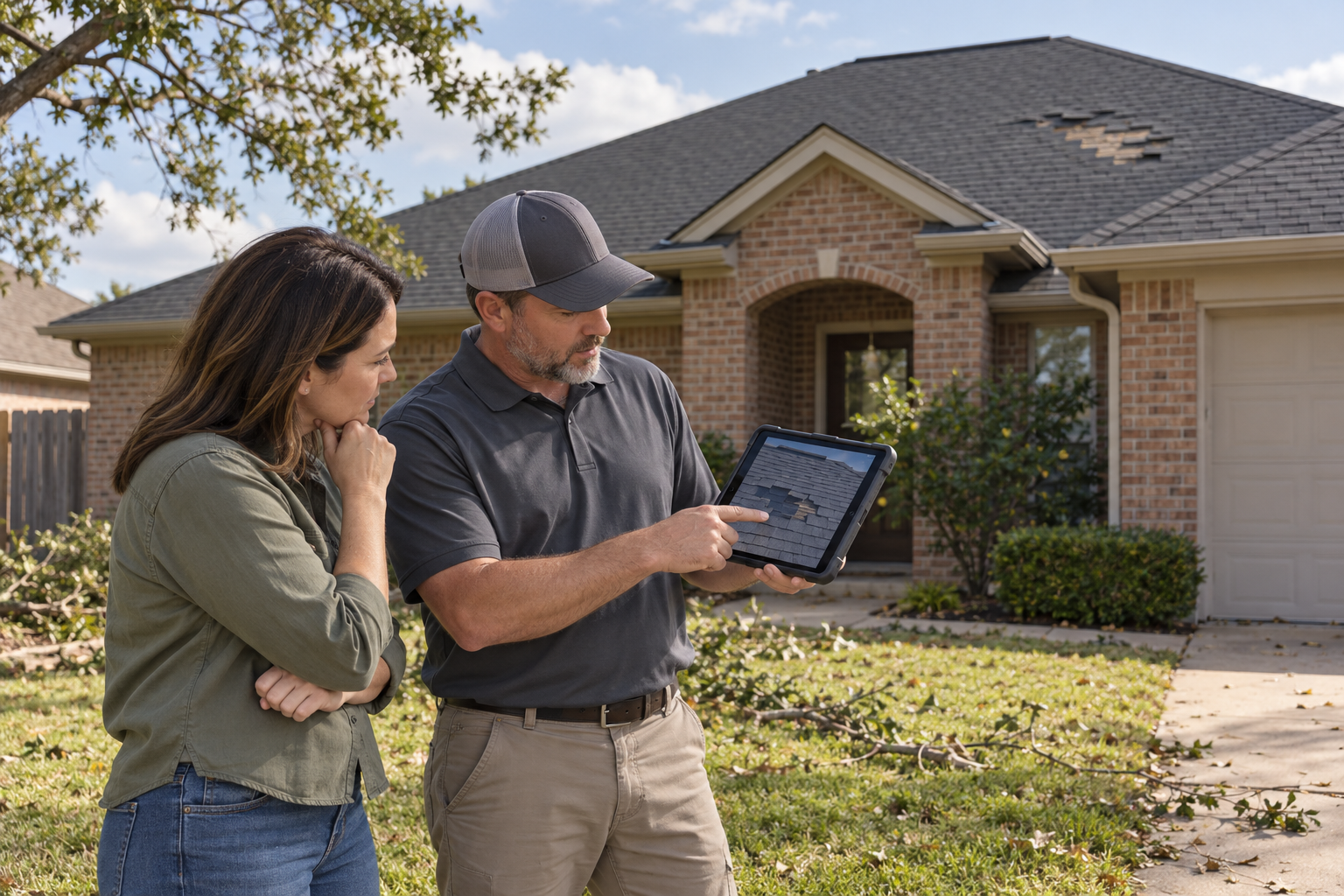
If the project follows a storm, a contractor can document conditions, measure the roof, and prepare a construction estimate.
The insurer evaluates coverage under the policy. A contractor should not promise that a claim will be approved or that the owner will owe a particular amount without the relevant information.
Before signing, clarify:
- The total contract price.
- Your payment obligations.
- How upgrades are priced.
- What happens if an insurer does not approve a requested item.
- How changes are authorized.
An insurance estimate is not a substitute for a construction contract.
14. Use a Separate Scope for Commercial Roofing
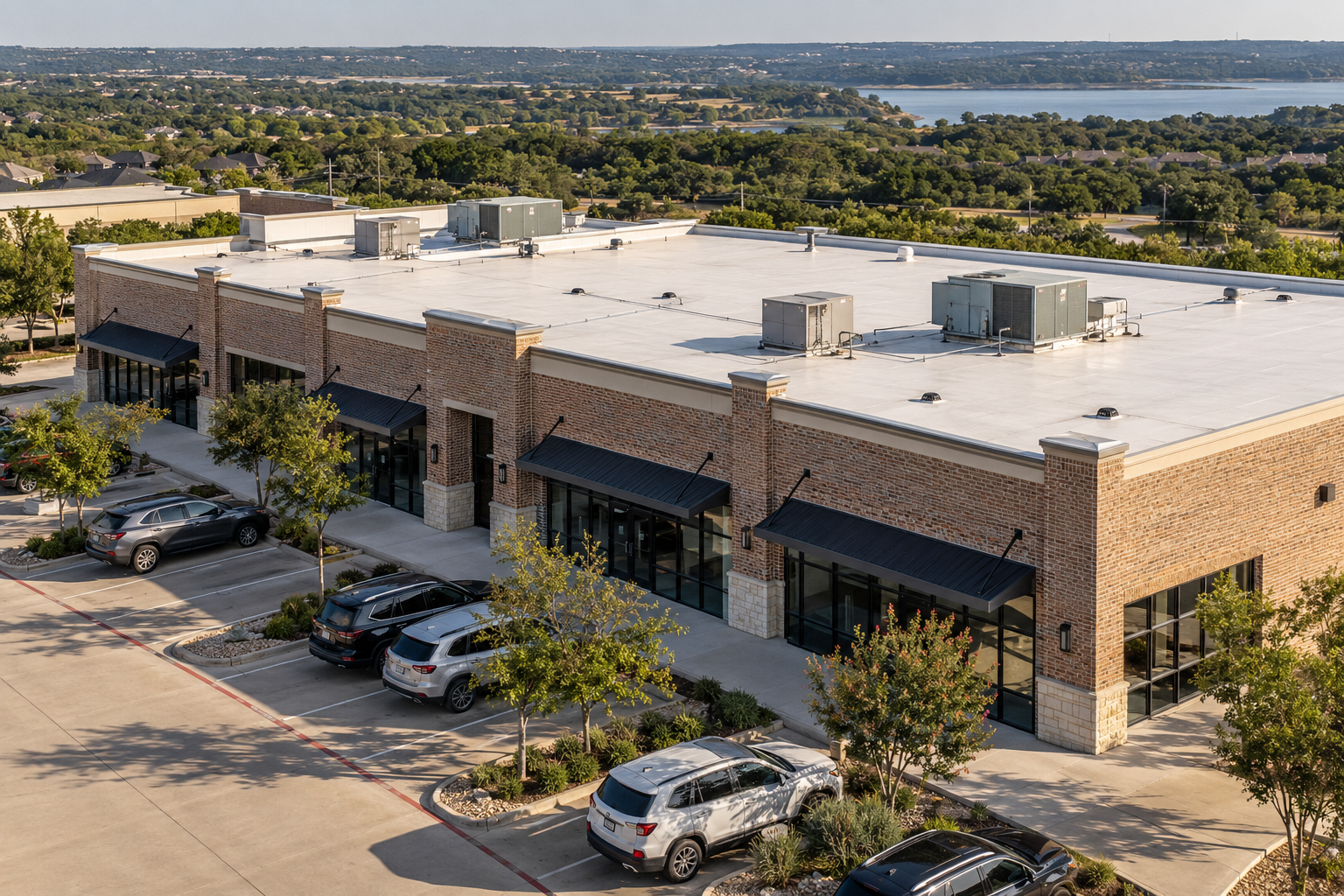
A Mansfield commercial building may have a low-slope membrane, metal roof, coating system, or multiple assemblies.
The contractor should evaluate the system and building operations relevant to that property.
Showtime Exteriors provides commercial roofing services for owners who need assessment, repair, restoration, or replacement planning.
For a commercial proposal, ask about:
- Moisture investigation and its limitations.
- Existing roof layers.
- Drainage.
- Insulation and attachment.
- Rooftop equipment.
- Tenant access.
- Manufacturer requirements.
- Maintenance and closeout records.
A residential shingle proposal format is not a complete commercial roofing scope.
Questions to Ask Before You Sign
Use the same questions with every contractor:
- What did your inspection establish?
- What remains uncertain?
- Why do you recommend this scope?
- Which exact products are included?
- What work is excluded?
- How are concealed repairs priced and approved?
- Who supervises the project?
- How will the property be protected?
- What warranty documents will I receive?
- What happens if I have a question after completion?
A good proposal should make the answers easy to locate.
Frequently Asked Questions
Should I choose the lowest roofing estimate?
Compare the scopes first. The lowest total may use different products or exclude work included in another proposal.
How many estimates should I obtain?
Obtain enough detailed proposals to understand the available options and meaningful differences. Comparable information is more useful than several unexplained totals.
Does a manufacturer certification guarantee a perfect installation?
No. Verify the designation, review the scope, and understand the applicable warranty terms.
Should the contractor provide photographs?
Ask for photographs that identify relevant conditions and their locations. A written explanation helps connect those images to the recommendation.
Can a contractor recommend repair instead of replacement?
Yes. The appropriate option depends on the roof’s documented condition and the feasibility of repair.
What should I receive after the project?
Request the final invoice, approved changes, completion photographs, product information, warranty documents, and maintenance instructions.
Talk With Showtime Exteriors About Your Mansfield Roof
The right roofing decision starts with a clear assessment and a proposal you can understand.
Showtime Exteriors is based in Mansfield and serves the Dallas–Fort Worth area. Ask about your roof’s condition, the available repair or replacement options, and the documentation included with your project.
Contact Showtime Exteriors to request a roof assessment or property-specific proposal.
Call 817-400-ROOF (7663).