



What to Do When Your Commercial Roof Causes an Insurance Non-Renewal
What to Do When Your Commercial Roof Causes an Insurance Non-Renewal
Commercial property owners searching for commercial roof insurance non-renewal what to do are usually working against a deadline. A carrier may have requested an inspection, limited coverage, increased the deductible, required repairs, or issued a non-renewal notice. The roof may still be performing in some areas, yet its age, gravel surfacing, leak history, or incomplete records can create uncertainty for underwriting.
This guide explains how owners who need a calm, deadline-driven response to a carrier notice can move from uncertainty to a prioritized corrective-action plan shared with the broker. It focuses on built-up roofing (BUR), gravel-surfaced low-slope assemblies, documentation, inspection strategy, and practical repair-versus-replacement decisions. It is educational, not legal, engineering, or insurance advice. Coverage decisions remain with the insurer, and policy questions should be directed to a licensed insurance professional.
The specific problem this guide solves
This guide is written for owners who need a calm, deadline-driven response to a carrier notice. The search phrase “commercial roof insurance non-renewal what to do” usually appears when a property owner has moved beyond general roof research and needs a decision. A notice may already be in hand, a broker may be requesting documentation, or a risk-control inspection may be scheduled. The goal is a prioritized corrective-action plan shared with the broker.
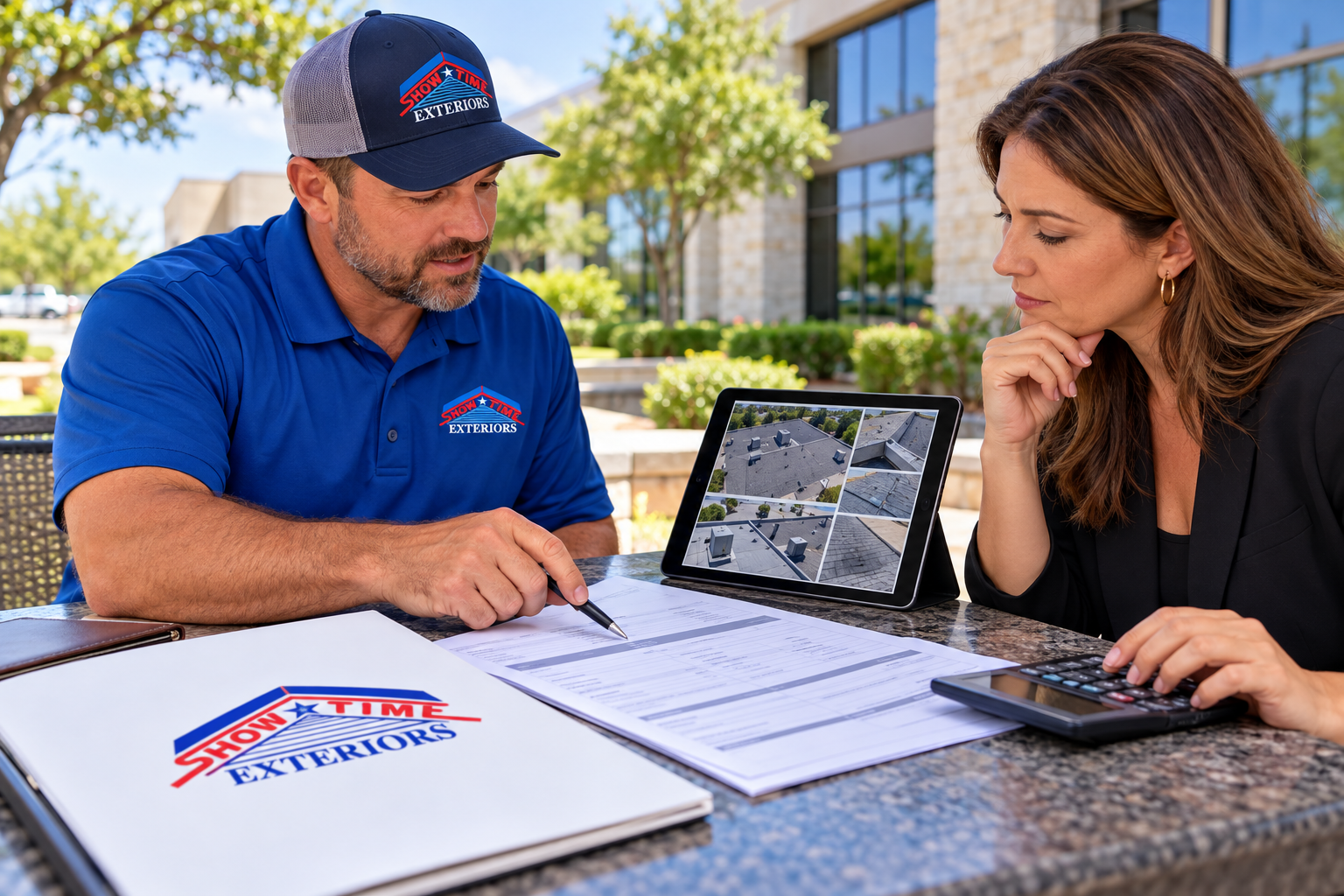
Treat the insurance issue and the roofing issue as connected but separate workstreams. The insurance professional clarifies policy, market, submission, and carrier requirements. The roofing professional evaluates physical conditions and feasible corrective work. Ownership controls budget, disclosure, schedule, and risk tolerance. Progress is fastest when each party has a defined role and everyone works from the same dated documents.
The first deliverable should be a one-page issue summary: building address, occupancy, approximate roof areas, known systems, known ages, renewal deadline, carrier wording, leak history, open claims, prior repairs, planned capital work, and decision owner. Attach source documents rather than rewriting them from memory.
How to interpret the carrier’s wording
Read the carrier communication literally. “Provide an inspection” is not the same as “replace the roof.” “Evidence of repairs” is not the same as a broad roof certification. “Remaining useful life” may require a reasoned estimate with limitations, while “proof of replacement” normally calls for contracts, invoices, permits, photographs, or warranty records. Ask the broker to clarify ambiguous language in writing.
Pay attention to dates and conditions. A recommendation may become a requirement only if the carrier states that coverage depends on completion. A non-renewal notice may have regulatory timing and appeal considerations that a licensed professional should explain. The roofing contractor’s report should not paraphrase legal or policy language as though it were a coverage opinion.
For commercial roof insurance non-renewal what to do, owners gain leverage from precision. Build a response table with the carrier’s exact request in the first column, the responsible party in the second, the evidence in the third, and the submission date in the fourth. This prevents a technically good repair from being delayed or overlooked because the administrative response was incomplete.
Condition indicators that deserve attention
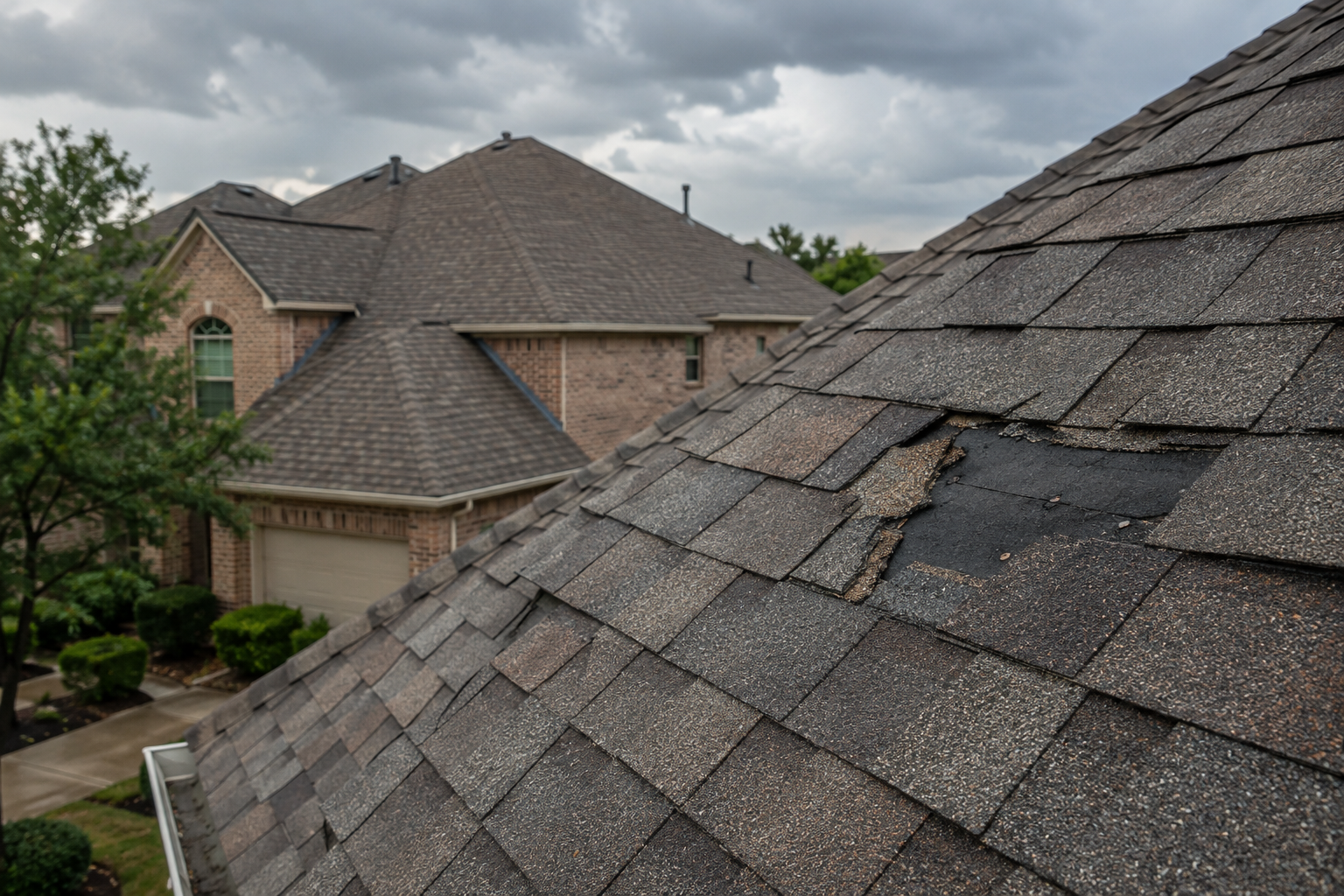
Common indicators include displaced aggregate, exposed asphalt, blisters, ridges, splits, open laps, deteriorated flashings, failed pitch pans, punctures, poorly supported lines, abandoned equipment, unsecured materials, blocked drains, ponding, vegetation, soft areas, recurring patch clusters, stained decking, and interior water evidence. None should be judged in isolation.
Location and pattern matter. One isolated puncture after mechanical work differs from widespread splitting associated with movement. A drain clogged by debris differs from chronic ponding caused by slope or structural deflection. A dry historic stain differs from active moisture after current rainfall. The report should connect observations to locations and explain the basis for recommended action.
On gravel BUR, moving aggregate may be necessary in selected areas to inspect the flood coat and membrane, but indiscriminate disturbance can create damage and add labor. The scope should state where surfacing will be moved, how it will be restored, and how test areas will be made watertight.
A decision framework owners can use
Evaluate options against six criteria: current water entry, wet area, substrate and deck condition, detail reliability, expected service horizon, and deadline. Then add operational impact, cost, warranty, energy goals, code, and the carrier’s documented request. A matrix makes tradeoffs visible and prevents a single factor from controlling the decision.
For owners who need a calm, deadline-driven response to a carrier notice, the lowest initial price may not be the lowest-risk choice. Repeated mobilization, interior disruption, emergency service, wet insulation, lost tenant confidence, and uncertainty at each renewal all have costs. Conversely, immediate full replacement may be unnecessary when defects are limited and testing supports a focused repair or restoration plan.
Record why the chosen approach fits the evidence. If replacement is deferred, define inspection frequency, trigger points, repair budget, and a target capital year. If replacement proceeds, document how the new scope addresses drainage, attachment, flashings, penetrations, moisture removal, and closeout requirements.
Frequently asked questions
Can a roofer guarantee that insurance will be renewed? No. A roofer can report conditions and complete work. The carrier determines eligibility, terms, premium, exclusions, limits, and deductibles.
Should an aging gravel BUR be evaluated for replacement? Yes. When a gravel roof is creating insurance, inspection, recurring leak, or maintenance concerns, a qualified contractor should evaluate full replacement and compare modern system options for the building.
Can a visual inspection prove that insulation is dry? A visual inspection alone generally cannot establish the condition of concealed materials across an entire roof. Testing may reduce uncertainty, but every method has limitations.
Should gravel simply be removed and the old roof left in place? No. Gravel removal should be part of a designed replacement scope that evaluates concealed moisture, insulation, decking, drainage, attachment, flashings, and code requirements.
Will coating an aging gravel BUR solve the underlying insurance concern? Usually not. A coating should not be used to cover uncertain moisture, unstable surfacing, concealed membrane defects, or a roof that has reached replacement condition.
What is the fastest useful action for commercial roof insurance non-renewal what to do? Obtain the carrier’s exact request, confirm the deadline, organize records, and schedule a qualified condition assessment.
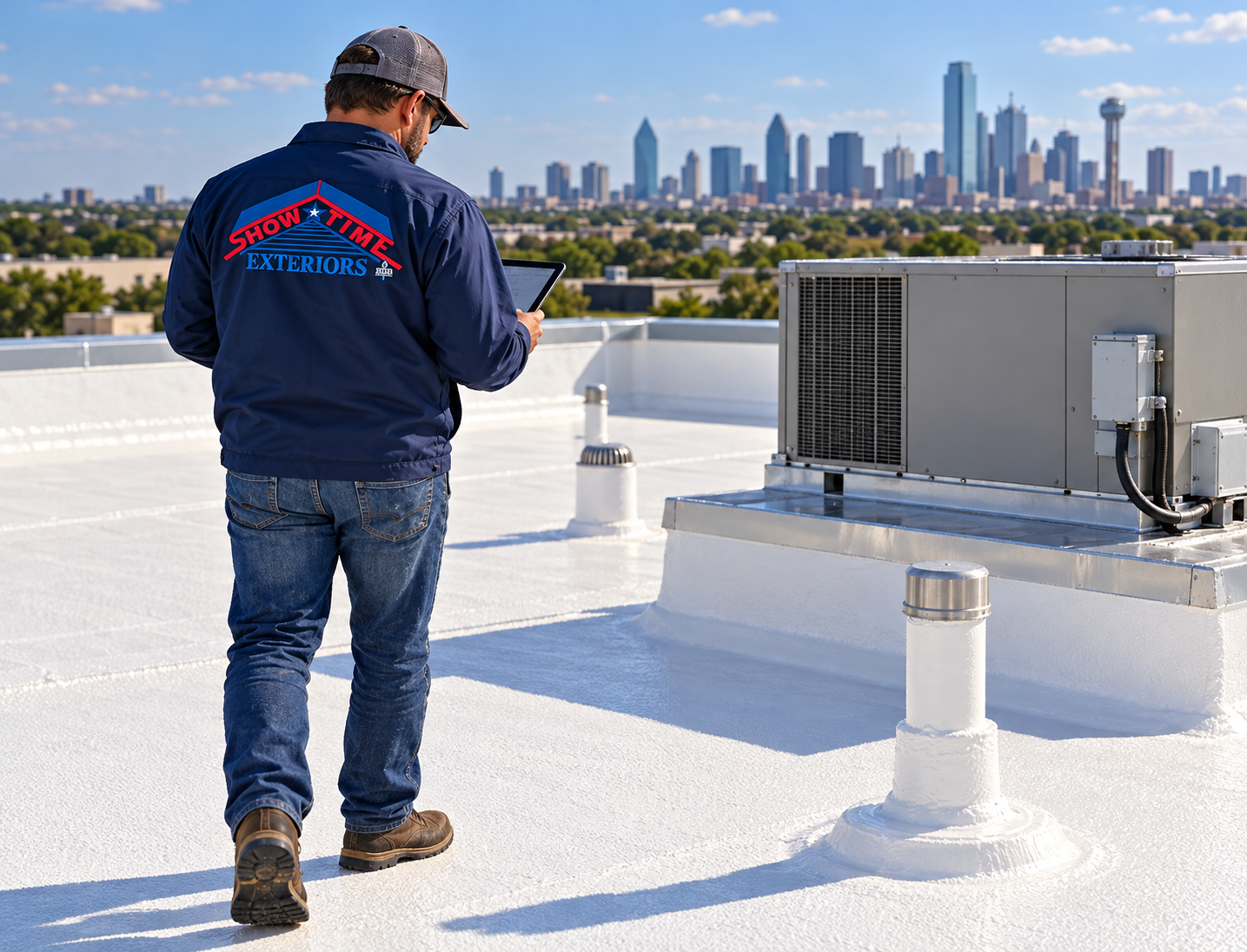
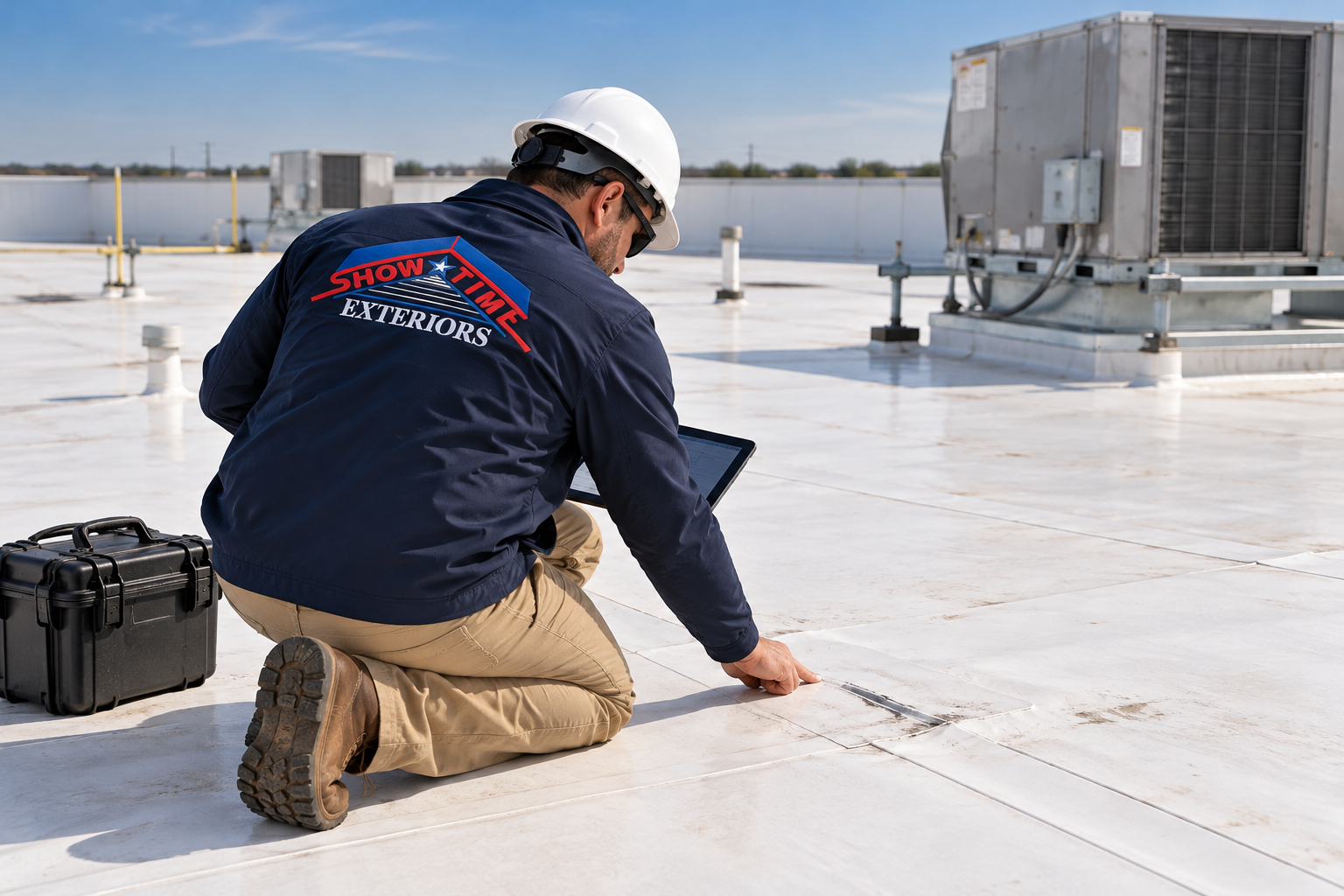
Image: Commercial low-slope roofing system. Source: Showtime Exteriors website.
Why this issue is appearing more often
Commercial property insurers continually reassess how building components affect probable loss. A roof is especially important because it is both the first weather barrier and a pathway through which one event can damage insulation, interiors, equipment, inventory, and business operations. Older low-slope assemblies can therefore receive close attention even when the building has not experienced a recent claim.
That attention reflects the elevated uncertainty surrounding aging gravel-surfaced systems. When the membrane is concealed, the installation date is unclear, or the loss history includes water intrusion, an underwriter may request stronger evidence, corrective work, or replacement. The practical response is a current assessment and a documented transition plan rather than another cycle of unsupported assumptions.
Carrier guidelines vary by insurer, policy form, location, occupancy, construction, loss history, deductibles, and market conditions. A contractor cannot promise coverage or interpret policy language on behalf of an insurer. The owner, licensed insurance professional, and carrier must make those determinations. A qualified roofing contractor can, however, document observable conditions, investigate suspected moisture, explain feasible scopes, perform authorized work, and provide completion records.
Why aging gravel-surfaced BUR roofs create risk and uncertainty
Aging gravel-surfaced built-up roofs create a combination of inspection, maintenance, and underwriting challenges. The aggregate conceals the membrane, makes hidden moisture and failed repairs harder to verify, can migrate toward drainage areas, and increases labor when the roof must be investigated or removed. These conditions can leave property owners with recurring uncertainty even when the roof is not visibly leaking on the day of inspection.
Gravel surfacing makes a rapid visual review difficult because the membrane cannot be seen consistently across the roof. Aggregate can move, pile near drains, thin out in traffic lanes, and conceal splits, blisters, open laps, wet insulation, and earlier patches. This limited visibility is one reason aging gravel BUR roofs can become problematic during insurance reviews and long-term capital planning.
An inspection should identify the assembly only to the extent supported by records and field observations. The number of plies, deck type, insulation configuration, attachment, and presence of recover layers may require core cuts or other testing. Assumptions should be labeled as assumptions. This distinction matters when owners use the report for capital planning or provide it to an insurance professional.
What an insurer may be trying to understand
An underwriting request often reduces to several practical questions: What system is installed? How old is it? Is it actively leaking? Has moisture entered the assembly? Are drainage and flashings functional? Are repairs temporary or durable? Is the roof maintained? How susceptible is the building to wind, hail, fire, or water damage? What work is planned, and when will it be finished?
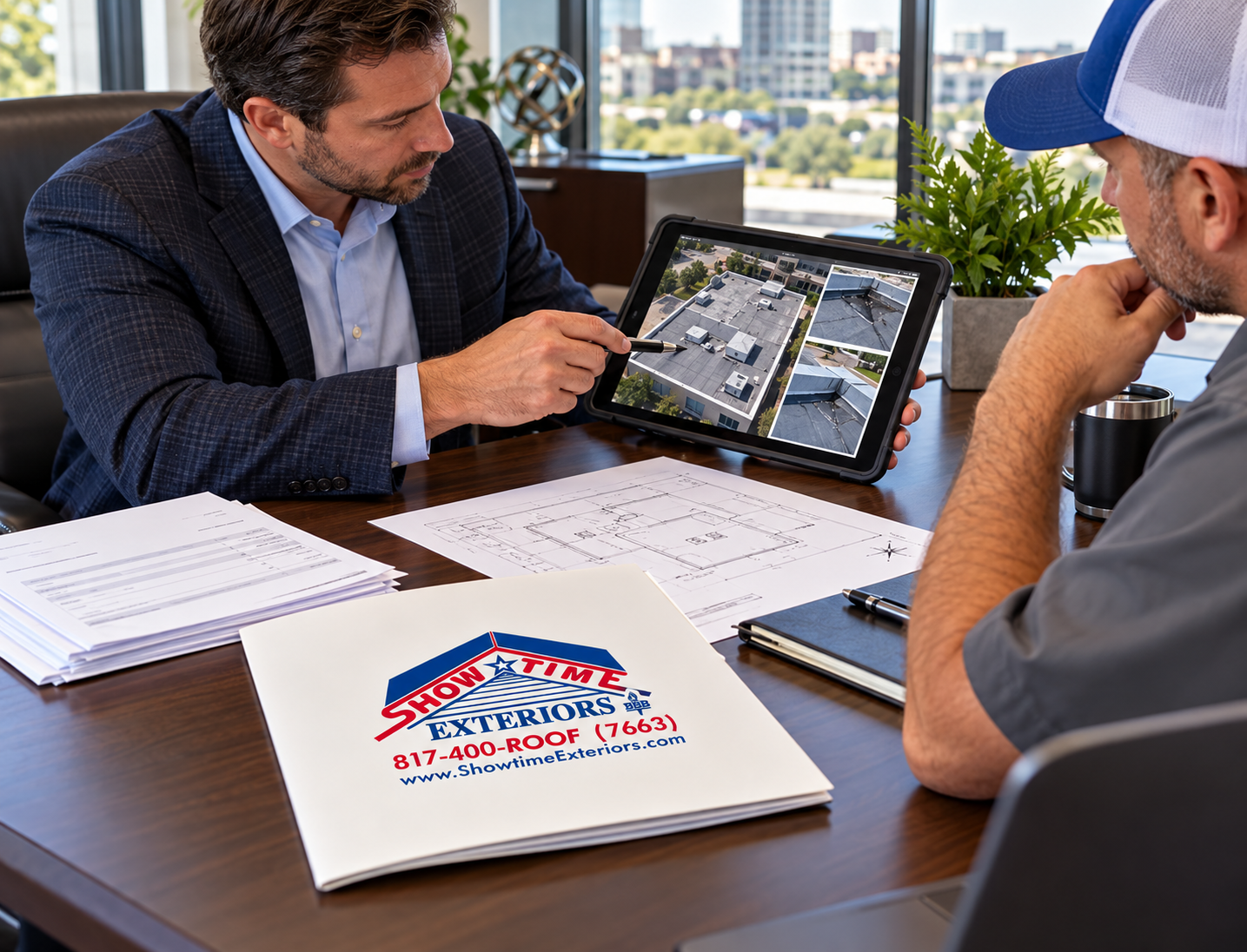
The carrier may also consider factors outside the roofer’s scope, including occupancy, fire protection, electrical systems, construction type, catastrophe modeling, local weather, total insured value, and portfolio concentration. Roof work can improve a material building condition without guaranteeing a particular underwriting outcome. Owners should ask their broker to obtain the carrier’s request in writing and clarify deadlines, acceptable report credentials, required photographs, and whether a repair invoice, certification, warranty, or replacement contract is expected.
Avoid answering technical questions from memory if records are available. A confident but inaccurate installation year or roof type can create contradictions later. State what is known, identify the source, and mark unknown items for verification. A short accurate answer supported by an invoice or report is more useful than a long unsupported narrative.
The inspection should go beyond a quick walk-through
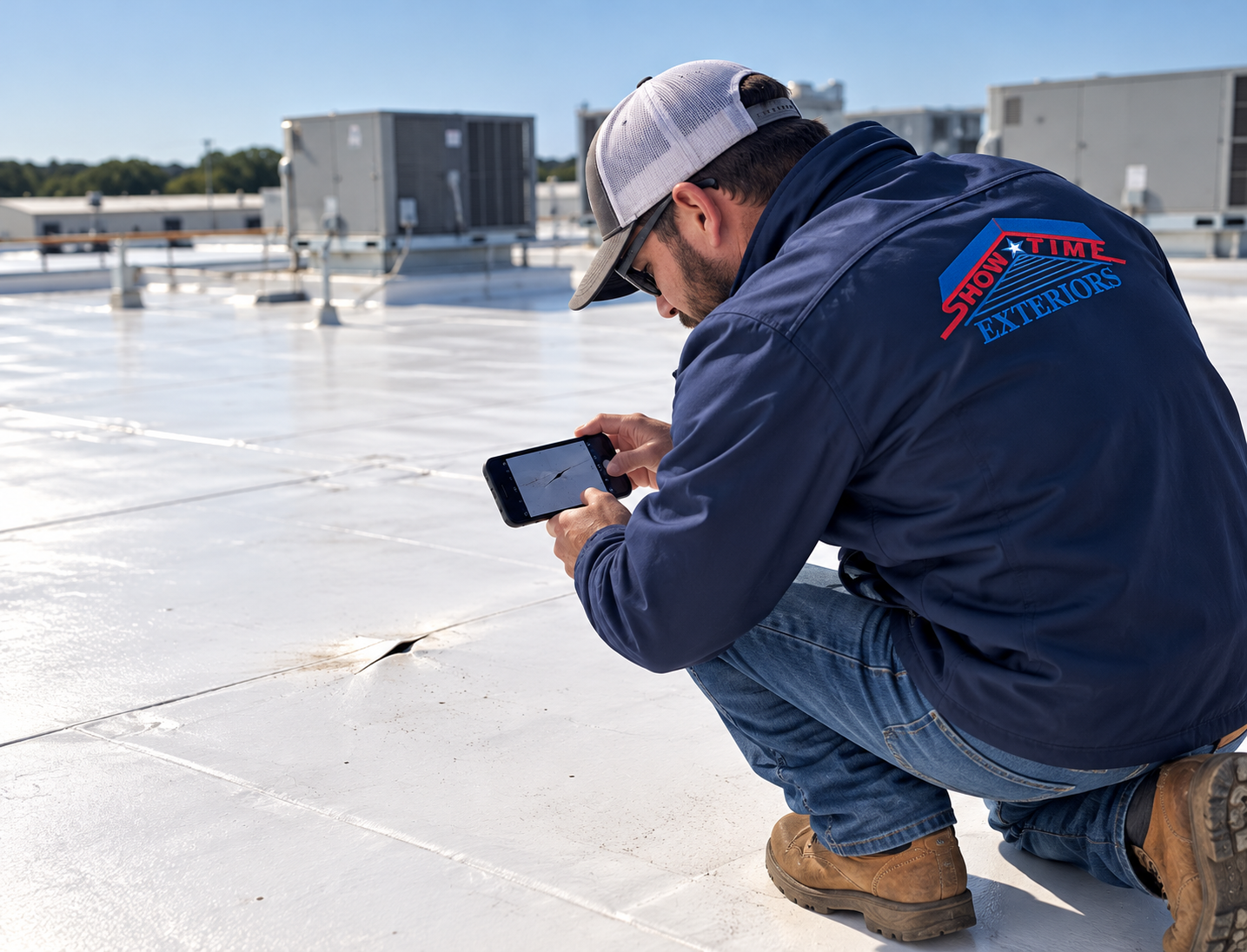
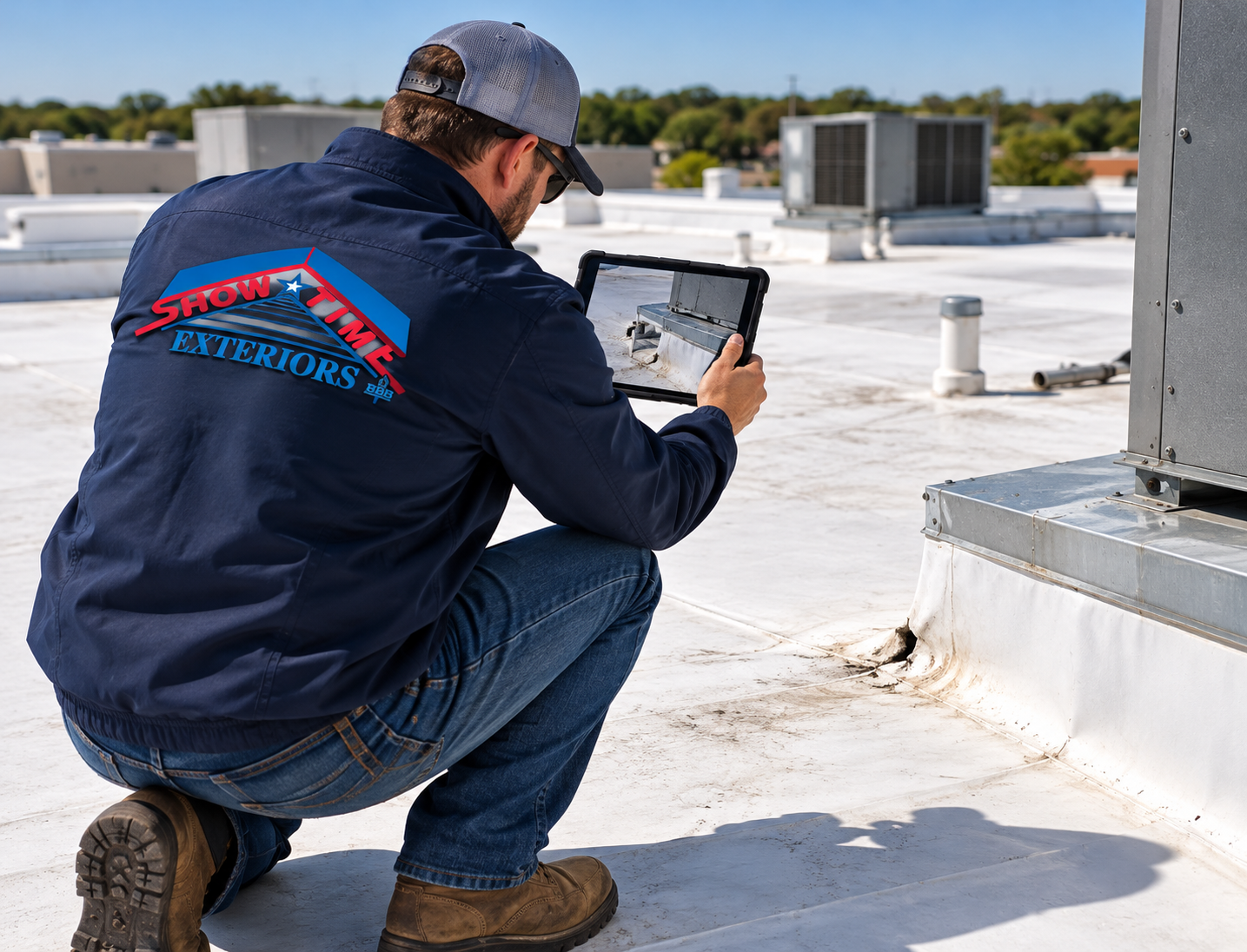
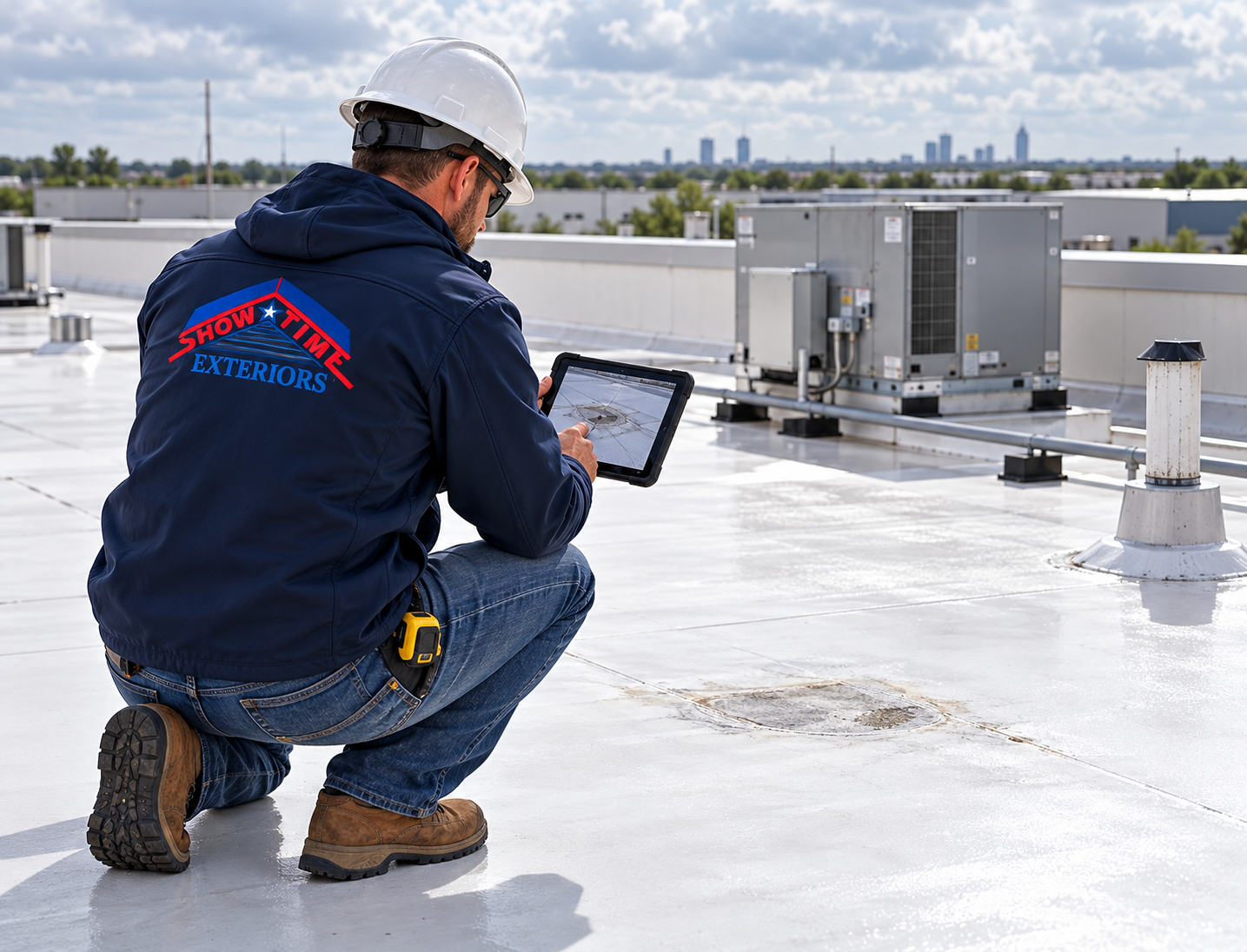
A useful commercial roof inspection begins with records and safe-access planning. The inspector reviews known leaks, prior repairs, warranties, plans, drainage complaints, rooftop equipment changes, and areas that occupants have reported. On the roof, the inspector documents overall configuration and then examines perimeters, seams or laps, flashings, penetrations, curbs, drains, scuppers, expansion joints, transitions, previous repairs, surface condition, and signs of ponding or movement.
Interior observations can be equally important. Ceiling stains, corrosion, damaged insulation, odors, deck deterioration, and moisture near penetrations can help correlate roof findings. A stain is not proof of an active roof leak; plumbing, HVAC, wall, condensation, and envelope sources may mimic roof leakage. The report should separate observations from conclusions and recommend further investigation where the source is uncertain.
No single test answers every question. Infrared scanning can identify thermal anomalies under suitable conditions, but anomalies require interpretation and confirmation. Electrical-capacitance or impedance tools can assist on compatible assemblies. Strategic core cuts may confirm layers and moisture at selected points but do not represent every square foot. Controlled water testing may help trace difficult pathways. The scope should match the decision being made.
Documents that strengthen the owner’s file
Create one digital folder for the building and use consistent filenames. Include the installation contract, invoices, manufacturer information, warranty, permits if applicable, plans, roof plan, repair history, leak log, inspection reports, moisture survey, photographs, invoices for completed corrections, and communications showing scheduled work. Keep original files and create a concise index so a broker can locate evidence quickly.
Photographs should be dated and labeled by roof area. Wide shots establish context; medium shots show the component; close-ups show the condition. Before-and-after pairs are especially useful when repairs are completed. Do not rely on photographs alone for concealed conditions. Pair images with a written description of location, observation, action, and completion date.
A leak log should record when water was observed, weather conditions, interior location, temporary protection, diagnostic findings, permanent correction, and whether the area remained dry during later rain. This turns scattered service calls into a traceable maintenance history. It also helps the owner identify recurring locations that may justify a broader investigation.
Why replacement is often the clearest path for aging gravel BUR roofs
For an aging gravel-surfaced BUR that is already creating insurance, leak, inspection, or maintenance concerns, replacement is often the clearest long-term strategy. The decision should account for concealed moisture, deck condition, drainage, attachment, code requirements, operations, and the owner’s renewal timeline. Continued patching can leave the carrier and the owner with the same unresolved uncertainty.
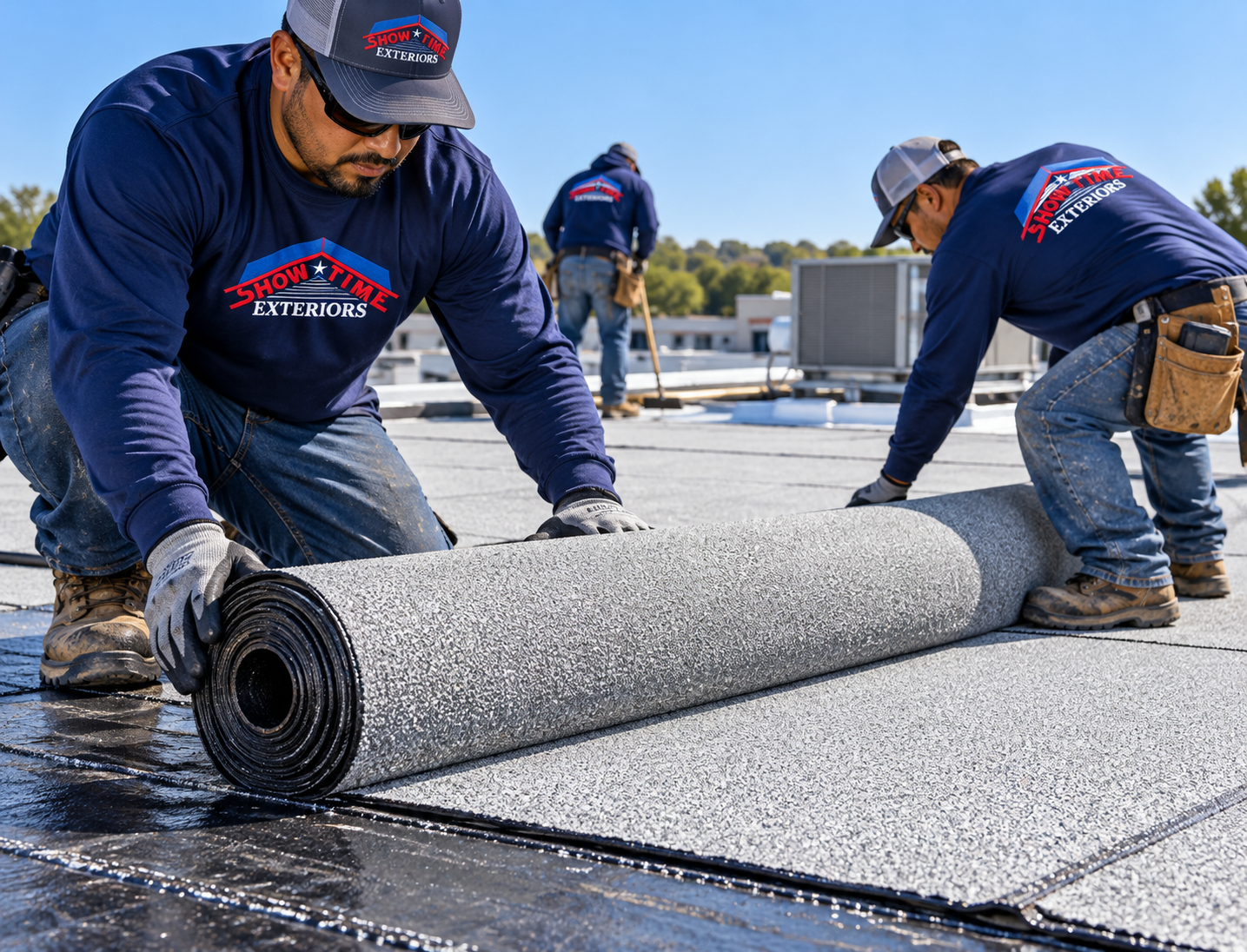
Replacement removes the gravel and exposes concealed conditions so wet insulation, deteriorated decking, failed transitions, and drainage deficiencies can be addressed directly. It also gives the owner a documented installation date, defined system, current photographs, warranty pathway, and organized closeout package for future insurance reviews.
Owners should request replacement scopes that can be compared line by line. Confirm tear-off quantities, deck allowances, wet-insulation removal, tapered drainage, new flashings, perimeter details, attachment, penetrations, system approvals, schedule, occupied-building controls, manufacturer requirements, and warranty terms before comparing price.
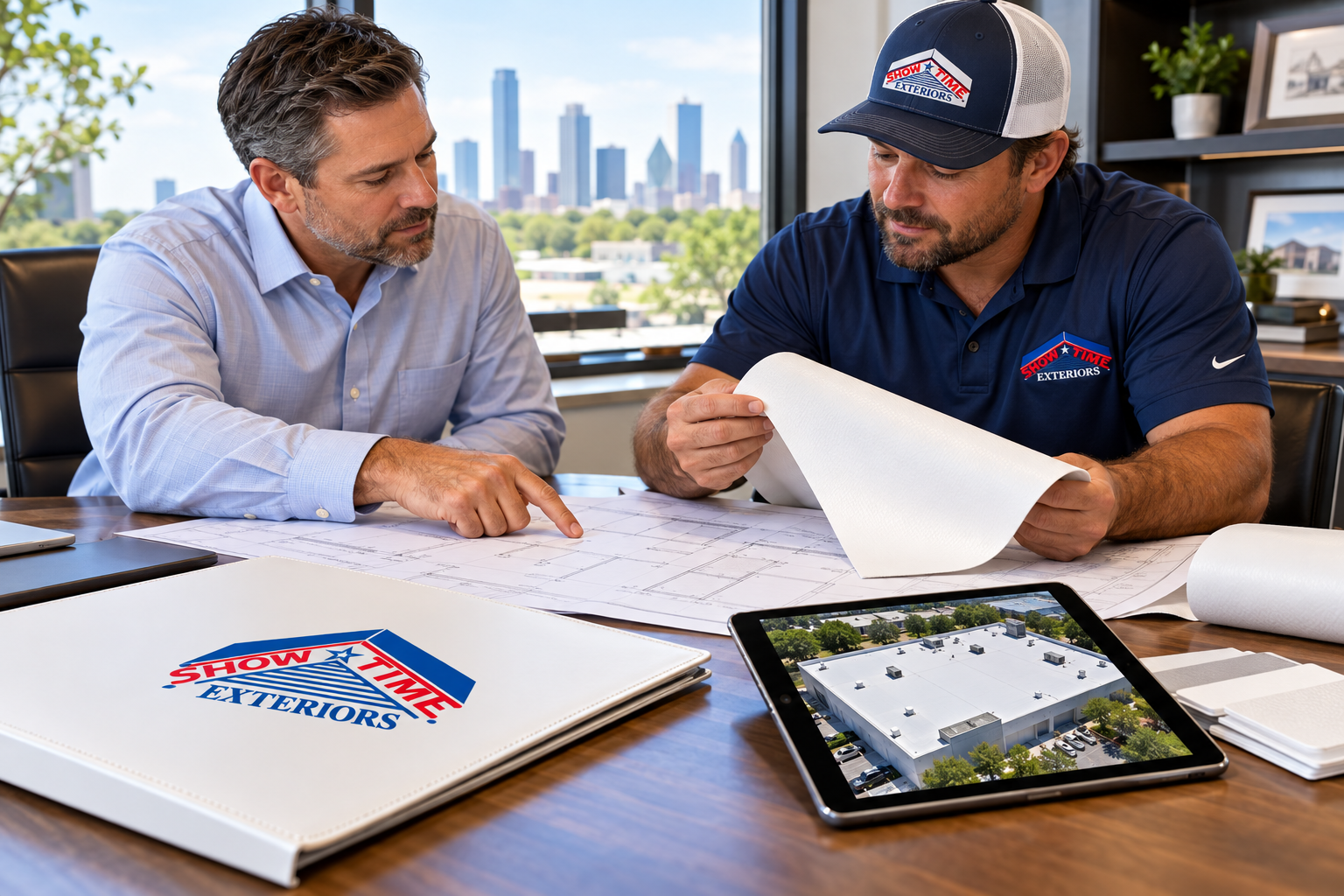
Image: Commercial roof installation detail. Source: Showtime Exteriors website.
Building a renewal-ready corrective-action plan
Convert inspection findings into three categories. Emergency items address active water entry, unsafe conditions, loose materials, blocked drainage, or details at immediate risk. Near-term items are defects that should be corrected before the carrier deadline or next severe-weather season. Capital items require design, budgeting, procurement, tenant coordination, or replacement planning.
Each line should identify the location, condition, recommended action, responsible party, target date, and proof of completion. This format makes the plan useful to ownership, facilities, the contractor, and the insurance broker. If work cannot be completed before renewal, document executed contracts, deposits, material lead times, temporary controls, and the expected completion date. Ask the broker whether the carrier will consider that evidence.
Do not conceal known conditions or represent temporary work as permanent. Accurate disclosure lets the insurance professional communicate the situation correctly. It also prevents the owner from building a renewal strategy around a statement that cannot be supported during a later inspection or claim.
Timing the work around operations
Commercial roof work affects more than the roof. Coordinate access, parking, delivery routes, tenant entrances, sensitive equipment, air intakes, noise, odor, dust, security, and working hours. Warehouses may need protection over inventory. Restaurants and healthcare occupancies may have stricter contamination or ventilation controls. Retail properties may favor phased work outside peak customer periods.
Weather contingencies belong in the schedule. A responsible plan limits how much roof is opened, establishes temporary dry-in procedures, monitors forecasts, and defines emergency contacts. Material lead times, testing, permits, inspections, and manufacturer requirements can influence the critical path. Owners facing a firm underwriting date should begin early enough to preserve options.
After completion, collect final photographs, invoices, warranties, inspection results, change orders, and a concise description of the installed work. Provide the broker only the documentation requested, but keep the complete closeout package in the building file for future renewals, sales, refinancing, and maintenance.
Mistakes that make the insurance conversation harder
Waiting until the final weeks before renewal is one of the most expensive mistakes because it reduces time for testing, bids, materials, and carrier review. Another is sending an unlabeled photo dump that forces the recipient to infer what was repaired. A third is obtaining a generic letter that makes broad guarantees beyond what the inspection can support.
Owners also create problems when they repair only visible interior symptoms, repeatedly apply incompatible materials, allow rooftop trades to penetrate the roof without coordination, or fail to preserve invoices. Pressure washing, aggressive gravel movement, and unplanned test cuts can damage an assembly. Roof access should be controlled and work should follow a defined scope.
Replacement system selection should be based on the building, code, wind and hail exposure, drainage, attachment, occupancy, manufacturer requirements, and the carrier’s written request. There is no universal “insurance-approved” roof, but a modern, documented system removes many of the visibility and age questions associated with an older gravel BUR.
Questions to ask a commercial roofing contractor
Ask how the contractor will identify the existing assembly, document moisture, evaluate drainage, inspect flashings, and distinguish isolated defects from systemic deterioration. Ask what testing is included, what requires authorization, how test locations will be repaired, and what limitations will appear in the report. Confirm that safety, access, and occupied-building controls are addressed.
For proposals, ask for system description, quantities, tear-off assumptions, deck allowances, insulation values, drainage work, perimeter details, penetrations, exclusions, warranty path, manufacturer inspections, schedule, and closeout documents. If alternatives are offered, request a clear explanation of where each option is appropriate and what evidence could eliminate an option.
The contractor should be willing to communicate factual findings to the owner and, when authorized, help the broker understand the scope and completion records. The contractor should not promise that a carrier will renew, set a premium, or pay a claim. Those decisions belong to insurance professionals and the policy terms.
A practical next step for Texas property owners
Start by locating the renewal date and the exact carrier request. Then assemble existing roof records and schedule an inspection early enough to investigate uncertain conditions. Give the inspector the leak history and access to relevant interior areas. Ask for prioritized findings, photographs, limitations, and realistic options rather than a one-line pass-or-fail conclusion.
Showtime Exteriors serves commercial property owners across Texas and works with low-slope and commercial roofing systems including BUR, modified bitumen, EPDM, TPO, PVC, metal retrofits, coatings, and overlays. The objective is to help the owner understand the roof, address urgent defects, compare feasible paths, and preserve organized documentation for conversations with brokers, carriers, lenders, buyers, and facility teams.
If a renewal, non-renewal, inspection, or recurring leak has placed the roof on a deadline, early evaluation creates room to make a reasoned choice. A current roof condition assessment cannot guarantee coverage, but it can replace guesswork with observable facts and a documented plan.
Insurance-renewal action checklist
Record the policy renewal and carrier-response deadlines.
Ask the broker for the carrier’s exact roof requirement in writing.
Gather installation, warranty, repair, inspection, and leak-history records.
Confirm safe roof and interior access.
Schedule a commercial roof condition assessment.
Decide whether moisture testing or core verification is justified.
Separate emergency, near-term, and capital recommendations.
Obtain comparable proposals with assumptions and exclusions.
Complete authorized work and capture labeled before-and-after photographs.
Assemble invoices, warranties, test results, and completion records.
Have the broker review the submission before the deadline.
Calendar future inspections and preventive maintenance.
Helpful Showtime Exteriors pages
Showtime Exteriors commercial roofing services
schedule a commercial roof consultation
Texas statewide commercial roofing contractor
Independent resources for property owners
Texas Department of Insurance commercial property guidance
FEMA building science resources
Insurance Institute for Business & Home Safety commercial resources
National Roofing Contractors Association technical resources
U.S. Department of Energy cool-roof guidance
Schedule a commercial roof assessment
If you are dealing with commercial roof insurance non-renewal what to do, contact Showtime Exteriors at 817-400-ROOF (7663) or use the commercial roof consultation form. Share the carrier request and renewal date when scheduling so the inspection scope can be planned around the decision you need to make.
Field guide: translating findings into an owner decision
For commercial roof insurance non-renewal what to do, begin with the decision deadline and work backward. A finding is useful only when the owner understands where it is, why it matters, what evidence supports it, what action is recommended, and what happens if action is deferred. Assign each roof area a simple identifier and use that identifier in photographs, proposals, invoices, and future service records. Consistent naming eliminates confusion when a building has several elevations, additions, or roof systems.
Create a roof plan showing drains, scuppers, penetrations, curbs, expansion joints, traffic paths, prior repair zones, and reported interior leaks. Overlay inspection findings and moisture-test results. The plan does not need to be elaborate to be valuable; it needs to be accurate enough that another person can locate the issue. When work is completed, mark the repaired zones and retain both the pre-work and closeout versions.
Rank recommendations by consequence as well as condition. A small defect above electrical equipment, critical inventory, a data room, or an occupied public area may deserve faster action than a larger defect above a low-consequence space. Similarly, loose perimeter material can present a windborne-debris concern even if it is not leaking. A good plan considers water, wind, fire, safety, operations, and property protection together.
Budget ranges should state their basis. Early planning estimates may use roof area and broad assumptions, but construction decisions require field-verified quantities and a defined system. Include allowances for concealed deck repair, wet insulation, access, cranes, permits, hazardous-material investigation when relevant, and after-hours work. Make clear which allowances are included and how unused or exceeded amounts will be handled.
When comparing proposals, normalize the scope in a table. Confirm tear-off limits, disposal, substrate preparation, insulation, attachment, membrane or coating thickness, reinforcement, flashing height, edge metal, drainage, penetrations, walkway protection, warranty, manufacturer involvement, taxes, bonds if required, and closeout. An apparent price gap often reflects different assumptions rather than different contractor margins.
Use a preconstruction meeting to assign responsibilities. Identify who can authorize change orders, who receives weather notices, who protects interior assets, who coordinates tenants, who shuts down or protects air intakes, and who communicates with the broker. Establish daily reporting expectations and the process for documenting concealed conditions. Clear communication is a risk control in its own right.
After the work, retain more than the final invoice. Keep product data, safety data where relevant, warranty documents, manufacturer inspection records, permit closeout, photographs, test reports, change orders, and maintenance instructions. Update the roof plan. Train facility personnel on access restrictions and approved repair procedures. Calendar inspections after major storms and at intervals appropriate for the roof and warranty.
Finally, send the insurance professional a concise, factual package. Lead with the carrier request, then provide the inspection summary, corrective-action table, completion evidence, and planned capital items. Avoid unsupported statements about “perfect condition” or guaranteed remaining life. A well-organized submission shows that the owner knows the asset, acts on findings, and maintains records—even though the carrier retains full underwriting discretion.
Field guide: translating findings into an owner decision
For commercial roof insurance non-renewal what to do, begin with the decision deadline and work backward. A finding is useful only when the owner understands where it is, why it matters, what evidence supports it, what action is recommended, and what happens if action is deferred. Assign each roof area a simple identifier and use that identifier in photographs, proposals, invoices, and future service records. Consistent naming eliminates confusion when a building has several elevations, additions, or roof systems.
Create a roof plan showing drains, scuppers, penetrations, curbs, expansion joints, traffic paths, prior repair zones, and reported interior leaks. Overlay inspection findings and moisture-test results. The plan does not need to be elaborate to be valuable; it needs to be accurate enough that another person can locate the issue. When work is completed, mark the repaired zones and retain both the pre-work and closeout versions.
Rank recommendations by consequence as well as condition. A small defect above electrical equipment, critical inventory, a data room, or an occupied public area may deserve faster action than a larger defect above a low-consequence space. Similarly, loose perimeter material can present a windborne-debris concern even if it is not leaking. A good plan considers water, wind, fire, safety, operations, and property protection together.
Budget ranges should state their basis. Early planning estimates may use roof area and broad assumptions, but construction decisions require field-verified quantities and a defined system. Include allowances for concealed deck repair, wet insulation, access, cranes, permits, hazardous-material investigation when relevant, and after-hours work. Make clear which allowances are included and how unused or exceeded amounts will be handled.
When comparing proposals, normalize the scope in a table. Confirm tear-off limits, disposal, substrate preparation, insulation, attachment, membrane or coating thickness, reinforcement, flashing height, edge metal, drainage, penetrations, walkway protection, warranty, manufacturer involvement, taxes, bonds if required, and closeout. An apparent price gap often reflects different assumptions rather than different contractor margins.
Use a preconstruction meeting to assign responsibilities. Identify who can authorize change orders, who receives weather notices, who protects interior assets, who coordinates tenants, who shuts down or protects air intakes, and who communicates with the broker. Establish daily reporting expectations and the process for documenting concealed conditions. Clear communication is a risk control in its own right.
After the work, retain more than the final invoice. Keep product data, safety data where relevant, warranty documents, manufacturer inspection records, permit closeout, photographs, test reports, change orders, and maintenance instructions. Update the roof plan. Train facility personnel on access restrictions and approved repair procedures. Calendar inspections after major storms and at intervals appropriate for the roof and warranty.
Finally, send the insurance professional a concise, factual package. Lead with the carrier request, then provide the inspection summary, corrective-action table, completion evidence, and planned capital items. Avoid unsupported statements about “perfect condition” or guaranteed remaining life. A well-organized submission shows that the owner knows the asset, acts on findings, and maintains records—even though the carrier retains full underwriting discretion.