



Can a Hail Damaged Roof Be Repaired or Is Replacement Necessary
A Decision Guide for Texas Commercial Property Owners
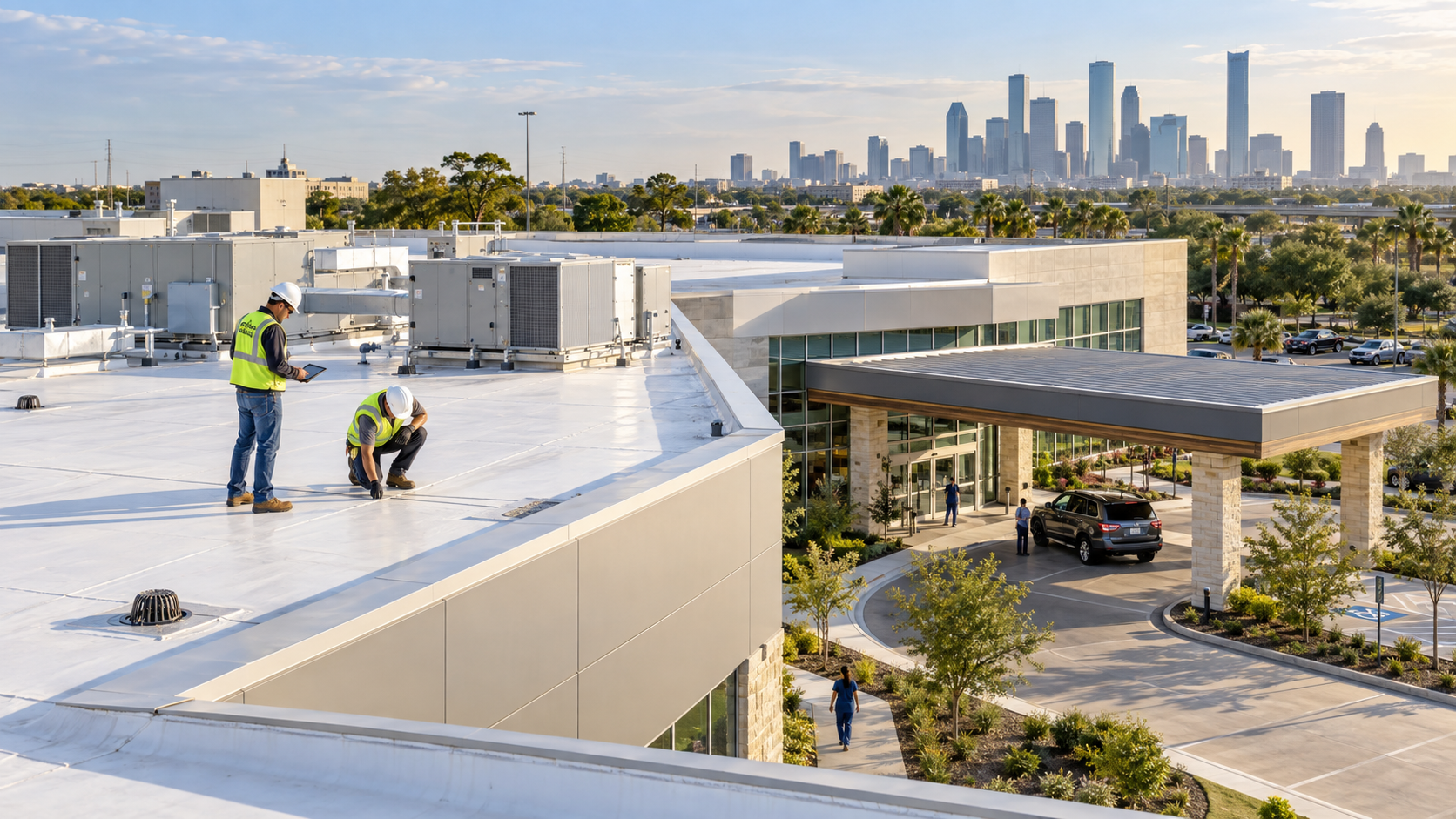
A hail-damaged roof can often be repaired when the damage is isolated, the surrounding system remains serviceable, compatible repair methods are available, and moisture has not spread through the assembly. Replacement becomes more likely when impacts are widespread, waterproofing has been compromised across multiple areas, insulation is wet, attachment or decking is damaged, repairs cannot be integrated reliably, or the roof was already near the end of its dependable service life.
The decision should never be based on hail size, the number of dents, or an insurance conversation alone. It requires a system-specific roof inspection, a map of representative impact evidence, evaluation of collateral components, moisture investigation when indicated, review of repair history and warranty requirements, and a scope that separates storm effects from age, maintenance, and preexisting conditions.
Showtime Exteriors helps commercial property owners throughout North Texas, Houston, and Texas inspect hail-affected roofs and develop practical repair, restoration, retrofit, or replacement recommendations. A roofing contractor can document physical conditions and prepare a scope, but the policy and insurer determine coverage, deductibles, valuation, exclusions, and payment. Call 817-400-ROOF (7663) to schedule an assessment.
The Short Answer
Yes, some hail-damaged roofs can be repaired, while others require sectional or complete replacement. Repair is usually defensible when a qualified inspection finds a limited number of discrete openings or damaged details, dry surrounding insulation, a sound deck, dependable attachment, and enough remaining roof life to integrate compatible work. Replacement becomes more appropriate when functional damage is distributed across the roof, moisture is widespread, the substrate is unreliable, matching or compatible materials cannot be installed, or the existing system cannot reasonably deliver dependable performance after repair.
Hail Damage Is Not One Uniform Condition
Hail varies in diameter, density, hardness, shape, fall velocity, wind influence, and duration. Roof response also varies with membrane type, shingle composition, metal gauge, surface temperature, age, cover board, insulation, slope, support conditions, and prior deterioration. Two nearby buildings may experience the same storm but show different outcomes. That is why a storm report establishes context rather than the repair scope. The physical condition of the specific assembly must drive the recommendation.
Functional Damage Versus Cosmetic Change
Functional damage reduces the roof assembly’s ability to shed water, remain attached, protect underlying components, or perform for its intended service period. Examples include fractures, punctures, splits, displaced material, broken reinforcement, failed seams, damaged flashings, crushed insulation, and compromised coatings that expose vulnerable substrates. Cosmetic change may alter appearance without reducing waterproofing. The distinction can be technical and system-specific. Dents, scuffs, granule movement, or surface marks should be documented, but they do not automatically prove either harmlessness or the need for replacement.
Begin With Safety and Emergency Protection
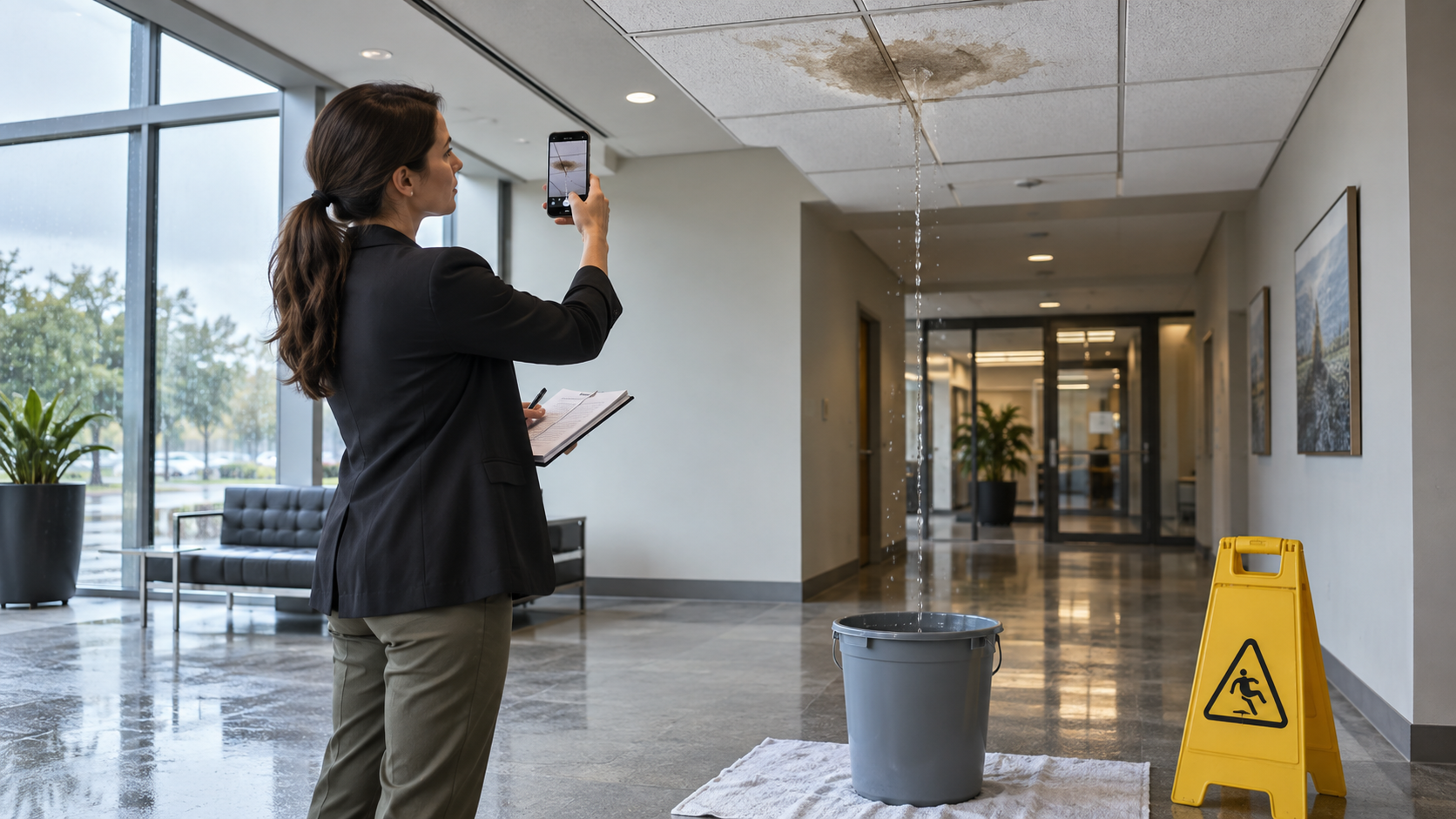
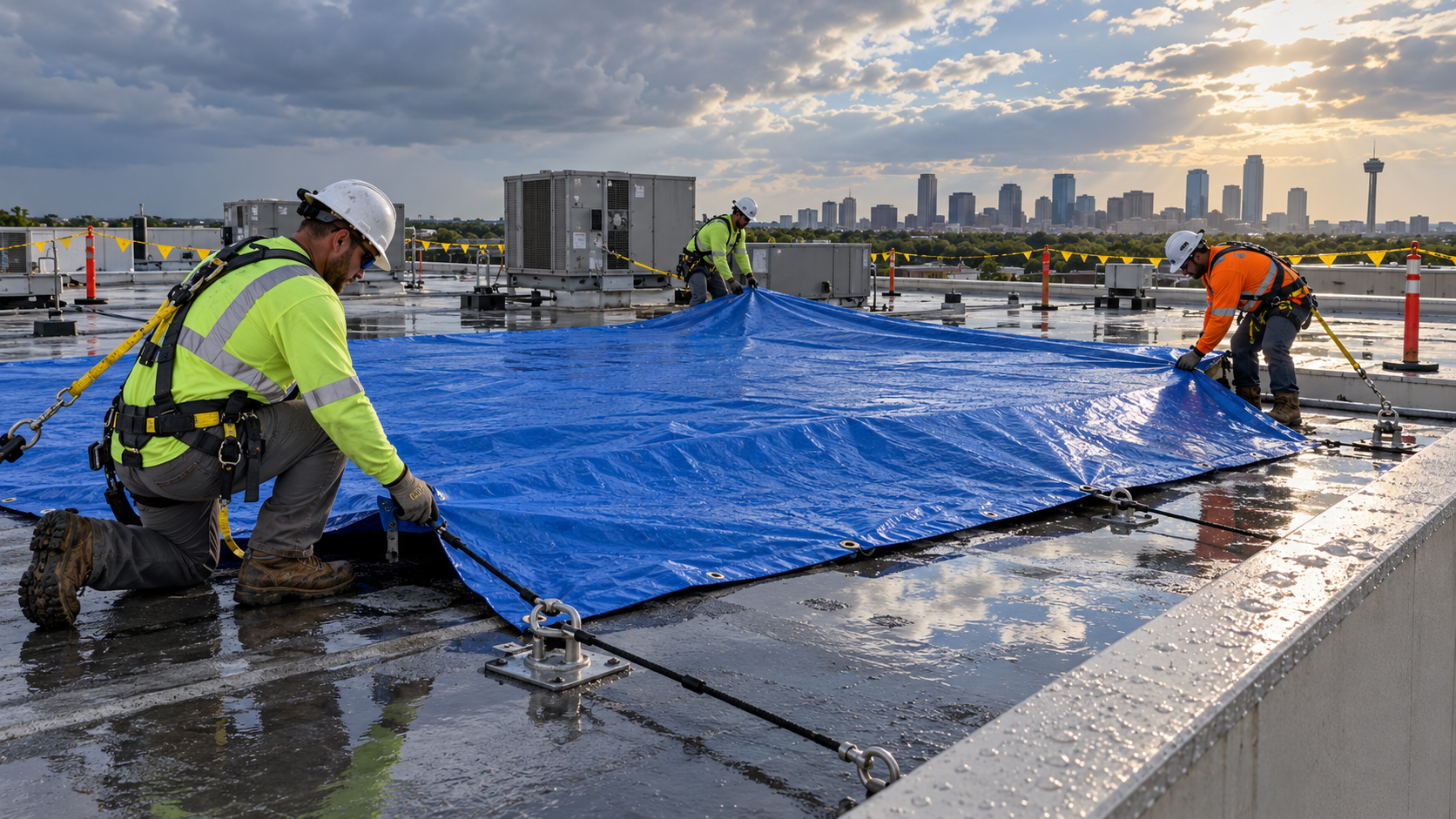
After a storm, keep occupants away from active leaks, wet electrical components, sagging ceilings, loose exterior materials, and slippery areas. Do not send untrained employees onto a wet or hail-covered roof. When safe, protect contents, collect water, isolate affected spaces, clear only accessible drainage obstructions, and arrange qualified emergency service. Temporary work should reduce additional exposure while preserving useful evidence. Photograph conditions before and after mitigation when possible, but never delay necessary safety measures simply to build a claim file.
Document the Storm and the Building
Create a timeline with the date, approximate time, observed hail, wind and rain, first interior symptoms, calls made, and emergency actions. Photograph every building elevation, the roof from safe authorized access, rooftop equipment, drainage, interior leaks, ceilings, walls, inventory, and temporary work. Preserve original files and metadata. Label locations on a roof plan and floor plan. Official weather information can support timing and storm context, but physical inspection is still required to connect observed roof conditions to a proposed repair or replacement scope.
What a Professional Hail Inspection Should Include
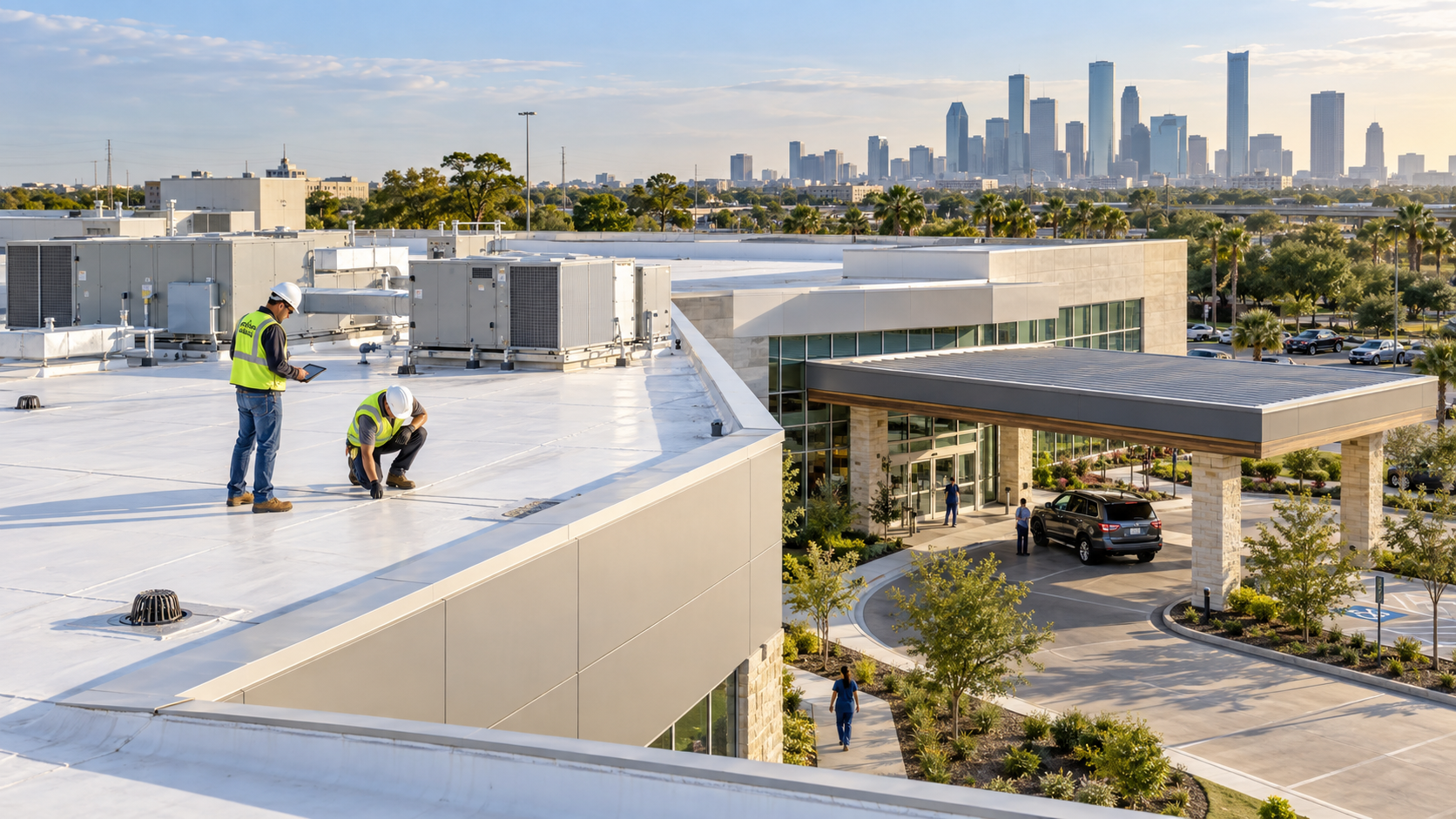
A credible inspection identifies every roof area and system, records age and known installation information, reviews field membrane or shingles, flashings, penetrations, edges, seams, fasteners, drains, scuppers, rooftop equipment, soft metals, skylights, and previous repairs. It uses overview, medium, and close photographs tied to labeled locations. Representative test areas should be selected methodically rather than only around the most dramatic mark. The report should state limitations, inaccessible areas, test methods, uncertain findings, and whether additional moisture or structural investigation is recommended.
Why Collateral Indicators Matter
Hail can leave evidence on metal vents, HVAC fins, gutters, coping, skylights, coated surfaces, screens, and other components. Collateral evidence can help establish that hail reached the property and show impact direction or distribution. It does not automatically prove that the waterproofing was functionally damaged. Roofing materials respond differently from thin metal or exposed equipment. A sound conclusion connects collateral indicators with system-specific roof evidence, not merely the presence of dents somewhere on the building.
Hail Size Is Context Not a Verdict
Comparisons such as pea, quarter, golf-ball, or baseball size are useful for communicating approximate scale, but field estimates can be unreliable after hail melts. Hailstones of similar diameter may differ in density and shape, and wind can increase impact energy. Roof vulnerability also changes with age, temperature, support, and material. A reported hail size should not be used as an automatic repair threshold or replacement rule. Document credible measurements when available, then evaluate what the impacts actually did to the roof assembly.
Damage Distribution Changes the Scope
A few isolated openings are fundamentally different from hundreds of impacts across multiple roof sections. Inspectors should map concentrations, slopes, orientations, perimeters, equipment zones, and transitions. A localized repair can be reasonable when damage is confined and the surrounding field is dependable. Broad distribution makes spot repair less reliable because unrecorded fractures may remain and the quantity of patches can create a fragmented surface. The proposed scope should explain how sample findings were translated into quantities and boundaries.
Moisture Can Turn a Repair Into a Replacement Project
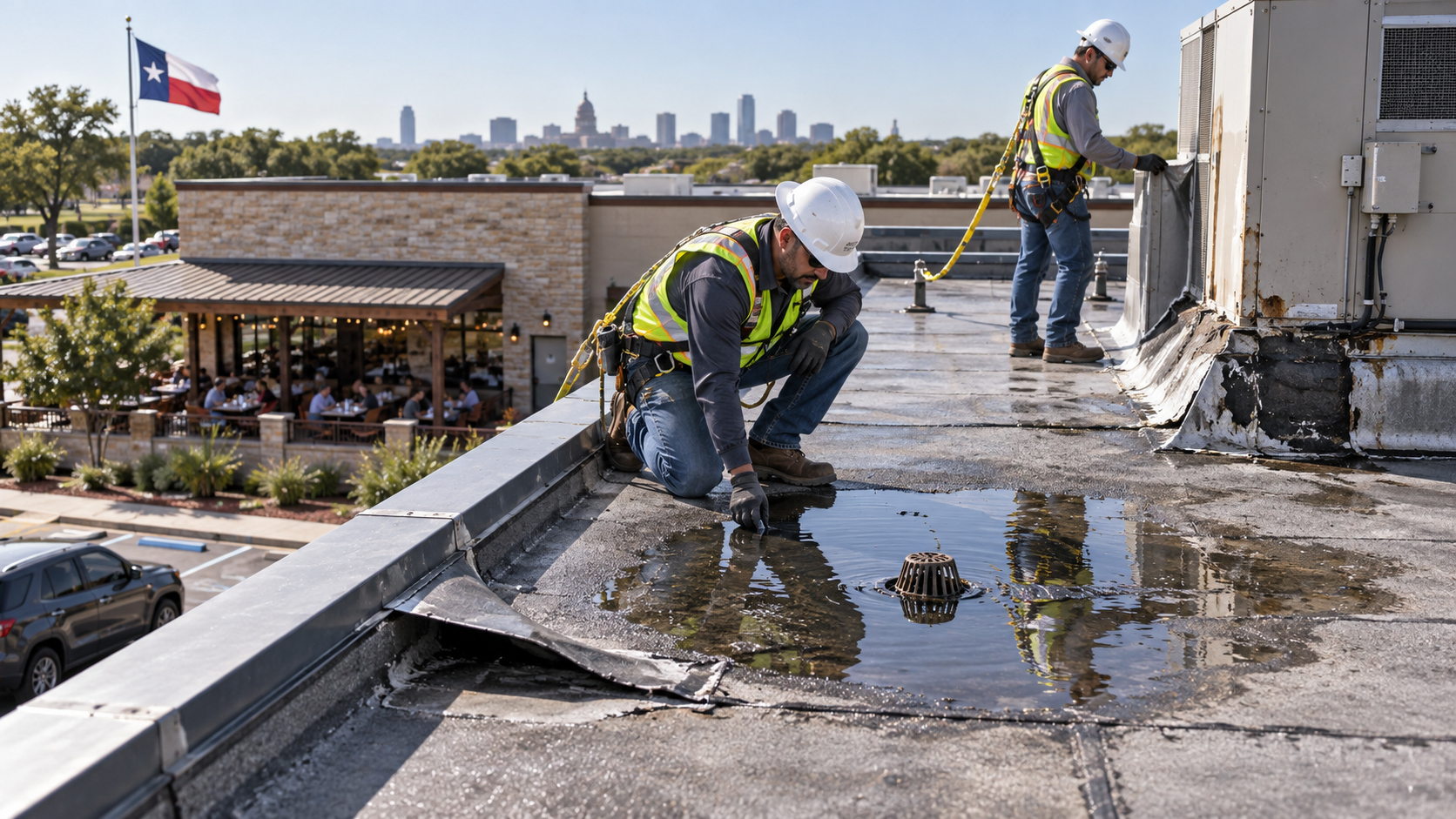
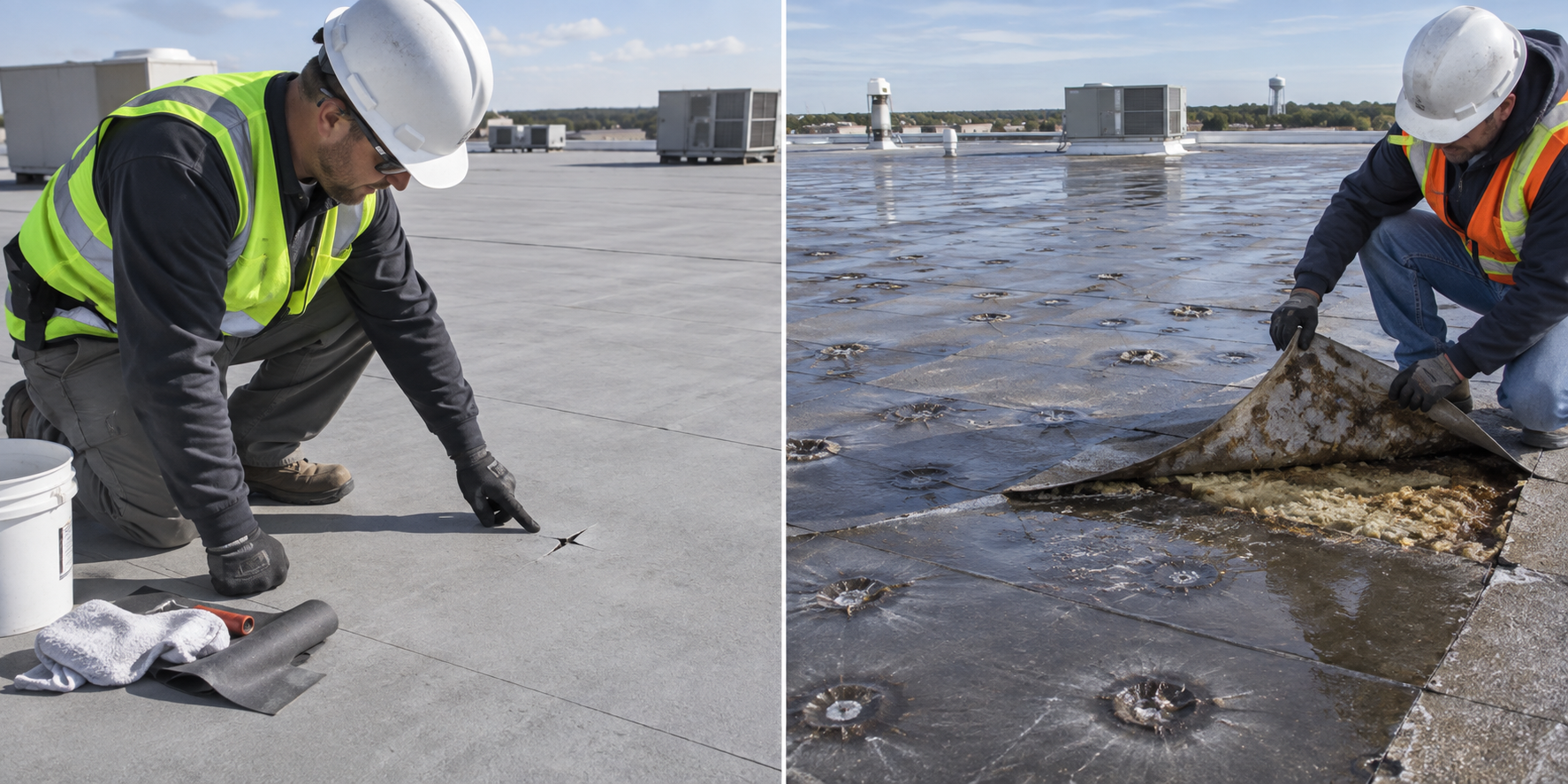
Hail damage may not produce immediate interior leakage, yet small openings can admit water into insulation. Wet materials can reduce thermal performance, corrode steel components, affect fasteners, increase weight, and carry water away from the impact location. Depending on roof type and weather, investigation may include infrared imaging, capacitance or impedance testing, nuclear scanning, core samples, or controlled test cuts. Each method has limitations and should be verified appropriately. Localized wet materials may be removed; widespread moisture often changes the economics and technical feasibility of repair.
The Roof Deck Must Be Sound
No surface repair can compensate for a structurally unreliable substrate. Steel deck should be checked for corrosion, deformation, open side laps, or impact-related damage where accessible. Wood may show splitting, decay, or loss of fastener holding. Concrete, gypsum, and lightweight insulating concrete assemblies have their own distress patterns and testing needs. Interior observations can reveal staining or deflection, but concealed conditions may require openings or engineering review. Damaged deck areas must be addressed before a repaired or replacement roof can be attached properly.
Age and Remaining Service Life Matter
A young, well-maintained roof with isolated hail damage is a stronger repair candidate than an old assembly with repeated leaks, shrinking materials, failing seams, extensive patches, chronic ponding, and uncertain attachment. Age alone does not prove that replacement is necessary, and an older roof can still have serviceable areas. The useful question is whether the roof can receive compatible work and provide dependable performance for a reasonable period. Lifecycle cost, disruption, warranty prospects, and future insurability should be considered alongside the immediate repair price.
Repair History Can Reveal Systemic Problems
Collect prior inspection reports, leak logs, proposals, photographs, warranties, maintenance records, and invoices. If the same areas have been patched repeatedly, hail may have exposed a larger weakness rather than created a single new defect. Conversely, a documented history of good condition can help establish a useful pre-storm baseline. Reports should distinguish new impact evidence from weathered repairs, installation deficiencies, drainage problems, and ordinary aging. Honest separation improves technical decisions and makes documentation more credible.
When a Targeted Repair Is Usually Reasonable
Targeted repair is often appropriate when damage is discrete and accessible; the surrounding roof remains dry, stable, and serviceable; compatible materials are available; the manufacturer or system details permit a durable tie-in; and repair will not cause disproportionate collateral damage. The scope should remove compromised material rather than simply cover it, replace wet insulation and damaged cover board, prepare the substrate, restore reinforcement and surfacing, and document the finished work. Follow-up inspection should verify seams, drainage, and repair integration.
When Sectional Replacement Makes More Sense
Damage is sometimes too extensive for scattered patches but limited enough that the entire building does not require replacement. Sectional replacement may isolate a hail-facing slope, roof wing, drainage basin, expansion-joint area, or wet zone. The design must establish reliable tie-ins, transitions, attachment, drainage, and warranty boundaries. Investigators should confirm that retained areas are dry and serviceable. A sectional approach should not create an awkward patchwork that transfers water, wind, or maintenance problems to the interface between old and new assemblies.
When Full Replacement Becomes the Responsible Choice
Full replacement should be evaluated when hail-related openings or fractures are widespread, moisture extends through large portions of the assembly, the deck or attachment is compromised, repair quantities approach reconstruction, the existing surface cannot accept reliable tie-ins, or preexisting deterioration leaves little dependable service life. Replacement may also allow correction of insulation, drainage, edge systems, penetrations, traffic paths, and equipment details. The recommendation should remain evidence-based and should not claim that replacement is covered merely because it is technically preferred.
Asphalt Shingle Hail Damage
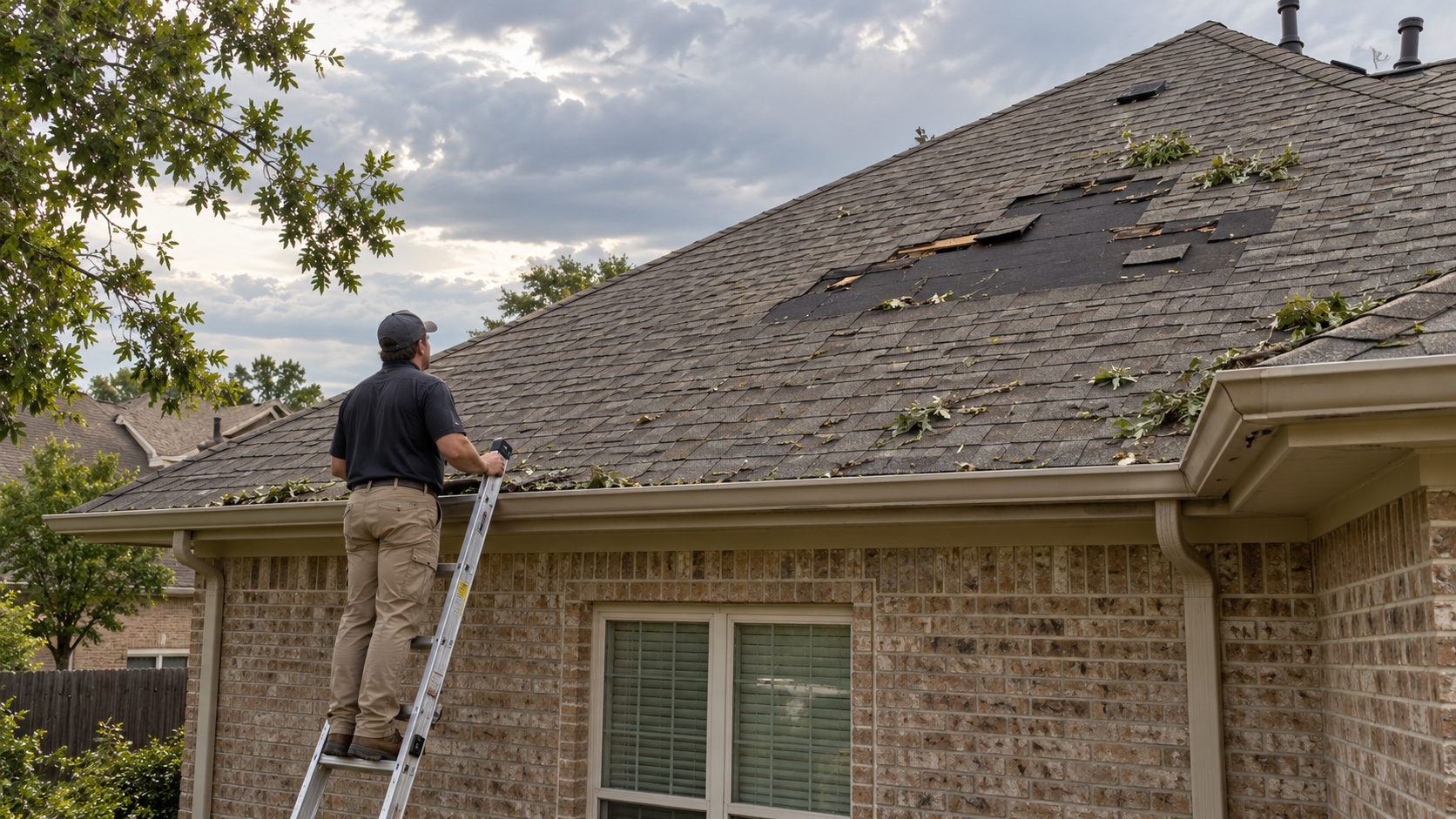
On steep-slope residential, multifamily, and light-commercial roofs, hail may bruise mats, fracture reinforcement, dislodge granules, crack brittle shingles, damage seal strips, or affect flashings and accessories. Granule loss alone requires context because manufacturing, foot traffic, age, and weathering can also move granules. Repair may work when impacts are limited and surrounding shingles can be lifted without breaking. Replacement becomes more likely when functional damage is widespread across slopes or when aged shingles cannot be integrated without causing additional damage.
TPO Roofs
TPO hail assessment should review punctures, circular fractures, surface crazing, scrapes, seams, flashings, fasteners, cover board support, and insulation beneath the membrane. A localized puncture can often be cleaned, prepared, and heat-welded with compatible material after wet components are removed. Older membrane may require weld testing. Replacement or a larger sectional scope becomes more likely when impacts are distributed widely, reinforcement is compromised, insulation is crushed or wet, attachment is affected, or the existing sheet cannot develop dependable welds.
PVC Roofs
PVC systems may also support heat-welded repairs when the membrane remains serviceable and the substrate is dry. Inspect plasticizer loss, brittleness, shattering, punctures, seams, flashings, and compatibility with earlier repairs or contaminants. Hail can create fractures that are difficult to see until the sheet is flexed or examined closely. The number and distribution of impacts matter. A few qualified repairs differ from a roof that would require extensive patching over an embrittled field with limited remaining life.
EPDM Roofs
EPDM may show punctures, cuts, stretched impact areas, damaged seams, displaced ballast, crushed insulation, or harm at flashings and penetrations. Repairs commonly require compatible cleaner, primer, reinforced membrane or flashing materials, adhesives, and manufacturer-appropriate details. Do not assume that a black surface mark is a puncture, or that no visible mark means the assembly is unaffected. Replacement is more likely when hail combines with shrinkage, widespread seam failure, deteriorated flashings, broad wet insulation, or unreliable perimeter attachment.
Modified Bitumen Roofs
Modified bitumen inspection should consider cap-sheet fractures, exposed reinforcement, granule displacement, splits, blisters, laps, flashings, and substrate support. A localized damaged area can often be cut out and rebuilt with compatible plies and surfacing by qualified crews. Heat and material compatibility require care. Replacement becomes more practical when impacts and existing splits are widespread, reinforcement is exposed across many locations, wet insulation is extensive, or previous coatings and patches prevent dependable bonding.
Metal Roofs
Hail commonly dents metal panels, vents, gutters, and equipment. A dent can be cosmetic, functional, or both depending on whether it opens a seam, damages a coating, fractures the metal, loosens fasteners or clips, alters drainage, or affects the roof’s intended appearance. Panel replacement may be localized when profiles and finishes are available and removal will not damage adjacent work. Broader replacement or retrofit may be needed when seams, attachment, coatings, or many panels are compromised. Policy treatment of cosmetic damage depends on the contract.
Roof Coatings
Coated roofs require evaluation of the coating chemistry, thickness, reinforcement, substrate, adhesion, age, and impact pattern. Hail may leave marks without penetrating the reinforced system, or it may split coating at seams, fasteners, transitions, and unsupported areas. Repair may involve cleaning, substrate correction, reinforcement, and compatible recoating. Applying another layer over wet insulation, loose coating, unstable seams, or a deteriorated substrate is not restoration. Widespread impact damage or adhesion failure can require removal or a different roof strategy.
Gravel Surfaced Built Up Roofs
Aging gravel-surfaced BUR requires extra caution because aggregate can conceal fractured felts, displaced surfacing, blisters, failed patches, drainage obstruction, and trapped moisture. Surface observation alone may not reveal the roof’s actual condition, and repeatedly moving gravel can disturb brittle materials. Showtime Exteriors does not position aging gravel BUR as a positive solution. When hail concerns arise, owners should investigate concealed conditions and seriously evaluate replacement with a more inspectable system, particularly when recurring leaks or insurance scrutiny already exist.
Rooftop Equipment and Accessories
Hail can damage HVAC fins, exhaust fans, vents, skylights, solar components, piping insulation, screens, hatches, lightning protection, and communication equipment. These items may require specialists outside the roofer’s scope. Their condition is still relevant because damaged equipment can create leaks or affect operations. Photograph each component, identify ownership and service responsibility, and coordinate repairs so mechanical work does not puncture the completed roof. Equipment dents can support storm context but do not substitute for evidence of functional roof damage.
Drainage After a Hailstorm
Hail, leaves, branches, and displaced materials can block drains, scuppers, gutters, and downspouts. Standing water can increase loading, drive water through small openings, hide impact evidence, and complicate testing. Qualified crews should inspect and safely restore drainage while documenting obstructions. Chronic ponding should be distinguished from storm-created blockage. If replacement is planned, the design should address slope, drain capacity, overflow provisions, saddles, and low areas rather than simply reproducing the old drainage pattern.
Code and Permit Requirements
Repair and replacement scopes may trigger different permit, energy, insulation, fire, attachment, wind, drainage, and edge-system requirements. Requirements vary by jurisdiction, building, existing assembly, occupancy, and percentage of roof affected. A technically repairable area may need a broader scope if code-compliant integration is not feasible. Conversely, code should not be invoked vaguely to justify replacement without identifying the applicable requirement. Contractors should coordinate with the authority having jurisdiction and obtain design or engineering support when needed.
Manufacturer Warranty Considerations
If a roof carries a manufacturer warranty, notify the required party and follow inspection and repair procedures before unauthorized work affects coverage. Approved materials, licensed installers, photographs, moisture removal, and final inspection may be required. Warranty status does not decide insurance coverage, and insurance approval does not automatically preserve a roof warranty. For an older or undocumented system, the absence of warranty protection increases the importance of compatible repair details and realistic expectations about remaining service life.
Insurance Policy Considerations
Review the deductible, covered causes, exclusions, cosmetic-damage provisions, actual cash value or replacement cost terms, matching language, endorsements, notice deadlines, duties after loss, and proof-of-loss requirements with the insurer or a licensed insurance professional. Commercial policies can vary substantially. The contractor should describe roof conditions and estimated construction scope without promising coverage, interpreting the policy as legal advice, waiving deductibles, or guaranteeing payment. Keep claim communications, inspection reports, photographs, estimates, invoices, and temporary-work records organized.
Do Not Confuse an Estimate With a Coverage Decision
A repair or replacement proposal explains construction work and cost assumptions. It does not establish what an insurer owes. The adjuster may evaluate causation, scope, depreciation, exclusions, limits, endorsements, and documentation under the policy. Owners should compare scopes line by line, including tear-off, insulation, cover board, deck repair, attachment, edges, drainage, flashings, equipment, access, safety, permits, disposal, temporary protection, and concealed conditions. A low estimate may omit critical work, while a high estimate still requires evidence.
Repairability Is More Than Whether a Patch Will Stick
A patch can adhere today yet fail to provide a responsible long-term result. True repairability includes access, substrate condition, dryness, material compatibility, seam strength, expected movement, attachment, weathering, remaining service life, warranty requirements, code integration, and the quantity of repairs. It also considers whether performing the repair will damage surrounding material. Reports should explain these factors explicitly instead of reducing the decision to a yes-or-no adhesion test.
Matching Materials and Discontinued Products
Steep-slope shingles, metal panels, tiles, membranes, and accessories may be discontinued or visually changed. Lack of an exact match does not automatically determine technical scope or insurance coverage. The team should identify the product when possible, obtain samples, evaluate compatible integration, document color and profile differences, and review manufacturer instructions. For functional repairs, watertightness and system compatibility remain essential. Questions about policy obligations for matching should be directed to the insurer or qualified legal and insurance professionals.
Core Samples and Test Cuts
Core samples and controlled test cuts can identify membrane layers, surfacing, cover board, insulation type and thickness, attachment, moisture, and deck conditions. Locations should be selected strategically and permanently repaired after testing. A small number of samples cannot represent every square foot, so results should be combined with moisture surveys, leak history, roof plans, and visual evidence. Destructive testing should be performed by qualified personnel with owner authorization and coordination with the manufacturer or insurer when applicable.
Infrared and Other Moisture Surveys
Infrared imaging can identify thermal anomalies that may be associated with moisture under suitable weather and roof conditions. It is not a photograph of water and can be affected by insulation, ballast, surface color, deck type, HVAC discharge, shadows, recent rain, and temperature differentials. Suspect areas should be marked, mapped, and verified through appropriate methods. Other survey technologies also require trained interpretation. A moisture map is most valuable when it directly informs removal quantities and repair or replacement boundaries.
How to Compare Repair and Replacement Economically
Compare the full cost of each option over the period the owner expects to hold and operate the property. Include immediate work, emergency service, recurring leak response, interior disruption, energy effects, maintenance, warranty, tenant impact, equipment coordination, future tear-off, and the risk that retained wet or aged materials will require early replacement. Repair may deliver the best value for a sound young roof. Replacement may be more economical when repair density is high and the remaining assembly is already unreliable.
Plan Work Around Building Operations
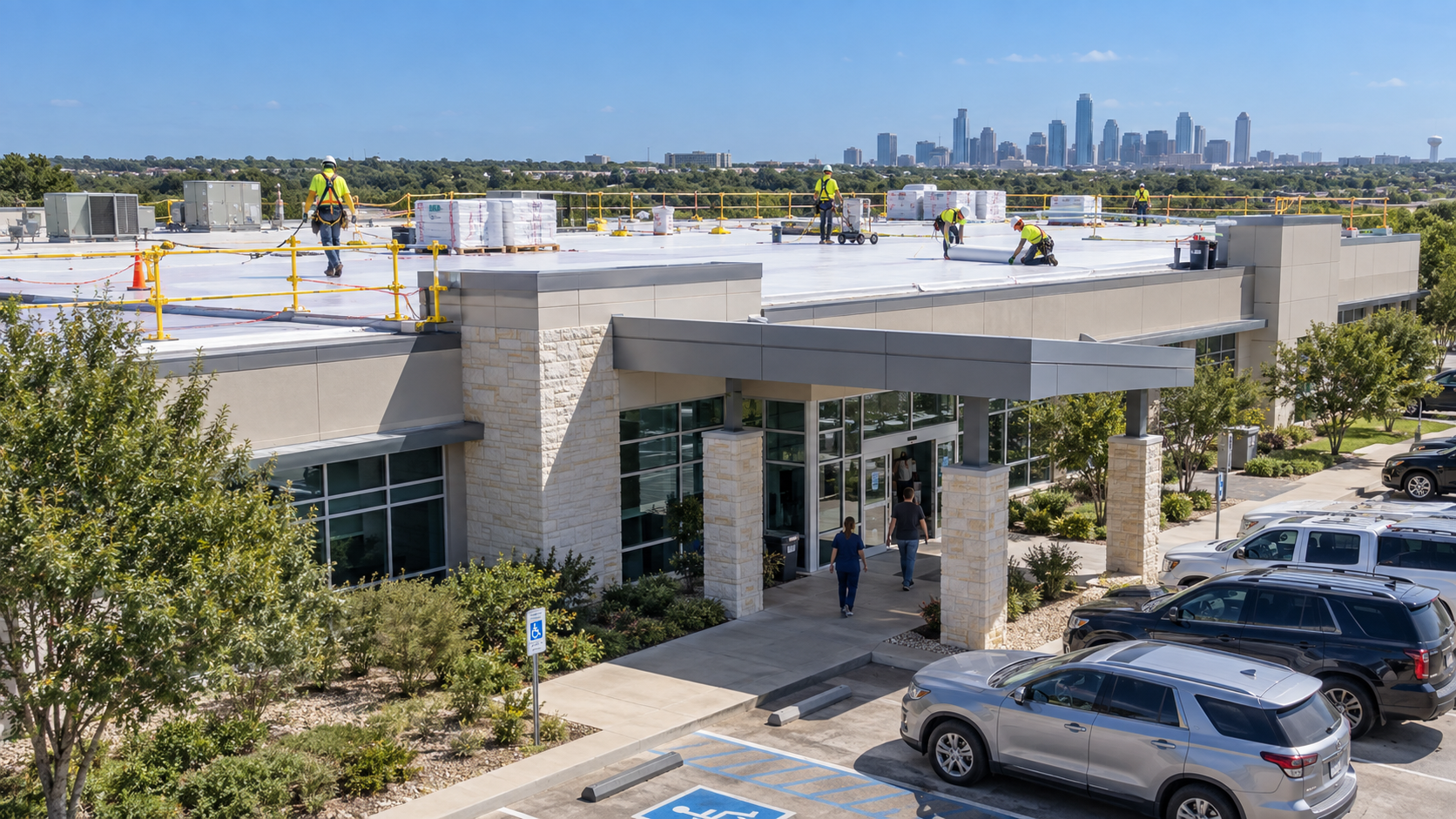
Warehouses, medical facilities, apartments, restaurants, offices, retail centers, and industrial sites require different controls. Repair or replacement planning should address noise, odor, dust, vibration, access, parking, deliveries, sensitive equipment, infection control, inventory, tenant communication, and weather exposure. Work can often be phased, but each phase needs secure daily tie-ins and drainage. A rushed repair that interrupts operations repeatedly may cost more than a coordinated larger project.
Quality Control During Repairs
Repair documentation should identify the precise location, dimensions, removed materials, moisture condition, deck observations, products, preparation, attachment, seam or flashing details, weather, crew, and finished photographs. Heat-welded seams may require probing; adhesive systems require proper coverage and cure; coatings require thickness and adhesion control. Repair quality matters as much as the initial diagnosis. A follow-up inspection after rainfall can confirm performance but does not replace workmanship verification during installation.
Quality Control During Replacement
Replacement should include substrate review after tear-off, deck correction, verified fastening patterns, insulation and cover-board layout, drainage checks, edge and penetration details, daily tie-ins, material protection, manufacturer inspections when applicable, and closeout documentation. Hail replacement is also an opportunity to consider impact-resistant assemblies, cover boards, enhanced perimeter attachment, protected walk paths, and improved drainage. Product selection should reflect the specific building, budget, climate exposure, insurer requirements, and maintenance capability.
Common Mistakes After Hail
Frequent mistakes include waiting for leaks before inspecting, assuming every dent requires replacement, accepting a drive-by opinion, power-washing or disturbing evidence, letting untrained people walk the roof, failing to document temporary work, coating over wet materials, patching every visible mark without mapping distribution, and allowing claim language to outrun technical evidence. Another mistake is treating the insurer’s initial scope or a contractor’s first estimate as the final answer without comparing assumptions and investigating concealed conditions.
A Practical Decision Framework
First secure the property and document the storm. Second identify roof systems, age, condition, and prior repairs. Third map functional impact evidence and collateral indicators. Fourth investigate moisture and substrate where findings justify it. Fifth determine whether compatible repair can restore dependable performance. Sixth compare targeted repair, sectional replacement, restoration, recover, retrofit, and full replacement against code, warranty, operations, and lifecycle cost. Finally, coordinate the technical scope with the insurer while keeping coverage questions separate from construction recommendations.
How Showtime Exteriors Helps
Showtime Exteriors provides commercial roof inspections, emergency response, documentation, repairs, restoration evaluations, metal retrofits, and replacement planning across Texas. The team evaluates TPO, PVC, EPDM, modified bitumen, metal, coatings, shingle systems, and aging gravel-surfaced BUR. The objective is to identify the actual condition, preserve the building, and recommend a scope that addresses waterproofing, insulation, decking, attachment, drainage, edges, and penetrations rather than treating only the most visible hail mark.
Schedule a Texas Hail Damage Inspection
If hail has affected your commercial property, arrange an inspection promptly even when the roof is not leaking. Early documentation makes it easier to record impact patterns, protect exposed areas, evaluate moisture, and develop a defensible scope. Call Showtime Exteriors at 817-400-ROOF (7663). The inspection and construction recommendations will address observable roof conditions; insurance coverage, claim valuation, and payment remain subject to the policy and insurer determination.
Localized, dry, compatible damage may support repair; widespread impacts, wet insulation, and an unreliable substrate can make replacement the responsible option.
Repair or Replacement Comparison
Decision factor
Repair may be reasonable
Replacement may be necessary
Damage pattern
Limited, discrete, mapped impacts
Widespread functional impacts across roof areas
Moisture
Dry assembly or removable localized wet area
Broad wet insulation or uncertain concealed moisture
Substrate
Sound deck, cover board, insulation and attachment
Crushed insulation, corroded or damaged deck, attachment loss
Compatibility
Reliable tie-in with available approved materials
Brittle, contaminated or incompatible surface
Remaining life
Serviceable roof with meaningful remaining life
Aged roof with repeated leaks and extensive prior repairs
Economics
Low repair density and manageable disruption
Patch density and future risk approach replacement cost
Frequently Asked Questions
Does every hail-damaged roof need replacement?
No. Isolated functional damage on an otherwise serviceable roof may be repairable. Replacement depends on distribution, moisture, substrate, compatibility, age, and the ability to restore dependable performance.
Can a roof have hail damage without leaking?
Yes. Some fractures or openings admit little water initially, while other impacts are cosmetic. A timely inspection is important because the absence of an interior leak does not determine roof condition.
Are dents in a metal roof functional damage?
Sometimes, but not always. Inspect seams, clips, fasteners, coatings, drainage, panel fractures, and appearance requirements. The policy may also contain cosmetic-damage provisions.
Can TPO or PVC hail punctures be repaired?
Localized damage can often be heat-welded after wet materials are removed and the membrane is properly prepared. Broad damage, poor weldability, wet insulation, or attachment loss may require a larger scope.
How soon should a roof be inspected after hail?
As soon as conditions are safe. Early inspection supports documentation, emergency protection, drainage review, and moisture evaluation before evidence changes or water spreads.
Does hail size prove that a roof must be replaced?
No. Size is context. Hail density, shape, wind, temperature, material, age, support, and actual physical effects all influence damage.
What evidence should an inspection report include?
A labeled roof plan, overview and close photographs, roof-system description, impact mapping, collateral indicators, moisture findings, test methods, limitations, repairability analysis, and a clear recommended scope.
Will insurance pay for a full replacement?
Only the insurer can determine coverage and payment under the policy. A contractor can document conditions and estimate a technically appropriate scope but cannot guarantee approval.
Can a coating be applied after hail?
Only if the roof is a qualified restoration candidate. Wet insulation, unstable materials, open damage, failed adhesion, and structural deficiencies must not be concealed beneath coating.
Why investigate moisture if impacts look small?
Small openings can admit water that moves through insulation and along the deck. Moisture extent can change a localized repair into sectional or full replacement.
Should damaged materials be discarded?
Preserve representative materials when safe and practical, photograph anything that must be removed, and ask the insurer whether inspection is required before disposal.
Who decides between repair and replacement?
The roofing professional recommends a technical scope based on conditions. The owner selects the construction path, while the insurer separately determines what the policy covers and pays.
Showtime Exteriors and Independent Resources
Continue with Showtime Exteriors homepage, roofing services, commercial roofing services, roofing FAQ, contact Showtime Exteriors, and commercial roofing resources.
Independent references include NOAA Severe Weather 101 hail basics, Insurance Institute for Business and Home Safety hail research, Texas Department of Insurance storm resources, OSHA fall-protection requirements, and FEMA severe-weather property guidance.