



Best Roofing Companies in Rockwall, Texas: A Complete Selection Guide
Rockwall residential and commercial roofing company guide
Choosing among the best roofing companies in Rockwall, Texas is an important decision for any homeowner, commercial property owner, facility manager, or real estate investor. A roof protects people, interior finishes, inventory, equipment, tenant operations, and the long-term value of the building. The company you hire should be able to diagnose existing problems, recommend an appropriate scope, install compatible materials, manage safety and weather, document the work, and remain available when service is needed later.
Showtime Exteriors is a Texas-based, full-service roofing company serving residential and commercial properties throughout North Texas, including Rockwall and the Dallas-Fort Worth Metroplex. The company handles inspections, repairs, storm response, restoration, replacement, and long-term roof planning. Property owners can review Showtime Exteriors' complete roofing services or call 817-400-ROOF (7663) to schedule an evaluation.
This guide explains what separates a dependable Rockwall roofing company from an average contractor, how to compare proposals, which roofing systems require specialized knowledge, what warranties can and cannot do, and why aging gravel-surfaced built-up roofs demand careful investigation. It also shows why Showtime Exteriors is a strong choice for property owners who want evidence, communication, and a practical plan rather than a rushed sales pitch.
What Defines the Best Roofing Companies in Rockwall?
There is no single roof system, repair method, or warranty that is best for every building. The best roofing companies begin by understanding the property. They consider roof type, slope, age, deck, insulation, drainage, penetrations, flashings, previous repairs, storm history, occupancy, budget, expected ownership period, maintenance needs, and insurance concerns.
A qualified contractor should be able to explain why a repair is sufficient, why restoration is possible, or why replacement offers better value. Recommendations should be supported by photographs, observations, moisture findings when appropriate, and a written scope. The owner should not be expected to accept a conclusion based only on a salesperson's confidence.
Strong companies also understand that roofing is a service relationship. The quality of the installation matters, but so do scheduling, communication, property protection, closeout documents, maintenance guidance, warranty service, and response when a future leak is reported.
Local Experience Matters in Rockwall, Texas
Rockwall properties experience the broader North Texas climate: intense summer heat, ultraviolet exposure, strong thunderstorms, hail, wind-driven rain, straight-line winds, and rapid weather changes. These conditions affect roof materials in different ways.
Shingles may lose granules, crease, lift, split, or blow off. Metal roofs may develop problems at fasteners, seams, closures, penetrations, and edges. Commercial membranes may experience punctures, open seams, stressed flashings, displaced edge metal, or moisture intrusion. Sealants and coatings can deteriorate when they are incompatible, poorly prepared, or repeatedly exposed to movement and heat.
The National Weather Service Fort Worth office provides weather information for North and Central Texas. Storm records can help establish that hail or wind occurred in an area, but they do not prove the condition of a particular roof. The roofing company still needs to perform a property-specific inspection and connect its findings to the roof assembly.
Residential and Commercial Roofing Require Different Capabilities
Some Rockwall roofing companies focus primarily on residential shingles. Others specialize in commercial low-slope systems. A full-service company should understand the different materials, equipment, safety requirements, installation methods, and operational demands of both markets.
Residential Roofing Experience
Residential projects often involve asphalt shingles, metal, specialty roofing, underlayment, ventilation, ridge caps, valleys, chimneys, skylights, pipe penetrations, wall flashing, gutters, and attic conditions. The contractor should understand how these components work together rather than treating the shingles as the entire roof.
A residential inspection should examine the field of the roof and the details where water most often enters. It should also consider ventilation, decking, underlayment exposure, signs of interior moisture, and whether previous repairs were installed correctly.
Commercial Roofing Experience
Commercial roofing may involve TPO, PVC, EPDM, modified bitumen, metal, coatings, built-up roofing, insulation, cover board, tapered systems, drains, scuppers, curbs, parapets, edge metal, and extensive rooftop equipment. The contractor must know how to identify the existing assembly and use compatible repair or replacement materials.
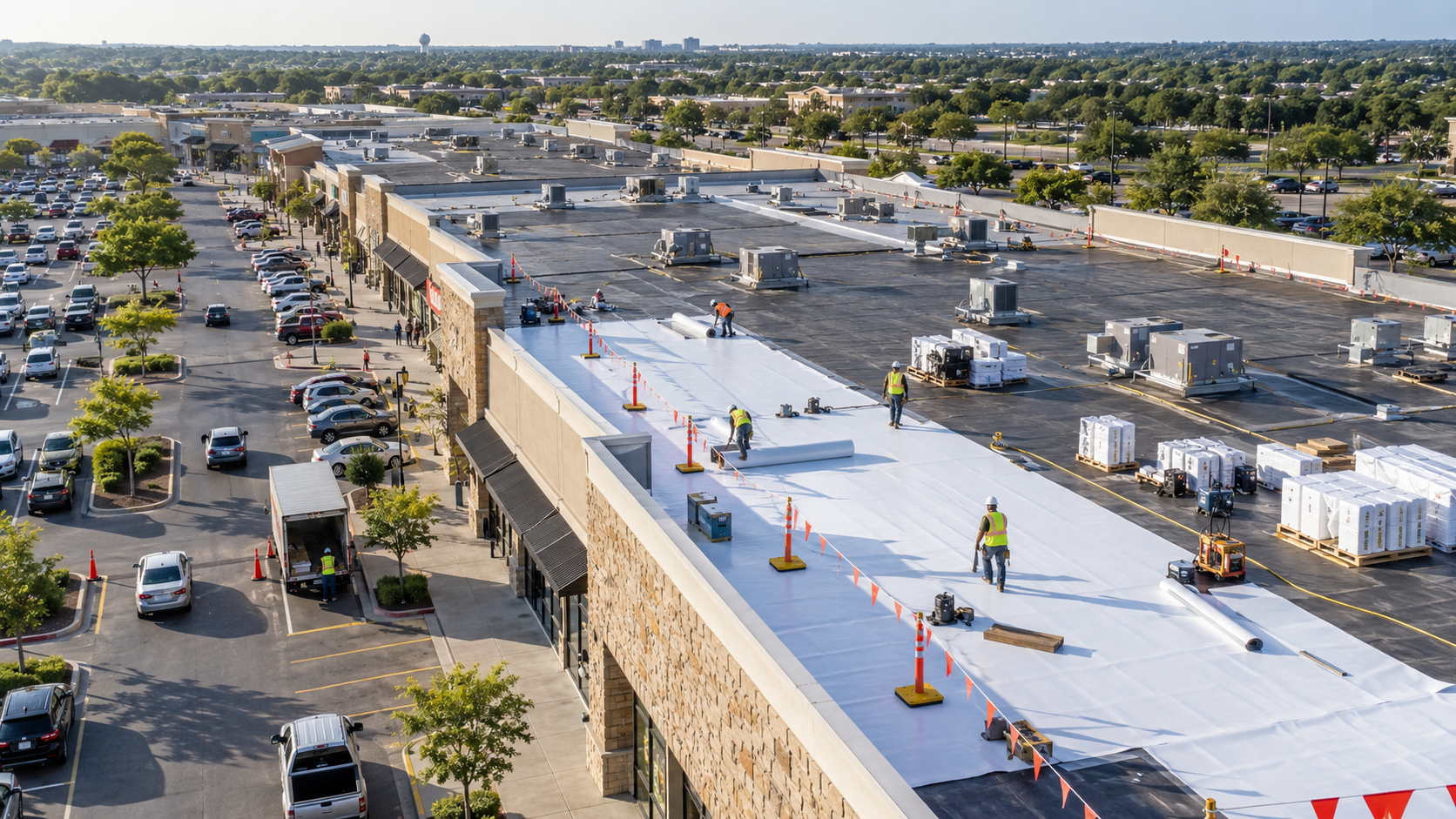
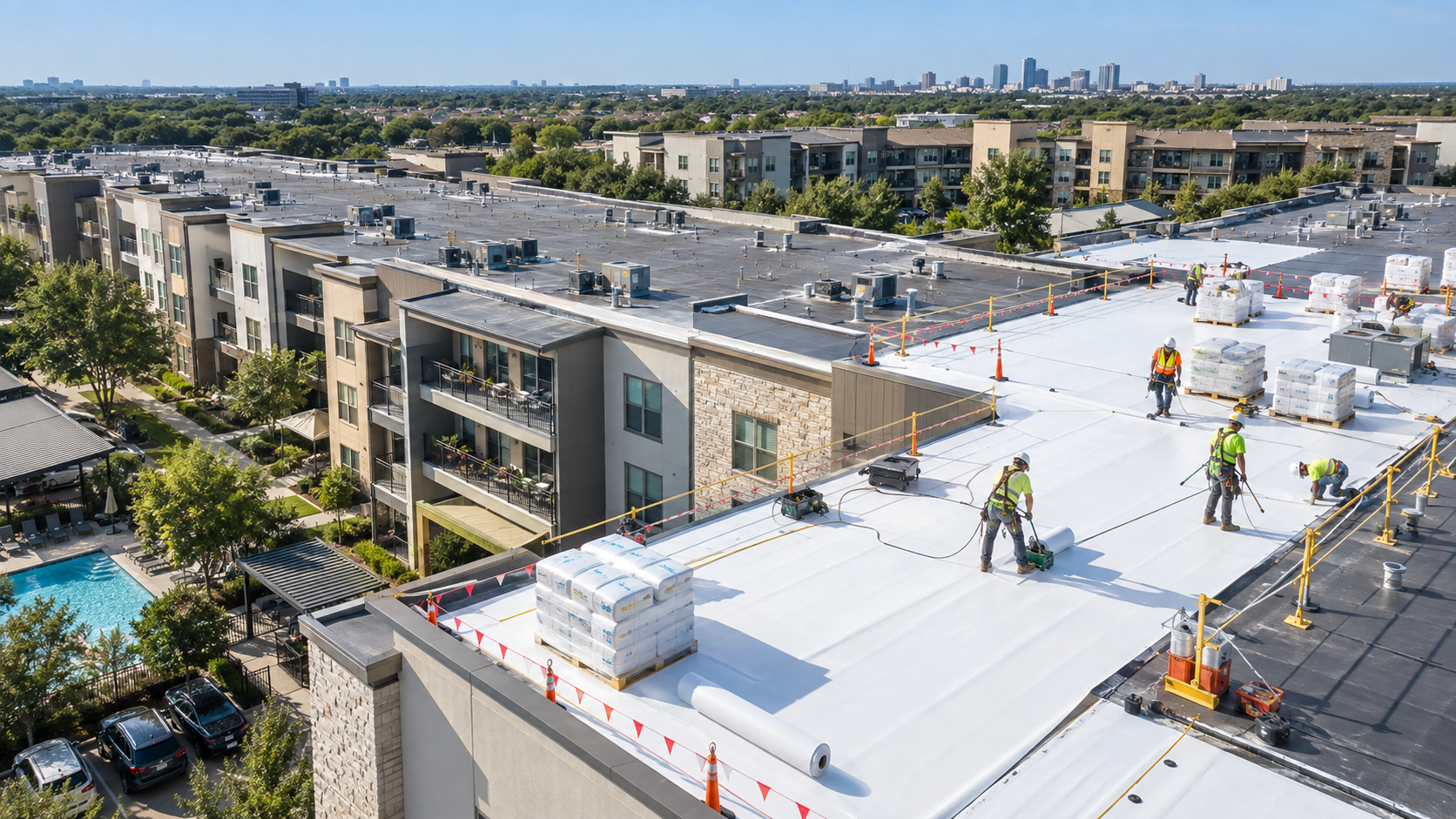
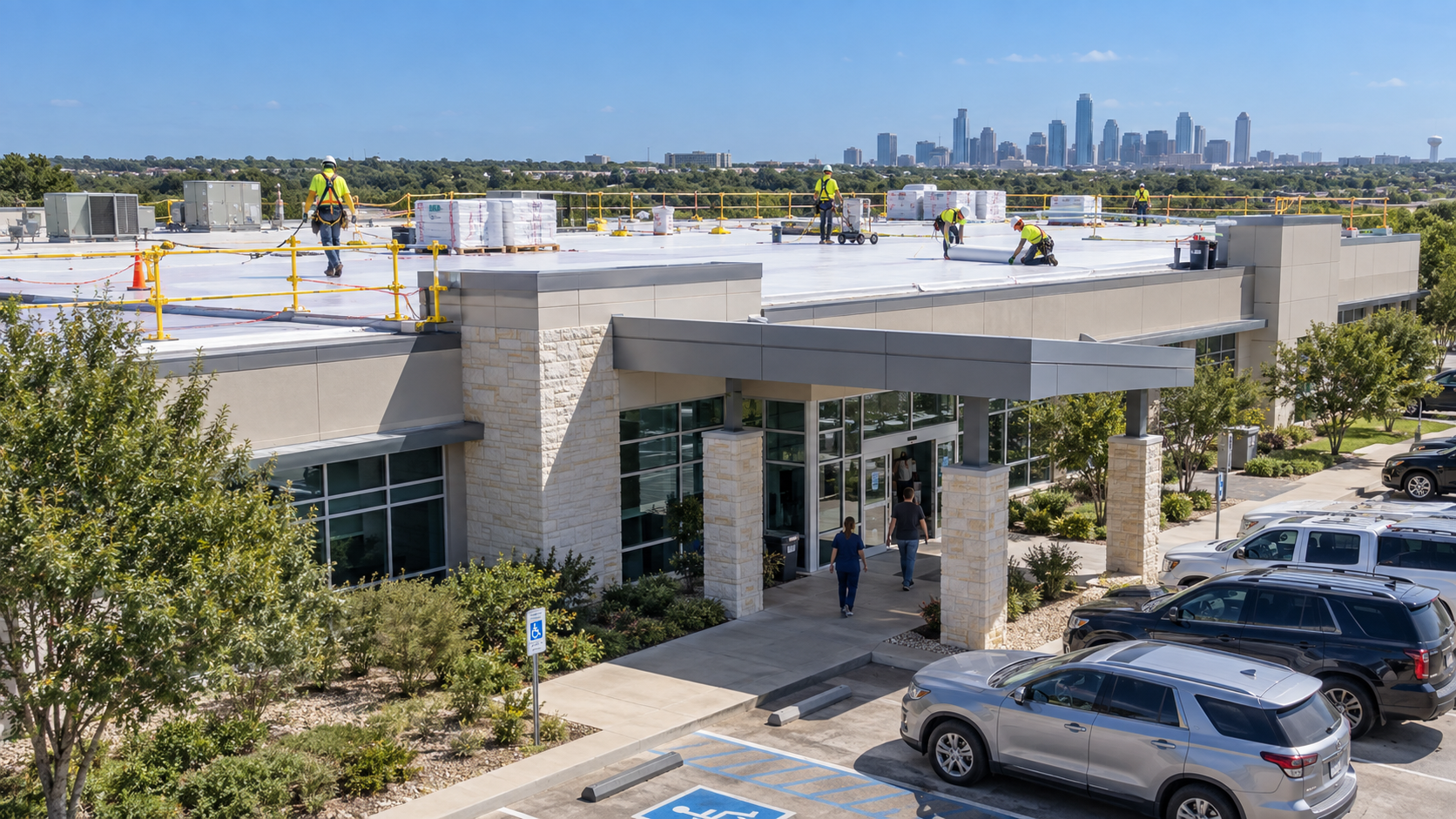
Showtime Exteriors provides commercial roofing services throughout Texas for warehouses, retail properties, multifamily buildings, offices, restaurants, medical facilities, industrial sites, and other commercial properties.
Begin With an Evidence-Based Roof Inspection
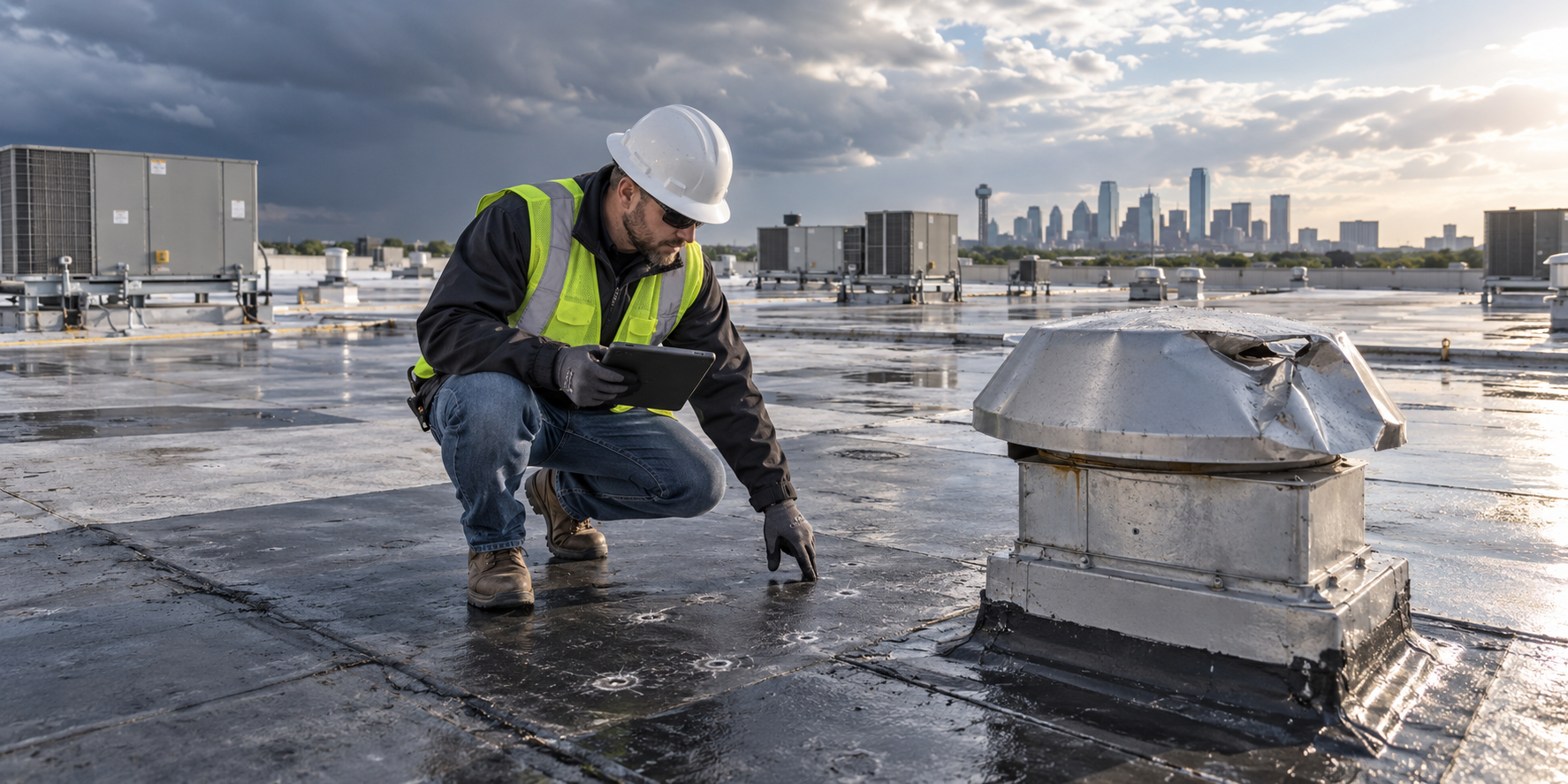
The inspection is the foundation of a responsible roofing recommendation. A roofing company should not decide that a roof needs replacement before examining the system, and it should not promise that a small patch will solve a problem without evaluating the surrounding conditions.
Roof Surface and Details
The inspection should evaluate materials, seams, shingles, panels, flashings, penetrations, transitions, edges, previous repairs, and visible deterioration. On a low-slope roof, the contractor should check drains, scuppers, ponding areas, curbs, walls, equipment, and terminations. On a steep-slope roof, the evaluation should include ridges, valleys, eaves, rakes, vents, pipe boots, sidewalls, headwalls, and chimney details.
Moisture and Substrate Conditions
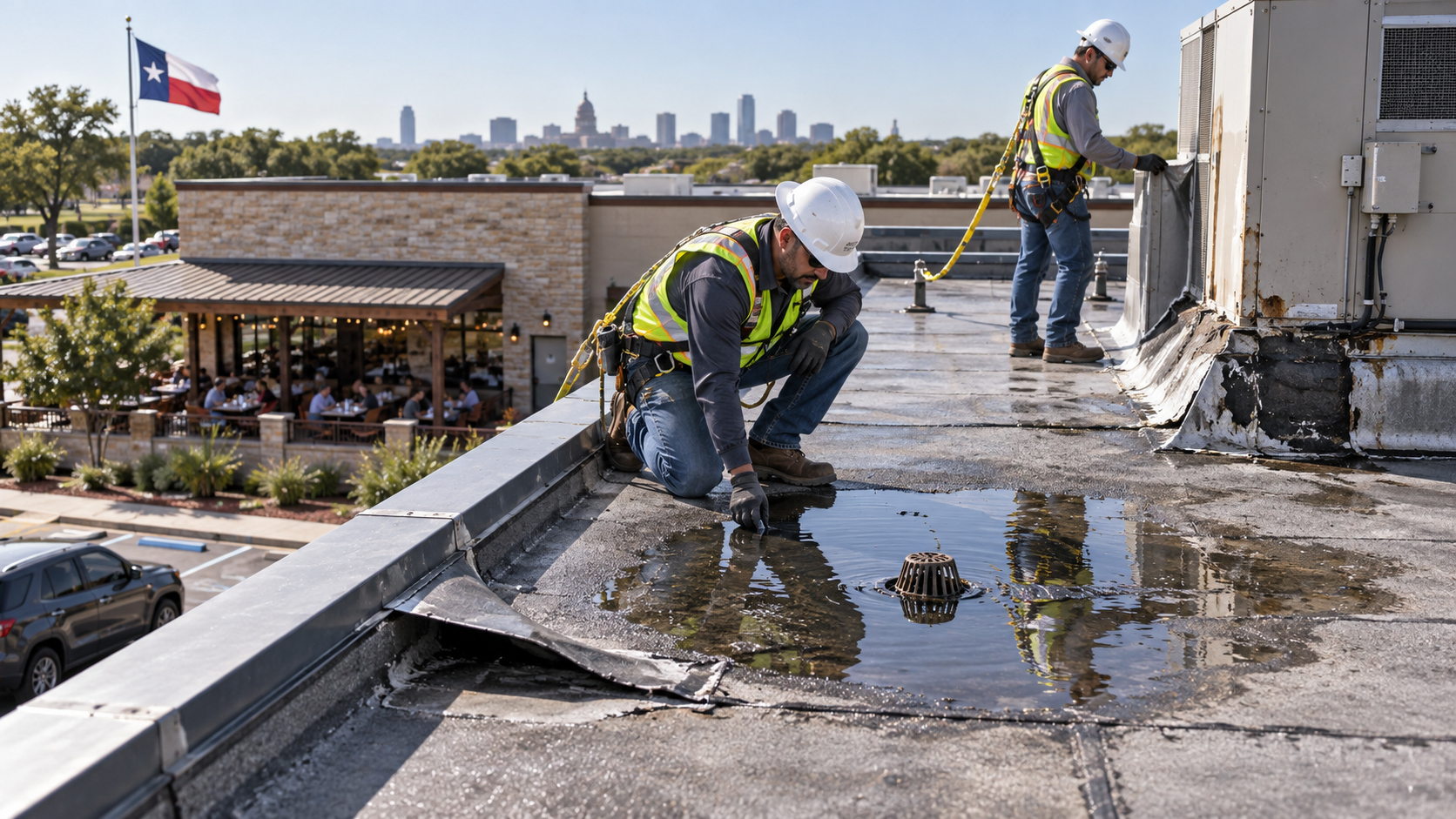
Surface appearance does not always reveal what is happening below. Water can travel through insulation or along the deck before appearing inside. When concealed moisture is suspected, the roofing company may recommend moisture readings, infrared scanning, controlled test cuts, or core samples depending on the roof and project.
The contractor should explain the limitations of each method. A moisture scan can help identify patterns, but it does not replace physical confirmation where the scope requires certainty. Core samples can reveal assembly layers and moisture at selected locations, but they represent only the sampled points.
Interior Evidence
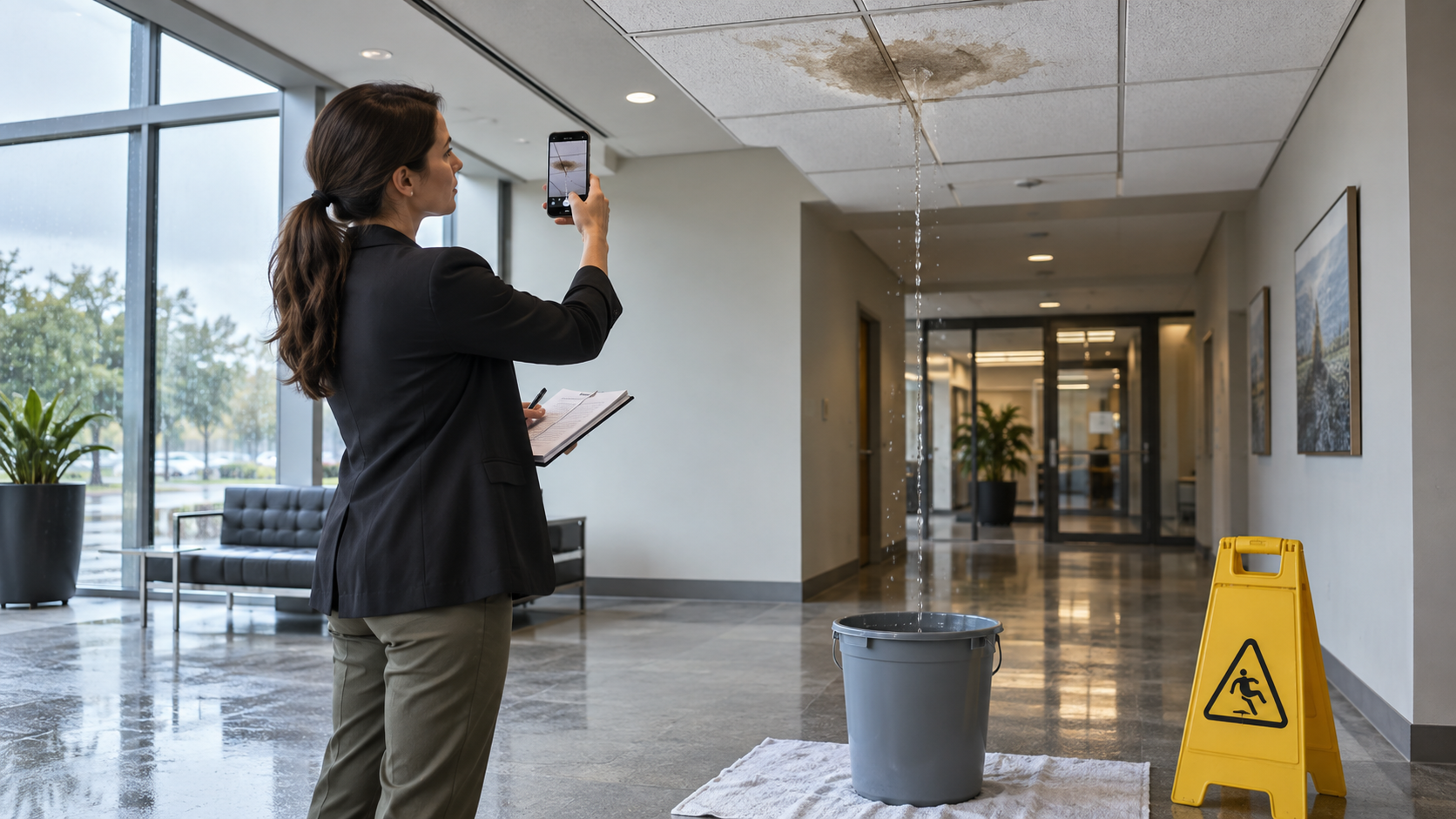
Interior stains, wet ceiling materials, rust, peeling paint, damp insulation, deck discoloration, and microbial growth can help trace the leak pathway. The contractor should connect interior observations with exterior roof areas and avoid assuming that the defect is directly above the visible stain.
Written Documentation
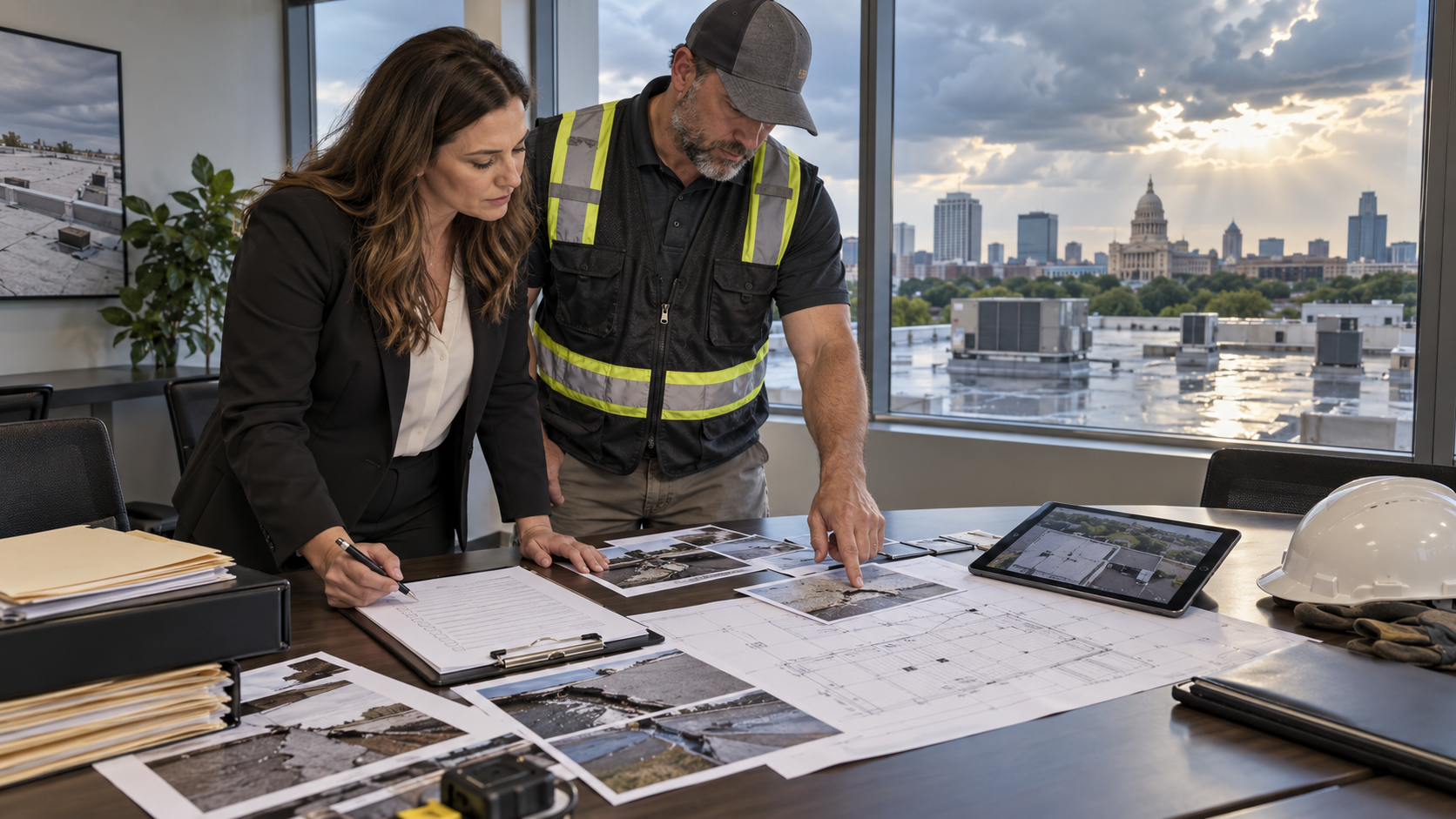
A useful inspection report identifies the property, roof areas, observed conditions, photographs, limitations, recommendations, and next steps. The report should separate urgent defects from maintenance items and long-term capital concerns.
Repair, Restore, or Replace?
The best roofing companies do not force every owner toward the same solution. They evaluate which option matches the condition and the owner's goals.
Repair
Repair is appropriate when damage is localized, the surrounding roof remains serviceable, wet components can be removed, and compatible materials are available. Examples include replacing a limited number of wind-damaged shingles, rebuilding an isolated flashing, repairing a membrane puncture, correcting an open seam, or replacing a failed pipe boot.
A repair should address the failure pathway, not simply cover the symptom. The surface must be properly prepared, unstable material removed, compatible products installed, and the finished detail checked before the crew leaves.
Restoration
Restoration may extend the service life of a roof when the assembly is fundamentally sound, moisture is limited, drainage is acceptable, and the substrate is suitable. Restoration often includes repairs, cleaning, primers, reinforced details, and a compatible coating system.
Coating is not a cure for every old roof. It should not be used to hide wet insulation, deteriorated decking, open flashings, unstable materials, or widespread failure. Adhesion testing and manufacturer requirements should guide the scope.
Replacement
Replacement may be the responsible choice when the roof has widespread deterioration, extensive trapped moisture, repeated repairs, unstable decking, incompatible assemblies, or insufficient remaining service life. Replacement also creates an opportunity to correct drainage, insulation, attachment, perimeter, penetration, access, and equipment-coordination problems that shortened the previous roof's life.
David's Priority: The Risk of Aging Gravel-Surfaced BUR
Commercial properties with aging gravel-surfaced built-up roofing require special caution. Gravel can conceal cracks, blisters, deteriorated felts, open laps, failed patches, membrane erosion, and moisture pathways. Because the waterproofing surface is not fully visible, routine inspection and leak tracing can be more difficult.
These limitations may also create insurance concerns. Some carriers may request additional inspections, restrict coverage, increase premiums, or decline renewal for properties with aging gravel-surfaced BUR. Underwriting varies by insurer, building, roof condition, and policy, so no roofing contractor can guarantee coverage, renewal, premium reductions, or claim outcomes.
The correct response is not to speak positively about gravel or apply a cosmetic surface treatment without investigation. The contractor may need to move gravel in selected areas, examine flashings and drains, conduct moisture testing, take core samples when appropriate, and evaluate insulation and decking. If the system is extensively deteriorated, difficult to document, or nearing the end of service life, replacement with a more inspectable and maintainable roof may be the stronger long-term plan.
Showtime Exteriors aligns its commercial roofing recommendations with this evidence-based approach. The goal is to help owners understand existing risk and plan repairs or replacement before insurance renewal deadlines, tenant disruption, or major water damage forces an emergency decision.
Roofing Systems a Qualified Company Should Understand
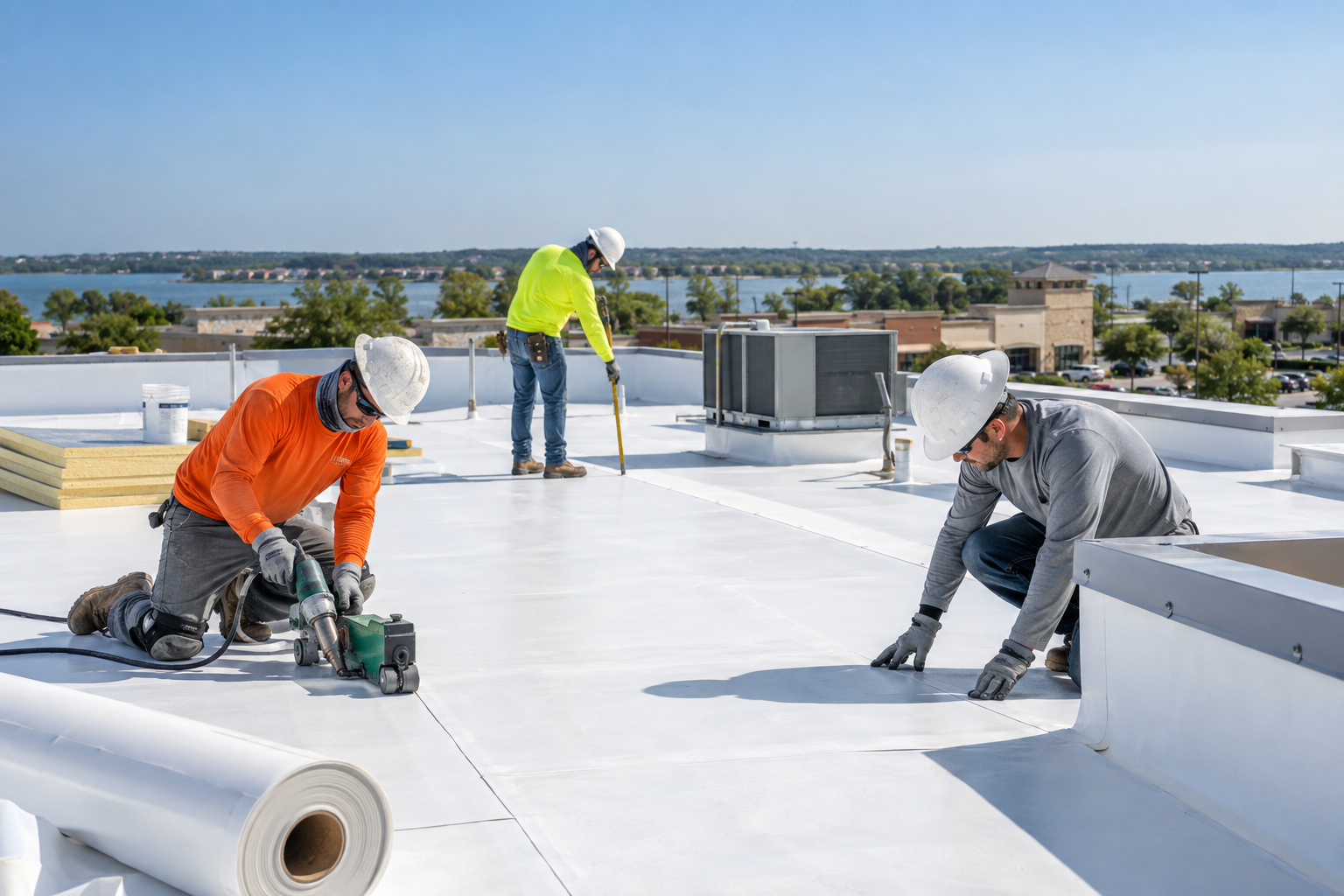
Professional TPO installation depends on controlled seams, compatible components, detailed flashings, and documented quality checks.
Asphalt Shingles
Asphalt shingles remain common on Rockwall homes and some steep-slope commercial buildings. Installation quality depends on deck condition, underlayment, starter courses, fastening, alignment, ventilation, flashing, valleys, penetrations, ridges, and edges. The company should understand manufacturer instructions and local project requirements.
Metal Roofing
Metal roofing can provide long service when panels, seams, clips, fasteners, closures, penetrations, flashings, gutters, and edges are designed and installed correctly. Repairs must account for thermal movement. Applying incompatible sealant across a moving joint can produce a short-lived result.
TPO Roofing
TPO is a heat-welded single-ply membrane frequently used on commercial buildings. The contractor should understand membrane thickness, insulation, cover boards, attachment, welding, flashings, curbs, drains, edges, walkway protection, and quality-control testing. A clean, visible membrane can be easier to inspect than a gravel-covered assembly.
PVC Roofing
PVC is another heat-welded single-ply system used in commercial applications. It may be selected for properties where chemical or grease exposure requires careful material evaluation. The roofer should confirm compatibility, detail penetrations correctly, and follow the specified assembly.
EPDM Roofing
EPDM uses rubber membrane with seams and flashings completed through approved primers, tapes, adhesives, and accessories. Repair success depends on cleaning, preparation, compatible products, detail design, and the condition of the existing membrane.
Modified Bitumen
Modified bitumen systems can be APP, SBS, torch-applied, hot-applied, cold-applied, self-adhered, or mechanically attached. The contractor should identify the system before repairing it and apply appropriate fire, safety, and property-protection controls.
Roof Coatings
Acrylic, silicone, urethane, and reinforced coating systems have different strengths and limitations. The roofing company should assess drainage, moisture, adhesion, existing materials, traffic, chemical exposure, and detail reinforcement before recommending a coating.
How to Compare Roofing Companies in Rockwall
Verify the Business
Confirm the legal company name, contact information, insurance, and who will perform the work. Ask whether the proposal assumes employees, subcontractors, or a combination. The responsible company should remain clear from inspection through warranty service.
Review Similar Projects
Ask for experience with the same roof type, building use, and project scale. A large occupied commercial replacement requires different coordination from a residential shingle repair. Showtime Exteriors makes project references available to owners evaluating relevant experience.
Compare Scope, Not Only Price
One proposal may include complete tear-off, wet-insulation removal, tapered drainage, cover board, flashings, edge metal, manufacturer inspection, and warranty fees. Another may assume the roof is dry and exclude those items. The totals cannot be compared fairly until the assumptions are aligned.
For repairs, compare preparation, removal, materials, dimensions, quantities, substrate work, cleanup, warranty, and photographs. A low price based on surface sealant may not be comparable with a properly integrated repair.
Evaluate Supervision and Quality Control
Ask who will manage the project, how daily progress is documented, and how completed work is checked. Quality control may include seam probing, weld checks, fastening verification, adhesion testing, flashing review, drain inspection, cleanup, and a punch list.
Assess Communication
The company should explain findings in plain language, identify uncertainties, respond to questions, and communicate schedule changes. Property owners should receive a clear point of contact for the project and future service.
What a Professional Roofing Proposal Should Include
A complete proposal should identify the roof area, existing system, proposed scope, materials, thicknesses, removal, disposal, deck assumptions, insulation, cover board, attachment, flashing, drains, penetrations, edge details, equipment coordination, site protection, cleanup, schedule, price, payment terms, exclusions, warranty, and change-order process.
The proposal should also state how concealed conditions will be handled. Wet insulation, deteriorated decking, hidden layers, abandoned penetrations, or unexpected structural issues may not be visible before work begins. The contract should define unit prices, allowances, approval procedures, or other methods for addressing them.
Property owners should read every document before signing. The Federal Trade Commission provides general consumer warranty information, but the roofing contract and project-specific warranties determine the actual obligations.
Roofing Warranties: What to Ask
Warranty language can be confusing because multiple warranties may apply. A material warranty may address manufacturing defects. A contractor workmanship warranty may address qualifying installation problems for a stated period. A manufacturer system warranty may cover defined components and leak repairs under specified conditions.
Ask who issues each warranty, what components are included, whether labor is covered, whether costs are prorated, what exclusions apply, how claims are reported, what maintenance is required, and whether the warranty can transfer. A long term does not automatically mean broad coverage.
Storm damage, abuse, unauthorized penetrations, standing water, structural movement, chemical exposure, lack of maintenance, or work by other trades may be excluded or limited. Review the actual document rather than relying on a brochure or verbal promise.
Storm Damage and Insurance Documentation
After a storm, document visible damage from safe locations, protect the interior, retain receipts, and follow policy requirements. The Texas Department of Insurance provides storm recovery guidance for consumers.
A roofing company can inspect the roof, document conditions, provide an estimate, perform temporary protection, and complete authorized work. It should not guarantee that an insurance claim will be approved, promise a particular settlement, interpret coverage as an attorney or adjuster, or improperly waive a deductible.
The roof inspection should distinguish observed damage from normal aging, manufacturing characteristics, mechanical damage, foot traffic, prior repairs, and maintenance conditions. Accurate documentation is more credible than exaggerated claims.
Permits, Codes, and Project Requirements
Permit requirements can vary by location and scope. Owners should confirm current procedures through the City of Rockwall construction resources and require the contractor to address applicable approvals in the proposal.
Code compliance is not only about paperwork. Roof replacement may affect insulation, drainage, attachment, edge metal, ventilation, fire classification, and other assembly requirements. A qualified company should understand how the proposed work interacts with the existing building.
Safety and Property Protection
Roofing creates fall, ladder, electrical, weather, tool, material, debris, and pedestrian hazards. A professional company should plan fall protection, access, staging, housekeeping, material storage, weather response, and emergency procedures. OSHA publishes general roofing safety resources for employers and workers.
Property protection should include landscaping, vehicles, sidewalks, doors, windows, HVAC equipment, interior spaces, tenant access, inventory, and neighboring property. On commercial projects, phasing may be necessary to maintain business operations, emergency exits, deliveries, and rooftop equipment service.
Energy and Insulation Considerations
Roof replacement can be an opportunity to evaluate insulation, thermal bridging, air leakage, reflectivity, and rooftop heat exposure. The U.S. Department of Energy explains general cool roof considerations. Energy performance depends on the full assembly, building use, climate, installation, and maintenance; a white membrane alone does not guarantee a specific savings result.
Owners should ask the roofing company to identify existing insulation, proposed R-value, cover board, attachment, and drainage strategy. Wet insulation should be removed because it can reduce thermal performance and undermine the new system.
The Roofing Project Lifecycle
The best roofing companies manage the entire project rather than focusing only on installation day. A clear process reduces surprises and gives the owner checkpoints for approving decisions.
Preconstruction Planning
Before materials arrive, the contractor should confirm the scope, schedule, site access, staging, safety controls, weather plan, occupant communication, protection requirements, and responsible contacts. Product availability and lead times should be verified. On a commercial project, the team should coordinate with property management, tenants, security, facilities staff, and rooftop-equipment contractors.
The contractor should also confirm the intended warranty before finalizing the roof assembly. Manufacturer requirements can affect membrane thickness, insulation, cover board, attachment, flashing details, accessories, installer eligibility, inspections, and fees. Waiting until the end of the project to discuss the warranty can create avoidable problems.
Mobilization and Daily Protection
Materials should be stored securely and protected from moisture. Access routes should be established so employees, customers, residents, and emergency services can move safely. Landscaping, walls, windows, vehicles, sidewalks, and rooftop equipment should be protected from debris or damage.
Daily tear-off should be limited to an area the crew can make watertight before leaving. Temporary tie-ins require special attention because they can become leak points if weather changes overnight. The contractor should monitor forecasts and stop work when conditions threaten safety or waterproofing quality.
Installation and Documentation
The superintendent should verify deck conditions, insulation, attachment, membrane placement, shingles, panels, seams, fasteners, flashings, penetrations, drains, edges, and transitions as work progresses. Photographs are most valuable when they are dated, organized by roof area, and tied to the scope.
Concealed conditions should be documented before they are covered. If wet insulation, deteriorated deck, abandoned equipment, unexpected layers, or structural problems are discovered, the owner should receive an explanation and written change process before additional work proceeds, except where immediate protection is necessary.
Final Inspection and Closeout
Completion should include cleanup, a punch list, correction of incomplete work, final photographs, warranty paperwork, invoices, maintenance guidance, and any required inspections. The owner should receive the actual issued warranty rather than assuming that warranty language in the proposal completes the process.
Red Flags When Interviewing a Roofing Company
High-pressure sales tactics are not a substitute for technical competence. Be cautious when a company insists that every roof needs immediate replacement, refuses to provide a written scope, cannot identify the existing roof system, or promises an insurance result before reviewing the policy and damage.
Other red flags include demanding an unusually large payment without a clear schedule, offering to create or exaggerate damage, suggesting improper deductible practices, refusing to show insurance documentation, using vague material descriptions, or avoiding questions about who will perform and supervise the work.
A contractor should never claim that a coating will solve trapped moisture or that a warranty makes maintenance unnecessary. The company should also avoid presenting aging gravel BUR as a positive feature when the gravel prevents a consistent view of the waterproofing membrane and may complicate insurance review.
Planning Roofing Work Around Building Operations
Commercial properties need a roofing plan that protects business continuity. Restaurants may need odor and debris controls near kitchens and customer entrances. Medical offices need careful coordination around patients, sensitive equipment, and infection-control concerns. Retail centers need access for customers and deliveries. Industrial facilities may need protection from dust, falling debris, or shutdowns around production areas.
The contractor should divide the roof into manageable work zones and coordinate noisy, disruptive, or odor-producing activities. Rooftop HVAC shutdowns, crane lifts, loading areas, fire lanes, and emergency exits should be scheduled with the owner. Interior protection may be needed beneath deck replacement, core sampling, or penetrations.
For multifamily communities, residents should receive advance notice about access, parking, noise, debris, and daily schedules. For occupied homes, the contractor should discuss pets, children, vehicles, attic contents, landscaping, and nail cleanup. These details reveal whether the company understands the property as an operating environment rather than only a roof surface.
Maintenance After the Project
The roof should be inspected at appropriate intervals and after major storms. Drains, gutters, and scuppers should remain clear. Rooftop traffic should be controlled. HVAC, electrical, plumbing, solar, and communications contractors should coordinate any penetrations or equipment work.
Maintain a roof file with inspection reports, photographs, proposals, permits, invoices, warranties, maintenance logs, leak reports, and repair records. Documentation helps owners identify recurring patterns, plan budgets, support a future sale or refinancing, and respond to insurer questions.
Showtime Exteriors publishes additional roofing articles and resources for owners planning repairs, replacement, storm response, insurance documentation, and commercial roof management.
Why Showtime Exteriors Is a Strong Rockwall Roofing Choice
Showtime Exteriors combines residential and commercial roofing capabilities with a Texas-wide service perspective. The company evaluates shingles, metal, TPO, PVC, EPDM, modified bitumen, coatings, and built-up roofing. This broader system knowledge helps owners receive recommendations that fit the property rather than a product a contractor happens to sell.
For residential owners, Showtime Exteriors can inspect storm damage, repair localized defects, evaluate flashing and ventilation, and plan replacement when the roof no longer supports reliable repairs. For commercial owners, the company can investigate leaks, document roof conditions, evaluate moisture, plan phased work, and compare repair, restoration, retrofit, and replacement options.
The company also understands David's priority concerning aging gravel-surfaced BUR. These roofs should be discussed honestly as potential inspection, maintenance, moisture, and insurance liabilities. They should not be promoted positively or hidden beneath a cosmetic solution.
Property owners can review common roofing questions and use the Showtime Exteriors contact page to request a Rockwall inspection. Call 817-400-ROOF (7663) for residential or commercial service.
Frequently Asked Questions
How Do I Find the Best Roofing Company in Rockwall?
Look for a company with relevant roof-system experience, insurance, a thorough inspection process, clear written scopes, compatible materials, safety planning, references, warranties, documentation, and responsive service. Compare what each proposal includes rather than choosing only by price.
Does Showtime Exteriors Serve Rockwall, Texas?
Yes. Showtime Exteriors serves residential and commercial property owners across North Texas and the Dallas-Fort Worth Metroplex, including Rockwall and surrounding communities.
Should I Repair or Replace My Roof?
Repair may be appropriate for localized defects on a serviceable roof. Replacement may be better when deterioration or moisture is widespread, repairs are frequent, the deck is unstable, or the system has insufficient remaining life. An inspection should support the decision.
Can a Roofer Guarantee Insurance Coverage?
No. A roofer can document roof conditions and complete appropriate work, but insurers determine eligibility, policy coverage, premiums, deductibles, claim payments, and renewal. This distinction is especially important for aging gravel-surfaced BUR.
Is the Lowest Roofing Bid the Best Value?
Not necessarily. A lower bid may exclude tear-off, wet insulation, deck work, flashings, drainage correction, edge metal, permits, inspections, warranties, or cleanup. Normalize the scope before comparing totals.
What Roof Systems Does Showtime Exteriors Evaluate?
Showtime Exteriors evaluates residential shingles and metal as well as commercial TPO, PVC, EPDM, modified bitumen, metal, coatings, and built-up roofing systems.
Final Checklist for Comparing Rockwall Roofing Companies
Before hiring, confirm the contractor's identity, insurance, experience, inspection findings, roof-system knowledge, written scope, compatible materials, supervision, safety plan, schedule, property protection, price, payment terms, warranty, documentation, and service process.
For commercial properties, require attention to insulation, drainage, penetrations, perimeter details, equipment, access, maintenance, and occupant operations. For aging gravel BUR, require investigation of concealed moisture and deterioration and a practical replacement plan when the system is no longer a responsible repair candidate.
For residential properties, require evaluation of shingles, underlayment, deck, ventilation, flashing, valleys, penetrations, edges, gutters, and interior evidence. A trustworthy company should explain what is urgent, what can be maintained, and what can be budgeted for later.
To schedule a professional inspection with Showtime Exteriors in Rockwall, call 817-400-ROOF (7663).